

01 · More than a pastry tray
Many shapes.
Many ways to make sweet.
A crisp fold, a tender crumb, a spoonful of toasted grain.
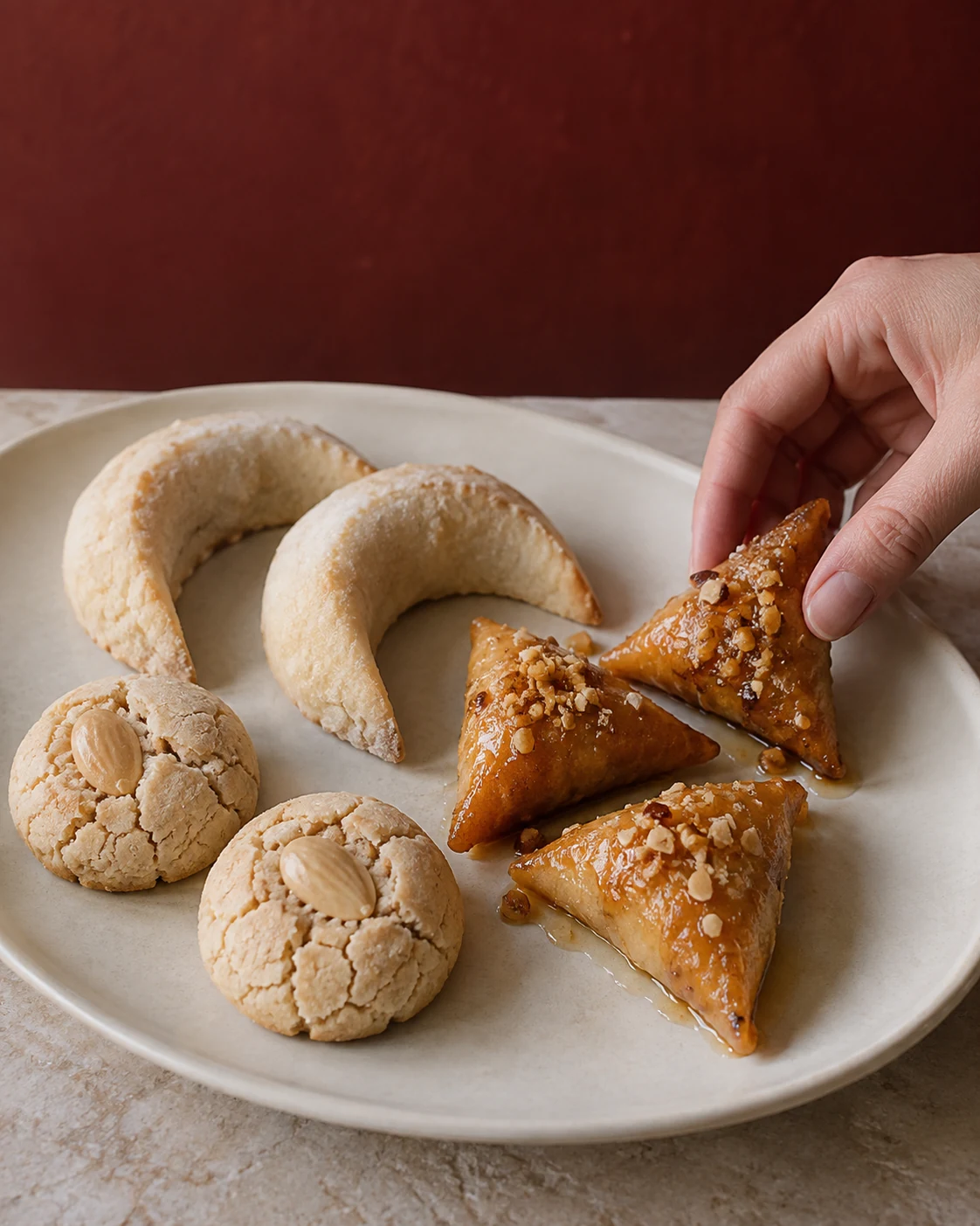
Moroccan sweets are not a single family of biscuits. Some are baked, others fried and dipped in honey; some are folded around almonds, while sellou is a spoonable mixture of roasted flour, sesame and nuts. The pleasure is in noticing what each method makes possible.
A tray offered with tea might hold a few carefully shaped pieces. Another table may gather chebakia and sellou for Ramadan, or bring out almond pastries for guests. Recipes and habits move between homes, bakeries and occasions; no one assortment speaks for every family. [1]
Here, the pastry is the starting point. Look closely at its shape and texture, then at the work and ingredients behind it.
Explore Moroccan food culture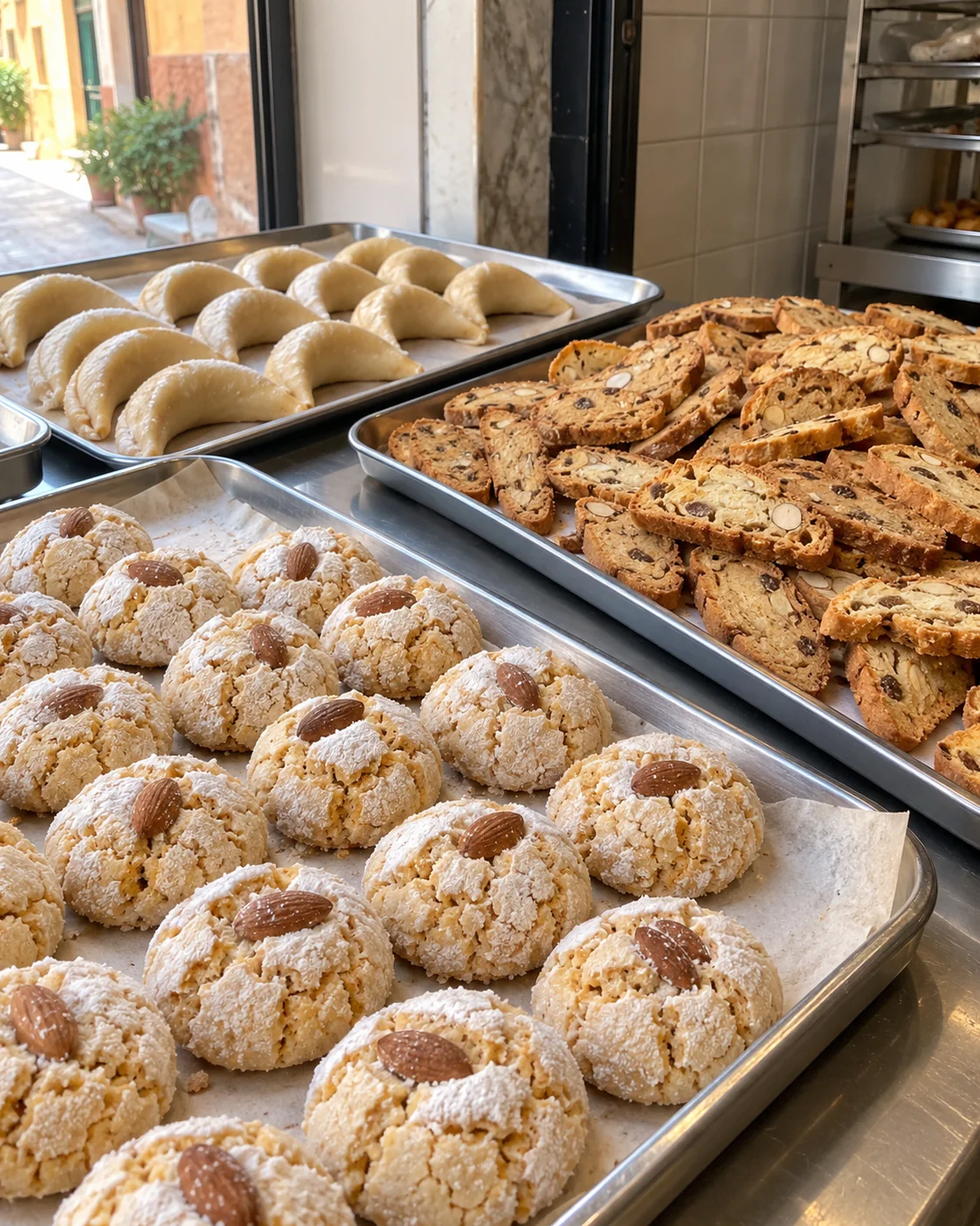
Different methods produce different sweets.
Recurring ingredients, used in distinct ways.
The setting changes from table to table.
02 · Occasion & living practice
A sweet moment.
Many contexts.
The same pastry can meet a different kind of table.
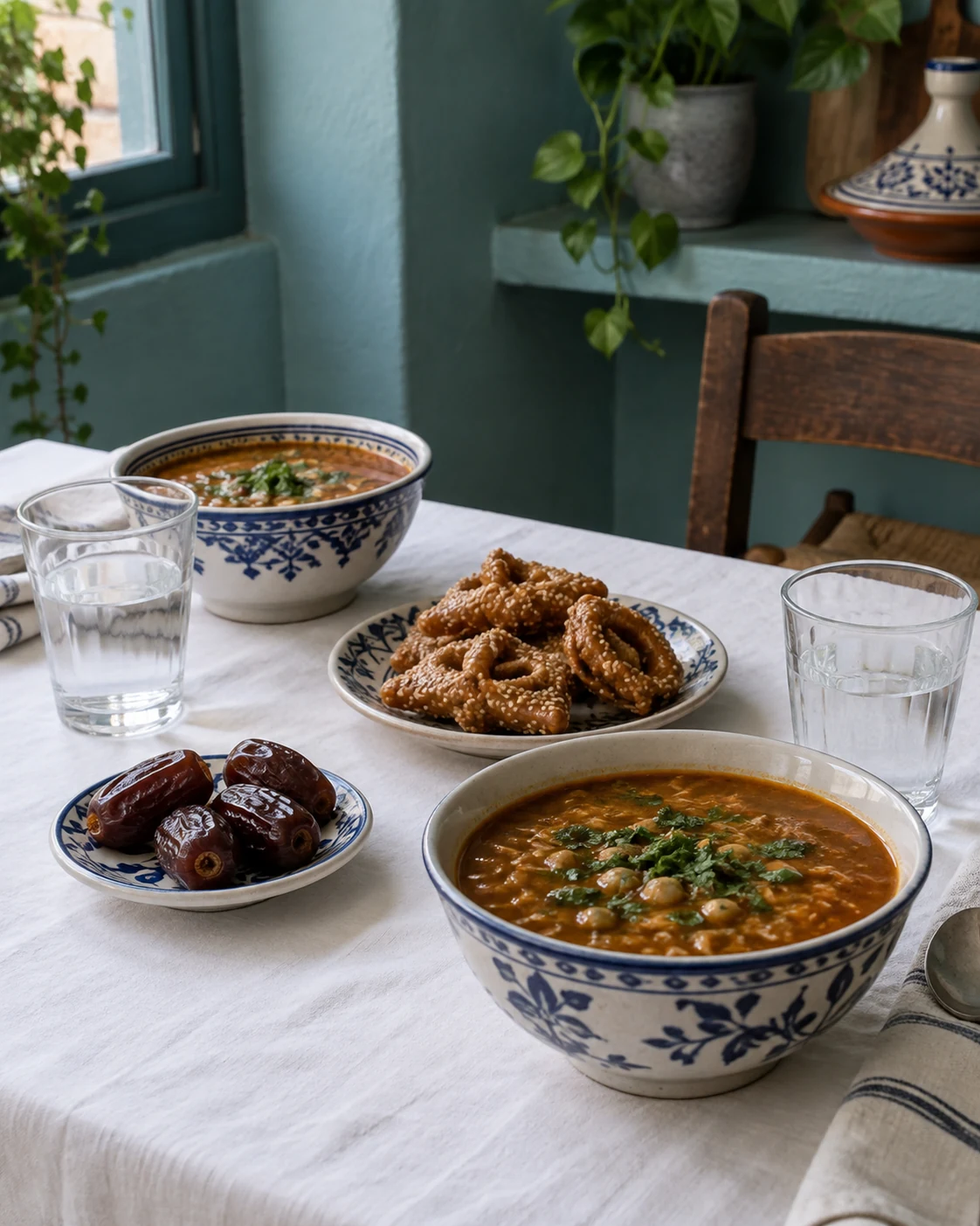
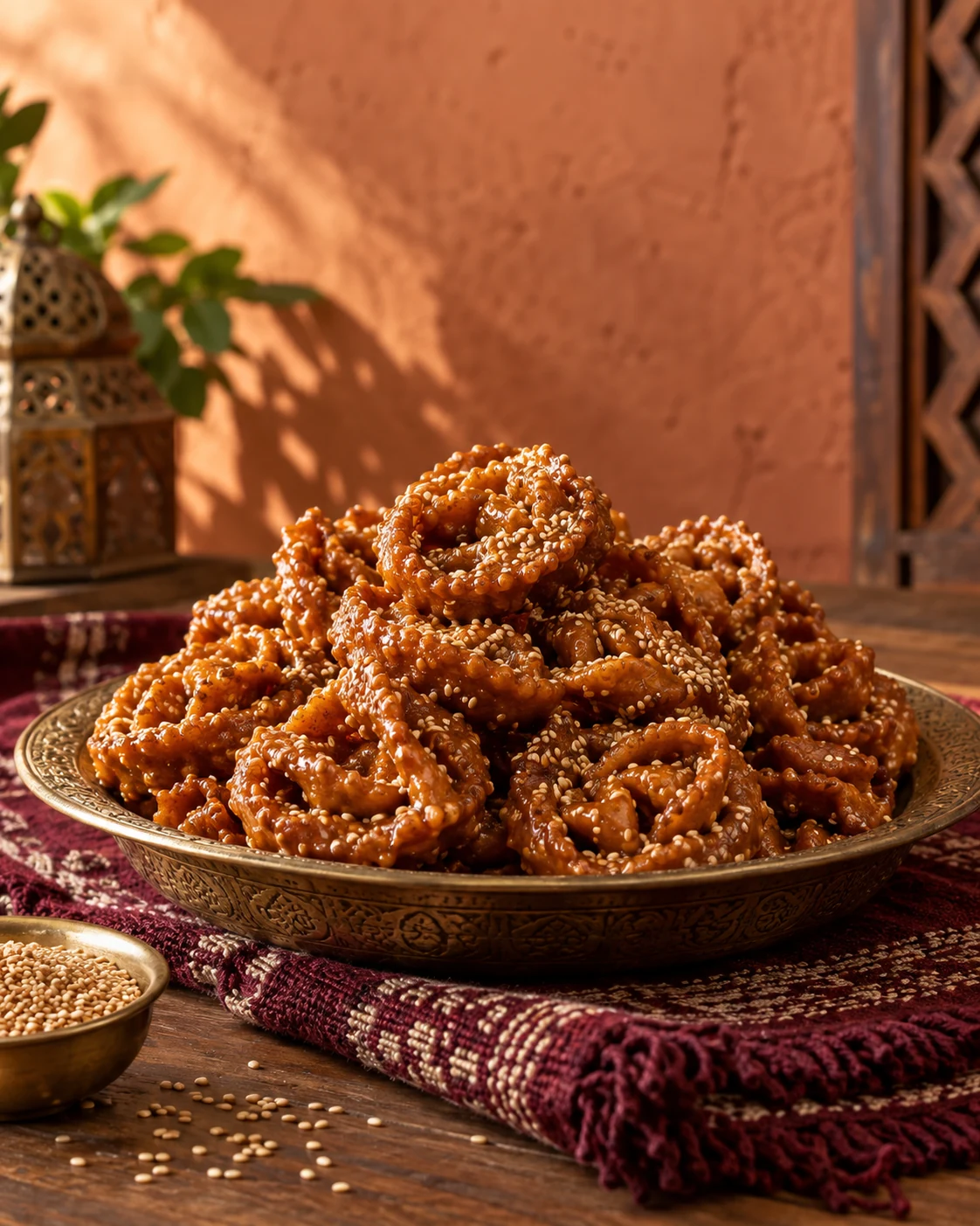
Chebakia, with its folded sesame dough, frying and honey finish, is closely associated with Ramadan and often accompanies harira. Sellou is another familiar preparation during the month. That does not make every Moroccan sweet a Ramadan sweet, or every household’s table identical. [1] [2]
Almond pastries can be made for visits and celebrations as well as ordinary tea. A bakery may produce the same form at scale; at home, the cook might adjust its size, fragrance or finish.
Ramadan
Chebakia and sellou have particularly visible places beside the evening meal in many homes.
Guests & gatherings
Small pastries suit a tray that can be offered, shared and returned to over tea.
Everyday baking
A tin of fekkas or ghriba shows that sweetness also belongs to the unceremonious afternoon.
03 · The method changes everything
Fold. Bake.
Toast. Fry.
There is no universal Moroccan pastry dough. The texture tells you which method you are tasting.
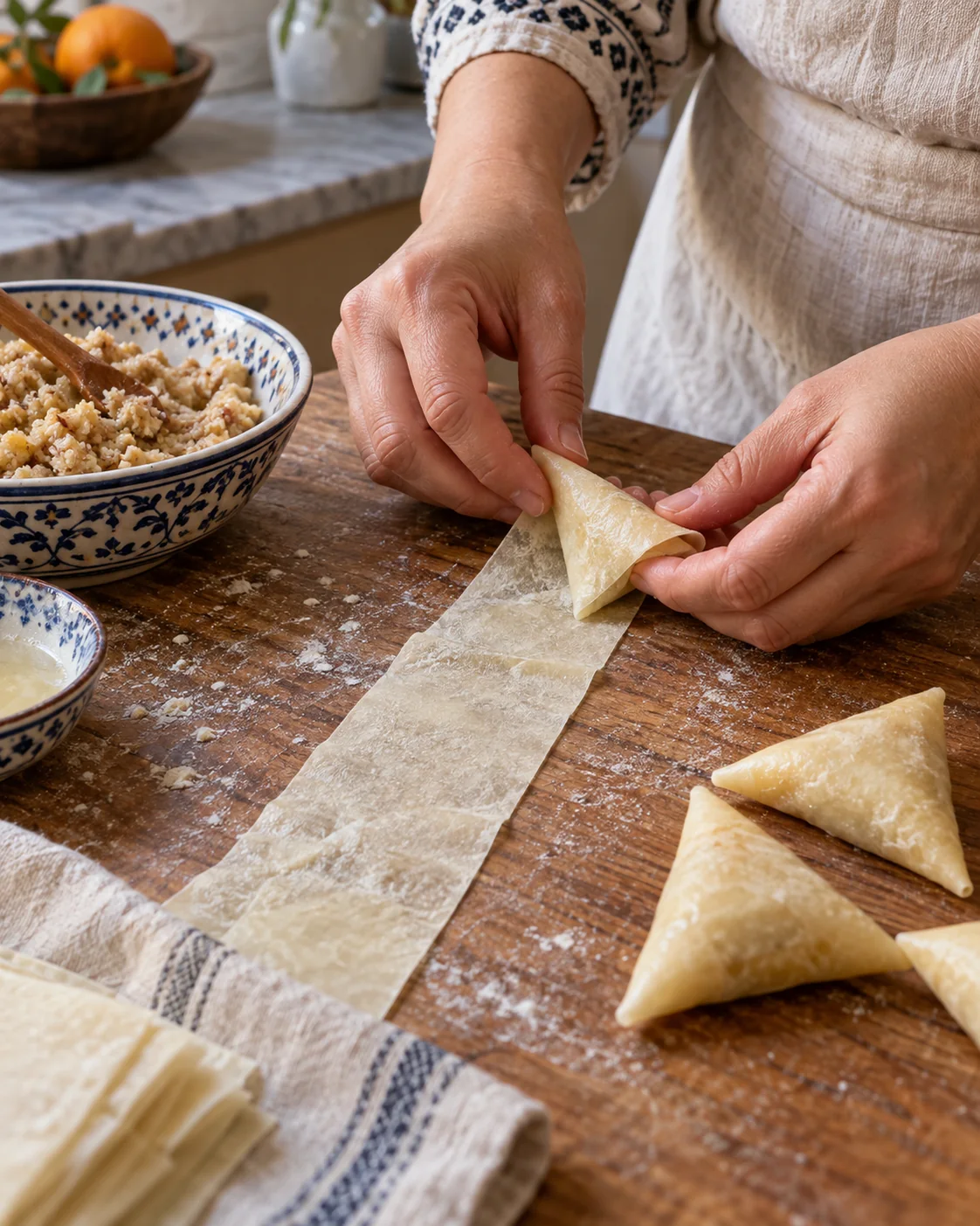
Thin warqa can wrap almond paste; another dough is cut and folded before frying; a cookie dough is baked until it cracks. The distinctions matter more than a decorative garnish.
Thin pastry
Warqa is a very thin Moroccan pastry leaf. It wraps almond filling in sweet briouats and can be coiled around almond paste for m’hanncha. Phyllo may be used as a modern substitute, but it is not the same material. [3]
A shaped dough
Chebakia begins with a firm dough that is cut, folded, fried and coated with honey. The open shape lets the honey reach its ridges while keeping some bite. [2]
Toasting or twice baking
Sellou depends on roasted flour, sesame and nuts; fekkas develops its dry crunch by being cut and baked again. Neither has the texture of a honey-soaked pastry.
The best clue is often the first bite: crisp layers, a short crumb, a toasted grain, or a honeyed edge.
04 · A tray with range
Six forms.
Six different pleasures.
These are distinct preparations rather than interchangeable labels. Their shapes point to how each is made.
Use the arrows or swipe across the cards to see the textures up close.
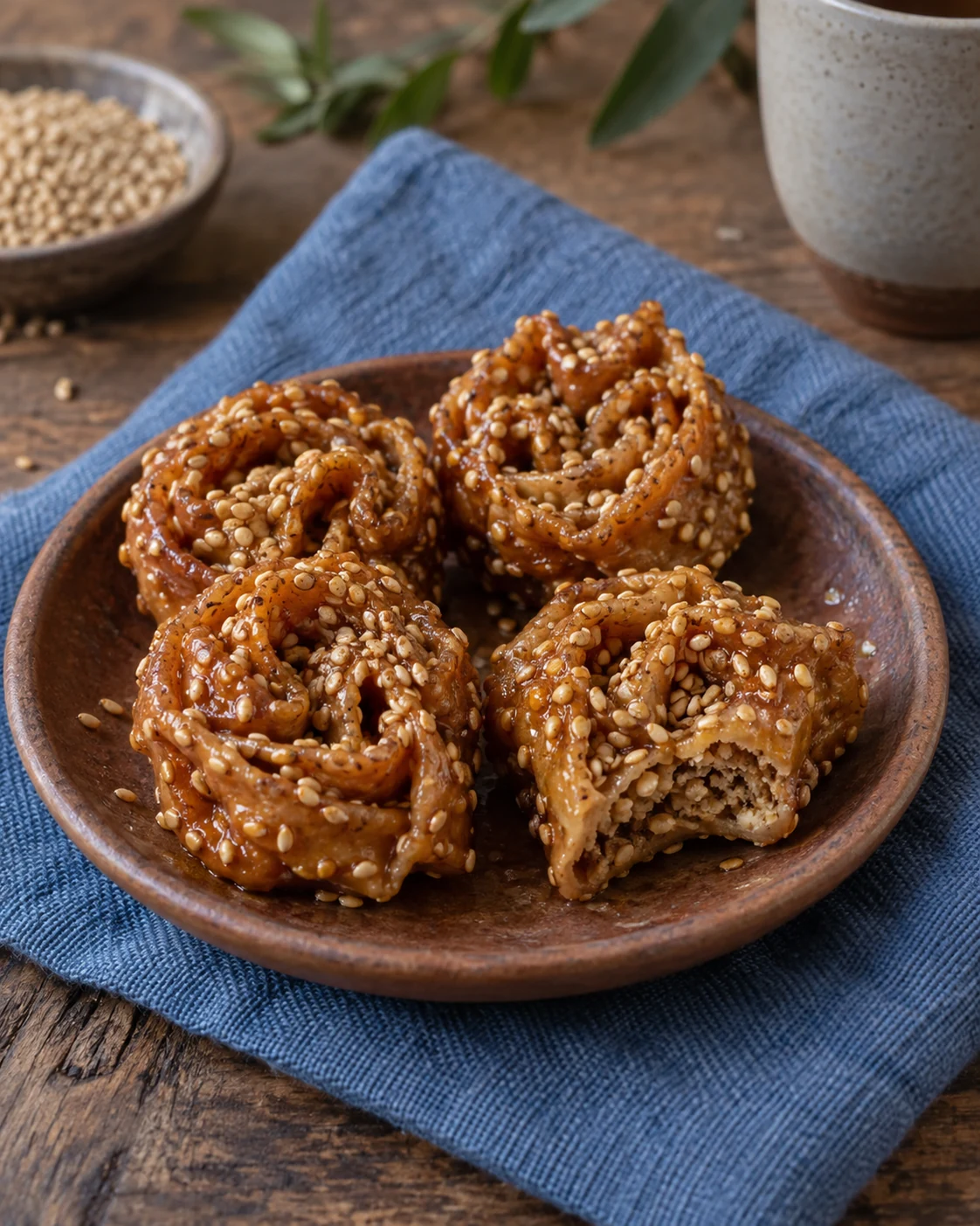
Chebakia
Sesame-rich dough is folded into an open flower-like form, fried and bathed in honey. Anise, cinnamon or orange blossom can perfume different batches. The contrast is a firm edge under a sticky finish.
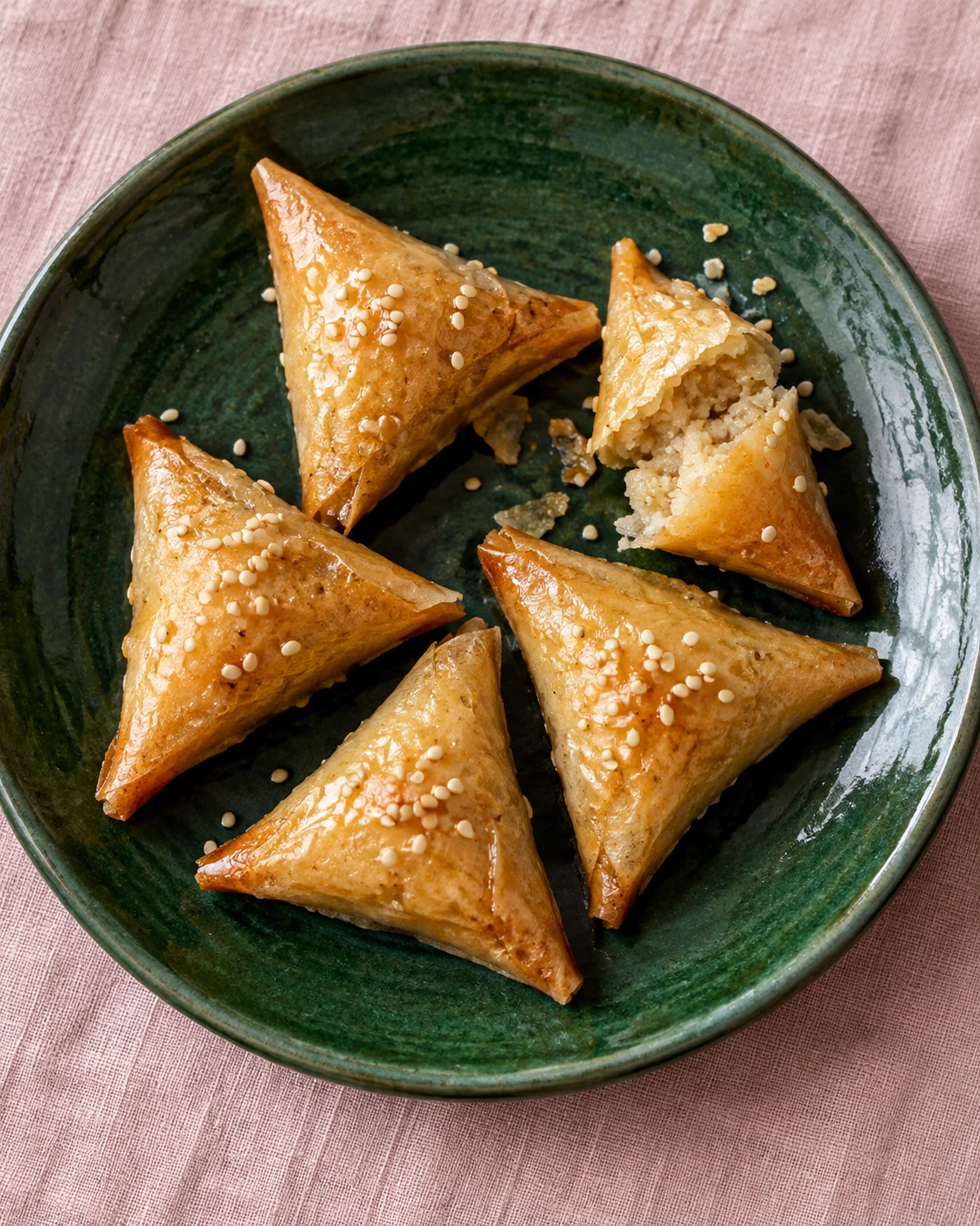
Almond briouats
Thin pastry encloses almond paste in a triangle. The filling is soft against a crisp shell; a honey finish is common for the sweet version. It belongs to a different family from the savoury parcels of the same name.
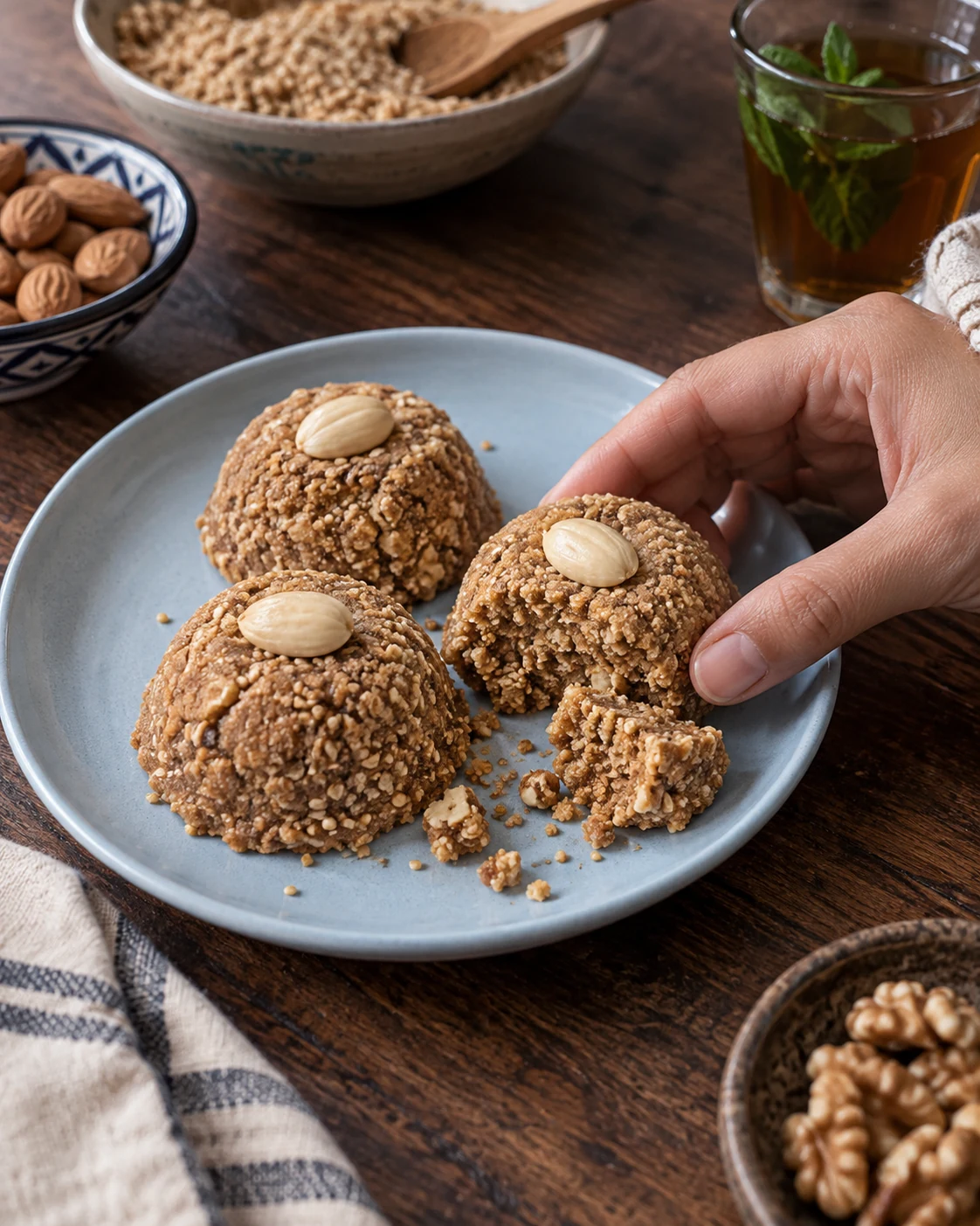
Sellou
Roasted flour, sesame and almonds form a fragrant, rich mixture, also called sfouf in some homes. It can be presented as a mound or pressed into portions. Its crumb is the point, not a pastry shell.
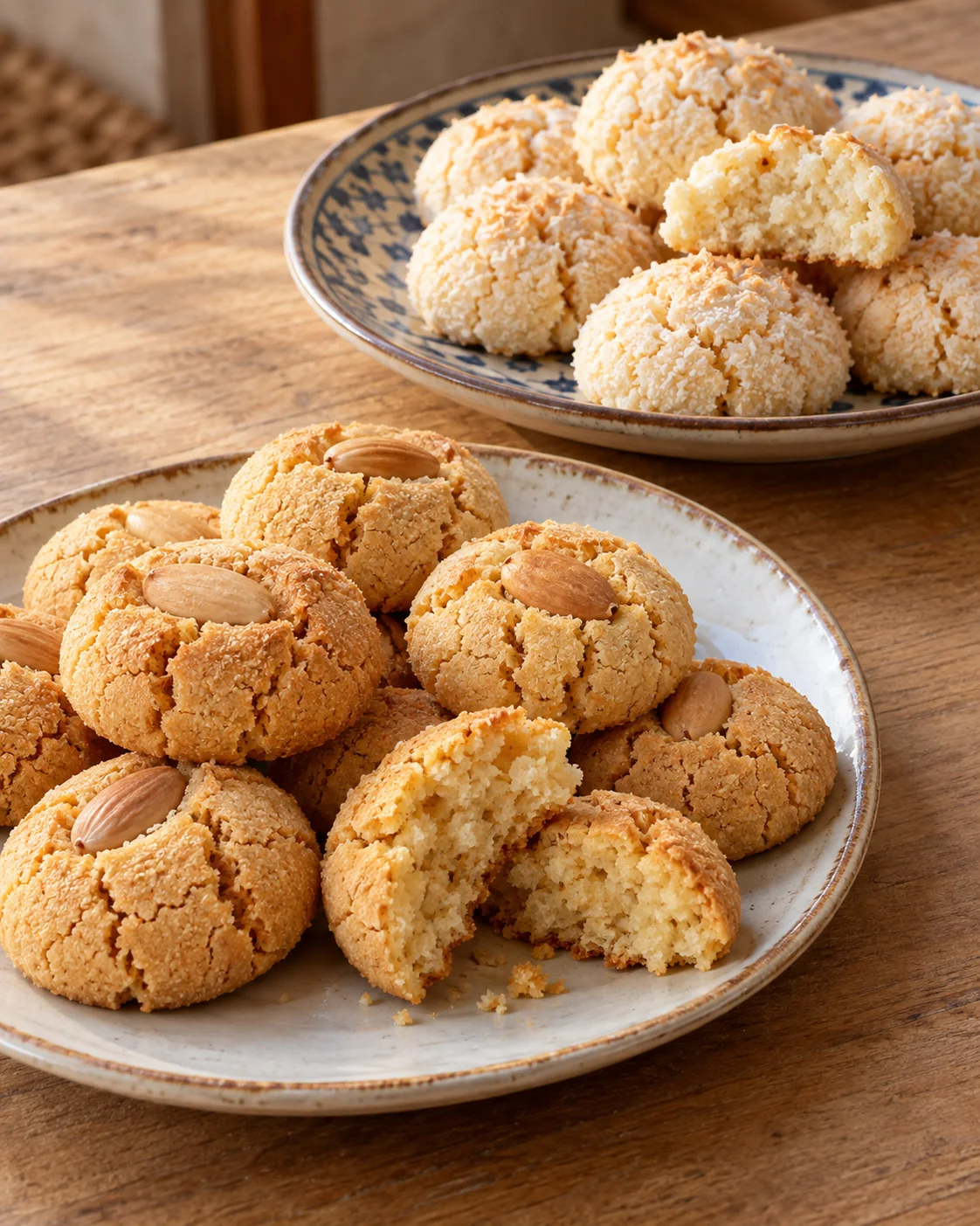
Ghriba
A broad cookie family with a characteristic crackled surface in many versions. Almond, coconut and other household variations can give very different crumbs. It is better understood as a family than a single fixed recipe.
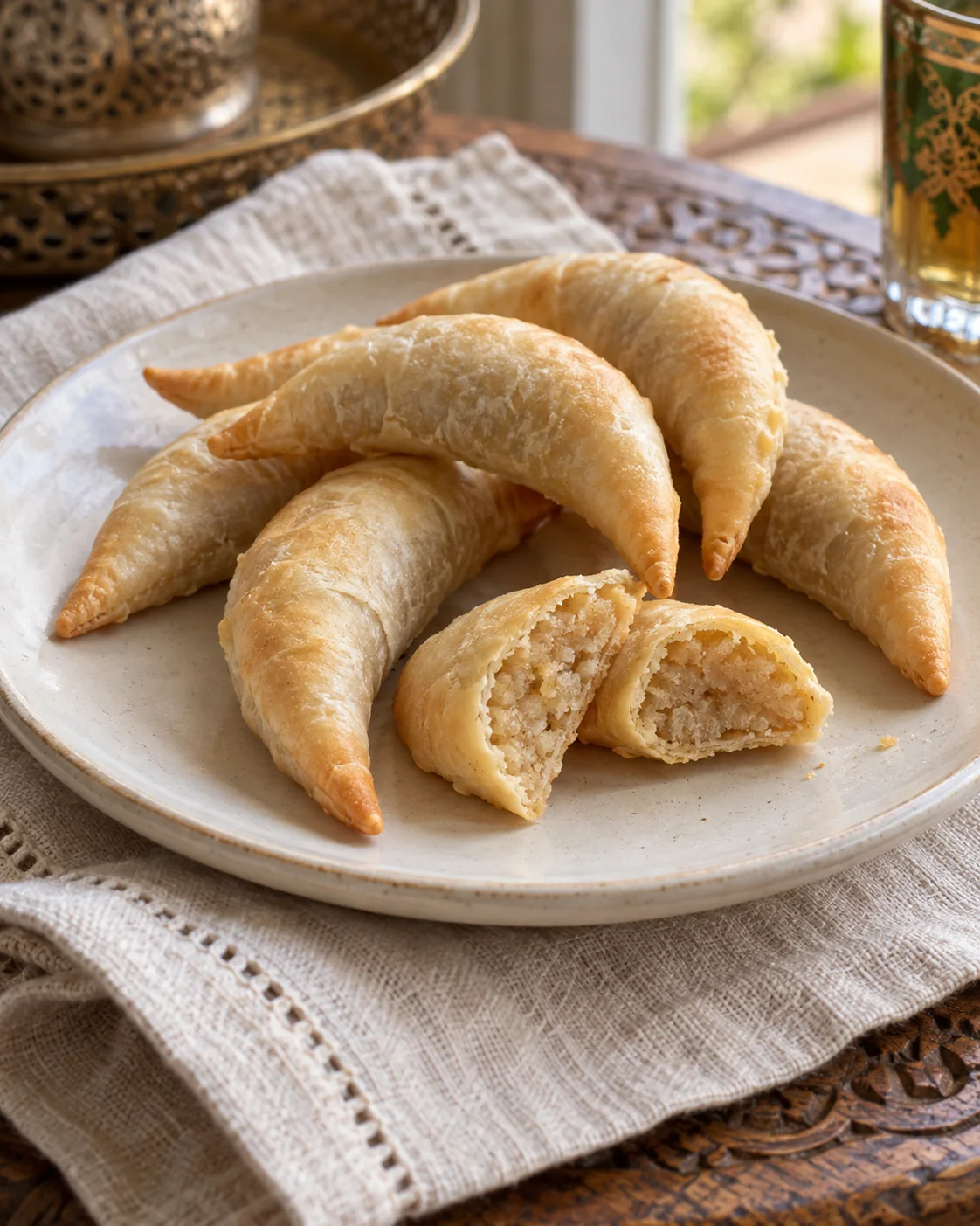
Kaab el ghazal
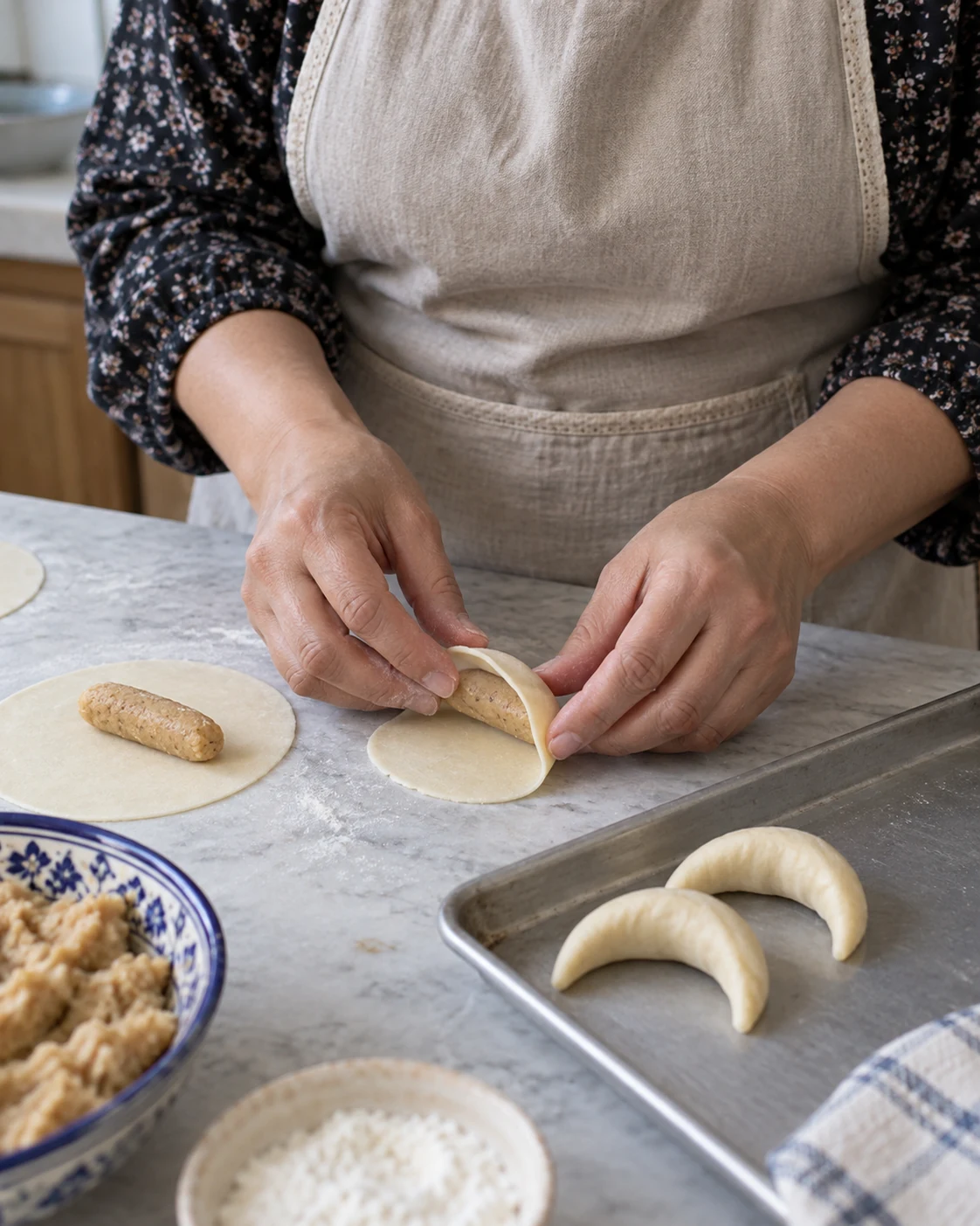
The slender crescent wraps fragrant almond paste in a delicate outer layer. Often called gazelle horns in English or French, it rewards careful shaping and a restrained bake rather than a heavy glaze.
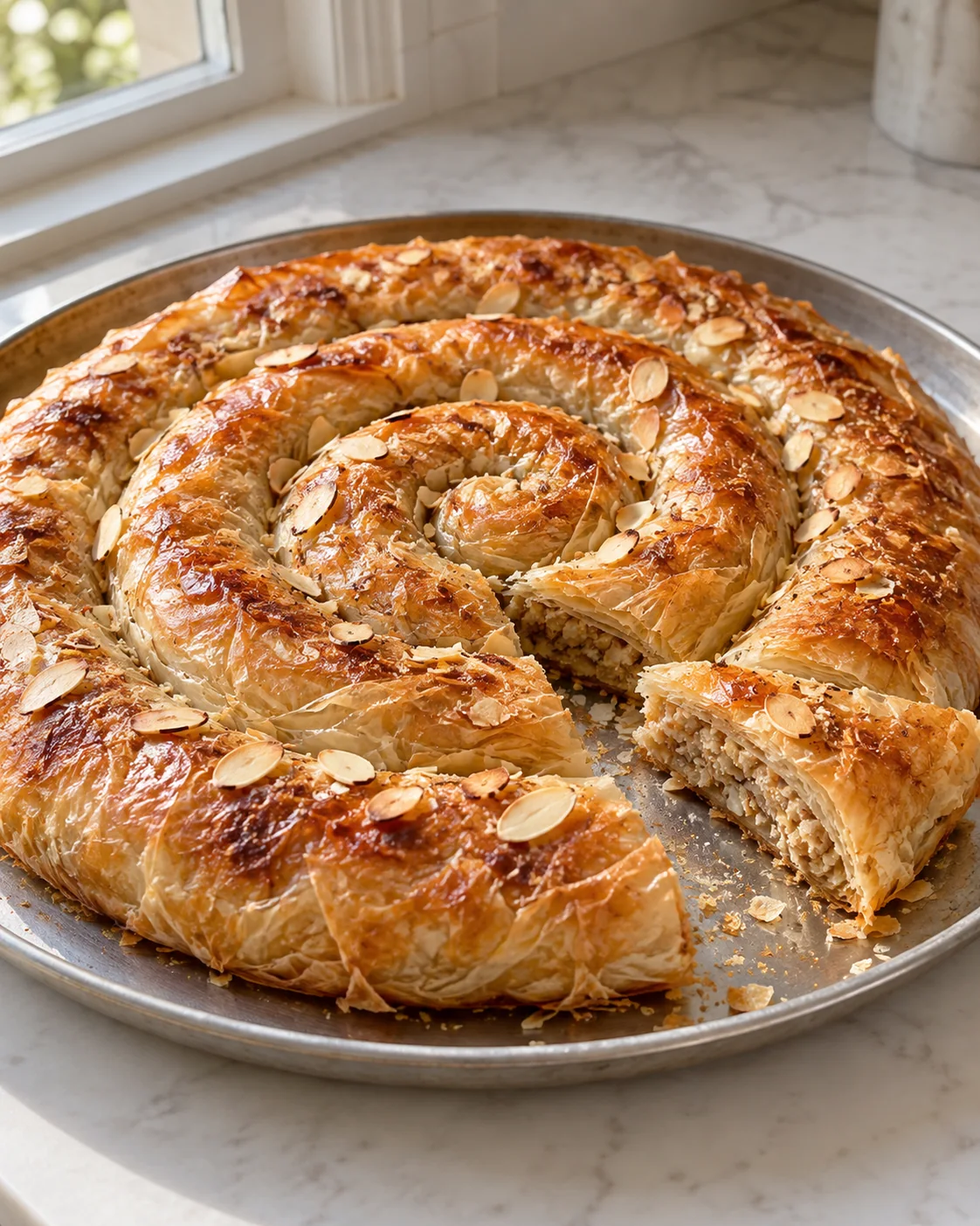
M’hencha
A long strip of thin pastry encloses almond filling and is wound into a coil. The shape is more than a flourish: it creates a large crisp pastry that can be cut for sharing. [3]
Not every sweet is a pastry.
Sellou has no folded outer layer; a bowl and spoon can be its most natural presentation.
Names travel.
Spellings and local names vary. The method, filling and shape are often clearer than an English translation alone.
05 · The sweet pantry
Texture first.
Fragrance follows.
A small set of familiar ingredients can play very different roles. Almonds become a smooth filling or a coarse crunch; sesame can be toasted into a crumb or scattered over a honeyed finish.
The choice is about what a particular sweet needs, not a formula imposed on every pastry.
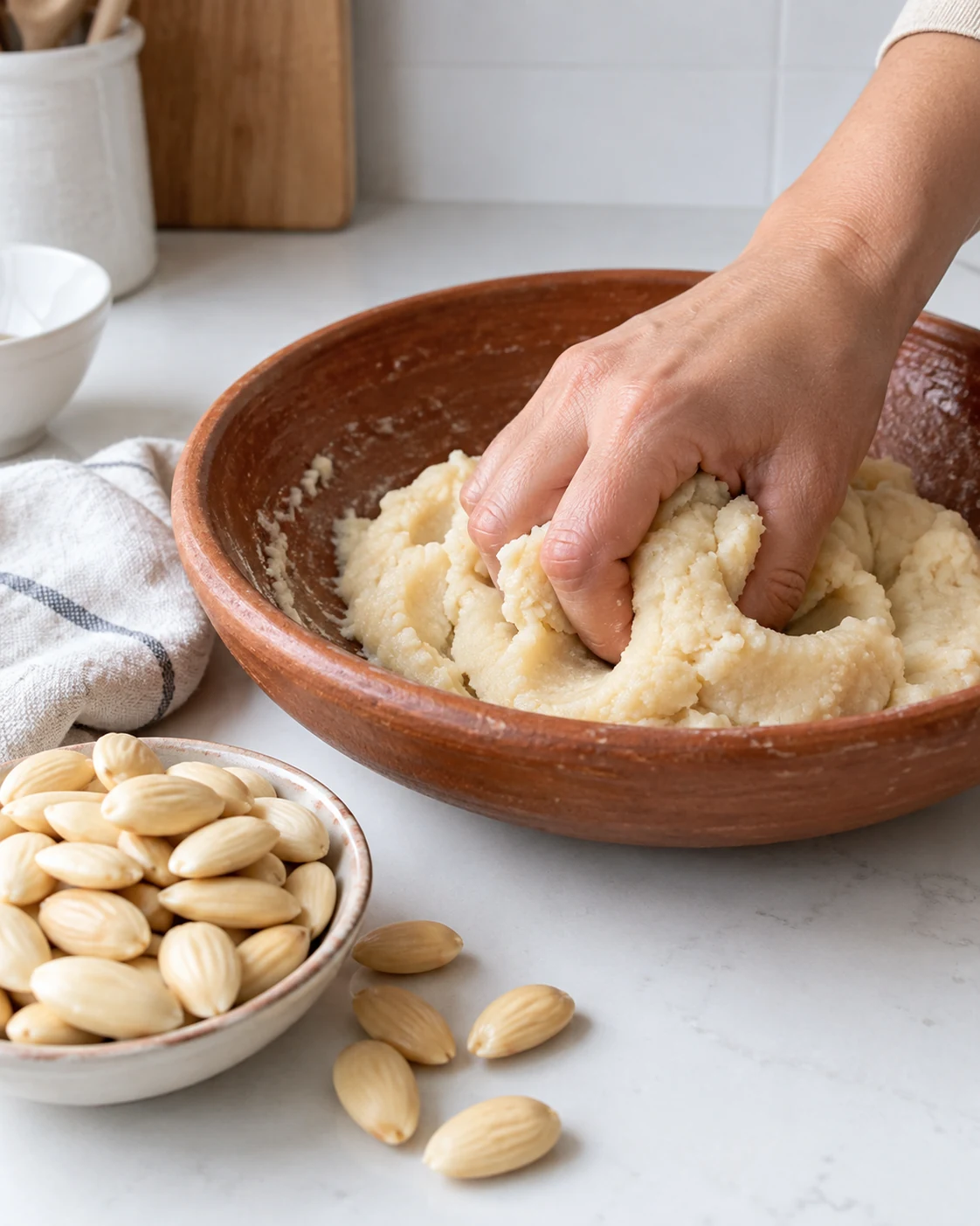
Almonds
A filling or a finish.
Ground almonds can make a soft paste for a briouat or crescent. Sliced or whole nuts bring visible crunch to a finished sweet.
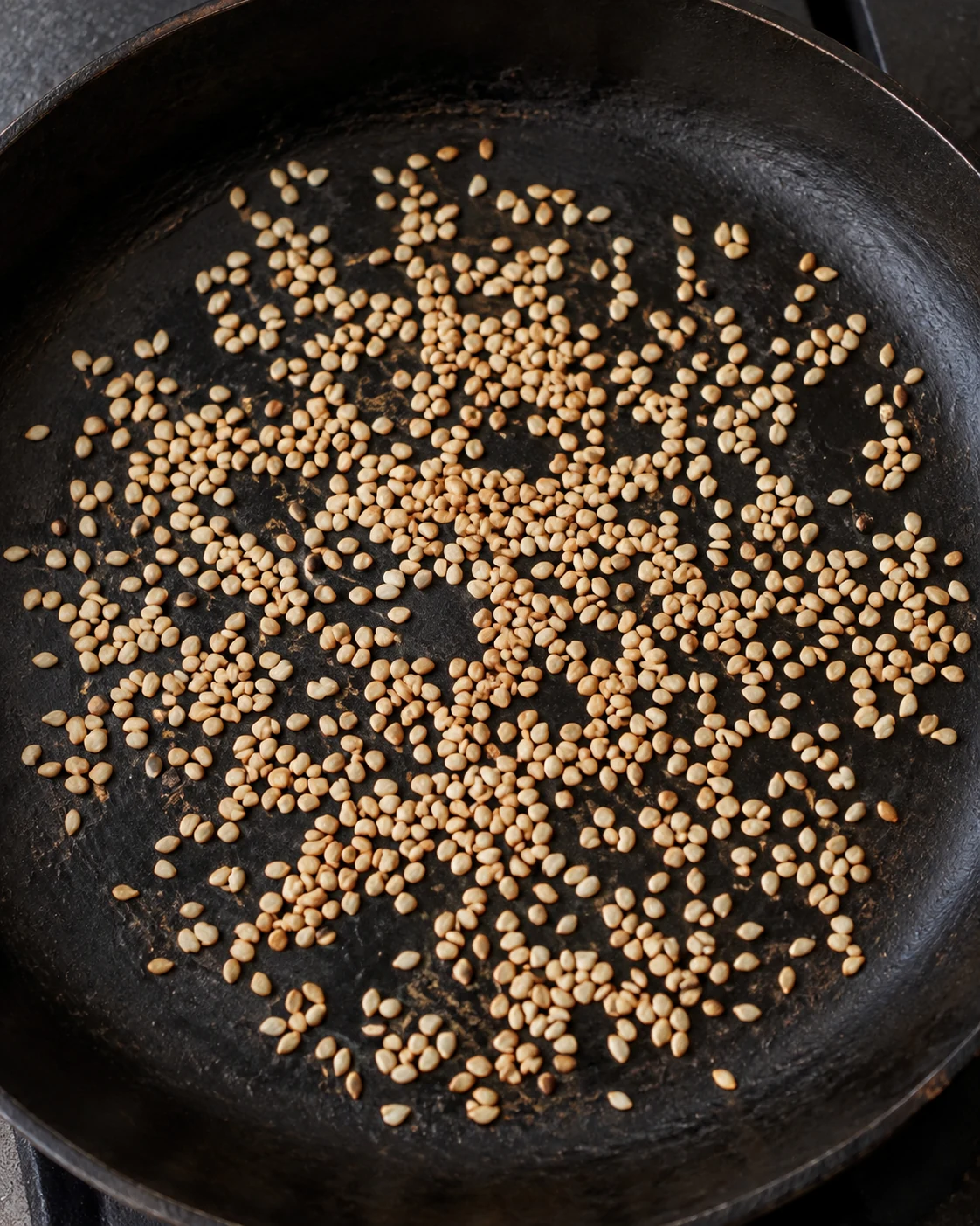
Sesame
Toast changes the note.
Sesame deepens the flavour of sellou and chebakia. A scattering on the surface also marks the honeyed folds.
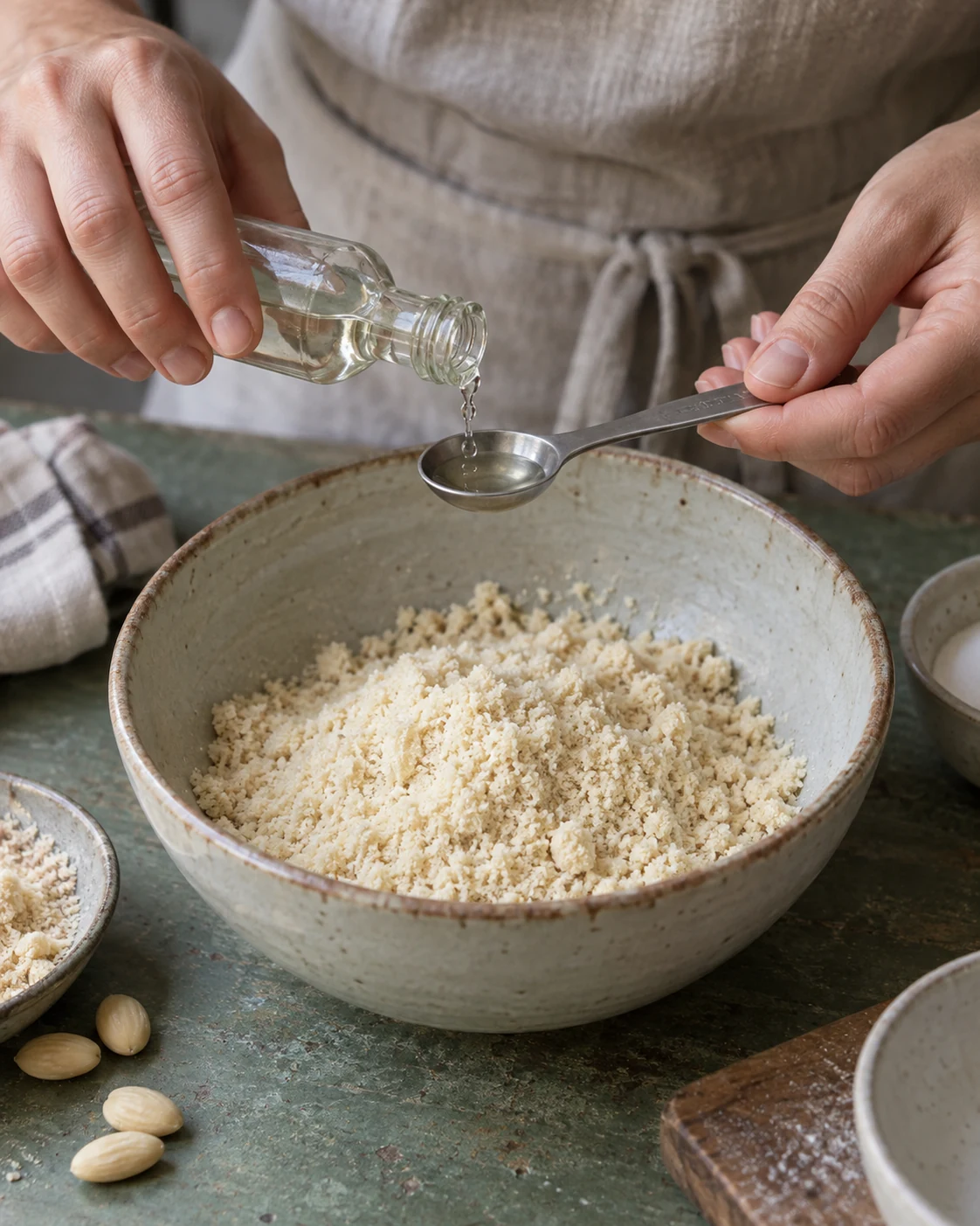
Orange blossom
A measured perfume.
Orange blossom water can lift almond fillings and doughs. Too much overwhelms the nuts and toasted flavours beneath it.
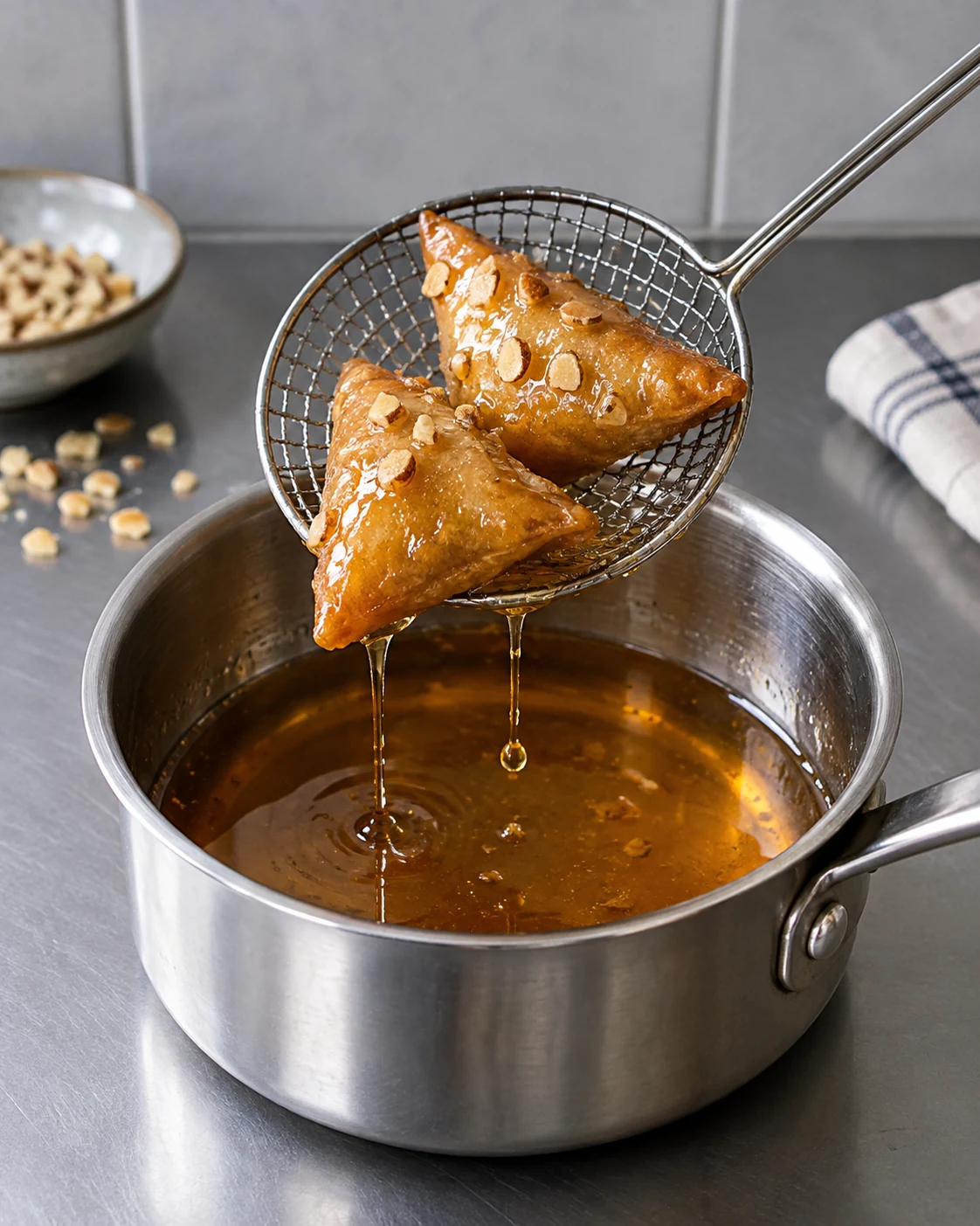
Honey
A finish, not the whole story.
Warm honey clings to fried chebakia and can finish almond briouats. It changes both the sweetness and the surface texture.
Explore the four ingredients
FLOUR · FAT · HEAT
The quiet
architecture.
A sweet’s structure comes from its base as much as from its perfume.
Flour may be roasted for sellou, mixed into a cookie dough, or made into a thin sheet that holds a filling. Fat affects tenderness and crispness. Heat turns a folded pastry golden, sets a cookie’s cracked top or slowly builds a toasted aroma.
The method decides how sweetness feels in the mouth.
Flour can be toasted.
For sellou, its roasted character is part of the flavour and the dry, granular texture.
A thin sheet needs care.
Warqa must wrap without tearing; the pastry’s crispness depends on its delicate layers.
Finishing changes the bite.
A honey bath is right for some sweets, while a dry cookie or light crescent would lose its character under the same treatment.

06 · Home, bakery & occasion
Beyond
one tray.
Sweet-making has more than one address.
A home kitchen may prepare a few family favourites. A neighbourhood bakery can offer a wider counter of small pieces. During Ramadan, chebakia production becomes more visible; at other times, the tray might be built around cookies, almonds or something freshly baked.
It would be misleading to assign every pastry one city or a single origin story. Variations follow cooks, ingredients, household budgets and personal preferences. The arrangement on this page is a guide to form and technique, not a map of exclusive regional ownership.
At home
Hands shape and fill; the family decides how fragrant, crisp or sweet the batch should be.
Explore food culture ↗At the bakery
A counter lets the shapes speak: a cracked cookie, a crisp spiral, a slender crescent.
Explore Taste Morocco ↗At a gathering
A varied tray offers guests a choice of texture without demanding one “correct” selection.
Explore the guide collection ↗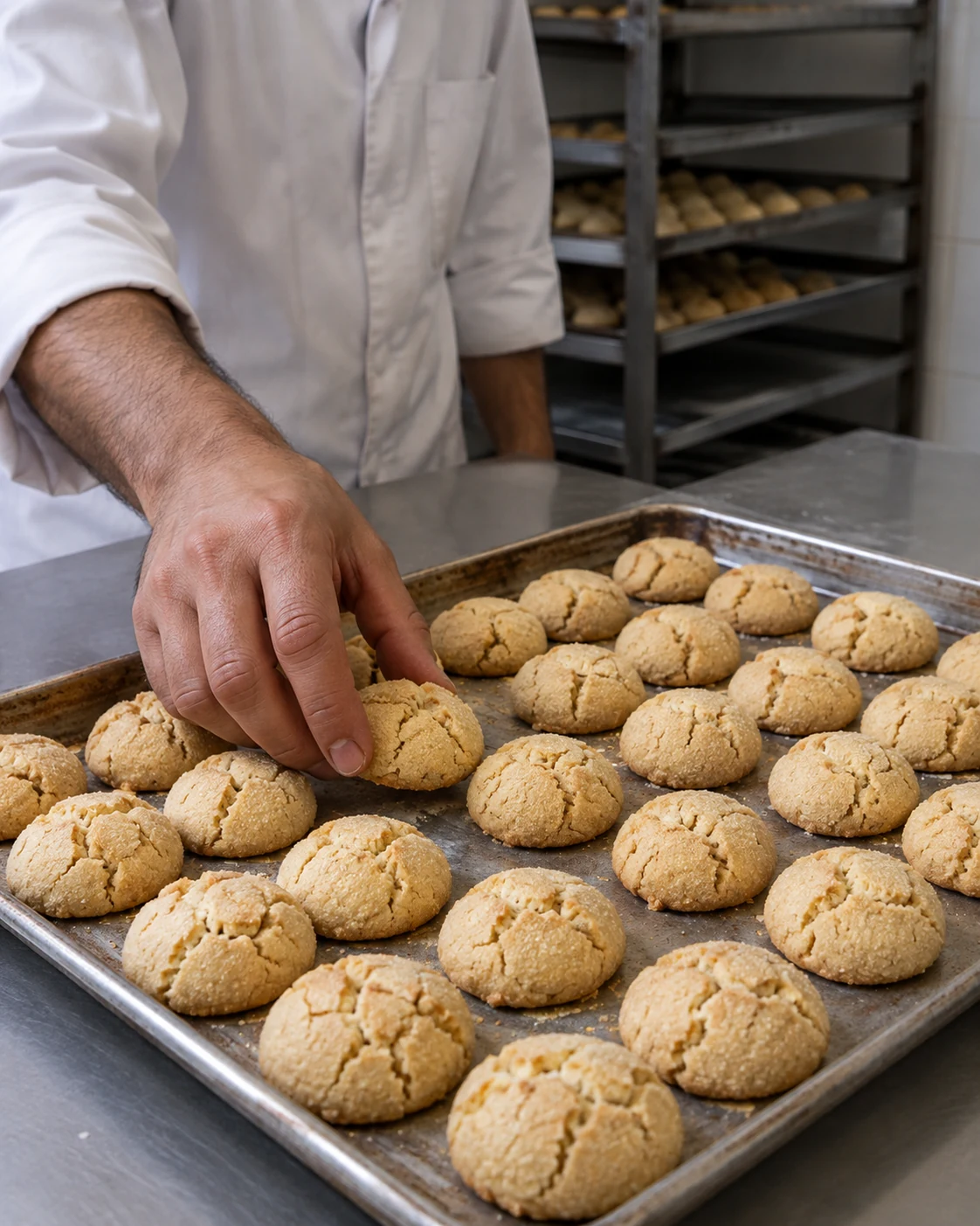
07 · Serving with care
A small piece.
A generous pause.
The tray can invite conversation without taking over the meal.
A biscuit can sit beside tea. Honeyed chebakia may belong to a Ramadan table with harira. Sellou may arrive in a bowl or be pressed into portions. These contexts are related, but they are not interchangeable.
There is no obligation to put every sweet out at once. A few contrasting shapes can show more care than an overcrowded display.
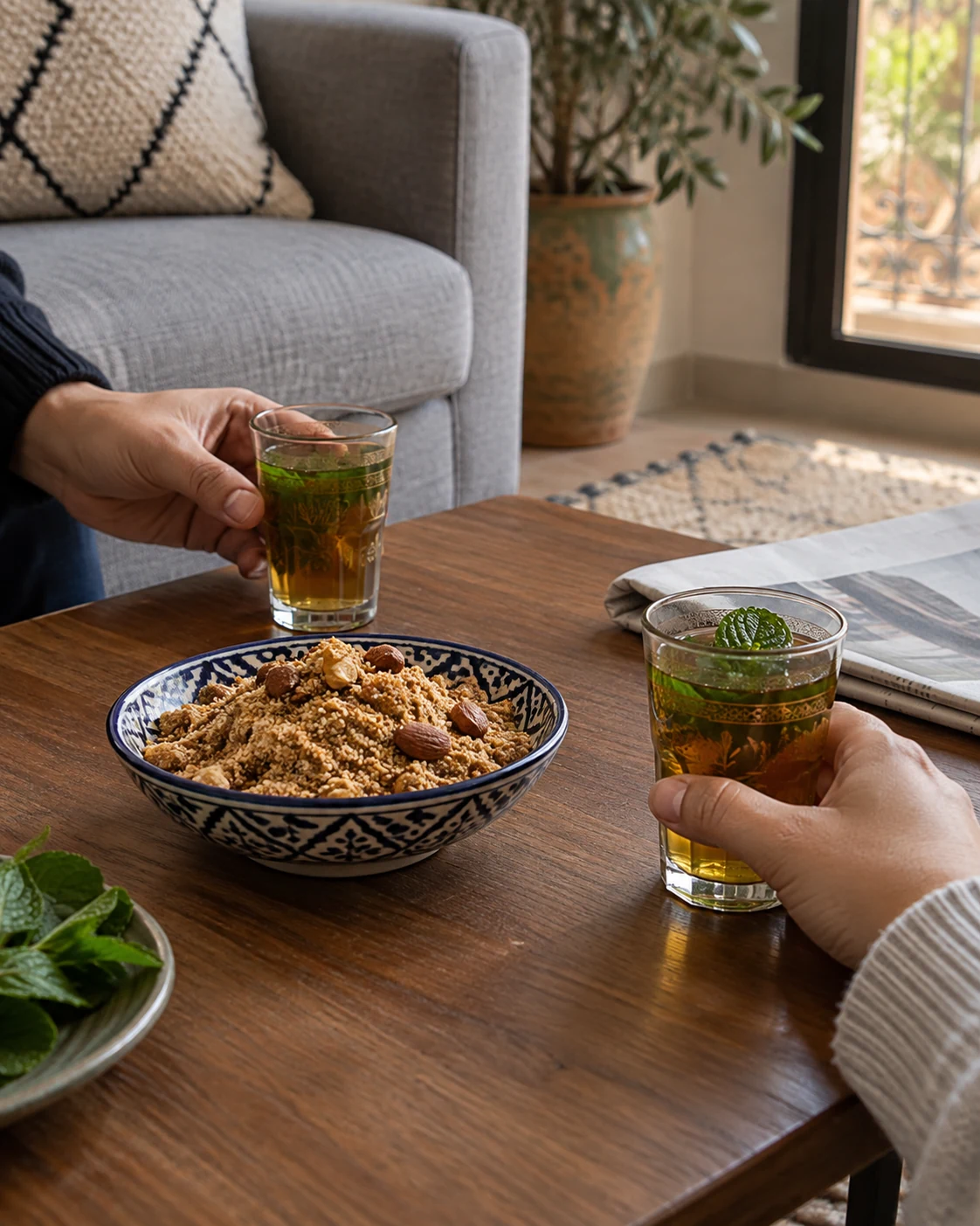
Let contrast do the work.
Pair a crisp folded pastry with a tender ghriba or a small spoonful of sellou. Their structures are different enough that each remains memorable.
Small makes sense.
Rich almond paste and honeyed finishes are best understood in deliberate portions. A modest piece invites tasting without flattening the differences between them.
Tea can be
part of the occasion.
Moroccan mint tea can accompany a pastry tray, but service changes by family and time of day. The pairing is a welcome, not a mandatory rule for every sweet. [1]
Match the sweet to the moment.
A Ramadan evening, a visit with tea and an ordinary biscuit tin ask for different preparation and scale.
08 · The work of the hands
The shape
holds the method.
Folded, coiled, cracked or sliced: the form tells part of the story.
A triangular briouat contains its almond filling. The chebakia fold exposes edges to hot oil and honey. M’hencha coils a long wrapped filling into a sharing pastry. Fekkas is sliced after an initial bake so its cut faces can dry and crisp. Kaab el ghzal closes a thin dough shell around an almond-paste crescent.
These techniques take practice; machine-perfect uniformity is not the measure of a good sweet. A strong batch has consistent cooking and a texture that suits its form.
When a pastry is made for guests, the work is visible in the tray. That is a practical reason to look closely before the first bite.
09 · Useful distinctions
Good questions.
Clear answers.
A name is a beginning; a method gives the fuller picture.
Is sellou a pastry?
No. It is a rich toasted mixture, commonly based on flour, sesame and almonds. It may be spooned or shaped into portions, but it has no pastry shell.
Are all briouats sweet?
No. The folded form can hold savoury fillings. Almond briouats are a sweet version, often finished with honey.
Is chebakia the same as ghriba?
No. Chebakia is folded, fried and honeyed; ghriba is a family of baked cookies with varying ingredients and crumbs.
Does every sweet contain orange blossom water?
No. It is useful in some almond fillings and doughs, but toasted nuts, sesame or spice may lead other preparations.
When are these sweets served?
There is no single moment. Chebakia and sellou are closely associated with Ramadan in many homes; cookies and almond pastries can also appear with tea, on visits and at celebrations.
 EXOTIC MOROCCOTASTE · THE GUIDE COLLECTIONSweets & PastriesIngredients, technique
and the Moroccan table
From the story to your kitchen
Keep the flavour.
Go a little deeper.
Almonds, sesame, pastry and the work of the sweet kitchen.
Explore the Exotic Morocco guide collection for a closer look at ingredients, kitchen knowledge and the culture around the table.
- Understand the ingredients and their roles
- Recognise the techniques and textures that matter
- Bring context and confidence to the way you cook and serve
Continue tasting Morocco
Follow the
table outward.
Another dish, another technique, another way into the Moroccan kitchen.
Chebakia
Folded sesame pastry finished with honey.
Explore the story ↗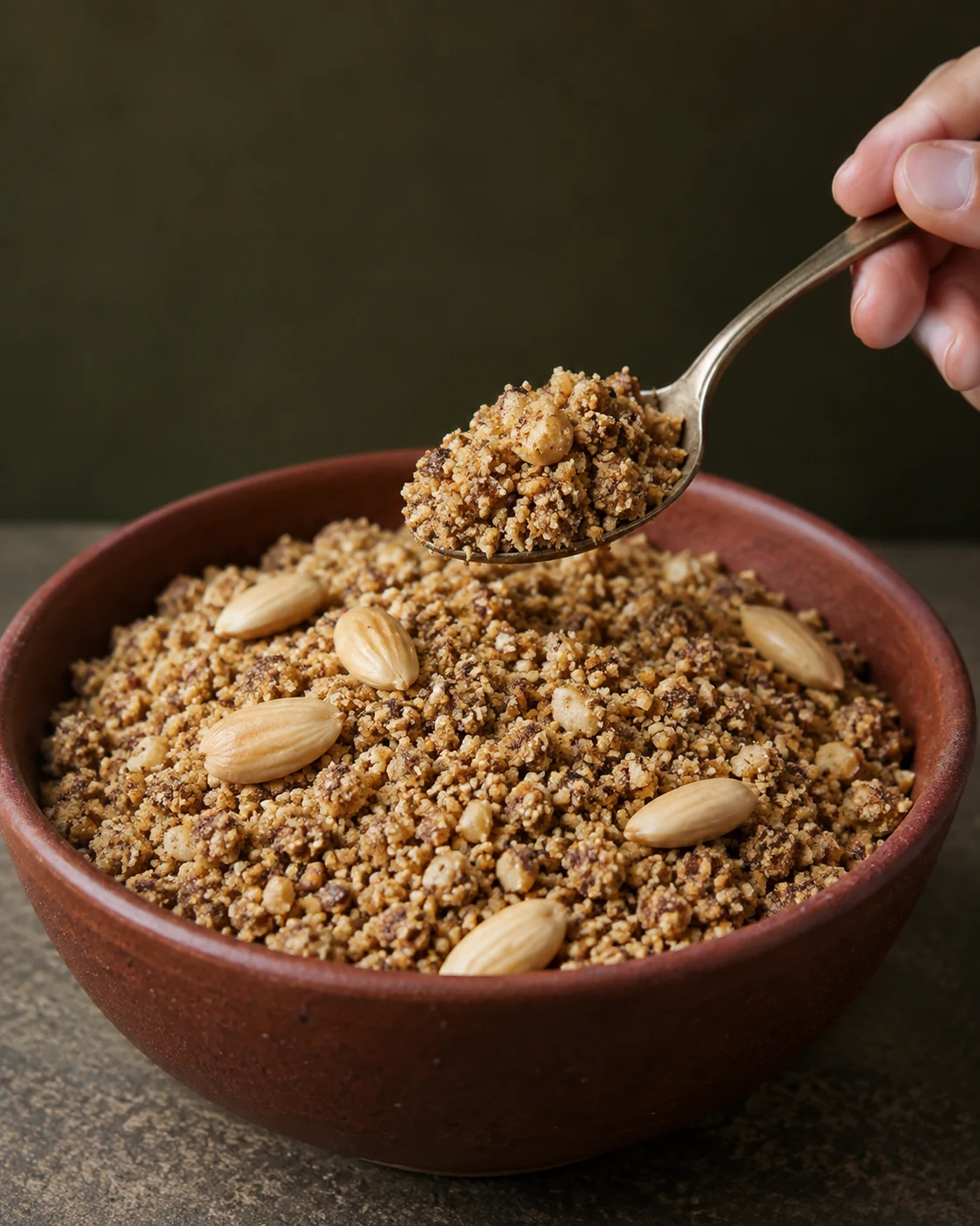
Sellou
Toasted flour, sesame and almonds in a distinctive sweet mixture.
Explore the story ↗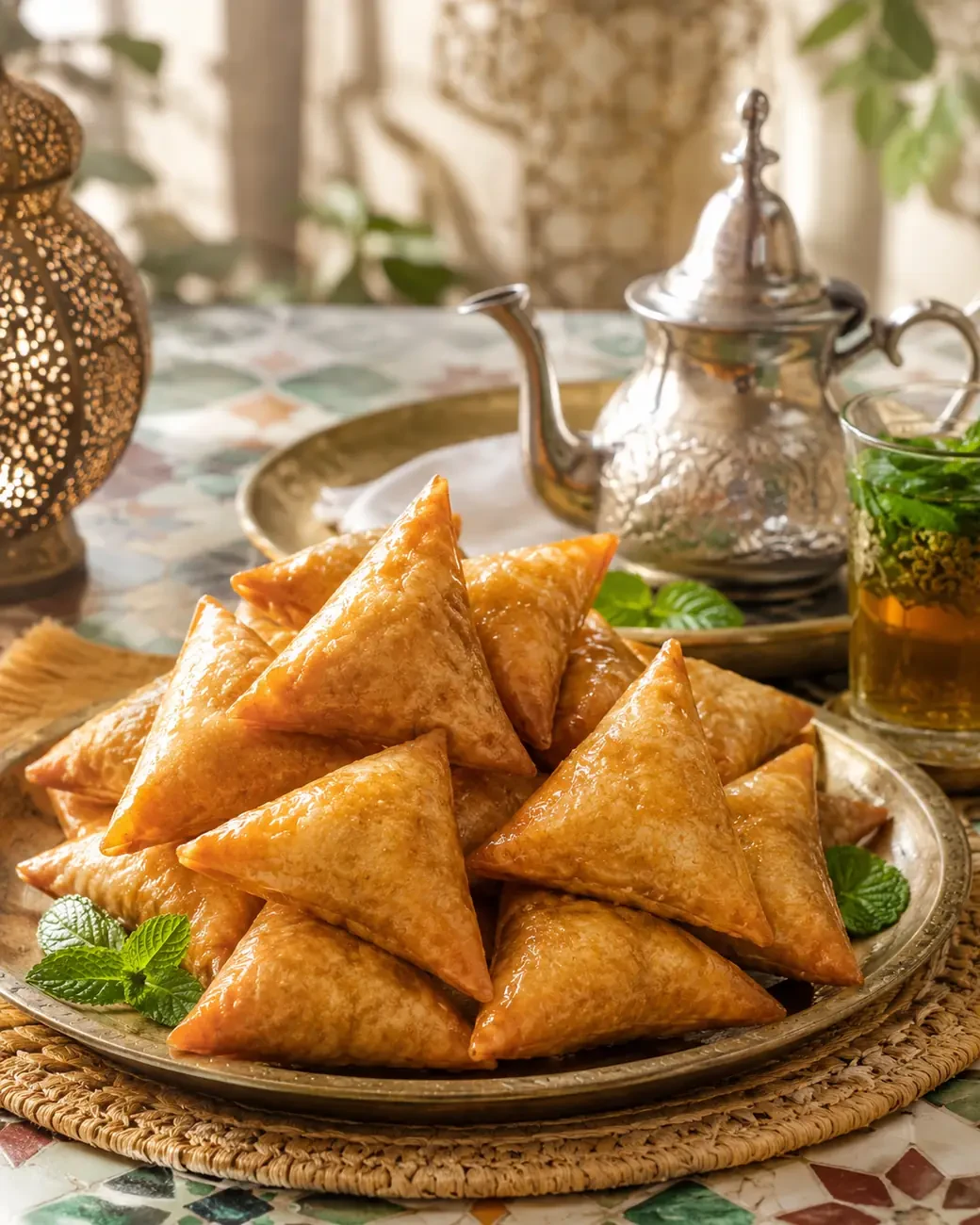
Briouats
Small folded pastries, with both savoury and sweet possibilities.
Explore the story ↗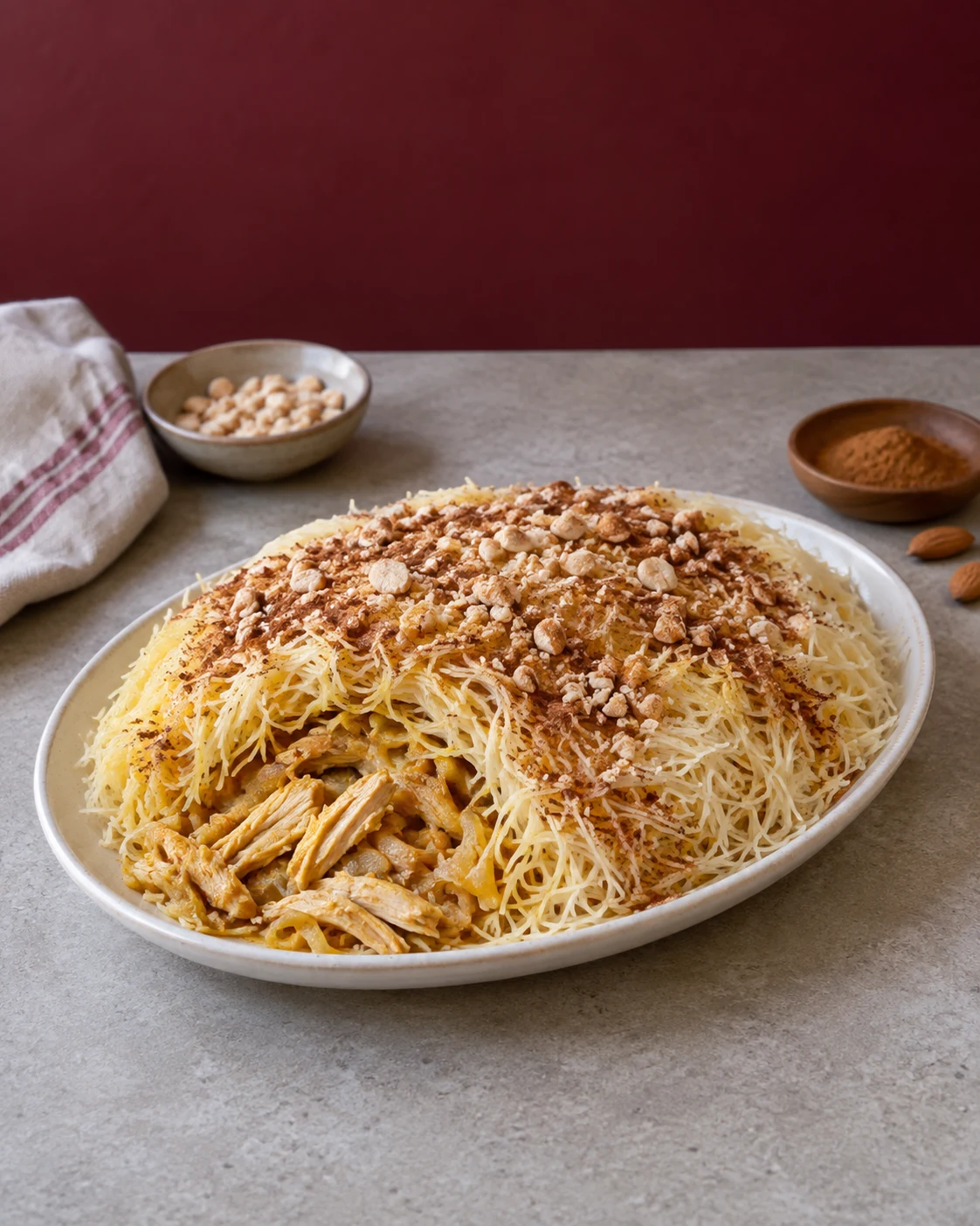
Seffa
Steamed vermicelli or couscous, almonds and sweet aromatics.
Explore the story ↗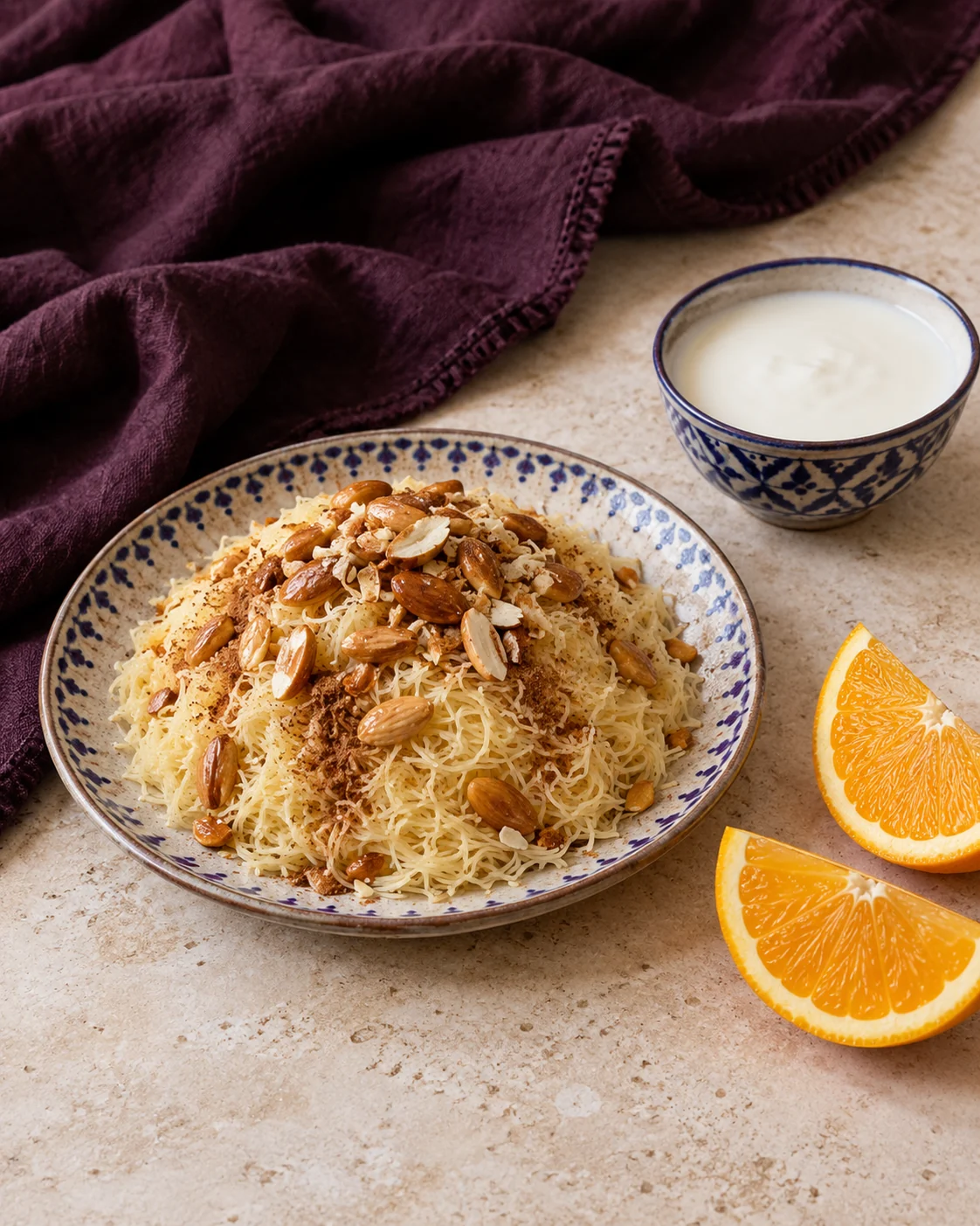
Desserts
Fruit, fragrance and a considered sweet ending.
Explore the story ↗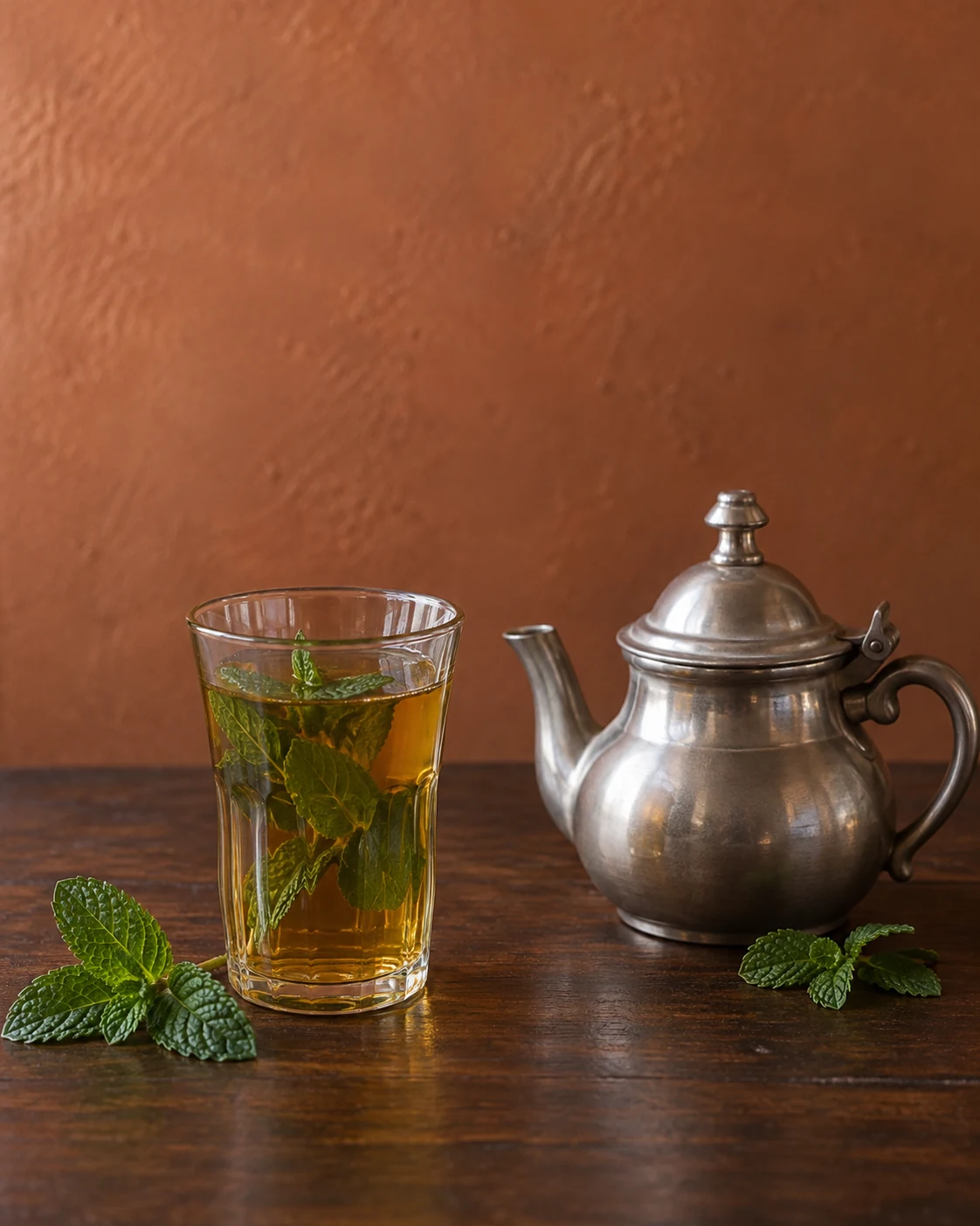
Moroccan Mint Tea
Green tea, fresh herbs and the time given to a guest.
Explore the story ↗Sources & editorial notes
This page introduces a diverse group of Moroccan sweets; it does not claim a single origin or universal serving practice. Photographs are editorial illustrations from Exotic Morocco’s collection and newly generated scenes, not documentary records of a named bakery or family.
- Moroccan National Tourist Office · Food & Drink — chebakia, gazelle horns, tea and pastry context.
- Christine Benlafquih · Chebakia Recipe — sesame dough, folding, frying, honey and Ramadan context.
- Nargisse Benkabbou · Almond M’hencha — thin pastry, almond filling and coiled presentation.
- WIPO · Scoping Study on Moroccan Culinary Heritage — documented recognition of chebakia, ghriba, gazelle horns and m’hencha.
EXOTIC MOROCCO Places. People. The pleasure of knowing more.Back to top ↑