

01 · After the meal
A sweet ending.
Many different forms.
A plate of fruit can be every bit as considered as a layered pastry.
Moroccan dessert does not name one mandatory final course. The season and the meal matter: sliced citrus after a rich lunch, a bowl of cool raïb, or a composed sweet for guests. Fresh fruit often makes the simplest ending. [5]
More elaborate preparations ask for another kind of attention. Seffa relies on airy steamed strands; jawhara depends on the contrast between crisp sheets and soft milk cream. Each has its own logic, rather than one universal formula for sweetness.
Explore Moroccan food culture ↗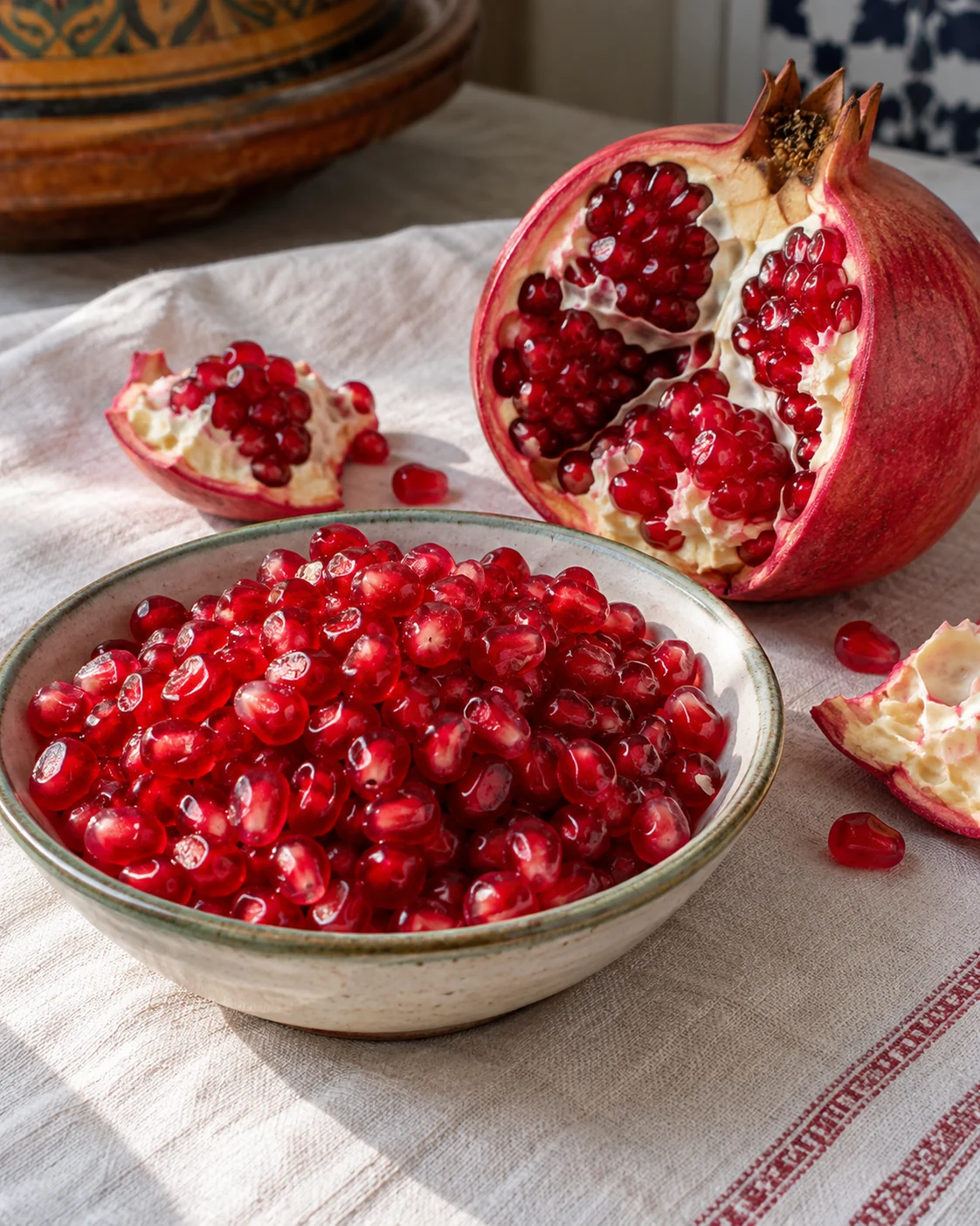
Selected for freshness rather than ceremony.
Different desserts reward different handling.
No single dessert fits every meal.
02 · Everyday choices
Begin with
what is ripe.
The most useful dessert question is often seasonal.
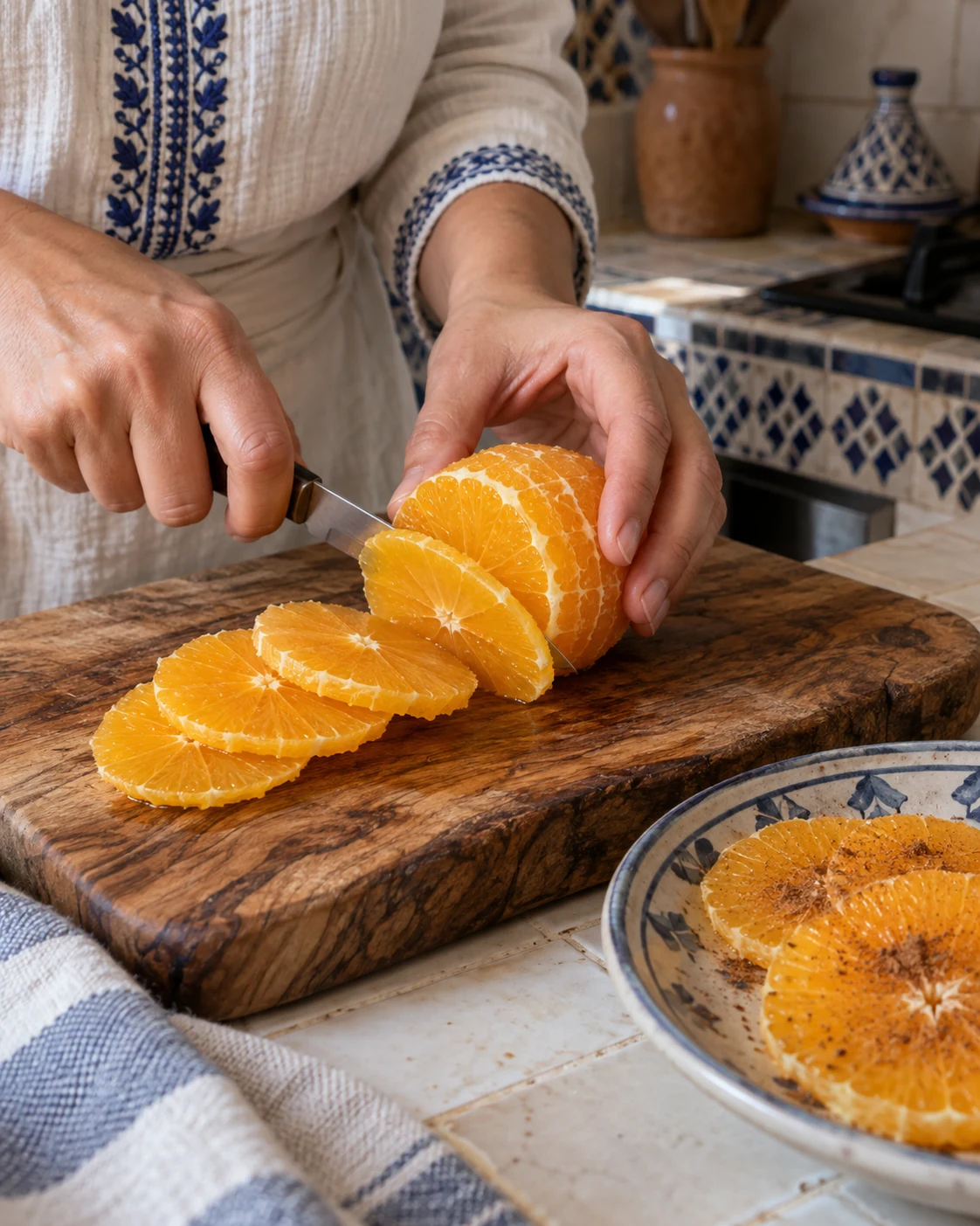
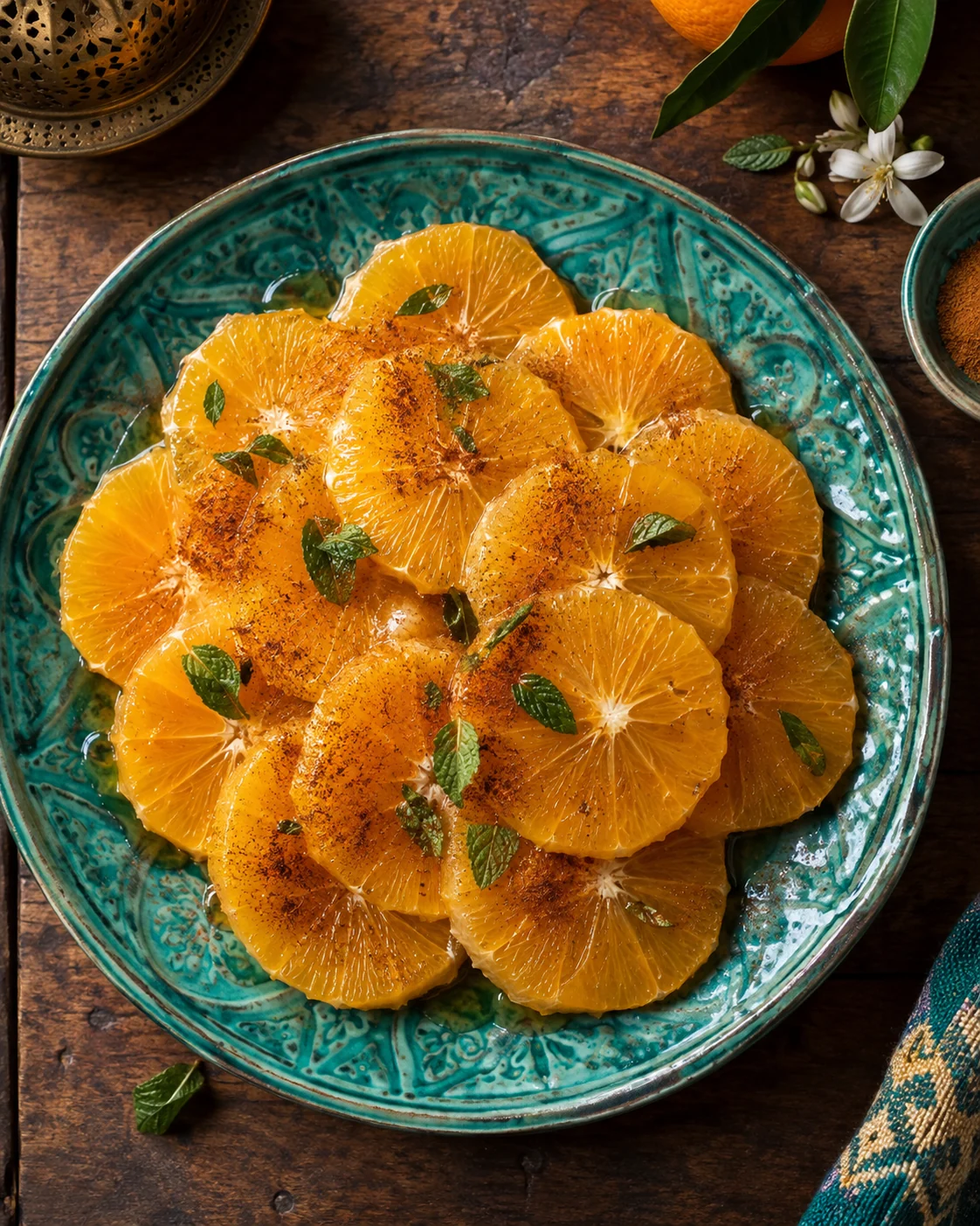
Fresh fruit may arrive whole, peeled or sliced. A plate of oranges with cinnamon is a documented Moroccan dessert salad; in season, other fruit can be served with equally little intervention. [1] [5]
There is no need to make every ending rich or highly sweet. After a generous savoury meal, temperature, ripeness and a restrained fragrance can do more work than extra sugar.
Choose the fruit
Ripe produce sets the flavour before any seasoning is added.
Keep the perfume light
Cinnamon and orange flower water can sharpen a fruit plate, but neither must appear everywhere.
Serve at the right moment
Chilled fruit, cultured milk and crisp pastry call for different temperatures and timing.
03 · Texture is the method
Build the contrast.
Protect the texture.
Steam, then separate
For seffa, repeated steaming and fluffing keeps fine vermicelli light rather than wet or clumped. [6]
Layer close to serving
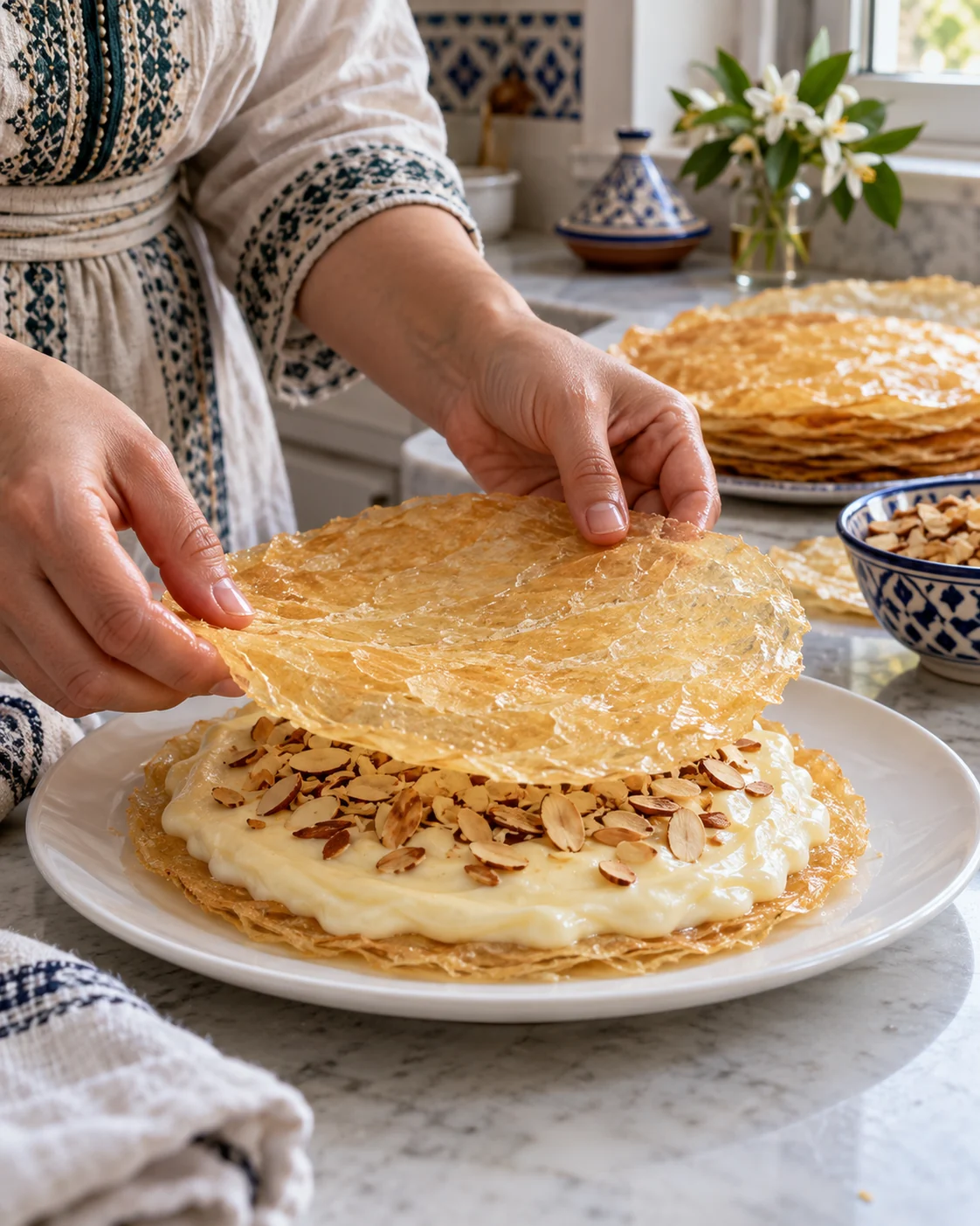
For jawhara, pastry and milk cream meet late. The point is the break of a crisp sheet against the smooth filling.
Let fruit remain fruit
Cut oranges cleanly and add aromatic touches with restraint. Ripe fruit remains the main ingredient.
The right finishing step depends on the dessert: cool, steam or assemble, then serve while its defining texture is intact.
04 · Four ways to finish
From a fresh slice
to a layered jewel.
These examples show the breadth of the dessert table. They are distinct preparations, not a single national menu.
Move through the cards for flavour, texture and the occasion each suits.
Oranges & cinnamon
Peeled citrus is sliced, then finished with cinnamon. Orange flower water is an option in some households. Served cool, it gives a substantial meal a clean, bright ending. [1]
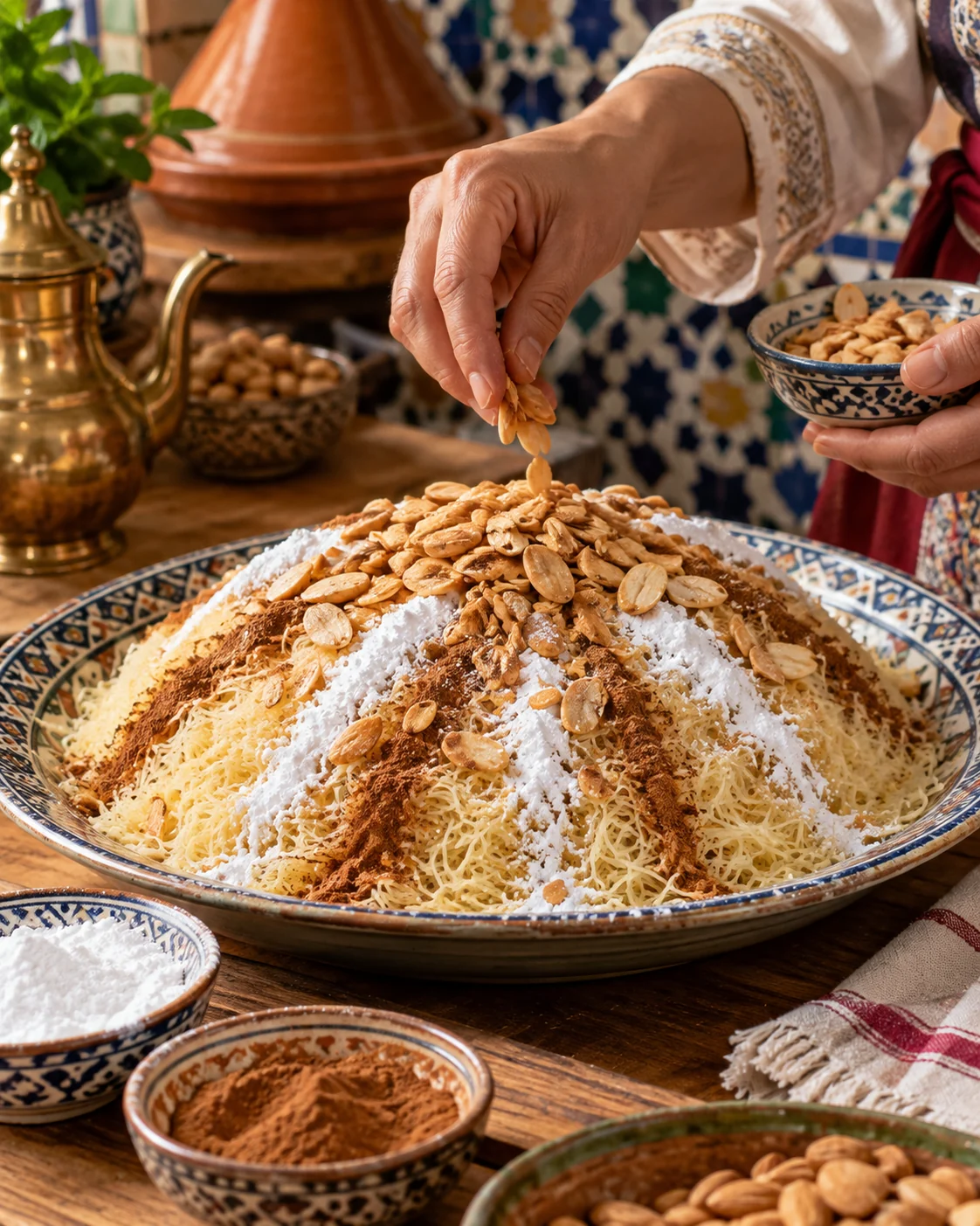
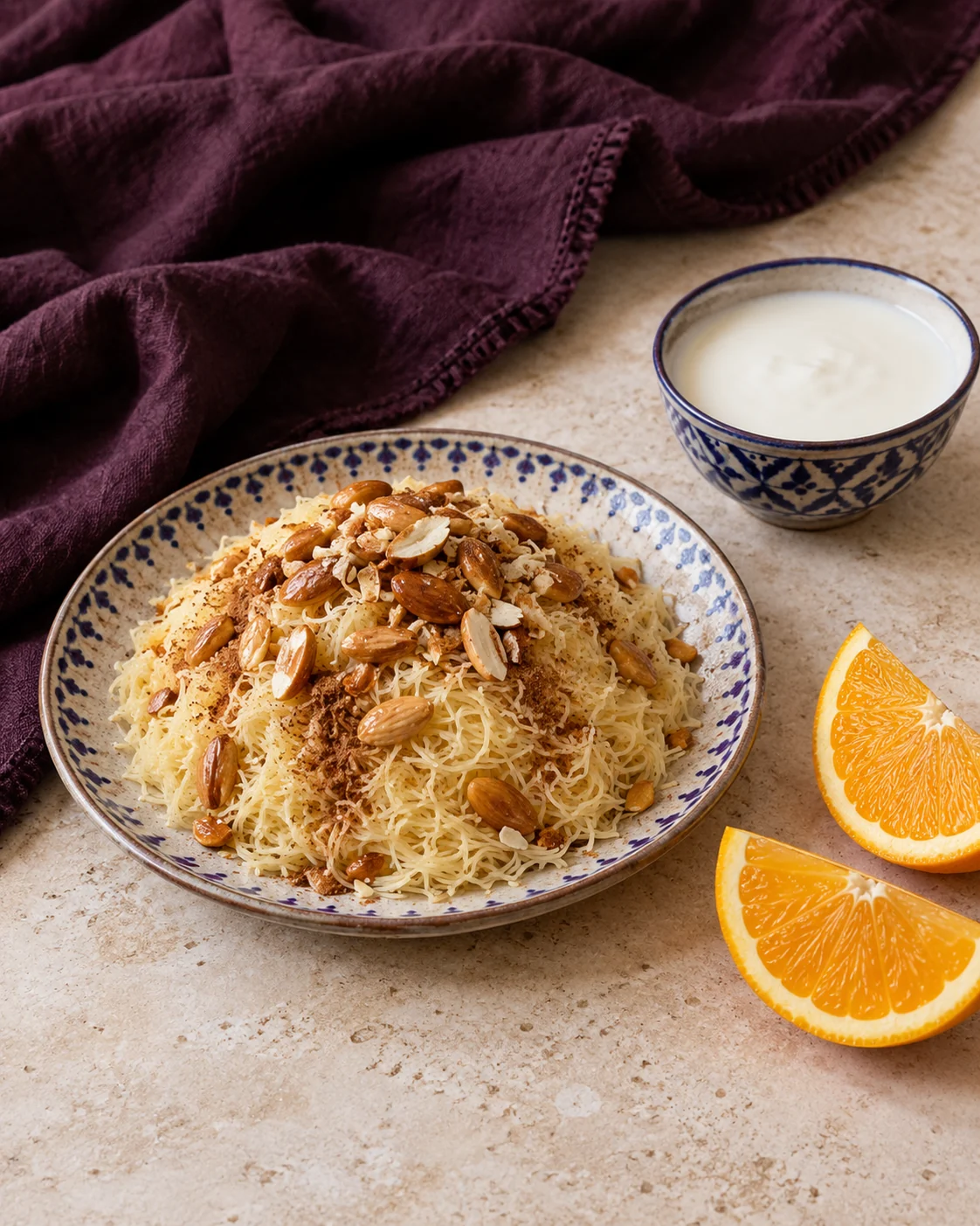
Sweet seffa
Fine vermicelli or couscous is steamed until light and dressed with butter, cinnamon, sugar and almonds. The plain sweet preparation differs from seffa medfouna, which conceals a savoury meat filling. [2]
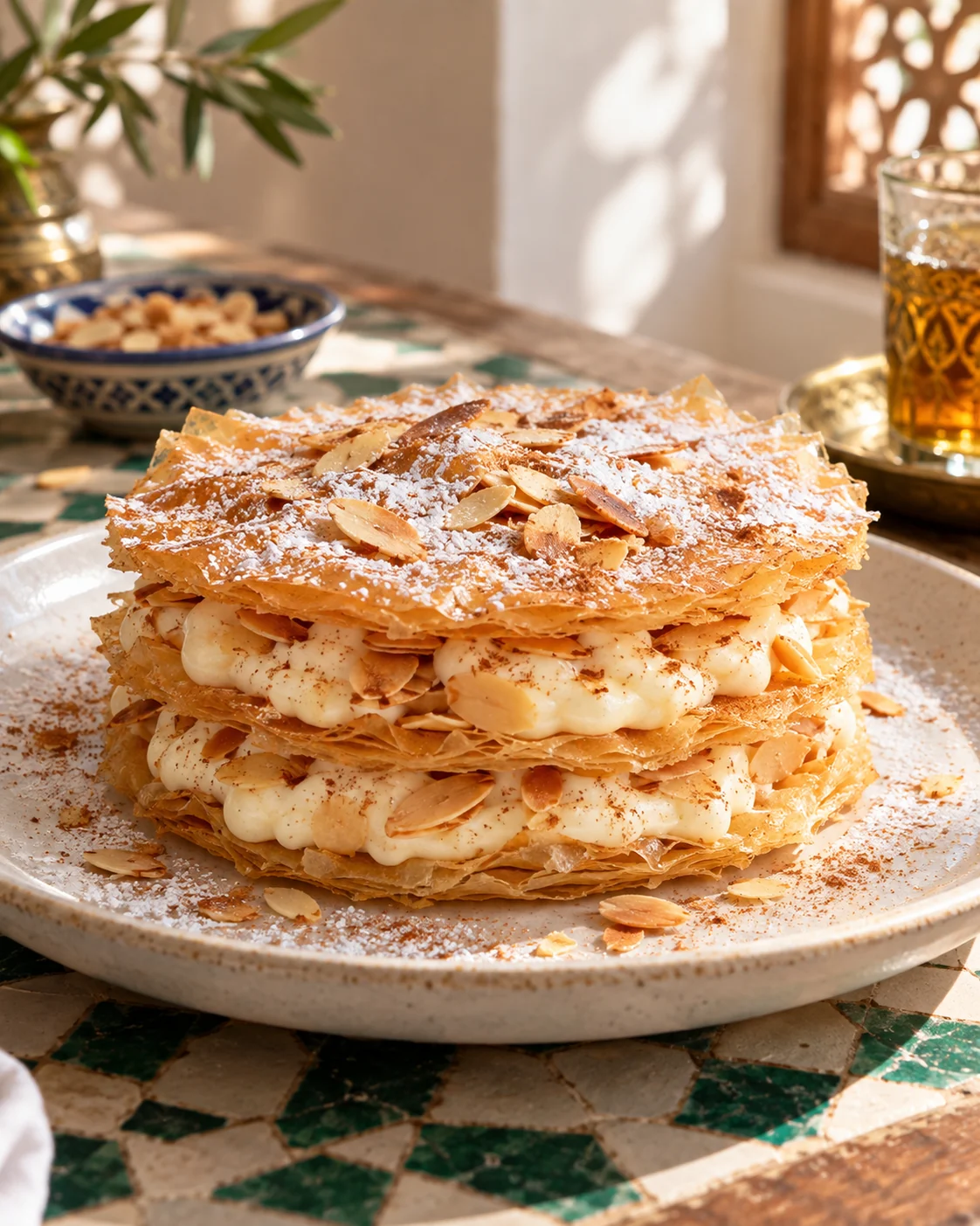
Jawhara
Also called milk pastilla or ktefa, this assembled dessert sets crisp warqa sheets against a soft milk filling and almonds. It is at its best before the layers lose their crunch. [3]
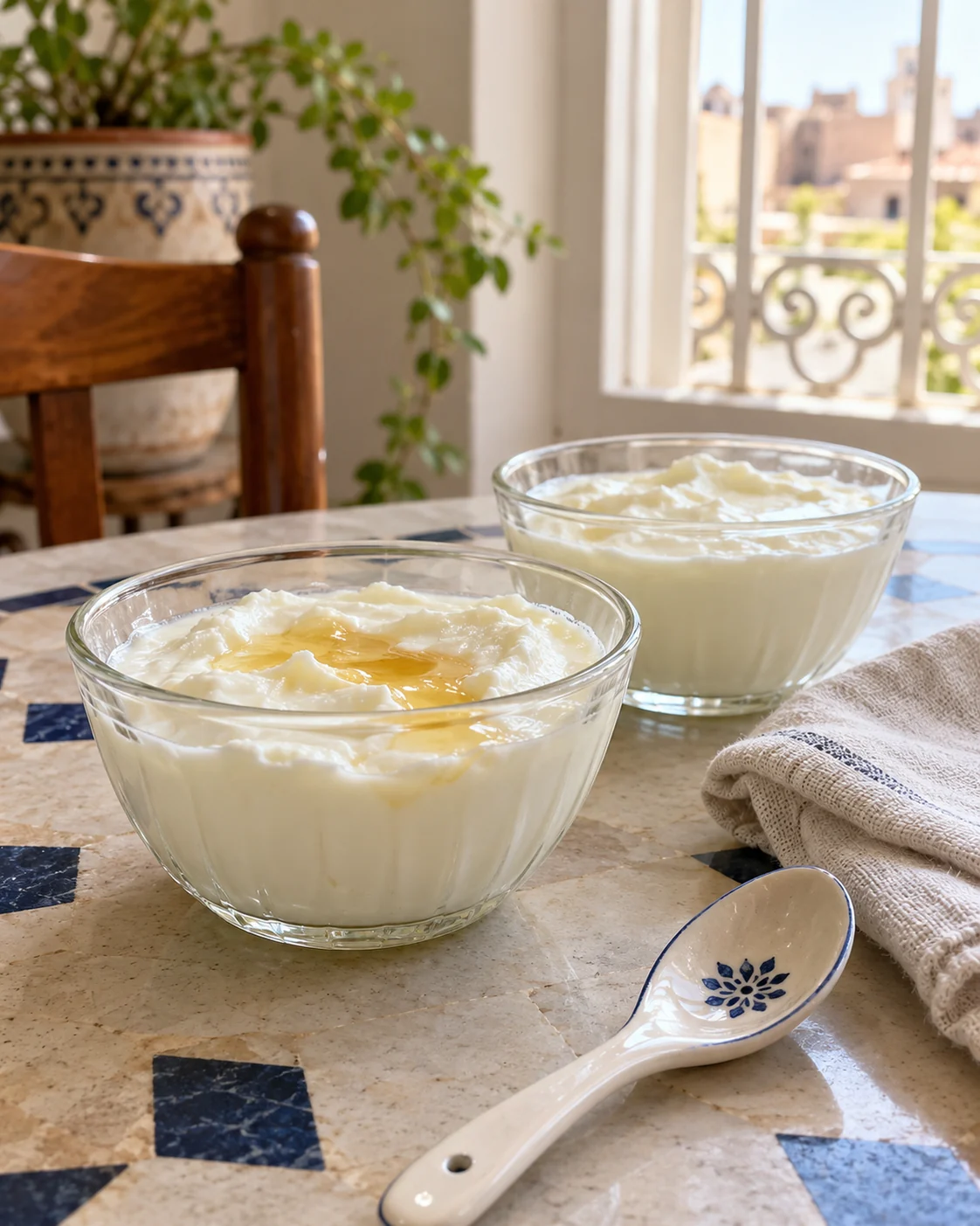
Raïb
This softly set cultured milk belongs to the quieter side of the sweet table. It may be enjoyed plain or sweetened to taste; it is not a custard or a pastry. [4]
Fruit can be the finale.
Seasonal pomegranate seeds may be served simply; orange flower water or cinnamon are optional additions. [7]
Pastries have their own chapter.
Chebakia, briouats and cookies may appear with tea or around celebrations. Their place on the sweet table does not make them interchangeable with a post-meal fruit dessert.
05 · Accents with a purpose
A little aroma.
A clear main flavour.
The same ingredients can play very different roles: a finishing scent, a roasted crunch, or sweetness that binds a pastry.
None belongs by default in every dessert. The dish determines the choice.
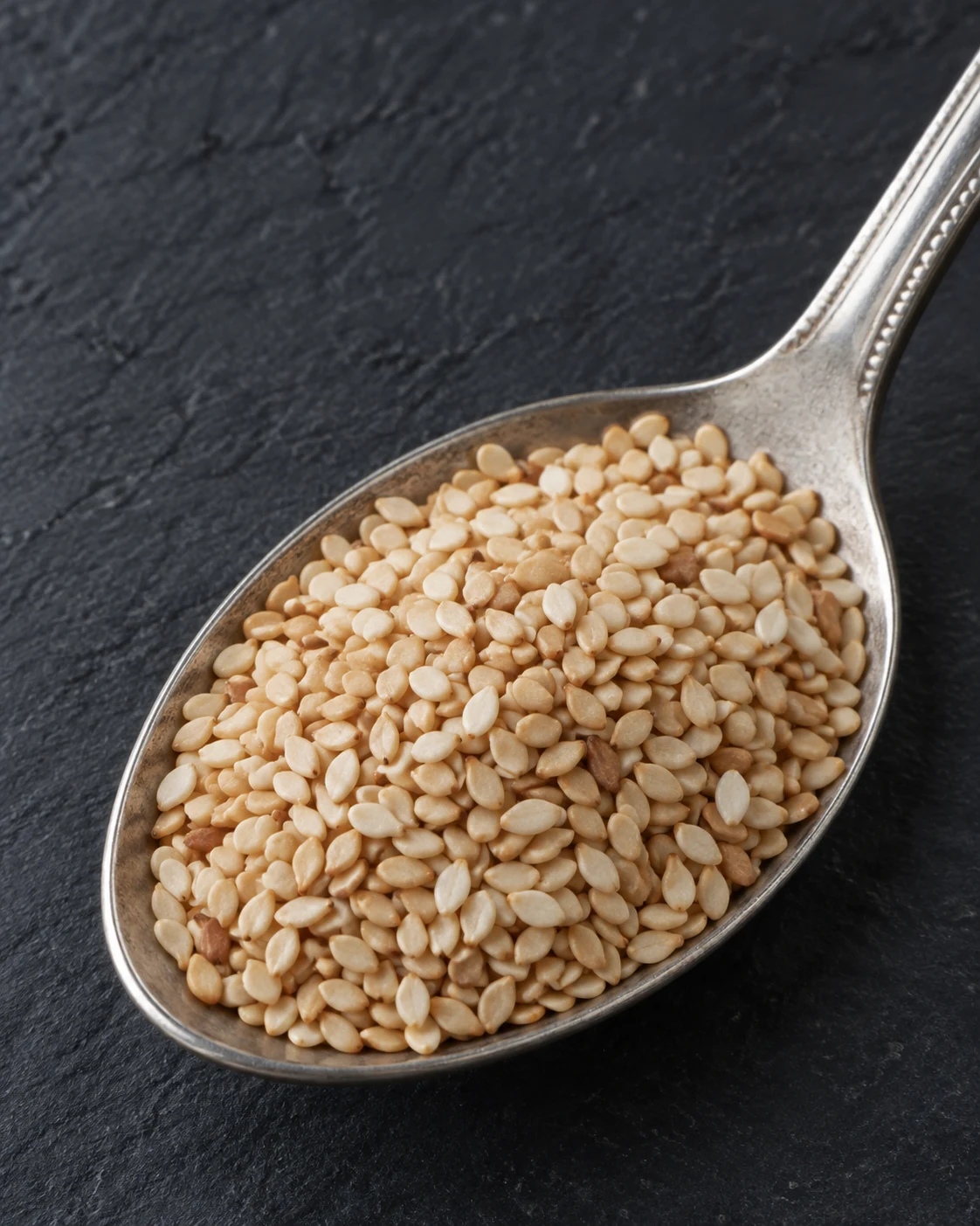
Sesame
Toasty depth.
Toasted seeds bring aroma and a fine crunch to preparations such as sellou and honey-coated chebakia. They are not a universal dessert garnish.
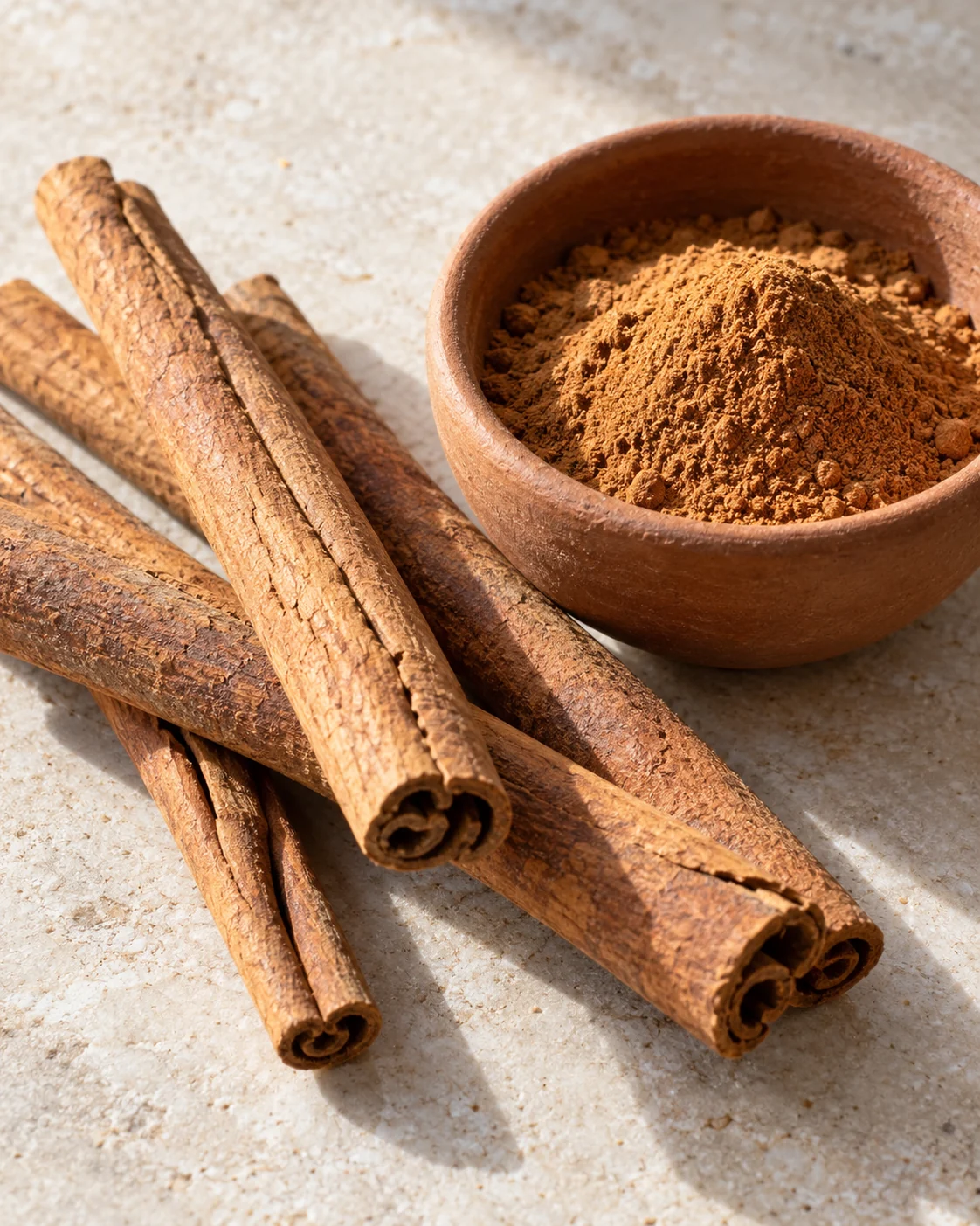
Cinnamon
Warm, not fiery.
A light dusting can bring ripe orange, steamed seffa or milk-based sweets into focus without burying their own flavour.
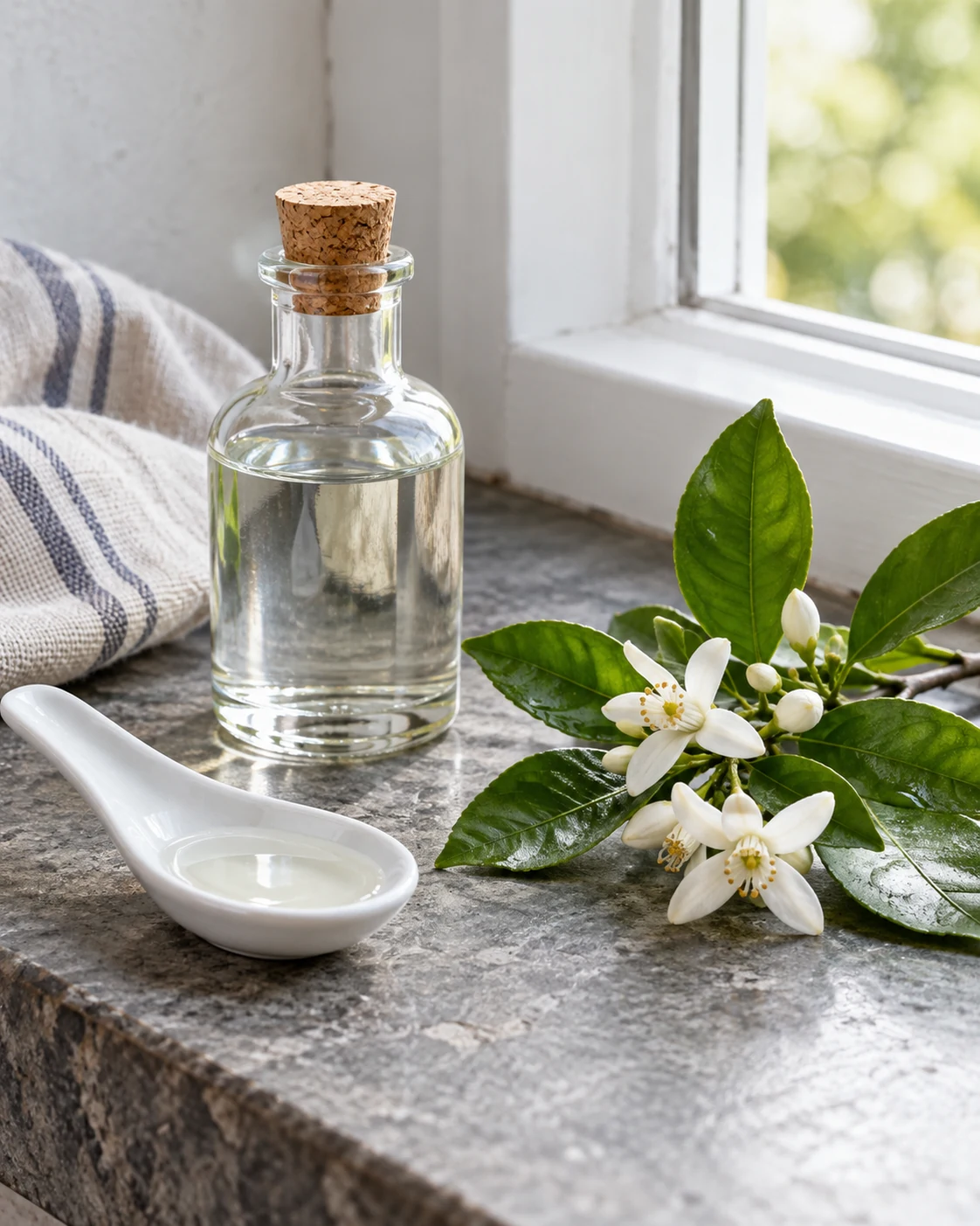
Orange blossom
A measured perfume.
Orange flower water is used in some fruit and milk desserts. A few drops can be enough; too much overwhelms the fruit or dairy.
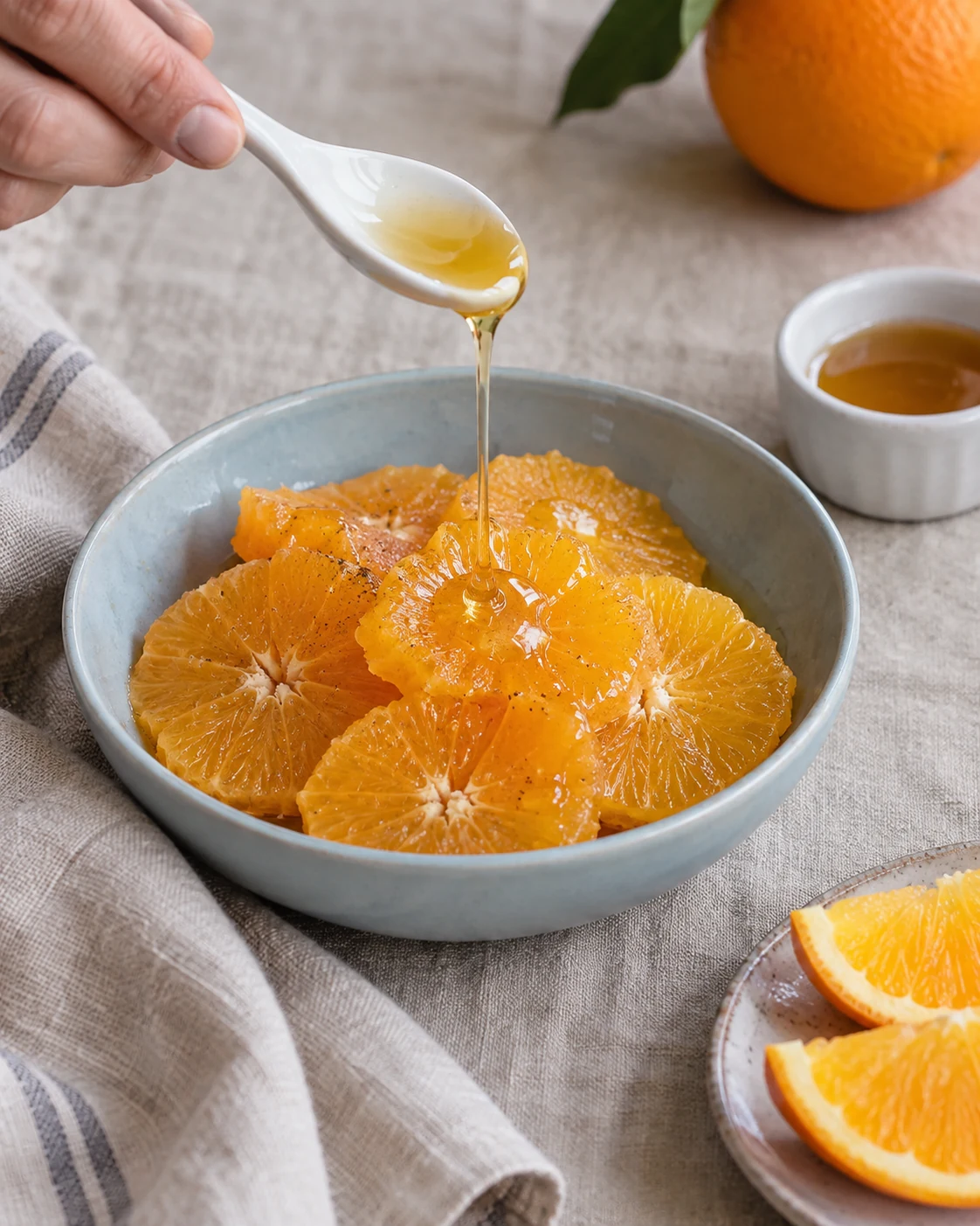
Honey
Gloss & sweetness.
Honey has a structural role in some sweets, especially when it coats fried pastry. For fresh fruit or raïb, sweetness can remain optional.
Explore the ingredients
BALANCE IN PRACTICE
Let the fruit
lead.
Orange and pomegranate have enough character to stand on their own. A spice or flower water should make that character clearer.
Acid and sweetness
A ripe citrus slice can end a substantial meal without a heavy topping.
Fragrance
Orange flower water is an accent, not a compulsory marker of authenticity.
Crunch
Almonds or sesame can supply the contrasting bite in prepared desserts.

06 · Season, place & household
The market
changes the ending.
Availability matters more than a rigid map of dessert ownership.
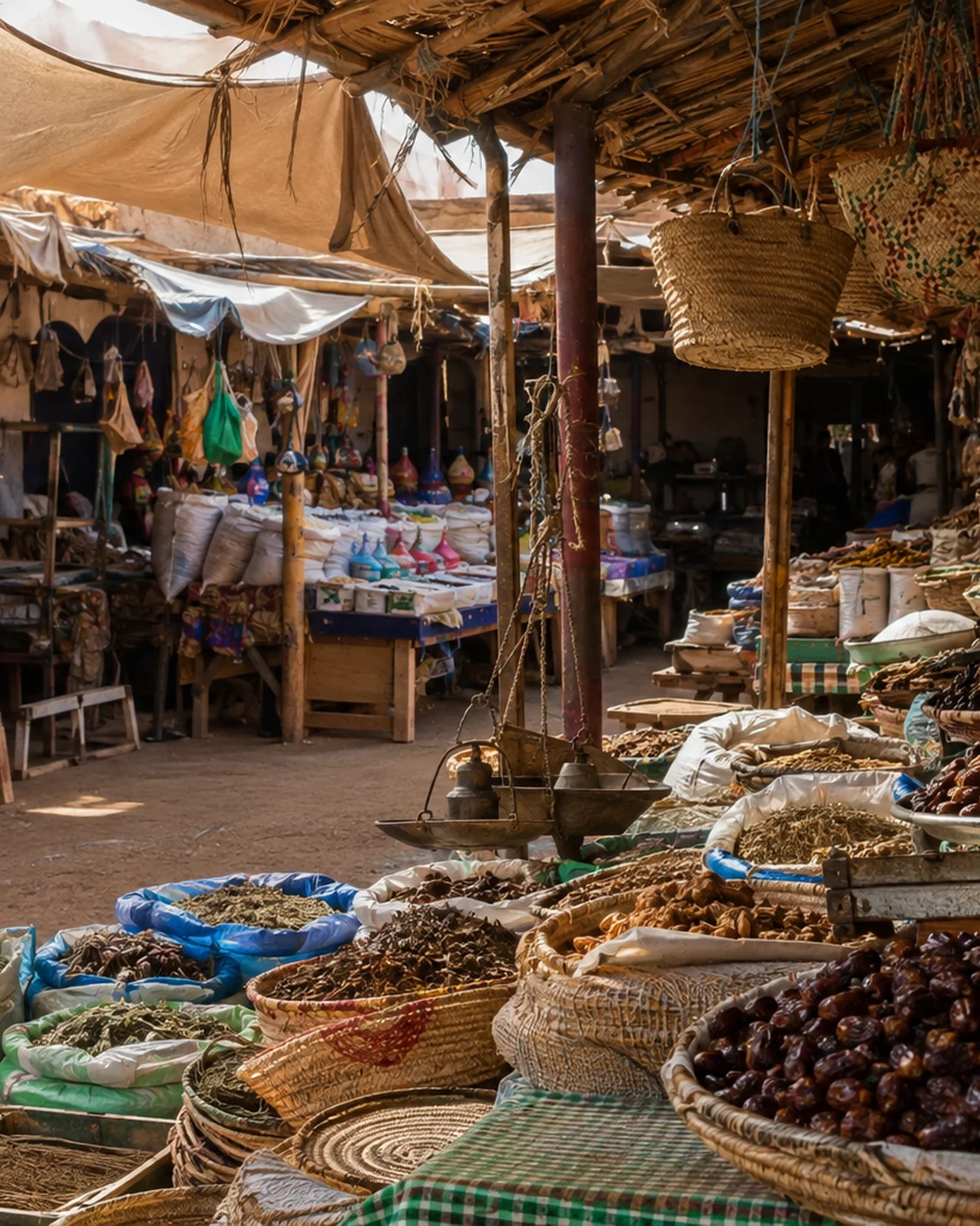
Citrus, dates, figs and pomegranates have different seasons and uses. A household can choose fruit on hand for a simple ending or prepare a more elaborate sweet when time and company call for it.
Dates and almonds connect the sweet kitchen with market knowledge: judging ripeness, texture and the condition of a nut matters before a dessert is assembled.
Seasonal fruit
Ripeness can do the work of an elaborate garnish.
Household preference
Sweetness, fragrance and portions vary between cooks.
Prepared for company
Texture-sensitive sweets often wait until guests are ready to eat.
07 · At the table
Set down the fruit.
Stay a little.
A sweet ending can be informal and shared.
What arrives after the meal is shaped by appetite and company. A plate of cut fruit lets everyone take a piece; an assembled dessert asks the table to pause for a more deliberate serving.
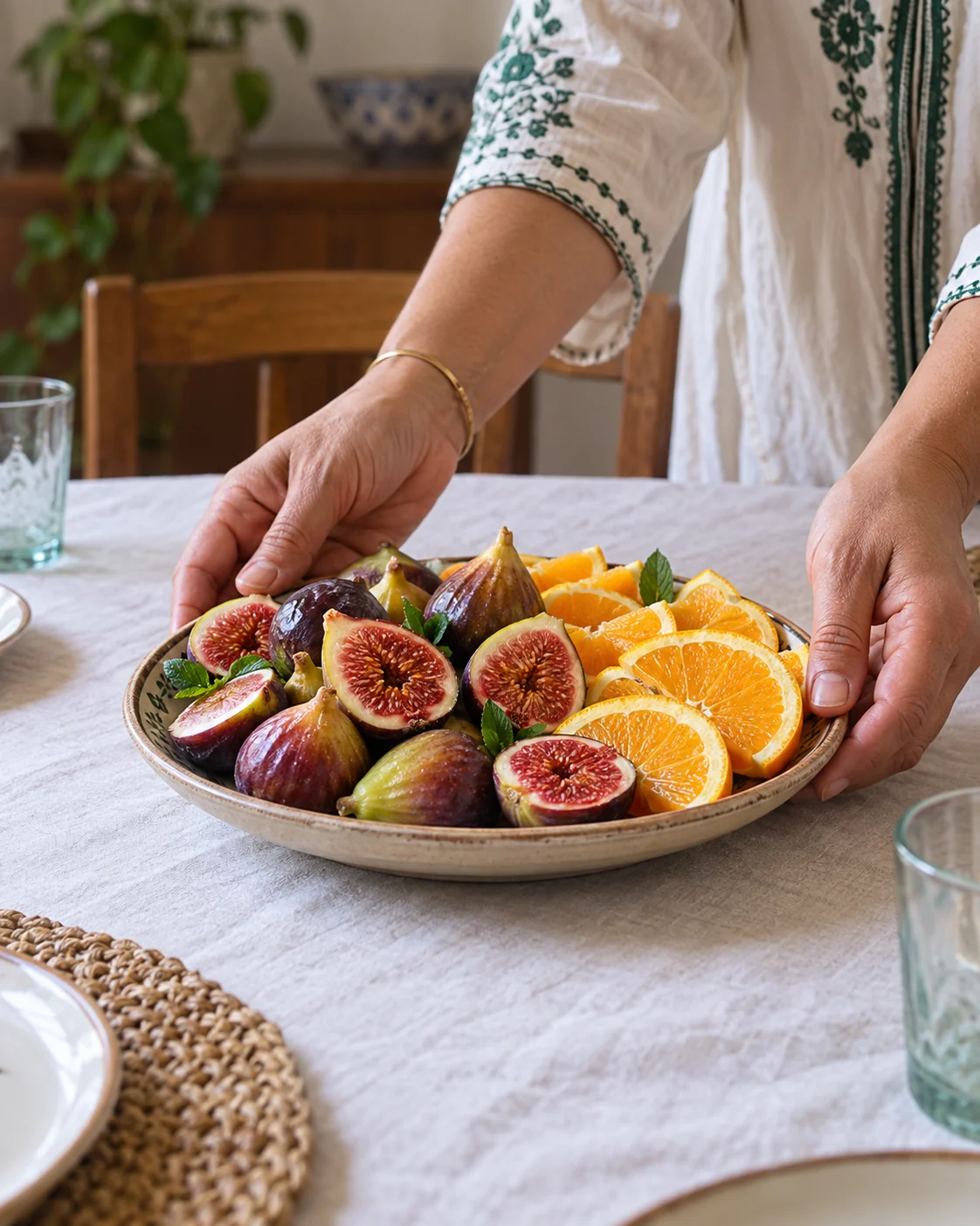
Share the plate.
Fruit can be placed at the centre without turning the end of dinner into a formal course.
Serve texture on time.
Keep jawhara crisp; bring raïb cool; make sure seffa is light and separate.
Allow another rhythm.
Tea and pastries may belong to a later conversation rather than every dessert plate.
08 · Small acts of craft
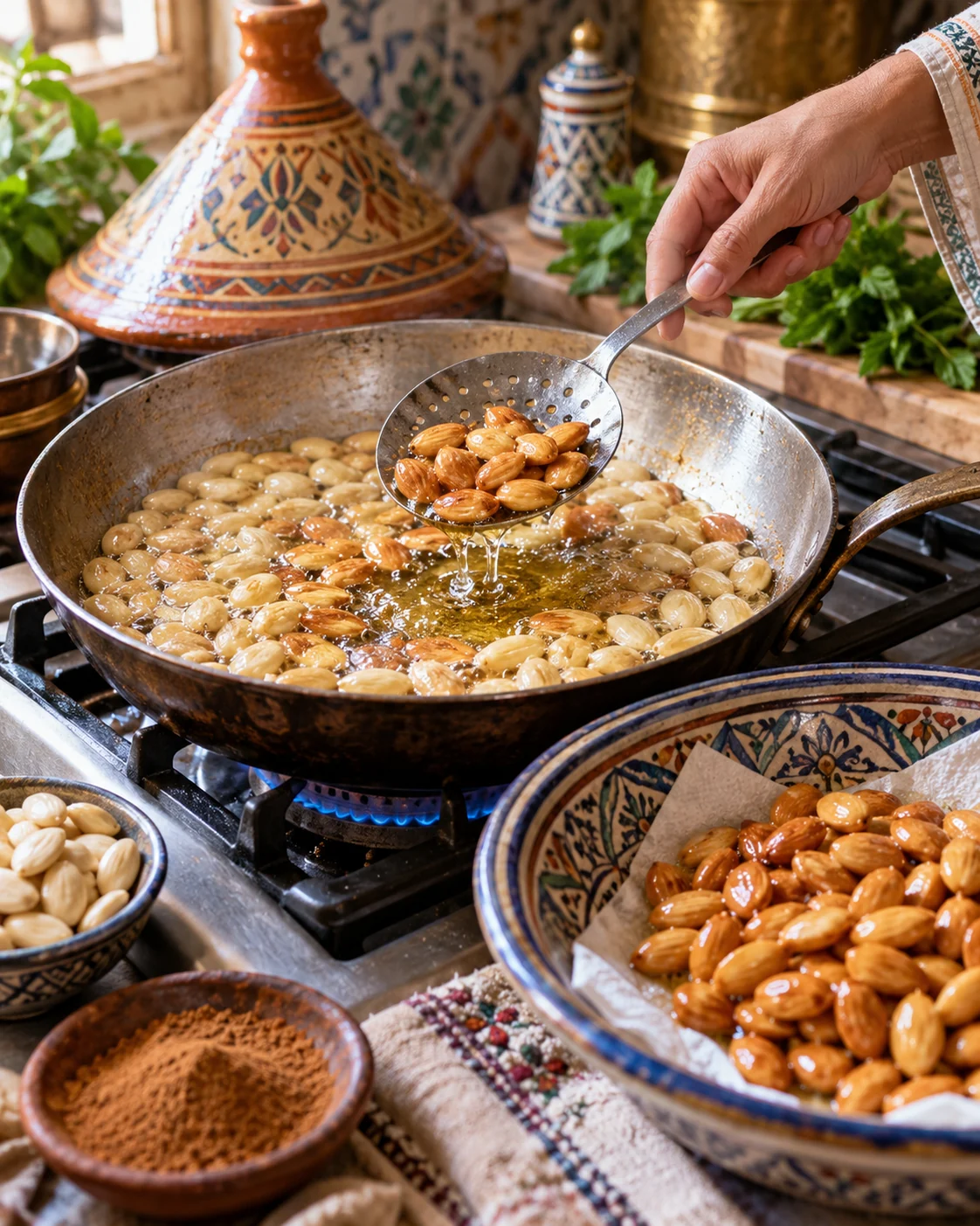
The almond
is not an afterthought.
Preparation changes what a nut contributes.
Blanched, fried or toasted almonds can bring a contrasting bite to soft seffa or a layered milk dessert. The method changes both fragrance and texture; it is a working part of the dish, not merely decoration.
The same care applies to pastry sheets and steamed strands. A convincing dessert depends on simple physical details that a photograph can reveal: dry crisp edges, separated grains, a filling that still looks soft.
09 · A closer look
Good questions.
Clear answers.
The category is broad. The distinctions matter.
Is fresh fruit really a Moroccan dessert?
Yes. Seasonal fruit often closes a meal, and oranges with cinnamon are a documented prepared example. [1] [5]
Is sweet seffa the same as seffa medfouna?
No. Both may use steamed vermicelli or couscous, but medfouna contains a concealed savoury chicken or meat preparation. [2]
What makes jawhara different from a cookie?
It is an assembled layered dessert: crisp pastry, milk cream and almonds are combined for a contrast of textures. [3]
Must every dessert use orange flower water?
No. It appears in some preparations, but fresh fruit, cultured milk and steamed desserts do not all follow one aromatic rule.
 EXOTIC MOROCCOTASTE · THE GUIDE COLLECTIONDessertsIngredients, technique
and the Moroccan table
From the story to your kitchen
Keep the flavour.
Go a little deeper.
Fruit, fragrance and a considered sweet ending.
Explore the Exotic Morocco guide collection for a closer look at ingredients, kitchen knowledge and the culture around the table.
- Understand the ingredients and their roles
- Recognise the techniques and textures that matter
- Bring context and confidence to the way you cook and serve
Continue tasting Morocco
Follow the
table outward.
Another dish, another technique, another way into the Moroccan kitchen.
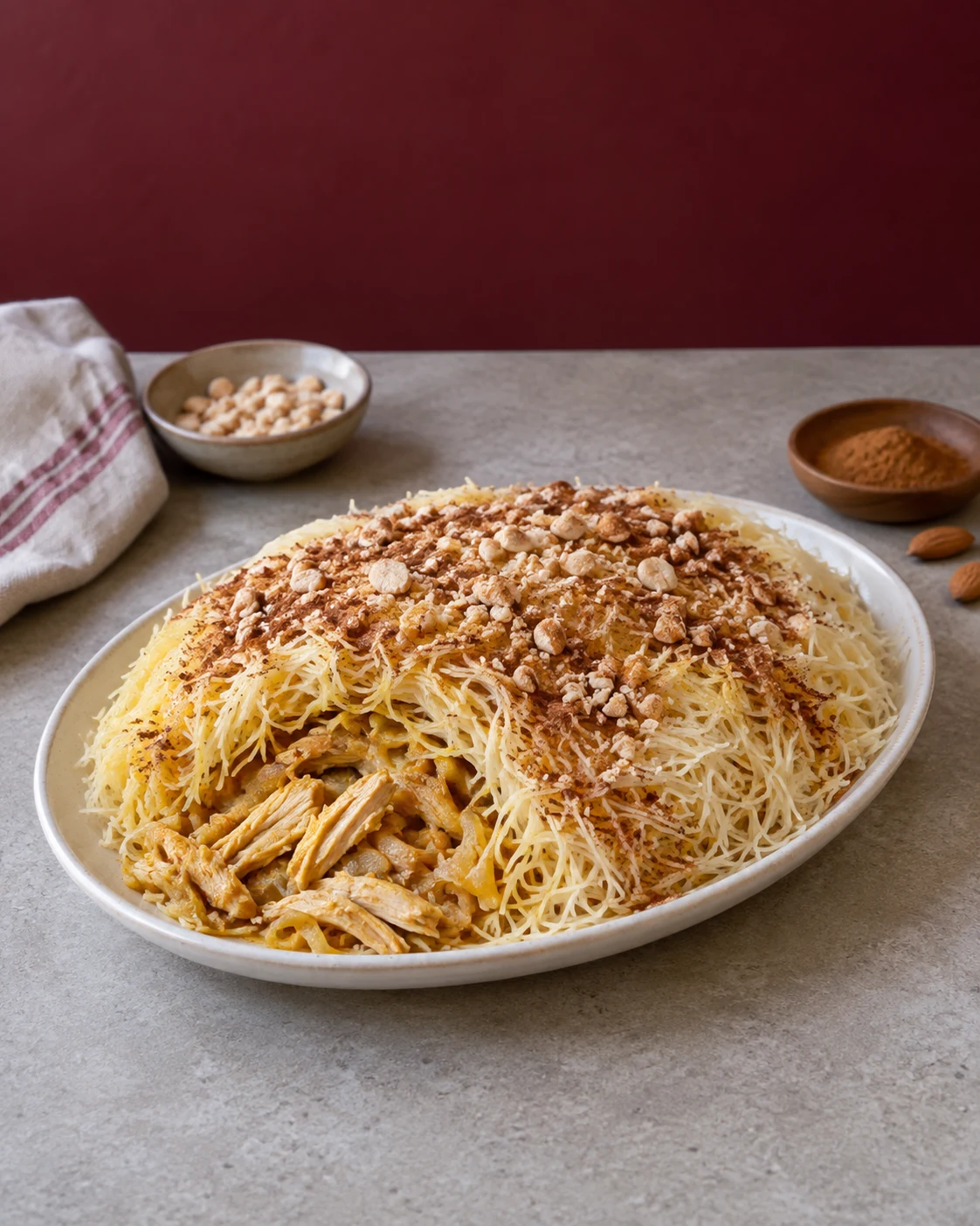
Seffa
Steamed vermicelli or couscous, almonds and sweet aromatics.
Explore the story ↗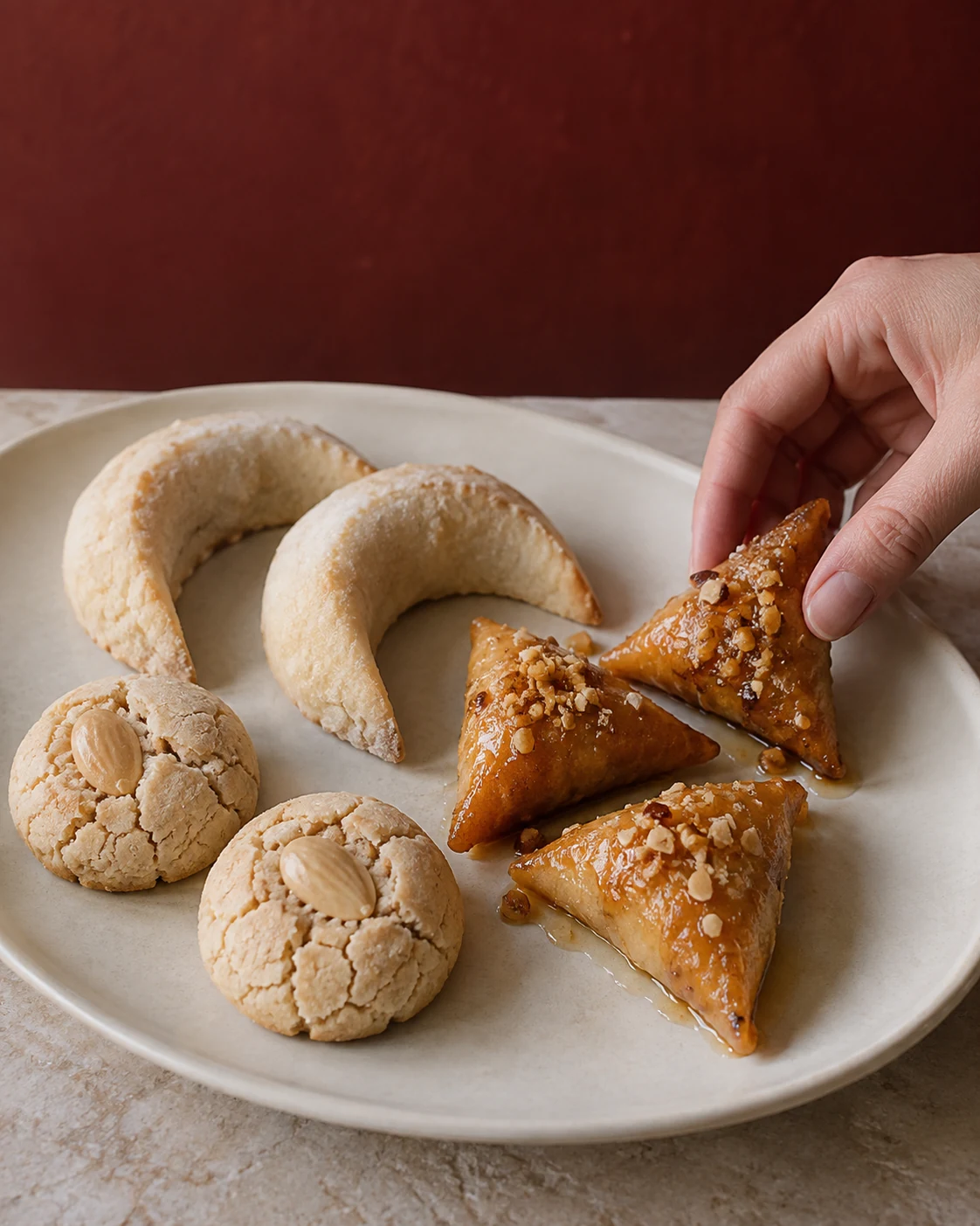
Sweets & Pastries
Almonds, sesame, pastry and the work of the sweet kitchen.
Explore the story ↗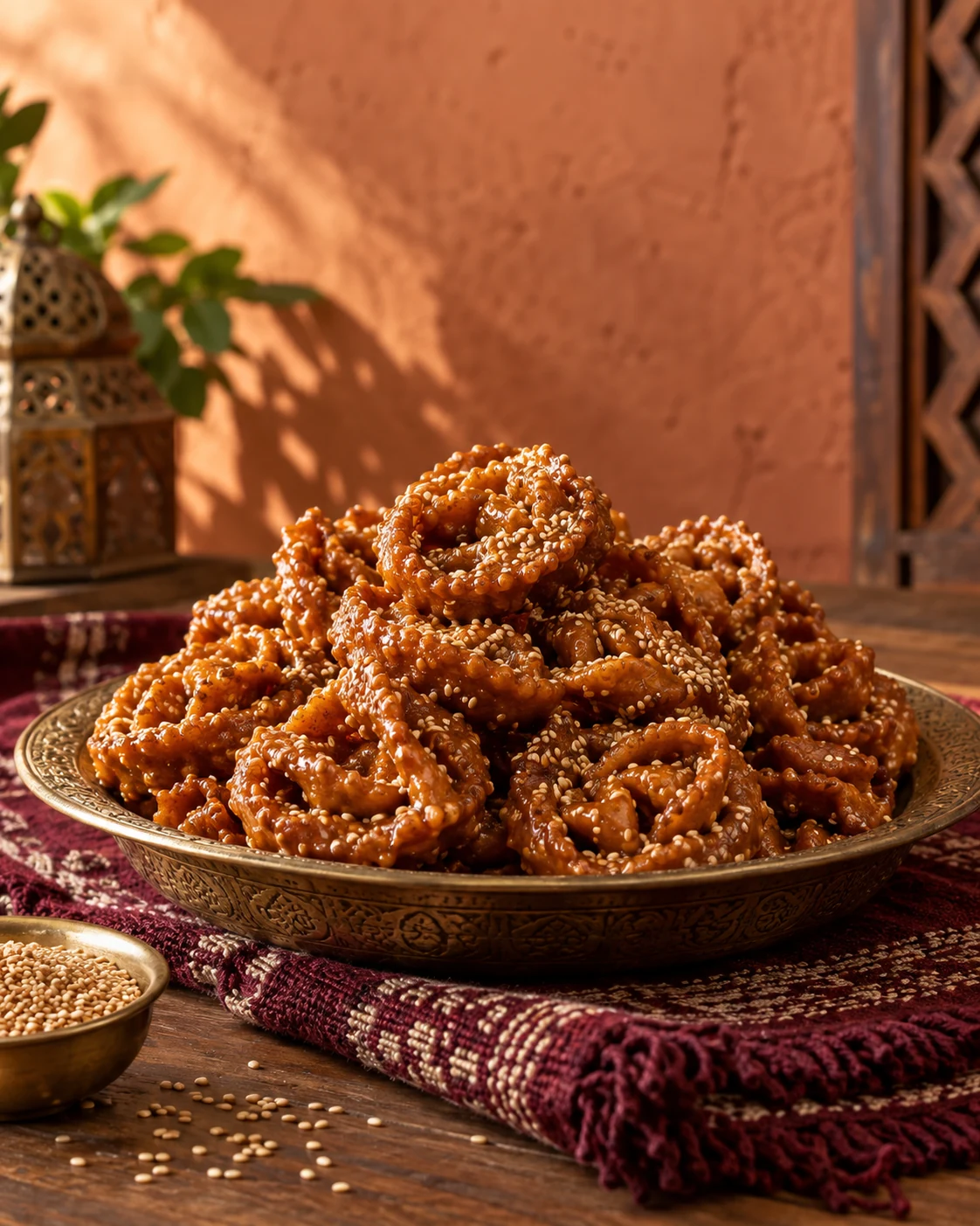
Chebakia
Folded sesame pastry finished with honey.
Explore the story ↗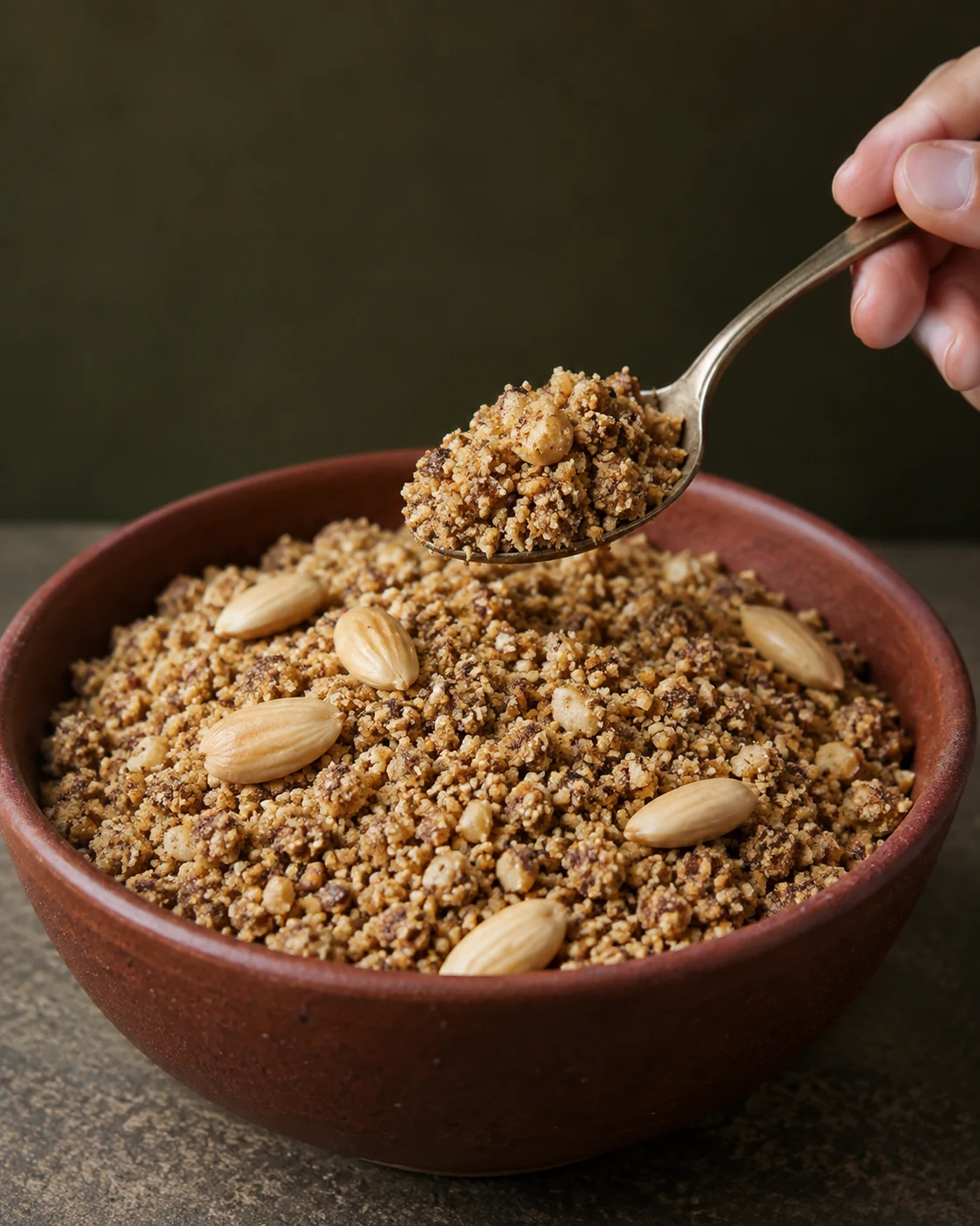
Sellou
Toasted flour, sesame and almonds in a distinctive sweet mixture.
Explore the story ↗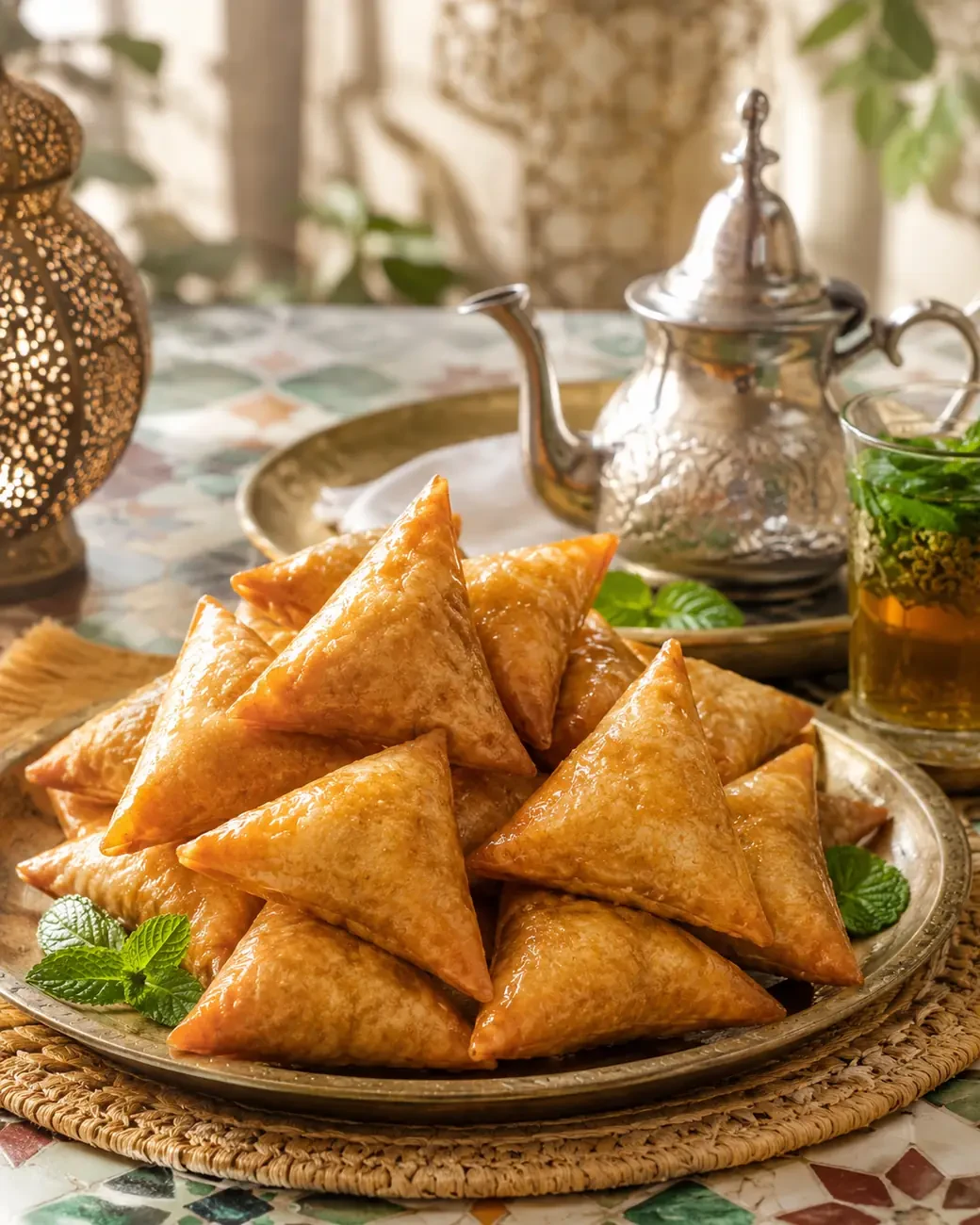
Briouats
Small folded pastries, with both savoury and sweet possibilities.
Explore the story ↗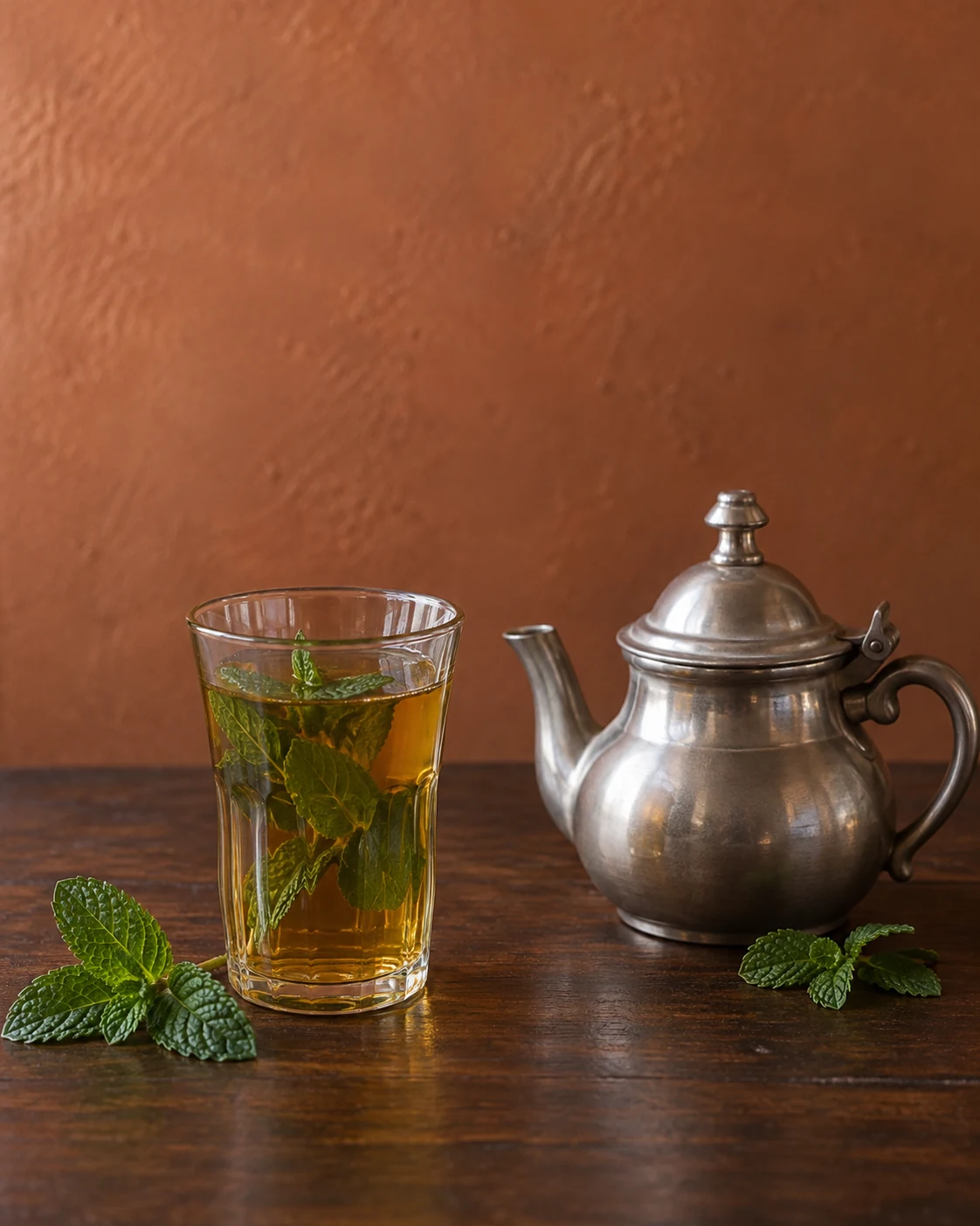
Moroccan Mint Tea
Green tea, fresh herbs and the time given to a guest.
Explore the story ↗Sources & editorial notes
Photography combines existing Exotic Morocco assets and generated editorial illustrations. These images do not document a named person, household or historical event.
- Nada Kiffa, Moroccan Orange and Cinnamon Dessert Salad, Taste of Maroc.
- Christine Benlafquih, Seffa Medfouna Recipe, Taste of Maroc.
- Moroccan Jawhara Dessert, Taste of Morocco. Variations in cream and names are acknowledged.
- Moroccan Food & Drink, Moroccan National Tourist Office (raïb).
- Moroccan Desserts collection, Taste of Maroc (seasonal fruit).
- Christine Benlafquih, How to Steam Vermicelli, Taste of Maroc.
- Moroccan Style Pomegranate Seeds, Taste of Maroc.
Exotic Morocco · The Moroccan tableBack to the beginning ↑