Let the mountain in
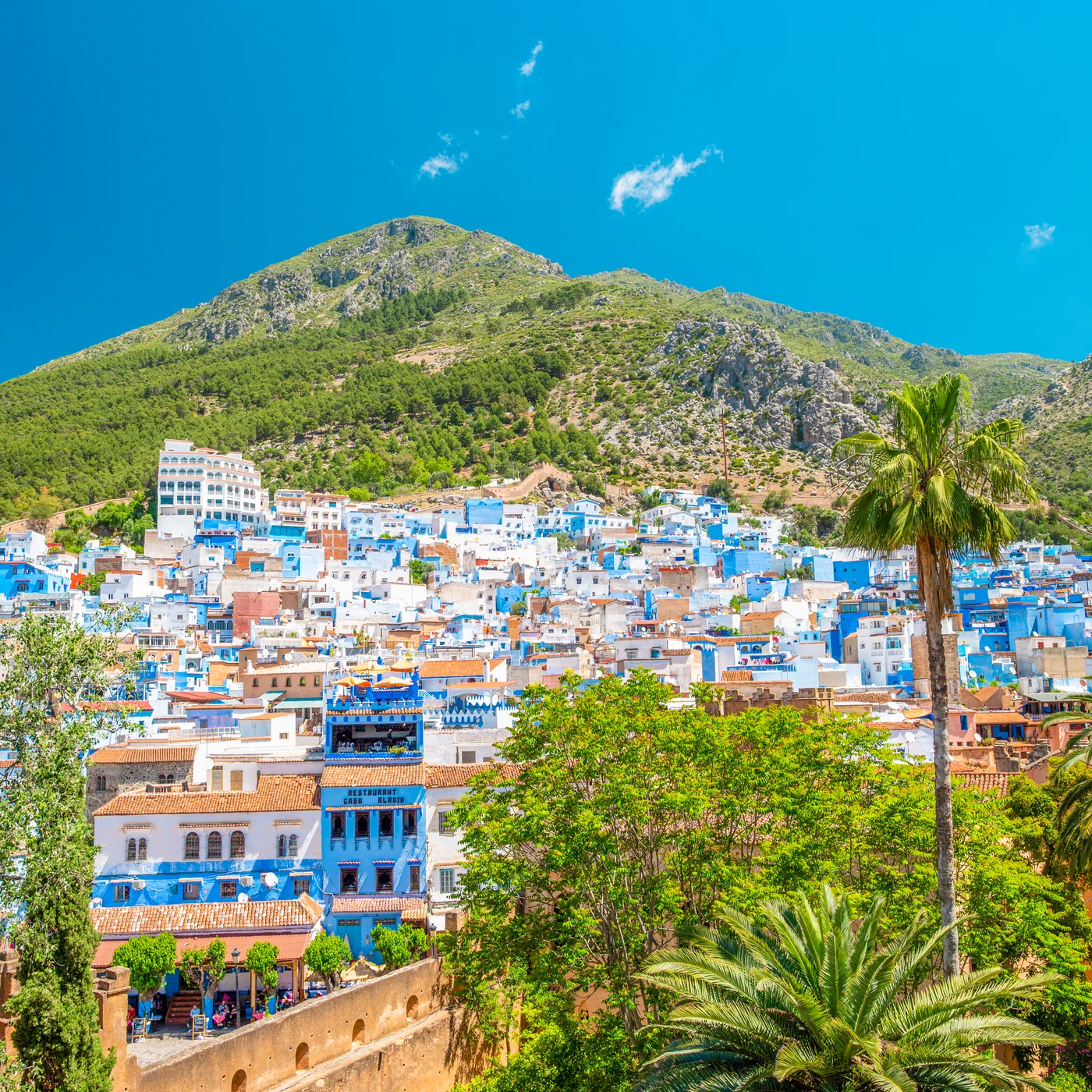
The town seen with the mountain behind it: the setting belongs to the story.

Exotic Morocco · Stories
The colour draws you in. Mountains, ochre walls, water and food give the photograph a much larger story.
Enter the story ↓01 / The starting point
The familiar photograph is a close one. A blue wall, a flight of steps, a doorway, perhaps a pot standing in the corner. It can be a beautiful image, but it removes almost everything that would explain where the street is. The mountain disappears. The route ends at the frame. The house becomes a surface rather than a place someone enters.
A fuller view of Chefchaouen does not require rejecting that beauty. It asks us to put the photograph back into a town. The terrain, the relationship between enclosed lanes and open spaces, and the presence of water give the colour a setting. They also offer reasons to stay attentive after the most recognisable picture has been taken.
There is another reason to widen the frame. The stories told about the origins of the blue are not all equally documented, and a single confident explanation can travel much faster than the evidence behind it. This essay does not settle that history with a picturesque legend. It begins with what can be examined more securely: a northern Moroccan town, its architectural landmarks and its wider cultural landscape.
02 / Read the details
Three visual encounters within this story.
The town seen with the mountain behind it: the setting belongs to the story.
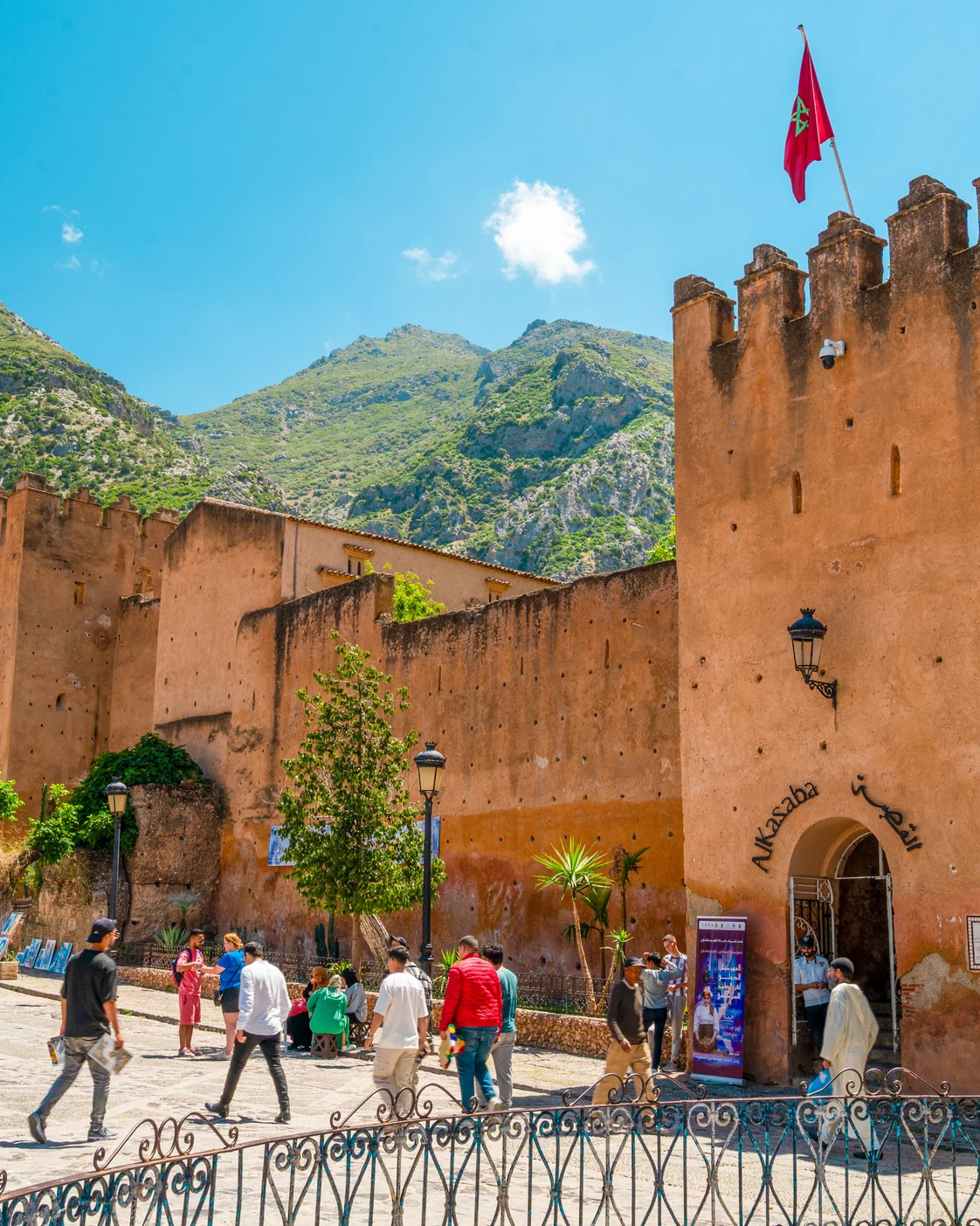
The kasbah and its surroundings: ochre walls within the town known for blue.
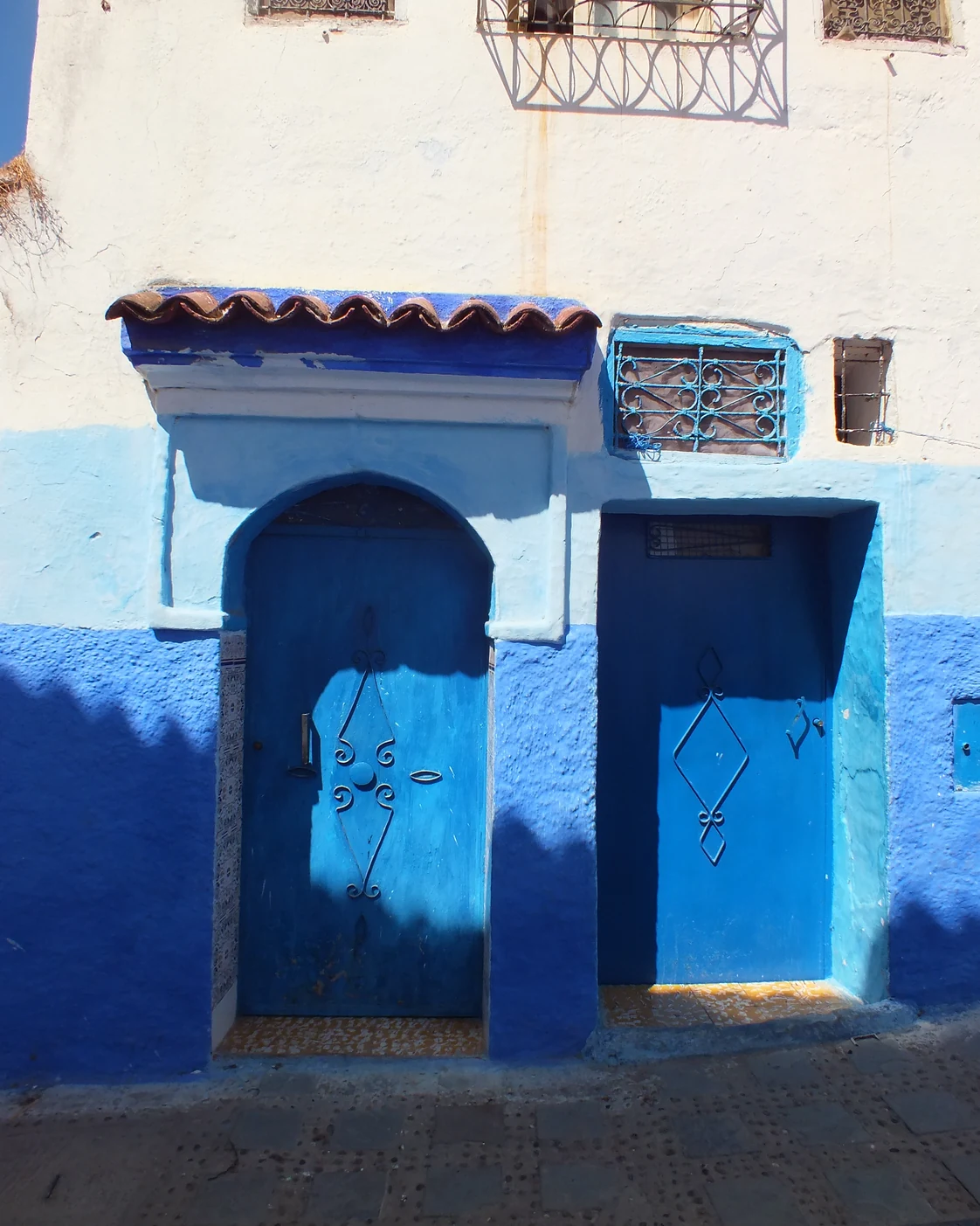
A doorway still belongs to a building with a use. Its colour does not make it a public attraction.
03 / Look closer
Chefchaouen’s position in the Rif is not an optional backdrop. The town’s relationship to sloping ground affects what can be seen and how one moves between places. A stepped route makes height tangible. A turn can interrupt a view and then reveal another level of buildings. A distant overlook can show the settlement’s shape while concealing the effort of walking through it.
These are practical differences, especially for anyone who finds steep steps difficult. A street that photographs as an elegant cascade of blue may not be an easy route for every visitor. Choosing a more comfortable approach is not a lesser way to experience the town. It makes space for attention instead of turning the visit into a test of endurance.
The mountain also changes the scale of a photograph. In a narrow lane, the eye compares doors, walls and the body. In a wider view, whole neighbourhoods become part of a larger slope. Neither view is complete by itself. Moving between them is a way to understand how a small architectural detail belongs to a much bigger setting.
03 / Look closer
The regional context extends beyond the town. The Northern Morocco and Rif guide introduces that wider geography, while Talassemtane National Park belongs to a separate landscape journey. A blue-lane photograph should not be asked to stand in for an entire mountain region.
Even a short visit benefits from a moment spent orienting yourself. Notice which direction a route climbs, how the town opens towards surrounding slopes, and where a public space offers room to stop. A small amount of geographical understanding makes the sequence of streets feel less like an endless set of backgrounds.
04 / The story in context
03 / The town has another colour
The kasbah provides an immediate visual counterpoint to the blue streets. Its earthen tones, enclosure and towers belong to another architectural register. The municipality’s account dates its foundation to 1471. However familiar the blue image becomes, this fortified landmark is essential to a reading of the town.
Try reading the town through changes in level. A photograph can flatten a sloping street into a colourful façade; walking the public route makes steps, drainage, door positions and the mountain backdrop more apparent. Compare an open square with a narrow passage before deciding that the colour alone explains the place.
The ochre kasbah provides a useful visual counterpoint to the familiar blue. Keep these observations separate from claims about the origin of blue painting, which require a named source and may have more than one explanation. The stronger account is specific: where you were, which surface you saw and how the surrounding terrain changed the encounter.
Stay with the context
A fortified enclosure asks different questions from a domestic doorway. Where is access controlled? How does a wall define an inside and an outside? What can be seen from a higher position? These questions do not require a romantic reconstruction of battles. They begin with the relationship between a structure and the space around it.
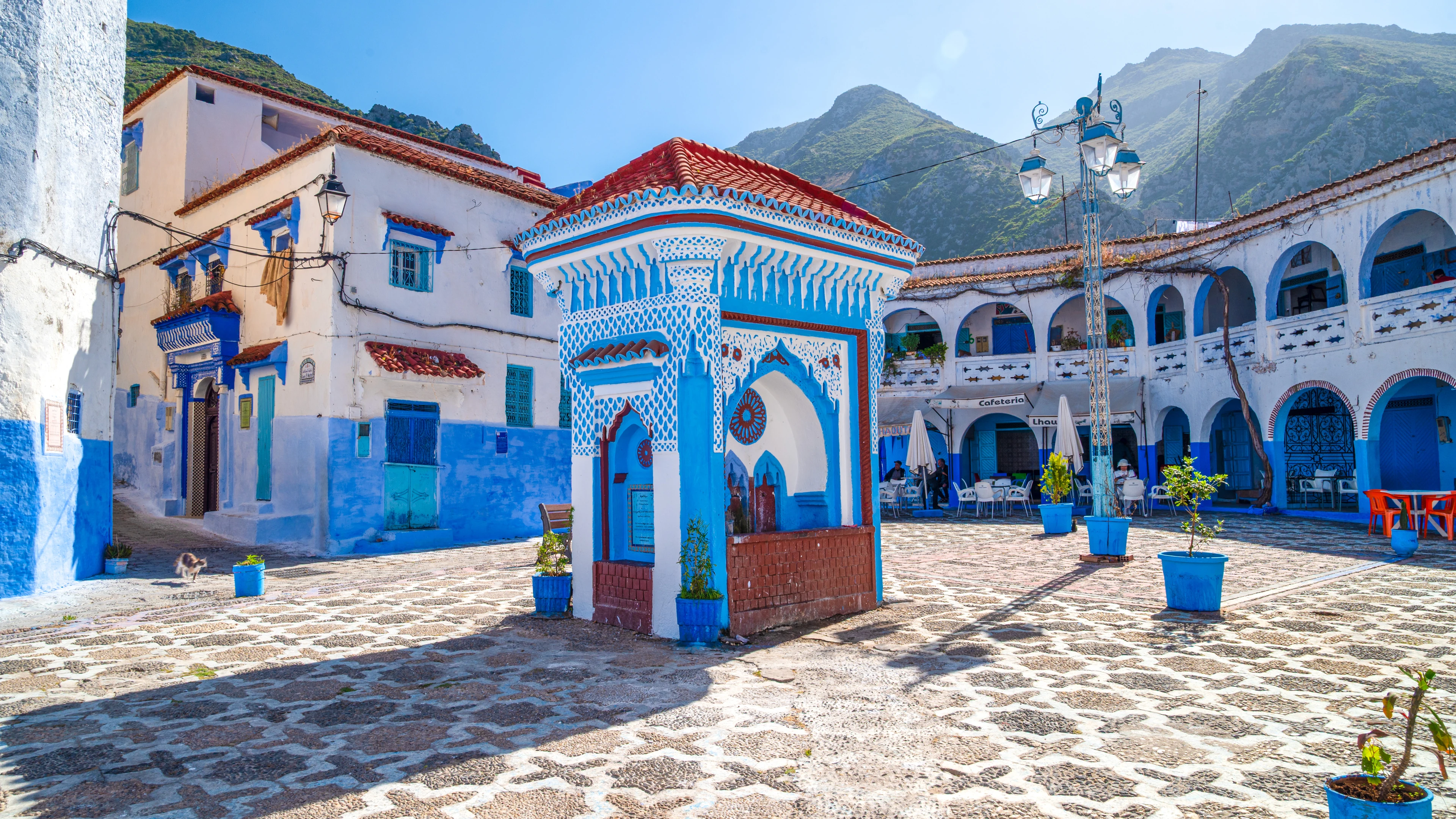
The square beside the kasbah gives that relationship a public setting. A town needs places that gather routes as well as lanes that carry them onward. Here the contrast between a more open area and the close texture of surrounding streets makes a change in pace possible. The important subject is not merely an isolated monument but the way the building and the space meet.
The municipality describes a heritage centre within the kasbah, in the former ethnographic museum, with workshops devoted to wood, zellige and plaster. Those three materials connect the fortified setting to the decorative crafts of northern Morocco and al-Andalus. A building first associated with authority can also become a place for explaining how things are made. The garden, worked surfaces and teaching spaces invite different kinds of attention within the same enclosure.
Restoration and reuse also belong to the life of a historic building. The photograph in this story shows a particular appearance, not a guarantee that every surface dates from the fifteenth century. The foundation of a monument and the age of all its visible parts are different questions.
A closer encounter
Let the Rif return to the picture. Notice how the town meets its terrain.
Compare the kasbah’s enclosure with the more open space around it.
A fountain, a threshold and a stair each organise a different everyday action.
A different distance
Chefchaouen is one of the communities associated with the Mediterranean diet’s UNESCO intangible cultural heritage inscription. The designation concerns much more than a list of ingredients. UNESCO describes knowledge and practices around growing, gathering, preserving, preparing and, especially, sharing food.
This provides a useful alternative to a colour-led account of the town. A meal connects an urban setting to sources of food, to skills of preparation and to relationships between people. The finished plate is only one visible moment in that larger sequence.
The distinction also prevents a misleading interpretation of the heritage label. It does not mean that every restaurant serves a certified traditional menu or that every household eats in the same way. Cultural recognition concerns a body of knowledge and practices associated with communities; it is not a quality stamp on every commercial offering within a boundary.
A different distance
Chefchaouen’s Mediterranean Diet Culture House adds an institutional setting to that subject. The Northern Development Agency records its opening in 2024, in partnership with the province and municipality. Its existence points towards interpretation, education and transmission: ways of making food culture understandable beyond the moment of consumption.
At an actual table, let curiosity remain specific. Ask about a dish or an ingredient rather than assuming that a familiar name predicts exactly what will arrive. Regional and household differences are part of food culture. So are the choices made for a particular occasion and the people sharing it.
The food culture guide and Taste collection offer a wider reading path. They are most useful when they prepare you to notice differences, not when they persuade you that every meal must illustrate a national rule.
A different distance
04 / The ordinary town inside the image
The strongest correction to the idea of Chefchaouen as a photographic set is also the simplest: houses have occupants, steps are routes, and a narrow passage may be the quickest way for someone to finish an ordinary task. Beauty does not cancel those uses.
A close photograph can make a street look private even when it is public, or make a private entrance look like a visitor attraction. Before stopping, look for the people who need the space. Keep doorways clear. Ask before photographing a person closely or making a household’s interior part of an image.
A different distance
The town’s painted surfaces also deserve a less literal reading than a perfectly uniform blue suggests. Colour changes with light, texture, weathering and the position of the viewer. A photograph is an interpretation made through a lens and an exposure. It should not become the standard against which the actual place is judged.
Similarly, the presence of objects for visitors does not automatically make a street false, and the absence of visitors does not make it more real. People make livelihoods in many ways. What matters is to distinguish an arranged display from a claim about the whole town, and to avoid demanding that residents perform a preferred version of “authenticity”.
Give attention to the less easily collected details: the way a stair arrives at a doorway, how a fountain occupies a small square, or where the mountain becomes visible between roofs. They help restore relationships that a tightly framed image tends to remove.
A different distance
A thoughtful visit to Chefchaouen can still include the pleasure of a blue stairway. Add a view that explains the terrain, time around the kasbah and its surrounding public space, and an encounter with food or craft that teaches something beyond appearance.
Nearby Ras el-Ma and the wider Akchour landscape offer different continuations. They are distinct places, not interchangeable backgrounds or guaranteed quick additions to every itinerary. Give each the time, conditions and level of access it requires.
The most useful image to take away may be a mental one: a town held within the Rif, with routes, institutions, working spaces and households. The blue is still there. It simply has more to belong to.
Take home the colour.
Remember the place that carries it.
Story pathways
Cities, cultural context and a connected essay, chosen for this subject.
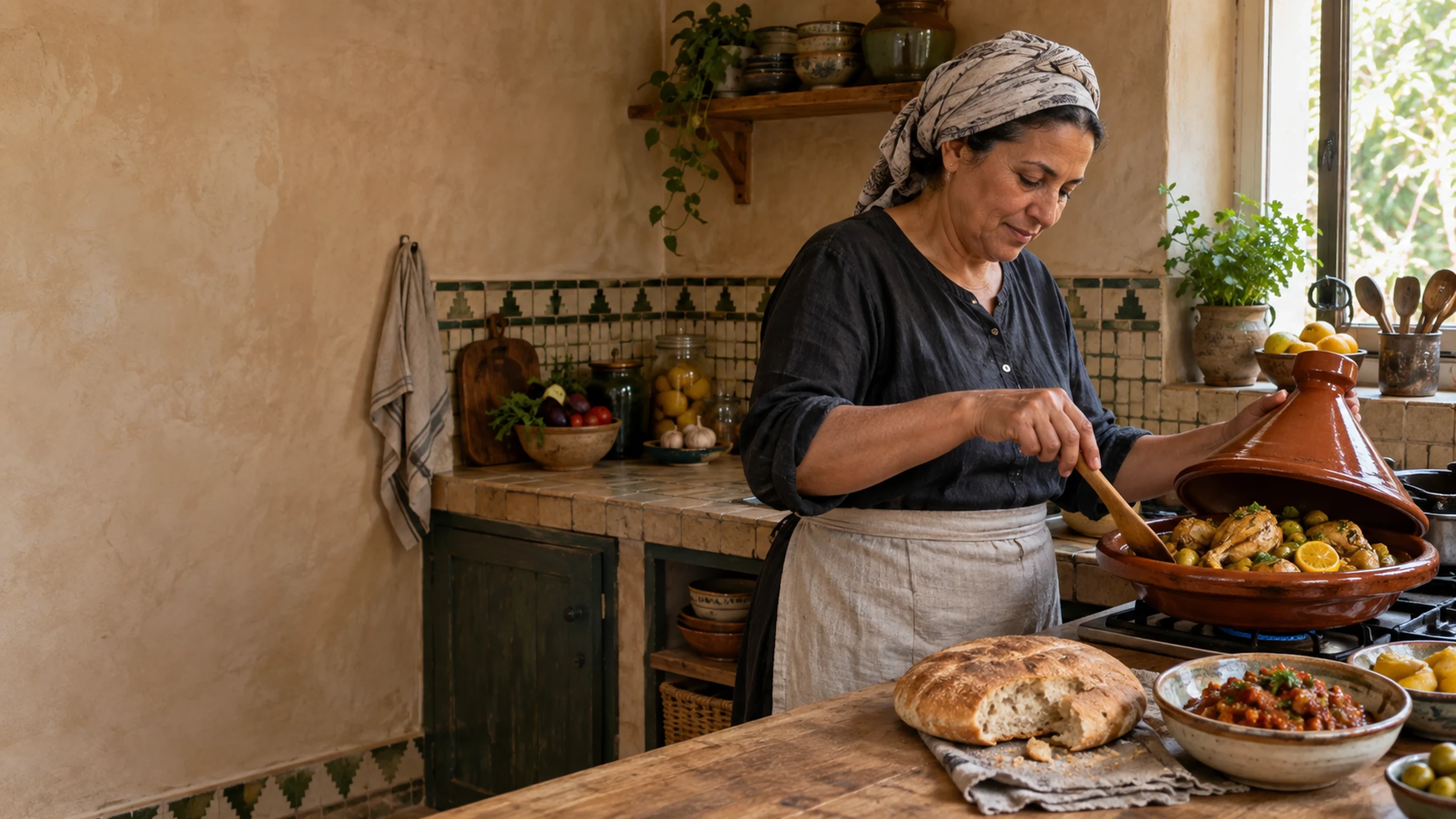
food culture guide
Explore the context ↗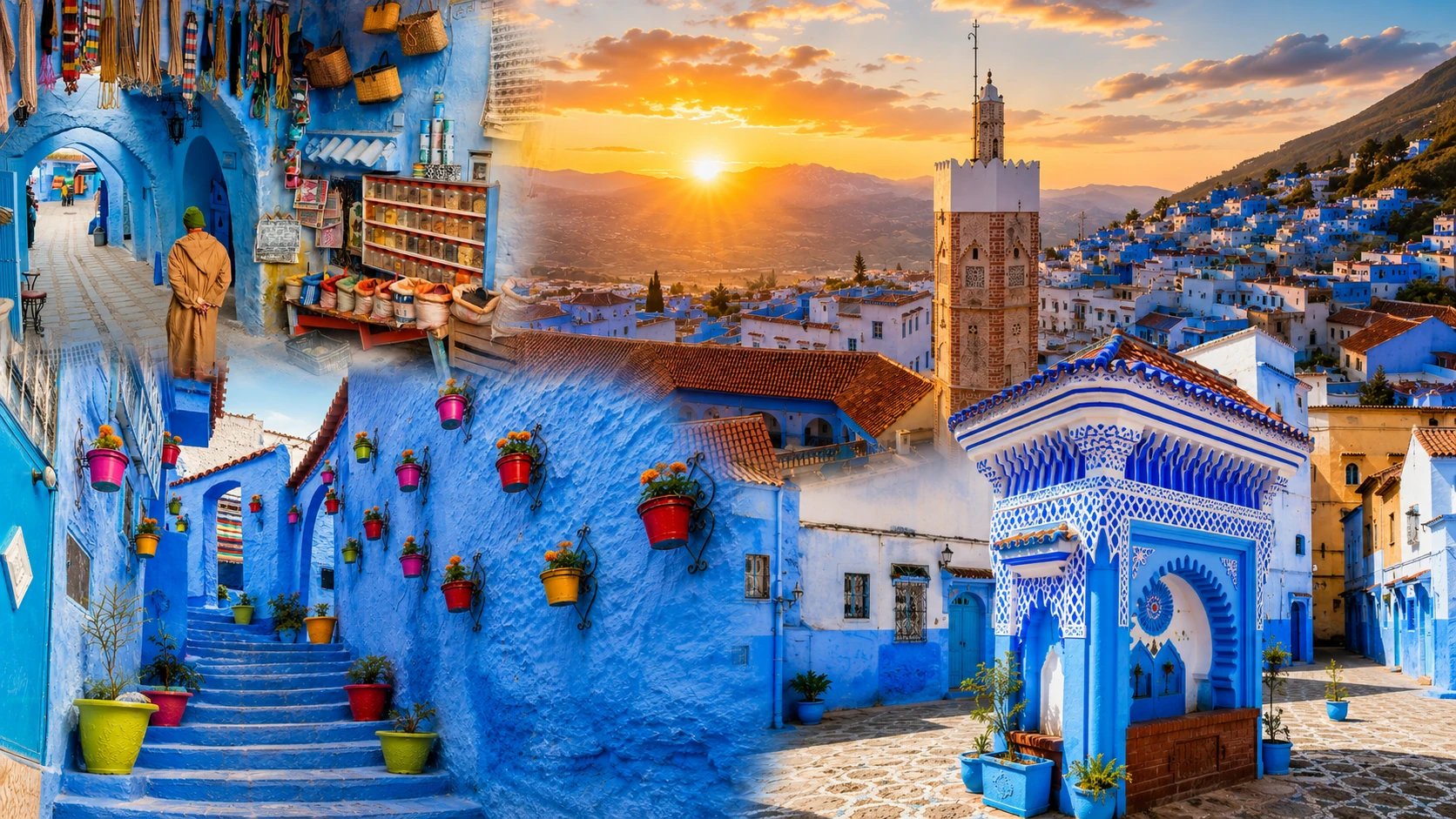
Continue the city context behind this story.
Explore the city ↗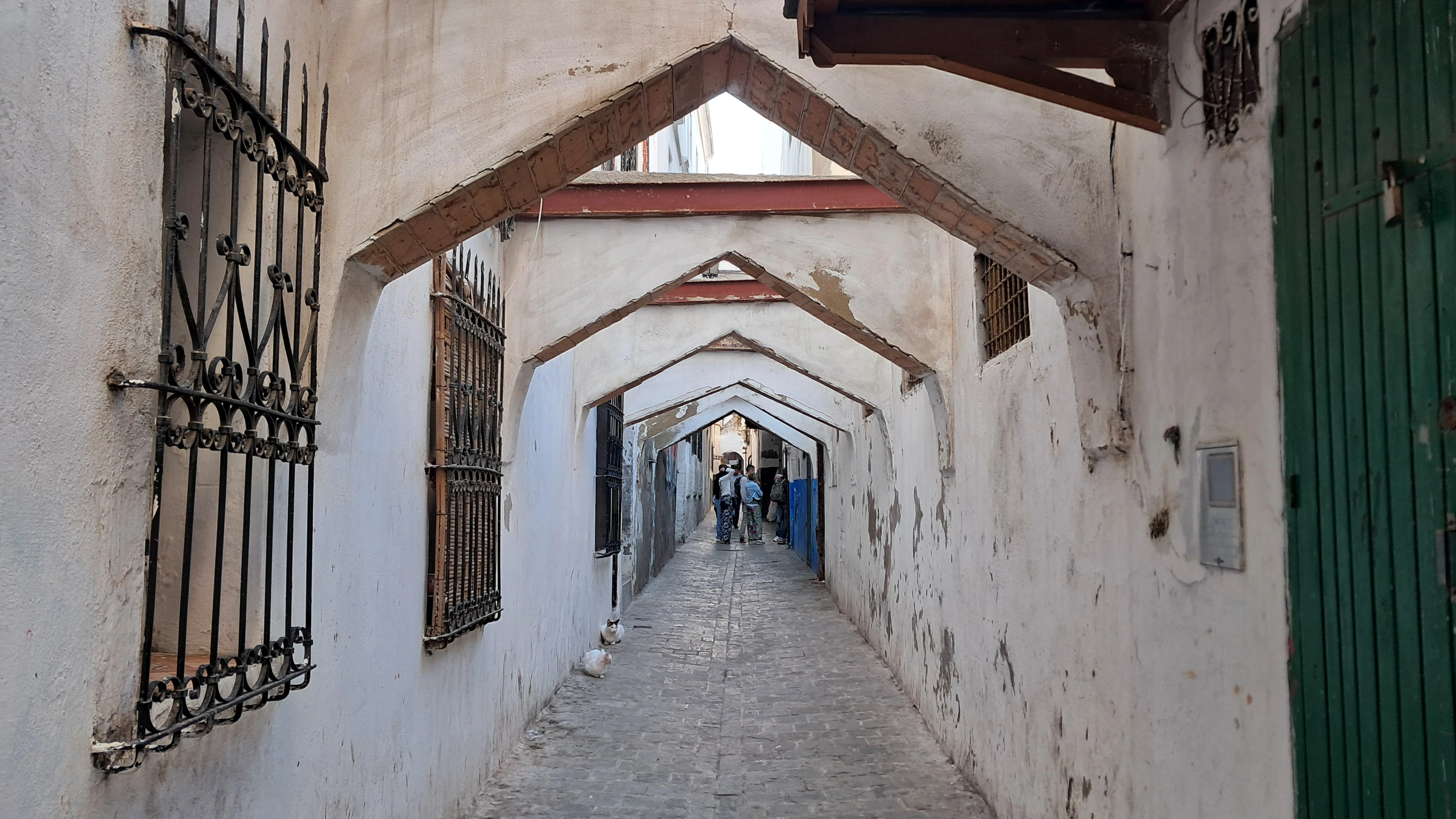
Across a white hillside city, streets, thresholds and working crafts reveal an inheritance carried by people.
Explore the story ↗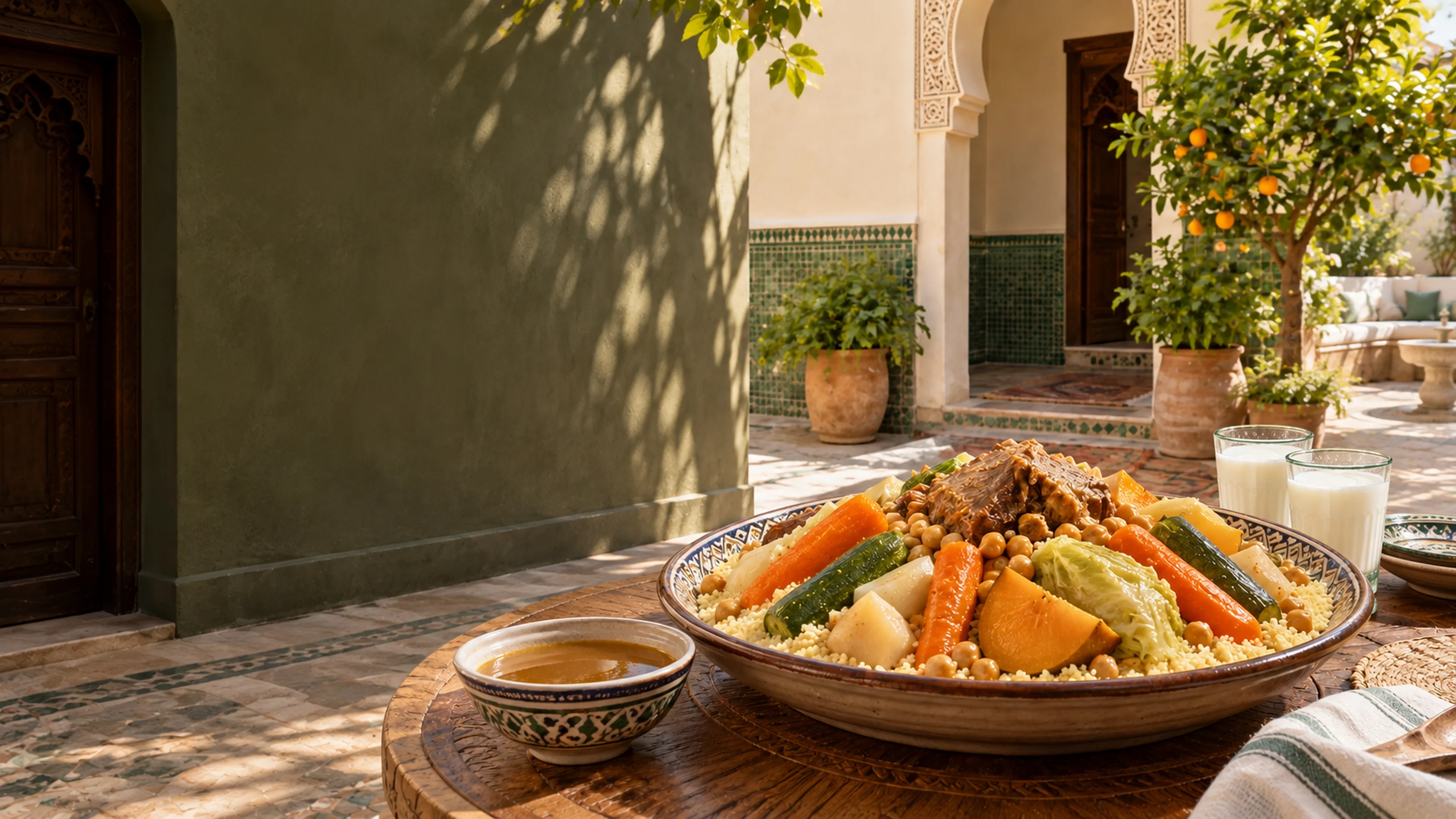
Recipes, shared knowledge and the places that give a meal its wider setting.
Explore the story ↗Continue reading
Keep the subject in view as you choose your next chapter.
Across a white hillside city, streets, thresholds and working crafts reveal an inheritance carried by people.
Read the story ↗Recipes, shared knowledge and the places that give a meal its wider setting.
Read the story ↗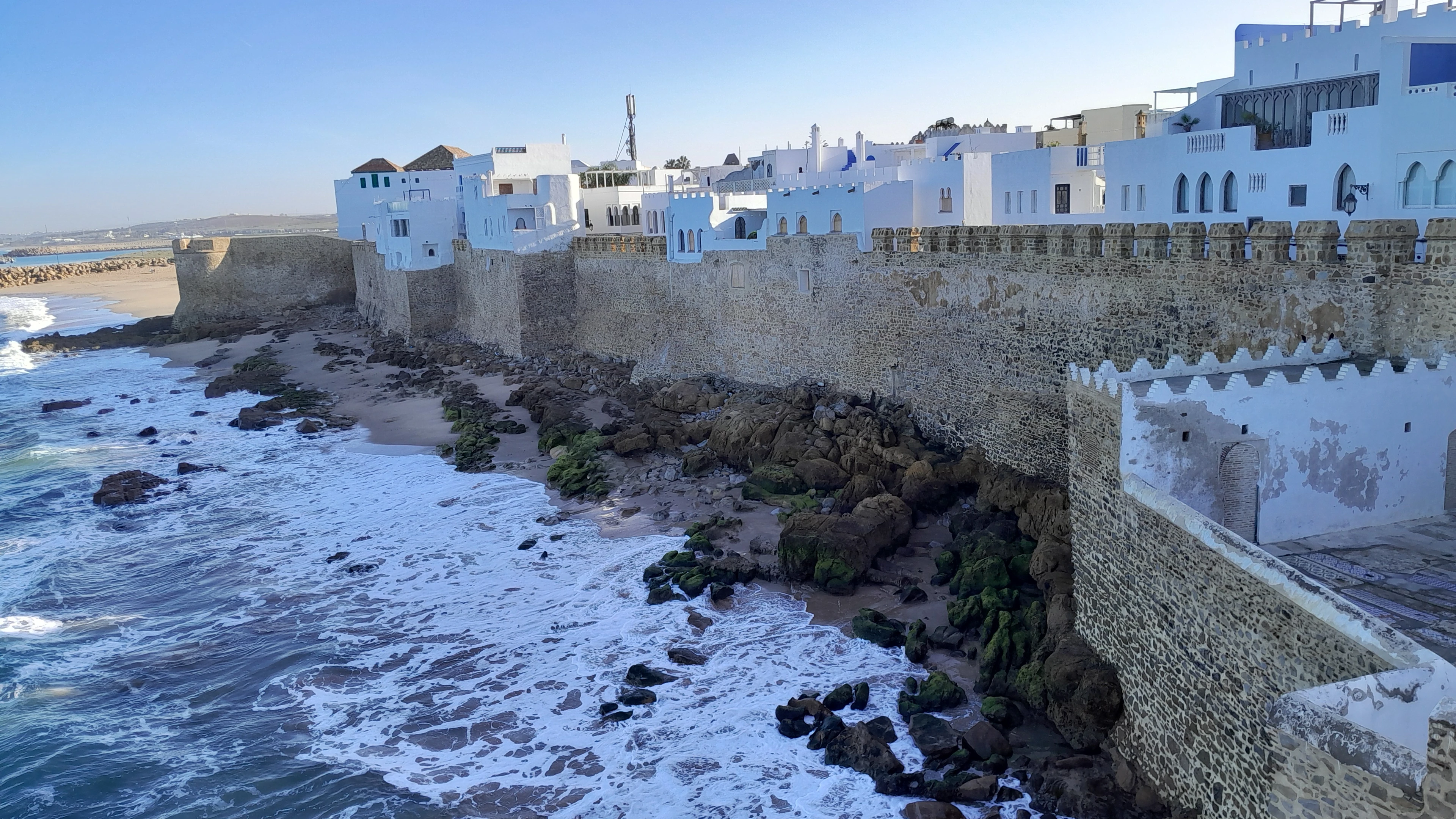
A quieter reading of coastal towns, everyday streets and landscapes beyond the familiar frame.
Read the story ↗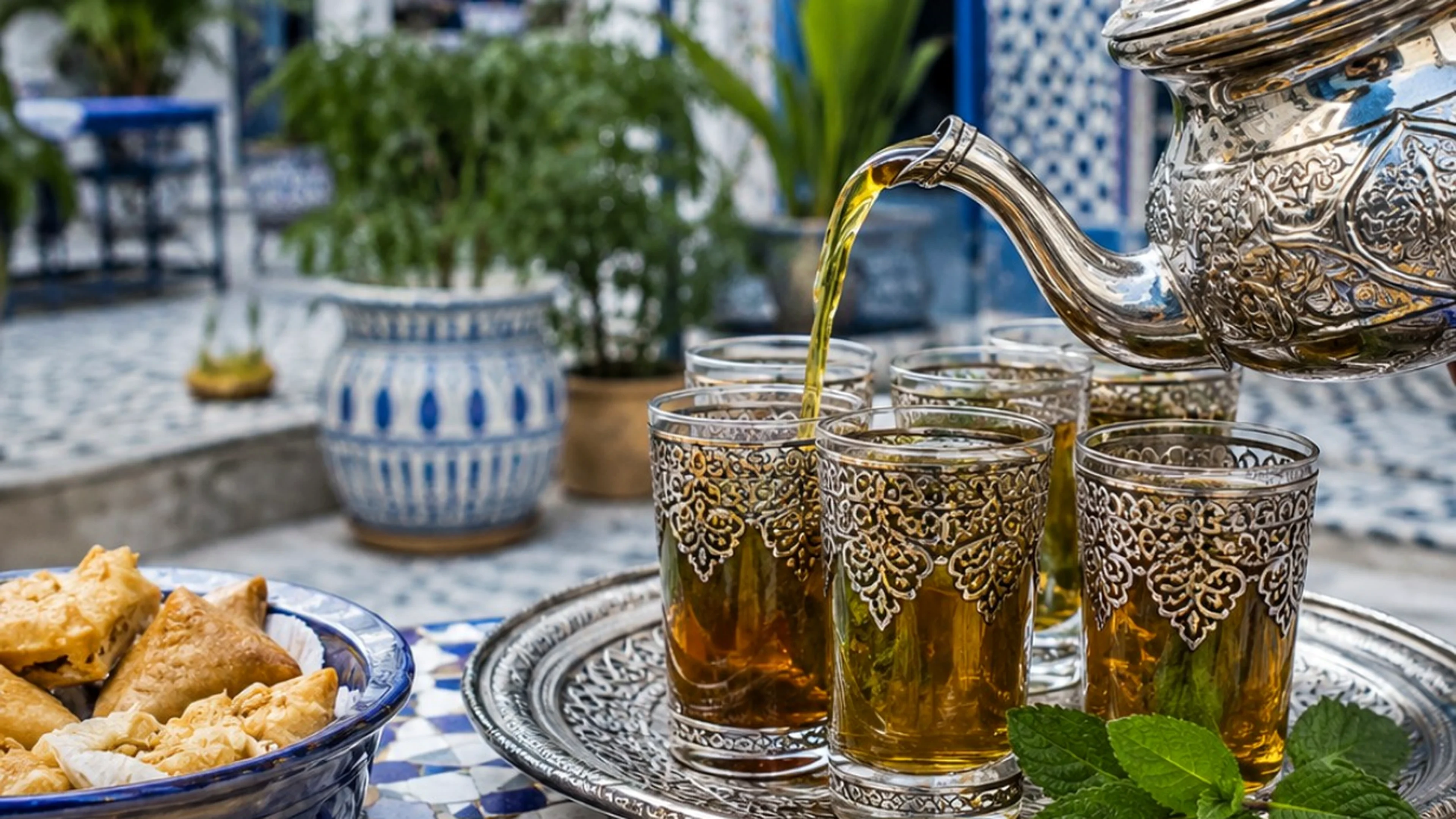
How we look, listen and move changes the quality of an encounter.
Read the story ↗This is a researched visual essay. Historical claims are distinguished from editorial observations. No first-person visit, interview or quotation has been invented. Photographs show their stated locations; they do not document every person or practice discussed.
Photography is identified through the linked source records. Crops and responsive sizes were prepared for this layout.
Research checked 27 September 2026.

.jpg)


