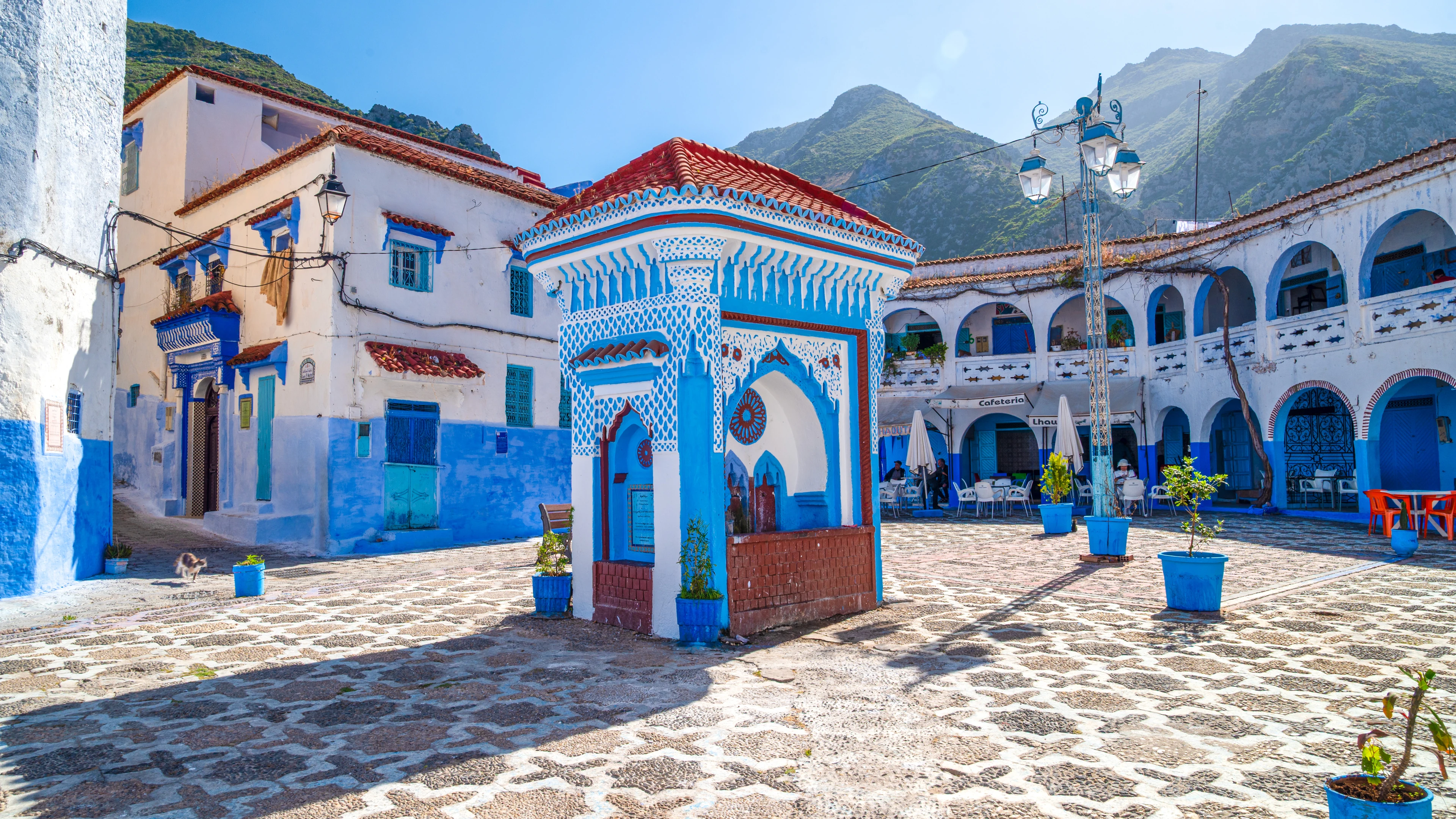
Chefchaouen, beyond blue
The colour draws you in. Mountains, ochre walls, water and food give the photograph a much larger story.
Read the story ↗
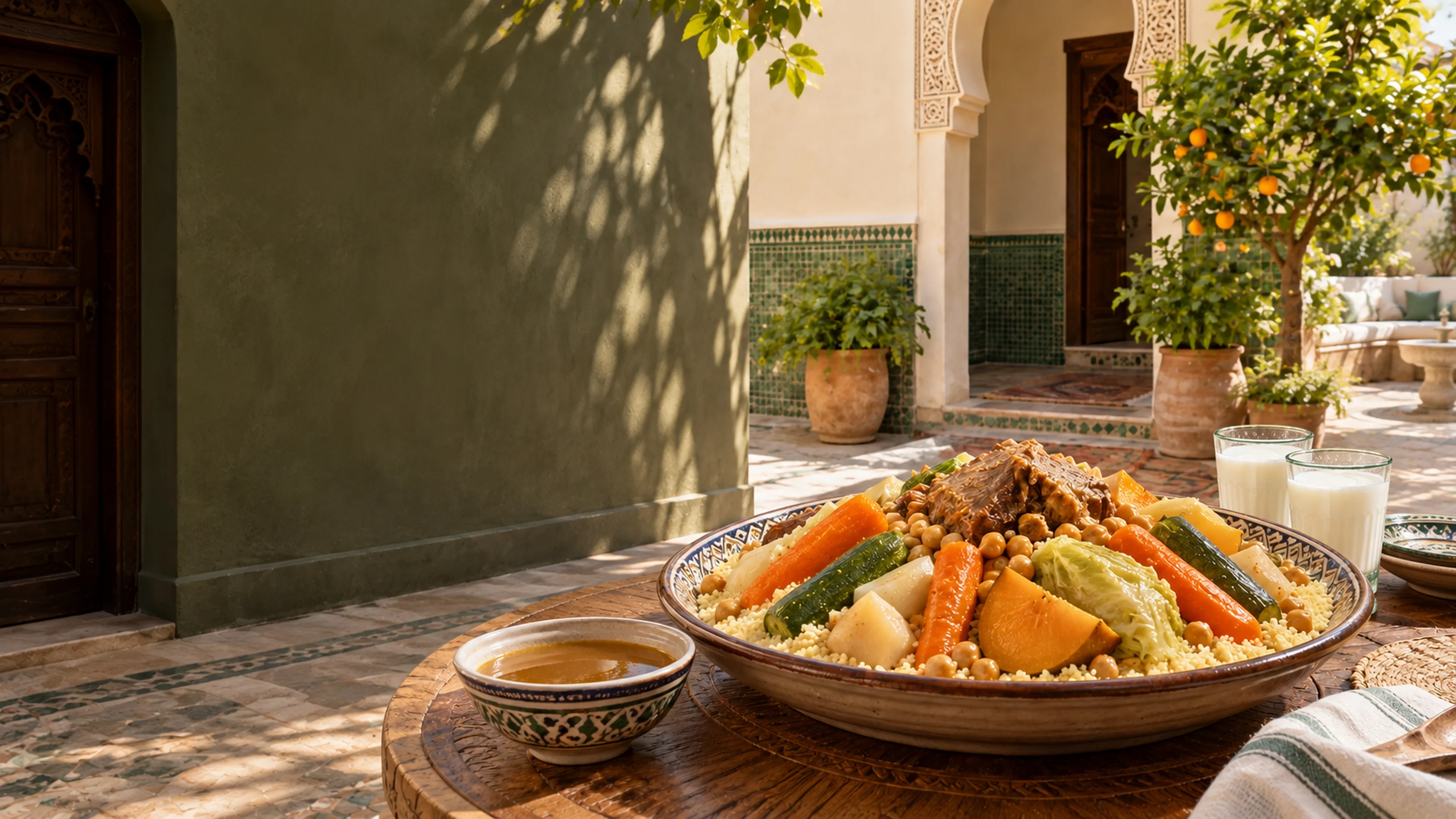
Exotic Morocco · Stories
Recipes, shared knowledge and the places that give a meal its wider setting.
Enter the story ↓01 / The starting point
The plate arrives at the end of a sequence. Ingredients have been grown or gathered, carried, chosen and prepared. Utensils have been made and used. People have learned how to judge texture, timing and the needs of a particular occasion. Food becomes a richer subject when those connections remain visible.
The 2020 UNESCO inscription of couscous knowledge and practices was shared by Algeria, Mauritania, Morocco and Tunisia. Its scope includes preparation, tools, transmission and the social setting of a meal. That shared recognition is a useful reminder that a dish can carry local differences and wider relationships at the same time.
02 / Choose your first encounter
Choose the essay that brings this subject into focus.
The colour draws you in. Mountains, ochre walls, water and food give the photograph a much larger story.
Read the story ↗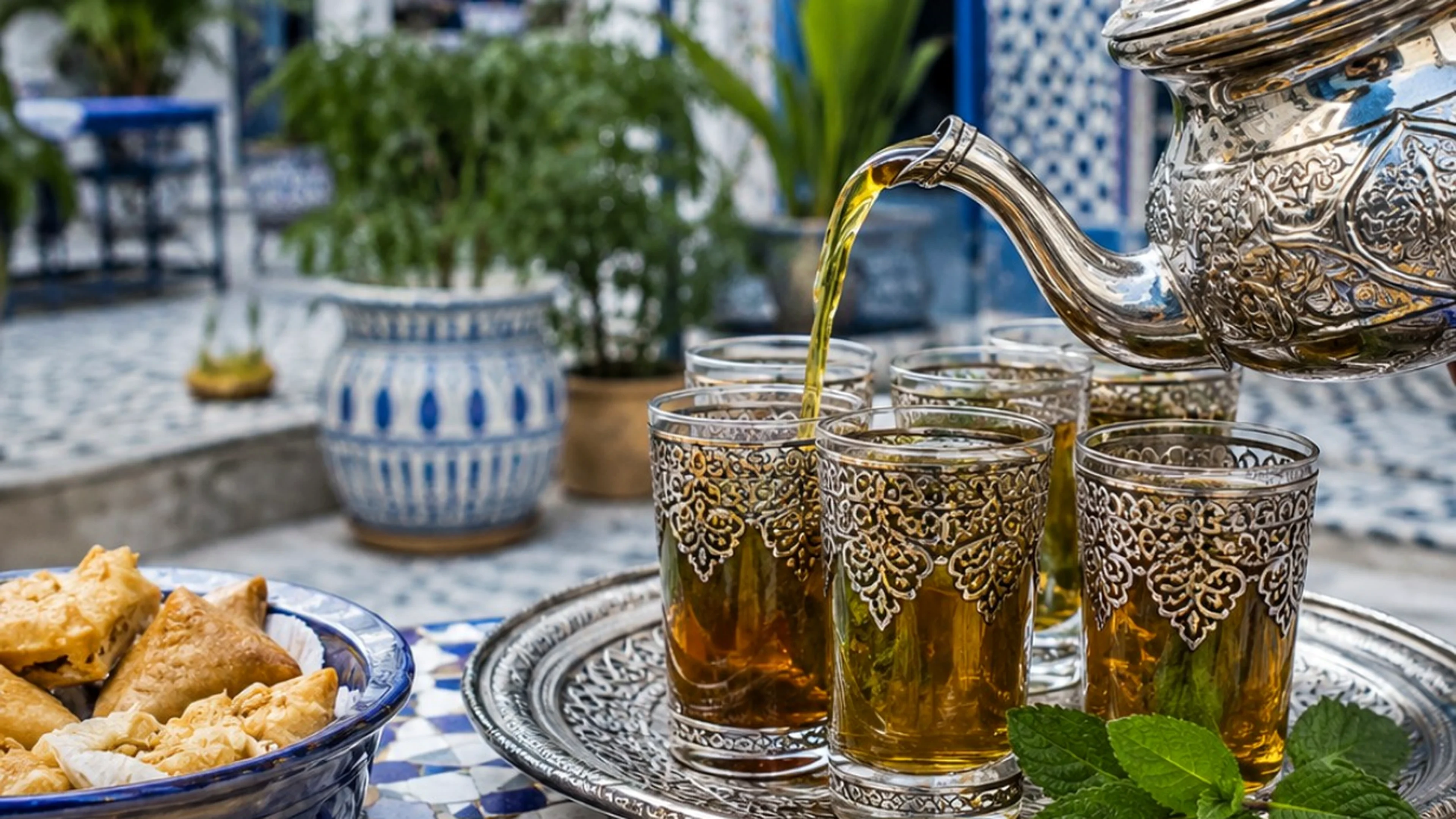
How we look, listen and move changes the quality of an encounter.
Read the story ↗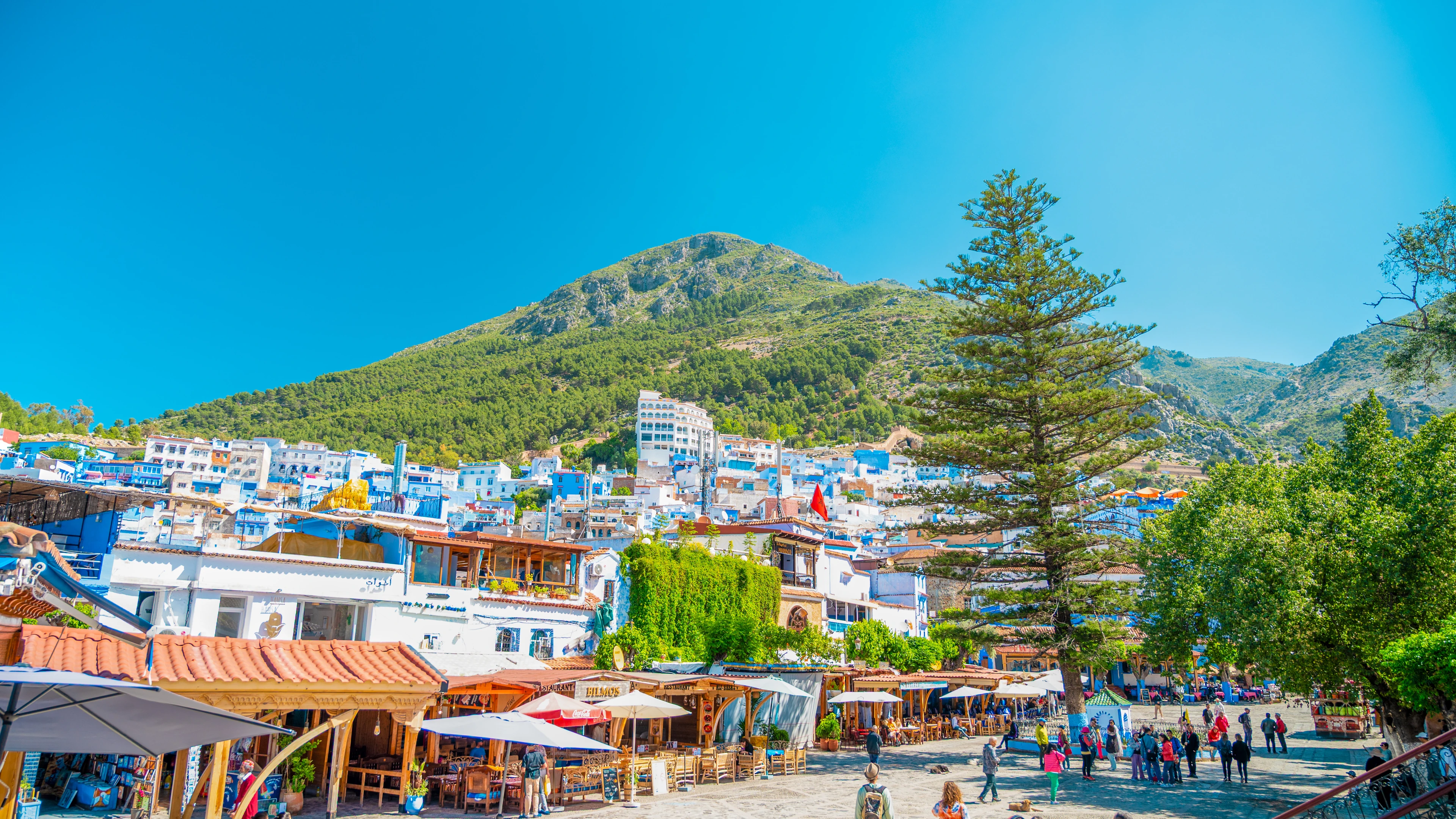
Five places, five ways into the streets, institutions and working life behind a familiar image.
Read the story ↗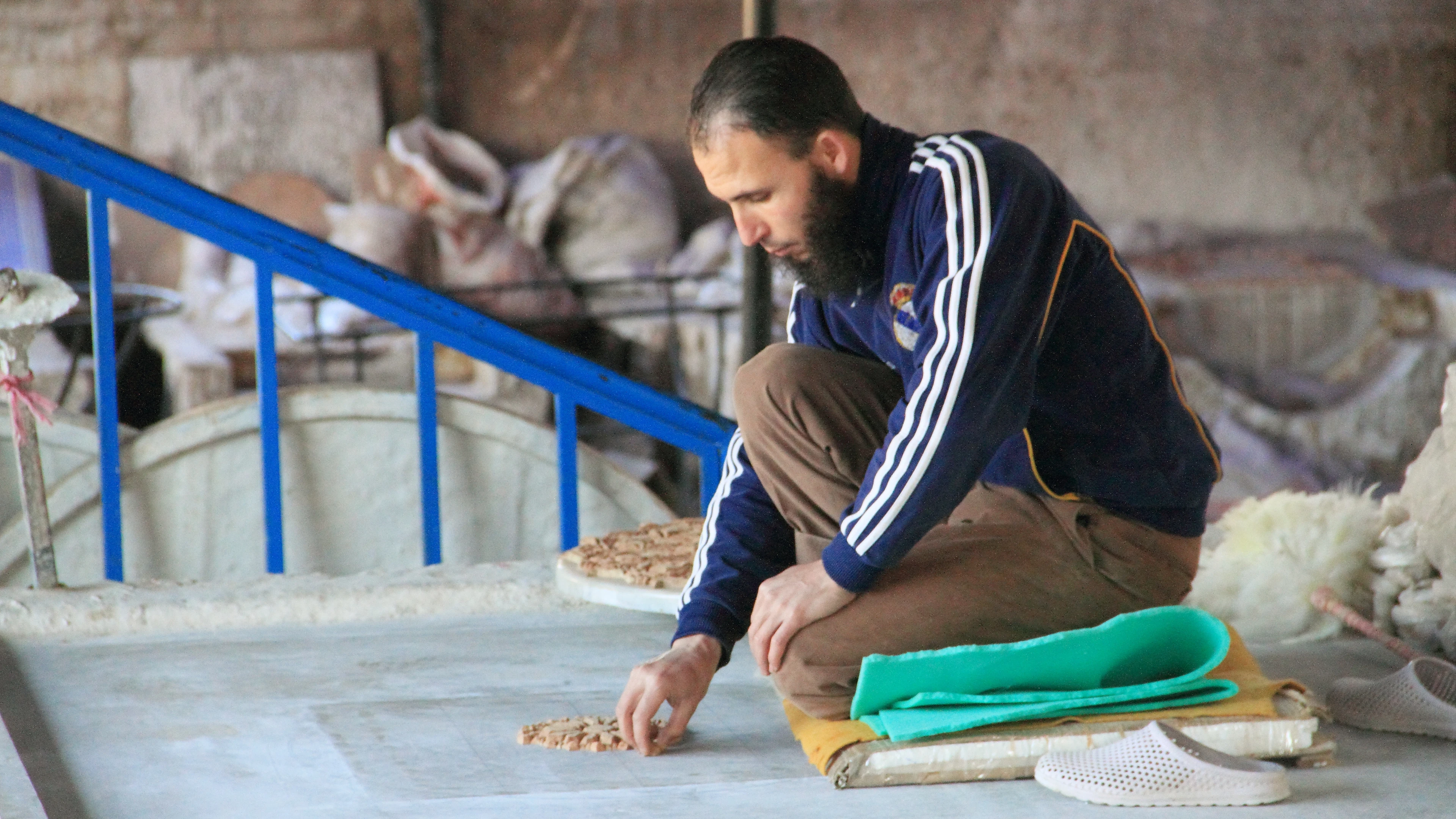
Clay, colour, wood and the decisions that turn material into a useful, beautiful thing.
Read the story ↗03 / Look closer
Our Chefchaouen essay follows the Mediterranean diet beyond a list of ingredients into knowledge and sharing. The Recipe pages offer another kind of encounter: instructions for making a dish, with its own sequence and practical decisions. Read them together. Cultural context helps explain why food matters; cooking reveals some of the attention that a finished photograph cannot show. Neither requires every household or region to prepare a dish identically.
04 / The story in context
A meal is the point at which several kinds of work become visible together. The finished dish invites an immediate judgement, but the visit can hold more than that first impression. Notice how the menu is explained, how an order is clarified and how people make room for one another around a table. These are parts of food culture that a photograph of a dish cannot contain.
The Taste guides provide a way to continue into particular foods and practices without treating one meal as a summary of a country. Keep the distinction between a dish, its preparation in a particular setting and your own experience of eating it. All three can be described, but they are not interchangeable kinds of knowledge.
Couscous offers a particularly clear example of food heritage extending beyond a recipe. UNESCO’s 2020 inscription, shared by Algeria, Mauritania, Morocco and Tunisia, covers preparation skills, utensils, learning and the circumstances of eating together. Its account follows the chain from cereal and semolina to steaming, accompaniments and transmission of knowledge. Read the UNESCO account ↗
A Moroccan food story can therefore begin at the market, the mill, the potter’s bench or the shared table. Follow one ingredient or utensil through that chain, then compare the recipes in our Taste collection. Household and regional differences are part of the subject; a single attractive platter cannot stand for every meal.
A different distance
A market purchase, a restaurant meal and an invitation into a home involve different relationships. The questions you ask and the time available for answering them will differ too. The Darija food chapter helps separate a request from a question about availability, while the hospitality pages make room for the person hosting the encounter.
Follow a town into its food setting through the city stories. Chefchaouen’s essay widens the familiar blue image to include the table; Larache’s coastal perspective keeps a view connected with a working place. These connections do not establish a single recipe or origin. They show why food becomes more meaningful when its surroundings remain in the account.
A different distance
After a meal, record one detail you understood and one you would like to ask about. It may concern a preparation, an ingredient or the order in which things were offered. Check unfamiliar terms with a reliable source or a willing speaker before turning them into an explanation for others. Curiosity is more useful when it remains precise.
On the next visit, choose a small part of that question rather than expecting a complete culinary lesson. Allow the meal to remain a meal for everyone involved. The strongest food story often comes from connecting a few well-understood details, leaving room for difference and resisting the temptation to make every encounter stand for a universal tradition.
Story pathways
Cities, cultural context and a connected essay, chosen for this subject.
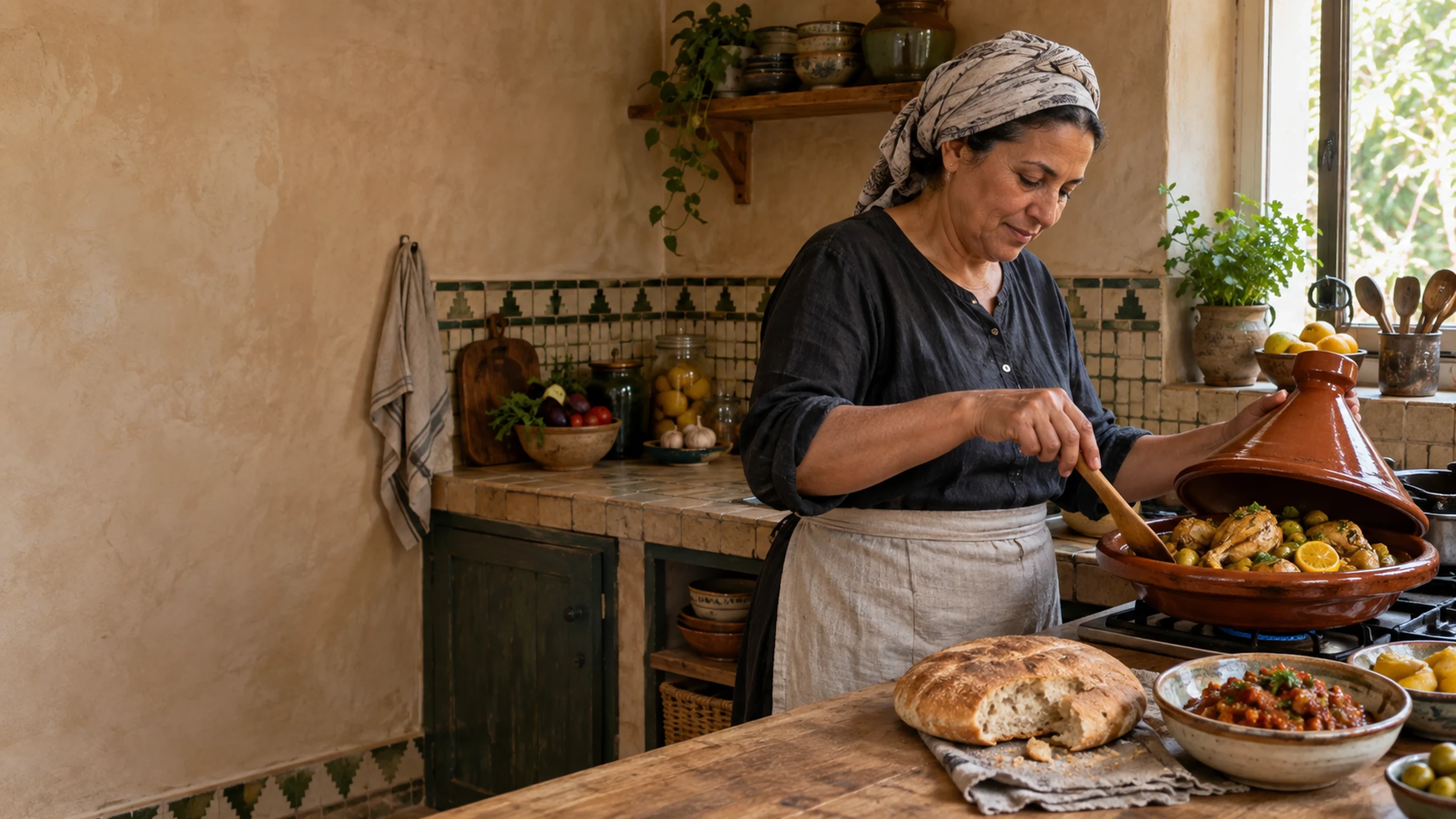
Learn The cultural setting Read hospitality, meal context and regional variation. Explore ↗
Explore the context ↗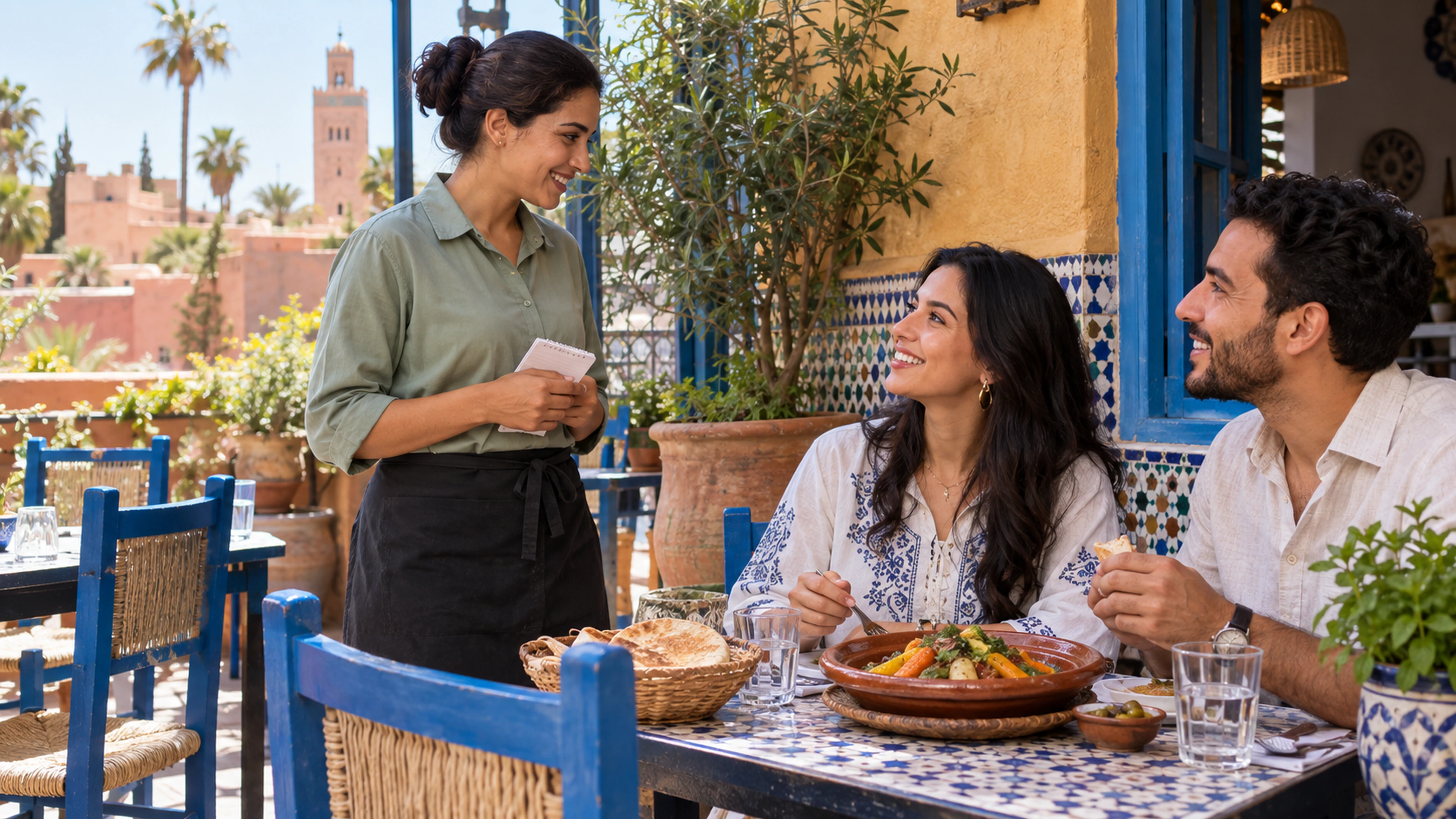
Darija Talk at the table Words and exchanges for understanding an order or a reply. Explore ↗
Explore the context ↗The colour draws you in. Mountains, ochre walls, water and food give the photograph a much larger story.
Explore the story ↗How we look, listen and move changes the quality of an encounter.
Explore the story ↗Continue reading
Keep the subject in view as you choose your next chapter.
The colour draws you in. Mountains, ochre walls, water and food give the photograph a much larger story.
Read the story ↗How we look, listen and move changes the quality of an encounter.
Read the story ↗Five places, five ways into the streets, institutions and working life behind a familiar image.
Read the story ↗Clay, colour, wood and the decisions that turn material into a useful, beautiful thing.
Read the story ↗This reading room connects published stories with contextual guides. Each linked story includes its own research and photography notes.
Photography is identified through the linked source records. Crops and responsive sizes were prepared for this layout.
Research checked 27 September 2026.
