shnu ʿandkum?
What do you have?A useful opening when the selection is explained verbally. Be ready to hear several items.

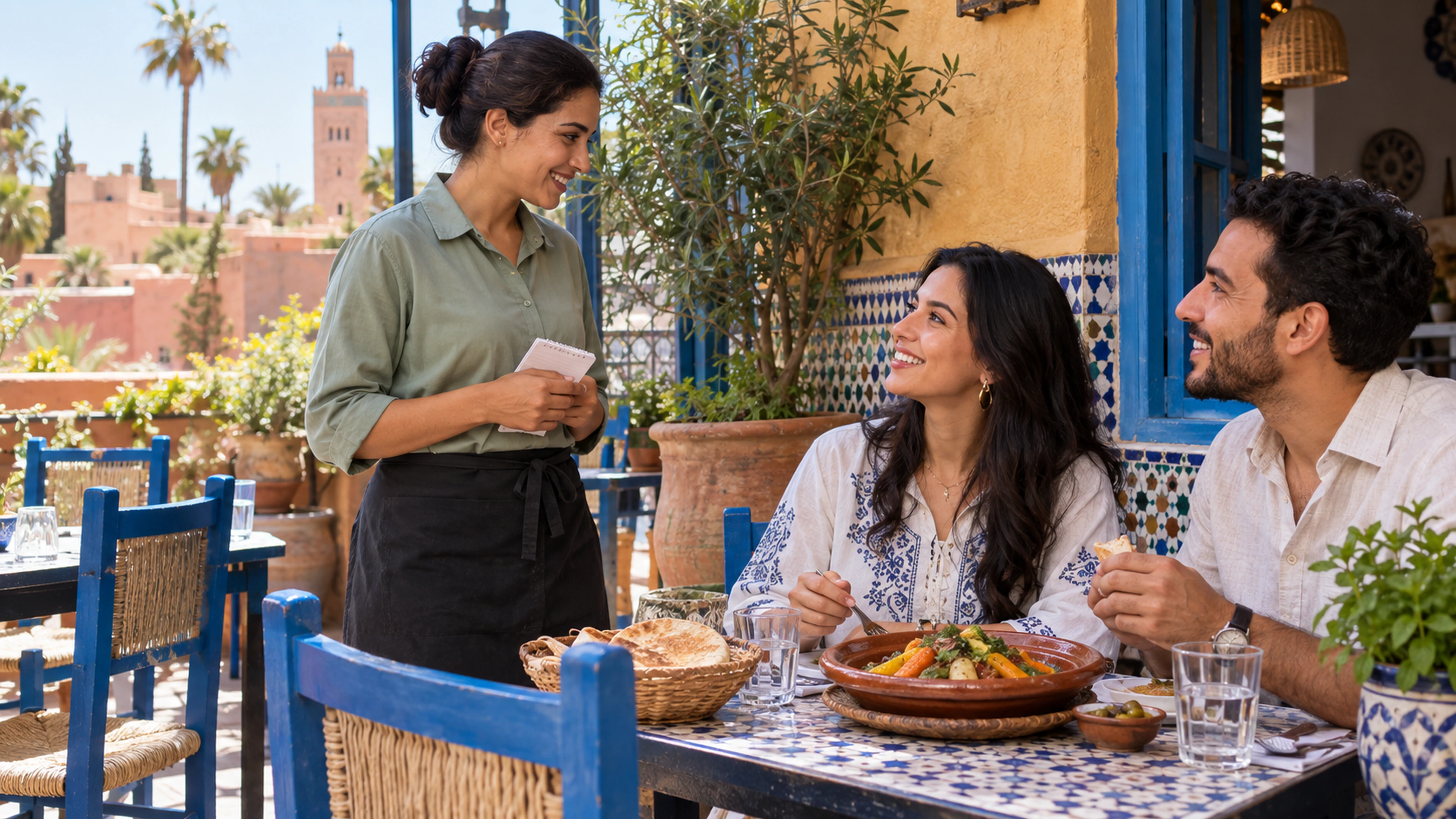
Order with more confidence, understand a question from the table and connect food words to the way a meal is served.
Exotic Morocco · 9 minute readOrdering is more than recognising tagine or couscous on a menu. You may need to ask what is available, clarify an ingredient, decide how much to order or understand whether a dish is intended for sharing. A little Darija becomes useful when it helps you ask those questions and follow the reply.
Moroccan food belongs to homes, cafés, neighbourhood restaurants and many other settings. One ordering pattern does not describe them all. A displayed menu, a daily selection and a conversation with a host give you different kinds of information. Begin with what is actually being offered, then ask about the detail that matters to you.
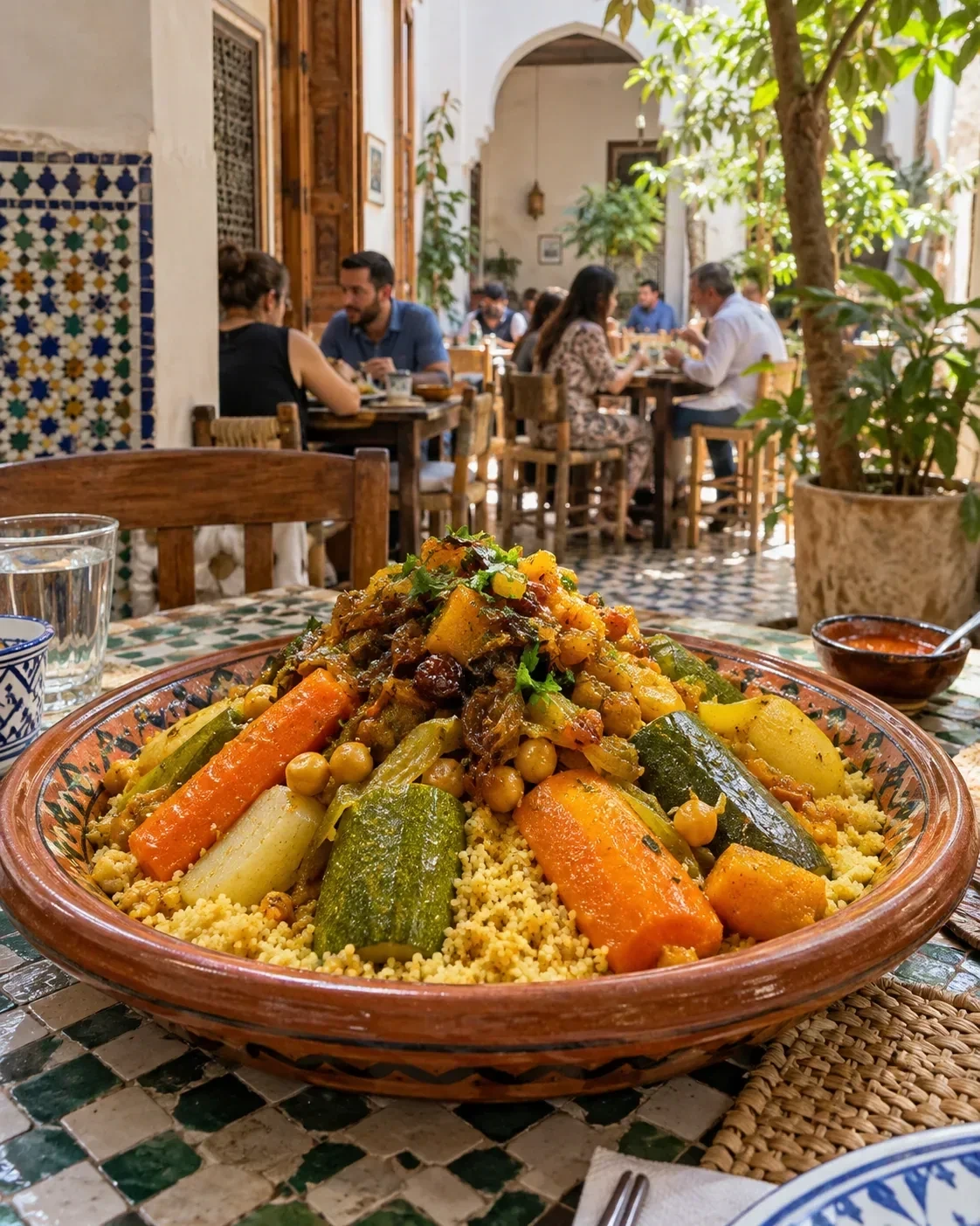
A small set of useful expressions, with the context that makes them work.
A useful opening when the selection is explained verbally. Be ready to hear several items.
The server may ask about quantity or another detail. Leave space for the question.
A simple preference. Bla means without; the phrase does not cover every possible dietary concern.
A starting question from the teaching reference. Ask separately about preparation and ingredients if those matter.
A straightforward compliment when you mean it.
Use when you are ready to settle the meal. Confirm unclear items in the actual bill.
The scene links four stages without pretending to predict the full menu or every server’s reply. Practise hearing an option before choosing it. For a real order, make the quantity clear. If you are ordering for a group, allow each person’s preference to be understood rather than assuming one phrase settles the whole table.
These are approachable Latin spellings for spoken Moroccan Arabic, not IPA or a single official spelling system. sh is like the sound in “ship”; kh is like the final sound of Scots “loch”; gh is a voiced sound made towards the back of the mouth. ʿ marks ʿayn, which has no direct English equivalent. ḥ is a deeper h sound, and ṣ marks an emphatic s. The doubled vowel in bgheet is an English-oriented reading aid.
Spellings and pronunciation vary. Hyphens help show parts of an expression; they are not instructions to pause. Learn the rhythm from a willing speaker or a reliable recording. Examples are brief practice scenes, not transcripts of the people in the photographs. Relevant masculine, feminine and plural address forms are labelled.
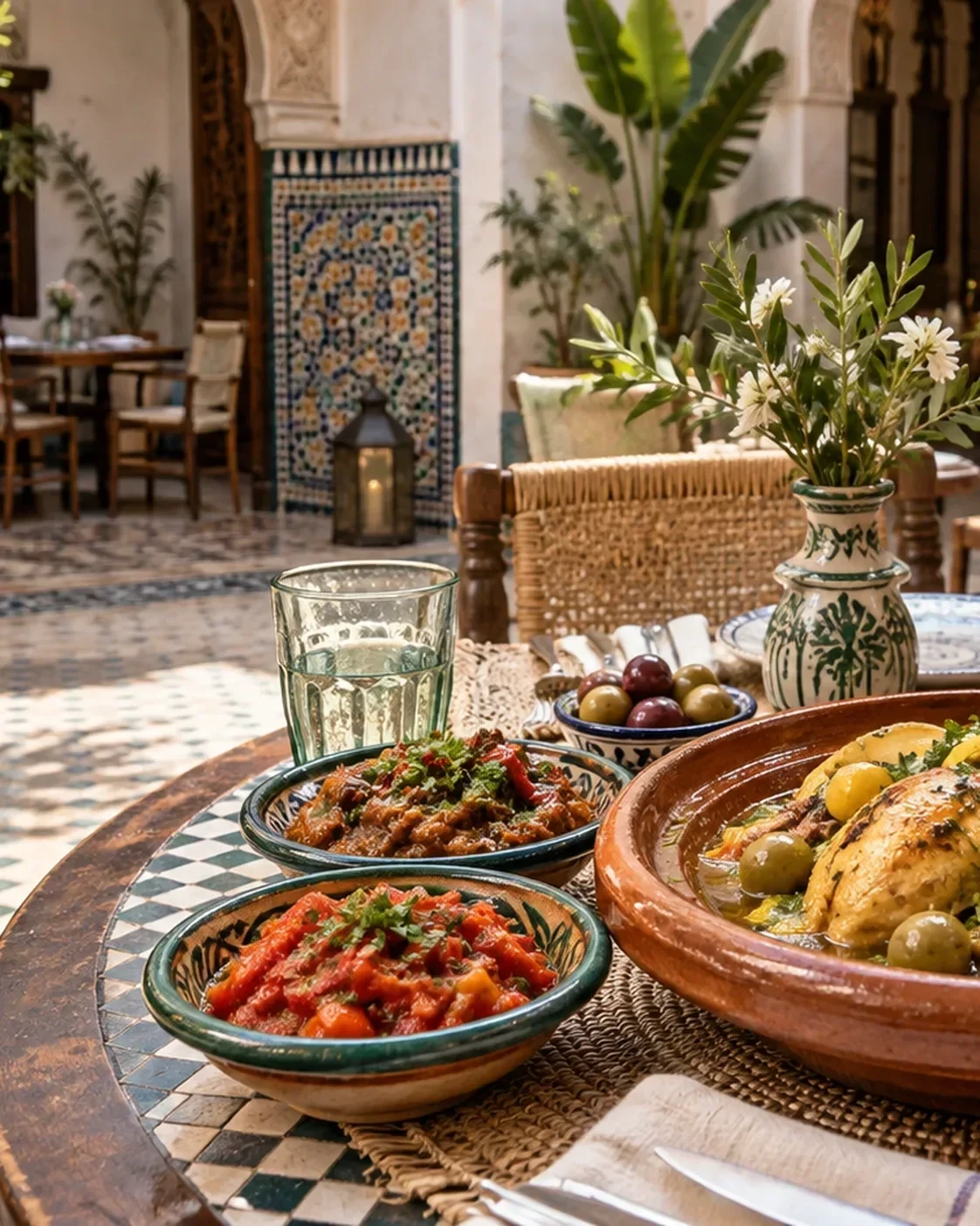
Shnu ʿandkum? asks what you have available, addressing the establishment or a group. It invites a list rather than a yes or no. A server’s answer may include a dish name you recognise and a preparation you do not. Ask for that distinction to be explained before assuming every version of a familiar dish contains the same ingredients.
Bla means without. It can help with a straightforward request such as qhwa bla skkar, coffee without sugar. But removing a word from an order does not reveal how a dish was cooked. “Without meat” does not necessarily establish whether stock, fat or another ingredient was used. When an ingredient matters, discuss the actual preparation in a language that everyone understands clearly.
For an allergy or another strict dietary requirement, do not rely on a short beginner phrase or an uncertain translation. Explain the exact ingredient and ask the staff to confirm whether they can meet the requirement. A dish title and a friendly yes are not detailed ingredient information. The language goal is clear communication, including recognising when your current vocabulary is not enough.
Meaning becomes clearer when you connect the words to what the speakers are doing.
Ask what is available and clarify the portion or sharing arrangement. Point to the relevant menu entry if needed. A question asked before the food is prepared gives both you and the server more room to resolve uncertainty.
Check calmly if the dish or quantity is different from what you understood. Refer to the order, not to an assumption about how a national dish must look. Recipes and service styles vary, while your particular order can still be clarified.
L-ḥsab, ʿafak asks for the bill. Wait for the amount and check any item you do not understand. A thank-you closes the exchange; a genuine compliment about the food can add warmth without turning the meal into a rehearsed performance.
Look beyond the phrase. Objects, working spaces and shared routines give a conversation its practical meaning.
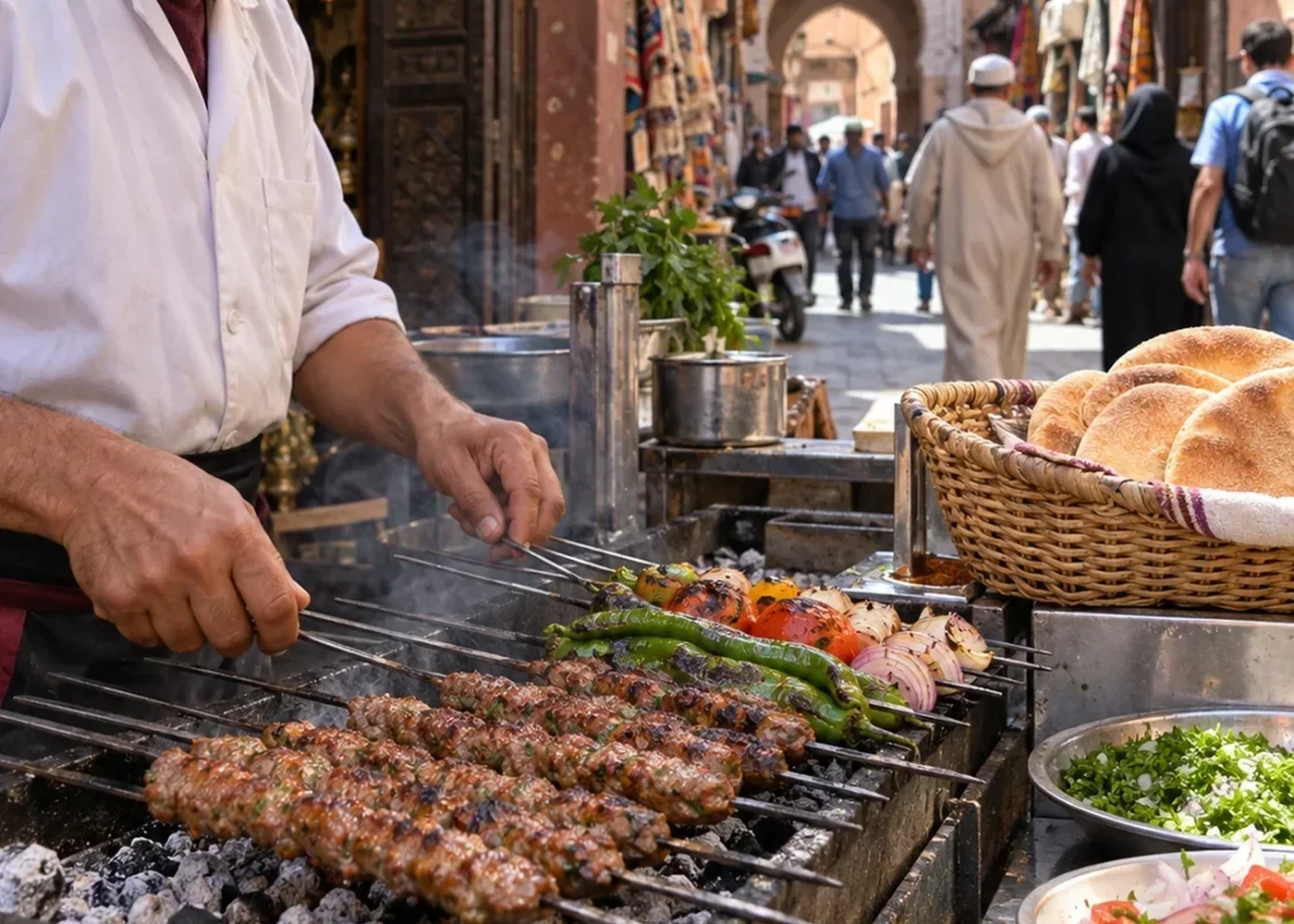
A grill makes part of the cooking visible, but it does not reveal every seasoning or ingredient. Ask about the specific item you are considering. When an ingredient matters, make the question explicit rather than relying on a dish name or what you can see from the counter.
A cook working at a street grill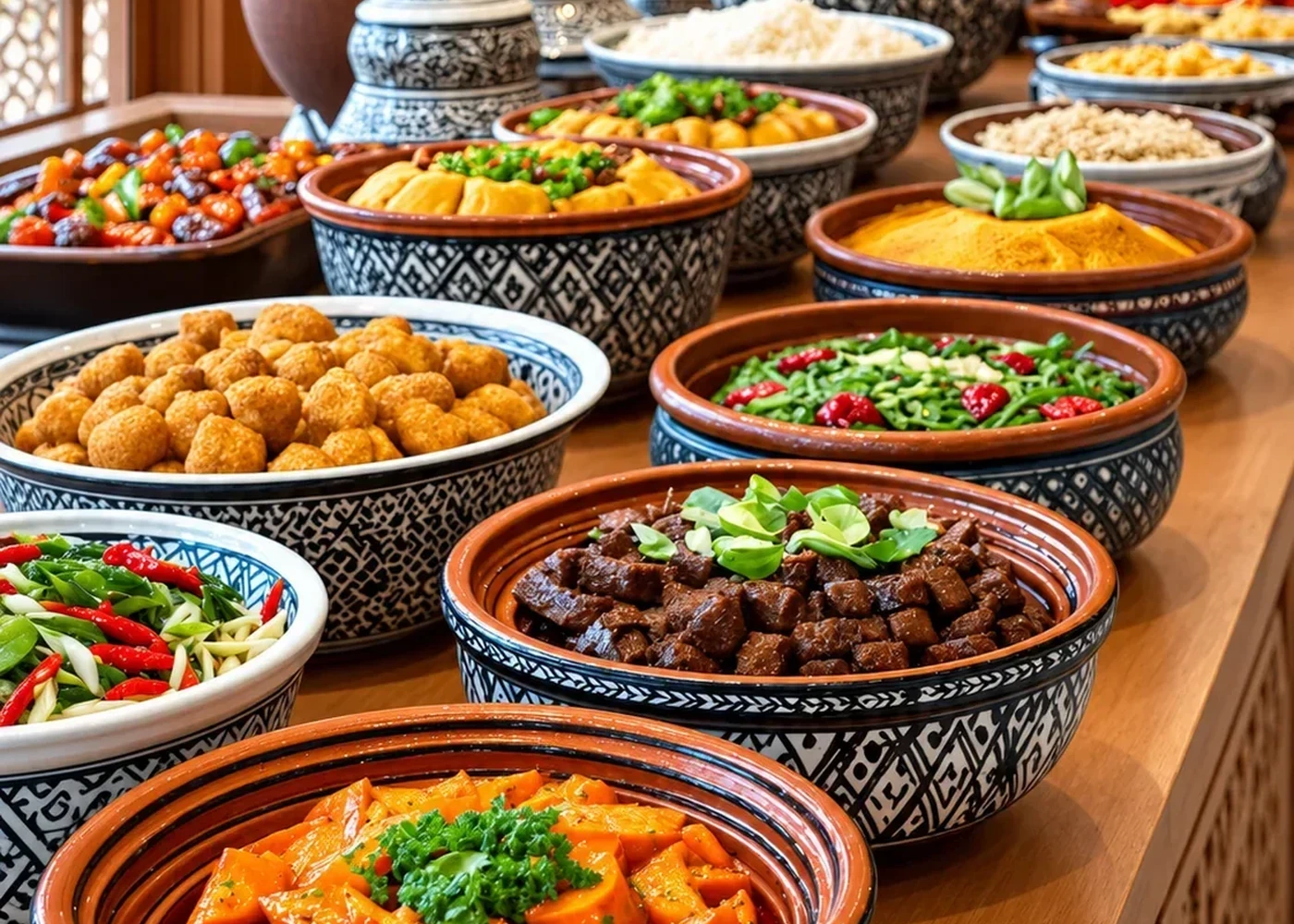
Several prepared dishes can be offered separately or as part of an arrangement. Clarify what your order includes and how the portion is served. A photograph may make the choice look obvious, but in a real restaurant the server’s explanation supplies information the display cannot.
A selection of prepared dishes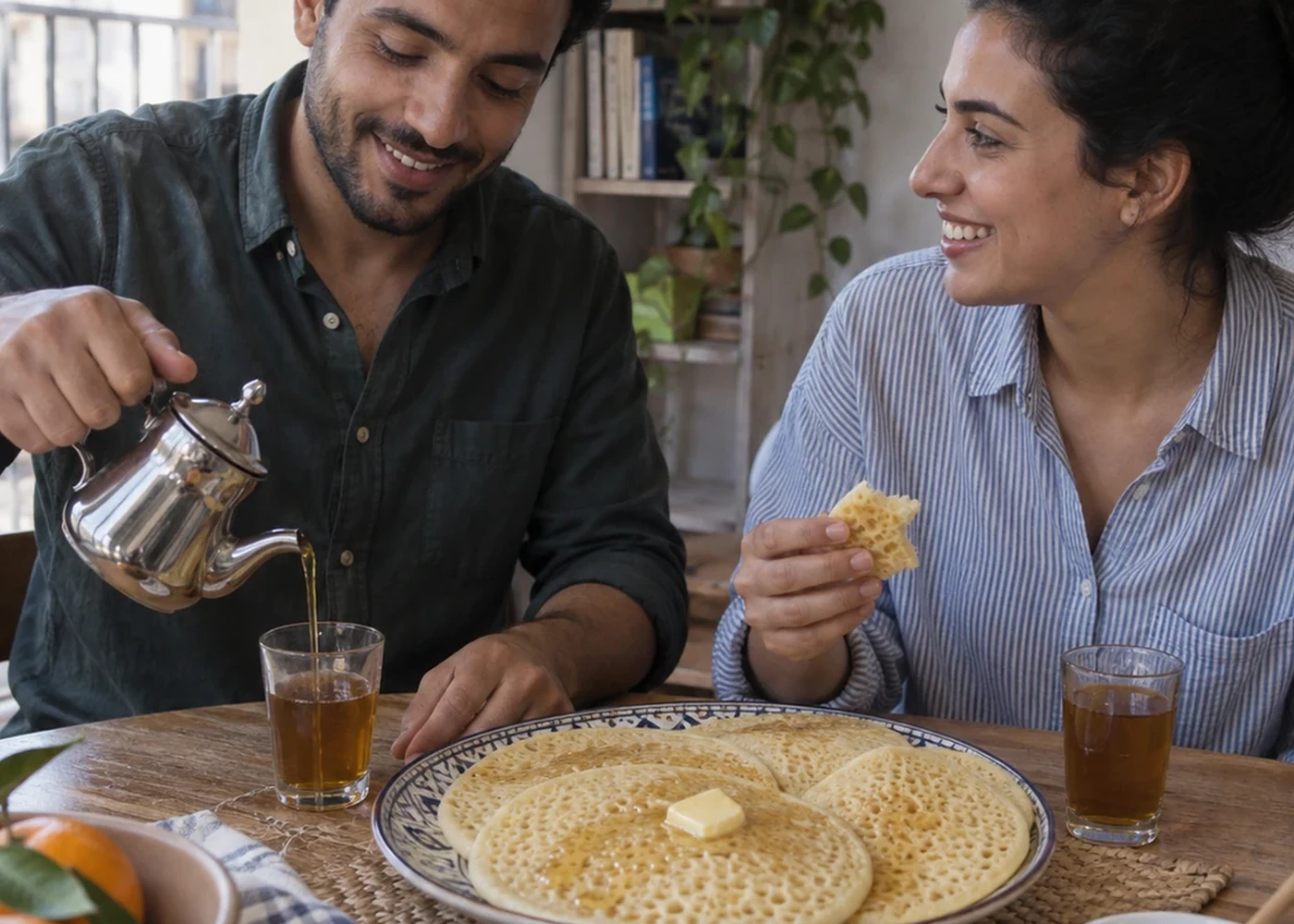
An ordinary meal gives room for thanks, offers and preferences as well as ordering. Listen to the person sharing the table. If someone offers more tea or bread, answer clearly. Warm conversation does not require accepting every serving or pretending to understand every word.
Tea and breakfast shared by two dinersPoint to the line you mean, ask one question at a time and let the server answer. A menu can bridge a pronunciation gap, but it does not automatically describe stock, garnish or substitutions. When something remains uncertain, say so. The most useful restaurant language is the language that produces a clearly understood order, even when that means switching to another shared language.
Try it once slowly, then let your partner change the answer. Listen for what changes before choosing your next phrase.
Use the written menu as a shared reference before practising an order. Point to the dish, confirm whether it is available and establish how many portions you mean. Only then discuss preferences. These are separate exchanges, and completing them one at a time gives the person serving you room to clarify.
At the end, look back at the interaction rather than counting the words you used. Did you recognise a question about quantity? Did you understand what was being offered? Note the answer that surprised you and ask a trusted speaker to explain it later. The next meal then becomes a chance to practise a specific listening skill.
A little nuance makes a phrase more useful.
No. A request without meat does not establish whether dairy, eggs, stock or other animal ingredients are present. Ask about the actual preparation and explain your requirement clearly.
Sometimes, but you may still need to clarify quantity, availability or preparation. Naming the dish is an opening, not a guarantee that the complete order is understood.
Continue into the linked Taste and Learn pages for ingredients, meals and cultural context. This page focuses on the conversation that happens around choosing, ordering and paying.
8 connected cities. Language travels with you; each place adds its own setting and people.

Explore the city’s streets, places and everyday settings alongside your Darija learning.
Explore this connection ↗
Explore the city’s streets, places and everyday settings alongside your Darija learning.
Explore this connection ↗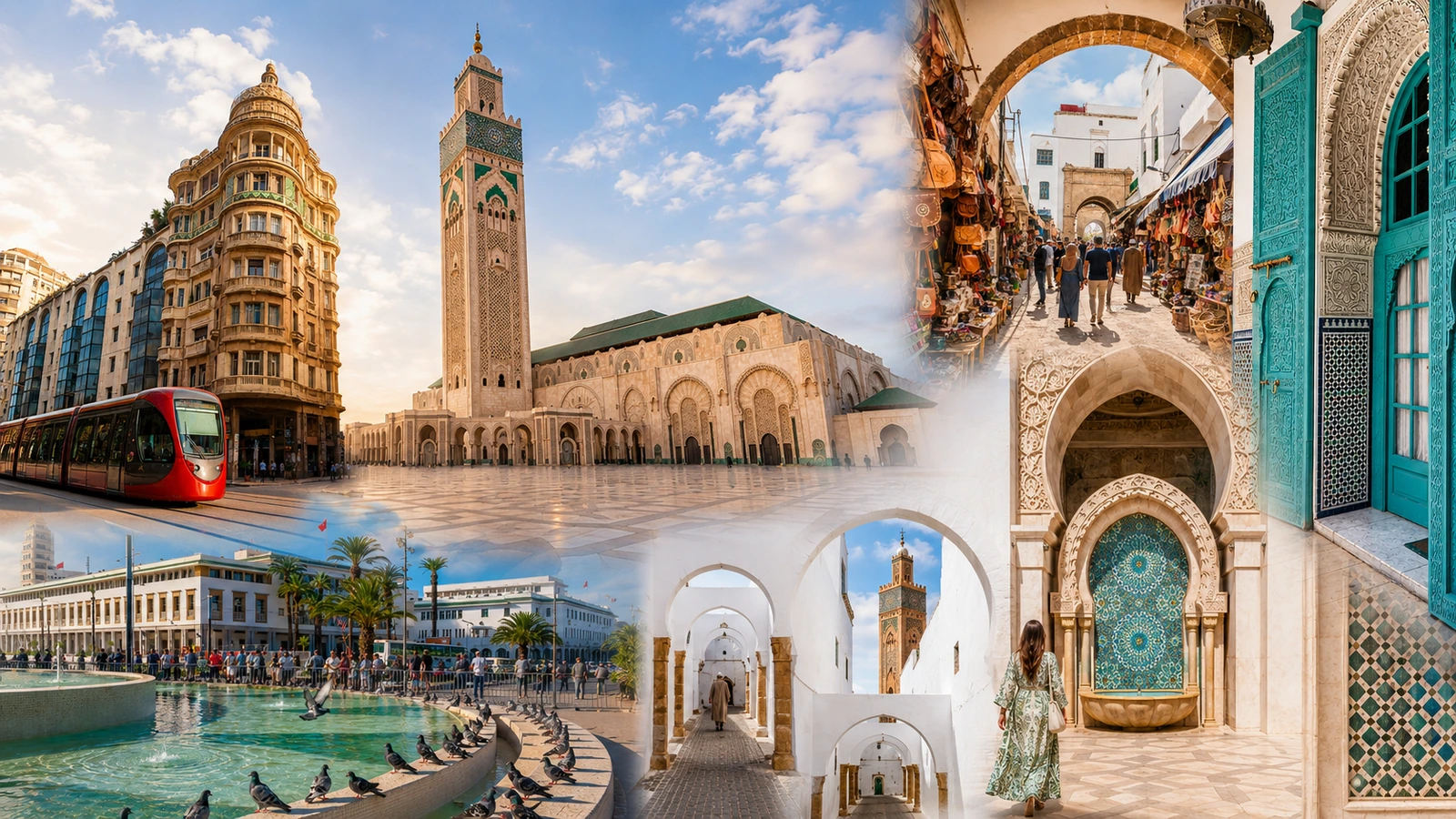
Explore the city’s streets, places and everyday settings alongside your Darija learning.
Explore this connection ↗
Explore the city’s streets, places and everyday settings alongside your Darija learning.
Explore this connection ↗
Explore the city’s streets, places and everyday settings alongside your Darija learning.
Explore this connection ↗
Explore the city’s streets, places and everyday settings alongside your Darija learning.
Explore this connection ↗
Explore the city’s streets, places and everyday settings alongside your Darija learning.
Explore this connection ↗
Explore the city’s streets, places and everyday settings alongside your Darija learning.
Explore this connection ↗
Take Food & Restaurants further.
This public chapter is free to explore. The companion guide is in preparation, with space planned for fuller phrase sets, practice exchanges and more detailed language notes.
Find current availability in the guide collection.
Explore this guide ↗Back to the Darija collection ↗Continue with another Darija situation or explore the cultural context in Learn.

Understand the small expressions that soften a request, acknowledge help and repair an ordinary misunderstanding.
Continue exploring ↗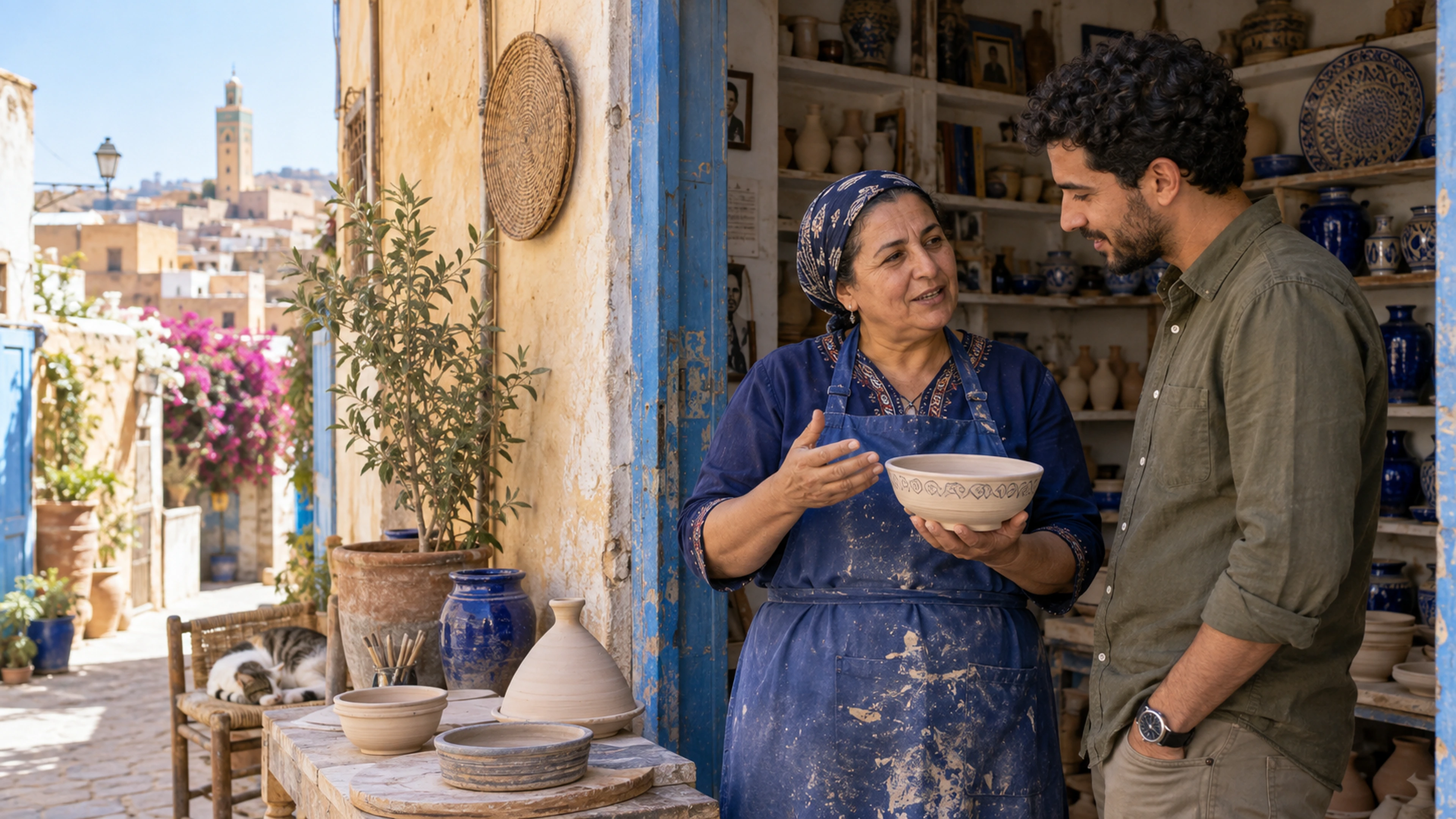
Choose an opening, listen to a preference and use Darija without turning another person into a performance.
Continue exploring ↗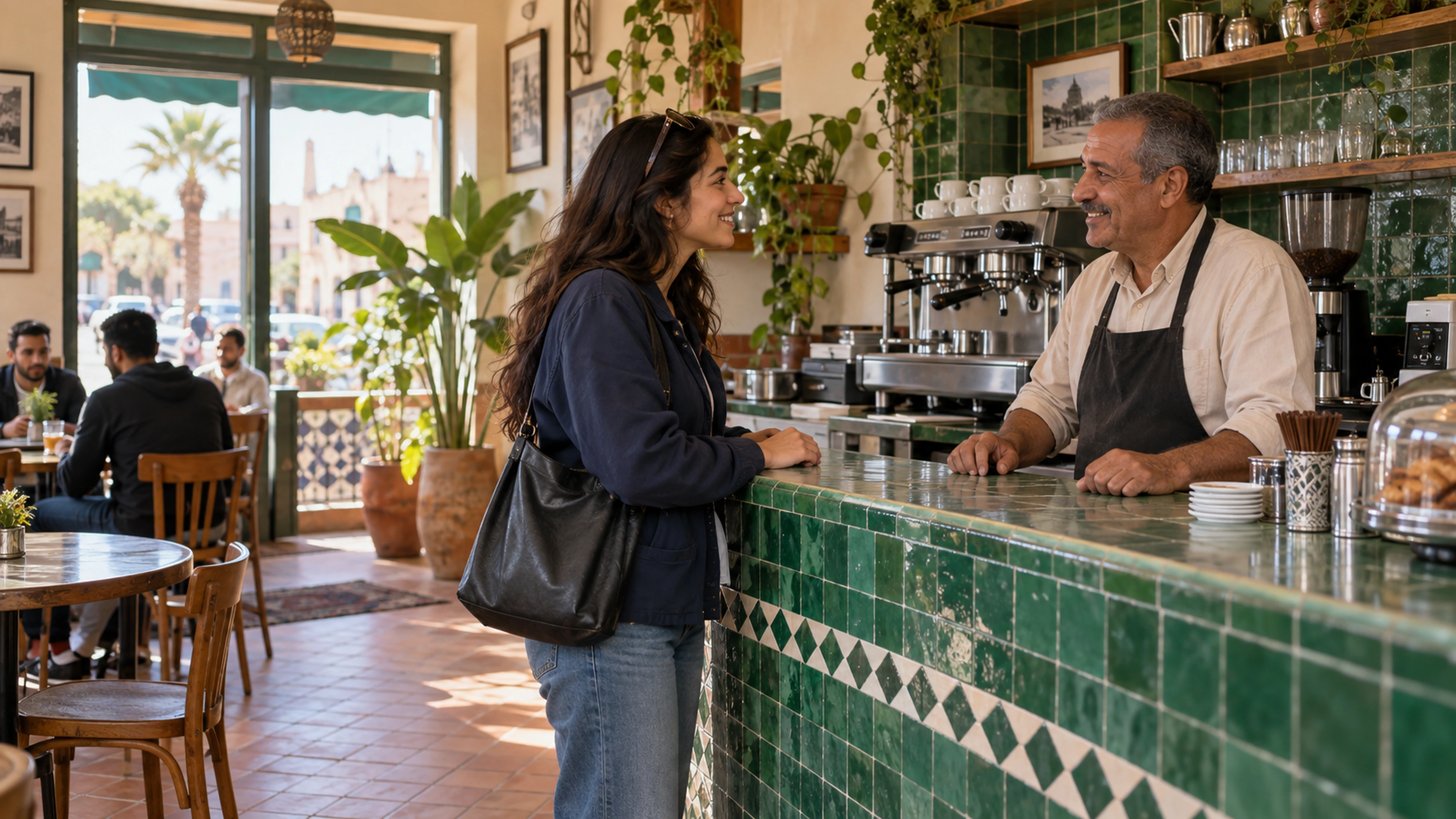
Understand a few productive patterns for requests, questions and clarification, then use them with care.
Continue exploring ↗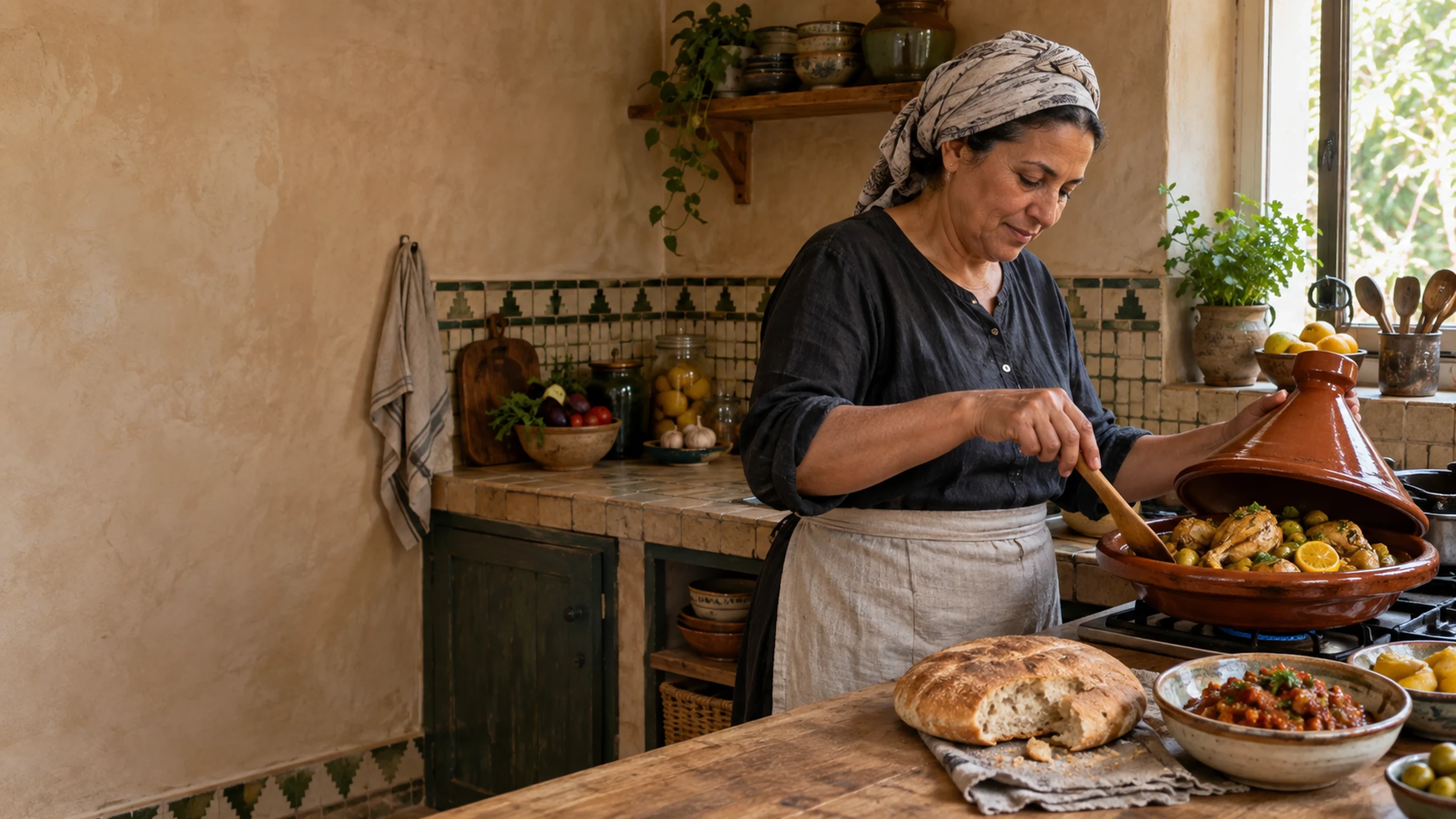
Food is a way into work, seasons, relationships and place. Read a Moroccan table through the lives around it, as well as what is served.
Continue exploring ↗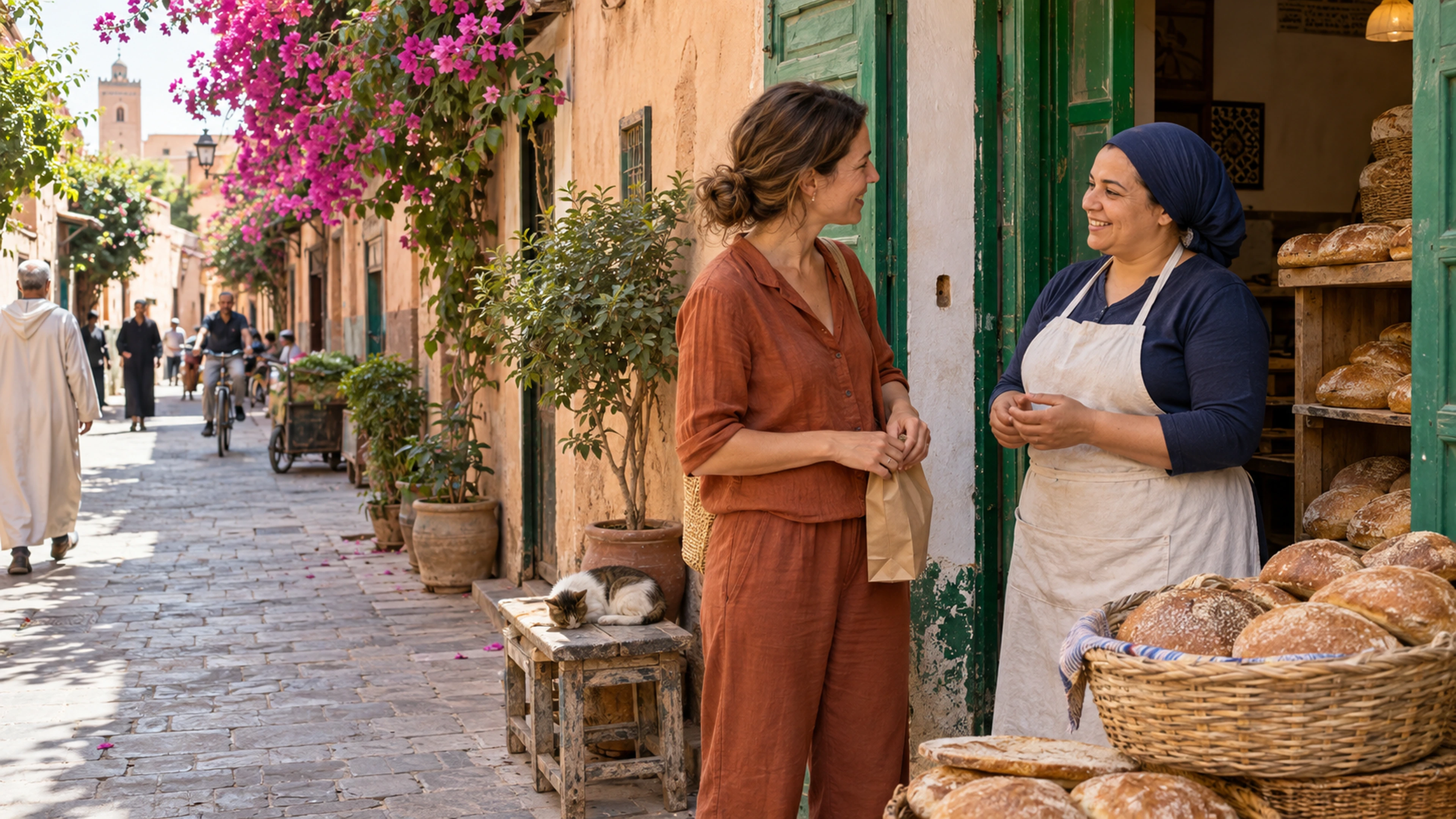
Practical courtesy for streets, shops, homes and shared spaces. Read the situation, ask clearly and let people set their own boundaries.
Continue exploring ↗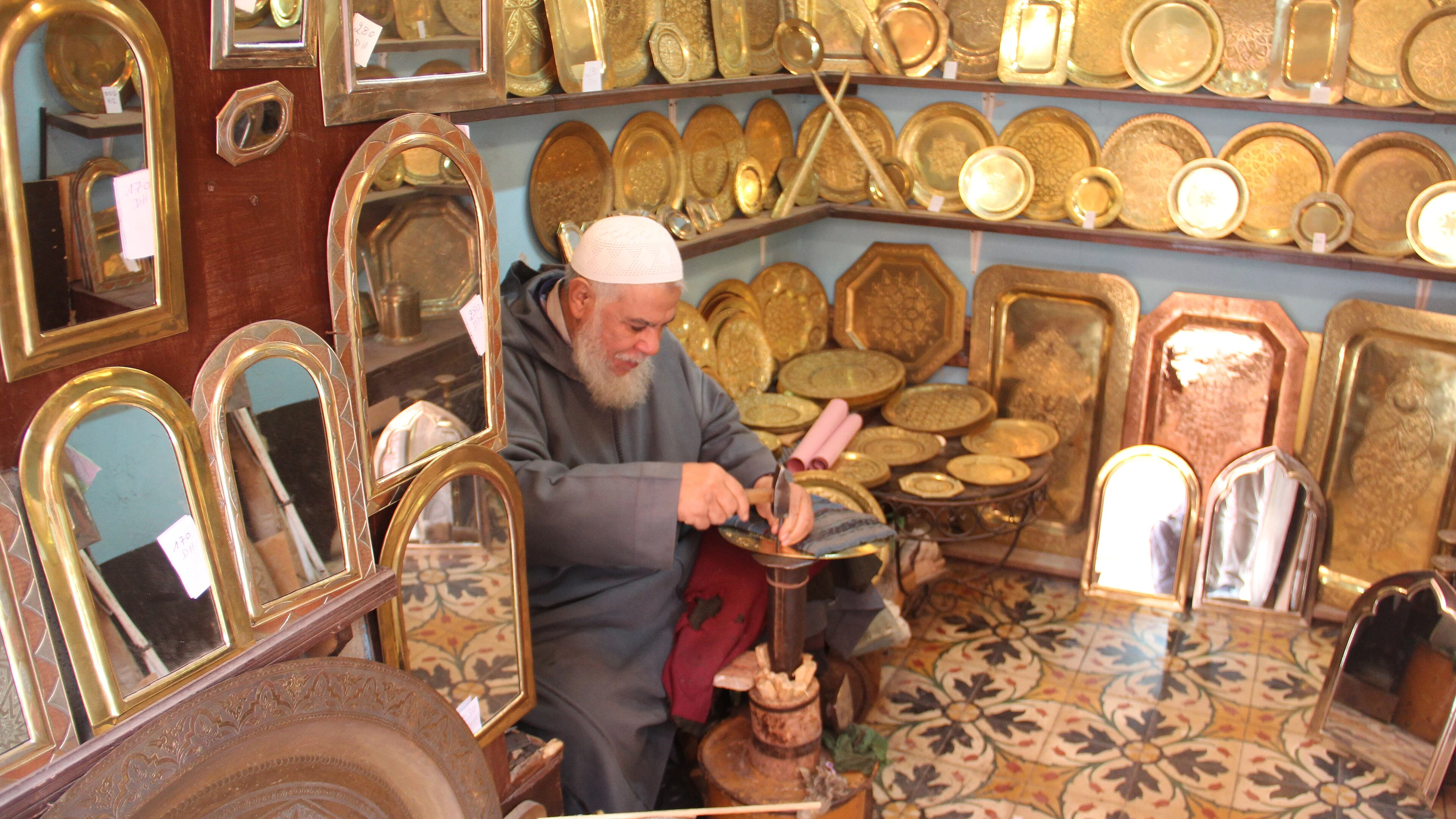
Clay, fibre, metal, wood and leather. Discover the practical intelligence behind Moroccan objects, from first material to finished use.
Continue exploring ↗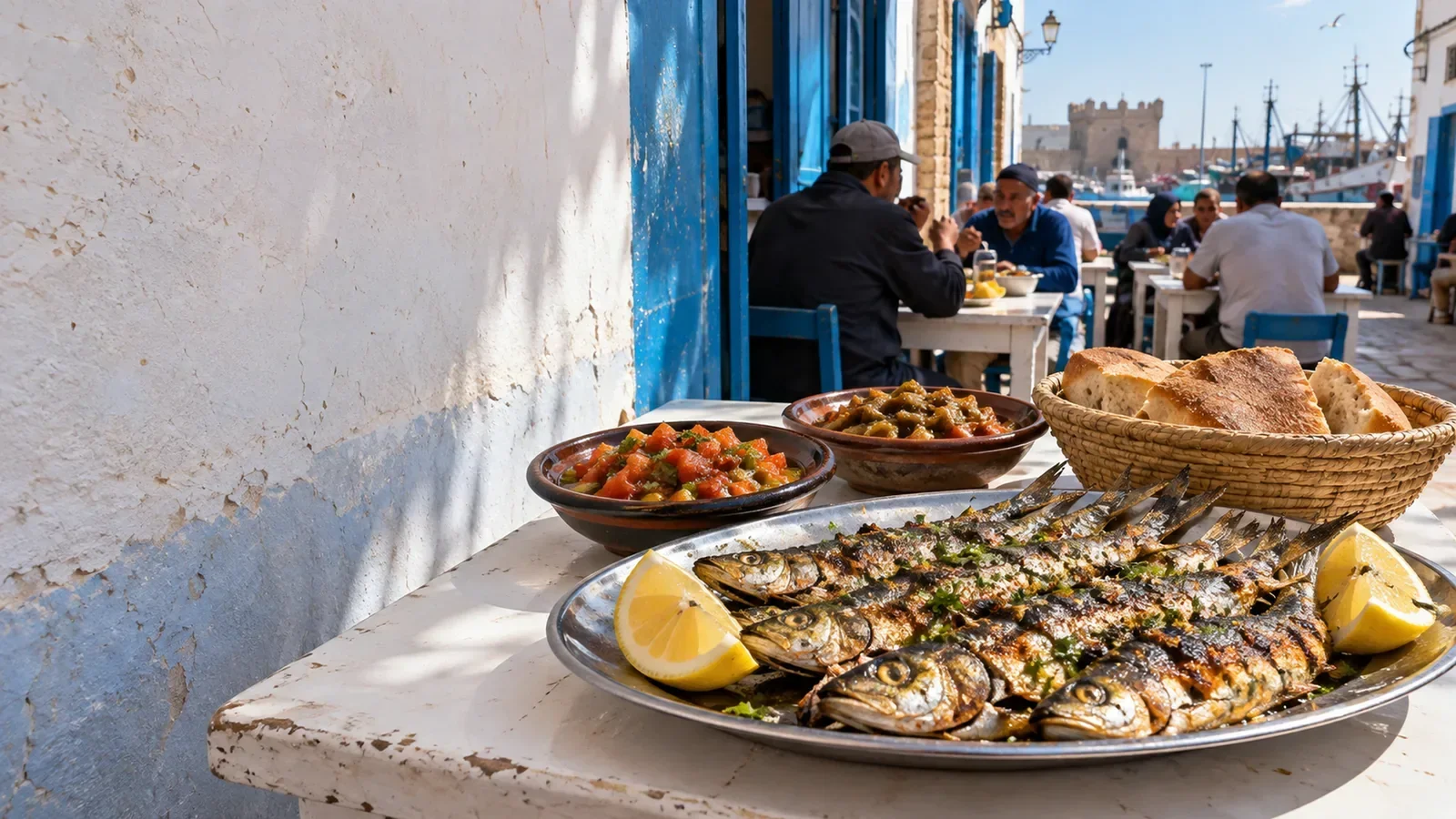
Discover meals, ingredients and the setting behind the restaurant conversation.
Continue exploring ↗