Skip to learning
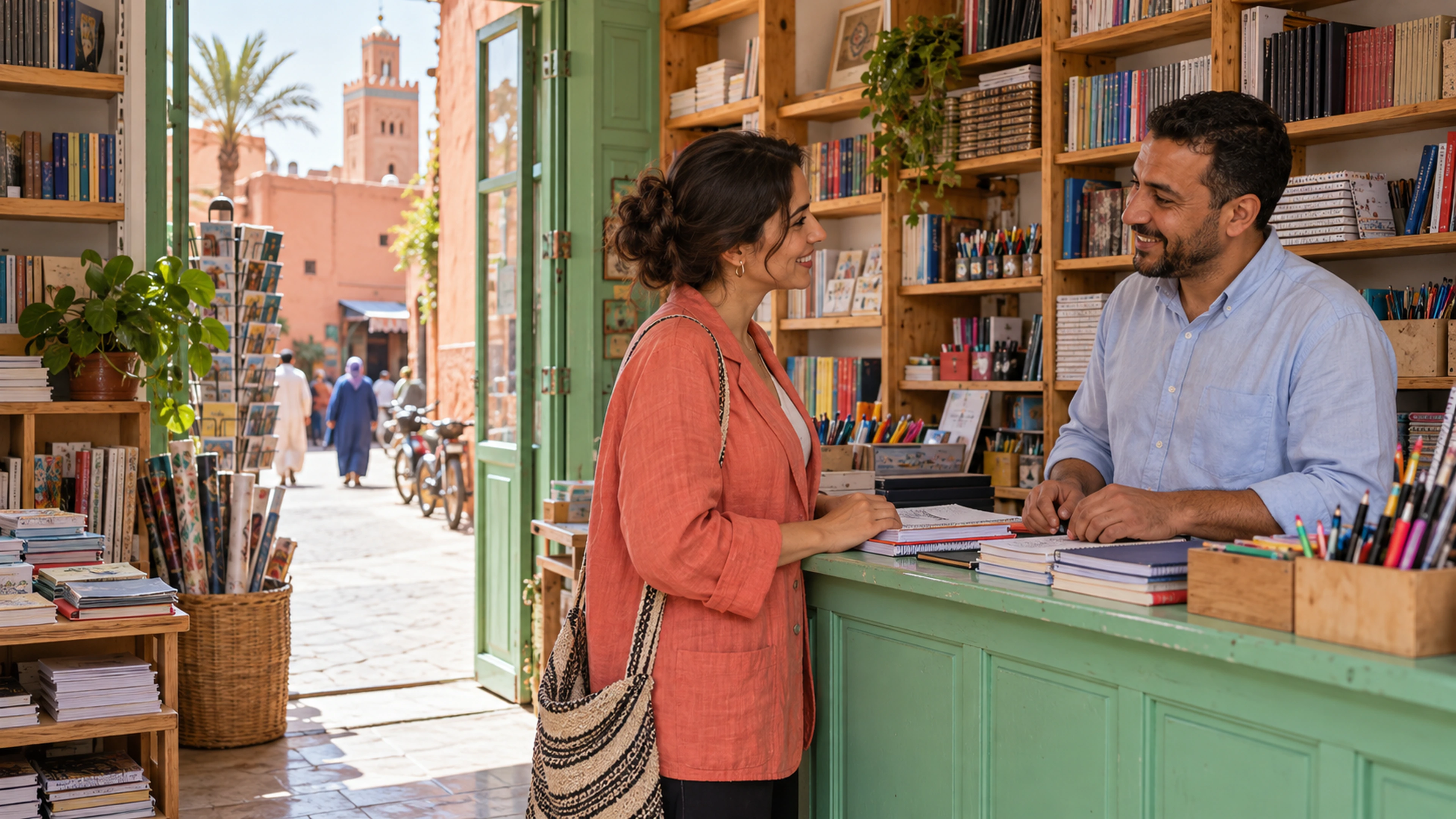
At a working studio: an imagined Moroccan conversation.
Attention before fluency

Language & Respect

Choose an opening, listen to a preference and use Darija without turning another person into a performance.

Exotic Morocco · 9 minute read
01 / A way into the conversation

Respect is something you do.

A few words of Darija can create a warmer exchange, but vocabulary alone does not make an interaction considerate. Notice whether the other person is working, whether they have time and whether they seem comfortable. A simple greeting followed by a clear question often says more than a rehearsed speech about how much you love the language.

Do not use language as a test of someone’s identity. Appearance, surname, clothing or the town you are visiting cannot reliably tell you which languages a person uses at home. Morocco is multilingual, and an individual may move between languages for many reasons. Follow the person in front of you rather than an imagined rule about what every Moroccan ought to speak.

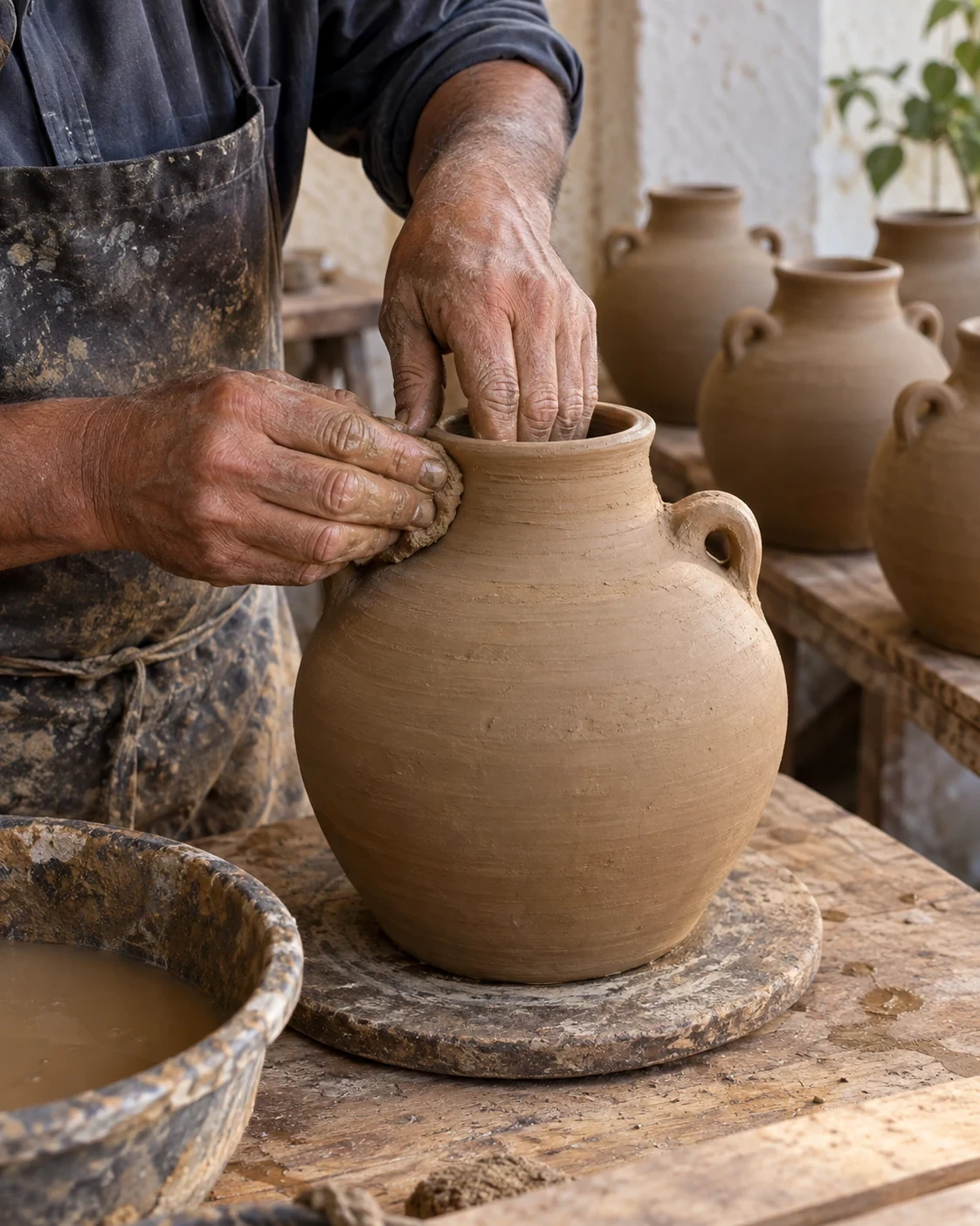
Hands shaping a clay vessel
THE LANGUAGEMoroccan Arabic · Darija
THE APPROACHListen. Respond. Connect.
THE CONNECTIONFind it in Morocco ↗
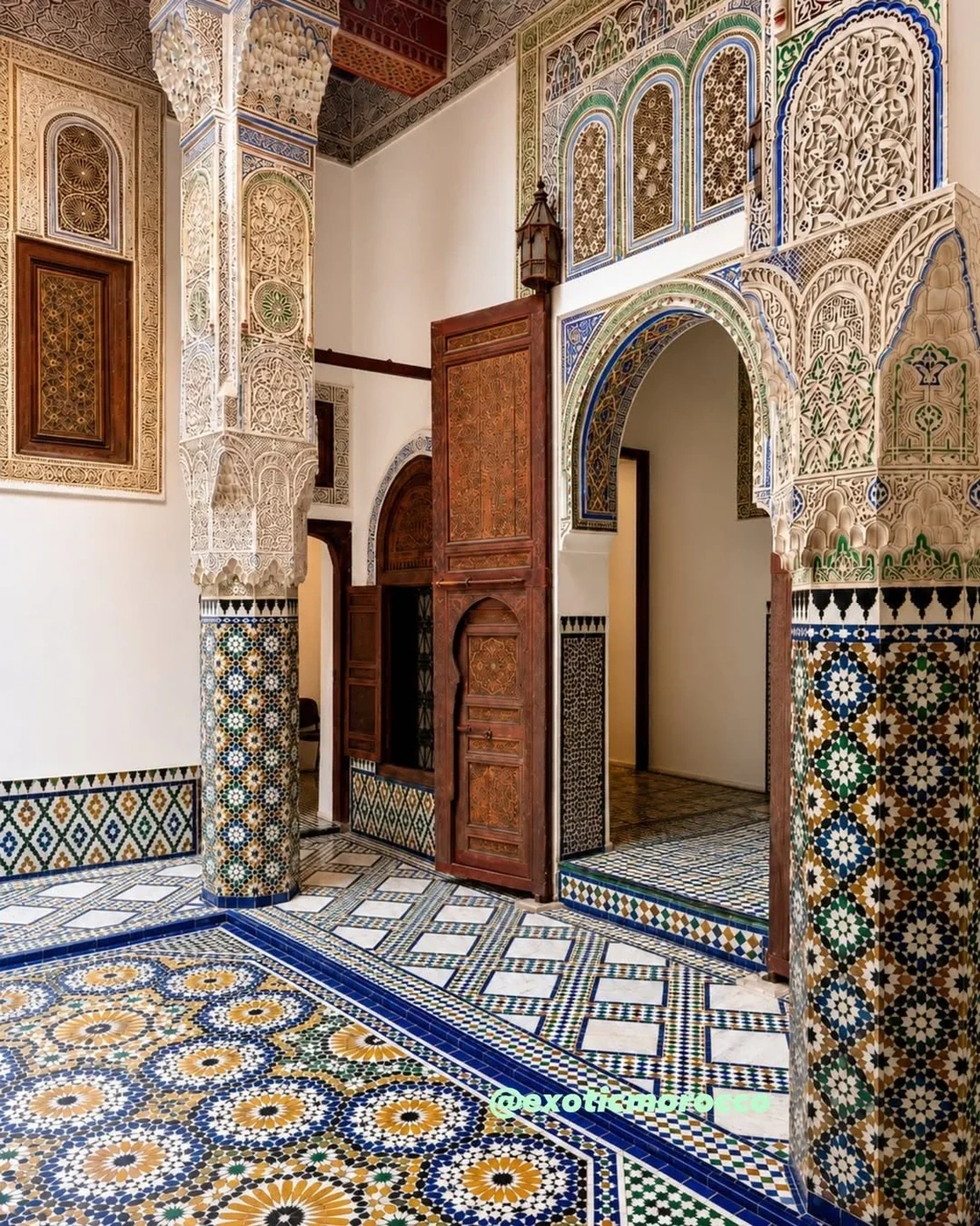
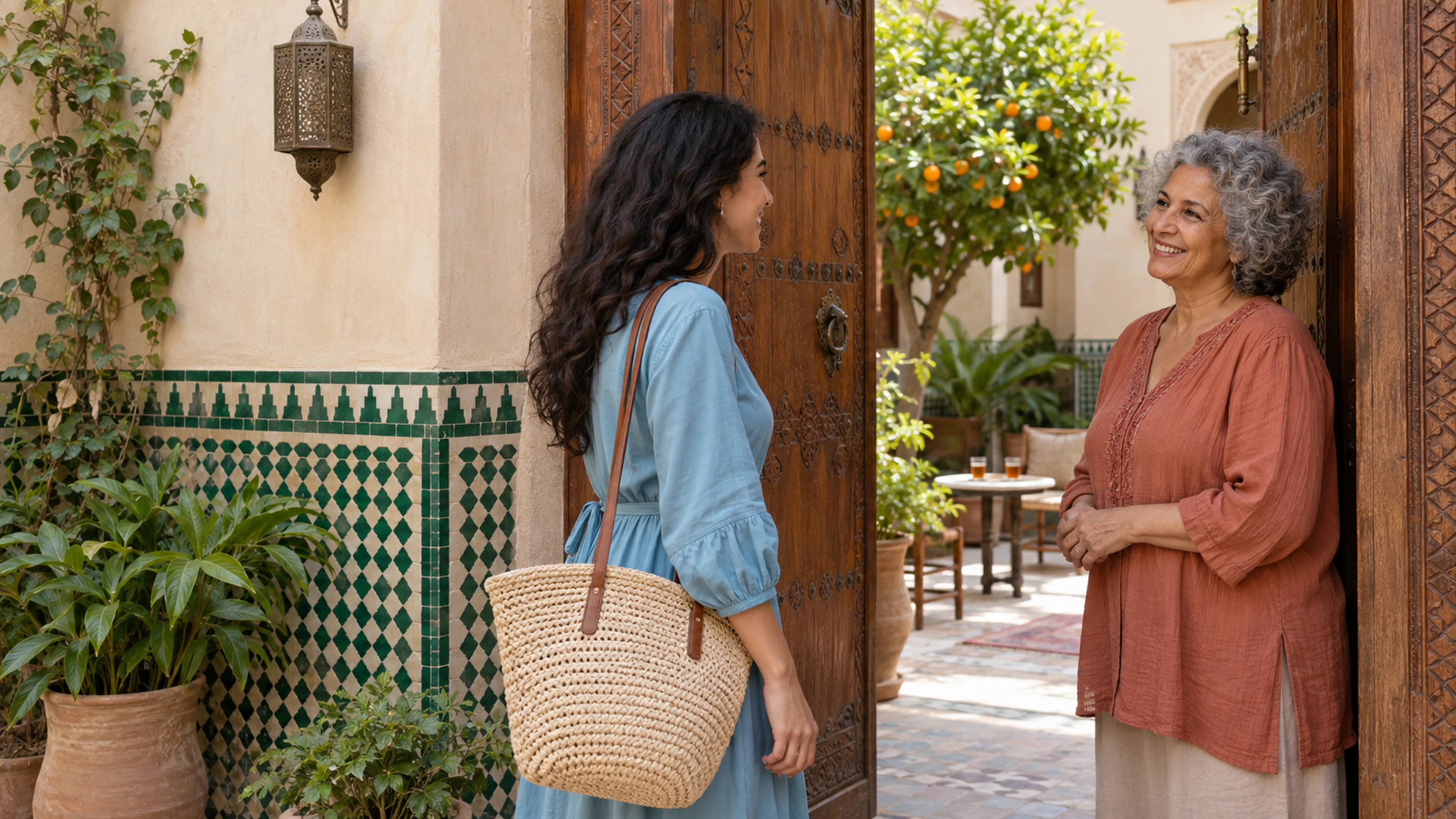
A decorated doorway with tile and plaster
02 / Language in context

An opening is an invitation to respond.

A greeting acknowledges a person before you ask for their labour, directions or attention. That does not mean every transaction needs a lengthy ritual. At a busy counter, a brief greeting and a specific request can be the considerate choice. In a relaxed visit, there may be more time for questions and replies. The pace belongs to the encounter, not to a checklist.

Respect also includes taking a correction well. If somebody offers a different word or pronunciation, listen and try again without making a large apology. One speaker’s preference can teach you something useful without becoming a universal law. Regional speech, family habits, age and the relationship between speakers all affect what sounds familiar.

Some expressions include references to God and circulate widely in ordinary conversation. Their everyday familiarity does not erase their literal meaning, and using them is not compulsory for a learner. You can understand l-hamdullah in a response without feeling obliged to perform beliefs you do not hold. A sincere, simple reply is better than treating meaningful expressions as decorative local colour.

A closer understanding

Three decisions inside a respectful exchange

Meaning becomes clearer when you connect the words to what the speakers are doing.

01 / Notice this

Who chooses the language?

Both people have a say. If a shopkeeper switches to a language you share, this can make the interaction easier. If you want to practise, ask when the setting allows it and accept a change of language without disappointment. Nobody owes a visitor unpaid language tuition.

02 / Notice this

Who has the floor?

Wait for the answer before adding another question. Learners sometimes rush because they fear losing their memorised words. A pause gives the other person space and makes your next step more informed. Listening is an observable form of respect, even when your vocabulary is small.

03 / Notice this

What happens after no?

A refusal is useful information, not an invitation to keep asking in more elaborate Darija. This matters for photographs, entering a workshop, touching objects and personal questions. Thank the person and change course. Polite wording does not cancel the boundary it encounters.

04 / The visual chapter

The setting changes the exchange.

Look beyond the phrase. Objects, working spaces and shared routines give a conversation its practical meaning.

Textiles displayed along a market shopfront
01 / Language in daily life

Objects have owners

A textile display is an invitation to look, not automatic permission to unfold every piece. Ask before handling something and follow the seller’s guidance. If you are learning a material word, make clear which cloth you mean. The visible object gives the question a useful focus without turning the stall into a lesson you have imposed.

Textiles displayed along a market shopfront
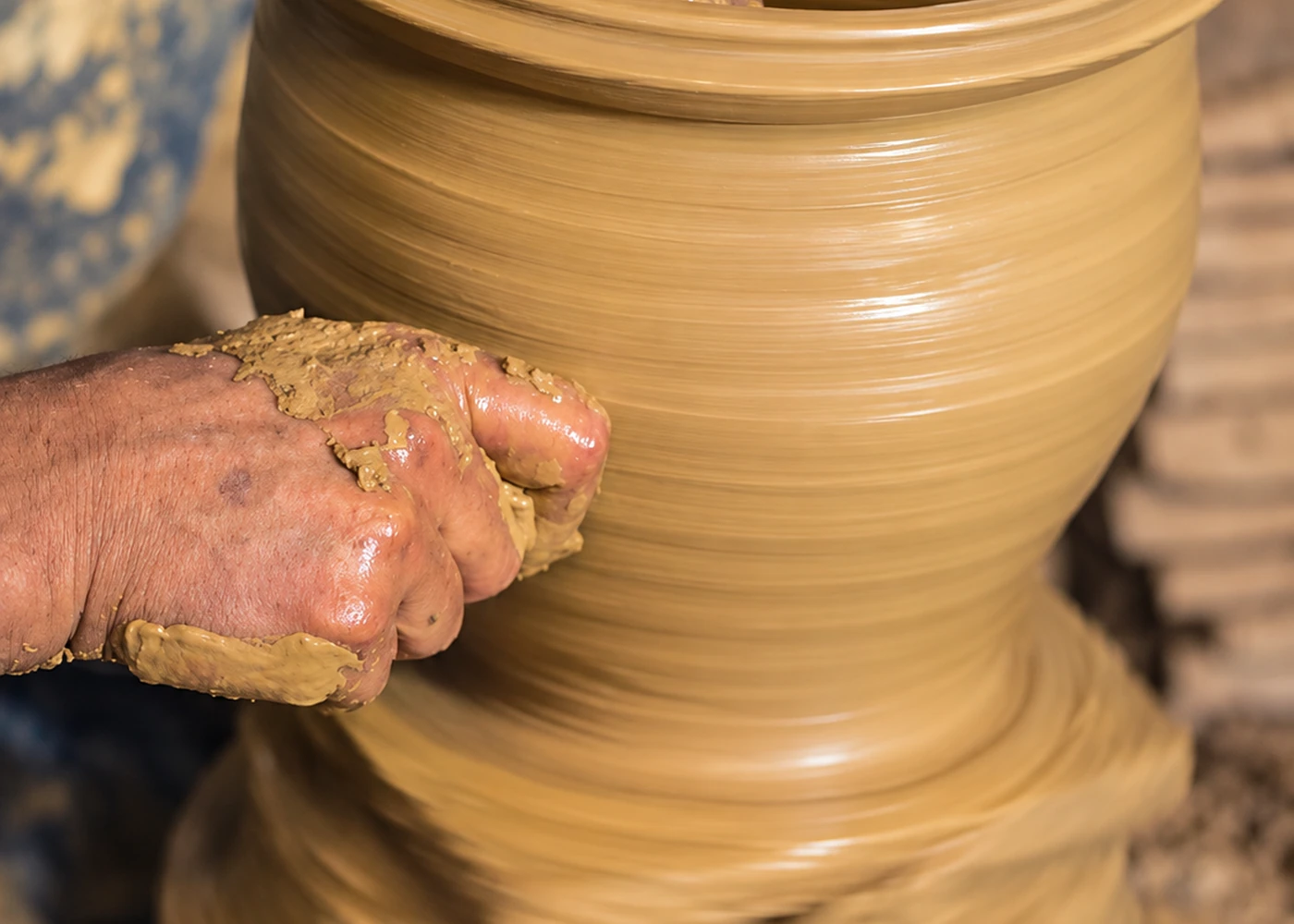
A potter’s hands working at the wheel
02 / Language in daily life

Work has a rhythm

Some tasks require uninterrupted concentration. Wait until a maker can comfortably look up before asking a question. A pause in the work may create room for conversation; it may also be a moment needed for rest or another task. Read the answer and accept that a demonstration is not always available.

A potter’s hands working at the wheel
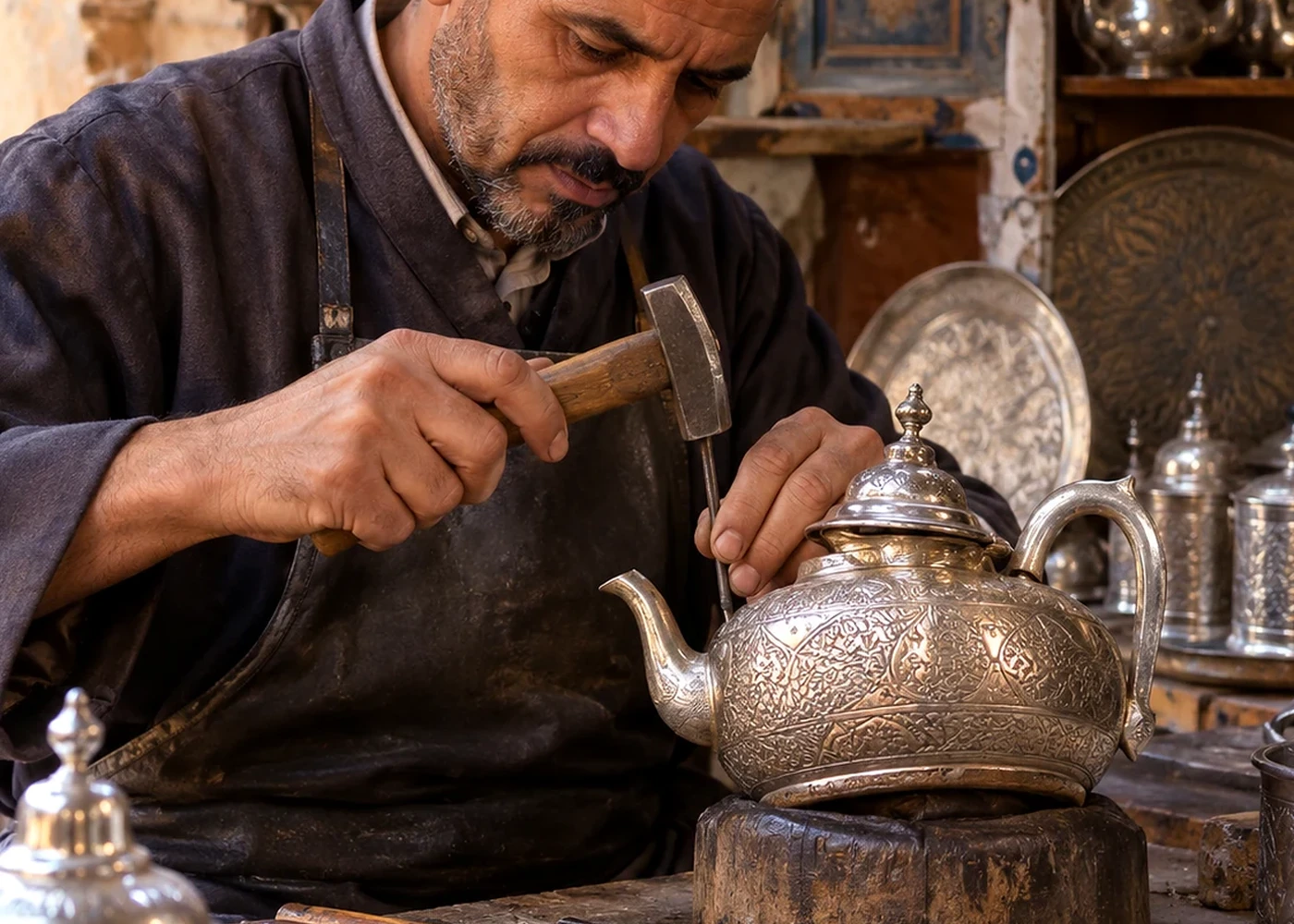
A craftsperson working a metal teapot
03 / Language in daily life

A maker has a name

Ask about the work with the same adult courtesy you would use in another professional setting. Who made this part? Which material is used? Avoid assuming that a workshop is a timeless scene staged for visitors. The person may be discussing a current order, an experiment or an ordinary working day.

A craftsperson working a metal teapot
03 / From words to an exchange

Say a little. Understand more.

A small set of useful expressions, with the context that makes them work.

01 / An expression to recognise

s-salamu ʿalaykum

Hello / peace be upon you

A common opening that gives the other person a clear chance to answer.

02 / An expression to recognise

ʿafak

Please

A useful request word in everyday speech. It helps the wording; it does not make every request appropriate.

03 / An expression to recognise

smeḥ li / smeḥi li

Excuse me / forgive me

The first form addresses one man; the second addresses one woman. Keep the apology proportionate to the situation.

04 / An expression to recognise

ma fhemt-sh

I did not understand

Own the difficulty instead of implying that the other person is speaking badly.

05 / An expression to recognise

shukran

Thank you

Acknowledge the effort even when the answer is not what you hoped for.

06 / An expression to recognise

la, shukran

No, thank you

A clear, calm refusal. You do not have to invent an explanation for every offer you decline.

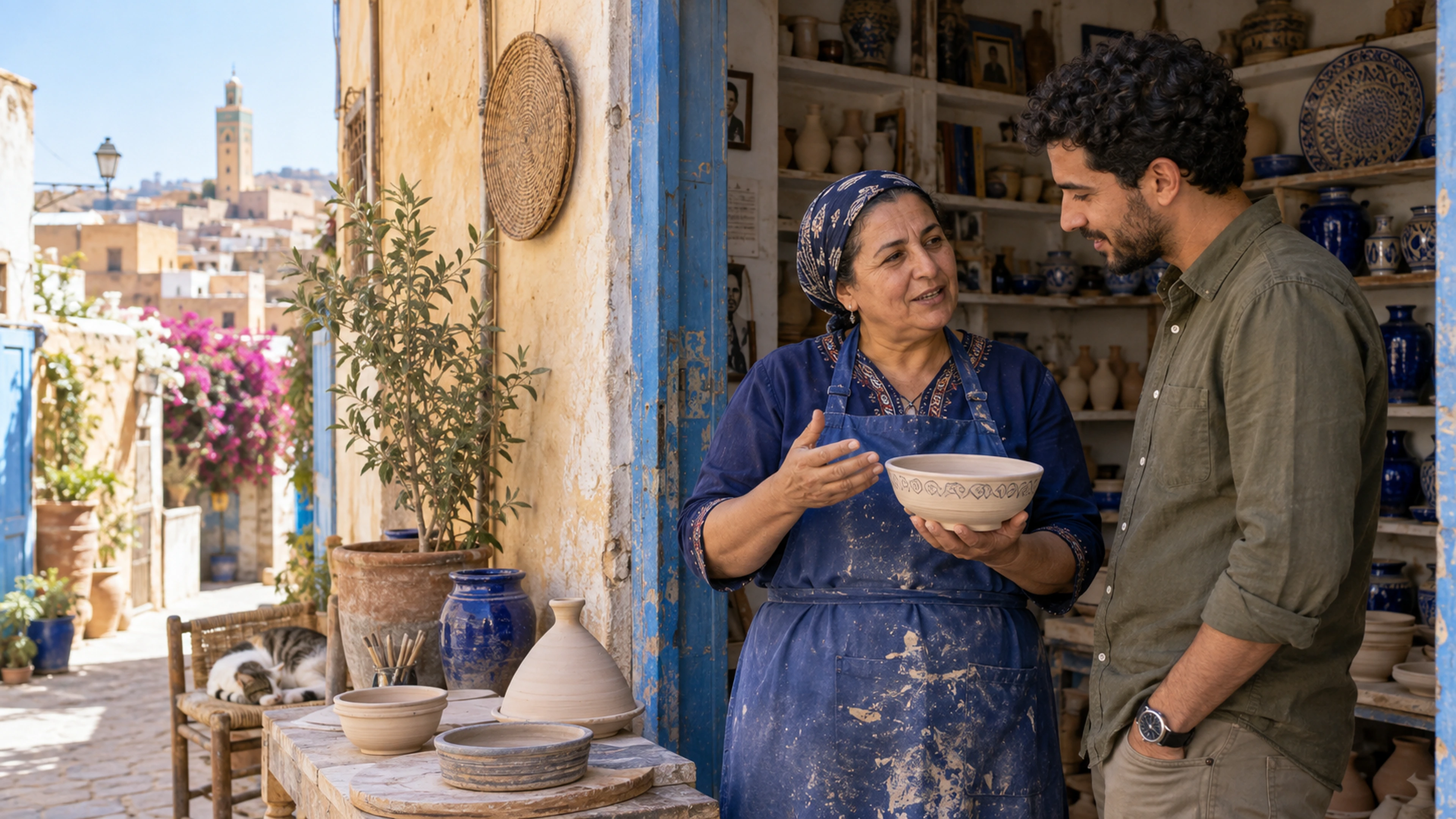
A short practice scene

At a working studio

The unfinished request is intentional. Before asking for a photograph or demonstration, decide whether the moment is suitable and use a language you both understand clearly. A memorised please is not proof of consent. If the artisan is busy or declines, close the exchange warmly and allow the work to continue.

  1. Yous-salamu ʿalaykumHello.
  2. Artisanwa ʿalaykum s-salamHello in reply.
  3. Youʿafak…Please…
  4. You, after listeningshukranThank you.
How to read the Darija examples

These are approachable Latin spellings for spoken Moroccan Arabic, not IPA or a single official spelling system. sh is like the sound in “ship”; kh is like the final sound of Scots “loch”; gh is a voiced sound made towards the back of the mouth. ʿ marks ʿayn, which has no direct English equivalent. ḥ is a deeper h sound, and ṣ marks an emphatic s. The doubled vowel in bgheet is an English-oriented reading aid.

Spellings and pronunciation vary. Hyphens help show parts of an expression; they are not instructions to pause. Learn the rhythm from a willing speaker or a reliable recording. Examples are brief practice scenes, not transcripts of the people in the photographs. Relevant masculine, feminine and plural address forms are labelled.

06 / Try it with attention

Let the response change your next move.

The practical test is not whether you used every courtesy word. It is whether you noticed the answer and adjusted. If a conversation becomes shorter, become more concise. If a person offers detail, listen. If a question creates discomfort, leave it. Treat communication as a shared activity whose direction can change, rather than as a successful performance only when the speaker follows your plan.

Try it once slowly, then let your partner change the answer. Listen for what changes before choosing your next phrase.

Practise what happens after a refusal as carefully as your opening request. Put away the camera, stop the recording or step back from the workspace when the answer requires it. A courteous phrase cannot undo an action that ignores the reply. The practical skill is recognising when the exchange has reached its boundary.

Ask a conversation partner to give different responses to the same request. Some can be brief, some uncertain and some clearly negative. Do not aim to memorise a perfect answer to every possibility. Practise pausing and checking meaning before acting. This makes respect part of your listening, rather than a decorative word added at the end.

07 / A more useful conversation

Questions worth asking.

A little nuance makes a phrase more useful.

Should I greet everyone with physical contact?

No single gesture fits every relationship or setting. Follow the other person’s cues and leave space for a spoken greeting alone. This page teaches language; it does not prescribe handshakes, kisses or touch.

Does using French instead of Darija show disrespect?

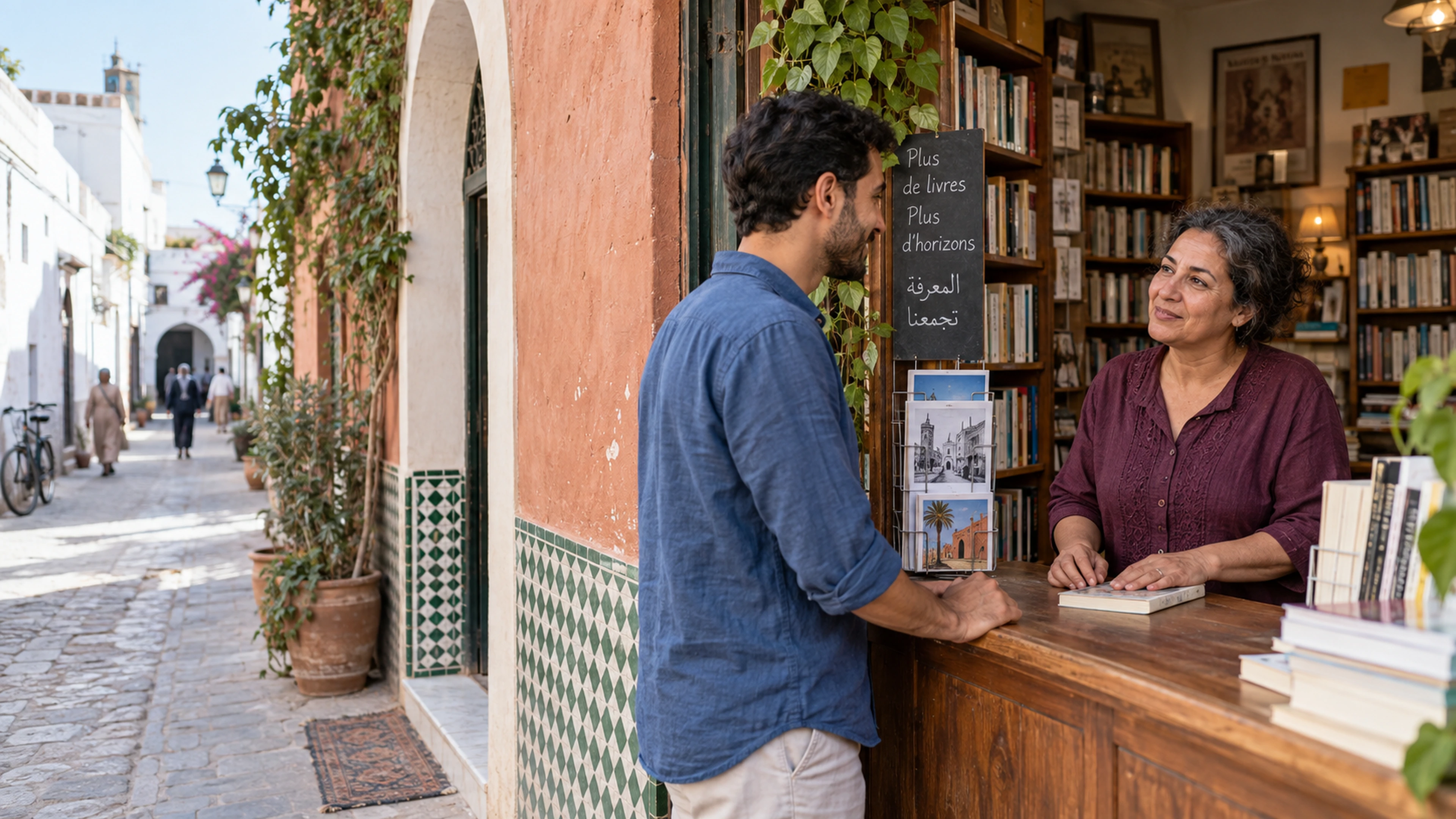
A language choice has to be understood in context. Use a mutually comfortable language and do not assume everybody speaks French. A considerate tone and a willingness to clarify matter more than insisting on one language.

Can I ask what language someone prefers?

Yes, in a language you share and without making the person defend their identity. Keep the question practical: the aim is a comfortable conversation, not a classification of the speaker.

Woven baskets displayed for sale
The Exotic Morocco guide library

Keep the conversation going.

Take Language & Respect further.

This public chapter is free to explore. The companion guide is in preparation, with space planned for fuller phrase sets, practice exchanges and more detailed language notes.

Find current availability in the guide collection.

Explore this guide ↗Back to the Darija collection ↗
Sources & further reading

Language references

  1. Peace Corps Morocco · Moroccan Arabic textbook (2011) — transcription; greetings; useful expressions; numbers; shopping; directions; restaurant language.
  2. IRCAM · Amazigh language teaching resources — wider multilingual context.