s-salamu ʿalaykum
Hello / peace be upon youA common opening. The paired reply is wa ʿalaykum s-salam.

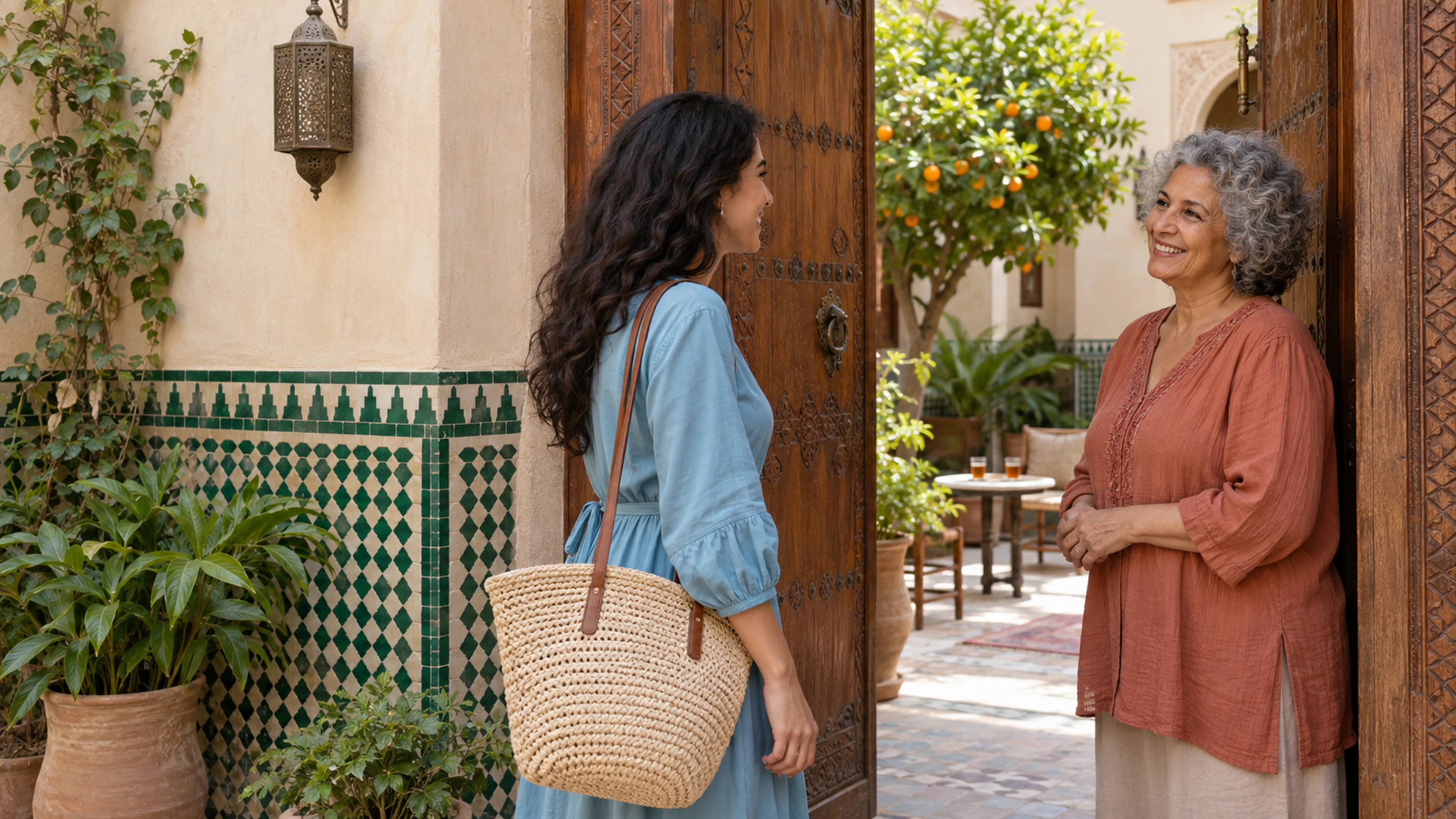
Follow the movement from greeting to invitation, from being offered something to answering comfortably.
Exotic Morocco · 9 minute readA greeting can be a brief acknowledgement across a counter or the beginning of a longer visit. The words alone do not tell you which. Watch the setting, listen to the reply and allow the other person to shape the pace. Warmth does not require you to perform an elaborate ritual you do not understand.
Hospitality also involves choices: whether to accept tea, where to sit, when to leave and how to express thanks. Learning a few responses helps you participate without turning generosity into an obligation. You can be appreciative and still decline an offer. You can accept an invitation while waiting for your host to explain what happens next.
A small set of useful expressions, with the context that makes them work.
A common opening. The paired reply is wa ʿalaykum s-salam.
Listen to how the host uses it. The word’s warmth does not by itself specify where to go or what to do.
One common response to a check-in. Understand the expression’s meaning; other sincere replies are possible.
Useful for declining an offer without making a long explanation.
A good wish heard around food and other everyday occasions. Notice who says it and when.
A response to b-sseḥḥa in the teaching reference. Learn the exchange together.
This practice scene contains both acceptance of a welcome and a later refusal of more tea. They are compatible. A guest can appreciate the visit without accepting every additional offer. Smile if it feels natural, keep the answer clear and follow the host’s response rather than assuming a fixed number of refusals is required.
These are approachable Latin spellings for spoken Moroccan Arabic, not IPA or a single official spelling system. sh is like the sound in “ship”; kh is like the final sound of Scots “loch”; gh is a voiced sound made towards the back of the mouth. ʿ marks ʿayn, which has no direct English equivalent. ḥ is a deeper h sound, and ṣ marks an emphatic s. The doubled vowel in bgheet is an English-oriented reading aid.
Spellings and pronunciation vary. Hyphens help show parts of an expression; they are not instructions to pause. Learn the rhythm from a willing speaker or a reliable recording. Examples are brief practice scenes, not transcripts of the people in the photographs. Relevant masculine, feminine and plural address forms are labelled.
Labas? is often a social check-in rather than an invitation to give a detailed account of your health. Labas, l-hamdullah is one familiar response. In a closer relationship, the same opening may lead to genuine personal news. The words are flexible because the relationship supplies part of their meaning.
Welcome expressions also depend on the moment. Merḥba can welcome a person or respond warmly to an interaction. It should not be read as automatic permission to enter every room, photograph a home or stay indefinitely. Wait for the concrete invitation that matches the action you want to take.
Some hospitality expressions carry blessings. B-sseḥḥa is said in several settings, including after eating or drinking; a taught reply is Allah y-ʿtik s-seḥḥa. The phrase belongs to a wider everyday vocabulary of good wishes. Understanding its place is more useful than translating each word and then using it whenever anything pleasant happens.
Meaning becomes clearer when you connect the words to what the speakers are doing.
Begin with a greeting and follow the host’s cues. Leave room for introductions. If you are unsure about a gesture or where to put your belongings, a quiet question in a shared language is better than confidently imitating something you saw in a travel video.
An offered drink or food can be accepted or declined politely. A clear thank-you and a gentle refusal are enough when you do not want more. Avoid treating repeated offers as proof that the host does not mean what they say; respond to this particular person and moment.
A visit has an ending as well as an opening. Thank the host for what they have shared and say goodbye. If you need to leave at a particular time, communicate that kindly. Hospitality is easier to enjoy when both guest and host can express their needs.
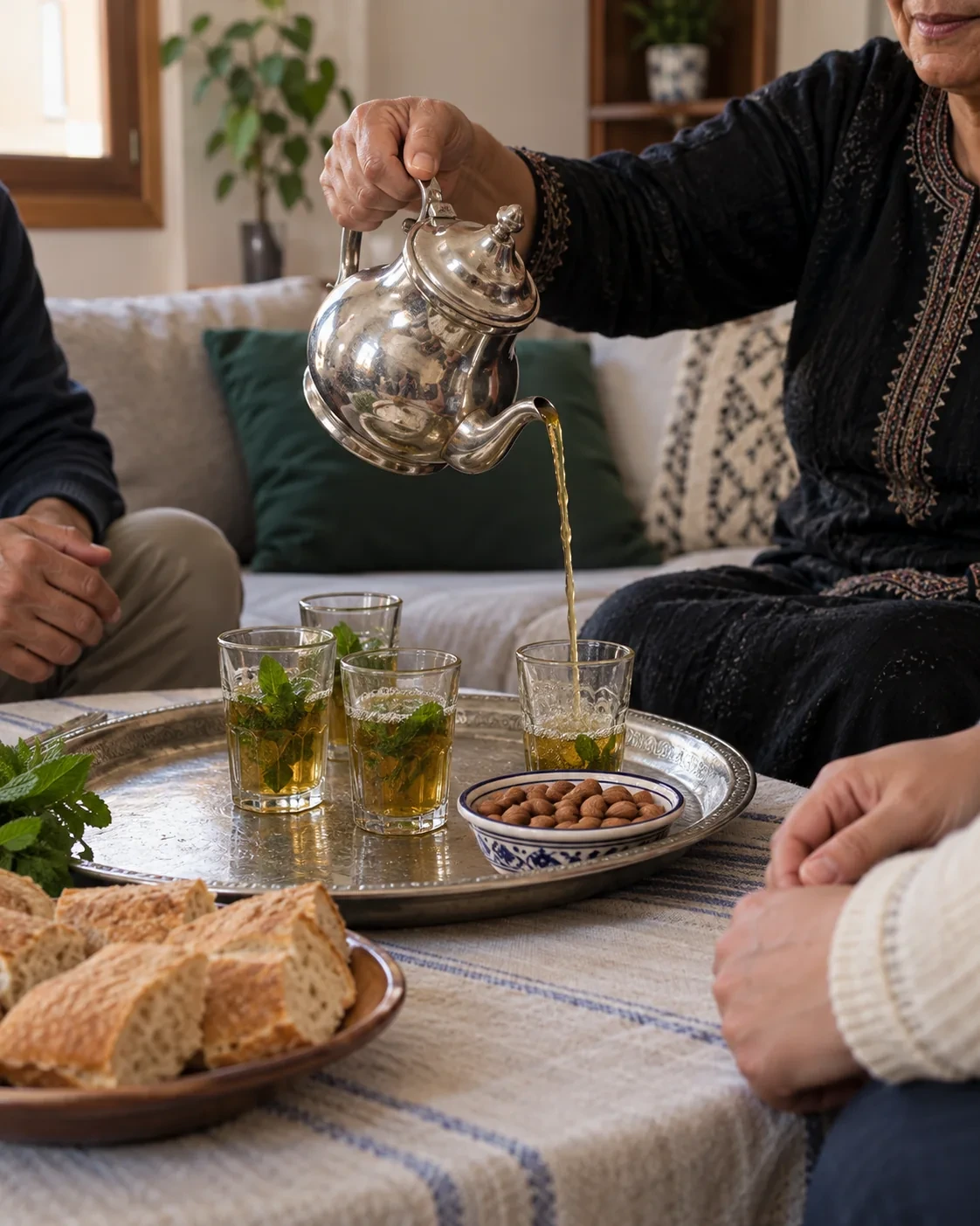
Look beyond the phrase. Objects, working spaces and shared routines give a conversation its practical meaning.

A cup of tea is a particular offer, not a test of belonging. If you would like it prepared differently, explain that before it is poured when possible. Use a language that makes the preference clear. Appreciation for the gesture does not require hiding what you can comfortably accept.
Mint and tea arranged for serving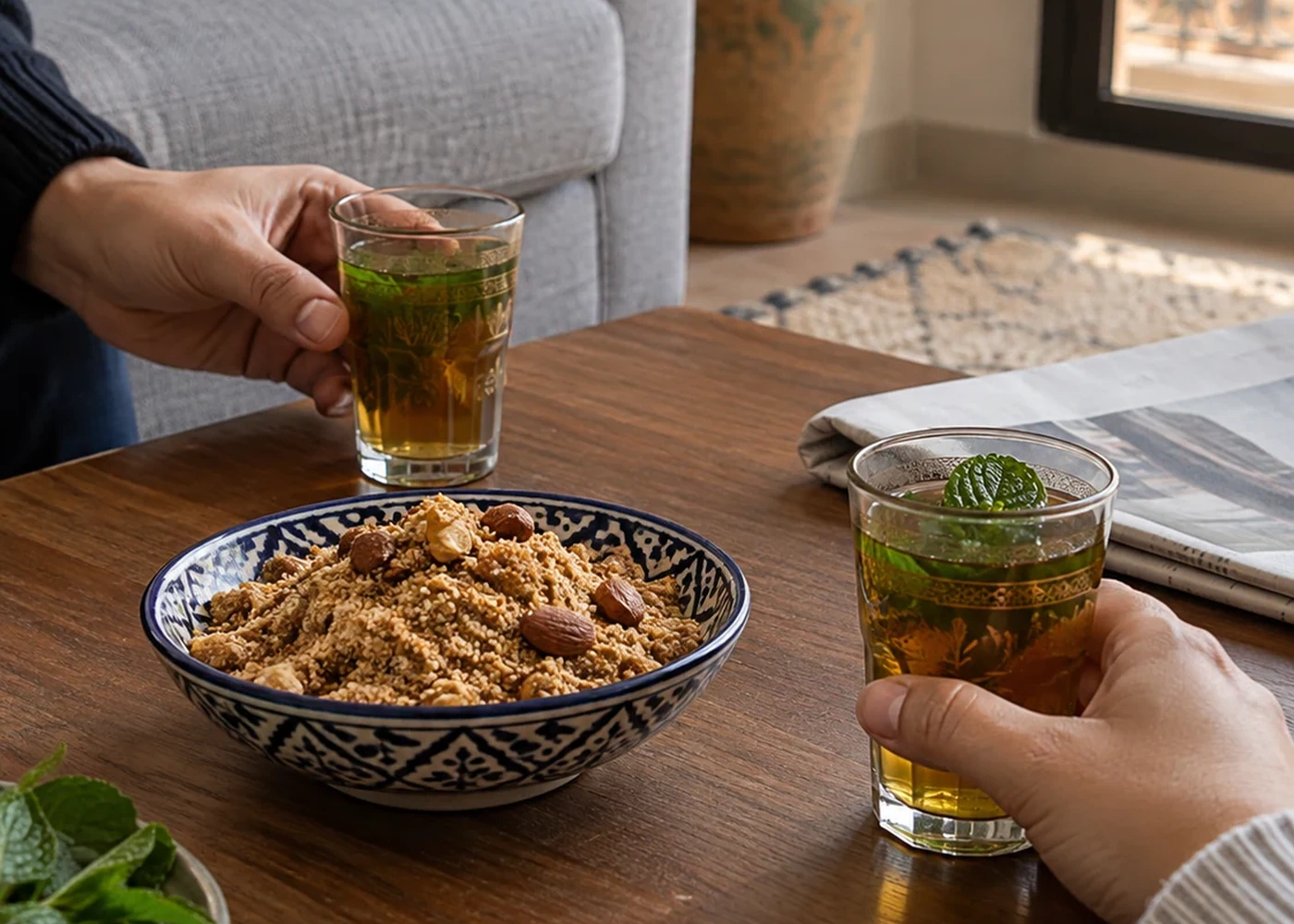
Sweets and tea can extend a visit, but a guest may have had enough. A warm la, shukran can decline another serving without rejecting the company. Do not assume that a fixed ritual of refusing several times is required; respond to the actual offer and the host’s reply.
Tea and sweets shared across a table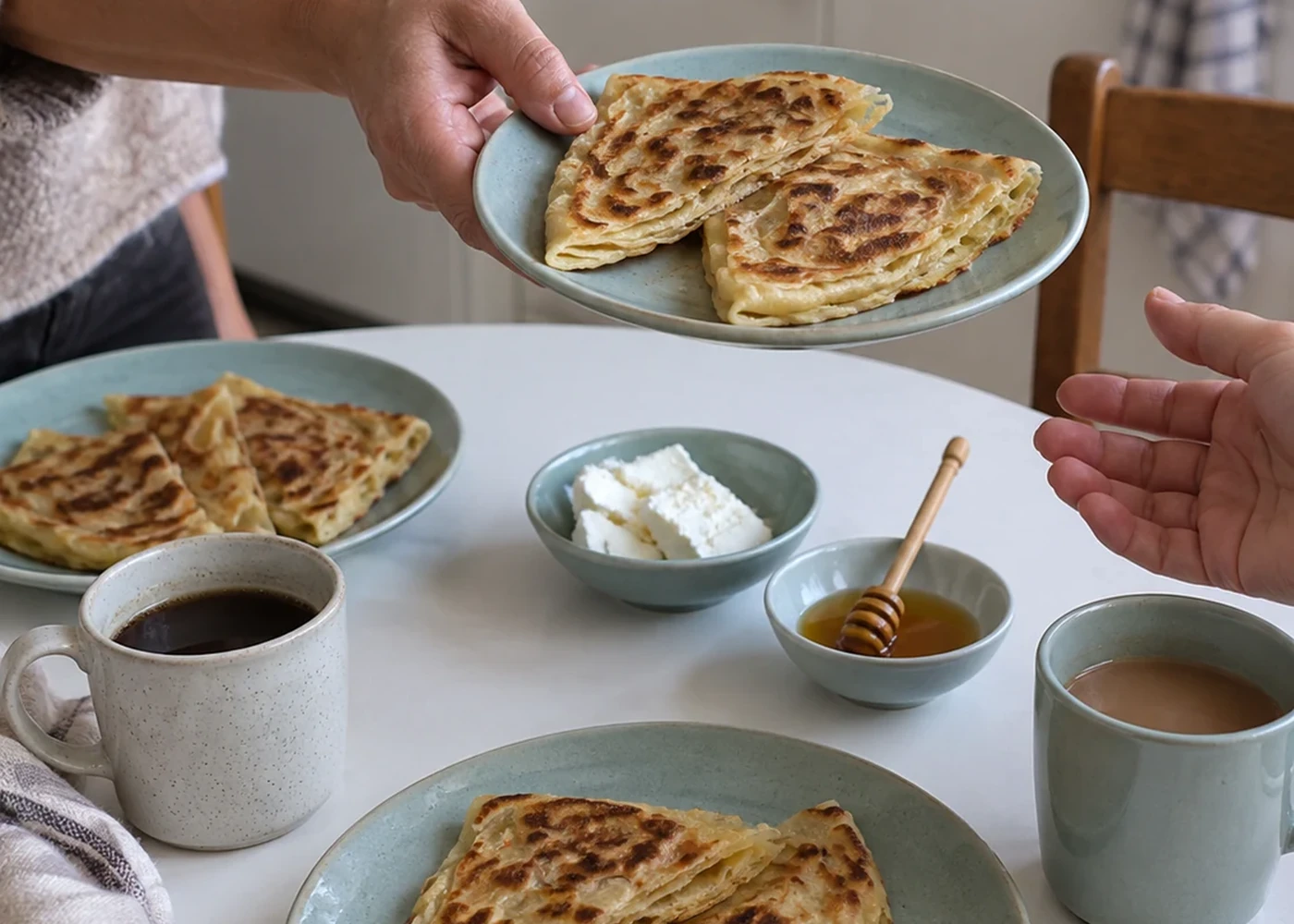
A shared table includes small decisions about passing, serving and making space. Observe the people around you and ask when uncertain. Language is one part of participation, alongside waiting your turn and noticing what someone else needs.
Bread offered at a breakfast tableYou do not need to master every blessing before accepting a cup of tea. Listen, thank your host and ask about an unfamiliar expression when the moment is relaxed. If someone explains a family habit, keep it connected to that family rather than promoting it into a rule for the whole country. The most useful lesson may be how this particular household makes a guest comfortable.
Try it once slowly, then let your partner change the answer. Listen for what changes before choosing your next phrase.
Rehearse an arrival and a departure as two different moments. At an arrival, leave a pause after the greeting so the other person can answer or continue. At a departure, make your intention to leave clear as well as expressing thanks. Courtesy works through timing, attention and action, not through collecting the longest formula.
When visiting someone, take your cues from that particular host. Accepting or declining an offer does not have to become a performance of local expertise. Use words you understand, accompany them with an unambiguous response and allow a shared language when needed. You are learning how to take part in an encounter, not how to reproduce every household in the same way.
A little nuance makes a phrase more useful.
No. The setting and relationship matter. A quick shop visit and an afternoon with friends have different rhythms. Begin courteously and follow the space available for conversation.
A considerate refusal is possible. Say no clearly and appreciatively, especially if you have a reason to avoid a drink or ingredient. Do not assume you must consume something to prove respect.
Understand what an expression means and use it sincerely if you choose to. Many such expressions circulate in everyday speech, but a learner can also respond simply and respectfully without imitating every formula.
6 connected cities. Language travels with you; each place adds its own setting and people.

Explore the city’s streets, places and everyday settings alongside your Darija learning.
Explore this connection ↗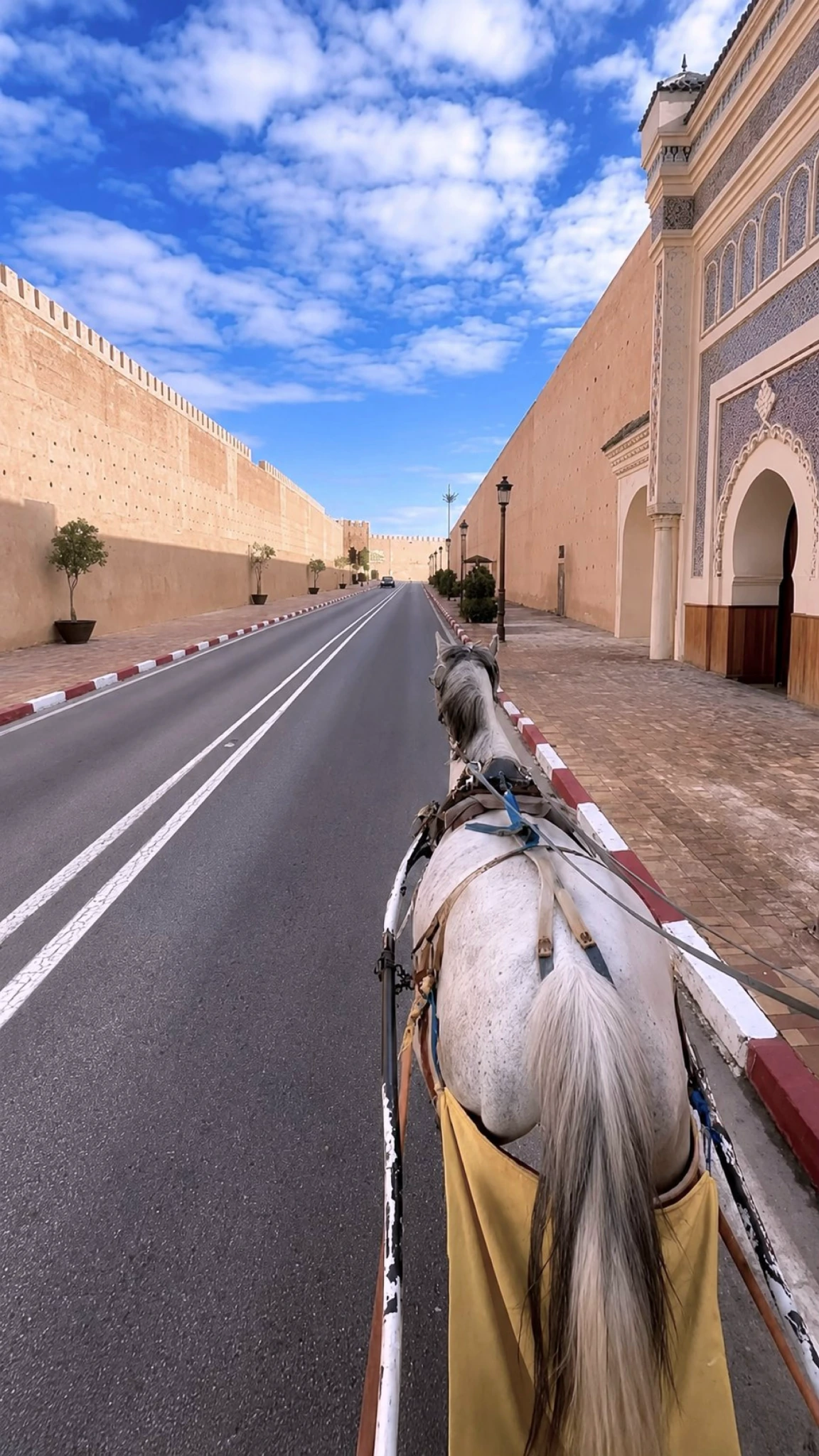
Explore the city’s streets, places and everyday settings alongside your Darija learning.
Explore this connection ↗
Explore the city’s streets, places and everyday settings alongside your Darija learning.
Explore this connection ↗
Explore the city’s streets, places and everyday settings alongside your Darija learning.
Explore this connection ↗
Explore the city’s streets, places and everyday settings alongside your Darija learning.
Explore this connection ↗
Explore the city’s streets, places and everyday settings alongside your Darija learning.
Explore this connection ↗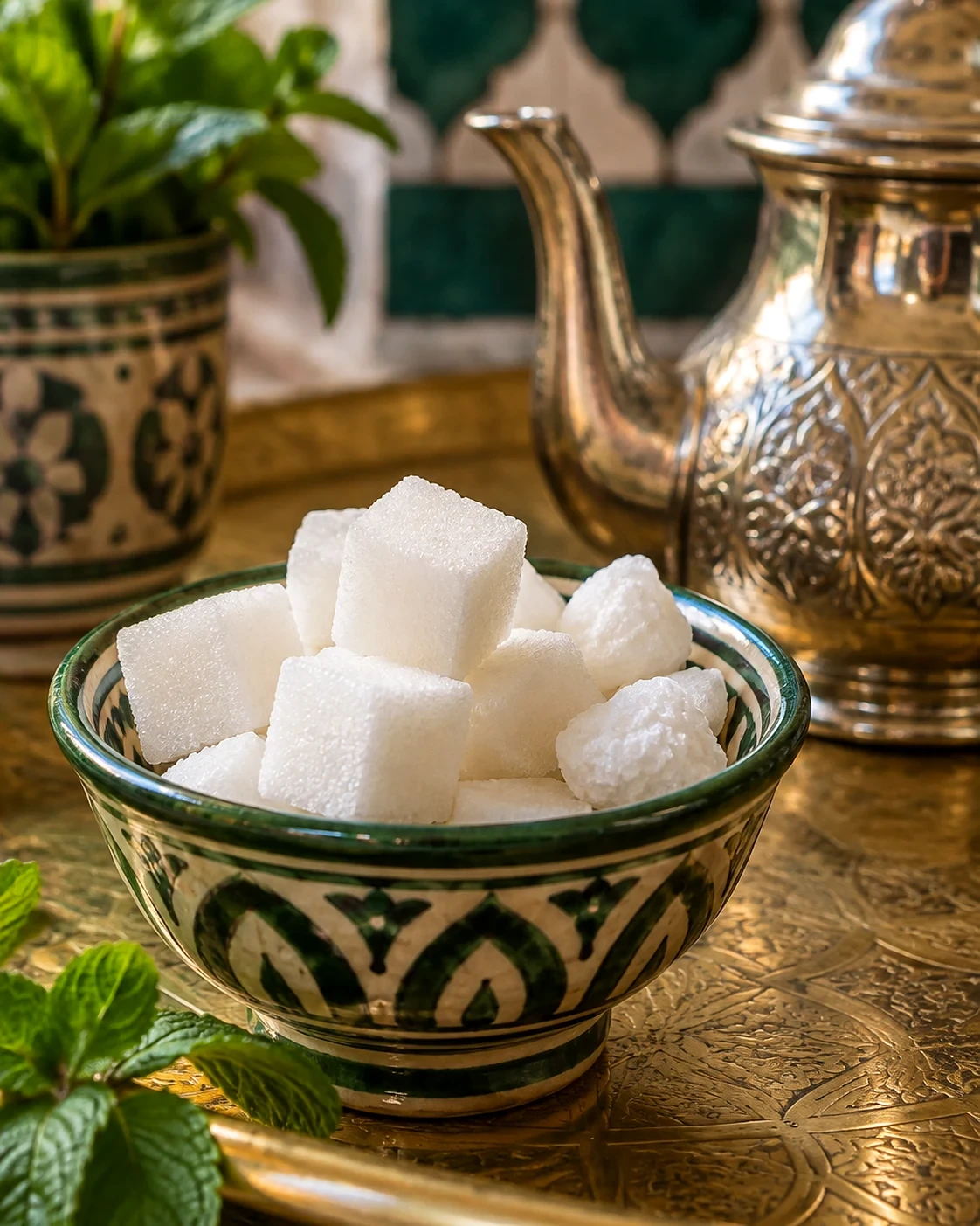
Take Greetings & Hospitality further.
This public chapter is free to explore. The companion guide is in preparation, with space planned for fuller phrase sets, practice exchanges and more detailed language notes.
Find current availability in the guide collection.
Explore this guide ↗Back to the Darija collection ↗Continue with another Darija situation or explore the cultural context in Learn.
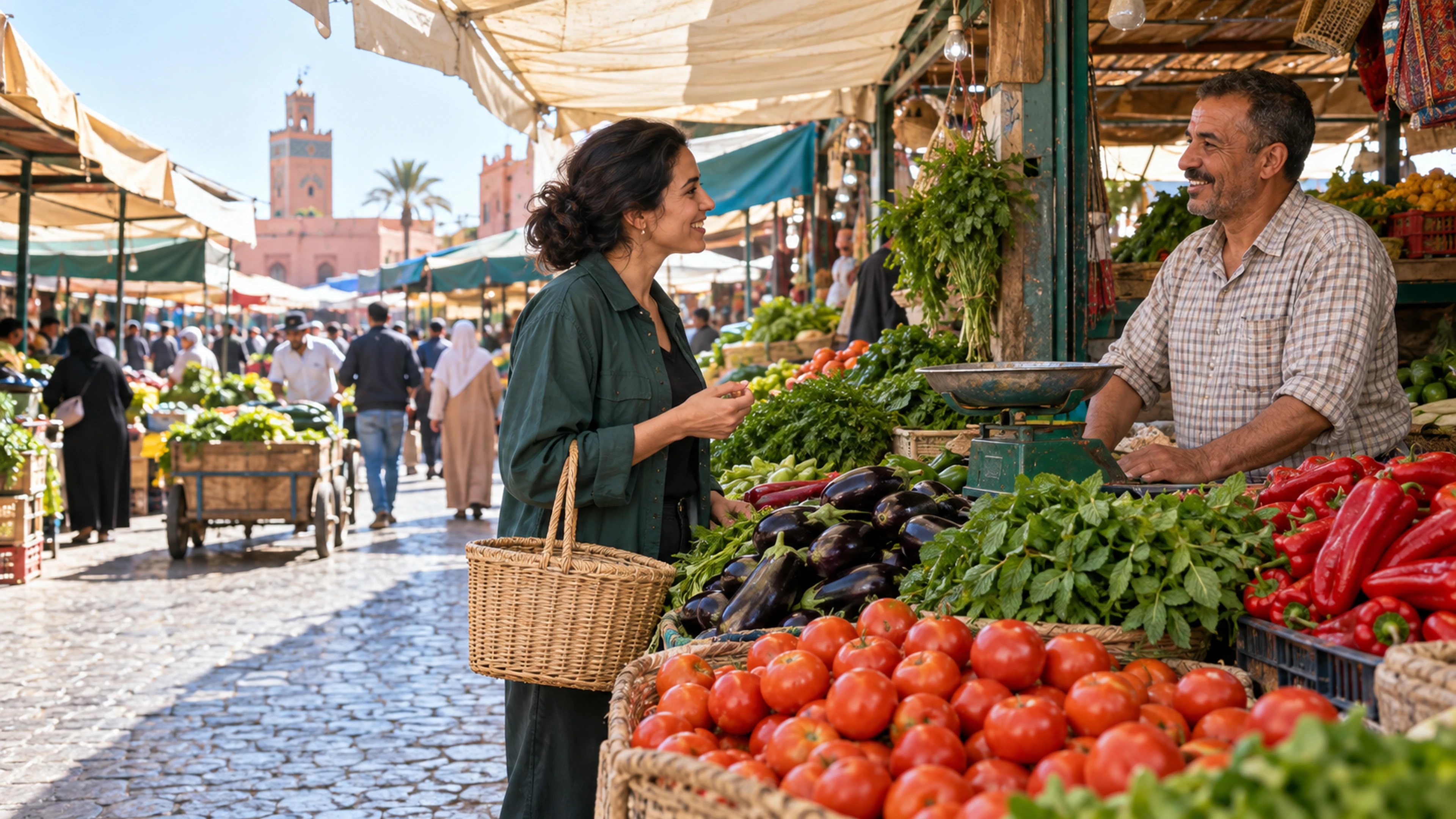
Ask about an item, understand the quantity and finish a purchase without turning the market into a bargaining performance.
Continue exploring ↗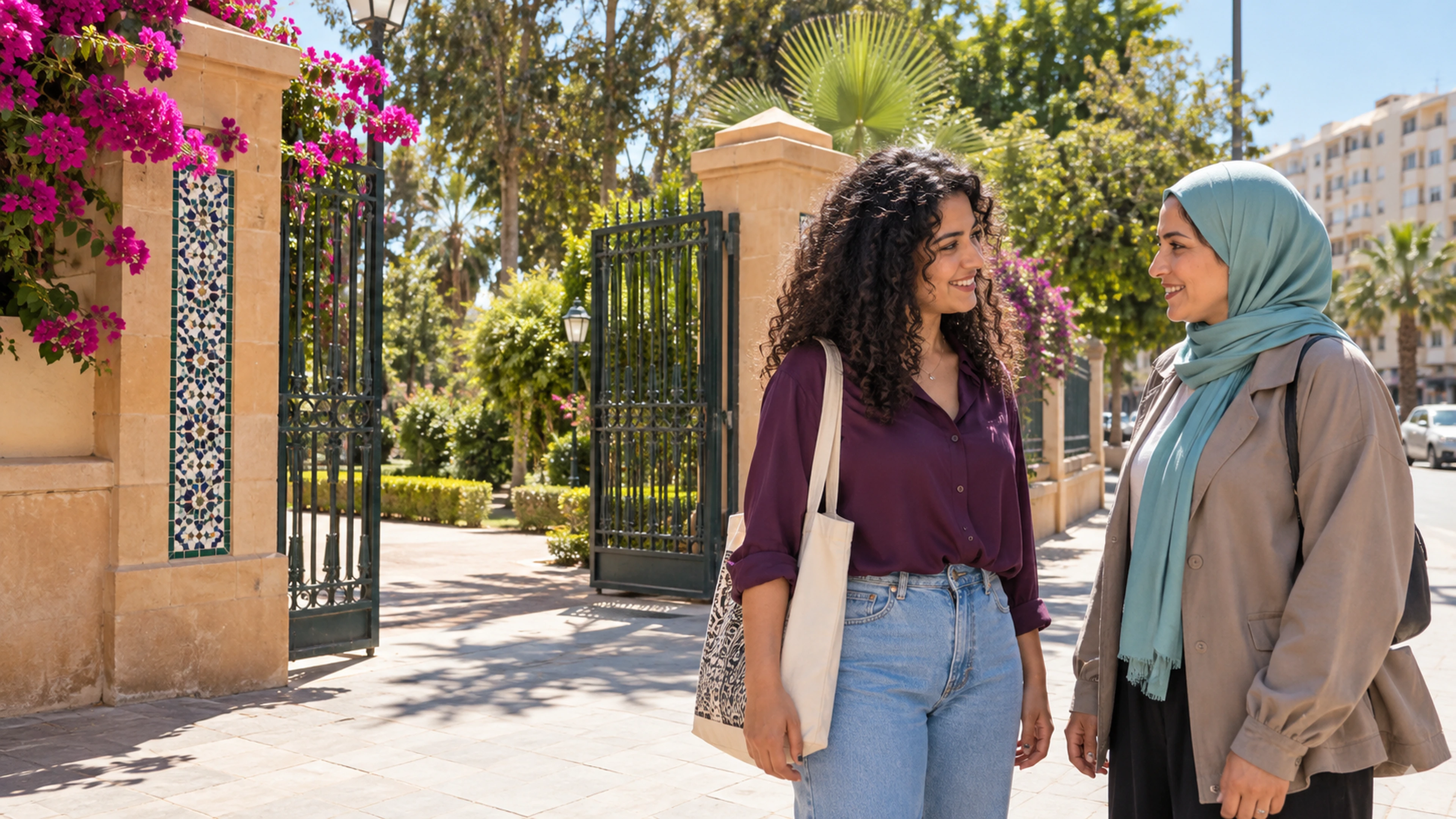
Understand the small expressions that soften a request, acknowledge help and repair an ordinary misunderstanding.
Continue exploring ↗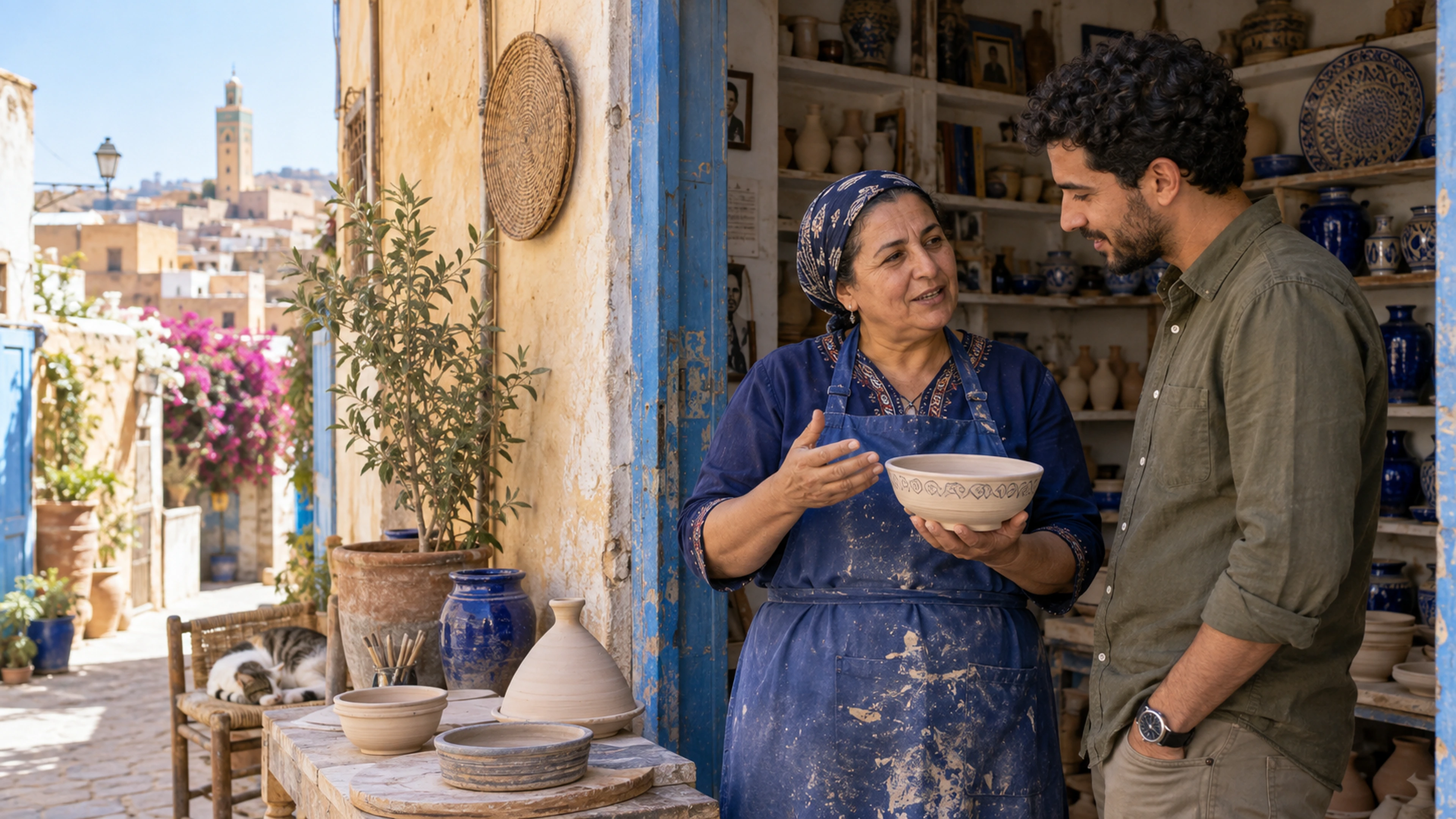
Choose an opening, listen to a preference and use Darija without turning another person into a performance.
Continue exploring ↗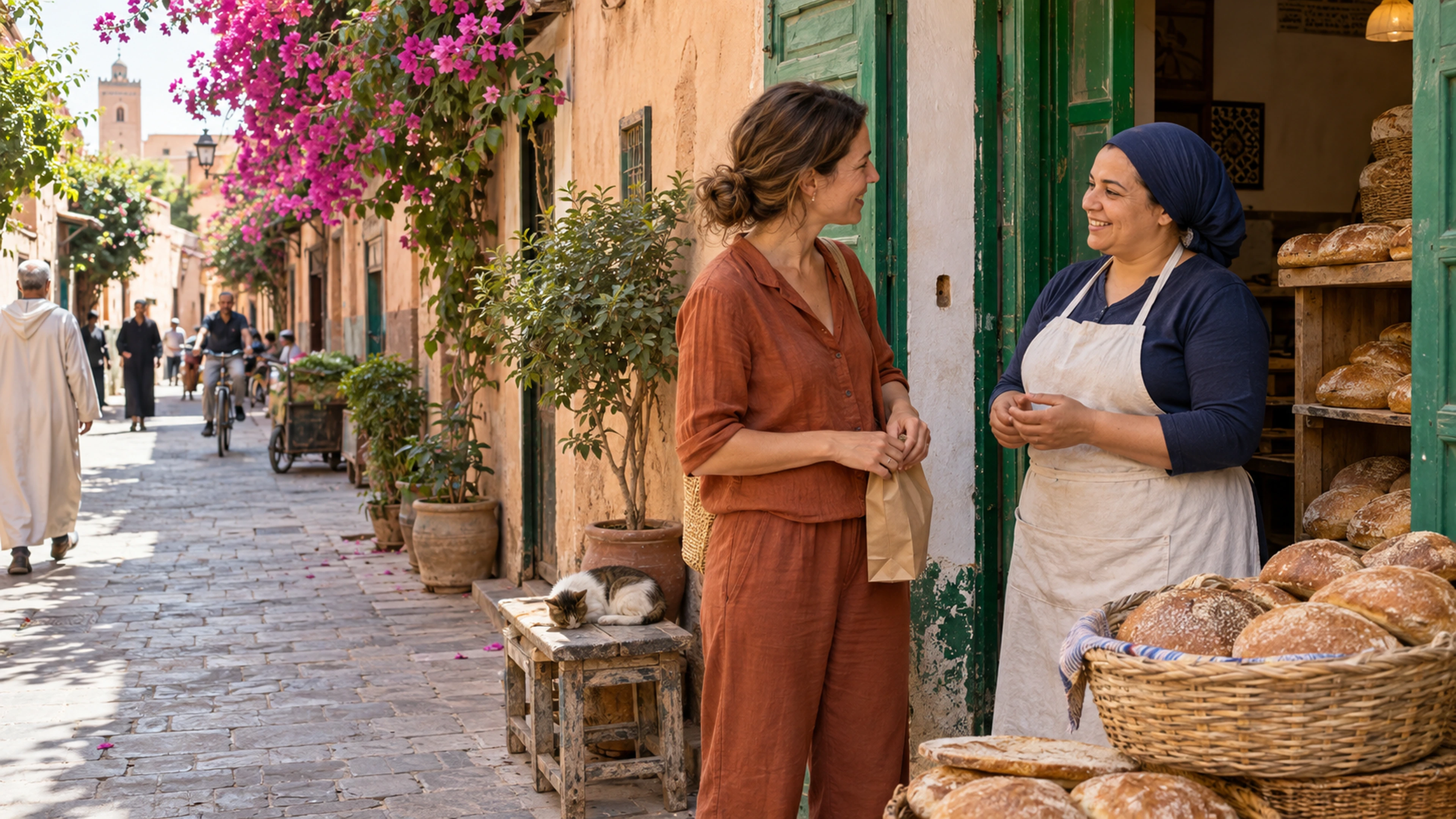
Practical courtesy for streets, shops, homes and shared spaces. Read the situation, ask clearly and let people set their own boundaries.
Continue exploring ↗
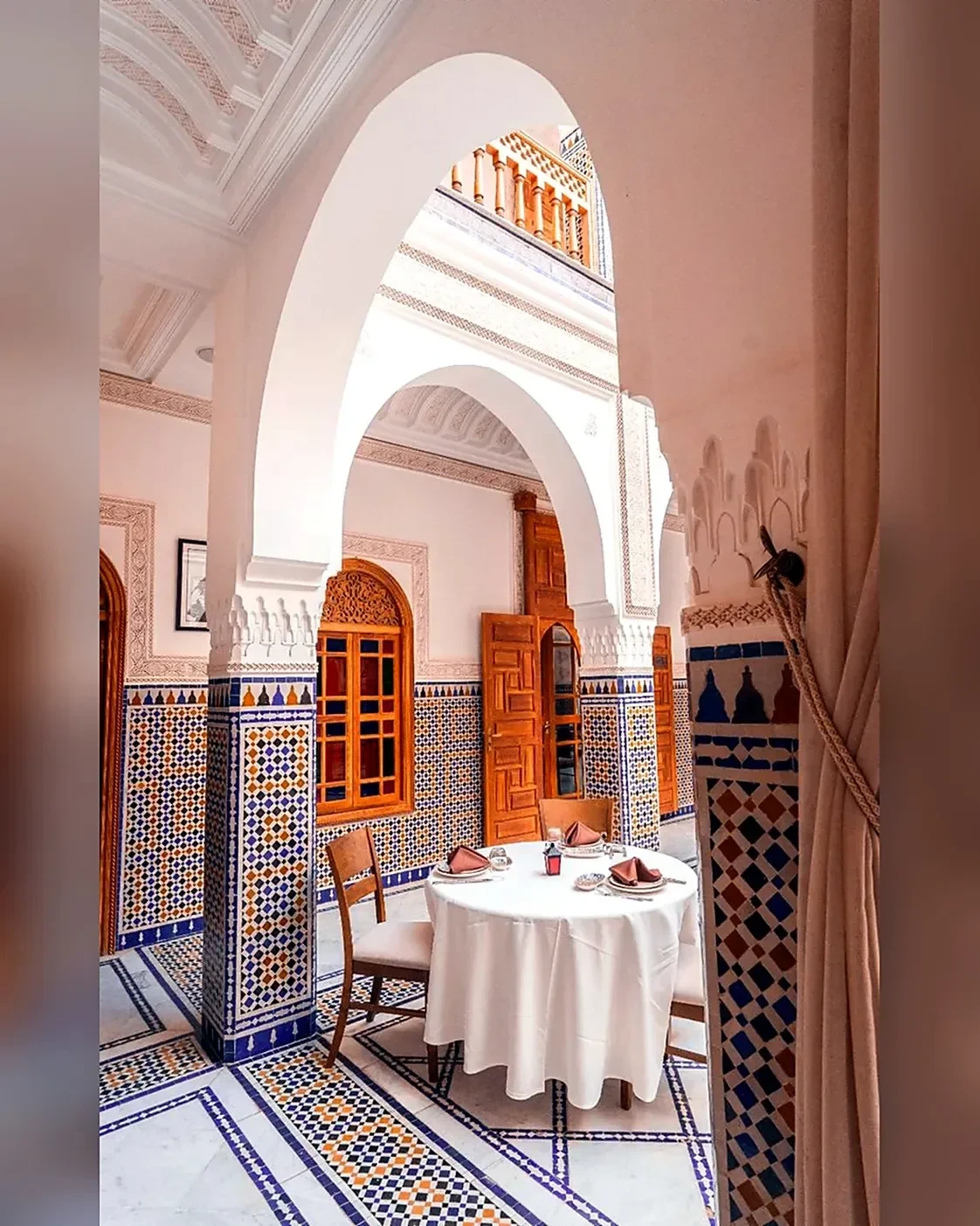
Courtyards, gardens, thresholds and rooms. Explore the spatial ideas behind Moroccan domestic architecture without mistaking every house for a hotel.
Continue exploring ↗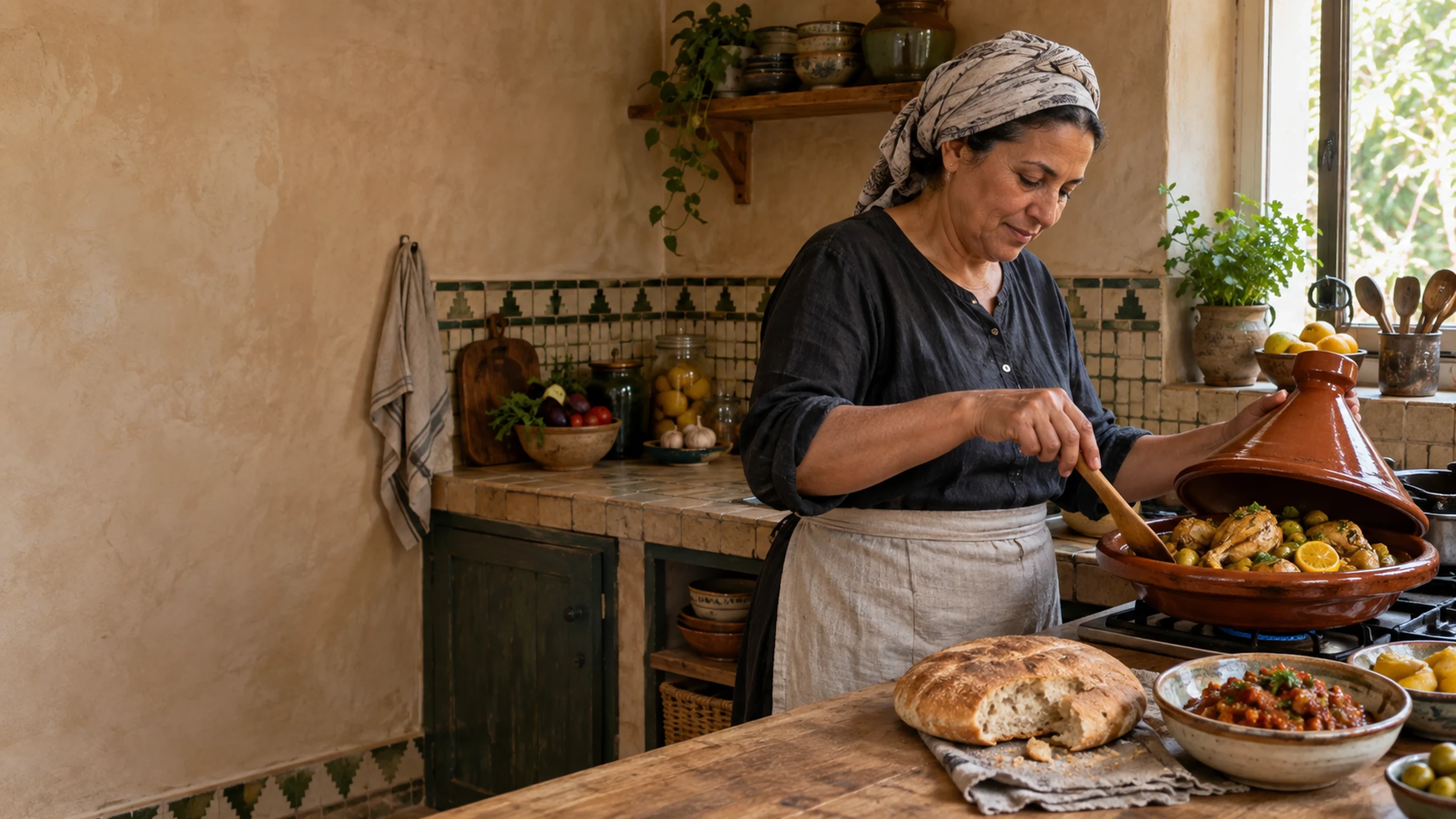
Food is a way into work, seasons, relationships and place. Read a Moroccan table through the lives around it, as well as what is served.
Continue exploring ↗