Ask for attention
Wait for a suitable moment, use an appropriate opening and make the question concise. At a busy counter, speaking over another customer can undo the courtesy of your words. A pause is often part of a polite request.


Understand the small expressions that soften a request, acknowledge help and repair an ordinary misunderstanding.
Exotic Morocco · 9 minute readPlease, thank you and excuse me do useful work, but they are not interchangeable. One opens a request, another acknowledges an effort, and another can ask for attention or repair a small disturbance. Knowing which job you need is the first step towards choosing a phrase that sounds purposeful rather than ornamental.
Politeness also leaves room for a clear no. You can refuse an offer without hostility, and another person can refuse a request without needing to justify it. A courteous exchange does not have to end in agreement. It succeeds when both people understand what was asked and what was answered.
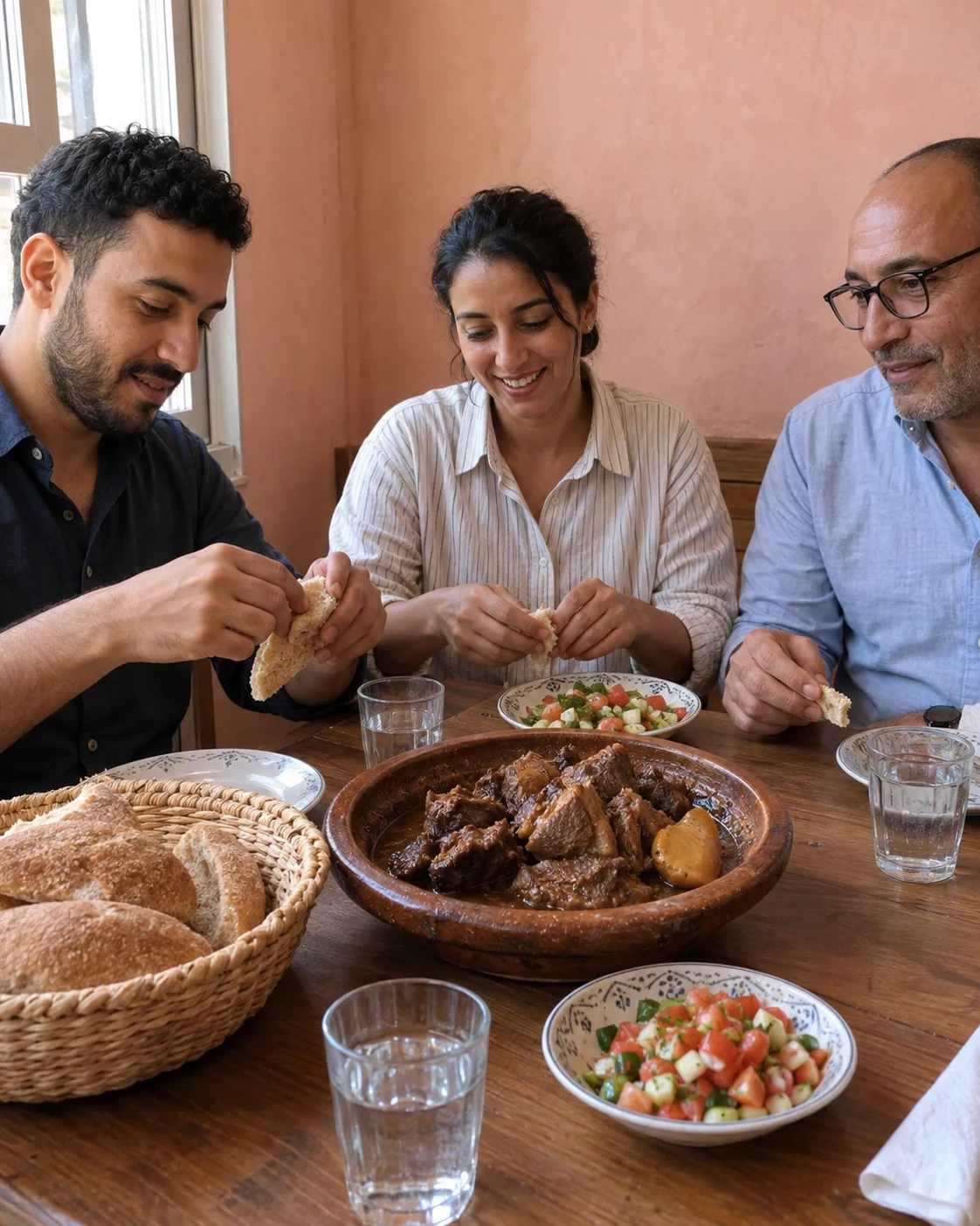

ʿAfak accompanies many everyday requests. It is a useful beginning, but the request still needs to be reasonable and understandable. Adding please to a rushed instruction does not make the listener less busy, and repeating it does not create permission. Notice whether the other person has actually heard you and has space to respond.
Smeḥ li and smeḥi li are singular forms addressing a man and a woman respectively. They can work as excuse me or forgive me depending on context. In the teaching reference, smeḥu li addresses a group. Learn the addressee with the phrase rather than treating one form as a universal English-style excuse me.
Ma-shi mushkil means it is not a problem. It can reassure someone after a small apology, but only say it when it reflects what you mean. If a practical problem remains, acknowledge the apology and explain what still needs to happen in a language you share. Warmth and clarity are compatible; one does not require hiding the other.
Meaning becomes clearer when you connect the words to what the speakers are doing.
Wait for a suitable moment, use an appropriate opening and make the question concise. At a busy counter, speaking over another customer can undo the courtesy of your words. A pause is often part of a polite request.
Shukran thanks someone for what they have done. Be specific in a shared language if the effort deserves more explanation. You do not need an increasingly elaborate formula every time; sincerity comes from noticing the help, not from displaying vocabulary.
For a minor interruption or misunderstanding, a short apology and a changed action are usually more useful than repeated apologies. Step aside, repeat the correct detail or give the person space. The repair is visible in what happens after the phrase.
A small set of useful expressions, with the context that makes them work.
Use with a clear request. Tone, timing and the actual request remain important.
A familiar expression for acknowledging help, service or an offer.
Addresses one man in this form. The situation determines whether it asks for attention or apologises.
Addresses one woman. Compare the added -i with the masculine singular form.
A form addressing a group. Do not use one singular form for every audience.
A reassuring response when a small difficulty or apology has genuinely been resolved.
Clear enough to be understood and courteous enough to close an offer.
These are four moments to practise, not a single conversation that must happen in this order. Choose the phrase because of what is occurring. The same speaker can ask for help, express gratitude and decline something else; none of those actions cancels the courtesy of the others.
These are approachable Latin spellings for spoken Moroccan Arabic, not IPA or a single official spelling system. sh is like the sound in “ship”; kh is like the final sound of Scots “loch”; gh is a voiced sound made towards the back of the mouth. ʿ marks ʿayn, which has no direct English equivalent. ḥ is a deeper h sound, and ṣ marks an emphatic s. The doubled vowel in bgheet is an English-oriented reading aid.
Spellings and pronunciation vary. Hyphens help show parts of an expression; they are not instructions to pause. Learn the rhythm from a willing speaker or a reliable recording. Examples are brief practice scenes, not transcripts of the people in the photographs. Relevant masculine, feminine and plural address forms are labelled.
Look beyond the phrase. Objects, working spaces and shared routines give a conversation its practical meaning.
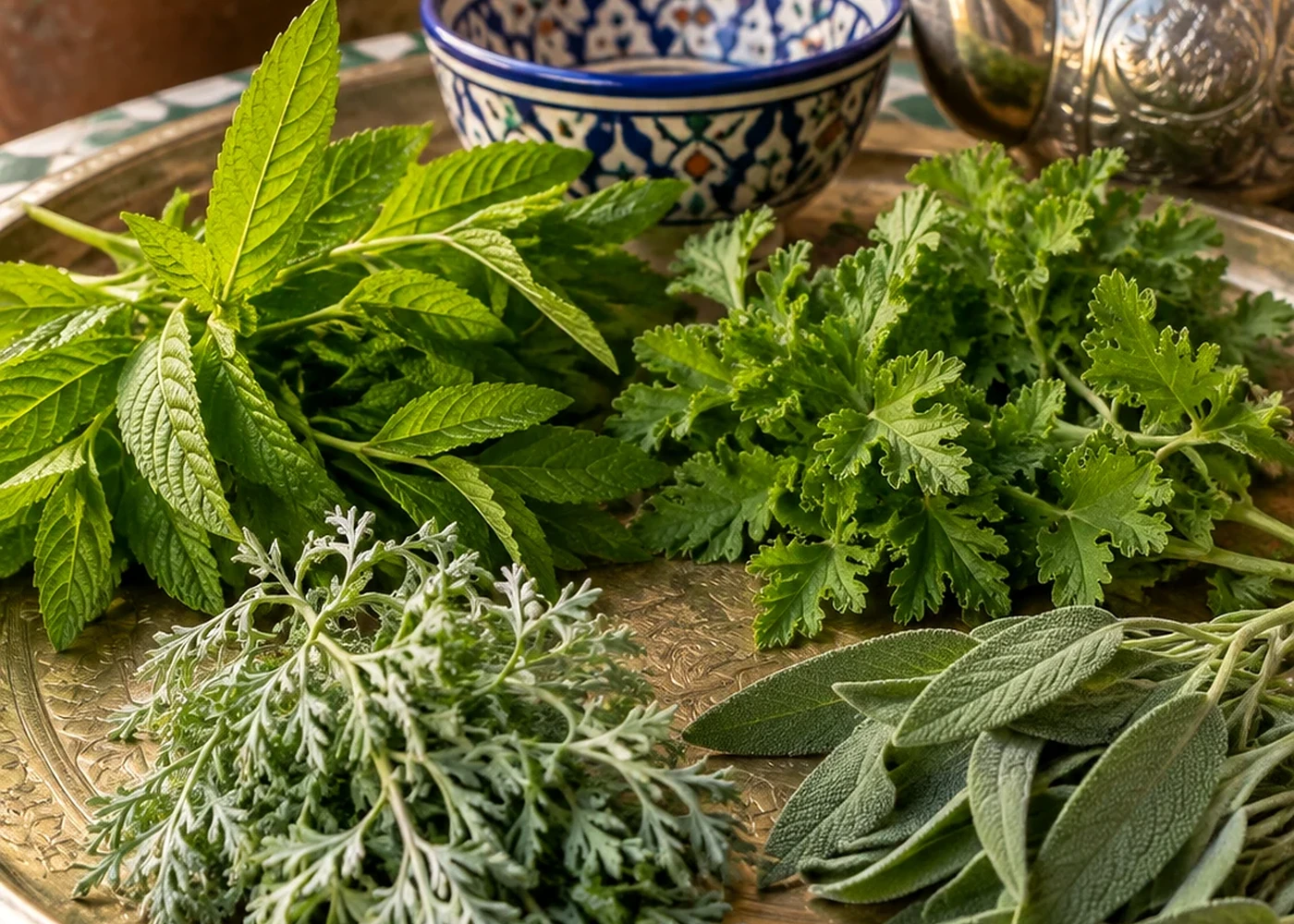
A polite request should identify what you mean. If several herbs are on the table, make the object clear before asking someone to pass it. ʿAfak helps the wording, while a precise reference prevents the other person from having to guess.
Fresh herbs arranged for tea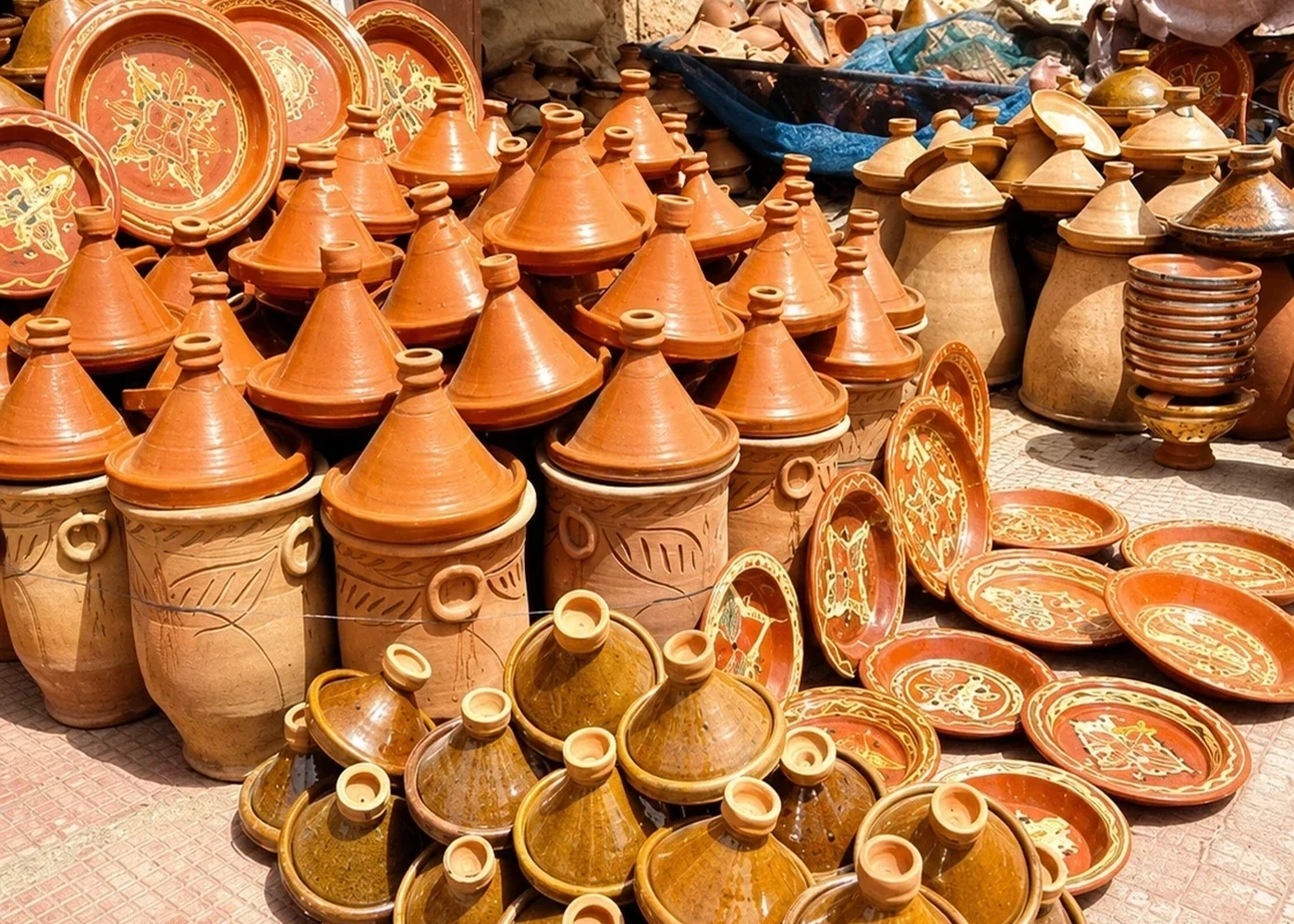
Pottery can be fragile, heavy or part of an arrangement the seller wants to keep intact. Ask before lifting a piece and accept guidance about where to place it. The respectful part of the exchange is visible in how you handle the answer as well as in the phrase you use.
Pottery displayed at a shop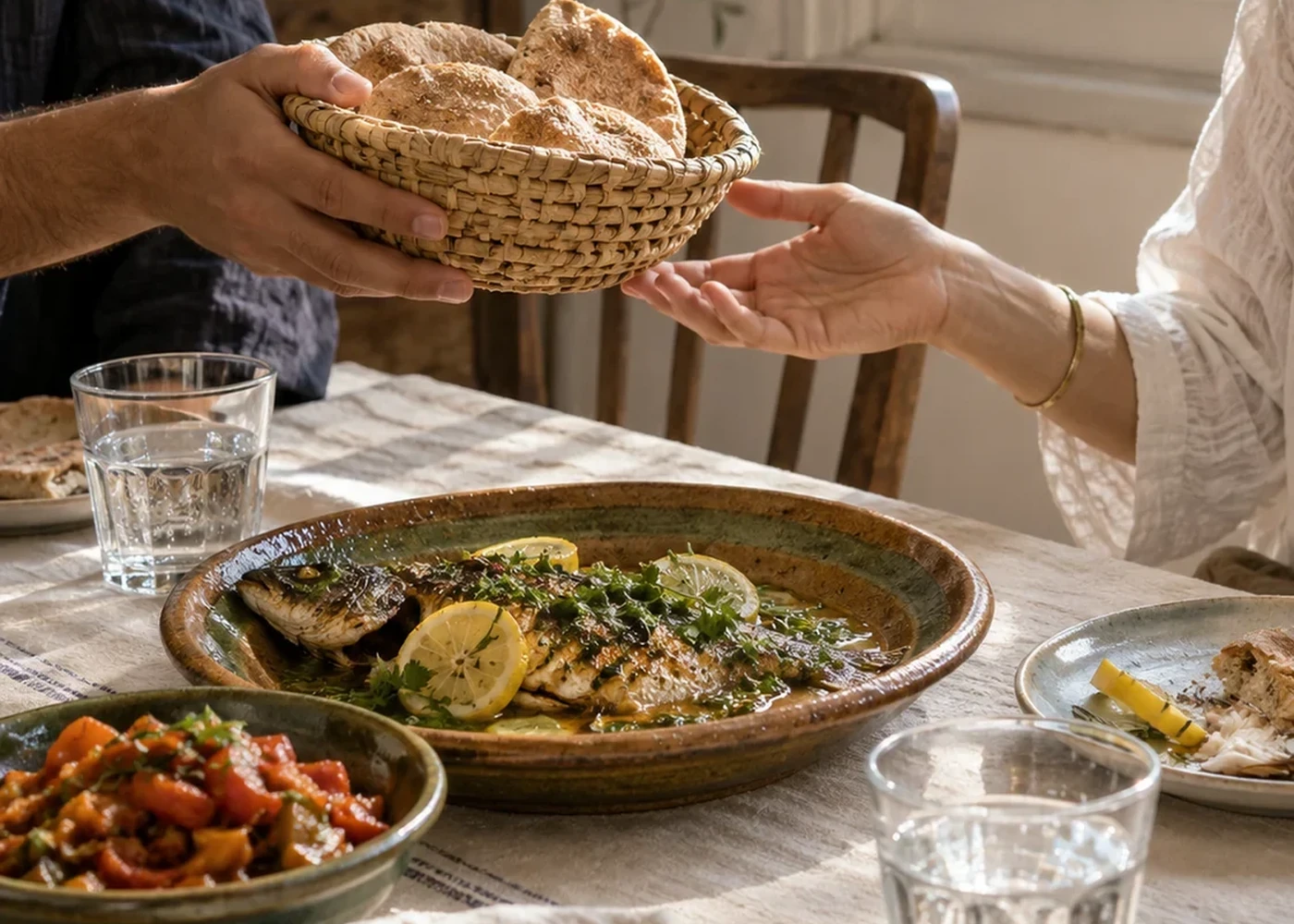
At a shared meal, a thank-you can acknowledge a small action such as passing bread. Wait until the other person can comfortably hand it over rather than reaching across them. Courtesy becomes natural when the words match what people are doing for each other.
A bread basket passed across a tableAfter asking for attention, wait. After thanking someone, release them from the exchange if they are busy. After apologising, change the action that caused the problem. After hearing no, accept it. These small behaviours make your limited Darija more effective because the other person can understand both the words and the intention behind them.
Try it once slowly, then let your partner change the answer. Listen for what changes before choosing your next phrase.
Think about the action your words accompany. Asking for space in a crowded passage, requesting help and thanking someone for their time are different situations. Keep the request short enough to understand and leave room for the other person to answer. An expression feels considerate when it fits what is happening.
Practise ending an exchange without adding another demand. After receiving help, repeat the useful detail if necessary, express thanks and let the person continue their day. In a conversation lesson, ask your partner which part sounded clear and which needed explanation. Specific feedback is more useful than being told that a sentence was simply polite.
A little nuance makes a phrase more useful.
Not necessarily. A phrase that fits the relationship and setting can be more comfortable than an elaborate form used awkwardly. Start with clear, everyday courtesy and listen to the response.
The examples distinguish singular masculine, singular feminine and plural address. Learn those distinctions with the phrases. Local pronunciation and usage may still vary.
Listen to a correction, try the appropriate form and continue without turning a small error into a long performance. The willingness to adjust matters more than pretending you never make mistakes.
6 connected cities. Language travels with you; each place adds its own setting and people.

Explore the city’s streets, places and everyday settings alongside your Darija learning.
Explore this connection ↗
Explore the city’s streets, places and everyday settings alongside your Darija learning.
Explore this connection ↗
Explore the city’s streets, places and everyday settings alongside your Darija learning.
Explore this connection ↗
Explore the city’s streets, places and everyday settings alongside your Darija learning.
Explore this connection ↗
Explore the city’s streets, places and everyday settings alongside your Darija learning.
Explore this connection ↗
Explore the city’s streets, places and everyday settings alongside your Darija learning.
Explore this connection ↗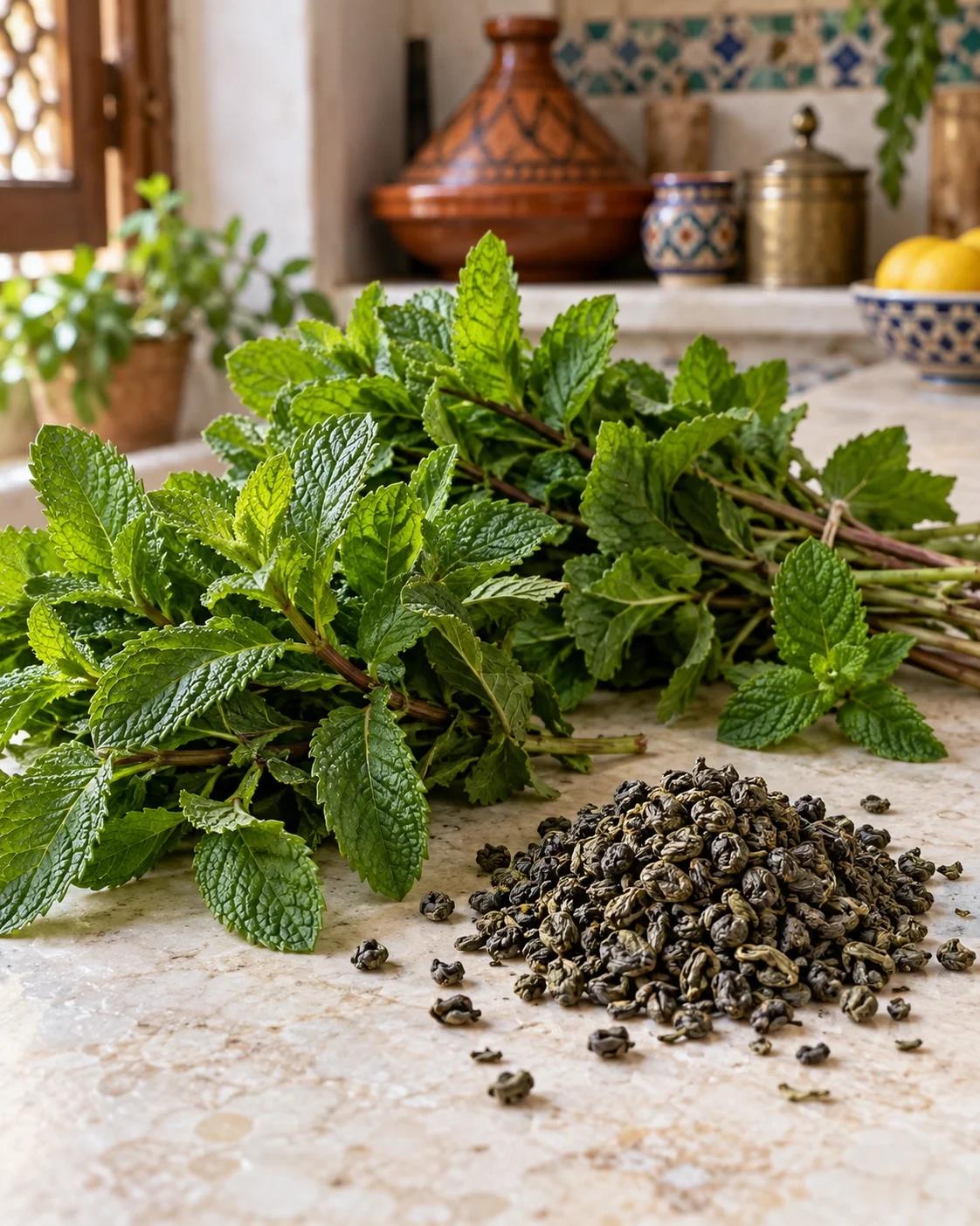
Take Respectful Everyday Phrases further.
This public chapter is free to explore. The companion guide is in preparation, with space planned for fuller phrase sets, practice exchanges and more detailed language notes.
Find current availability in the guide collection.
Explore this guide ↗Back to the Darija collection ↗Continue with another Darija situation or explore the cultural context in Learn.

Confirm a place, clarify a time and keep a useful repair phrase ready when travel plans meet real conversation.
Continue exploring ↗
Move from a phrase you can recite to an exchange you can follow, repair and finish naturally.
Continue exploring ↗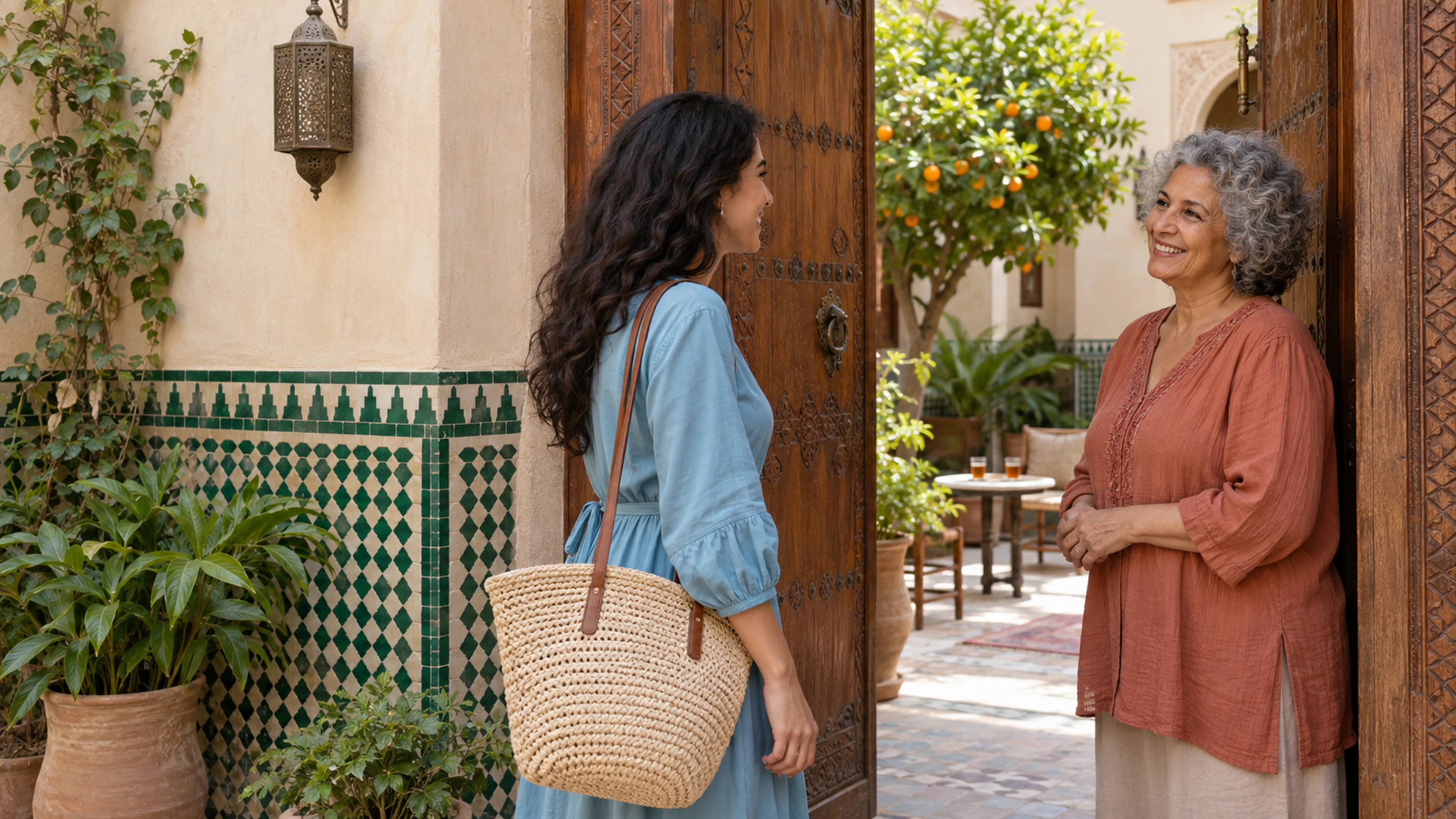
Follow the movement from greeting to invitation, from being offered something to answering comfortably.
Continue exploring ↗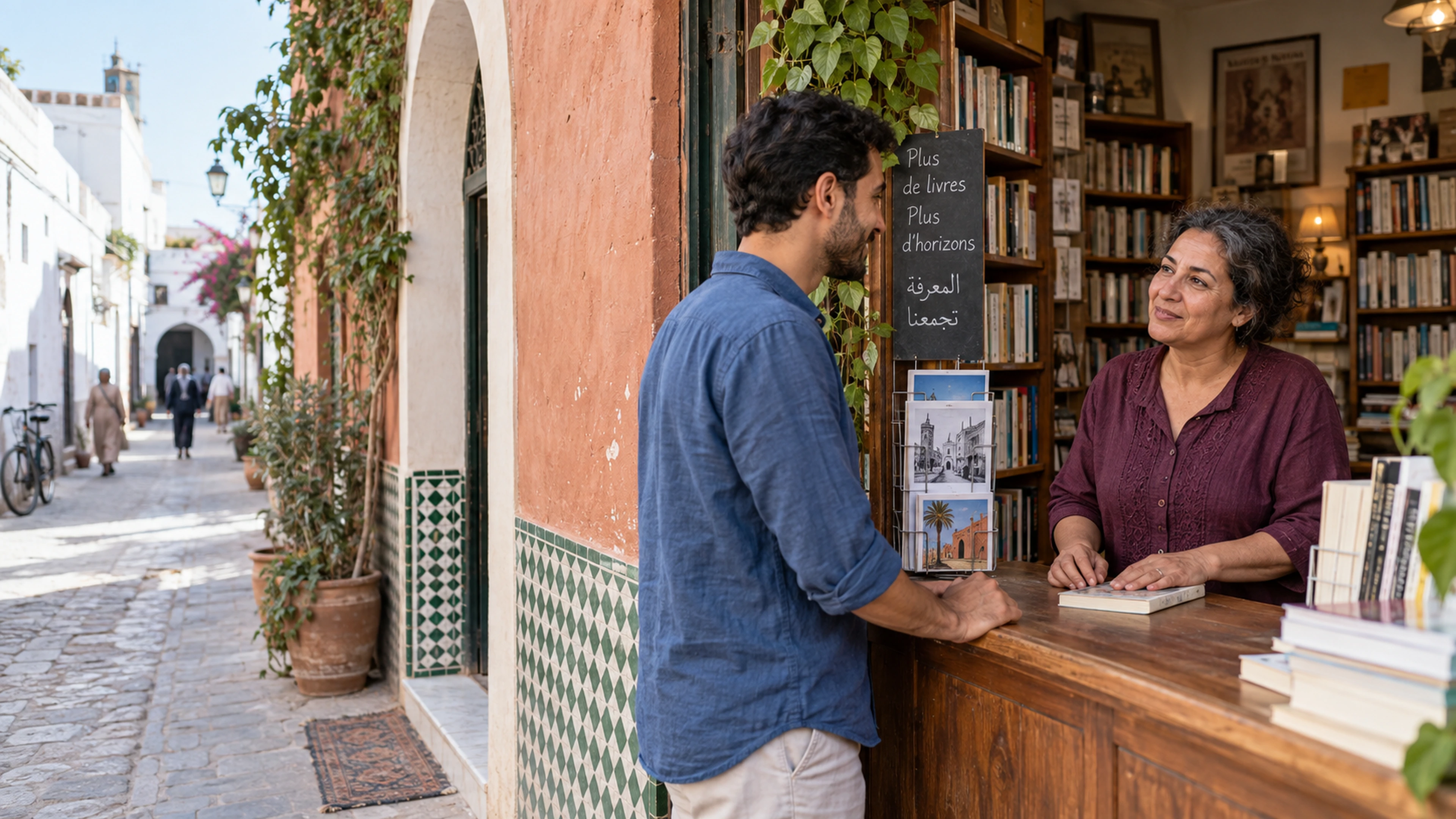
Good conversation begins with attention. Explore Morocco’s multilingual settings without assuming that appearance tells you how someone speaks.
Continue exploring ↗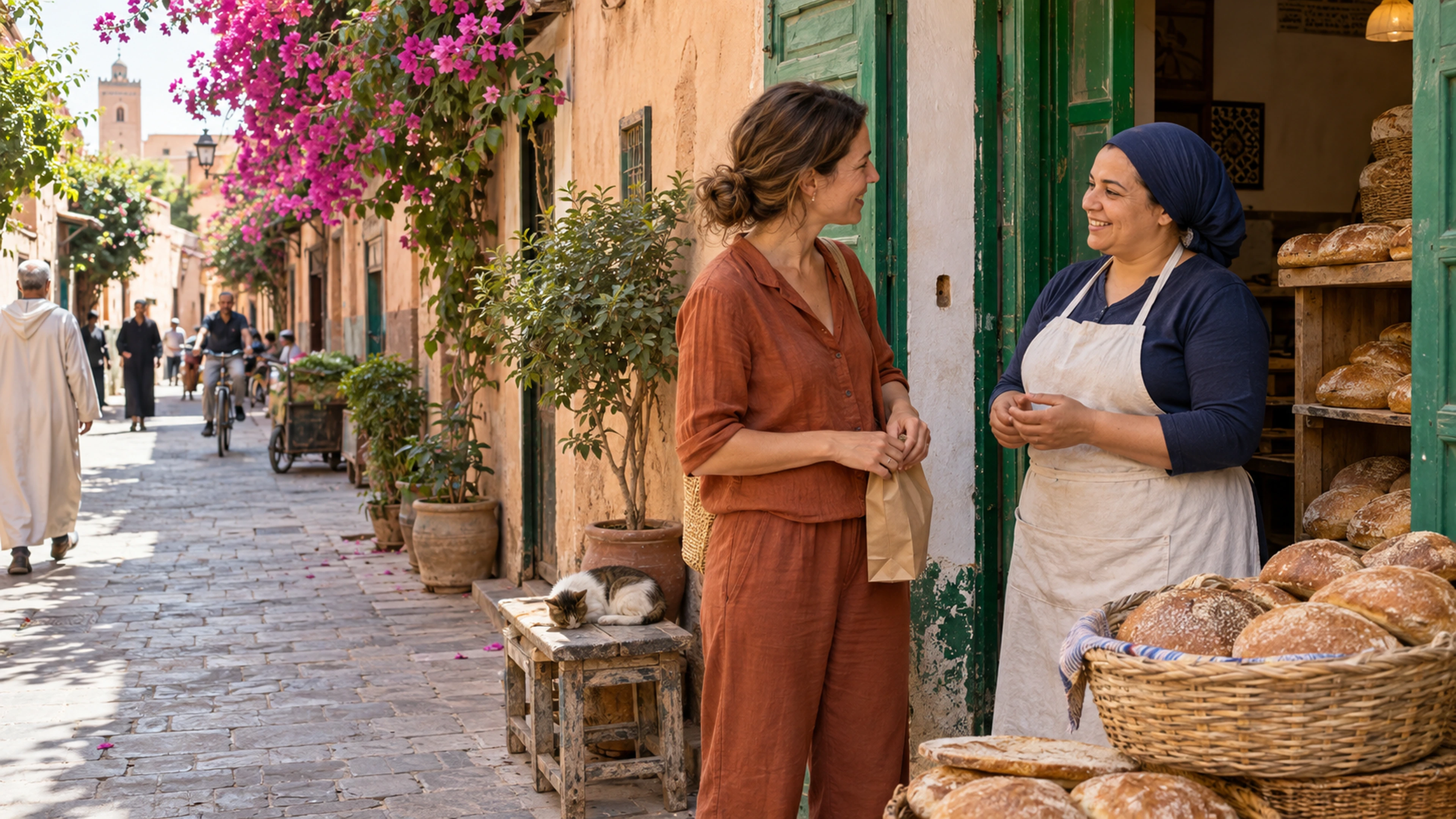
Practical courtesy for streets, shops, homes and shared spaces. Read the situation, ask clearly and let people set their own boundaries.
Continue exploring ↗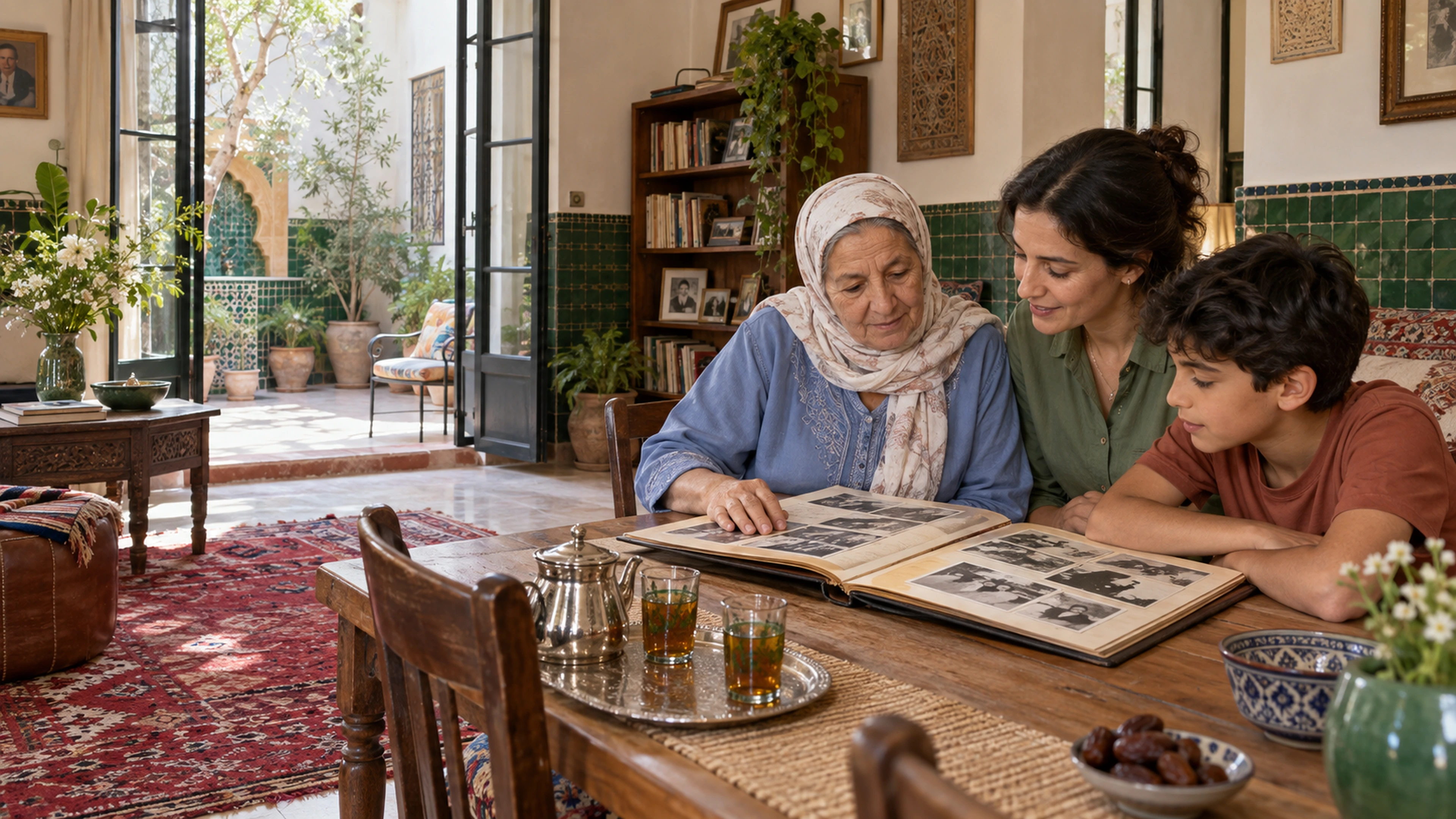
Explore family memory, language and belonging at your own pace. There is more than one way to build a connection with Morocco.
Continue exploring ↗