Skip to learning
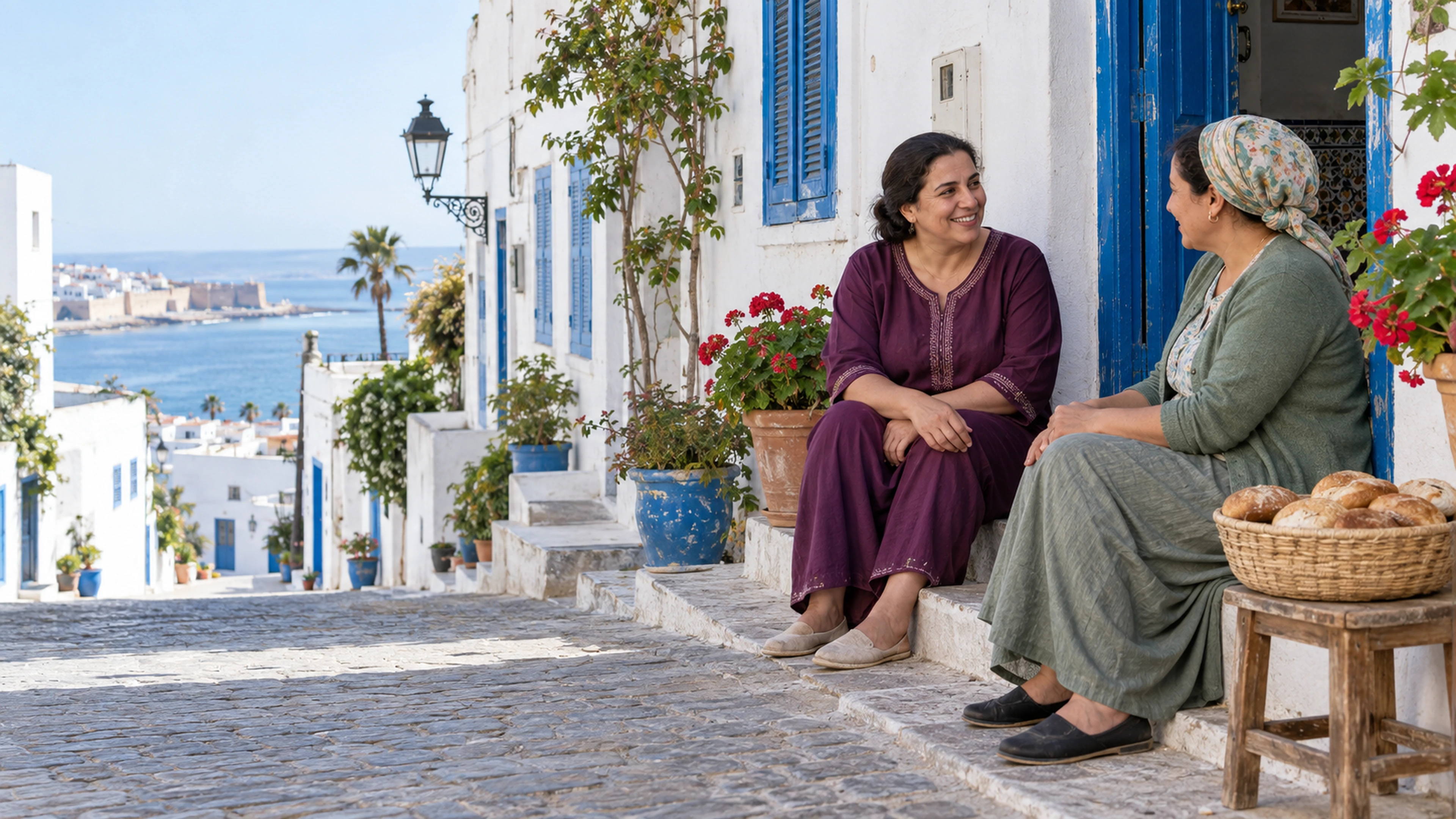
Clarifying a plan: an imagined Moroccan conversation.
The detail that makes a journey work

Useful Travel Expressions

Confirm a place, clarify a time and keep a useful repair phrase ready when travel plans meet real conversation.

Exotic Morocco · 9 minute read
01 / A way into the conversation

Travel language is a checking skill.

The most useful travel expression is often the one that prevents a small misunderstanding from continuing. A place name, a date, a quantity or a time can matter more than a long polite introduction. Darija gives you ways to open the conversation and ask for clarification, while written details help make the arrangement precise.

Think in stages: establish what you need, listen to the answer, check the important detail and close the exchange. The same sequence can help at a guesthouse, a station or a shop. You do not need to memorise a dramatic dialogue for every possible difficulty. You need a few dependable tools and the confidence to say when something is unclear.

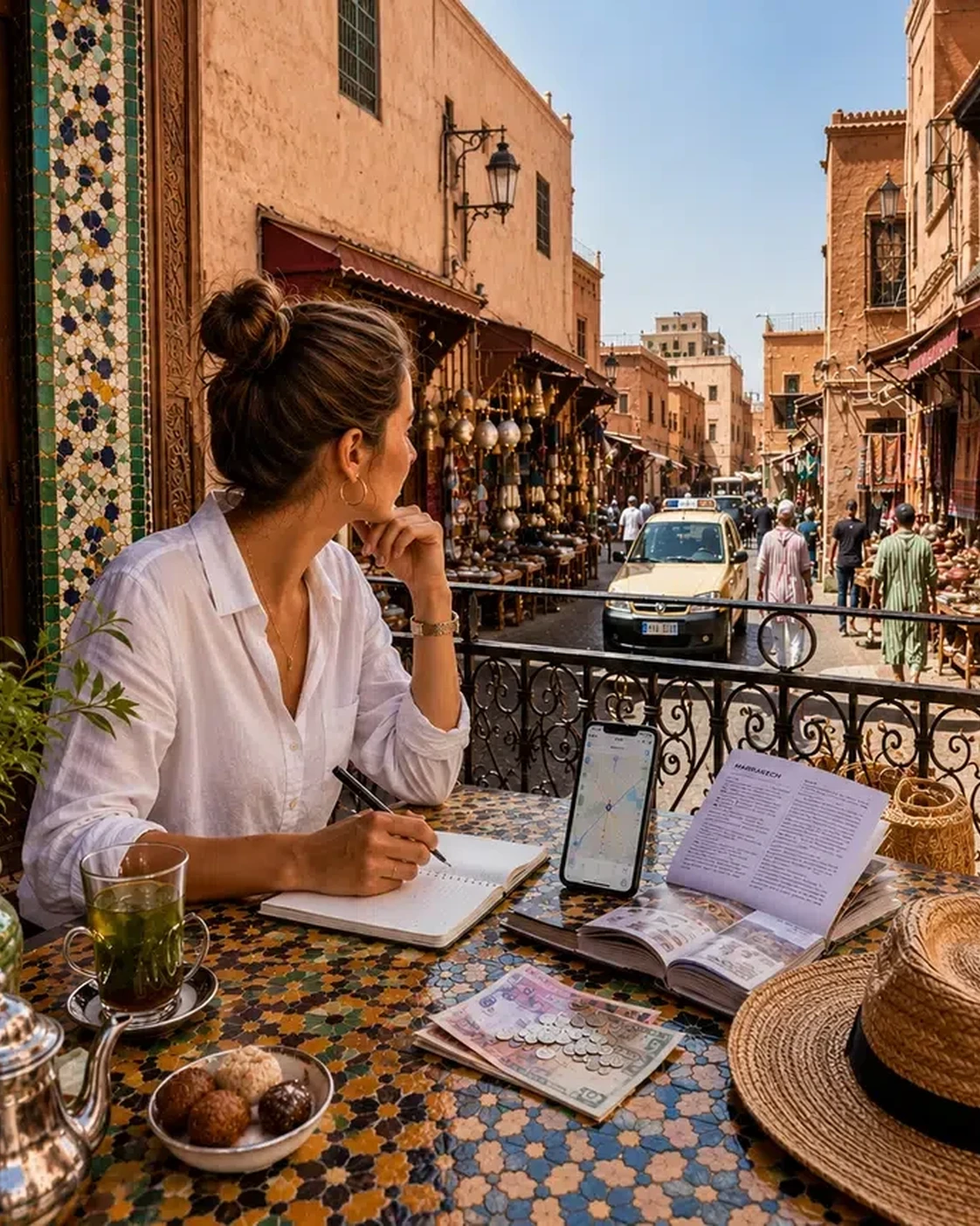
A traveller considering a route from a terrace
THE LANGUAGEMoroccan Arabic · Darija
THE APPROACHListen. Respond. Connect.
THE CONNECTIONFind it in Morocco ↗
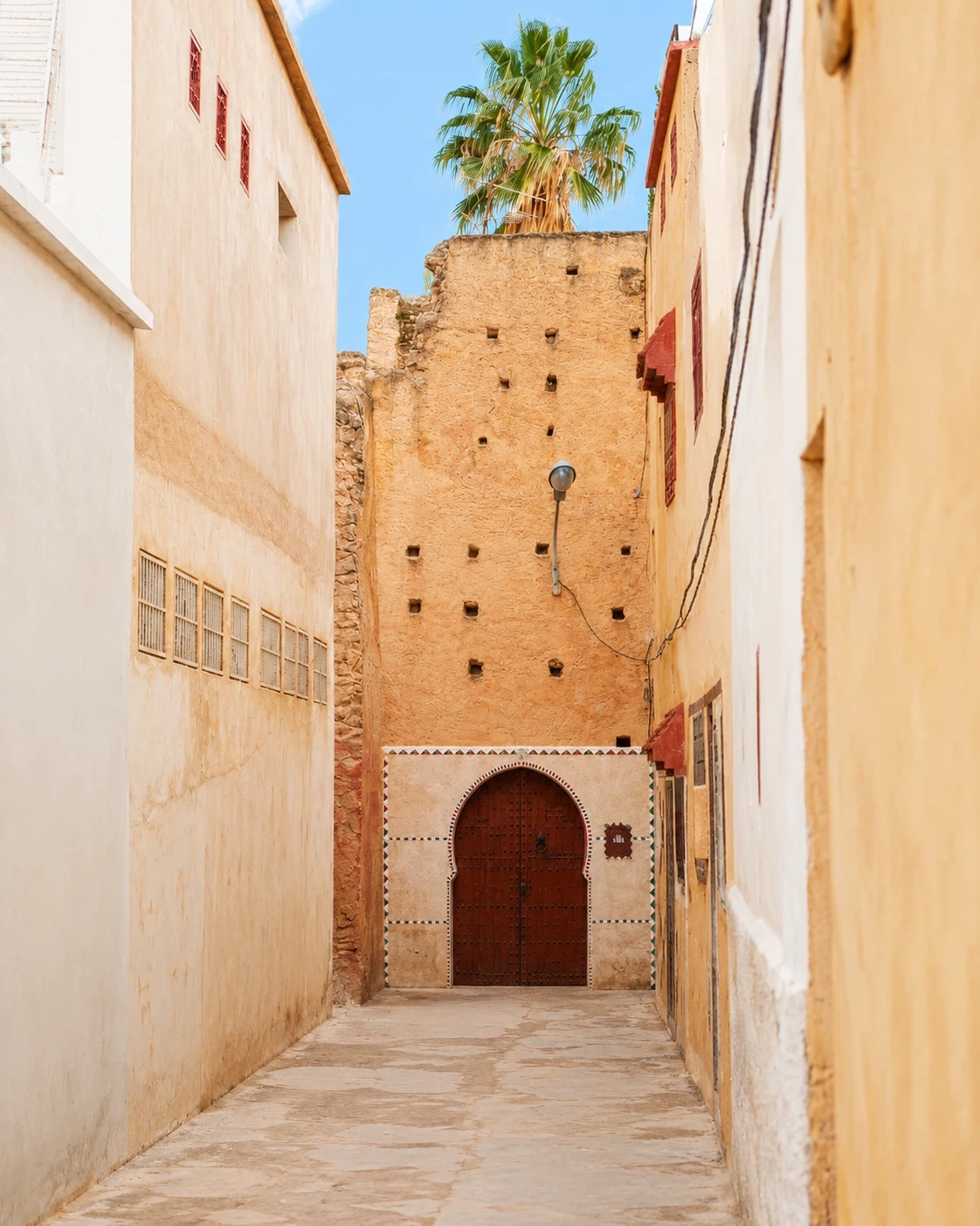
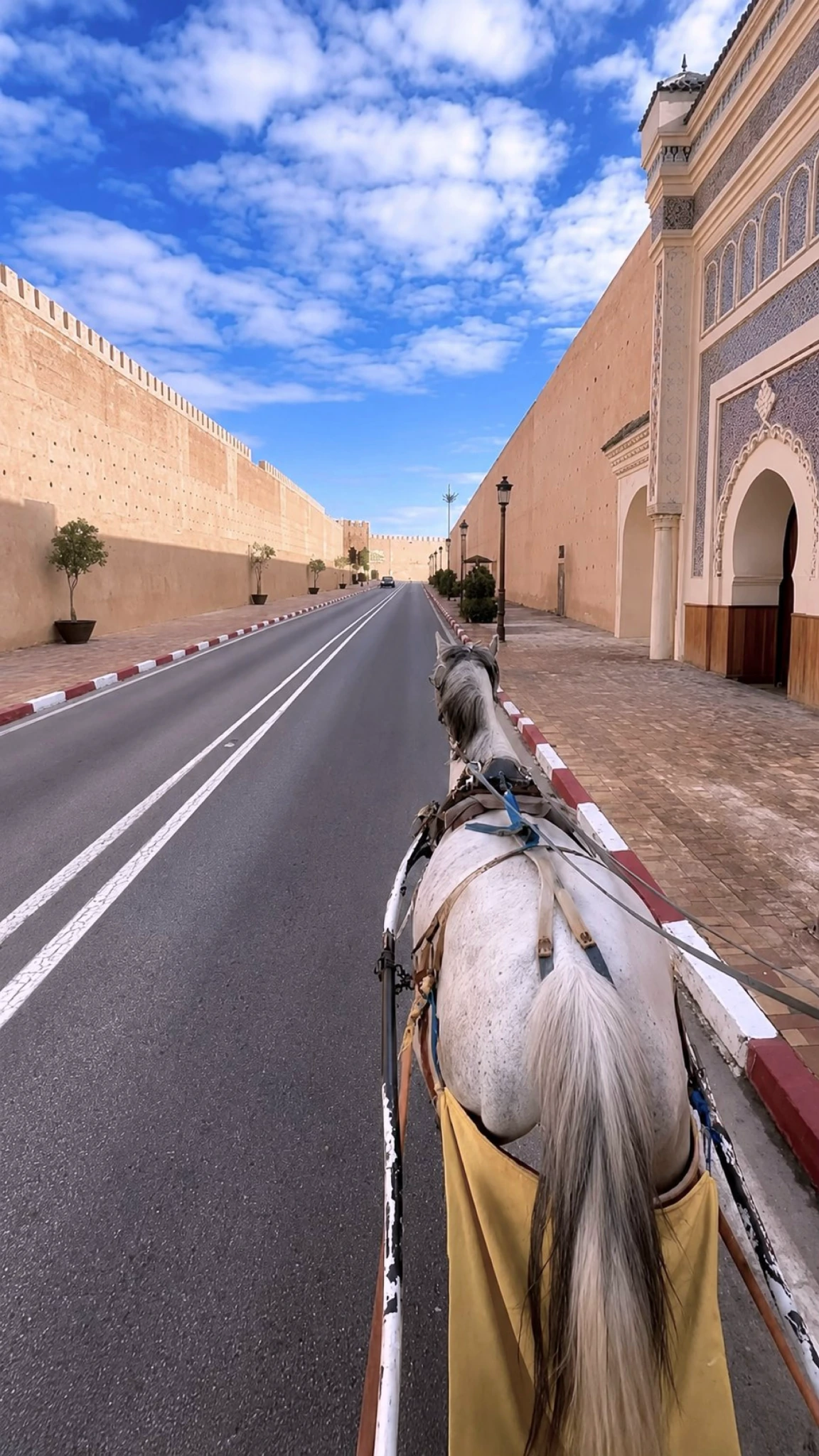
A narrow lane framed by warm stone walls
02 / Language in context

Separate the words from the arrangement.

Daba means now, l-yum means today and ghdda means tomorrow in these examples. They are useful time words, but a booking or departure needs more precision than a word spoken across a counter. Confirm the actual date and clock time on the written information when the arrangement depends on them.

A familiar place name can also conceal a difference. There may be several entrances, stations, neighbourhoods or establishments with similar names. Show the full destination or booking reference when appropriate. A phrase that is correctly pronounced still cannot identify a place more precisely than the information it contains.

Travel conversations happen under uneven conditions: noise, queues, unfamiliar accents and tiredness can all make listening harder. Shorten the exchange rather than speaking faster. Ask one question at a time and allow a full answer. A switch to another shared language or a written number is a practical communication choice, not a failure of your Darija learning.

04 / The visual chapter

The setting changes the exchange.

Look beyond the phrase. Objects, working spaces and shared routines give a conversation its practical meaning.

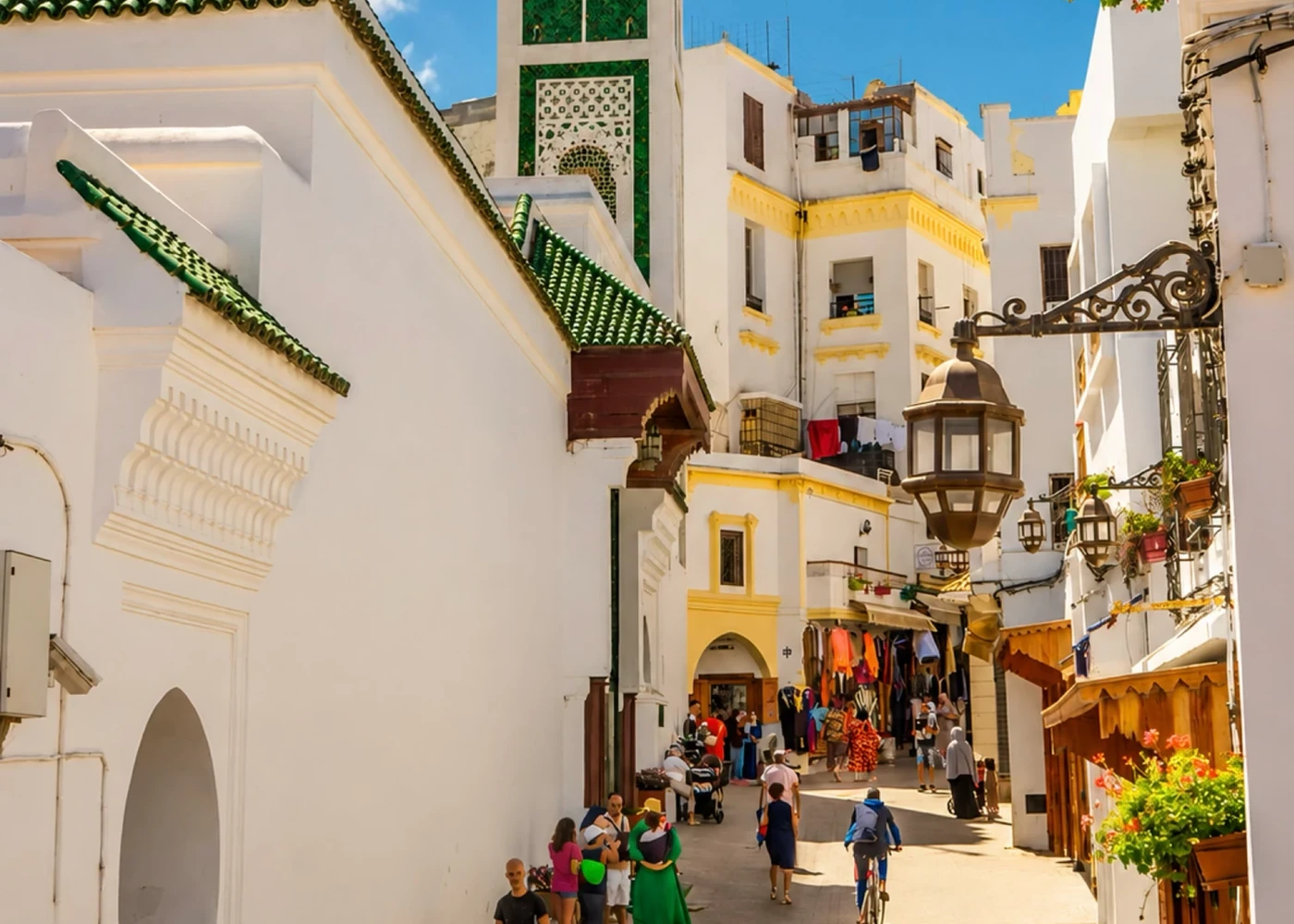
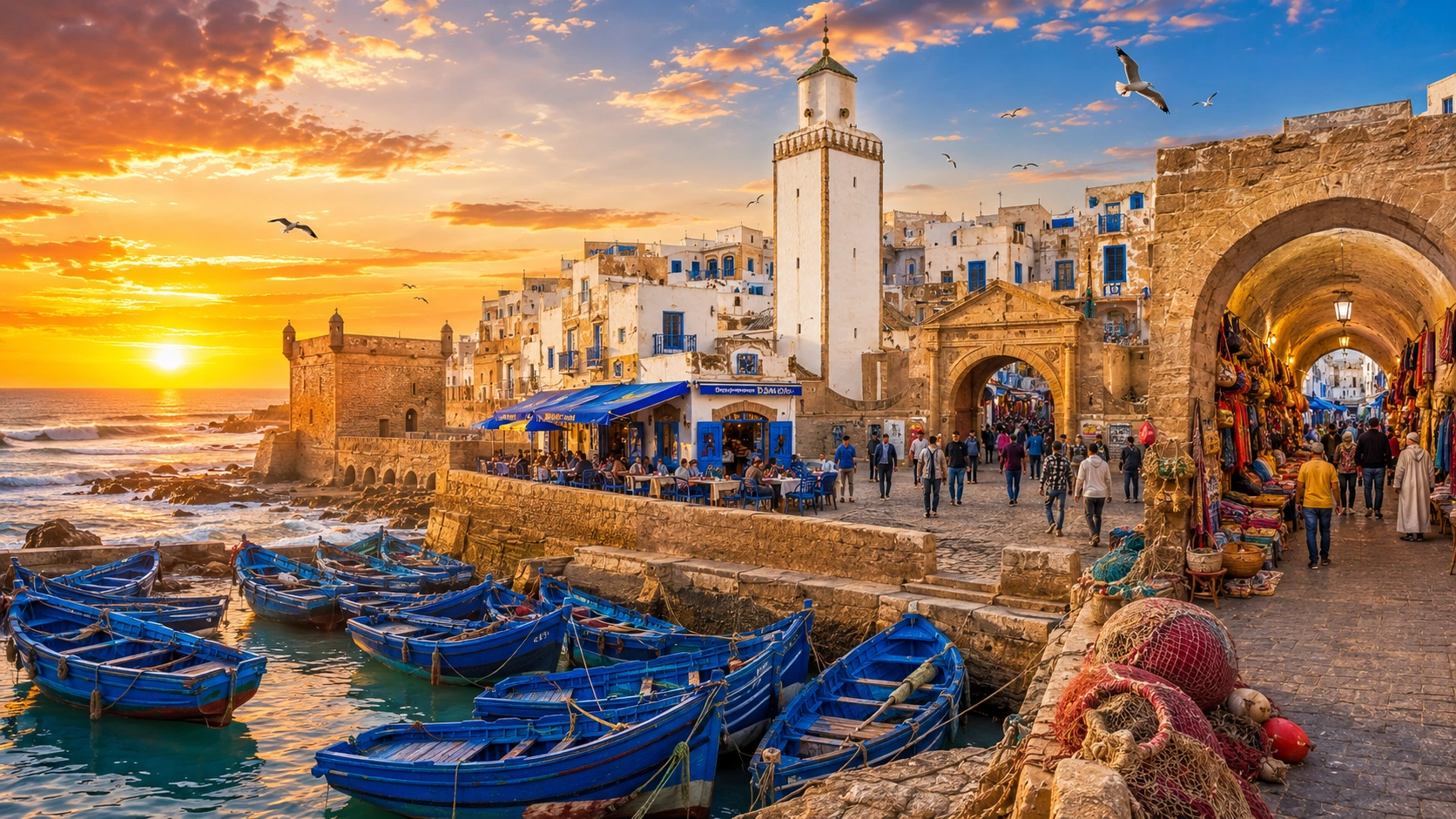
A street with white façades and a green-tiled minaret
01 / Language in daily life

Write down the exact place

A street can contain many shops and entrances with similar descriptions. Save the exact name or address rather than relying on “the place by the blue wall.” When asking for help, show the information and compare it with the person’s answer. Specific details reduce the amount of language you need to improvise.

A street with white façades and a green-tiled minaret
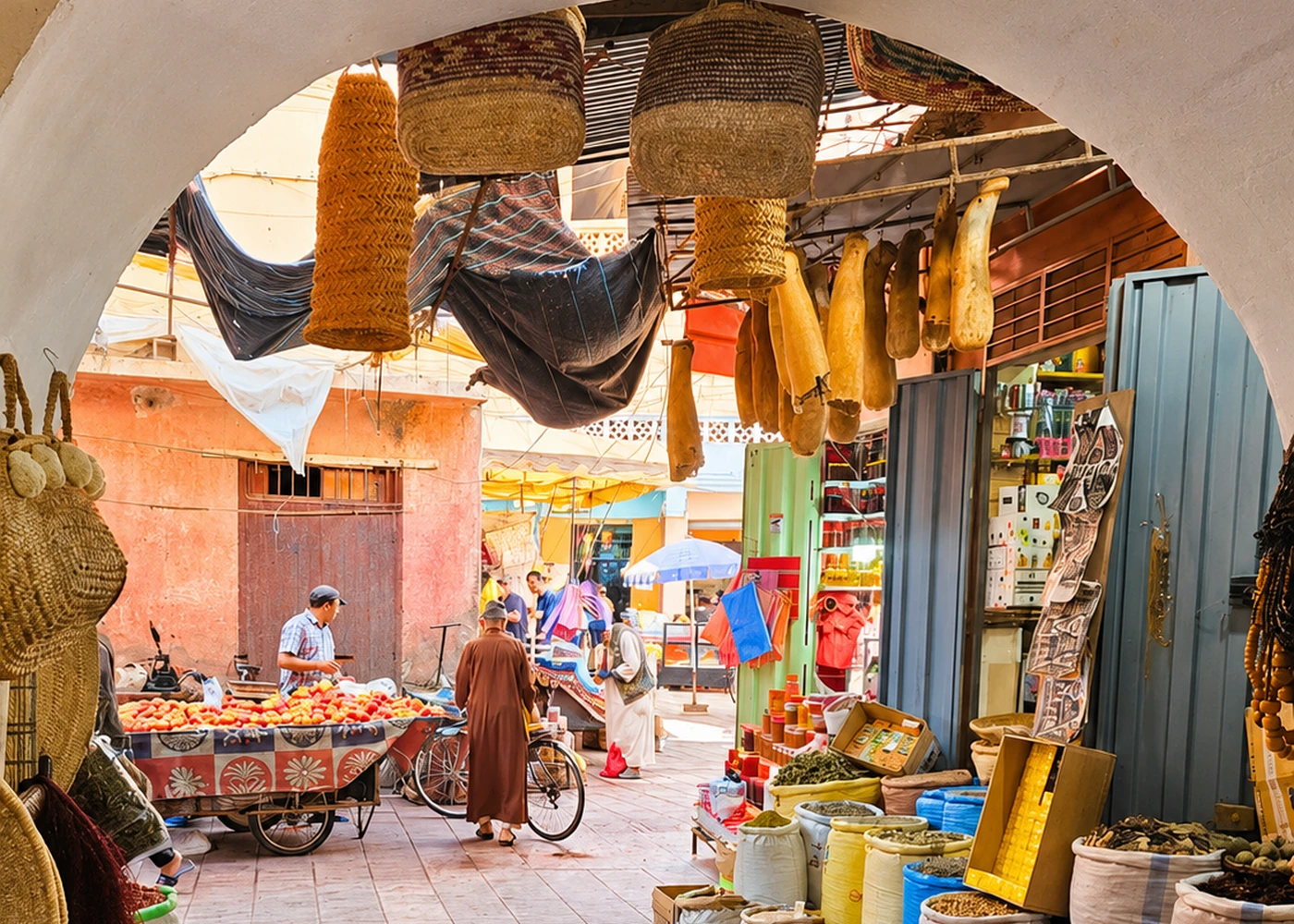
A covered market passage
02 / Language in daily life

Keep the question short

A covered market is a working environment where sound and movement can make a long explanation difficult. Ask one question, listen and check the key word. If the answer is unclear, pause and repeat the important detail rather than adding three more questions at once.

A covered market passage
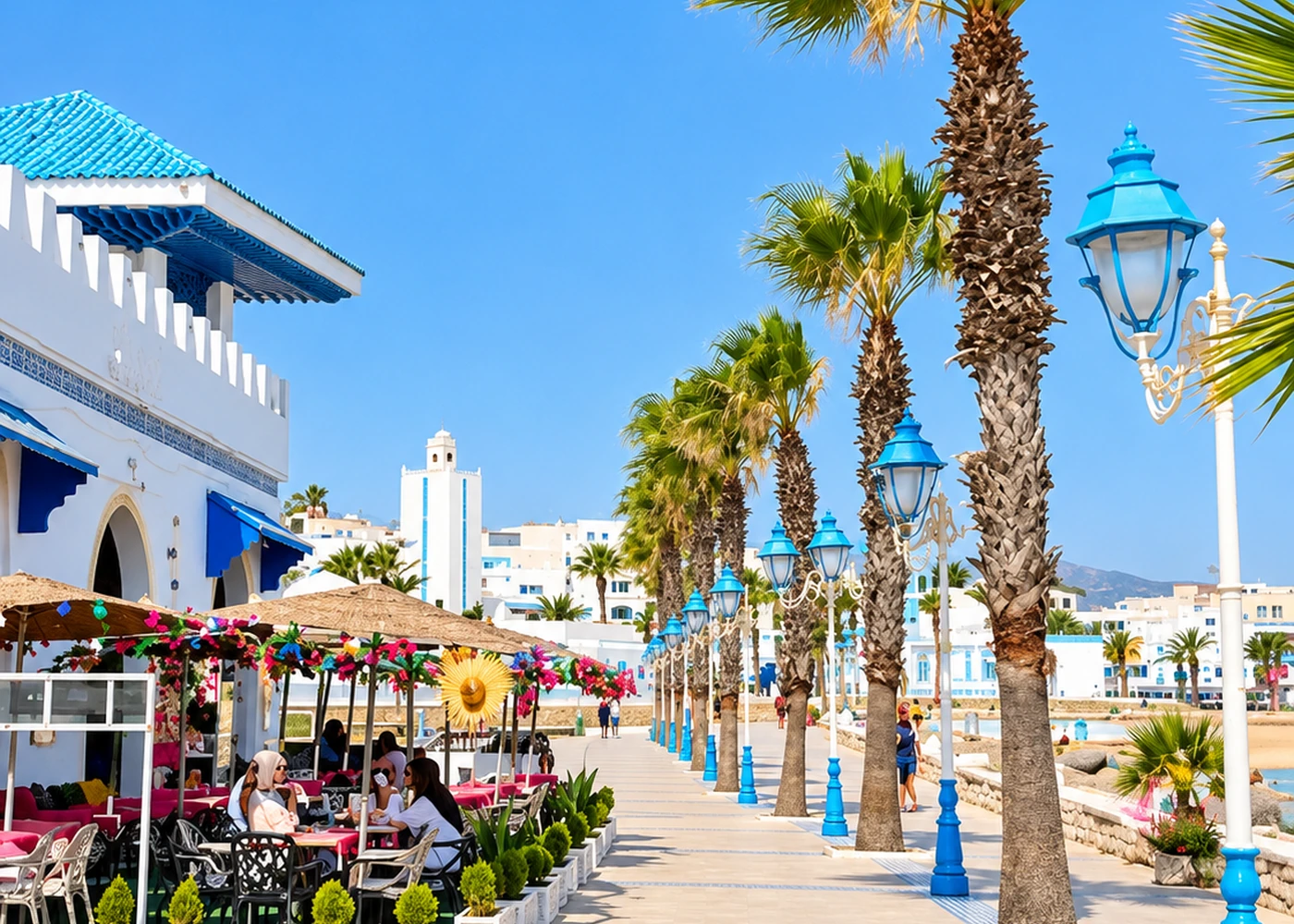
A coastal promenade with cafés
03 / Language in daily life

Confirm where you will meet

A promenade or café can be an easy meeting place only when both people mean the same point. Confirm the establishment or entrance, the date and the time. A familiar landmark makes the plan friendlier; a precise agreement makes it usable.

A coastal promenade with cafés
A closer understanding

Four details deserve a second look

Meaning becomes clearer when you connect the words to what the speakers are doing.

01 / Notice this

Where and which

Confirm the specific place or service, not only the general destination. Compare the written name with what the other person understands. If you have a map, use it as a shared reference and check that you are both looking at the same point.

02 / Notice this

When

Distinguish today from tomorrow, then confirm the date and time. A casual “later” is not a precise appointment. For transport or bookings, rely on the actual operator or provider’s current confirmation rather than a language lesson’s example.

03 / Notice this

How many and what is included

A room, a seat or an item may involve a quantity and a scope. Confirm the number of people or objects and what the quoted arrangement covers. Ask while there is still time to correct a misunderstanding, rather than after assuming the answer.

03 / From words to an exchange

Say a little. Understand more.

A small set of useful expressions, with the context that makes them work.

01 / An expression to recognise

bgheet nmshi l…

I would like to go to…

Use a precise destination and keep its name in writing if necessary.

02 / An expression to recognise

fin…?

Where…?

A compact question frame. A named place is more useful than a vague gesture towards a whole district.

03 / An expression to recognise

daba / l-yum / ghdda

Now / today / tomorrow

Useful distinctions to recognise. Confirm dates and times separately when an arrangement depends on them.

04 / An expression to recognise

ma fhemt-sh

I did not understand

Pause before an unclear answer becomes an assumed agreement.

05 / An expression to recognise

b-shwiya, ʿafak

Slowly, please

Ask for a manageable pace. If repetition is still unclear, use another shared means of communication.

06 / An expression to recognise

shukran, bslama

Thank you, goodbye

A simple way to finish once the practical details are understood.

A short practice scene

Clarifying a plan

The missing destination must be filled with your actual place; this scene does not describe a real service or booking. The short question l-yum? checks a day within an existing context. It is not a complete reservation request. Finish by checking the actual written date, destination or confirmation that applies to your plan.

  1. Yous-salamu ʿalaykumHello.
  2. Youbgheet nmshi l…I would like to go to…
  3. You, checking the dayl-yum?Today?
  4. You, if the answer remains unclearma fhemt-sh. b-shwiya, ʿafakI did not understand. Slowly, please.
How to read the Darija examples

These are approachable Latin spellings for spoken Moroccan Arabic, not IPA or a single official spelling system. sh is like the sound in “ship”; kh is like the final sound of Scots “loch”; gh is a voiced sound made towards the back of the mouth. ʿ marks ʿayn, which has no direct English equivalent. ḥ is a deeper h sound, and ṣ marks an emphatic s. The doubled vowel in bgheet is an English-oriented reading aid.

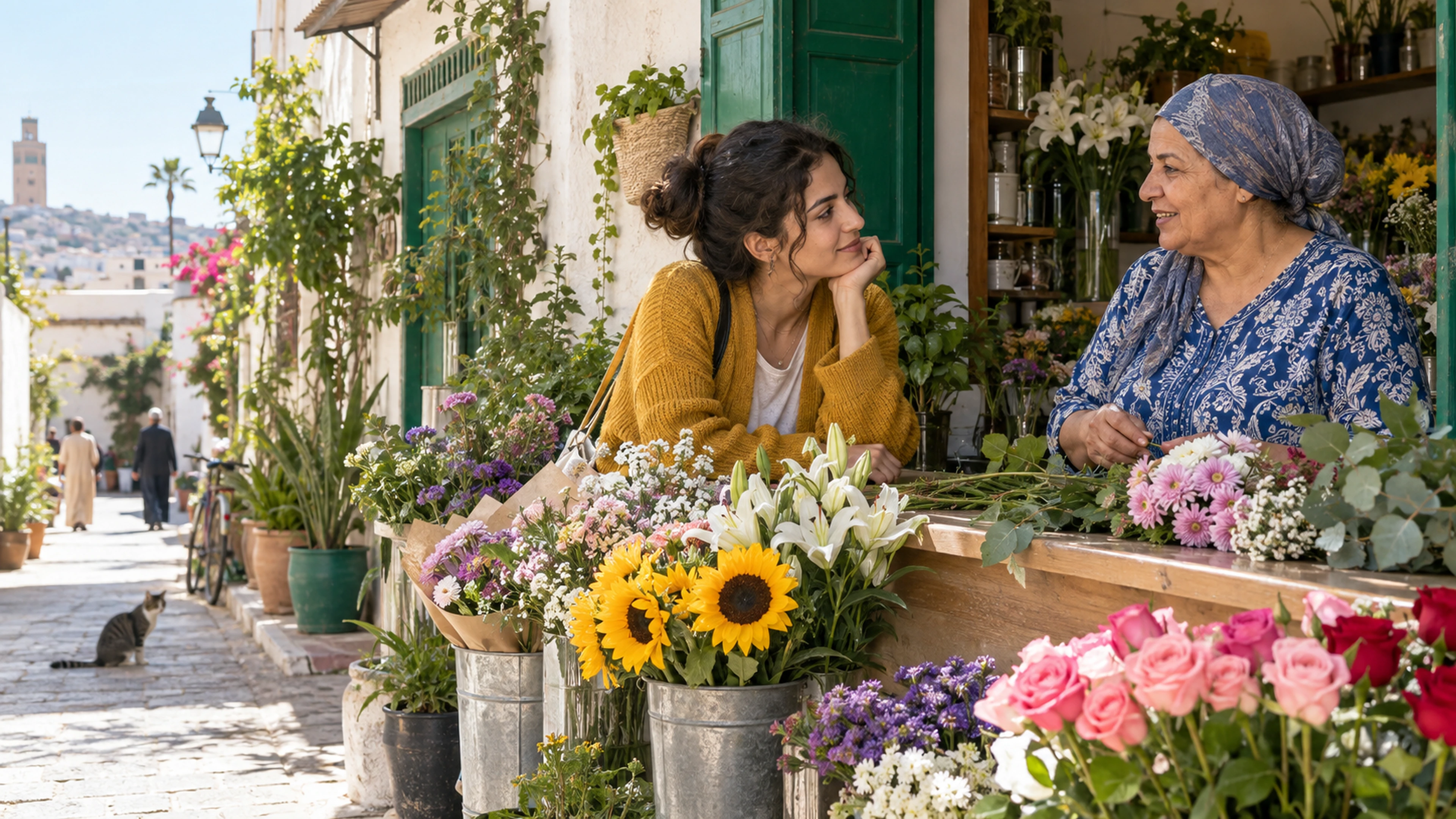
Spellings and pronunciation vary. Hyphens help show parts of an expression; they are not instructions to pause. Learn the rhythm from a willing speaker or a reliable recording. Examples are brief practice scenes, not transcripts of the people in the photographs. Relevant masculine, feminine and plural address forms are labelled.

06 / Try it with attention

Prepare the information before the sentence.

Save the address, exact place name and relevant confirmation before approaching the counter. Then choose a short phrase that introduces what you need. This reduces the amount you have to improvise and makes it easier for the other person to help. A useful travel conversation is measured by a shared understanding of the plan, not by the number of Darija words you managed to fit into it.

Try it once slowly, then let your partner change the answer. Listen for what changes before choosing your next phrase.

For each travel day, prepare the names you are likely to need: departure point, destination and accommodation. Keep them beside their written addresses. When practising, change one of these details and listen to the confirmation. This connects the language to the journey instead of treating pronunciation and planning as unrelated tasks.

At the end of an exchange, check what you will do next. Are you waiting here, walking to another entrance or returning later? Use the shared map, ticket or message to confirm. A conversation can succeed with a mixture of Darija and another language; what matters is that both people understand the arrangement before moving on.

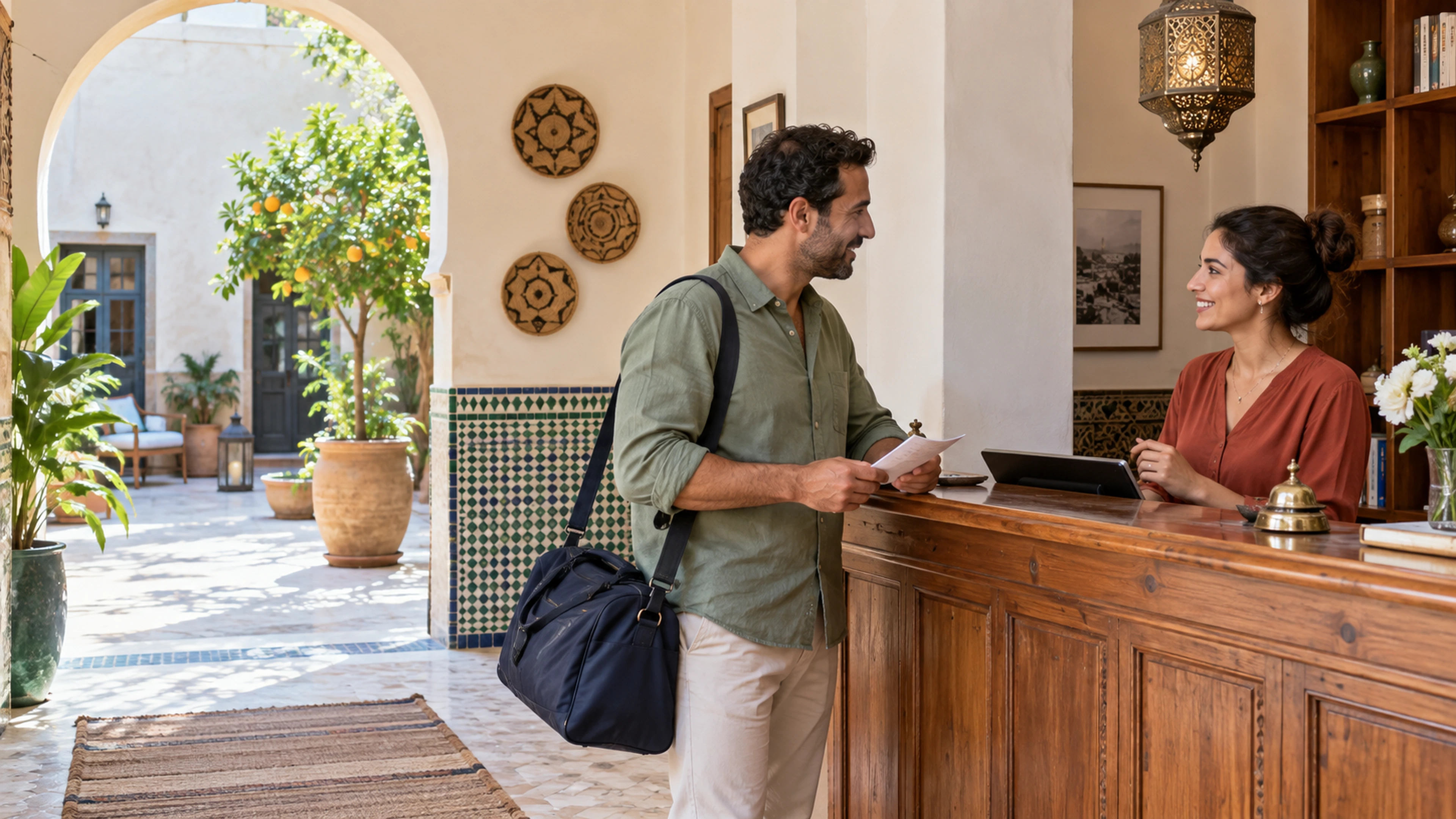
07 / A more useful conversation

Questions worth asking.

A little nuance makes a phrase more useful.

Does this page provide current travel rules?

No. It teaches communication patterns. Check the responsible operator, accommodation or official service for current requirements, schedules and conditions.

Can I rely on a short time word for a booking?

Use it to begin checking, then confirm the actual date and clock time in the relevant written record. Today and tomorrow are meaningful only when both speakers share the same context.

What should I do if I still do not understand?

Pause, show the relevant written information and use another shared language or method. It is better to clarify a practical arrangement than to agree merely to avoid embarrassment.

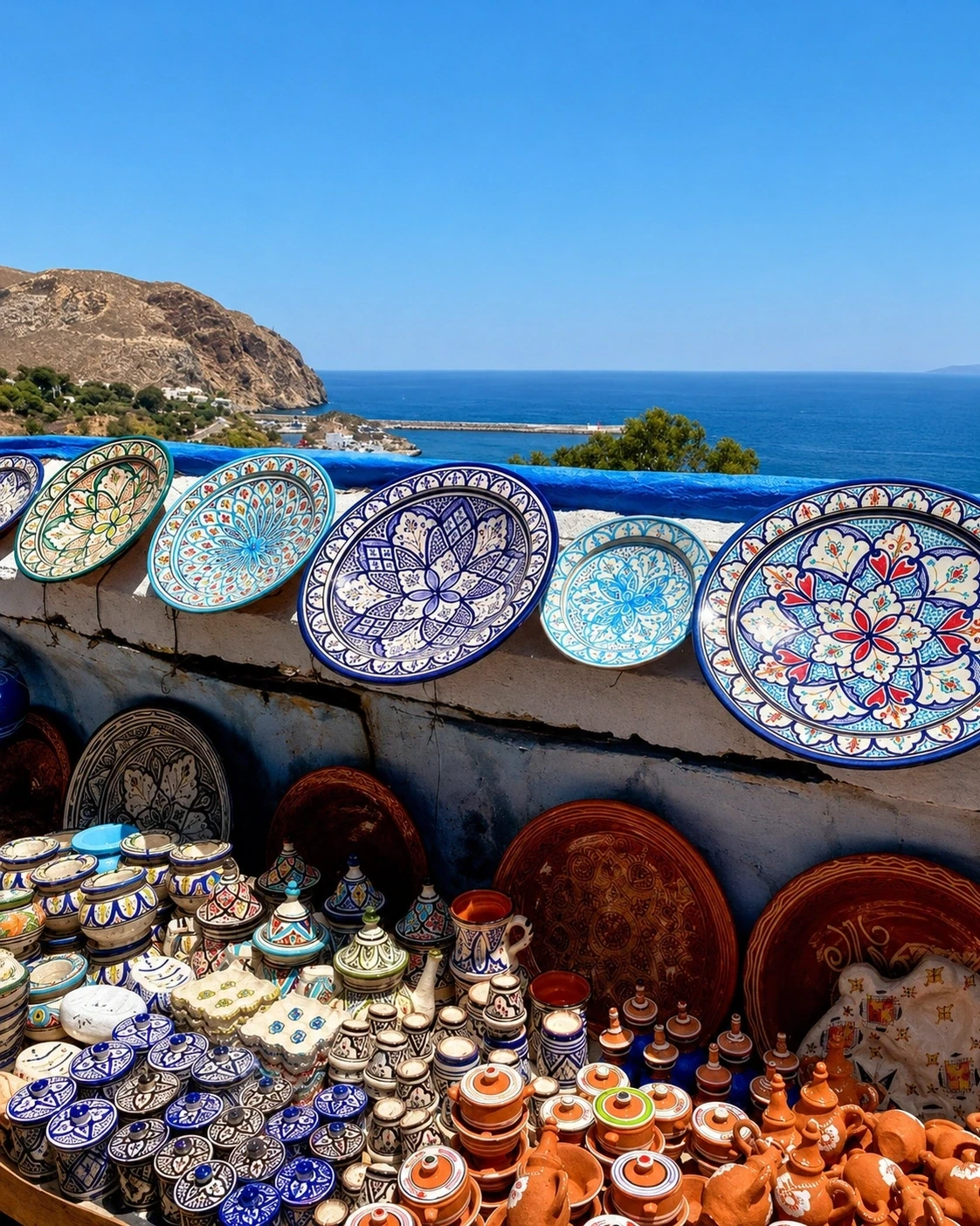
Ceramic plates displayed against a coastal view
The Exotic Morocco guide library

Keep the conversation going.

Take Useful Travel Expressions further.

This public chapter is free to explore. The companion guide is in preparation, with space planned for fuller phrase sets, practice exchanges and more detailed language notes.

Find current availability in the guide collection.

Explore this guide ↗Back to the Darija collection ↗
Sources & further reading

Language references

  1. Peace Corps Morocco · Moroccan Arabic textbook (2011) — transcription; greetings; useful expressions; numbers; shopping; directions; restaurant language.
  2. IRCAM · Amazigh language teaching resources — wider multilingual context.