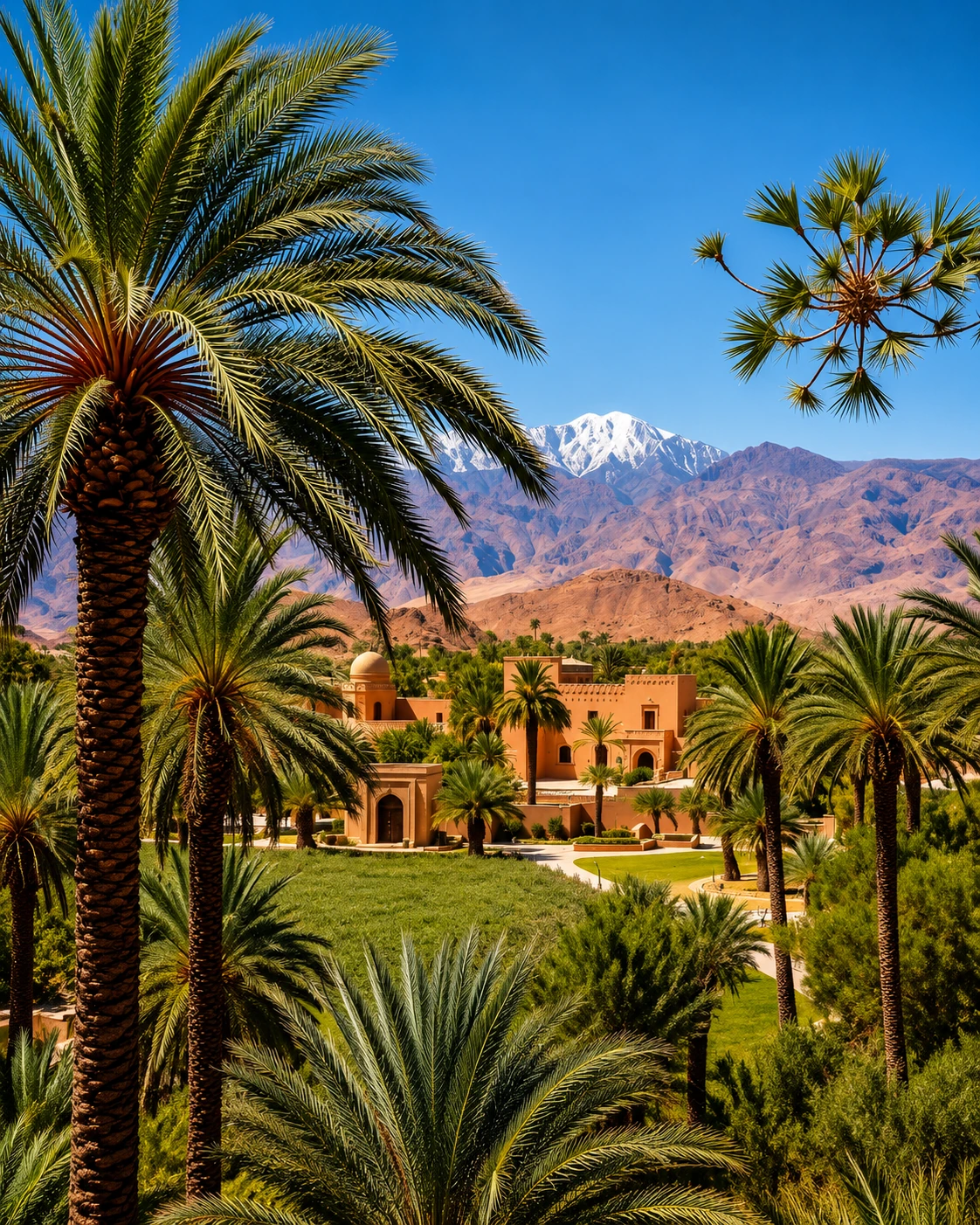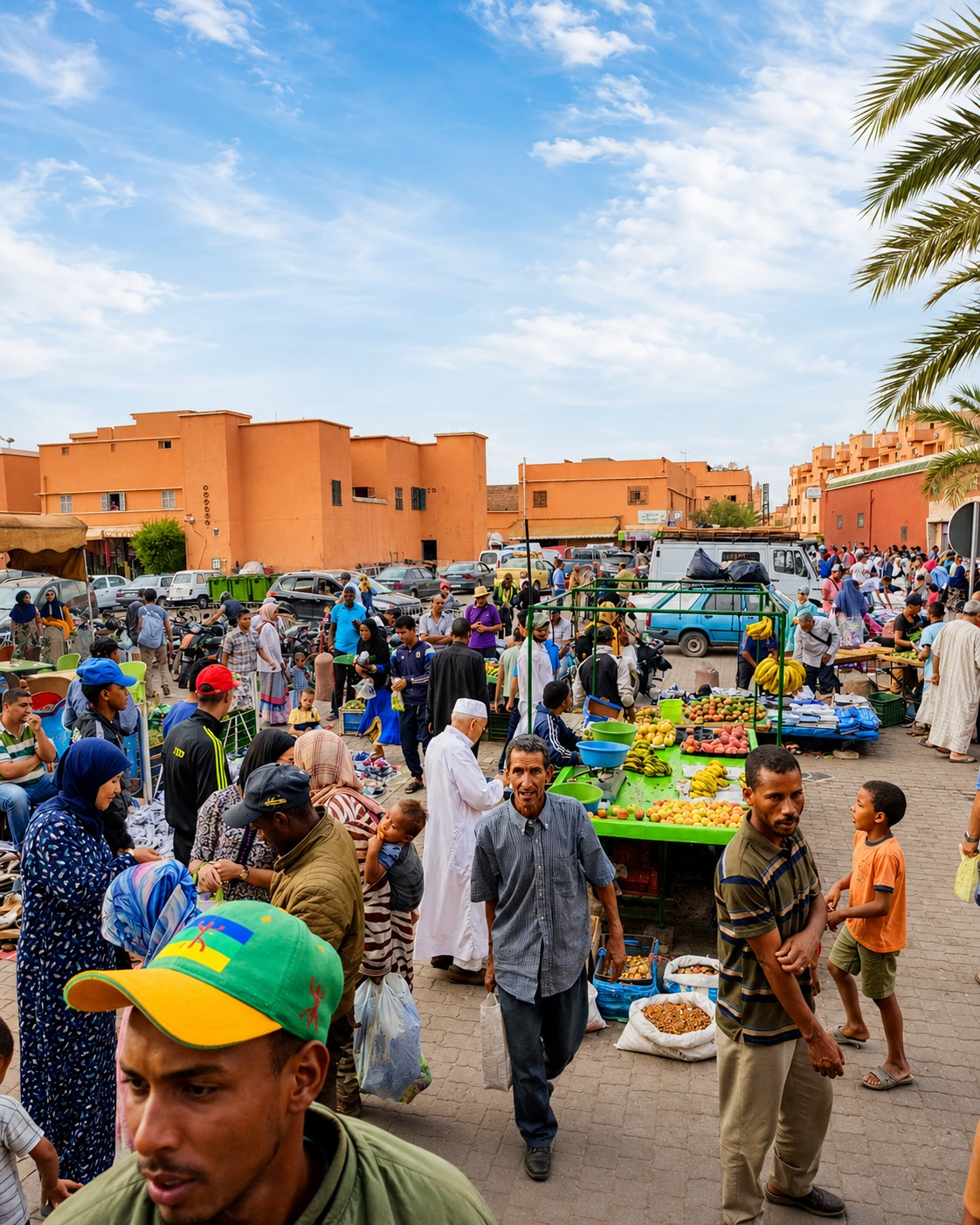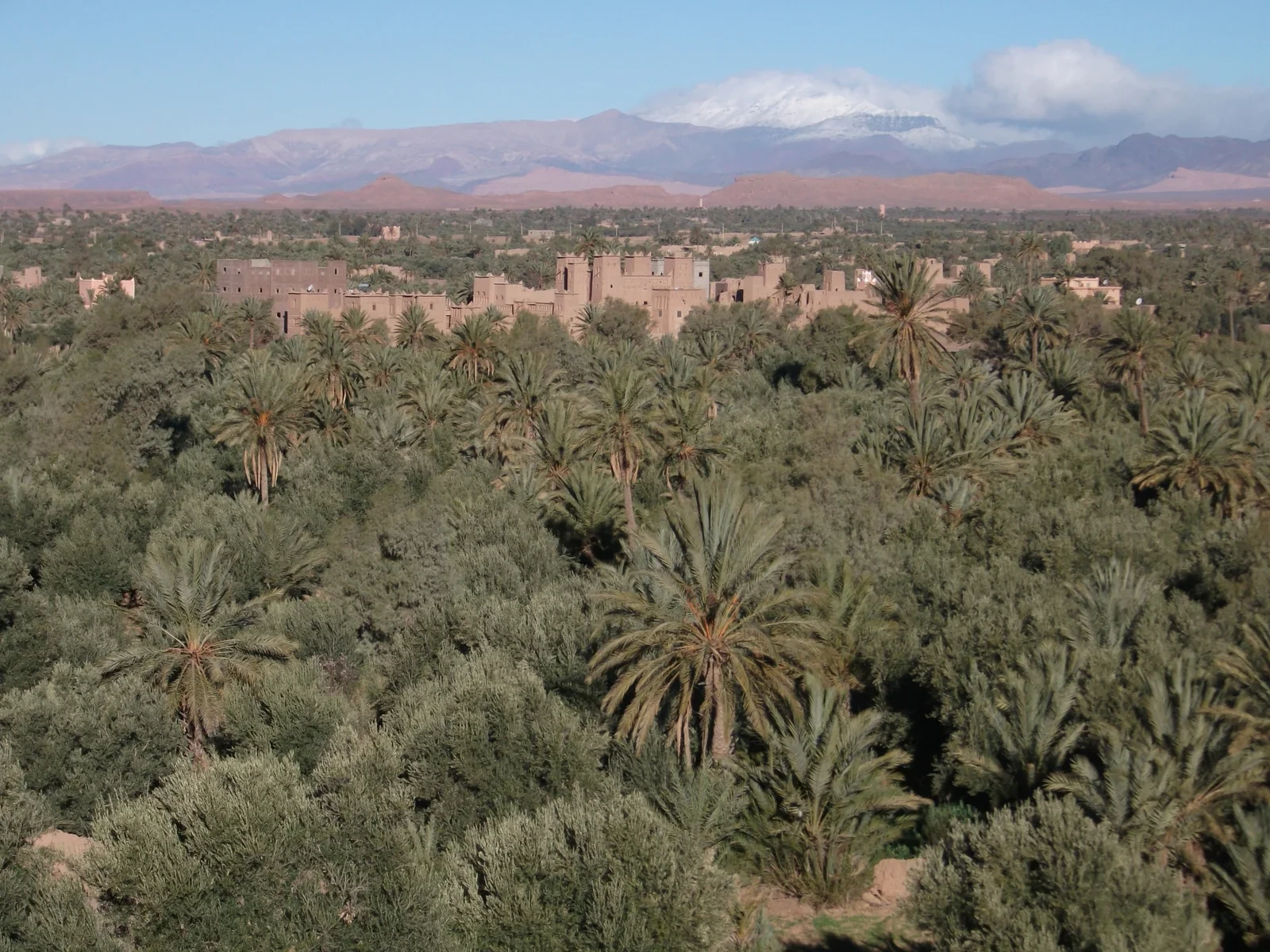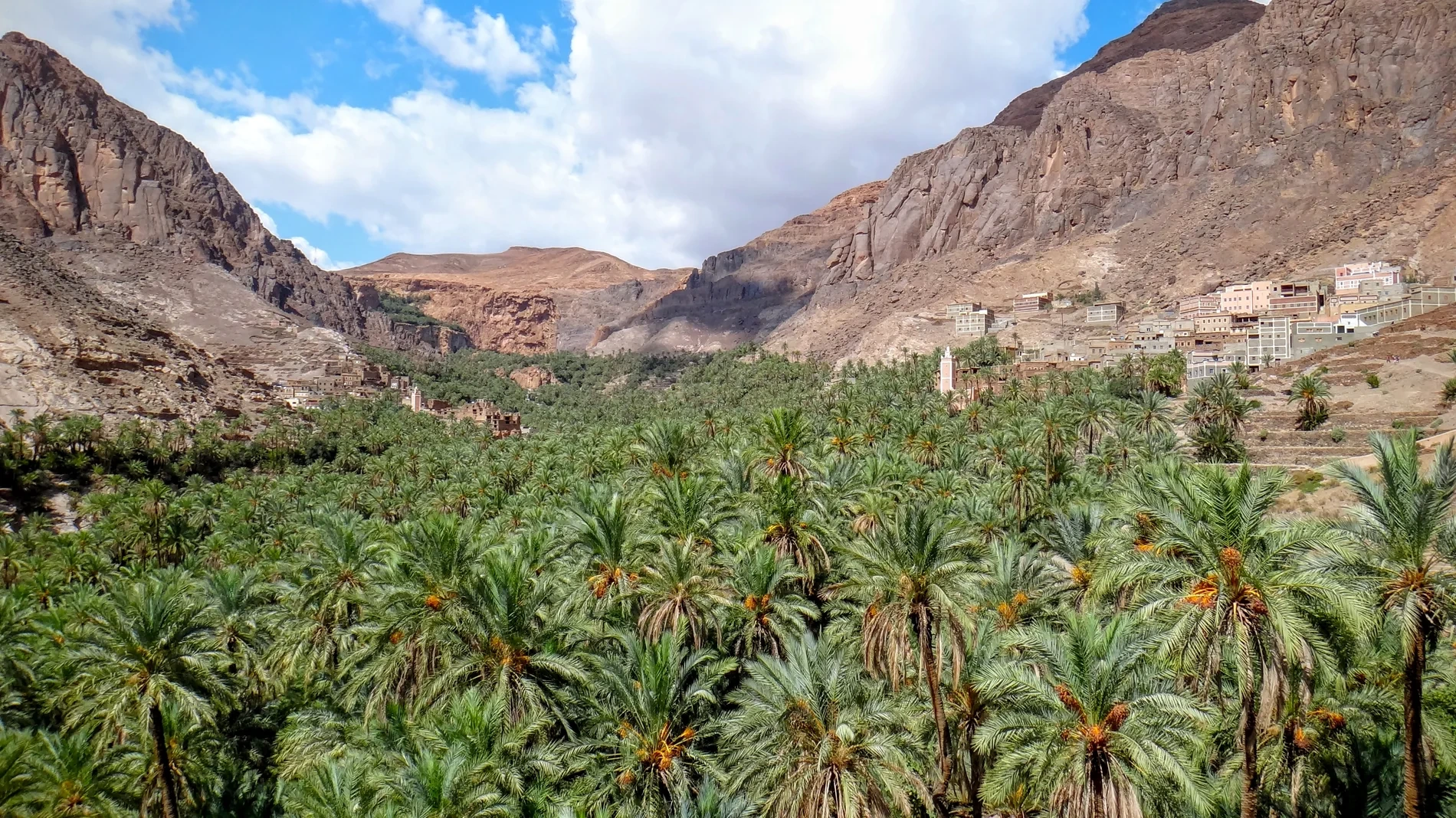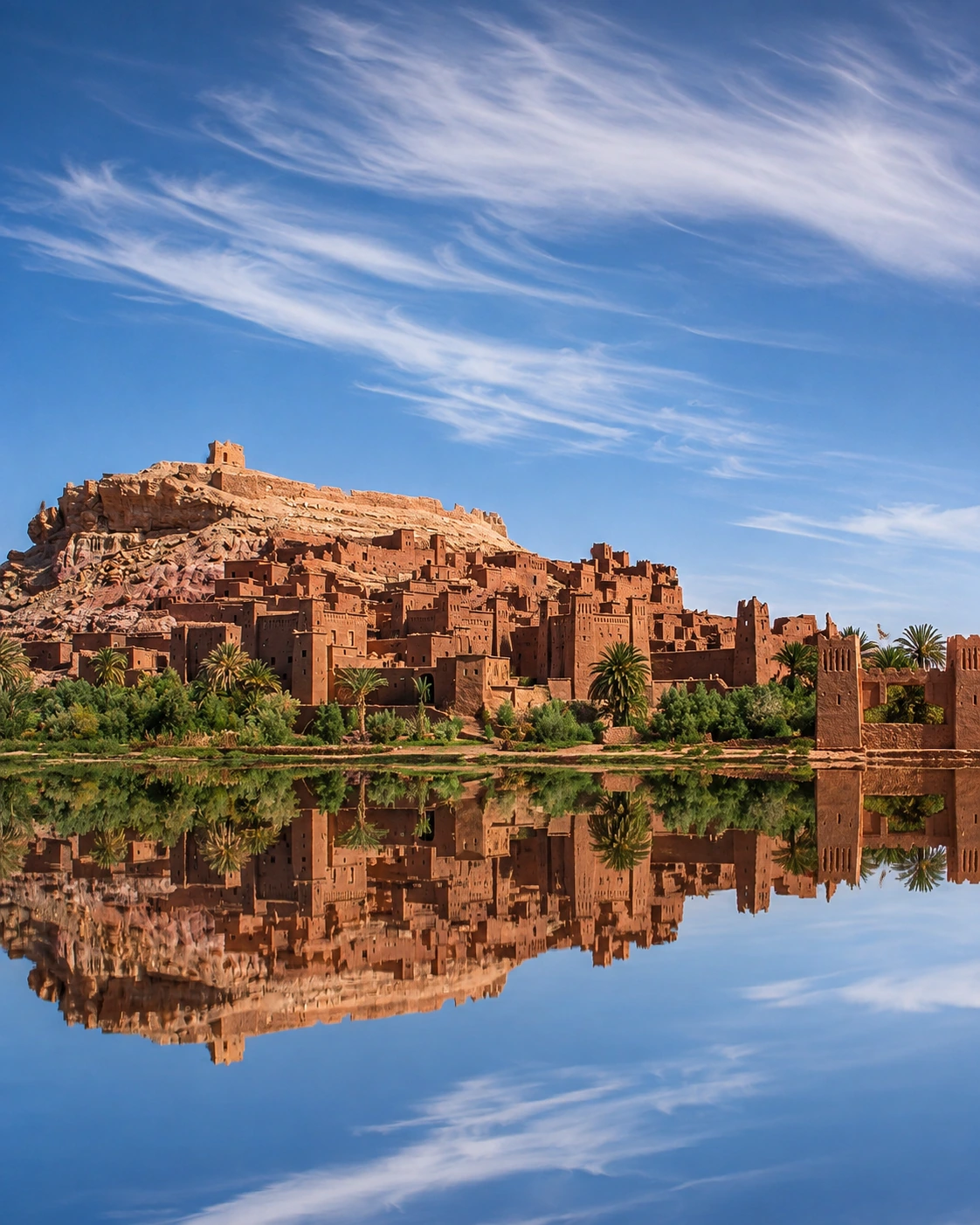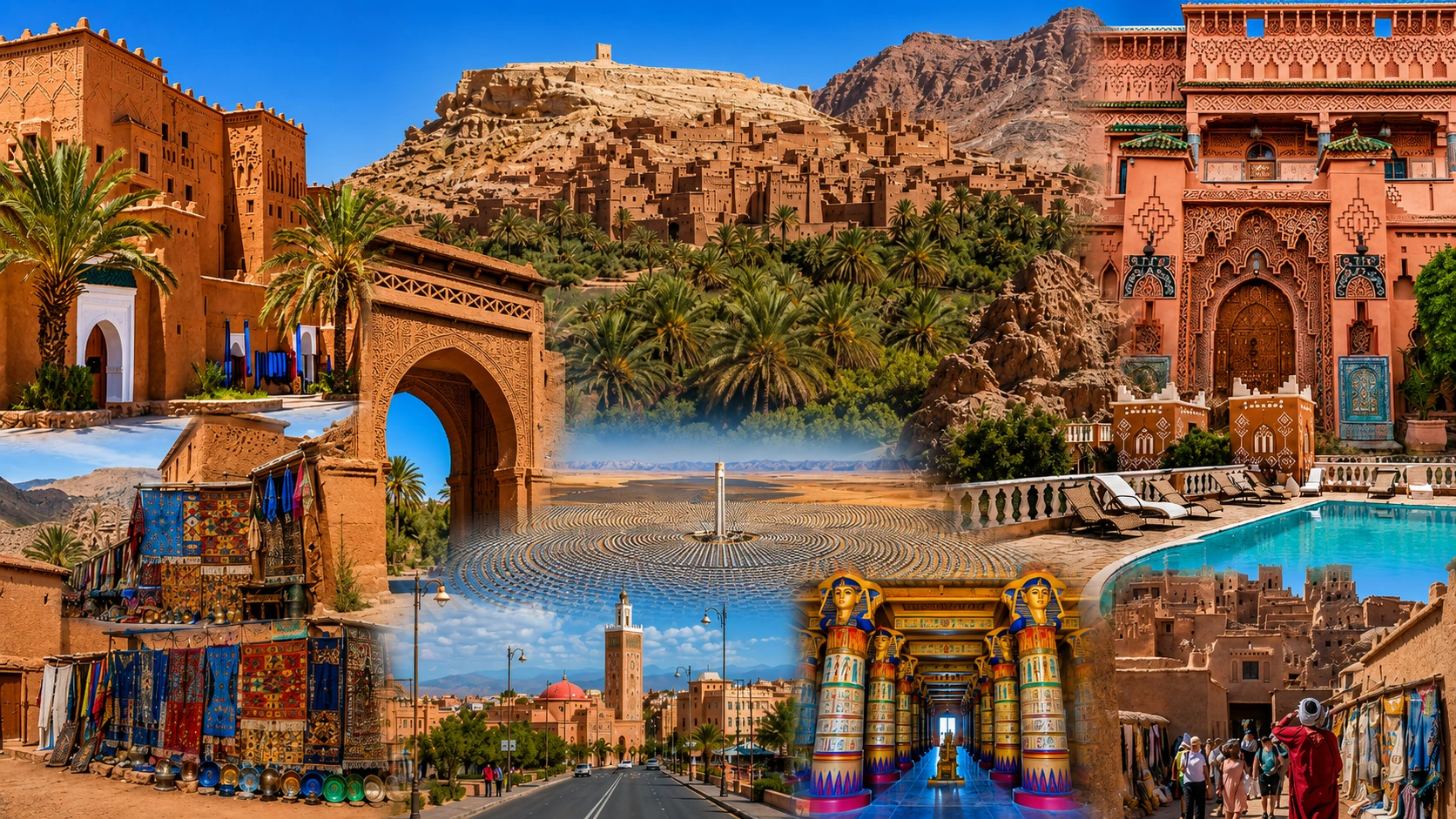
Collage of Ouarzazate, nearby kasbahs, oasis views, market texture and desert atmospheres

Southern Morocco gateway

Ouarzazate Kasbah light, film landscapes and routes toward the desert

Ouarzazate reads southern Morocco through earthen walls, studio sets, High Atlas routes and oasis valleys — a calm desert-edge city where journeys toward Aït Ben Haddou, Skoura and the Drâa begin with clear light.

Why Ouarzazate matters

Beyond the kasbah walls

Ouarzazate is not an imperial medina pretending to be older than it is. Its strength is different: a southern city of approach roads, earthen architecture, film production, desert light and routes that open toward Aït Ben Haddou, Skoura, the Drâa Valley and the wider Sahara corridor.

Seen well, the city becomes a threshold between worlds: the High Atlas behind it, palm valleys ahead of it, kasbahs in its memory and cinema in its contemporary identity. It rewards visitors who slow down before continuing south.
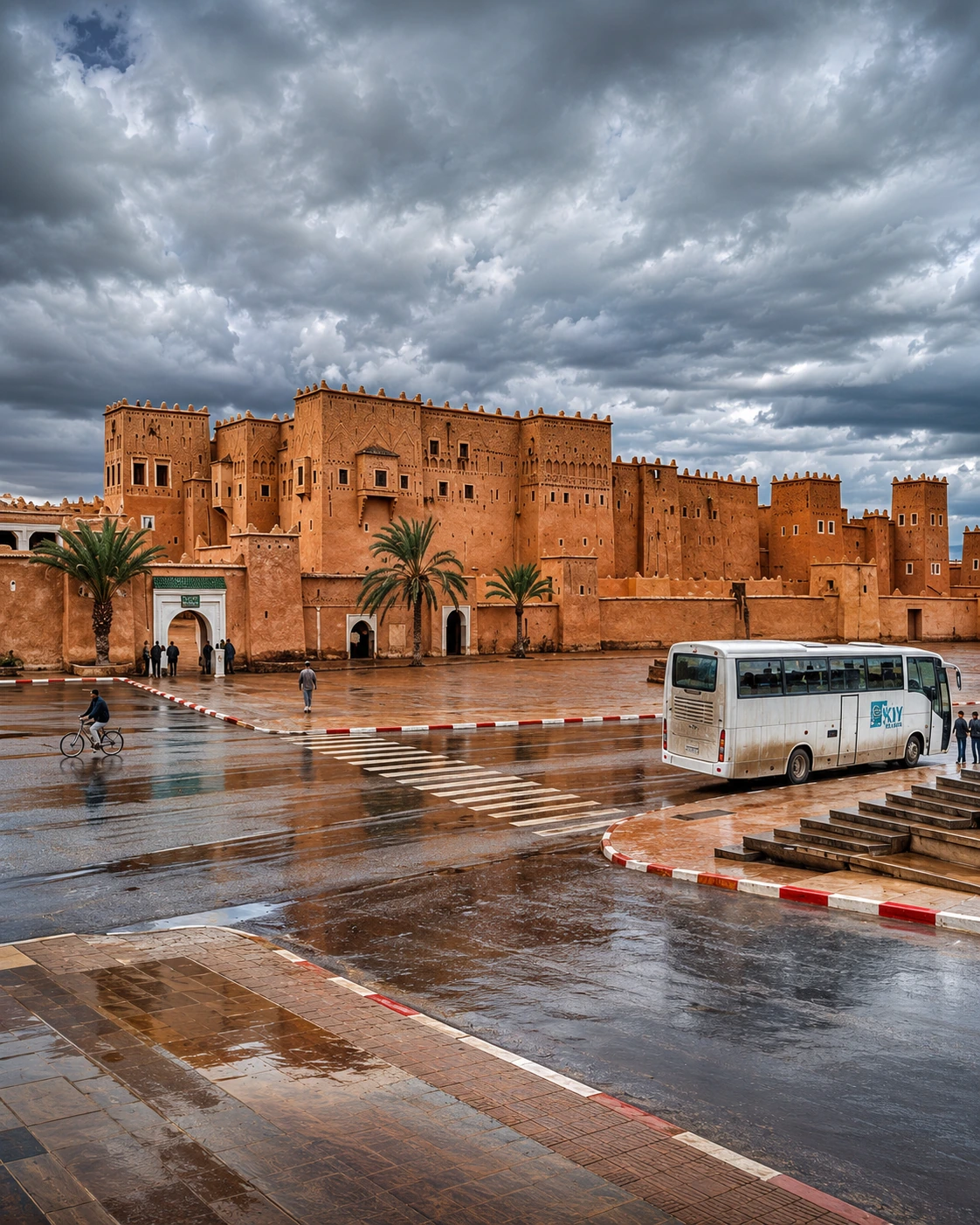
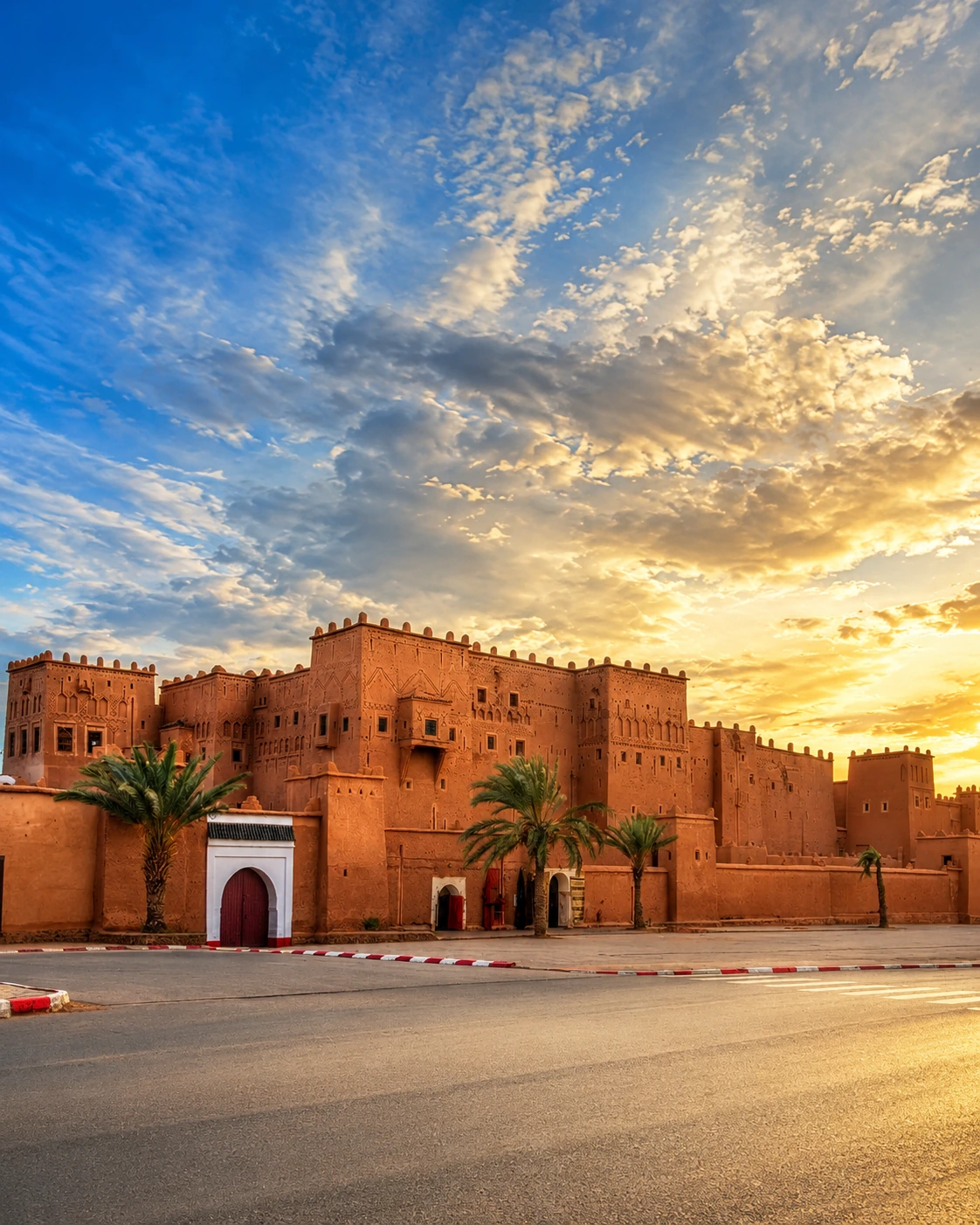
Taourirt Kasbah in Ouarzazate under dramatic storm clouds after rain

A gateway of routes and light

Ouarzazate is best understood as a meeting point: kasbah architecture, studio landscapes, market streets and oasis day trips held together by wide skies and warm earthen colour.

EXPLORE

Ouarzazate

Historical orientation

From southern strongholds to cinema landscapes

Ouarzazate’s story is layered through routes rather than a single monument. Its older regional memory belongs to trans-Atlas movement, fortified settlements and kasbah power; its modern reputation is tied to film studios, desert scenery and the nearby World Heritage ksar of Aït Ben Haddou.

01Route memory

Kasbah corridors

Earthen villages, fortified houses and oasis routes shaped the wider region long before Ouarzazate became known internationally.

02Taourirt Kasbah

City landmark

Taourirt Kasbah anchors the city’s architectural identity with its compact mass of towers, courtyards and southern earthen construction.

031983 onward

Film-studio era

Atlas Studios helped give Ouarzazate its film identity, turning surrounding desert light, sets and landscapes into part of Morocco’s cinematic geography.

04Since 1987

Aït Ben Haddou recognition

The nearby Ksar of Aït Ben Haddou is inscribed by UNESCO for its outstanding example of southern Moroccan earthen architecture.

A visual bridge

Three glimpses between kasbahs and desert routes

These images connect Ouarzazate’s identity: the earthen logic of fortified settlements, the manufactured worlds of cinema and the oasis edges that soften the desert approach.

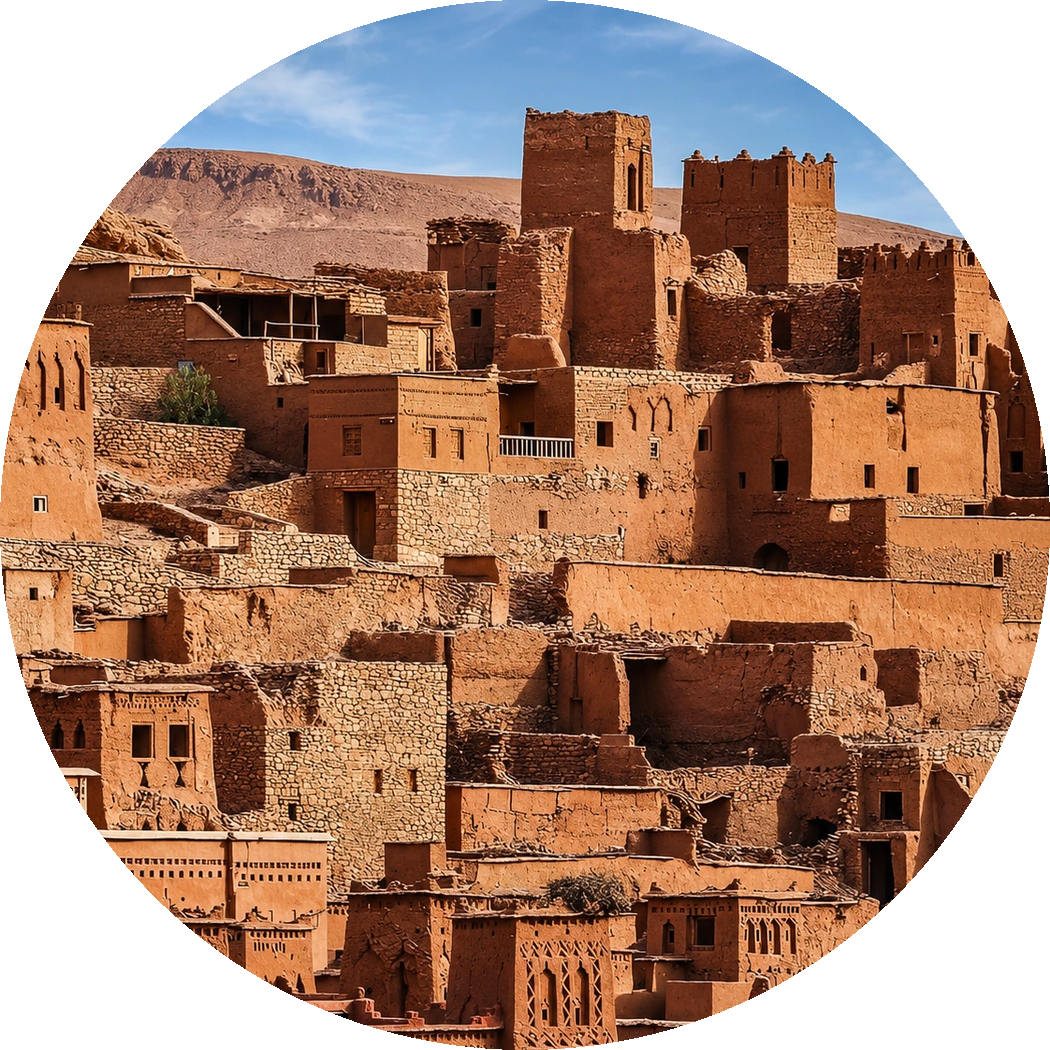
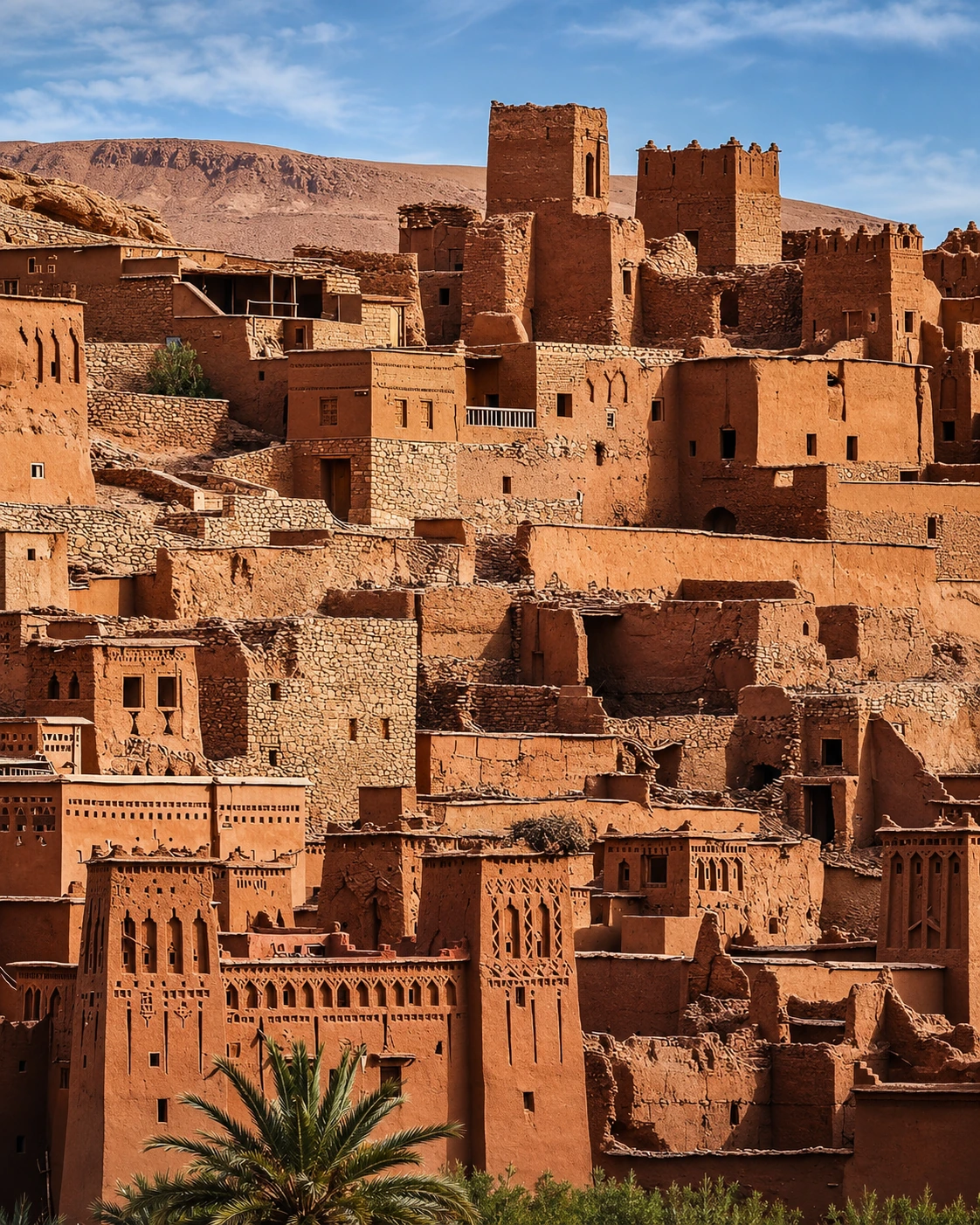
Close view of earthen houses and towers in the Ouarzazate region

Earthen architecture

Aït Ben Haddou and the kasbah valleys show how earth, sun and defensive form shape southern Morocco.

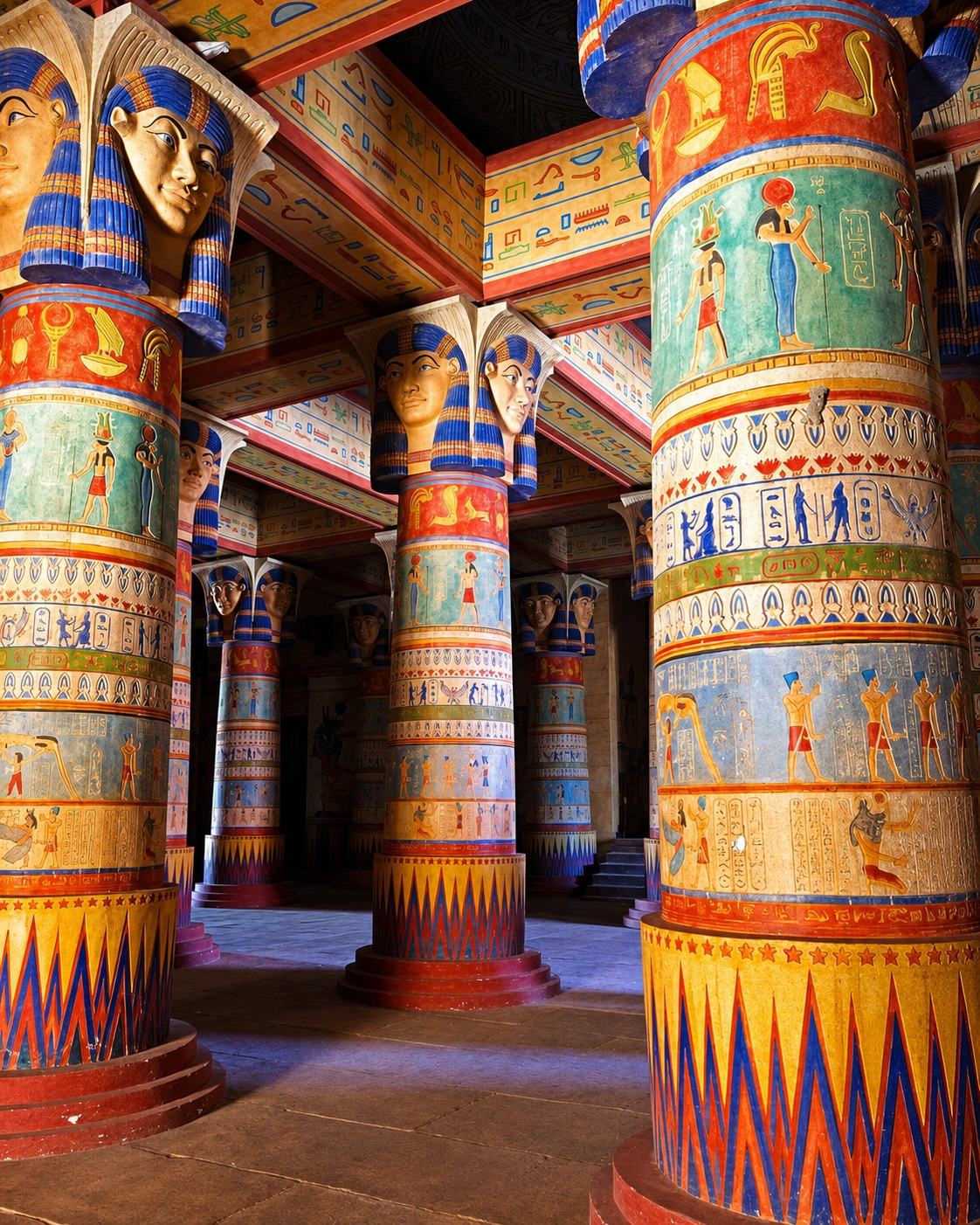
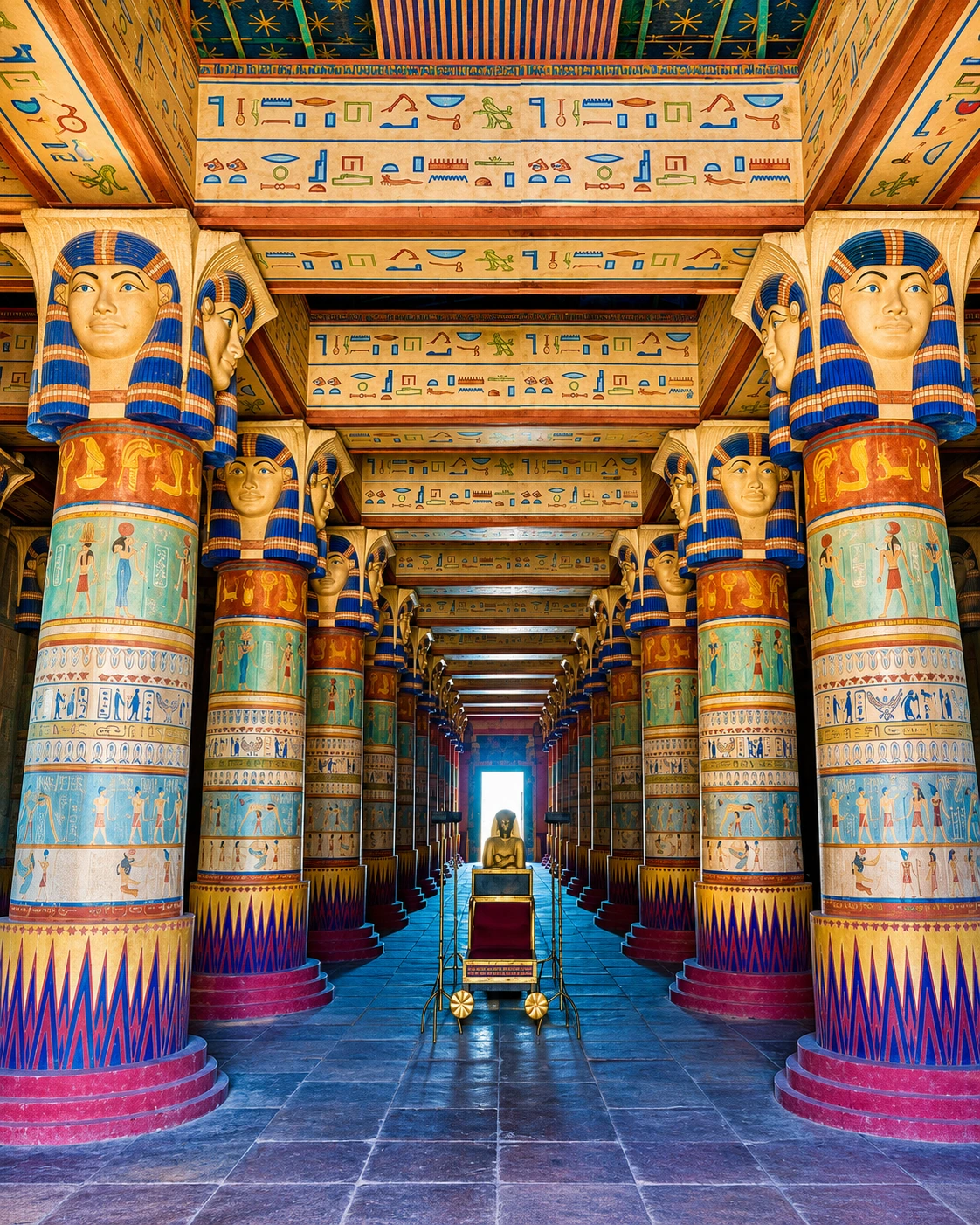
Colourful pharaonic-style film-set columns in Ouarzazate

Studio gates

Film sets around Ouarzazate turn desert light into staged cities, palaces and imagined worlds.

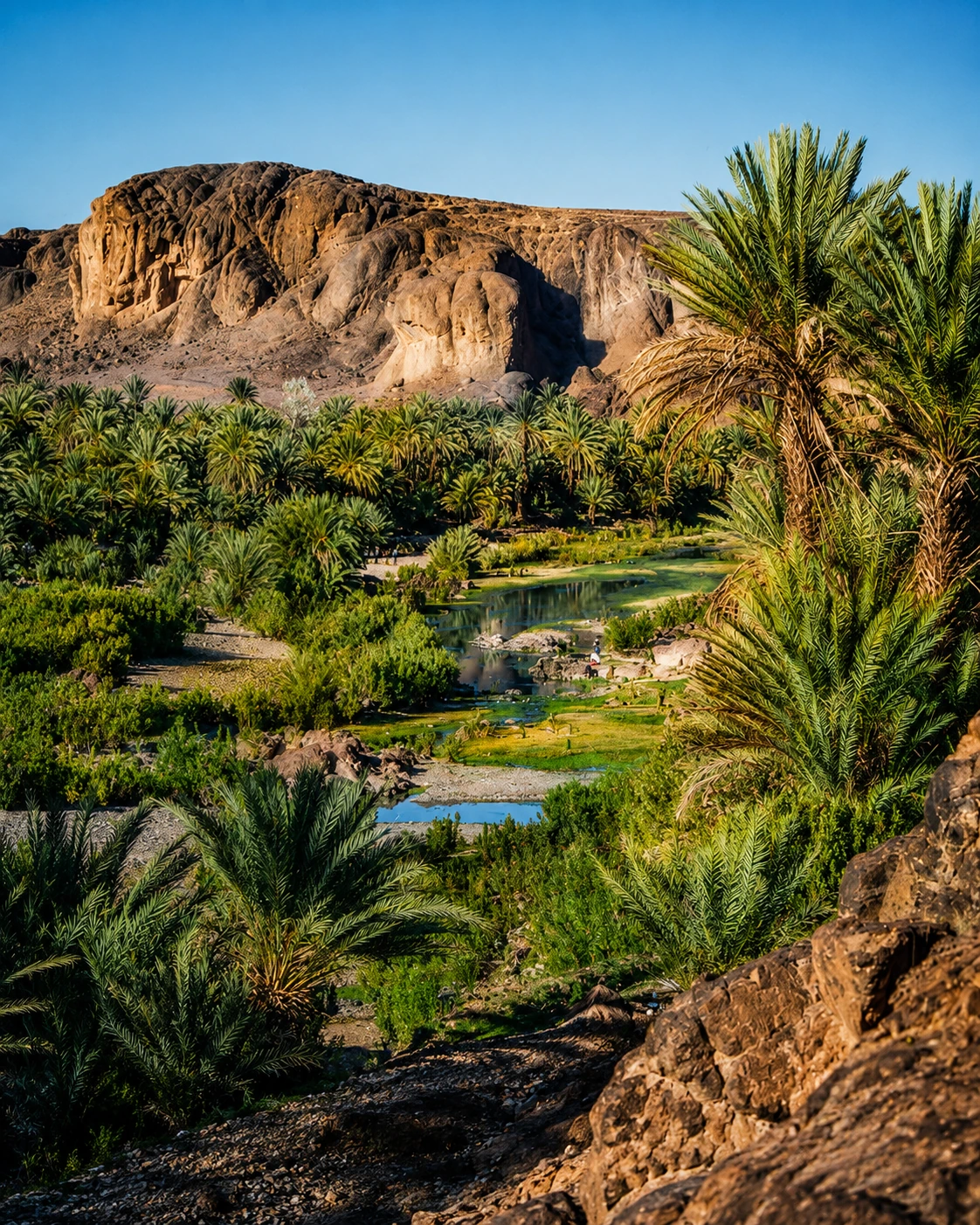
Palm-filled oasis landscape near Ouarzazate framed by rocky hills

Oasis edges

Fint and nearby palm valleys bring water, shade and settlement into a hard mineral landscape.

Ouarzazate at a glance

Southern gateway

Ouarzazate sits at the meeting of major southern routes, where journeys from the High Atlas continue toward the kasbah valleys, palm groves and desert-edge landscapes.

Kasbah identity

Taourirt Kasbah gives the city its clearest architectural anchor, while Aït Ben Haddou and Skoura extend that earthen language into the surrounding region.

Cinema geography

Atlas Studios and the wider film landscape have made Ouarzazate a reference point for Moroccan and international productions using desert light, sets and open space.

Oasis access

Fint Oasis, Skoura and the Drâa route help visitors understand that the city is not only a stopover, but a base for reading southern Morocco carefully.

A clearer reading of the city

A city shaped by routes, production and oasis horizons

To understand Ouarzazate, read kasbah form, working streets and cinematic space together. The city is not only an overnight point on the way to the desert; it is where southern architecture, regional movement and image-making meet.

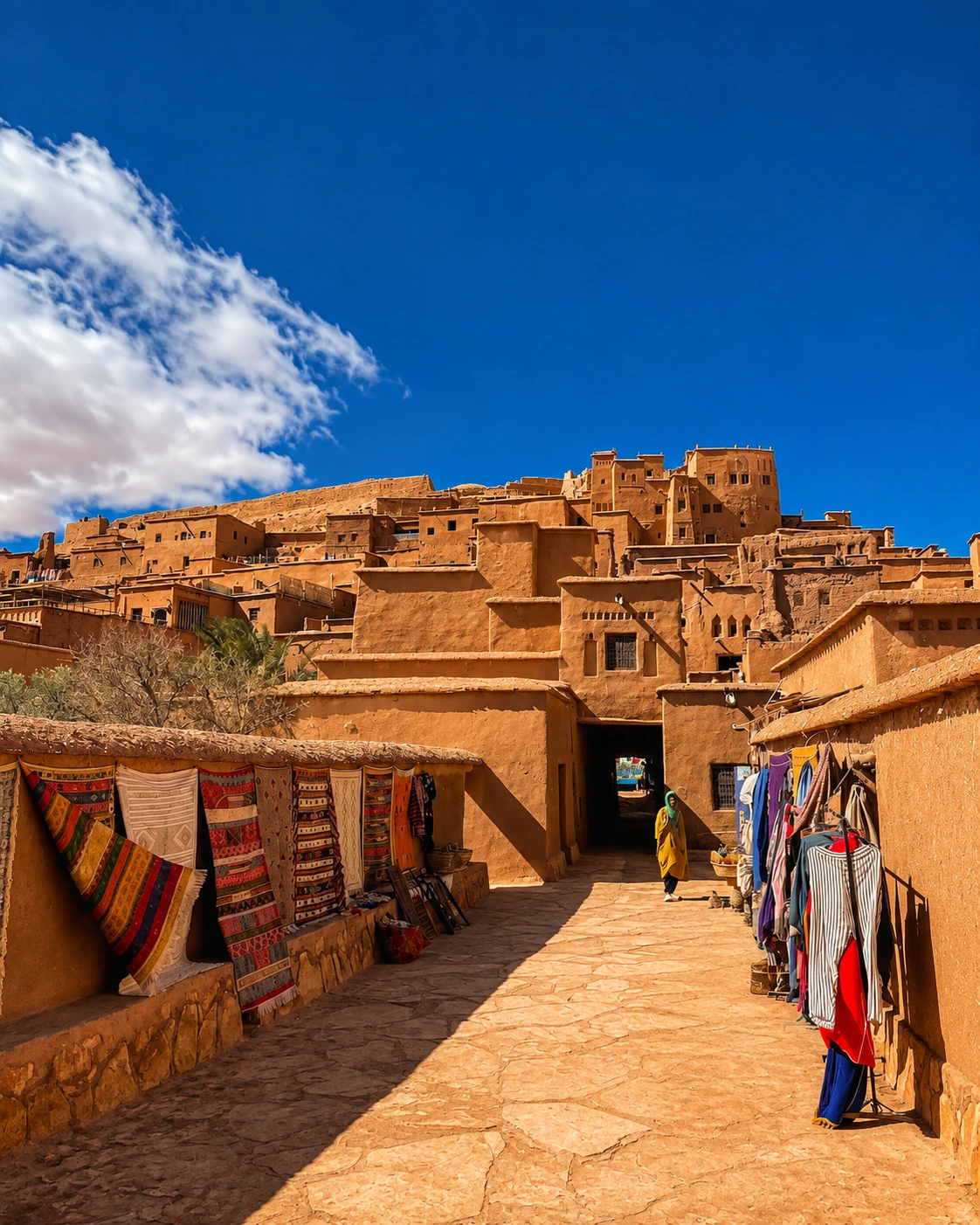
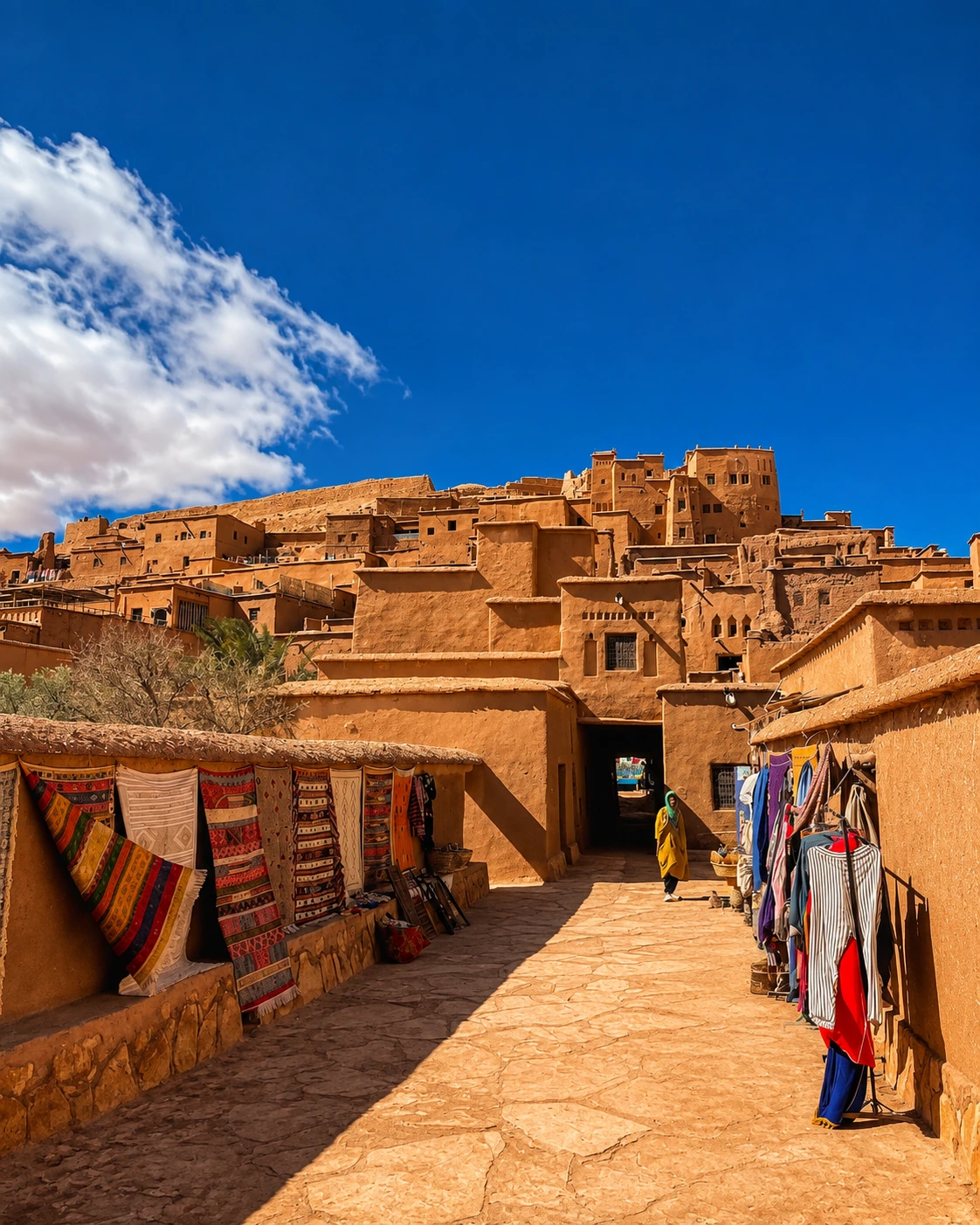
Kasbah lane with textiles and earthen architecture in the Ouarzazate region
Layer 1

Earthen architecture

Kasbahs, ksour and pisé walls carry the region’s architectural memory, from Taourirt to nearby Aït Ben Haddou and the palm-grove settlements beyond.

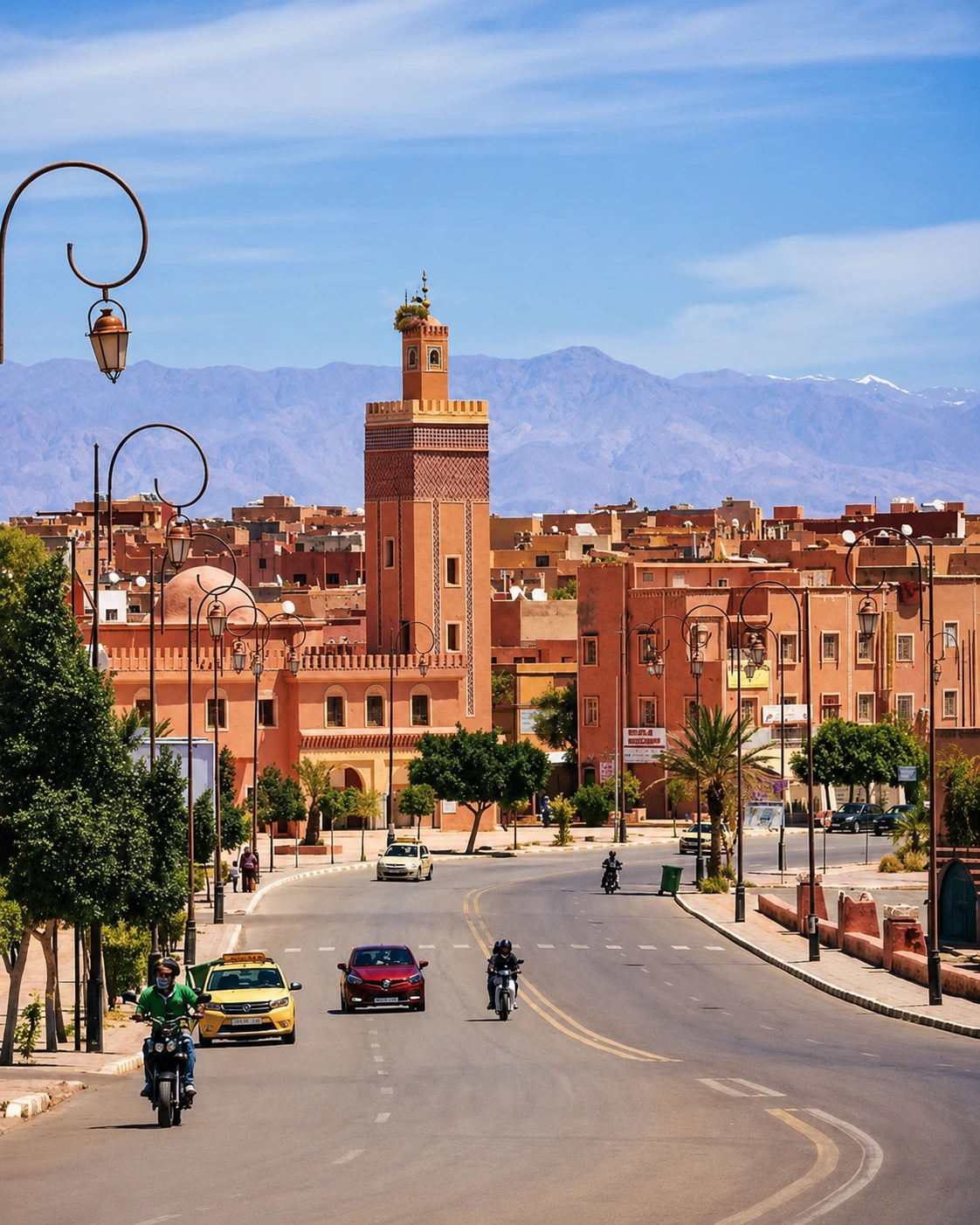
Ouarzazate town avenue with mosque and mountain backdrop
Layer 2

Route city

Streets, cafés, hotels, markets and busier approach roads reveal Ouarzazate as a practical travel hinge between Marrakech, the Atlas and the southern valleys.

Symmetric pharaonic-style film-set hall in Ouarzazate
Layer 3

Film and local texture

Studio gates, market stalls, crafted objects and everyday movement show how the city lives between production, visitor routes and ordinary southern urban rhythm.

Landmarks & orientation

Read Ouarzazate through six defining places

No single place explains Ouarzazate. These six references show the city as a kasbah landmark, film base, market town and launch point for oasis and earthen-architecture routes.

1
Taourirt Kasbah

The city’s signature earthen landmark, a compact mass of towers, passages and southern architectural memory.

2
Atlas Film Studios

A major film-studio landscape where built sets and desert light explain Ouarzazate’s modern “cinema city” identity.

3
Ouarzazate market streets

Everyday movement, small shops and shaded stalls keep the city grounded beyond its monuments and excursions.

4
Aït Ben Haddou

A nearby World Heritage ksar whose earthen architecture and hillside form are central to the region’s image.

5
Fint Oasis

A palm oasis close to the city, offering a quieter reading of water, settlement and volcanic-looking hills.

6
Skoura Palm Grove

A major oasis landscape of palms and kasbahs, useful for understanding the wider route east of Ouarzazate.

Earthen kasbah buildings rising in layers in the Ouarzazate region
Taourirt Kasbah in Ouarzazate at sunset

An earthen landmark

Taourirt Kasbah — Ouarzazate’s architectural anchor

Taourirt Kasbah gives Ouarzazate a strong, readable center: earth-coloured walls, towered volumes, shadowed openings and the memory of southern power arranged close to the modern city. It should not be treated as a quick exterior photograph. Its value is in scale, texture and the way it introduces the kasbah landscapes that continue beyond the city.

  • Pisé and earthen surfaces connect the city to the wider architecture of southern Morocco.
  • Towers, courts and thresholds show how fortified domestic and political space was organised.
  • Its position makes Ouarzazate feel like a gateway rather than a simple transit stop.

Architectural reading

Three architectural languages to notice

Earth and shadow

Ouarzazate’s strongest visual language is earthen: thick surfaces, squared towers, warm walls and small openings designed for heat, light and enclosure.

Sets and illusion

Studio architecture adds another layer. Around Ouarzazate, façades and built worlds show how cinema borrows from desert forms while creating temporary places of its own.

Palm and stone contrast

The wider region shifts quickly between kasbah walls, palm valleys and stony hills. That contrast is what makes the city’s excursions feel so distinct.

Visual atmosphere

Light, earth and long horizons

Nearby highlights

Nearby heritage and landscape

Ouarzazate works best when it is connected to the landscapes around it: Aït Ben Haddou for World Heritage earthen architecture, Skoura for palm-grove kasbahs, and Fint Oasis for a quieter meeting of water, rock and settlement.

Aït Ben Haddou

A fortified earthen ksar on the Ounila route, inscribed by UNESCO and best read slowly for architecture, settlement form and landscape setting.

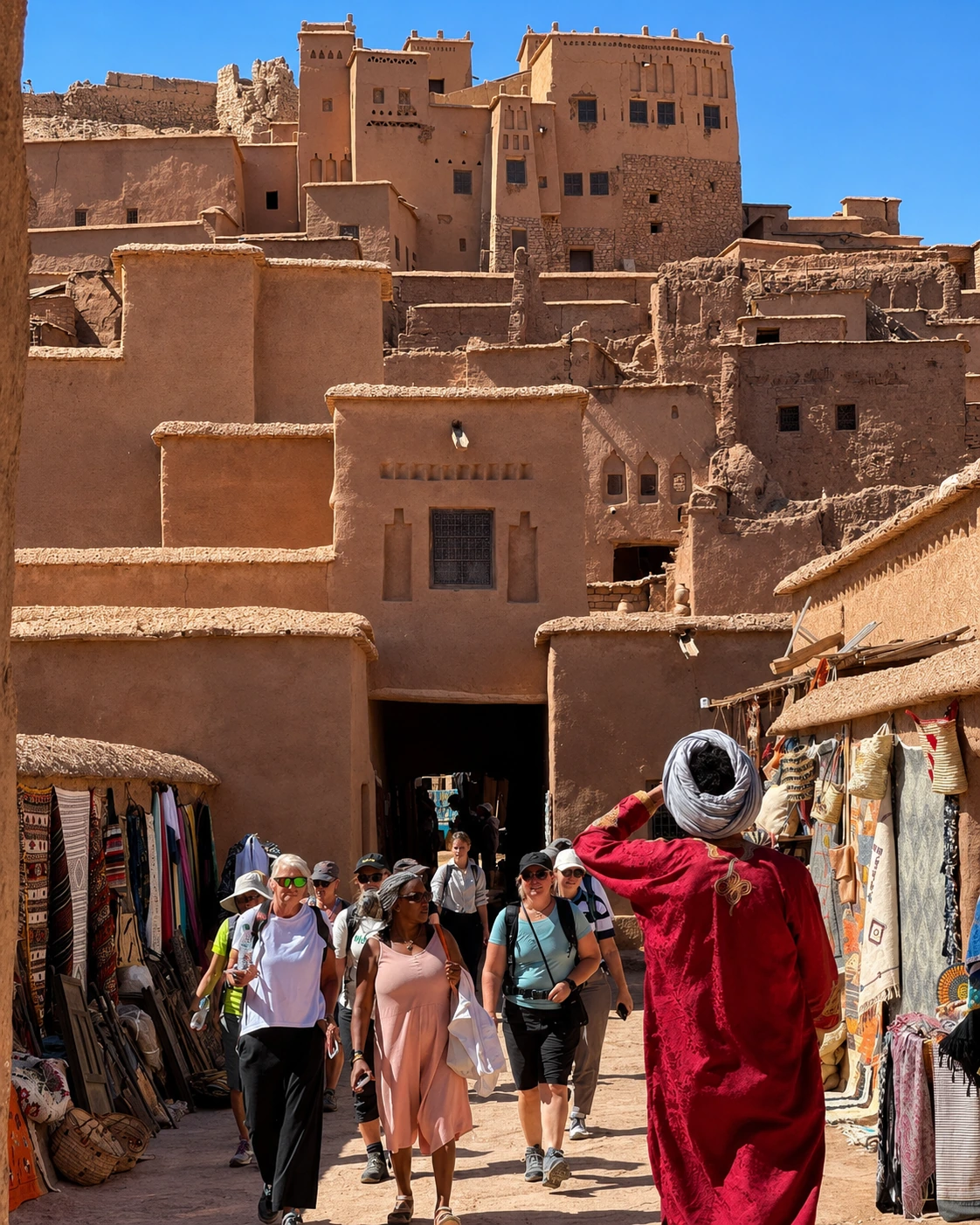
Tourists walking through an earthen kasbah street near Ouarzazate

Skoura Palm Grove

An oasis landscape where palms, kasbahs and earth-coloured houses show the green counterpoint to the desert approach.

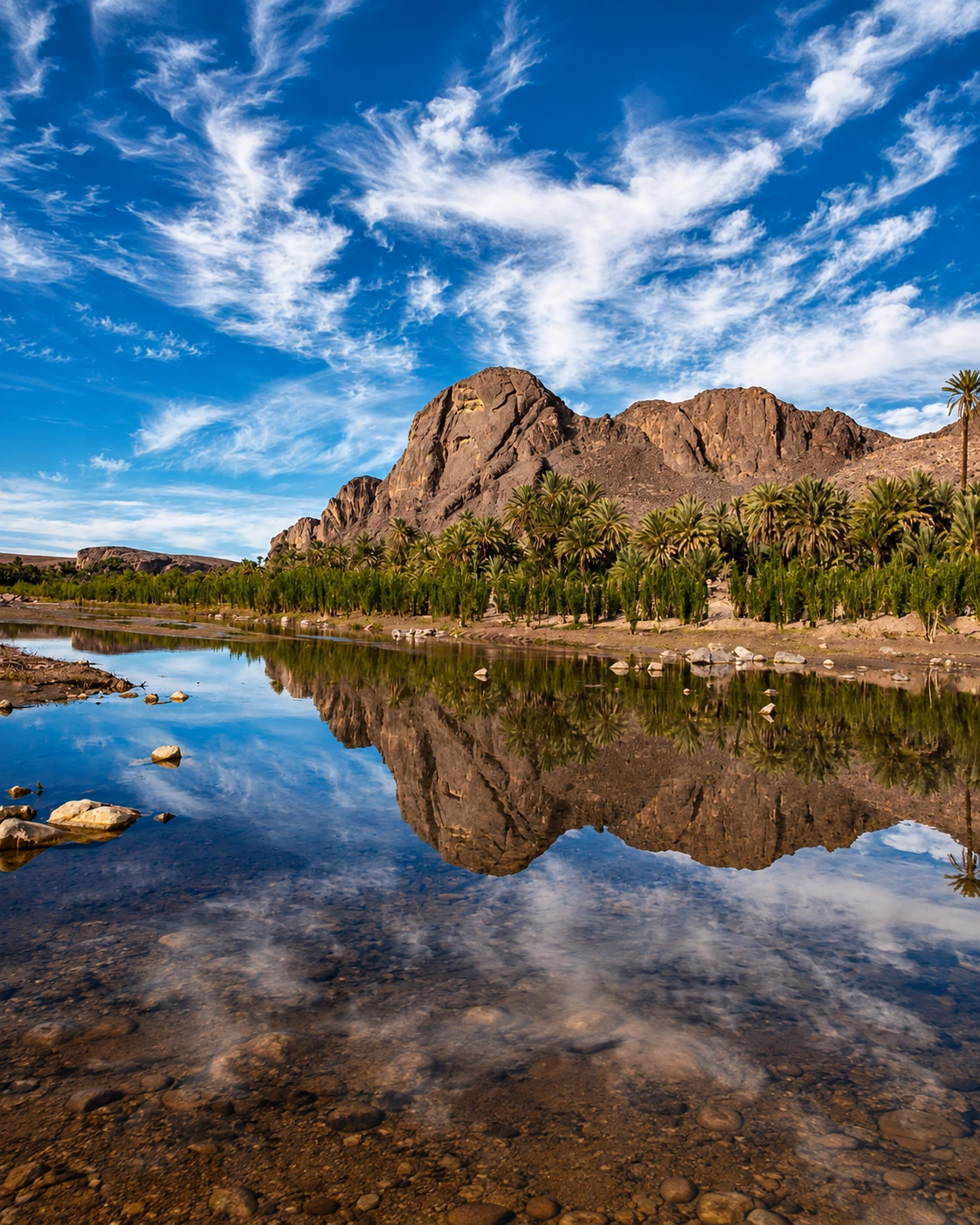
Reflective oasis and mountain landscape near Ouarzazate

Fint Oasis

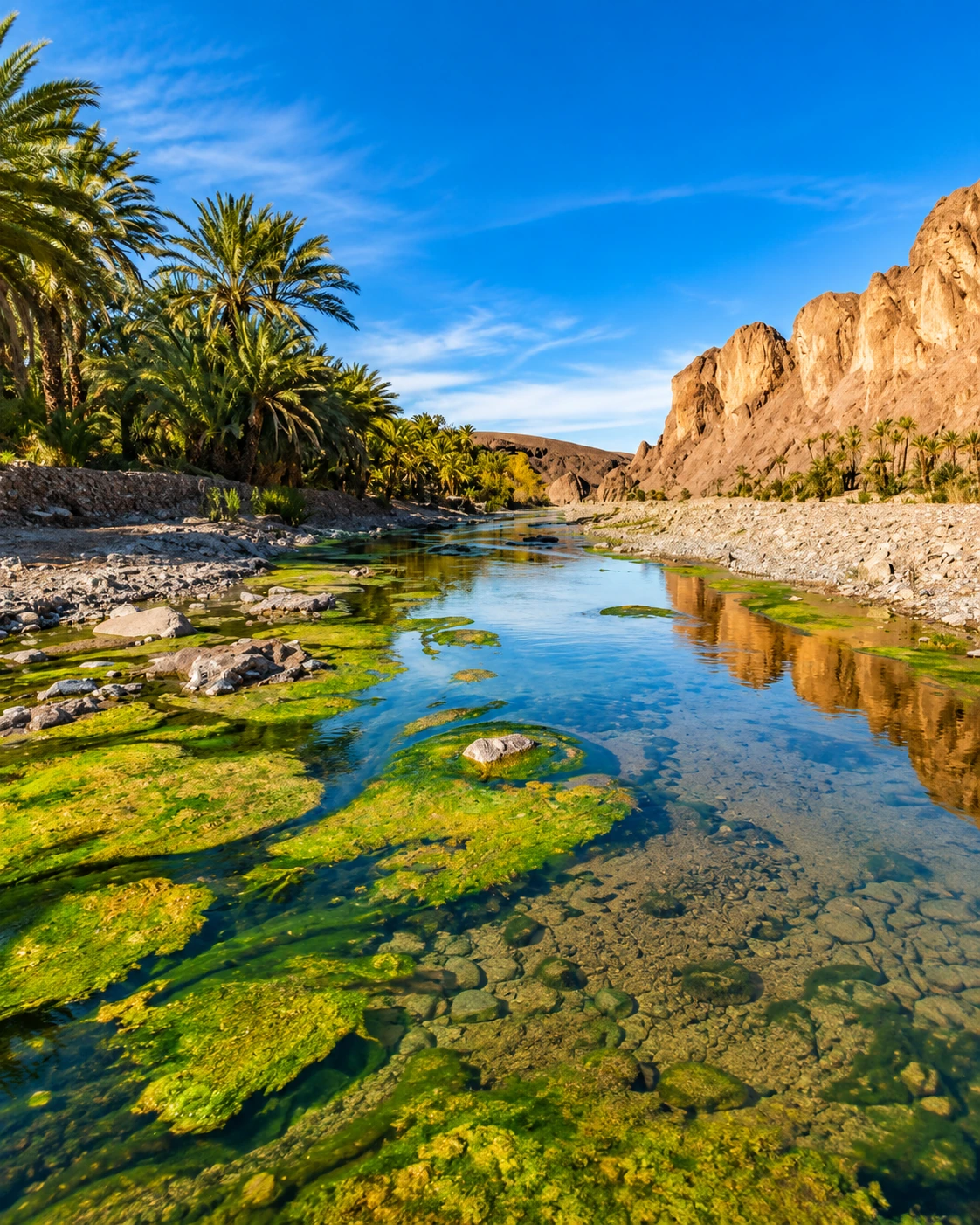
A close excursion from Ouarzazate, with palms, water and dark rocky hills giving the city’s surroundings a softer, more intimate scale.

Clear river and palms between rocky slopes near Ouarzazate
Travel note: opening hours, access rules, restoration work, transport conditions and local visitor arrangements can change. Check current official or trusted local information before travelling.

Practical orientation

How to experience Ouarzazate well

  • Start with Taourirt Kasbah before leaving the city for longer valley routes.
  • Choose one nearby direction at a time: Aït Ben Haddou, Skoura, Fint Oasis or the Drâa route.
  • Treat travel distances seriously; southern Morocco rewards unhurried planning.
  • Use early and late light for kasbahs, palms and desert-edge landscapes whenever possible.
  • Leave space for market streets and ordinary city rhythm, not only film studios and day trips.

A strong first visit

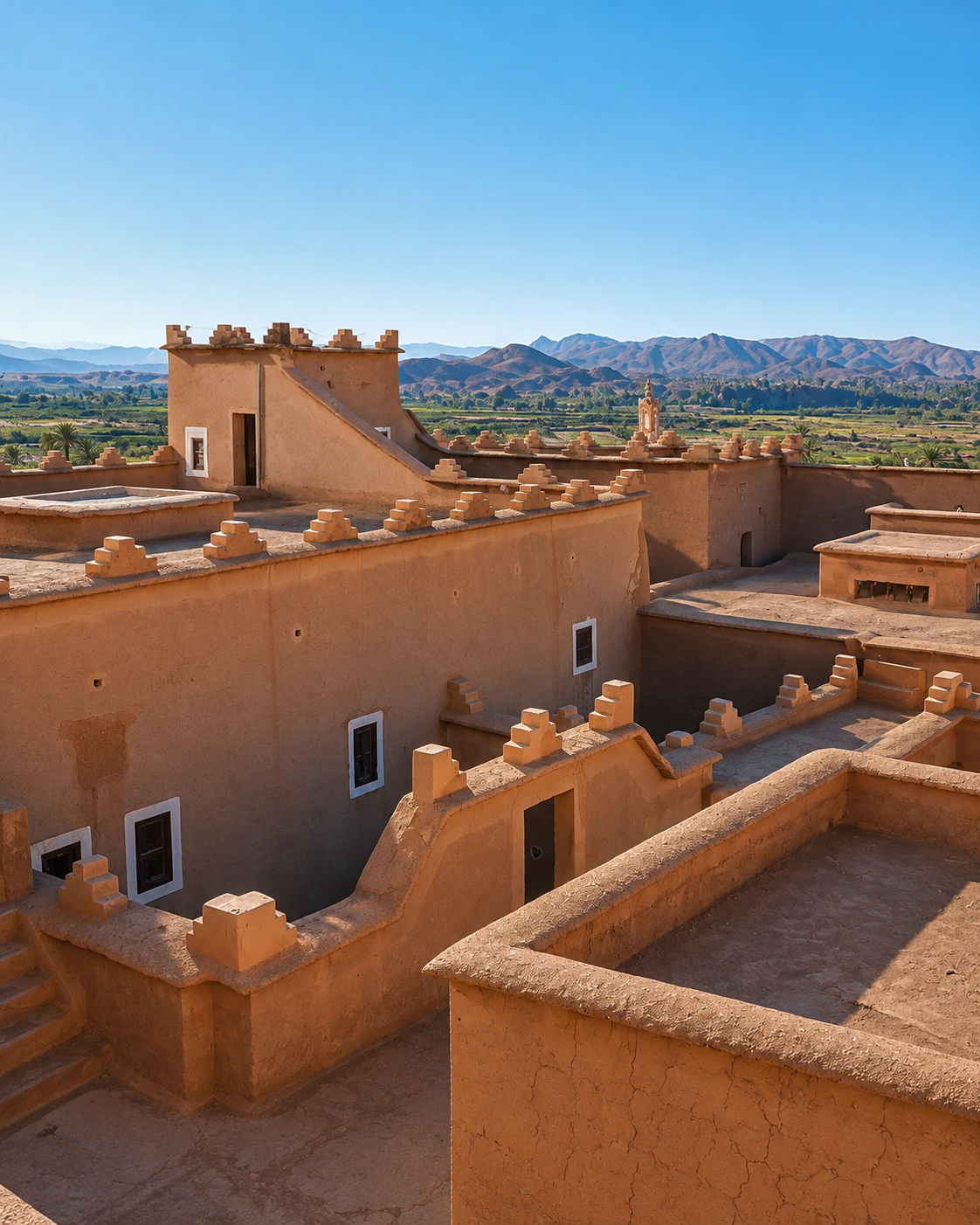
Earthen rooftop terraces with mountain views near Ouarzazate

Begin with Taourirt Kasbah and the nearby city center, then choose one focused extension: Aït Ben Haddou for earthen architecture, Fint for oasis quiet or Skoura for palm-grove kasbahs. Ouarzazate is strongest when treated as a southern base, not a rushed checkpoint.

Aït Ben Haddou reflected in still water near Ouarzazate

Go deeper with Exotic Morocco

Ouarzazate — Premium Visual City Guide

Continue with a complete visual publication designed to connect Ouarzazate’s kasbah architecture, cinema landscapes, oasis routes, practical orientation and nearby heritage into one carefully structured journey.

✓ Kasbah context✓ Essential landmarks ✓ Film landscapes✓ Oasis routes ✓ Practical travel guidance✓ Nearby highlights

Continue the journey

Continue the journey through Ouarzazate

Look beyond the kasbah and encounter a city of desert-edge light, film scenery, oasis routes and southern architecture that continues into the valleys around it.