Skip to learning
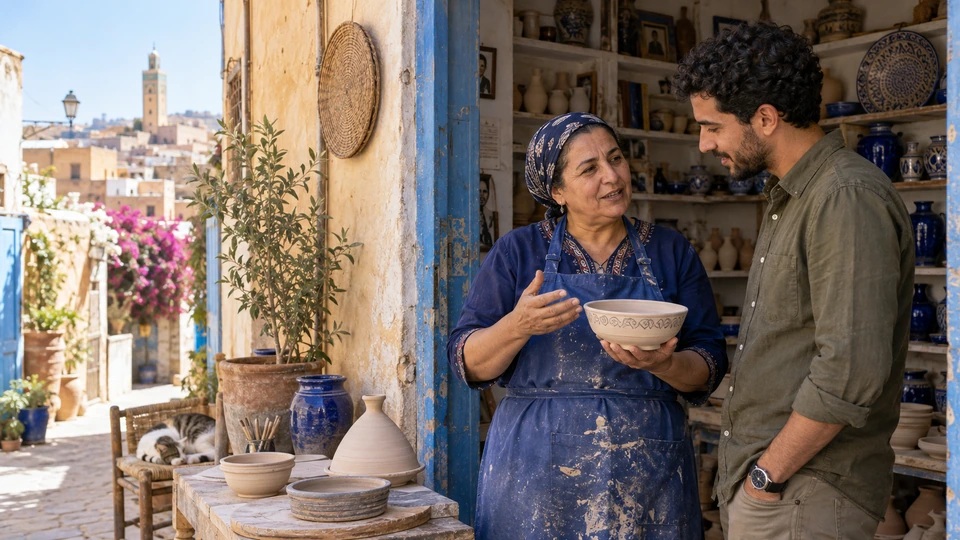
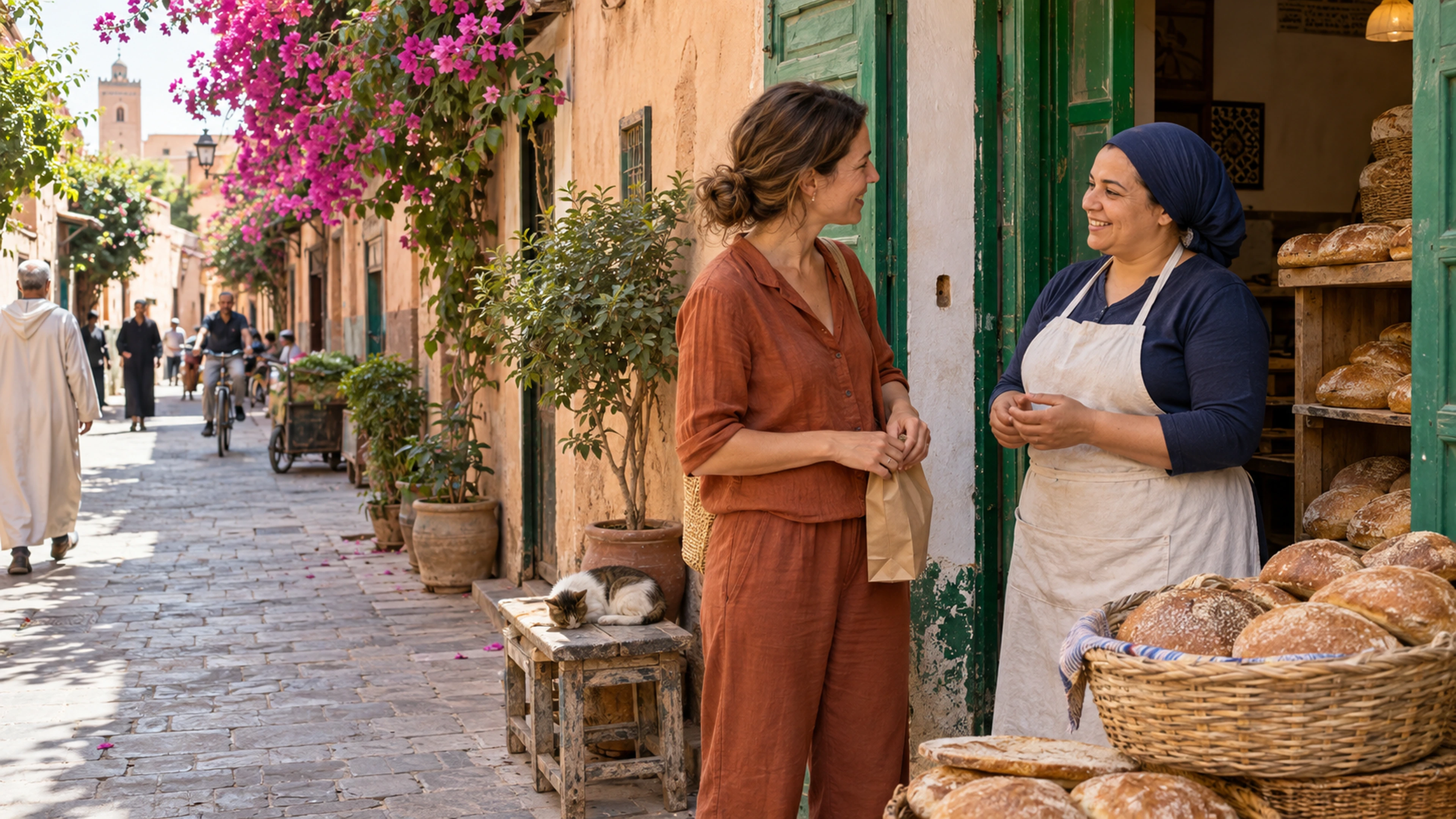
Listening is part of the language of an everyday encounter. Editorial illustration.
Conversation begins with attention

Language & Respect

Good conversation begins with attention. Explore Morocco’s multilingual settings without assuming that appearance tells you how someone speaks.

Exotic Morocco · 10 minute read
01 / A way into the story

Begin with the person in front of you.

Arabic and Amazigh are Morocco’s official languages. Everyday conversations may involve Moroccan Arabic, an Amazigh variety, French, Spanish or other languages, depending on the people and setting. A national language overview cannot predict an individual’s preference.

Courtesy is less about displaying a memorised phrase than creating space for an answer. Greet, ask which language is comfortable and accept correction. If you do not understand, slowing down together is more useful than pretending.

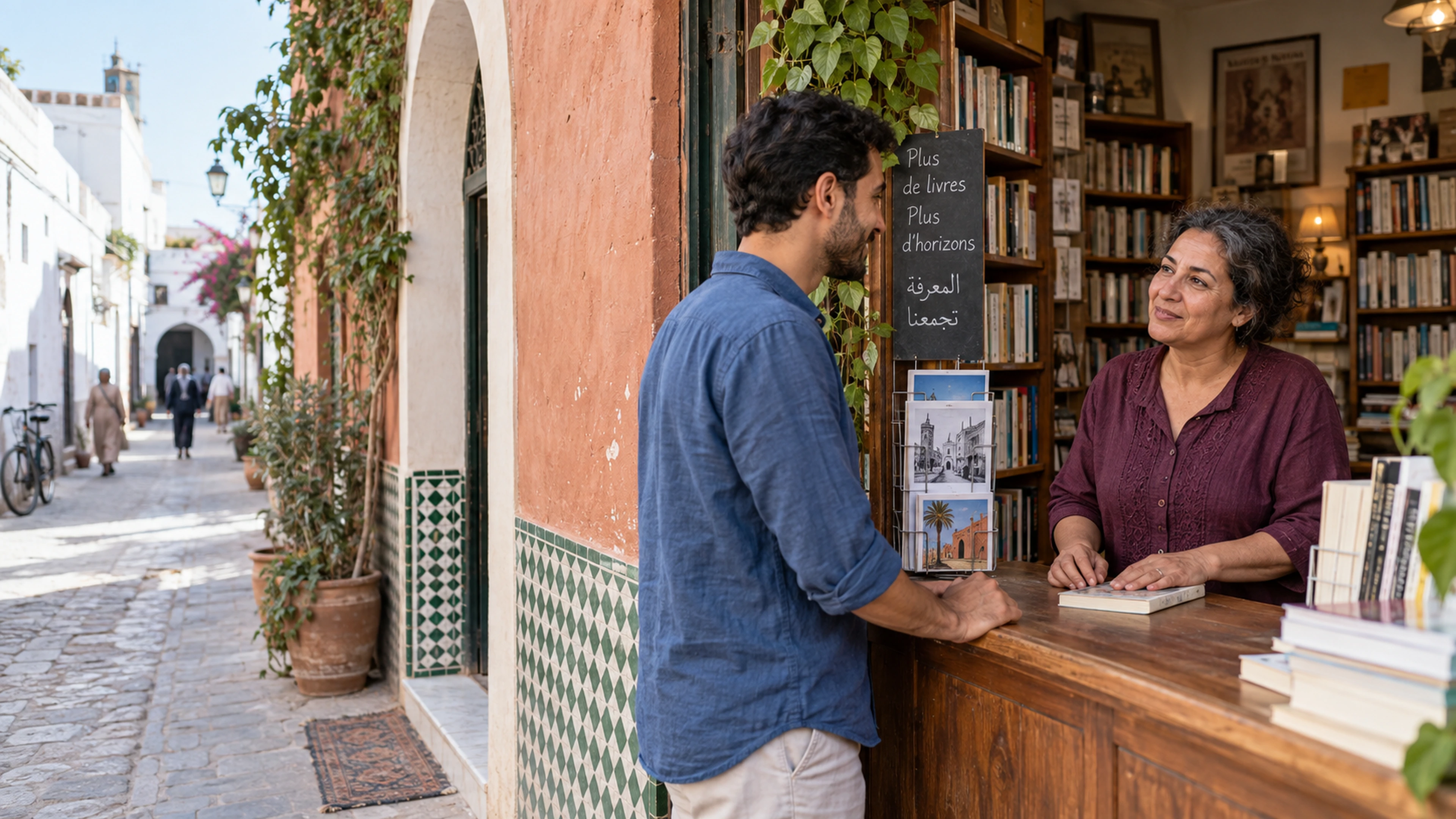
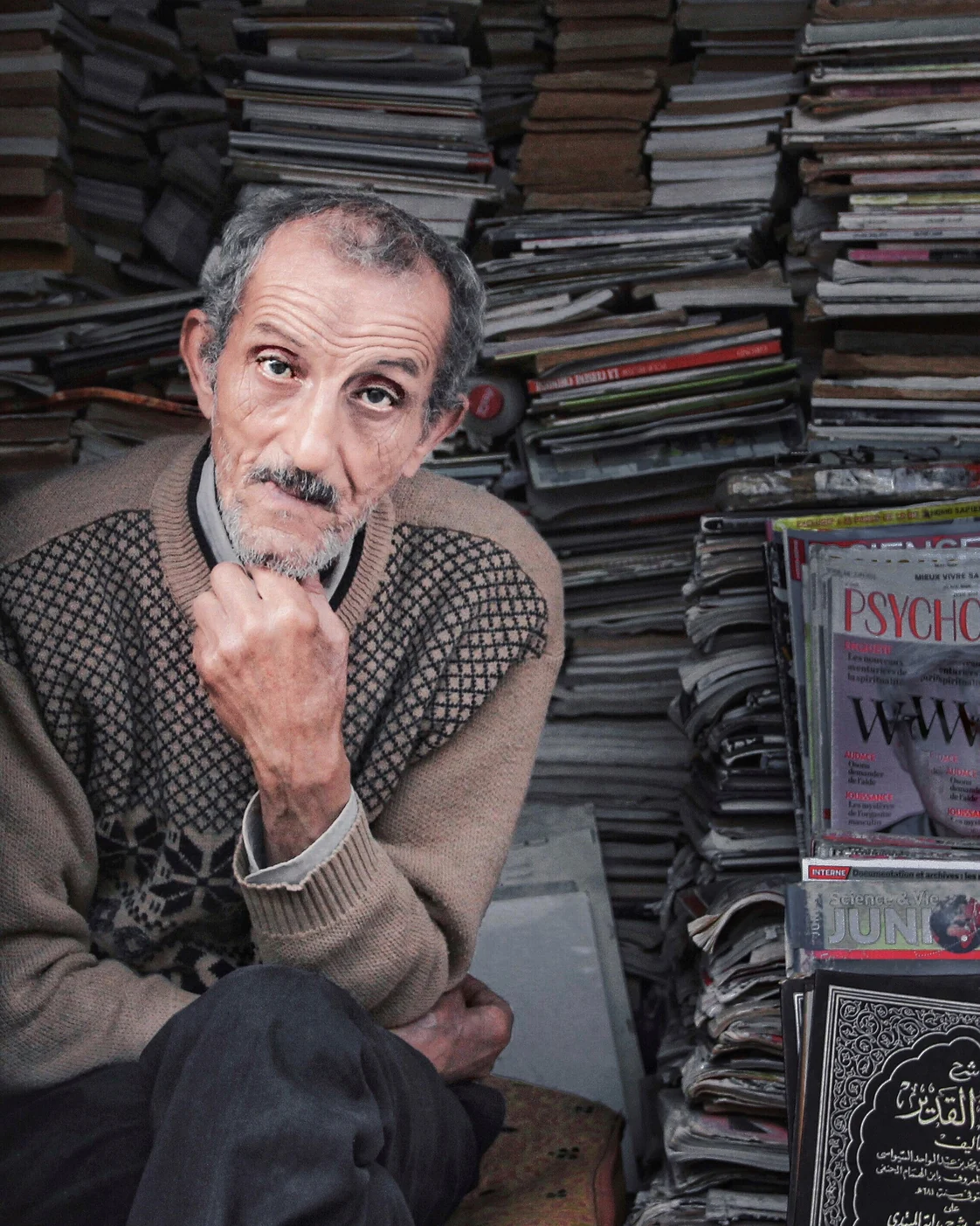
El Abdi, a second-hand bookseller photographed in Rabat.
THE SUBJECTConversation begins with attention
THE APPROACHPlace. Practice. People.
THE CONNECTIONFind it in Morocco ↗
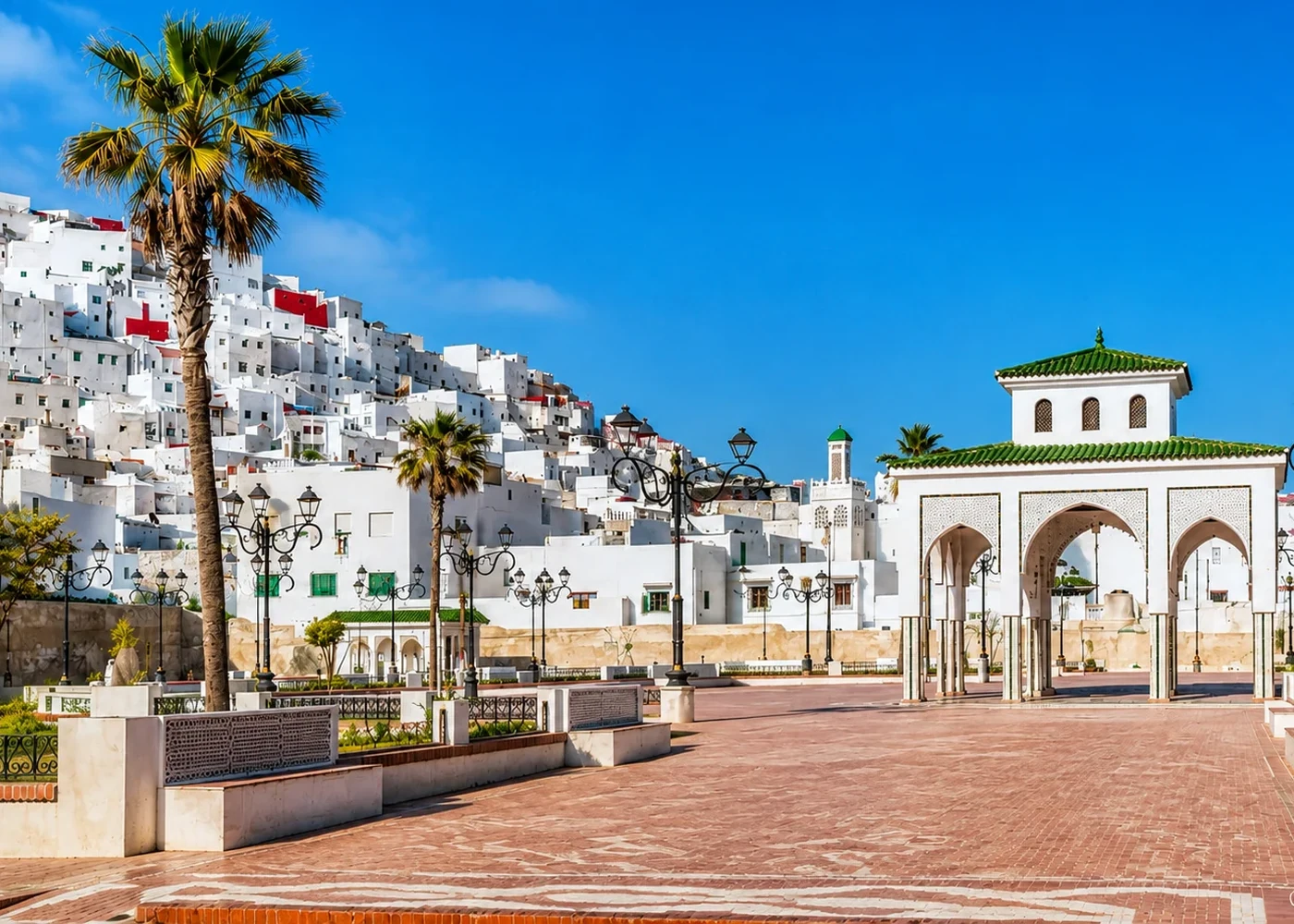
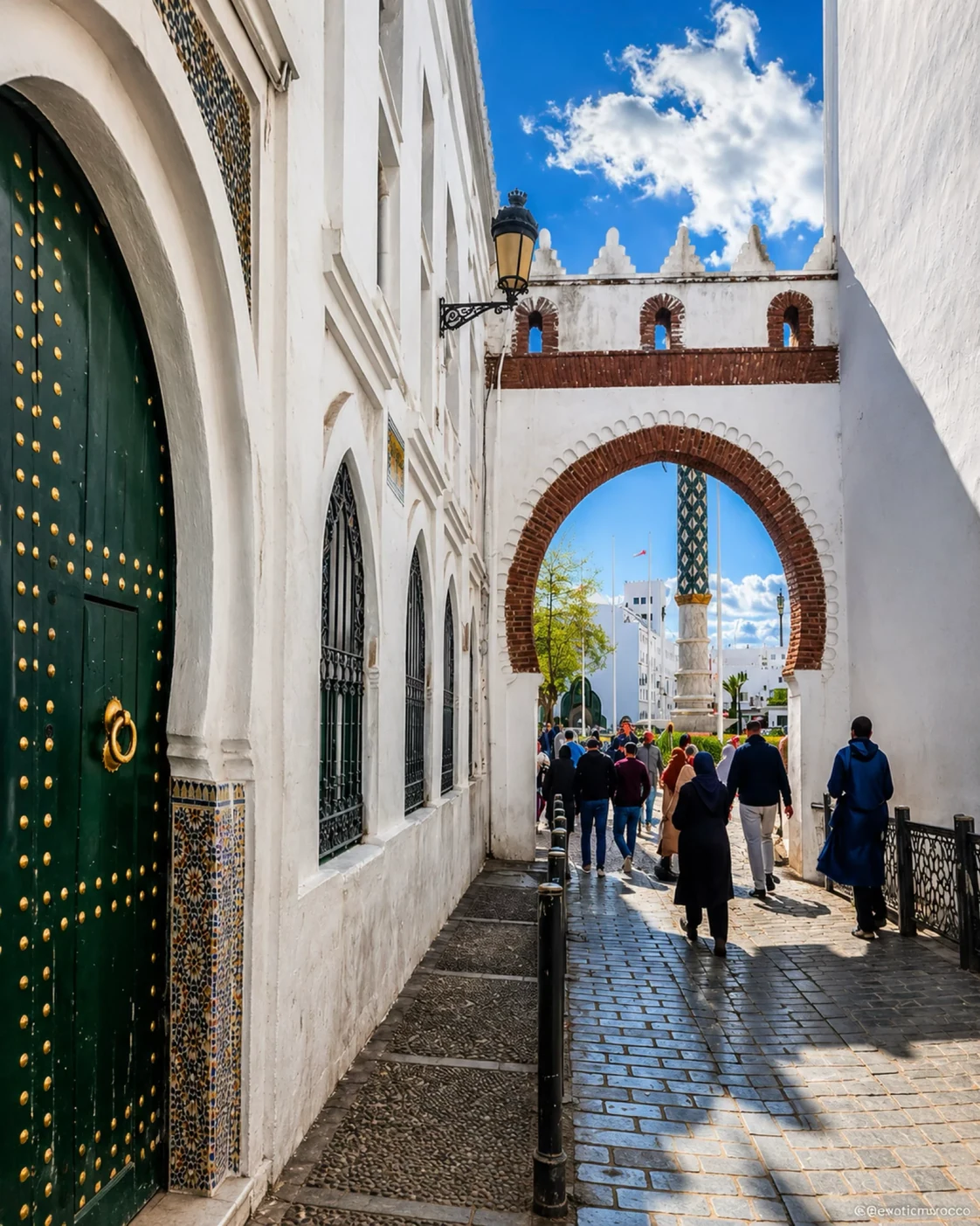
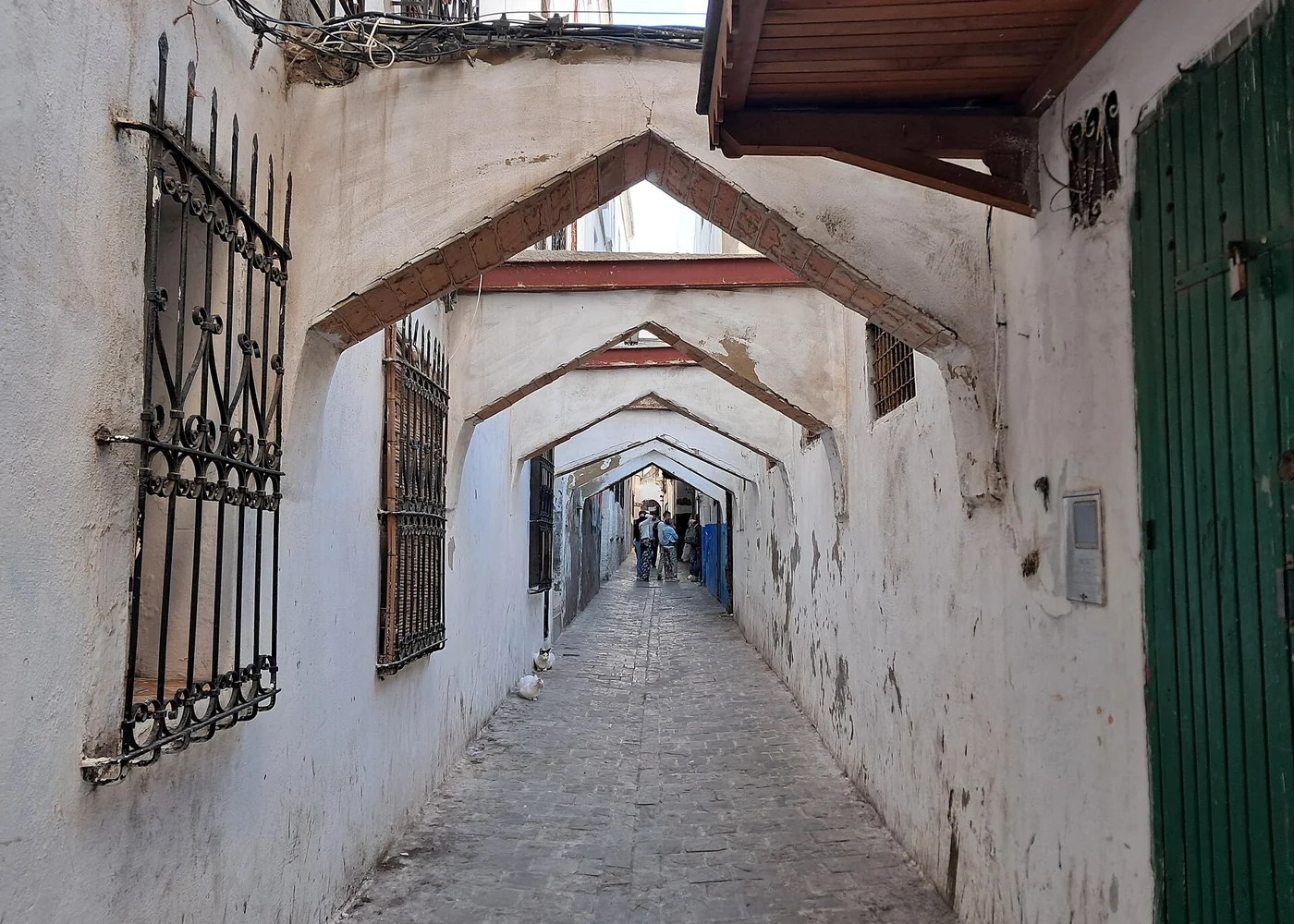
A passage in Tétouan: shared space in daily use.
02 / The deeper context

The words matter.
So does the encounter.

Language in Morocco is a living repertoire rather than a single code used in every situation. Darija, Amazigh languages, Modern Standard Arabic, French and other languages enter different conversations in different ways. A person may move between them according to setting, relationship, education or preference. The presence of one language on a sign does not tell you which language someone wishes to use with you.

Respect begins with attention to that choice. A greeting in Darija can be a warm opening, but the aim is communication rather than a performance of local knowledge. Speak clearly, leave time for a reply and accept a switch of language when it helps both people. Do not assume that a fluent response makes the speaker available as an unpaid interpreter.

The distinction between a language and a person’s identity also matters. Accent, clothing or location cannot establish everything about someone’s background. A multilingual conversation is not evidence of cultural dilution. It can be an ordinary expression of the social world in which that person lives.

03 / From an idea to everyday life

Build a good exchange.

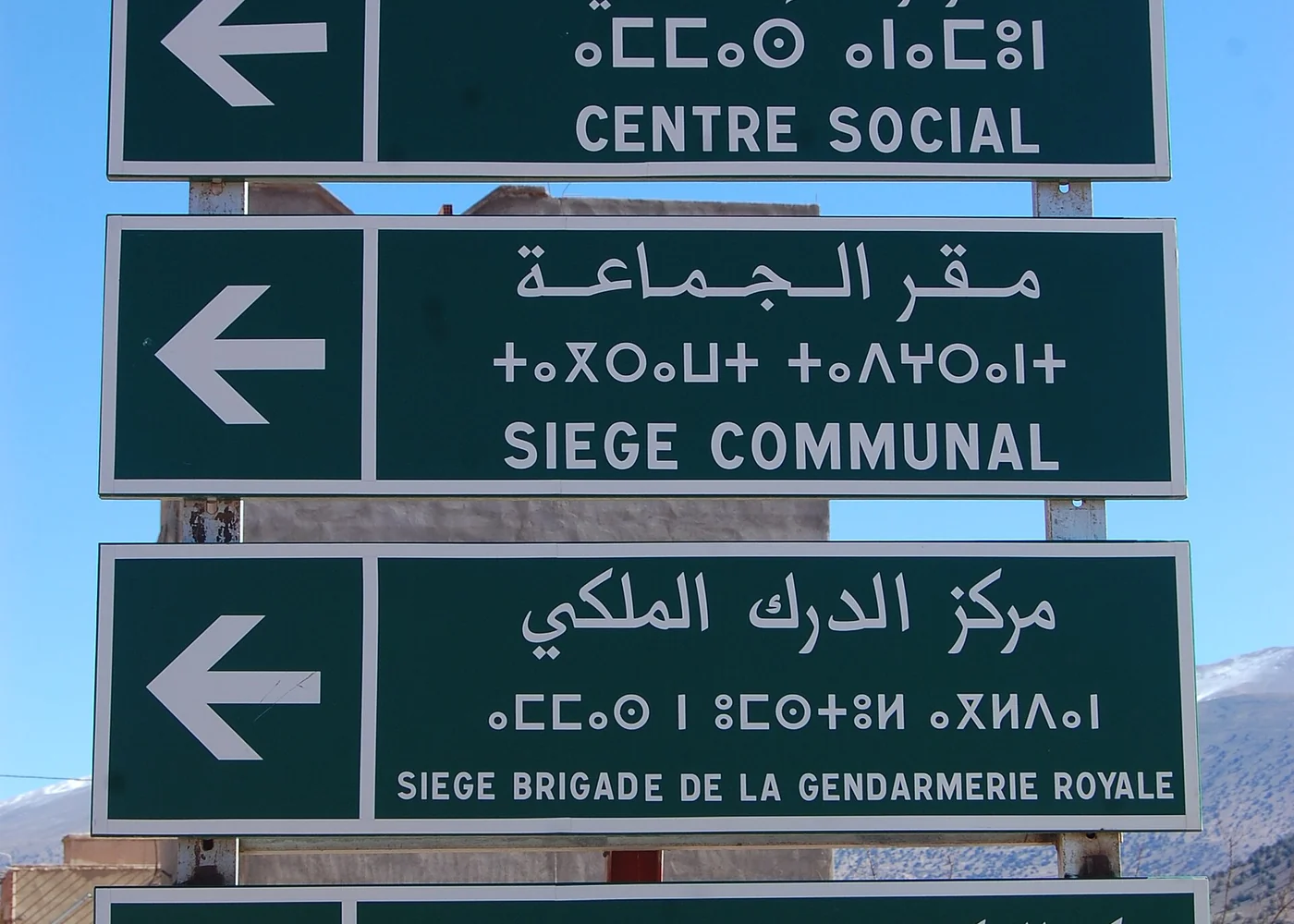
A multilingual sign shows how public information is presented. It does not establish which language people use at home. Notice the scripts, the order of information and the audience the sign is intended to serve.

Public signs photographed at Tabant.
01

Open without rushing

Begin with a greeting and allow it to be returned before moving to the practical request. In a shop or workplace, notice whether the person is already occupied. A polite phrase works best when the timing and the body language carry the same consideration.
02

Make room for clarification

If you do not understand, say so. Repeating an unfamiliar answer as if you understood can create confusion about a price, a direction or an agreement. Ask for a slower explanation or another shared language, and confirm the practical point in simple terms.

03

Treat names with care

Ask how a person prefers their name to be pronounced if the conversation makes that appropriate. Place names can have several spellings across scripts and transliterations. An unfamiliar spelling is not automatically an error; check the context before correcting it.

04 / The visual chapter

Language lives in context

Move between the close detail and the wider setting. Each view adds another part of the story.

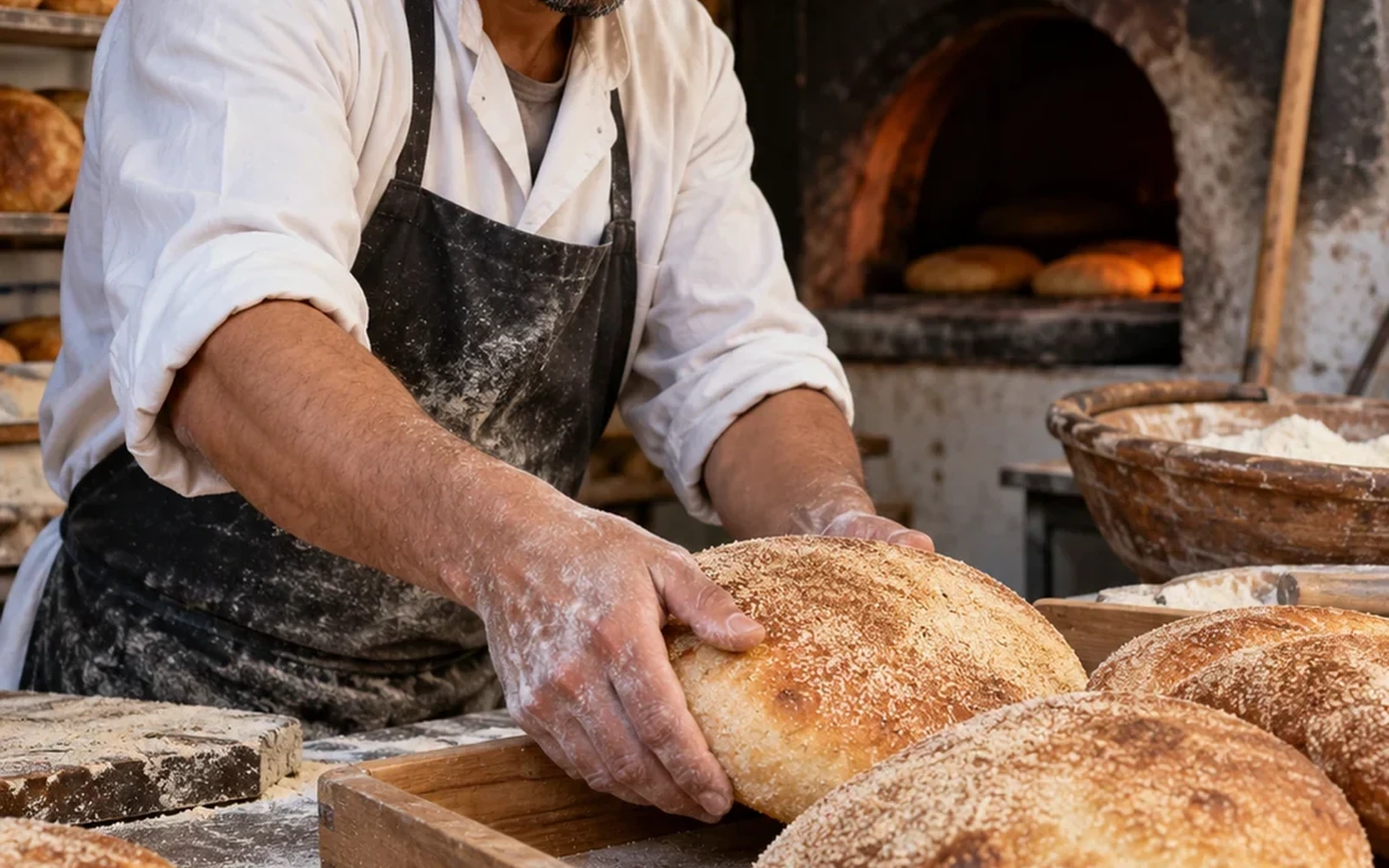
A baker concentrates on his work: wait for a natural opening. Editorial illustration.
01 / A closer look

Respect someone’s attention

A maker may be concentrating, speaking with a customer or managing a task. Begin with a greeting and wait for a natural opening. Permission to look around is not automatically permission to record a voice, a face or an unfinished piece.

A baker concentrates on his work: wait for a natural opening. Editorial illustration.
A lane in the medina of Tétouan.
02 / A closer look

Place matters

A narrow residential lane and a busy shop call for different behaviour. Keep voices and cameras considerate, and do not treat a doorway as a public exhibit. Courtesy includes how you occupy space, even before you speak.

A lane in the medina of Tétouan.
Tétouan’s public space: conversation has an urban setting.
03 / A closer look

A greeting is a beginning

Memorised phrases are most useful when they lead into listening. Pronunciation, response and tone give words their social life. The Moroccan Arabic Phrases page offers a small practical repertoire to begin that process.

Tétouan’s public space: conversation has an urban setting.
A closer understanding

A conversation
is a shared adjustment.

Respectful language depends on listening, register and the situation—not on performing a perfect accent.

A multilingual setting

The language on a sign is not the whole conversation.

Arabic and Amazigh have official status in Morocco. Everyday encounters may also involve Darija, French, Spanish, English or another language, depending on the speaker and setting. Ability is individual; do not assume that everybody shares the same repertoire.

People can switch languages within one exchange. That switch may make a task easier or reflect the relationship between speakers. It is not automatically a judgement on your effort. Accept the useful language of the moment, and ask to practise a little Darija only when there is time.

The opening

Recognition comes before the request.

A greeting gives the other person a chance to acknowledge you. In a shop, a short opening followed by a clear question usually works better than beginning with a demand. In someone’s home, conversation may unfold more gradually.

The same words change with tone, pace and relationship. A memorised phrase cannot guarantee warmth if it is delivered while interrupting someone or blocking their work. Listen for the reply and leave space for it; language learning is not only producing your own line correctly.

When understanding breaks

Repair is a skill.

A request to repeat or slow down is often more useful than a longer sentence learned in isolation. Confirm the part you understood before adding a new question. Pointing to a written place name or number can help when pronunciation is uncertain.

Avoid pretending to understand a practical detail merely to keep an exchange flowing. Restating a destination, quantity or agreed arrangement gives both people a chance to correct it. The aim is shared understanding, not winning a test of vocabulary.

Carry this with you

Learn an opening, a way to ask for repetition and a closing. Those three moves can support far more than three memorised phrases.

05 / More than one perspective

Look beyond
the first impression.

Perspective 01

Official & everyday

Arabic and Amazigh have official status. Everyday conversation, schooling, administration and commercial life do not necessarily use identical forms of language. Keep the setting explicit when describing what is spoken or written.

Perspective 02

Learning & reciprocity

A person may enjoy helping with a phrase, but their time is still their own. Thank them, avoid turning every exchange into a lesson and do not record a voice without permission. Learning works better when curiosity is reciprocal.

06 / Make the connections

A useful sequence for conversation

Use these ideas to connect what you notice with the materials, people and histories behind it.

01

Greet

A brief greeting acknowledges the person before the request. Give them time to respond. Do not assume that the same greeting or level of familiarity suits every relationship.

02

Ask

Offer a language you can use, or ask what is comfortable. If a conversation shifts between languages, follow the speaker’s cues rather than turning the exchange into a test.

03

Listen

Let the answer finish. If an unfamiliar word matters, ask for it again or invite the person to write it. Repeating what you think you heard can help, provided correction remains welcome.

04

Close

Thank the person for their time. An interaction does not have to become a photograph, a purchase or a longer conversation to be worthwhile. A polite ending is part of the exchange.

07 / A more useful conversation

Respect is a practice, not a script

Clear answers for the questions that often come next.

Should I use French with everyone?

No. French is useful in some settings, but it is not everyone’s preferred language. Start with a greeting and ask. The same principle applies to English, Arabic and any Amazigh variety.

Is Moroccan Arabic identical to written Standard Arabic?

No. Darija is a spoken variety with its own everyday forms, while Standard Arabic has important formal and written roles. They are connected, but a phrase from one context may not fit another.

What if I make a mistake?

Accept a correction lightly, try again and keep the exchange human. A small vocabulary used attentively is more helpful than a long phrase recited without understanding the response.

A thought to take with you

Keep looking. Keep learning.

Leave a conversation with more than a correctly pronounced word. Notice which language helped the exchange, what the other person chose to explain and whether you gave them enough room to speak.

The Exotic Morocco library

Continue at your own pace.

This Learn story is free to explore. Find this subject in the guide library, with each title’s current availability clearly shown.

Explore the guide library ↗
Sources & further reading

Read the evidence

  1. Moroccan National Tourism Office · Language
  2. Moroccan Ministry of Digital Transition and Administration Reform · Official status of Amazigh
  3. Peace Corps Morocco · Moroccan Arabic textbook (2011)
  4. UK Foreign, Commonwealth & Development Office · Morocco: local customs and safety

Source review: September 2026. Looking exercises and learning prompts are original Exotic Morocco editorial suggestions. Regional practice and personal experience vary.

Image acknowledgements

  1. Hero: Commissioned AI-generated editorial illustration by Exotic Morocco with OpenAI ImageGen. Imagined scene, not documentary evidence of named people or a specific event.
  2. Hero: Smith's Quarter at Medina of Fés, Morocco.jpg — Bikerhiker75. CC BY-SA 4.0. Cropped/resized; original licence retained.
  3. Portrait: ElAbdi, one of the oldest sellers of used books in the capital of Morocco, Rabat.jpg — Zackariaouad. CC BY-SA 4.0. Cropped/resized; original licence retained.
  4. Image 4: Existing Exotic Morocco commissioned editorial illustration, selected from the current image library.
  5. Story-2: Artisan coloring a lamp, Medina Marrakesh (Morocco).jpg — Petar Milošević. CC BY-SA 4.0. Cropped/resized; original licence retained.
  6. Story-3: Tetouan Old Medina streets 4.jpg — Ideophagous. CC BY-SA 4.0. Cropped/resized; original licence retained.
  7. Related preview: Tetouan, Morocco (8141893705).jpg — yeowatzup. CC BY 2.0. Cropped/resized; original licence retained.
  8. Chapter: A passage in Tétouan: shared space in daily use. — Exotic Morocco’s existing image collection.
  9. Gallery: Tétouan’s public space: conversation has an urban setting. — Exotic Morocco’s existing image collection.
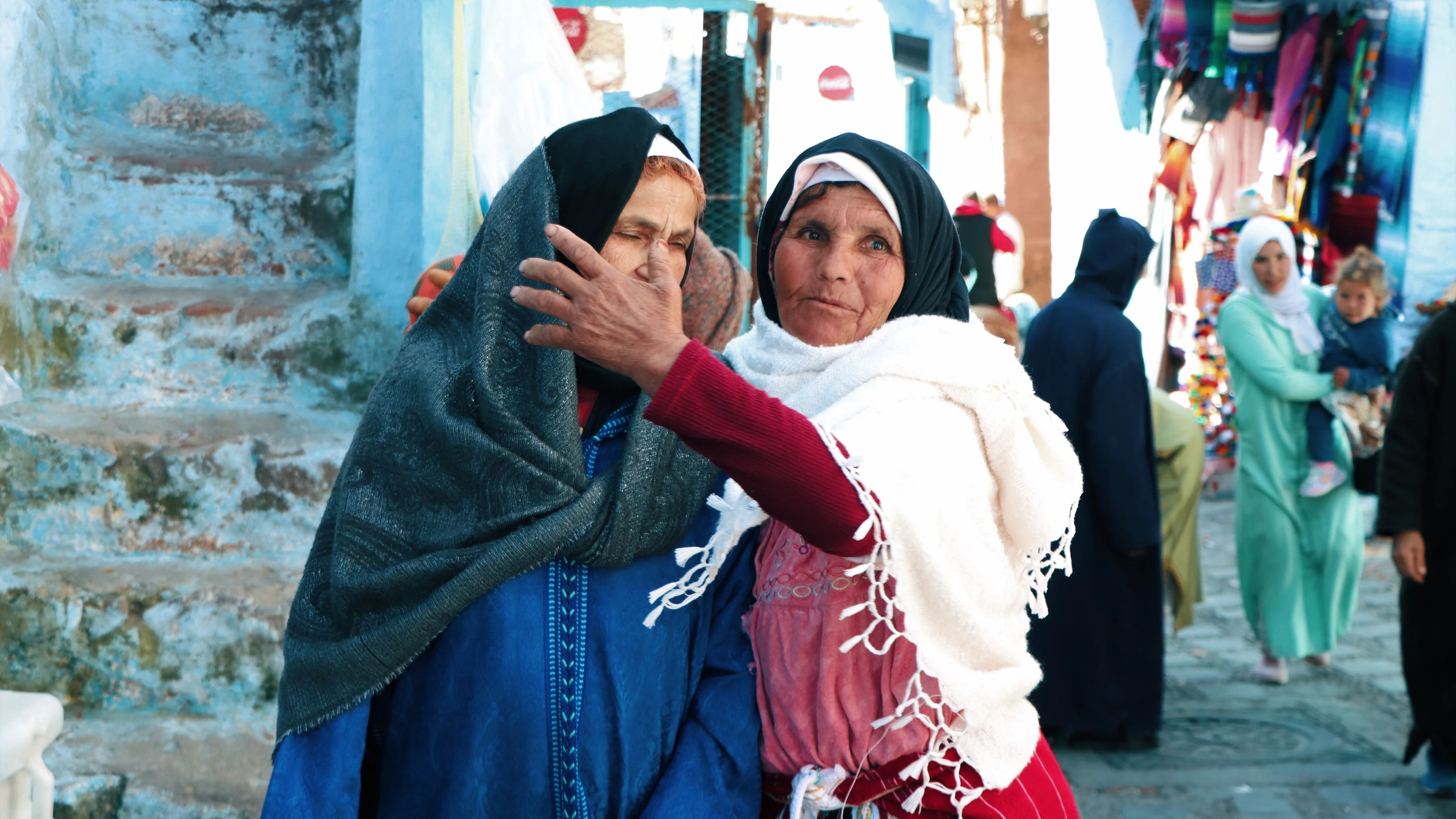
  10. Related preview: A greeting in a Moroccan street. Language is part of an encounter. — Exotic Morocco’s existing image collection.
  11. Related preview: Hands at a loom: making is one way knowledge passes between people. — Exotic Morocco’s existing image collection.

Destination and related-story thumbnails intentionally identify their linked pages. Principal story images are selected individually for this Learn page.