Skip to learning
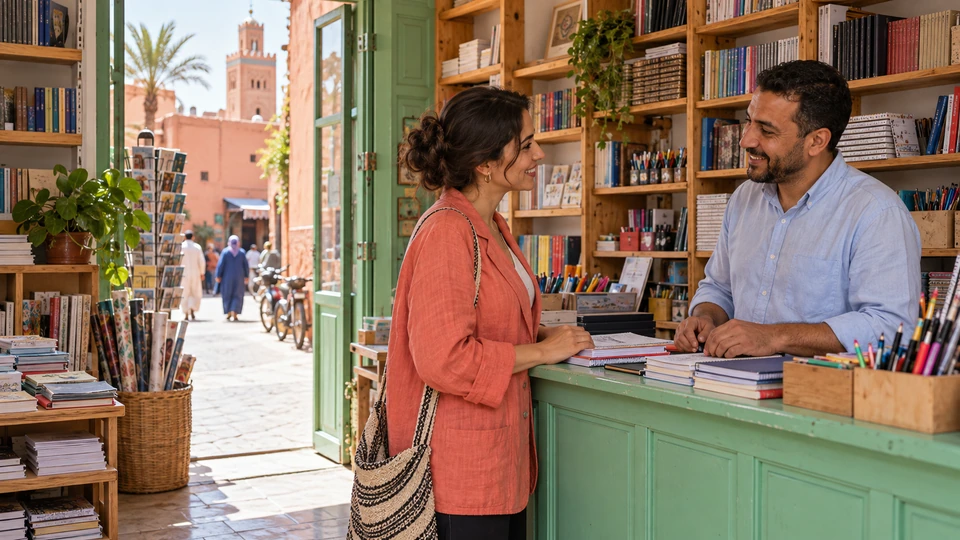
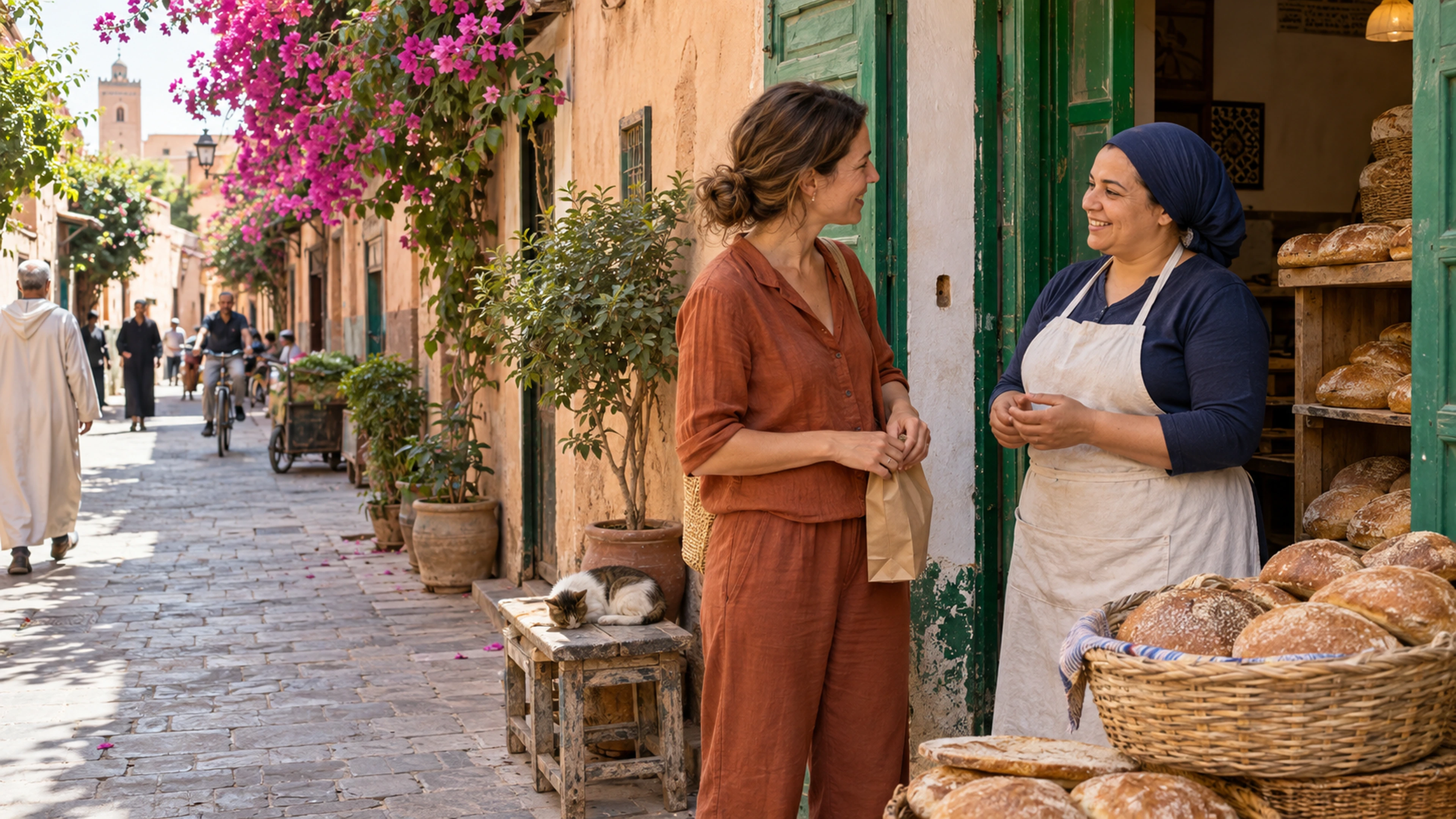
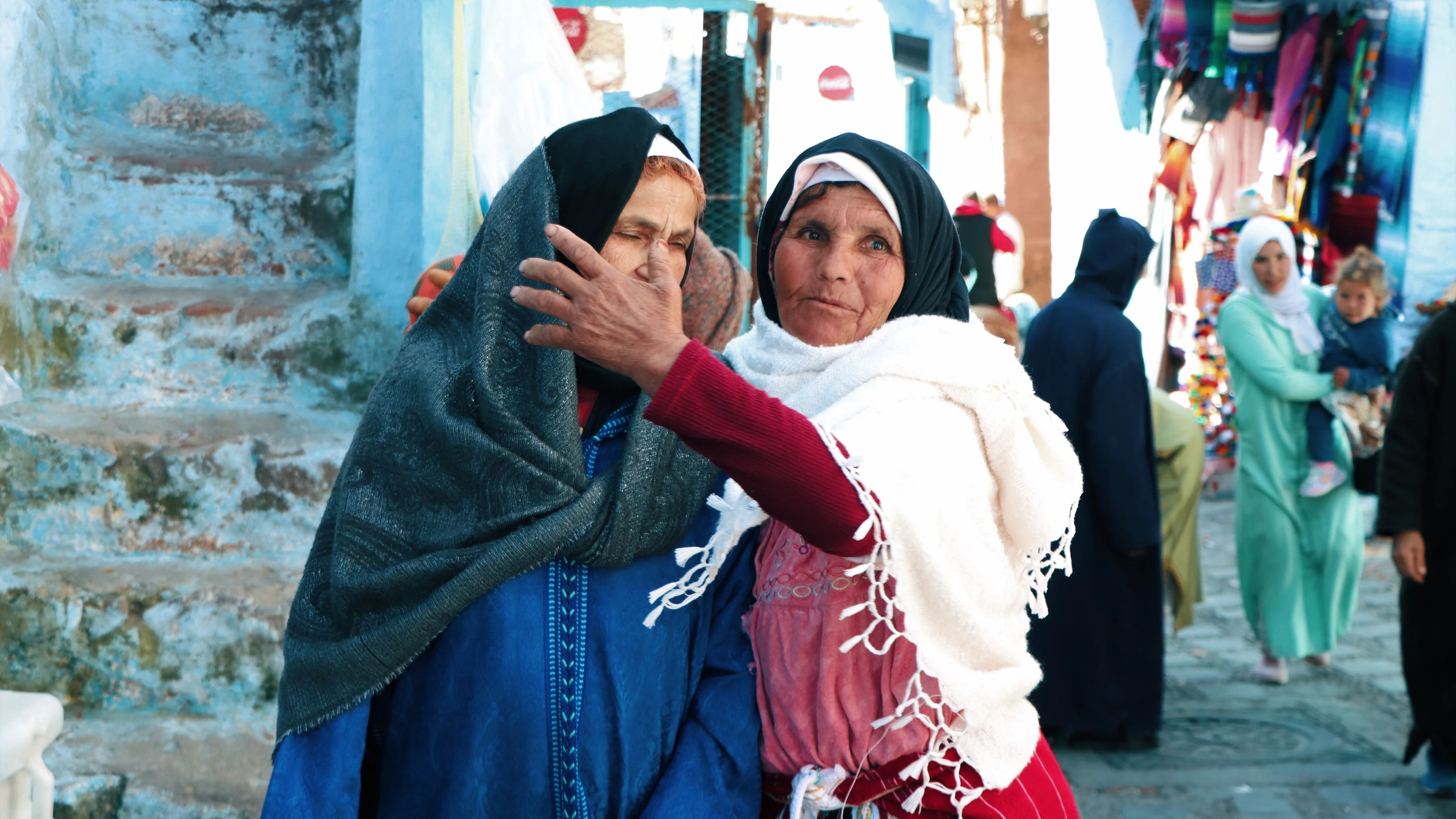
A street greeting in Morocco: language lives inside an encounter.
A few words, a better beginning

Moroccan Arabic Phrases

A small, useful beginning in Darija: greet, thank, ask for a slower pace and leave room for a real reply.

Exotic Morocco · 11 minute read
01 / A way into the story

A phrase is an opening, not a performance.

Moroccan Arabic, commonly called Darija, is heard in everyday conversation across Morocco. It varies by speaker and place. The phrases here use a simplified Latin transcription so a beginner can start; it is an approximation, not a single official spelling system.

The reference is the Peace Corps Morocco language textbook. Its fuller transcription marks sounds that this introductory page simplifies. Listen to a Moroccan speaker where possible, and learn the response as well as your opening line.

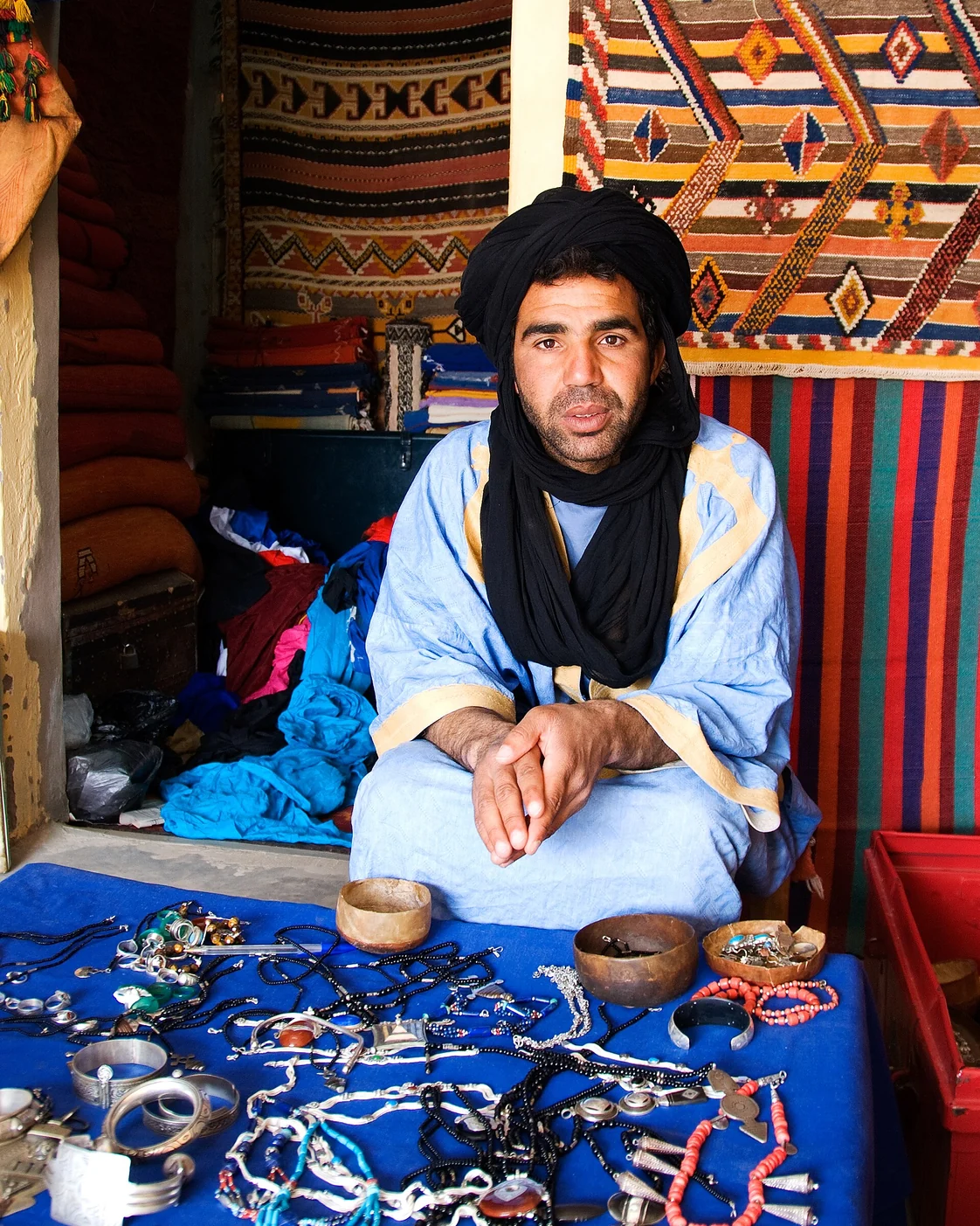
A shopkeeper photographed in M’Hamid. The portrait is independent of the example phrases.
THE SUBJECTA few words, a better beginning
THE APPROACHPlace. Practice. People.
THE CONNECTIONFind it in Morocco ↗
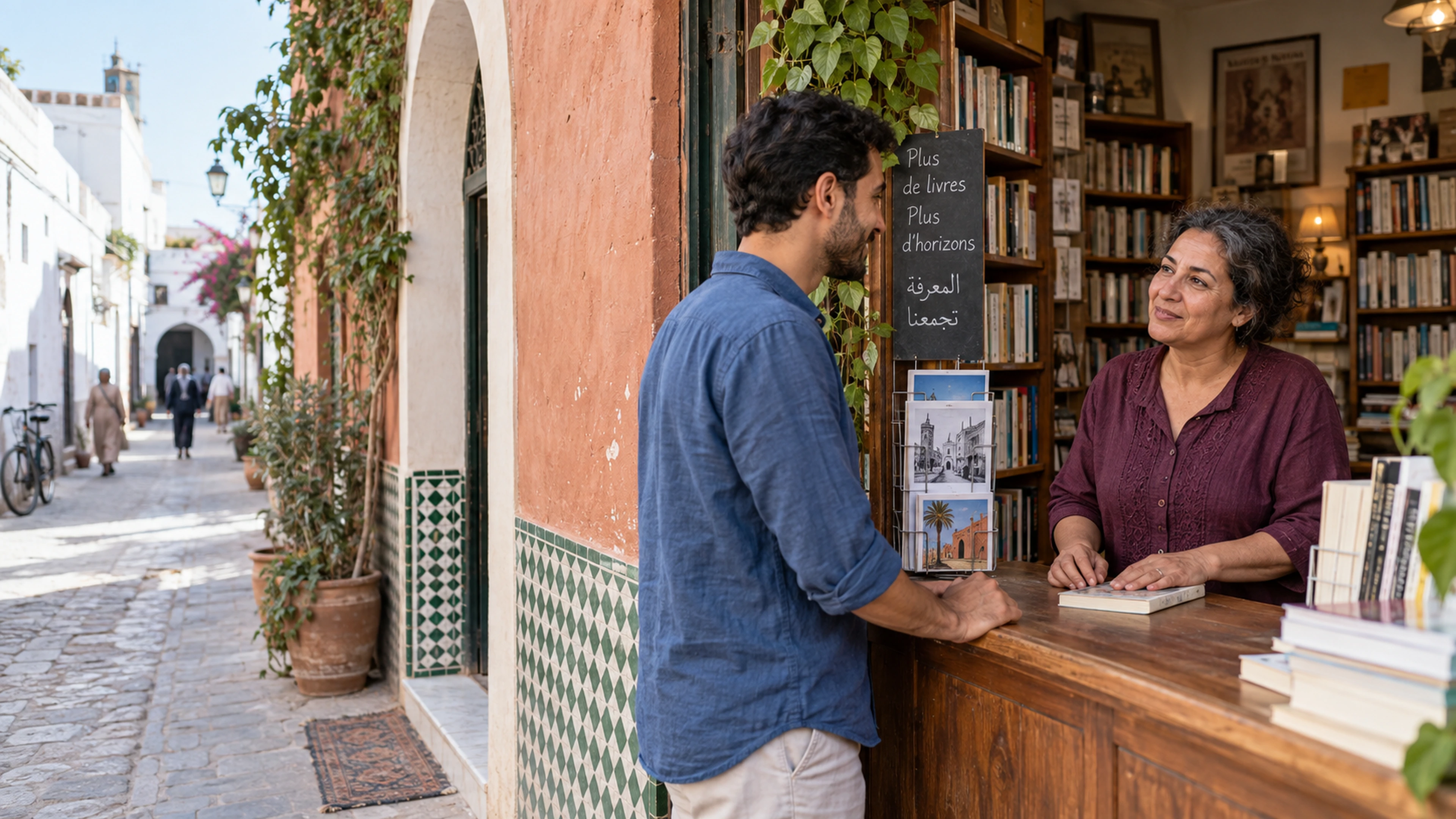
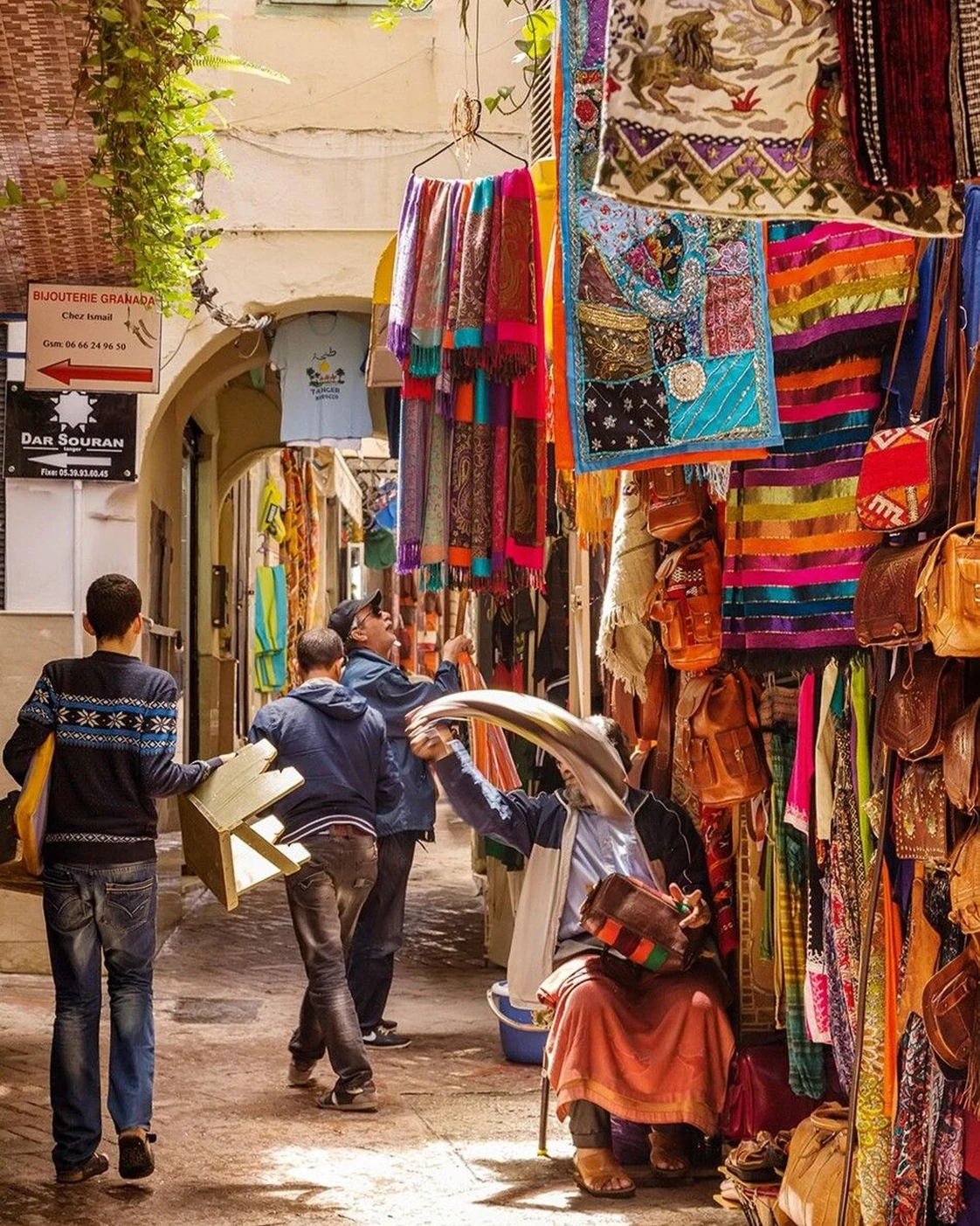
A market lane: conversation happens within daily work.
02 / The deeper context

A few words.
A more human beginning.

Darija is Moroccan Arabic in everyday use, with regional and social variation. This introduction offers a small set of practical expressions, not a promise of fluency. Their greatest value is often the opening they create: a greeting returned, a request made gently, or an honest admission that you did not understand.

Latin-letter spellings are approximations. You may see the same expression written several ways because there is no single everyday Latin transcription used by everyone. Written forms cannot fully convey sounds, rhythm or tone. Listen to a speaker, repeat at a comfortable pace and be willing to adjust. Numerals sometimes used in online Darija represent sounds; they are not needed to begin a face-to-face greeting.

It is equally important to learn the reply. A phrasebook question can invite an answer you are not yet able to follow. Keep a repair phrase ready, and switch to another shared language when a practical exchange needs precision. Using a little Darija respectfully includes knowing when to ask for help.

03 / From an idea to everyday life

Practise an exchange, not an isolated word.

Start with a greeting before pointing to an item. “Afak” adds “please”, but tone and timing still matter. If the answer is faster than you can follow, use the request for a slower pace rather than guessing the meaning.

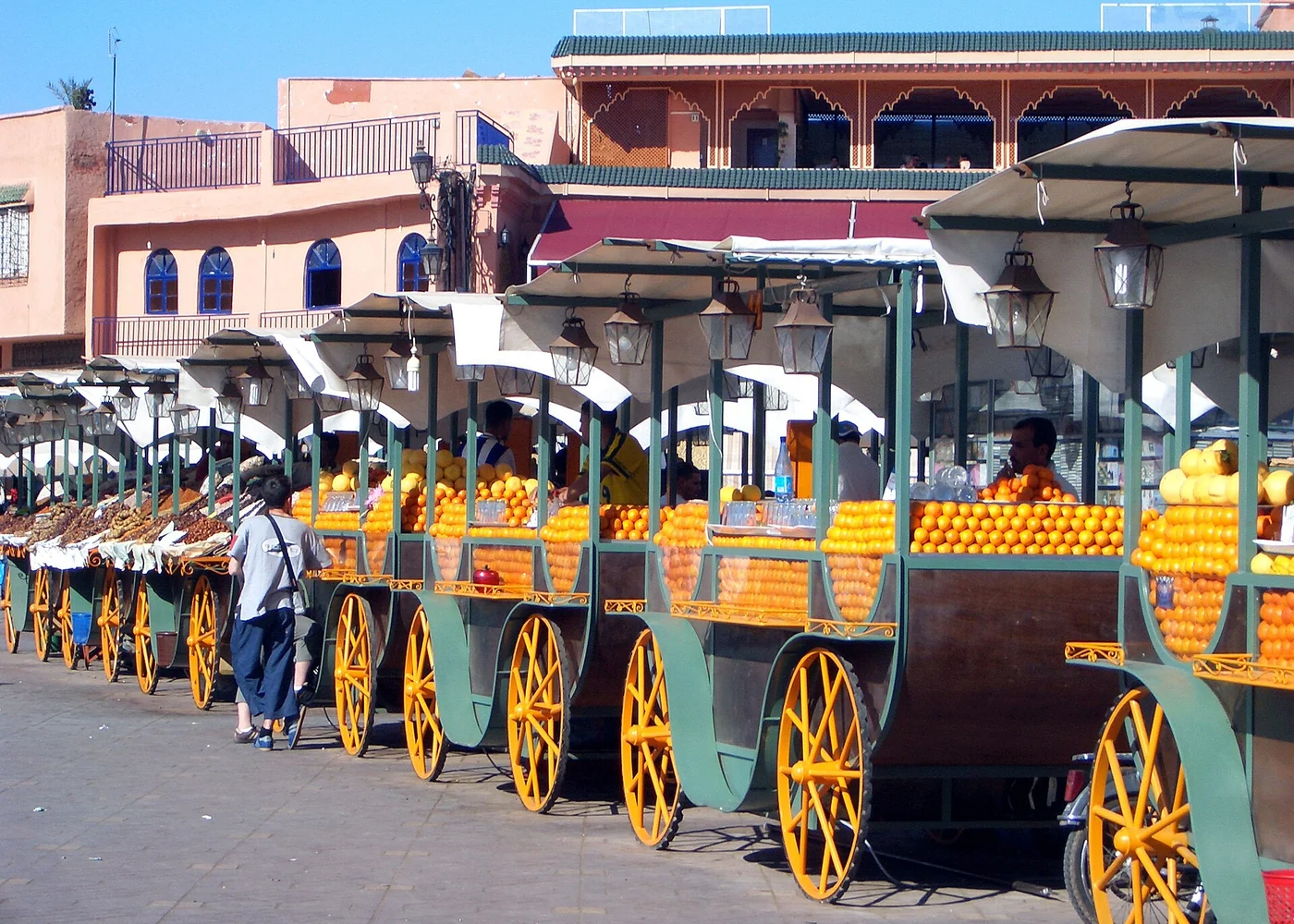
Orange stalls in Marrakech.
01

Greet and leave a pause

“Salam” is a useful short greeting. The fuller “s-salamu ʿalaykum” is commonly answered with “wa ʿalaykum s-salam”. Listen for the return before adding your request. The pause is part of the courtesy, not an empty space to fill as quickly as possible.
02

Ask gently and listen

“ʿafak” is commonly used for “please” when addressing one person. “Shukran” expresses thanks. Learn them inside a small request rather than as decorations added at random. A patient tone and a clear practical question make them more useful.

03

Repair the conversation

“Ma fhemtsh” means “I didn’t understand”. It is a valuable phrase because it keeps the exchange honest. You can then ask for slower speech or another shared language. Do not guess at an answer when the conversation concerns a direction, a price or an arrangement.

A closer understanding

Three phrases.
A much better exchange.

Start with short phrases whose purpose you understand. The spelling here is a practical aid, not an audio substitute.

Ask gently

ʿafak · please

The initial ʿ represents a voiced throat sound without a close English equivalent; it is not an extra vowel or a numeral to pronounce. Listen to a speaker and keep the request short. ʿAfak can accompany many everyday requests to one person.

A polite word does not make an unclear request precise. Pair it with a destination, item or number the other person can identify. In a busy place, a simple request with a greeting and a pause is more useful than a complicated sentence read from a screen.

Make space to listen

b-shwiya ʿafak · slowly, please

This is useful when the reply comes faster than you can follow. The sh corresponds roughly to English sh; the rest needs listening, especially the rhythm. Repeat the understood part before asking the speaker to continue.

Slower speech and word-by-word translation are not identical requests. The person may naturally reformulate in simpler language. That is helpful conversation, not a failure of your original phrase. Use the reply as a chance to hear how a speaker would actually say it.

Be honest

ma fhemt-sh · I did not understand

This short form also reveals a common Darija pattern: negation can surround the verb with ma … sh. It is an example to recognise, not a rule that can be mechanically attached to any expression.

Use it to reset an exchange before guessing a detail that matters. Then ask one clear question, show a written name or invite a different language if needed. A small, accurate repair is a stronger beginning than a long phrase that leaves both people uncertain.

Carry this with you

Our learner spelling uses sh, kh and gh for distinct sounds, and ʿ for ʿayn. Other books use different symbols; compare systems before comparing spellings.

04 / The visual chapter

Put a phrase into a situation

Move between the close detail and the wider setting. Each view adds another part of the story.

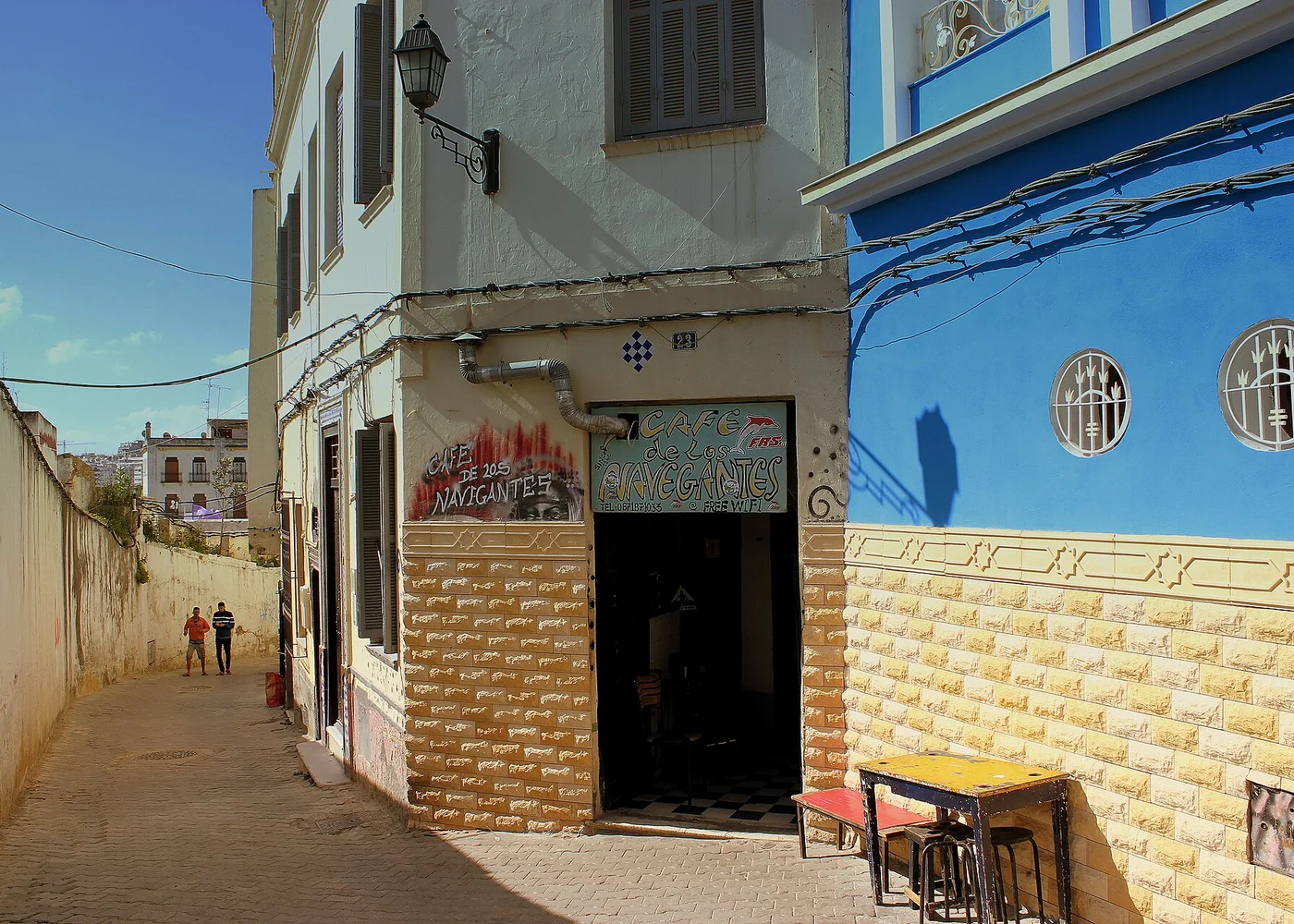
A café near the port in Tangier, photographed in 2013.
01 / A closer look

At a café

A simple thank-you belongs after help as well as after service. Practise “shukran” in a normal speaking voice. The aim is an understandable exchange, not a theatrical accent or a perfect recital.

A café near the port in Tangier, photographed in 2013.
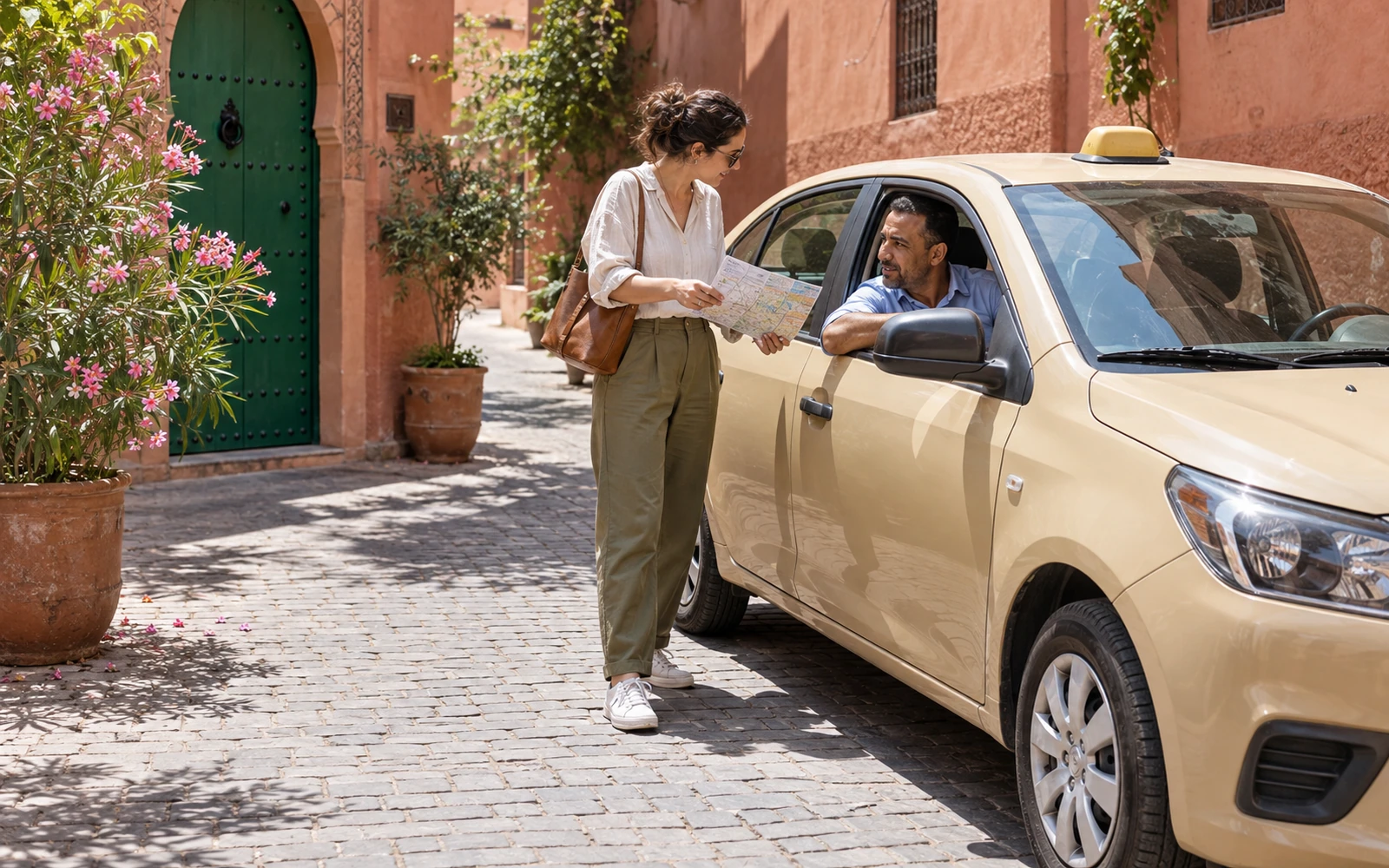
Confirming a destination together. Editorial illustration.
02 / A closer look

On the move

A destination written down can support spoken words. The phrase for wanting to go somewhere is a starting point; confirm the destination and practical details in a language both people understand. Do not rely on memorisation alone.

Confirming a destination together. Editorial illustration.
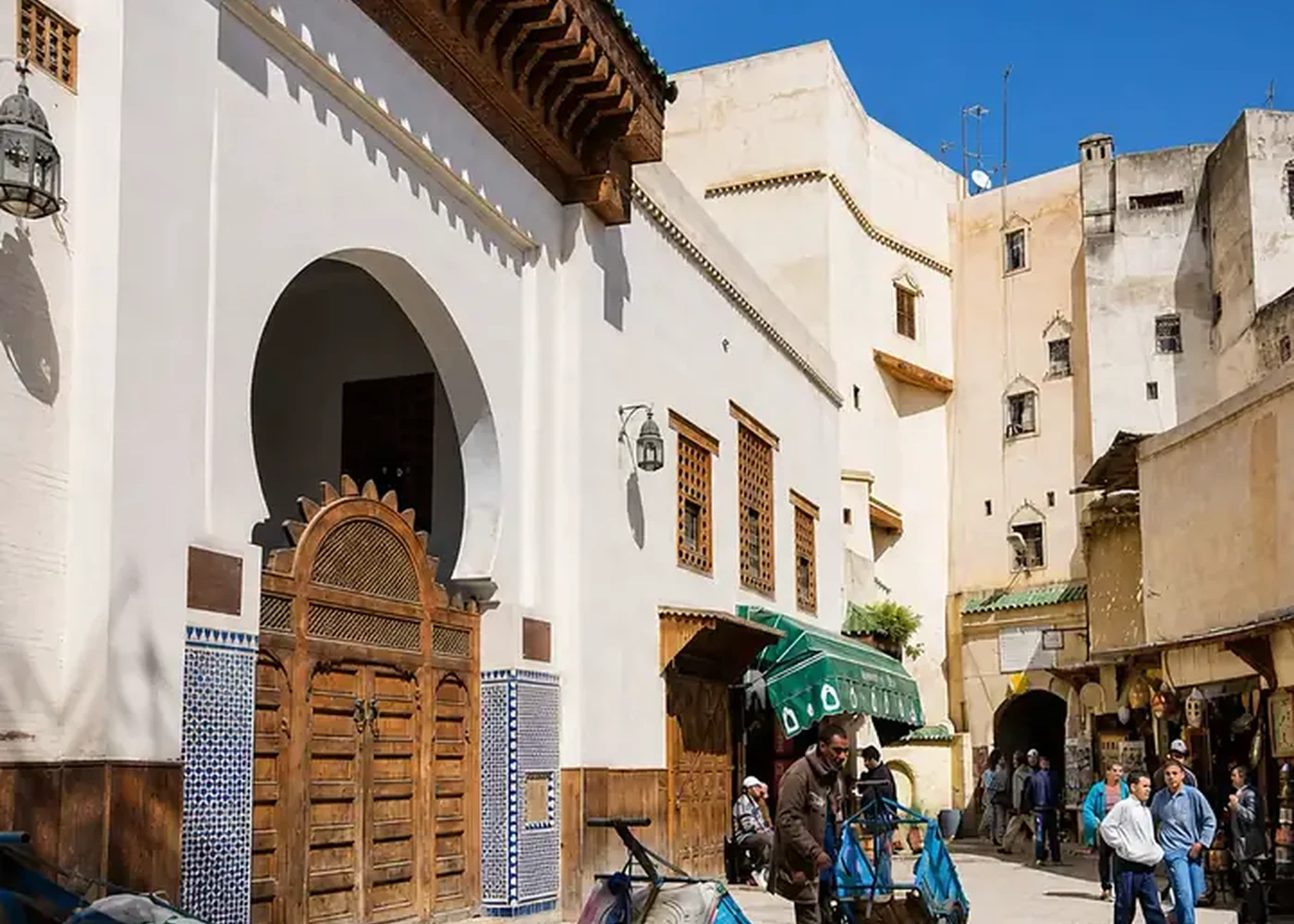
Place Seffarine in Fez: a public setting with working rhythms.
03 / A closer look

A useful practice loop

Choose one greeting, one request and one repair phrase. Hear them, say them, use them in an appropriate encounter and note the reply. Add vocabulary gradually instead of carrying a long list that you cannot recognise when someone answers.

Place Seffarine in Fez: a public setting with working rhythms.
05 / More than one perspective

Look beyond
the first impression.

Perspective 01

Sound before spelling

Treat the transcription as a memory aid. Some sounds do not have a close English equivalent, and vowels may be heard differently across speakers. A short listening practice with a willing speaker is more useful than insisting on one written form.

Perspective 02

The setting changes the phrase

A greeting between friends, a request to a shopkeeper and a conversation with several people need not be identical. Number, relationship and tone can affect the form. This page deliberately keeps its examples small and explains their immediate use.

06 / Make the connections

Keep these eight beginnings close

Use these ideas to connect what you notice with the materials, people and histories behind it.

01

S-salamu alaykum

A common greeting: “Peace be upon you.” A usual response is “Wa alaykum s-salam.” Learn the exchange together and allow the other person time to answer.

02

Afak

“Please.” The initial sound is represented more precisely as ʿ in some transcriptions. A written approximation helps recognition; listening is the best guide to how it sounds.

03

Shukran

“Thank you.” A short expression you can use after assistance or service. It works best as part of an attentive exchange, with an ordinary, unforced tone.

04

Smiti…

“My name is…” Add your name. The related question “Shnu smitk?” means “What’s your name?” Use it when an introduction is welcome, not as a demand for personal information.

05

Ma fhemt-sh

“I didn’t understand.” This can be more useful than nodding along. A gesture towards slower speech or a written word can help the conversation continue.

06

B shwiya, afak

“Slowly, please.” It asks for a manageable pace. You can then repeat the part you did understand and invite correction.

07

Bghit nmshi l…

“I want to go to…” Add the destination. The “gh” represents a sound absent from ordinary English spelling; ask a speaker to model it.

08

Bslama

“Goodbye.” A simple way to close an exchange. Listen for how people around you use it, including the rhythm and the reply.

07 / A more useful conversation

Learn the answer, too

Clear answers for the questions that often come next.

Why do other phrase lists spell these differently?

Darija has several transcription conventions, and everyday Latin spellings vary. “Sh” may appear as “š”, for example. Differences on the page do not always mean different words.

Can I use every phrase with any person unchanged?

Some forms change according to who is speaking or being addressed. For example, the textbook distinguishes “awd afak” to a man and “awdi afak” to a woman for “repeat, please”. Context matters.

Does this page replace listening practice?

No. It provides a small phrase bank with context. Listening and feedback help with sounds, stress and natural pace. The linked textbook is a fuller learning resource.

A thought to take with you

Keep looking. Keep learning.

The best first phrase is one you can use with attention. Begin simply, listen to the reply and let a real exchange guide the next thing you learn. Accuracy grows through that cycle of listening, trying and correcting.

The Exotic Morocco library

Continue at your own pace.

This Learn story is free to explore. Find this subject in the guide library, with each title’s current availability clearly shown.

Explore the guide library ↗
Sources & further reading

Read the evidence

  1. Peace Corps Morocco · Moroccan Arabic textbook (2011)
  2. Moroccan National Tourism Office · Language
  3. Moroccan Ministry of Digital Transition and Administration Reform · Official status of Amazigh

Source review: September 2026. Looking exercises and learning prompts are original Exotic Morocco editorial suggestions. Regional practice and personal experience vary.

Image acknowledgements

  1. Related preview: The sound of the south 2 - Nkoub village Morocco by Brahim FARAJI.jpg — Farajiibrahim. CC BY-SA 4.0. Cropped/resized; original licence retained.
  2. Related preview: Smith's Quarter at Medina of Fés, Morocco.jpg — Bikerhiker75. CC BY-SA 4.0. Cropped/resized; original licence retained.
  3. Portrait: Abdul in his shop in MHamid (2358084602).jpg — Michal Osmenda from Brussels, Belgium. CC BY-SA 2.0. Cropped/resized; original licence retained.
  4. Story-1: Moroccan Orange Stalls.jpg — Adam Greig. CC BY-SA 2.0. Cropped/resized; original licence retained.
  5. Image 5: Commissioned AI-generated editorial illustration by Exotic Morocco with OpenAI ImageGen. Imagined scene, not documentary evidence of named people or a specific event.
  6. Story-3: ALSA CITY BUS MERCEDES MIDI BUS MARRAKECH MEDINA MOROCCO APRIL 2013 (8710837764).jpg — calflier001. CC BY-SA 2.0. Cropped/resized; original licence retained.
  7. Related preview: Tetouan, Morocco (8141893705).jpg — yeowatzup. CC BY 2.0. Cropped/resized; original licence retained.
  8. Chapter: A market lane: conversation happens within daily work. — Exotic Morocco’s existing image collection.
  9. Gallery: Place Seffarine in Fez: a public setting with working rhythms. — Exotic Morocco’s existing image collection.
  10. Hero: A greeting in a Moroccan street. Language is part of an encounter. — Exotic Morocco’s existing image collection.
  11. Related preview: Hands at a loom: making is one way knowledge passes between people. — Exotic Morocco’s existing image collection.

Destination and related-story thumbnails intentionally identify their linked pages. Principal story images are selected individually for this Learn page.