Skip to learning
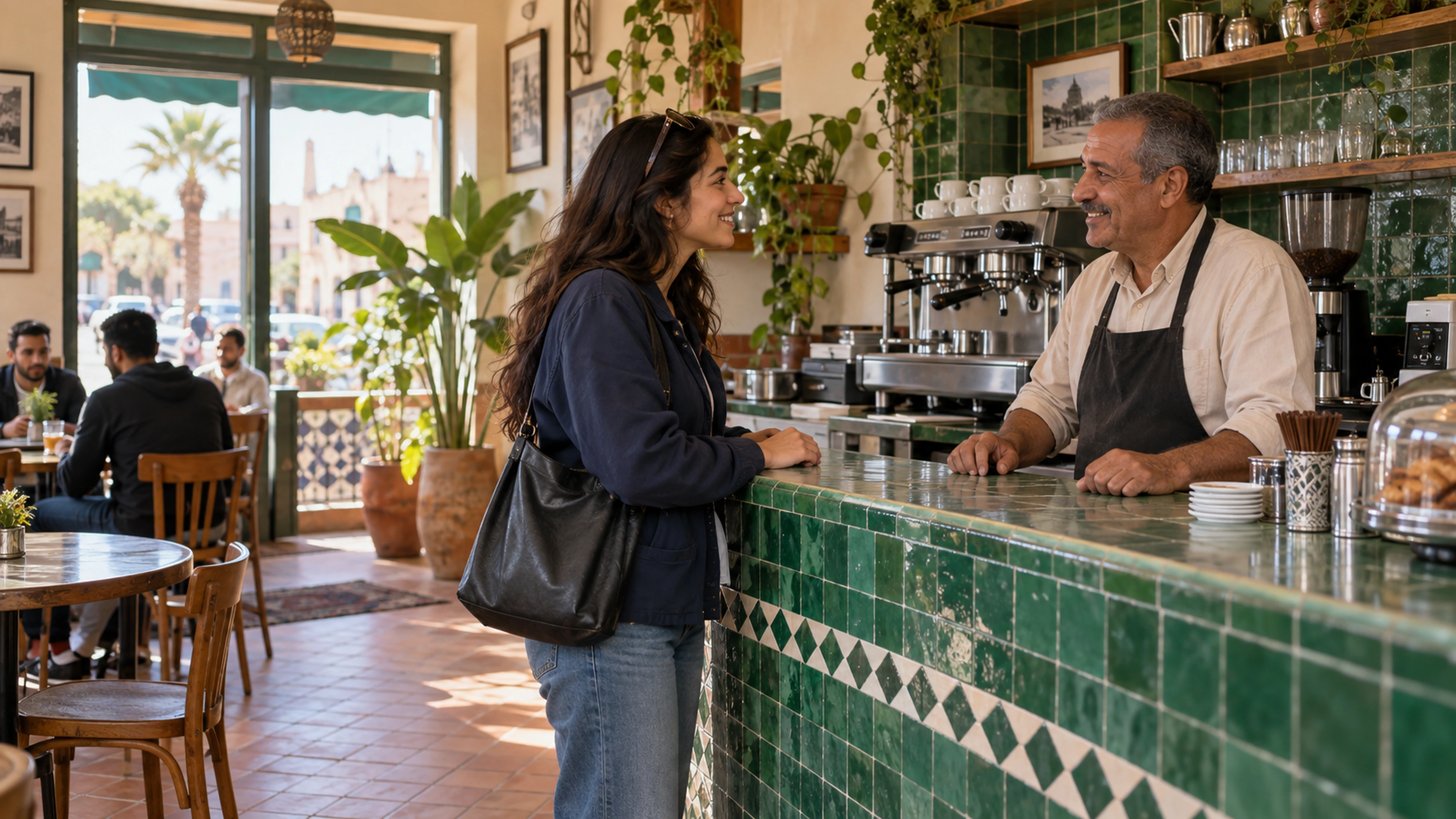
At a neighbourhood café: an imagined Moroccan conversation.
A first exchange, a real connection

Darija Basics

Start with a greeting, hear the reply and build a small exchange that belongs to everyday Morocco.

Exotic Morocco · 9 minute read
01 / A way into the conversation

Begin with the answer, too.

A first Darija lesson is most useful when it gives you two sides of a conversation. Saying hello is only the opening; recognising the reply lets you stay present for the next moment. A short exchange that you understand is more valuable than a long sentence delivered from memory with no idea what might follow.

Darija is Moroccan Arabic as used in everyday life, with differences across speakers and places. It sits within a multilingual country, alongside Amazigh languages and other languages used in particular settings. Learning a little Darija offers one way into an encounter. It does not tell you which language a stranger calls home, or which language they would prefer to use with you.

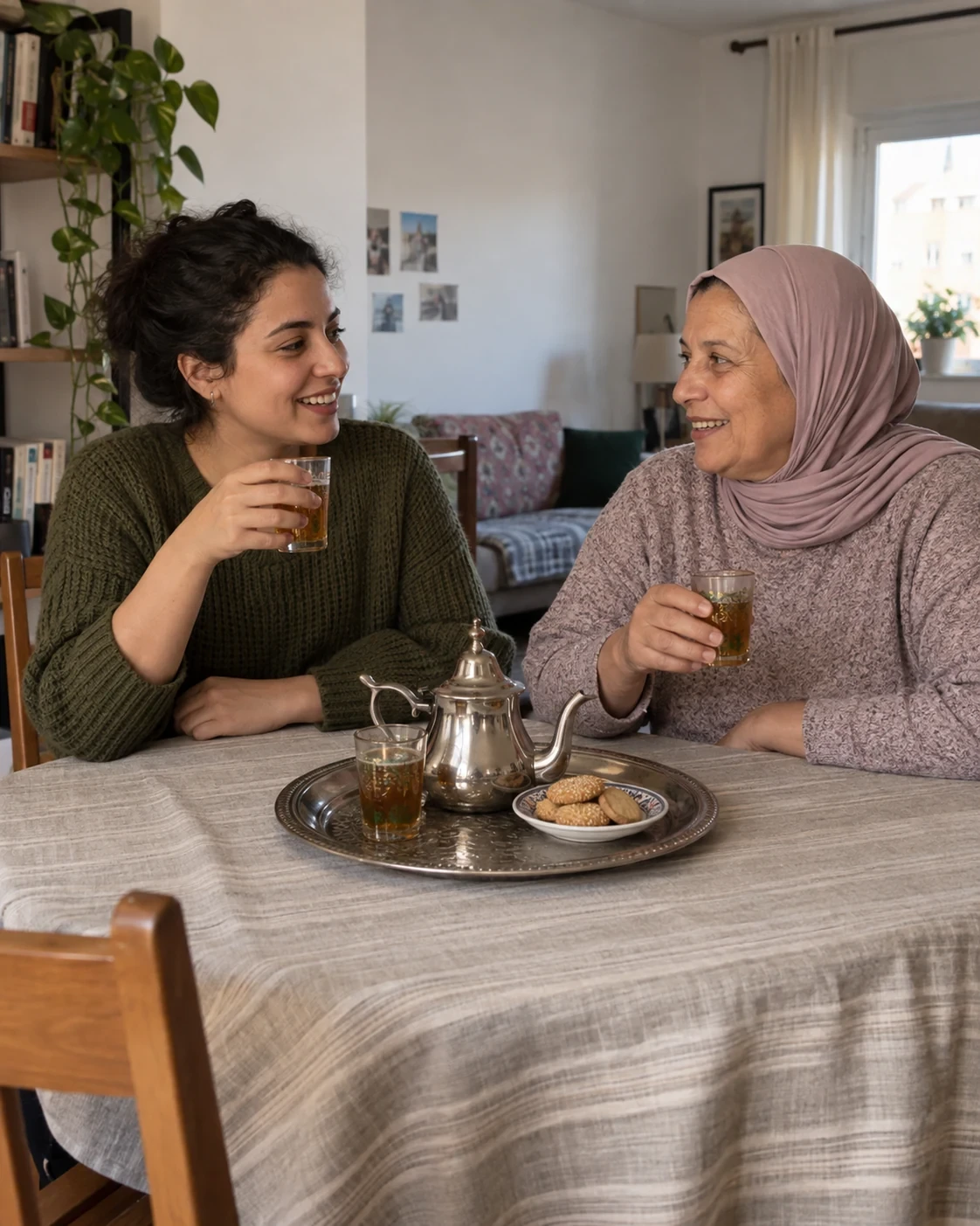
A conversation over tea
THE LANGUAGEMoroccan Arabic · Darija
THE APPROACHListen. Respond. Connect.
THE CONNECTIONFind it in Morocco ↗
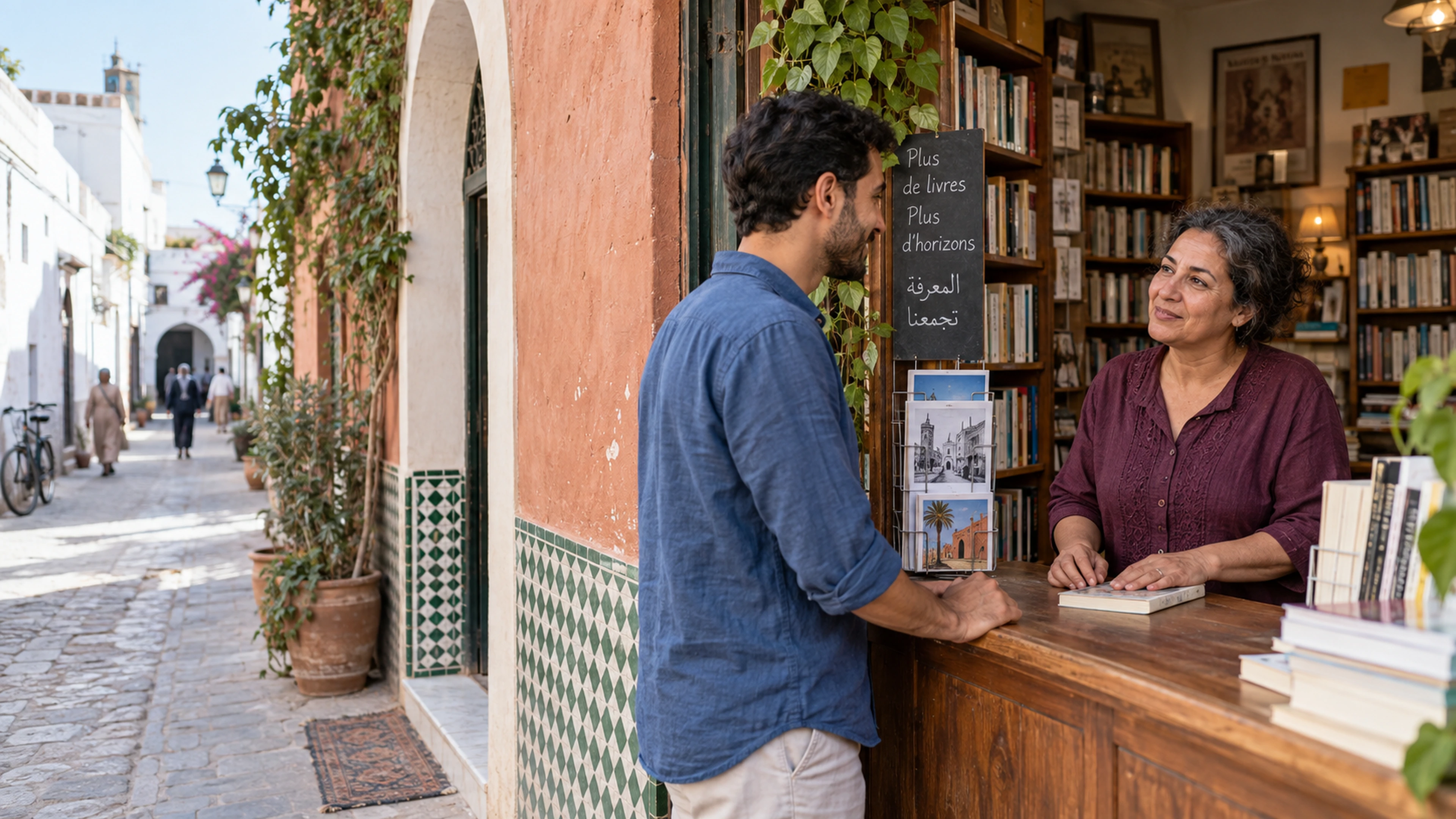
Books and a courtyard in an editorial interior
02 / Language in context

Build a small, flexible foundation.

Start with a greeting, a way to say thank you, a way to ask for something and a way to slow the conversation down. These functions work together. A greeting opens the exchange; a request gives it a purpose; a repair phrase keeps it going when something is unclear. Practise that sequence before memorising an unrelated collection of nouns.

Written Darija often appears in different spellings. You may see shukran and choukran for the same familiar expression, or a numeral standing for a sound in an informal message. Our spellings are a reading aid, not a single official orthography. Listen for the whole expression and its rhythm rather than expecting every written vowel to have one fixed English value.

Short vowels can be light or absent in rapid speech, leaving consonants close together. Bgheet, for example, begins with b followed by gh; inserting a strong extra syllable can make the word harder to recognise. Work slowly with a willing speaker, then listen again at their comfortable speed. Accuracy grows through repetition and feedback, not through exaggerating a supposedly Moroccan accent.

A closer understanding

Three habits worth keeping

Meaning becomes clearer when you connect the words to what the speakers are doing.

01 / Notice this

Listen in pairs

Learn s-salamu ʿalaykum together with wa ʿalaykum s-salam. Learn labas? together with a possible answer. The response is part of the unit you are learning. When you hear another answer, notice it without treating your original lesson as a rule that the speaker has broken.

02 / Notice this

Change one piece

Bgheet atay means “I would like tea” in a simple ordering context. Once you can hear the phrase, replace atay with l-ma, water. Keeping the frame stable lets you concentrate on the new word. This is more manageable than rebuilding an entire sentence every time you order.

03 / Notice this

Make room for uncertainty

Ma fhemt-sh means that you did not understand. It keeps the exchange honest. After using it, ask for a slower repetition or point to a relevant item. A successful interaction can include Darija, another shared language, a gesture and a written number; it does not need to be an uninterrupted language test.

03 / From words to an exchange

Say a little. Understand more.

A small set of useful expressions, with the context that makes them work.

01 / An expression to recognise

s-salamu ʿalaykum

A greeting: peace be upon you

A widely used opening. Listen for wa ʿalaykum s-salam in reply; say the whole expression calmly.

02 / An expression to recognise

labas?

Are you well? / All well?

A compact check-in. Labas, l-hamdullah is one common response, not the only possible answer.

03 / An expression to recognise

bgheet atay, ʿafak

I would like tea, please

Useful in an ordinary ordering context. Bgheet is the practical request frame here.

04 / An expression to recognise

shukran

Thank you

A straightforward expression of thanks. Your attention and tone matter as much as the word.

05 / An expression to recognise

b-shwiya, ʿafak

Slowly, please

Use after a reply becomes difficult to follow. It asks for a change of pace rather than a louder voice.

06 / An expression to recognise

bslama

Goodbye

A useful closing after the exchange has finished. Avoid disappearing into a phone immediately after asking for help.

A short practice scene

At a neighbourhood café

This short practice scene deliberately leaves room for an unpredictable answer. A server might ask about quantity, seating or something else. Your next task is to listen, not to force the conversation back onto a script. If you miss the question, use the repair phrase and let the speaker help establish what matters.

  1. Yous-salamu ʿalaykumHello.
  2. Serverwa ʿalaykum s-salamHello in reply.
  3. Youbgheet atay, ʿafakI would like tea, please.
  4. You, after the replyb-shwiya, ʿafakSlowly, please.
How to read the Darija examples

These are approachable Latin spellings for spoken Moroccan Arabic, not IPA or a single official spelling system. sh is like the sound in “ship”; kh is like the final sound of Scots “loch”; gh is a voiced sound made towards the back of the mouth. ʿ marks ʿayn, which has no direct English equivalent. ḥ is a deeper h sound, and ṣ marks an emphatic s. The doubled vowel in bgheet is an English-oriented reading aid.

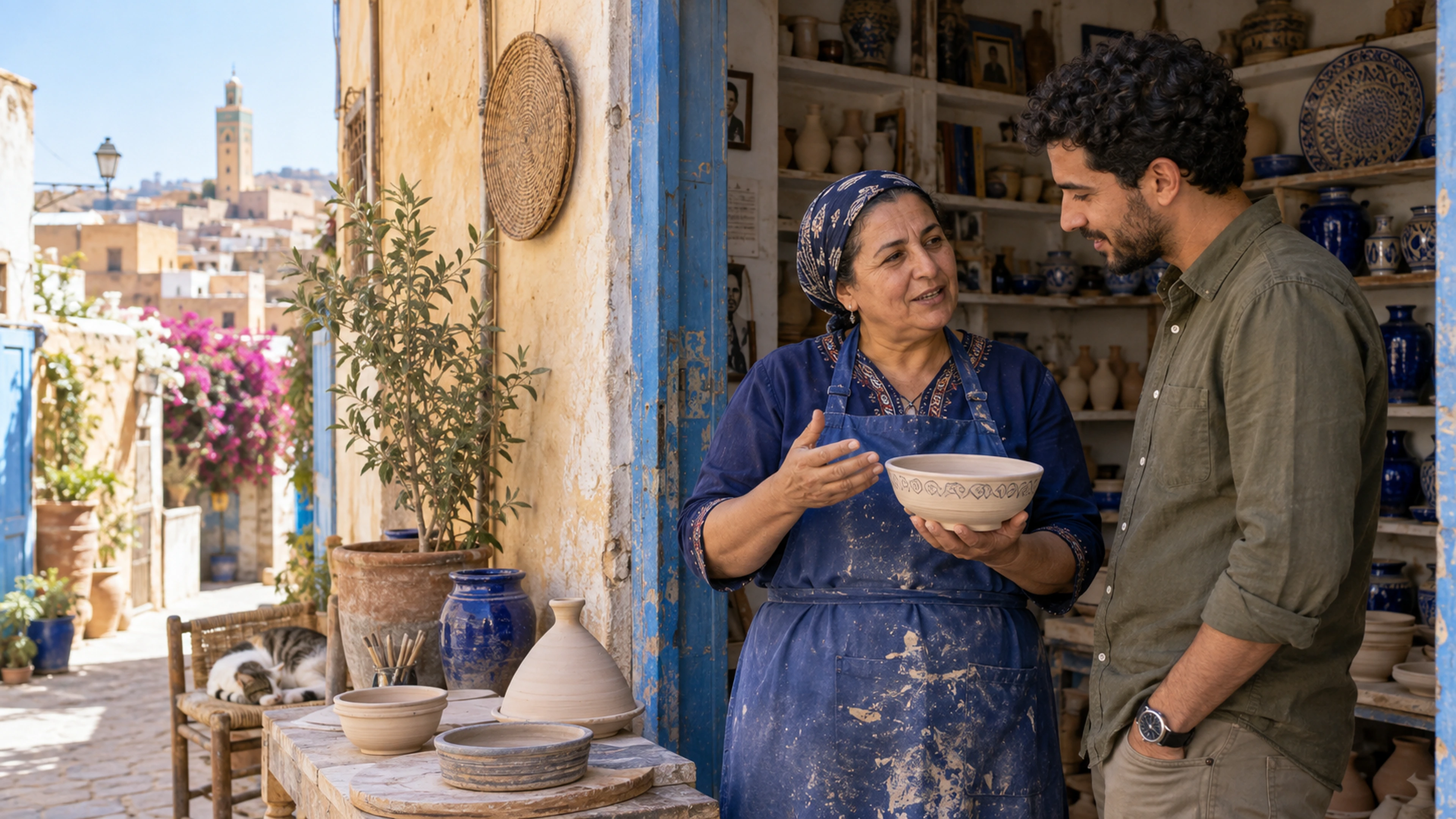
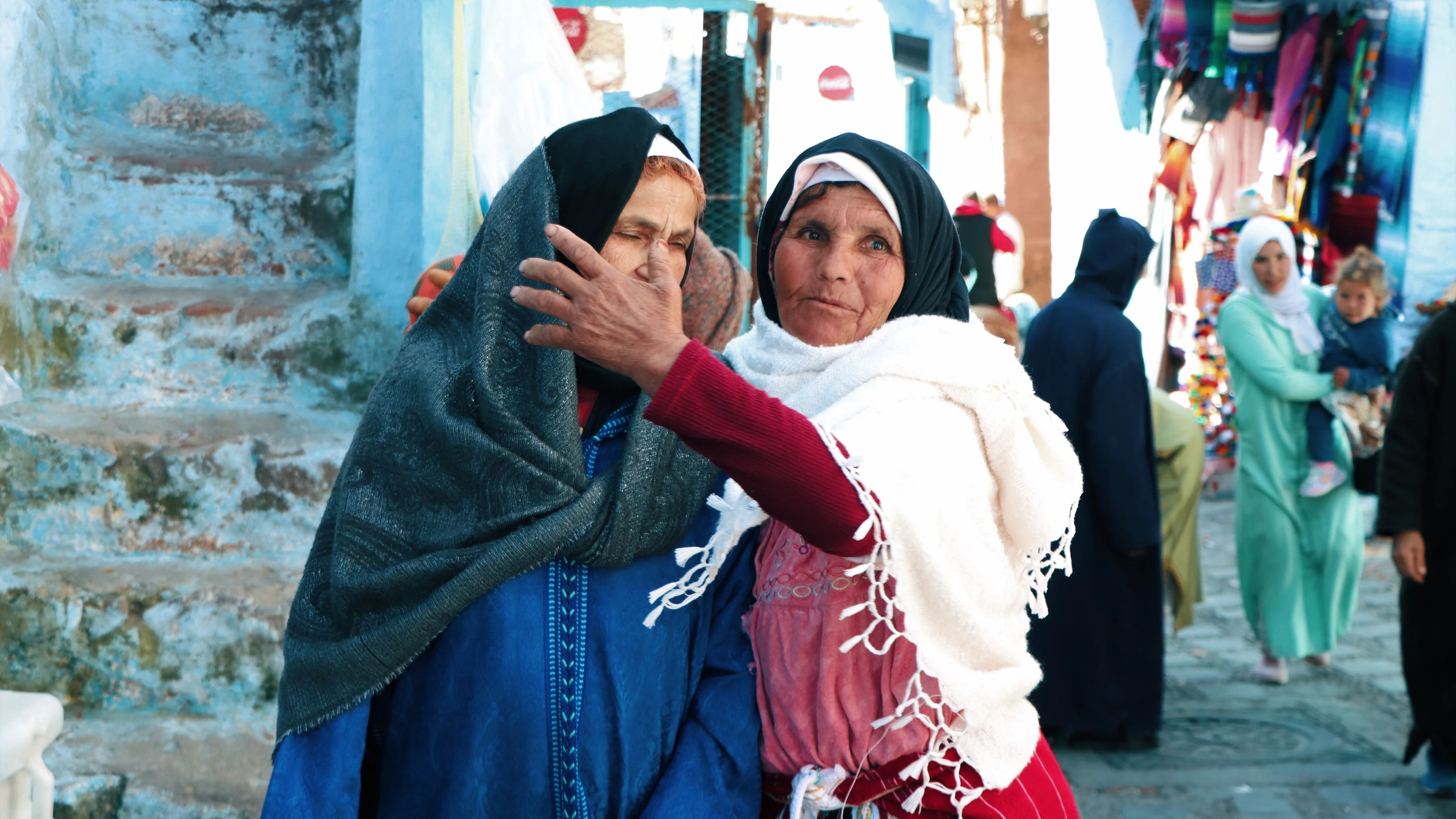
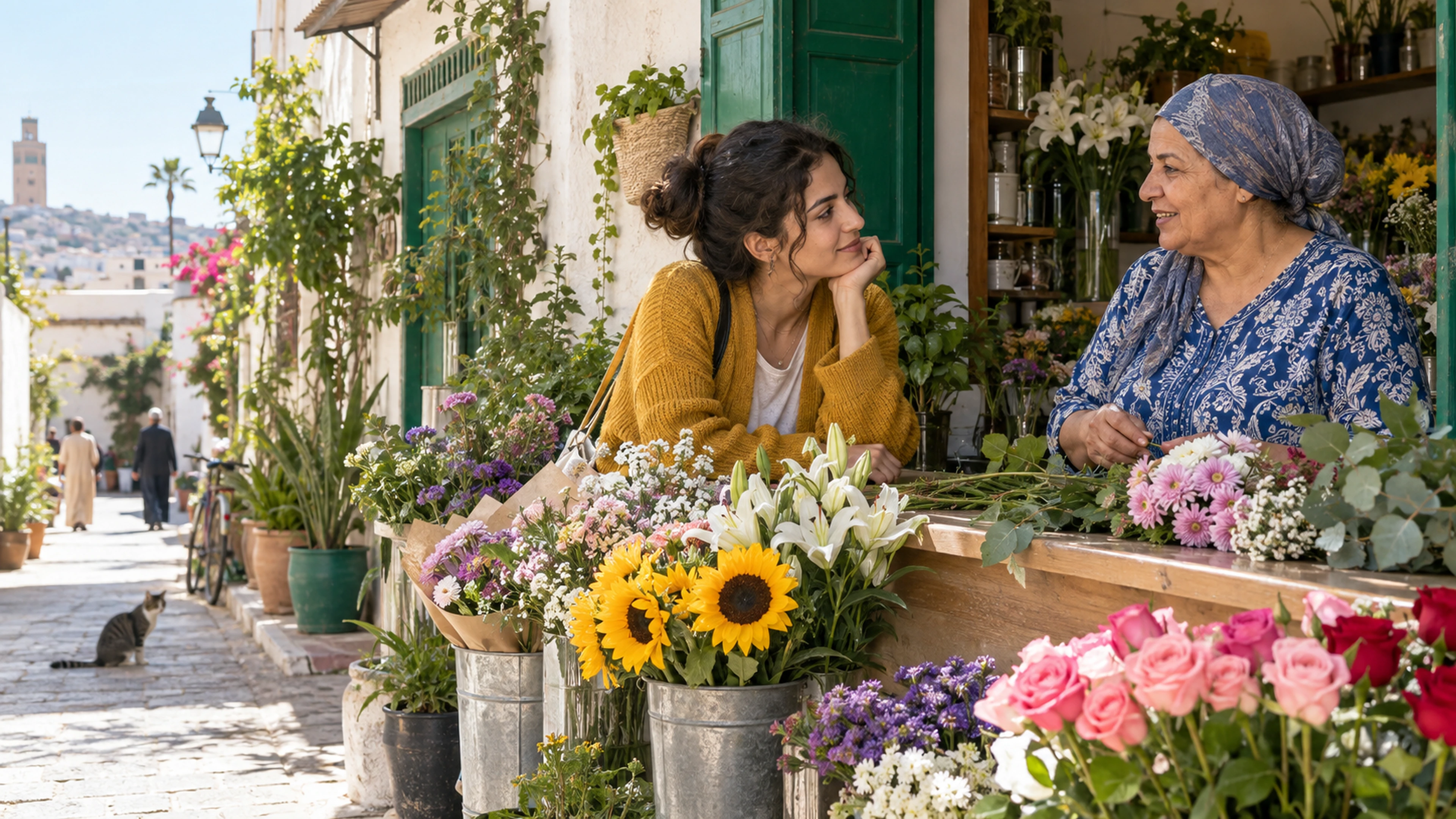
Spellings and pronunciation vary. Hyphens help show parts of an expression; they are not instructions to pause. Learn the rhythm from a willing speaker or a reliable recording. Examples are brief practice scenes, not transcripts of the people in the photographs. Relevant masculine, feminine and plural address forms are labelled.

04 / The visual chapter

The setting changes the exchange.

Look beyond the phrase. Objects, working spaces and shared routines give a conversation its practical meaning.

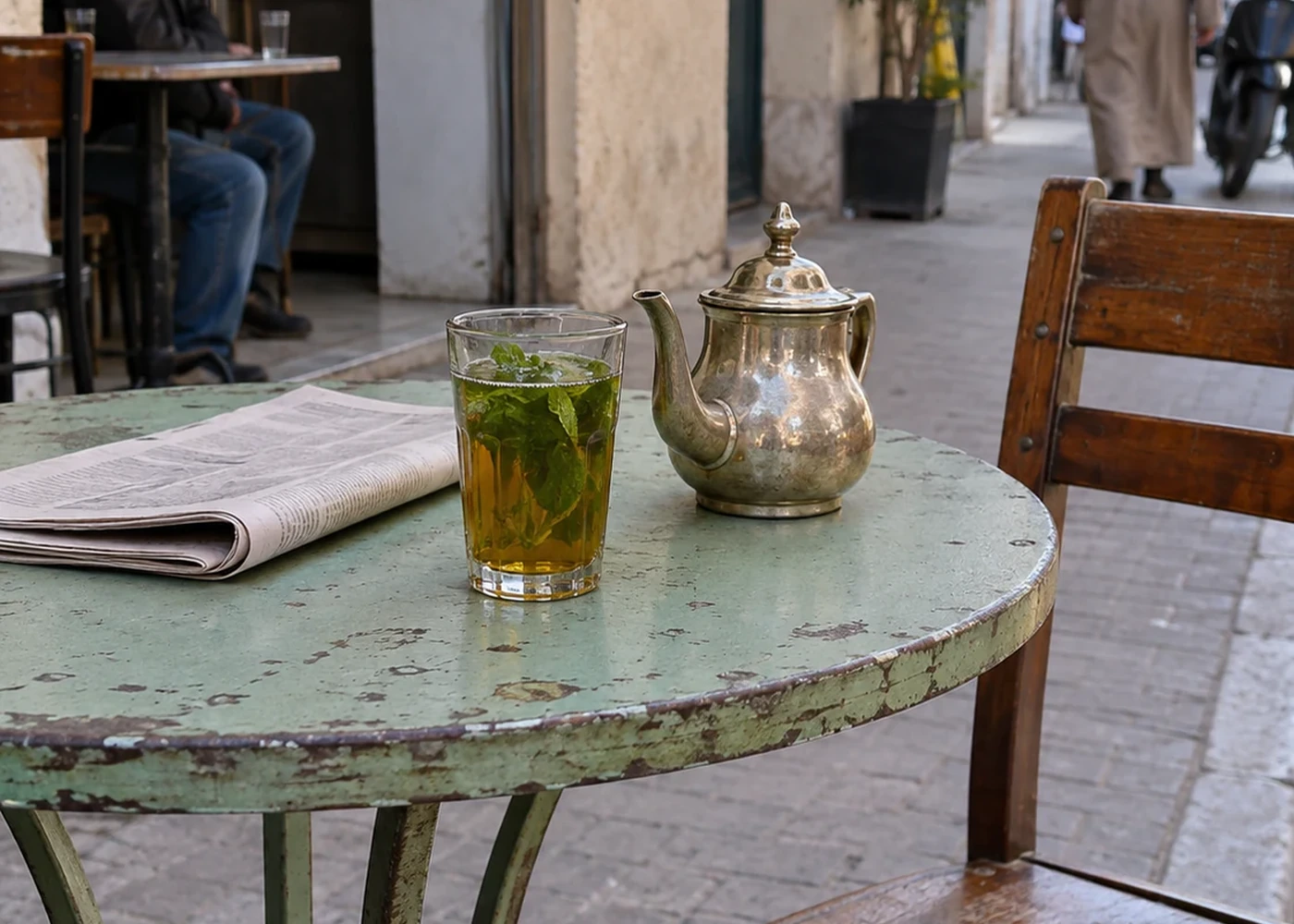
A café table with tea and a newspaper
01 / Language in daily life

One familiar order

A café gives a small request a visible setting. Learn the drink word, ask clearly and listen for a follow-up about quantity. On your next visit, notice whether you recognise more of the answer. Repetition is useful when it increases understanding rather than simply making the same memorised sentence faster.

A café table with tea and a newspaper
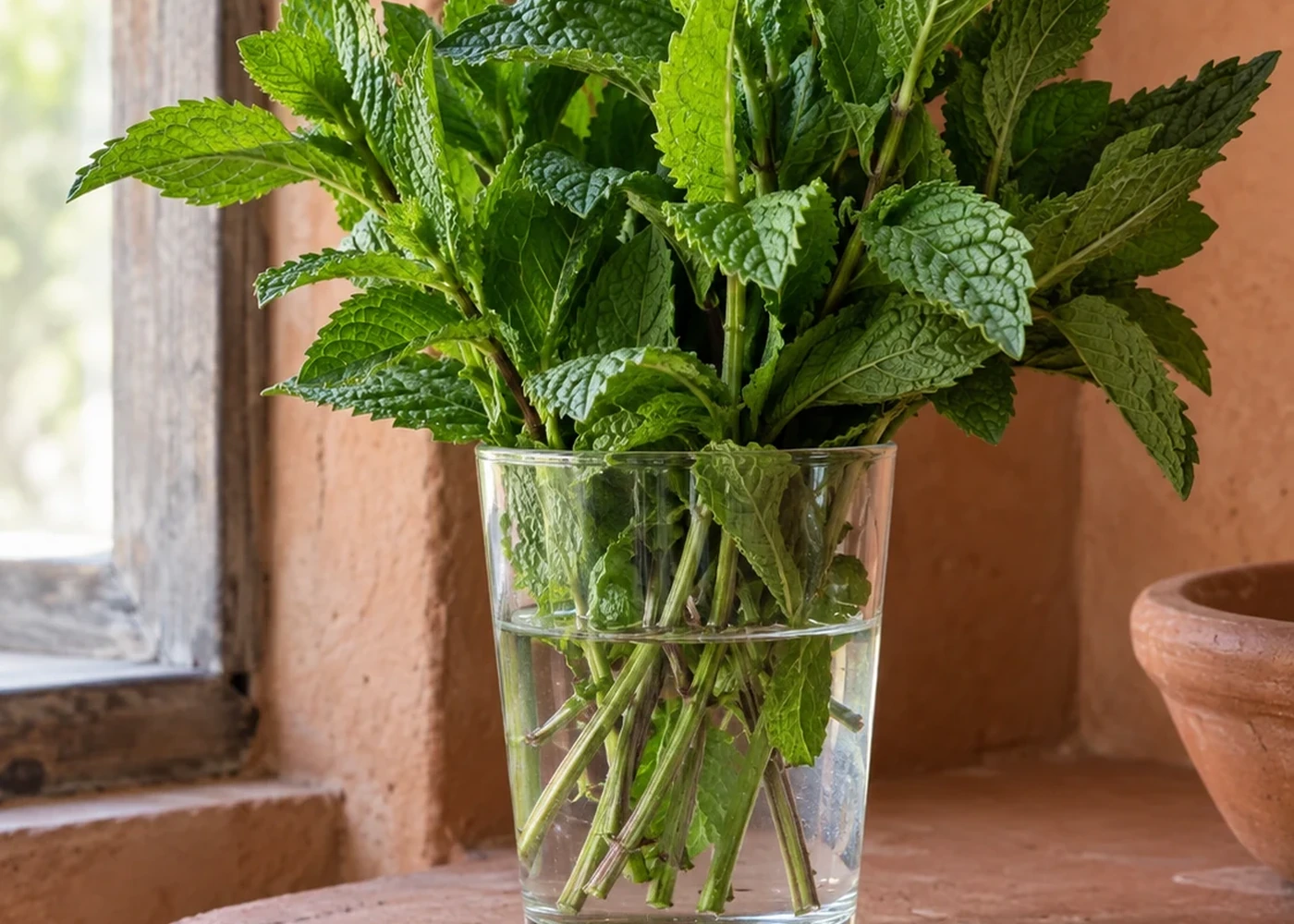
Fresh mint in a glass by a window
02 / Language in daily life

One new noun

A tangible object can anchor a new word. Ask a willing speaker what the mint is called, then listen before trying to repeat it. Record the word with its context. You have learnt something about this ingredient and this exchange; you have not learnt every regional name or every way it might enter a sentence.

Fresh mint in a glass by a window
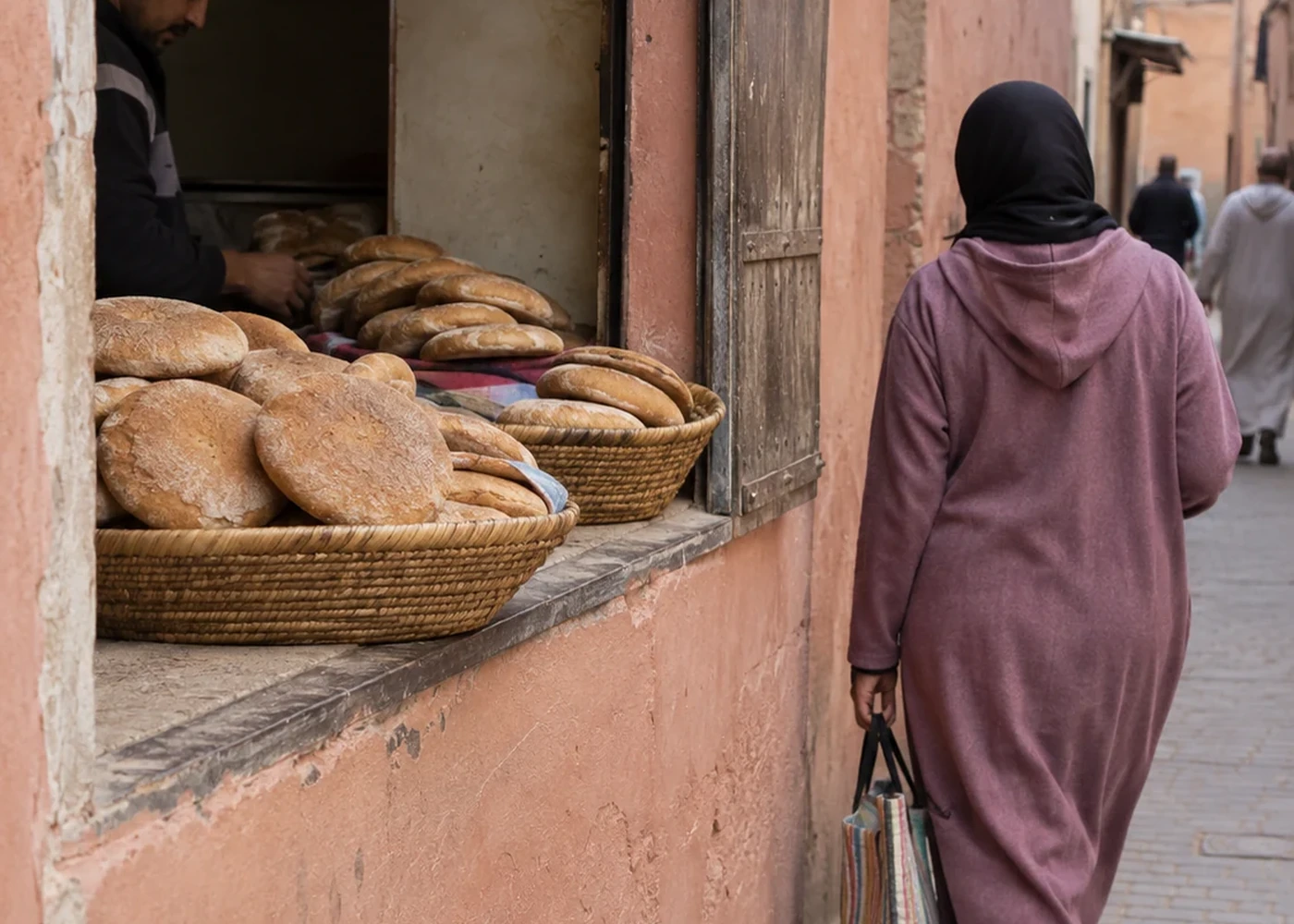
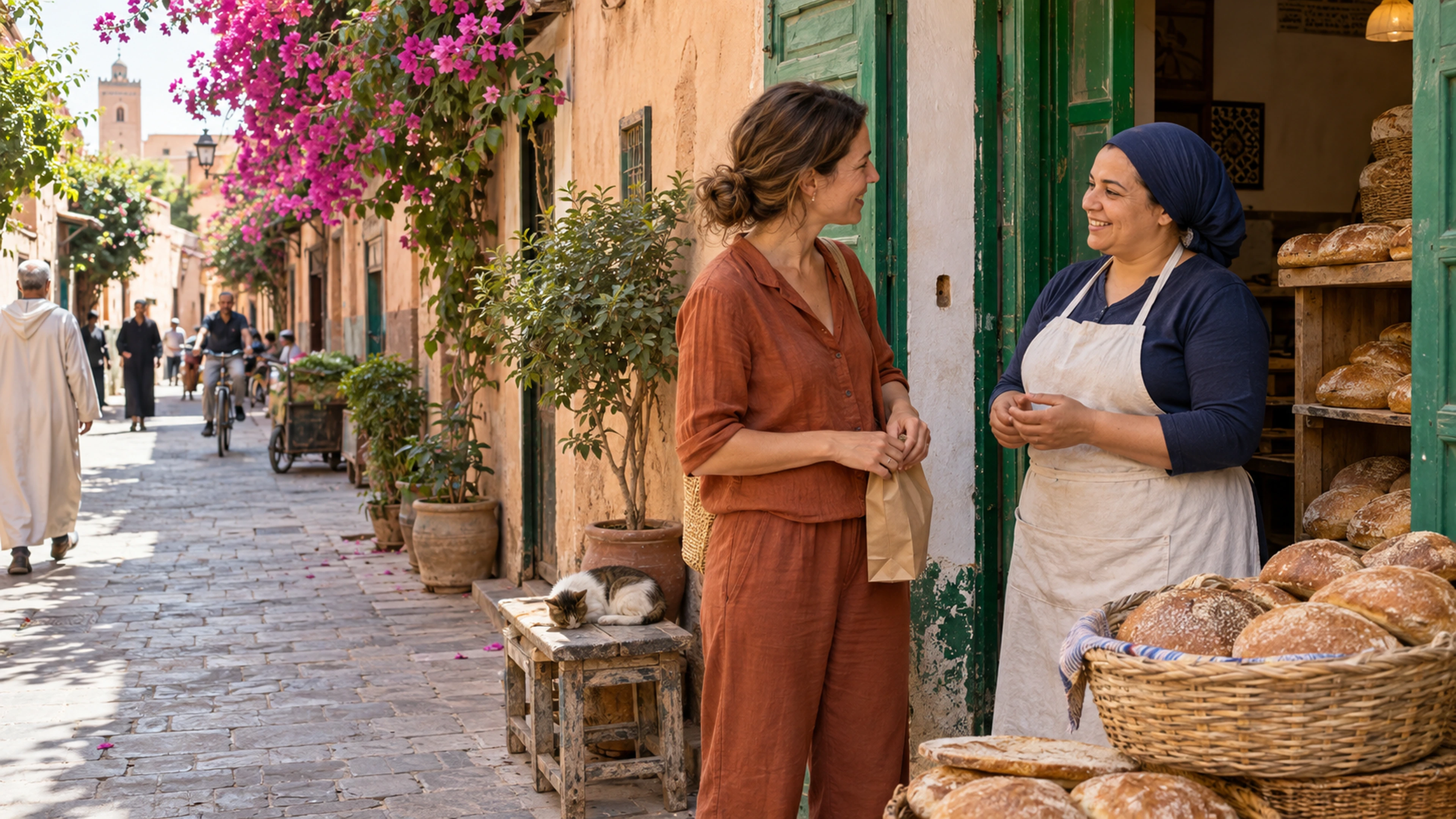
A bread counter on a neighbourhood street
03 / Language in daily life

One repeated routine

A bakery visit has a practical rhythm: wait, greet, specify what you want, hear the amount and thank the seller. Practise one part at a time. If the shop is busy, keep the language exercise for later. The transaction should remain easy for the person helping you.

A bread counter on a neighbourhood street
06 / Try it with attention

Learn one exchange before ten new words.

Try a greeting, one request and a thank-you with a patient conversation partner. Then reverse roles: let them ask and practise recognising the question. This exposes the gap between being able to say a sentence and being able to use it. Keep a small note of the reply you actually heard, including any different spelling or pronunciation. That personal record will become more useful than a list you never revisit.

Try it once slowly, then let your partner change the answer. Listen for what changes before choosing your next phrase.

For a first practice session, choose one exchange you can complete without a script: greeting, reply, a small request and thanks. Write the two speakers on separate lines. Cover your own line and listen to the other person before responding. If you always begin first, you may be learning a speech rather than a conversation.

Afterwards, keep only the words you actually used. Record the setting and the response as well as your own sentence. On a later day, try the same exchange with one detail changed. This gives you a useful way to notice progress: less guessing about the reply, more attention available for the person.

07 / A more useful conversation

Questions worth asking.

A little nuance makes a phrase more useful.

Do I need to read Arabic first?

No. These introductory exchanges can be practised through listening and simple transliteration. Arabic literacy becomes useful for wider study, but our Latin spellings should not be mistaken for a complete account of the sounds.

Is Darija the same everywhere?

No. Pronunciation, vocabulary and conversational habits vary. The examples are a practical starting point drawn from a Moroccan Arabic teaching reference, with approachable spellings. A local speaker may offer a different natural form.

What if someone answers in another language?

Use the language that makes the exchange comfortable for both of you. A switch may be an attempt to help. You can explain that you are learning if there is time, but completing a purchase or giving directions need not become a lesson.

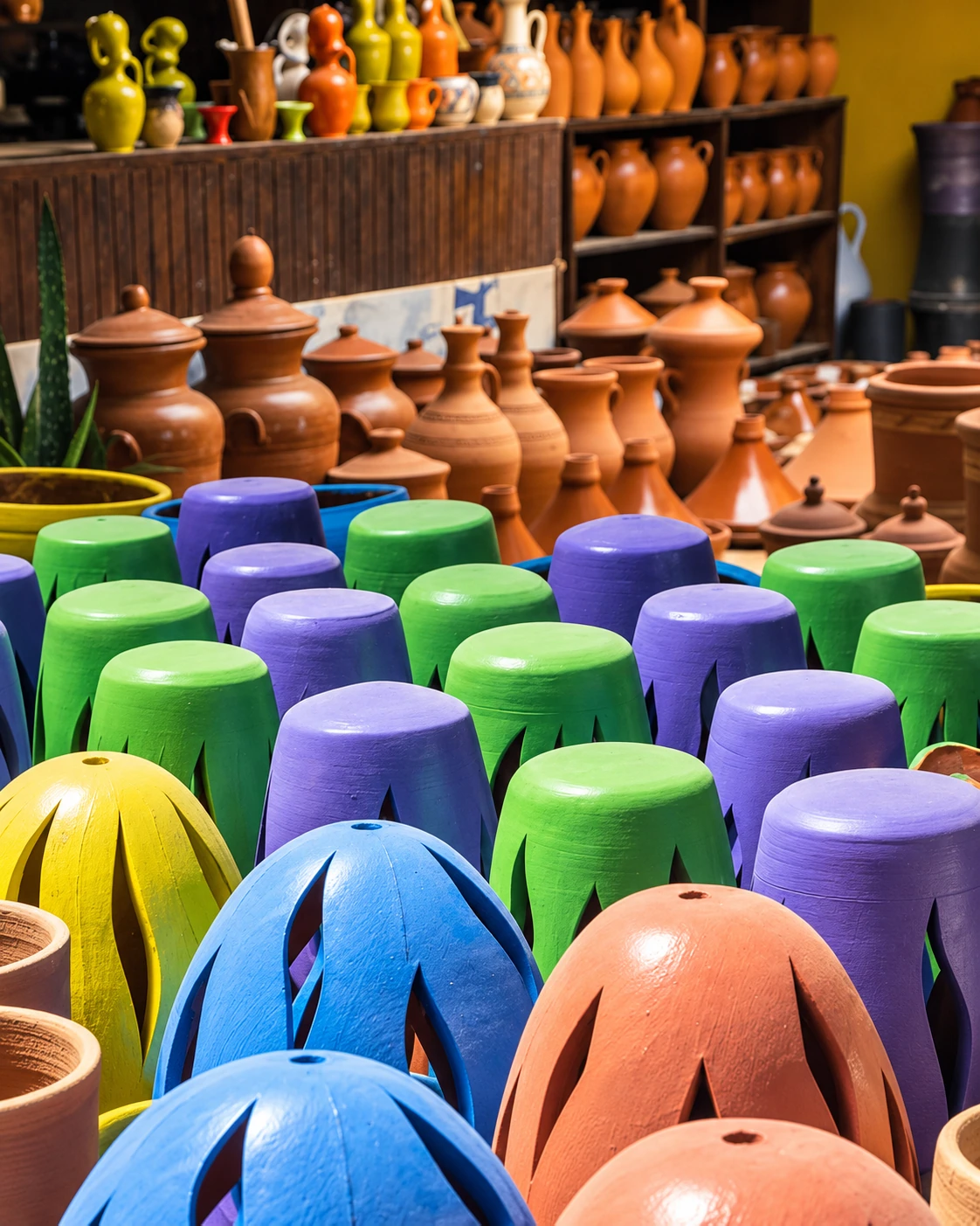
Colourful ceramic vessels in a pottery display
The Exotic Morocco guide library

Keep the conversation going.

Take Darija Basics further.

This public chapter is free to explore. The companion guide is in preparation, with space planned for fuller phrase sets, practice exchanges and more detailed language notes.

Find current availability in the guide collection.

Explore this guide ↗Back to the Darija collection ↗
Sources & further reading

Language references

  1. Peace Corps Morocco · Moroccan Arabic textbook (2011) — transcription; greetings; useful expressions; numbers; shopping; directions; restaurant language.
  2. IRCAM · Amazigh language teaching resources — wider multilingual context.