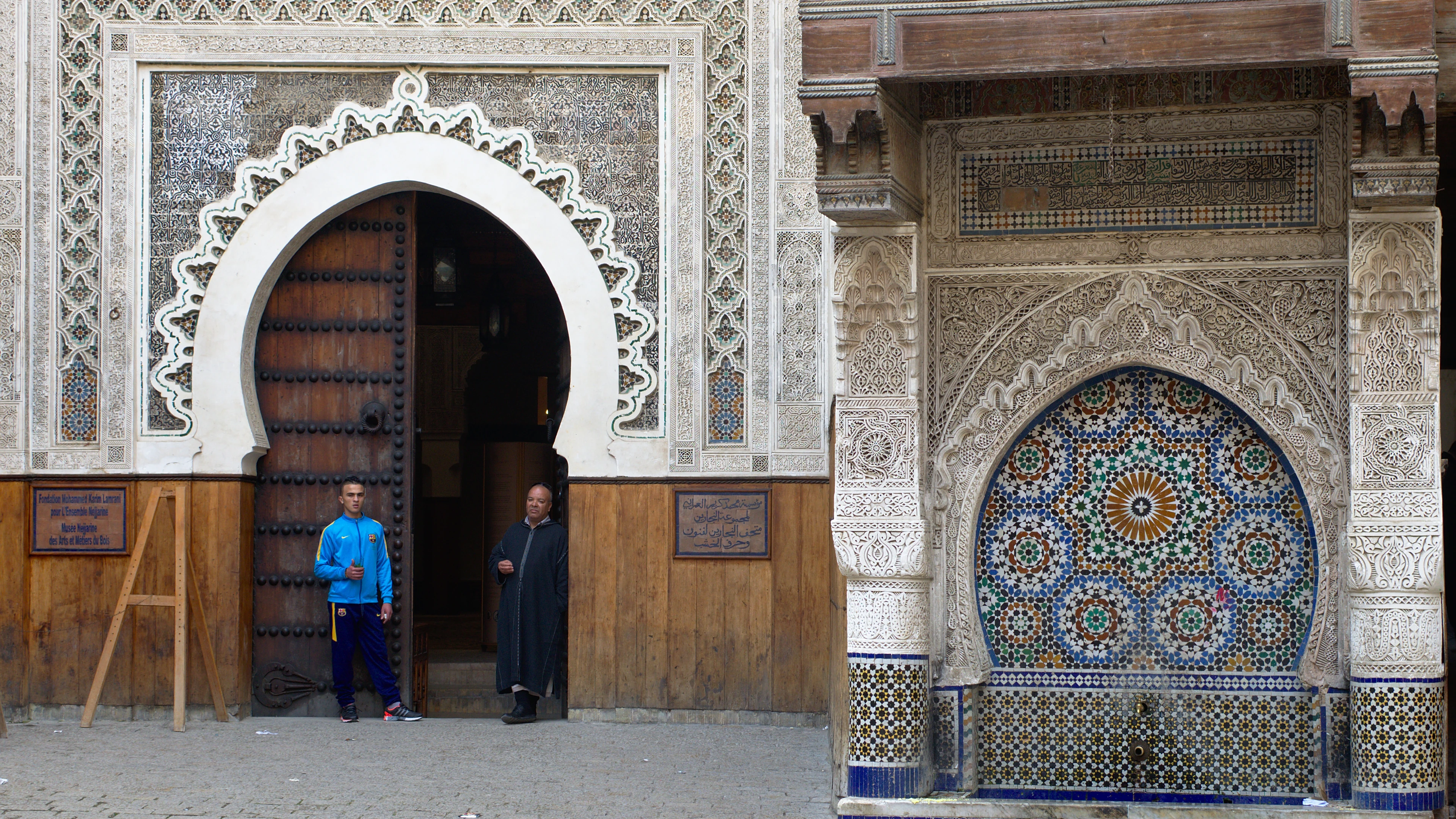
Fès, a living archive
A city’s records can be held in walls, objects and practiced skills. Reading Fès means leaving room for the people who keep it alive.
Read the story ↗
Exotic Morocco · Stories
Five places, five ways into the streets, institutions and working life behind a familiar image.
Enter the story ↓01 / The starting point
A city photograph often finds one convincing emblem: a gateway, a blue stair, a tiled fountain. It can be an excellent beginning. The next question is what the frame has left out. Routes, water, workshops, museums and households connect the landmark to a place that continues beyond it.
Read these essays as different approaches rather than a league table of destinations. Fès brings written records and practiced knowledge into the same view. Meknès changes the distance between imperial infrastructure and a museum room. Tétouan connects migration to an urban plan. Larache follows the coast into work and archaeology, while Chefchaouen returns the mountain to the blue photograph.
02 / Choose your first encounter
Choose the essay that brings this subject into focus.
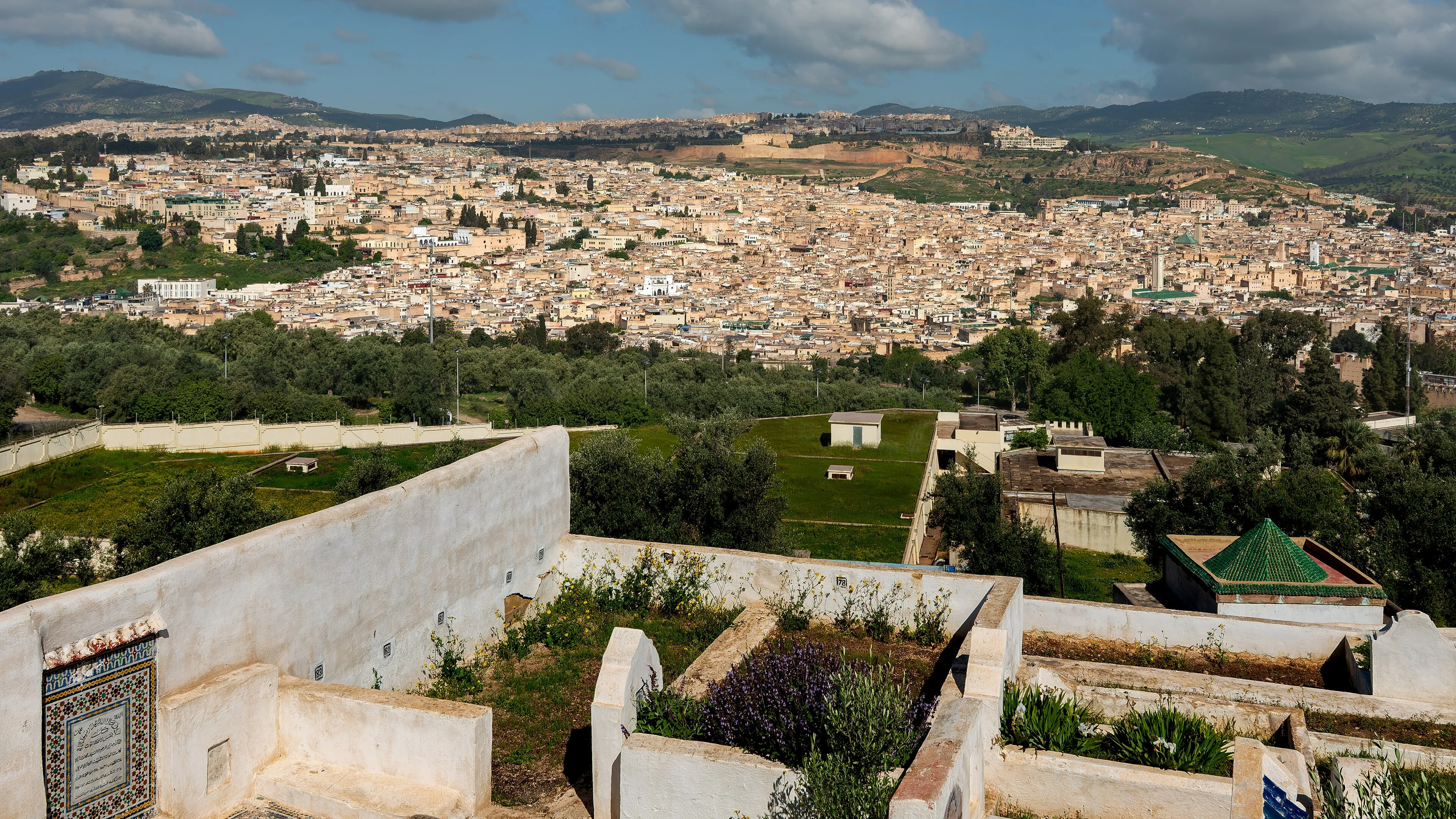
A city’s records can be held in walls, objects and practiced skills. Reading Fès means leaving room for the people who keep it alive.
Read the story ↗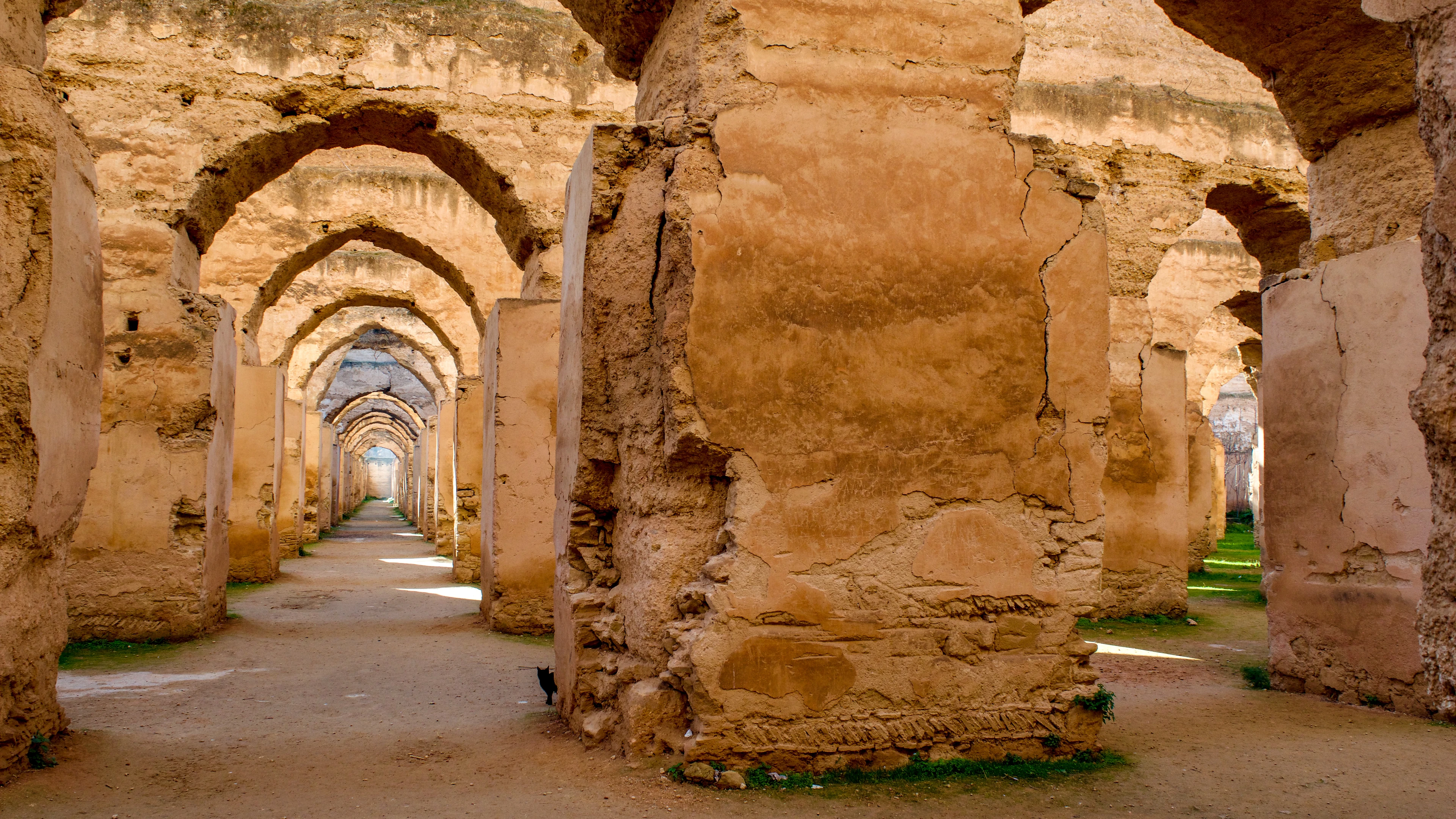
Behind the famous gateway is a city of water, provision, markets and music. Change the scale, and another Meknès appears.
Read the story ↗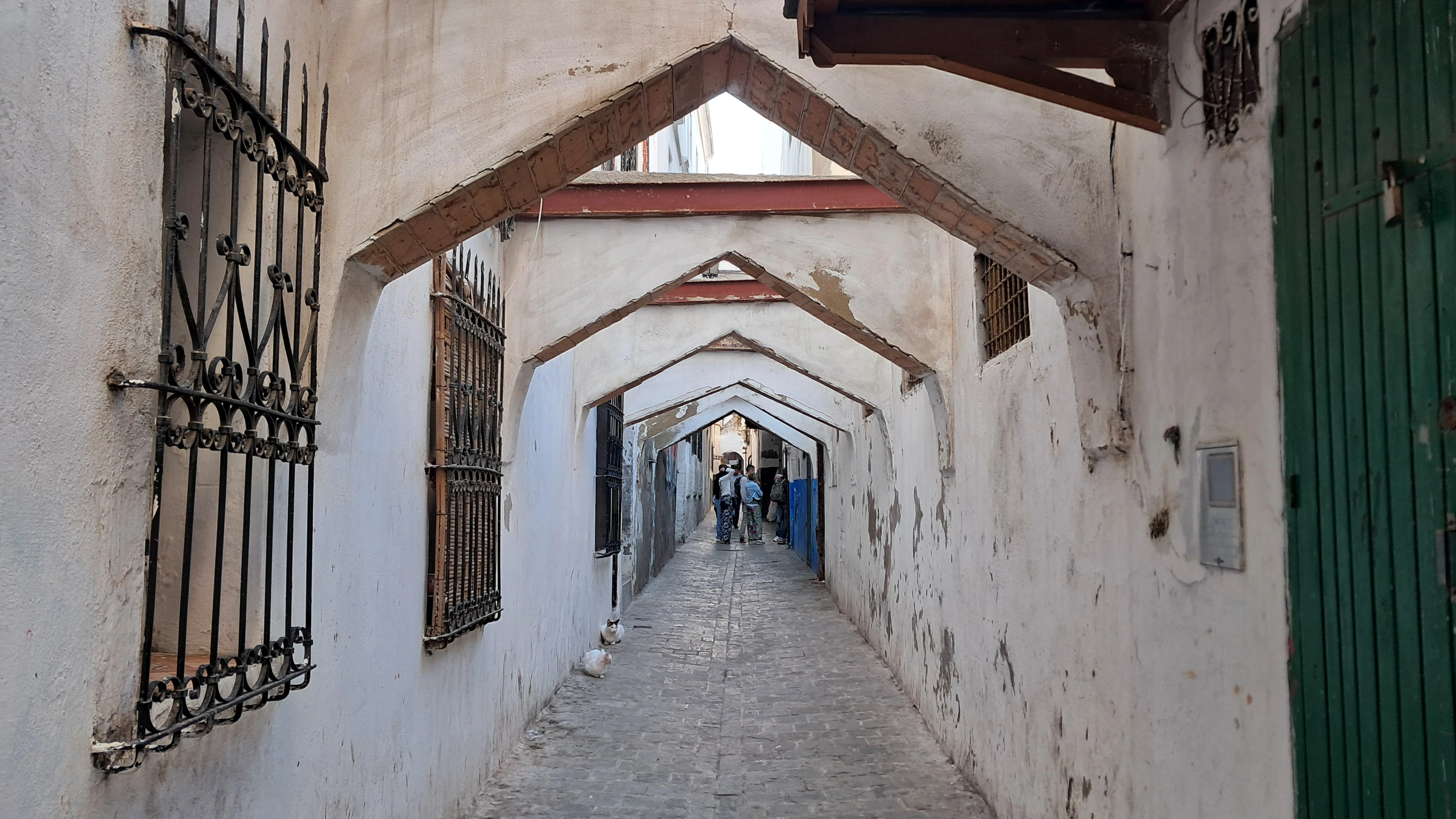
Across a white hillside city, streets, thresholds and working crafts reveal an inheritance carried by people.
Read the story ↗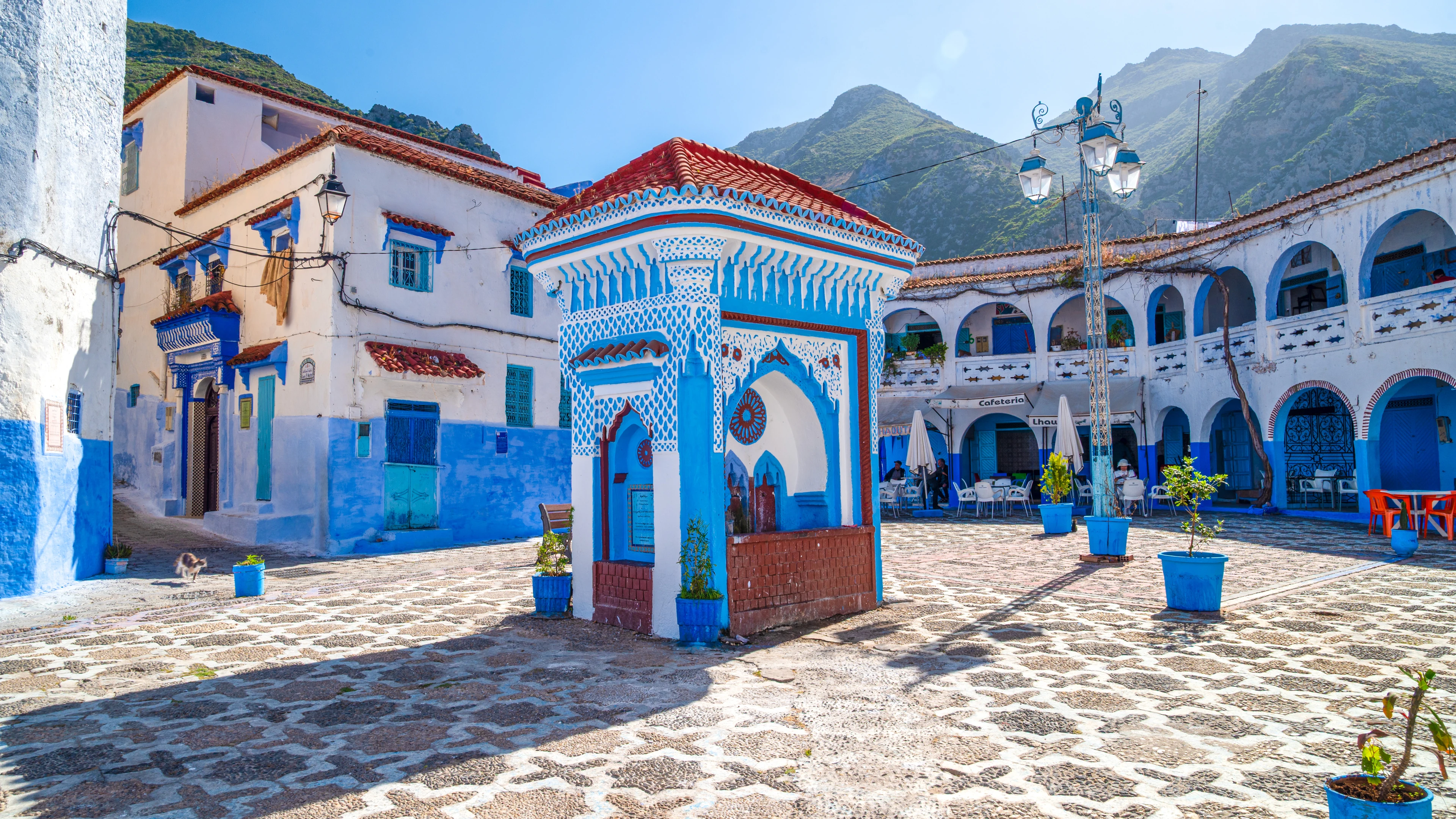
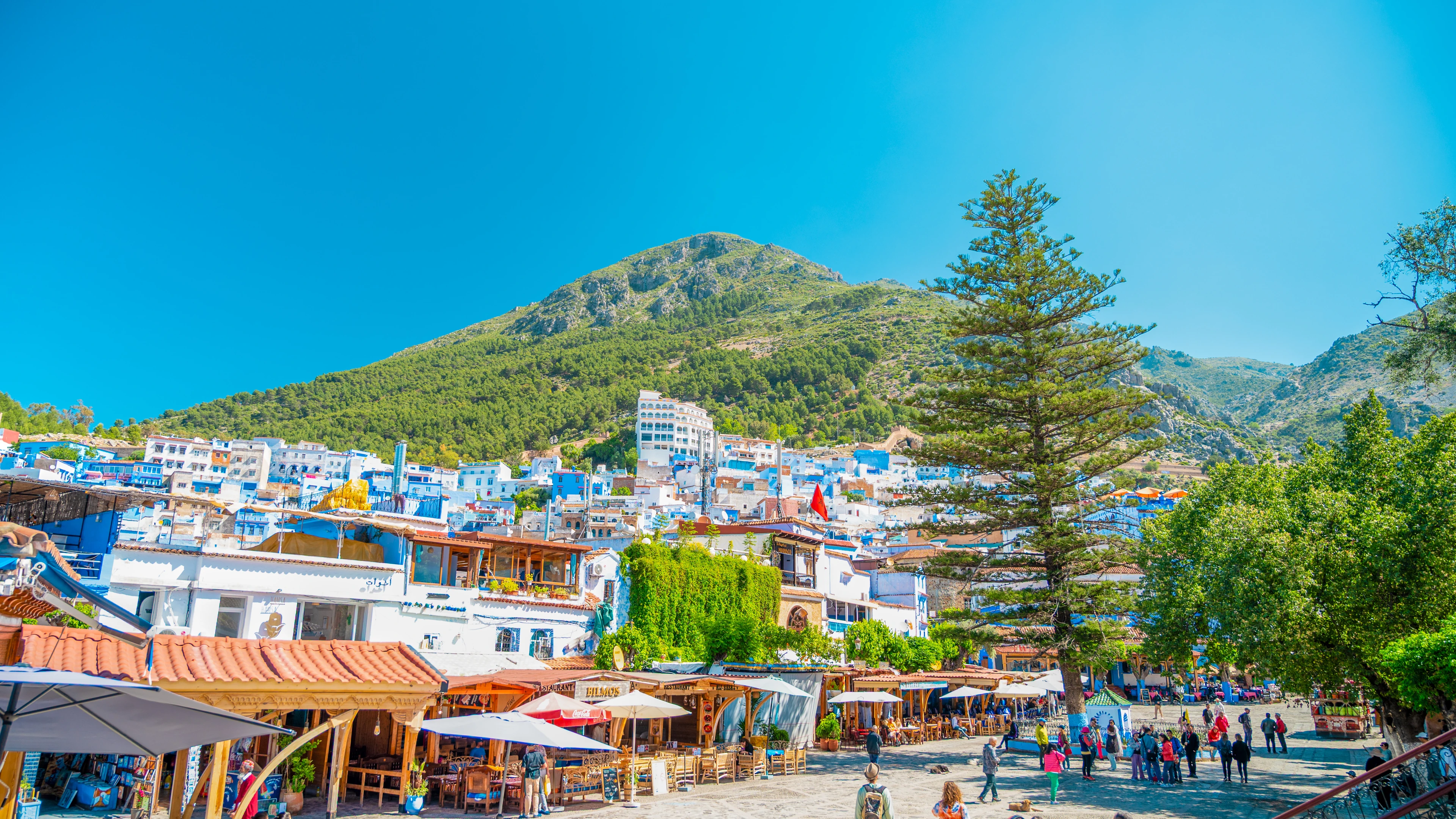
The colour draws you in. Mountains, ochre walls, water and food give the photograph a much larger story.
Read the story ↗03 / Look closer
A market route is shaped by transactions, deliveries and people who need to move through it. A residential passage serves a different purpose. Notice the change before deciding where to stop for a photograph. Reading a city through its ordinary uses does not make it less beautiful; it makes the architecture more intelligible. Pair a city essay with a guide to medinas, then let the particular streets correct any expectation of a single universal plan.
04 / The story in context
A landmark helps a visitor find a city, but it can also hold the gaze too tightly. The Meknès essay begins with a familiar gateway and then changes the scale of the question. What had to be provided beyond the monumental view? What kinds of movement and work connected the parts of the city? The celebrated image becomes an opening rather than a conclusion.
Try the same movement in another story. Begin with the recognisable feature, then follow the street or the practical relationship that extends beyond it. You do not need to turn away from the beautiful view. You need a second way of looking that keeps the rest of the city in the account.
Read the five city essays as different ways of organising a city. Fès brings institutions and workshops into the same frame. Meknès asks how imperial space depended on provision. Tétouan follows routes between gates and residential lanes. Chefchaouen places a familiar colour within mountain terrain, while Larache keeps an estuary, port and archaeological site in conversation.
Their differences become clearer if you compare the same kind of encounter: a public square, a working doorway or a change from street to interior. Record the place and the activity you actually saw. A comparison grounded in those details reveals more than ranking cities by how ‘authentic’ they seem.
A different distance
The visitor’s day is organised by a route. A resident’s day may be organised by work, errands, school or a meeting elsewhere. Those schedules occupy the same streets without having the same purpose. Reading the city as a living place means allowing an ordinary doorway or a busy counter to remain ordinary, even when it falls inside an attractive scene.
The Fès story approaches this through the idea of an archive that is still being made. Walls and objects matter, but so do the practiced skills and decisions that keep them in use. A city is not explained by its oldest surviving features alone. The present belongs in the story without needing to be presented as an interruption.
A different distance
A return visit within a short stay can be more revealing than another distant stop. Notice what you recognise and what has changed in your attention. Perhaps the route is less confusing, or a detail mentioned in a museum now has a visible counterpart in the street. The place has not become yours; your way of reading it has become less hurried.
Use the city guides to make that time possible. Choose a base and a manageable walking sequence, then leave an opening for following a question. The city stories offer ways to deepen the visit, not a demand to reproduce somebody else’s route exactly. Their value is in what they help you notice when you begin looking for yourself.
Story pathways
Cities, cultural context and a connected essay, chosen for this subject.
Learn Understand the medina Routes, thresholds and the organisation of historic urban space. Explore ↗
Explore the context ↗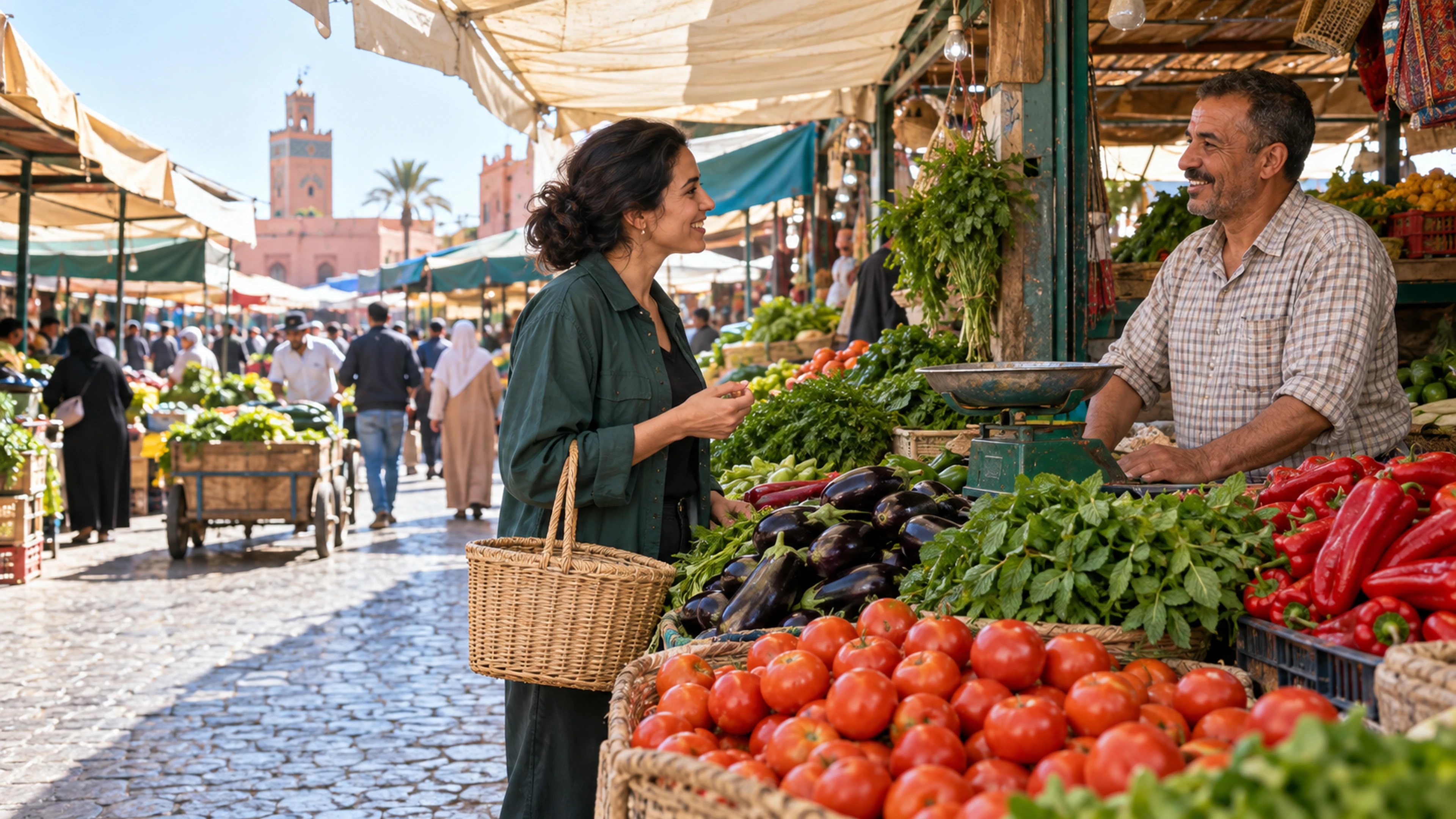
Darija A conversation in the market Language for a specific exchange, with context and respect. Explore ↗
Explore the context ↗A city’s records can be held in walls, objects and practiced skills. Reading Fès means leaving room for the people who keep it alive.
Explore the story ↗Behind the famous gateway is a city of water, provision, markets and music. Change the scale, and another Meknès appears.
Explore the story ↗Continue reading
Keep the subject in view as you choose your next chapter.
A city’s records can be held in walls, objects and practiced skills. Reading Fès means leaving room for the people who keep it alive.
Read the story ↗Behind the famous gateway is a city of water, provision, markets and music. Change the scale, and another Meknès appears.
Read the story ↗Across a white hillside city, streets, thresholds and working crafts reveal an inheritance carried by people.
Read the story ↗The colour draws you in. Mountains, ochre walls, water and food give the photograph a much larger story.
Read the story ↗This reading room connects published stories with contextual guides. Each linked story includes its own research and photography notes.
Photography is identified through the linked source records. Crops and responsive sizes were prepared for this layout.
Research checked 27 September 2026.

.jpg)
.jpg)


