Why Volubilis matters
A frontier city before it is a ruin.
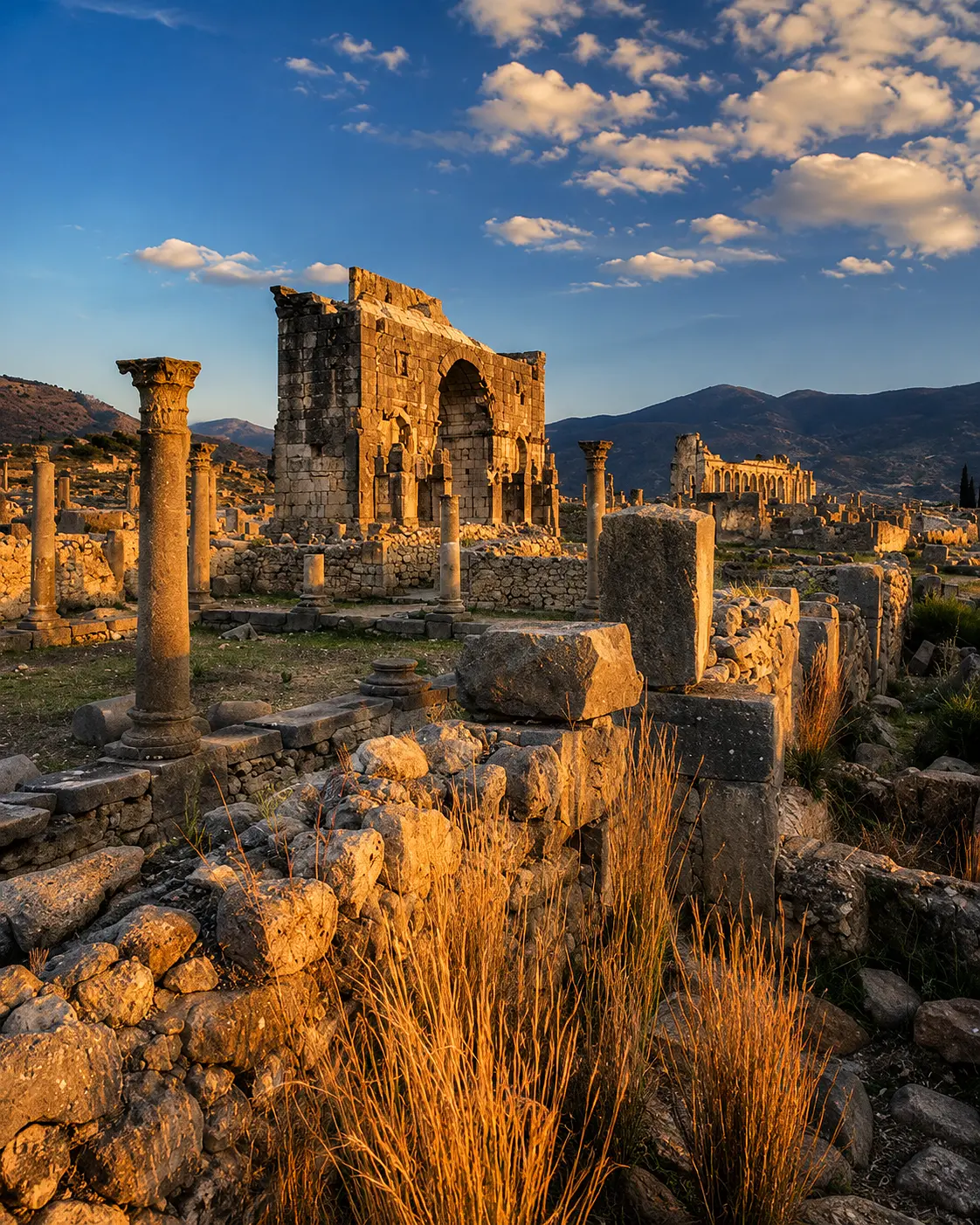
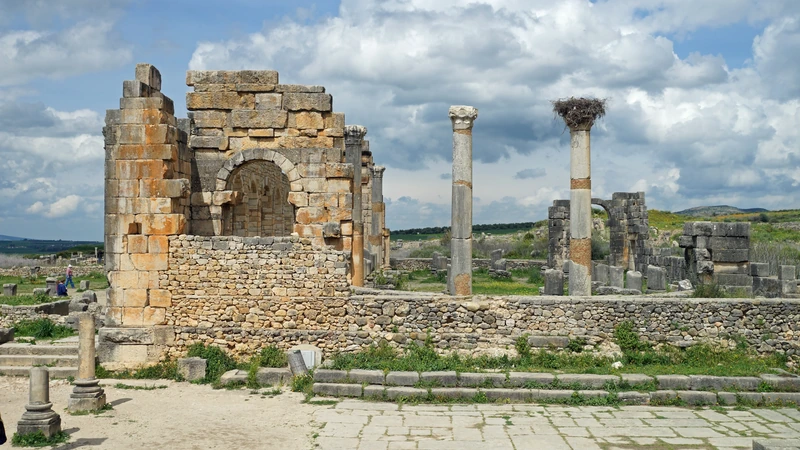
Volubilis matters because it keeps several Moroccan histories visible in one landscape. UNESCO identifies the site as a Mauretanian capital founded in the third century BC, later an important Roman outpost, and later still a place briefly connected to Idris I, founder of the Idrisid dynasty.
The site is especially valuable because it shows urban life at the edge of Roman power rather than at its centre. Its streets, ramparts, public spaces, houses, inscriptions and mosaics point to exchange between Mediterranean, Libyco-Berber, Mauritanian, Roman, Christian and Arab-Islamic layers.
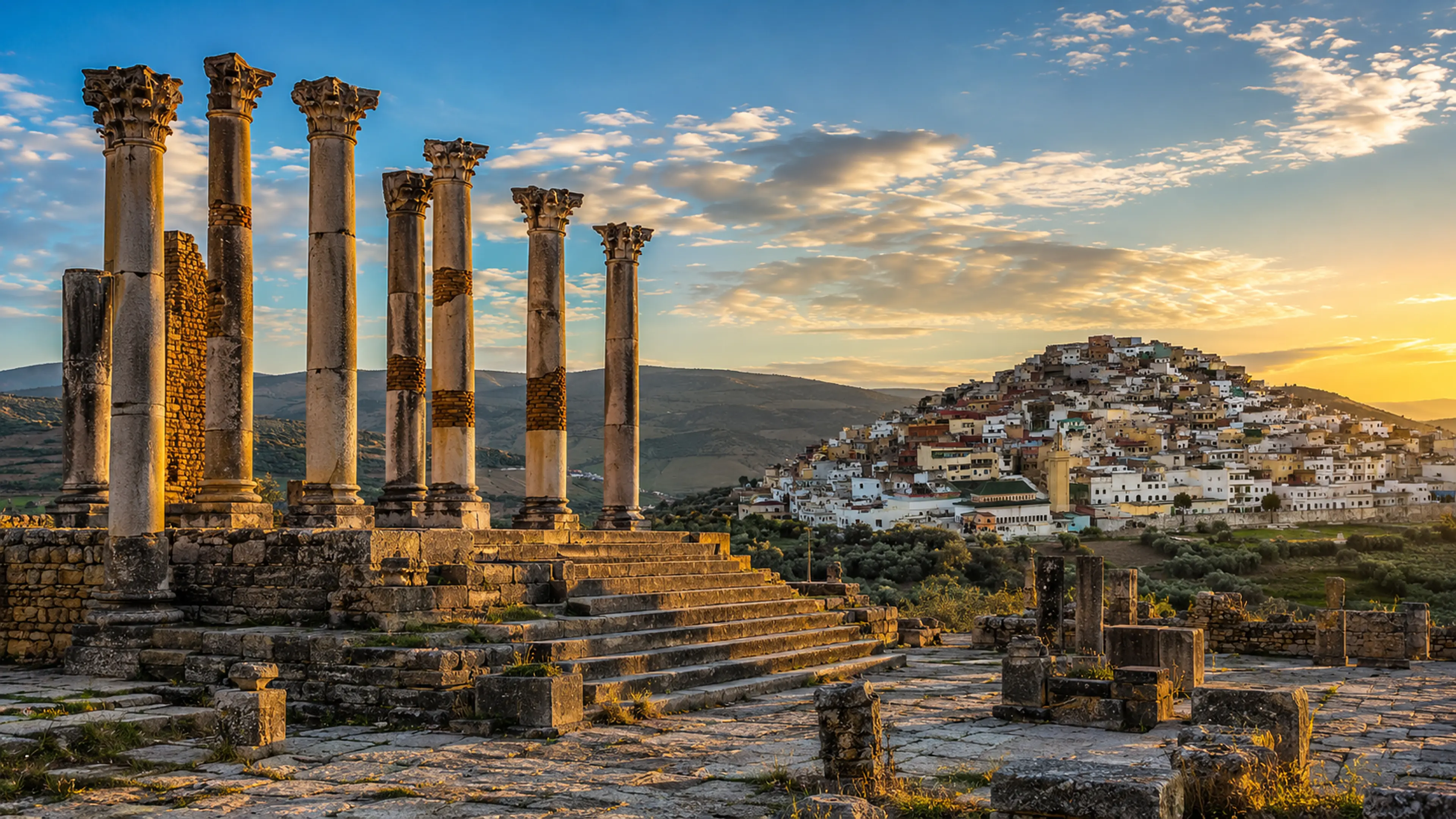
Moulay Idriss Zerhoun gives the visit a second register. The town is not a decorative backdrop; it is part of the same historical field. UNESCO notes that Idris I is buried nearby and that the town is associated with annual pilgrimage, which gives the archaeological landscape a living spiritual horizon.
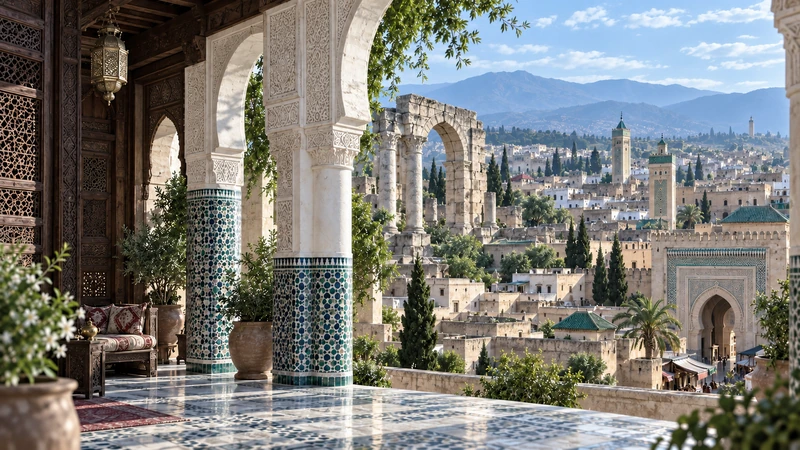
For visitors, the strength of the place is this double reading: Volubilis makes ancient urban order legible through stone and plan, while Moulay Idriss reminds the eye that Moroccan time did not stop with Rome. The view holds continuity, transformation and memory in one frame.
The best visit therefore begins with context. Walk the ruins for their archaeology, but keep the hills, farms, paths and nearby town in mind. The site is powerful because architecture, agriculture, empire, local culture and Idrisid memory all occupy the same ground.
Core heritage facts are grounded in the UNESCO World Heritage Centre listing for the Archaeological Site of Volubilis. Practical details such as prices, opening hours, access arrangements and transport times should be checked close to travel.