Skip to learning
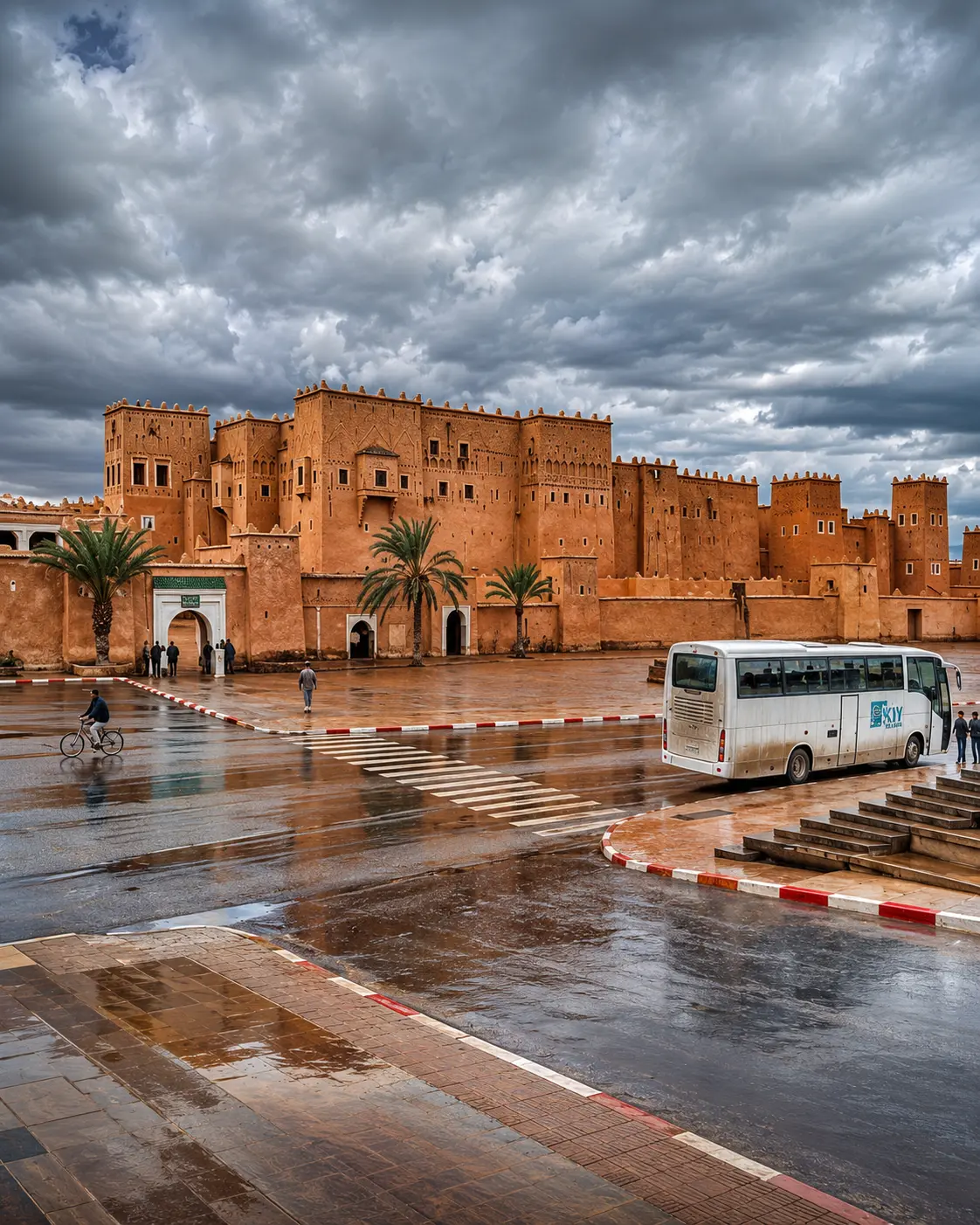
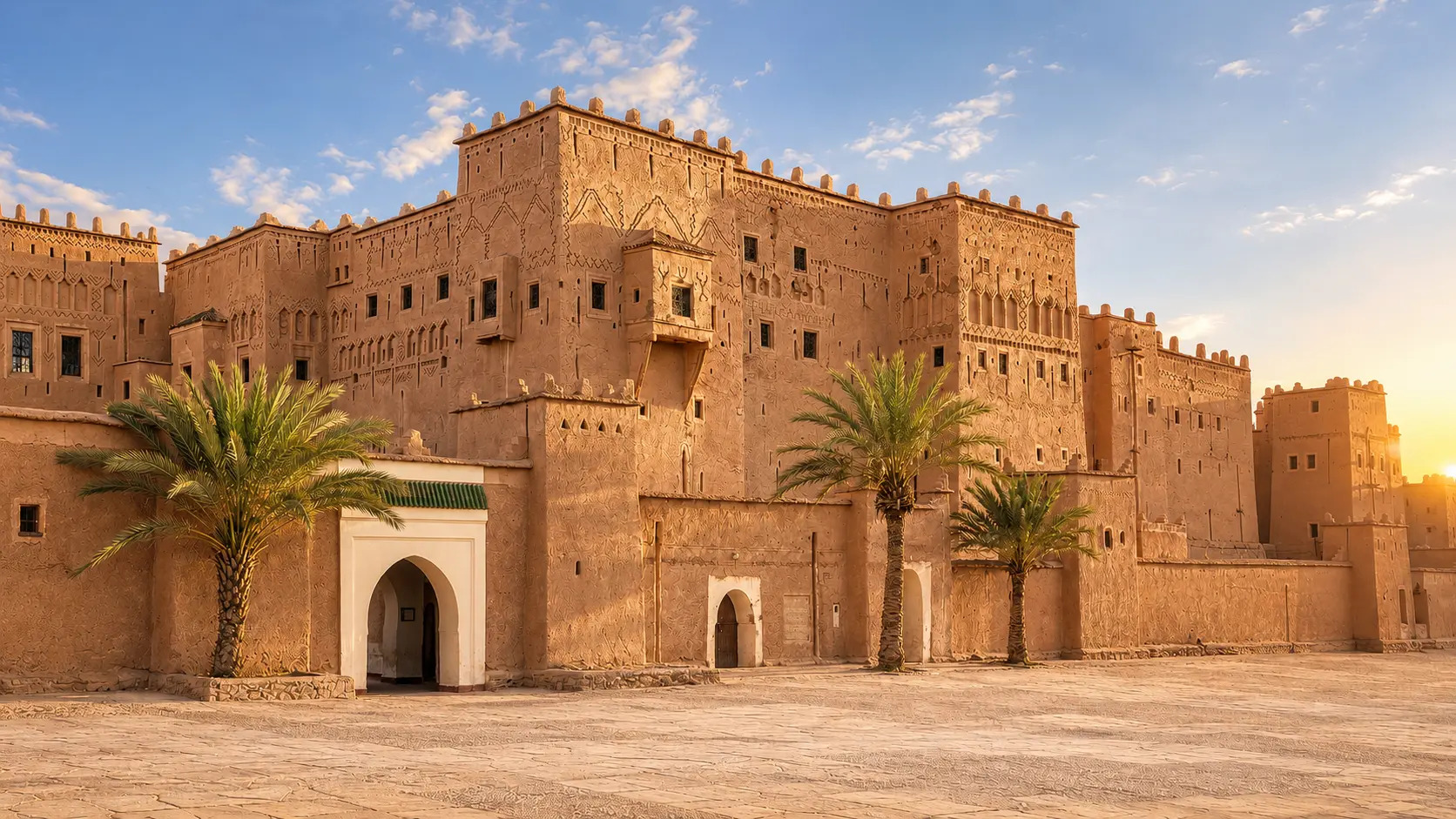
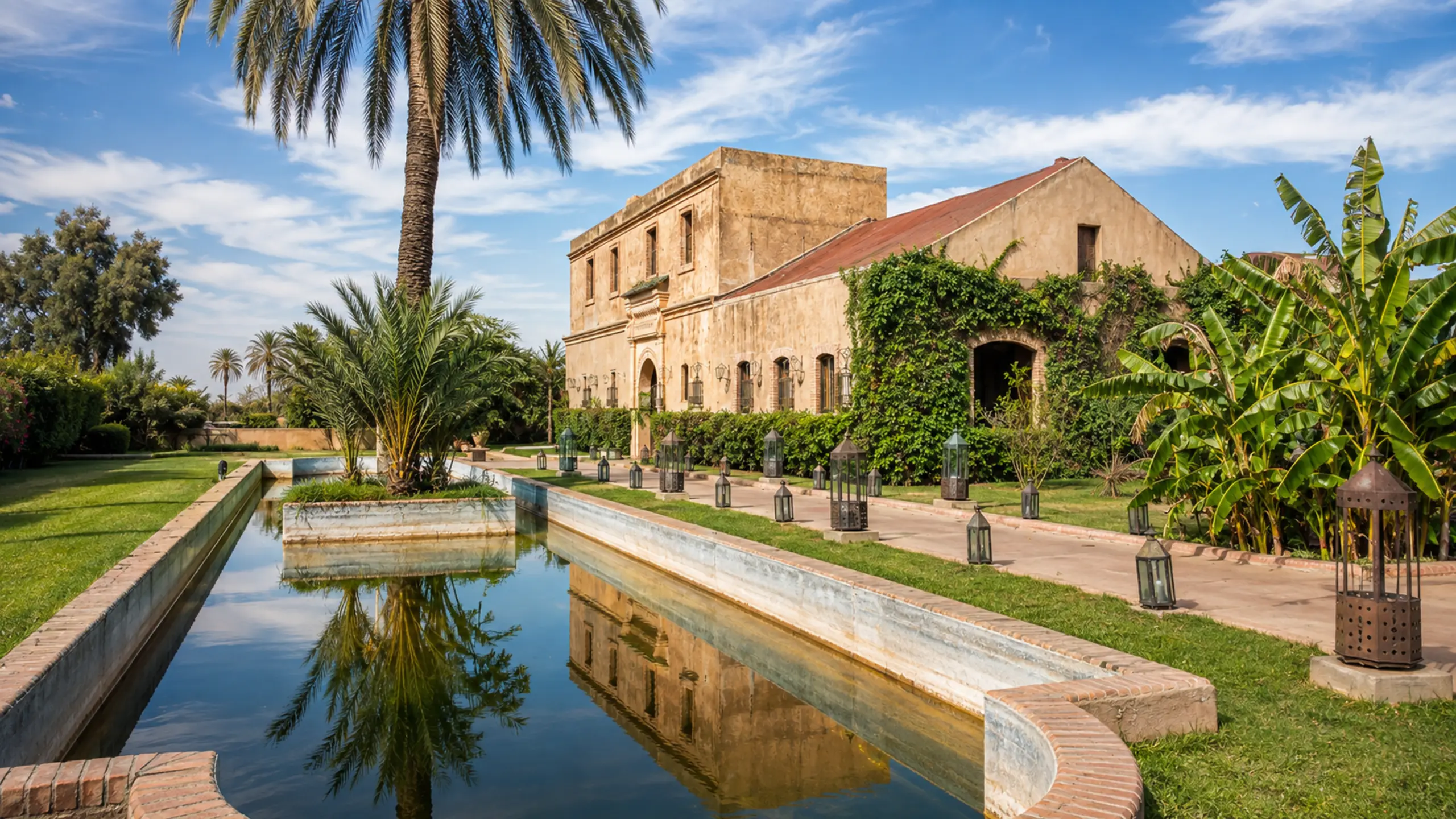
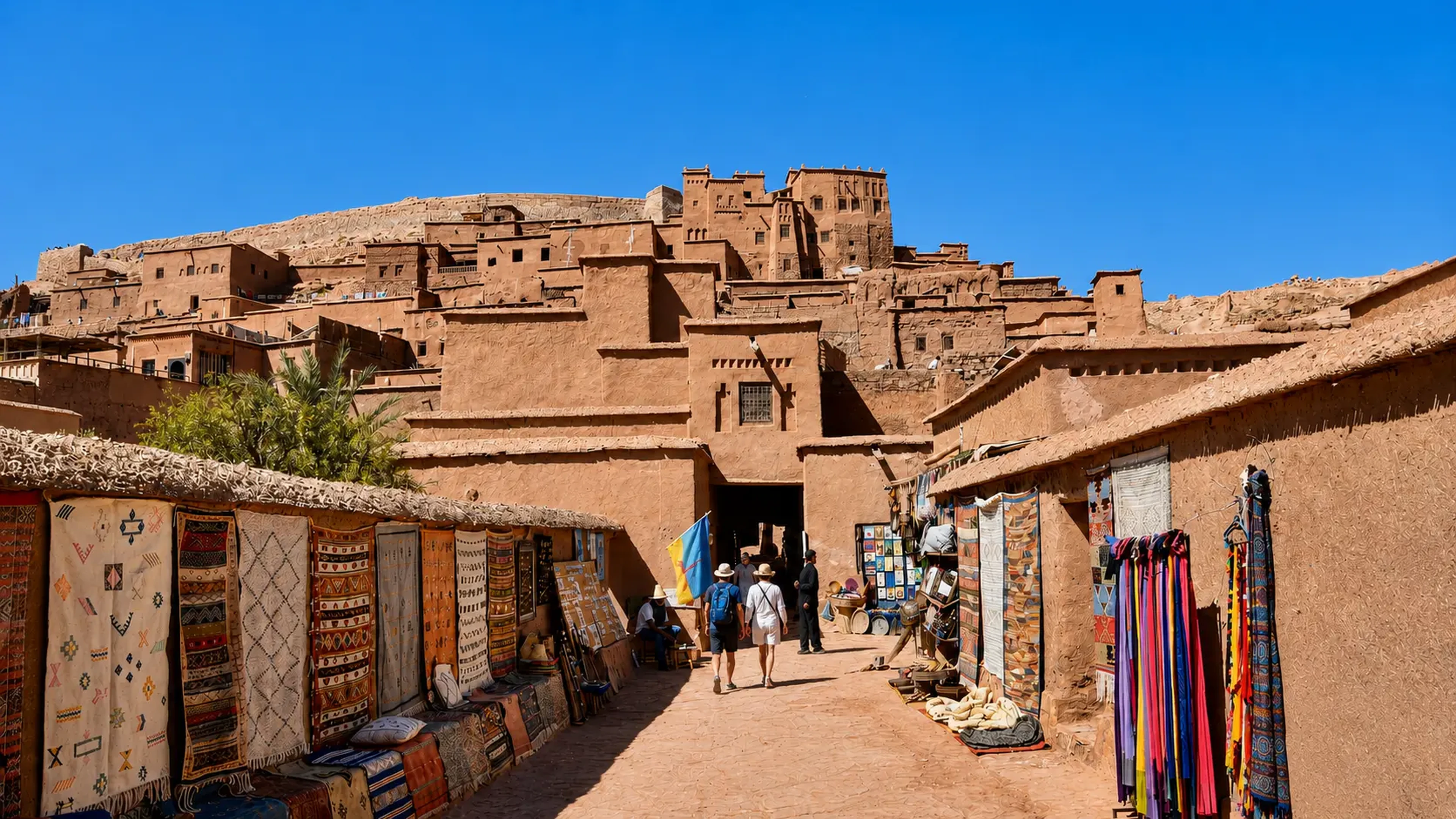
Aït-Ben-Haddou: earthen buildings, streets and a settlement read together.
Space, shelter & the city

Moroccan Architecture

From a shaded court to an earthen settlement: discover how Moroccan buildings organise light, movement, privacy and life together.

Exotic Morocco · 10 minute read
01 / A way into the story

Begin with the space.
Then look at the surface.

An arch is an invitation to look farther. Beyond it are decisions about who enters, where the light falls, how rooms connect and how a building meets its street. These relationships give Moroccan architecture its depth.

There is no single form that represents every place, period or way of living. Urban houses, monumental complexes, southern earthen settlements and modern neighbourhoods belong in the same architectural conversation. Reading them together reveals both continuity and change.

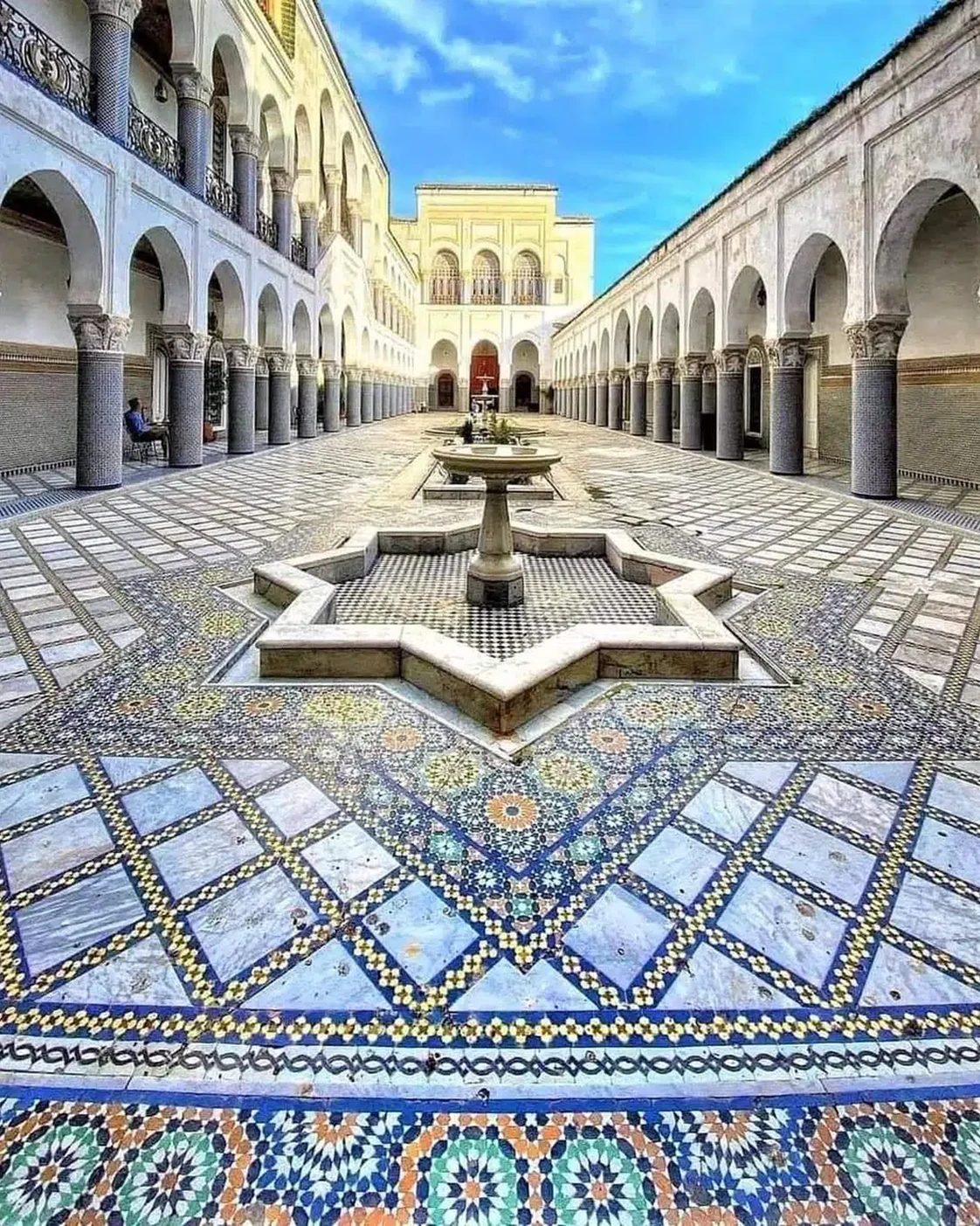
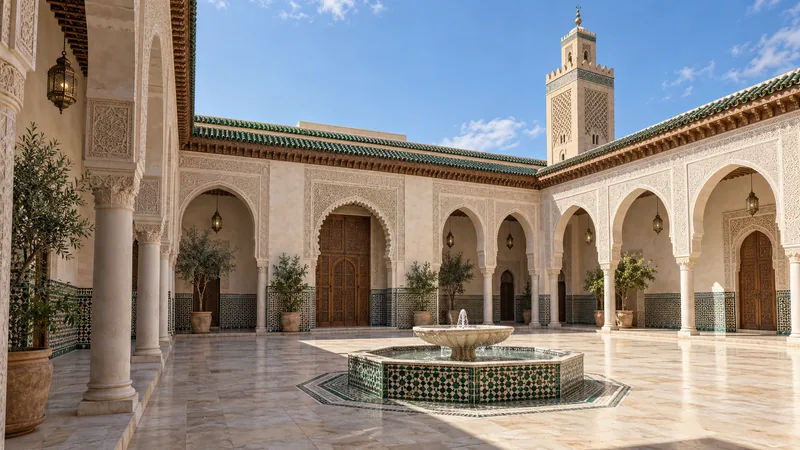
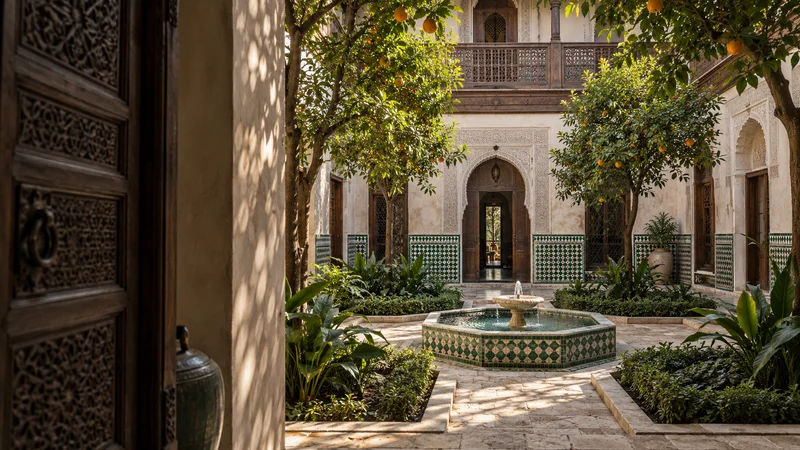
A courtyard brings open sky into an enclosed architectural composition.
THE SUBJECTSpace, shelter & the city
THE APPROACHPlace. Practice. People.
THE CONNECTIONFind it in Morocco ↗
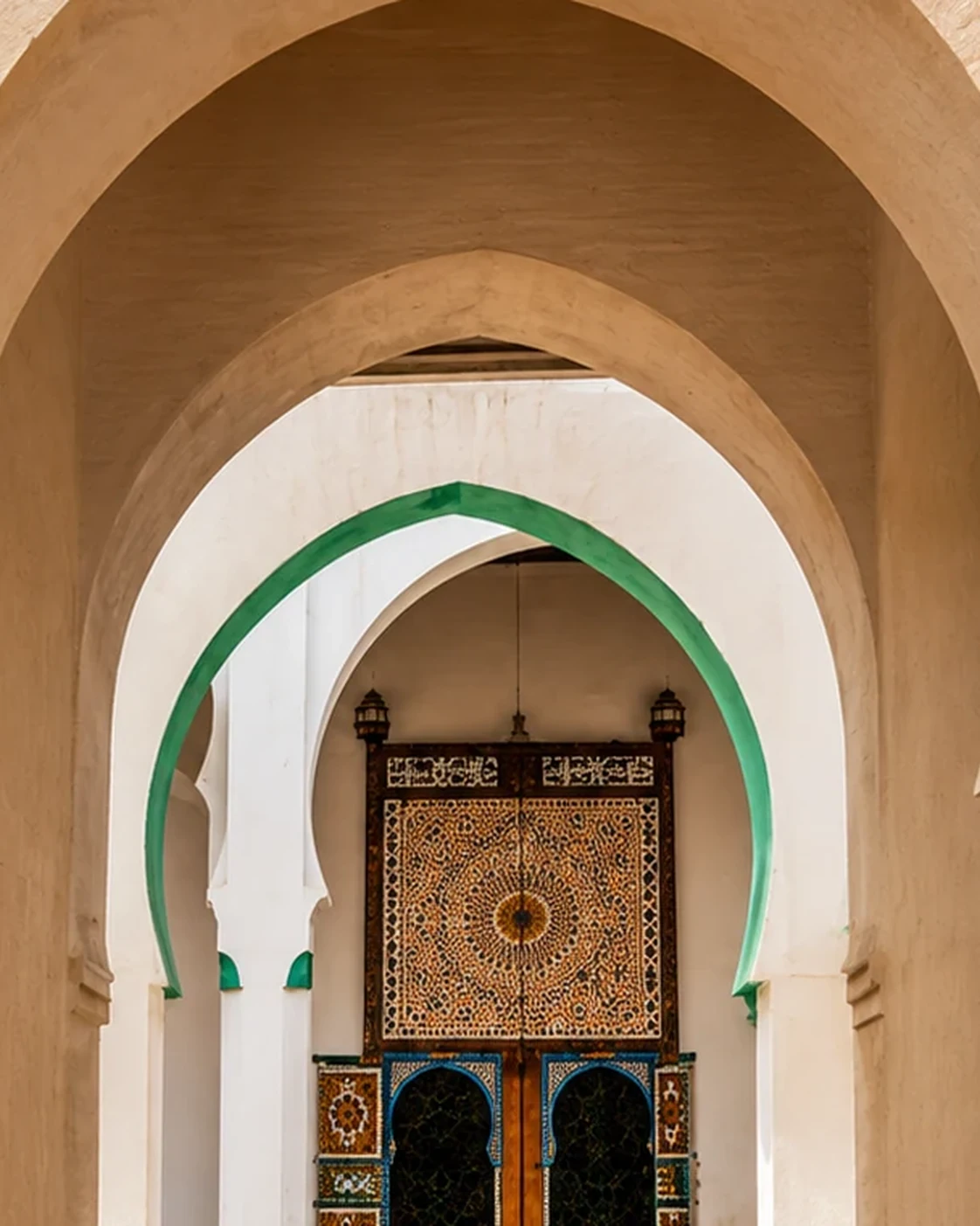
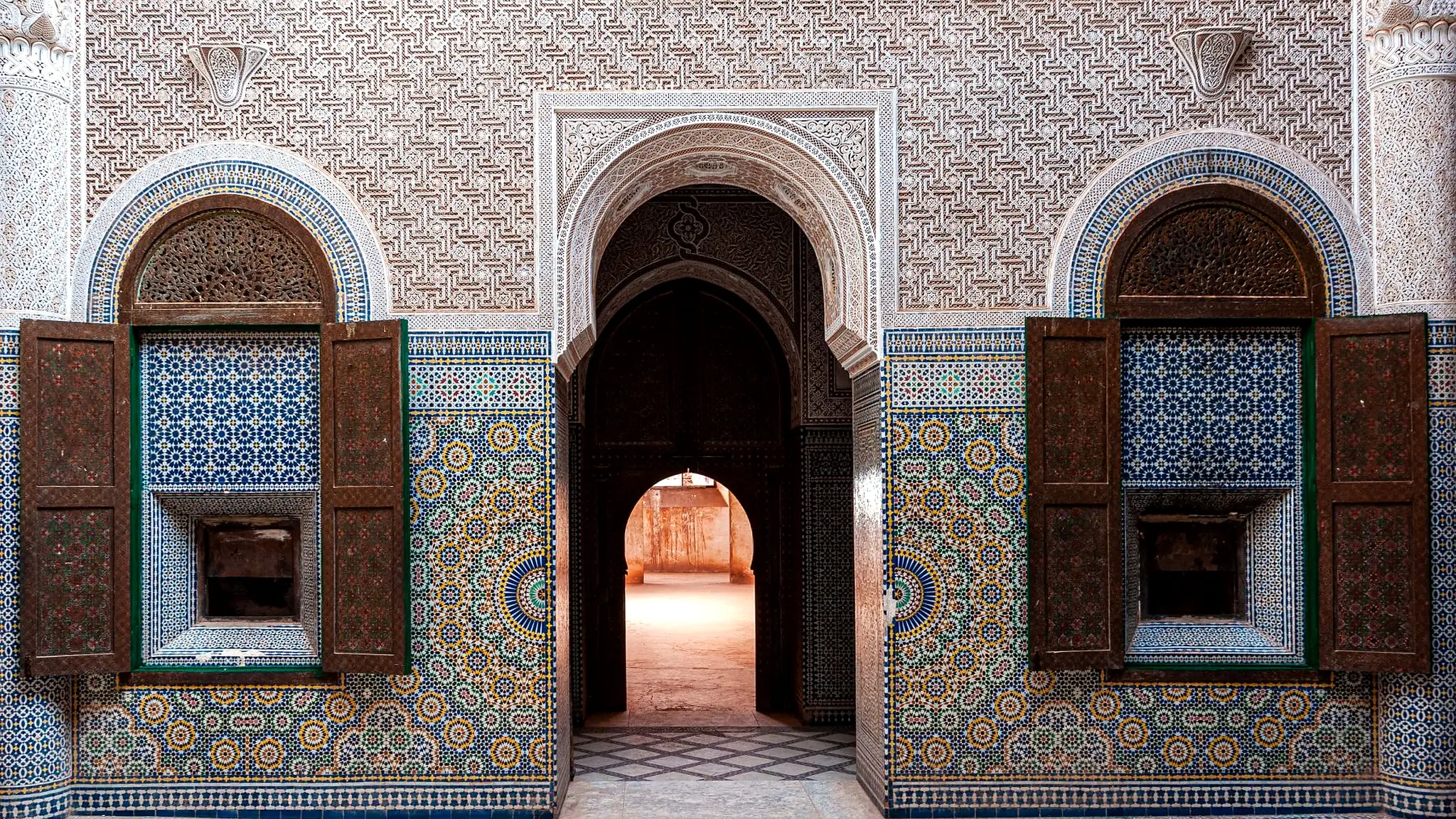
A sequence of arches makes depth visible.
02 / The deeper context

A way of building.
Many ways of living.

Moroccan architecture is best approached through spaces and needs before styles. A courtyard house, a fortified settlement, a religious school and a modern apartment block organise daily life differently. Each deals with access, light, shelter, movement and the relationship between an individual room and a larger community. Decoration may announce the building, but its plan explains how it works.

The contrast between a compact urban house and a southern earthen settlement is especially useful. At Aït Ben-Haddou, dwellings and shared spaces form a group enclosed by defensive walls. In a courtyard house, the organising open space sits within the building itself. Both make enclosure important, but they should not be treated as interchangeable examples of a single Moroccan style.

Nor does the story stop at historic walls. Rabat places older monuments beside twentieth-century planning, while contemporary towns continue to expand and change. A serious architectural reading includes ordinary streets, housing and infrastructure alongside celebrated palaces. The question is how a place supports life, not only how successfully it represents the past.

03 / From an idea to everyday life

Four questions at the threshold.

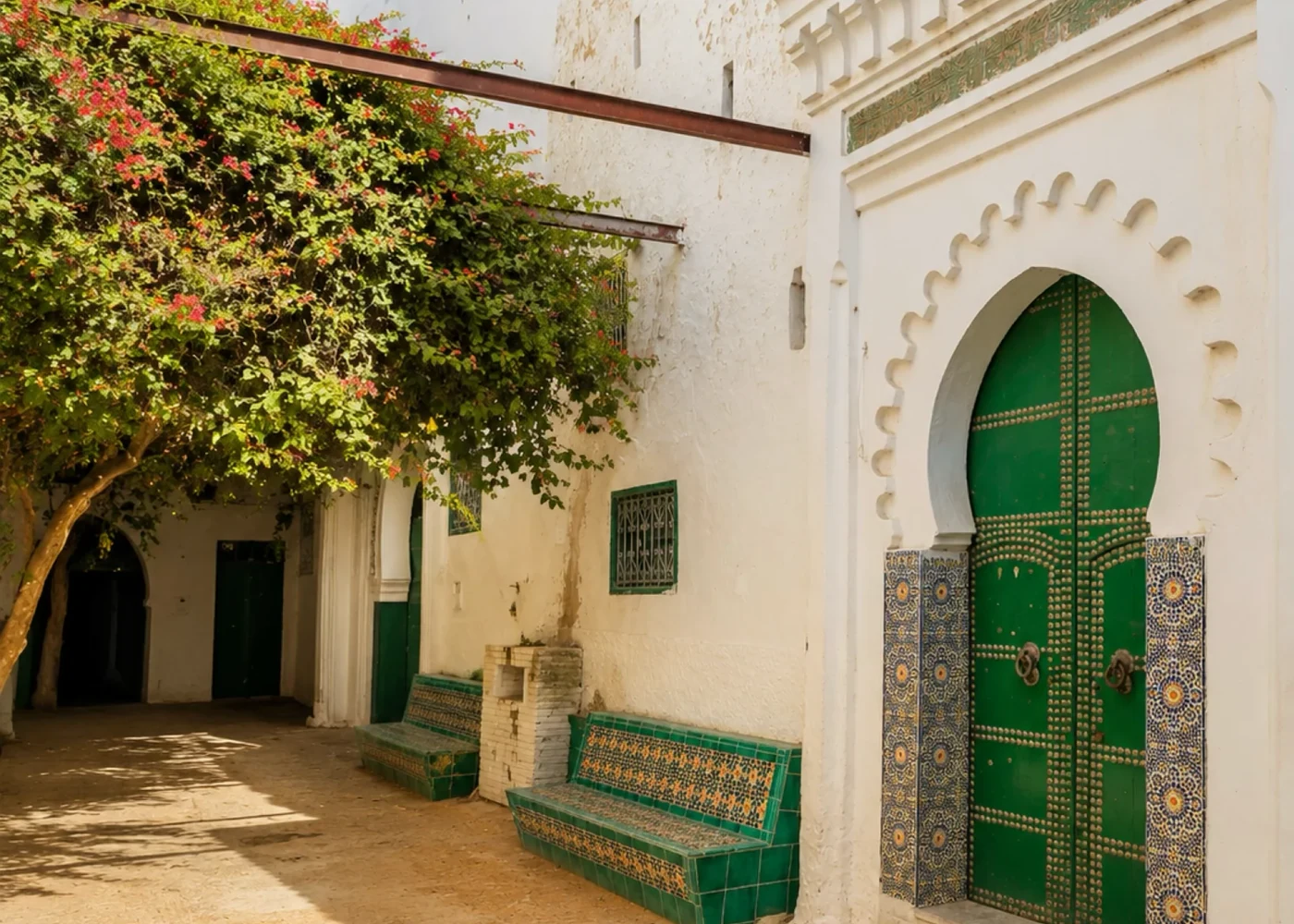
A door marks more than the edge of a wall. Shade, planting and the space immediately outside can soften or emphasise the transition. Look for where a visitor pauses and where an inhabitant continues. The entrance belongs to a street as well as to the building behind it.

A shaded entrance in Tétouan.
01

Who can enter, and how?

Trace the approach from street to doorway, then from entrance to the principal space. A turn, passage or change of level may shape what can be seen and who can move farther inside. Read the sequence without assuming that every building uses it in the same way.

02

Where does the light arrive?

Look for courts, openings, screens and shaded edges. Their effect changes with the hour and season. A courtyard is not automatically cool in every circumstance: proportion, ventilation, materials and how the building is used all matter. Observe before assigning a climatic explanation.

03

What makes it a collective place?

A building connects to water, streets, neighbours and services. A beautifully photographed facade may reveal little of those systems. Consider the relationship between private rooms and shared facilities, and between a monument and the people who maintain the surrounding neighbourhood.

A closer understanding

Three ways
to organise a place.

Moroccan architecture includes dense historic cities, earthen settlements and modern urban plans. Each asks different questions of space.

The enclosed settlement

A ksar is a collective arrangement.

Aït-Ben-Haddou is a documented example of southern Moroccan earthen architecture: dwellings grouped within an enclosed settlement, with shared spaces and routes. The whole arrangement matters, not only the towers that dominate photographs.

A ksar and a kasbah are not automatic synonyms. The first commonly describes a fortified settlement; the second can refer to a citadel or fortified residence, depending on context. Identify the actual building or settlement before translating every earthen structure into the same label.

The inward court

A plan can make privacy and contact coexist.

A courtyard gathers rooms around an internal shared space. Entrances, galleries and thresholds organise how people move between the street, communal areas and more private rooms. Light and shade become part of that sequence.

This arrangement takes different forms in houses, madrasas and other institutions. A similar-looking court does not establish a similar social purpose. The surrounding rooms and the building’s documented use help explain what the court connects.

The modern city

Heritage also includes the twentieth century.

Rabat’s World Heritage designation includes modern urban planning alongside older historic fabric. Its avenues, gardens and administrative areas show that Moroccan architectural history does not end with the medina. Modernity itself has a local history.

Read the resulting city critically: planning under the protectorate involved unequal political power as well as new forms and infrastructure. The practical question is how different urban layers meet today—through streets, public spaces, housing and access—rather than which layer looks most picturesque.

Carry this with you

Name the scale before explaining the style: object, room, building, neighbourhood or city. Different scales reveal different kinds of knowledge.

04 / The visual chapter

Three ways to inhabit a threshold

Move between the close detail and the wider setting. Each view adds another part of the story.

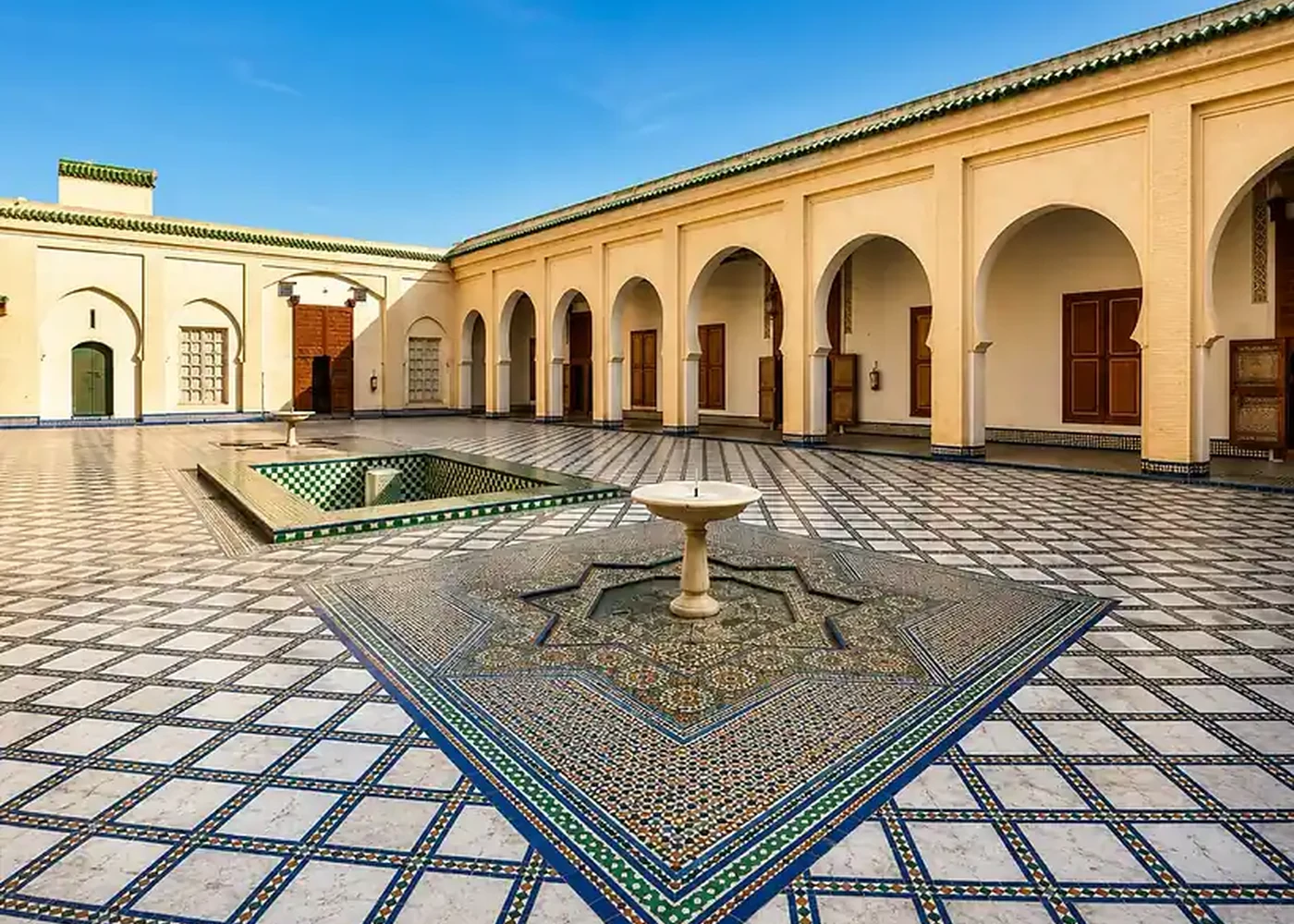
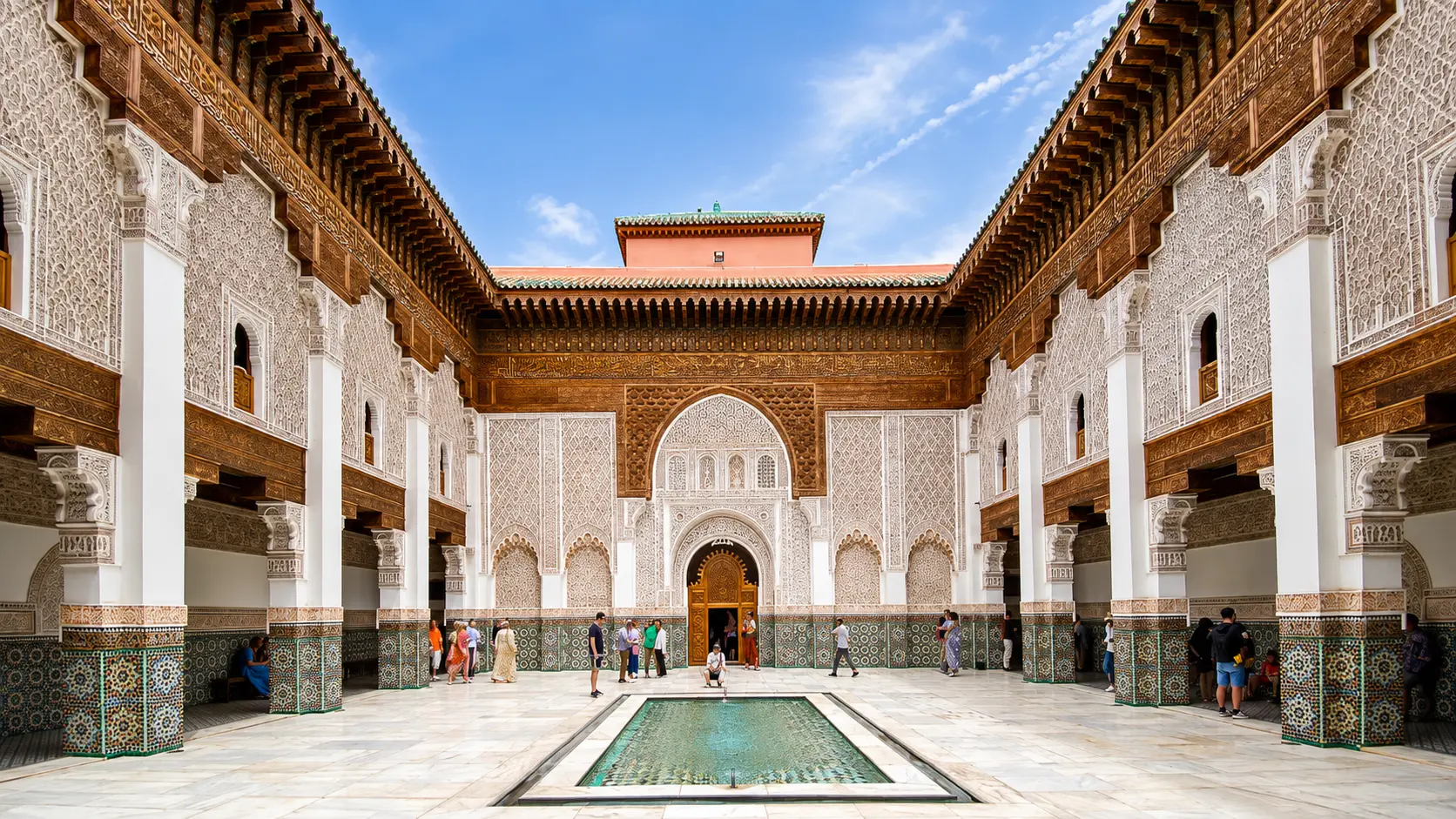
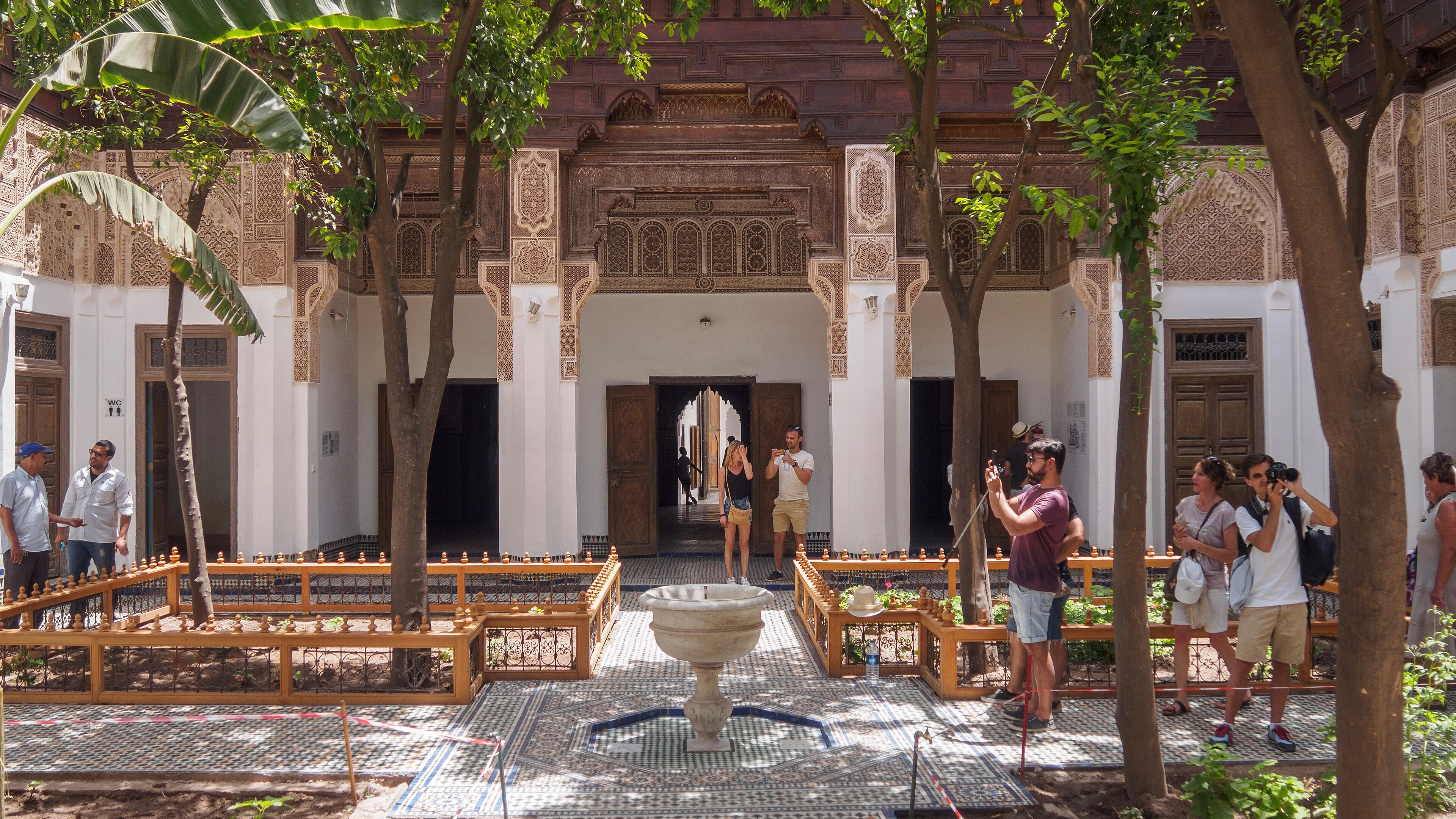
Dar Batha courtyard, Fez.
01 / A closer look

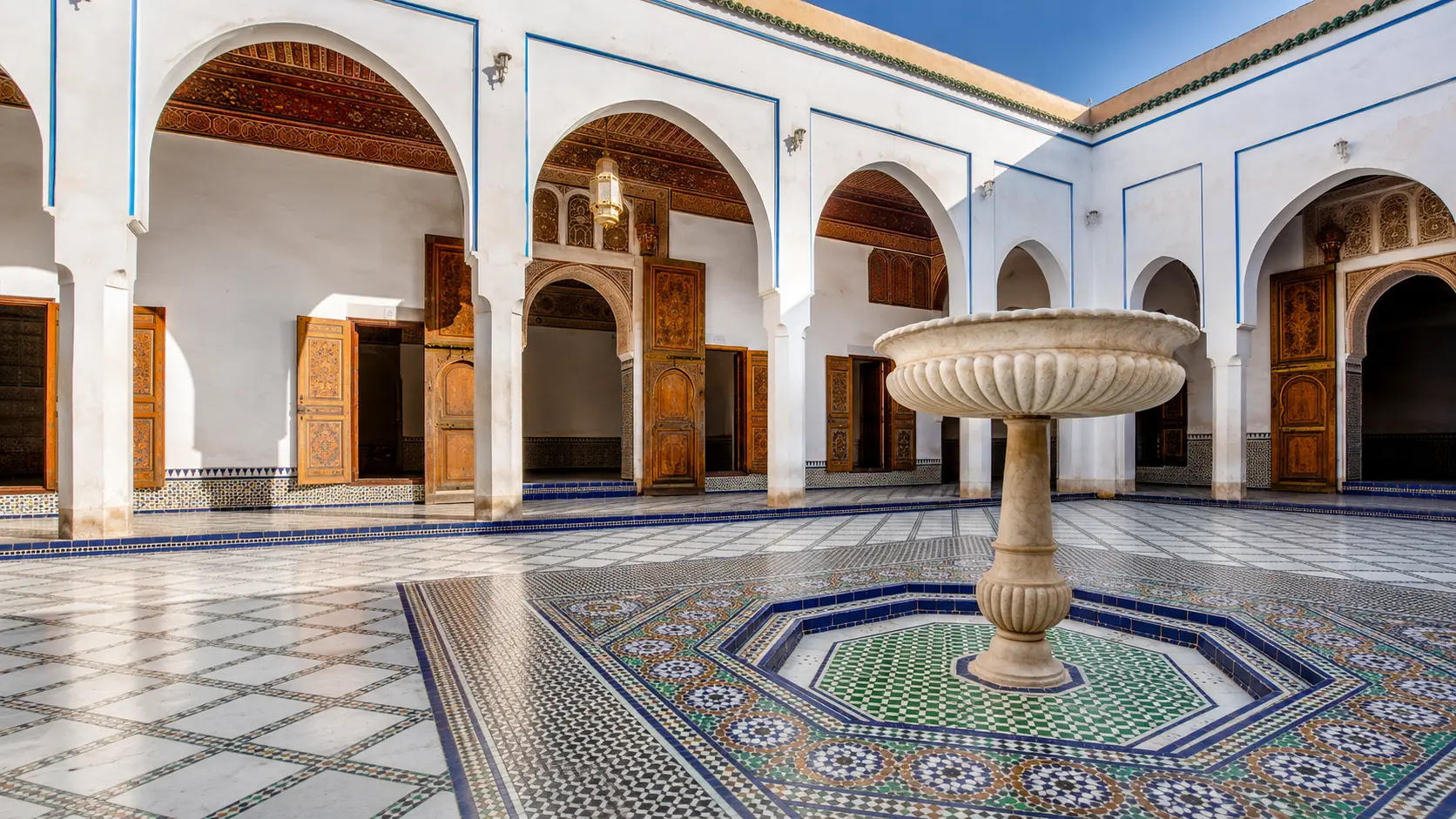
A court gives the plan a centre

In a courtyard building, rooms and circulation often orient towards an internal open space. The view across the court connects parts of the building while preserving distinctions between them. Read the surrounding galleries and openings, not only the feature at the centre.

Dar Batha courtyard, Fez.
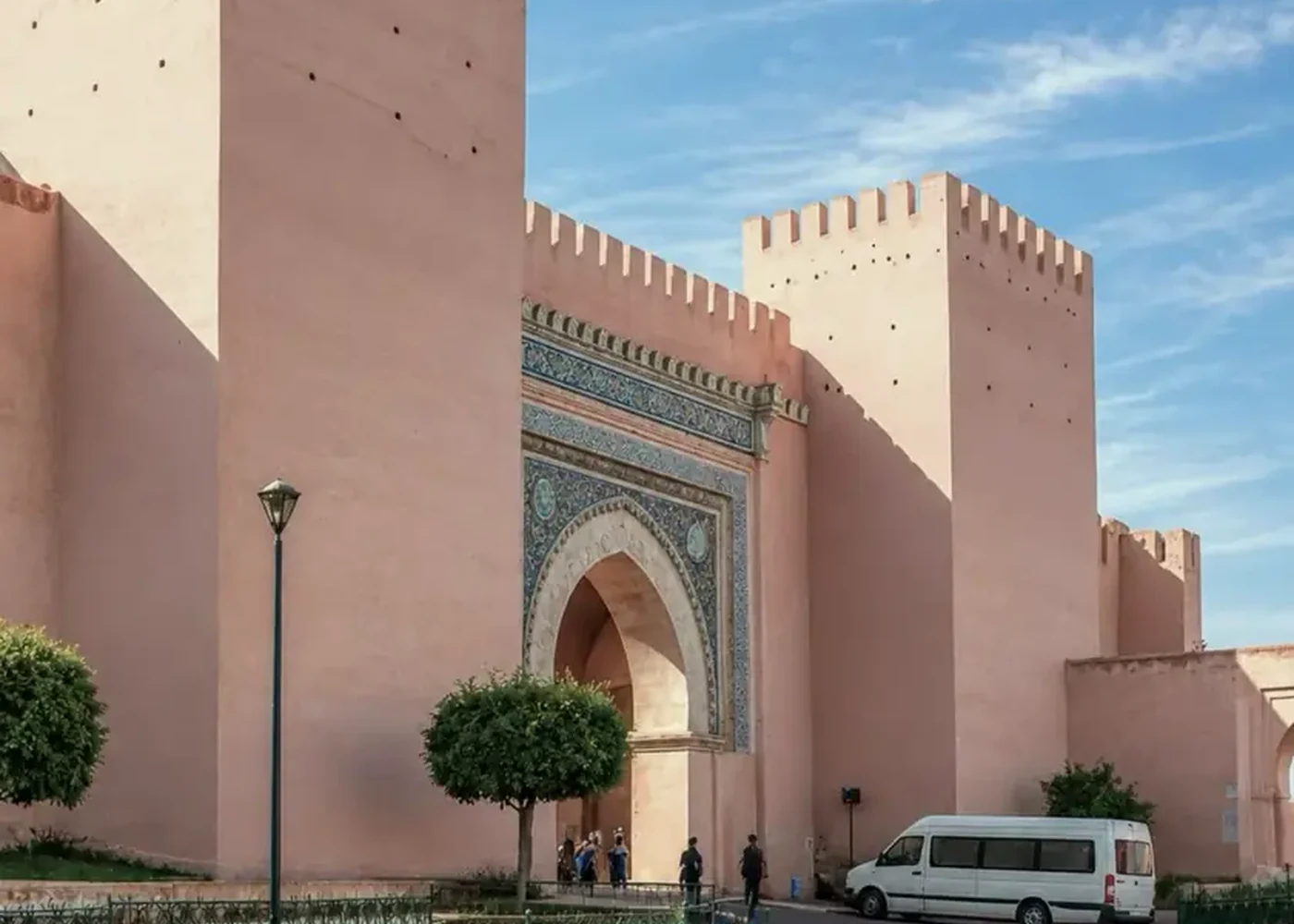
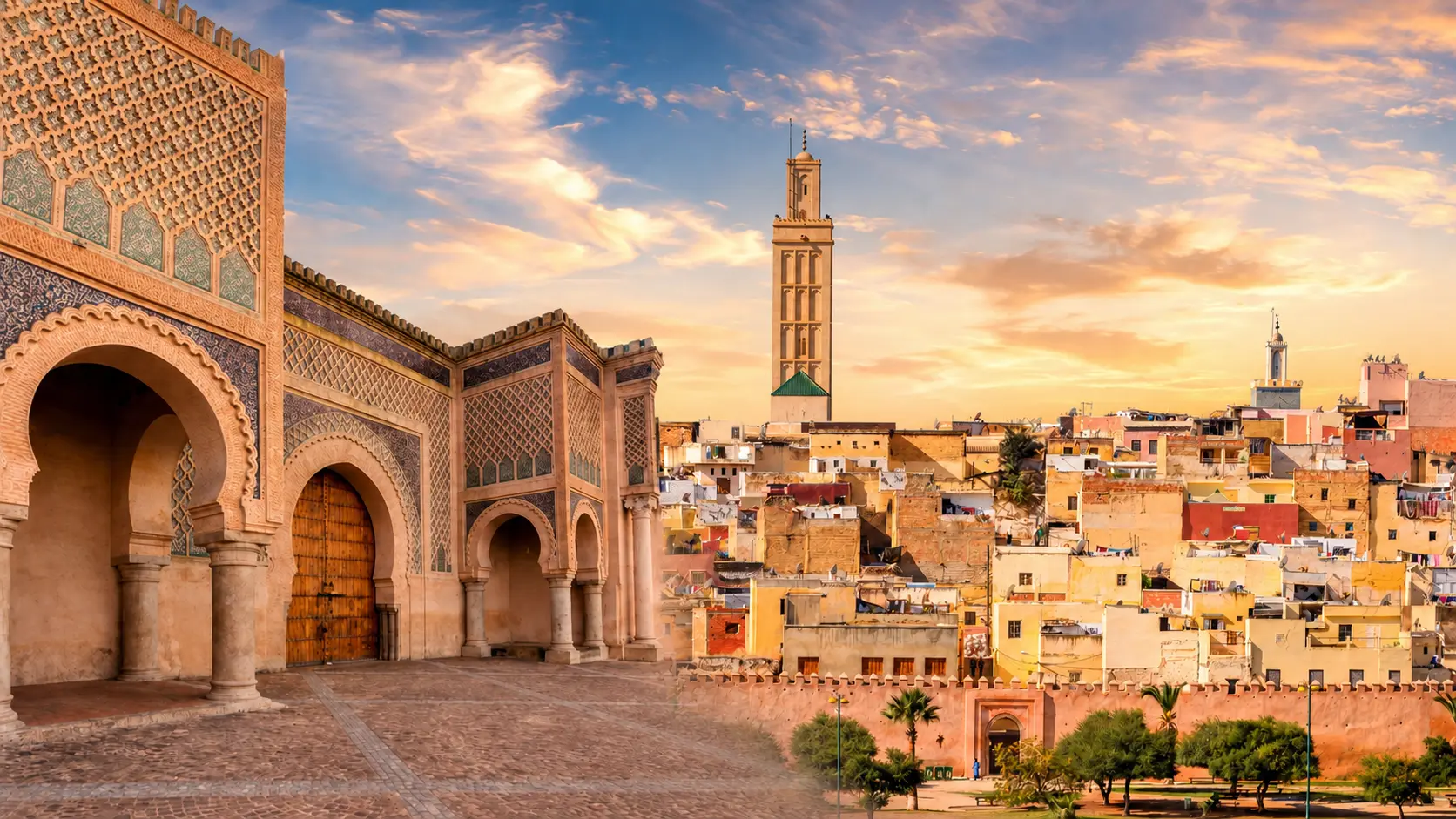
A monumental entrance in Meknes.
02 / A closer look

A gate works at the scale of a city

Monumental entrances can direct movement and announce authority. Their relationship to roads, walls and public spaces is as important as their decorated faces. Stand back far enough to see what approaches the gate and what lies beyond it.

A monumental entrance in Meknes.
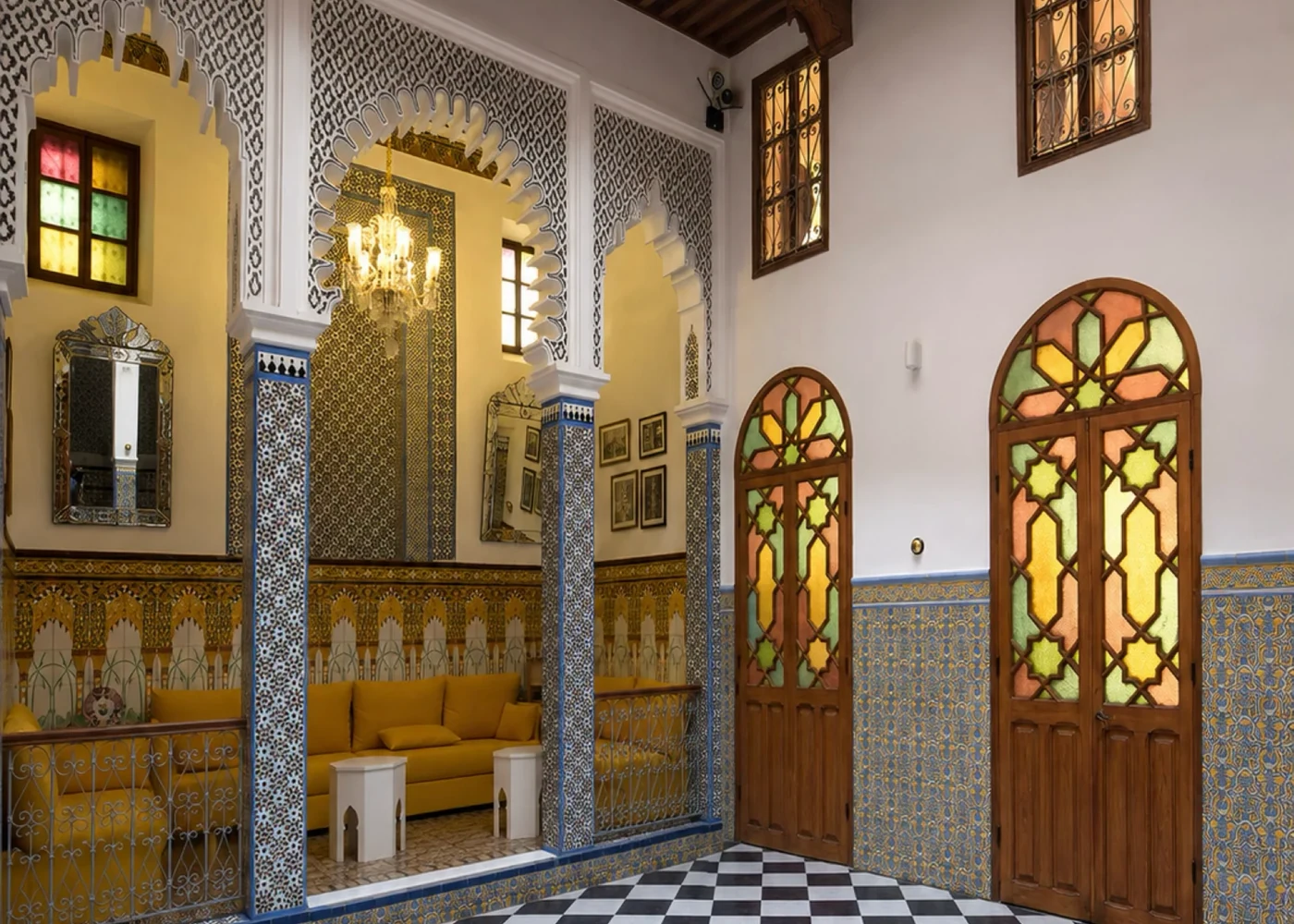
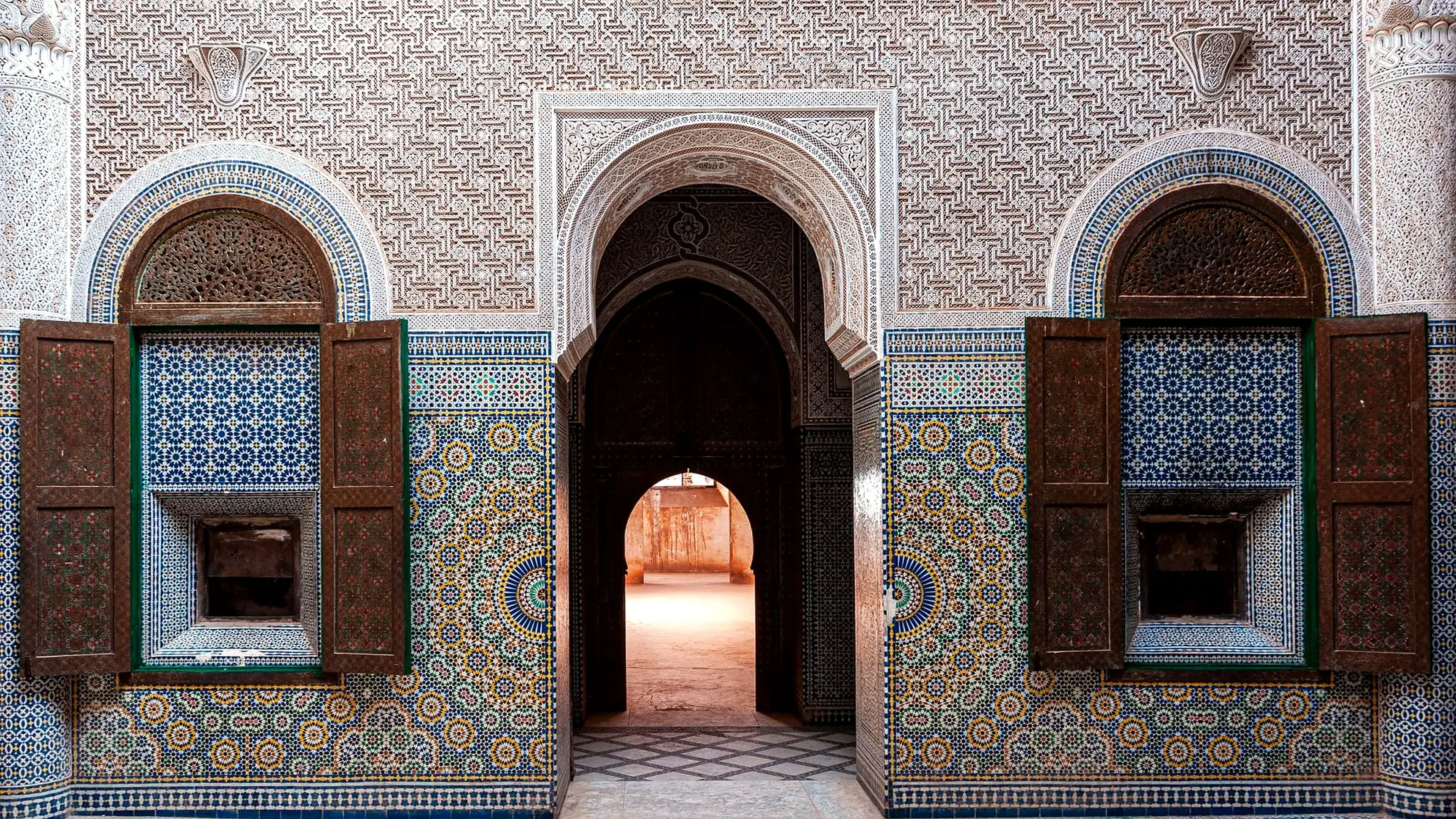
Interior space and decorative detail in Tétouan.
03 / A closer look

Modern layers

Twentieth-century boulevards and civic buildings are part of architectural history too. In Rabat, compare the scale of an older gate with a planned avenue. Their different relationships to movement and public space reveal more than a simple old-versus-new contrast.

Interior space and decorative detail in Tétouan.
05 / More than one perspective

Look beyond
the first impression.

Perspective 01

Urban interiors

Courts, galleries and rooms create a sequence of outlooks. Study a house as a whole rather than reducing it to the fountain or the most ornamented wall. Distinguish its original use from later conversion into accommodation or a museum.

Perspective 02

Earthen settlements

A ksar is a grouped settlement; “kasbah” has several contextual uses and is not a universal synonym. At Aït Ben-Haddou, earth, timber, compact form and continued maintenance belong to the same architectural story. Its visible fabric should not all be assigned a medieval date.

06 / Make the connections

A small architectural vocabulary

Use these ideas to connect what you notice with the materials, people and histories behind it.

01

Court

An open space enclosed by buildings or walls; its shape, planting and relation to rooms vary.

02

Medina

A historic urban area with homes, institutions, commerce and working infrastructure.

03

Ksar

A fortified settlement; the collective scale matters. The plural is ksour.

04

Madrasa

An institution associated with learning, often with teaching and residential spaces.

05

Fondouk

A building historically associated with commerce, storage and accommodation; examine the specific history of the example.

06

Threshold

A point or sequence of transition between spaces, uses or levels of access.

07 / A more useful conversation

Architecture, without shortcuts.

Clear answers for the questions that often come next.

Is every courtyard house a riad?

The tourism use of “riad” is broader than the more specific architectural association with a garden courtyard. Describe the actual plan and consult the history of the building; a listing category does not settle the question.

Does ornament identify a building’s date?

Not by itself. Decorative forms may be repeated, restored or added later. Foundation, structure and surface can have different dates.

Can I enter every impressive building?

No. Buildings may be homes, places of worship or working institutions. Follow the access rules of the individual site and never treat an open door as automatic permission.

08 / Take the story into a place

Find the story in Morocco

18 connected places and stories. Follow the connection that interests you.

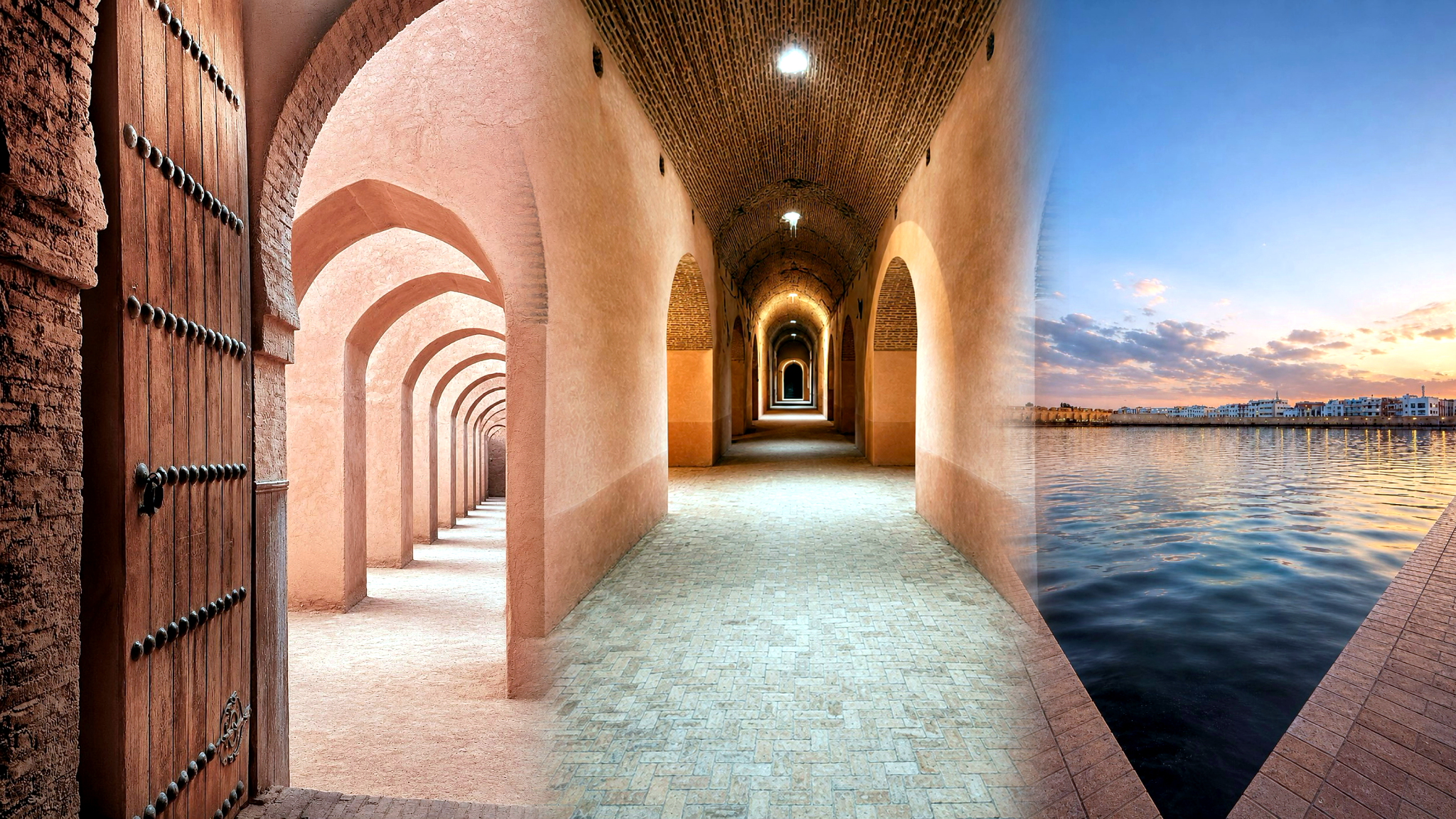
Marrakech

Compare monumental courts, urban houses and public spaces.

Explore this connection ↗
Aït Ben Haddou

Aït Ben Haddou

Read a grouped earthen settlement and its shared spaces.

Explore this connection ↗

Rabat

Connect older monuments with twentieth-century planning.

Explore this connection ↗

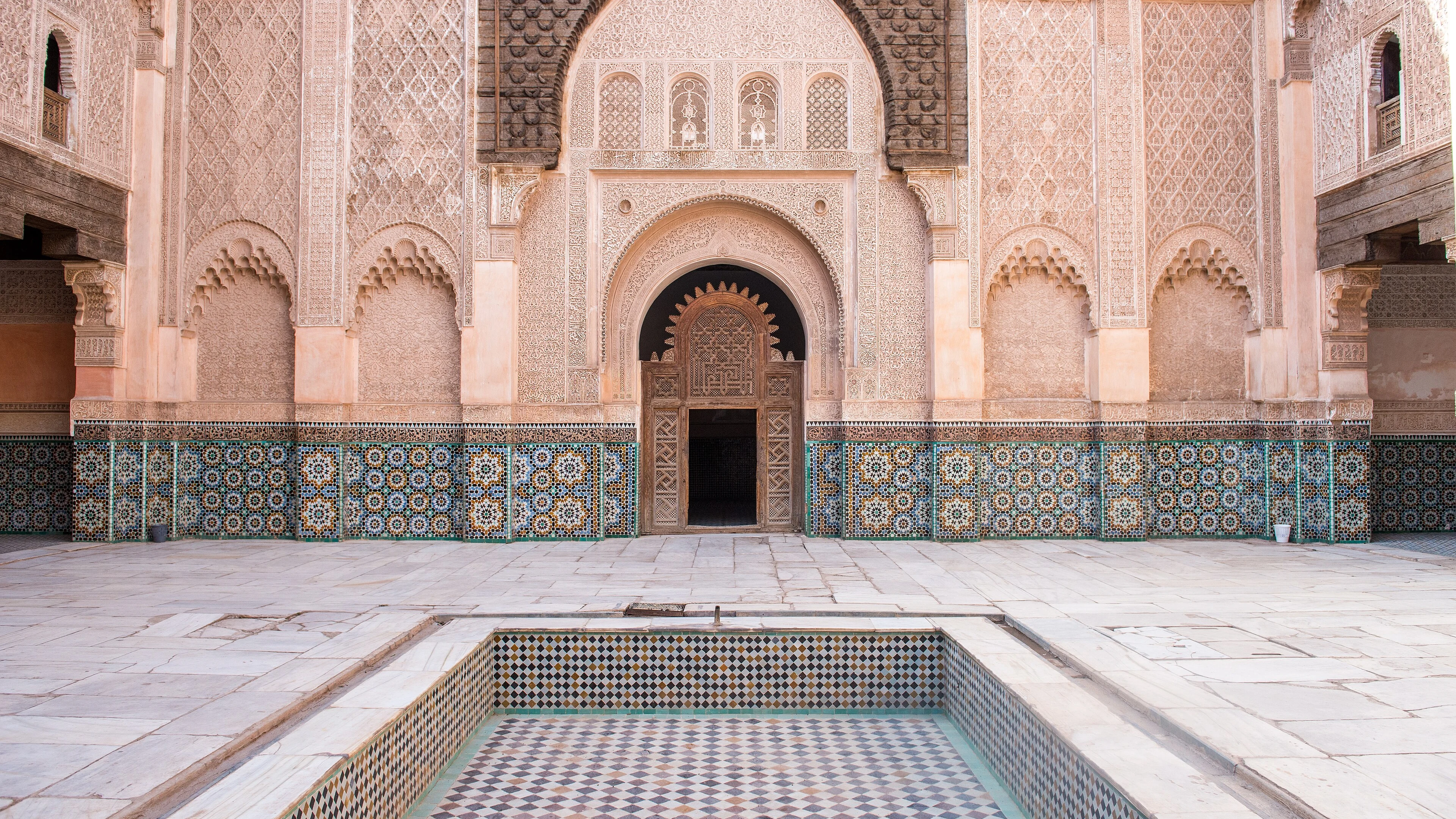
Ben Youssef Madrasa

Read teaching spaces, a court and decorated surfaces together.

Explore this connection ↗

Bahia Palace

Compare rooms, courts, gardens and a palace’s later life.

Explore this connection ↗

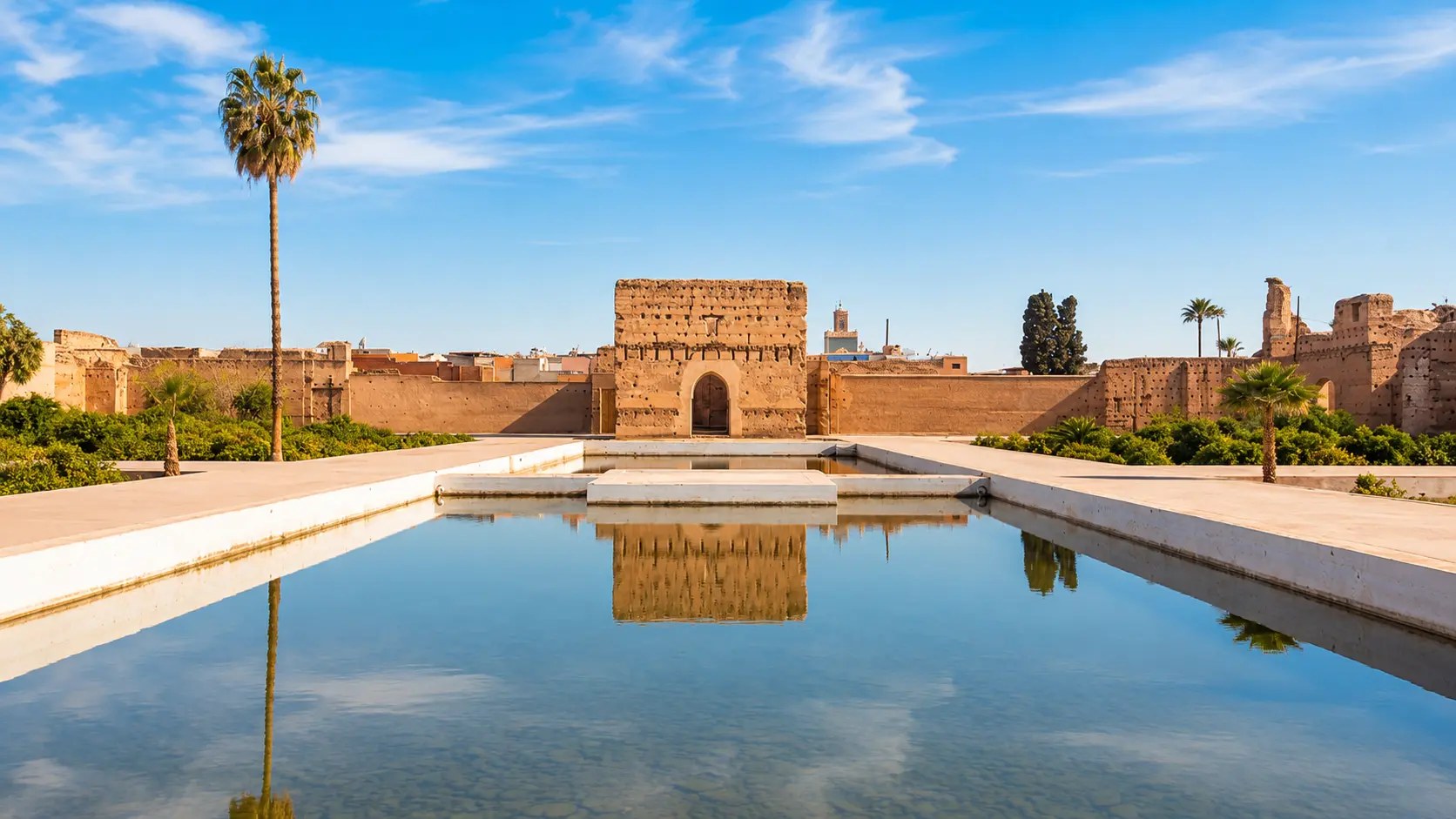
El Badi Palace

Read the plan and scale where much decoration no longer survives.

Explore this connection ↗

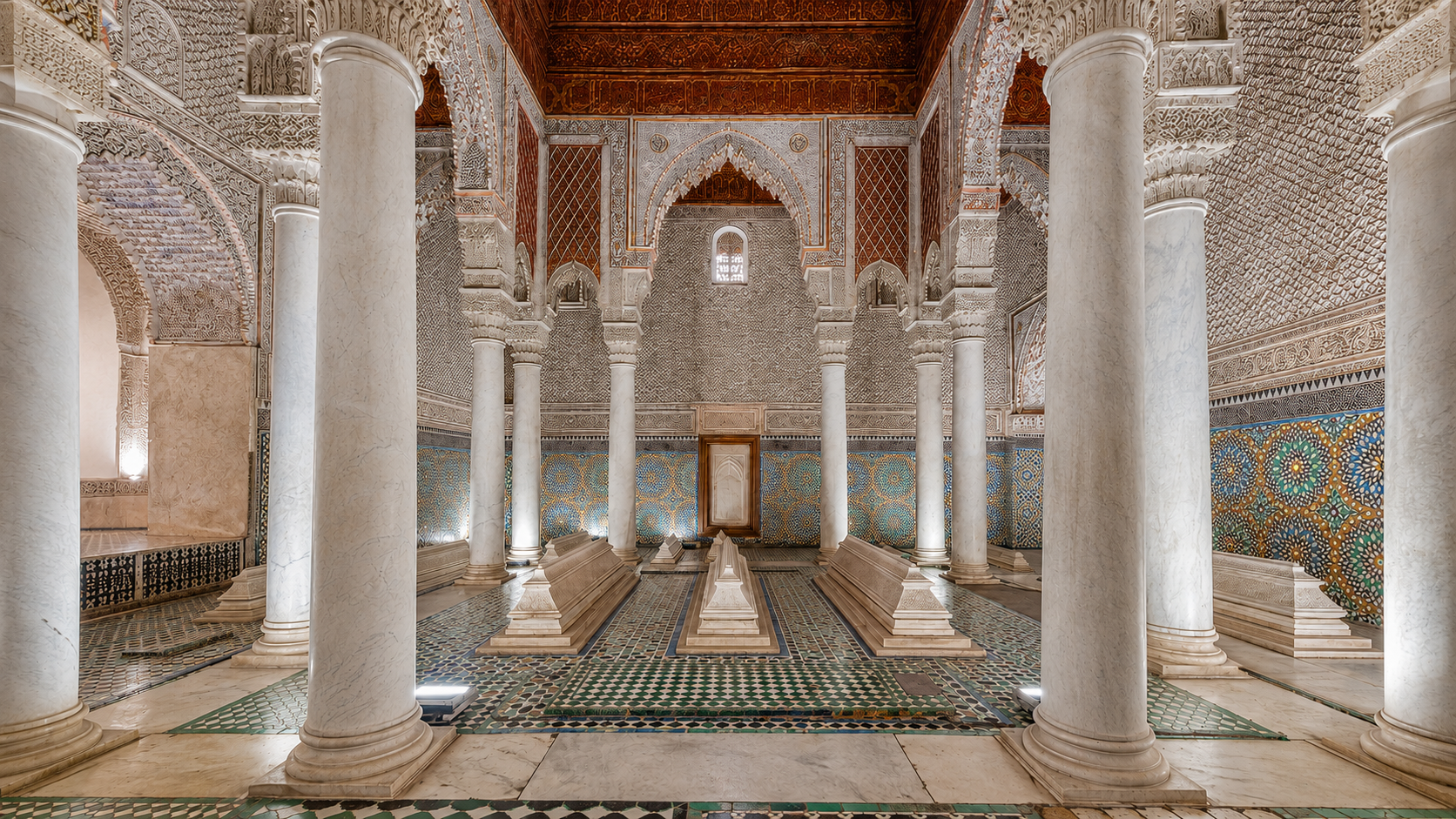
Saadian Tombs

Study a specific relationship between space and ornament.

Explore this connection ↗

Bab Mansour

Follow the composition of a monumental gateway.

Explore this connection ↗

Heri es-Souani & Royal Stables

Look at structure, repetition and an imperial service complex.

Explore this connection ↗

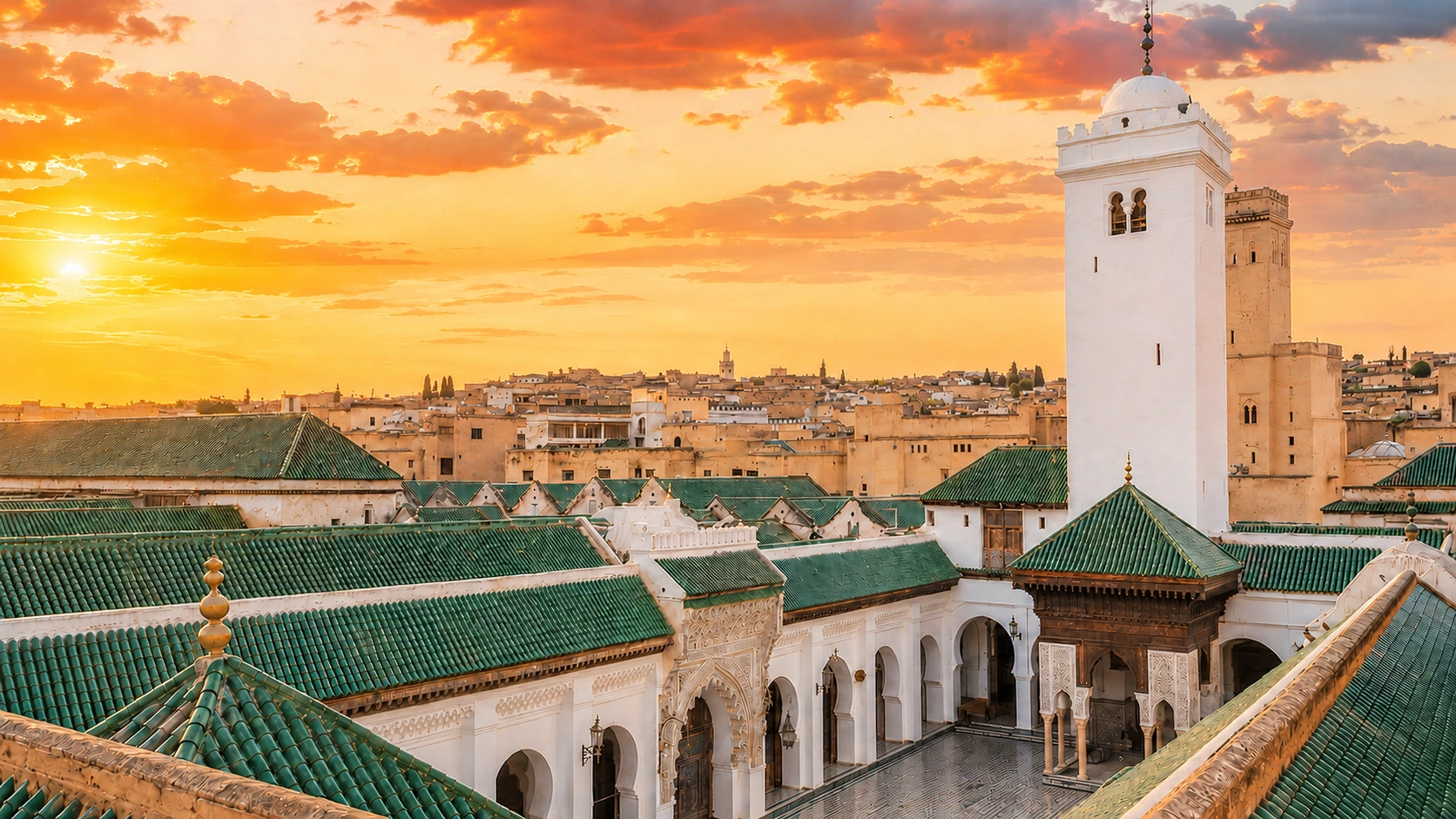
Al Quaraouiyine Quarter

Connect an institution with the surrounding urban fabric.

Explore this connection ↗

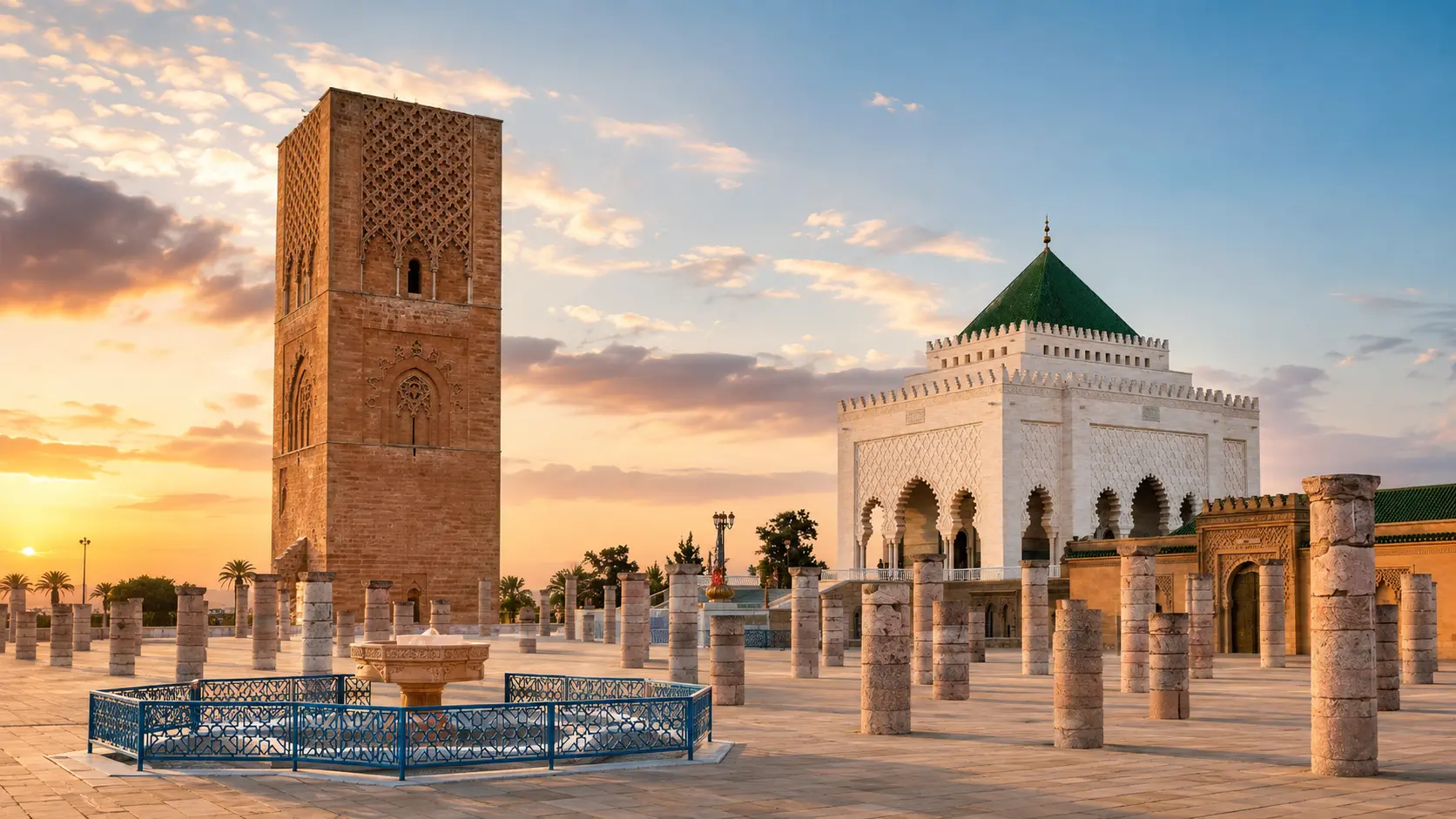
Hassan Tower & Mausoleum

Compare structures from different historical moments.

Explore this connection ↗

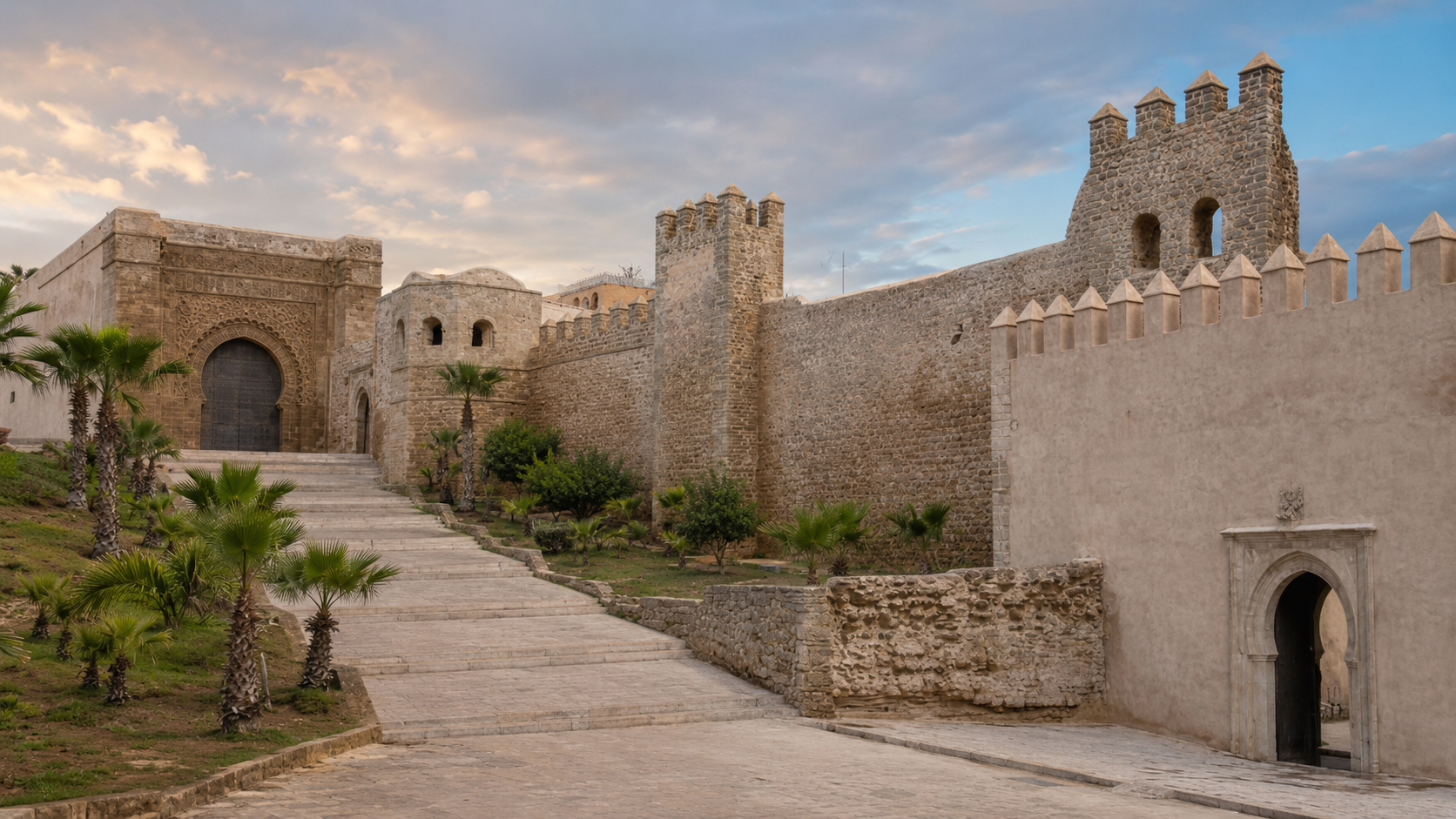
Kasbah of the Udayas

Read enclosure, access and an urban edge.

Explore this connection ↗

Taourirt Kasbah

Study an earthen residential complex.

Explore this connection ↗

Telouet Kasbah

Compare a mountain palace and its decorative interiors.

Explore this connection ↗

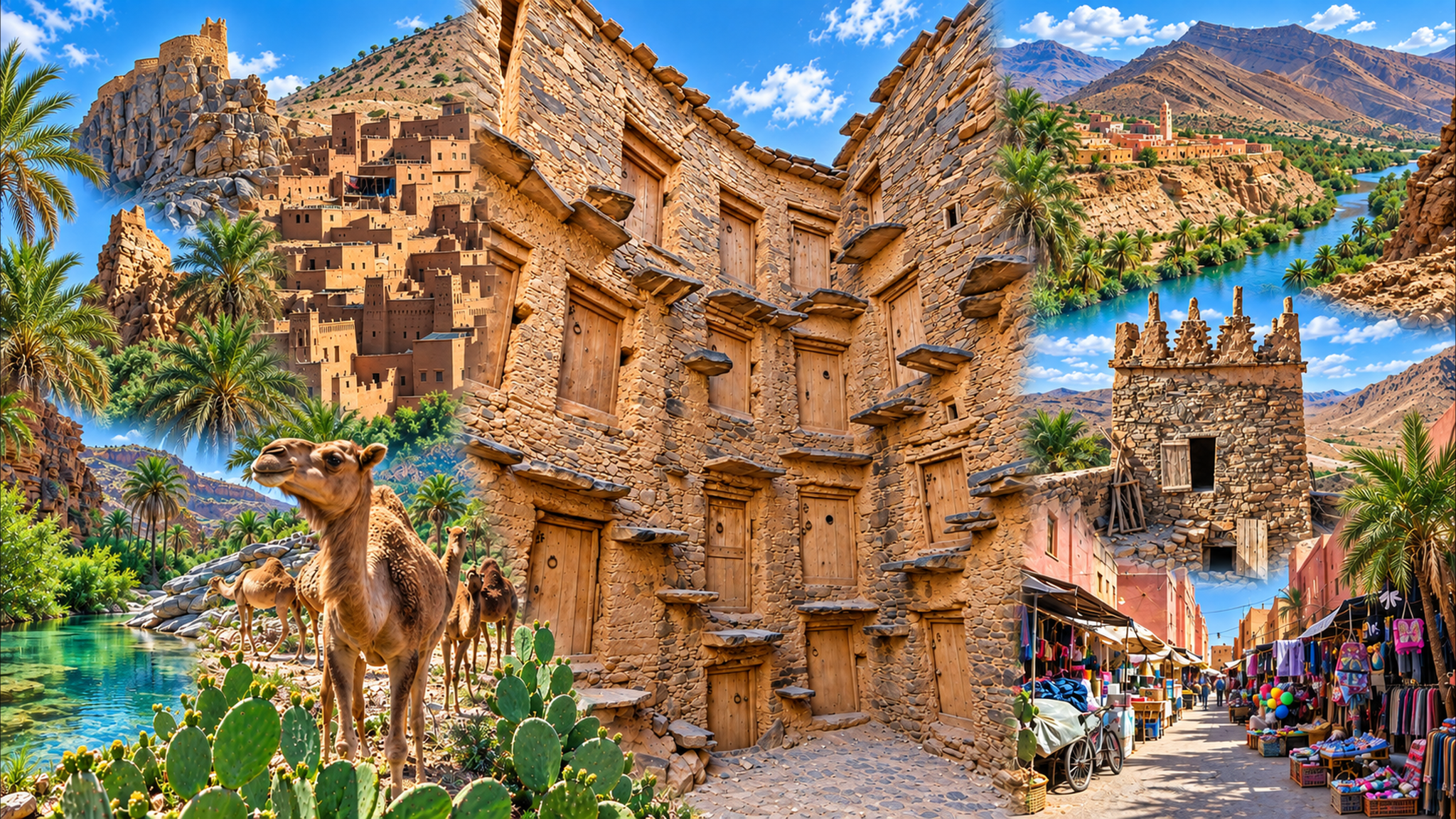
Amtoudi Granaries

Read architecture shaped by shared storage.

Explore this connection ↗

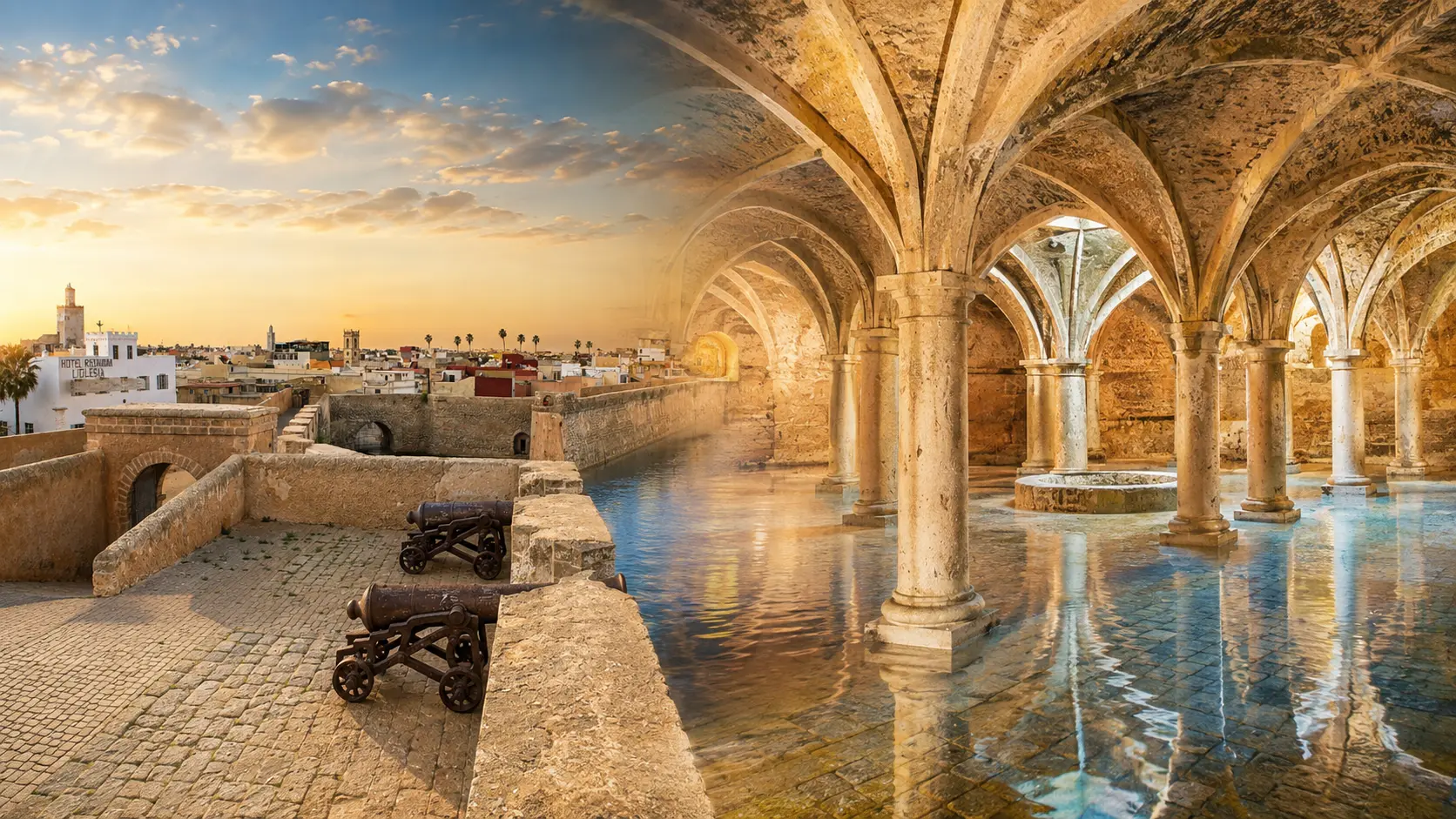
Portuguese Cistern of El Jadida

Look at a distinctive structural and spatial setting.

Explore this connection ↗

Agdal Gardens

Include cultivated landscape in the architectural picture.

Explore this connection ↗

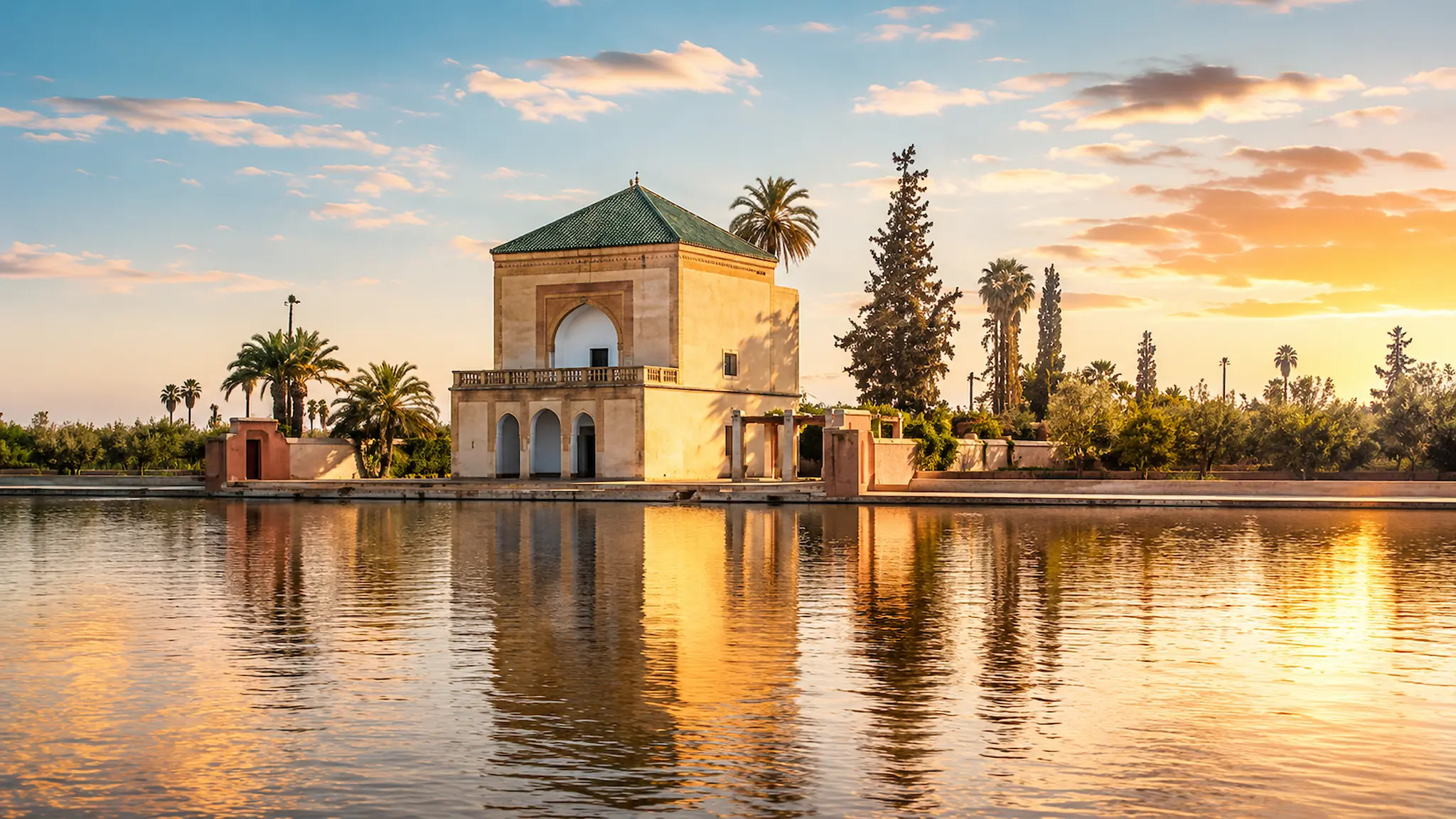
Menara Gardens, Marrakech

Explore water, planting and a built pavilion.

Explore this connection ↗
A thought to take with you

Keep looking. Keep learning.

Try reading one place without beginning with its decoration. Follow entry, light and movement first. Then return to the surfaces: their position and emphasis will make much more sense within the building that holds them.

The Exotic Morocco library

Continue at your own pace.

This Learn story is free to explore. Find this subject in the guide library, with each title’s current availability clearly shown.

Explore the guide library ↗
Sources & further reading

Read the evidence

  1. UNESCO · Ksar of Ait-Ben-Haddou
  2. UNESCO · Rabat, Modern Capital and Historic City
  3. UNESCO · Medina of Fez
  4. UNESCO · Medina of Marrakesh

Source review: September 2026. Looking exercises and learning prompts are original Exotic Morocco editorial suggestions. Regional practice and personal experience vary.

Image acknowledgements

  1. Hero: Existing Exotic Morocco image library, Aït-Ben-Haddou: earthen buildings, streets and a settlement read together.
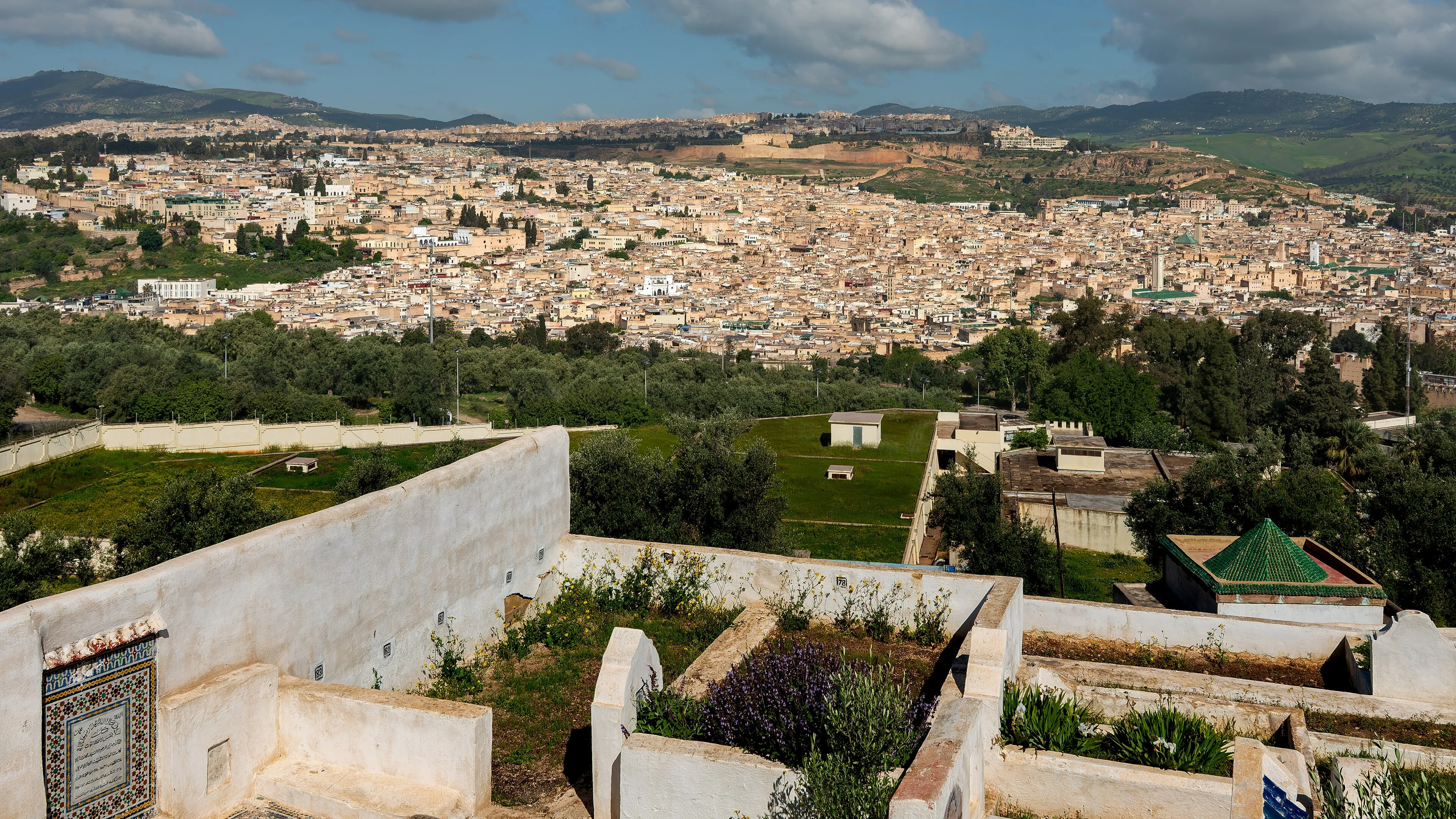
  2. Related preview: Panoramic view of the Medina of Fes.jpg — Mustang Joe. CC0. Cropped/resized; original licence retained.
  3. Related preview: Small Riad Bahia Palace 1384.jpg — C messier. CC BY-SA 4.0. Cropped/resized; original licence retained.
  4. Chapter: A sequence of arches makes depth visible. — Exotic Morocco’s existing image collection.
  5. Gallery: Interior space and decorative detail in Tétouan. — Exotic Morocco’s existing image collection.
  6. Hero: Fez, Morocco (3636868446).jpg — nathalie_r. CC BY 2.0. Cropped/resized; original licence retained.
  7. Portrait: A courtyard organised around water and repeated openings. — Exotic Morocco’s existing image collection.
  8. Story-1: An entrance and its shaded planted edge. — Exotic Morocco’s existing image collection.
  9. Story-2: The Dar Batha courtyard in Fez. — Exotic Morocco’s existing image collection.
  10. Story-3: A monumental gate in the Meknes collection. — Exotic Morocco’s existing image collection.
  11. Related preview: مدرسة ابن يوسف 04 24 52 023000.jpeg — إيان. CC BY-SA 4.0. Cropped/resized; original licence retained.

Destination and related-story thumbnails intentionally identify their linked pages. Principal story images are selected individually for this Learn page.