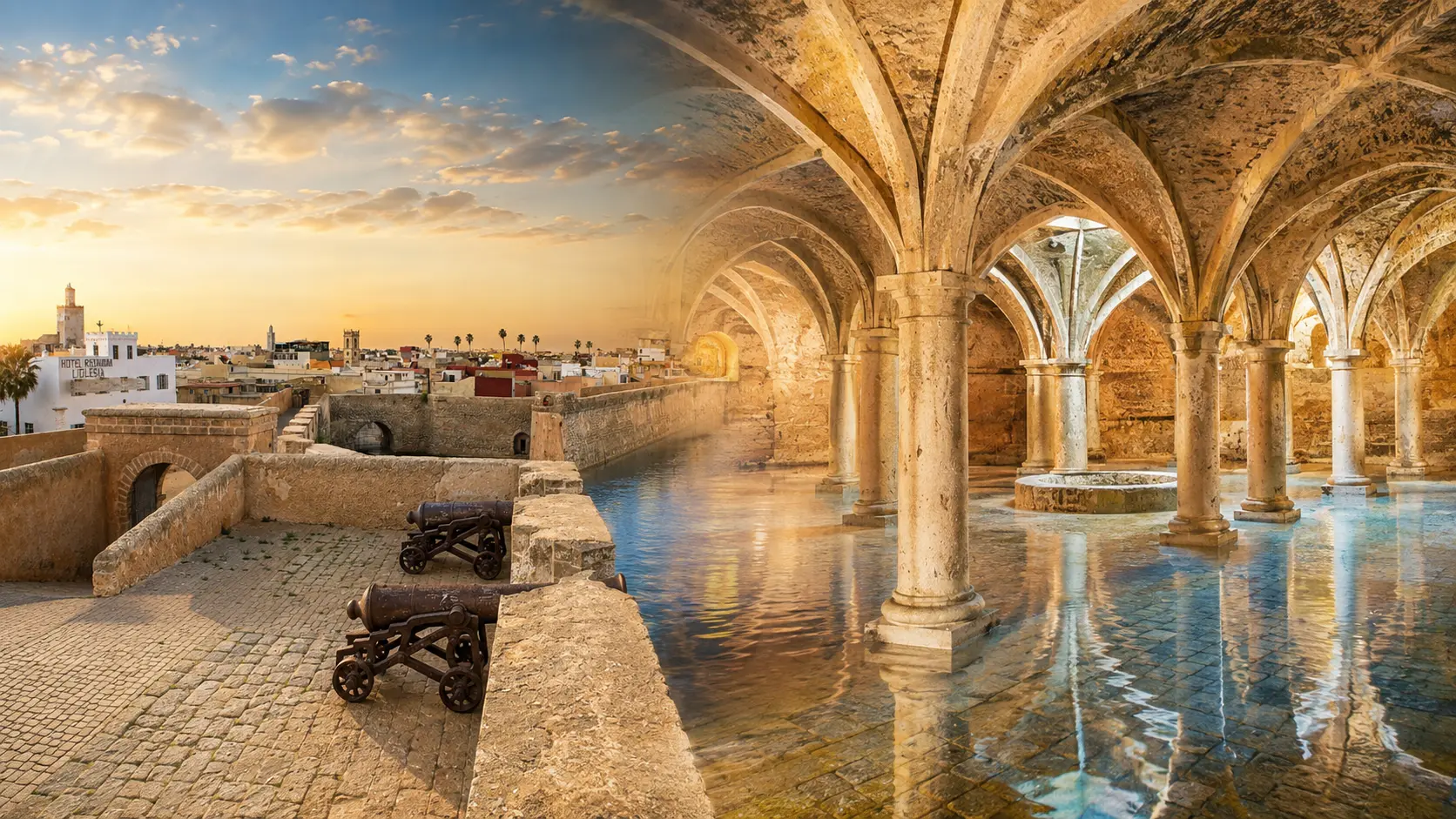
Portuguese Cistern reflections and Mazagan ramparts in El Jadida, Morocco

Visit / Place · El Jadida · Portuguese City of Mazagan

Portuguese Cistern of El Jadida A vaulted Mazagan chamber of stone, water, silence and Atlantic light

Beneath the Portuguese fortified city of Mazagan, the cistern turns a practical chamber into one of Morocco's most memorable architectural interiors: columns, ribs, water and light held in perfect tension.

Read it as part of the old city, not as an isolated photo room. The strongest visit connects the underground chamber with the ramparts, the Church of the Assumption, the Atlantic edge and the Moroccan city that grew around Mazagan.

Why the Portuguese Cistern matters

A water chamber before it is a reflection.

The Portuguese Cistern of El Jadida is not powerful because it is hidden. It matters because it condenses the whole Mazagan story into one underground room: fortification, water storage, Atlantic exposure, European building technique and the later Moroccan life of the city above it.

UNESCO lists the Portuguese City of Mazagan (El Jadida) as a World Heritage property and identifies the cistern, the ramparts and the Church of the Assumption among the most important surviving monuments of the Portuguese period. That context matters. The cistern belongs to a fortified urban system, not to a museum-like fragment separated from the city.

The room also matters architecturally. Stone columns hold a vaulted ceiling whose ribs create rhythm across the chamber, while a shallow layer of water can turn the floor into a field of reflections. The result is calm, almost mathematical, but never cold: the atmosphere changes with light, humidity, shadow and the movement of visitors around the room.

To read the cistern well, start with function. A chamber built for storage or supply becomes visually unforgettable only because its structure is so clear. Water, stone, gravity, shade and the single high opening all belong to the same intelligence.

For El Jadida, the cistern is a hinge between the fortified Portuguese city and the wider Atlantic town. It helps visitors understand why Mazagan was planned with military precision, why water mattered inside a fortified settlement, and why the surviving fabric deserves careful attention rather than quick consumption.

Core heritage facts are grounded in the UNESCO World Heritage Centre listing for the Portuguese City of Mazagan (El Jadida). Practical details such as prices, opening hours, access arrangements and restoration conditions should be checked close to travel.
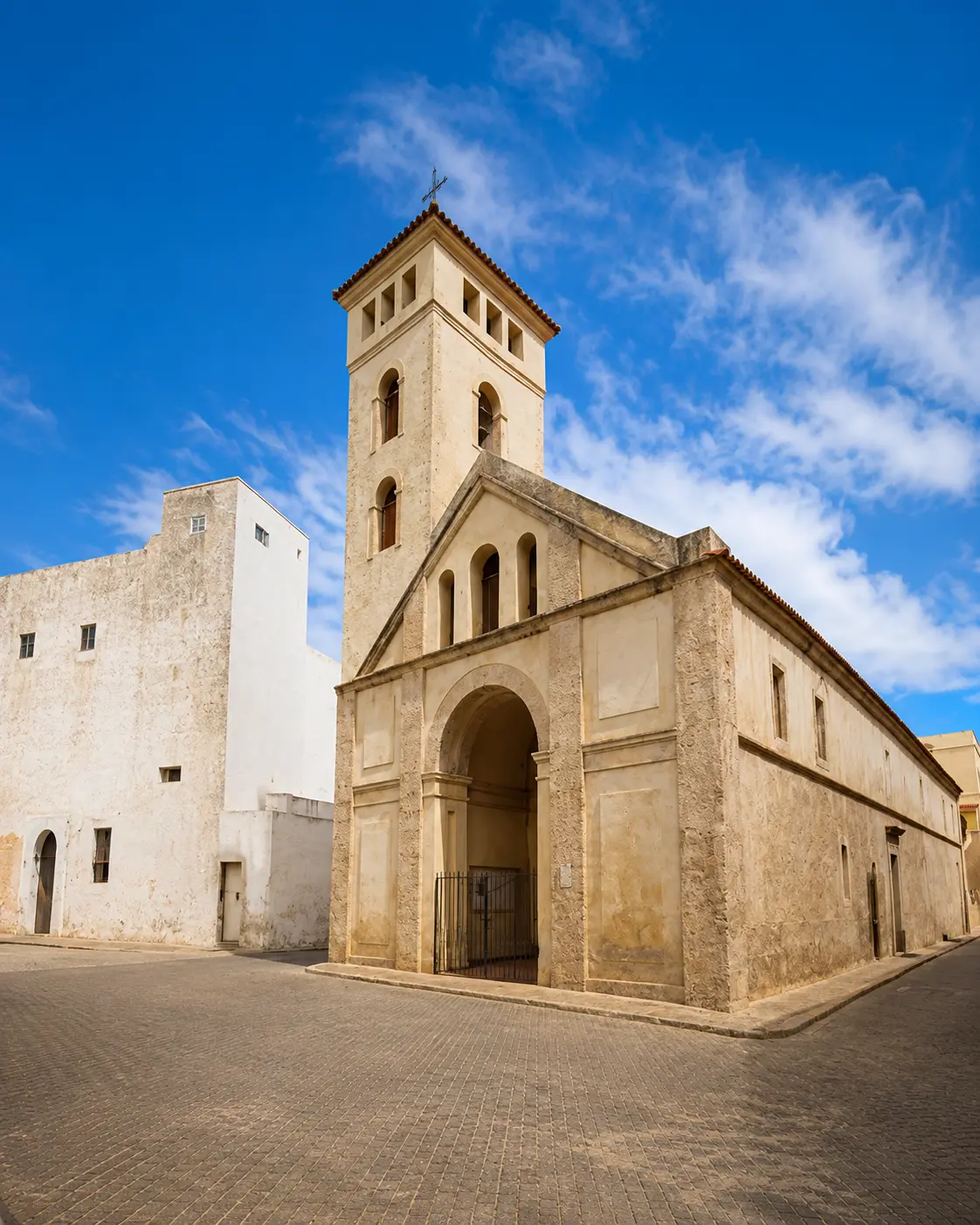
Church of the Assumption in the Portuguese City of Mazagan, El Jadida

Map orientation

Use the map to place the cistern inside the walled Portuguese City of Mazagan, close to El Jadida's Atlantic-facing old city fabric.

Editorial reading

Its beauty is made by structure, water and restraint.

The first impression is often visual: columns multiplying across water, vaults curving overhead, and a shaft of light pulling the eye toward the centre. But the room becomes more interesting when the visitor asks why that beauty exists.

The answer begins with utility. A cistern is infrastructure, not decoration. Here, the architectural discipline required to hold water safely has created an interior of unusual grace: repeated supports, controlled light, thick walls and a floor that changes when water is present.

That is why the Portuguese Cistern rewards a slower eye. The reflection is not a trick added to the building; it is the visible meeting of function and atmosphere. Stone makes the space durable, water makes it luminous, and darkness gives the light its force.

The strongest reading also keeps Mazagan above the chamber. The cistern belongs under a fortified city shaped by Atlantic trade, defence, movement and later Moroccan urban continuity. The visitor should feel both levels at once: the quiet room below and the streets, walls and sea air above.

Notice the proportions before taking the obvious photograph. The rows of columns do not simply frame an image; they organise the room into measured bays, giving the visitor a sense of order even when reflections soften the edges.

Look, too, for restraint. The chamber does not need excessive decoration to hold attention. Its drama comes from repeated geometry, mineral texture, cool air, water sheen and the way one opening can change the whole reading of the interior.

That is the real luxury of the place: not spectacle, but concentration. Few rooms explain so clearly how architecture can become memorable without shouting.

Historical and heritage orientation

Read the cistern through Mazagan, water and fortified urban life.

The Portuguese Cistern sits within the World Heritage setting of Mazagan, the fortified Portuguese city now incorporated into El Jadida. UNESCO describes Mazagan as an early Portuguese fortified colony on Morocco's Atlantic coast, built from the beginning of the 16th century and later taken over by Moroccans in 1769. The cistern is one of the clearest surviving interiors from that period.

01Place type

A historic cistern

The site is a semi-subterranean water chamber inside the Portuguese City of Mazagan. Its meaning comes from architecture serving storage, survival and urban planning.

02Mazagan

Fortified Atlantic city

UNESCO presents Mazagan as a fortified Portuguese settlement on the route to India and an important example of cultural exchange in architecture, technology and town planning.

03UNESCO 2004

World Heritage context

The Portuguese City of Mazagan was inscribed on the UNESCO World Heritage List in 2004. The cistern is named among the property's most remarkable surviving constructions.

04Architecture

Vaults and Manueline memory

The surviving Portuguese buildings include the cistern and the Church of the Assumption, associated by UNESCO with the Manueline or late Gothic architectural language of the period.

A visual bridge

Three readings between stone, water and Atlantic city

The cistern is easiest to understand when the visitor connects its interior atmosphere to the city above. These three readings keep the experience precise: geometry first, reflection second, Mazagan always in view.

01

Geometry

Columns as order

The chamber is organised by repeated stone supports and vaulted bays. Before the eye follows reflections, it should read the structure that makes the room calm, legible and balanced.

  • Read the columns as a grid, not isolated features.
  • Notice how the vault ribs divide the ceiling into rhythm.
  • Let the room's order come before the photograph.
02

Water

Reflection as function made visible

The shallow water is not only atmosphere. It reminds the visitor that the room was made around storage and supply, then turns that practical purpose into a mirror of stone and light.

  • Look where water sharpens or softens the columns.
  • Watch the ceiling repeat across the floor.
  • Keep the practical purpose behind the beauty.
03

City

Mazagan above the chamber

The cistern belongs to an Atlantic fortified city. Return mentally to the ramparts, the Church of the Assumption and the old streets; they give the underground room its urban and historical scale.

  • Connect the chamber to the walled city around it.
  • Read Portuguese and Moroccan layers together.
  • Leave with a city memory, not only an interior image.

Quick orientation

Type of place

A historic vaulted cistern inside the Portuguese City of Mazagan, now part of El Jadida on Morocco's Atlantic coast.

Heritage context

The cistern is part of the UNESCO-listed Portuguese City of Mazagan, recognised for fortification, town planning and cultural interchange.

Best for

Architecture, reflected light, World Heritage context, careful photography, quiet observation and reading El Jadida beyond the seafront.

Closest city context

El Jadida is the direct city context. Casablanca and Safi can frame wider Atlantic Coast planning without replacing the Mazagan reading.

What visitors experience here

A chamber that changes with every degree of light.

The Portuguese Cistern works through transition. A visitor moves from the brightness of El Jadida's old city into a cooler, darker interior where sound softens, water reflects and stone begins to feel almost weightless. The experience is quiet, but it is not empty.

Arrival

From street to chamber

The first shift is spatial. Outside, Mazagan is walls, lanes and Atlantic glare; inside, the cistern lowers the pace and asks the eye to adjust to stone, shade and water.

Light

The central opening

A high opening brings light into the room with unusual discipline. Depending on conditions, it can mark the water, catch the vaults or pull attention toward the centre without flooding the chamber.

Water

A floor that becomes a mirror

When shallow water is present, the room doubles itself. Columns descend visually, arches repeat below, and the visitor starts reading the ceiling through the floor.

Stone

Columns and ribbed vaults

The architecture is measured rather than showy. Stone supports, ribbed vaults and thick surfaces create a room whose force comes from repetition, proportion and material confidence.

Sound

Quiet with a slight echo

The cistern often feels hushed because the room gathers sound differently from the streets above. Footsteps, voices and small movements can become part of the atmosphere.

Return

Back to Mazagan

The exit matters too. Returning to the walled city makes the chamber easier to understand as infrastructure within a fortified place, not a detached spectacle.

Place details and orientation

Read the Portuguese Cistern through six defining elements

The cistern's meaning comes from the relationship between water, structure, fortified city planning and visual atmosphere. Each element supports the others; the room is at its best when read as a complete system.

1
Semi-subterranean chamber

The room sits below the urban surface of Mazagan, creating a strong contrast between Atlantic brightness outside and measured shade within.

2
Stone column grid

The repeated supports organise the chamber into clear bays, giving the interior its calm rhythm and helping the visitor understand its structure.

3
Vaulted ceiling

The ribs and arches above the room create the architectural pattern that becomes especially powerful when reflected in water.

4
Shallow reflecting water

Water is both memory of function and visual atmosphere. It turns a practical chamber into a place where architecture seems to continue below the floor.

5
Central light opening

The opening above the chamber gives light a precise role, focusing attention without erasing the cool, shaded character of the cistern.

6
Mazagan context

The cistern should be linked to the ramparts, bastions, Church of the Assumption and urban fabric of the old Portuguese city.

Room beneath the fortress

The place asks for a quiet architectural eye.

Begin by letting the room settle. The first lesson is not the famous reflection, but the order: columns set in rhythm, vaults carrying weight, and stone surfaces holding moisture, shade and age.

Then look at how water changes the room. A thin surface can transform a heavy structure into something almost floating. The reflection is beautiful because the architecture is disciplined enough to be doubled.

Finally, reconnect the chamber to Mazagan. Above it are streets, walls, sea air and layers of Moroccan urban life. The cistern becomes more powerful when the visitor understands that the silence below belongs to the city above.

Architecture and water intelligence

Reflection is not decoration here.

The cistern's visual force comes from the same elements that made it useful: thickness, support, shade, water management and controlled light. Its beauty is not applied to the room afterward; it is produced by the way the chamber works.

UNESCO's Mazagan listing helps keep that reading precise. The cistern belongs to a fortified city where military design, town planning and construction technique were connected. Inside the chamber, that larger urban logic becomes intimate and visible.

What to notice slowly

  • Start with the structural grid before focusing on reflections.
  • Watch how the ceiling ribs repeat across the water surface.
  • Notice the difference between bright old-city streets and the cooler chamber below.
  • Connect the cistern to the ramparts, bastions and Church of the Assumption nearby.
  • Move carefully around damp stone and respect any access guidance on site.
  • Check current opening and restoration conditions close to your visit.

Architectural reading

Three architectural languages to notice

Vault and column rhythm

The room speaks through repetition. Columns, arches and ribs create a measured interior where every bay helps the next one feel balanced.

Utility transformed by light

A cistern is infrastructure, but here utility produces atmosphere. Water, shade and one controlled source of light turn practical design into visual memory.

Fortification and town planning

The chamber makes most sense inside Mazagan's fortified city. Its quiet interior belongs to a broader system of ramparts, streets, survival planning and Atlantic defence.

Visual atmosphere

Stone, water and quiet transitions

From brightness to shade

The old city outside can feel bright, sandy and exposed to Atlantic light. The cistern reverses that rhythm: cooler air, lower light, thick stone and a slower visual tempo.

From ceiling to water

The eye often starts at the vaults and then finds them again below. That doubling is the room's signature effect, but it remains anchored in real architecture rather than illusion alone.

From photo to memory

The strongest memory is not only a mirrored image. It is the feeling of leaving the chamber and understanding El Jadida differently: fortified city above, water chamber below, sea beyond the walls.

Nearby places and onward links

Connect the cistern to El Jadida and Morocco's Atlantic heritage map

The Portuguese Cistern belongs to the old city of Mazagan, but its wider reading reaches across El Jadida, the Atlantic coast and Morocco's heritage routes.

El Jadida

The direct city context for the cistern. Use the city guide to connect Mazagan's ramparts, Atlantic setting and modern urban rhythm.

Open El Jadida city guide

Atlantic Coast & Historic Port Cities

The regional frame for El Jadida, Safi, Casablanca, Essaouira and Morocco's coastal heritage of ports, walls and sea-facing cities.

Explore the region

Architecture & Heritage

The cistern is a precise lesson in built heritage: utility, material, light, preservation and the exchange of architectural ideas.

Read the theme

Visit Morocco places

Continue through monuments, medinas, kasbahs, lagoons, caves, valleys and heritage places beyond the city guides.

Browse Visit places

Plan your journey

Treat the cistern as part of an Atlantic itinerary, pairing careful heritage time with wider El Jadida and coastal planning.

Plan your journey

Stories from Morocco

Use the Stories section for deeper cultural reading around place memory, architecture, cities, craft and the textures of Moroccan travel.

Read stories

How to visit respectfully

Good behaviour protects the quiet.

The Portuguese Cistern is a compact, atmospheric heritage interior. Respect begins with pace: move slowly, keep voices low, avoid blocking narrow areas and give other visitors enough room to experience the chamber without pressure.

Care also means respecting damp stone, water, surfaces and any access guidance. Do not touch fragile fabric, step where signs or staff restrict movement, use flash where it is discouraged, or turn the chamber into a loud photo set.

  • Check current access, restoration status and practical arrangements before travelling.
  • Keep photography calm and avoid disrupting people who are reading the space quietly.
  • Stay on appropriate visitor paths and avoid leaning on old stone or damp surfaces.
  • Connect the visit with Mazagan's streets and ramparts instead of rushing in and out.
  • Support local guides and nearby businesses with clear, courteous interaction.

A strong first visit

Begin in the old Portuguese city above the chamber. The ramparts, bastions, narrow streets and Church of the Assumption help prepare the eye for what the cistern is: infrastructure within a fortified urban fabric.

Inside, pause before photographing. Let the eye adjust to the darker interior, then read the structural order from one side of the chamber to the other. The reflection is stronger when the visitor first understands the columns and vaults that create it.

If water is present, watch how the room changes as people move. Small ripples can break the mirror; stillness can make the architecture feel doubled. That changing surface is part of the experience, not a defect.

After leaving, walk back through Mazagan with the cistern in mind. The chamber gives the old city a second level: not only walls and streets, but stored water, shade, engineering and the daily logic of a fortified place.

  • Start above ground with the old city context before entering the chamber.
  • Let your eyes adjust before focusing on the water reflection.
  • Read columns, vaults and central light as one system.
  • Keep the visit quiet, especially when the chamber is busy.
  • Finish by reconnecting the cistern to El Jadida's Atlantic walls and streets.

Careful planning note: access, opening hours, ticketing and restoration conditions can change. Verify practical details locally before travelling.

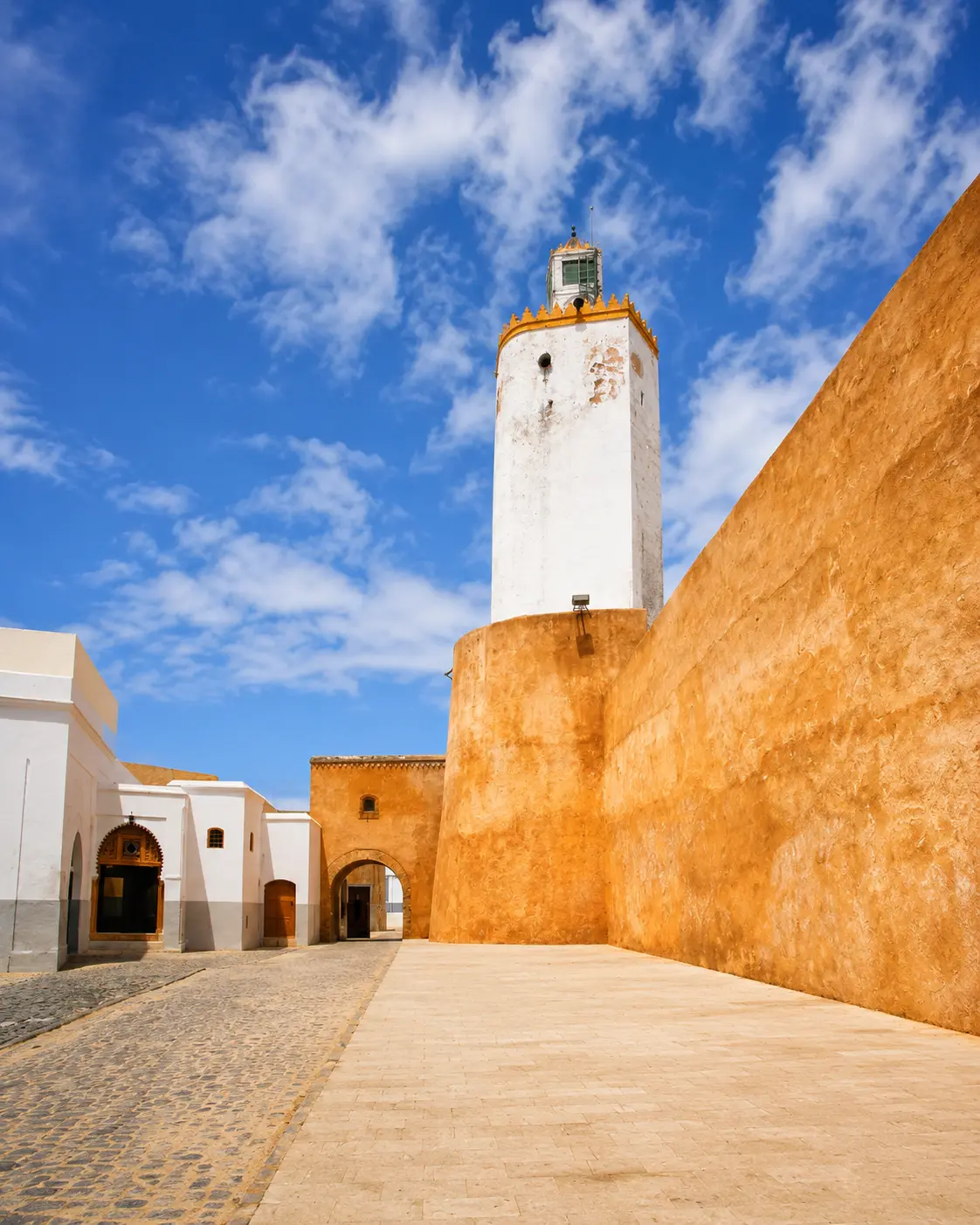
Mazagan city wall and tower in El Jadida, Morocco

Go deeper through the nearest city context

El Jadida: the city gateway to the Portuguese Cistern

The cistern belongs naturally inside an El Jadida visit. The city gives the chamber its full setting: Mazagan's fortified Portuguese plan, Moroccan urban continuity, Atlantic walls, sea air and a modern coastal rhythm beyond the old city.

Use El Jadida to widen the reading after the chamber itself. The best route connects the cistern with the ramparts, the Church of the Assumption, old streets, port views and the wider Atlantic Coast heritage map.

Mazagan old city contextEl Jadida city orientation Atlantic rampartsArchitecture and heritage reading Careful photography rhythmCoastal onward planning

Continue the journey

Continue from the Portuguese Cistern into Atlantic Morocco.

Read the chamber slowly, then connect it to El Jadida, Mazagan's walls, the Atlantic coast, architecture, water and the wider heritage map of Morocco.