Skip to learning
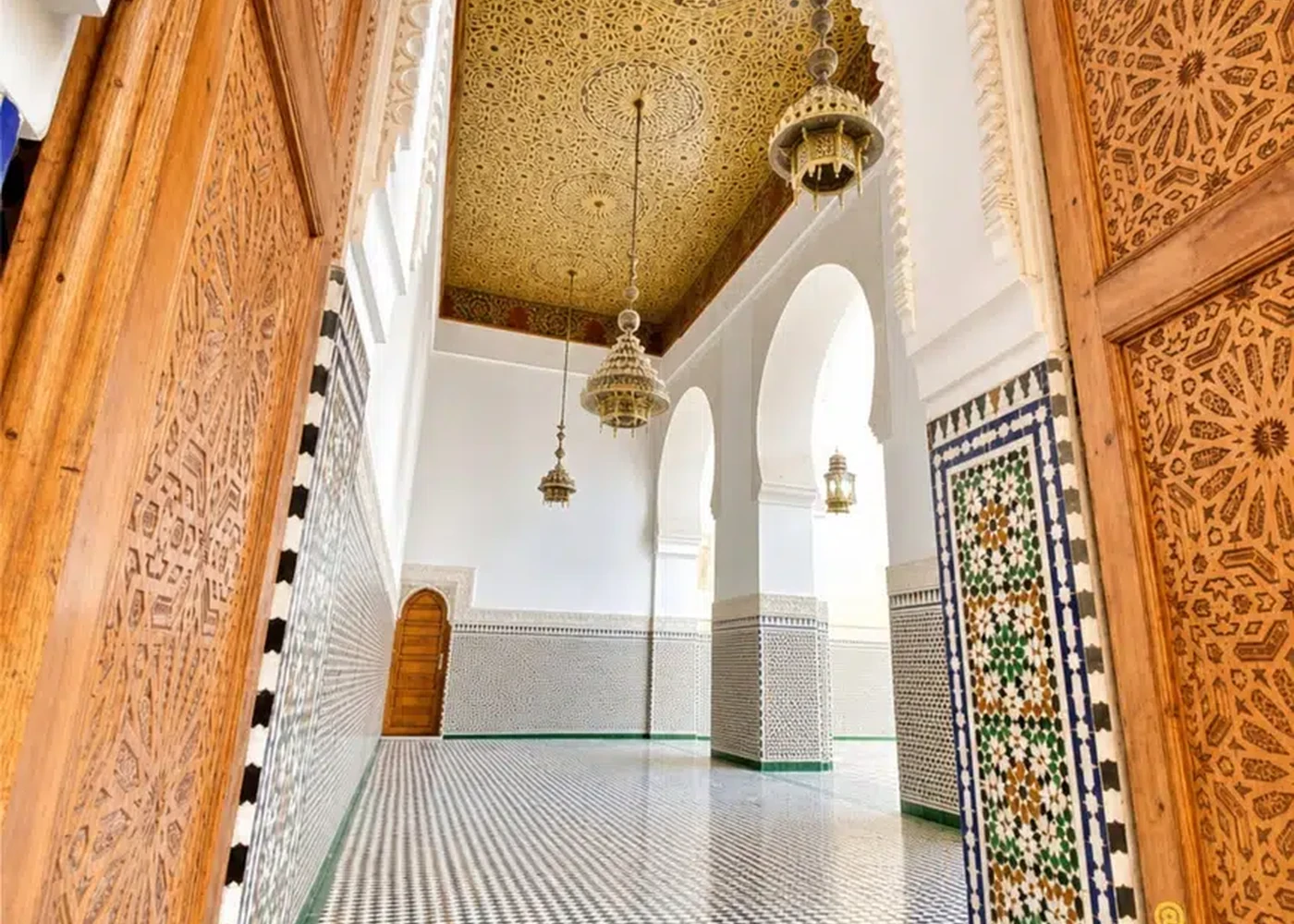
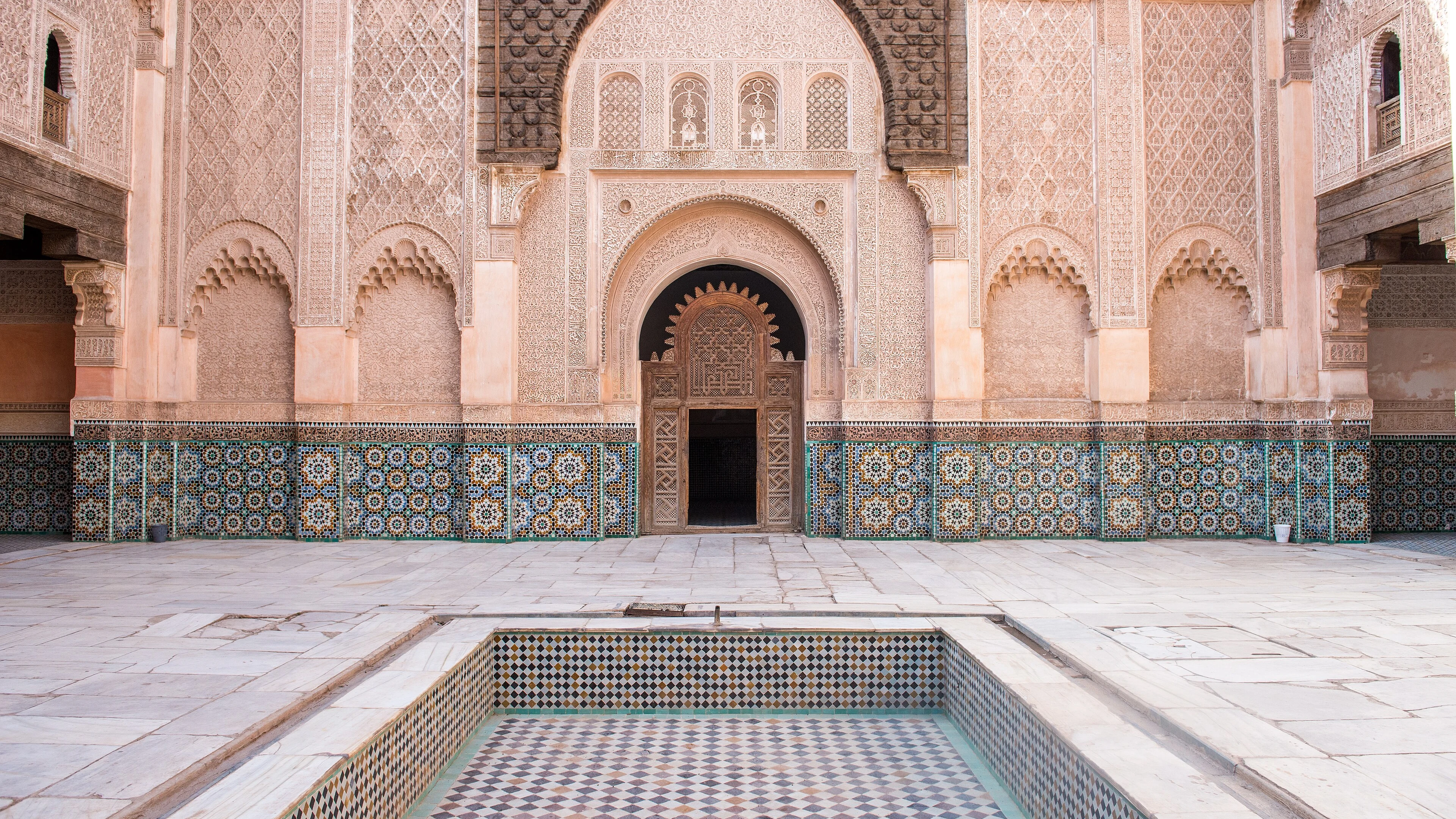
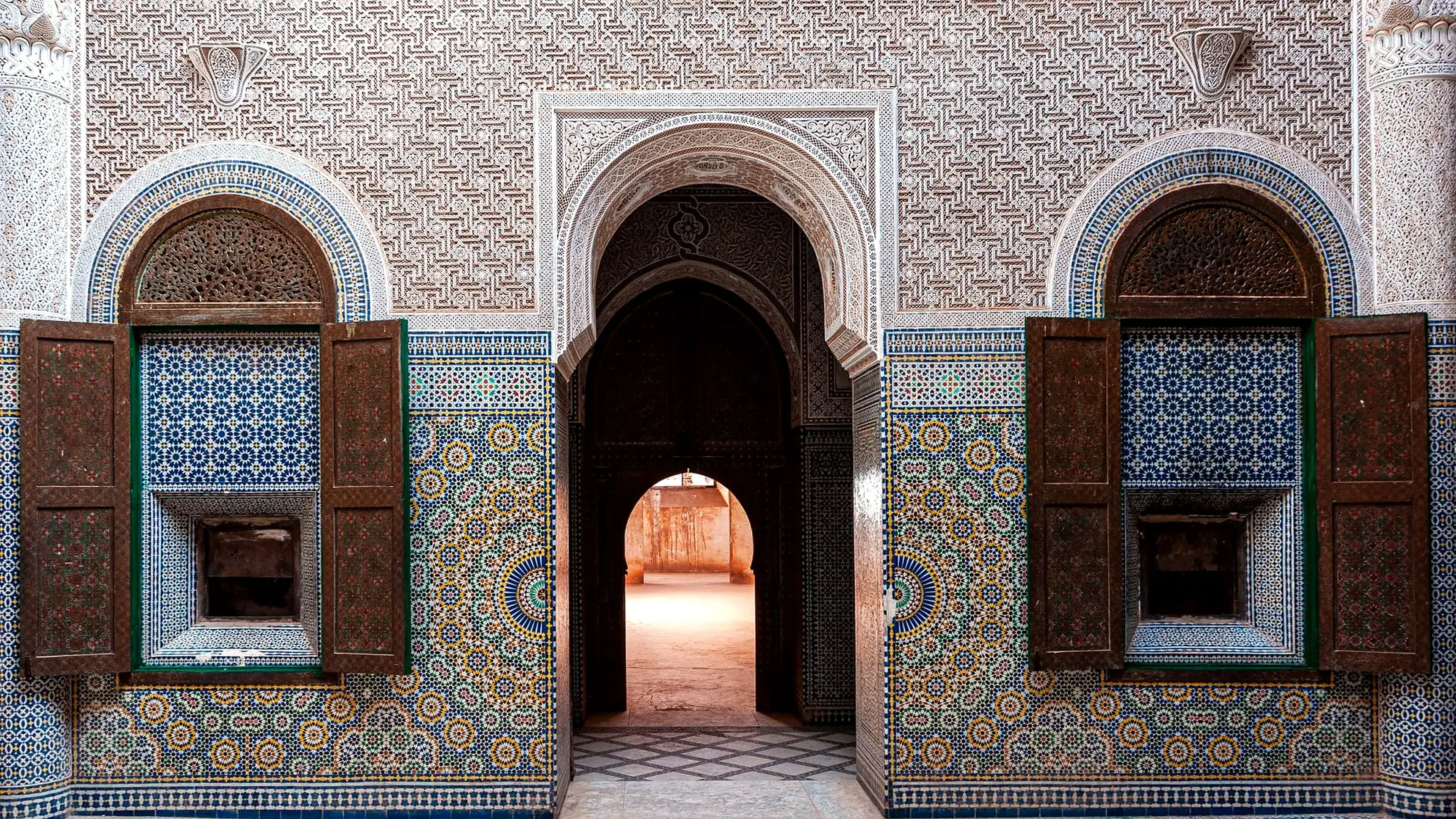
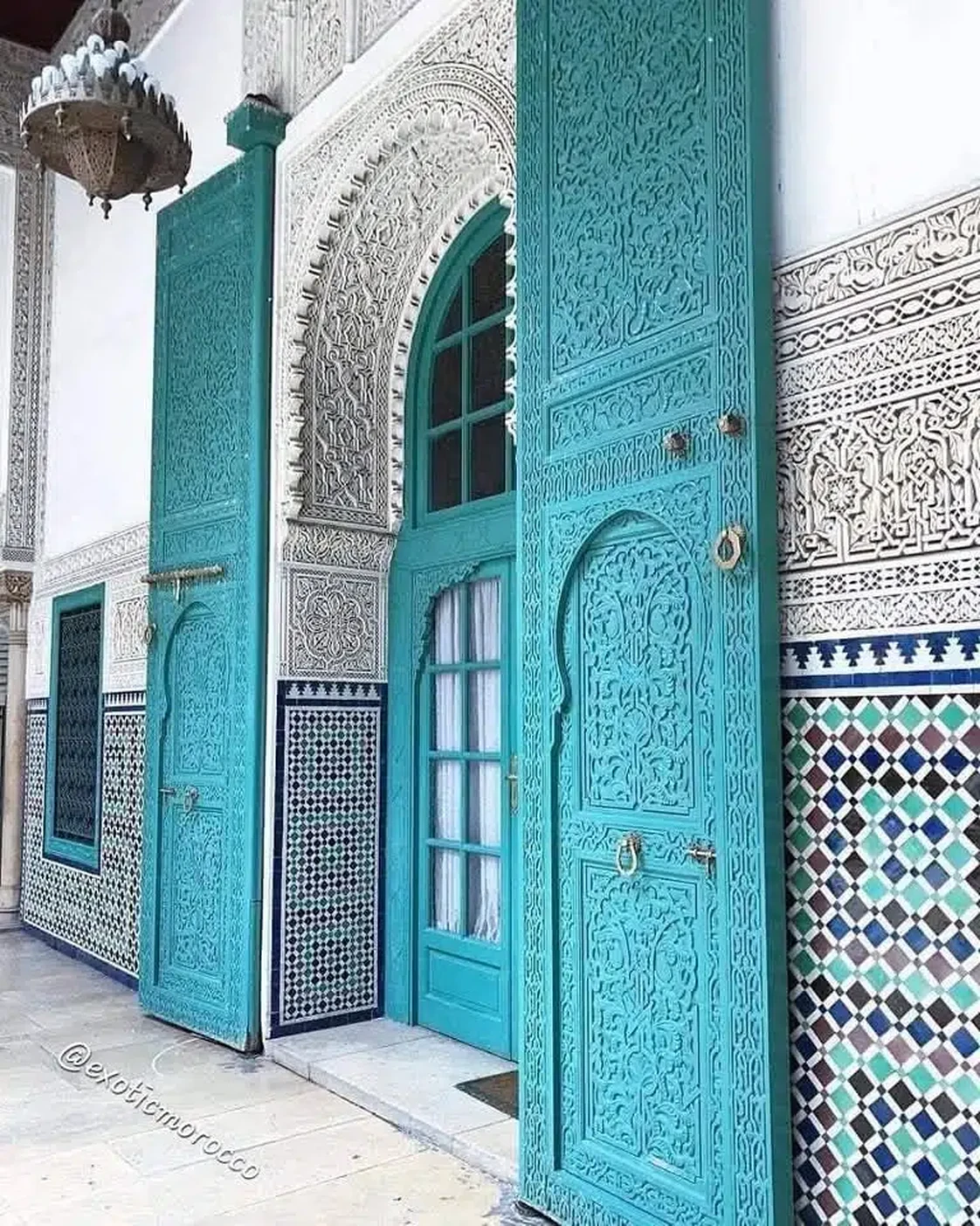
Tile, carved plaster and timber frame an opening at Telouet.
The language of the surface

Zellige & Ornament

Tile, plaster, timber and script: learn how Moroccan ornament gives a doorway, an object or an entire room its visual rhythm.

Exotic Morocco · 10 minute read
01 / A way into the story

Not just more detail.
A deliberate composition.

At first, ornament can seem like abundance without an end. Look again and the surface becomes organised: a field repeats, a border turns, a frame holds an opening, and a quieter interval gives the eye somewhere to rest.

Zellige belongs to this larger composition. Beside carved plaster, timber and writing, it helps establish scale, contrast and emphasis. Learning to separate those elements makes the whole room more rewarding to see.

A framed opening, carved plaster and a patterned tile base.
THE SUBJECTThe language of the surface
THE APPROACHPlace. Practice. People.
THE CONNECTIONFind it in Morocco ↗
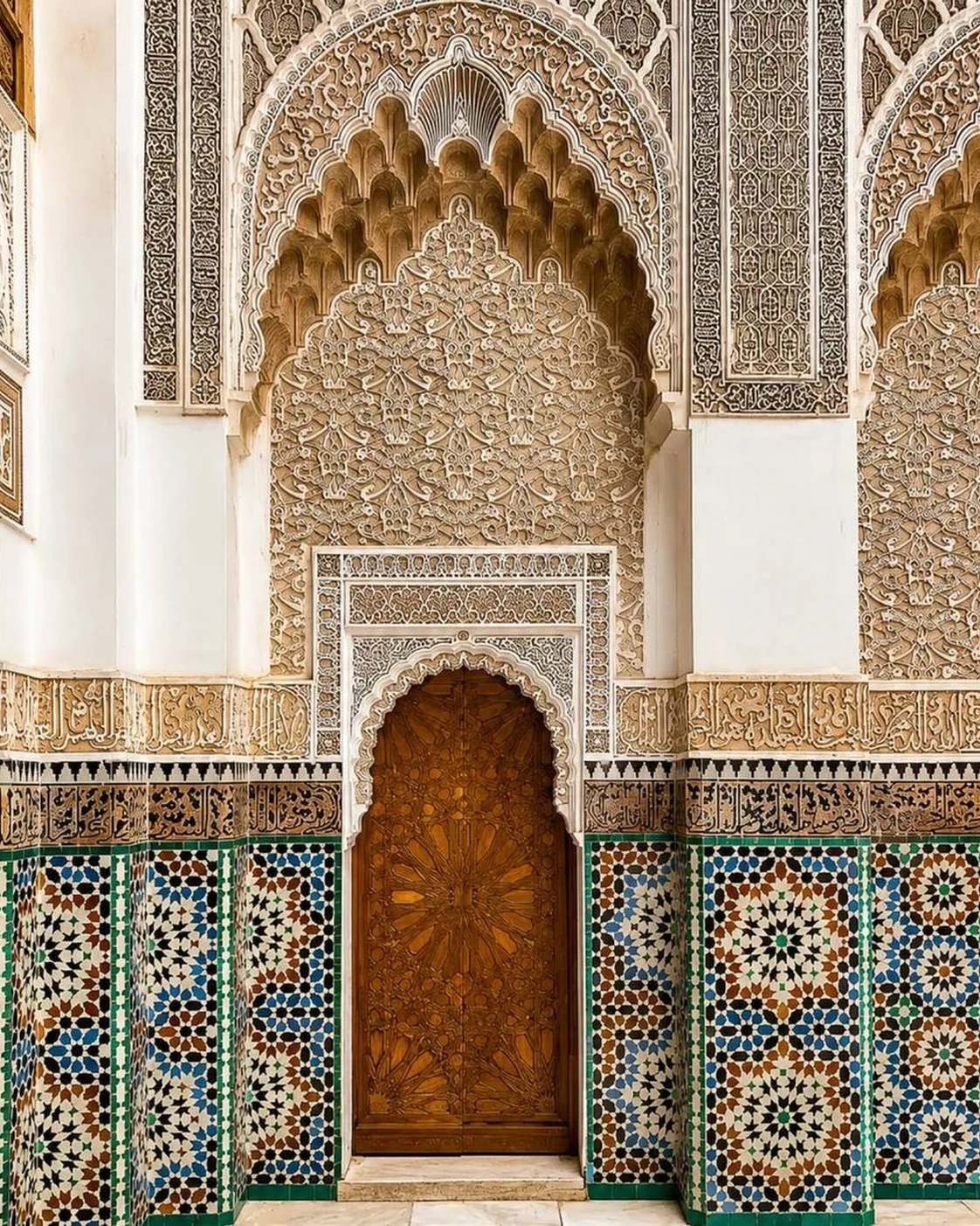
Painted doors framed by tile and carved plaster.
02 / The deeper context

A room speaks
in several materials.

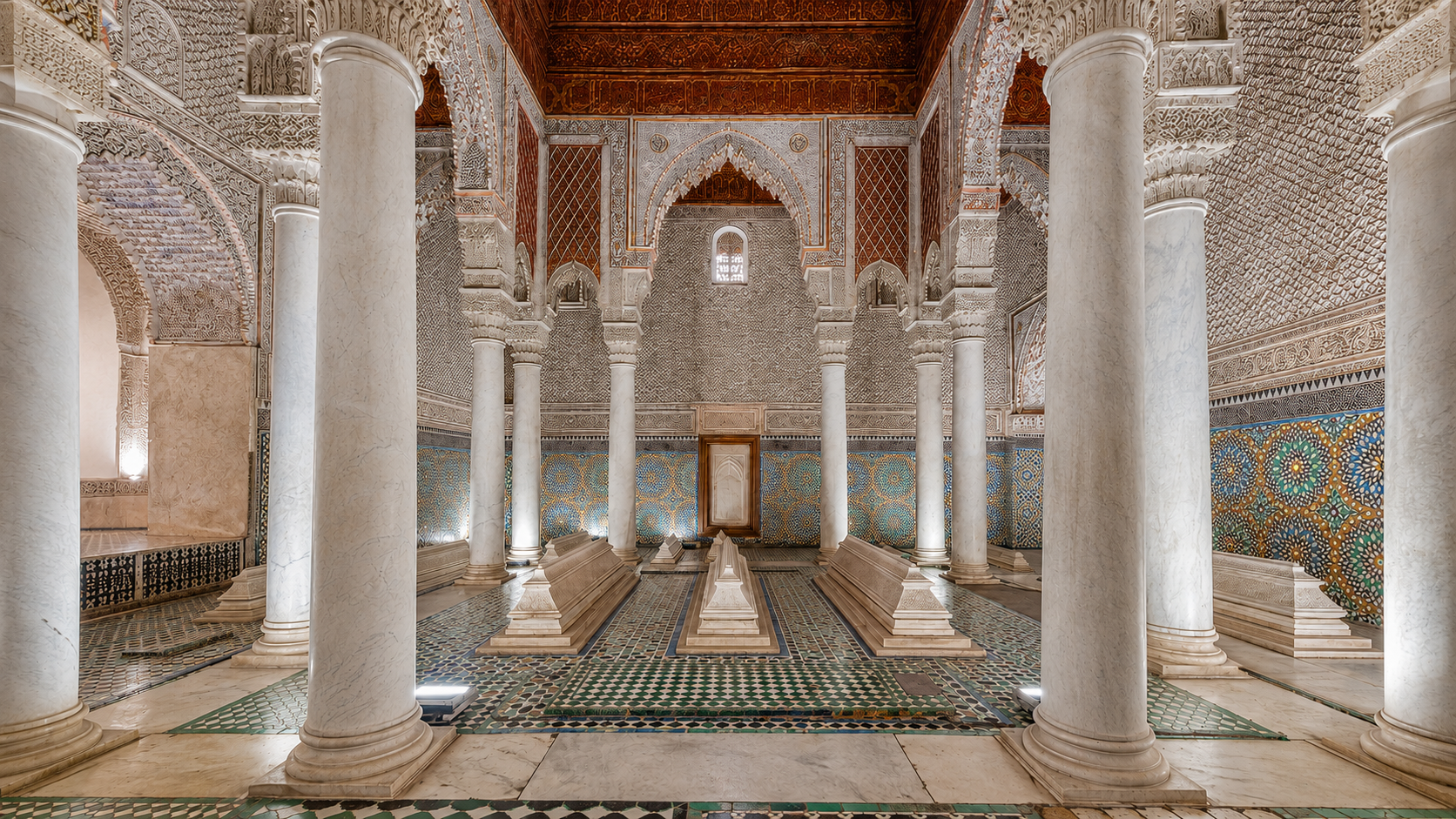
A richly decorated Moroccan interior is rarely a single uninterrupted pattern. It is a composition of fields, borders, frames, inscriptions and pauses. Zellige may anchor the lower wall while plaster, wood and painted surfaces carry the eye upward. The pleasure comes partly from abundance and partly from organisation: different densities of detail are made to coexist.

This page treats ornament as a visual language across materials. Its companion, Zellige Explained, follows the tile mosaic itself from unit to repeat. Here the scale is larger. Look at how a tile panel ends beneath another register, how an inscription follows an architectural frame, and how a quieter surface gives an elaborate one room to be seen.

Description is the first discipline. A geometric figure, a stylised leaf and a band of writing ask for different kinds of attention. They may overlap within one composition, but they do not become interchangeable symbols. Reading the writing requires language knowledge; interpreting a commission requires historical evidence. Looking carefully can tell us much while also revealing what we still need to learn.

04 / The visual chapter

The detail and the room

Move between the close detail and the wider setting. Each view adds another part of the story.

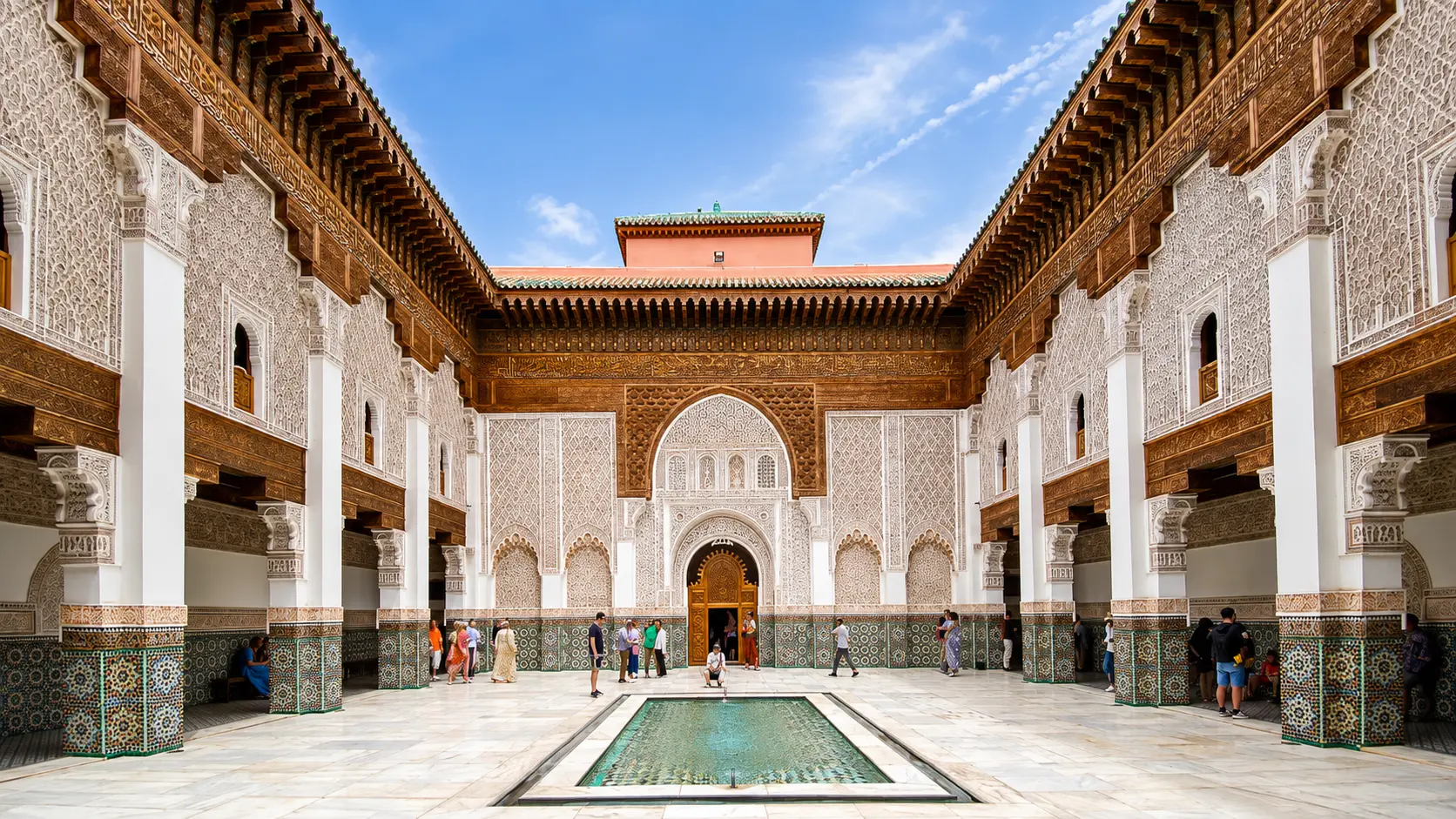
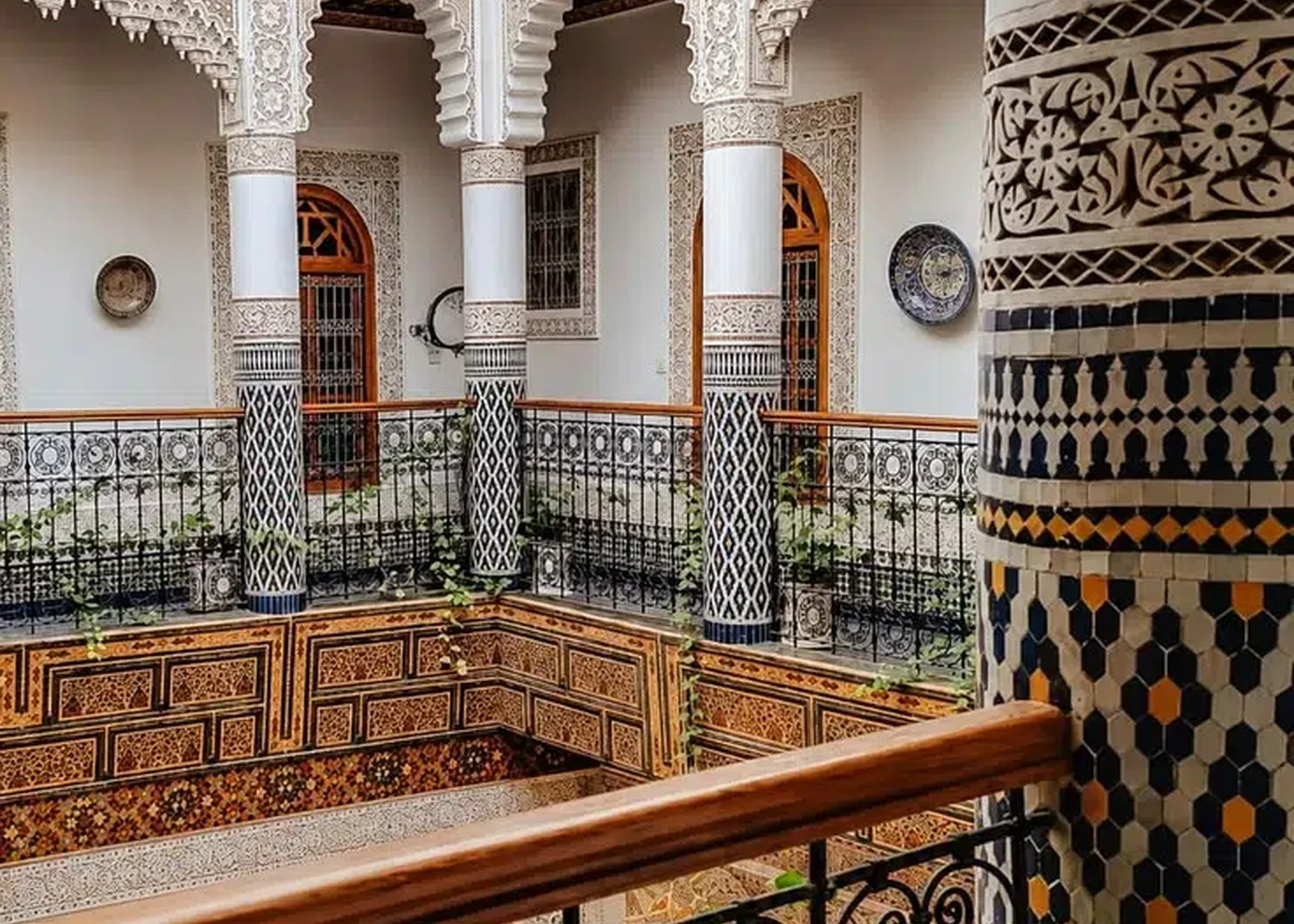
Several materials sharing one interior.
01 / A closer look

Materials organise a room

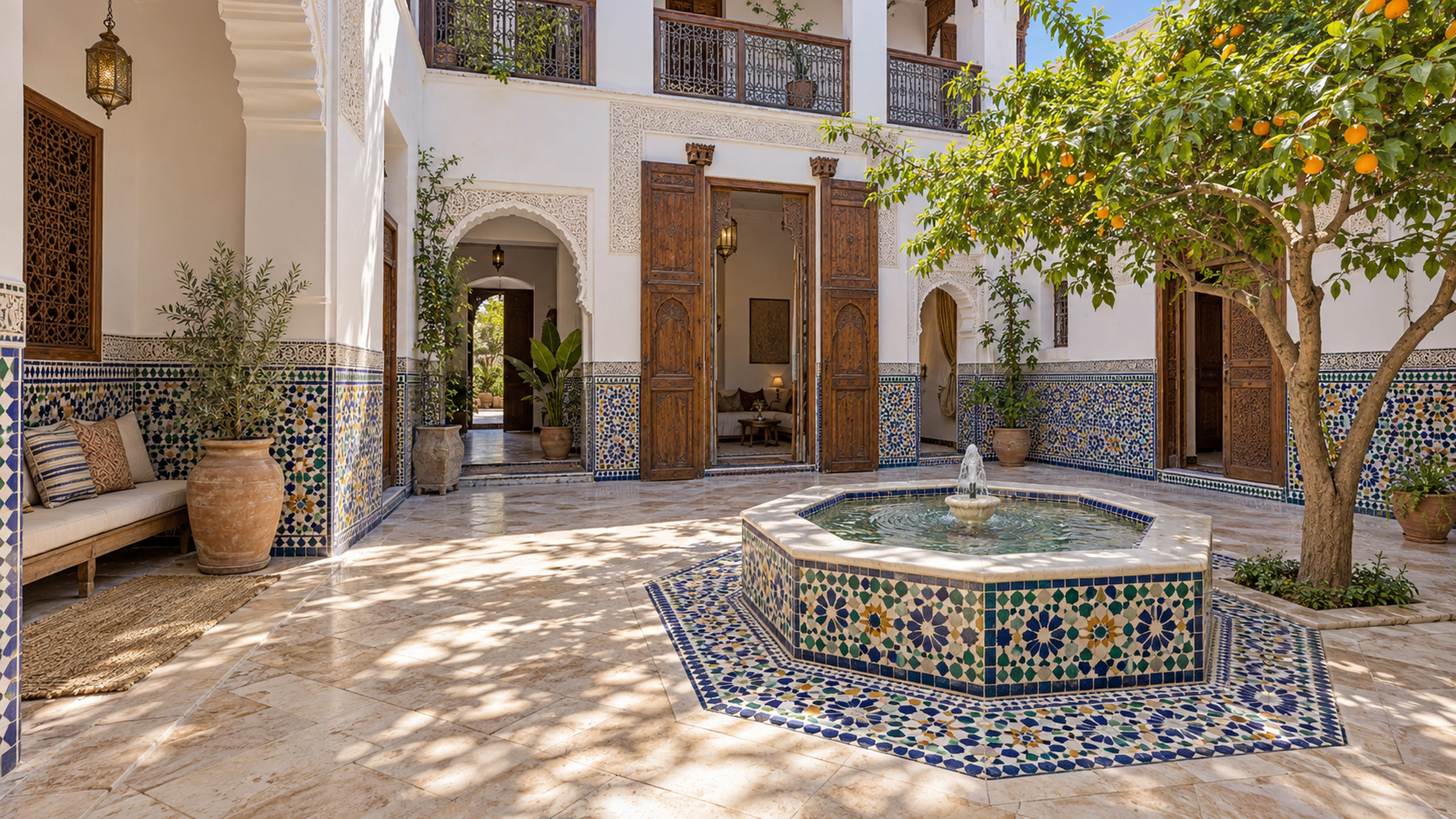
A tile base, carved wall and timber gallery do different visual work. Their changes in texture and reflectivity can make separate registers legible. Look for continuity of alignment across a change in material rather than expecting an identical motif everywhere.

Several materials sharing one interior.
Ornament around a framed entrance.
02 / A closer look

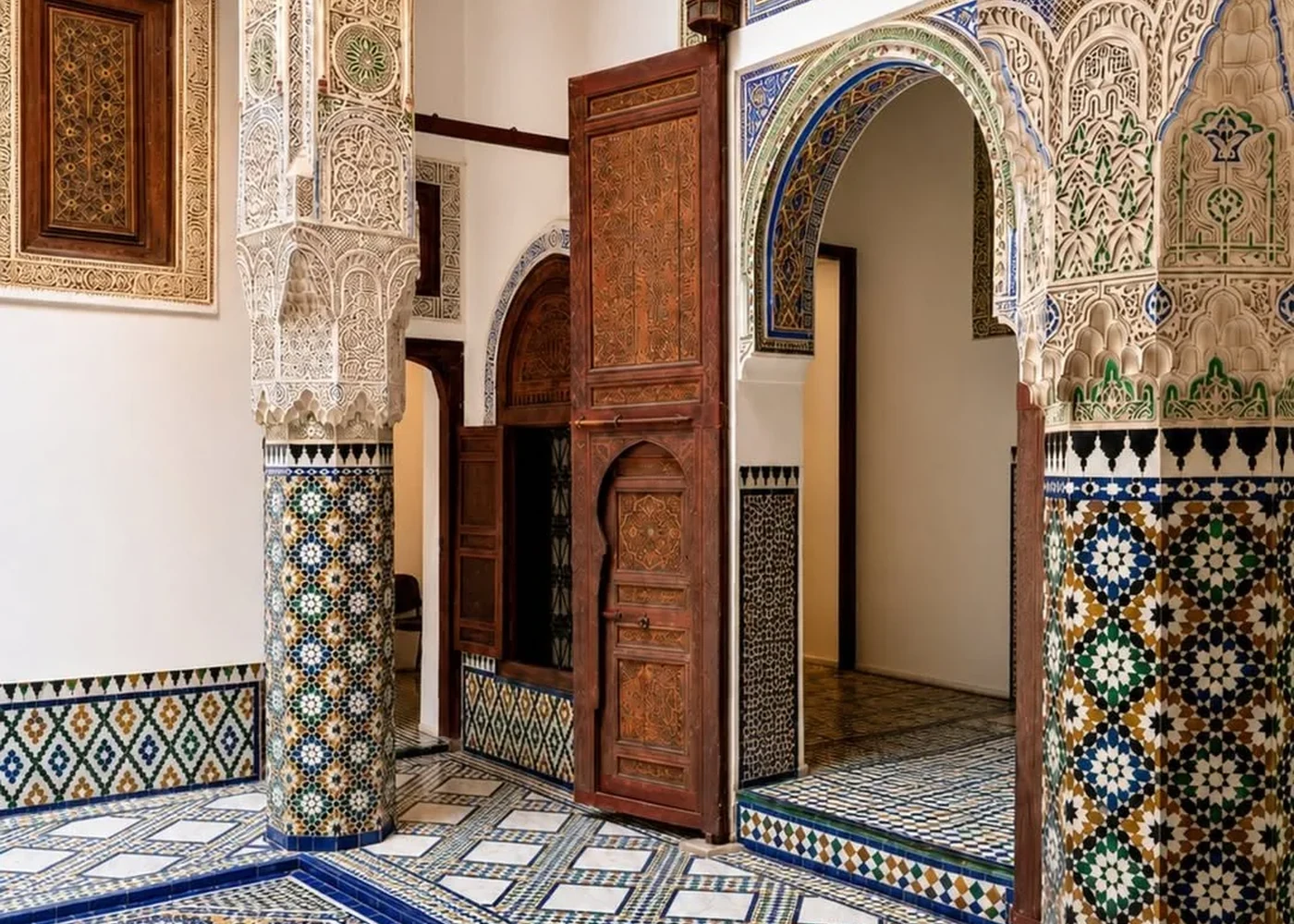
A border gives detail a place

Decoration becomes architectural when it responds to an edge, an opening or a change of level. Trace the outer limit of a panel and see how it turns. A border is not leftover space; it is part of the design that makes the field readable.

Ornament around a framed entrance.
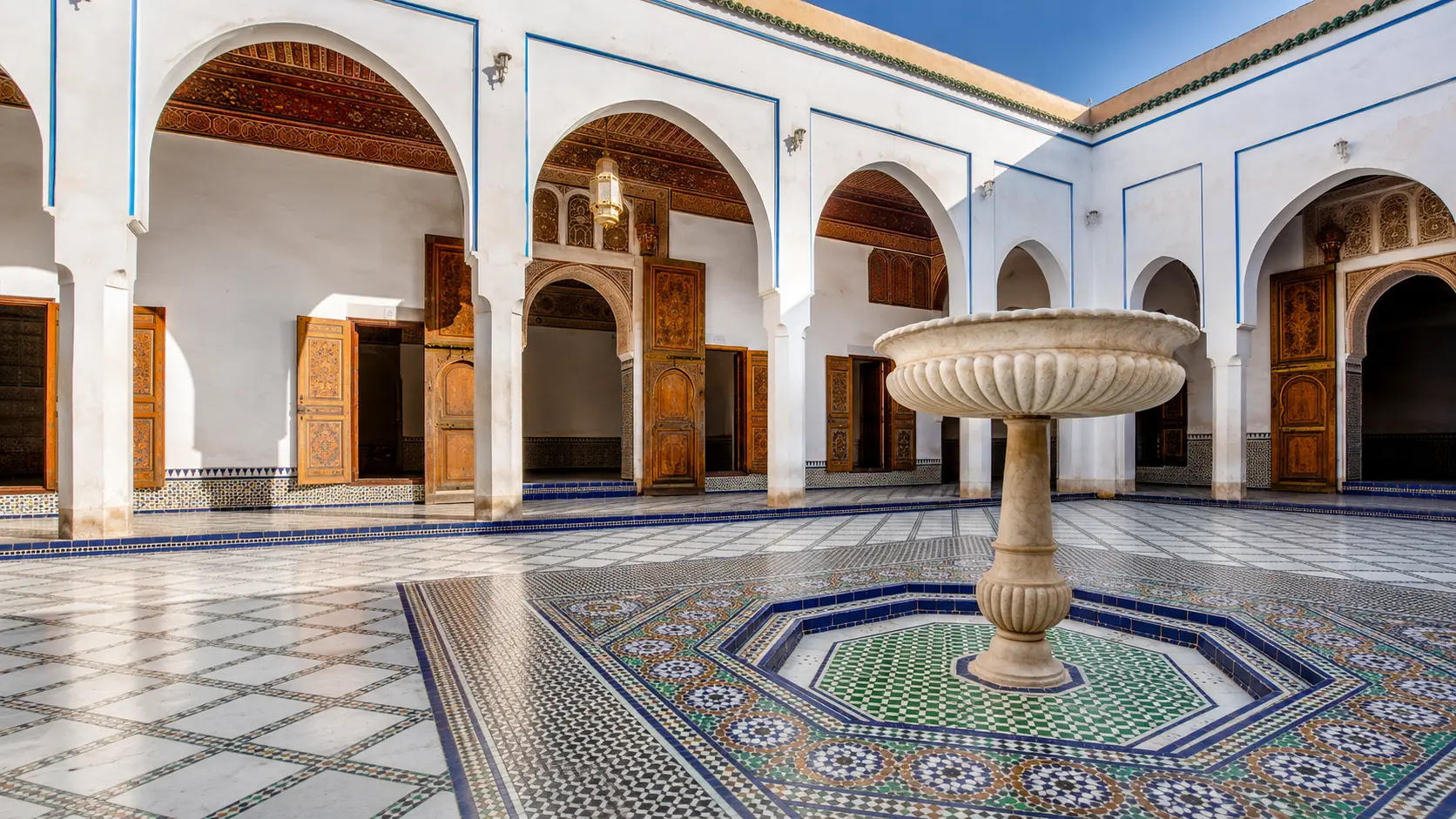
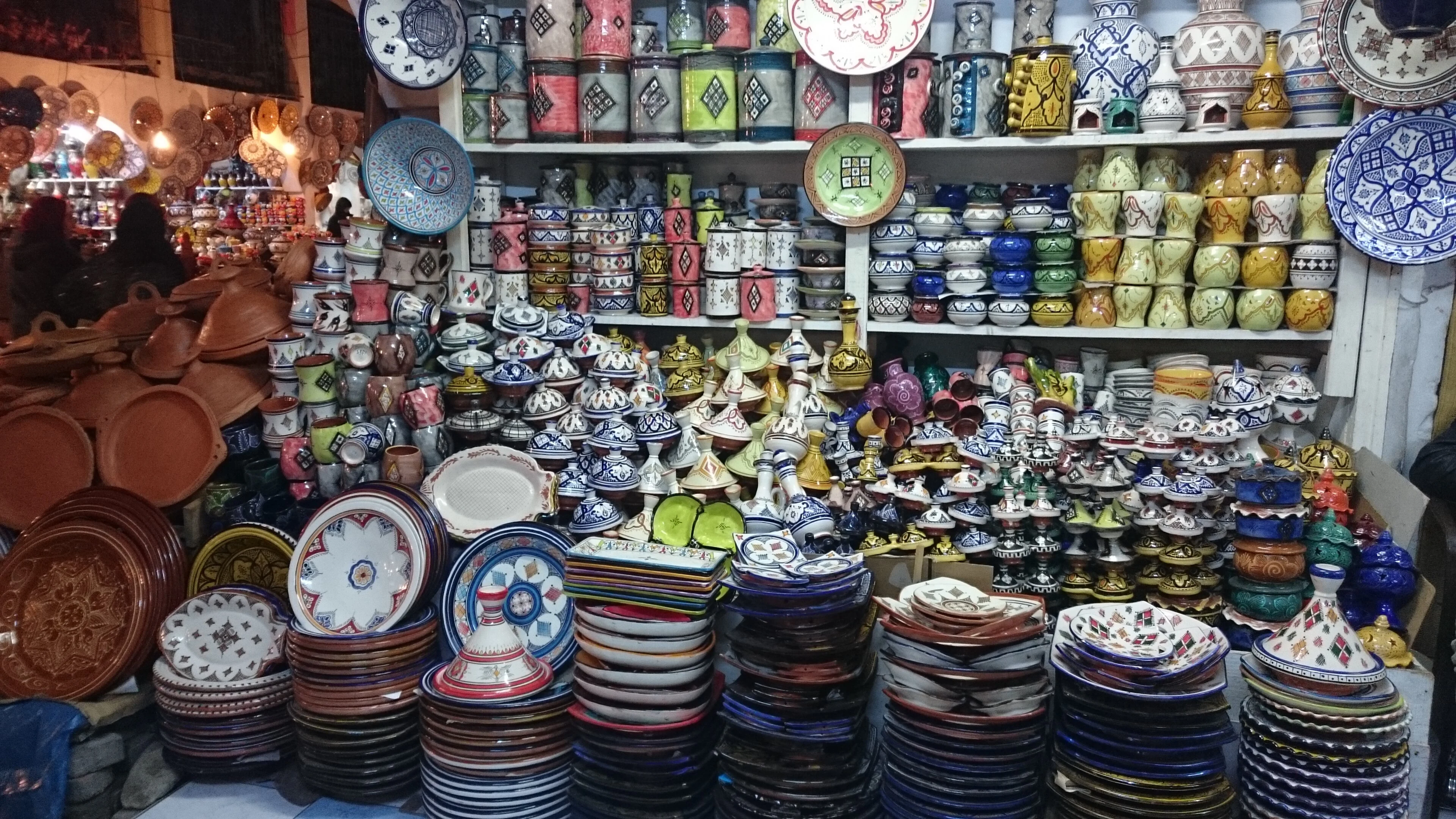
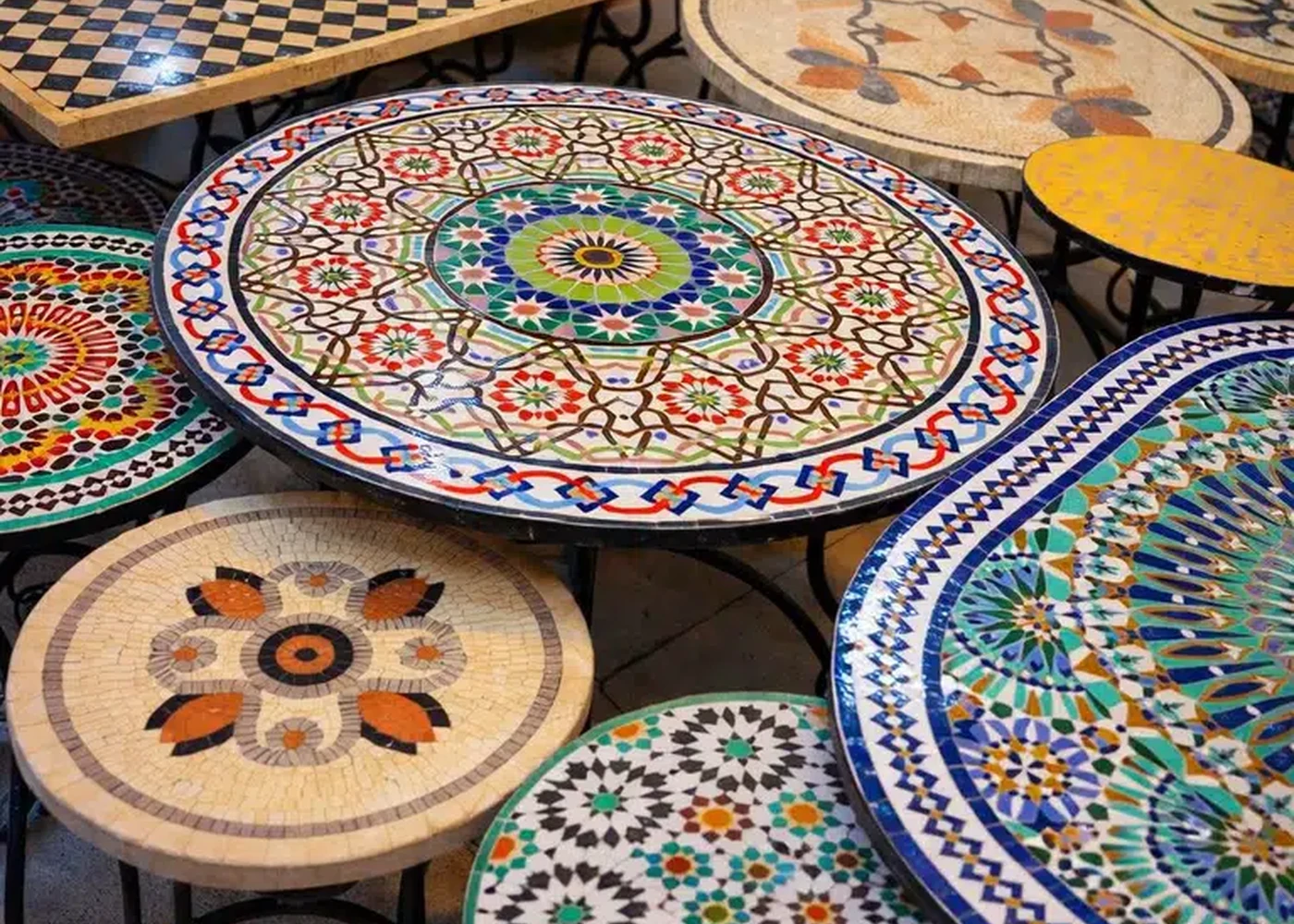
Mosaic tabletops show ornament at the scale of an object.
03 / A closer look

The value of a pause

A plain strip or uncarved interval is part of the composition. It separates, frames or lets the eye rest. When every detail competes for attention, move back far enough to see how the larger room distributes emphasis.

Mosaic tabletops show ornament at the scale of an object.
03 / From an idea to everyday life

Learn the grammar of a surface.

An opening can bring a large architectural shape into contact with very small decorative units. Notice which lines follow the opening and which belong to the wall around it. The frame mediates between the two, making the transition feel intentional.

Decorated doorway from the Exotic Morocco collection.
01

Field, border, frame

A field can suggest repetition beyond its visible edge. A border sets a limit; a frame connects the decoration to an opening or object. Find all three in one photograph. Then ask what happens at a corner, where the maker must reconcile the pattern with a change of direction.

02

Relief, reflection, shadow

Glaze catches light on a smooth face. Carved plaster and wood make small shadows. These are different visual effects even when the forms resemble one another. Moving a few steps can reveal depth that disappears in a straight-on photograph.

03

Writing deserves to be read

An inscription is language, not just a decorative band. Avoid inventing a translation from its position or appearance. Look for a reliable transcription or a site explanation, and keep the distinction between the words, their calligraphic form and their architectural setting.

A closer understanding

Several visual languages.
One composed room.

Ornament becomes more interesting when you distinguish its systems instead of calling every decorated surface zellige.

The material

Tile, plaster and timber are different surfaces.

Zellige refers to a ceramic tradition; carved plaster and worked wood bring other tools, depths and textures into a room. Similar geometric ideas can move between them without making the materials interchangeable.

Follow the changes of surface from floor to wall to ceiling. Glazed ceramic catches light differently from carved relief. A painted timber panel adds another relationship between colour and structure. The arrangement of these materials can guide the eye through the architecture.

The motif

Geometry is only part of the vocabulary.

Geometric pattern, vegetal ornament and calligraphy are distinct strands that may appear together. A repeating star, a stylised leaf and a written inscription need different methods of reading. Recognising one does not automatically explain the others.

Treat an inscription as language before treating it as texture. If you cannot read it, a reliable transcription and translation are needed. Likewise, the presence of a familiar shape is not enough to assign one universal symbolic meaning to every example.

The composition

Borders tell the surface where to stop.

A field of repeated shapes has to meet a doorway, corner or change of material. Narrow bands and framed panels negotiate those transitions. A border can establish hierarchy, change the scale or make several decorative registers belong together.

Compare a tabletop with a room. Both may use related motifs, but the room must respond to openings, movement and viewing distance. Ornament is therefore not simply decoration applied to a blank surface; its placement can help a viewer understand the surface’s role.

Carry this with you

Read in order: material, motif, placement. Only then move to historical meaning, supported by the particular object or building.

05 / More than one perspective

Look beyond
the first impression.

Perspective 01

Unity without sameness

Materials can share a rhythm without sharing an identical pattern. A repeated arch above a tile field may echo its spacing rather than its exact geometry. Look for alignment, proportions and changes of scale. These relationships can be described without speculative symbolism.

Perspective 02

Historic & contemporary

New interiors can use established decorative vocabularies in changed proportions and settings. A modern commission is not a historic survival, and a historic room may contain repairs. Date the building, the surface and the intervention separately when the evidence allows.

06 / Make the connections

Five things the eye can follow

Use these ideas to connect what you notice with the materials, people and histories behind it.

01

Repeat

A unit or relationship that returns across a field.

02

Symmetry

A relationship across an axis or around a centre; examine how it works in this example.

03

Register

A distinct band or zone within the overall composition.

04

Relief

Forms that project from or are cut into a surface, producing depth and shadow.

05

Calligraphy

Writing treated as a visual art; the language and meaning remain essential.

07 / A more useful conversation

Look closely. Interpret carefully.

Clear answers for the questions that often come next.

Does every pattern have a fixed meaning?

No universal dictionary can explain every motif in every setting. Specific interpretations require evidence about place, period, patron or maker. Start with a precise visual description.

Can ornament be contemporary?

Yes. Existing skills and forms continue in new buildings and objects. A recent commission can be accomplished work without pretending to be an antique.

How is this different from Zellige Explained?

Zellige Explained studies the making and geometry of cut ceramic mosaic. This page studies the relationships between ornament, materials and architectural setting.

A thought to take with you

Keep looking. Keep learning.

Take two photographs if photography is allowed: one of a detail and one of the whole setting. The first records the skill of a surface; the second preserves the relationships that give that skill a place and a purpose.

The Exotic Morocco library

Continue at your own pace.

This Learn story is free to explore. Find this subject in the guide library, with each title’s current availability clearly shown.

Explore the guide library ↗
Sources & further reading

Read the evidence

  1. The Metropolitan Museum of Art · Building the Moroccan Court
  2. The Metropolitan Museum of Art · Panel with Cusped Arches
  3. UNESCO · Medina of Fez
  4. UNESCO · Medina of Marrakesh
  5. The Metropolitan Museum of Art · Geometric Patterns in Islamic Art

Source review: September 2026. Looking exercises and learning prompts are original Exotic Morocco editorial suggestions. Regional practice and personal experience vary.

Image acknowledgements

  1. Hero: Existing Exotic Morocco image library, Tile, carved plaster and timber frame an opening at Telouet.
  2. Related preview: Zellij Fes 04.jpg — Schorle. CC BY-SA 4.0. Cropped/resized; original licence retained.
  3. Related preview: Safi.jpg — Abdelmounim Maroc. CC BY-SA 4.0. Cropped/resized; original licence retained.
  4. Chapter: Painted doors framed by tile and carved plaster. — Exotic Morocco’s existing image collection.
  5. Gallery: Mosaic tabletops show ornament at the scale of an object. — Exotic Morocco’s existing image collection.
  6. Related preview: Fez, Morocco (3636868446).jpg — nathalie_r. CC BY 2.0. Cropped/resized; original licence retained.
  7. Hero: مدرسة ابن يوسف 04 24 52 023000.jpeg — إيان. CC BY-SA 4.0. Cropped/resized; original licence retained.
  8. Portrait: Carved plaster, a framed opening and a tile base. — Exotic Morocco’s existing image collection.
  9. Story-1: A decorated interior seen through a doorway. — Exotic Morocco’s existing image collection.
  10. Story-2: Tile, timber and plaster within one interior. — Exotic Morocco’s existing image collection.
  11. Story-3: A decorated doorway: several registers of ornament. — Exotic Morocco’s existing image collection.

Destination and related-story thumbnails intentionally identify their linked pages. Principal story images are selected individually for this Learn page.