Skip to learning
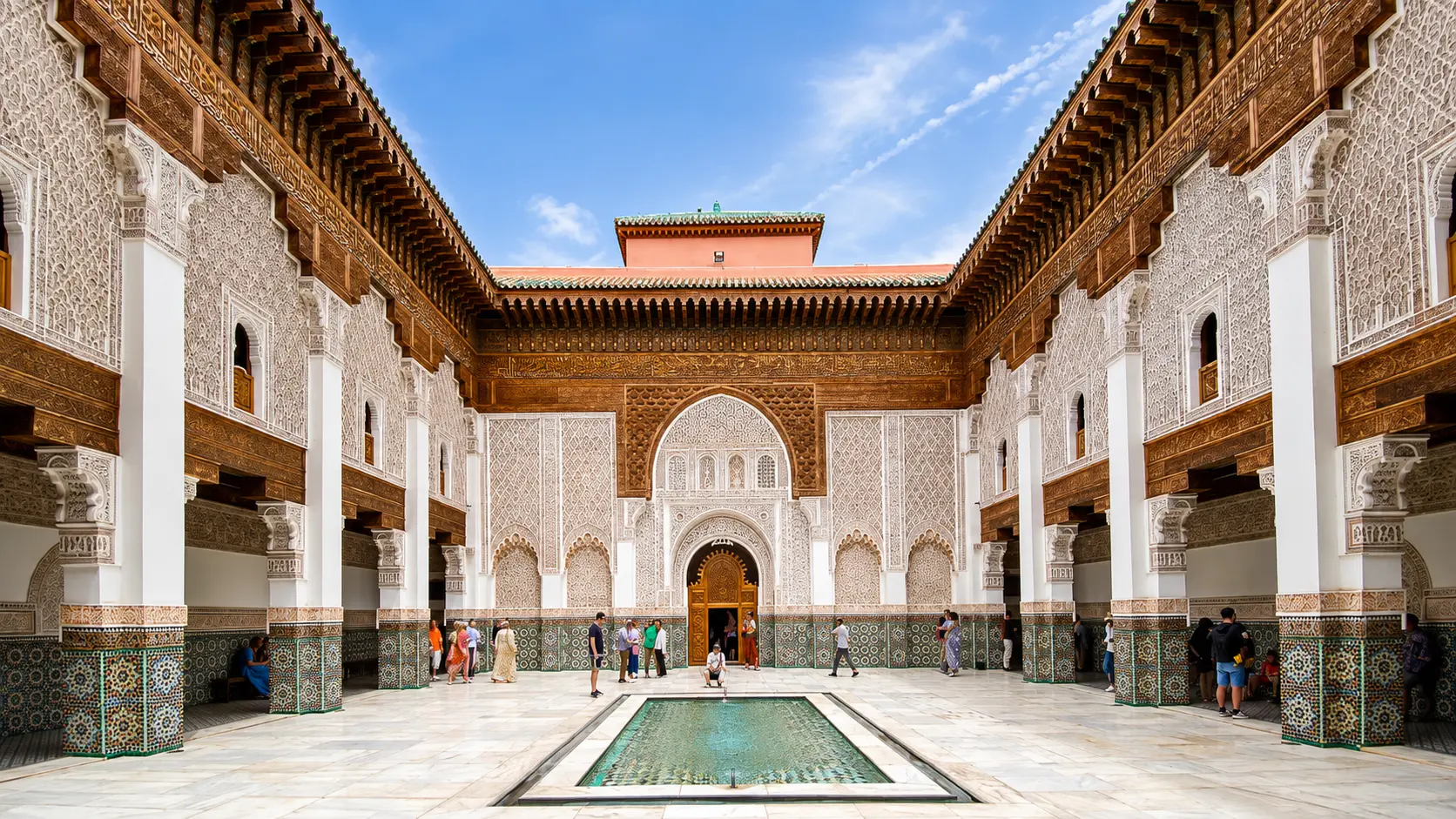
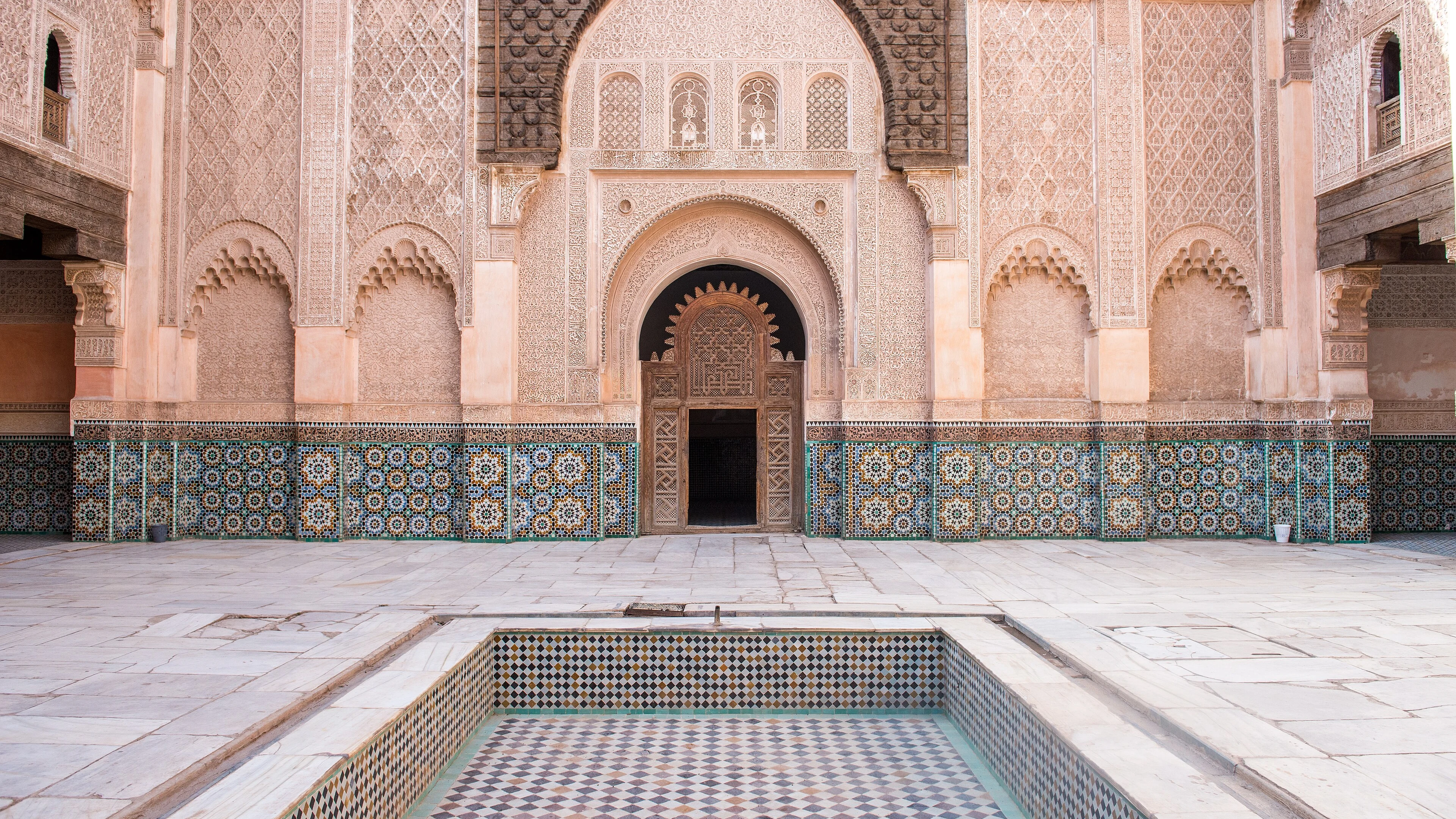
The Ben Youssef Madrasa in Marrakech: tile, plaster, timber and a central courtyard.
Where materials meet

Architecture & Craft

Look where tile, plaster, wood and light meet. Moroccan architecture becomes more legible when you read the making as well as the monument.

Exotic Morocco · 11 minute read
01 / A way into the story

A building is a collaboration of materials.

A decorated interior can seem like one complete image. Move closer and it separates into surfaces with different jobs: a floor takes footsteps, a wall frames an opening, a timber element spans or screens. Craft and architecture meet in those practical relationships.

The Metropolitan Museum’s Moroccan Court documents a contemporary collaboration with craftspeople from Fez. It is a useful reminder that inherited skills remain active, and that a newly commissioned space must not be mistaken for a transplanted historic room.

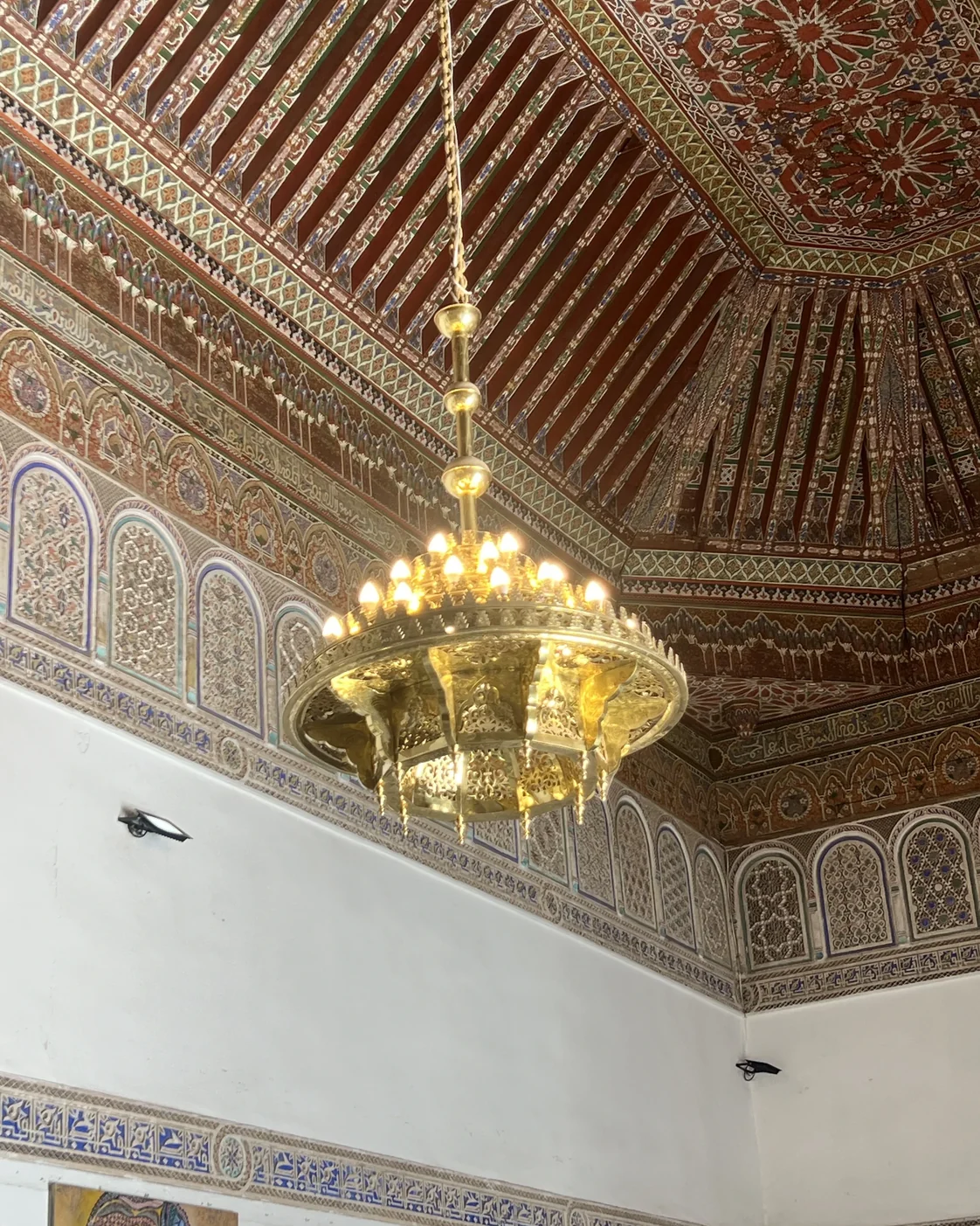
Carved and painted timber at the Bahia Palace, Marrakech.
THE SUBJECTWhere materials meet
THE APPROACHPlace. Practice. People.
THE CONNECTIONFind it in Morocco ↗
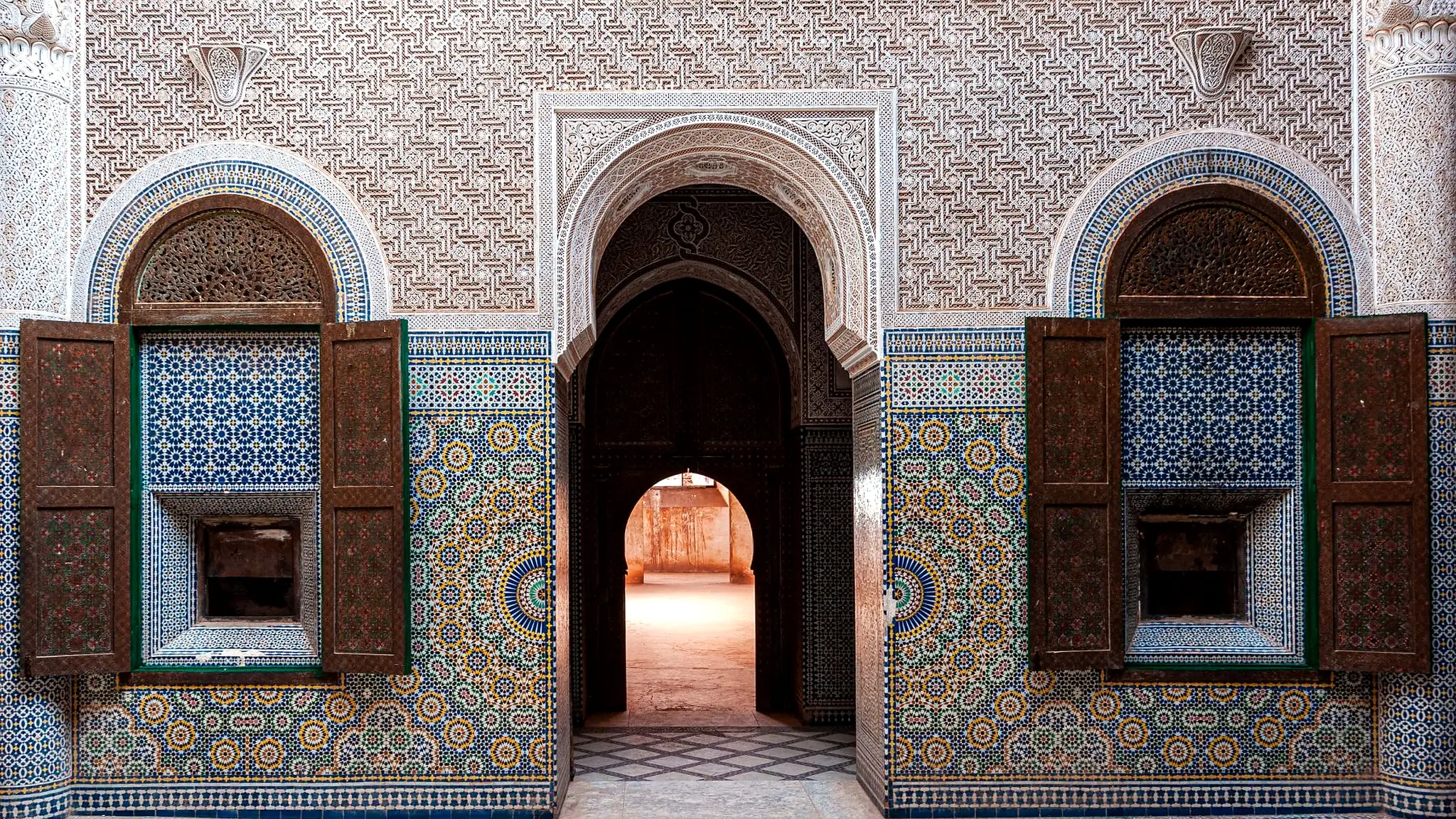
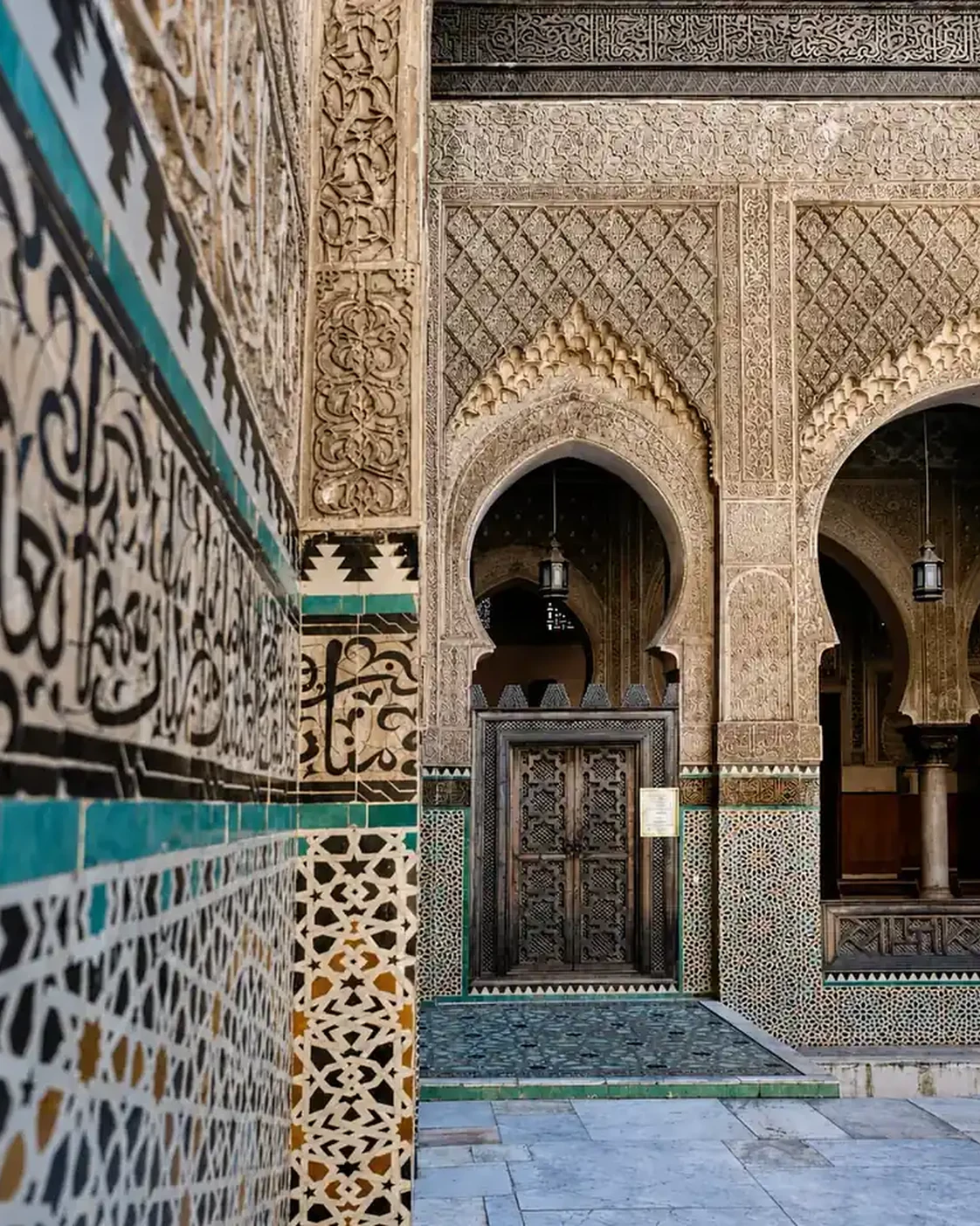
Tile, carved plaster and openings in a Fez madrasa.
02 / The deeper context

A building is also
a collaboration.

An architectural interior can make many trades appear to speak in one voice. Tilework establishes a cool, patterned base; carved plaster gives an upper wall fine relief; wood introduces grain, colour and a different scale of detail. Yet the apparent unity of the room should not hide the separate knowledge behind each material. A finished doorway is also a meeting between people, tools and sequences of work.

This page follows those relationships. It is about the making of architecture: how a frame receives an infill, how a border finishes a surface, and how craftspeople solve the point where one material meets another. Moroccan Architecture, its companion page, looks instead at building types and spatial organisation. Here, the most revealing place to stand is often close to a joint.

Craftsmanship is not frozen by the word heritage. A workshop may use a modern measuring tool alongside a hand tool; a contemporary commission may require new fixing methods or maintenance arrangements. The important distinction is between an explained process and a romantic claim. Skilled work can adapt without losing the knowledge that makes it legible.

03 / From an idea to everyday life

Look where materials meet.

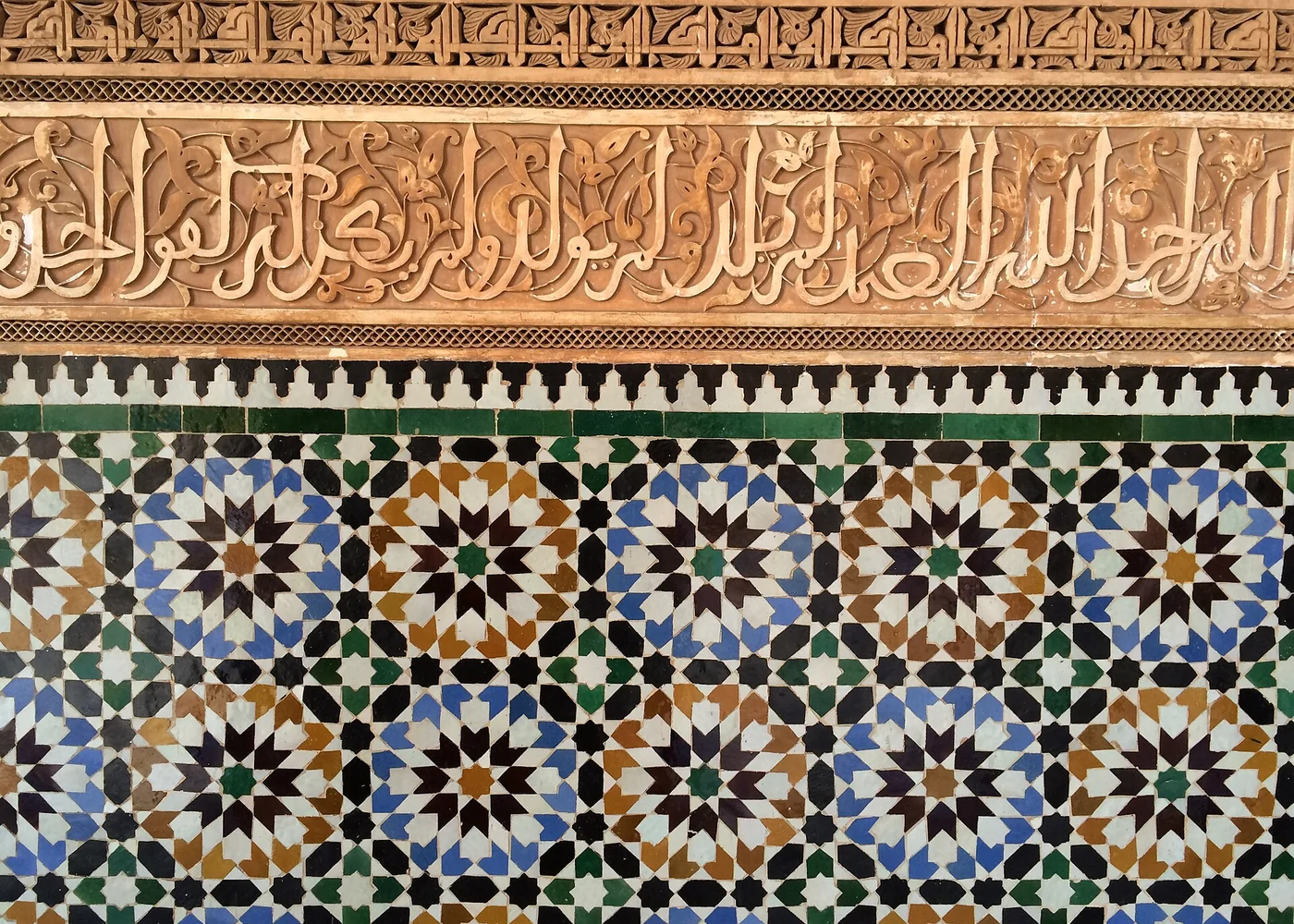
At the Ben Youssef Madrasa, a geometric tile field meets carved plaster and an inscription band. Each material supports a different kind of detail. Follow the horizontal boundary: it helps organise the wall even before you identify individual motifs.

Zellige and carved decoration at the Ben Youssef Madrasa.
01

Read the frame

Follow a doorway from its outer surround to its opening. Is the apparent arch structural, decorative, or a frame applied to another structure? A photograph cannot always resolve that question. Notice depth, supports and changes of material before naming the construction.
02

Separate the surfaces

Glazed tile reflects light differently from plaster and timber. In a room, these effects can distinguish the lower wall, the middle register and the ceiling. Identify the material first, then describe what it contributes: protection, enclosure, texture, shade or visual emphasis.

03

Remember installation

A beautifully made component still has to fit a real building. Corners, thresholds and uneven substrates require decisions that a sample panel does not show. Ask a maker or conservator about fitting and maintenance as well as carving or cutting.

A closer understanding

Where one material
meets another.

A room is a collaboration between trades. Its junctions often tell you more than its most elaborate centrepiece.

Tile and plaster

Read the change of register.

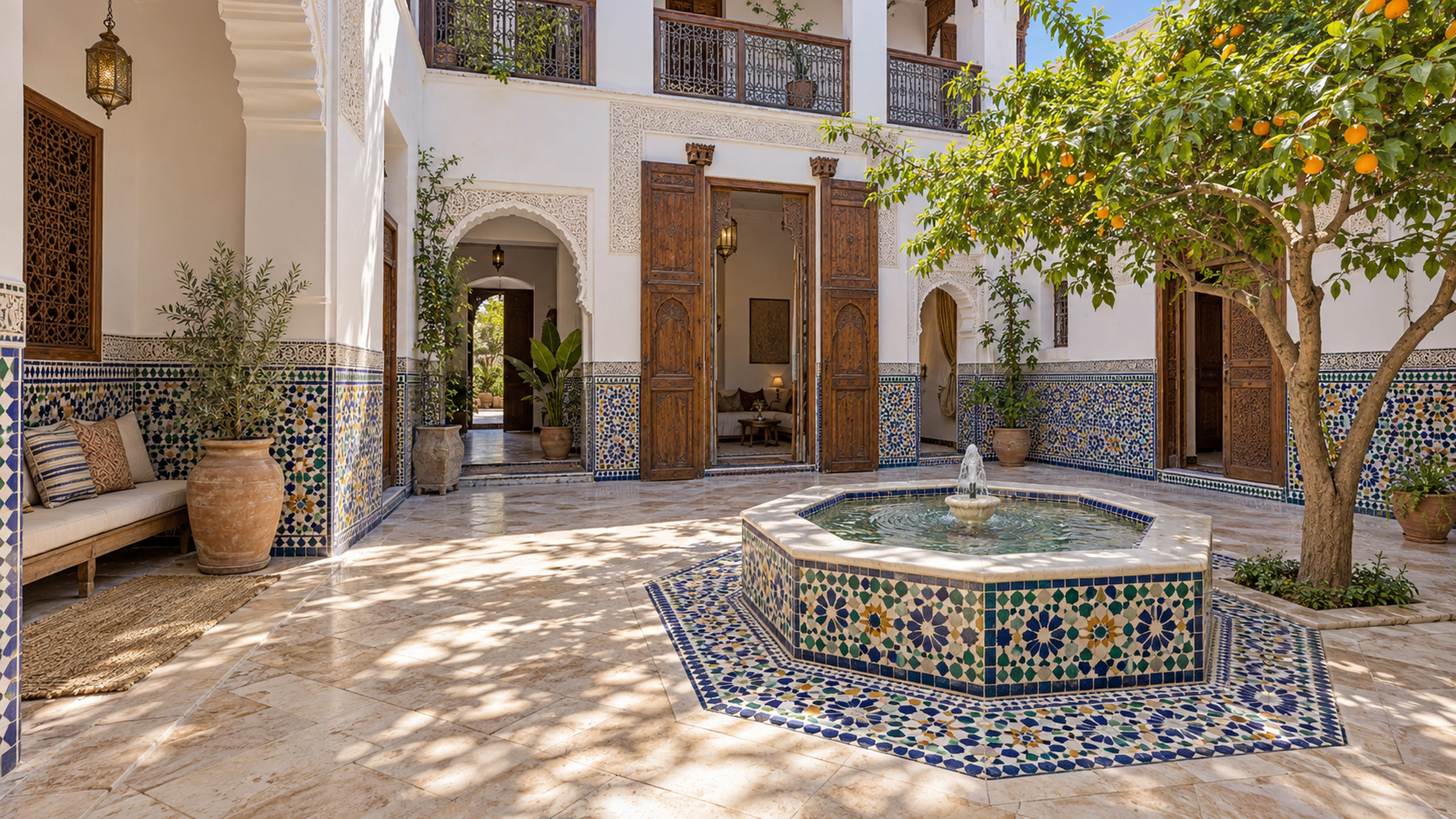
In many richly decorated Moroccan interiors, ceramic occupies a lower zone while carved plaster develops above it. The two surfaces respond differently to light: glaze reflects it; shallow carving makes small shadows. The meeting between them is a deliberate visual transition.

Follow the line of that junction around a doorway. It may change height, turn a corner or resolve a border. These small decisions show how an ornamental scheme was adapted to a particular room. The room is not simply a pattern enlarged to architectural scale.

Timber and opening

A door has work to do.

A decorated door must still move, close and fit its frame. Its panels, joints, hinges and repairs belong to the same object as its carving or paint. Looking only at the surface misses the intelligence of its construction.
Timber also frames openings and spans spaces. A ceiling viewed from below presents a composition, but it is attached to a building with structural needs. Distinguishing a visible finish from the supporting system is a useful first step before making claims about how the room stands.

Commission and repair

The date of the building is not the date of every surface.

A historic interior can contain original work, later additions and modern conservation. Repetition of an older pattern may be part of a repair rather than evidence that the whole panel is ancient. Materials need their own histories.

The Met’s newly built Moroccan Court offers a different case: inherited craft knowledge used in a modern museum commission. Together, restoration and new work show why “traditional” should describe particular knowledge and practice, rather than freeze every object in an imagined past.

Carry this with you

At the next doorway, study the edge: tile to plaster, plaster to wood, frame to wall. That is where a room’s different crafts negotiate.

04 / The visual chapter

Read the meeting points

Move between the close detail and the wider setting. Each view adds another part of the story.

Carved timber decoration at the Sahrij Madrasa in Fez.
01 / A closer look

Wood and depth

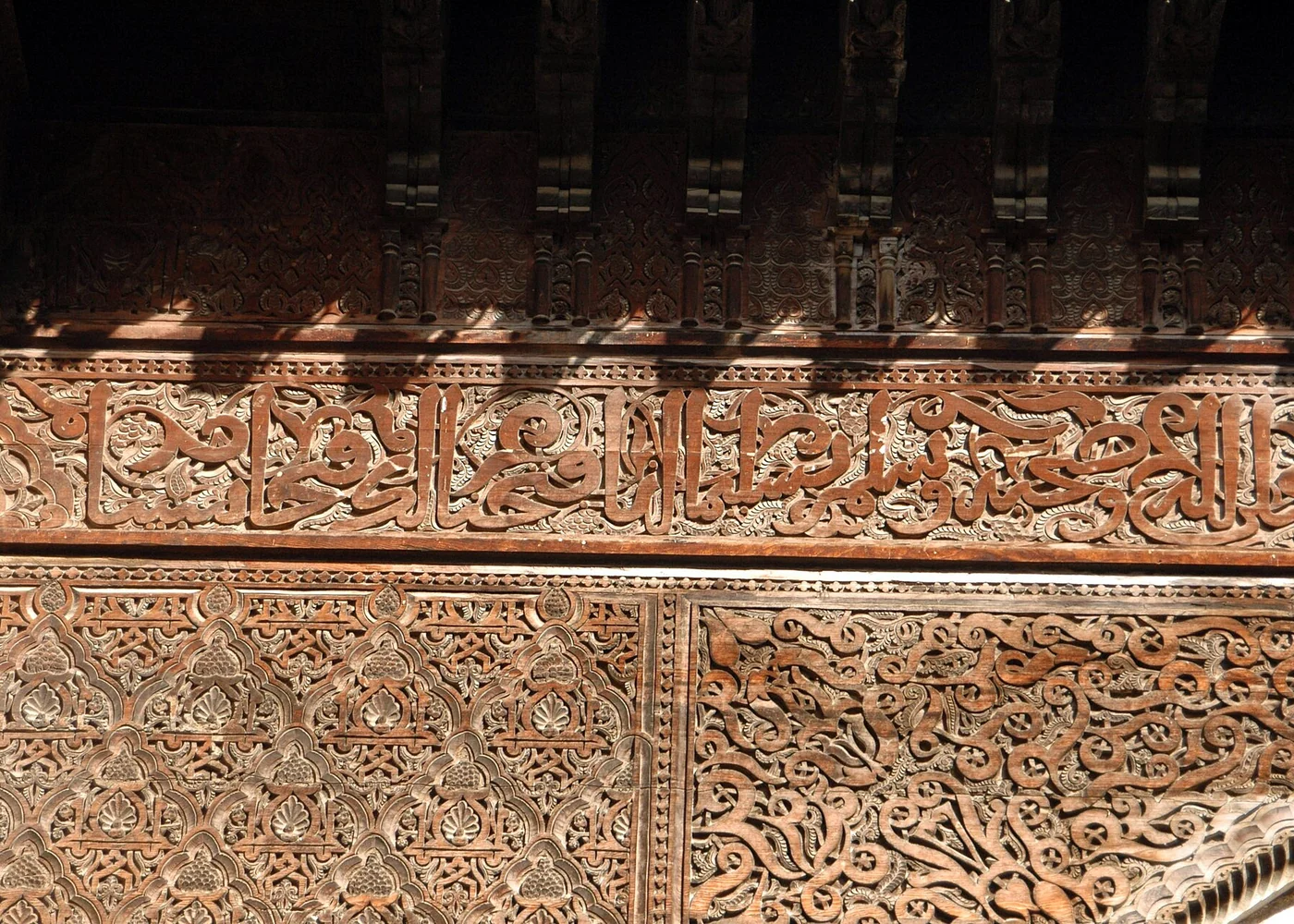
Carved timber at the Sahrij Madrasa creates relief, shadow and a transition between architectural elements. Look at depth as well as pattern. A detail can be decorative and contribute to how an opening or surface is perceived.

Carved timber decoration at the Sahrij Madrasa in Fez.
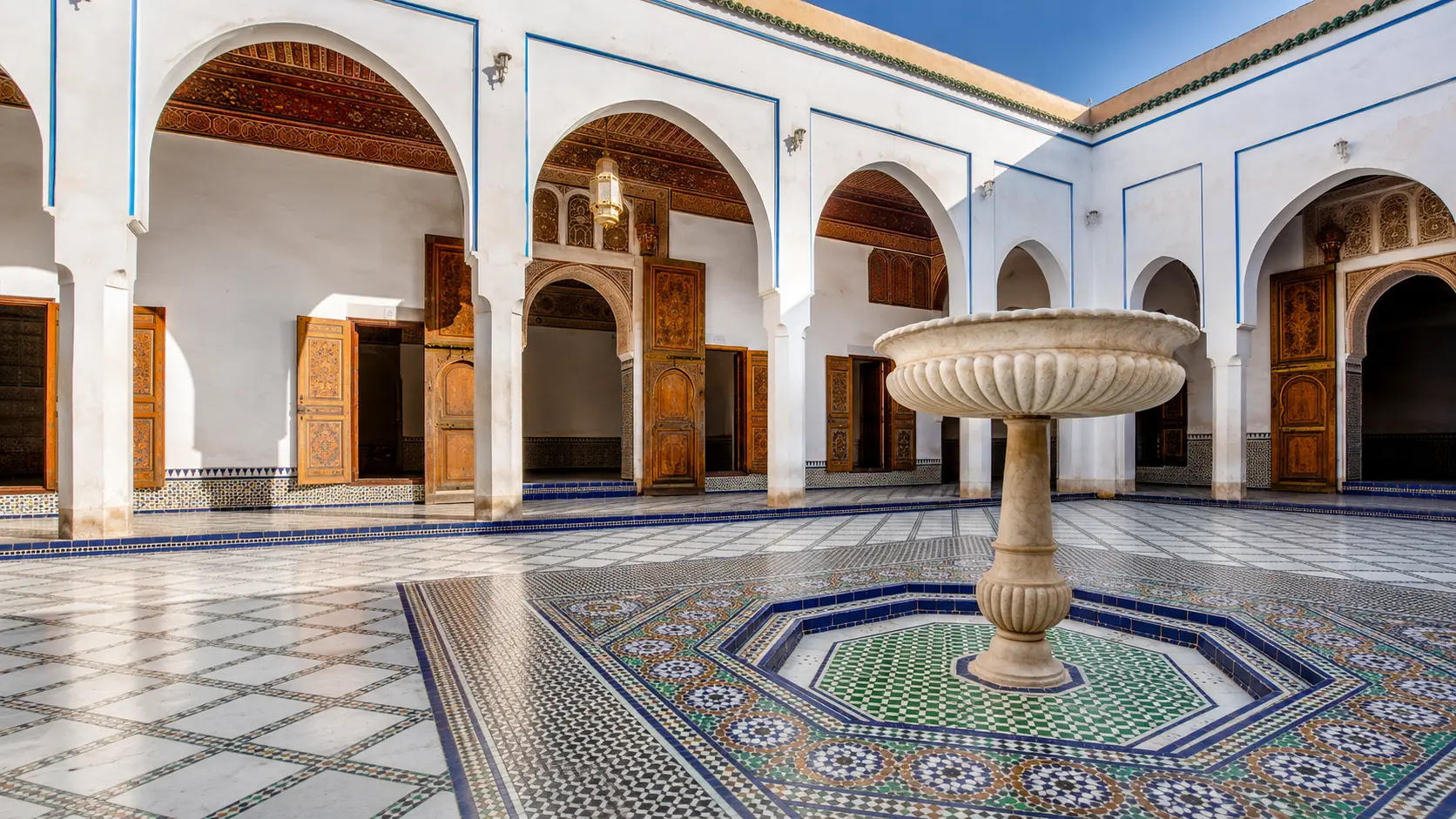
Carved architectural details in the grand courtyard of the Bahia Palace, Marrakech.
02 / A closer look

Carving around a support

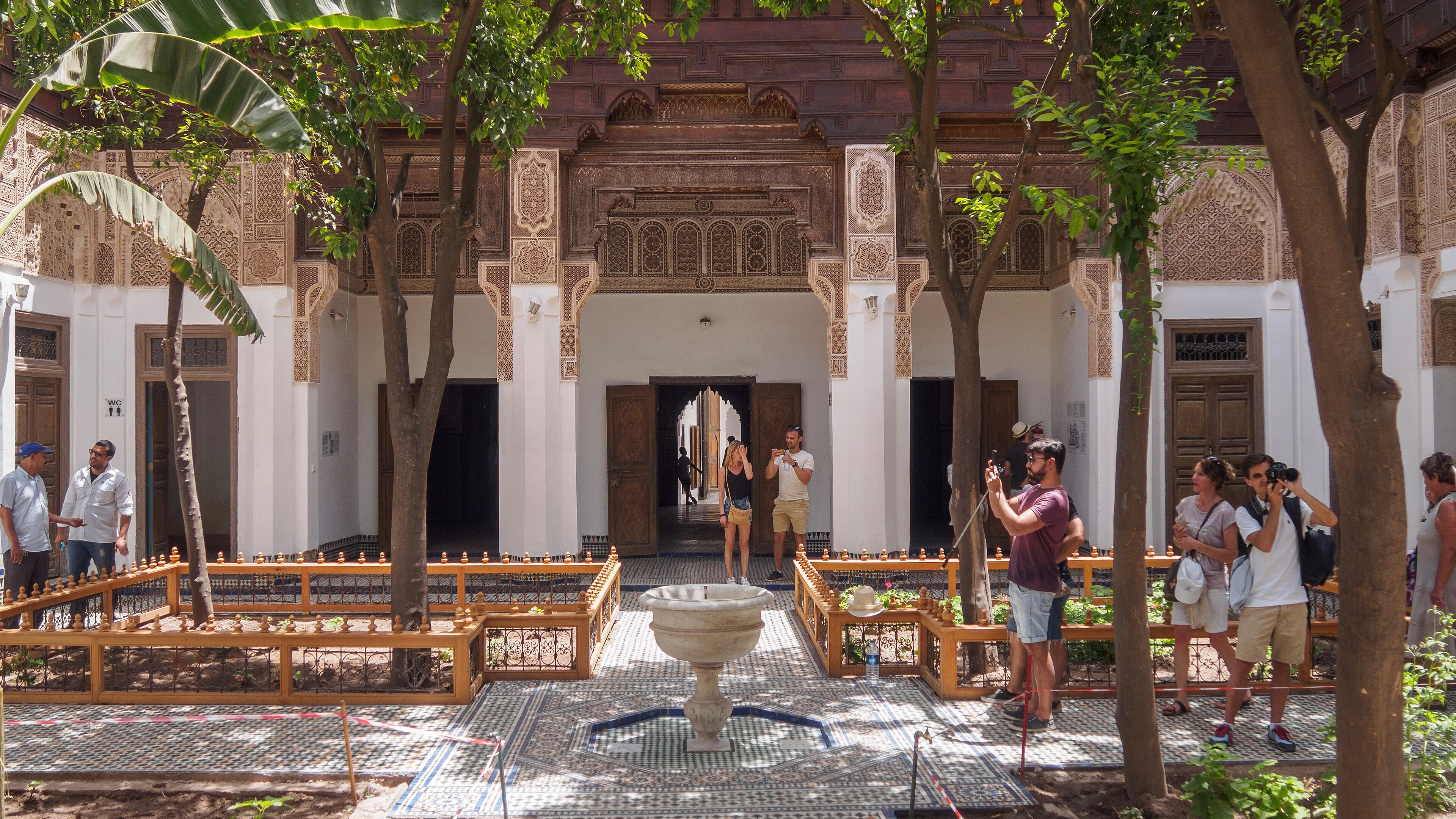
Look at where a repeated pattern meets an edge, an opening or a supporting element. The relationship between carved surfaces and structural forms is part of the room’s composition. A photograph can reveal that relationship without proving the material, date or purpose of every detail.

Carved architectural details in the grand courtyard of the Bahia Palace, Marrakech.
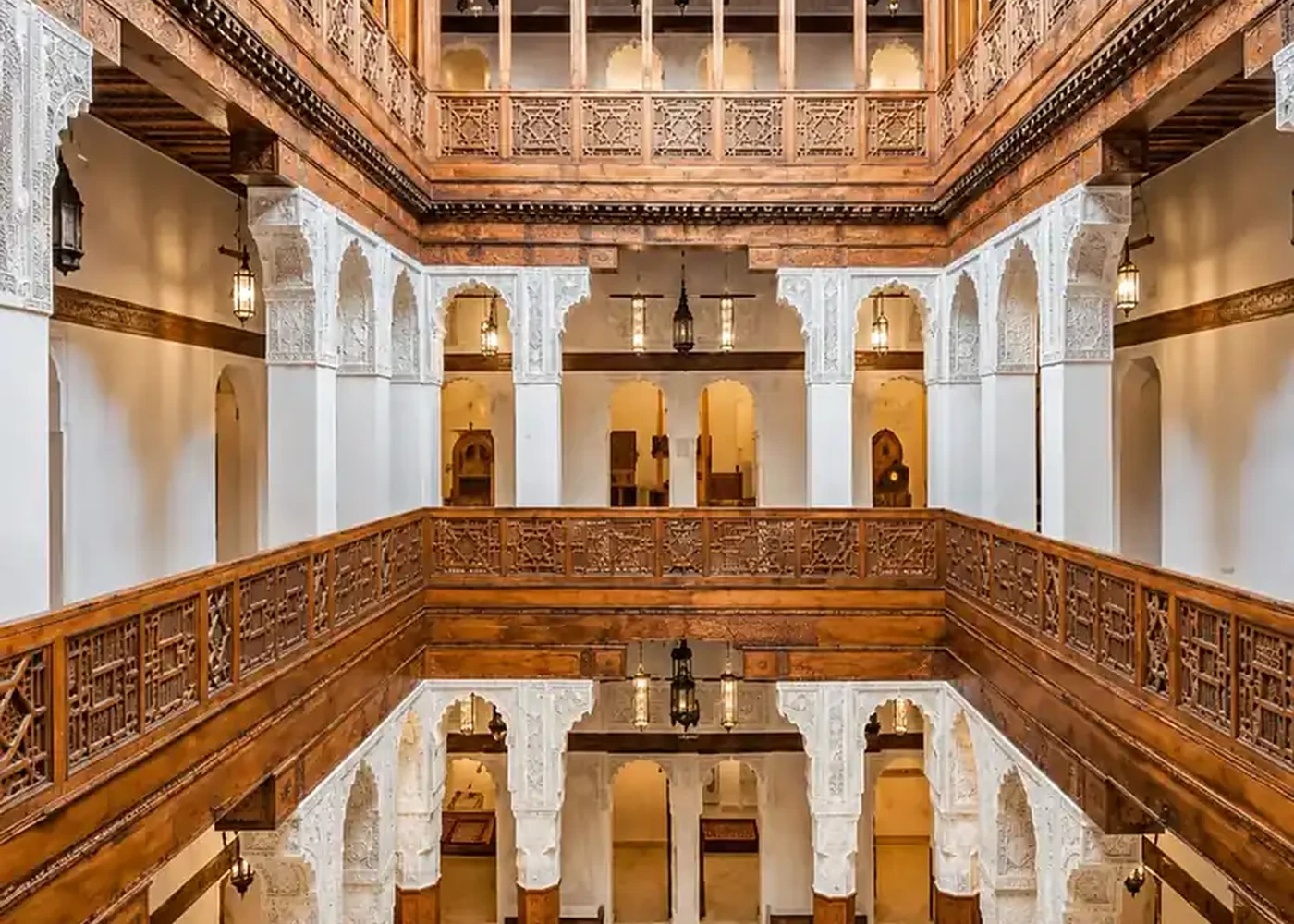
Timber galleries at the Nejjarine building in Fez.
03 / A closer look

Conservation is skilled making

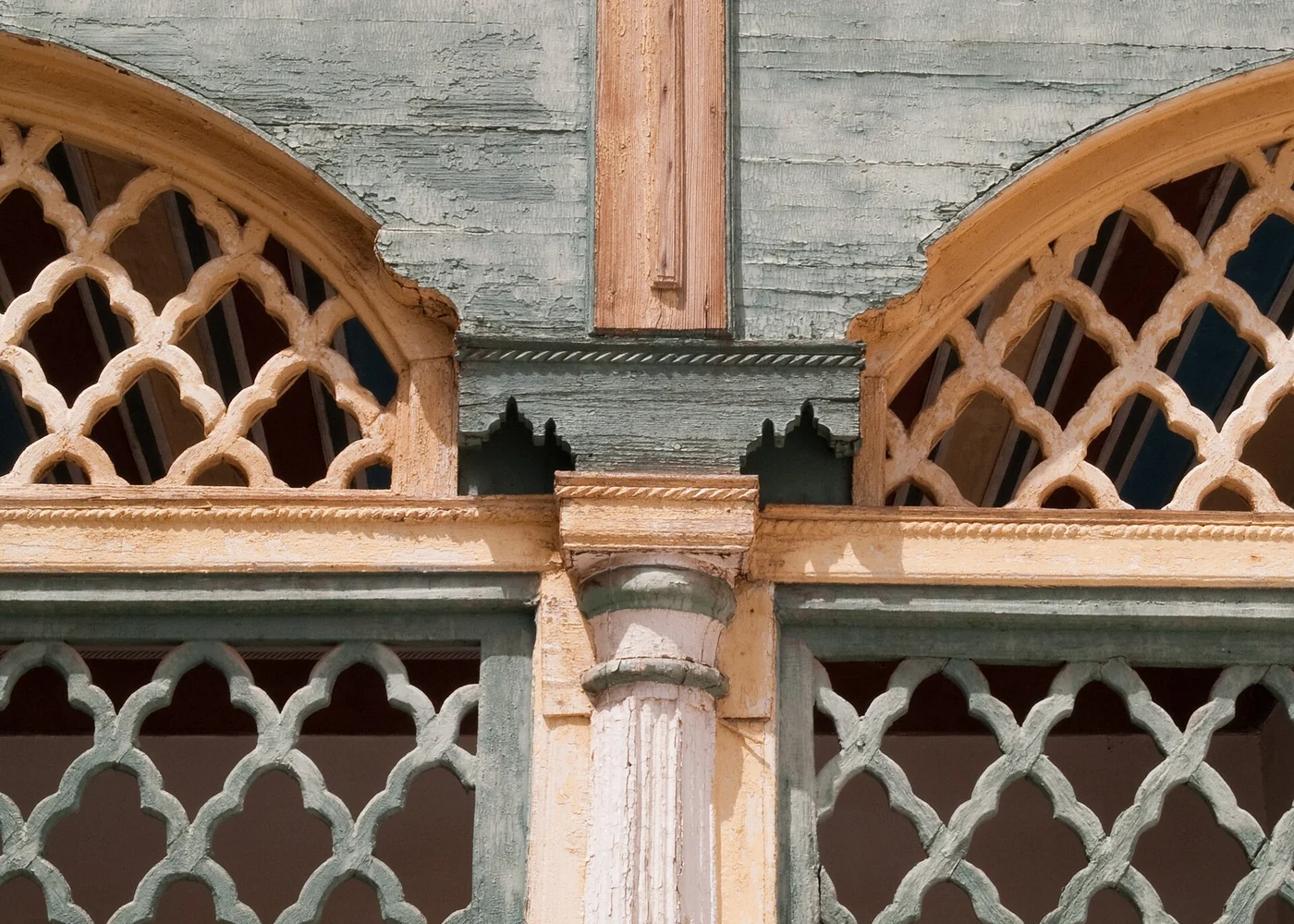
Preserving a surface may require understanding its support, moisture exposure and previous interventions. Matching appearance alone is not always the same as compatibility. A conservation label is worth reading because it can explain decisions invisible in the finished room.

Timber galleries at the Nejjarine building in Fez.
05 / More than one perspective

Look beyond
the first impression.

Perspective 01

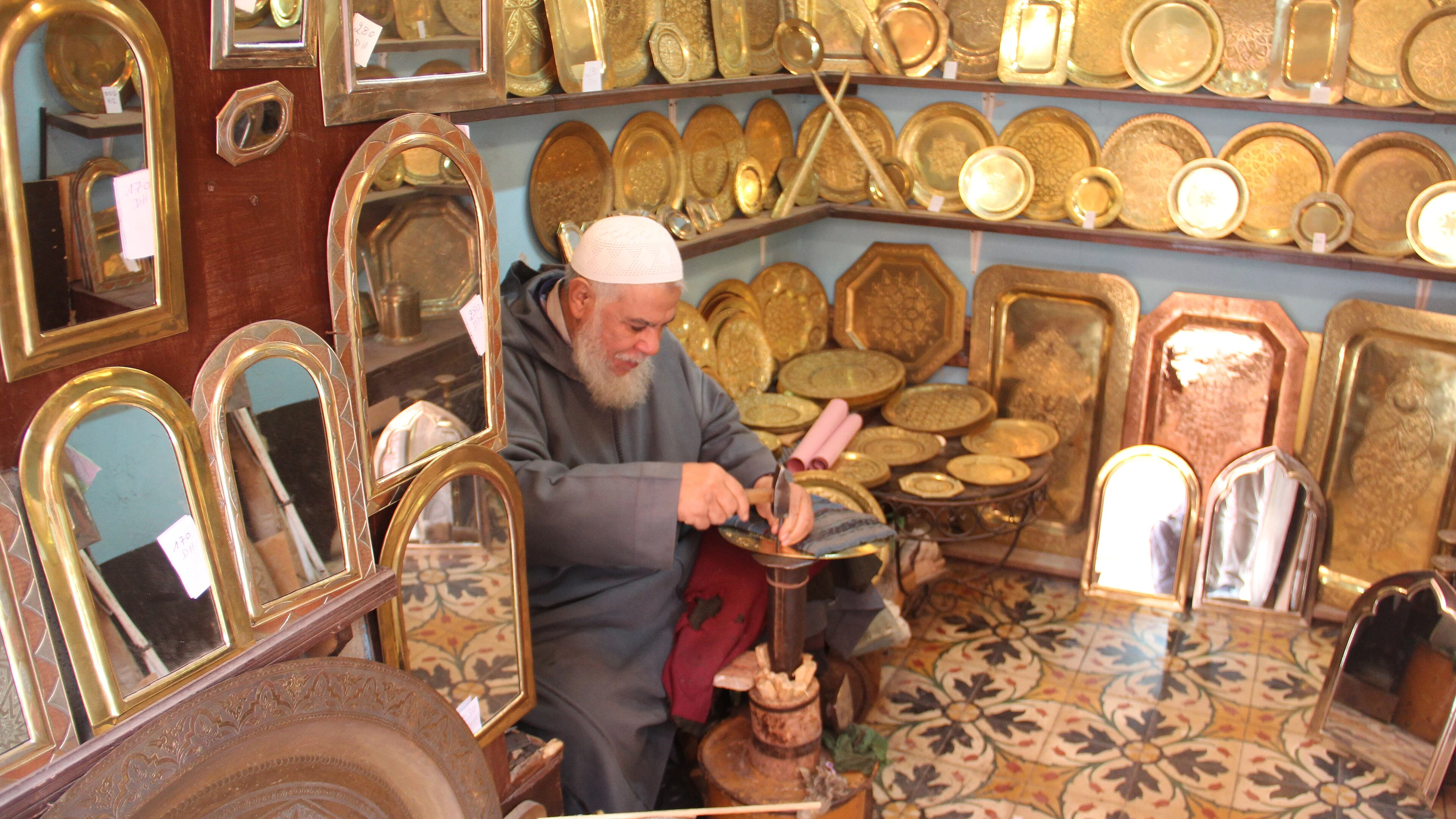
A workshop is a workplace

Visitors see a brief moment in a longer production sequence. Offcuts, templates and unfinished surfaces can explain more than a polished display. Arrange access, ask before photographing and avoid disrupting a repeated action to obtain a more dramatic image.

Perspective 02

Patronage shapes the result

A small domestic commission and a monumental interior have different budgets, timeframes and audiences. Neither is a complete measure of a craft tradition. Modest work can be highly skilled; elaborate work can also involve repetition and division of labour.

06 / Make the connections

Five things to notice in a room

Use these ideas to connect what you notice with the materials, people and histories behind it.

01

Threshold

Where does a visitor pause, turn or pass from one kind of space into another? Doors and passageways organise movement. An impressive entrance may belong to a public building, a palace or a private setting.

02

Surface

Identify the materials before grouping them together as “decoration”. Tile, plaster, timber and paint have different physical qualities. Their boundaries can reveal a design decision as clearly as their centres.

03

Metal at the threshold

A hinge, latch, grille or railing joins craft to everyday use. Look for moving parts and points of wear. Metalwork may secure an opening, screen a view or support movement while also contributing to the design.

04

Light

Observe which surfaces receive direct sun and which stay in shade. Light changes the legibility of carving and the feeling of enclosure. A photograph captures one moment, not a permanent condition.

05

Maintenance

Look for repairs and replacements without assuming that everything visible is original. A historic building survives through care and intervention. To date a detail, consult documentation rather than its appearance alone.

07 / A more useful conversation

Look carefully, name precisely

Clear answers for the questions that often come next.

Are all ornate buildings riads?

No. A madrasa, palace, mosque and domestic courtyard house have different functions and histories. Decorative similarity does not make them the same building type.

Does one architectural style cover all of Morocco?

No. Materials, scale, climate, period and use vary. A richly decorated urban monument is one part of a much wider built environment, including ordinary housing and recent construction.

Can I explain an inscription from a photograph?

Only if it can be read and its context verified. Do not turn unfamiliar writing into a guessed quotation or decorative label. A reliable transcription and translation are separate pieces of work.

08 / Take the story into a place

Find the story in Morocco

19 connected places and stories. Follow the connection that interests you.

Culture & craft

Place architectural work beside other forms of cultural production.

Explore this connection ↗

Fez

Read tile, timber and plaster within historic institutions.

Explore this connection ↗

Marrakech

Compare monumental interiors, courts and workshop traditions.

Explore this connection ↗

Ben Youssef Madrasa

Read teaching spaces, a court and decorated surfaces together.

Explore this connection ↗

Bahia Palace

Compare rooms, courts, gardens and a palace’s later life.

Explore this connection ↗

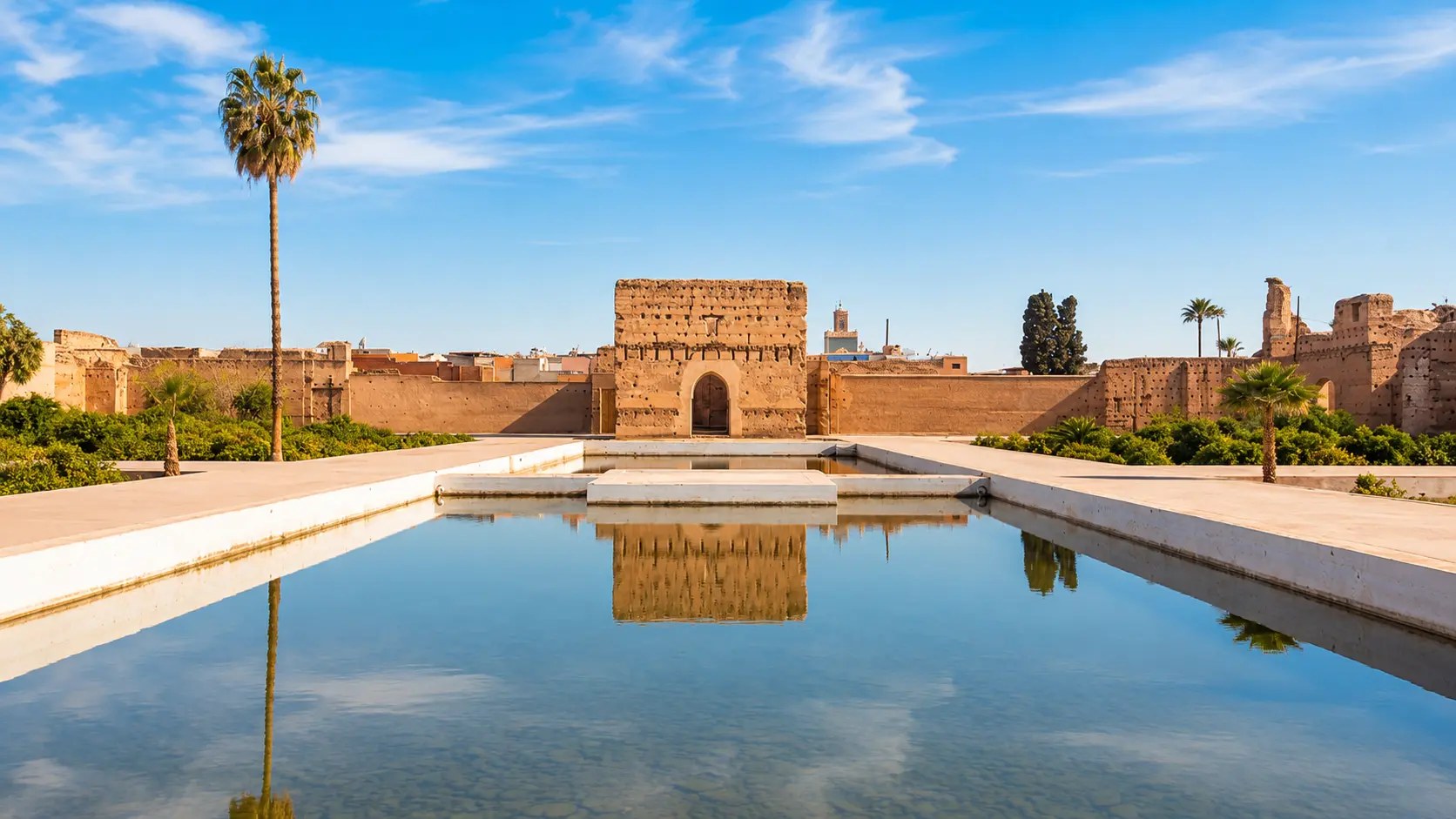
El Badi Palace

Read the plan and scale where much decoration no longer survives.

Explore this connection ↗

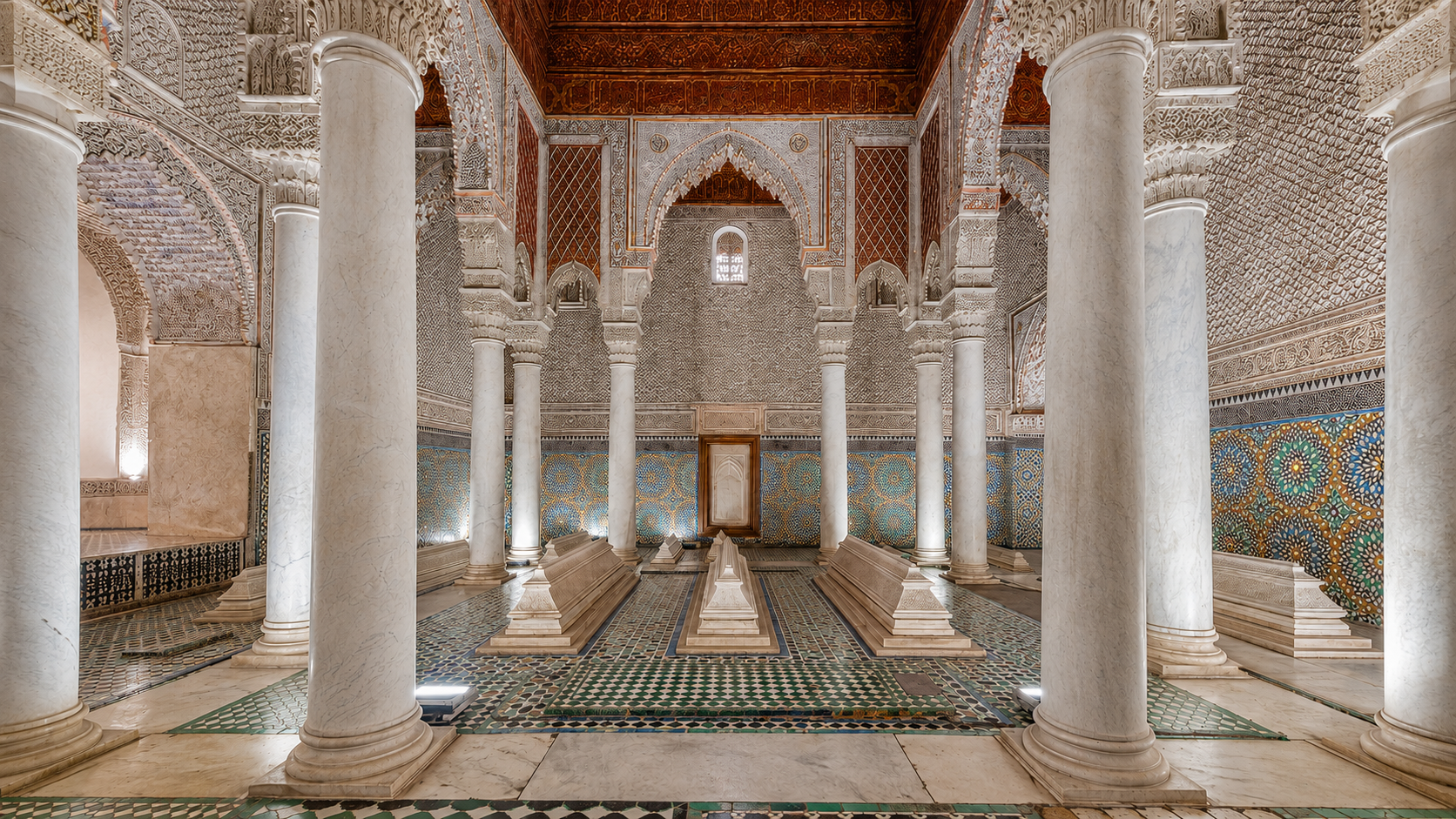
Saadian Tombs

Study a specific relationship between space and ornament.

Explore this connection ↗

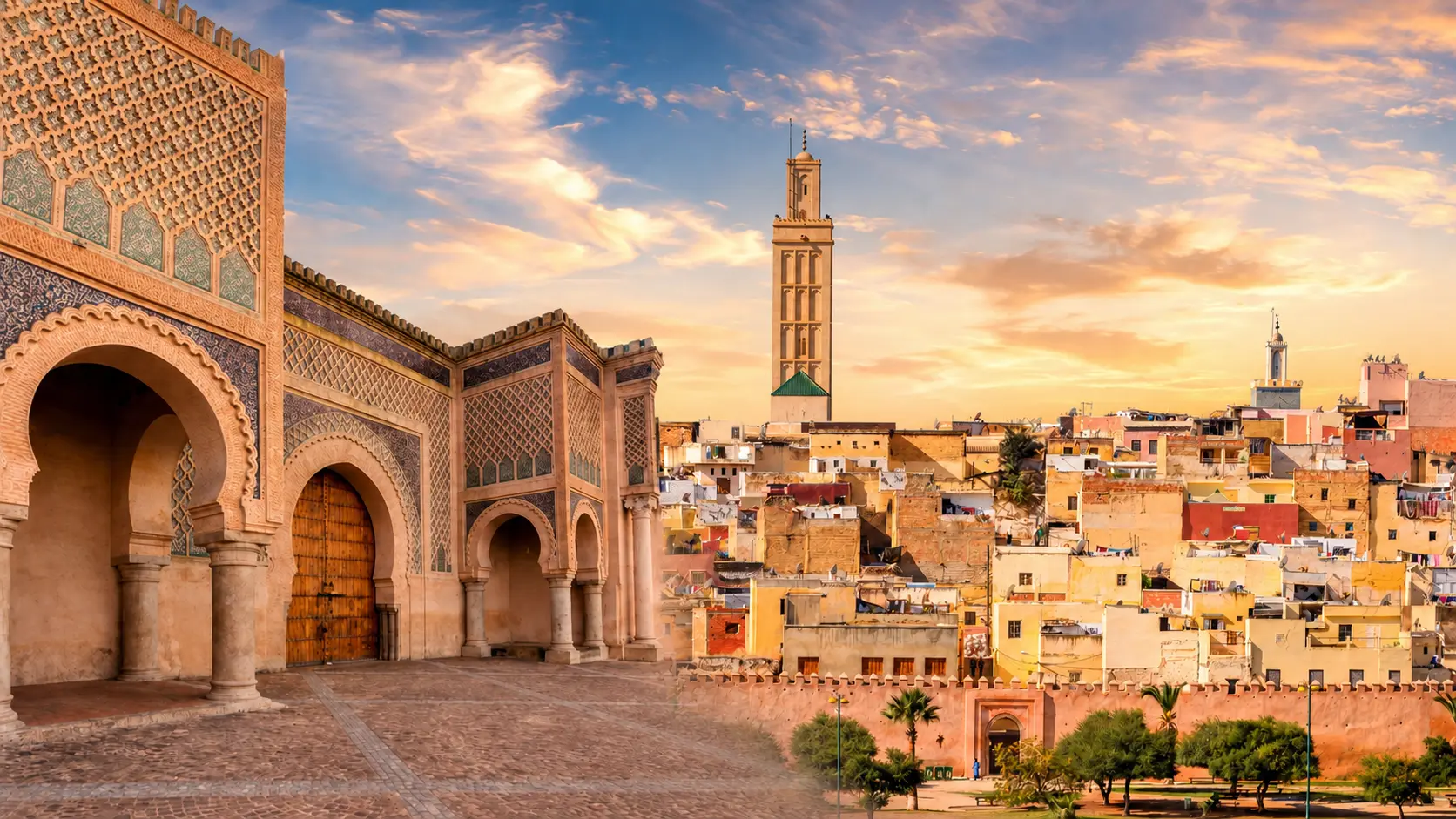
Bab Mansour

Follow the composition of a monumental gateway.

Explore this connection ↗

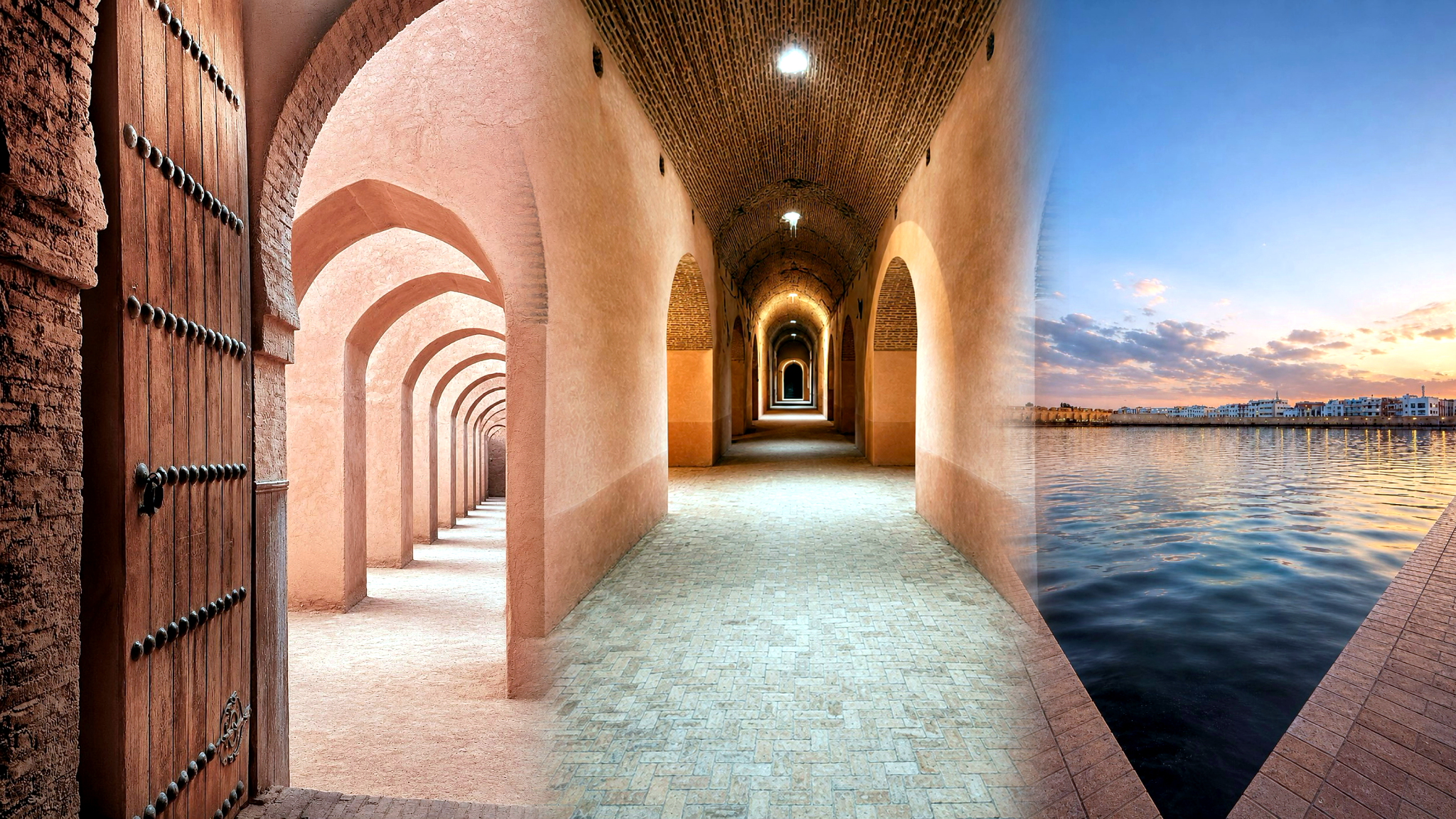
Heri es-Souani & Royal Stables

Look at structure, repetition and an imperial service complex.

Explore this connection ↗

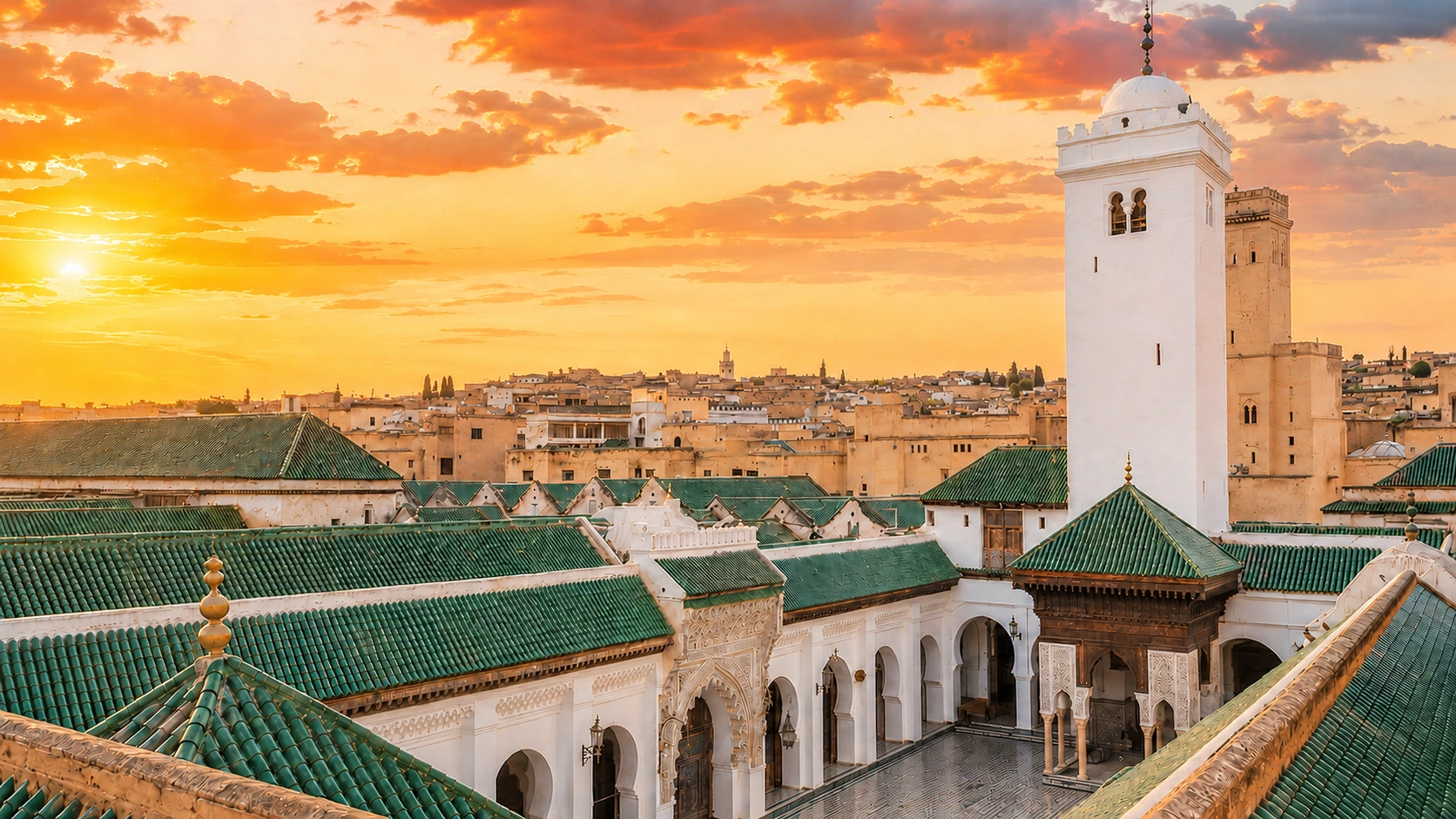
Al Quaraouiyine Quarter

Connect an institution with the surrounding urban fabric.

Explore this connection ↗

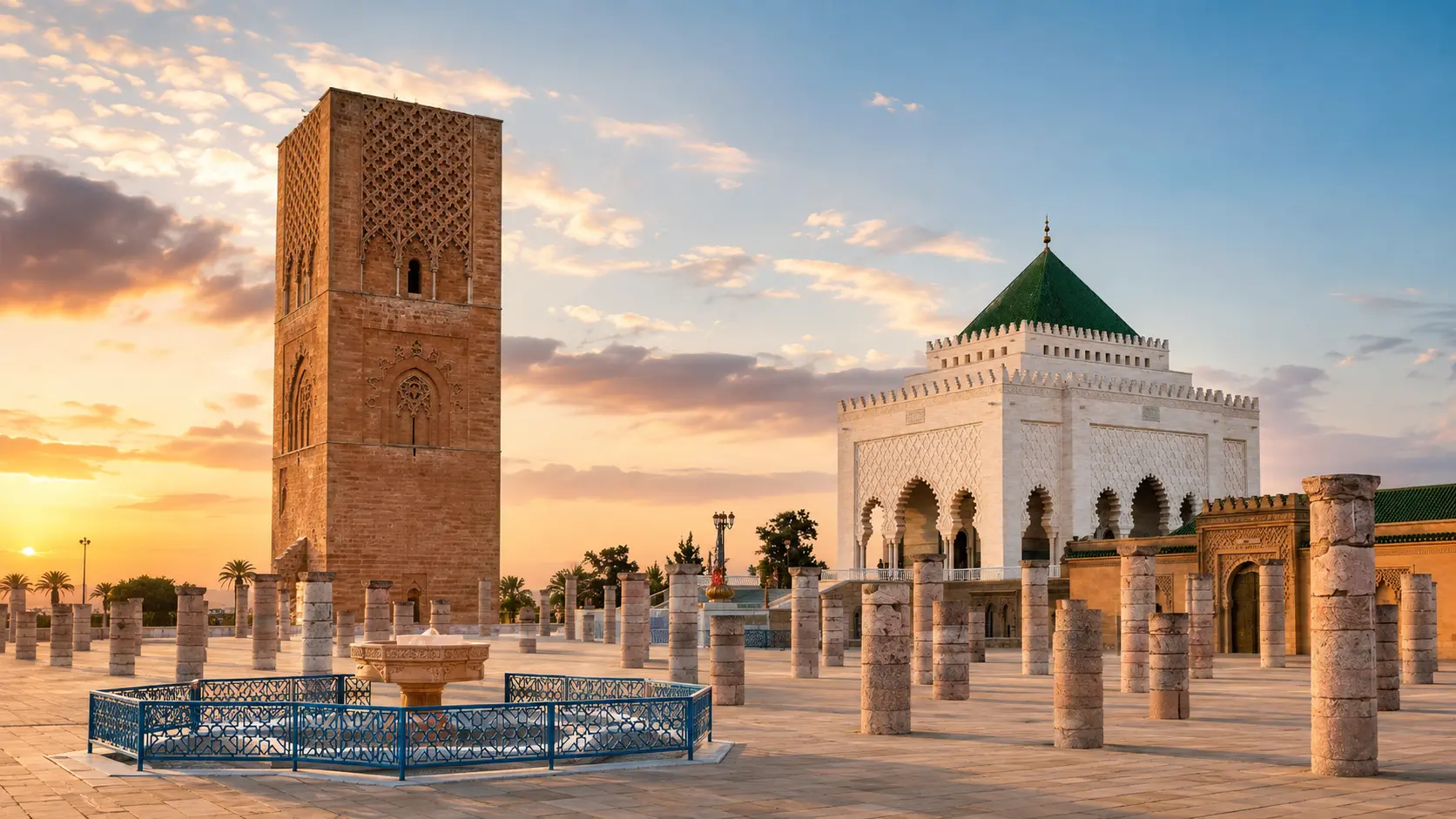
Hassan Tower & Mausoleum

Compare structures from different historical moments.

Explore this connection ↗

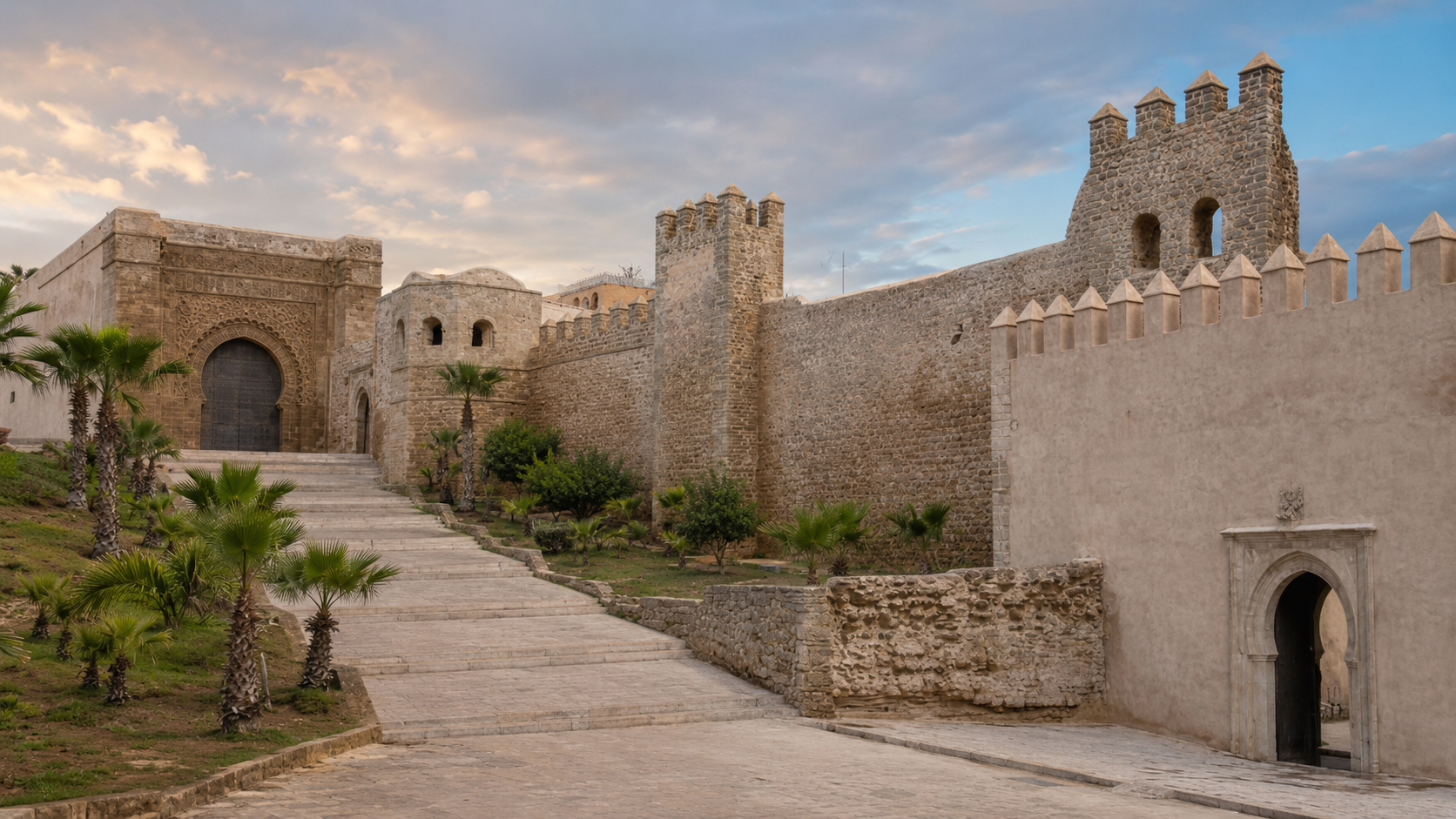
Kasbah of the Udayas

Read enclosure, access and an urban edge.

Explore this connection ↗

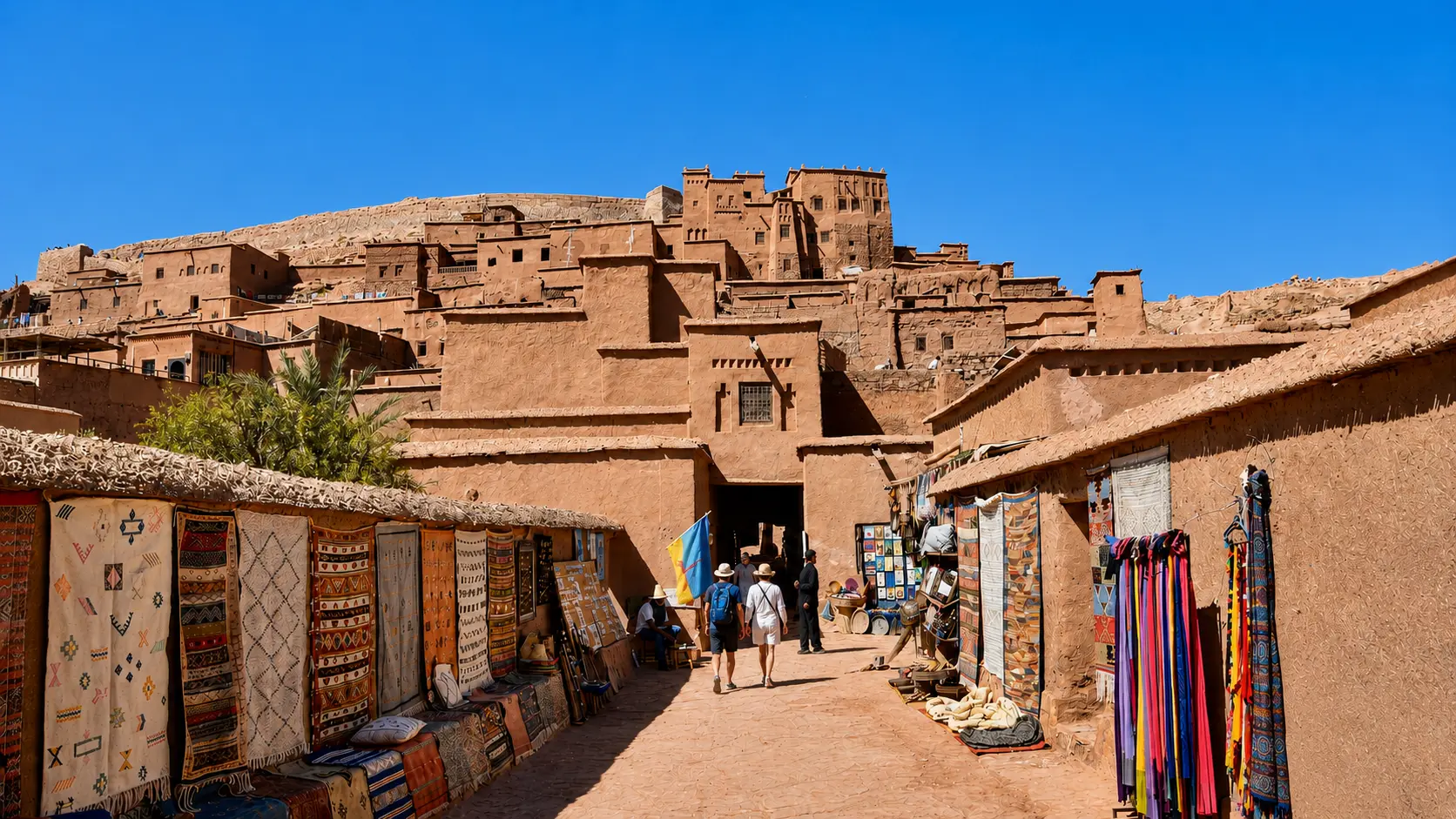
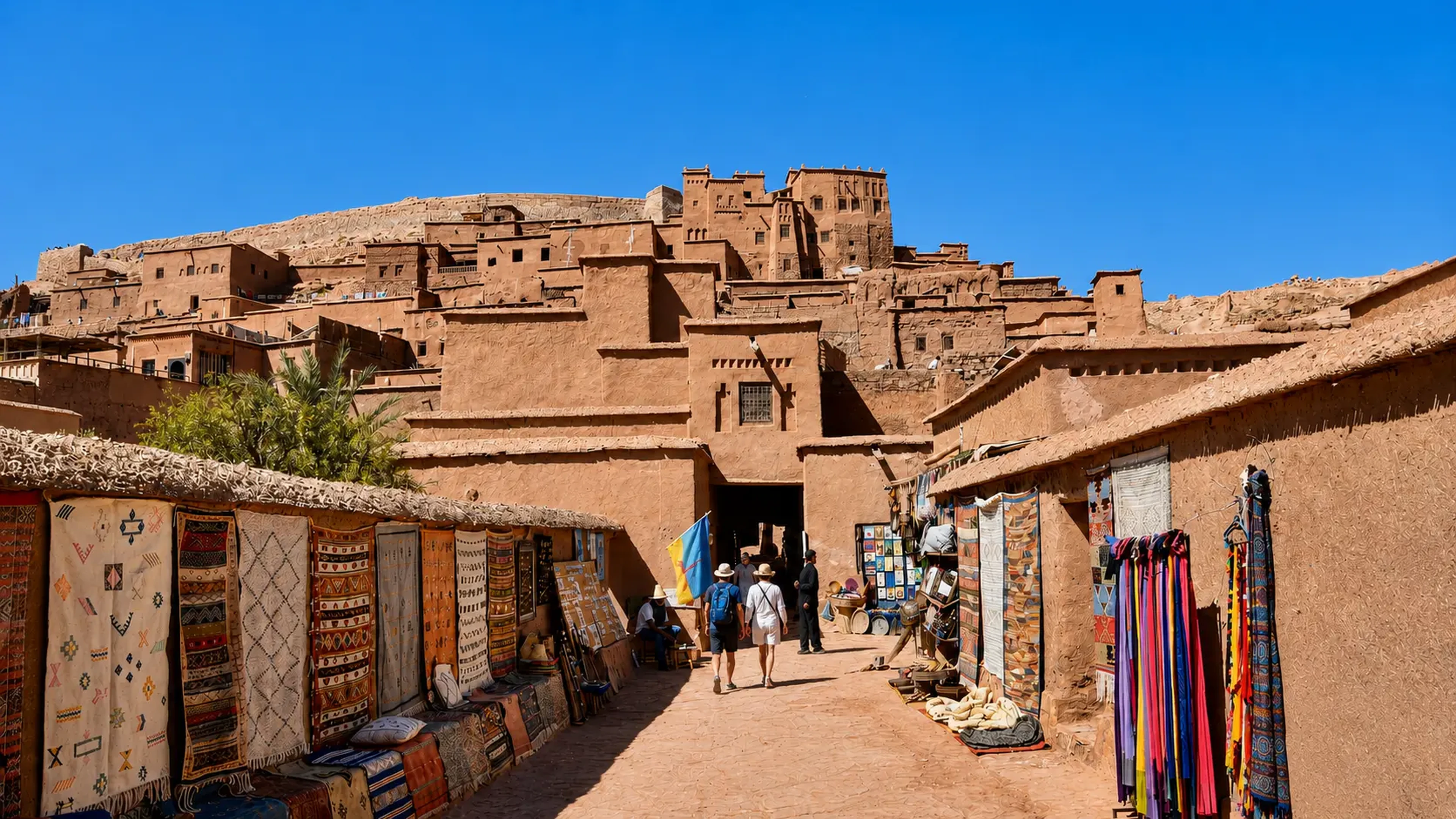
Aït Ben Haddou

Explore a collective earthen settlement.

Explore this connection ↗

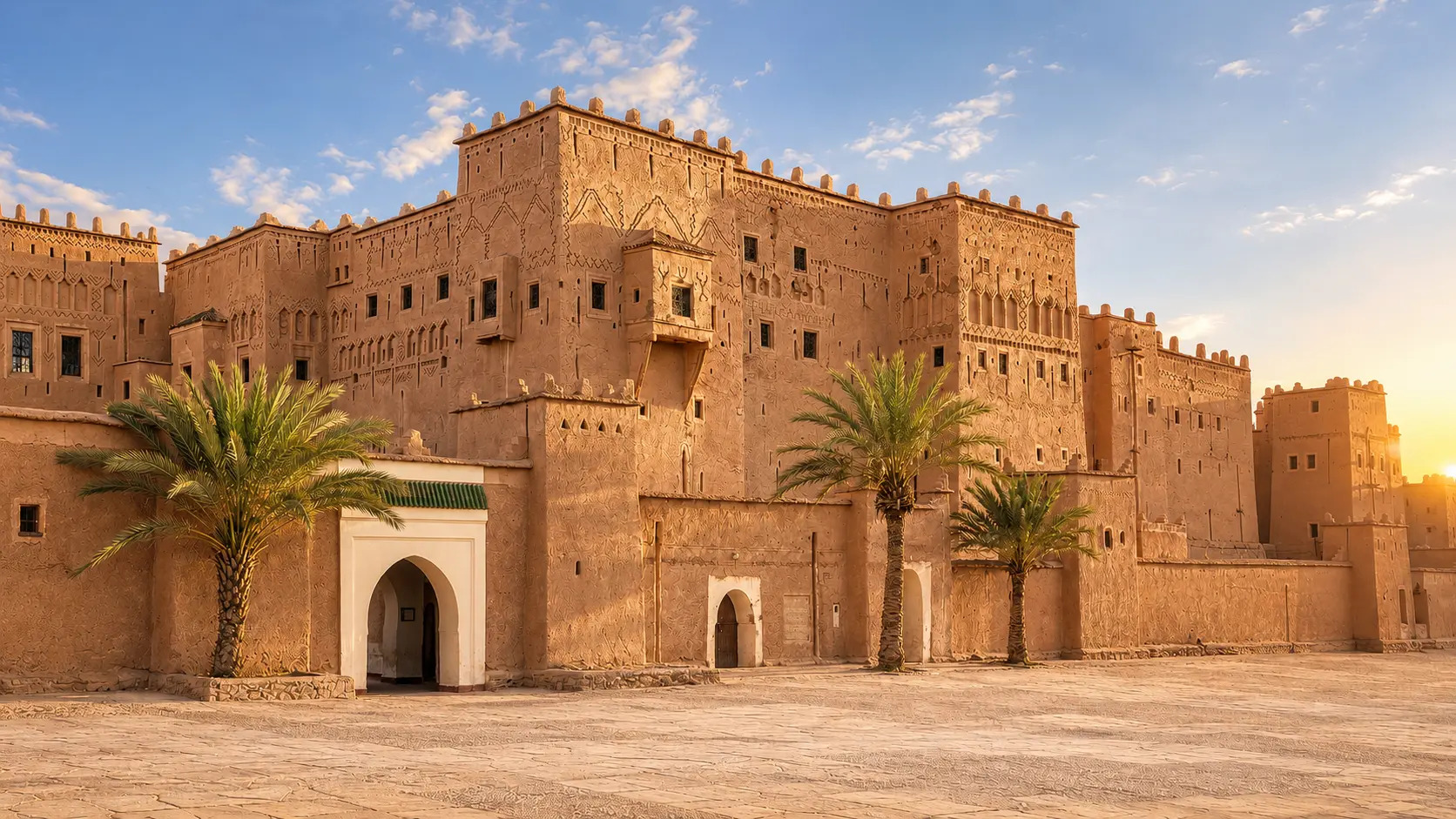
Taourirt Kasbah

Study an earthen residential complex.

Explore this connection ↗

Telouet Kasbah

Compare a mountain palace and its decorative interiors.

Explore this connection ↗

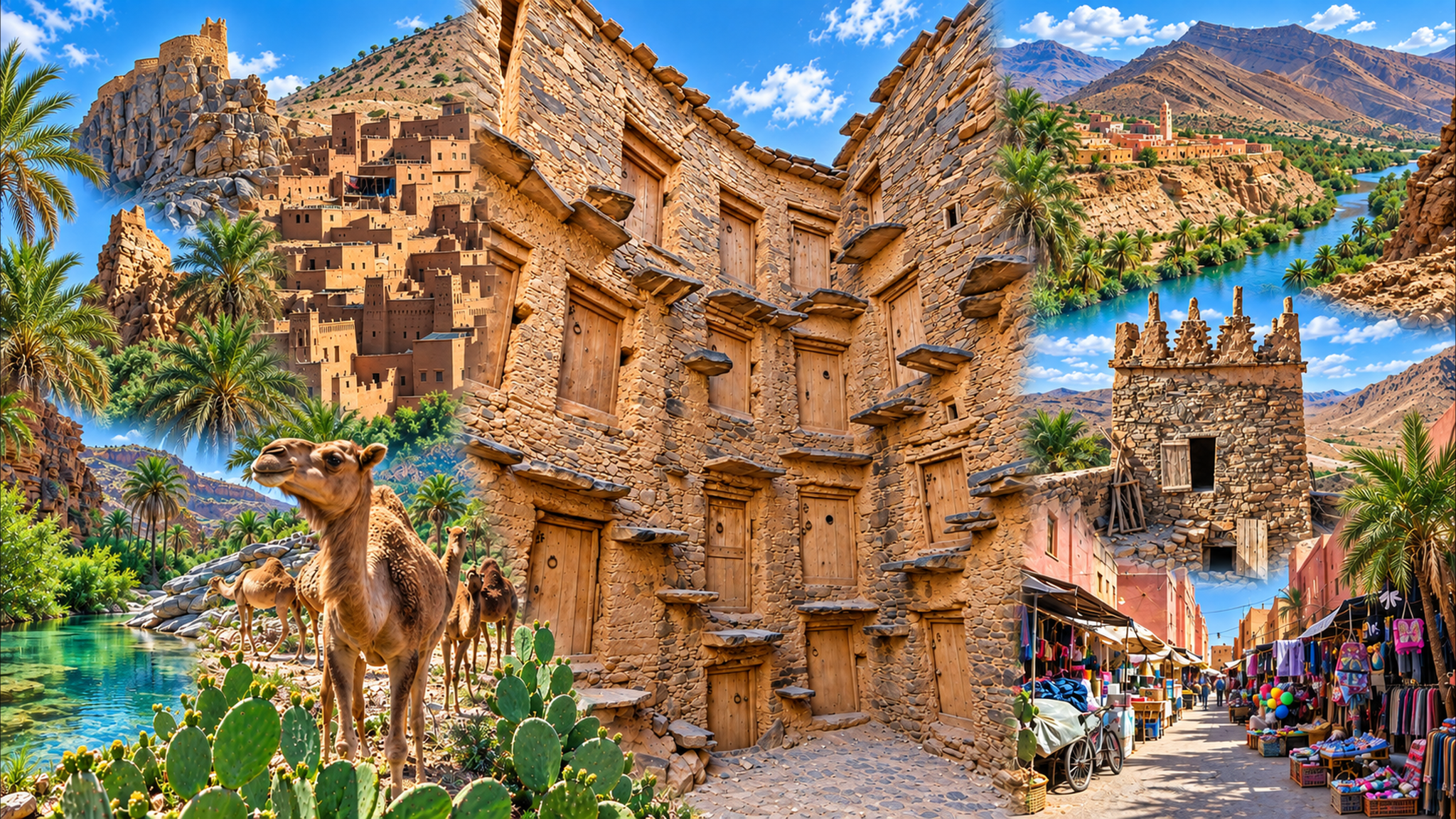
Amtoudi Granaries

Read architecture shaped by shared storage.

Explore this connection ↗

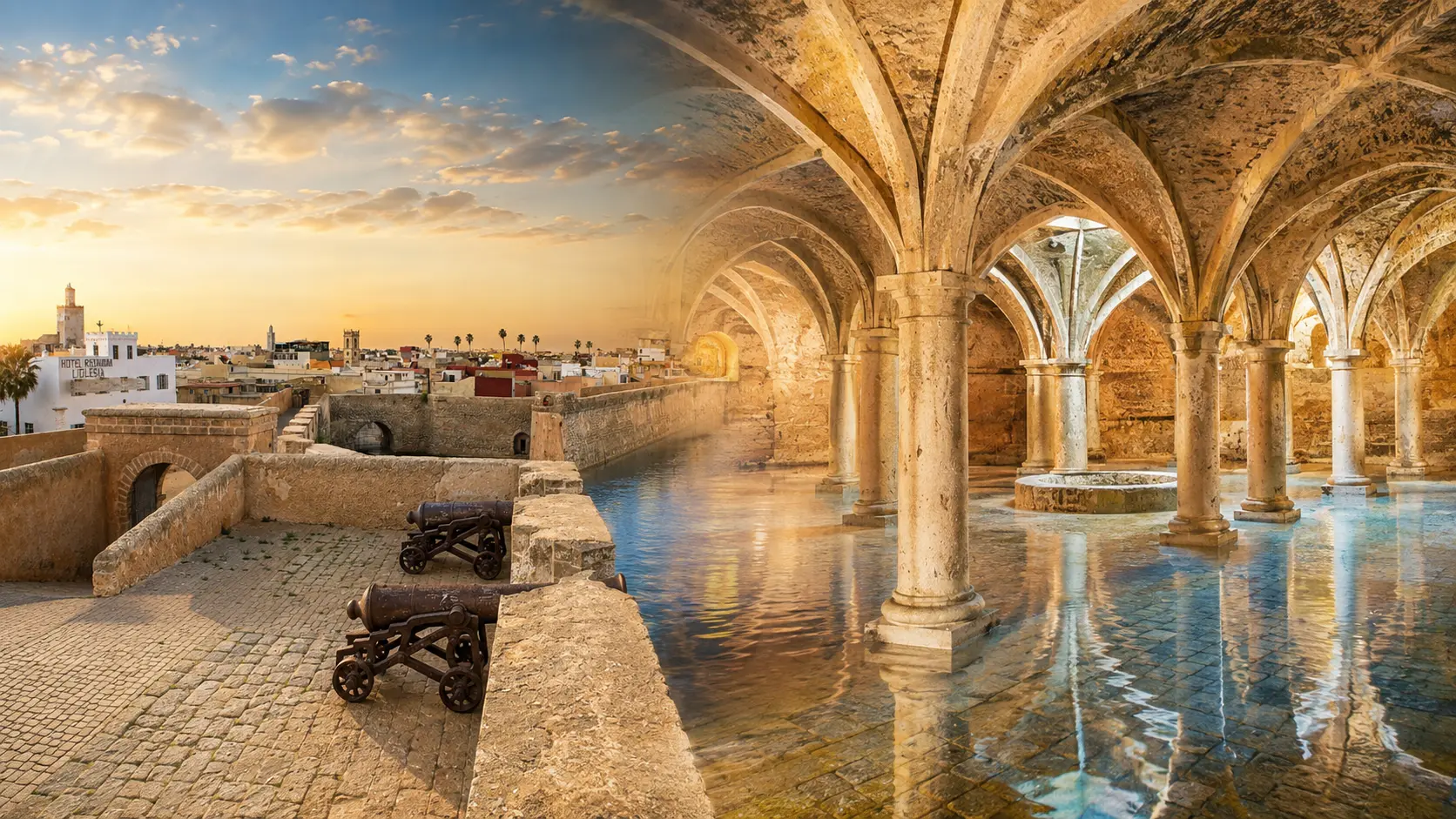
Portuguese Cistern of El Jadida

Look at a distinctive structural and spatial setting.

Explore this connection ↗

Agdal Gardens

Include cultivated landscape in the architectural picture.

Explore this connection ↗

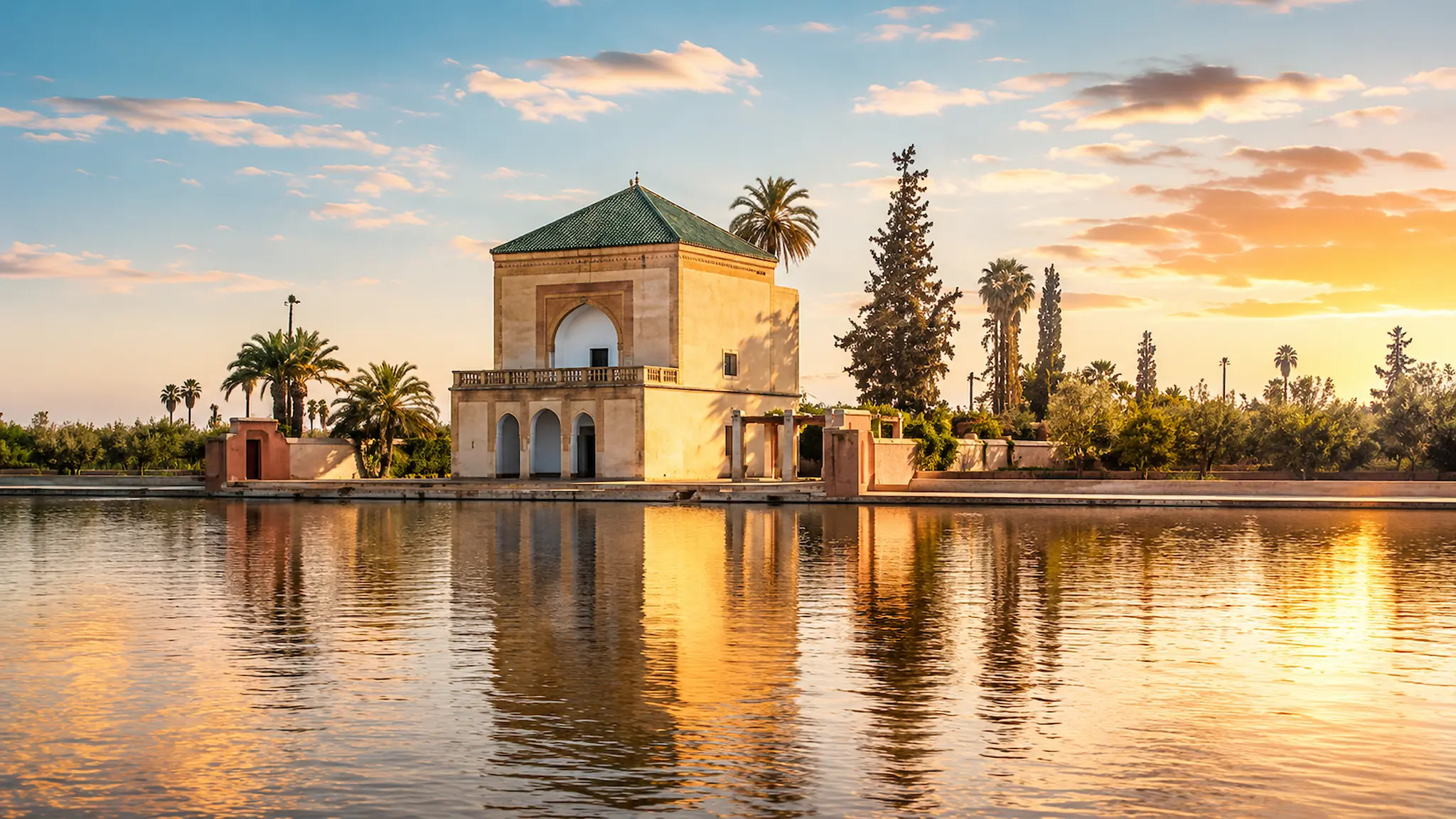
Menara Gardens, Marrakech

Explore water, planting and a built pavilion.

Explore this connection ↗
A thought to take with you

Keep looking. Keep learning.

Carry one question from the room to the workshop: how was this particular junction made? It connects the beauty of architecture to the practical intelligence of the people who build, repair and continue it.

The Exotic Morocco library

Continue at your own pace.

This Learn story is free to explore. Find this subject in the guide library, with each title’s current availability clearly shown.

Explore the guide library ↗
Sources & further reading

Read the evidence

  1. The Metropolitan Museum of Art · Building the Moroccan Court
  2. The Metropolitan Museum of Art · Panel with Cusped Arches
  3. UNESCO · Medina of Fez
  4. UNESCO · Medina of Marrakesh

Source review: September 2026. Looking exercises and learning prompts are original Exotic Morocco editorial suggestions. Regional practice and personal experience vary.

Image acknowledgements

  1. Related preview: PlateMakerMarrakech.jpg — Elgaard. CC BY-SA 4.0. Cropped/resized; original licence retained.
  2. Hero: Ben Youseff Madressa.jpg — Nash Finley. CC BY-SA 4.0. Cropped/resized; original licence retained.
  3. Portrait: Bahia Palace Marrakech carved cedar wood ceiling.webp — Bahiapalace. CC BY 4.0. Cropped/resized; original licence retained.
  4. Story-1: Medina of Marrakesh Medersa Ben Youssef mosaique detail.jpg — Elena Tatiana Chis. CC BY-SA 4.0. Cropped/resized; original licence retained.
  5. Story-2: Medersa Sehrij, Andalusian quarter (589017885).jpg — Maureen from Buffalo, USA. CC BY 2.0. Cropped/resized; original licence retained.
  6. Story-3: P9077684 (5628734167).jpg — Philip Sheldrake from London, UK. CC BY-SA 2.0. Cropped/resized; original licence retained.
  7. Related preview: Zellij Fes 04.jpg — Schorle. CC BY-SA 4.0. Cropped/resized; original licence retained.
  8. Related preview: Small Riad Bahia Palace 1384.jpg — C messier. CC BY-SA 4.0. Cropped/resized; original licence retained.
  9. Chapter: Tile, carved plaster and openings in a Fez madrasa. — Exotic Morocco’s existing image collection.
  10. Gallery: Timber galleries at the Nejjarine building in Fez. — Exotic Morocco’s existing image collection.
  11. Related preview: Fez, Morocco (3636868446).jpg — nathalie_r. CC BY 2.0. Cropped/resized; original licence retained.

Destination and related-story thumbnails intentionally identify their linked pages. Principal story images are selected individually for this Learn page.