Why Agdal Gardens matters
A garden before it is a green escape.
Agdal Gardens matters because it shows Marrakech as an engineered oasis city. The site is not simply a pleasant park on the edge of the medina; it is a royal orchard landscape where enclosure, irrigation, agriculture, ceremony and urban planning were brought into one large system.
UNESCO's Medina of Marrakesh listing names the Gardens of Aguedal among the natural and cultural components that help express the city's Outstanding Universal Value. Conservation and garden-history sources also describe Agdal and Menara together as historic garden landscapes tied to Marrakech's long urban identity.
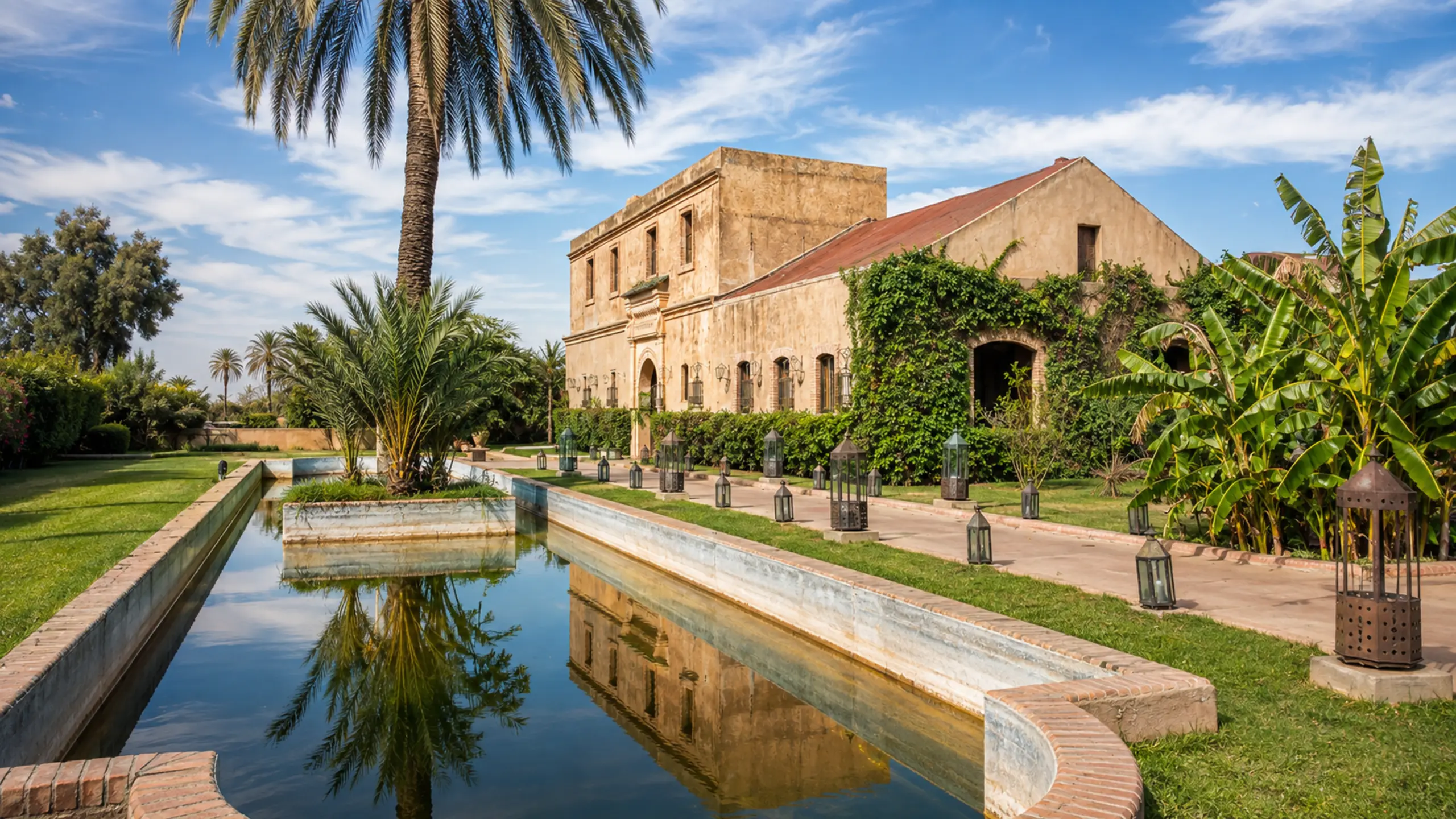
The most important reading is water. Agdal's reservoirs and channels were not decorative afterthoughts. They stored, ordered and redistributed water for groves and gardens in a semi-arid city, connecting Marrakech to mountain-fed systems and to a deep Moroccan understanding of shade, productivity and seasonal care.
The second reading is scale. Agdal is a walled landscape of orchards, paths, basins and pavilions, historically associated with royal use yet also part of the broader memory of Marrakech. Its beauty comes from disciplined repetition: rows of trees, long boundaries, quiet water, pale walls and the distant line of the High Atlas.
For visitors, the site asks for slower looking. It is not a pageant of ornament. It is a place where a garden becomes urban intelligence: fruit trees arranged with purpose, water made visible, architecture held back, and the city softened by a landscape that still feels older than modern leisure.
Core heritage facts are grounded in the UNESCO World Heritage Centre listing for the Medina of Marrakesh, the Med-O-Med garden landscape inventory and conservation material from FUNCI. Opening arrangements and access conditions should be checked close to travel.