
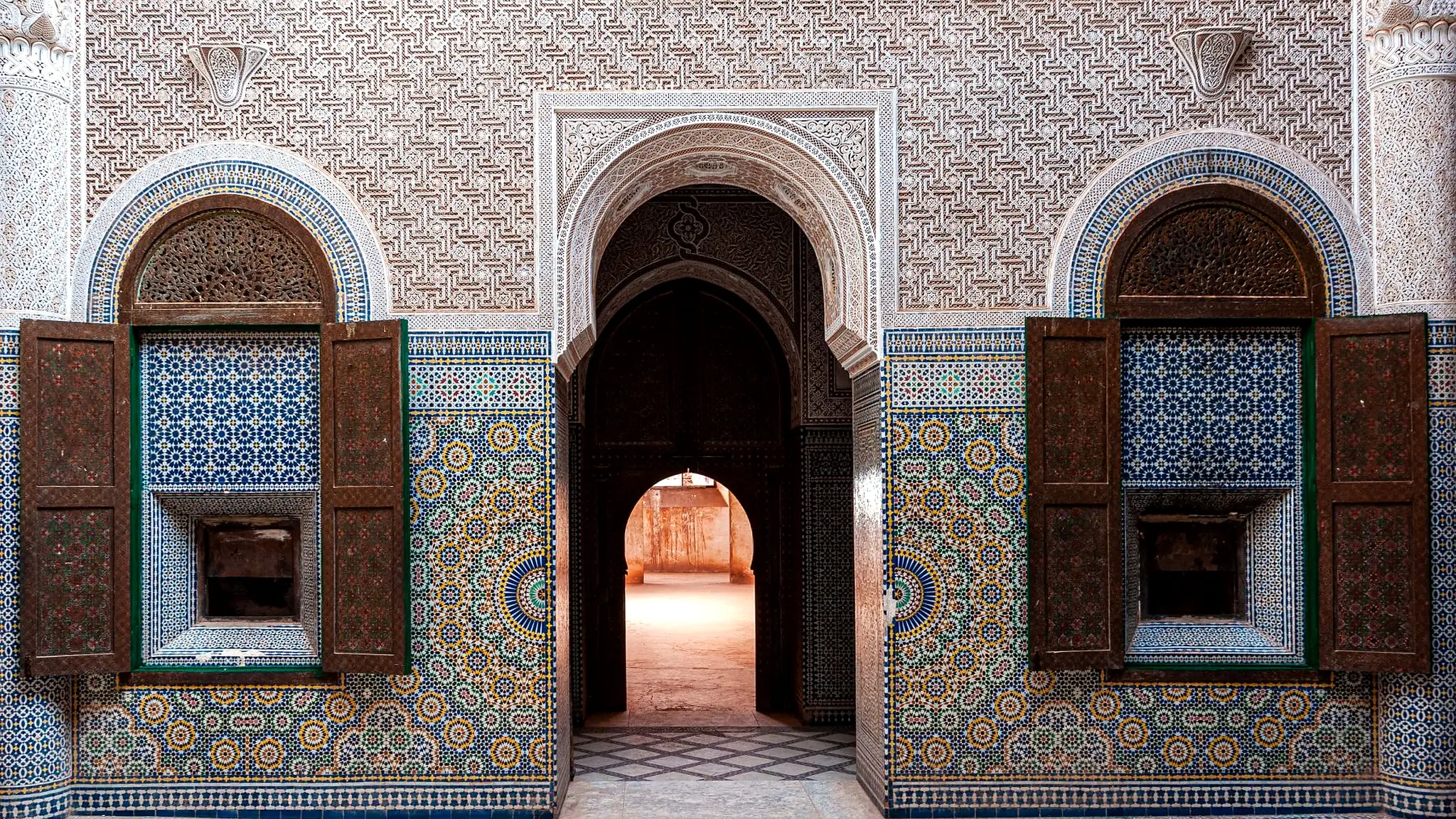
Ornate carved plaster, zellij tilework and arched interior detail inside Telouet Kasbah, Morocco

Visit / Place · High Atlas · Ouarzazate province

Telouet Kasbah A Glaoui palace of earth walls, carved rooms and mountain route memory

Telouet Kasbah is one of the High Atlas places where Morocco's earthen architecture, political history, route geography and surviving decorative craft meet in a single, fragile complex.

Enter it through contrast. The outside can feel weathered and severe; the surviving interiors reveal zellij, carved plaster, painted wood and the refined ambition of a palace built into a mountain-route world.

Why Telouet Kasbah matters

A mountain palace before it is a ruin.

Telouet Kasbah matters because it holds two readings at once. From the outside, it belongs to the earthen architecture of the High Atlas: thick walls, towers, weathered surfaces and a settlement edge shaped by mountain light. Inside, its decorated rooms speak a very different language: zellij, carved plaster, painted cedar and ceremonial proportion.

The kasbah is associated with the El Glaoui family, whose authority was tied to the mountain routes between Marrakesh, Ouarzazate and the south. That history should be approached carefully, because it involves power, wealth, alliance, decline and the political tensions of Morocco's twentieth century. The building is beautiful, but its beauty is not innocent decoration.

Its location is part of the meaning. Telouet sits in High Atlas country, close to the Ounila route and the approaches that connect mountain passes with southern Morocco. The kasbah should therefore be read as architecture placed in motion: a palace, a fortified presence, a route marker and a reminder of how geography could become authority.

For visitors, the strongest experience comes from noticing the contrast between rough outer fabric and surviving interior refinement. A quick photograph can miss the central lesson: the building turns from clay-coloured mass into intricate surface, from defensive outline into reception room, from mountain road into political memory.

It is also a fragile place. Parts of the complex are ruined, restored, closed or dependent on local guidance and current safety conditions. That fragility is not a failure of the visit; it is part of what the visit needs to respect. Telouet rewards visitors who slow down, listen and look without treating damaged heritage as a stage set.

Historical orientation is cross-checked against History Hit's Telouet Kasbah overview and open mapping data for the site. Practical access, prices, opening hours and restoration conditions should be verified locally close to travel.
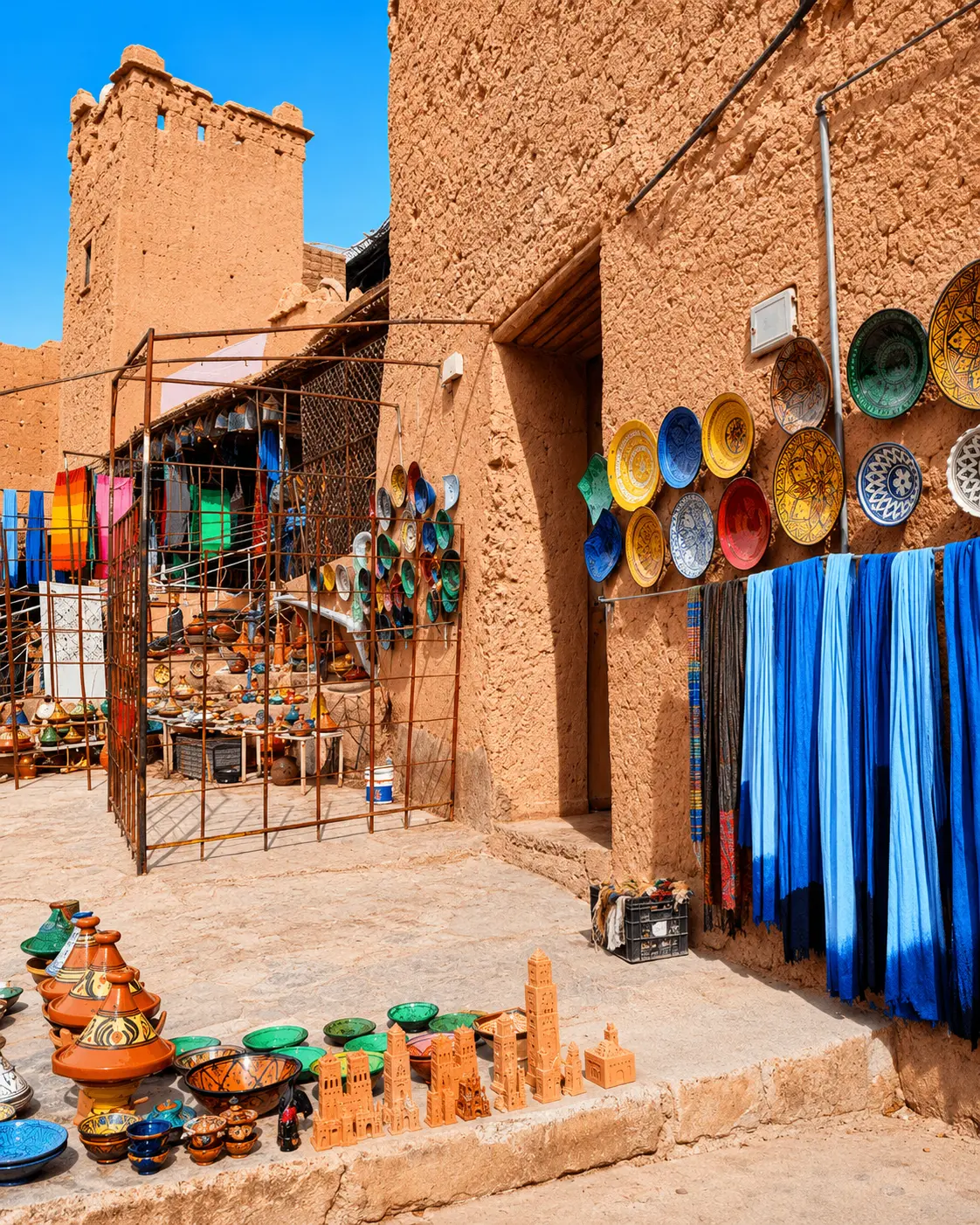
Ouarzazate craft and earthen wall detail used as the city context image for Telouet Kasbah

Map orientation

Use the map to place the kasbah on the High Atlas side of the Ouarzazate journey, close to the mountain route and the Ounila Valley context.

Editorial reading

Its beauty is divided between power and craft.

The first reading is mass. Telouet presents itself through earthen walls, uneven edges, compact volumes and the visual authority of a building that once controlled a strategic mountain position. The weathered exterior matters because it shows time, exposure and the slow pressure placed on earth architecture.

The second reading is interior refinement. The decorated rooms do not feel like an afterthought; they reveal a courtly language imported, commissioned and adapted through skilled Moroccan craft. Zellij, carved plaster and painted wood turn the building inward, from route control to ceremonial display.

That contrast gives the kasbah its force. A palace in this landscape is not only a residence. It is a statement about route, alliance, prestige and the ability to gather materials, labour and artistic knowledge into a remote mountain place.

The most rewarding visit therefore moves between scales. Look first at the exterior mass and its relationship to the village and mountains. Then move into smaller details: the frame of an arch, the geometry of tilework, the depth of a doorway, the way a decorated ceiling changes the mood of a room.

Do not read the ruins as emptiness. Broken areas, closed zones and restored rooms all belong to the same story of survival. They show how heritage depends on structure, weather, politics, repair and decisions made long after the original builders disappeared.

Photography works best when it respects this complexity. The kasbah is not simply a backdrop for dramatic colour. Its strongest images come from balanced looking: earth against blue sky, dim passage against bright courtyard, ornament against silence, and human scale against mountain geography.

Leave with the whole contrast intact. Telouet is memorable because it refuses to be only one thing: not just a ruin, not just a palace, not just a road stop, but a layered place where architecture makes history visible through surface, structure and setting.

Historical and heritage orientation

Read the kasbah through route, authority and fragile survival.

Telouet Kasbah is best understood as a historic palace-fortress linked to the Glaoui presence in the High Atlas. Its meaning comes from more than decoration: the site connects mountain route control, southern Moroccan earthen construction, elite interior craft and the unsettled legacy of twentieth-century power.

01Place type

A kasbah-palace complex

The site is not a simple viewpoint. It is a fortified residence and palace complex, with exterior earthen mass and surviving interior rooms that make the political and architectural scale legible.

02Glaoui context

Seat of regional authority

Telouet is strongly associated with the El Glaoui family, whose influence reached across parts of southern Morocco and whose history remains tied to the French Protectorate period and the end of that political order.

03Route geography

Mountain passage and wealth

The kasbah's position near former caravan and mountain routes helps explain its importance. Telouet was not remote in meaning; it belonged to movement between Marrakesh, the High Atlas and the south.

04Conservation

Ruins, repair and caution

Parts of the complex are fragile, ruined or subject to access limits. The surviving decorative rooms are powerful because they stand inside a building whose material future depends on repair and careful visitation.

A visual bridge

Three readings between mountain route, earth and ornament

Telouet becomes clearer when visitors connect the outside and inside instead of choosing one. These three readings help the kasbah feel complete: route before room, earth before ornament, and patience before photography.

01

Route

Power in the mountain pass

The kasbah's setting explains much of its authority. It belongs to a mountain-route world where control, hospitality, trade and visibility could all be expressed through architecture.

  • Place the building in relation to road, village and mountain.
  • Notice how the exterior reads from a distance.
  • Connect Telouet to Ouarzazate and High Atlas movement.
02

Material

Earth holding memory

Earthen construction gives Telouet warmth, mass and vulnerability. The wall surfaces are not decorative skin; they are structure, climate response and visible maintenance history.

  • Read texture, repair, shadow and weathering.
  • Keep distance from unstable or worn edges.
  • Let the exterior explain the building before entering.
03

Interior

Craft inside the ruins

The surviving rooms shift the visit into another register. Carved plaster, tilework and painted wood reveal ambition, skilled craft and ceremonial life inside a building that can look severe from outside.

  • Move from broad mass to crafted detail.
  • Look upward at ceilings and arch frames.
  • Photograph patiently without crowding people or guides.

Quick orientation

Type of place

A historic High Atlas kasbah and palace complex associated with the El Glaoui family, combining fortified earthen architecture with surviving decorated interiors.

Landscape context

Telouet sits in the mountain route context between Marrakesh, Ouarzazate and the Ounila Valley, where landscape, passage and political history overlap.

Best for

Architecture, heritage reading, zellij and plaster detail, route history, careful photography, High Atlas atmosphere and a more layered southern Morocco itinerary.

Closest city context

Ouarzazate is the strongest city base for linking Telouet with southern kasbah landscapes, Ait Ben Haddou, valley roads and desert-edge planning.

What visitors experience here

A kasbah that changes from rough exterior to refined interior.

Telouet works through surprise. The approach may feel quiet and weathered, with earth walls and mountain air setting a restrained tone. Then the surviving rooms change the visit: colour, pattern, carved surfaces and painted ceilings reveal how much ambition was once concentrated inside the kasbah.

Arrival

Earth walls and mountain light

The exterior gives the first lesson: wall thickness, dry colour, exposed surfaces and a building mass that belongs to the High Atlas rather than to a polished museum setting.

Interior

Rooms that turn inward

The decorated rooms feel almost hidden after the rougher outer approach. Their tilework, plaster carving and painted wood create a sudden change in scale, sound and attention.

Texture

From clay to zellij

The visit moves from earthen surface to glazed geometry. That shift is essential: it shows how local construction and refined craft could coexist inside one mountain palace.

Silence

Quiet after power

Telouet can feel subdued because much of its former authority has passed into memory. The quiet is part of the experience, especially where damaged fabric sits beside ornate survival.

Light

Bright thresholds, dim rooms

Doorways and courtyards create sharp transitions between sunlit earth and cooler interior shadow. Let your eyes adjust before judging detail; much of the beauty appears slowly.

Pace

A visit guided by caution

Access can depend on local conditions, restoration work and safety. A good visit follows guidance, avoids fragile areas and allows the kasbah's partial survival to shape the pace.

Place details and orientation

Read Telouet Kasbah through six defining elements

The kasbah is strongest when its contrasts are kept together: fortified exterior, palace interior, mountain route, political memory, damaged fabric and the craft that still survives in selected rooms.

1
Earthen exterior walls

Thick clay-coloured surfaces give the building its first authority and connect the kasbah to southern Moroccan earthen construction.

2
Fortified volumes

Towers, edges and compact mass help visitors read Telouet as a protected residence, not simply a decorated interior hidden in the mountains.

3
Surviving reception rooms

The most memorable interiors reveal the ceremonial ambition of the palace through proportion, surface, colour and controlled light.

4
Zellij, plaster and painted wood

Tilework, carved plaster and painted ceilings give the kasbah its refined interior language, balancing the rougher exterior with skilled craft.

5
Thresholds and courtyards

Transitions between outside, passage, courtyard and room are part of the architecture. They control light, privacy, temperature and ceremony.

6
High Atlas setting

The kasbah belongs to the route landscape around Telouet, with Ouarzazate and the Ounila Valley giving the wider southern Morocco context.

Palace, route, ruin

The place asks for a layered eye.

Stand outside first. The earthen volumes, village edge and mountain light explain why the kasbah matters as a built presence in the High Atlas. Its power begins with position and mass before any interior detail appears.

Then let the interior change the reading. Carved plaster, zellij and painted wood show a different form of authority: one based on craft, display and the ability to bring refined urban decorative language into a mountain palace.

Finally, notice what is missing or closed as carefully as what survives. Telouet's damaged fabric is part of the heritage reading. It asks visitors to understand beauty, vulnerability and responsibility together.

Architecture and material intelligence

The exterior and interior belong to the same story.

Telouet Kasbah is often remembered for its decorated rooms, but those rooms only make full sense inside the heavier architecture around them. Earthen walls, controlled thresholds, shaded passages and thick volumes establish a language of protection and climate before ornament appears.

The refined interiors then add another layer: zellij geometry, carved plaster, painted wood and ceremonial framing. The intelligence of the building lies in this sequence. It moves from route and defence to reception and display, from weathered exterior to crafted interior, from mountain geography to political memory.

What to notice slowly

  • Begin with the full exterior mass before entering the decorated rooms.
  • Notice how bright courtyards and dim interiors change the pace of looking.
  • Compare rough earthen surfaces with the precision of zellij and plaster.
  • Look upward; ceilings and upper wall details carry much of the craft language.
  • Connect the kasbah to the High Atlas route instead of treating it as isolated.
  • Respect closed, fragile or restored areas and follow current local guidance.

Architectural reading

Three architectural languages to notice

Plain outside, intricate inside

The kasbah's strongest visual rhythm comes from contrast: broad earthen surfaces outside, then intense craft inside. The shift makes the decorated rooms feel earned rather than merely ornamental.

Route turned into architecture

Telouet's position helps explain its scale. A palace here was not only a private residence; it was a visible statement within a landscape of mountain movement and southern route control.

Fragility as evidence

Ruined areas, repairs and access limits should not be ignored. They show the pressure placed on earthen heritage and remind visitors that preservation is part of the story.

Visual atmosphere

Light, craft and quiet transitions

From rough wall to polished detail

Let the exterior set the scale before moving into detail. The shock of zellij and carved plaster is stronger when the eye has first understood the earth walls, weathered surfaces and mountain colour outside.

From bright threshold to cool room

Telouet is full of transitions: sun to shade, courtyard to chamber, rough texture to refined pattern. Those shifts give the visit its rhythm and help the building feel alive even in partial ruin.

From photograph to responsibility

The kasbah photographs beautifully, but the deeper memory comes from holding beauty and damage together. A careful visitor leaves with admiration for the craft and respect for the fragile structure that carries it.

Nearby places and onward links

Connect Telouet to the wider High Atlas and southern Morocco map

Telouet works best as part of a route, not as a disconnected stop. Ouarzazate gives the clearest city context, while the wider region links the kasbah to valleys, earthen architecture and southern travel planning.

Ouarzazate

The strongest city context for Telouet Kasbah, especially for travellers linking High Atlas routes with southern kasbah landscapes and onward desert-edge planning.

Open Ouarzazate city guide

Ait Ben Haddou

A key nearby heritage stop on the wider Ouarzazate route, useful for comparing collective earthen settlement with Telouet's palace-kasbah character.

Open the place guide

Southern Morocco, Oases & Sahara

The regional frame for valley roads, kasbah routes, oasis landscapes and the earth-built architecture that gives this part of Morocco its depth.

Explore the region

Architecture & Heritage

Telouet belongs naturally inside an architecture reading of Morocco: material, craft, conservation, route history and the careful interpretation of power.

Read the theme

Visit Morocco places

Continue through kasbahs, valleys, waterfalls, lagoons, caves, monuments and natural heritage places beyond the city guides.

Browse Visit places

Plan your journey

Treat Telouet as a meaningful route anchor. Link it with Ouarzazate, the High Atlas, Ounila Valley context and enough time for careful looking.

Plan your journey

How to visit respectfully

Good behaviour protects what survives.

Telouet Kasbah should be visited with patience. Move quietly, follow local guidance, ask before photographing people or private activity, and remember that damaged fabric is still heritage. The fact that parts of a building are ruined does not make them available for climbing, touching or casual staging.

Respect also means accepting current conditions. Access can change because of restoration, safety, weather or local management. Some areas may be closed, some rooms may require guidance, and some practical details are best confirmed close to travel rather than assumed from old reports.

  • Ask before photographing guides, shopkeepers, residents or private interiors.
  • Stay away from unstable walls, closed spaces, roof edges and worn surfaces.
  • Support local services with courtesy and fair-minded interaction.
  • Keep voices low inside decorated rooms and give other visitors room to look.
  • Check current access, local guidance and restoration conditions before arrival.

A strong first visit

Begin outside the kasbah so the full mass, village edge and mountain position are clear. This first view gives the visit structure: earthen walls, towers, route setting and the feeling of a palace built to command movement through the High Atlas.

Inside, slow down. Let your eyes adjust in darker rooms before focusing on tilework, carved plaster or painted ceilings. The best details are not only decorative; they show the level of craft and ceremonial ambition once concentrated here.

If you arrive with a guide, listen for context around the Glaoui family, the route between Marrakesh and Ouarzazate, the Ounila Valley and the condition of the building today. These references help the visit become more than a visual stop.

Afterward, connect Telouet to Ouarzazate and the wider southern route. That wider reading keeps the kasbah from feeling isolated and places it inside a landscape of mountain roads, earthen building, palace memory and living villages.

  • Start outside, where mass and route position are easiest to understand.
  • Enter slowly, giving attention to thresholds, light changes and room sequence.
  • Use interior photographs to show craft, not to flatten the place into decor.
  • Leave space for local movement, guides and small businesses around the site.
  • Finish by connecting the kasbah back to Ouarzazate, the High Atlas and southern Morocco.

Careful planning note: opening hours, prices and exact travel times can change. Verify practical arrangements locally before travelling.

Ouarzazate craft display and earthen architecture used as the guide cover for Telouet Kasbah

Go deeper through the nearest city context

Ouarzazate - the city gateway to Telouet Kasbah

Telouet belongs naturally inside a wider Ouarzazate journey. The city gives visitors a stronger base for reading southern Moroccan routes: kasbah landscapes, film-route memory, High Atlas approaches, valley roads, oasis directions and the visual grammar of earth architecture.

Use Ouarzazate to widen the context after Telouet itself. Nearby kasbahs, Ait Ben Haddou, desert-edge routes, Ounila Valley landscapes and practical southern travel planning all become clearer when Telouet is treated as part of a larger regional story.

Historic and regional contextOuarzazate city orientation Kasbah and valley routesArchitecture and heritage reading Practical travel structureNearby southern highlights

Continue the journey

Continue from Telouet Kasbah into the High Atlas and southern Morocco.

Read the kasbah slowly, then connect it to Ouarzazate, the Ounila Valley, palace craft, mountain-route history and the wider heritage map of Morocco.