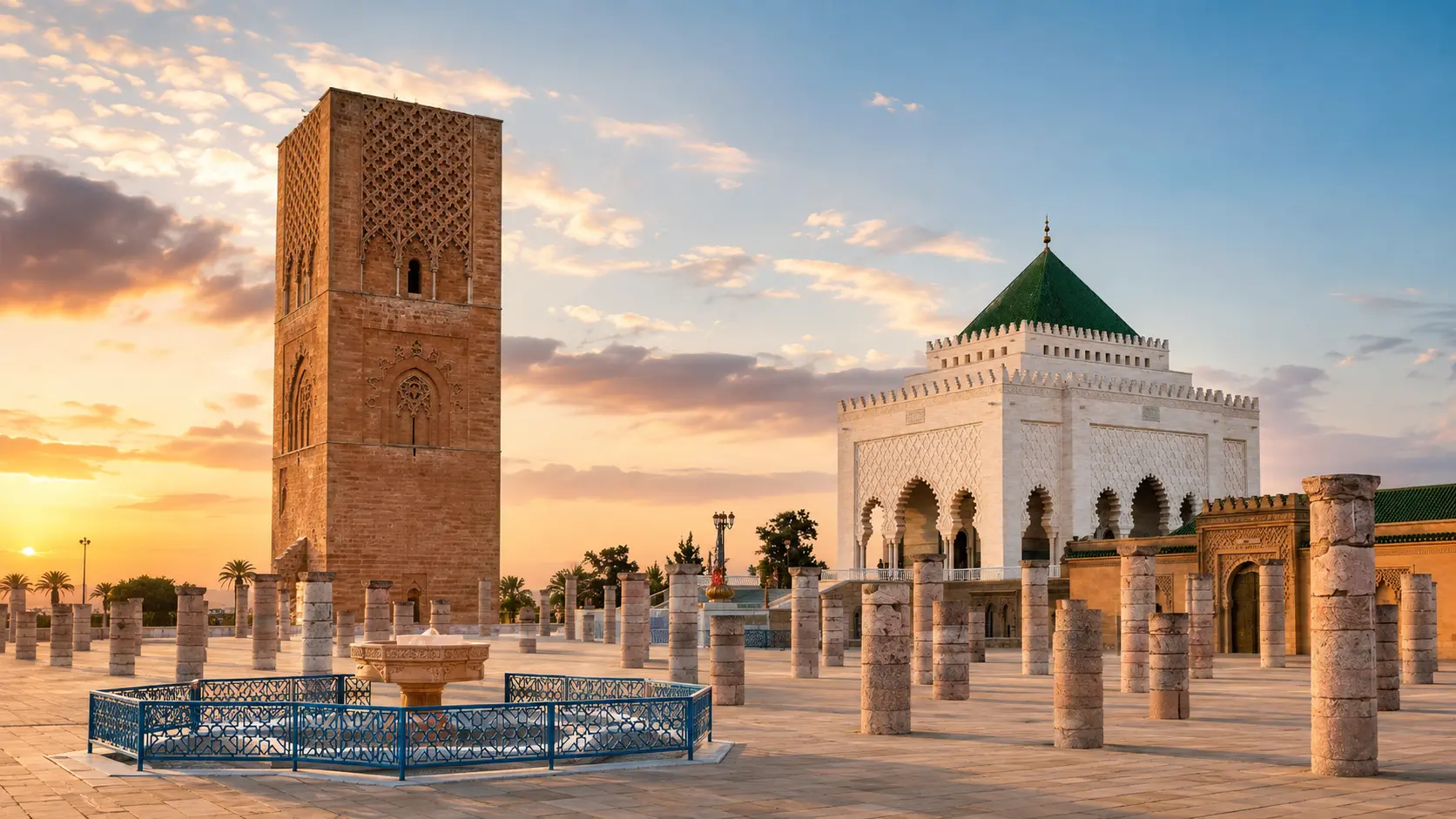
Hassan Tower and the Mausoleum of Mohammed V at sunset in Rabat, Morocco

Visit / Place · Rabat · Hassan esplanade

Hassan Tower & Mausoleum Rabat's open-air dialogue between Almohad ambition and national memory

Hassan Tower and the Mausoleum of Mohammed V bring two powerful readings of Rabat into one space: an unfinished 12th-century imperial mosque project and a 20th-century royal memorial built with Moroccan craft.

Begin with the whole esplanade. The tower, rows of columns, white mausoleum, green roof and open sky make most sense together, before the eye moves toward stone, marble, zellige, carved detail and quiet ceremonial rhythm.

Why Hassan Tower & Mausoleum matters

A monument complex before it is a viewpoint.

The Hassan esplanade is one of Rabat's clearest lessons in historical layering. On one side stands Hassan Tower, the minaret of the unfinished Hassan Mosque, tied to the Almohad project for a great capital. Across the open space stands the Mausoleum of Mohammed V, a modern royal memorial that turns craft, marble and ceremony toward national memory.

UNESCO includes Rabat on the World Heritage List as a modern capital and historic city where older Arabo-Muslim heritage and 20th-century urban planning exist together. Within that wider inscription, the Hassan Mosque remains are part of the city's older 12th-century layer, while the mausoleum helps visitors understand how Rabat continues to frame history through public architecture.

The place matters because it refuses a single timeline. The unfinished tower speaks of ambition interrupted; the columns keep the plan of a vast mosque visible in open air; the mausoleum gives the site solemnity, royal presence and craft detail. Together they make Rabat feel like a capital built from continuity rather than spectacle.

For visitors, the strongest experience comes from moving slowly across the esplanade. Distance clarifies the tower and mausoleum as a pair. Closer looking reveals stone texture, marble surfaces, green tile, carved arches, zellige and the disciplined calm of a civic space that is also a place of remembrance.

The complex should be read respectfully. The mausoleum is not only a beautiful building; it is a royal burial place associated with Mohammed V, Hassan II and Prince Moulay Abdallah. That meaning changes the rhythm of the visit: voices soften, photography becomes more careful, and attention moves from display toward memory.

Core facts are grounded in the UNESCO World Heritage Centre listing for Rabat and Visit Rabat's Mausoleum of Mohammed V page. Practical details such as access, opening hours and local rules should be checked close to travel.
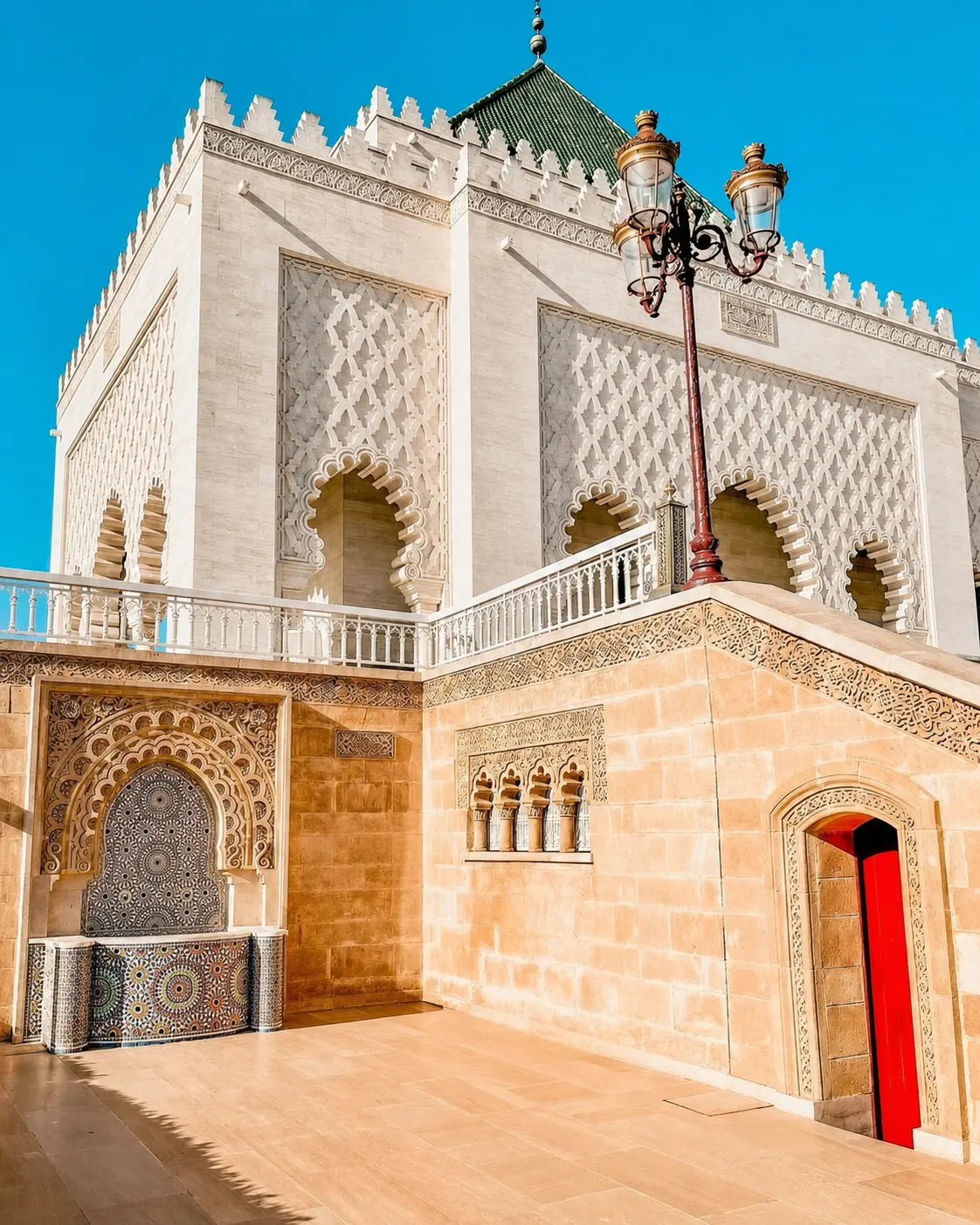
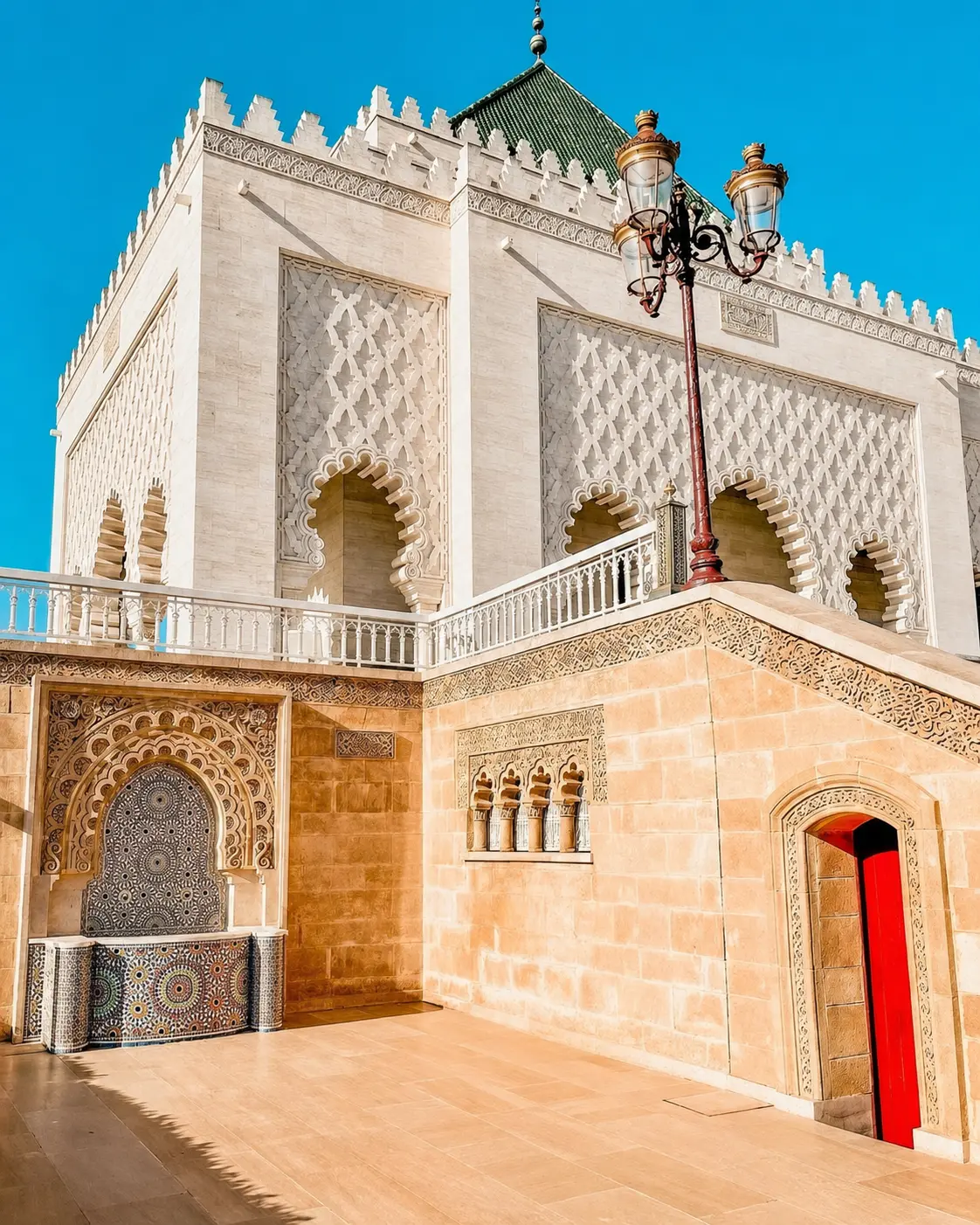
White marble facade and green tiled roof of the Mausoleum of Mohammed V in Rabat

Map orientation

Use the map first to place the esplanade between Rabat's historic core, the Bou Regreg edge and the wider capital-city route.

Editorial reading

Its beauty comes from contrast held in balance.

The first contrast is material. Hassan Tower rises in warm stone, vertical and unfinished; the mausoleum rests in luminous white, complete and ceremonially precise. Between them, the open esplanade gives the eye enough distance to understand both monuments without forcing them into one period.

The second contrast is historical. The mosque remains carry the memory of Almohad Rabat, a city imagined at imperial scale. The mausoleum belongs to modern Morocco and to the story of independence, monarchy and national tribute. The visitor stands between unfinished ambition and completed remembrance.

The third contrast is visual rhythm. The tower asks for height, shadow and carved surface. The mausoleum asks for detail: white marble, green tile, arches, calligraphic refinement, zellige and controlled symmetry. The columns across the esplanade connect the two readings by keeping the old mosque plan visible.

This is why the site rewards more than a fast photo. From one angle it is a skyline. From another, it is an archaeological plan. From the mausoleum steps, it becomes ceremonial architecture. From the open plaza, it becomes Rabat itself: a capital where history, state presence and urban calm share the same frame.

Read the complex with restraint. The esplanade is generous, but the meaning is not casual. Keep a respectful distance around ceremonial areas, avoid treating guards or worshippers as props, and allow the mausoleum's memorial role to shape the way the space is entered and photographed.

Historical and heritage orientation

Read the site through Almohad ambition, royal memory and civic space.

Hassan Tower and the Mohammed V Mausoleum are not from the same century, but they belong naturally together on the esplanade. UNESCO identifies the older Hassan Mosque remains as part of Rabat's 12th-century heritage, while Visit Rabat presents the mausoleum as one of the capital's iconic monuments and a royal burial place built between 1962 and 1971.

0112th century

Hassan Mosque remains

UNESCO's Rabat listing identifies the Hassan Mosque, begun in 1184, among the older parts of the city connected to the Almohad project for a great capital.

02Minaret

Hassan Tower

The tower is the dominant surviving vertical marker of the unfinished mosque complex. Its scale and stone surface keep the ambition of the Almohad plan visible from across the esplanade.

031962-1971

Mohammed V Mausoleum

Visit Rabat describes the mausoleum as built between 1962 and 1971 and as the burial place of King Mohammed V, King Hassan II and Prince Moulay Abdallah.

04UNESCO 2012

Rabat World Heritage

Rabat was inscribed on the UNESCO World Heritage List in 2012 as a modern capital and historic city, a frame that helps visitors read the site as part of a wider urban heritage ensemble.

A visual bridge

Three readings between tower, mausoleum and esplanade

Before the site becomes a photograph, it is a sequence of distance, symmetry and memory. These three readings help visitors move from the open plaza toward the details without losing the larger meaning of the place.

01

Tower

Stone, height and interruption

Hassan Tower is powerful because it is incomplete without feeling weak. Its stone mass, carved panels and vertical calm preserve the memory of a mosque project whose ambition can still be read in the ground around it.

  • Read the tower from far enough away to feel its scale.
  • Notice the carved surfaces before moving to the plaza.
  • Let incompletion remain part of the meaning.
02

Mausoleum

White marble and green tile

The Mausoleum of Mohammed V changes the emotional register of the site. Its white exterior, green pyramidal roof and crafted detail create a ceremonial counterpoint to the older mosque remains.

  • Read the facade as both craft and memorial.
  • Look for marble, zellige, carved arches and symmetry.
  • Keep the royal burial context in mind.
03

Esplanade

Space as interpretation

The open ground between tower and mausoleum is not empty. It lets visitors understand the site as a planned monumental field: old columns, ceremonial movement, broad sky and Rabat's civic calm in one frame.

  • Begin with the whole plaza, not one object.
  • Use the columns to imagine the older mosque plan.
  • Move slowly toward detail after reading the space.

Quick orientation

Type of place

A historic and ceremonial monument complex combining Hassan Tower, the remains of the unfinished Hassan Mosque and the Mausoleum of Mohammed V.

Urban context

The site stands in Rabat's Hassan area, close to the Bou Regreg edge and within the capital's wider historic and civic landscape.

Best for

Almohad history, royal memory, architectural photography, marble and zellige detail, open-space composition and a calm introduction to Rabat's identity.

Closest city context

Rabat is the essential frame: capital city, UNESCO World Heritage ensemble, Atlantic urban setting and gateway to nearby heritage places such as Chellah.

What visitors experience here

A place that shifts from skyline to ceremony.

The visit works in stages. First comes the wide image: tower, columns, mausoleum and sky. Then the ground plan becomes clearer, with the old mosque remains spreading across the esplanade. Finally the mausoleum draws the eye toward craft, memory and quiet attention.

Arrival

The full esplanade first

Start with the whole space. The tower and mausoleum are strongest when the open ground and column field remain visible, because the distance explains why the site feels monumental without being crowded.

Light

Warm stone and white marble

Light behaves differently across the complex. The tower absorbs warmth and shadow, while the mausoleum reflects brightness through pale marble and patterned surfaces. Early or late light makes the contrast especially legible.

Movement

A ceremonial walking rhythm

The visit is not about rushing from one object to another. Walking across the plaza lets the old mosque plan, the vertical tower and the mausoleum's carefully framed presence fall into place.

Material

Stone, marble, tile and craft

The tower is read through mass and carved stone. The mausoleum is read through refinement: white marble, green roof tile, zellige, carved ornament, metalwork and the precision of Moroccan ceremonial architecture.

Silence

Memorial atmosphere

The mausoleum gives the complex a different emotional temperature. Its royal tomb context invites quieter movement, more careful photography and a stronger awareness that this is both a public monument and a place of remembrance.

City

Rabat in one frame

Few places introduce Rabat so quickly. The site connects medieval ambition, modern state architecture, public space, craft detail and the calm Atlantic capital mood in a single, readable setting.

Place details and orientation

Read Hassan Tower & Mausoleum through six defining elements

No single detail explains the complex. Its meaning comes from the relationship between unfinished mosque, standing tower, ceremonial mausoleum, column field, crafted surfaces and Rabat's capital-city setting.

1
Hassan Tower

The tower gives the site its vertical identity and preserves the memory of the unfinished Almohad mosque project.

2
Column field

The rows of columns across the esplanade help visitors read the footprint and scale of the mosque that was never completed.

3
Mohammed V Mausoleum

The mausoleum introduces royal memory, ceremonial symmetry and a different architectural language of white marble and green tile.

4
Craft surfaces

Zellige, carved arches, marble, metalwork and patterned detail reward close looking without overwhelming the calm of the building.

5
Open esplanade

The broad plaza is part of the interpretation. It gives room for distance, ceremony, movement and clear views between the monuments.

6
Rabat setting

The site belongs to the capital's wider heritage map, linking the historic city, the Bou Regreg edge and modern civic Rabat.

Monument, not backdrop

The place asks for a careful eye.

Stand back before moving toward the mausoleum. The first lesson is spatial: tower, columns, white building, green roof and open ground form a complete civic composition. The view is beautiful because the pieces have room to breathe.

Then move closer. The tower's carved stone and the mausoleum's marble, arches and tilework ask for different kinds of attention. One is read through mass and interruption; the other through completion, craft and ceremonial focus.

Finally, return mentally to the full esplanade. The site becomes most memorable when the visitor connects the unfinished mosque remains, royal memorial, public space and Rabat's identity as both historic city and modern capital.

Architecture and material intelligence

Contrast is the site's architectural intelligence.

The complex works because its materials do not compete. Warm tower stone, pale column shafts, white mausoleum marble, green roof tile and patterned Moroccan craft each carry a different historical register. Together they make the site legible from far away and rewarding up close.

The older remains keep absence visible: the mosque plan is present through columns, open ground and the tower. The mausoleum answers with completion: a precisely framed royal memorial whose surfaces turn national remembrance into architecture. The intelligence of the site lies in holding both conditions together.

What to notice slowly

  • Start with the full relationship between tower, columns, mausoleum and open sky.
  • Notice how warm stone and white marble carry different moods in the same light.
  • Use the columns to imagine the scale of the unfinished mosque without inventing details.
  • Look closely at zellige, carved arches, green tile and metalwork around the mausoleum.
  • Read the place as both heritage site and national memorial.
  • Keep respectful distance around ceremonial areas, guards and visitors in quiet reflection.

Architectural reading

Three architectural languages to notice

Vertical memory

Hassan Tower is not only a landmark seen from a distance. It is the surviving vertical sign of a mosque project whose incompletion has become part of Rabat's historical identity.

Horizontal plan

The esplanade and column field teach scale. They keep the older mosque legible as an architectural footprint, not only as a standing tower or a loose ruin.

Ceremonial refinement

The mausoleum turns detail into dignity: marble, arches, green tile, zellige and controlled symmetry create a calm language suited to royal memory and public respect.

Visual atmosphere

Light, texture and quiet transitions

From skyline to surface

Begin with the tower and mausoleum in one frame, then move close enough to read stone joints, carved panels, marble edges, arch rhythm and tile colour. The shift from monument to surface is essential.

From plaza to memorial

The open esplanade feels expansive; the mausoleum feels focused. Moving between them changes the visitor's posture from looking outward across space to looking inward at craft, silence and memory.

From photograph to understanding

The hero image is strong, but the deeper memory comes from connecting what it shows: Almohad remains, royal tribute, Moroccan craft, capital-city order and a public space where history remains visible.

Nearby places and onward links

Connect Hassan Tower & Mausoleum to the wider Rabat map

The complex belongs naturally to a Rabat itinerary. Use it with the capital's city guide, Atlantic-region context, nearby heritage places and architecture-focused reading.

Rabat

The essential city context for Hassan Tower and the Mohammed V Mausoleum. Use it to understand the capital's historic, civic and Atlantic character.

Open Rabat city guide

Atlantic Coast & Historic Port Cities

The regional home for Rabat's Atlantic setting, historic ports, coastal cities and urban heritage along Morocco's western edge.

Explore the region

Chellah

Pair Hassan Tower with Chellah for a deeper Rabat heritage day, moving from Roman and medieval layers toward Almohad and modern royal memory.

Open Chellah place guide

Architecture & Heritage

The complex is a strong gateway into Moroccan architecture, public memory, craft detail and the relationship between older monuments and modern capital identity.

Read the theme

Visit Morocco places

Continue through monuments, kasbahs, valleys, lagoons, caves, waterfalls, oases and other place-based guides beyond the city pages.

Browse Visit places

Plan your journey

Use the site as a calm Rabat anchor before linking it with the medina, Kasbah of the Udayas, Chellah, museums and Bou Regreg views.

Plan your journey

How to visit respectfully

Good behaviour keeps the place dignified.

Hassan Tower and the Mohammed V Mausoleum are public, photogenic and deeply meaningful. Respect begins with pace: move calmly, avoid blocking ceremonial movement, keep voices controlled and remember that the mausoleum is a royal burial place as well as a major visitor landmark.

Photography should be careful rather than intrusive. Do not treat guards, worshippers, families or moments of quiet reflection as visual props. Around the mausoleum, let the memorial character of the site guide where you stand, how long you pause and how close you bring the camera.

  • Keep a calm voice and respectful pace, especially near the mausoleum entrance.
  • Ask before photographing identifiable people, guards or ceremonial moments.
  • Stay on appropriate visitor paths and avoid climbing, leaning on or crossing protected areas.
  • Dress and behave with the dignity expected at a memorial and civic monument.
  • Check current access, security guidance and any local restrictions close to travel.

A strong first visit

Begin at a distance where the tower, columns and mausoleum can be seen together. This first view gives the visit its structure: 12th-century mosque remains, modern royal memorial, open plaza and capital-city skyline all become part of the same reading.

Walk the esplanade before focusing on details. The column field helps the older mosque plan become visible, while the tower holds the vertical memory of the project. Only after that does the mausoleum's marble, tile and carved ornament fully make sense.

At the mausoleum, slow down. Look for the way white marble and green roof tile create a clean silhouette, then move closer to read zellige, arches, carved surfaces and the careful framing of entrances. The building deserves close attention without losing its solemn character.

Afterward, connect the site to Rabat. Chellah, the Kasbah of the Udayas, the medina, the Bou Regreg edge and the modern capital all help explain why this complex feels both historic and civic rather than isolated.

  • Start with the complete esplanade before isolating the tower or mausoleum.
  • Use the columns to read the older mosque footprint and sense of scale.
  • Give the mausoleum quiet attention; it is a memorial, not only an image.
  • Leave space for guards, families, groups and anyone using the site ceremonially.
  • Finish by connecting the visit back to Rabat's wider heritage map.

Careful planning note: opening hours, prices and exact travel times can change. Verify practical arrangements locally before travelling.

Close view of the Mohammed V Mausoleum facade and green roof in Rabat

Go deeper through the nearest city context

Rabat - the capital context for Hassan Tower & Mausoleum

Hassan Tower and the Mohammed V Mausoleum belong naturally inside a wider Rabat journey. The city gives visitors a stronger base for reading Moroccan capital identity: medieval walls, royal and civic architecture, Atlantic light, museums, gardens, the Bou Regreg edge and the calm rhythm of a living administrative city.

Use Rabat to widen the context after the esplanade itself. Chellah, the Kasbah of the Udayas, the medina, the modern city and nearby Salé help the monument complex feel less like an isolated stop and more like a central chapter in Rabat's layered heritage.

Historic capital contextRabat city orientation Almohad and modern layersArchitecture and heritage reading Respectful visitor rhythmNearby Rabat highlights

Continue the journey

Continue from Hassan Tower & Mausoleum into Rabat.

Read the esplanade slowly, then connect it to Rabat's medina, Chellah, the Kasbah of the Udayas, Atlantic light and the wider heritage map of Morocco's capital.