Skip to Moroccan Mosques
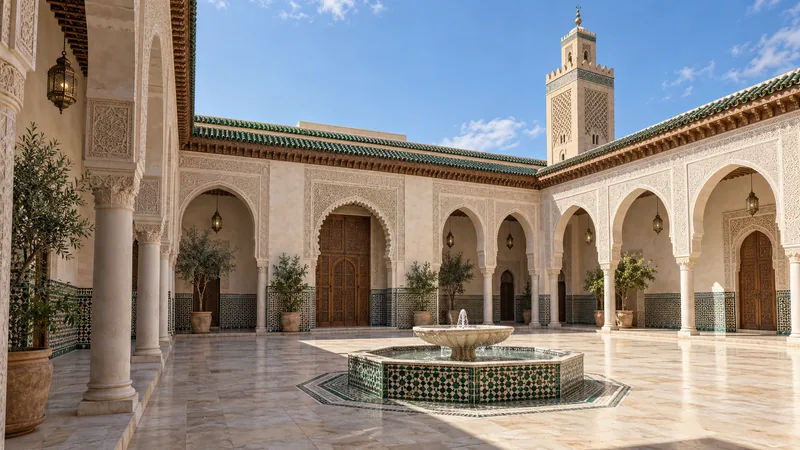
Conceptual Moroccan mosque courtyard with green and white zellige, a fountain and a square minaret. AI-generated editorial illustration; not a named monument.
Faith · Craft · Place

Moroccan
Mosques

From a medina courtyard to a mountain village. Discover the places, the knowledge and the hands that shape Morocco’s sacred architecture.

Conceptual courtyard · AI-generated editorial illustration

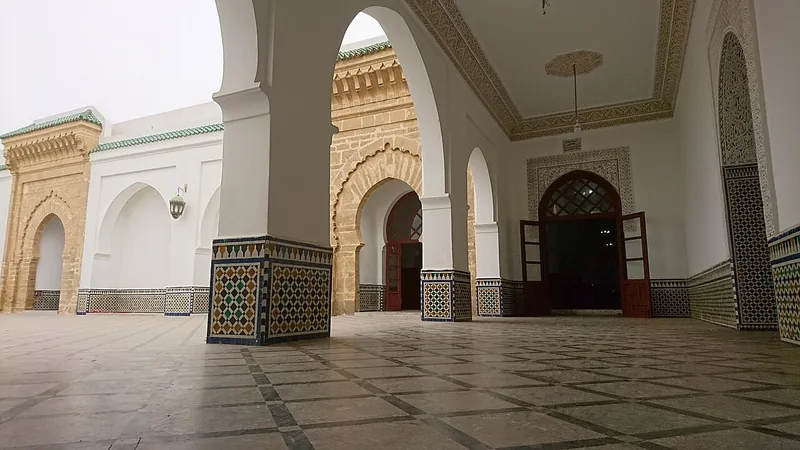
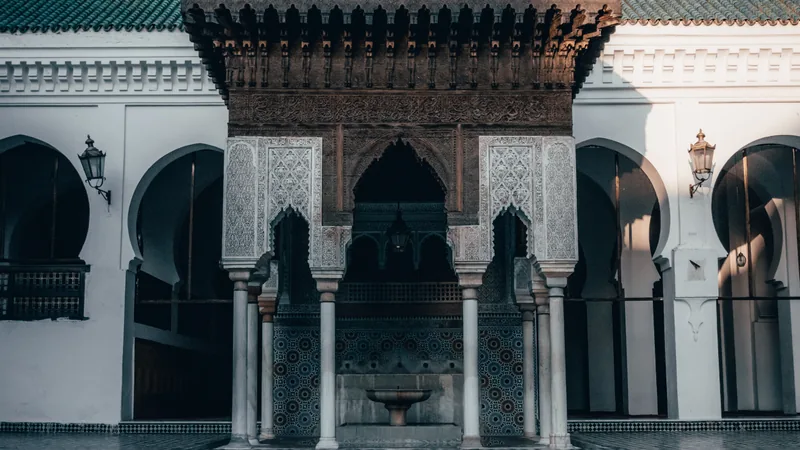
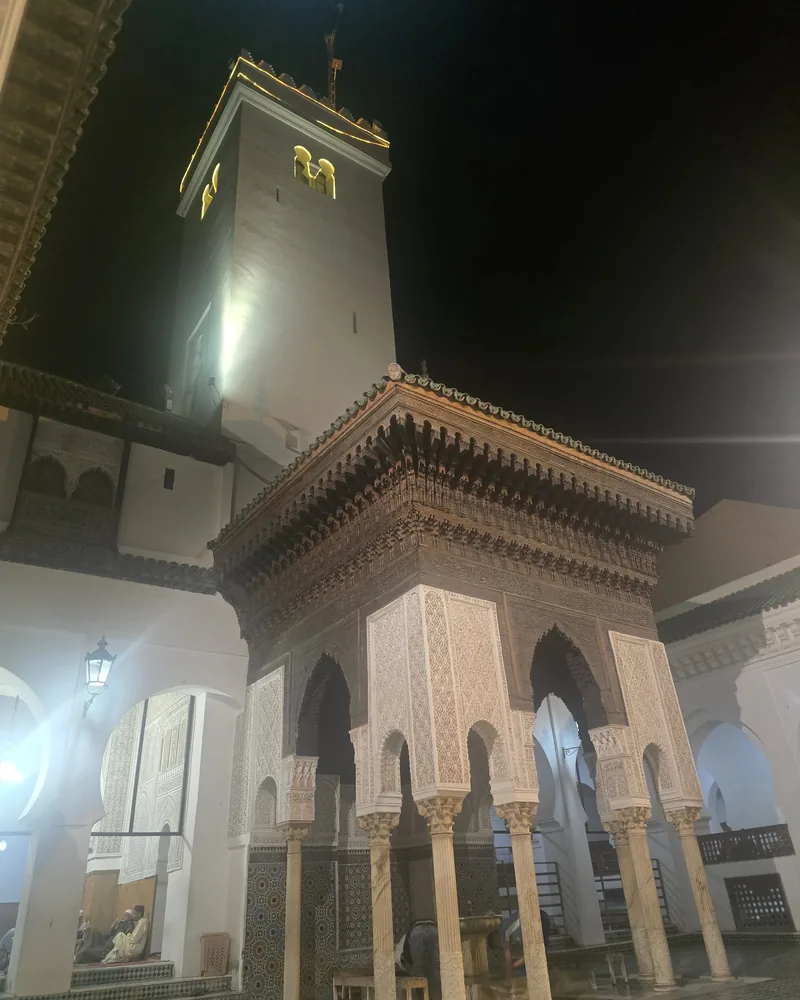
Courtyard pavilion and fountain at Al-Qarawiyyin Mosque in Fès.
Al-Qarawiyyin, Fès · a courtyard of prayer and learning.
Begin with meaning

Islam in Morocco

A mosque belongs first to the people who pray there.

In Morocco, Islam is woven into neighbourhood life, scholarship and the rhythms of the medina. The Maliki tradition, learning and the stewardship of habous endowments help explain why a mosque is more than a landmark: it is a place of worship, care and shared knowledge.

Its architecture gives these relationships a physical form. Courtyards bring light; prayer halls organise gathering; minarets mark a presence in the city. The work of tile cutters, plaster carvers and woodworkers connects devotion with generations of Moroccan craft.

Look with attention to the place and its community. A historic photograph tells a story about a building; it does not promise access to its interior. Follow local guidance, leave doorways clear and ask before photographing people.

See how faith, craft and place connect →
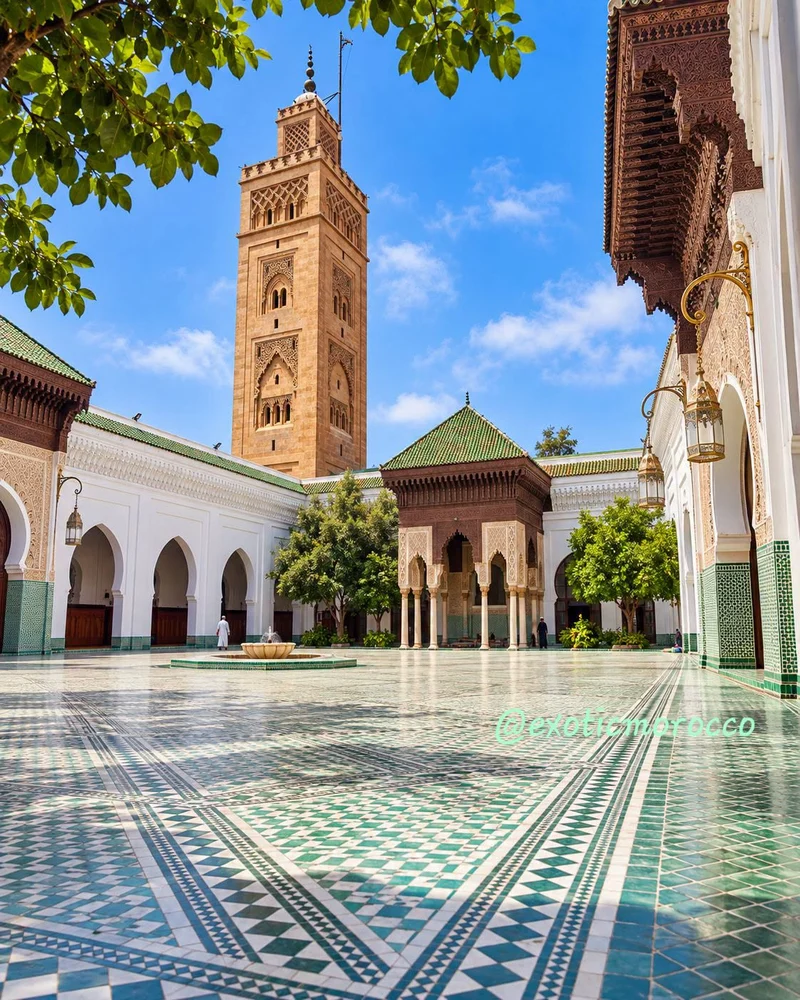
A Moroccan mosque courtyard with green and white zellige, a fountain, carved woodwork and a square minaret. Image supplied by Exotic Morocco.
A courtyard, a fountain, a minaret · Exotic Morocco
Culture Map

Sacred presence,
many Moroccan worlds

Across Morocco, mosques give neighbourhoods a point of orientation. Some are monumental works of royal patronage; others belong to the everyday scale of a town or village. Read their sacred presence through worship, learning and the communities around them, as well as through stone, earth and ornament.

A minaret seen above a medina is one beginning. The surrounding lanes, fountains, workshops and places of teaching reveal a wider setting. This collection connects celebrated landmarks with quieter local names, while keeping each mosque’s actual place and historical evidence in view.

Cities & memory

Fès, Marrakech, Rabat and Meknès carry the traces of successive patrons and communities. A mosque can preserve more than one period: foundation, enlargement, repair and changing surroundings belong to its history. Follow these layers alongside the city, rather than assigning every visible detail to a single dynasty.
Craft & beauty

Zellige sets colour into measured patterns; carved stucco gives an arch depth; cedar brings structure and a different texture to an interior. Their meeting depends on the skill of makers. Look closely at joints, edges and proportions, where architectural ideas become the patient work of the hand.

Regional diversity

Morocco’s sacred architecture changes with setting and scale. Mountain settlements, oasis corridors, Atlantic cities and the northern medinas offer different relationships between a mosque and its landscape. The regional collections name real settlements, so that “Atlas” or “Sahara” remains a geographical frame rather than an invented city.

Learn

Learn the language of a mosque

Seven architectural ideas. Begin with what a space does, then look at how Moroccan makers give it form.

White arches and the prayer hall of the Great Mosque of Salé.

Read space before ornament

A mosque is organised around prayer, gathering and the direction of the qibla. A beautiful surface makes more sense when you understand the space it belongs to.

  • Notice the plan: street, entrance, courtyard and covered hall form a sequence.
  • Read the making: tile, plaster and wood bring different skills into the same building.
  • Keep the layers: a later repair or enlargement may stand beside an earlier foundation.
Explore Moroccan Architecture
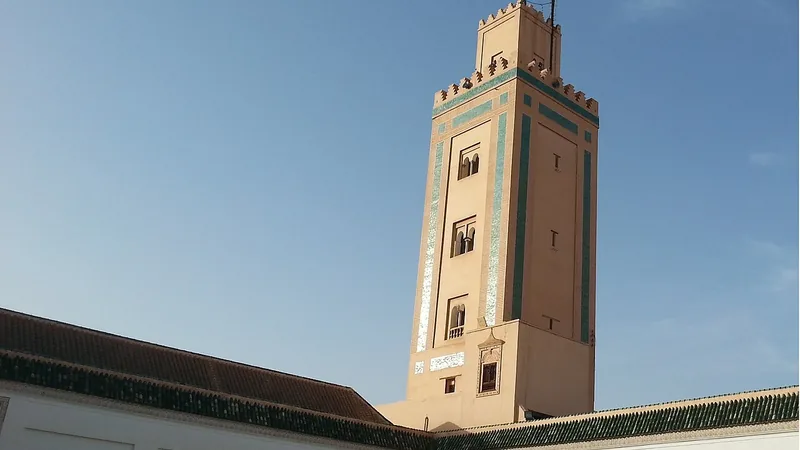
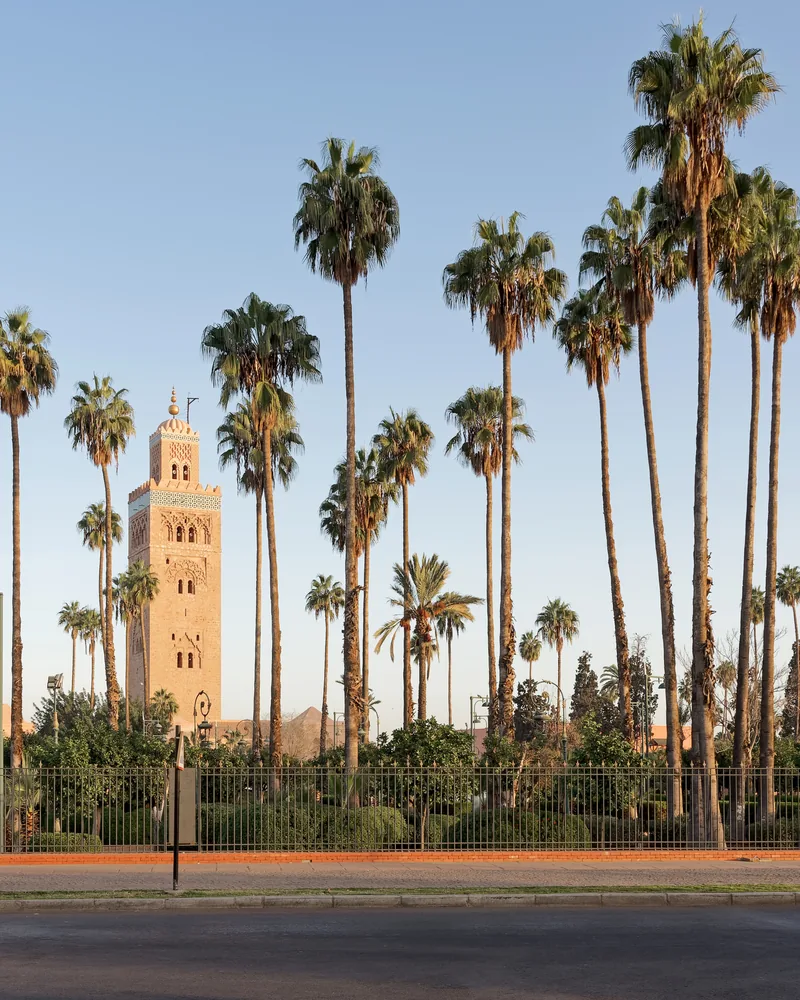
The Koutoubia’s square minaret in Marrakech.

Minaret

A tower associated with the call to prayer and a visible marker in the city. Square forms are prominent in Morocco, yet proportion and ornament differ from place to place.

Read the wider architecture →
Prayer hall of the Great Mosque of Salé; a context photograph, not a close-up of the mihrab.

Mihrab

A niche in the qibla wall marking the direction of prayer towards Mecca. Read it as an organising focus of the prayer hall; its treatment belongs to the history of each building.

Read the wider architecture →
Courtyard pavilion at Al-Qarawiyyin Mosque, Fès.

Sahn

The mosque courtyard: an open space that may be framed by arcades and connected to water. Light, movement and the relationship to the prayer hall make it an important part of the plan.

Read the wider architecture →
Interior of the Great Mosque of Salé.

Prayer Hall

The covered space where worshippers gather in rows oriented towards the qibla. Repeated supports and bays can give a hall its rhythm; scale and layout vary between mosques.

Read the wider architecture →
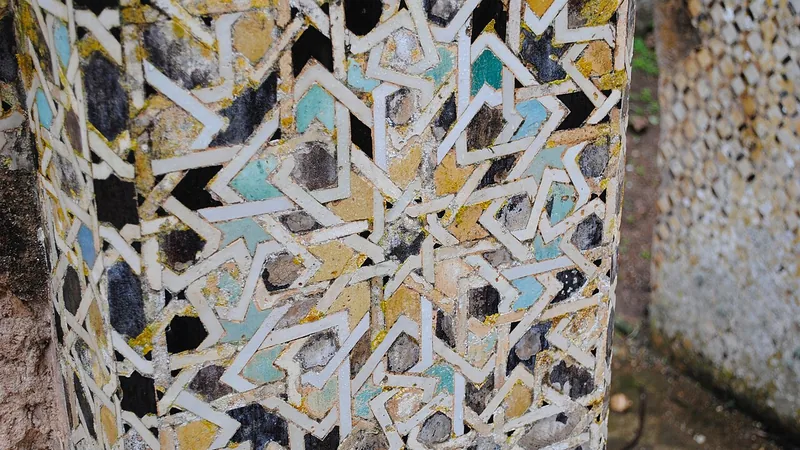
Marinid zellige surviving at the mosque in Chellah.

Zellige

Hand-cut pieces of glazed tile assembled into geometric compositions. Look at the relationship between colour, repeated shapes and the borders that fit a pattern to a wall, fountain or architectural surface.

Read the wider architecture →
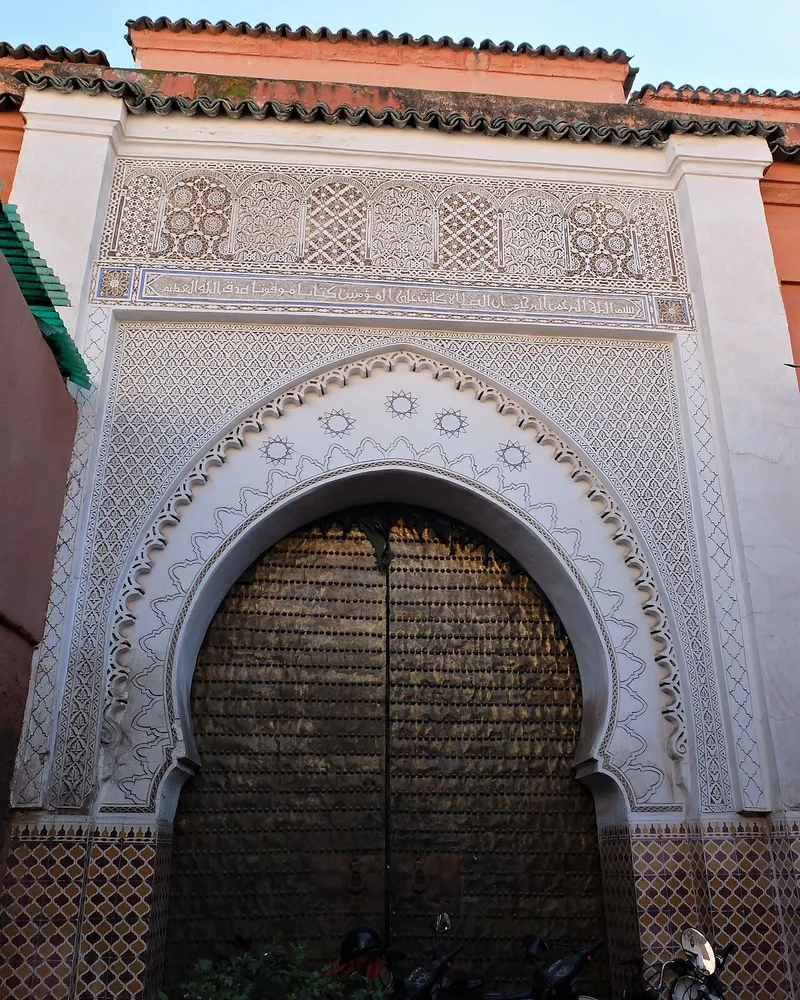
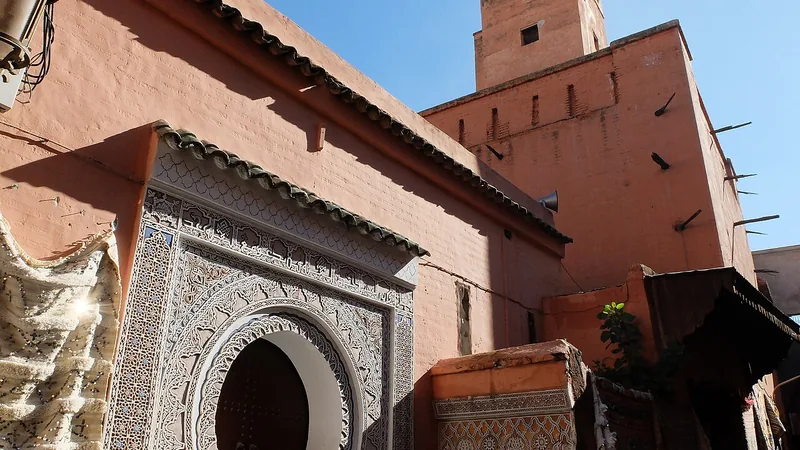
Carved stucco around the northern gate of Mouassine Mosque, Marrakech.

Carved Stucco

Carved plaster can frame arches, openings and upper walls with geometric, vegetal or epigraphic ornament. Its shallow relief catches the light differently from tile, giving a surface depth without the weight of carved stone.

Read the wider architecture →
Wooden canopy and carved stucco of a courtyard pavilion at Al-Qarawiyyin.

Cedar Woodwork

Cedar is associated with Moroccan architectural woodwork, including ceilings, doors and carved canopies. Observe how structure and ornament meet. A specific timber species or date needs evidence; a photograph alone cannot establish either.

Read the wider architecture →
Through time

Moroccan Mosques Through Time

Six dynastic bearings, many overlapping layers. Foundations, enlargements and restoration belong to different moments in a building’s life.

Sacred craft

The detail holds the place

A cut tile. An arch in shallow relief. A canopy that draws the eye towards a courtyard. Come closer to the work of the hand.

Close view of surviving Marinid geometric zellige at Chellah, Rabat.
Zellige · Chellah, Rabat
Carved stucco framing the northern entrance of Mouassine Mosque, Marrakech.
Stucco & threshold · Mouassine, Marrakech
Carved wooden canopy, stucco and courtyard pavilion at Al-Qarawiyyin Mosque in Fès.
Woodwork & light · Al-Qarawiyyin, Fès
Explore materials and making →
Mood

Find your way into the atmosphere

Choose what draws your attention, then let the place add its own meaning.

Collections

74 places.
A country of sacred architecture.

Explore by city, town or landscape. Open a collection to meet its mosques; regional collections name the settlements they represent. Card photography introduces the place, with mosque photographs identified inside.

Search also finds alternate spellings and mosque names.

74 collections

3 mosques · Local collection

City guide ↗

3 mosques · Local collection

City guide ↗

3 mosques · Local collection

City guide ↗

3 mosques · Local collection

City guide ↗

3 mosques · Local collection

City guide ↗

3 mosques · Local collection

City guide ↗

3 mosques · Local collection

City guide ↗

3 mosques · Local collection

City guide ↗

3 mosques · Local collection

City guide ↗

3 mosques · Local collection

City guide ↗

3 mosques · Local collection

City guide ↗

3 mosques · Local collection

City guide ↗

3 mosques · Local collection

City guide ↗

3 mosques · Local collection

City guide ↗

3 mosques · Local collection

City guide ↗

3 mosques · Local collection

City guide ↗

3 mosques · Local collection

City guide ↗

3 mosques · Local collection

City guide ↗

2 mosques · Local collection

City guide ↗

3 mosques · Local collection

City guide ↗

3 mosques · Local collection

City guide ↗

3 mosques · Local collection

City guide ↗

3 mosques · Local collection

City guide ↗

3 mosques · Local collection

City guide ↗

3 mosques · Local collection

City guide ↗

3 mosques · Local collection

City guide ↗

3 mosques · Local collection

3 mosques · Local collection

City guide ↗

3 mosques · Local collection

City guide ↗

3 mosques · Local collection

City guide ↗

3 mosques · Local collection

City guide ↗

3 mosques · Local collection

City guide ↗

3 mosques · Local collection

City guide ↗

3 mosques · Local collection

City guide ↗

3 mosques · Local collection

City guide ↗

3 mosques · Local collection

City guide ↗

3 mosques · Local collection

City guide ↗

3 mosques · Local collection

City guide ↗

3 mosques · Local collection

City guide ↗

3 mosques · Local collection

City guide ↗

3 mosques · Regional collection

City guide ↗

3 mosques · Local collection

City guide ↗

2 mosques · Local collection

City guide ↗

3 mosques · Local collection

City guide ↗

1 mosque · Local collection

City guide ↗

3 mosques · Local collection

City guide ↗

3 mosques · Local collection

City guide ↗

1 mosque · Local collection

City guide ↗

3 mosques · Regional collection

City guide ↗

1 mosque · Local collection

City guide ↗

3 mosques · Local collection

City guide ↗

2 mosques · Local collection

City guide ↗

2 mosques · Local collection

City guide ↗

3 mosques · Local collection

City guide ↗

2 mosques · Local collection

City guide ↗

3 mosques · Local collection

City guide ↗

3 mosques · Local collection

City guide ↗

2 mosques · Local collection

City guide ↗

3 mosques · Local collection

City guide ↗

3 mosques · Local collection

City guide ↗

3 mosques · Regional collection

City guide ↗

2 mosques · Local collection

City guide ↗

2 mosques · Local collection

City guide ↗

3 mosques · Local collection

City guide ↗

1 mosque · Local collection

City guide ↗

1 mosque · Local collection

City guide ↗

3 mosques · Local collection

City guide ↗

3 mosques · Local collection

City guide ↗

1 mosque · Local collection

City guide ↗

3 mosques · Local collection

City guide ↗

3 mosques · Local collection

City guide ↗

3 mosques · Local collection

City guide ↗

3 mosques · Local collection

City guide ↗

3 mosques · Local collection

City guide ↗
Continue exploring

Explore Moroccan Architecture

Let one sacred place open a wider world of medinas, routes, materials and the knowledge of making.

Sources, photographs & editorial notes

Reading the evidence

Historical statements draw on Morocco’s Ministry of Habous, UNESCO and the Hassan II Mosque Foundation. Local names and locations draw on official inventories, mapping, local reports and named mosque directories. Directory references support a name and place only, and are identified in each record. A local listing establishes identity and location; it does not establish a dynasty, date or architectural history.

Each mosque drawer provides its own references. Some collections contain fewer than three records where a name or a distinct third mosque could not be confidently established. Dates and dynasties appear only when supported. Photographs of historic buildings may predate later damage or restoration; current access must be checked locally.

Image credits

The hero is an original AI-generated conceptual courtyard, not a photograph or reconstruction of a named mosque. Its native master is 1672 × 941 pixels. Collection portraits introduce a city or landscape using Exotic Morocco’s existing editorial library; Berrechid uses the labelled conceptual courtyard. Documentary mosque images below retain their original licences.

Local mapping data: © OpenStreetMap contributors · ODbL. Individual map references appear in the relevant records.