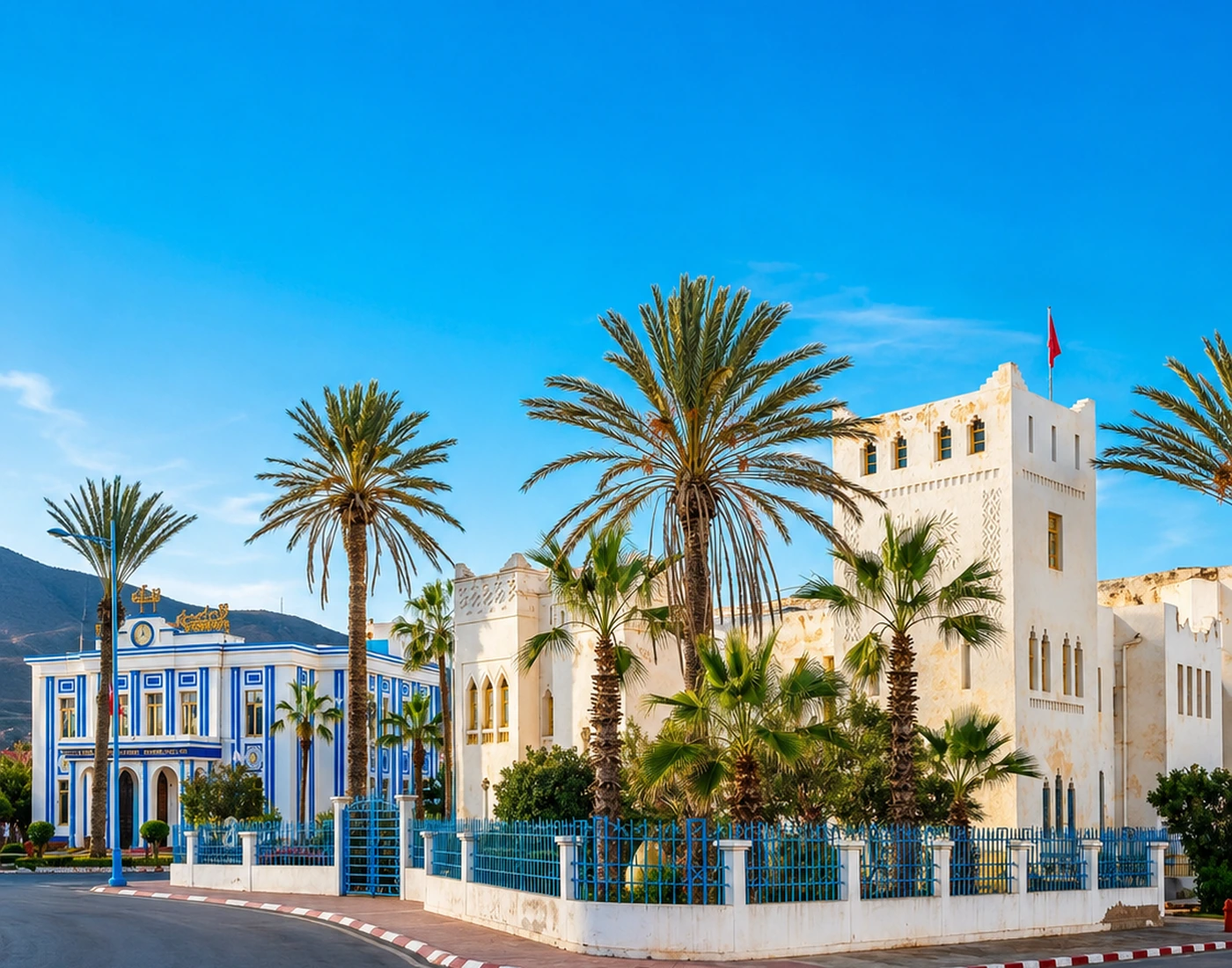
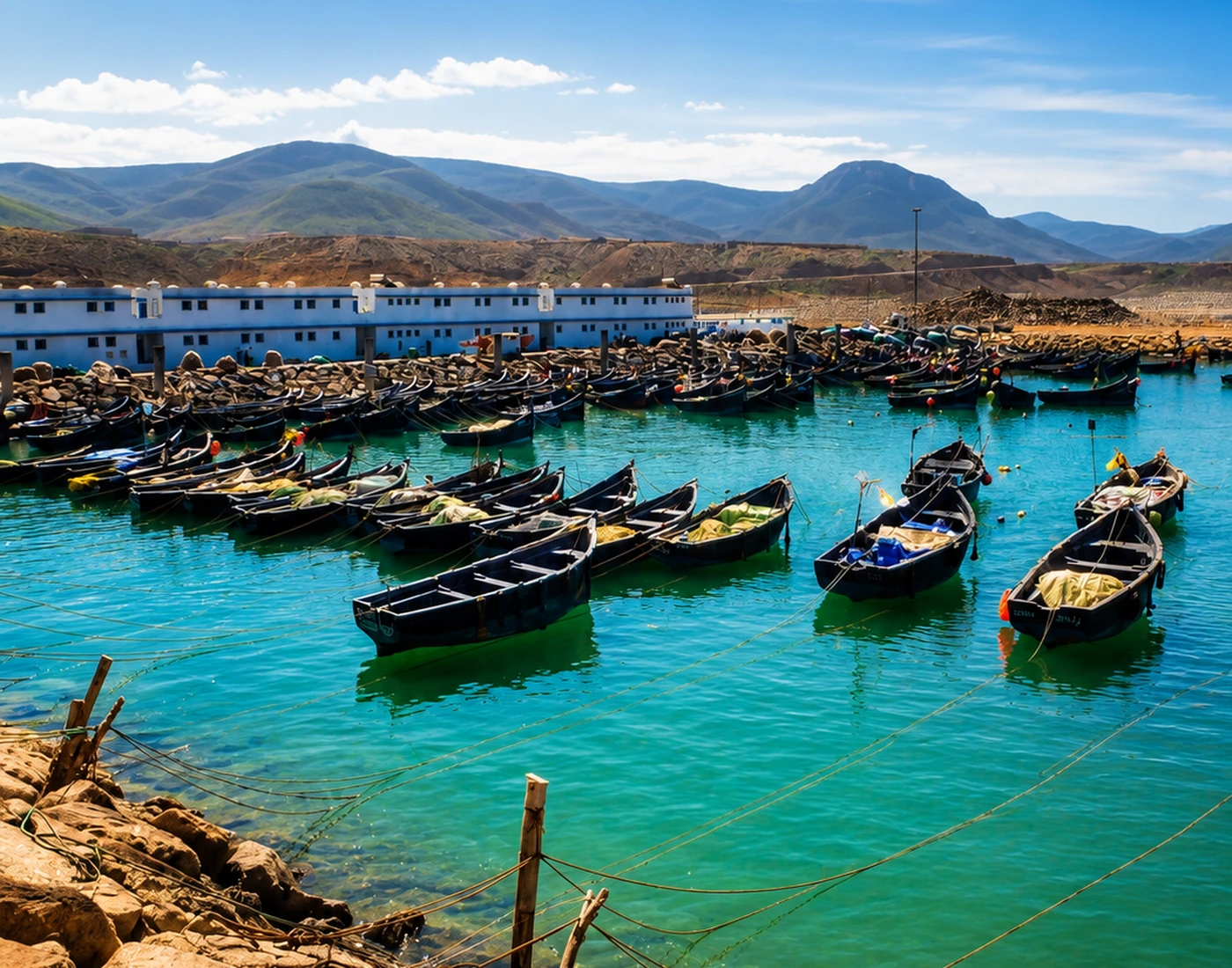
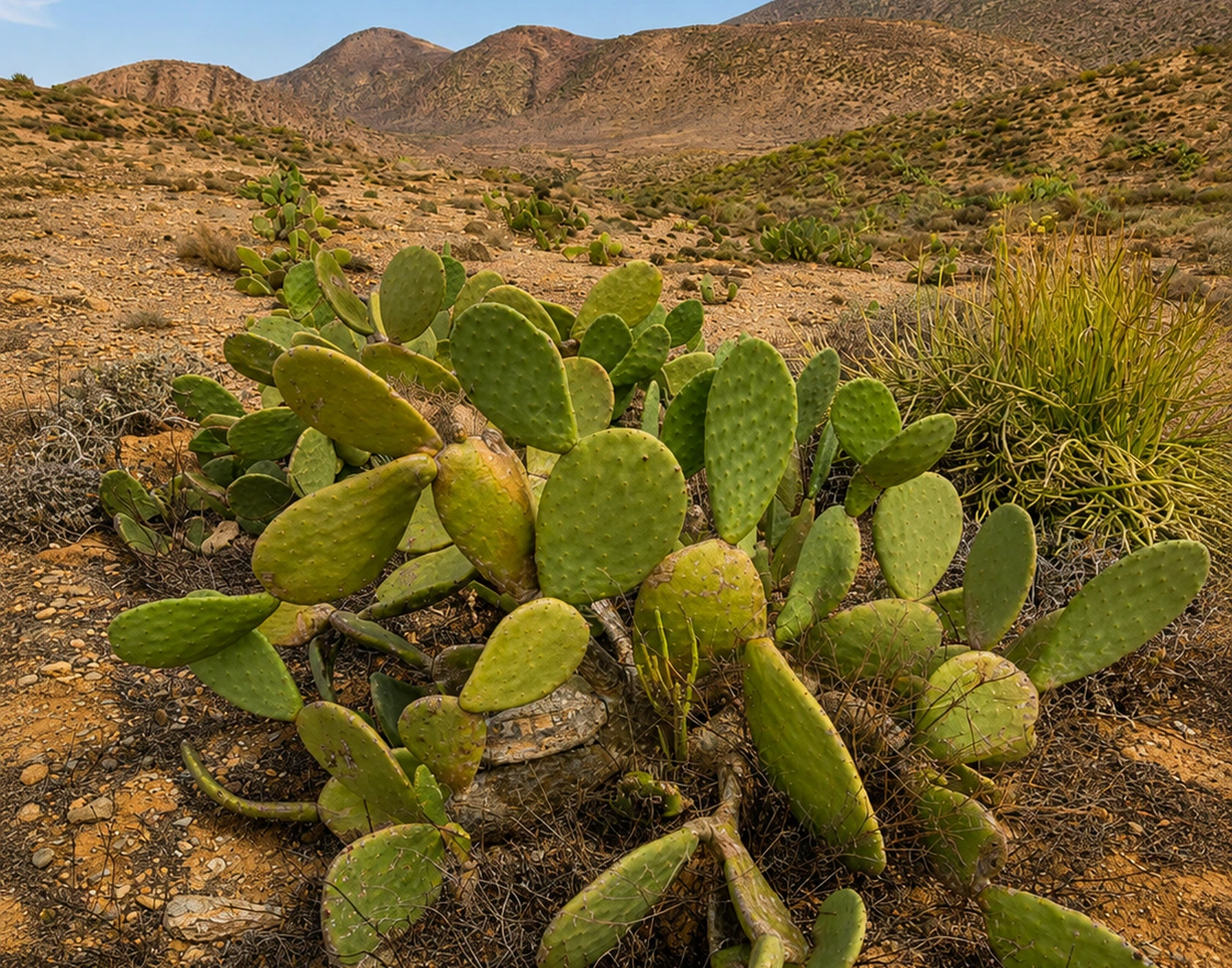
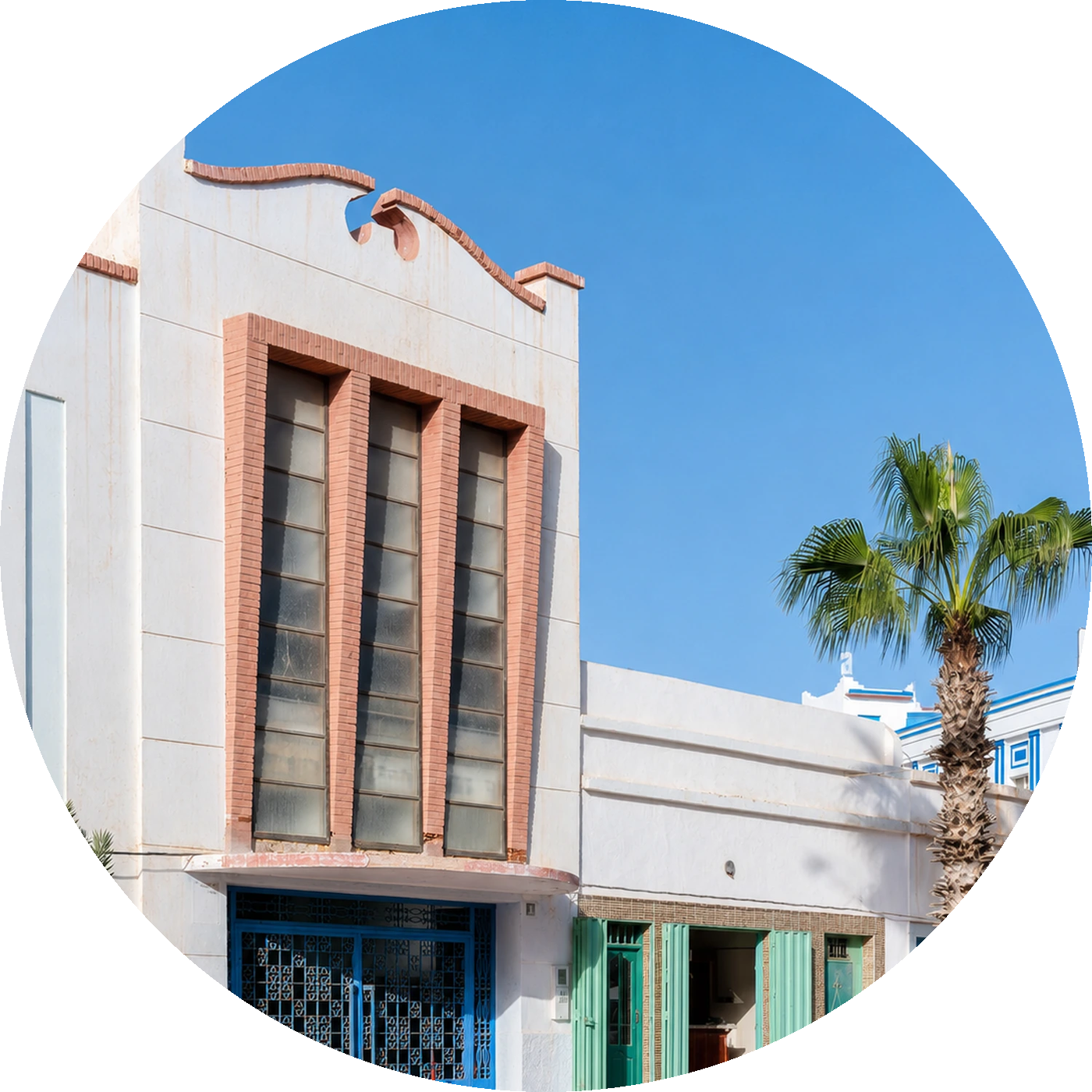
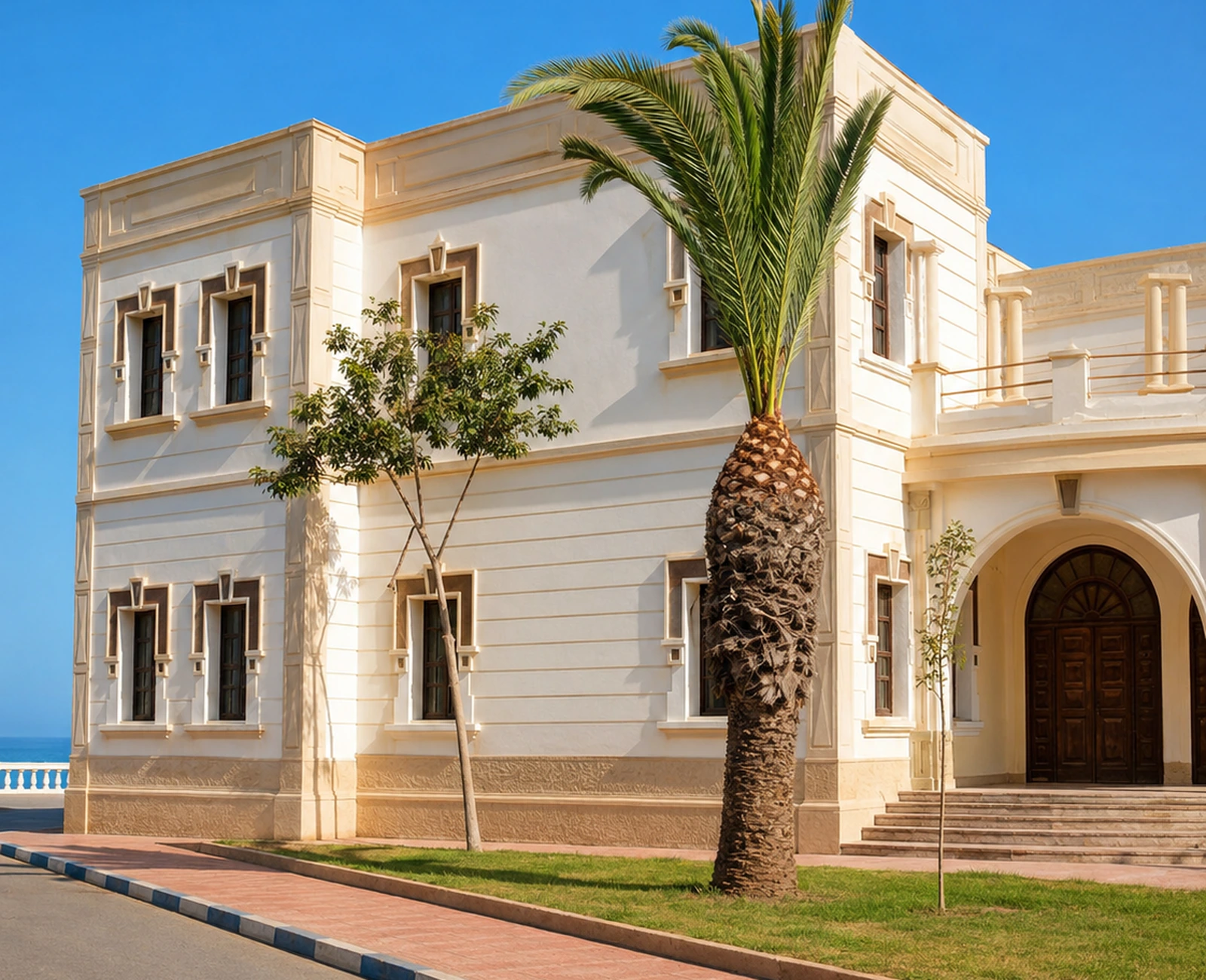
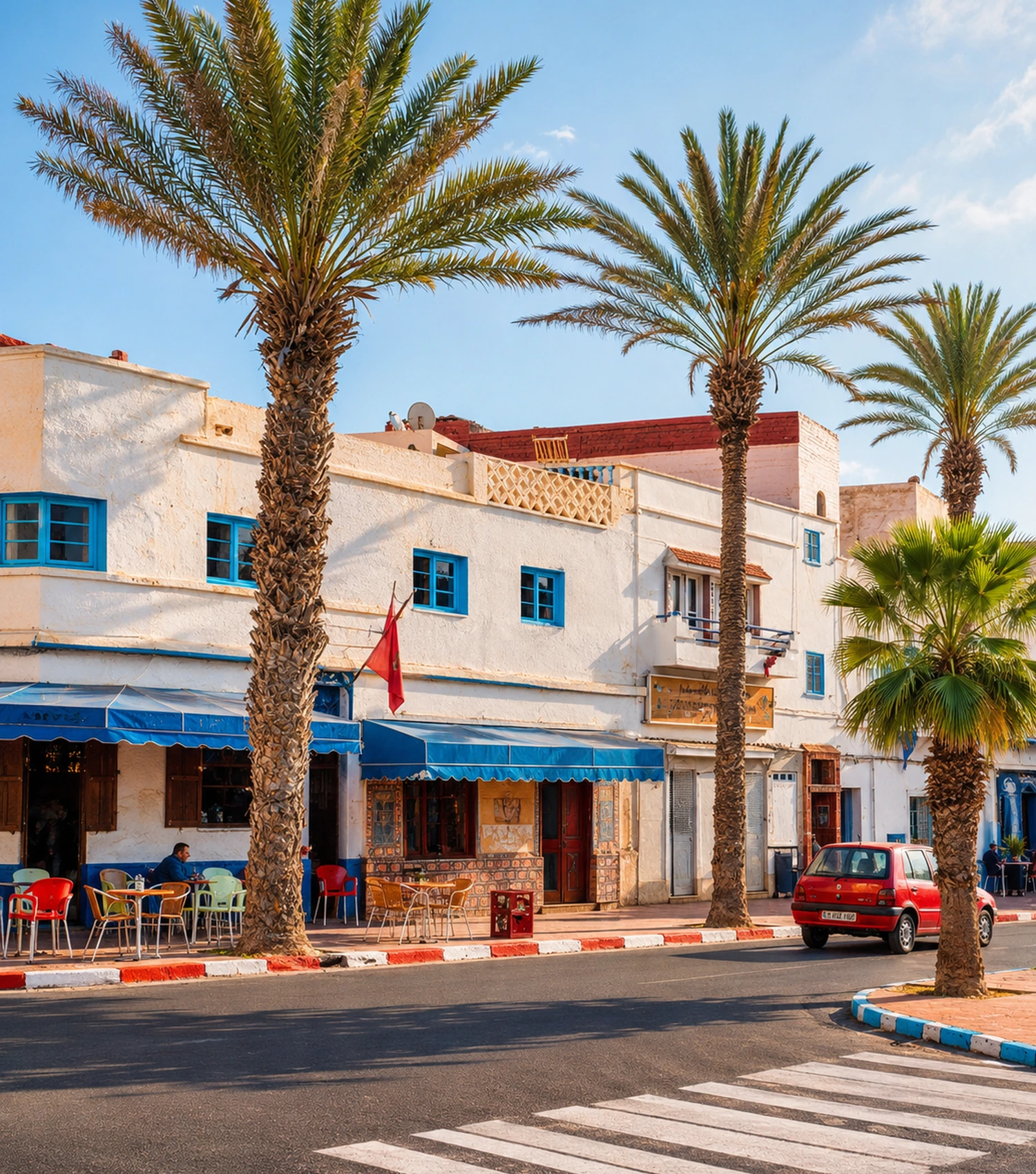
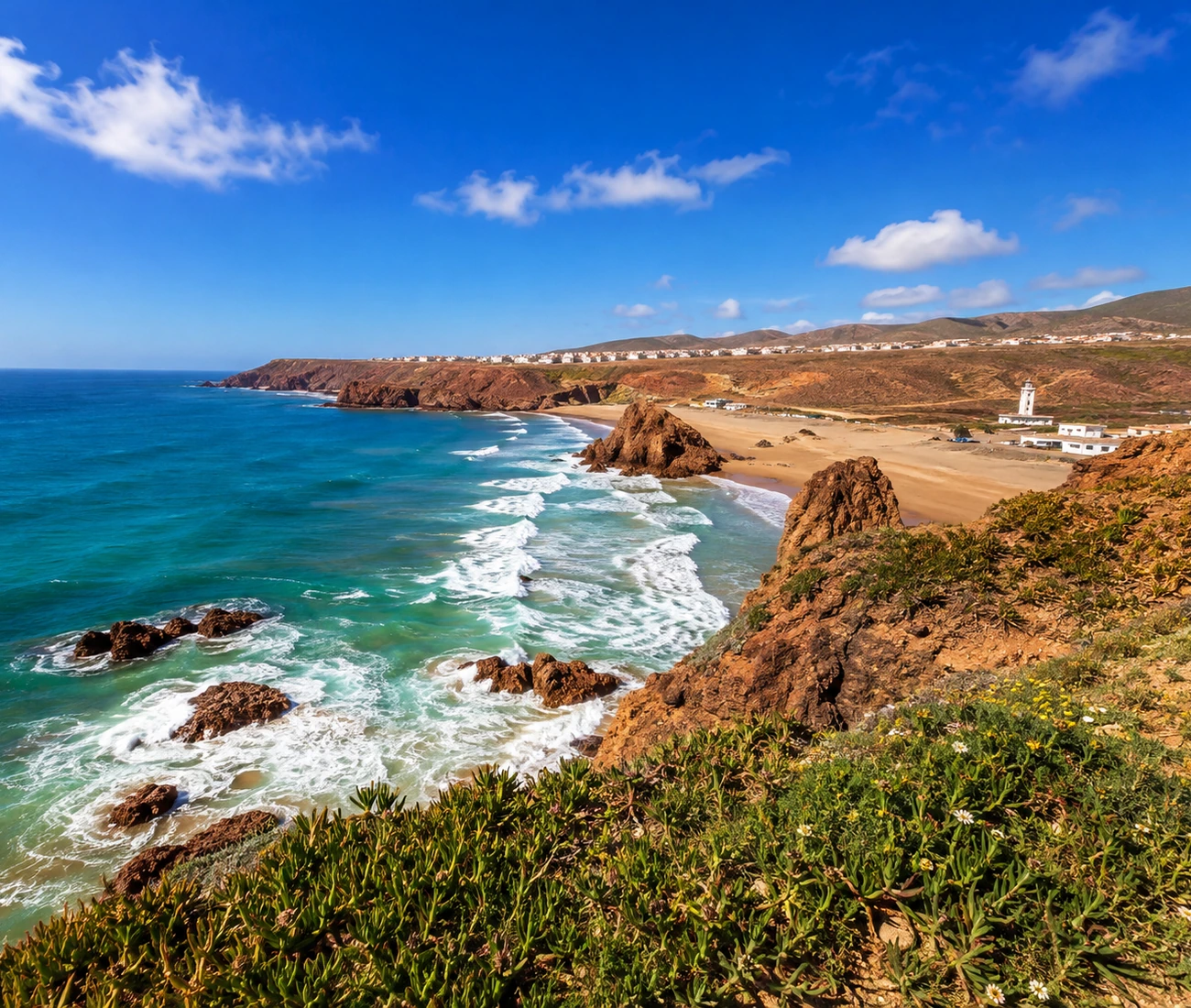
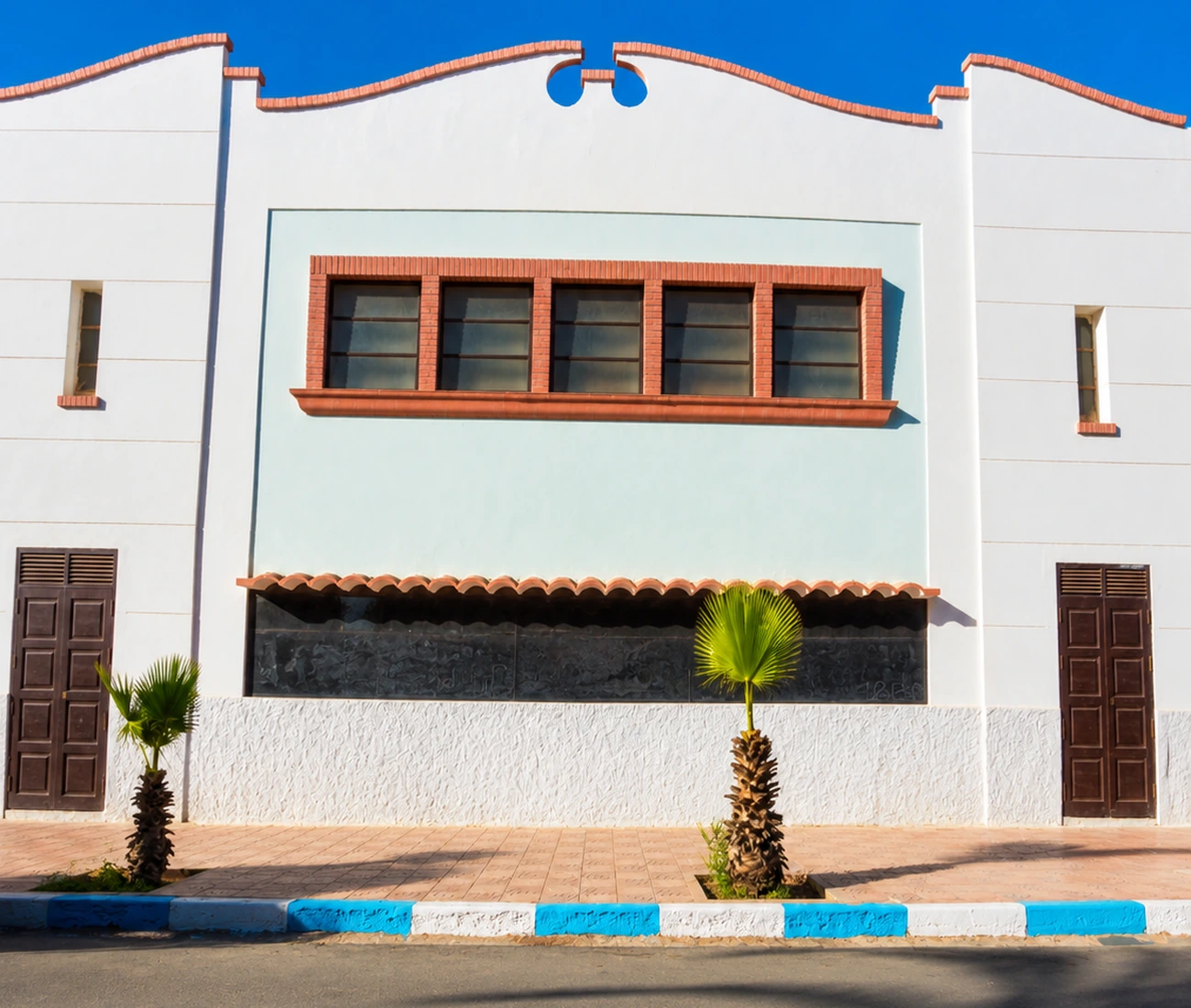
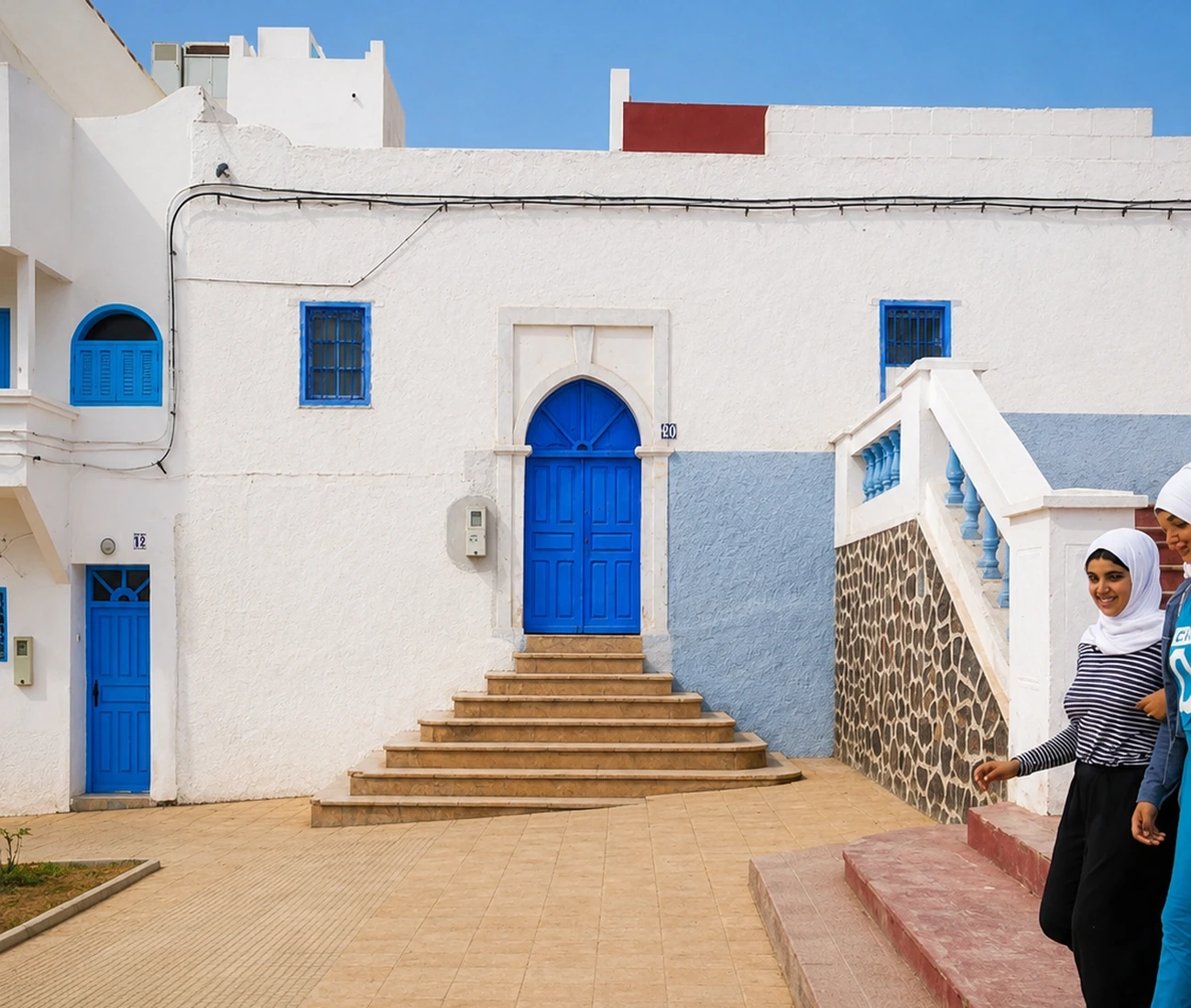
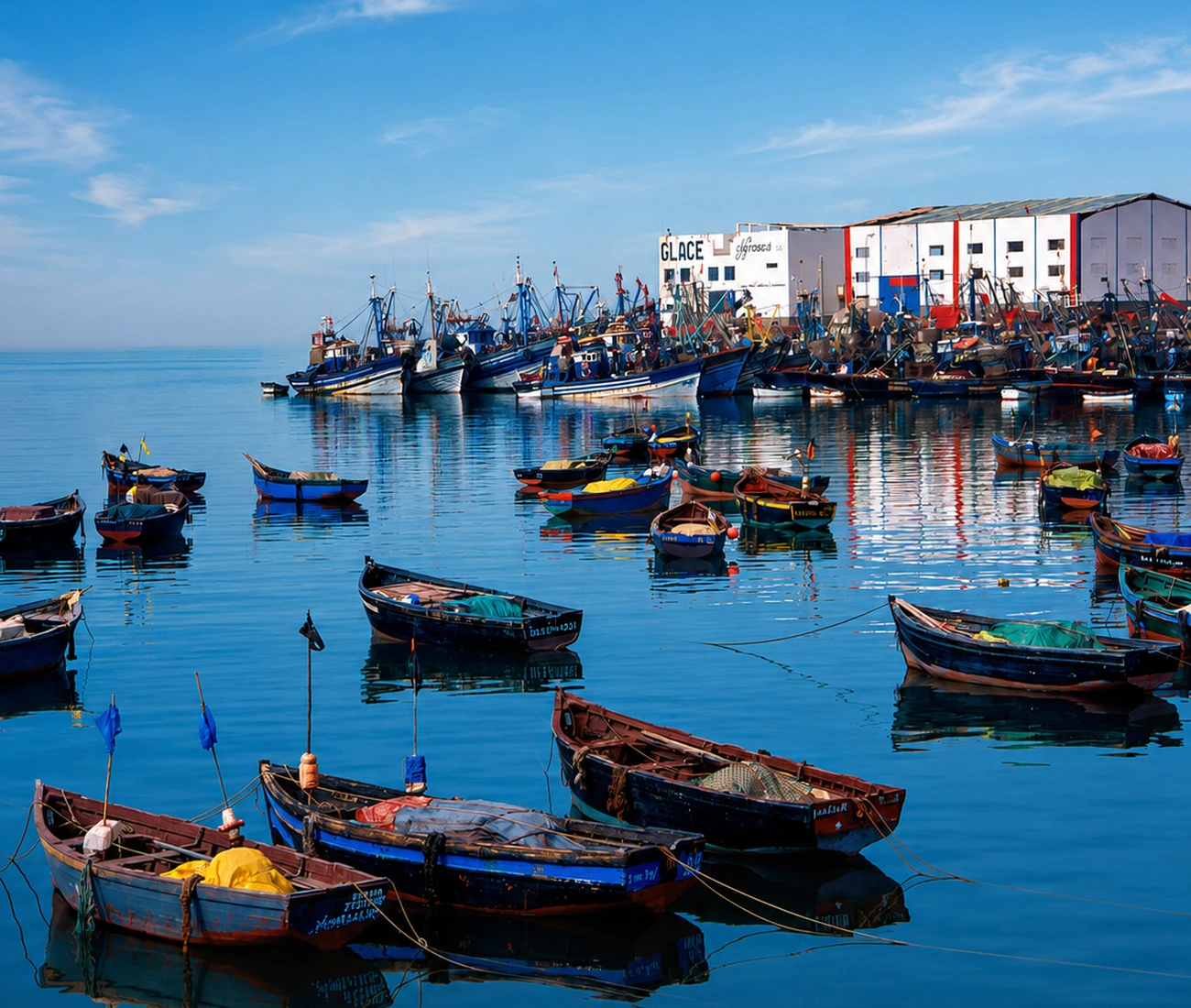
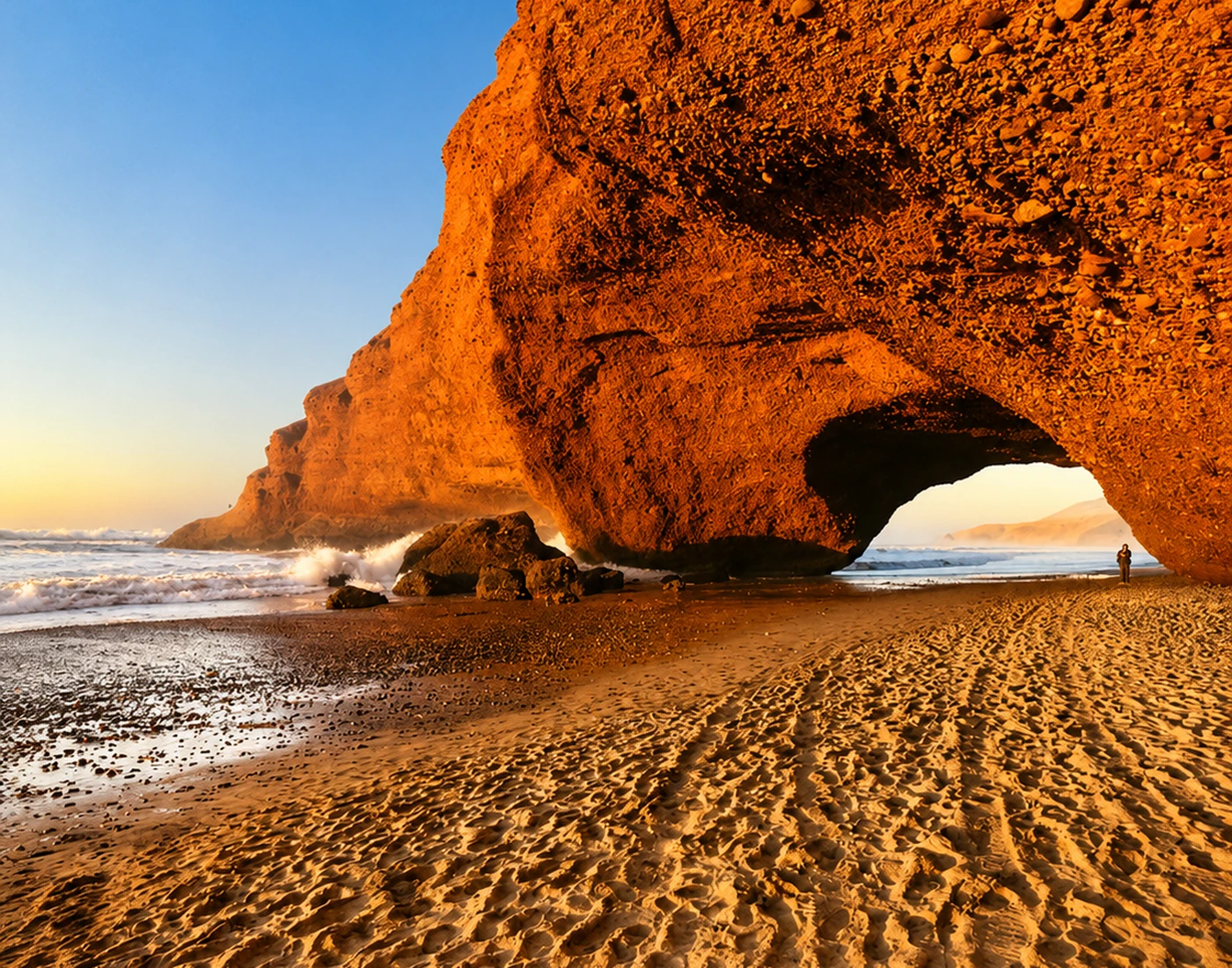
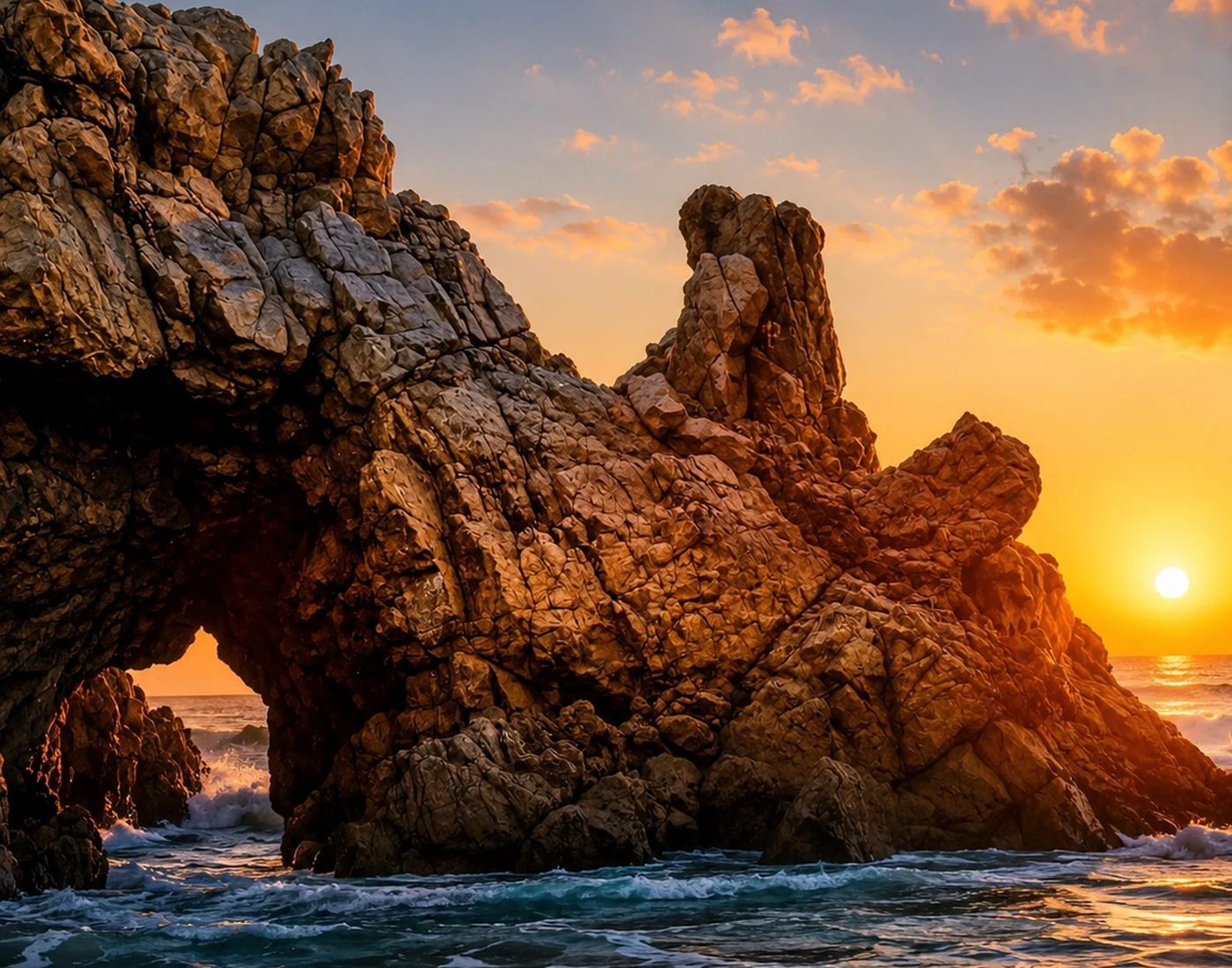
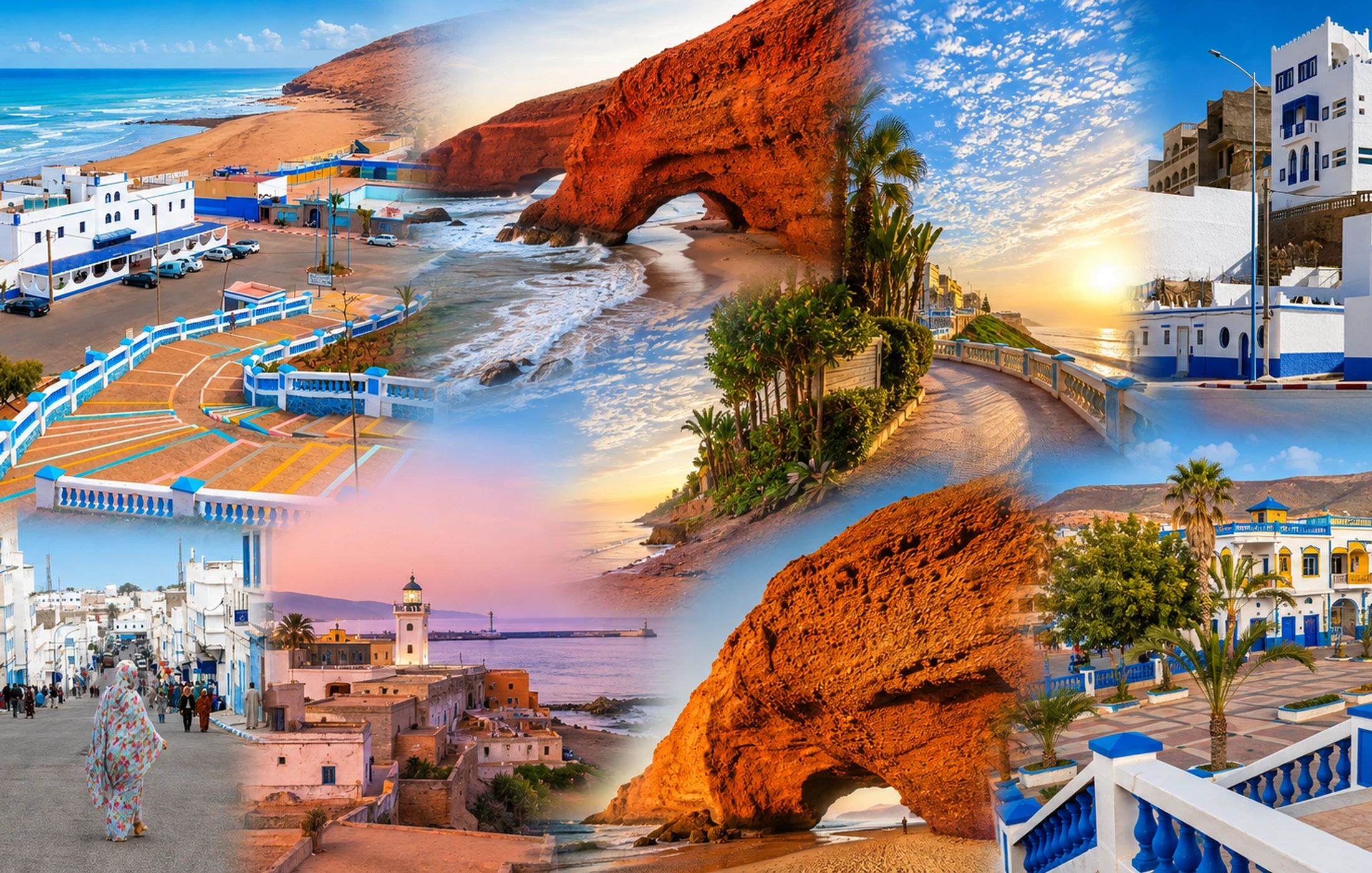
Composite hero view of Sidi Ifni with Atlantic coast, Legzira arches, blue-white promenades and town scenes

Southern Atlantic city

Sidi Ifni Art Deco memory, Atlantic cliffs and quiet coastal rhythm

Sidi Ifni sits above the Atlantic in Morocco’s deep southwest, where blue-and-white Spanish-era façades, a working fishing port, broad beaches and Anti-Atlas light create a city unlike Morocco’s coastal or town-centre-first destinations. It is best read slowly: through architecture, sea air, local movement and the road south.

Why Sidi Ifni matters

Where Art Deco meets the Atlantic

Sidi Ifni matters because it keeps a very specific twentieth-century layer visible on Morocco’s southern Atlantic coast. Around Place Hassan II, civic façades, curved lines, blue-and-white details and ocean-facing streets recall the former Ifni period without turning the city into an open-air museum.

Its appeal is quiet rather than theatrical. The town moves between cliffs, beach paths, fishing activity, cafés, municipal buildings and routes toward Mirleft, Legzira, Tiznit and Guelmim. That mix makes Sidi Ifni feel coastal, regional and historically distinct.

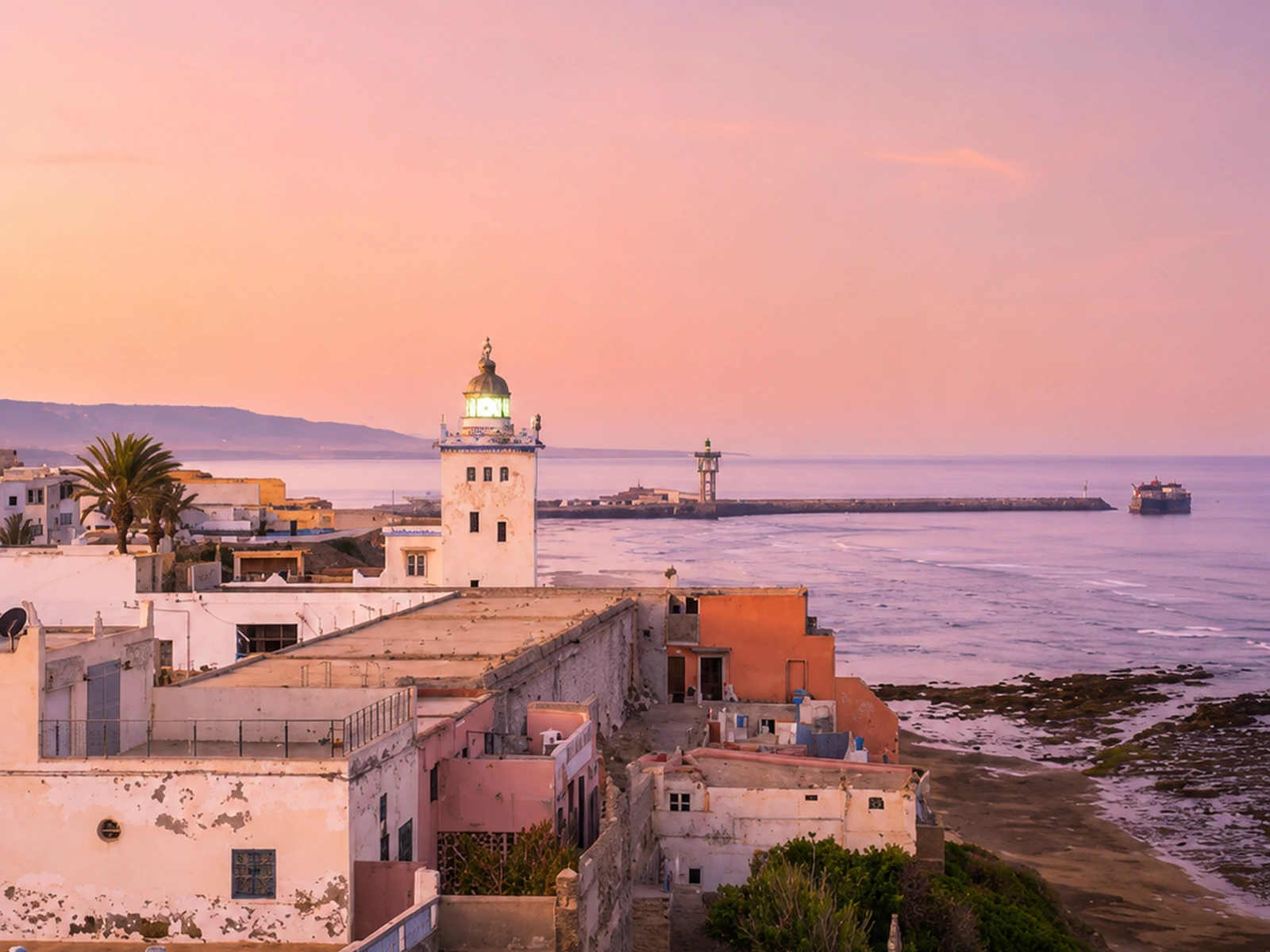
The lighthouse and Atlantic edge at Sidi Ifni in evening light

A coastal city with a different memory

Sidi Ifni is not defined by coastal walls or a dense old town centre; its identity is read through planned streets, Art Deco traces, the Atlantic edge and a lived fishing-town rhythm.

EXPLORE

Sidi Ifni

Historical orientation

From Ifni memory to Moroccan coastal city

Sidi Ifni’s modern townscape is tied to the former Spanish-administered territory of Ifni. Earlier coastal memories are associated with Santa Cruz de la Mar Pequeña, but the city visitors read today took shape mainly from the 1930s, when Spanish occupation and administration gave the centre its planned civic character. Since its return to Morocco in 1969, Sidi Ifni has become a southern Atlantic town within the Guelmim-Oued Noun region, shaped by fishing, local agriculture, beaches and coastal tourism.

01Earlier coastal memory

Atlantic contact zone

The name Ifni is tied to older coastal histories and Iberian ambitions on Morocco’s Atlantic edge, but the visible urban fabric of Sidi Ifni belongs mostly to the modern period.

021934

Spanish occupation and planning

From the 1930s, Sidi Ifni developed as the administrative centre of the Ifni territory, giving the town its grid, civic square, public buildings and blue-white Spanish-era architectural layer.

031957–1969

Ifni question and handover

After Moroccan independence, Ifni remained a contested Spanish-held enclave before Spain and Morocco agreed on its return. The transfer was completed on 30 June 1969.

04Today

Southern Atlantic Morocco

Today Sidi Ifni is the capital of its province, connected to the Guelmim-Oued Noun coast, the Anti-Atlas hinterland, fishing activity and beaches such as Sidi Ifni, Mirleft and Legzira.

A visual bridge

Three glimpses between ocean, architecture and route

These three visual ideas connect the city’s story to the way it is experienced on foot: blue-white façades, the Atlantic cliff line and the long southern road through beach towns and Anti-Atlas edges.

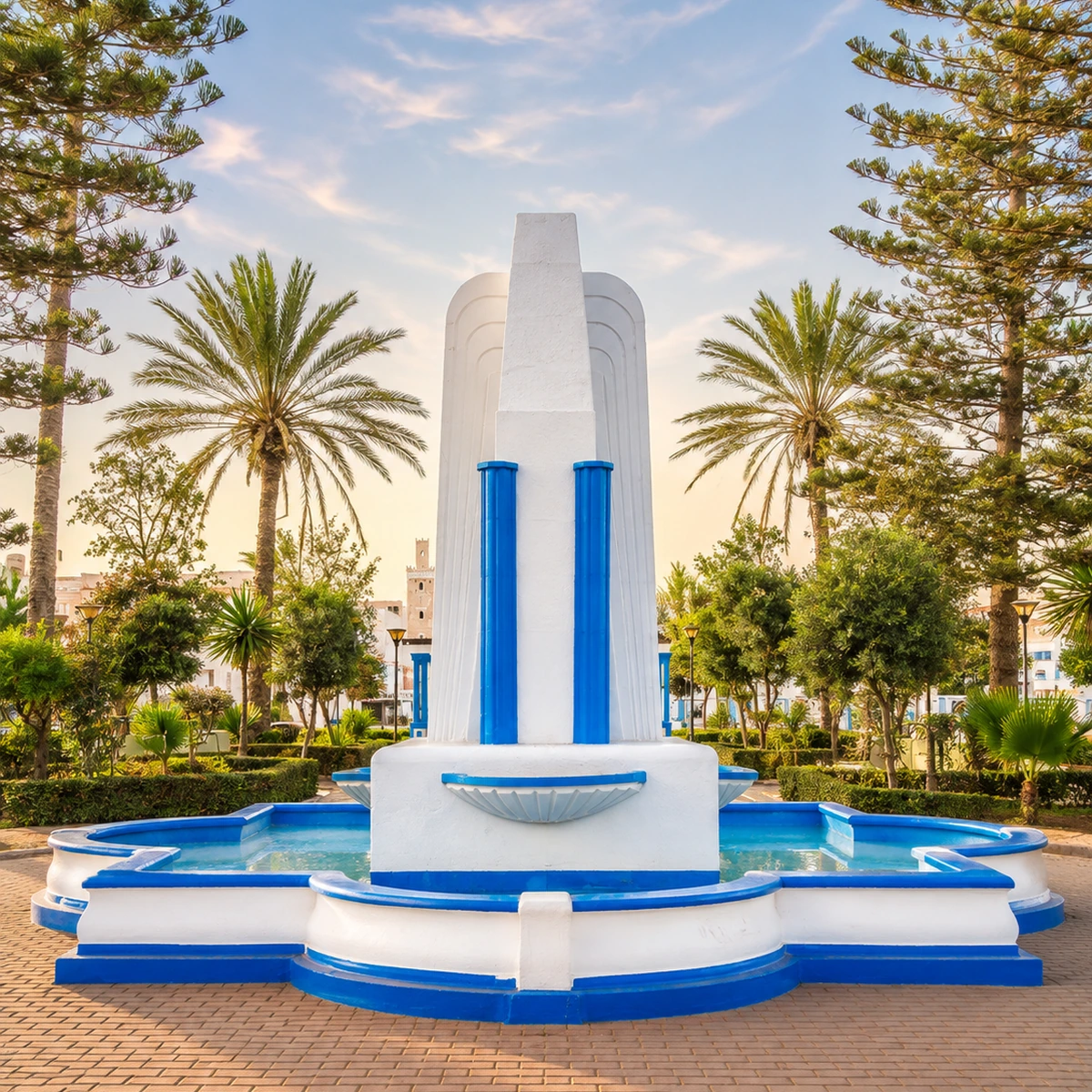
Blue-and-white fountain detail in a palm-lined square in Sidi Ifni

Art Deco memory

Civic façades, curved profiles and blue details give Sidi Ifni a vocabulary unlike Morocco’s older town centre cities.

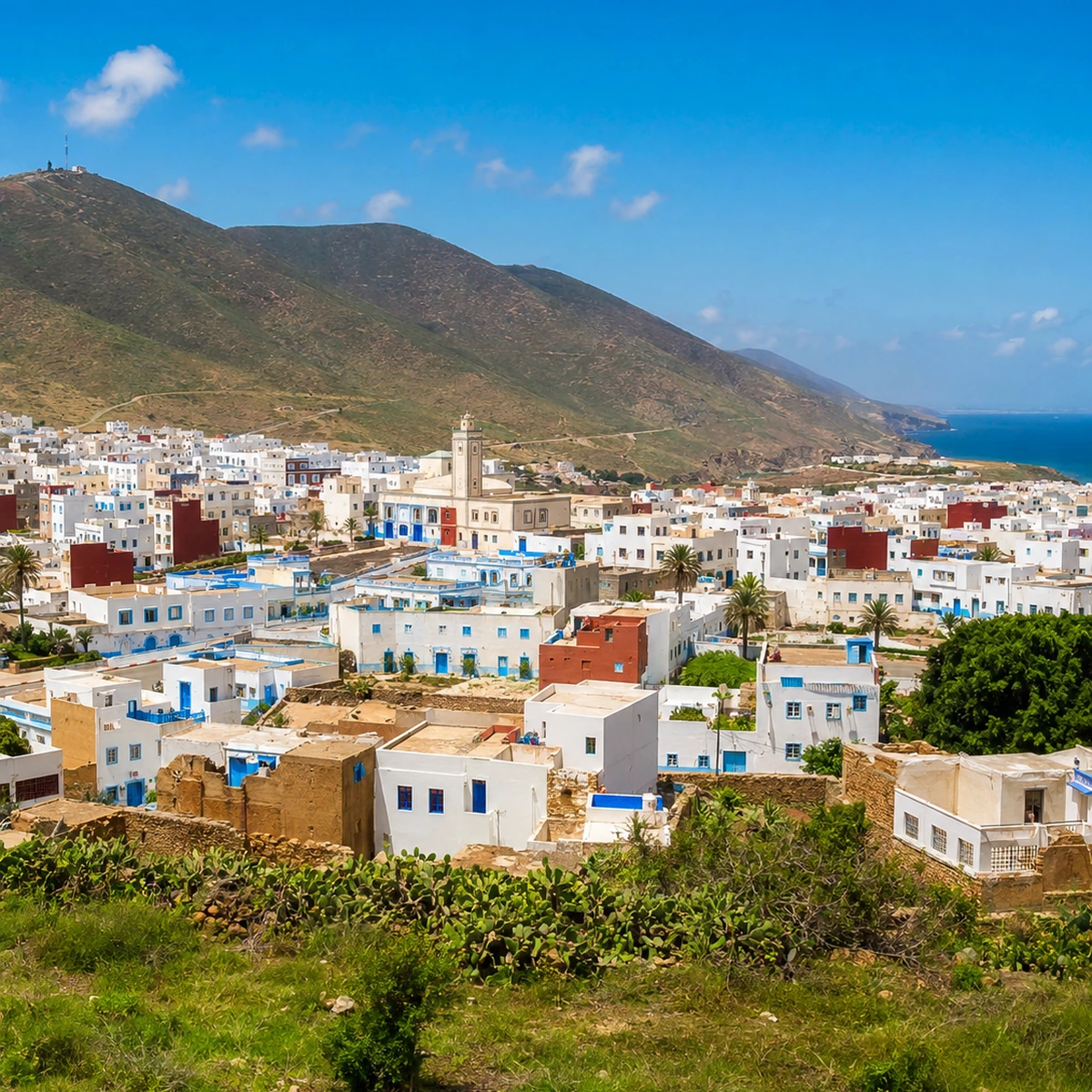
Panoramic view across Sidi Ifni toward the Atlantic and surrounding hills

Atlantic cliff line

The town is read from above and below: plateau streets, sea wind, cliffs, beach paths and long horizontal light.

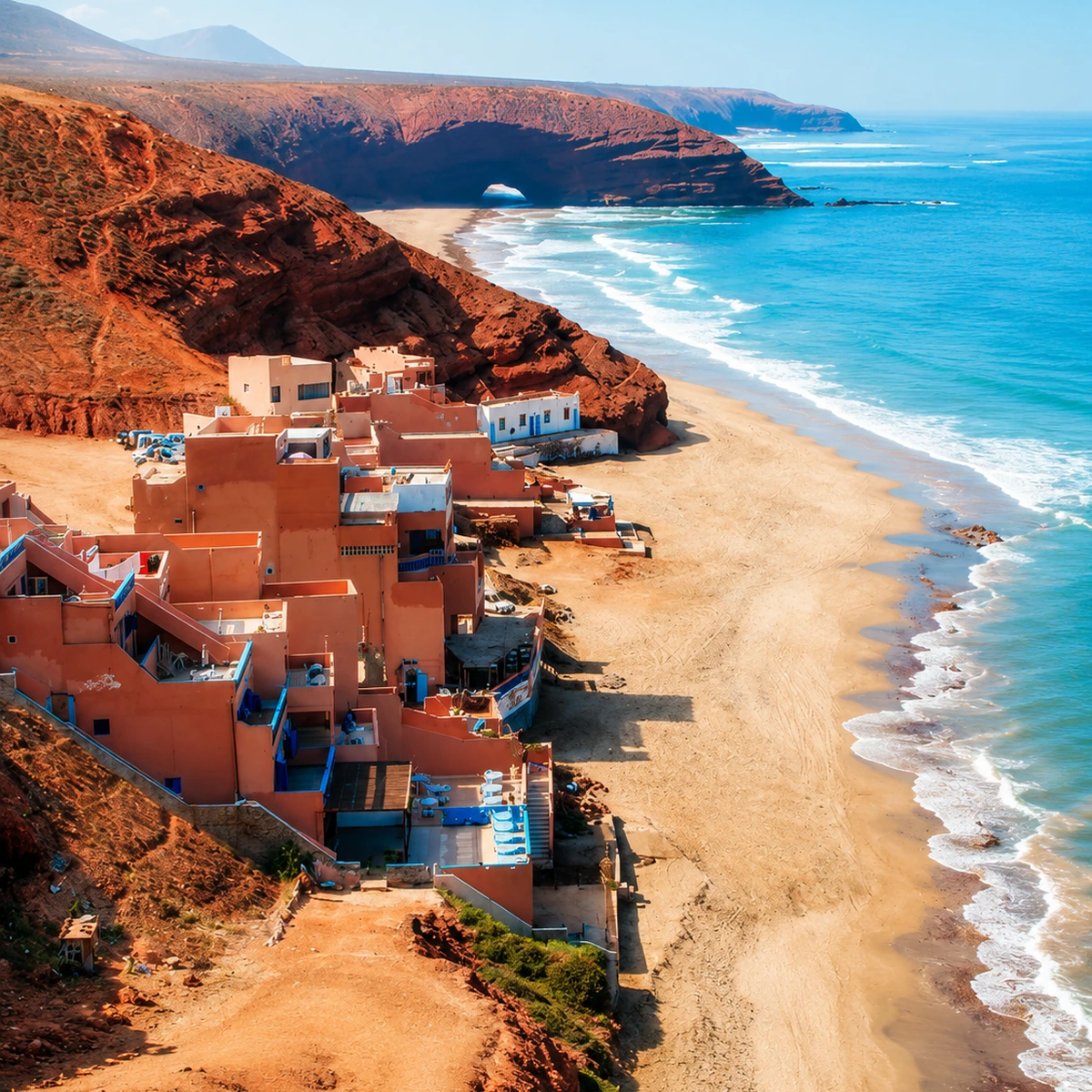
Red cliffs and beachfront buildings south of Sidi Ifni near Legzira

Southern coast route

Sidi Ifni belongs naturally to a wider road journey between Tiznit, Mirleft, Legzira and Guelmim.

Sidi Ifni at a glance

Spanish-era coastal memory

Sidi Ifni’s most distinctive visual layer is its former Ifni-period town centre: a planned civic square, blue-and-white façades, municipal buildings and Art Deco details that remain part of everyday urban life.

Atlantic plateau and port

The town sits by the Atlantic and works with the sea rather than merely looking at it. Fishing, beach paths, sea wind and port movement are essential to the city’s rhythm.

Quiet, not empty

Sidi Ifni is calmer than Morocco’s major coastal destinations, but it is not a blank postcard. Its value lies in ordinary streets, cafés, public buildings, local markets, sea light and slow observation.

A southern route anchor

The city pairs naturally with Mirleft, Legzira, Tiznit and Guelmim, making it a strong stop for travellers following the Anti-Atlas and southern Atlantic corridor.

A clearer reading of the city

A city shaped by ocean, memory and everyday calm

To understand Sidi Ifni, read three layers together: the Spanish-era civic centre, the working Atlantic edge and the wider rural-coastal world of the province. None is complete without the others.

Spanish-era civic architecture and palm-lined streets in Sidi Ifni
Layer 1

Spanish-era plan

Around Place Hassan II, the town’s planned street logic and public façades make architecture the first layer of orientation.

Traditional fishing boats in the harbour at Sidi Ifni
Layer 2

Fishing and coast

The Atlantic is not scenery alone. Port movement, beaches, wind and the town’s clifftop position keep daily life tied to the sea.

Cactus landscape in the arid hinterland around Sidi Ifni
Layer 3

Hinterland and produce

Beyond the town, the province is known for agriculture, including prickly pear landscapes, and for routes that connect the coast with Anti-Atlas communities.

Landmarks & orientation

Read Sidi Ifni through six defining places

Sidi Ifni is compact, but its meaning is spread across civic architecture, sea views, working maritime spaces and the coastal route. These six places give a clear first reading without forcing the town into another Moroccan city’s frame.

1
Place Hassan II

The central civic square, formerly the Spanish plaza, anchors the town’s planned urban memory and daily public life.

2
Former Spanish Consulate

One of Sidi Ifni’s clearest Spanish-era façades, associated with the administrative life of the former Ifni period.

3
Municipal building

A blue-and-white civic landmark facing the square, useful for reading the town’s Art Deco and regional-modern vocabulary.

4
Cinema Avenida

A former cinema that preserves the cultural memory of the Spanish-era centre and its public entertainment architecture.

5
Sidi Ifni beach and cliffs

The beach below the town gives scale to the clifftop settlement and explains why the city is inseparable from Atlantic light and wind.

6
Port, lighthouse and promenade

The maritime edge connects work, orientation and evening walking, from fishing activity to the lighthouse and ocean horizon.

Former Spanish Consulate in Sidi Ifni shown as a circular landmarks image
A white civic villa with sea-facing light in Sidi Ifni

A civic key

Former Spanish Consulate — civic memory beside Place Hassan II

The former Spanish Consulate, also associated with the administrative and financial life of Ifni, helps explain why Sidi Ifni feels so different from many Moroccan coastal towns. Its façade belongs to a modern civic language: blue and white surfaces, measured arches, geometric restraint and an Atlantic openness that can be read from the surrounding square and streets. Seen carefully, it is not only a building; it is a key to the town’s twentieth-century memory.

Read the building together with Place Hassan II and the neighbouring civic ensemble. It makes most sense not as an isolated photo stop, but as part of the planned urban centre that gave Sidi Ifni its distinct architectural rhythm on the Atlantic edge.

  • Read the façade with the nearby civic buildings rather than as an isolated monument.
  • Notice the blue-white palette, curved edges and geometric details that recur through the centre.
  • Pair the architecture with the sea edge to understand how Sidi Ifni balances memory and daily use.

Architectural reading

Three architectural languages to notice

Civic geometry

Sidi Ifni speaks through planned streets, square-facing façades, municipal buildings and a public architecture that is more twentieth-century civic than medieval town centre. The rhythm is visible in clean edges, symmetrical fronts, terraces and measured openings.

Blue-white coastal palette

Colour matters here. White surfaces catch the Atlantic light while blue trim, railings and doors give the town its recognisable coastal identity. The palette is practical, graphic and deeply tied to the city’s visual memory.

Everyday reuse

Many buildings are not preserved as museum pieces. They remain part of ordinary urban life: walked past, repaired, weathered, adapted and lived with. That everyday reuse gives Sidi Ifni its quiet authenticity.

Visual atmosphere

White façades, red cliffs and Atlantic air

Nearby highlights

Nearby coast, towns and route extensions

Sidi Ifni works best as part of a southern Atlantic journey. Keep the town itself slow, then extend north toward Mirleft and Legzira or inland toward Tiznit and Guelmim depending on the wider route.

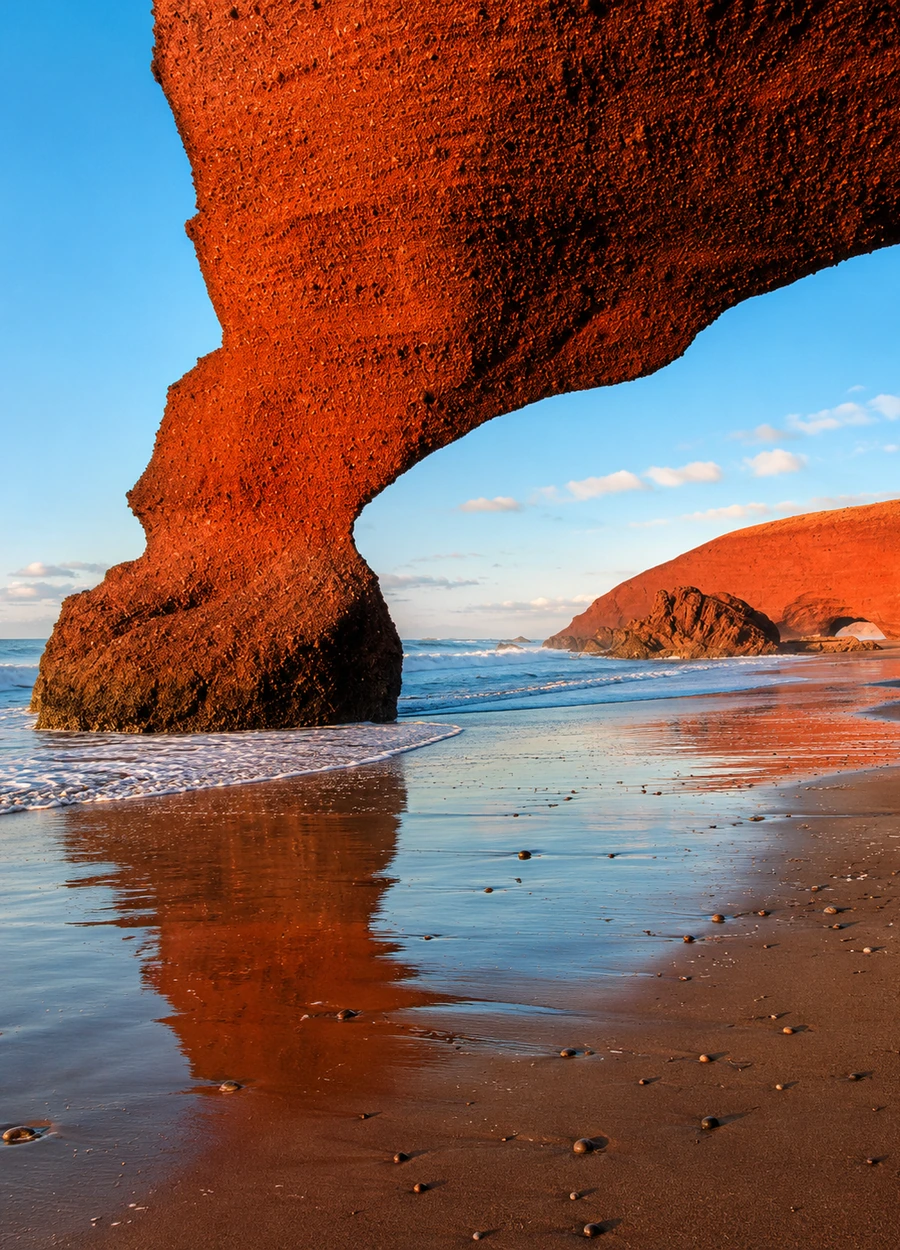
Legzira Beach

Known for red sandstone cliffs and a dramatic Atlantic shoreline, Legzira is a natural extension from Sidi Ifni. Conditions, tides and access can change, so treat it as a landscape to approach carefully rather than a quick photo stop.

Legzira Beach sandstone arch near Sidi Ifni

Mirleft

North of Sidi Ifni, Mirleft gives the route a slower beach-town rhythm: surf beaches, small cafés, coastal viewpoints and a softer approach to the Anti-Atlas edge.

Rocky Atlantic shoreline near Mirleft at sunset

Tiznit and Guelmim route

Tiznit connects the coast to walled-town and craft traditions, while Guelmim opens the journey toward the wider southern region. Together they help place Sidi Ifni within a broader road itinerary.

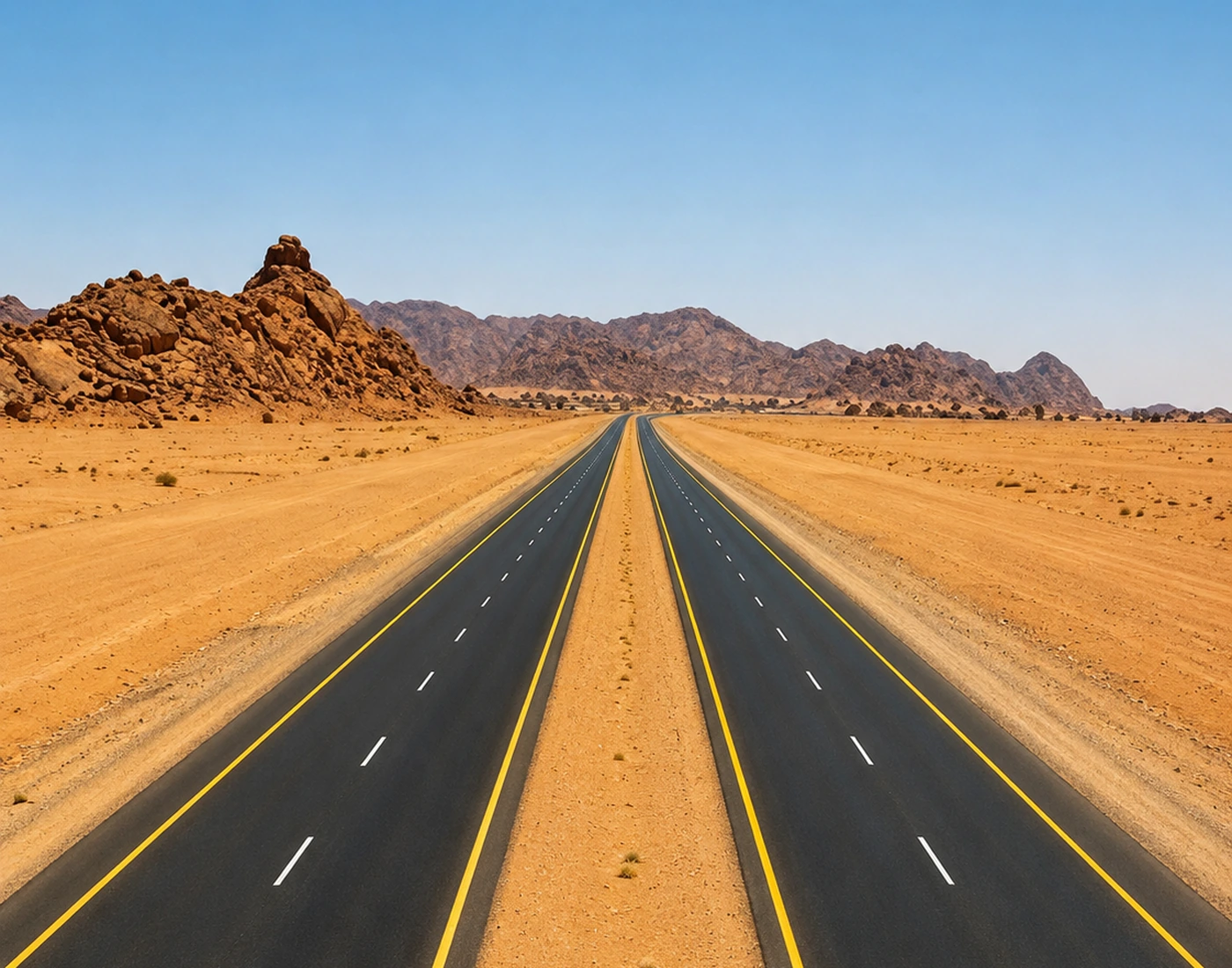
Open road through southern Moroccan landscapes on the route from Sidi Ifni
Travel note: weather, surf, wind, road conditions, beach access, restoration work and local visitor arrangements can change. Check current official or trusted local information before travelling.

Practical orientation

How to experience Sidi Ifni well

  • Start around Place Hassan II before walking outward through the blue-and-white streets.
  • Read the Spanish-era buildings slowly; the detail is in façades, corners, doors and civic scale.
  • Continue to the Atlantic edge for cliffs, beach light, the port area and evening atmosphere.
  • Separate the town visit from Legzira and Mirleft so each landscape has enough time.
  • Use respectful photography, especially around markets, port activity and everyday residential streets.

A strong first visit

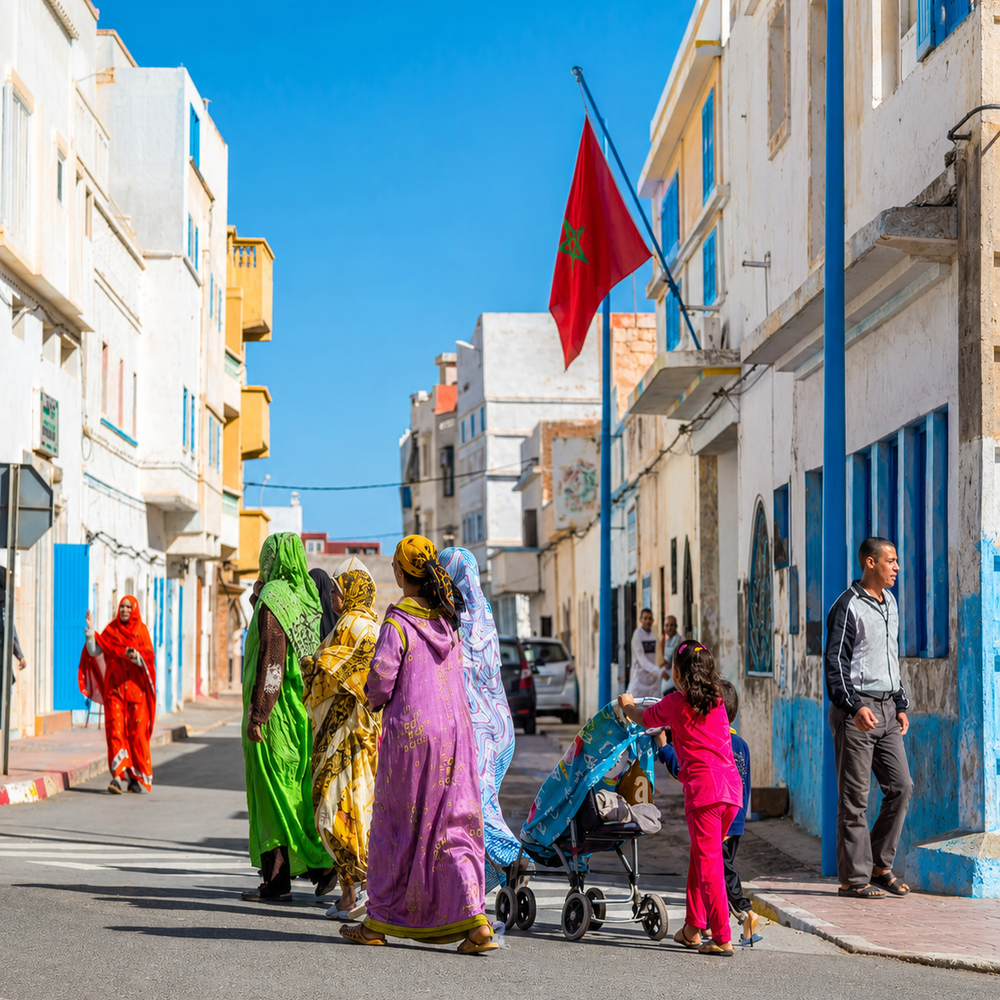
Street life in Sidi Ifni with blue-white façades and a Moroccan flag

Begin in Place Hassan II, read the former Spanish-era buildings around the civic centre, continue toward the cliff and lighthouse area, then descend toward the beach or port when conditions feel comfortable. Keep Legzira or Mirleft as a separate coastal extension rather than rushing everything into one short stop.

Legzira sandstone arch reflected on the shoreline near Sidi Ifni

Go deeper with Exotic Morocco

Sidi Ifni — Southern Atlantic Visual City Guide

This page prepares the Sidi Ifni chapter inside the Exotic Morocco city collection: Spanish-era architecture, Place Hassan II, the former consulate, Cinema Avenida, cliffs, beach light, port rhythm and nearby southern Atlantic routes.

✓ Historical context✓ Essential landmarks ✓ Architecture & design✓ Coast & local life ✓ Practical orientation✓ Nearby route ideas

Follow the southern Atlantic from blue-white civic streets to red cliffs, fishing movement, quiet beaches and the wider route toward Mirleft, Legzira, Tiznit and Guelmim.

Continue the journey through Sidi Ifni

Look beyond the gateway and encounter a city of coastal scale, lived heritage, quiet streets, refined interiors and nearby landscapes.