Merzouga collage of Erg Chebbi dunes, desert camp, oasis edge, flamingos, village gateway, musicians and camel caravan

Sahara Gateway of Morocco

Merzouga Erg Chebbi dunes, desert villages and Tafilalet memory

Merzouga sits at the western edge of Erg Chebbi, where dune ridges rise beyond desert villages, palm groves, seasonal water and the old routes of Tafilalet. Visit it as a Sahara gateway with landscape, culture and careful pacing — not as a simple photo stop.

Why Merzouga matters

Beyond the first dune

Merzouga is often reduced to a sunset photograph, but its meaning begins before the camera comes out. The village stands where settled life, palm groves, desert tracks and the dune sea of Erg Chebbi meet at the eastern edge of Morocco.

Its value is not only the height of the sand. It is the way visitors can read the Sahara through scale, silence, seasonal water, music, guiding knowledge, nearby ksour and the wider Tafilalet corridor that leads toward Rissani, Erfoud and the Ziz Valley.

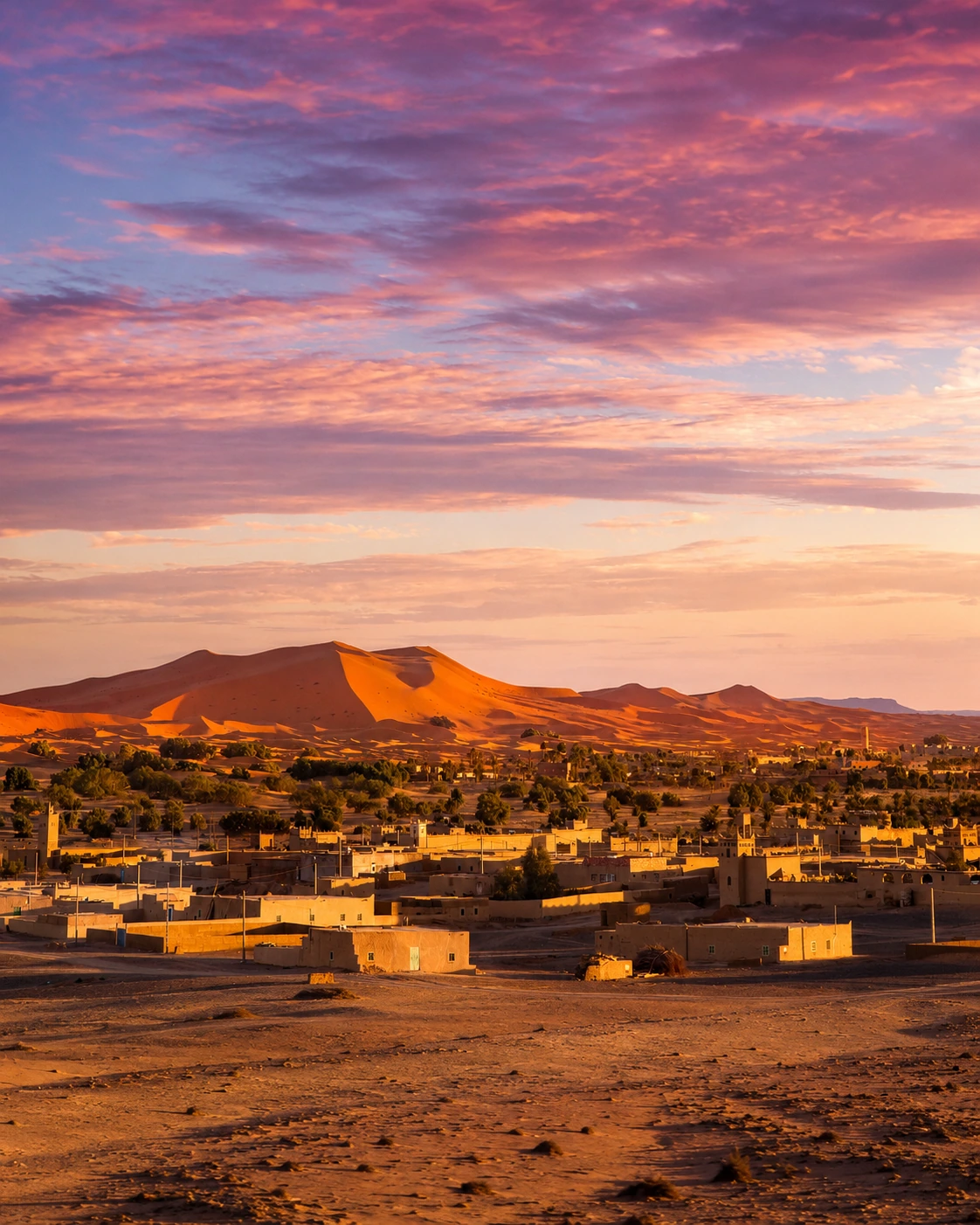
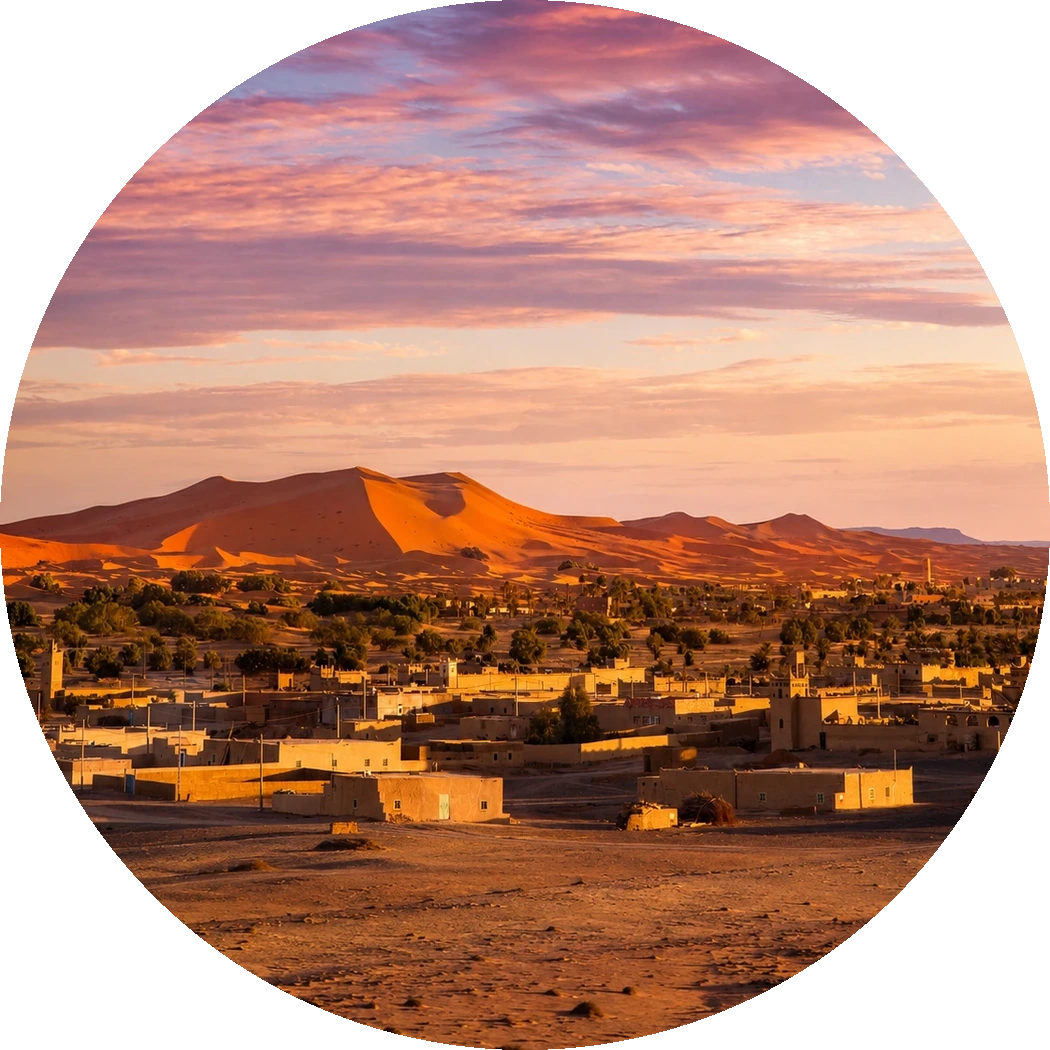
Merzouga village beneath the dunes at sunset

Desert scale, village rhythm

Power in Merzouga is measured through horizon and restraint: a ridge of sand, a palm line, a village edge, a quiet track, a night sky and the discipline of moving slowly in a landscape that does not need ornament.

EXPLORE

Merzouga

Historical orientation

From Tafilalet caravan memory to Sahara gateway

Merzouga is not a palace city or a historic medina; it belongs to a different southern story. The deeper frame is Tafilalet: oasis settlement, ksour, Sijilmasa near Rissani, caravan memory, date palms and the long transition from mountain routes to desert space.

01Medieval period

Tafilalet and Sijilmasa

Near Rissani, the remains of Sijilmasa point to a major medieval trading city and to Tafilalet’s role in linking oasis settlement with trans-Saharan routes.

02Oasis settlement

Ksour, palms and water

Fortified villages, palm groves and irrigation knowledge shaped the region before modern desert tourism. Around Erg Chebbi, settlement depends on reading scarce water carefully.

03Modern route culture

Merzouga and Erg Chebbi

Merzouga became known internationally because it gives relatively direct access to Erg Chebbi: dunes, tracks, guided walks, camel routes, bivouac culture and desert-edge villages.

04Today

Responsible Sahara travel

The strongest visit balances landscape with people: local guides, measured movement, respect for village life, careful waste habits and awareness that seasonal lakes and desert conditions can change quickly.

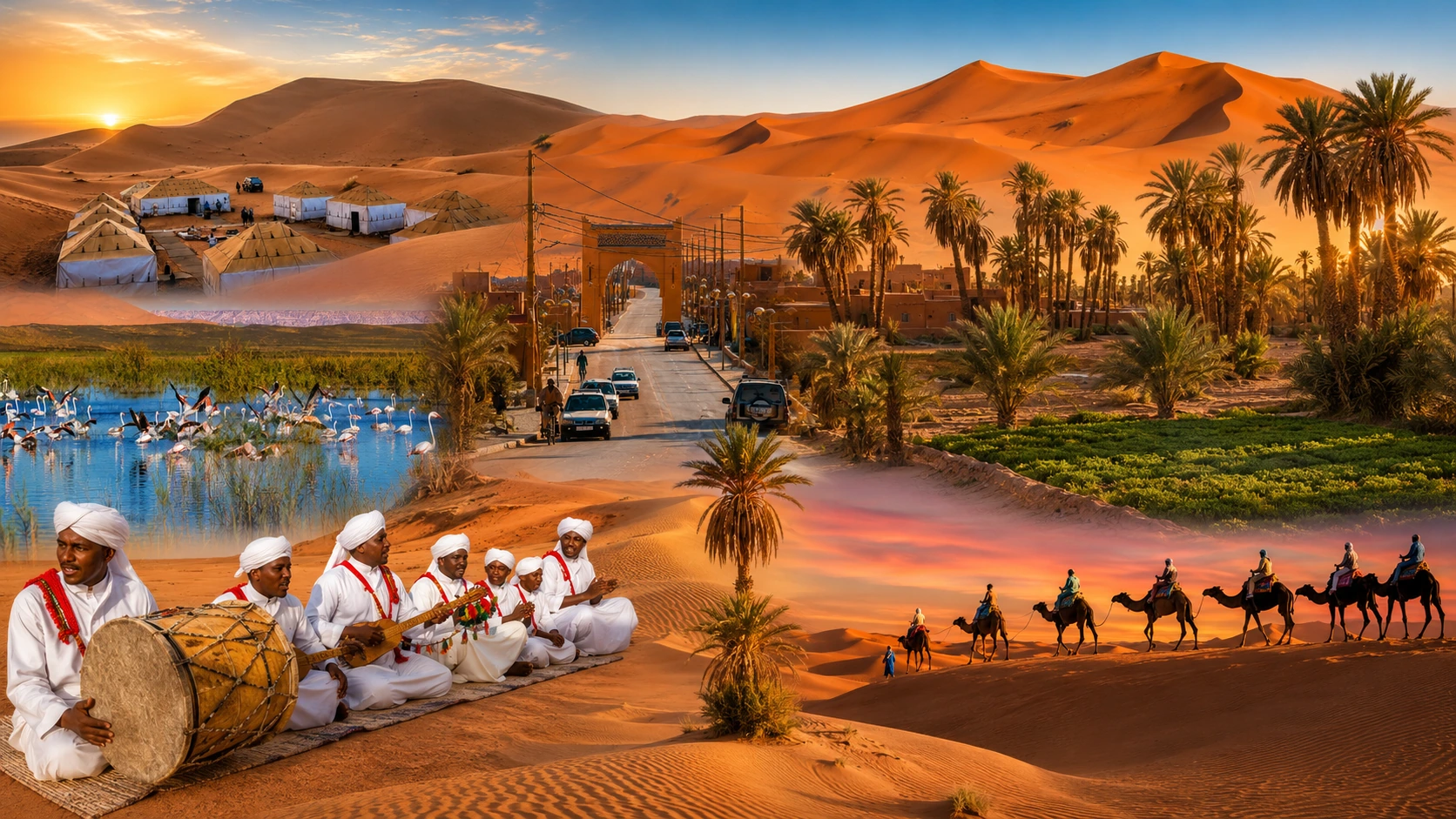
A visual bridge

Three glimpses of dune, village and water

These images help bridge the larger Tafilalet story and the Merzouga you encounter today: sand ridges at the edge of Erg Chebbi, the lived village base, and the seasonal water that can change the whole desert mood.

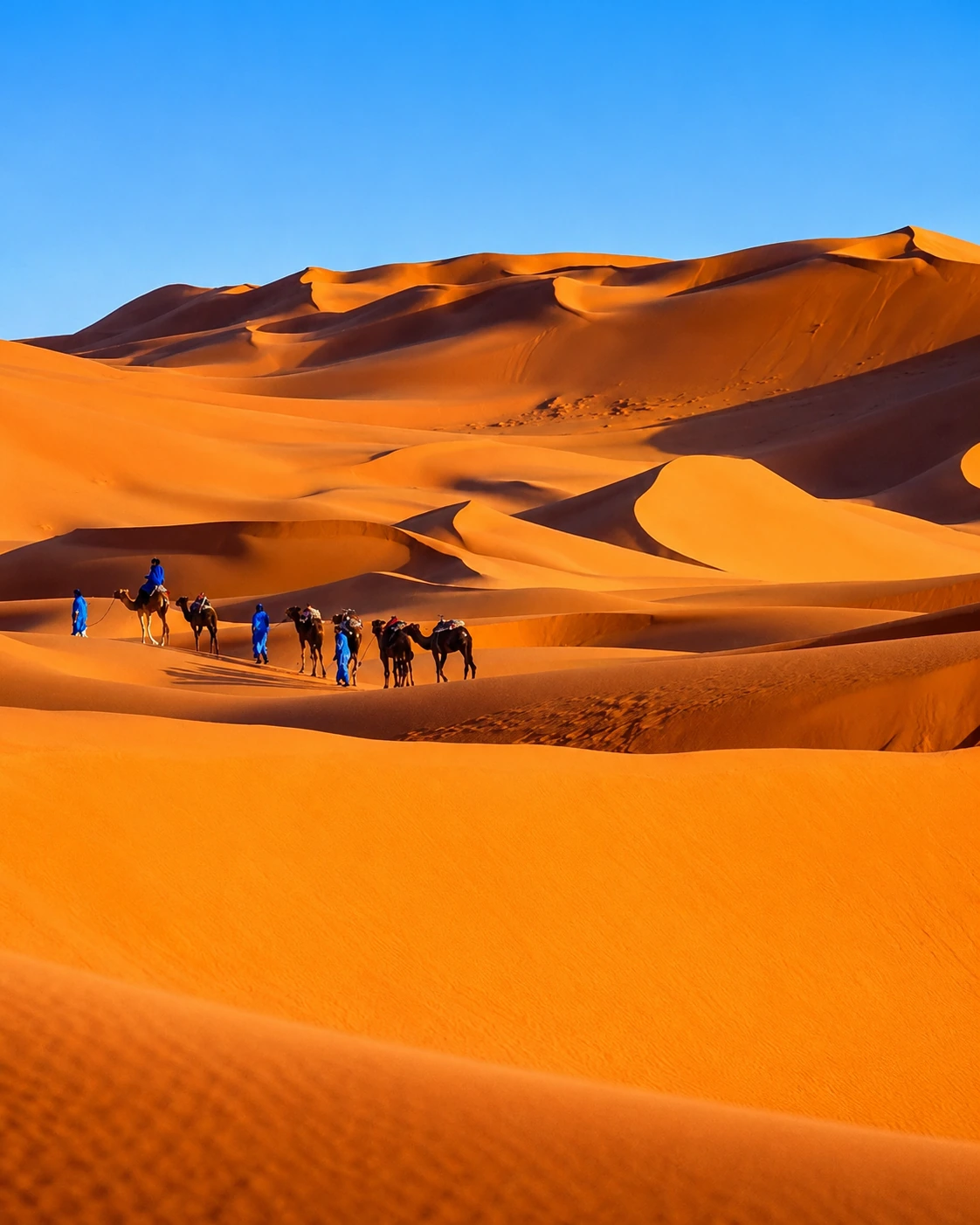
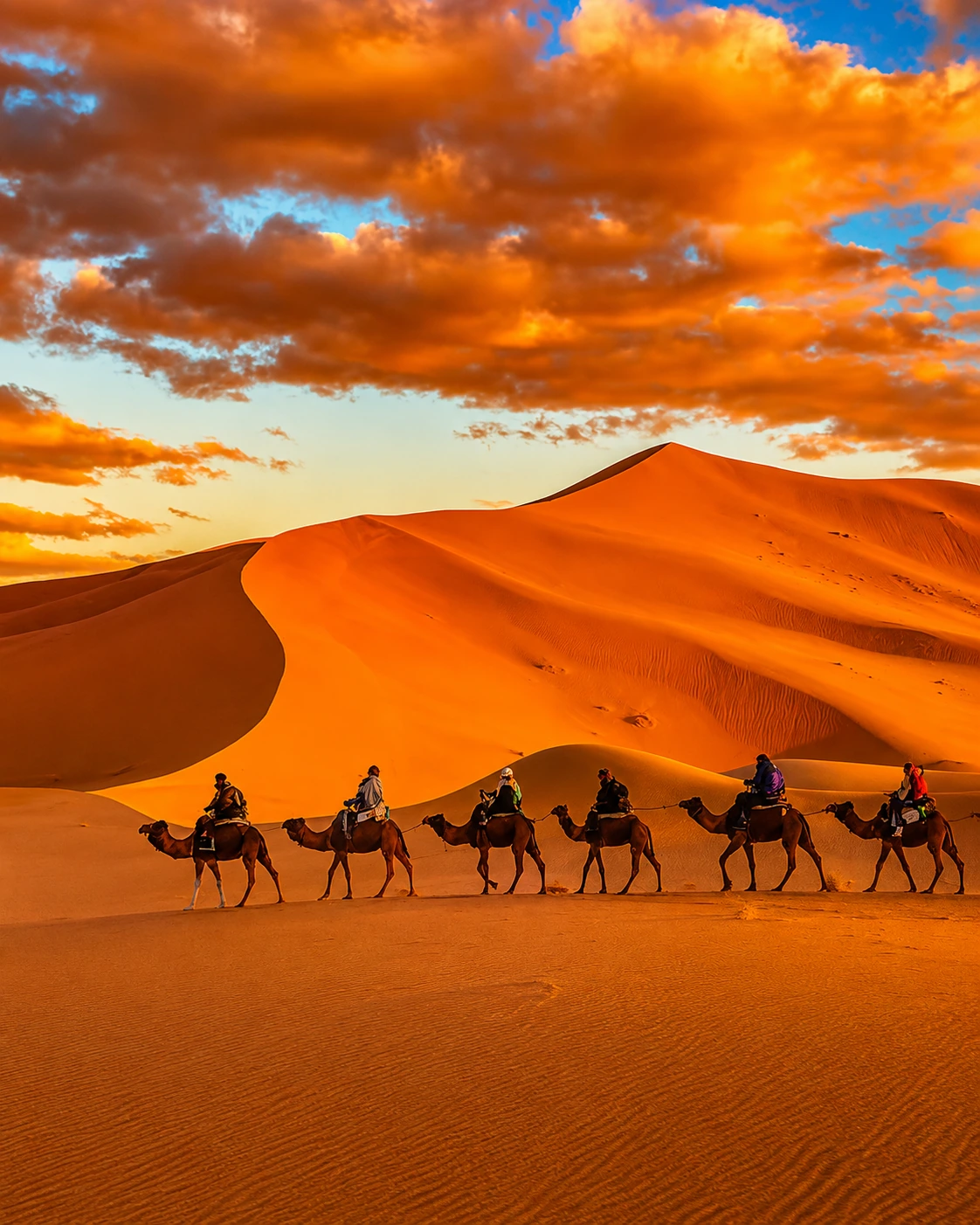
Camel caravan crossing Erg Chebbi near Merzouga

Sand ridges

Erg Chebbi’s ridges make the landscape legible through shadow, wind and the changing angle of light.

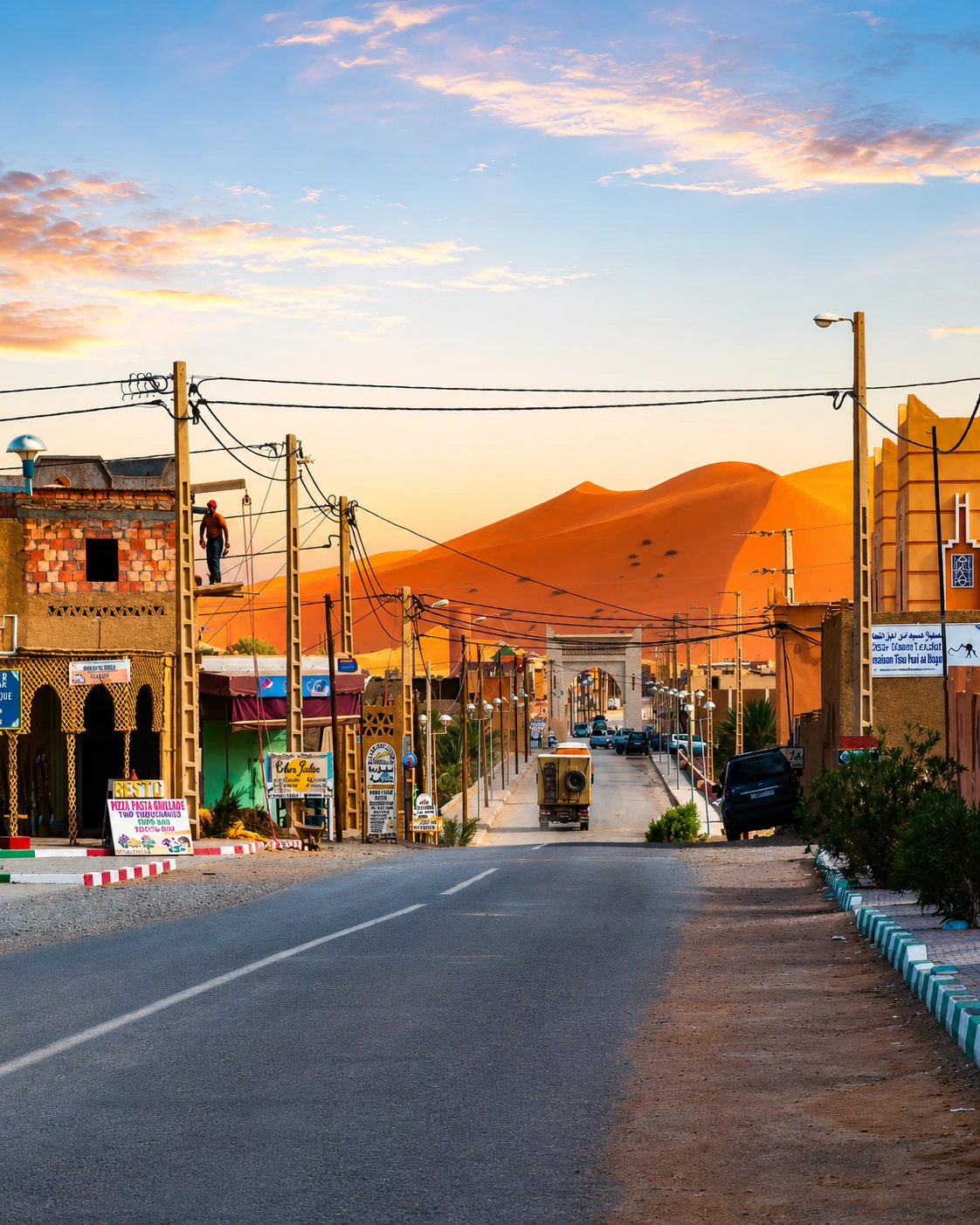
Gateway road and dune edge in Merzouga

Village edge

Merzouga is a lived desert settlement, not only a departure point for camps and photographs.

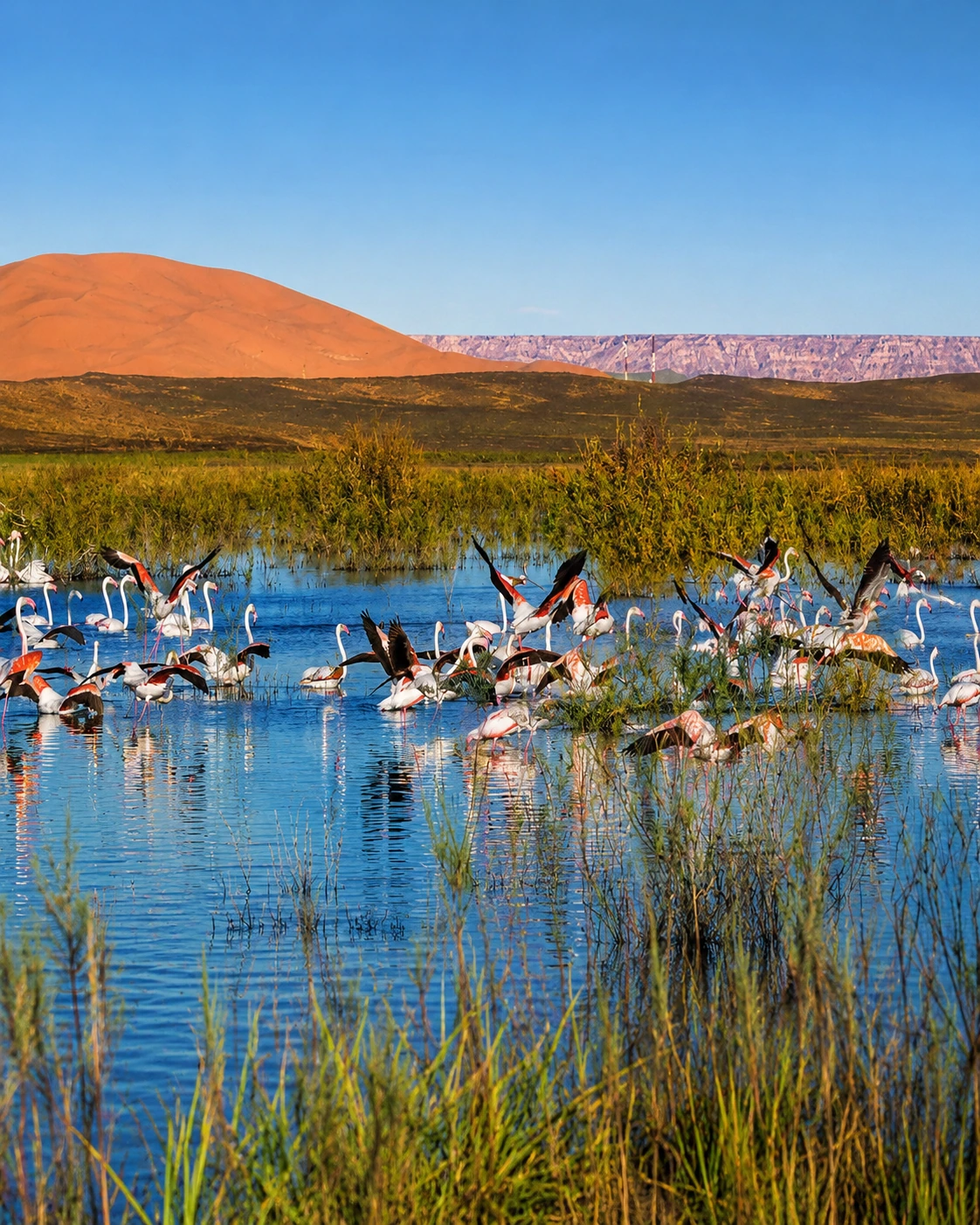
Flamingos at Dayet Srij near Merzouga

Seasonal water

Around Dayet Srij, water and birds can appear beside the sand when conditions allow.

Merzouga at a glance

Sahara gateway

Merzouga is a small southeastern Moroccan village associated with access to Erg Chebbi, the dune landscape that gives the area its visual force.

Dunes, palms and tracks

The area is read through sand ridges, palm groves, desert paths and hiking or camel routes rather than through monuments or a dense urban centre.

Tafilalet context

Rissani, Erfoud, Sijilmasa memory, ksour and date-palm landscapes give the Merzouga visit a wider historical and oasis frame.

Pace matters

A rewarding visit follows light, heat, wind and distance. Sunrise, late afternoon and evening usually reveal more than a rushed midday stop.

A clearer reading of the village

A place shaped by dunes, palms and routes

To understand Merzouga, read its landscape systems together: the dune sea, the village edge, seasonal water, palm groves and the route memory of Tafilalet. They are not separate attractions; each gives the Sahara visit its human scale.

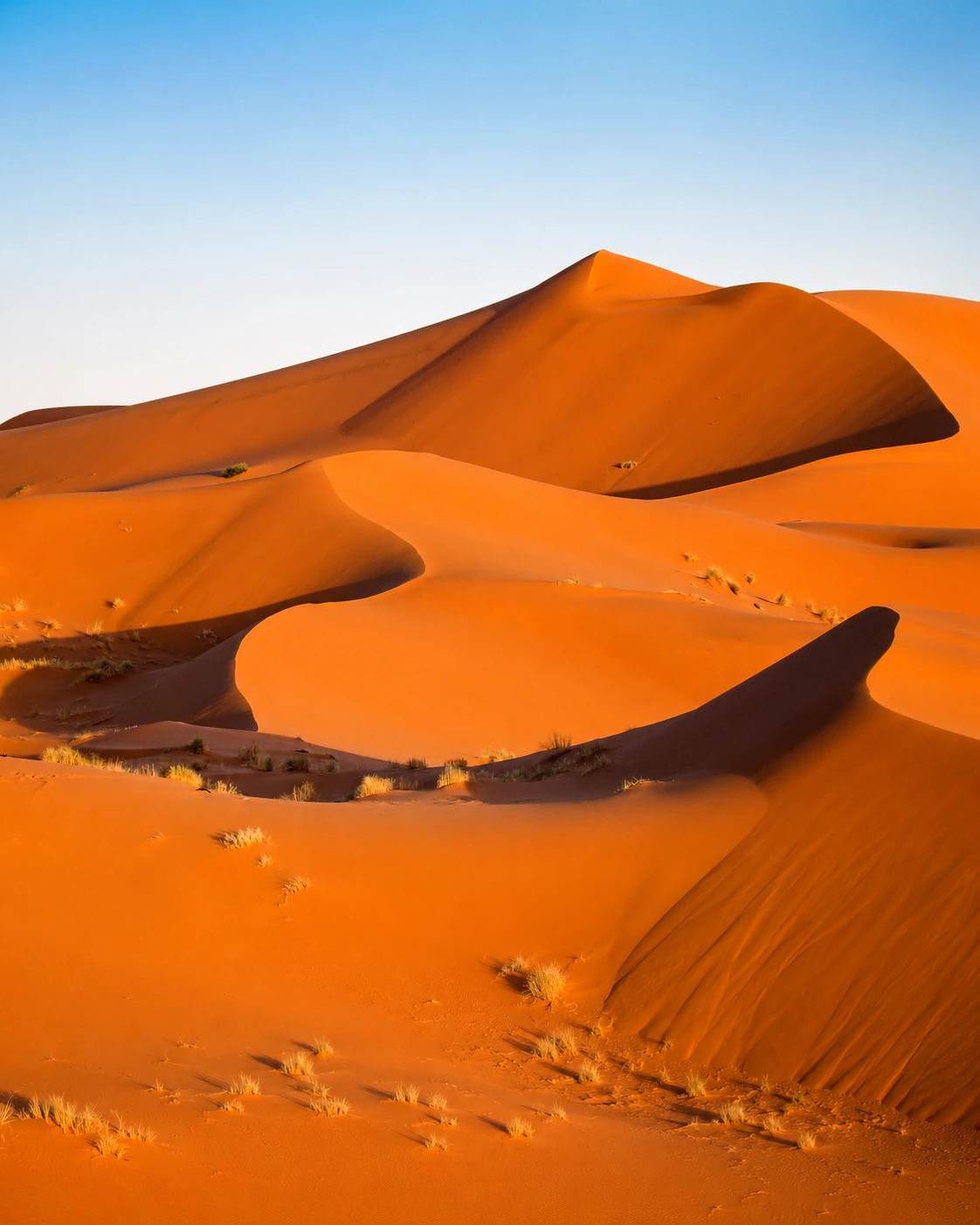
Rolling orange dunes of Erg Chebbi near Merzouga
Layer 1

Dune systems

Erg Chebbi gives Merzouga its first visual language: ridges, wind lines, shifting shadow and the need to move with terrain rather than dominate it.

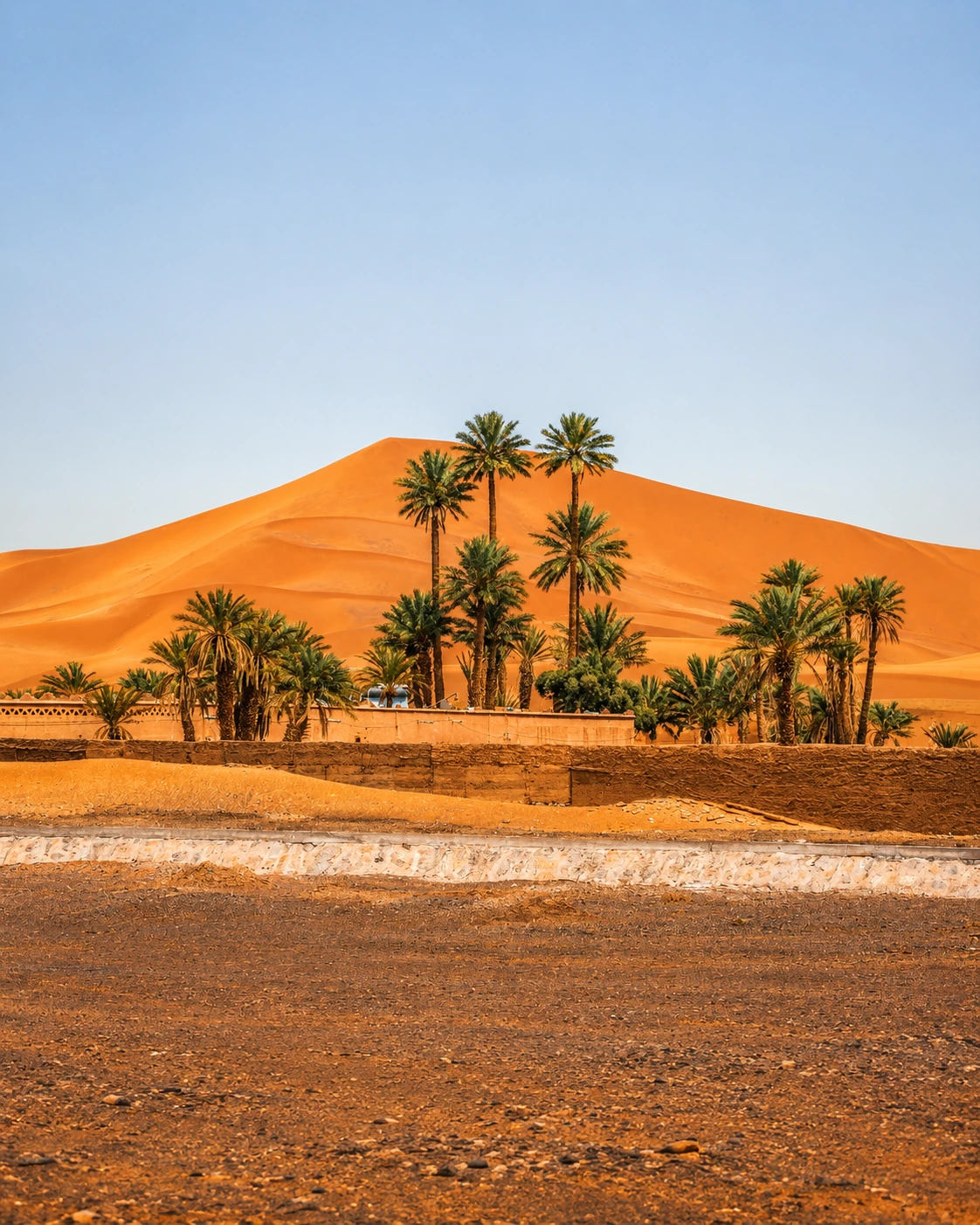
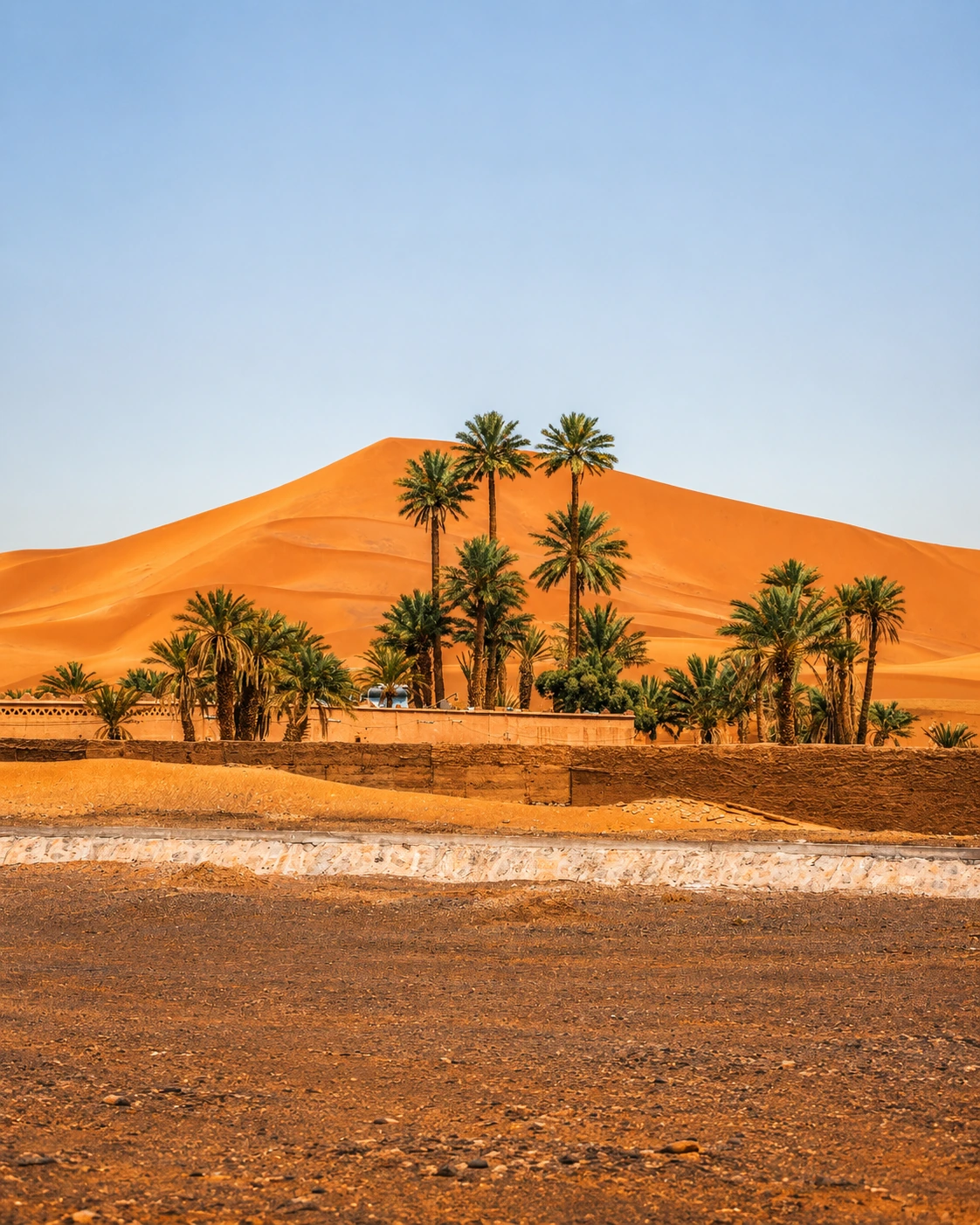
Palm grove at the edge of Merzouga and Erg Chebbi
Layer 2

Oasis settlement

Palms, gardens, wells, channels and seasonal basins give the dune edge a human scale, showing how village life depends on careful water knowledge.

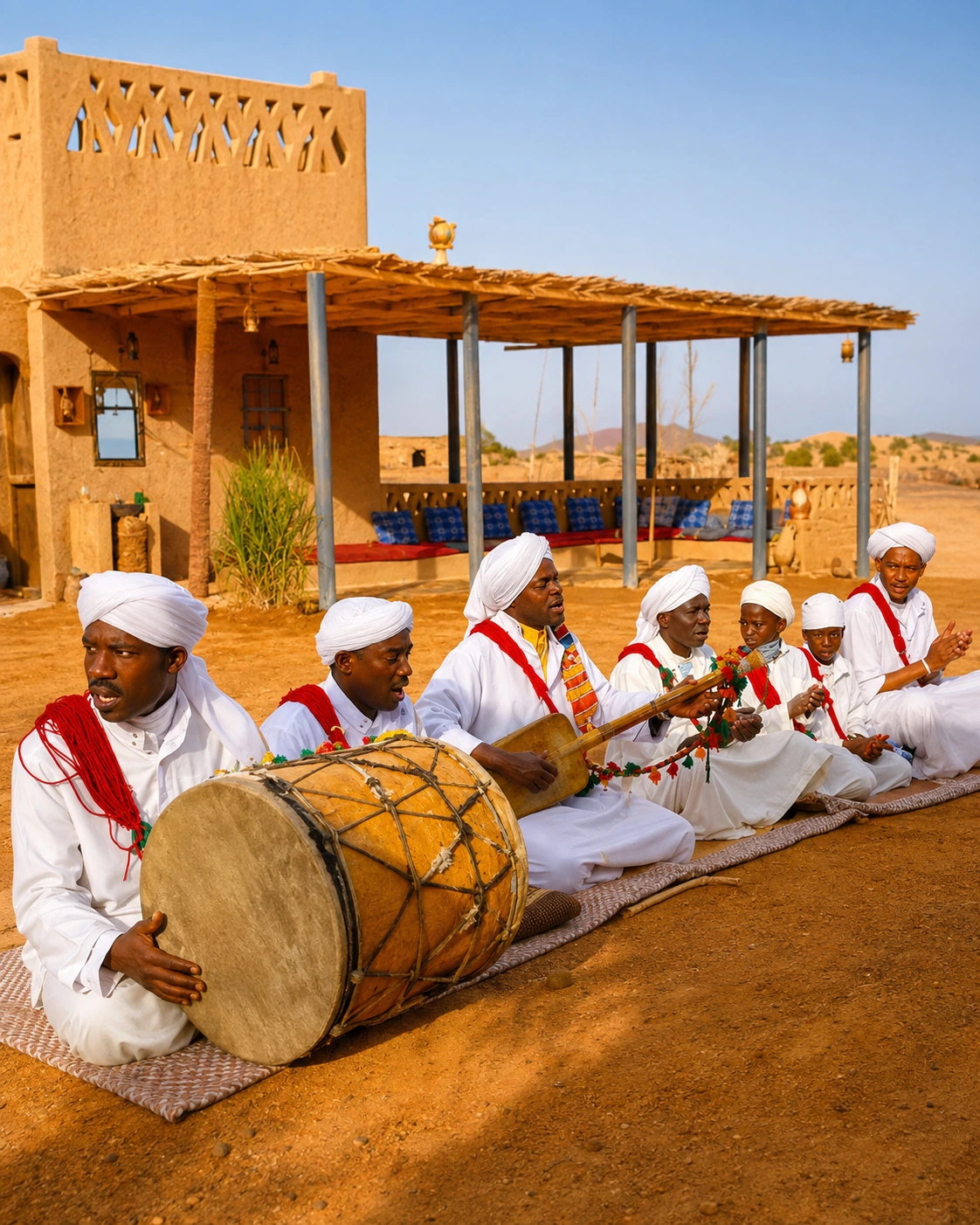
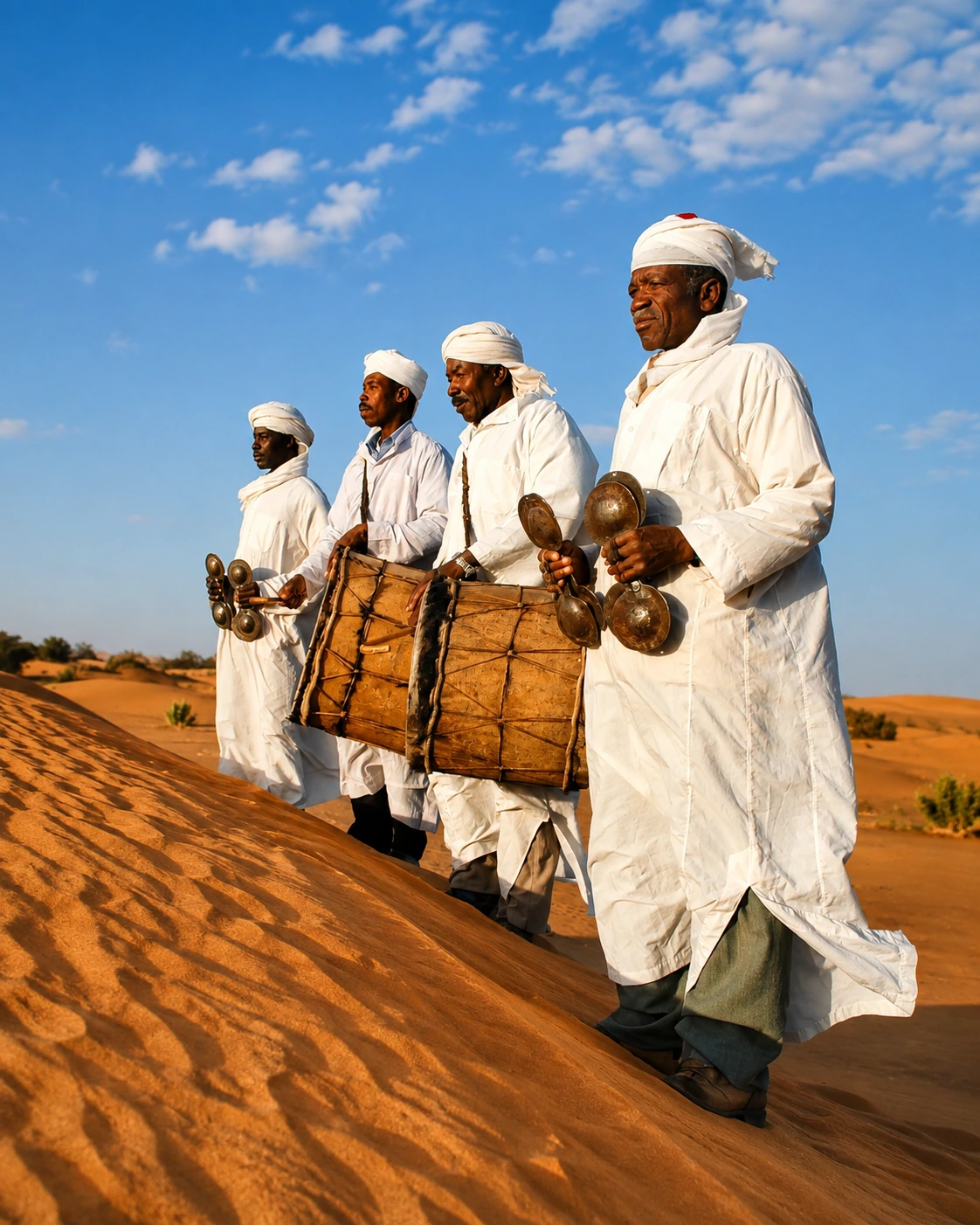
Gnawa musicians performing near Merzouga
Layer 3

Route culture

Guides, markets, music, tracks and nearby Tafilalet towns connect Merzouga to a wider southern memory of movement, exchange and hospitality.

Landmarks & orientation

Read Merzouga through six defining places

No single viewpoint explains Merzouga. These six places reveal the relationship between the dune sea, village life, seasonal water, music, oasis memory and nearby Tafilalet heritage.

1
Erg Chebbi

The dune field that gives Merzouga its identity: sand ridges, light, walking routes, camps and the most immediate sense of Sahara scale.

2
Merzouga village

The practical base at the dune edge, where cafés, small accommodations, guides and local daily life meet visitor movement.

3
Dayet Srij

A seasonal lake area near the dunes, valued for its contrast of water, palms, birds and sand when conditions bring water to the basin.

4
Hassi Labied palm grove

A nearby oasis settlement and palm landscape that helps visitors see water, cultivation and village life beside Erg Chebbi.

5
Khamlia

A village south of Merzouga known on the visitor route for music connected with Gnawa traditions and Saharan cultural memory.

6
Rissani and Tafilalet

The wider route context: markets, ksour, Sijilmasa memory and date-palm landscapes that give the dunes a deeper regional frame.

Merzouga settlement with Erg Chebbi rising behind it
Gnawa musicians on the dunes near Khamlia and Merzouga

A desert cultural note

Khamlia — music, memory and respect at the dune edge

A Merzouga journey should not treat culture as decoration for the sand. South of the village, Khamlia is known for music linked to Gnawa traditions and for the way performance, hospitality and Saharan identity are introduced to visitors. Approach it with time, respect and fair exchange.

  • Listen as a guest, not as a consumer collecting a quick exotic moment.
  • Ask before photographing people, instruments or interiors, and support local musicians fairly.
  • Read the music beside the wider route story: movement, memory, Amazigh and Saharan life, and the long southern links beyond the dunes.

Landscape reading

Three languages to notice

Sand and horizon

Merzouga speaks first through open scale. Low village walls and tracks are visually secondary to the dune line, sky and the movement of shadow across the sand.

Palm and water

The oasis edge changes the reading completely. Palms, irrigation channels, gardens and seasonal basins show how fragile water systems shape settlement and movement.

Earthen settlement

Around Tafilalet, ksour, kasbah materials and market towns keep the architecture close to earth, sun and climate. The palette is not decoration; it belongs to the environment.

Visual atmosphere

Light, silence and slow transitions

Nearby highlights

Nearby oases, towns and route extensions

Merzouga is strongest when it is placed inside a wider southeastern route. Rissani gives Tafilalet market and Sijilmasa memory; Erfoud opens date and fossil country; the Ziz Valley and Errachidia route explain the transition from palm water to desert space.

Rissani & Sijilmasa memory

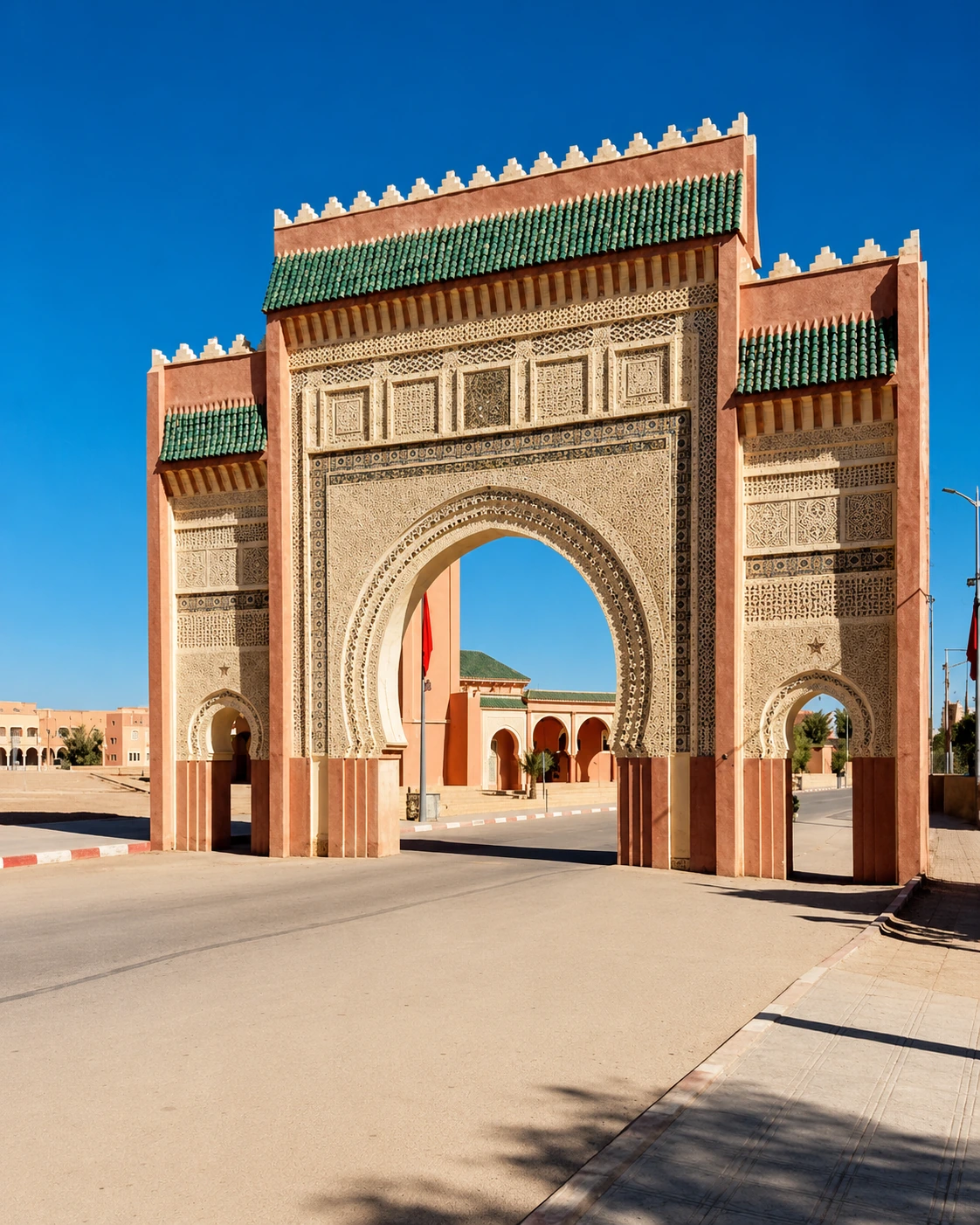
Rissani anchors the Tafilalet frame with market life, nearby Sijilmasa remains and the memory of oasis trade. It gives the dunes a historical depth that Merzouga alone cannot show.

Ornamental gate near Rissani in the Tafilalet region

Erfoud & date country

Erfoud is the practical oasis-town counterpart to the dunes: dates, fossils, local workshops and the last urban services before the landscape opens toward Erg Chebbi.

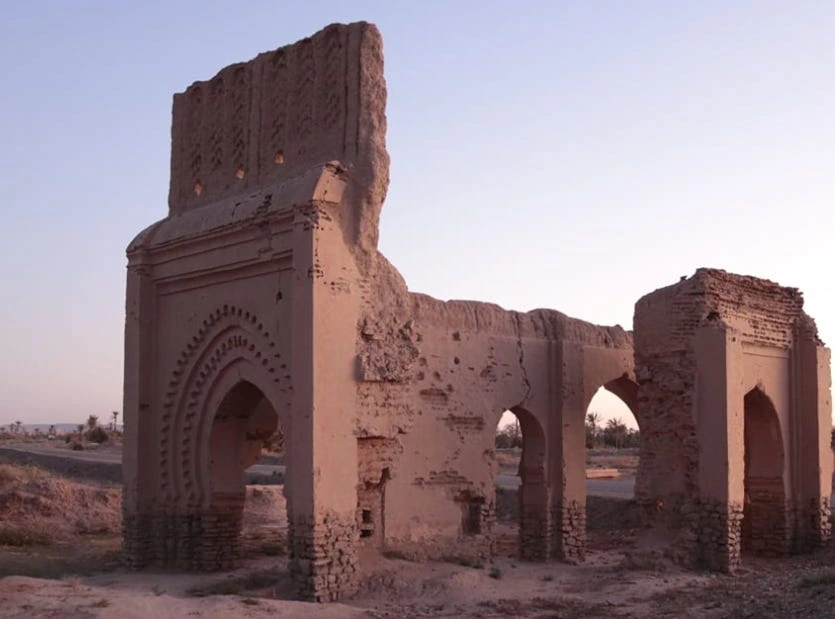
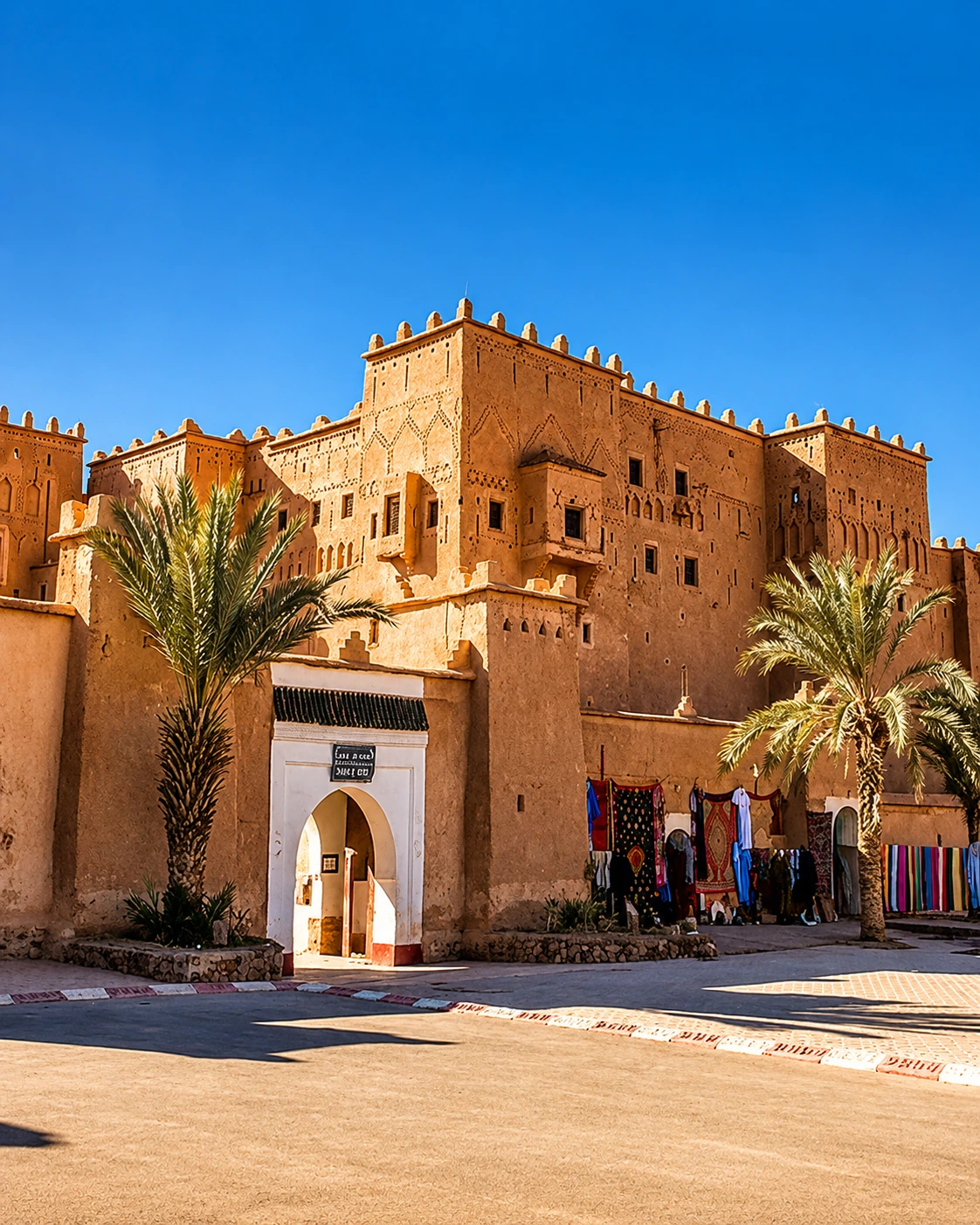
Earthen kasbah in the Merzouga and Tafilalet region

Ziz Valley & Errachidia route

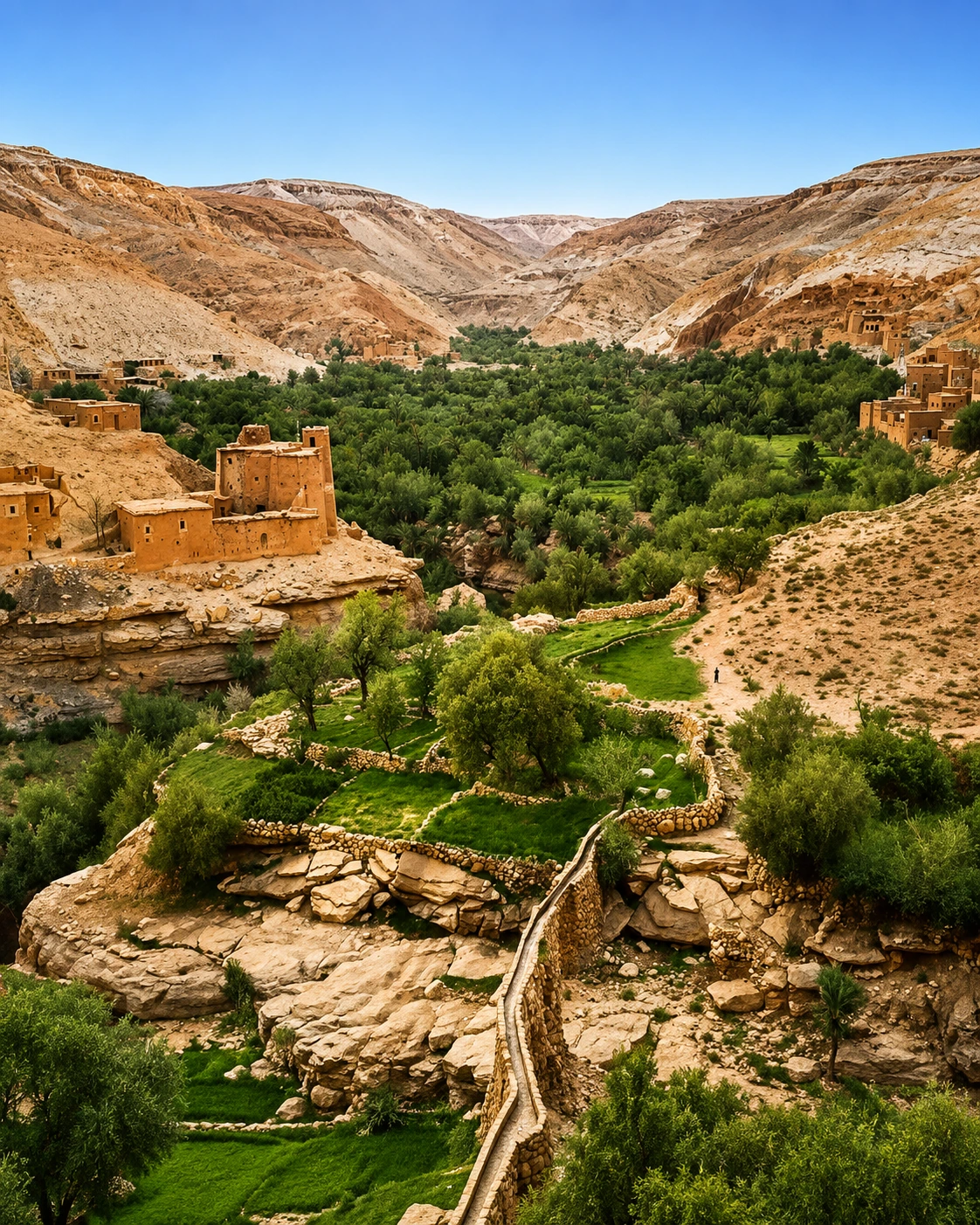
The Ziz Valley and Errachidia approach reveal palms, water channels, mountain edges and long-distance movement before the desert becomes visually dominant.

Oasis valley landscape on the wider route toward Merzouga
Travel note: seasonal lakes, heat, wind, dune access, campsite standards, tracks and local visitor arrangements can change. Check current official or trusted local information before committing to routes, activities or overnight plans.

Practical orientation

How to experience Merzouga well

  • Treat Merzouga as a desert landscape base, not as a dense city of monuments.
  • Plan around light and heat: early morning, late afternoon and evening usually reveal the place better than midday.
  • Use trusted local guides for dunes, tracks and village-to-village movement instead of wandering blindly into fragile terrain.
  • Check seasonal conditions before expecting water at Dayet Srij or specific wildlife sightings.
  • Combine the dunes with Rissani, Erfoud or the Ziz route to avoid reducing the region to one sand photograph.

A strong first visit

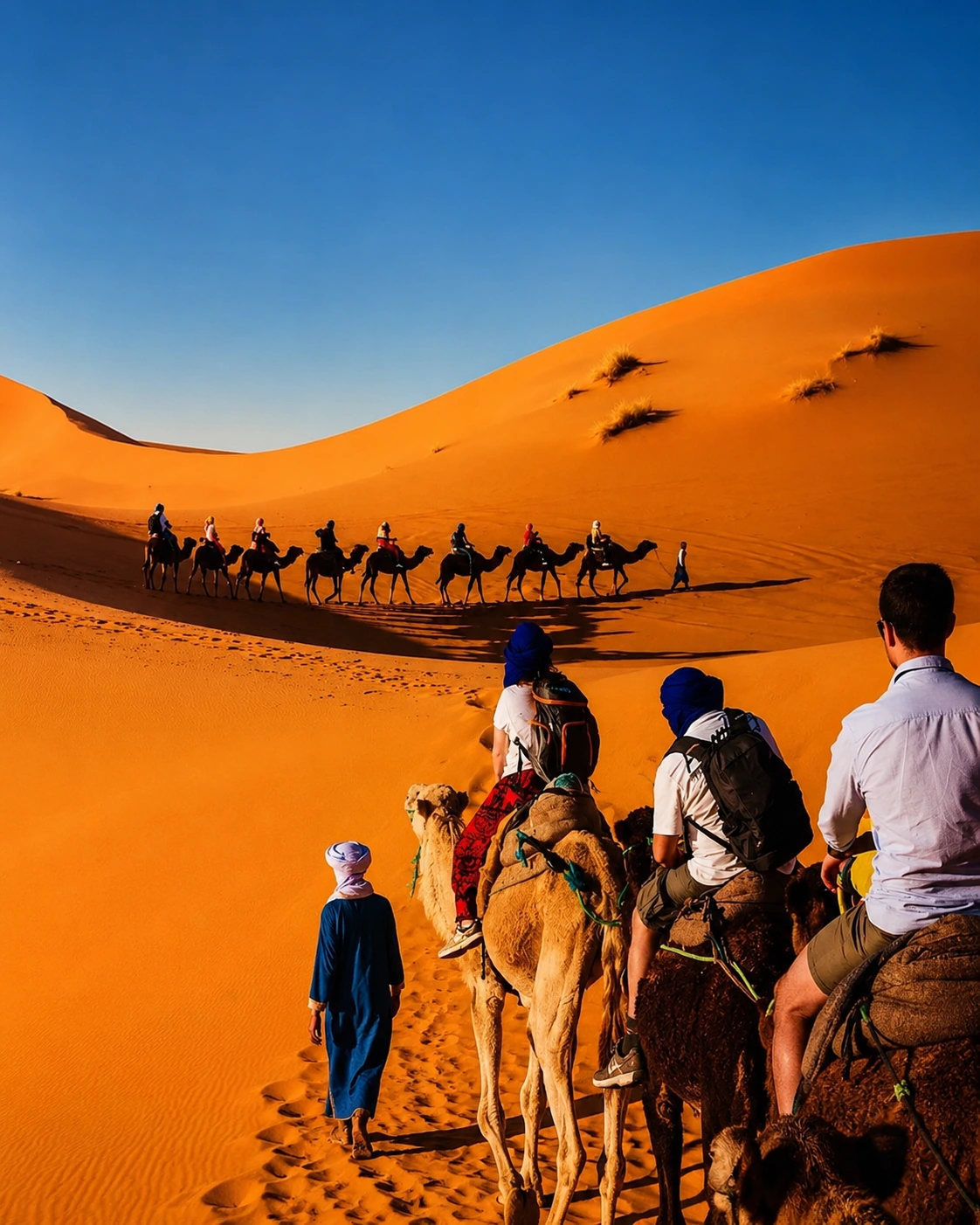
Camel caravan experience in the dunes near Merzouga

Arrive before sunset if possible, read the dune edge from Merzouga first, then give the landscape a quiet early morning. Keep one layer for Erg Chebbi, one for village and palm-grove context, and one for the wider Tafilalet route rather than compressing everything into a rushed excursion.

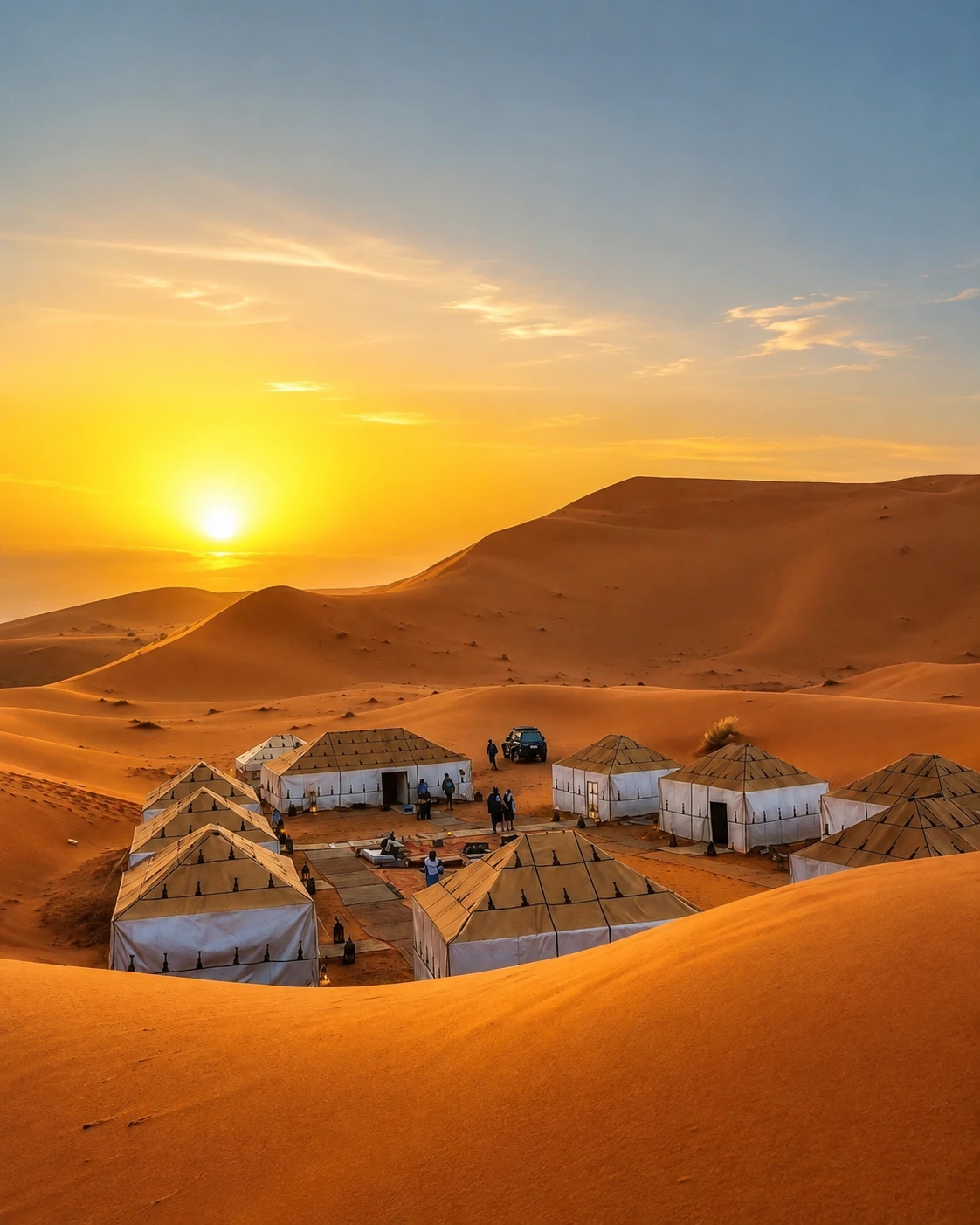
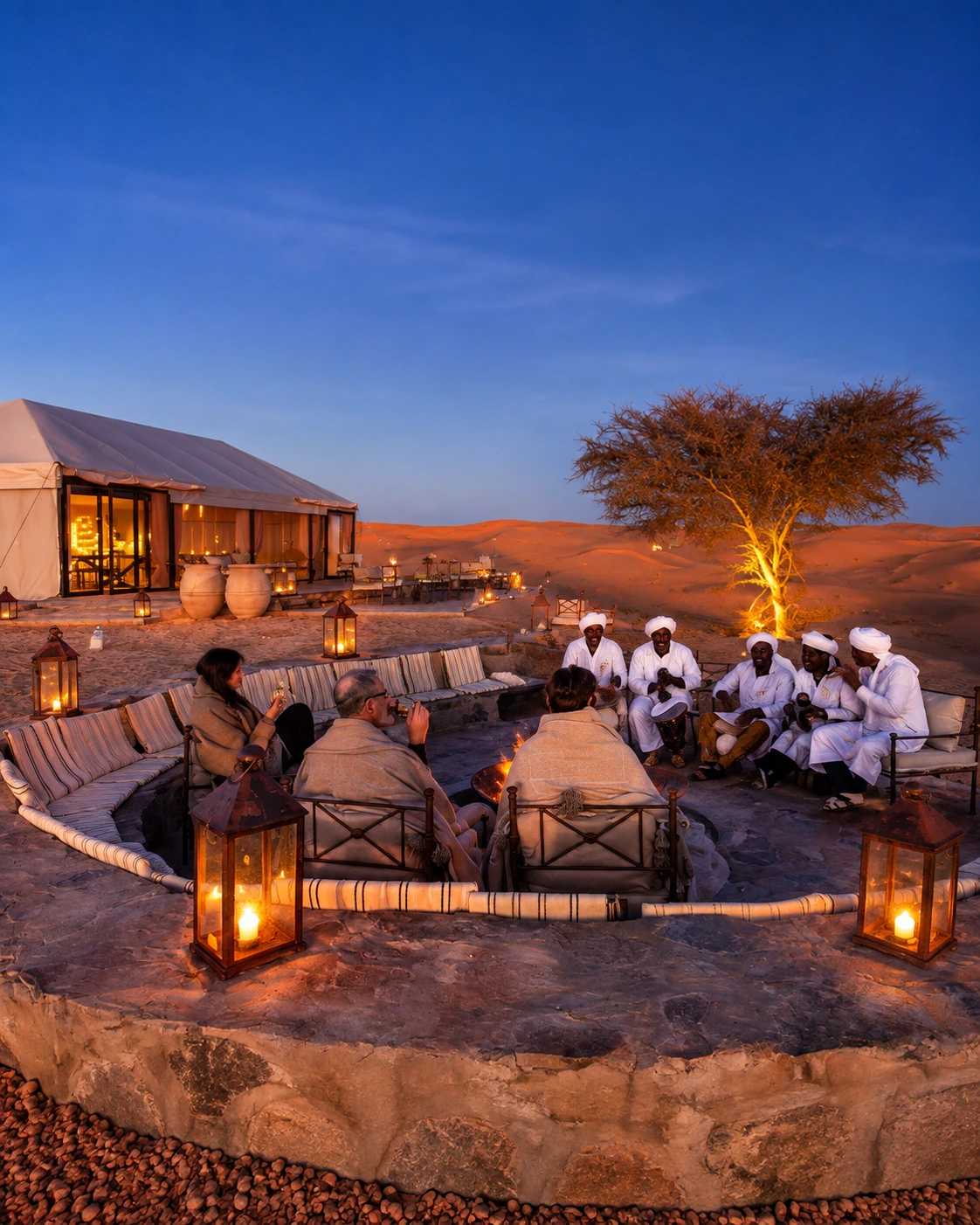
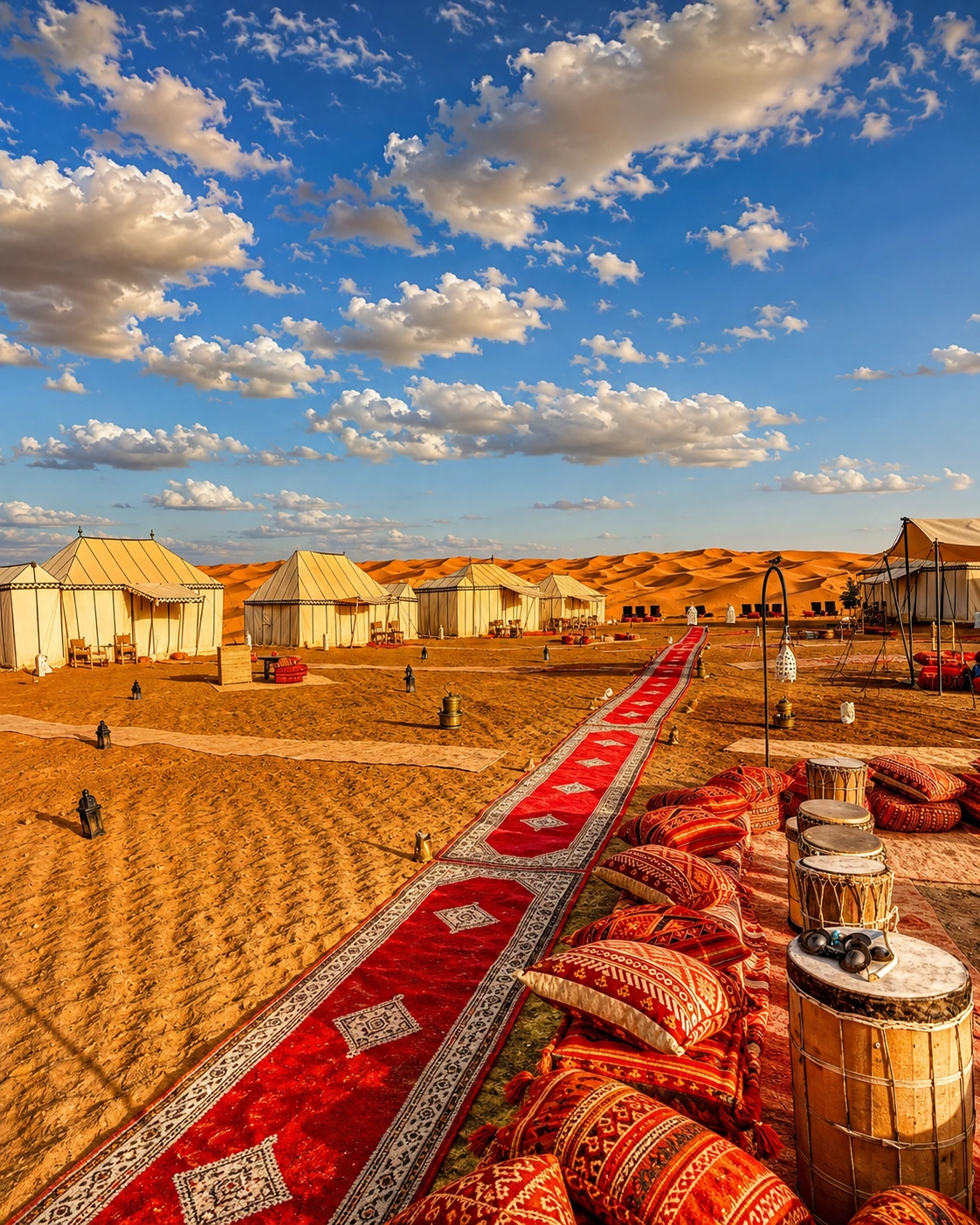
Desert camp with red carpet walkway in Merzouga

Go deeper with Exotic Morocco

Merzouga — Premium Visual City Guide

Continue with Exotic Morocco’s guide system for the Sahara, oasis routes, dune landscapes, cultural orientation, practical visitor rhythm and nearby Tafilalet highlights. The Merzouga guide experience should connect place, people and route logic without flattening the desert into a postcard.

✓ Sahara context✓ Erg Chebbi orientation ✓ Oasis & village life✓ Culture & local rhythm ✓ Practical travel guidance✓ Nearby highlights

Continue the journey

Continue the journey through Merzouga

Look beyond the first dune and encounter a Sahara gateway of sand, palms, village rhythm, seasonal water, music, route memory and southeastern Moroccan depth.