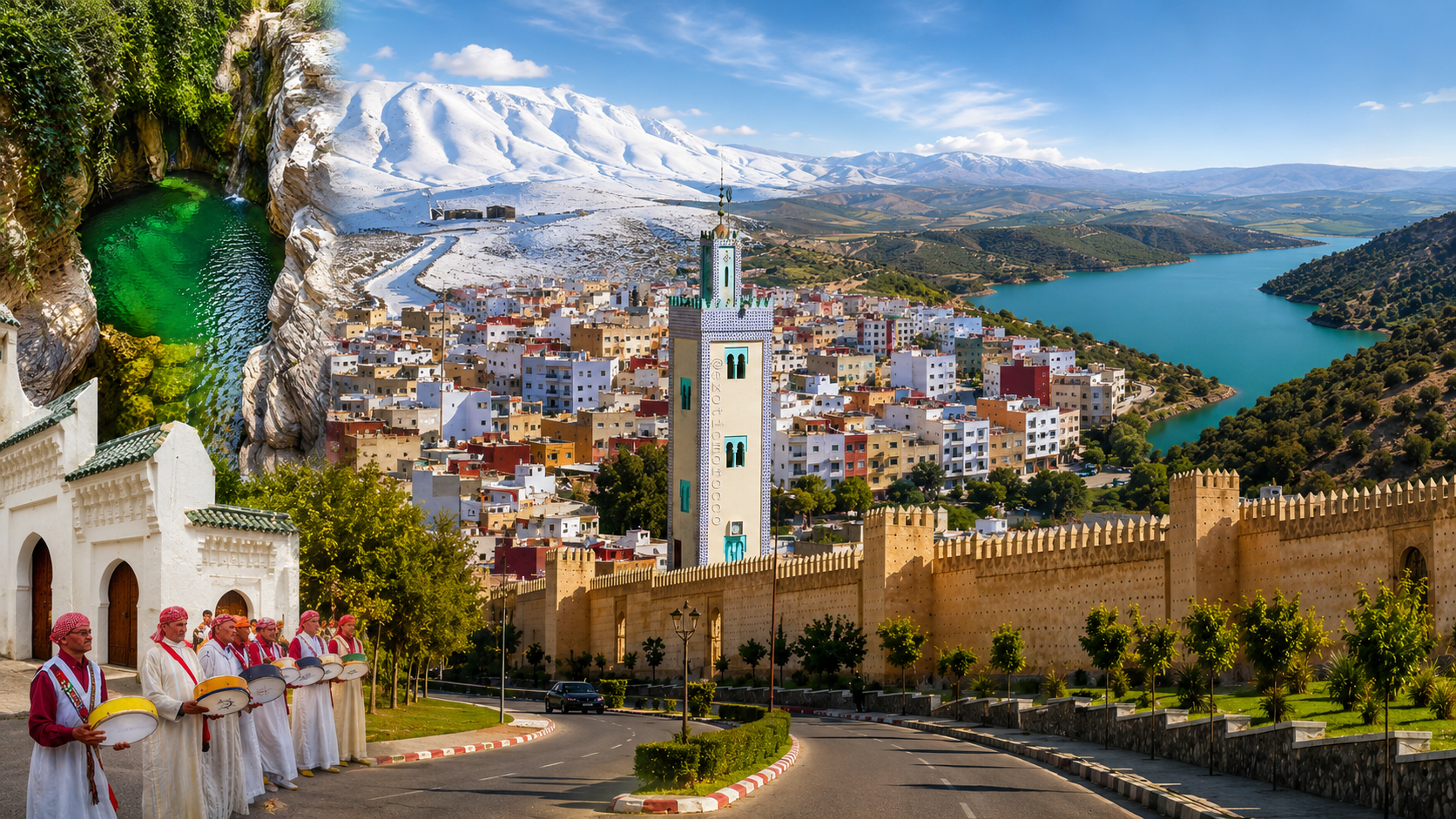
Taza hero panorama with fortified walls, old city, mountain landscapes, water and cultural movement

Mountain Gateway of Morocco

Taza Fortified city between Rif and Middle Atlas

Taza stands above one of Morocco’s great east–west corridors, where an old walled medina, the Great Mosque and the slopes of Tazekka turn a transit point into a serious heritage city.

Why Taza matters

A city shaped by a pass

Taza is not simply a stop between Fès and Oujda. Its old city rises on a hill above the corridor that connects western and eastern Morocco, giving the medina, walls and gates a strategic logic that visitors can still feel on the ground.

The story here is tighter and more defensive than in the imperial cities: fortified edges, compact lanes, mosque architecture and mountain horizons meet within a landscape that shifts quickly toward Tazekka National Park.

Historic fortifications and cityscape of Taza

Fortified, elevated, legible

Taza’s strength is its readable position: upper town and lower town, gate and rampart, passage and mountain, daily city and protected landscape.

EXPLORE

Taza

Historical orientation

From Almohad importance to protected heritage

Taza’s importance is documented in Morocco’s UNESCO Tentative List dossier, which links the city’s rise to the Almohad period, its defensive works and its Great Mosque. The Ministry of Culture also lists the Great Mosque and consolidated walls among Taza’s protected national heritage, so the city should be read as a serious historic ensemble rather than a quick road-side halt.

01Almohad period

Defensive city

Taza’s strategic position in a narrow elevated passage helped shape walls, bastions and an urban nucleus with a military and route logic.

02Medieval mosque

Great Mosque of Taza

The Great Mosque became the city’s central architectural and religious reference, later remembered for its major chandelier and layered dynastic additions.

0320th-century protection

National heritage

The Great Mosque and the city’s consolidated ramparts were classified as protected heritage in the early twentieth century.

04Today

Gateway to Tazekka

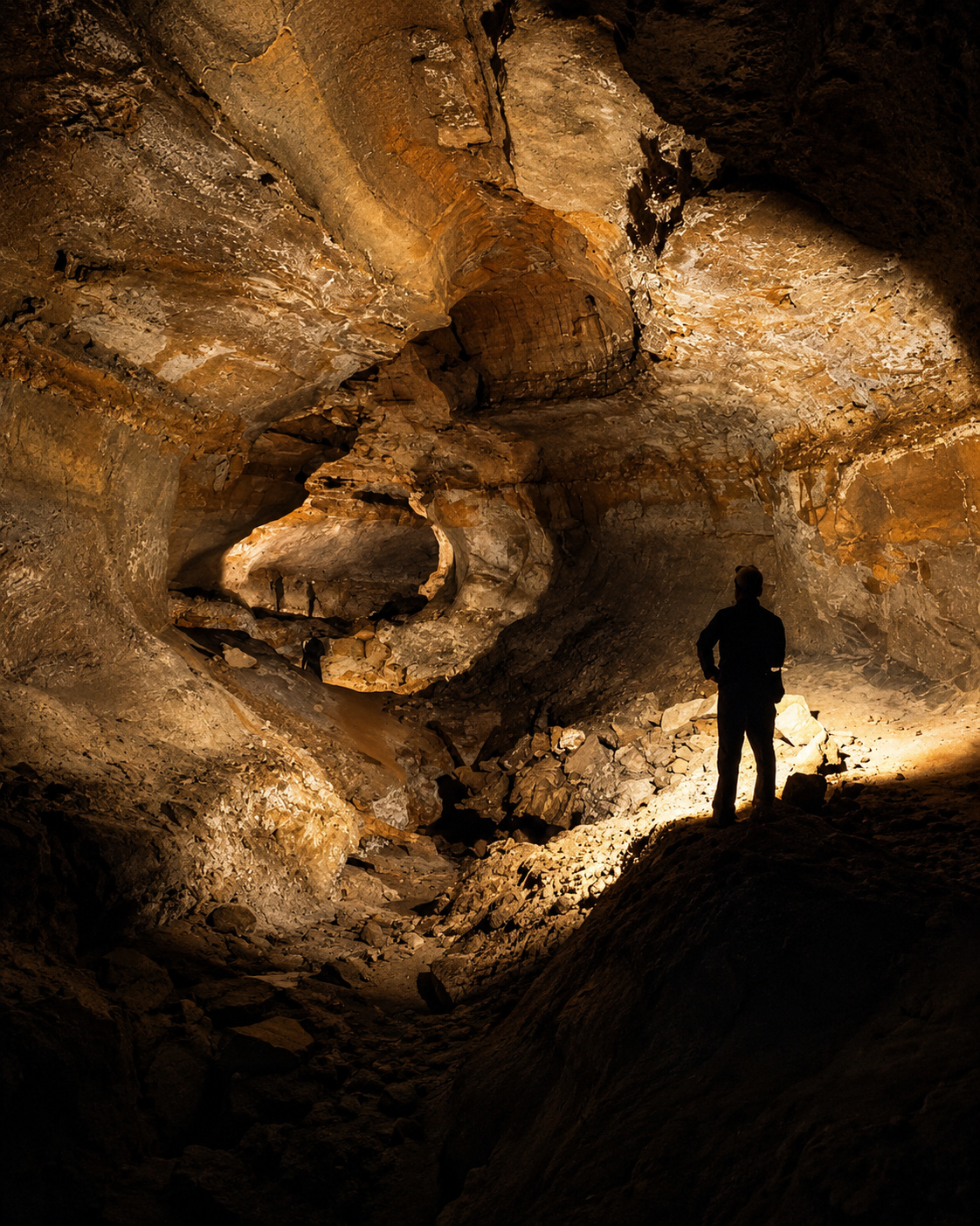
A visit can connect old Taza with Tazekka National Park, cedar landscapes and cave systems close to the city, giving the page a city-and-nature rhythm.

A visual bridge

Three views between city and mountain

These images move through Taza’s essential relationships: the fortified upper city, the Great Mosque at the heart of the medina, and the green mass of Tazekka beyond the urban edge.

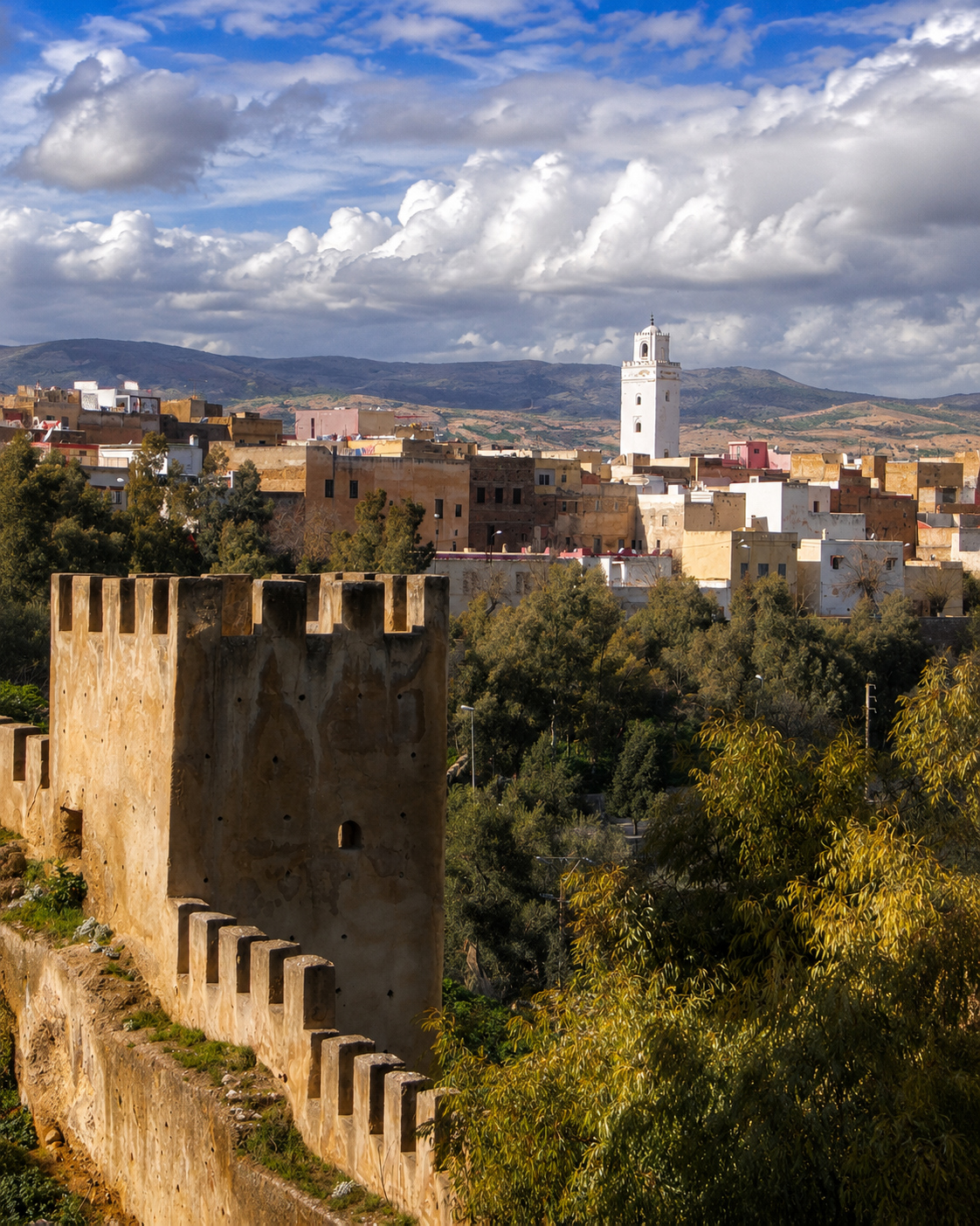
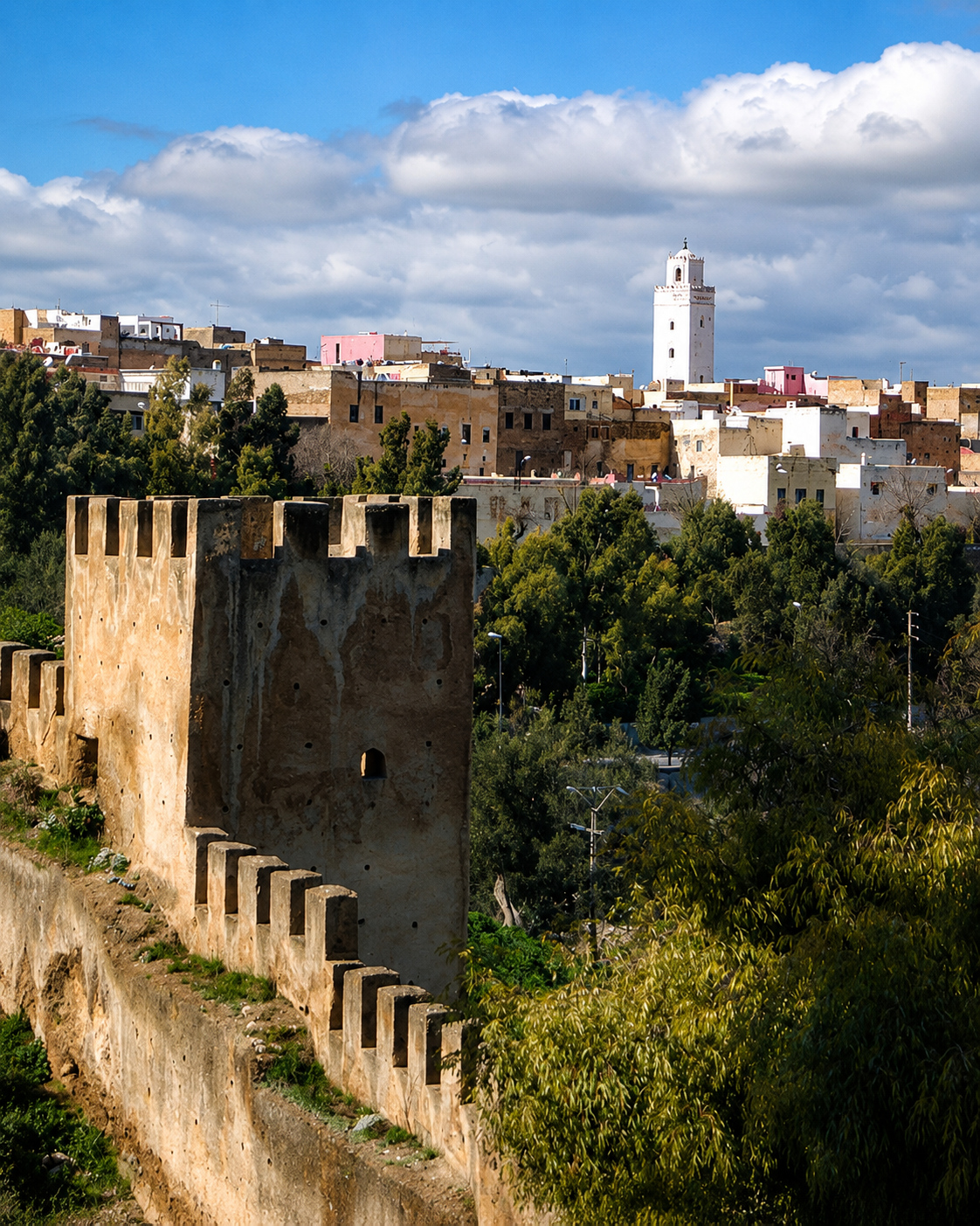
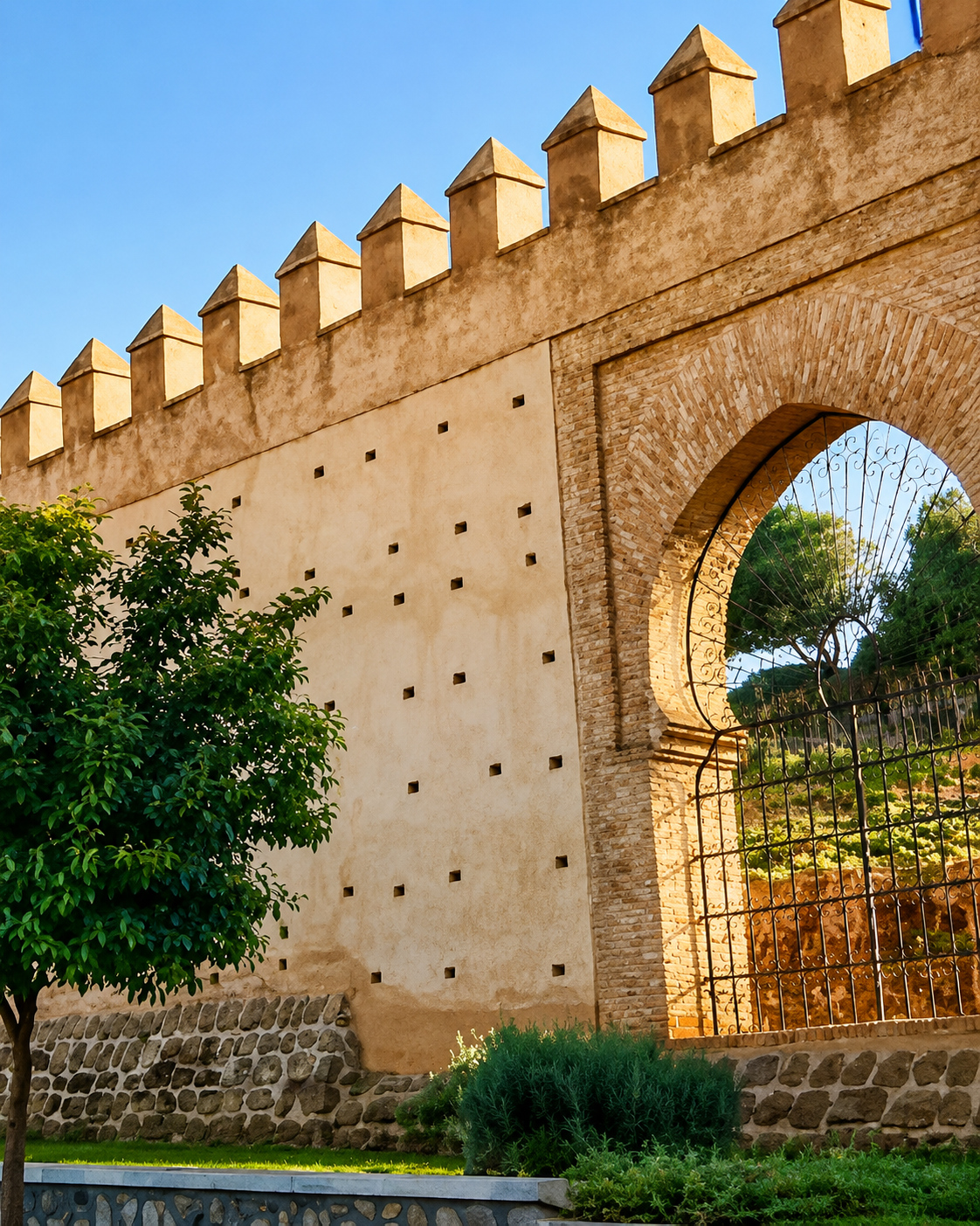
View over Taza and its vesting wall

Walls above the corridor

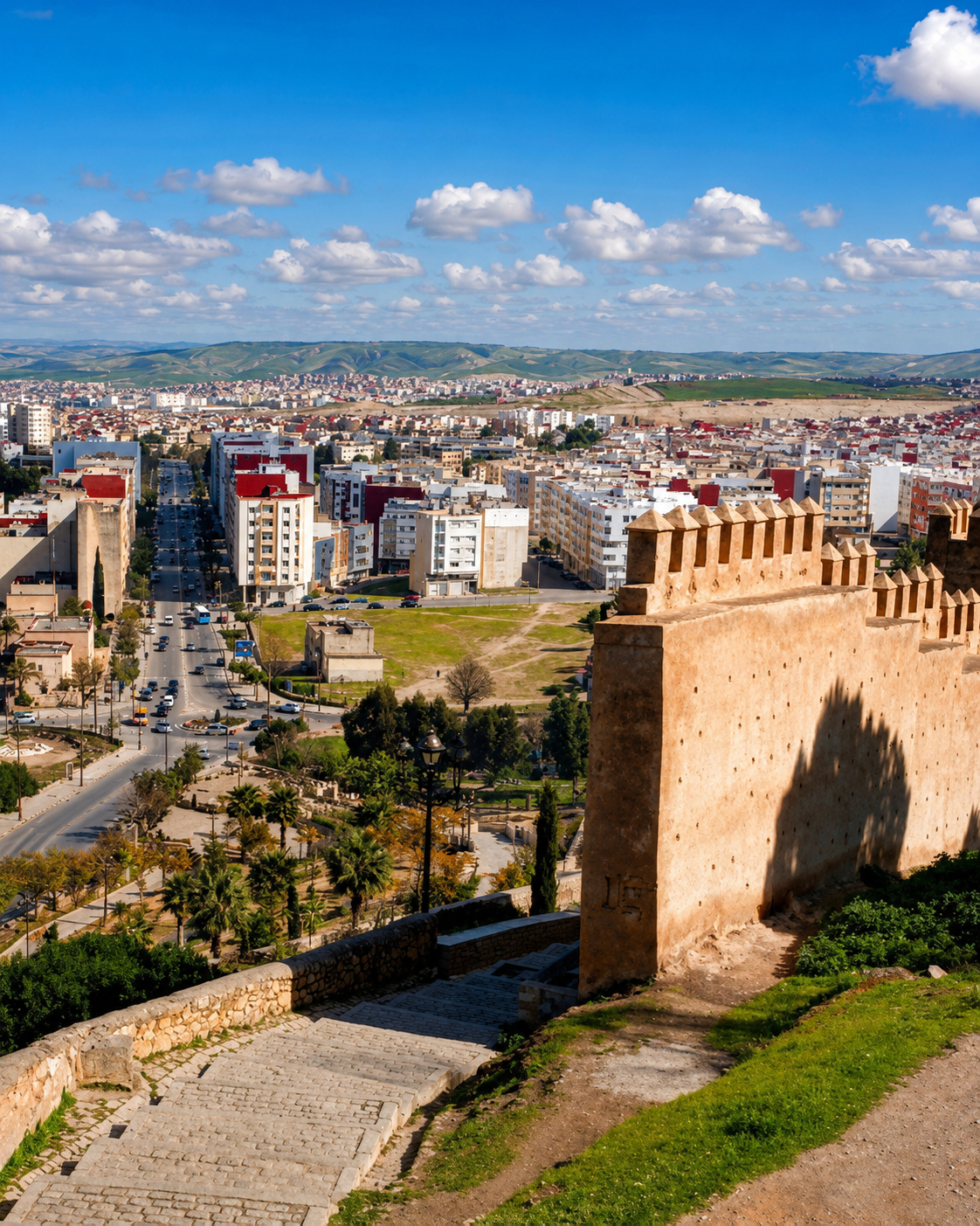
Bab Jemaa and the ramparts show why Taza’s position mattered: the old city watches the passage below.

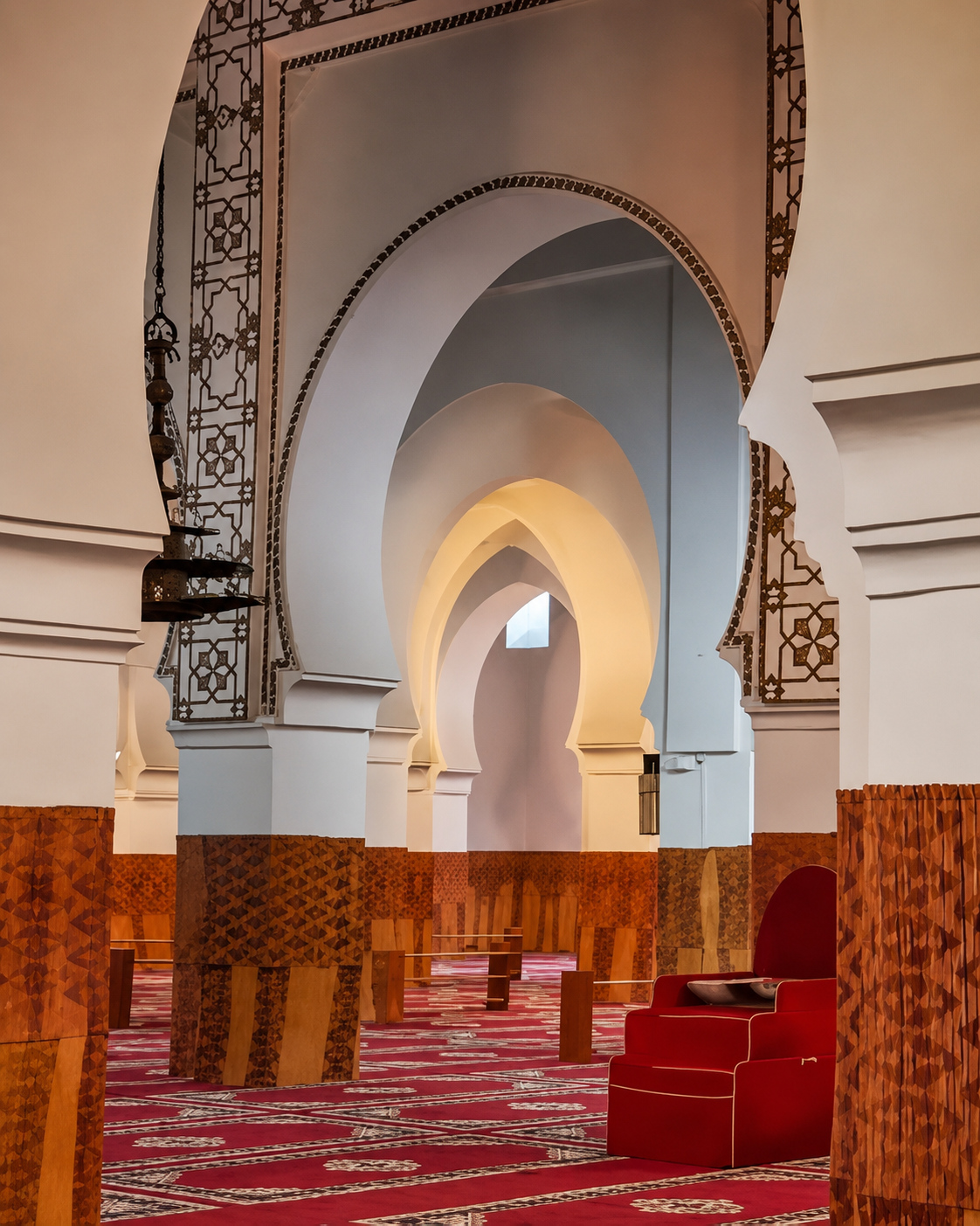
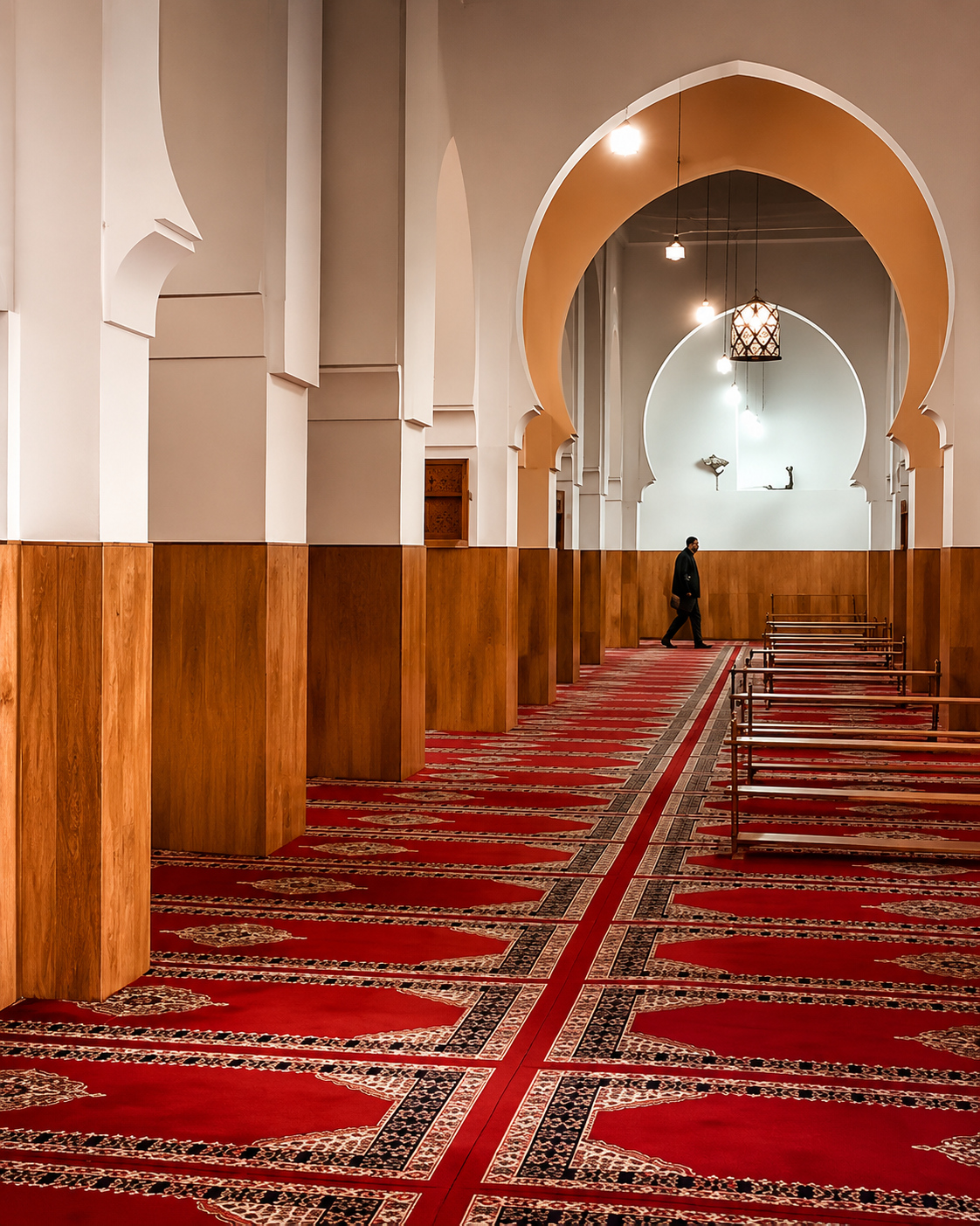
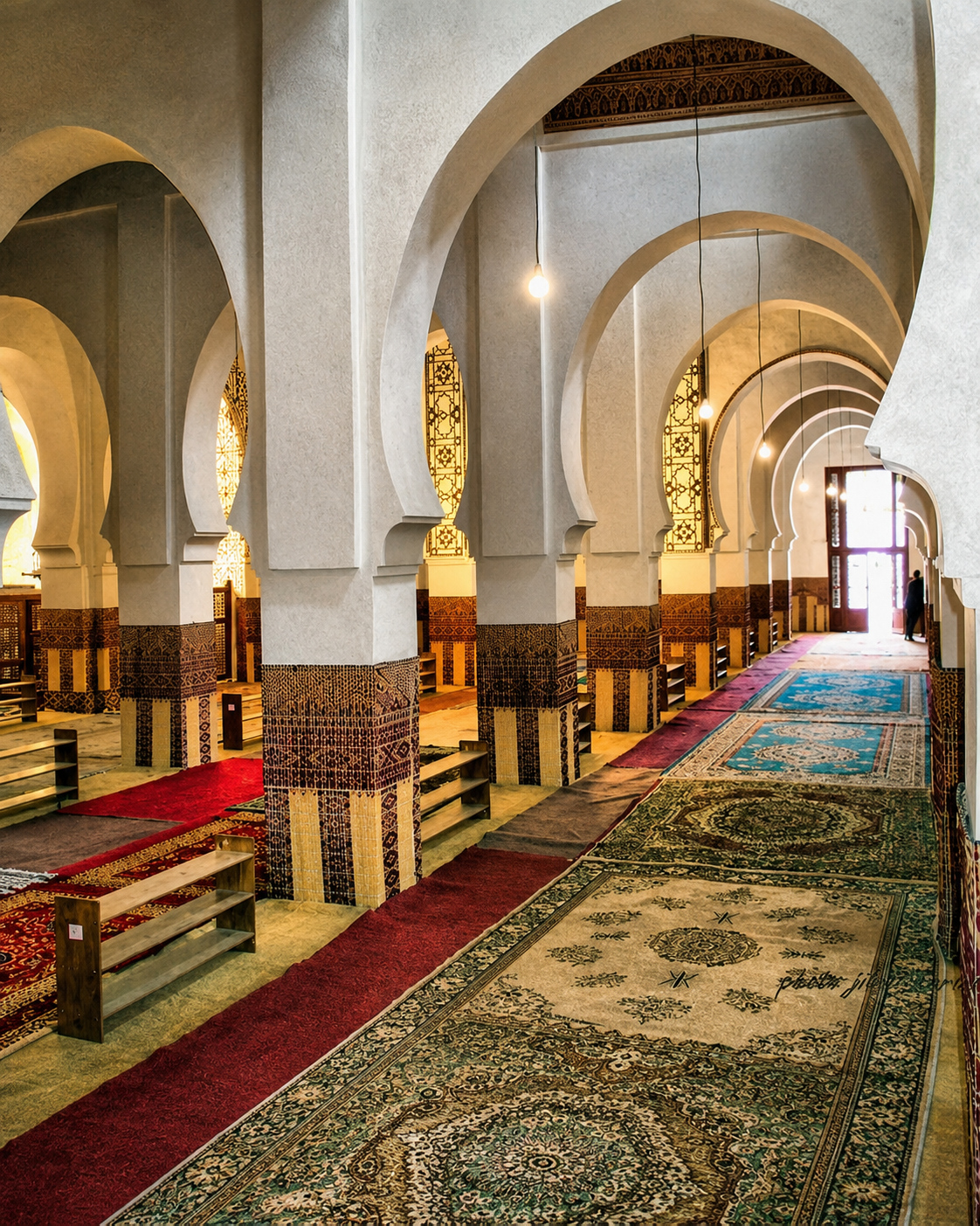
Serene interior of a mosque in Taza

Mosque and medina

White arches, narrow streets and the Great Mosque give the historic core its quieter architectural focus.

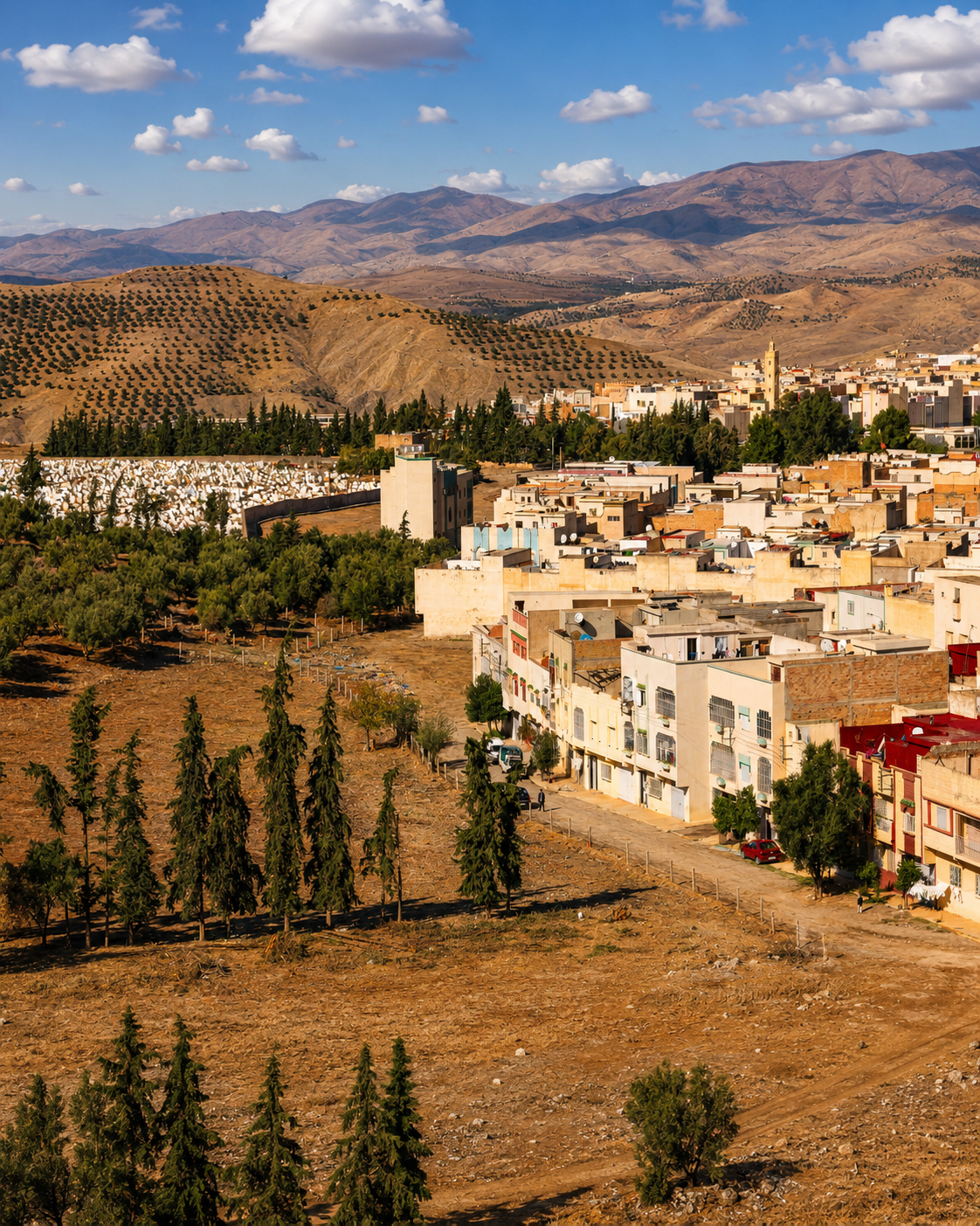
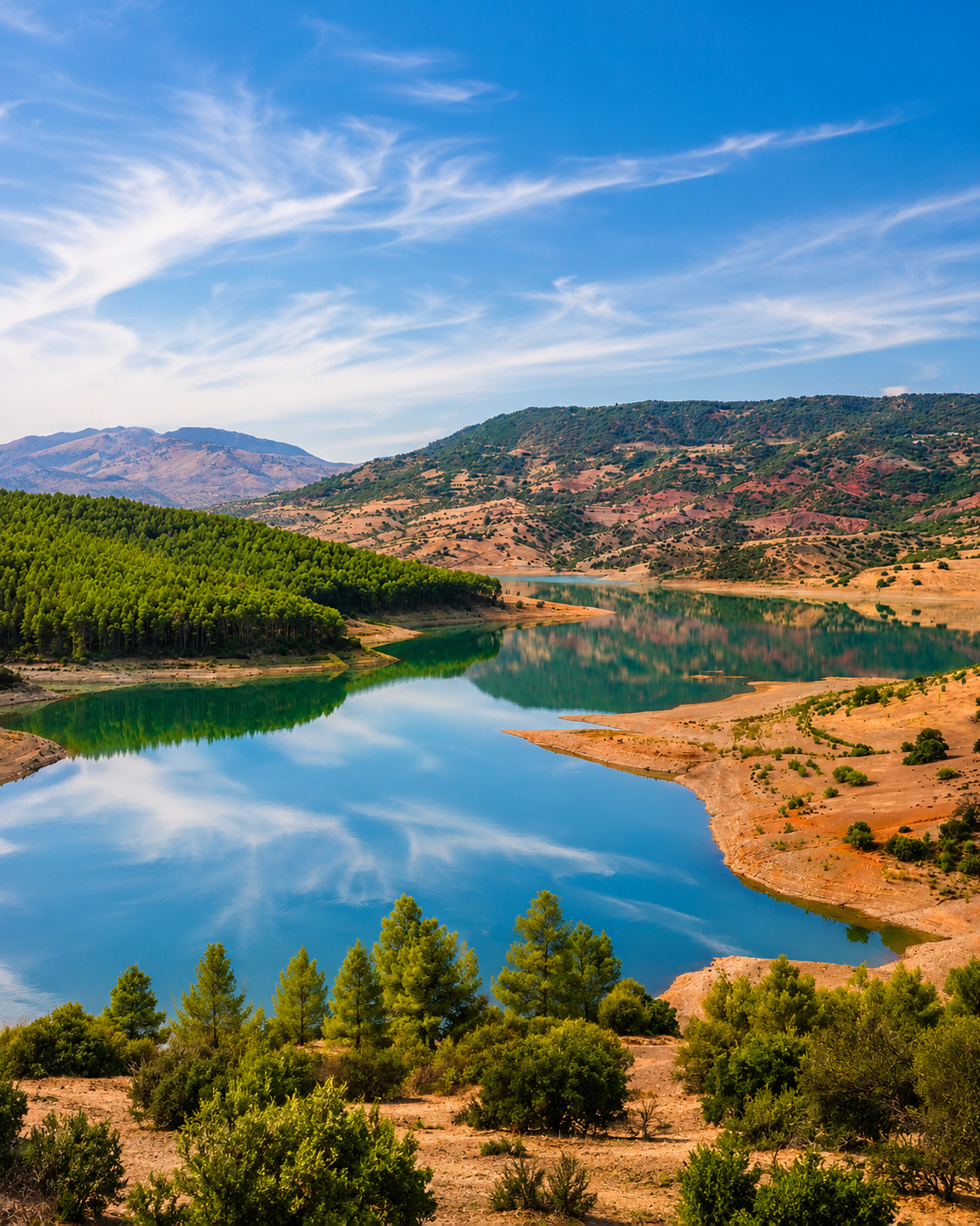
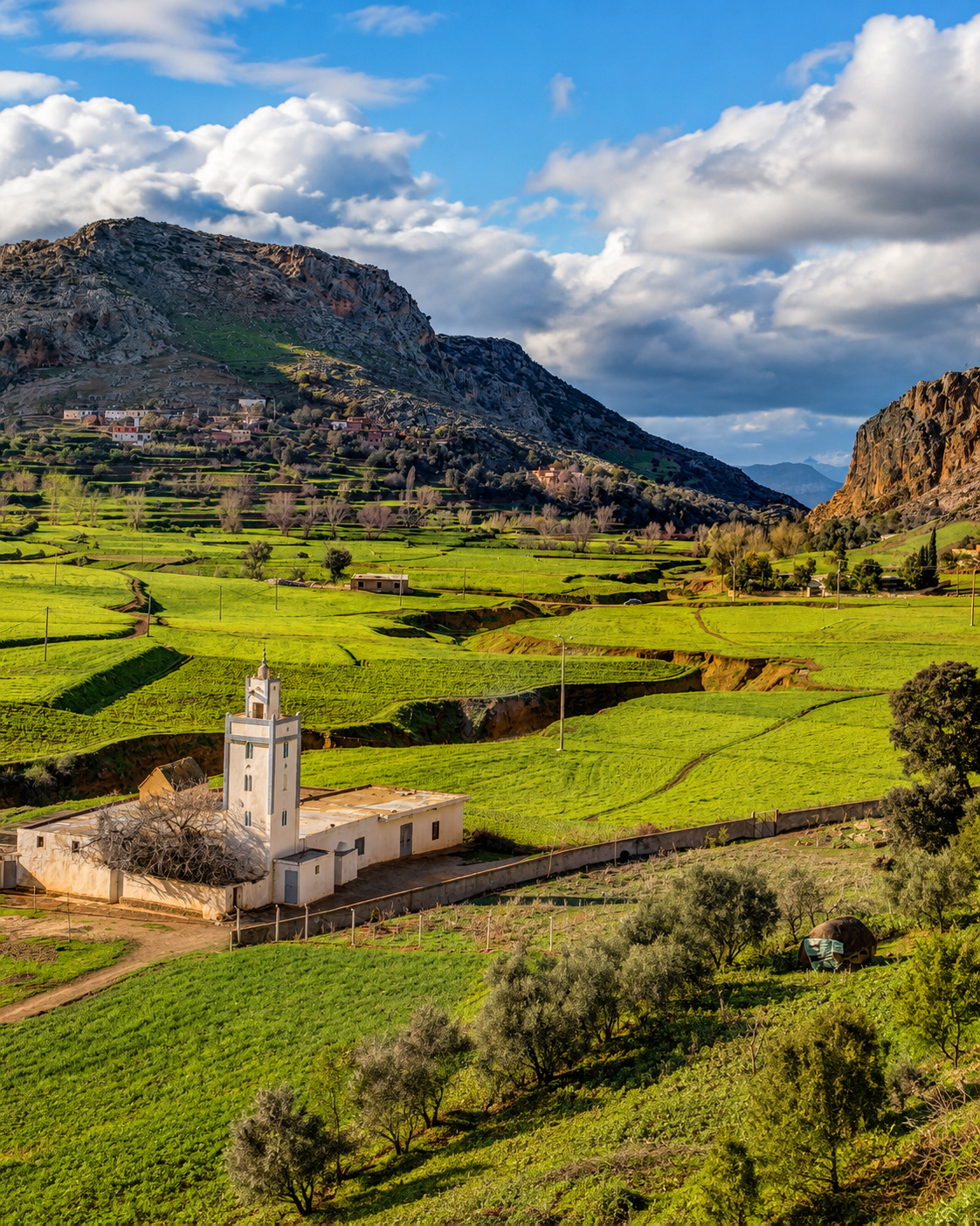
Landscape with a small town and hills near Taza

Mountain horizon

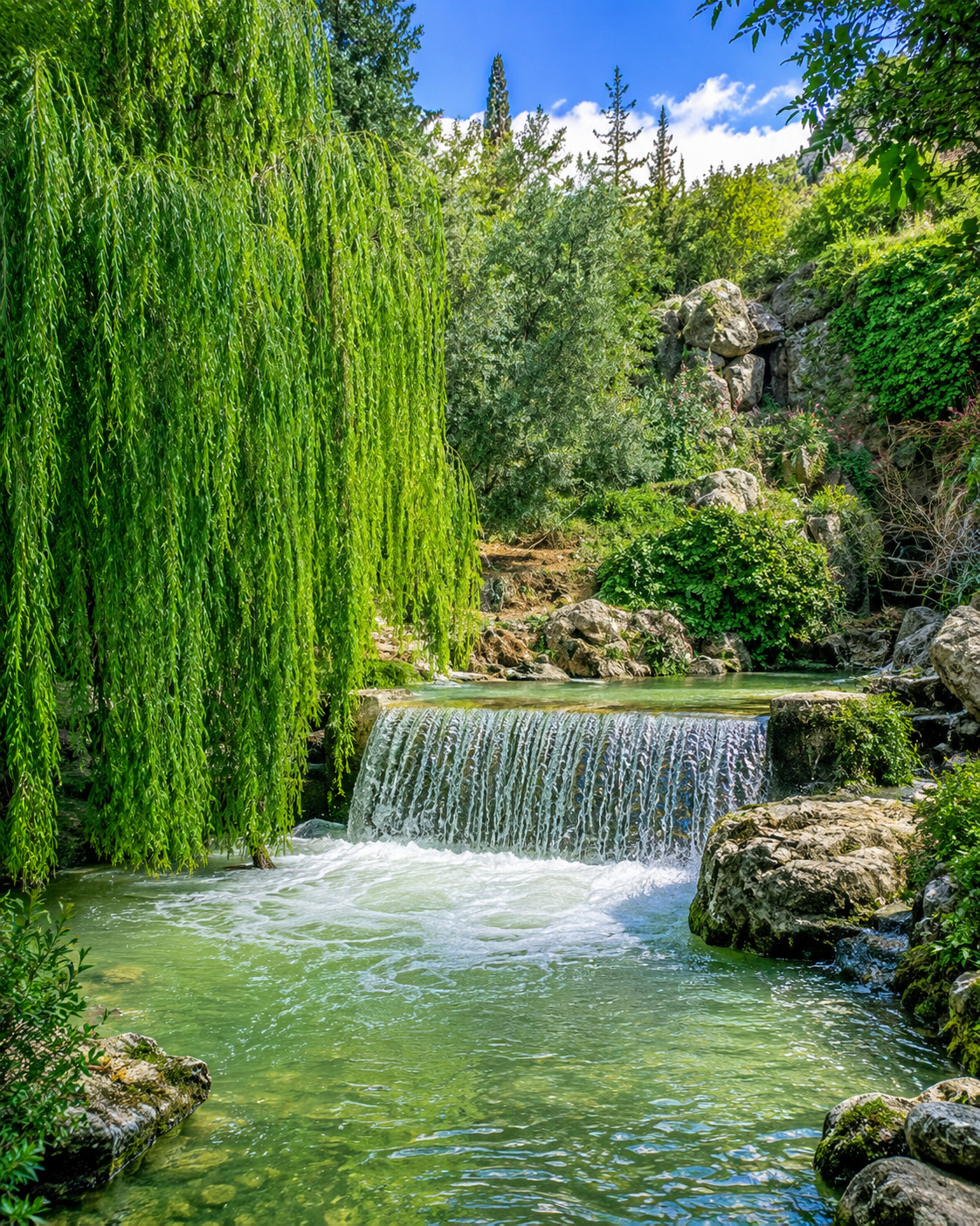
Tazekka adds cedar forest, caves and mountain air to a city usually reduced to the road between regions.

Taza at a glance

Historic city on a corridor

Taza sits between the Rif and the Middle Atlas, above a strategic east–west passage that has shaped its walls, gates and urban orientation.

Tentative-list heritage

Taza and the Great Mosque are on Morocco’s UNESCO Tentative List. This is not World Heritage inscription; it is a formal recognition of potential heritage value.

Compact upper medina

The old city is best understood through walking: gates, slopes, walls, mosque approaches and ordinary streets reveal the structure more clearly than a checklist.

Tazekka nearby

Tazekka National Park changes the journey quickly from fortified city to cedar, limestone, caves and mountain viewpoints.

A clearer reading of the city

A city where route, faith and landscape meet

To understand Taza, read its strategic position, protected religious heritage and mountain setting together. The city is not loud; it becomes clear when the visitor connects walls, passages, sacred architecture and the landscapes that frame the approach.

Medieval fort and city view in Taza
Layer 1

The passage city

The historic upper city dominates a corridor between Moroccan regions. Ramparts and gates are not decorative only — they explain movement, defence and arrival.

Prayer hall with repeating arches in Taza
Layer 2

The mosque layer

The Great Mosque anchors Taza’s medina heritage. Its entrances, minaret and celebrated chandelier point to the city’s religious and architectural weight.

Calm lake surrounded by hills near Taza
Layer 3

The mountain edge

Tazekka National Park gives Taza a second identity: cedar paths, caves and limestone formations close enough to belong to the city’s visitor rhythm.

Landmarks & orientation

Read Taza through six defining places

Taza is clearest when its fortified medina and mountain context are read together. These six references keep the visit accurate, grounded and specific.

1
Bab Jemaa

A historic gate and stairway that helps explain the relationship between the old hilltop city and the newer city below.

2
The ramparts of Taza

The consolidated walls and defensive edges make the city’s strategic position visible from several approaches.

3
Great Mosque of Taza

The medina’s major religious monument, associated with Almohad and later dynastic layers and known for its remarkable chandelier.

4
Bab el-Rih

A gate and fortified edge near the old city that keeps Taza’s defensive urban language legible.

5
Old medina streets

Compact lanes, whitewashed passages and everyday movement show Taza as a lived city, not only a monument.

6
Tazekka direction

The road toward Tazekka, Friouato and nearby landscapes expands the visit from urban heritage to mountain terrain.

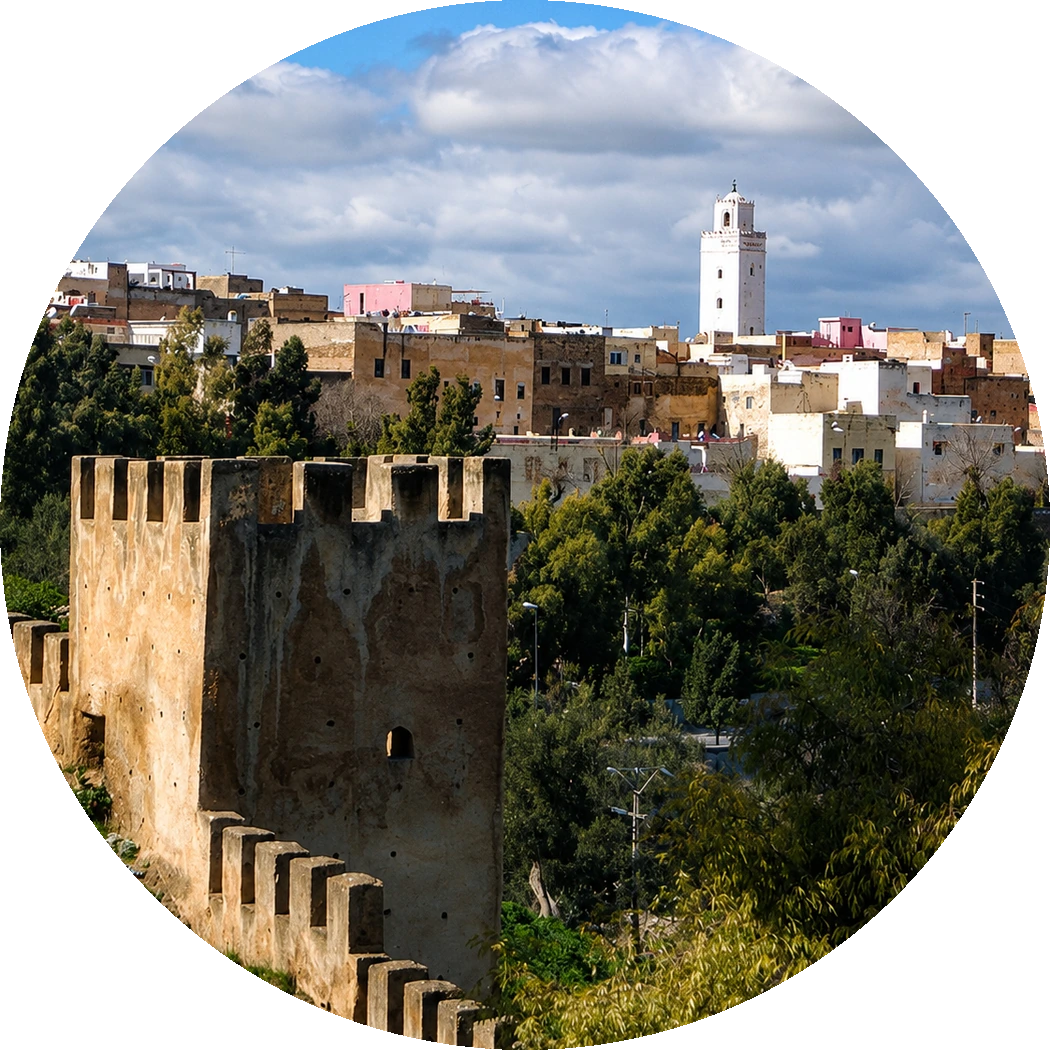
Circular view of Taza fortifications, medina and mosque tower
Elegant corridor in Islamic architecture in Taza

A sacred interior

Great Mosque of Taza — heritage held in architecture and light

The Great Mosque gives Taza its strongest architectural anchor. It should be approached with respect as a working religious monument, but its presence shapes the medina even from the outside: entrances, minaret, surrounding lanes and the memory of the great chandelier all point to a city whose cultural importance is deeper than its modest visitor profile suggests.

  • Read the mosque as part of the medina’s urban fabric, not as an isolated stop.
  • Notice the restrained exterior approaches and how they compress movement around the sacred core.
  • Treat access and photography with care, especially around active prayer spaces.

Architectural reading

Three architectural languages to notice

Defensive height

Walls, gates and views over the lower town show the city’s first language: protection and control of passage. The architecture makes geography visible.

Medina compression

Inside the old city, scale tightens. Streets, thresholds and mosque approaches create a slower rhythm than the open road below.

Mountain limestone

Beyond the walls, Tazekka changes the material reading: cedar forest, cave entrances and limestone formations extend the city’s identity into landscape.

Visual atmosphere

Stone, white passages and cedar-green distance

Nearby highlights

Mountain, cave and regional extensions

Taza works best as a compact heritage stop with a strong nature extension. The old city can be paired with Tazekka, Friouato and the broader corridor toward Fès or eastern Morocco when time allows.

Tazekka National Park

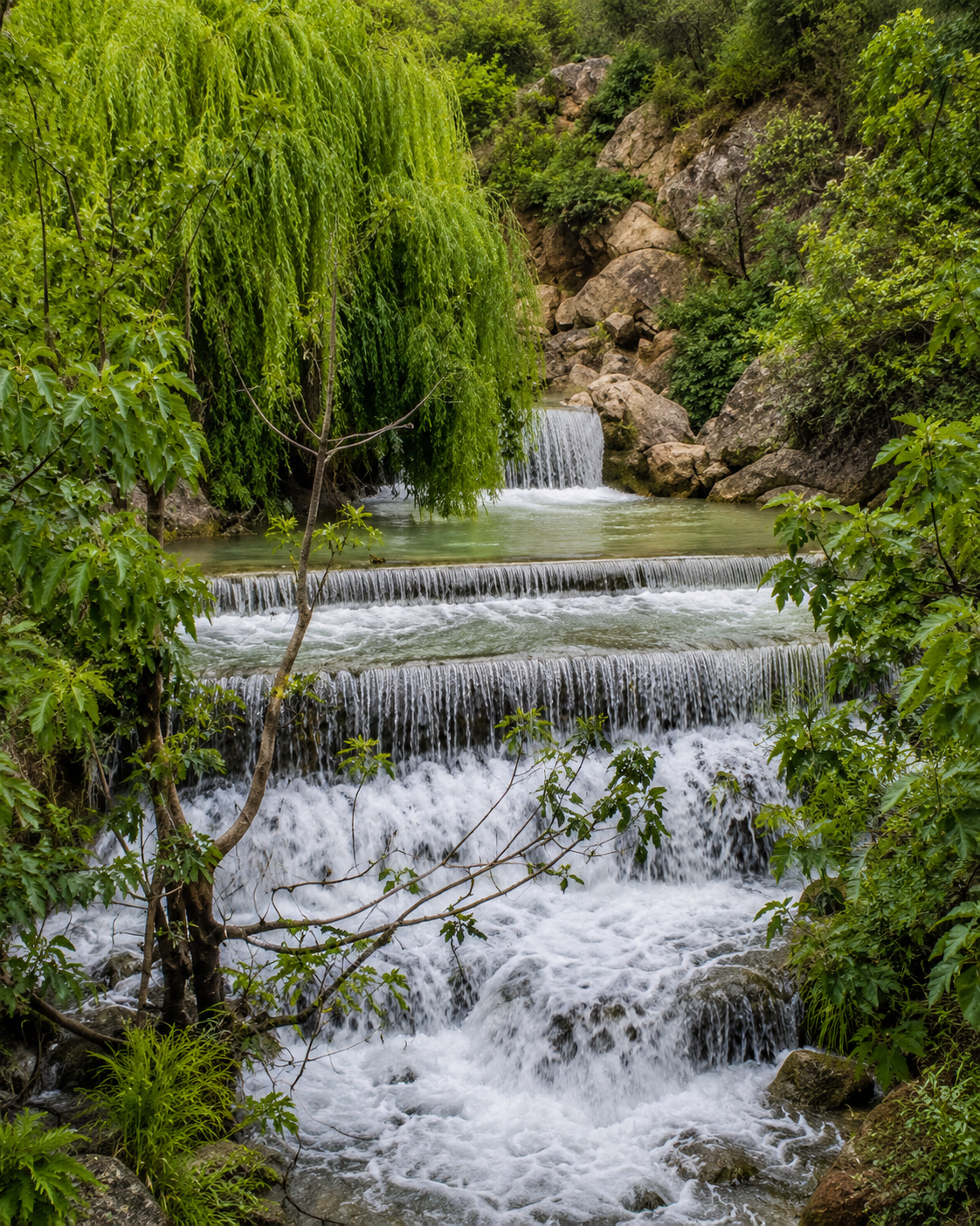
A Middle Atlas protected landscape of cedar, oak, canyons, caves and viewpoints south of Taza. Treat it as a nature extension, not an urban monument.

Waterfalls in a green gorge in the Taza region

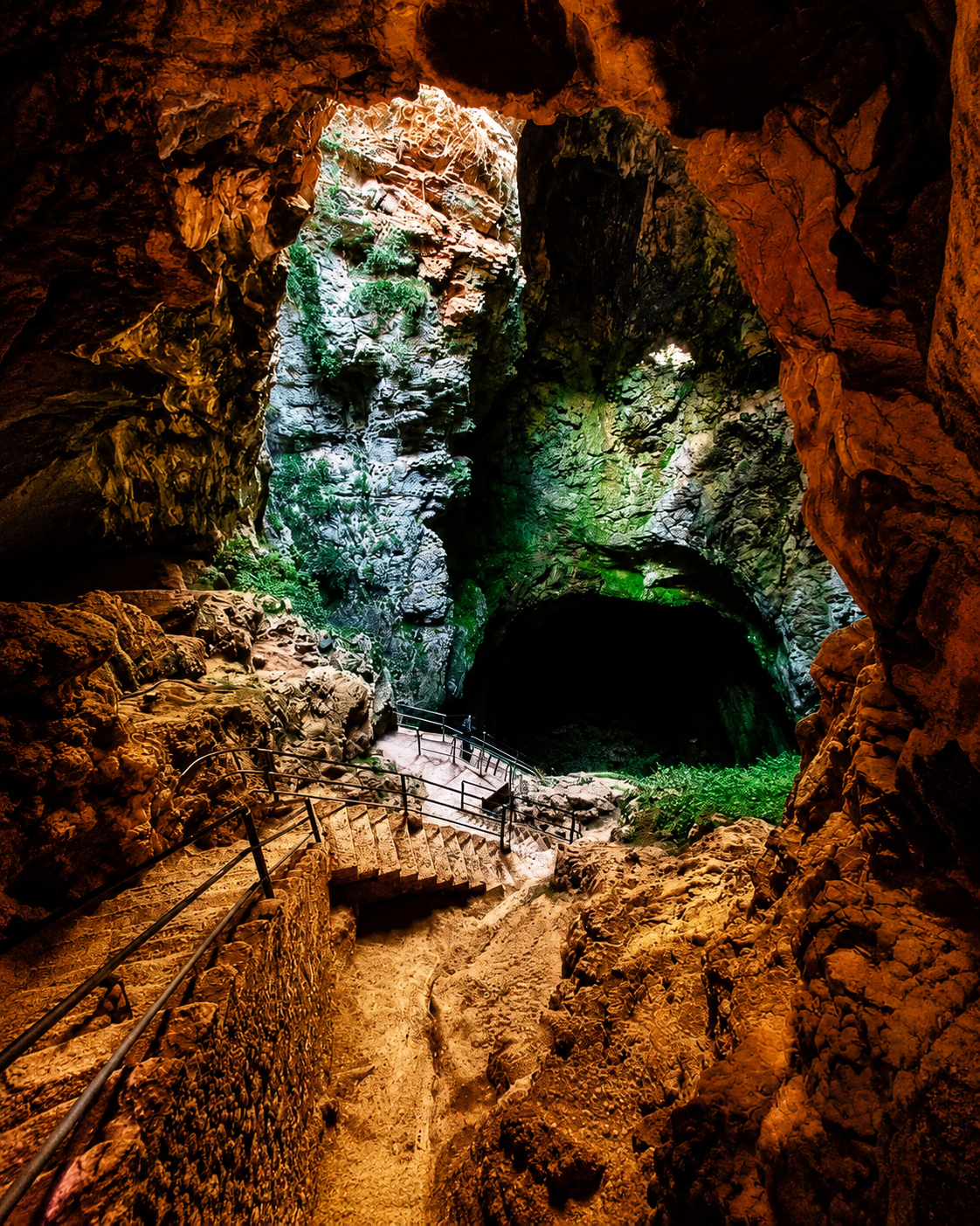
Friouato Cave

A dramatic cave and chasm area in the Tazekka landscape. Access can depend on current safety and local guide conditions, so confirm before planning around it.

Underground cave with sunlight near Taza

Fès and eastern routes

Taza sits between major regional directions. It can break the journey between Fès, the Middle Atlas edge and the route toward the east.

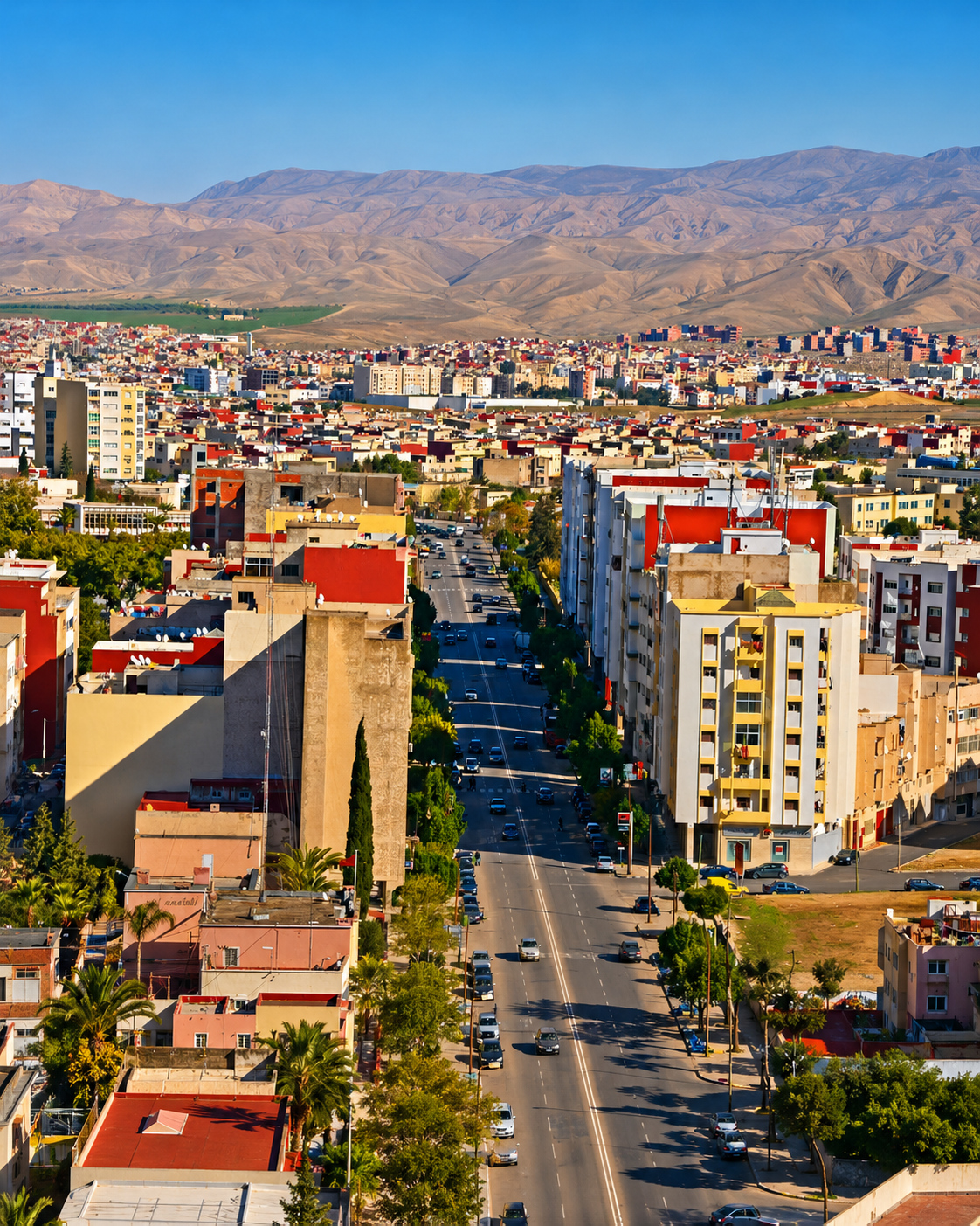
Taza cityscape with mountains in the background
Travel note: cave access, local guiding, road conditions, weather and restoration work can change. Check current official or trusted local information before travelling.

Practical orientation

How to experience Taza well

  • Begin in Taza-Haut so the relationship between upper old city and lower modern city is clear.
  • Use Bab Jemaa, ramparts and medina lanes as the first orientation sequence.
  • Approach the Great Mosque respectfully and avoid assuming unrestricted interior access.
  • Plan Tazekka or Friouato as a separate nature extension, not a rushed add-on.
  • Check current road, cave and guide conditions before making the mountain section the centre of the day.

A strong first visit

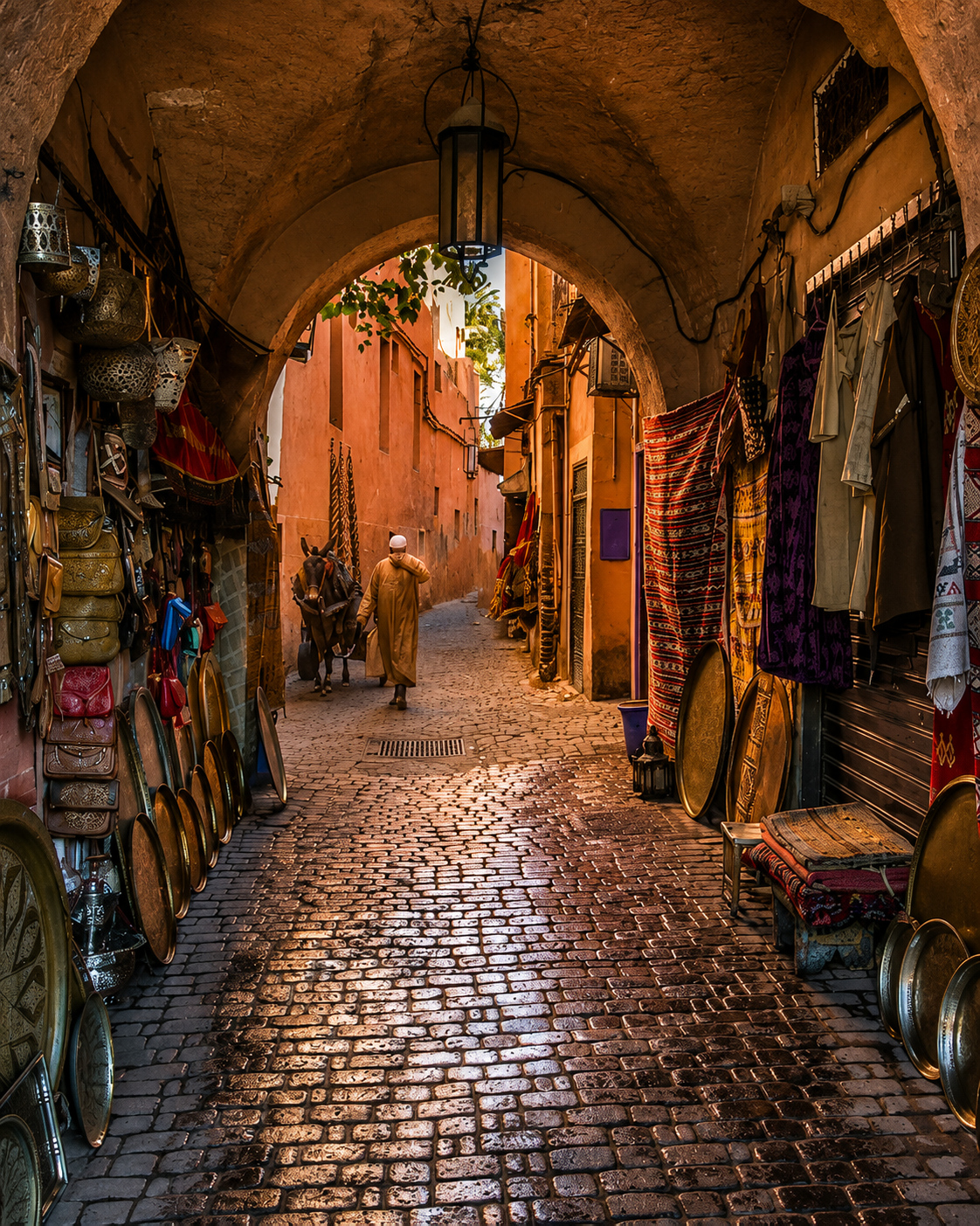
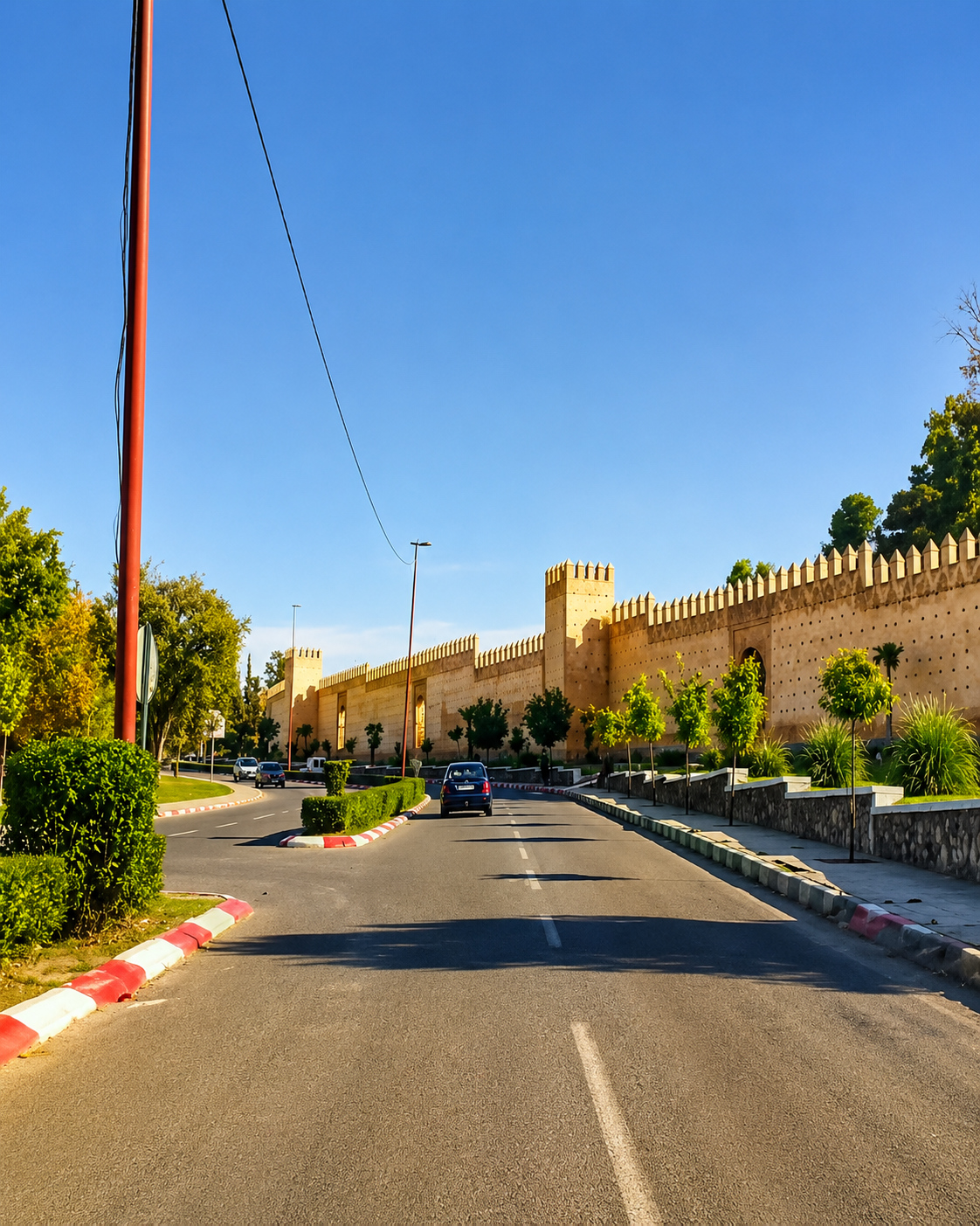
Sunlit street with a city wall in Taza

Start above the city at Bab Jemaa and the ramparts, continue into the medina toward the Great Mosque, then pause for ordinary street life rather than treating Taza as a quick gate photo. Add Tazekka only if you have enough daylight and current access information.

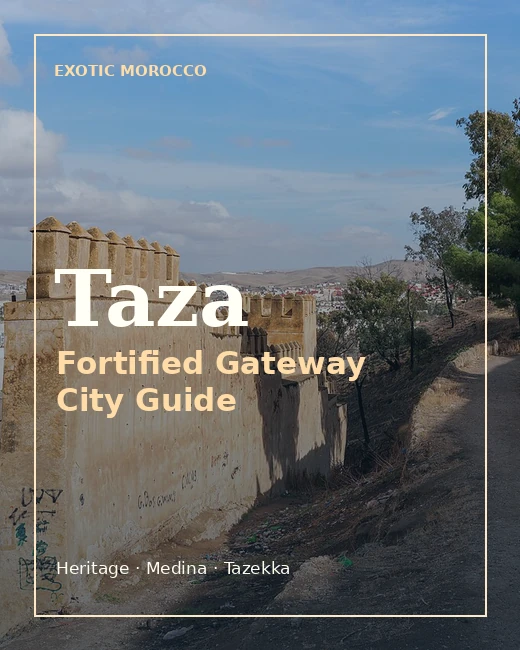
Cover of the Taza Visual City Guide

Go deeper with Exotic Morocco

Taza — Visual City Guide

A careful future guide can connect Taza’s fortified old city, the Great Mosque, medina lanes, Tazekka landscapes, cave systems and route context into one clear visitor reading.

✓ Fortified-city context✓ Medina orientation ✓ Great Mosque heritage✓ Tazekka landscapes ✓ Practical visit logic✓ Nearby extensions

Continue the journey

Continue the journey beyond Taza

Move west toward Fès, south into Tazekka and the Middle Atlas, or east along Morocco’s corridor of lesser-known cities and landscapes.