Tan-Tan visual composition with camel sculptures, market stalls, cultural gathering and the Atlantic coast

Southern Atlantic Morocco

Tan-Tan Saharan cultural memory, Atlantic roads and quiet desert-edge rhythm

Tan-Tan is not a city of easy spectacle. It is a southern threshold: a place where Atlantic routes, Saharan gathering traditions, working coastal life and wide desert light meet before the road continues toward Plage Blanche, Khnifiss and the deeper south.

Why Tan-Tan matters

Beyond the southern road

Tan-Tan asks to be understood as an orientation city rather than a monument checklist. Its importance comes from position: inland from the Atlantic fishing coast, tied to desert-edge routes, and associated with one of Morocco's most significant living expressions of Saharan nomadic culture.

The city is practical, open and understated. Visitors who read it well notice the relationship between town streets, route traffic, coastal work at El Ouatia, the wide mouth of the Draa, seasonal cultural gathering and the protected lagoon landscapes farther south.

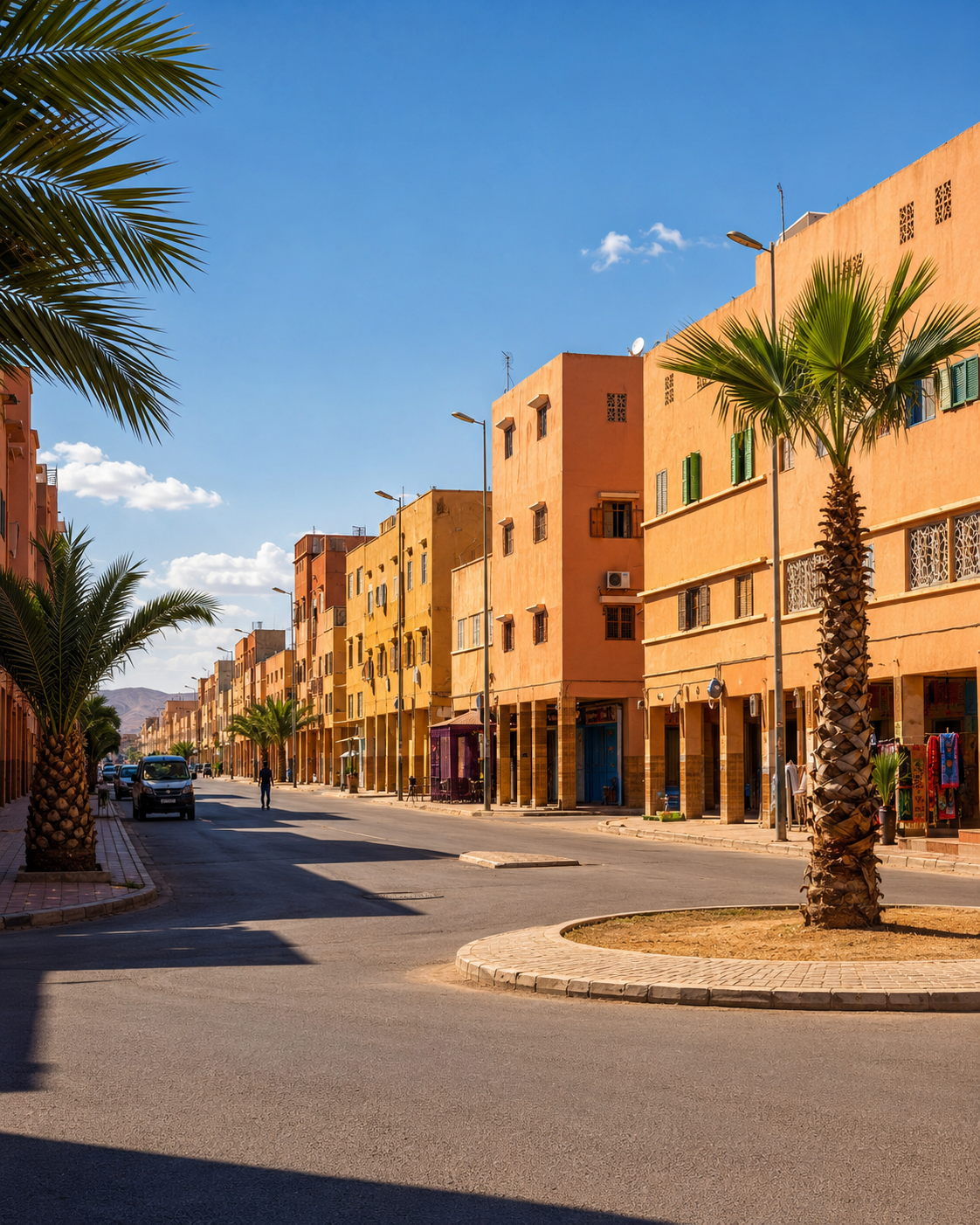
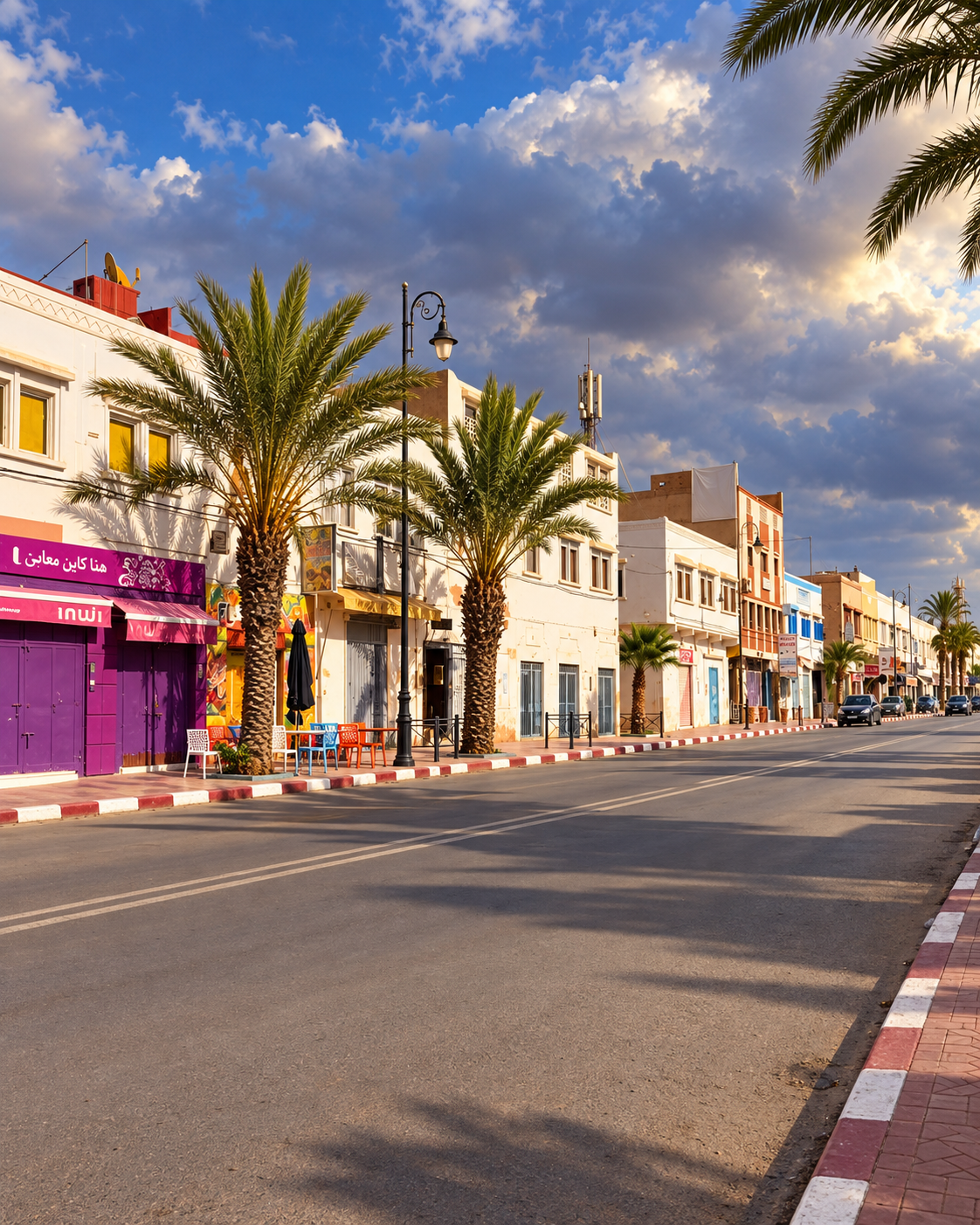
Palm-lined avenue with warm-coloured façades in Tan-Tan

The everyday city

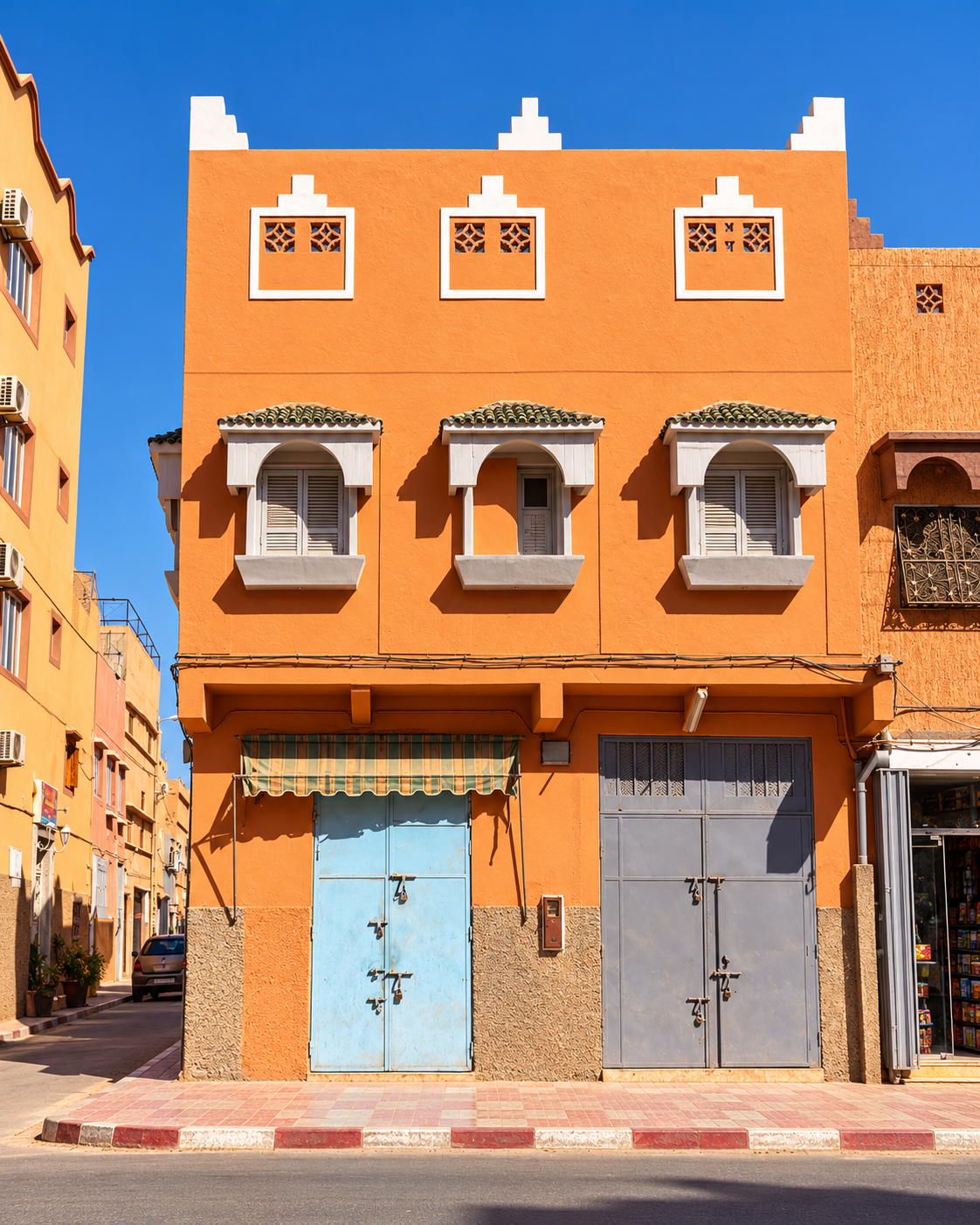
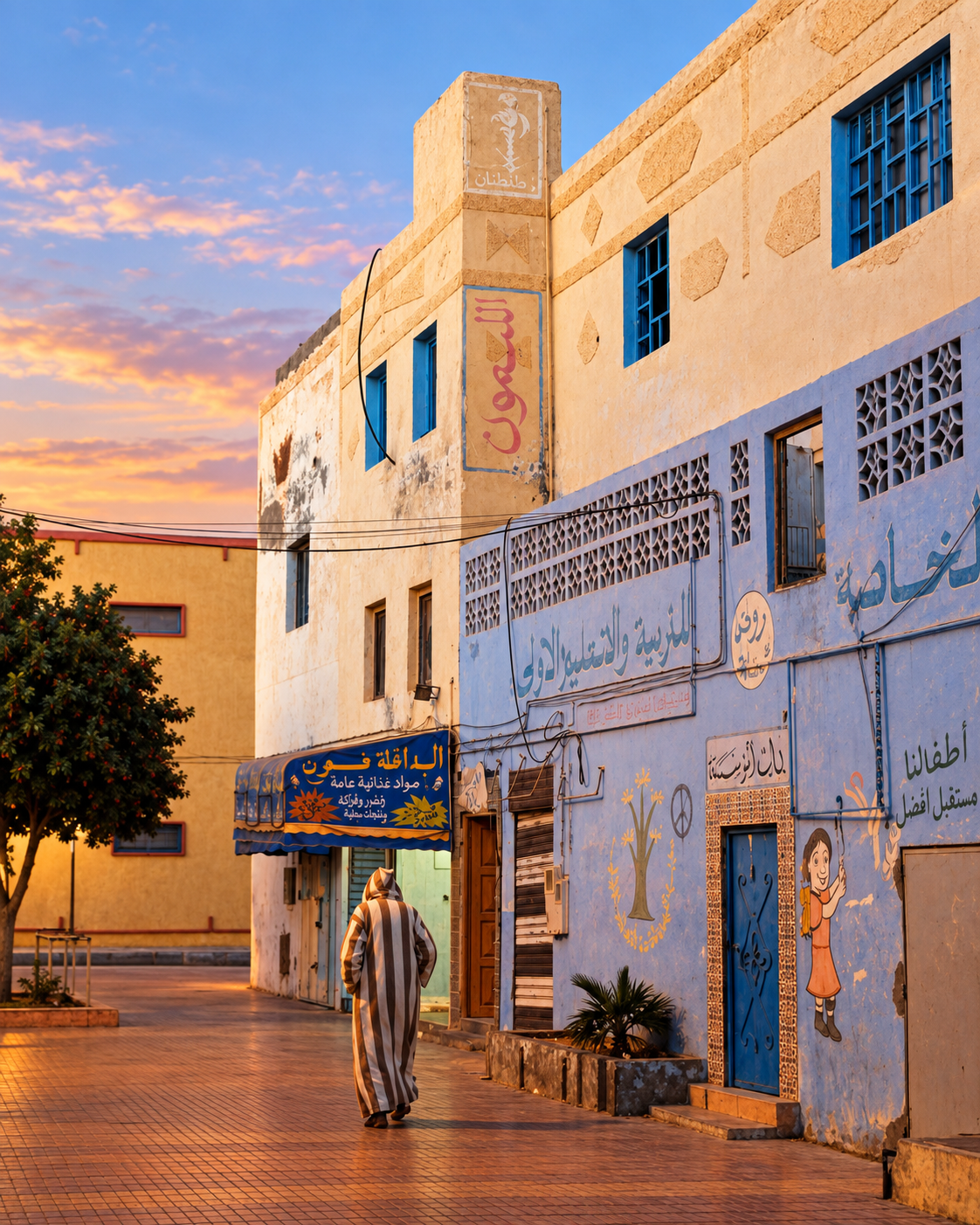
Palm-lined avenues, warm-coloured façades and neighbourhood shops give the inland city its everyday rhythm.

EXPLORE

Tan-Tan

Historical orientation

From Saharan routes to living cultural heritage

Tan-Tan's story is best read through movement. Long before it became a modern provincial centre, the surrounding region belonged to routes of exchange, seasonal gathering and pastoral knowledge. The city's contemporary identity still carries that memory through the Moussem of Tan-Tan, the Atlantic fishing coast and the road network that links Guelmim, the Draa landscapes, Tarfaya and Laayoune.

01Route memory

Desert-edge exchange

The Tan-Tan area sits where inland Saharan movement, Atlantic approaches and southern Moroccan route logic meet. Its identity is tied less to walls than to passage, gathering and orientation.

02Modern town

A southern centre

The present city functions as a regional service and travel point: practical, workaday and connected to the coast through El Ouatia and Tan-Tan Plage.

03First Moussem: 1963

Moussem gathering

The gathering took the form of a Moussem in 1963. After a long interruption beginning in 1979, it resumed in 2004, renewing its role in Saharan cultural exchange.

04UNESCO 2008

Intangible heritage

UNESCO inscribed the Moussem of Tan-Tan on the Representative List of the Intangible Cultural Heritage of Humanity, recognising a cultural space rather than a stone monument.

A visual bridge

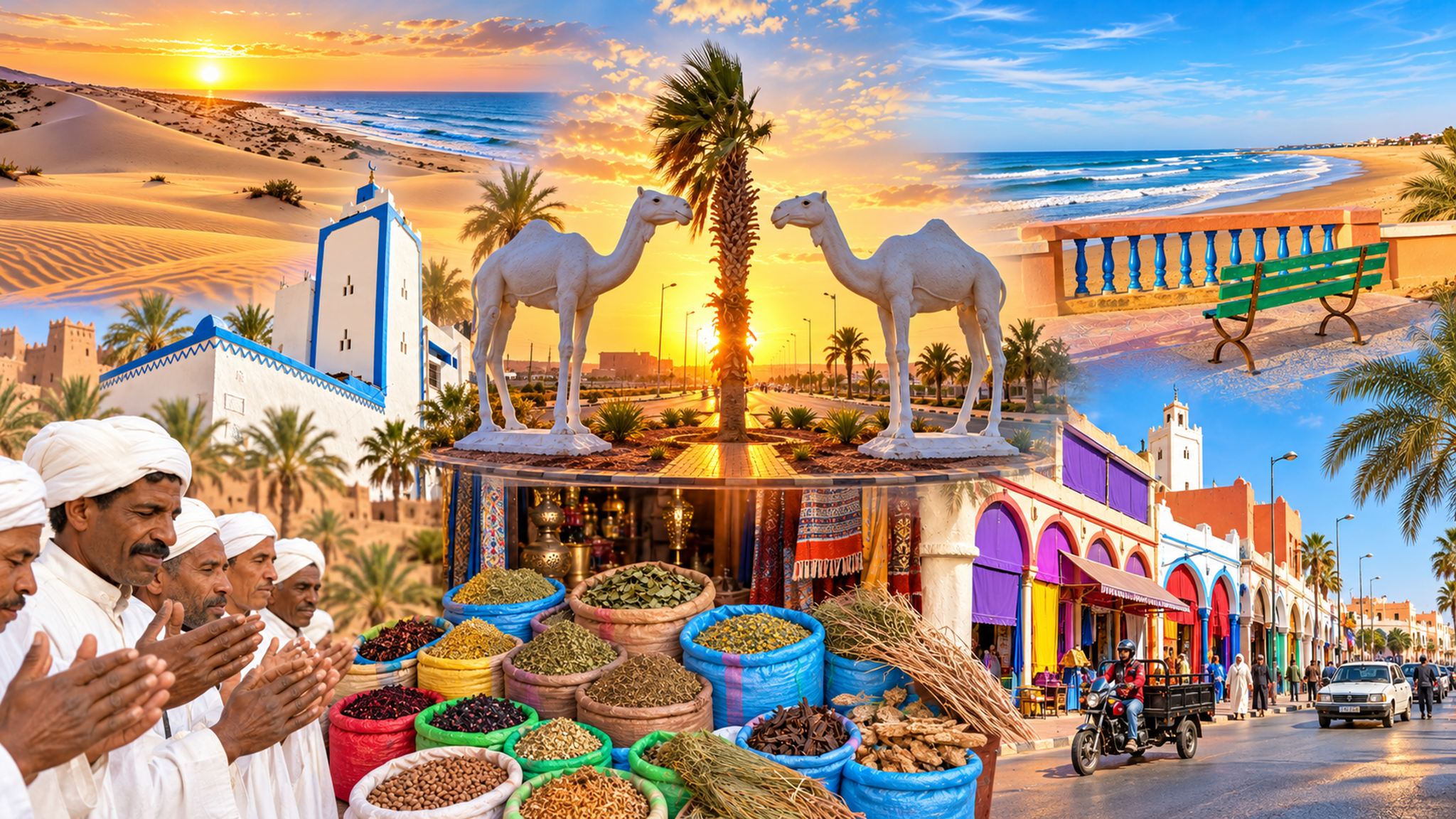
Three glimpses of town and gathering

Tan-Tan becomes clearer through seasonal gathering, camel culture and ordinary town streets. Together they connect Saharan memory to the city’s everyday life.

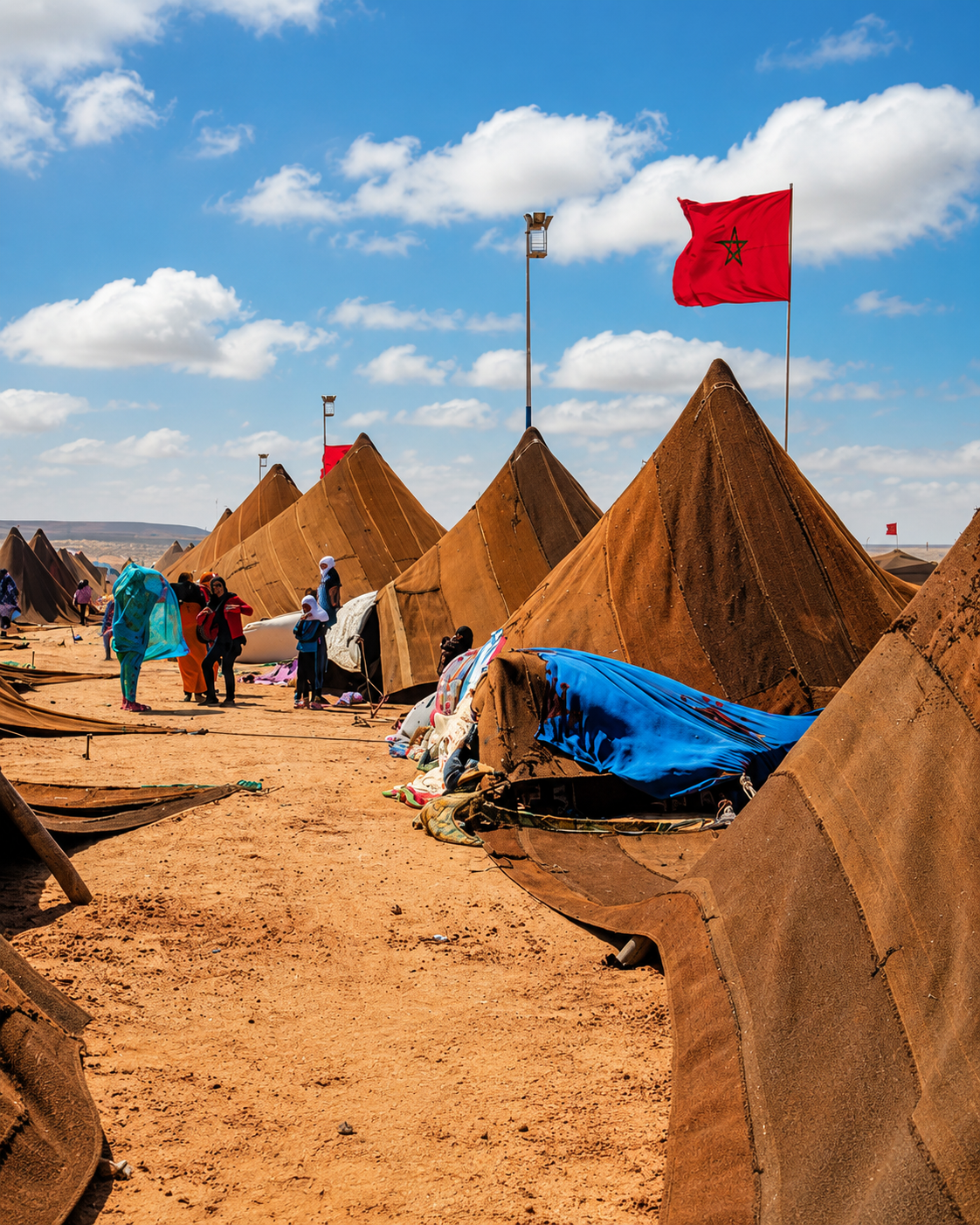
Rows of Saharan tents at the Tan-Tan gathering

Living Saharan memory

The Moussem keeps oral culture, social exchange and nomadic memory visible in a form that belongs to people, not display cases.

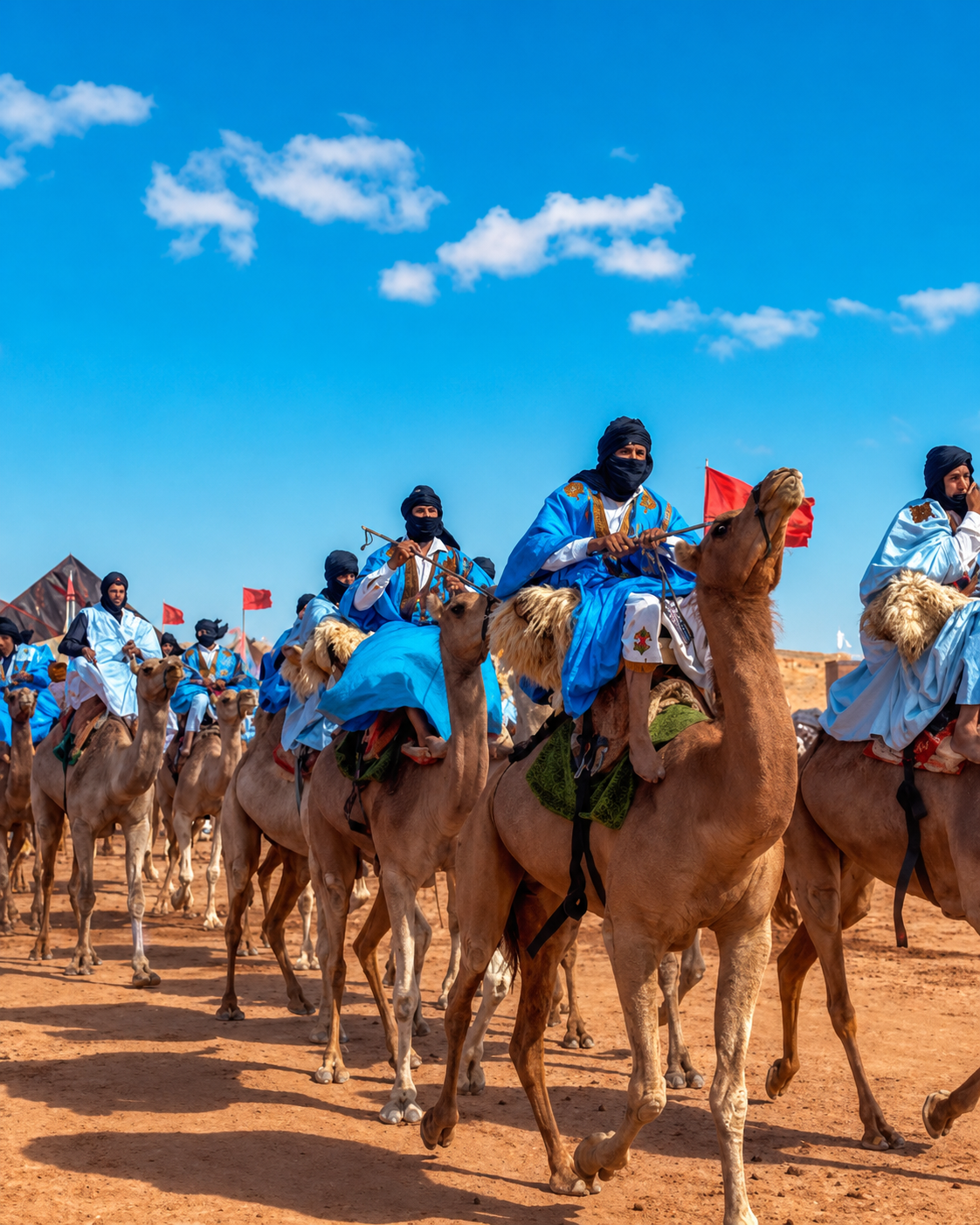
Camel riders in blue clothing at a Saharan gathering

Movement and meeting

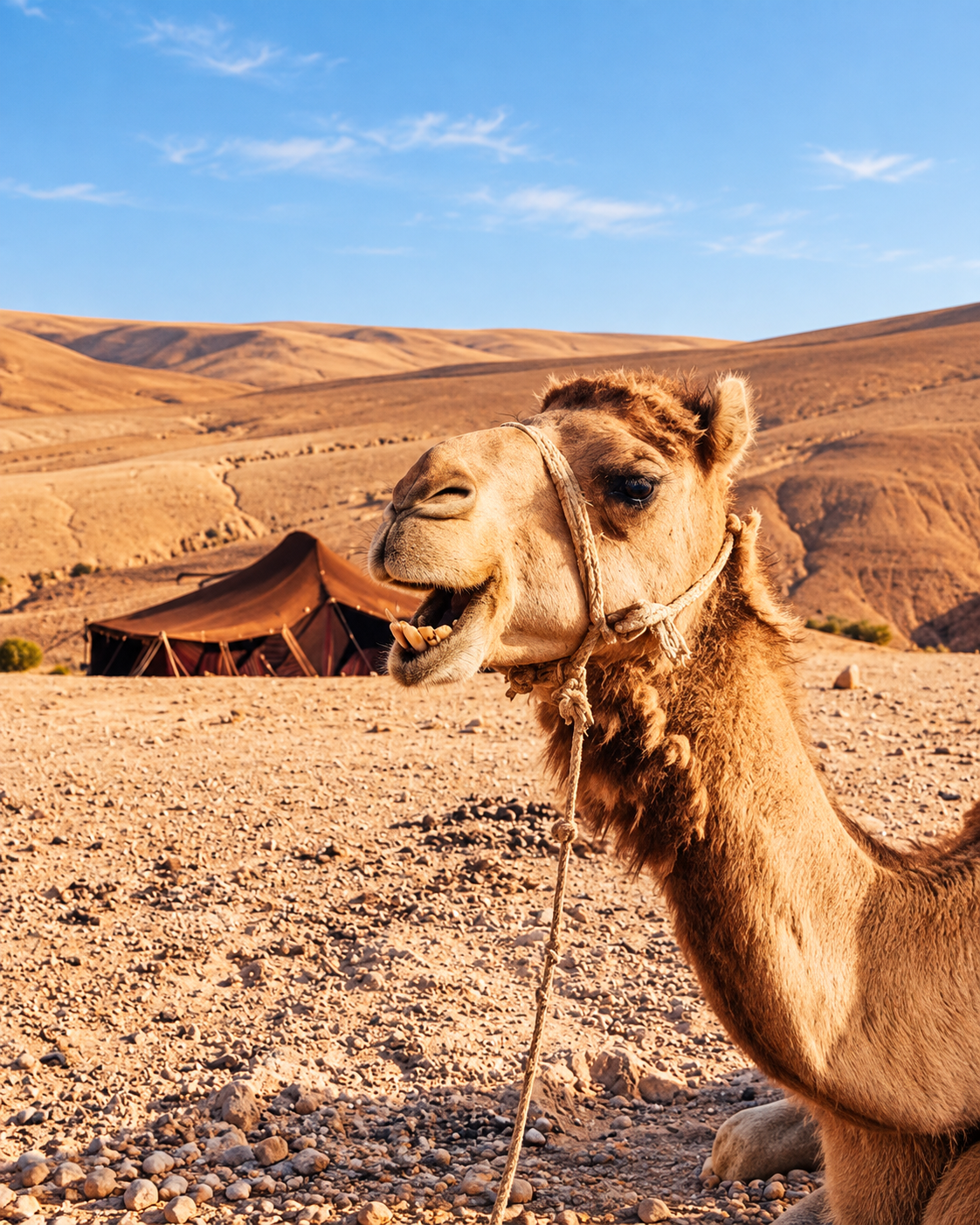
The landscape around Tan-Tan is read through arrival, gathering, departure and the long discipline of open distance.

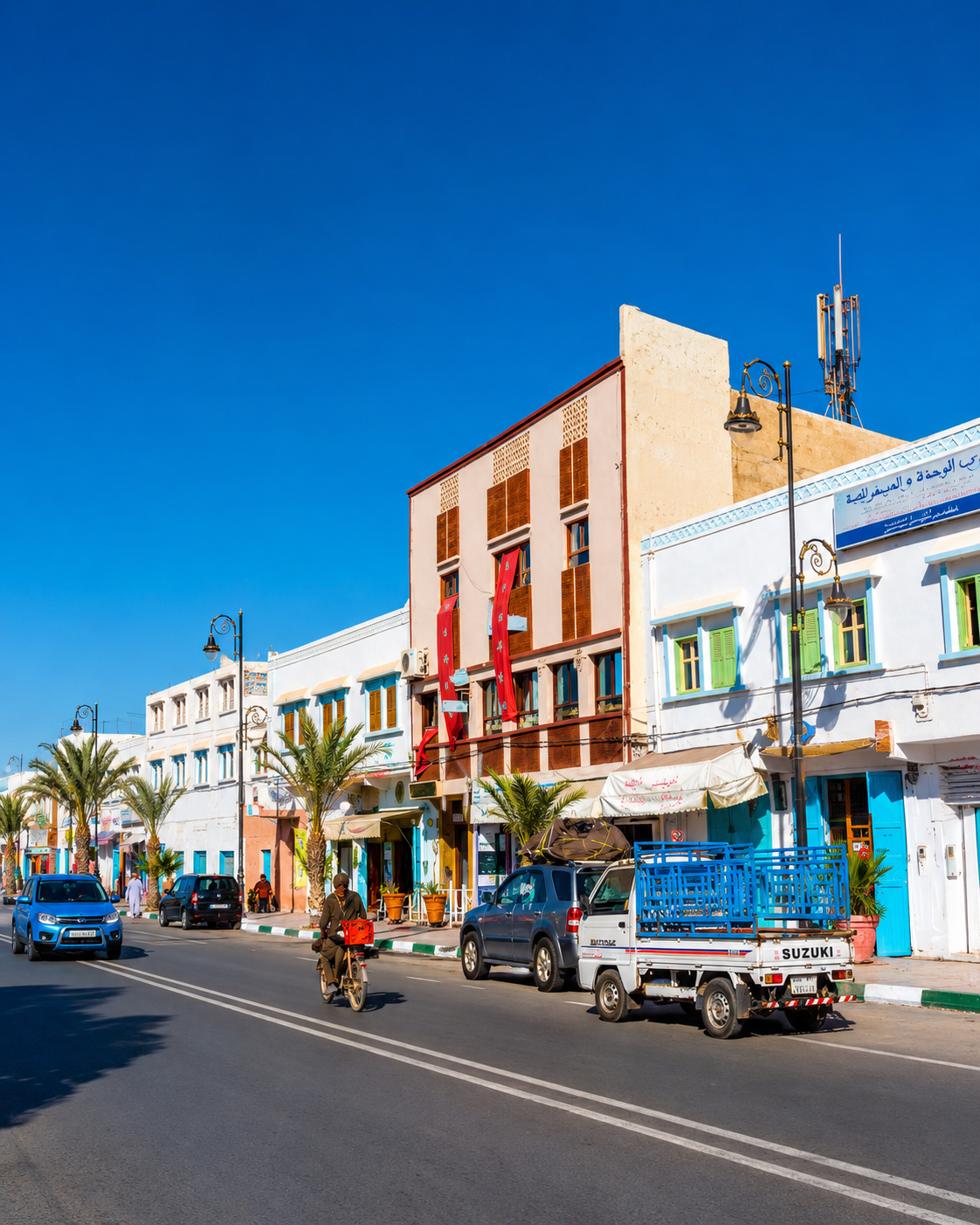
Shopfronts and vehicles along a Tan-Tan street

Everyday town life

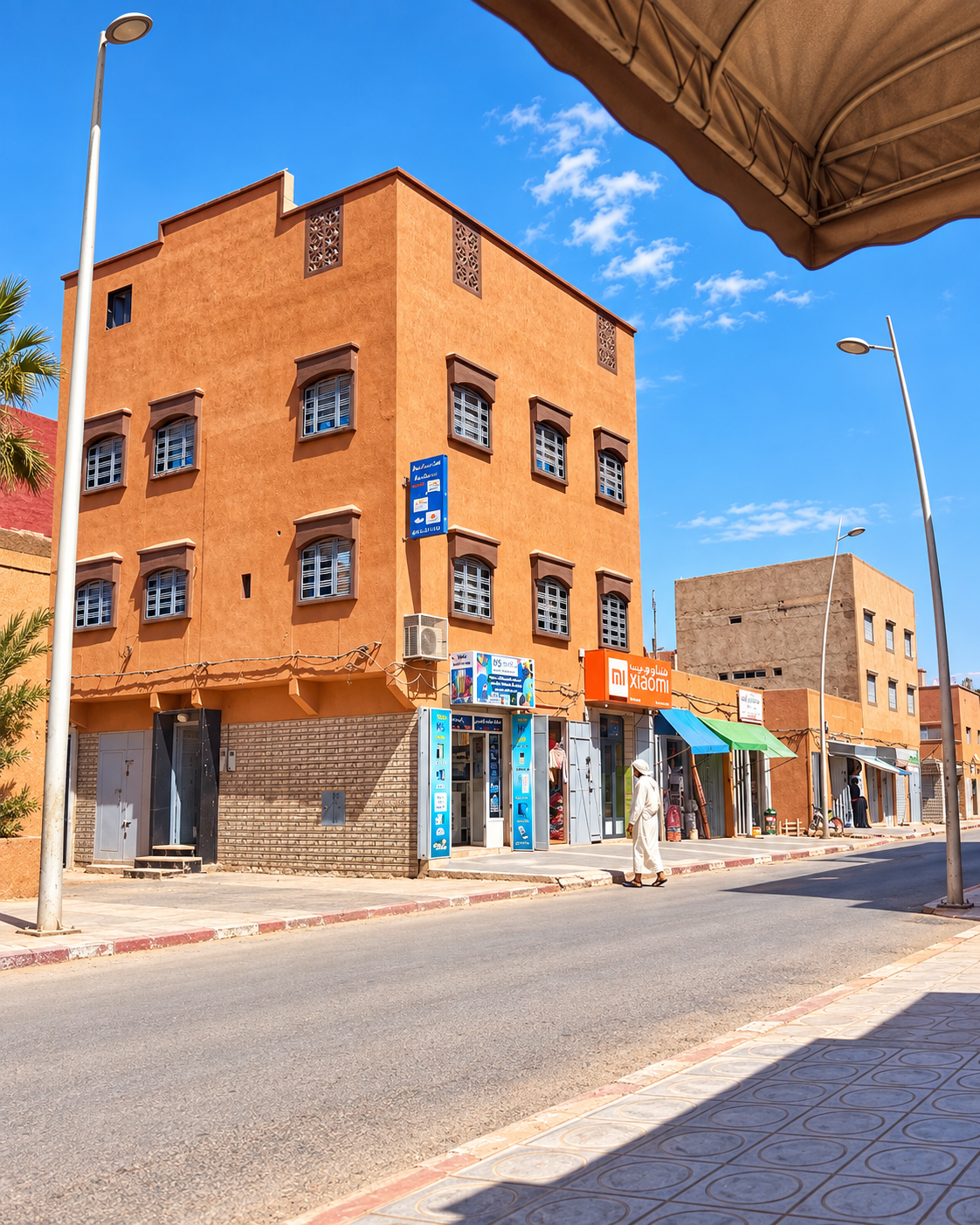
Shops, shade, small errands and simple streets give the city its practical human scale.

Tan-Tan at a glance

Southwest Morocco

Tan-Tan belongs to the Guelmim-Oued Noun region and sits inland from the Atlantic coast. It works naturally as a stop between Guelmim, the lower Draa landscapes and the long southern road.

UNESCO cultural space

The city's strongest heritage reference is the Moussem of Tan-Tan: a recognised intangible heritage gathering connected to Saharan nomadic culture, oral traditions and social exchange.

Coast plus town

The urban centre and El Ouatia, also known as Tan-Tan Plage, should be read together. One provides daily services and route rhythm; the other brings fishing-port life and Atlantic air.

Landscape gateway

Oued Draa, Plage Blanche and Khnifiss National Park extend the journey into empty beaches, lagoon ecosystems, dunes, birdlife and the quiet drama of Morocco's southern coast.

A clearer reading of the city

A city shaped by route, culture and coast

To understand Tan-Tan, resist forcing it into the pattern of Morocco's imperial or medina cities. Its value is different: an honest southern town with a major cultural gathering, a working Atlantic counterpart and access to landscapes that require time, planning and respect.

A loaded truck on a paved road through a dry southern landscape
Layer 1

Route logic

Tan-Tan is a city of arrival and continuation. Its streets make most sense when connected to the road from Guelmim, the Atlantic detour to El Ouatia and the southern line toward Tarfaya and Laayoune.

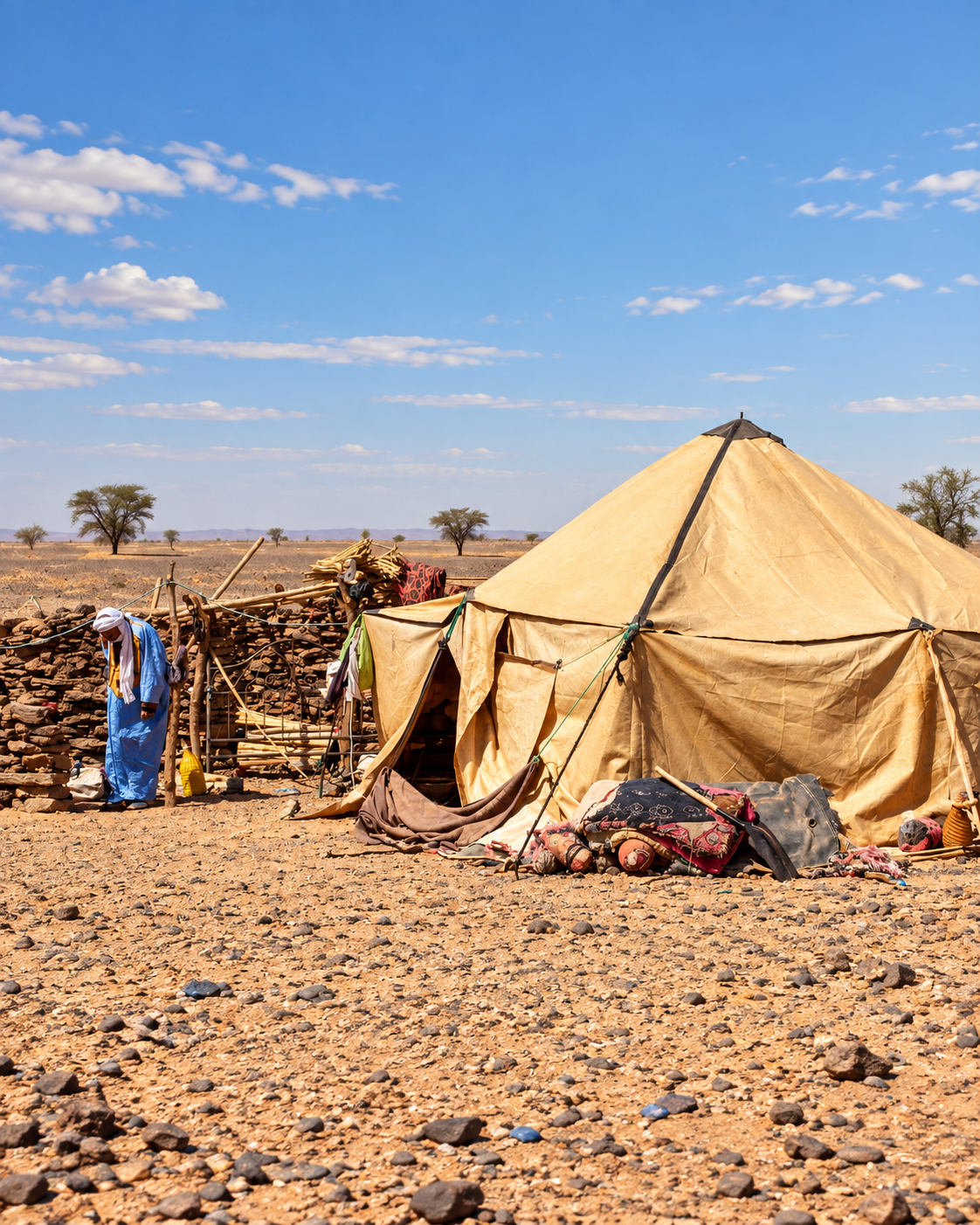
Canvas tent and woven screens on a Saharan plain
Layer 2

Cultural memory

The Moussem is not simply an event for visitors. It preserves a cultural space of gathering, performance, oral tradition, exchange and Saharan identity that should be approached with humility.

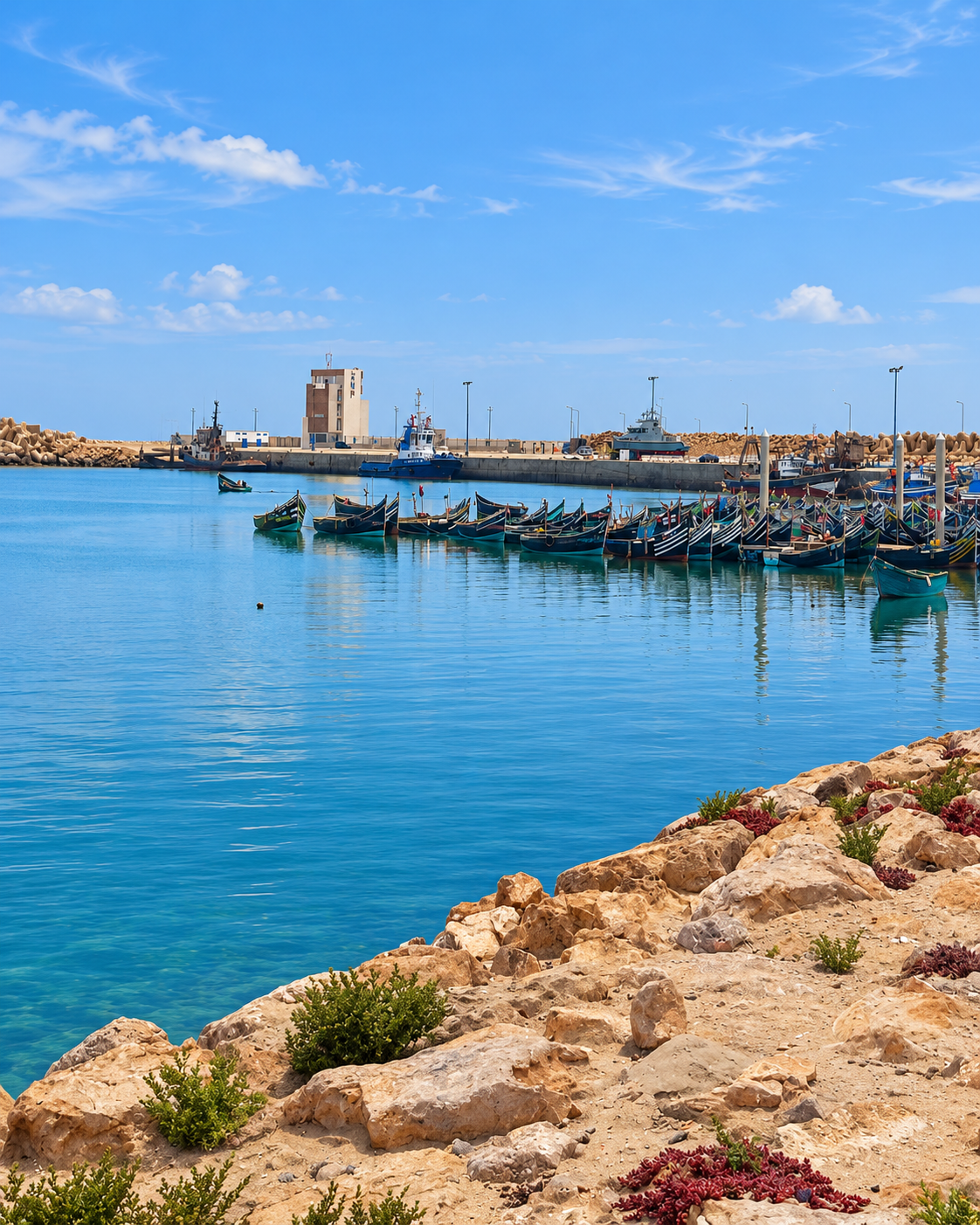
Fishing boats and harbour water at El Ouatia
Layer 3

Atlantic work

El Ouatia gives Tan-Tan its sea-facing counterpart: boats, port edges, fish, wind and the practical rhythm of a coast that is beautiful because it remains largely functional.

Landmarks & orientation

Read Tan-Tan through six orientation anchors

Tan-Tan's defining places are not all monuments. They are anchors that help visitors understand how the town, cultural memory, coast and southern landscapes fit together.

1
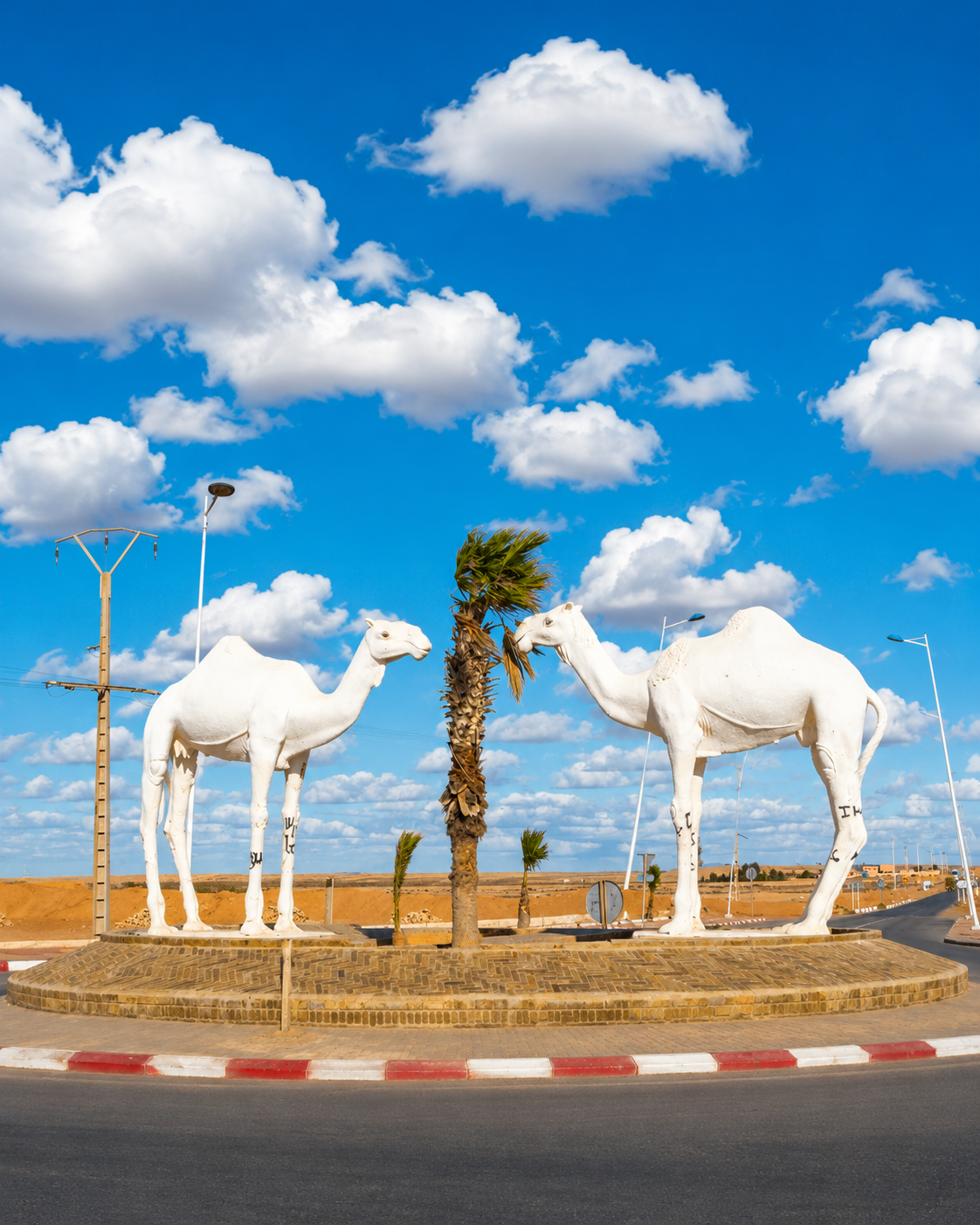
Town centre & camel monument

The twin camel sculptures provide a recognisable point of arrival. Continue into the centre for shops, cafés, transport and everyday town life.

2
Moussem cultural field

A seasonal gathering space associated with nomadic Saharan culture, oral tradition, social exchange, music, camels and ceremonial display.

3
El Ouatia / Tan-Tan Plage

The Atlantic counterpart of the inland city, known for fishing-port life, sea air and a slower coastal frame.

4
Oued Draa mouth

A landscape anchor north of town where river, sand and Atlantic conditions create a very different reading of the region.

5
Plage Blanche

A long, exposed Atlantic beach landscape best approached with planning, local advice and respect for changing weather and access conditions.

6
Khnifiss National Park

A protected lagoon-and-dune environment farther south on the coast, valued for wetland habitats, birds and desert-meets-ocean scenery.

Two white camel sculptures beside a palm tree in Tan-Tan
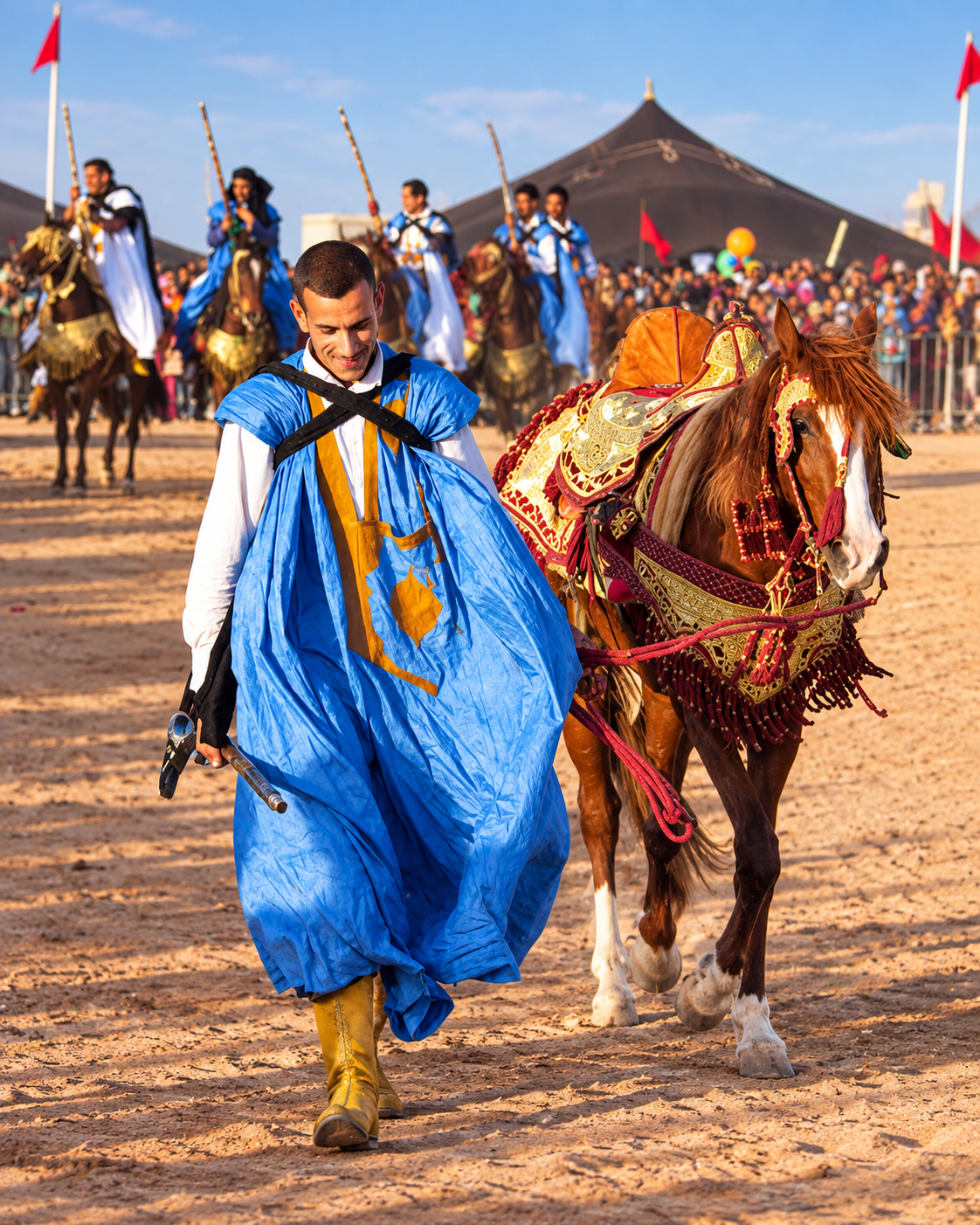
A Moussem participant in blue leading a decorated horse

A living cultural space

The Moussem of Tan-Tan — heritage carried through gathering

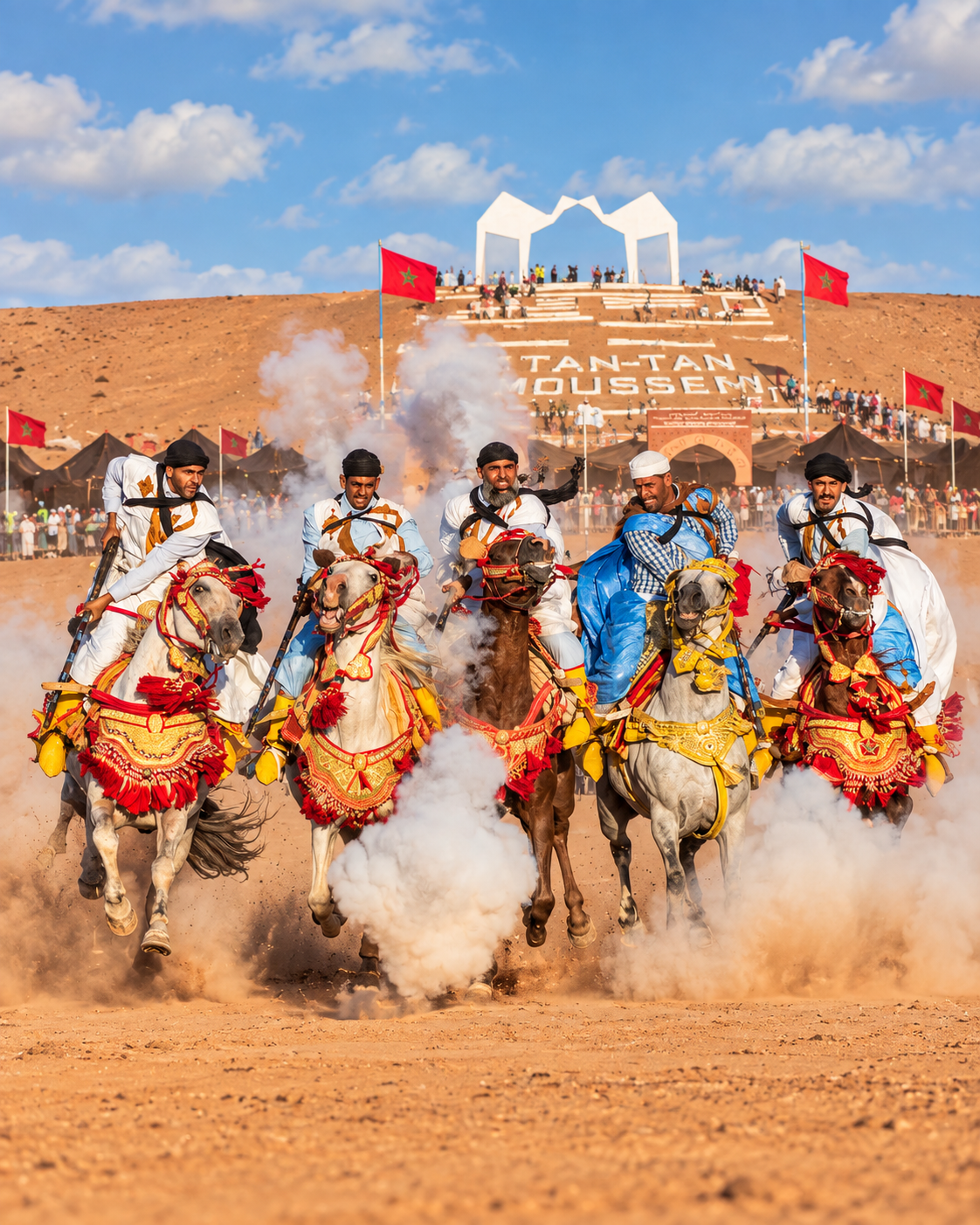
The Moussem gives Tan-Tan an importance larger than its built fabric. It brings together Saharan cultural practices through meeting, music, oral traditions, camel culture, social exchange and ceremonial forms. Its UNESCO recognition matters because it protects a living cultural space: knowledge held by communities and renewed through encounter.

  • Understand the Moussem as seasonal and cultural, not as a monument open in the same way every day.
  • Approach photography and close observation respectfully, especially where people, dress, ritual or family gatherings are involved.
  • Use the event as a lens for Saharan continuity, not as a shortcut to simplified folklore.

Architectural reading

Three built languages to notice

Low urban pragmatism

Tan-Tan's architecture is modest and climate-aware: low buildings, shade, practical shopfronts, simple residential edges and streets that serve movement more than display. The city is best read honestly, without forcing decorative expectations onto it.

Temporary cultural form

During the Moussem, tents and gathering layouts create a different kind of architecture. Space is organised by meeting, hospitality, performance, animals, craft and movement rather than by permanent stone or monumental gates.

Coastal utility

At El Ouatia, built form follows work: boats, nets, port edges, storage, seafood activity and low coastal structures. This practical Atlantic layer is essential to understanding Tan-Tan beyond the inland road.

Visual atmosphere

Façades, streets and Saharan daily life

Nearby highlights

Coast, river mouth and protected lagoon

Pair the inland city with El Ouatia on the Atlantic coast, explore the lower Draa to the north, or plan a longer coastal journey towards Khnifiss. These are separate excursions with different travel times and access conditions.

El Ouatia / Tan-Tan Plage

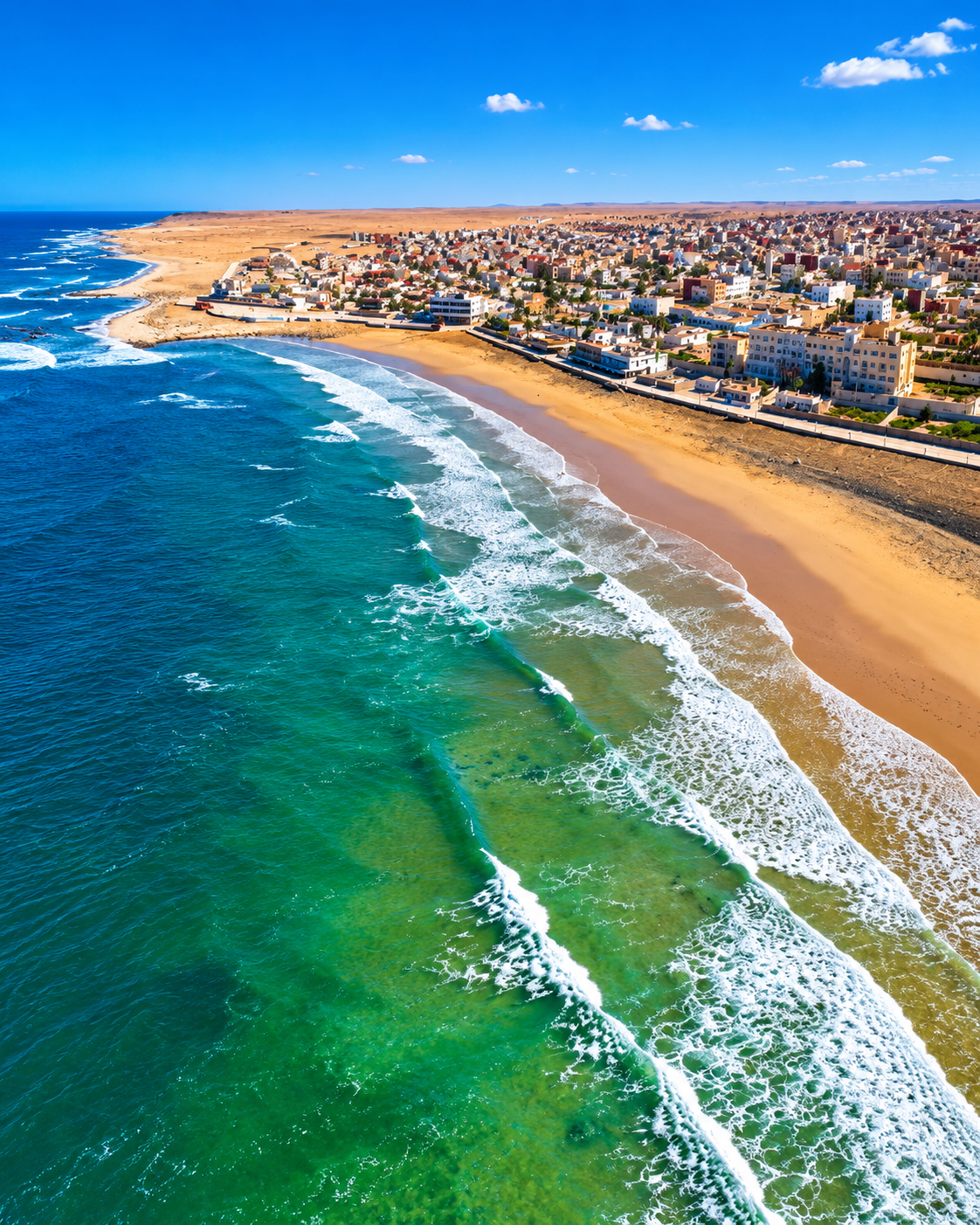
The coastal settlement west of the inland city gives the journey port life, Atlantic air and a working maritime rhythm. It is a natural counterpoint to Tan-Tan's dry inland streets.

Atlantic beach and coastal settlement at El Ouatia, Tan-Tan Plage

Oued Draa mouth

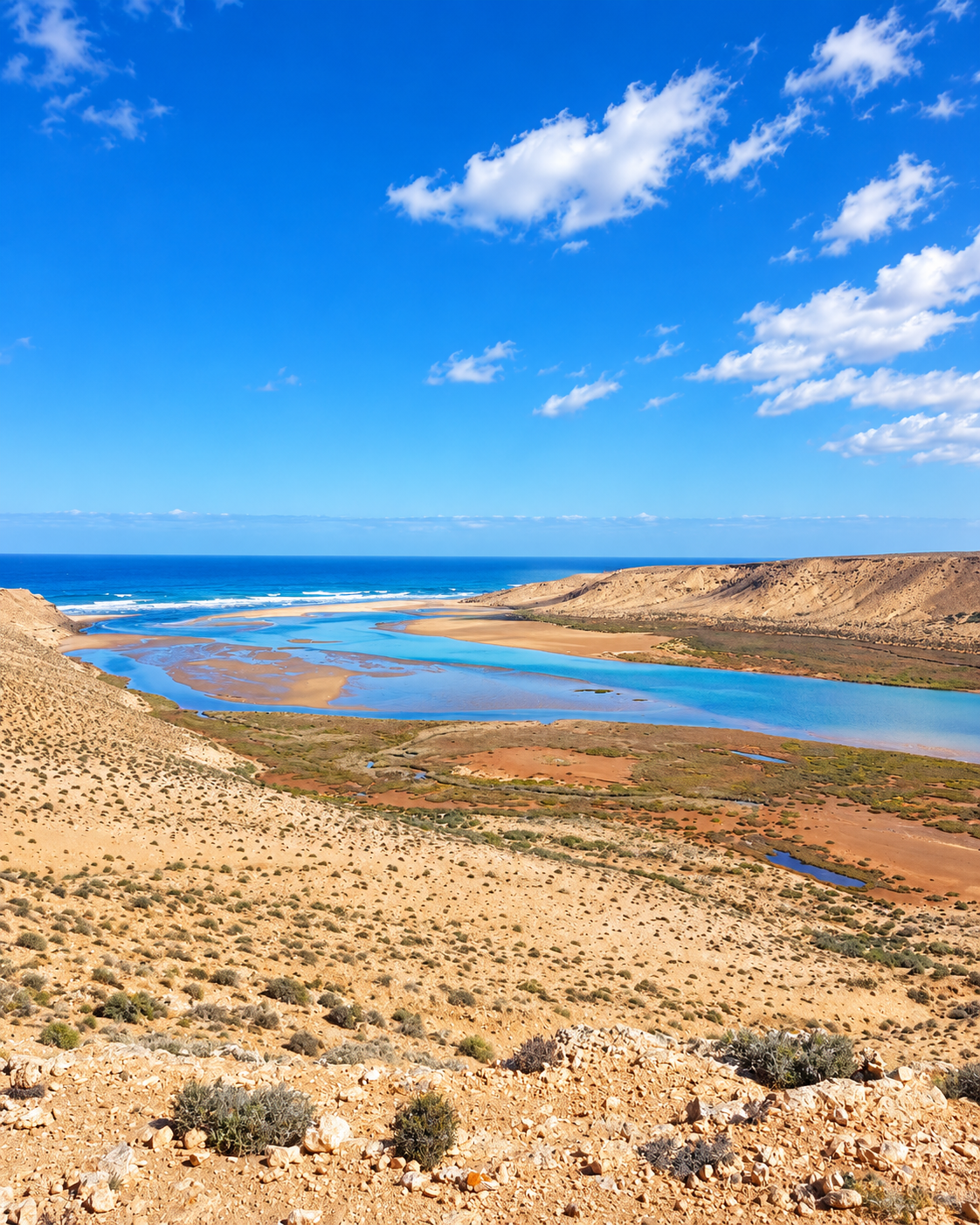
North of Tan-Tan, the lower Draa reaches an open Atlantic landscape of sandbanks and coastal plateaus. Plan access locally; Plage Blanche is a wider coastal extension, not the same stop.

Sandbanks and water at the mouth of the Oued Draa

Khnifiss National Park

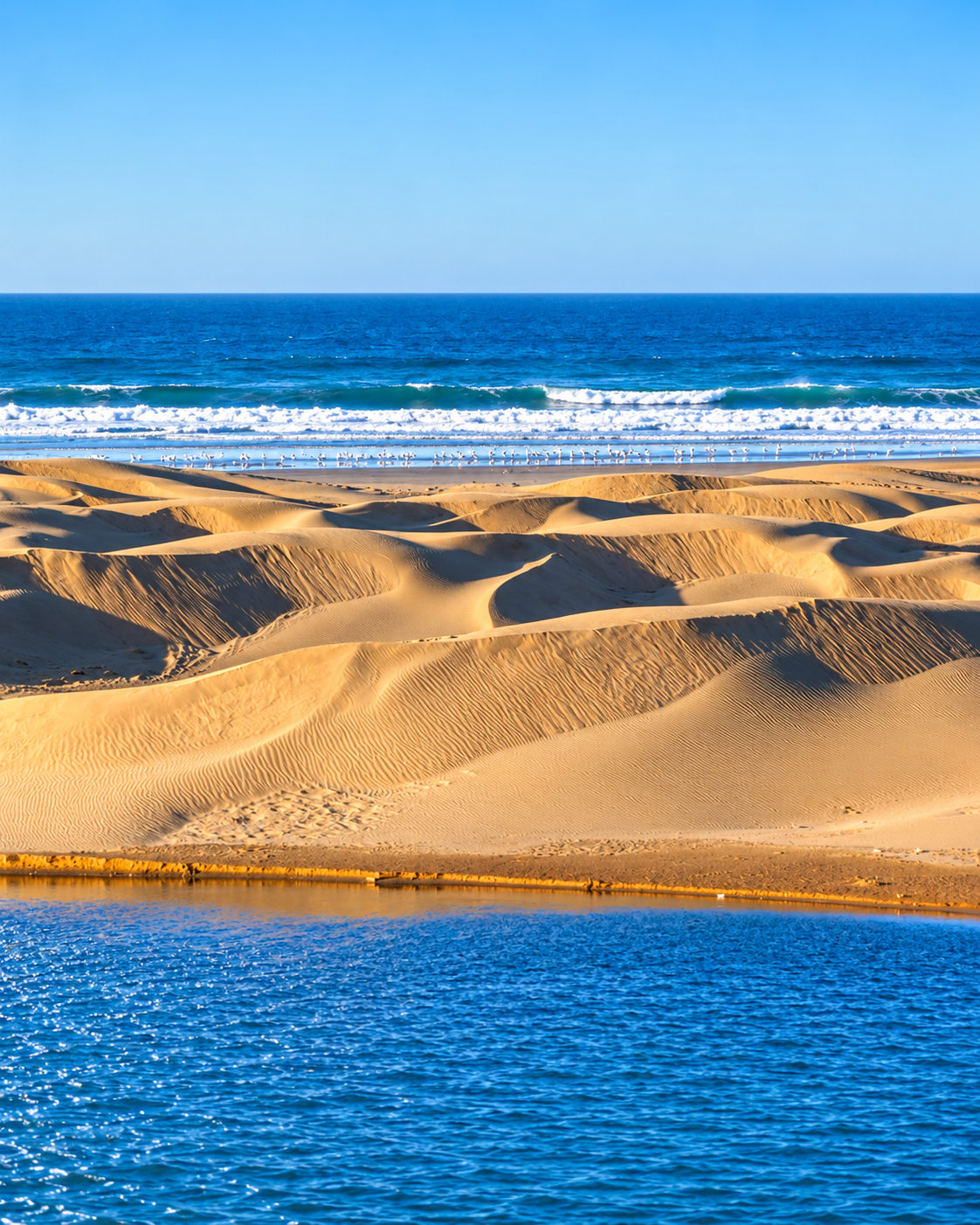
Continue south towards Akhfenir and Tarfaya for Khnifiss and its lagoon, dunes and wetland habitats. Allow a separate full day or include it in an onward coastal journey.

Dunes beside Khnifiss lagoon with the Atlantic Ocean beyond
Travel note: event dates, access conditions, road surfaces, ocean safety, weather and local visitor arrangements can change. Check current official or trusted local information before travelling.

Practical orientation

How to experience Tan-Tan well

  • Do not expect a monument-heavy city; Tan-Tan is strongest as a cultural and route-based destination.
  • Pair the inland town with El Ouatia to understand both the desert-edge and Atlantic sides of the area.
  • Check Moussem dates and programme details before planning a trip around the event.
  • Give Oued Draa, Plage Blanche and Khnifiss enough time; they are landscape journeys, not inner-city stops.
  • Use local advice for road conditions, ocean safety, protected areas and remote coastal access.

A strong first visit

Local shops and pedestrians in Tan-Tan at sunset

Begin with the town centre to understand the practical rhythm, continue to El Ouatia for the Atlantic layer, then treat Oued Draa, Plage Blanche or Khnifiss as planned landscape extensions rather than casual detours.

Horse riders performing tbourida at the Moussem of Tan-Tan

Go deeper with Exotic Morocco

Tan-Tan — Premium Visual City Guide

Continue through Exotic Morocco's city-guide library for structured visual journeys that connect history, landscapes, local rhythm, cultural context and practical orientation across Morocco.

✓ Cultural context✓ Orientation anchors ✓ Coast & landscape✓ Local rhythm ✓ Practical travel guidance✓ Nearby highlights

Continue the journey

Continue the journey through Tan-Tan

Look beyond the road stop and encounter a southern city of Saharan cultural memory, Atlantic work, wide landscapes and careful route-based travel.