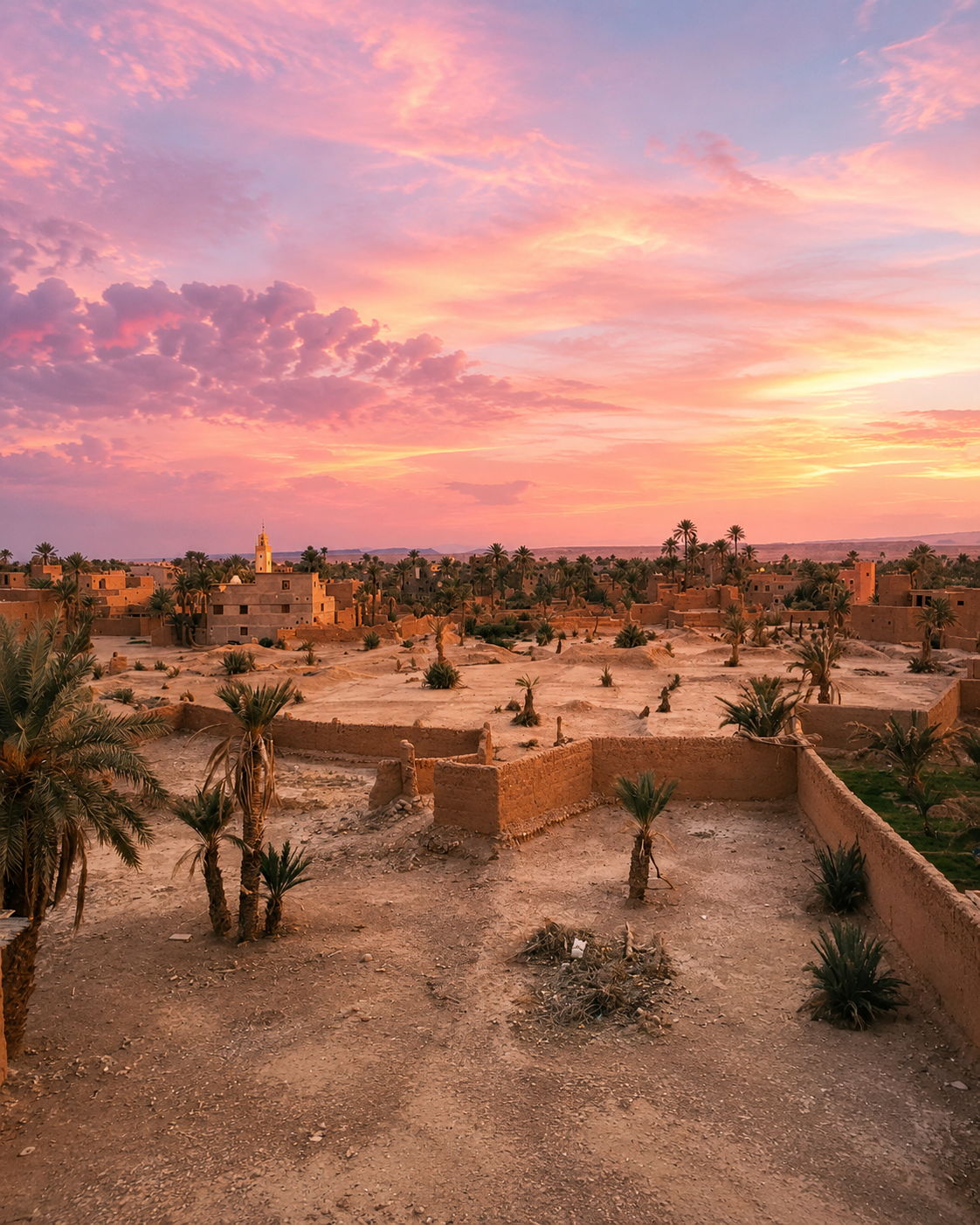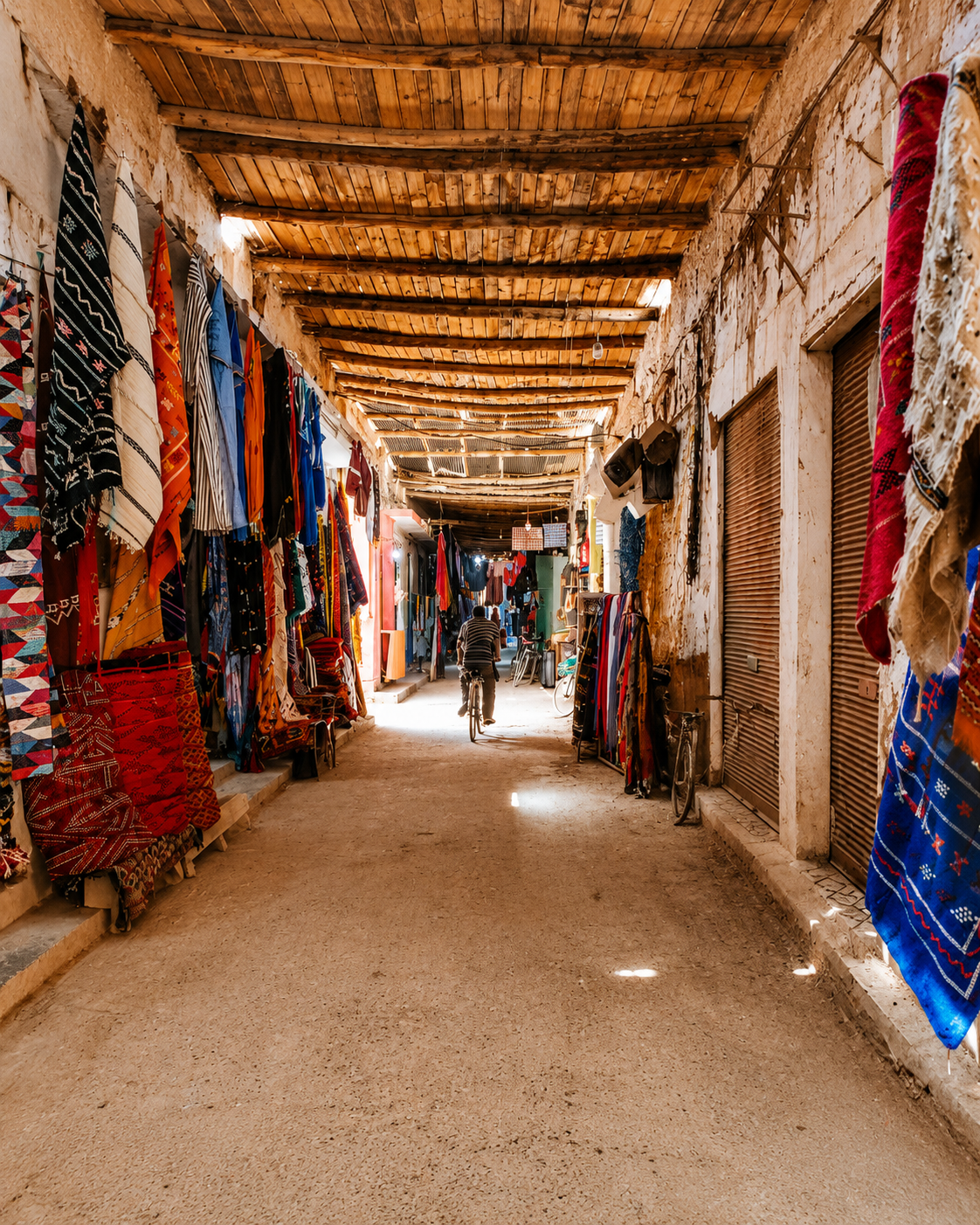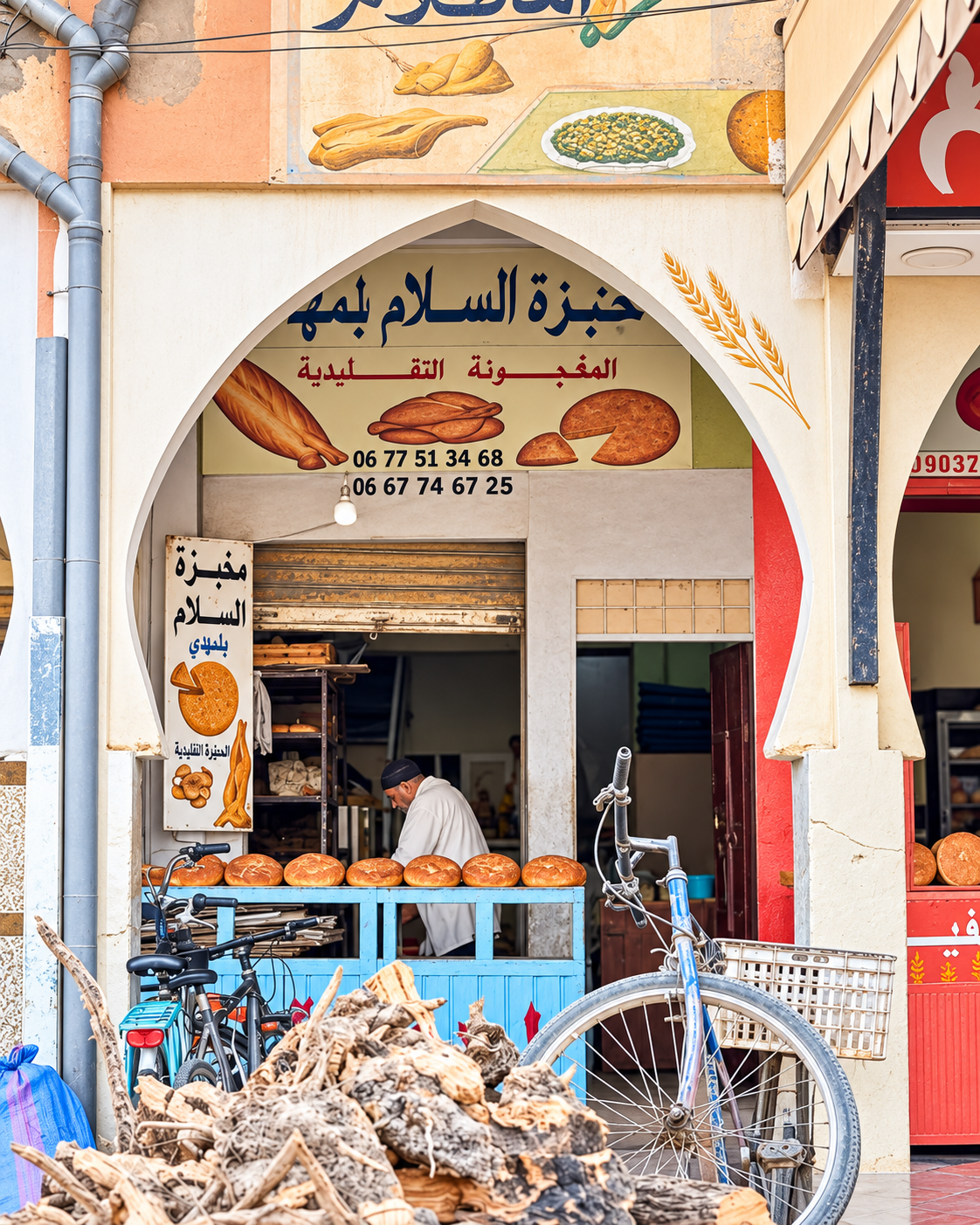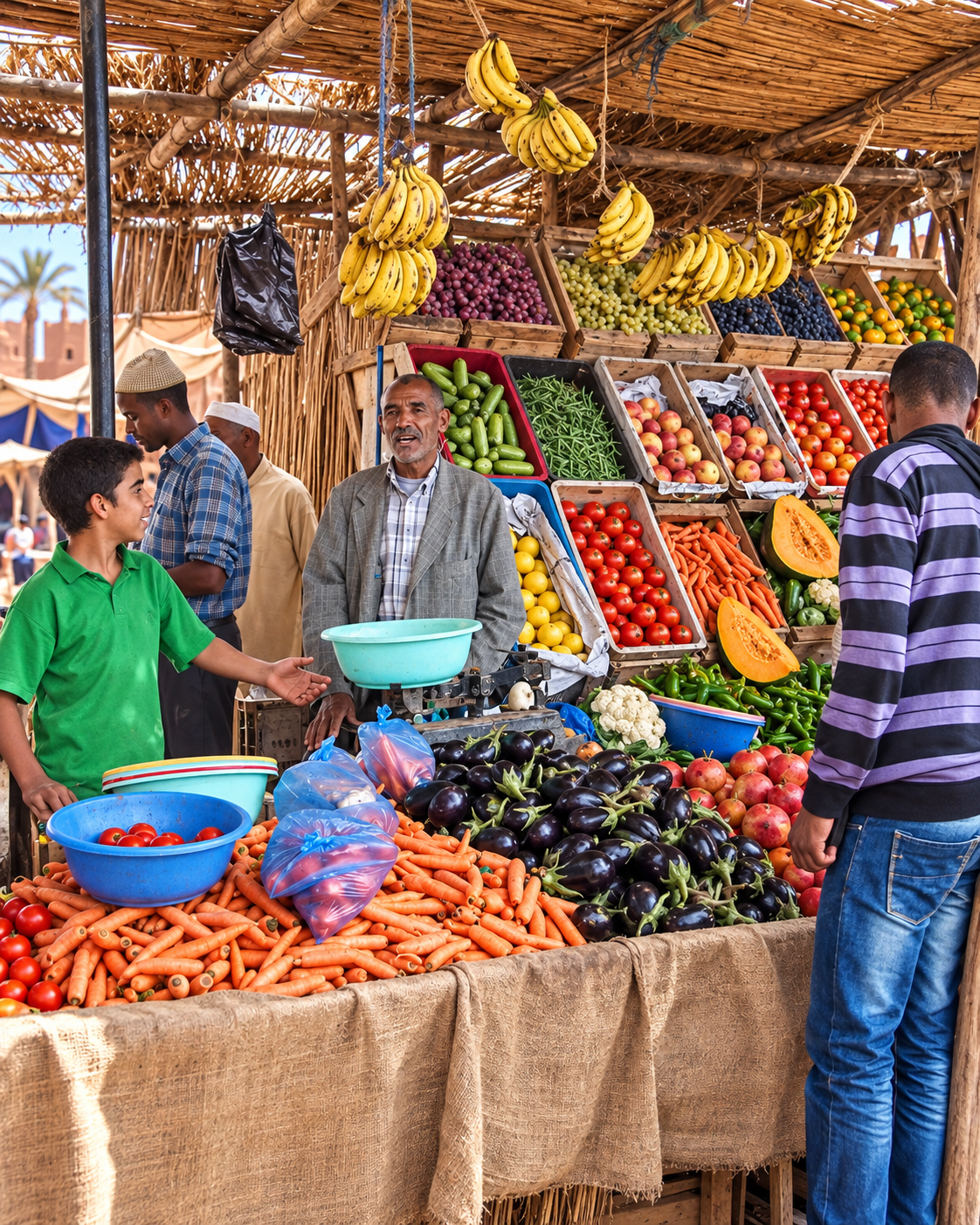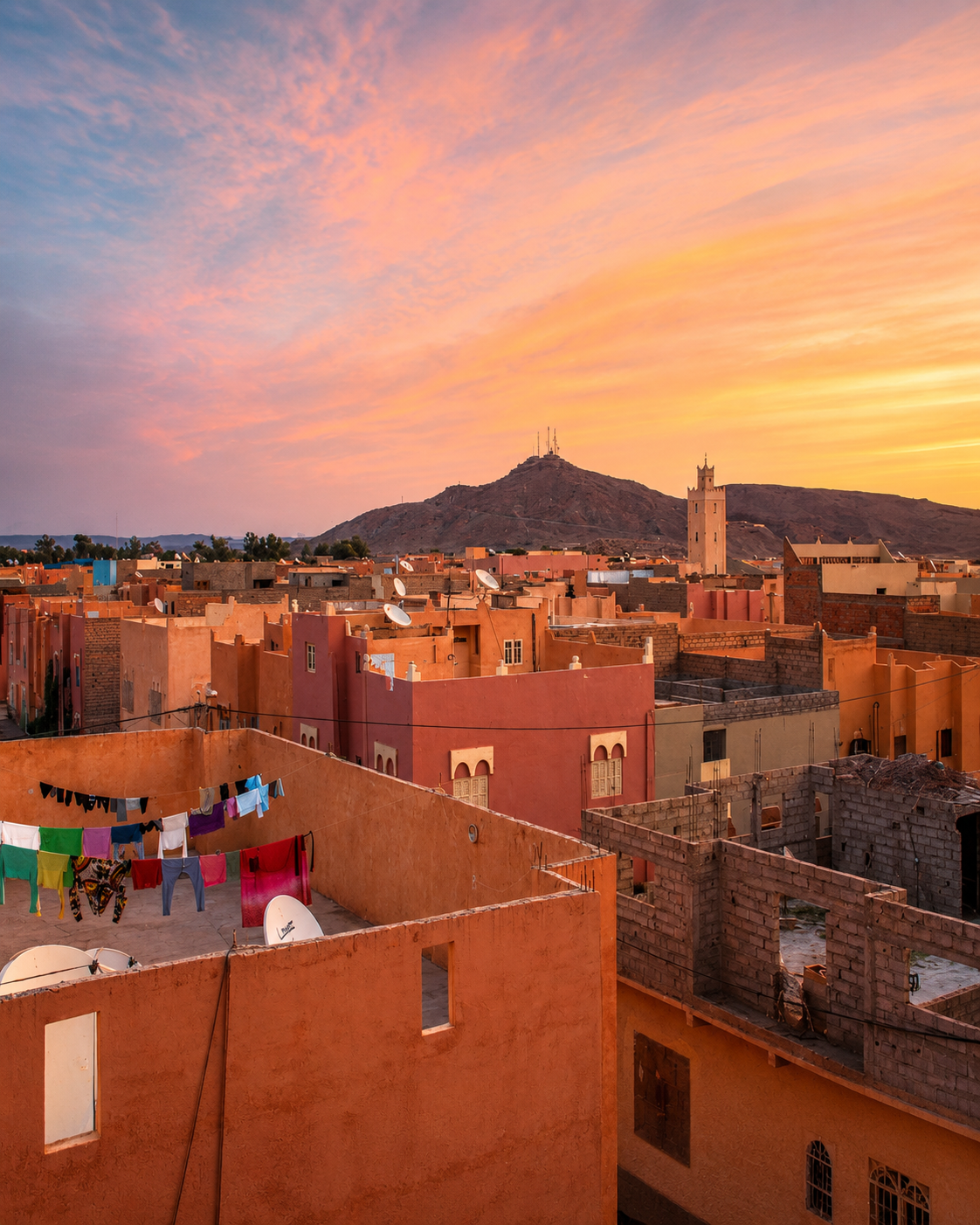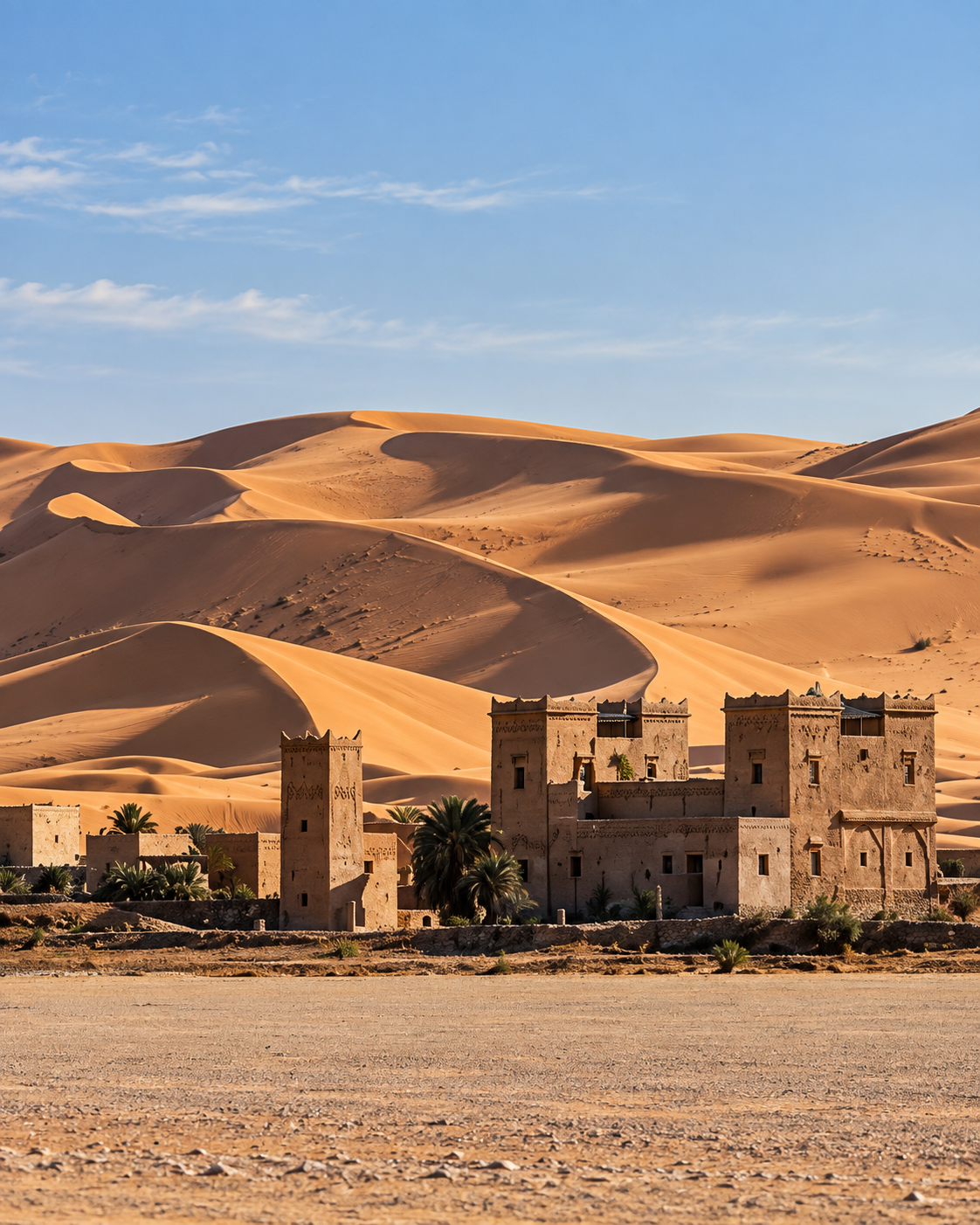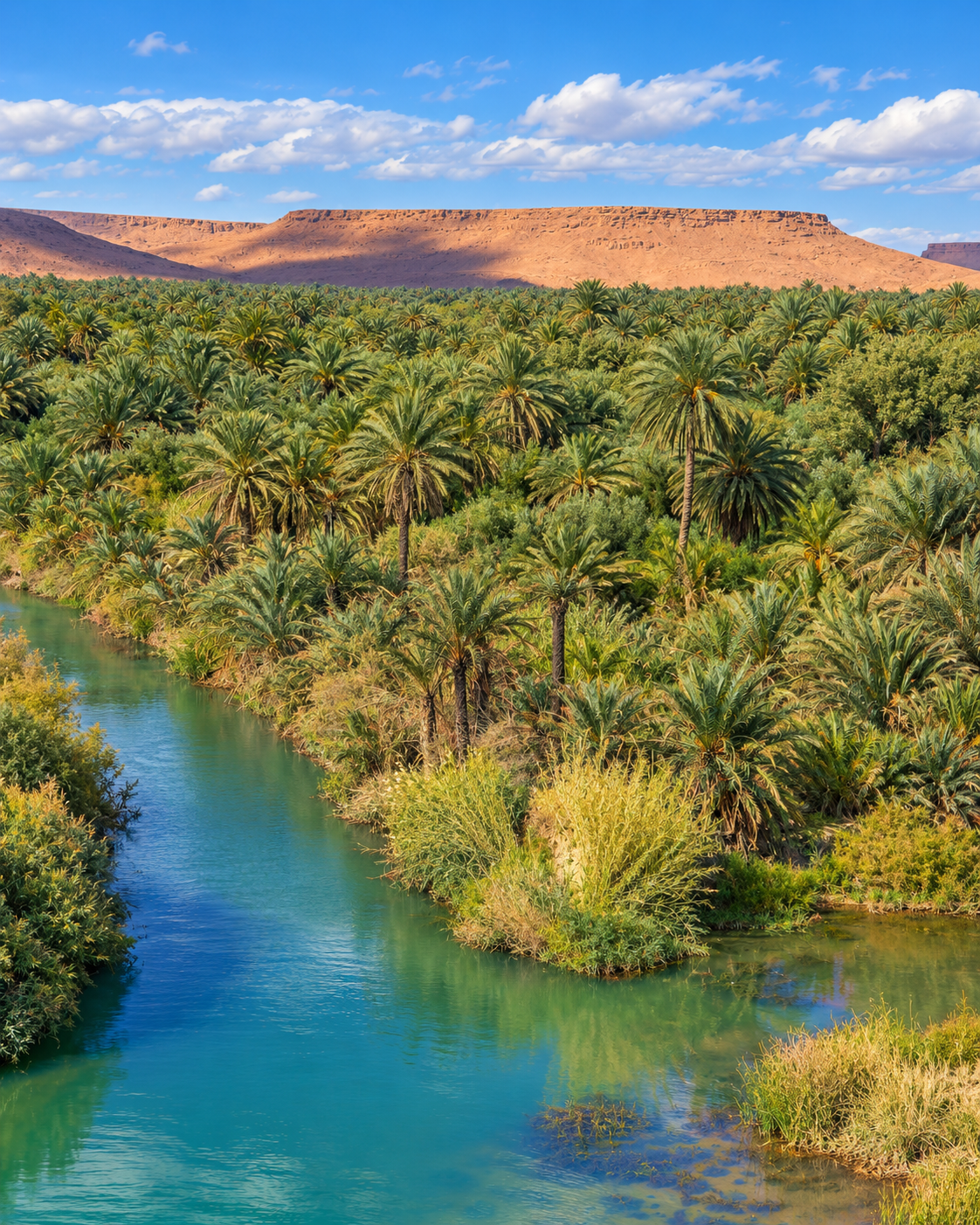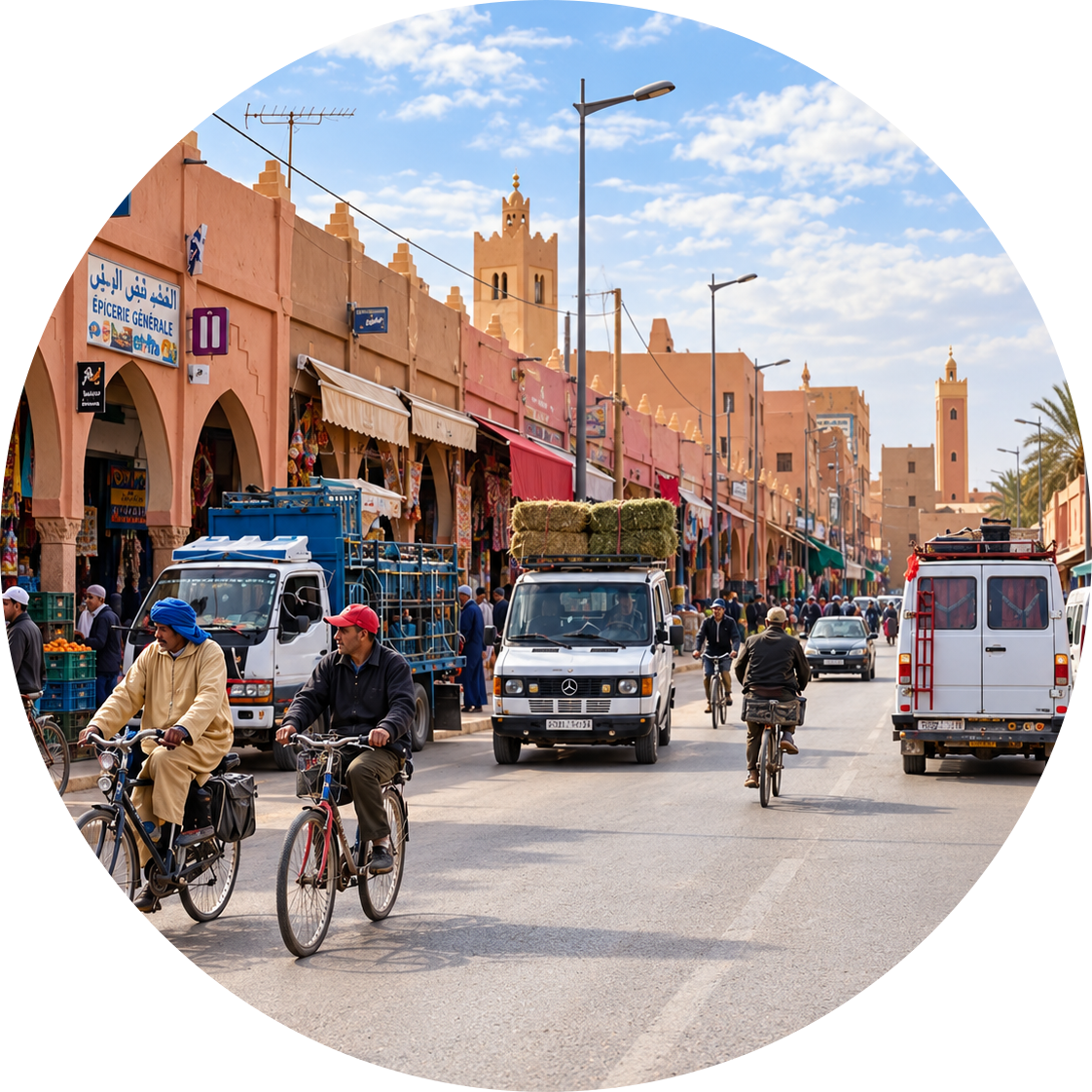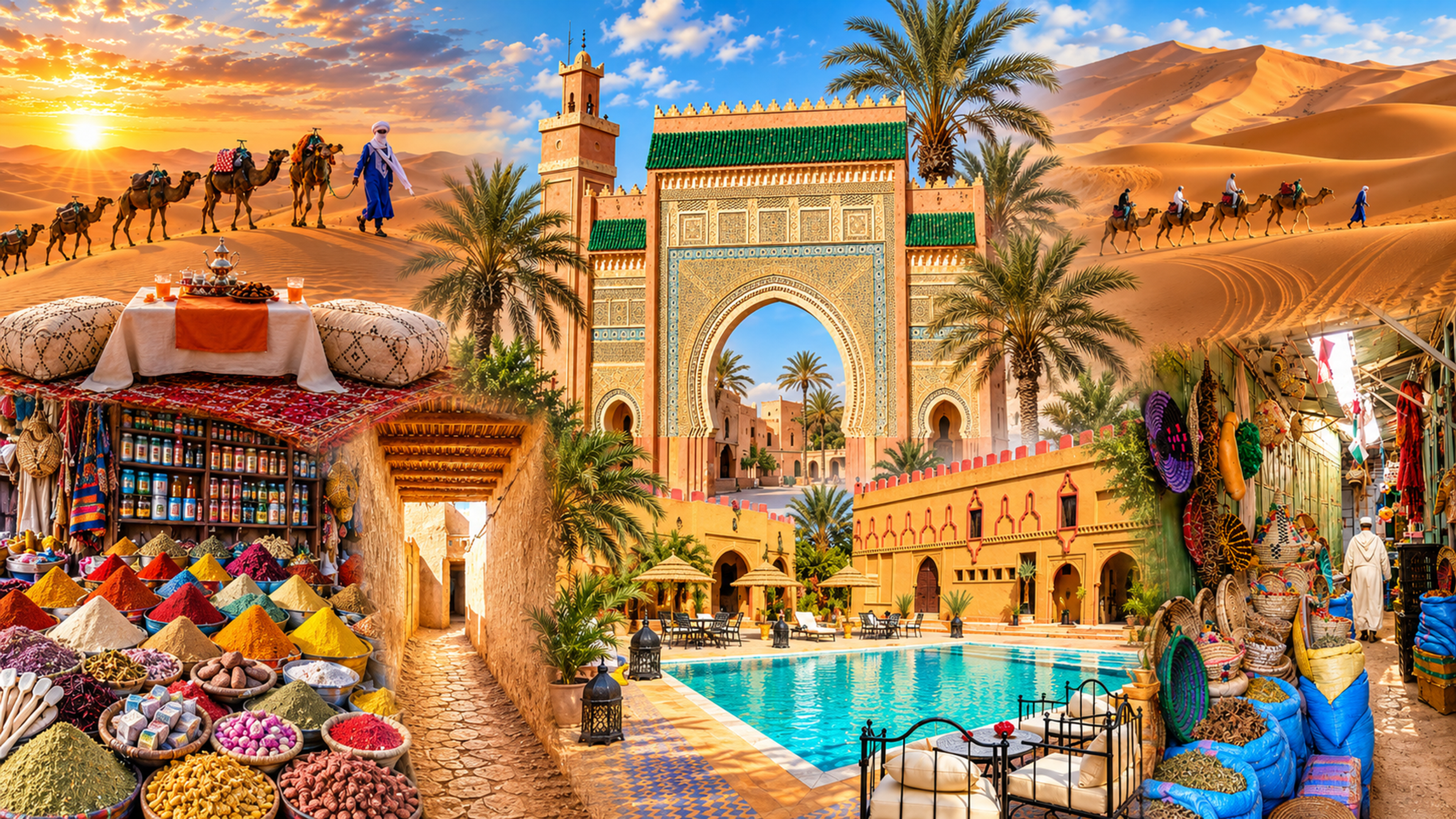
Visual collage of the Rissani gateway, souk, oasis architecture and desert excursions

Tafilalt City Guide

Rissani Sijilmasa memory, Alaouite origins and oasis trade

Rissani brings Tafilalt into focus: a working souk, earthen ksour, palm groves and the caravan history of nearby Sijilmasa.

Why Rissani matters

Beyond the desert gateway

Rissani is often treated as a quick pause on the road to Merzouga, but its deeper importance sits in the older geography of Tafilalt. Around the town, palm groves, ksour, market lanes, earthen gates and the remains of Sijilmasa reveal a place shaped by trade, lineage and oasis life.

The city rewards visitors who slow down. Rissani is not only a gateway to dunes; it is a regional market town, a memory of caravan wealth, a landscape of Alaouite origins and a practical base for reading the southeast beyond a single desert image.
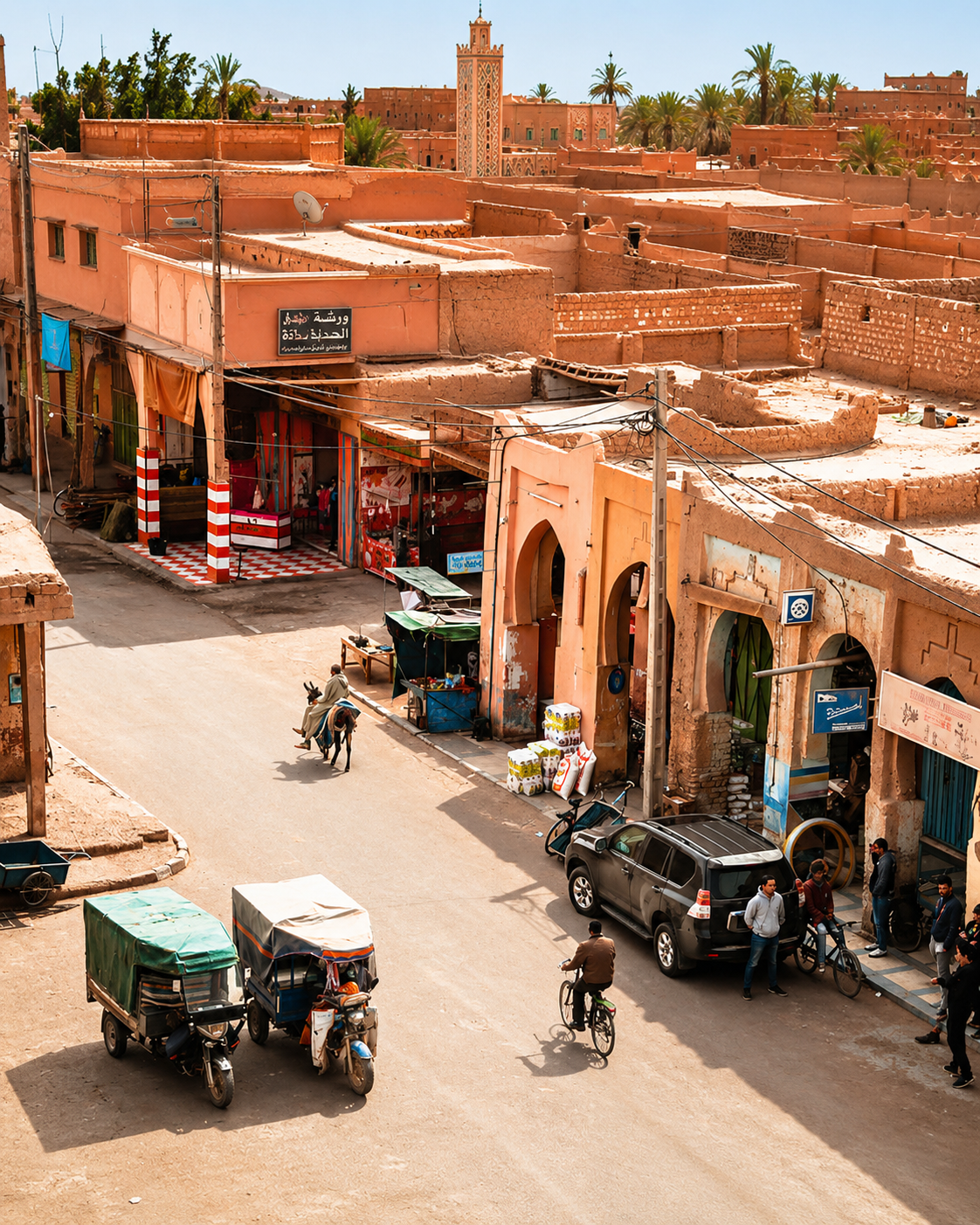
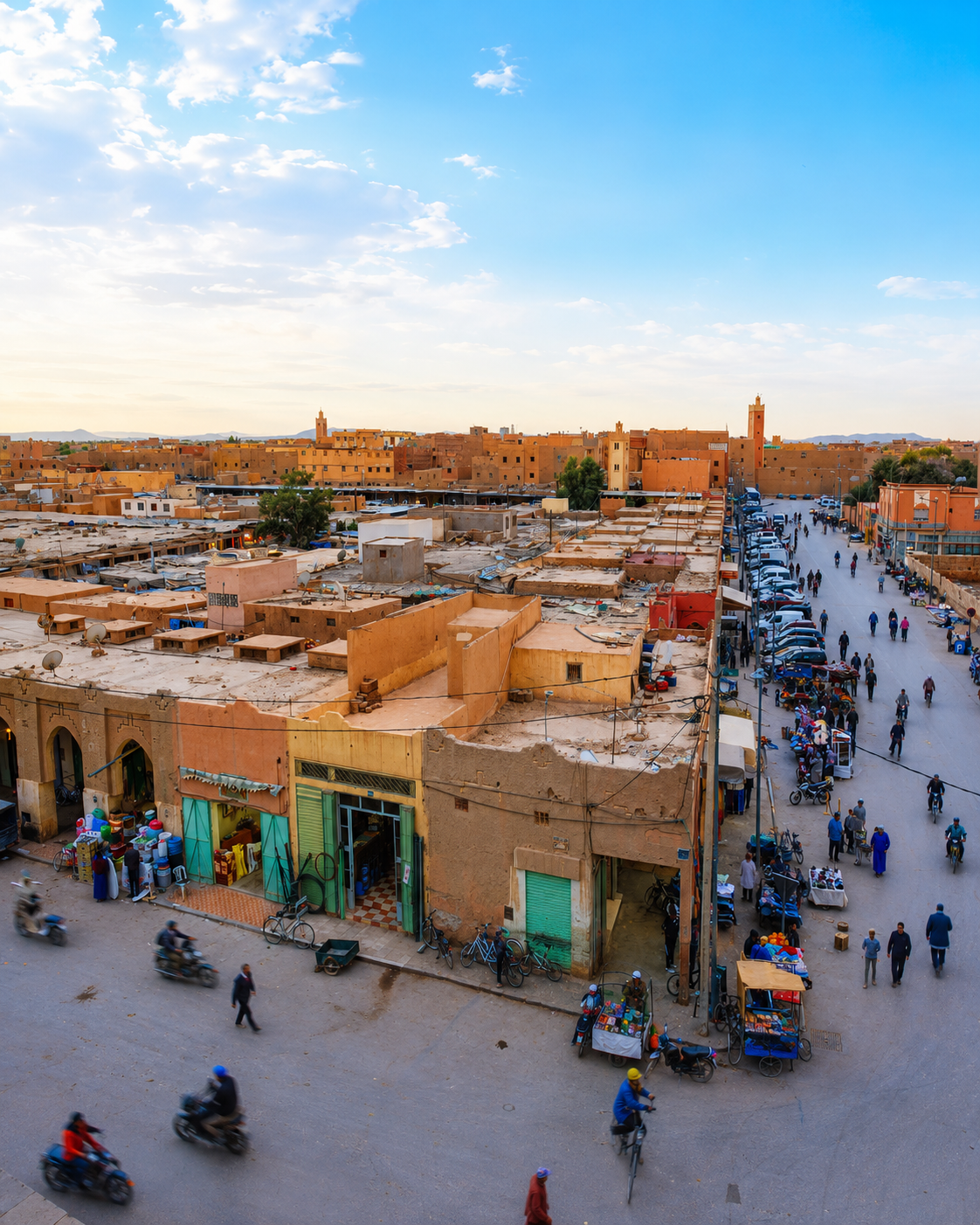
Shops and street life beneath the earthen rooftops of Rissani

A town of routes and memory

Rissani is measured through thresholds: a gate, a souk, a palm-lined track, a sacred complex, an archaeological field and the desert routes that continue beyond town.

EXPLORE

Rissani

Historical orientation

From Sijilmasa to the Alaouite cradle

Rissani is best understood through the wider Tafilalt oasis. Nearby Sijilmasa grew from the eighth century into a major medieval caravan city at the northern edge of the Sahara. Later, Tafilalt became deeply associated with the origins of Morocco’s Alaouite dynasty. Today the town keeps that long memory close to everyday market life, ksour architecture and journeys toward the Ziz valley and Erg Chebbi.

018th century

Sijilmasa founded

Sijilmasa developed beside the Ziz in the Tafilalt oasis, becoming one of the great medieval settlements at Morocco’s Saharan edge.

02Medieval era

Caravan exchange

Its position on trans-Saharan routes made the oasis a place of gold, salt, agriculture, scholarship, migration and long-distance commercial memory.

0317th century

Alaouite origins

Tafilalt became central to the rise of the Alaouite dynasty. Rissani preserves this dynastic memory through the Moulay Ali Cherif complex.

04Today

Oasis market town

Rissani remains a working commercial centre for Tafilalt, linking souk life, palm-grove settlements, nearby Erfoud and the routes toward Merzouga.

A visual bridge

Three glimpses between oasis and caravan memory

These images connect the historical story to the town you encounter today: a working regional market, the gateway and streets, and the intimate scale of earthen ksar lanes.

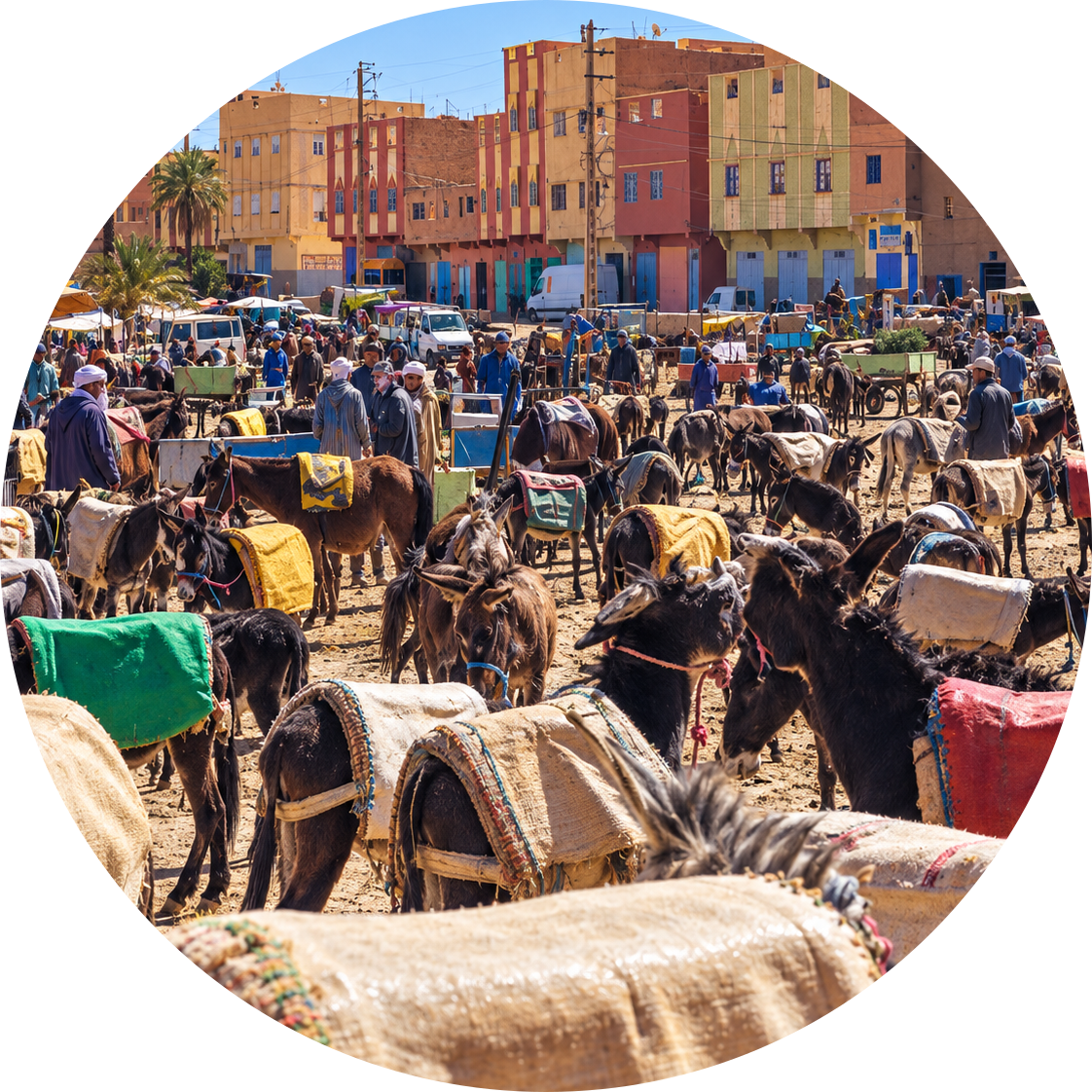
Donkeys and traders at the Rissani livestock market

Market memory

Livestock trading keeps the town connected to the surrounding oasis settlements.

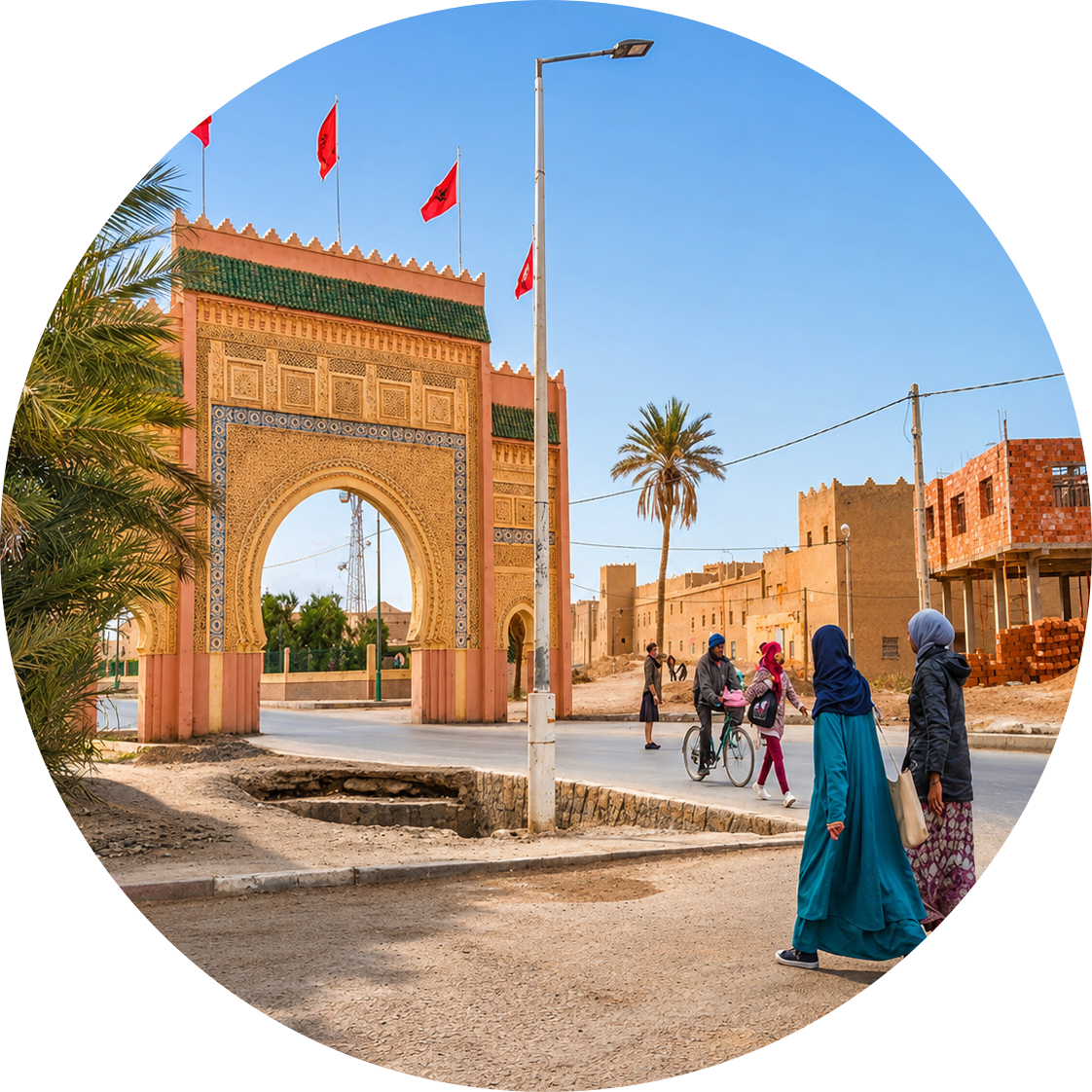
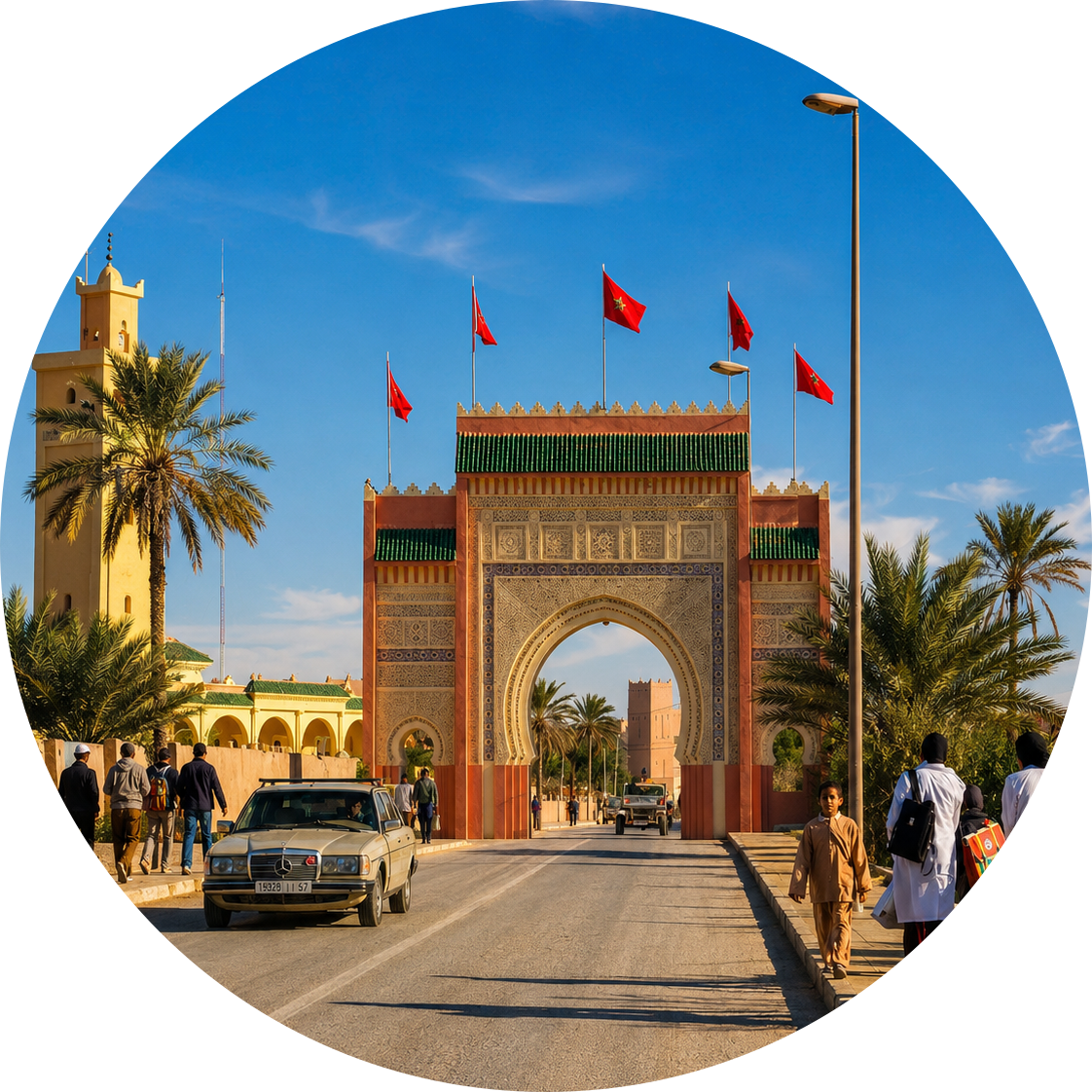
Pedestrians beside the decorated Rissani gateway

Arrival and movement

The decorated town gateway frames everyday movement through Rissani.

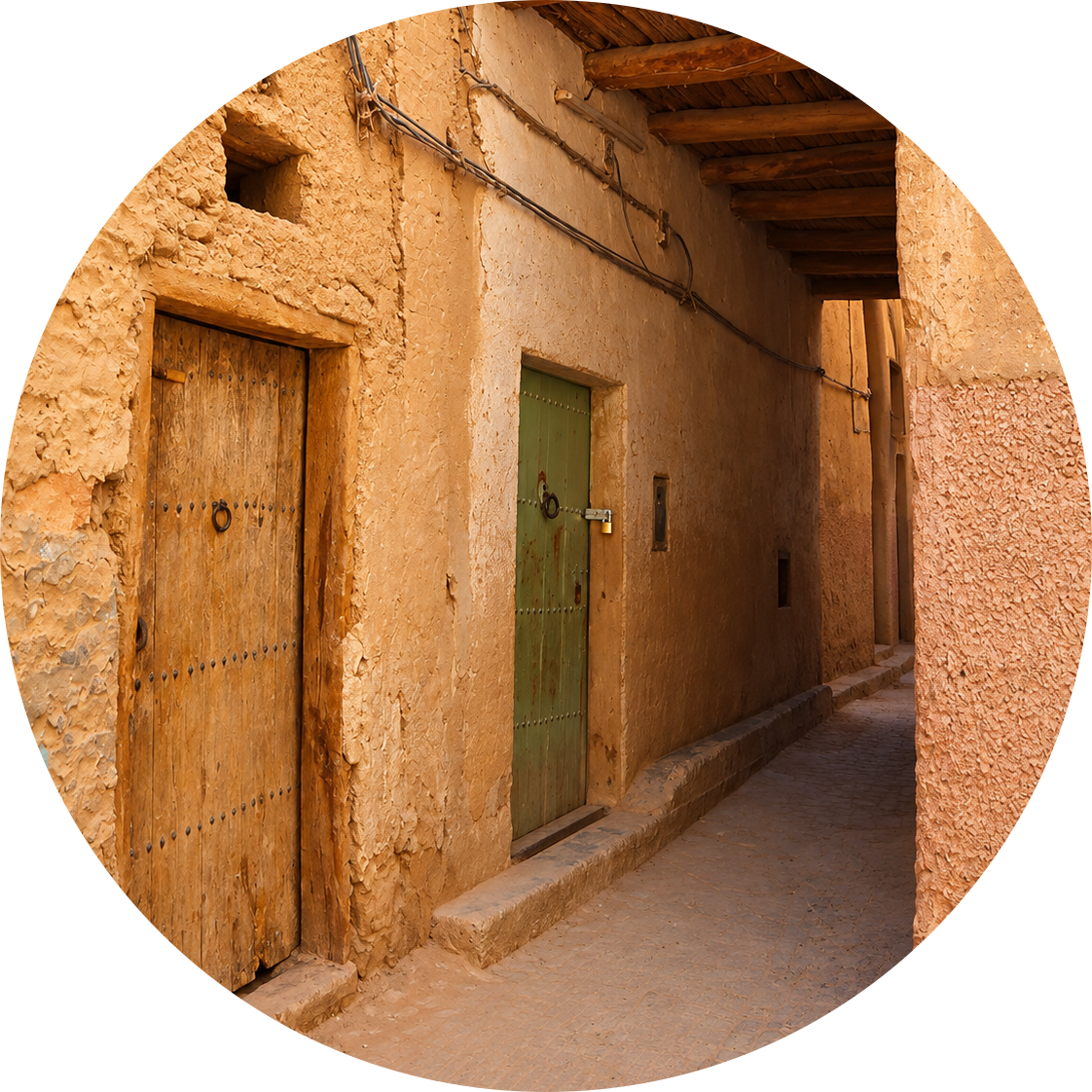
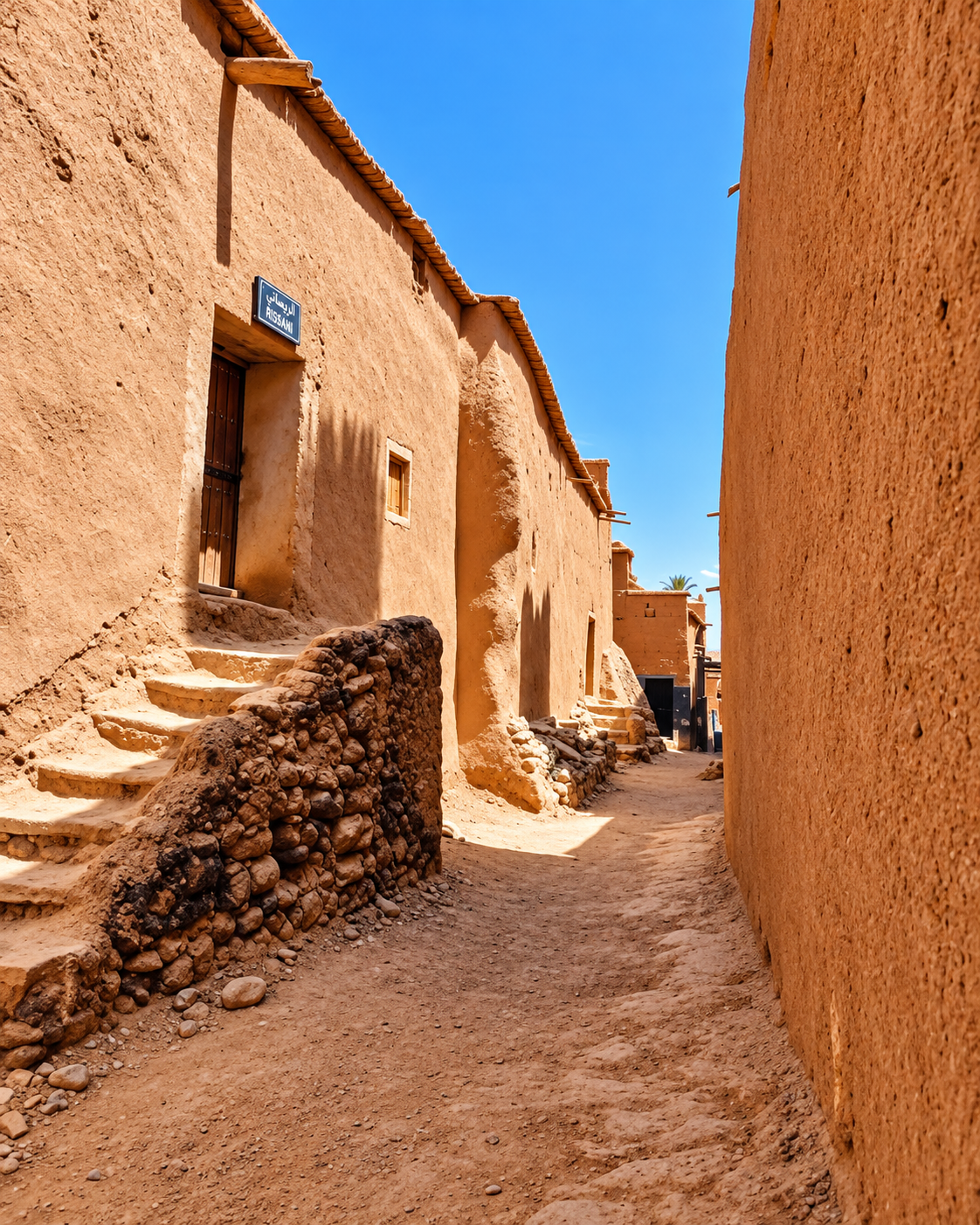
A shaded earthen passage with timber beams and wooden doors

Ksar intimacy

Shaded earthen lanes reveal the quieter lived scale behind the gateway image.

Rissani at a glance

Sijilmasa memory

The archaeological remains near Rissani point to one of medieval Morocco’s most important Saharan-edge cities. The site is quiet today, but its historical weight is large.

Alaouite origins

The Tafilalt region is closely tied to the beginnings of Morocco’s Alaouite dynasty. The Moulay Ali Cherif complex gives that political and spiritual memory a visible focus.

Oasis and ksour

Rissani belongs to a wider palm-grove landscape of fortified settlements, earthen walls, irrigation memory and regional routes rather than to one isolated urban core.

Gateway with depth

Erfoud, the Ziz valley and Erg Chebbi are nearby, but Rissani deserves its own pause for history, market culture and the older geography of Tafilalt.

A clearer reading of the city

A town shaped by caravans, lineage and everyday trade

To understand Rissani, read the archaeological landscape, the working souk and the oasis settlements together. They are not separate attractions: each explains how Tafilalt held trade, devotion, agriculture and movement in one geography.

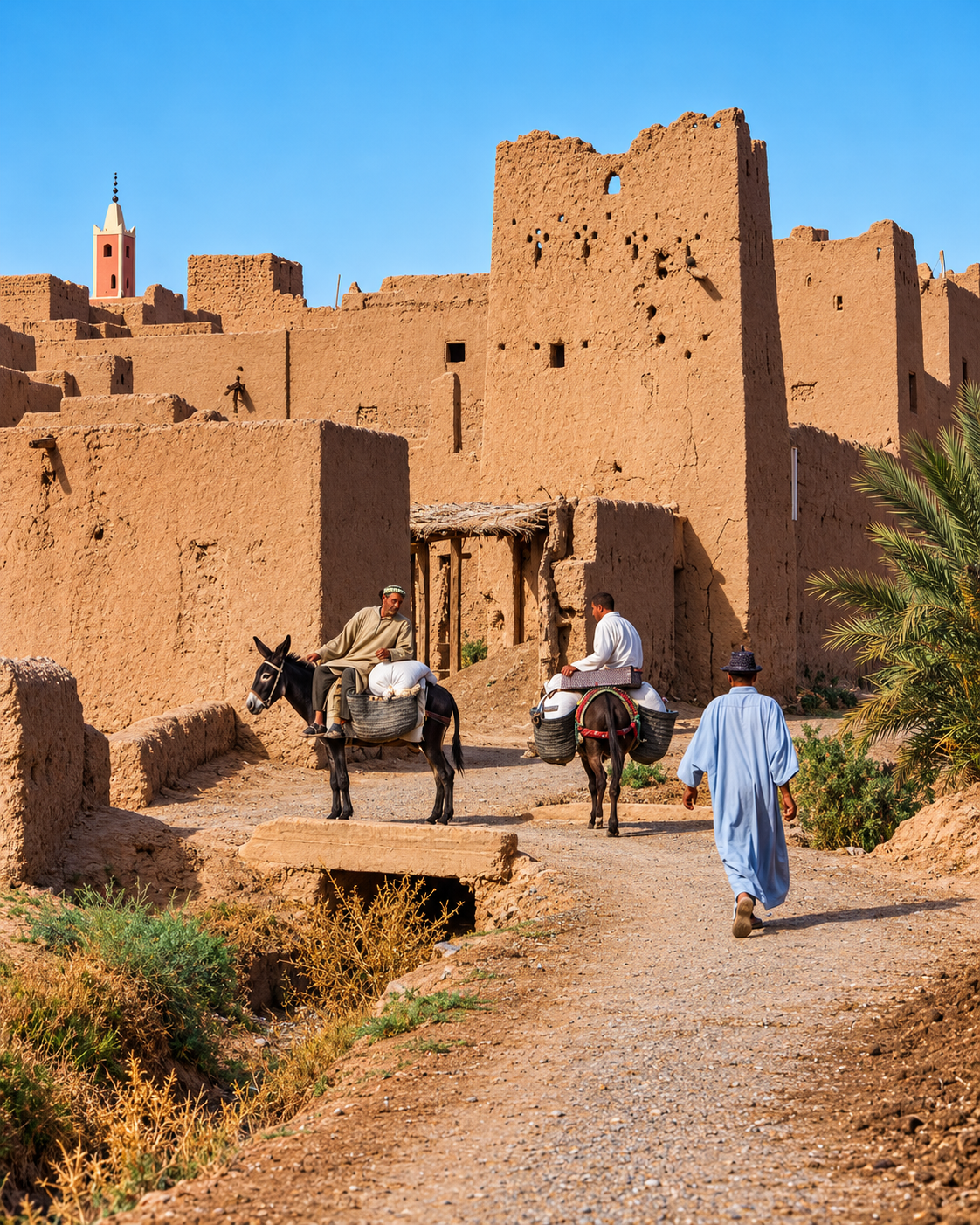
Earthen ksar walls beside a narrow path and working donkeys
Layer 1

Oasis settlements

Earthen walls, compact settlements and shaded passages reveal how the oasis sustained everyday life. Read this built landscape alongside the history of nearby Sijilmasa and its long-distance trading routes.

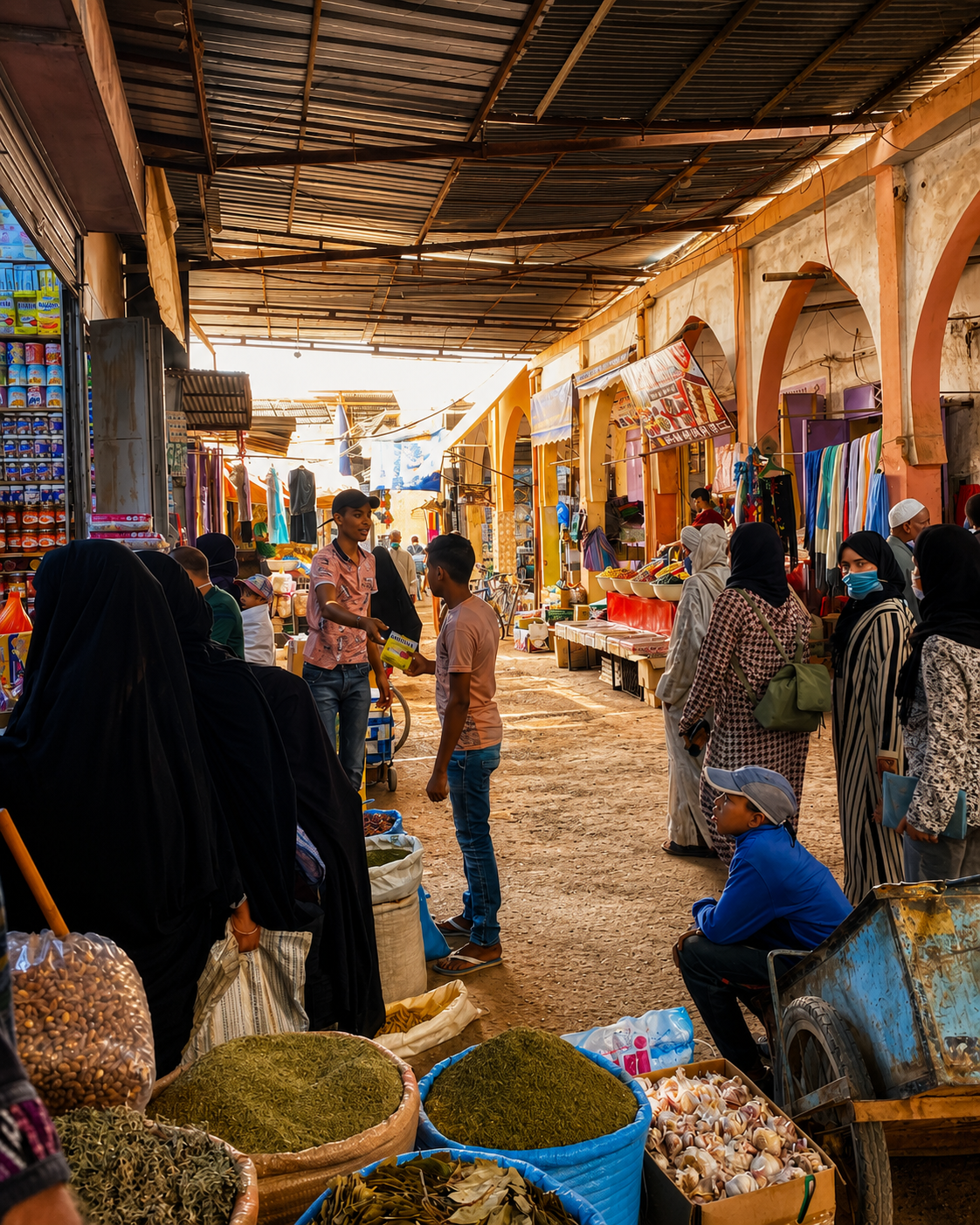
Shoppers and dry goods in a shaded Rissani souk aisle
Layer 2

Living commercial fabric

The souk keeps Rissani connected to surrounding villages and desert routes. It is a practical market first, and that is exactly why it feels alive.

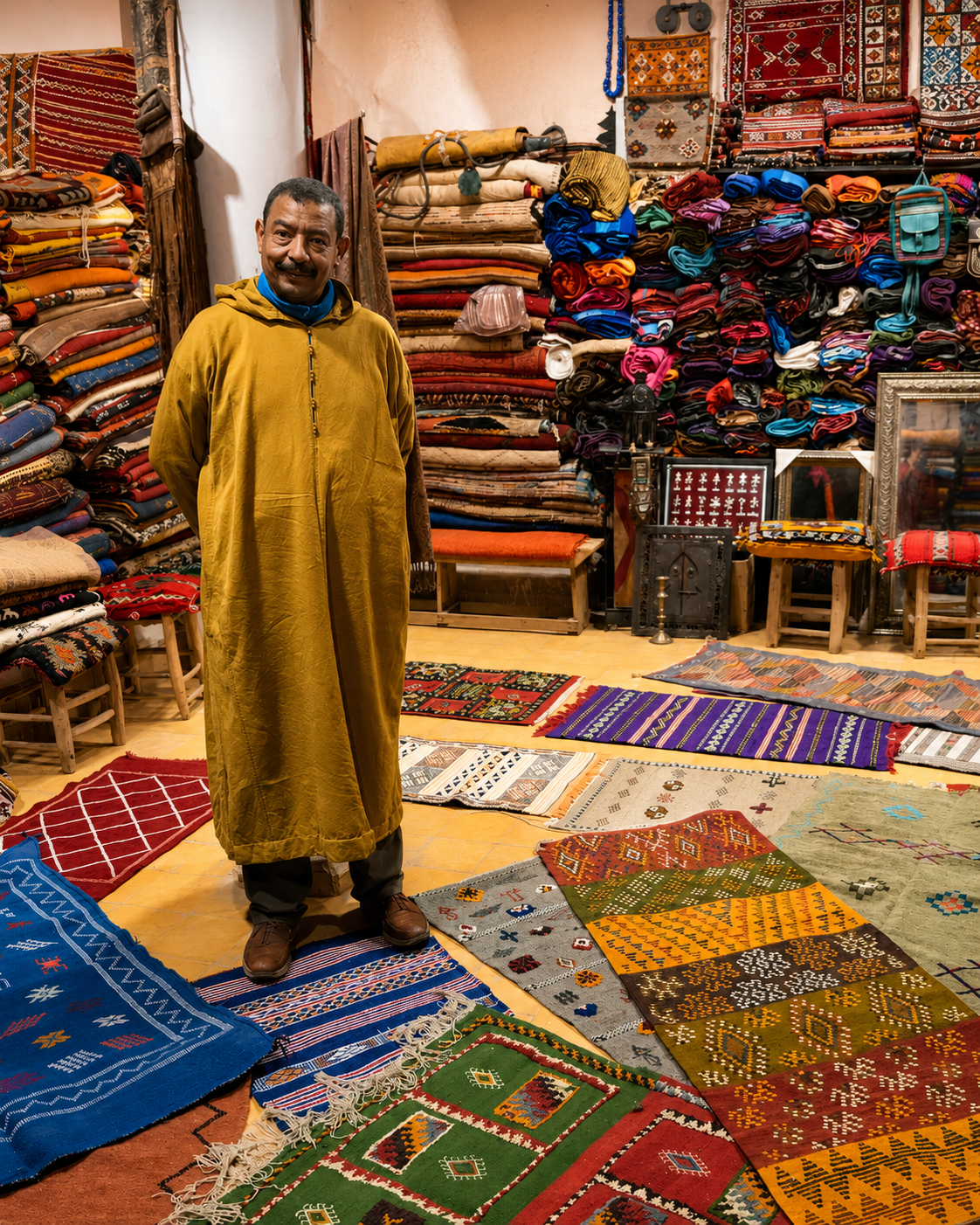
Textile merchant surrounded by rugs and colourful fabrics in Rissani
Layer 3

Textiles and daily craft

Rugs, woven fabrics and everyday textiles bring colour and texture into the town’s commercial life. Look closely at patterns, materials and the practical objects that people buy and use.

Landmarks & orientation

Read Rissani through six defining places

No single monument explains Rissani. These six references reveal the relationship between Sijilmasa, Alaouite memory, souk life, ksour, oasis agriculture and the routes that continue into the desert.

1
Sijilmasa archaeological site

Low earthen remains near town point to the medieval caravan city that made Tafilalt historically central.

2
Moulay Ali Cherif complex

A religious and dynastic site associated with the Alaouite origins of Morocco’s ruling house.

3
Rissani souk

A working regional market where dates, animals, household goods, spices and local movement make the town’s role visible.

4
Rissani gates and town core

Earthen thresholds and everyday streets frame the town as a place of arrival, trade and onward travel.

5
Ksar El Fida and nearby ksour

Fortified oasis settlements around Rissani preserve the architectural logic of Tafilalt in earth, shade and enclosure.

6
Tafilalt palm groves

The oasis landscape explains why settlement, agriculture and caravan routes could gather here for centuries.

The Rissani gateway with its green tiled roof, flags and pedestrians
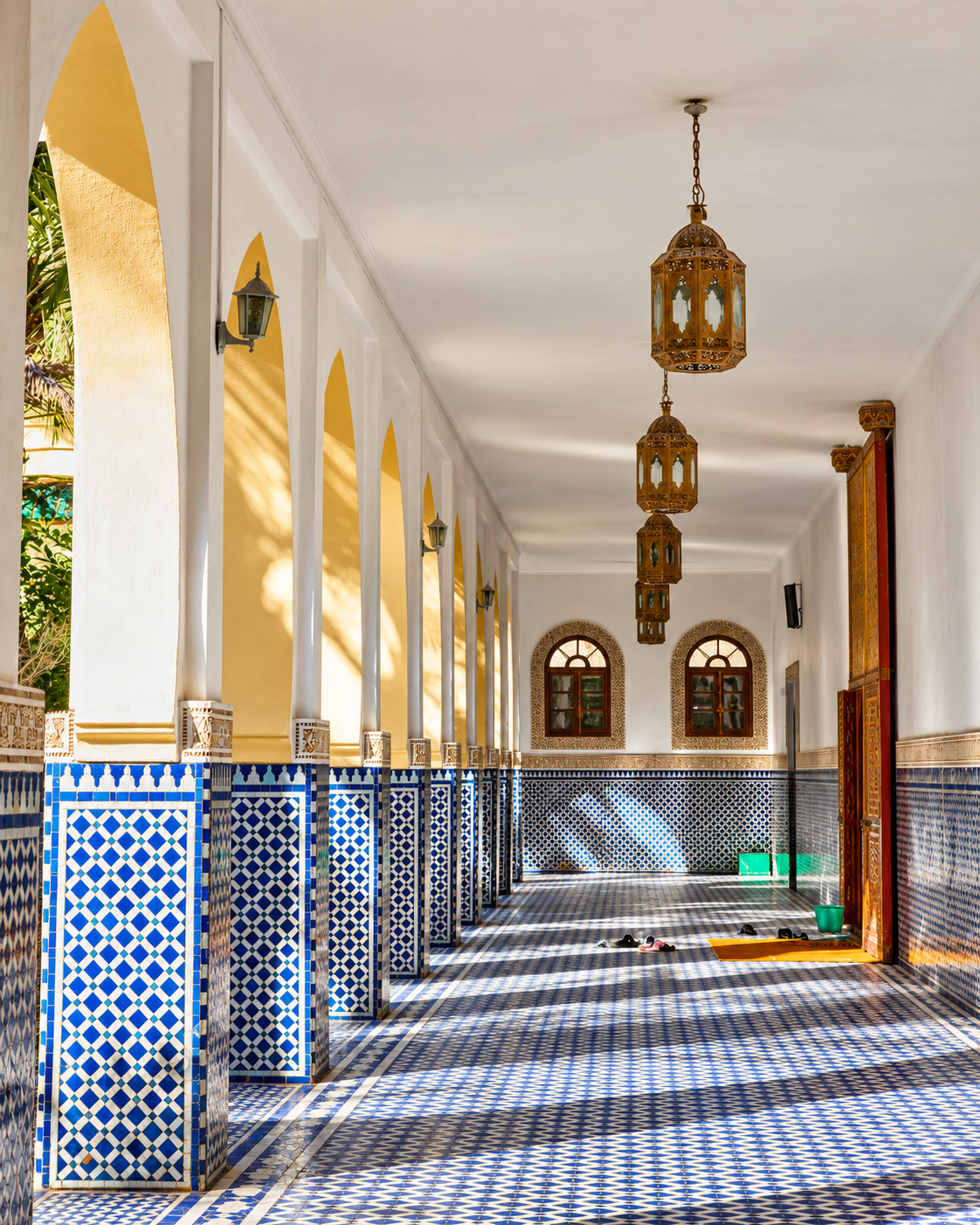
White arcades, blue-and-white zellige and hanging lanterns in a sacred interior in Rissani

A sacred interior

Moulay Ali Cherif Complex — dynastic memory in Tafilalt

The Moulay Ali Cherif complex gives Rissani one of its most meaningful places of memory. Its importance is not loud or spectacular; it lies in the connection between Tafilalt, Sharifian lineage, devotion and the rise of the Alaouite dynasty. Visitors should approach it with respect, especially where religious access rules apply.

  • White arcades, blue-and-white zellige and hanging lanterns create a calm architectural rhythm.
  • The site connects sacred memory with the political history of Tafilalt and modern Morocco.
  • Exterior views and accessible areas should be read slowly, without treating the complex as a quick photo stop.

Architectural reading

Three architectural languages to notice

Earth and enclosure

Rissani speaks through earth: ksar walls, gates, shaded lanes and low ruins organise movement before ornament appears. The architecture is practical, climatic and deeply tied to the oasis.

Water and settlement

The Tafilalt landscape is readable through palm groves, irrigation memory, river valleys and fortified settlements. Rissani’s history depends on this relationship between water, agriculture and route control.

Threshold and devotion

At sacred and domestic thresholds, the town changes pace. Courtyards, tile, plaster, timber, woven goods and shaded passages create a quieter architecture of dignity and close attention.

Visual atmosphere

Earth, palms and quiet transitions

Nearby highlights

Nearby heritage and landscape

Rissani connects naturally to three different extensions: Erfoud for fossils, dates and the Ziz route; Erg Chebbi and Merzouga for the dune landscape; and the wider Tafilalt oasis for ksour, palm groves and slower regional discovery.

Erfoud

North of Rissani, Erfoud opens the Ziz route through fossil workshops, date culture and the wider oasis economy. It works best as part of a broader Tafilalt reading.

Erfoud rooftops and a minaret beneath an evening sky

Merzouga and Erg Chebbi

The dunes southeast of Rissani are close in travel logic but different in pace. Treat them as a landscape extension, not as a replacement for the town’s own history.

Earthen-style buildings at the edge of the Erg Chebbi dunes near Merzouga

Tafilalt palm groves

For a slower extension, follow the oasis landscape around Rissani. Date palms, fields and settlements explain how agriculture and trade developed together; arrange access locally and respect working land.

Dense date palms and water in the Tafilalt oasis landscape
Travel note: opening hours, access rules, restoration work, transport conditions and local visitor arrangements can change. Check current official or trusted local information before travelling.

Practical orientation

How to experience Rissani well

  • Do not reduce the visit to a fuel stop or a gateway photo before the dunes.
  • Read Sijilmasa with context; the remains are low, quiet and easy to underestimate.
  • Visit the souk when it is active, and check current market rhythm locally before planning around it.
  • Respect access rules at religious sites, especially around the Moulay Ali Cherif complex.
  • Use Rissani as a thoughtful base for Erfoud, Tafilalt ksour and the Erg Chebbi route.

A strong first visit

Cyclists, pedestrians and shops along a Rissani street

Begin with the town core and souk, continue to the Moulay Ali Cherif complex and the Sijilmasa area, then leave time for palm-grove routes or nearby ksour. Erg Chebbi works best as a separate landscape extension.

Rissani market rooftops and a busy street seen from above

Go deeper with Exotic Morocco

Rissani — Premium Visual City Guide

Continue with a visual publication designed to connect Sijilmasa, Tafilalt oasis life, dynastic memory, souk culture, ksour architecture, practical orientation and nearby desert routes into one carefully structured journey.

✓ Historic context✓ Essential landmarks ✓ Architecture & design✓ Culture & local life ✓ Practical travel guidance✓ Nearby highlights

Continue the journey

Continue the journey through Rissani

Look beyond the desert gateway and encounter a town of Sijilmasa memory, souk life, sacred heritage, palm-grove settlements and routes that still shape Tafilalt.