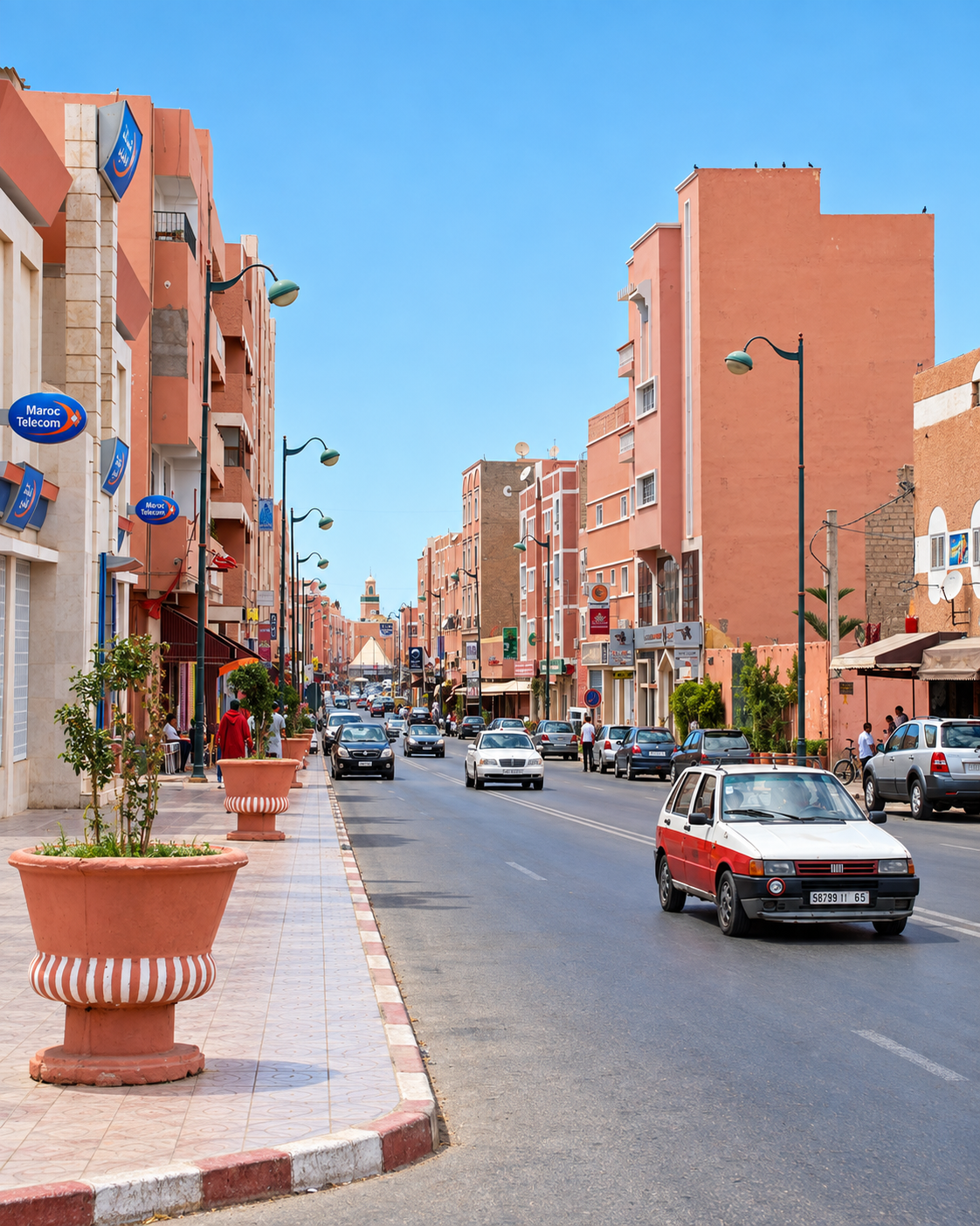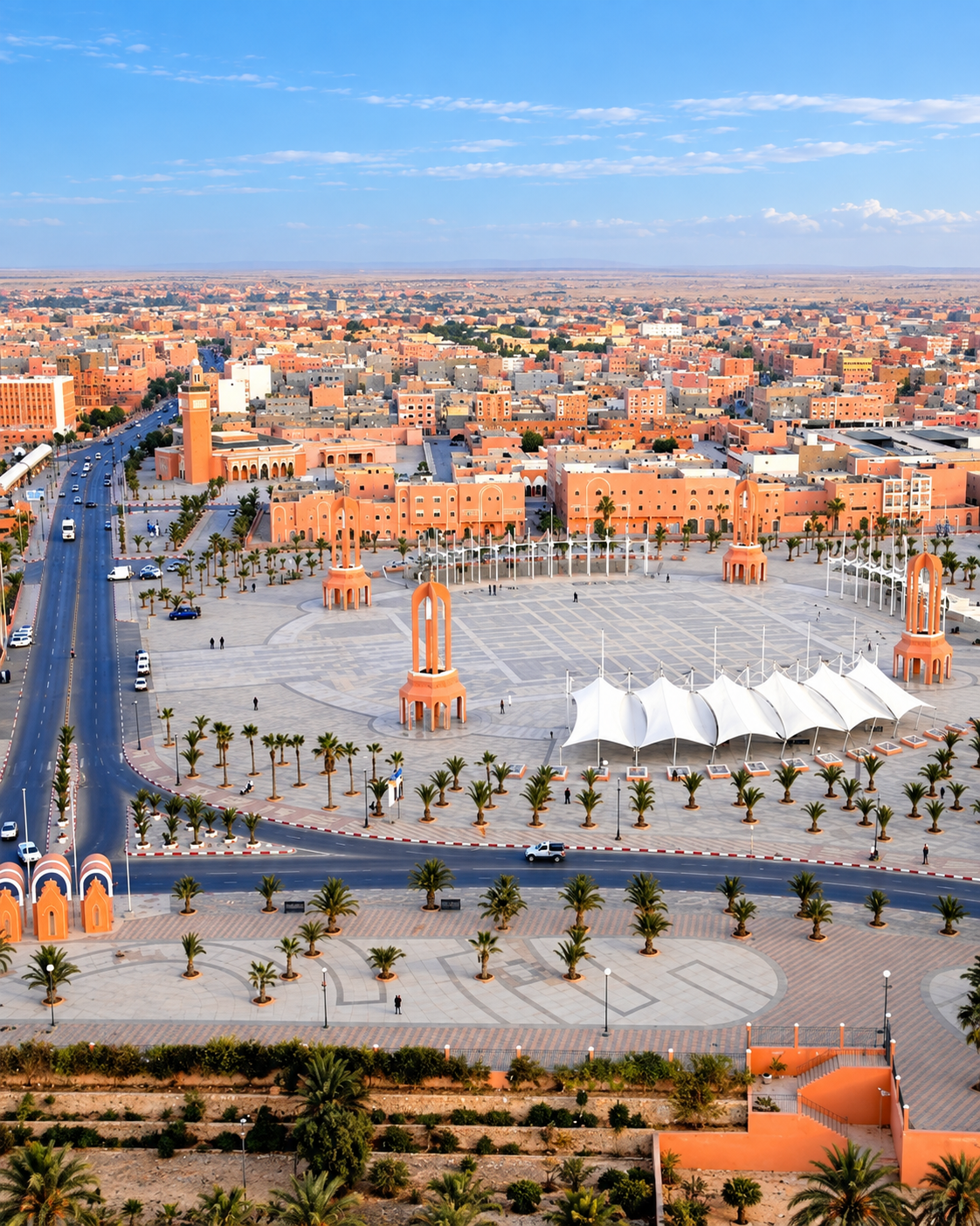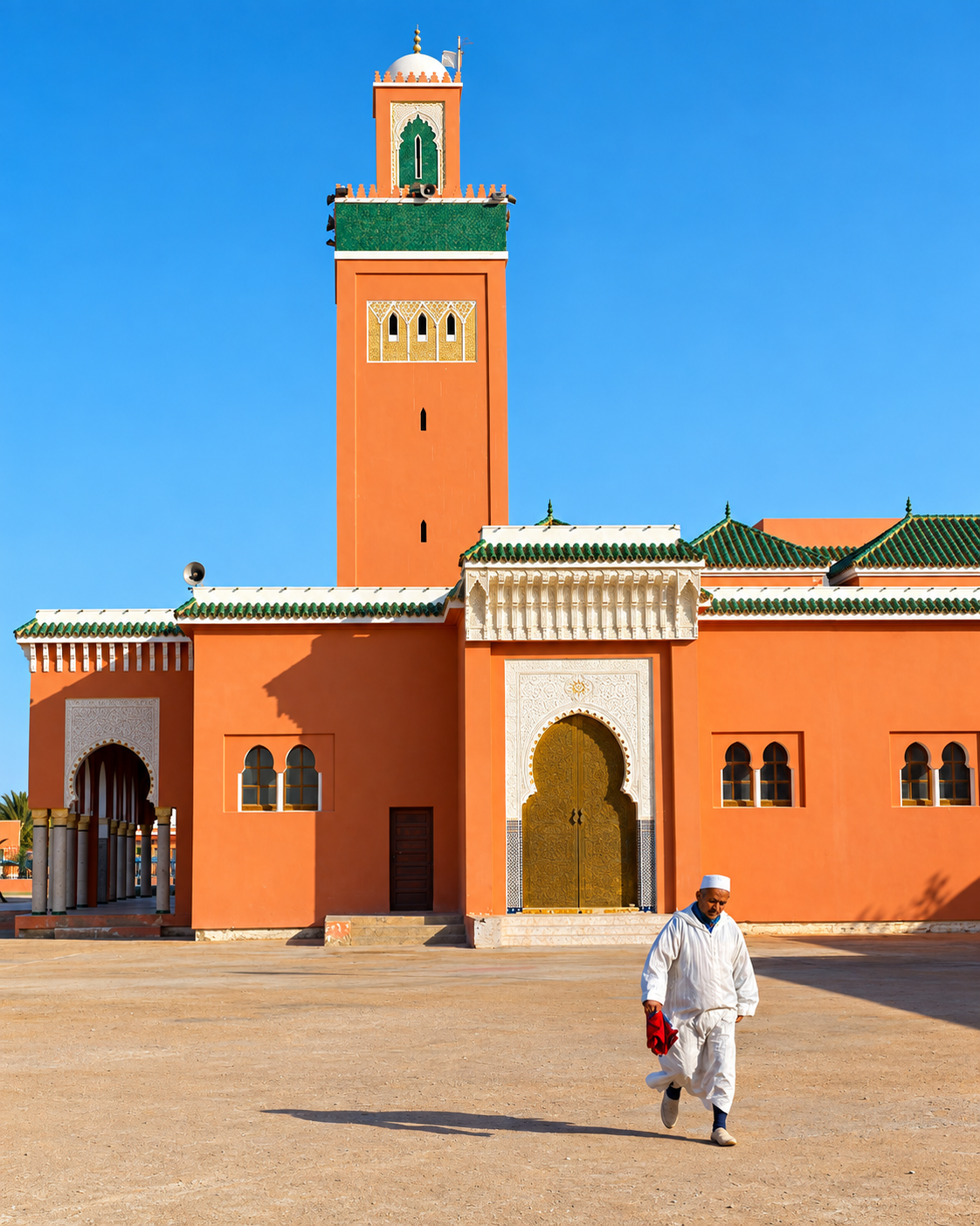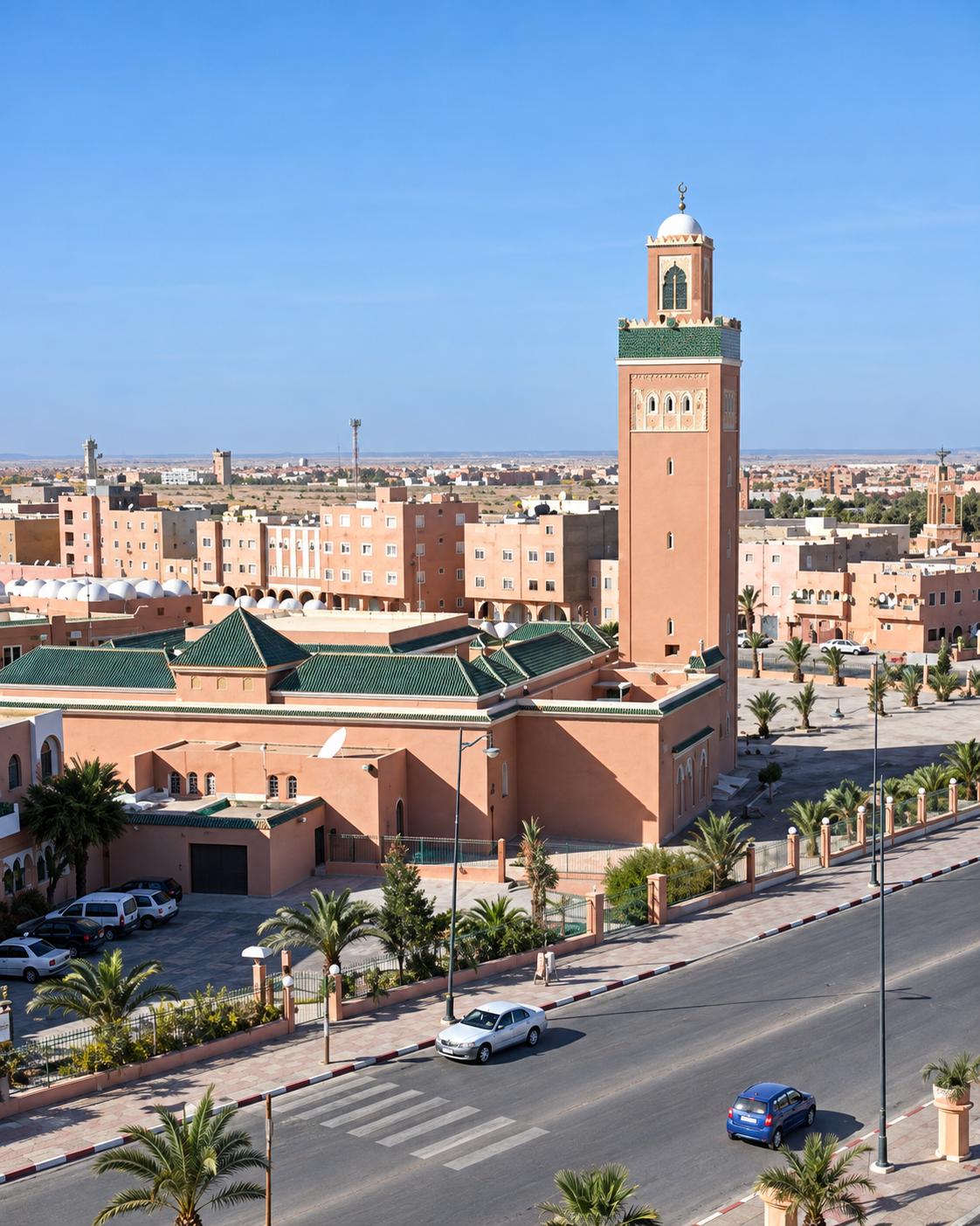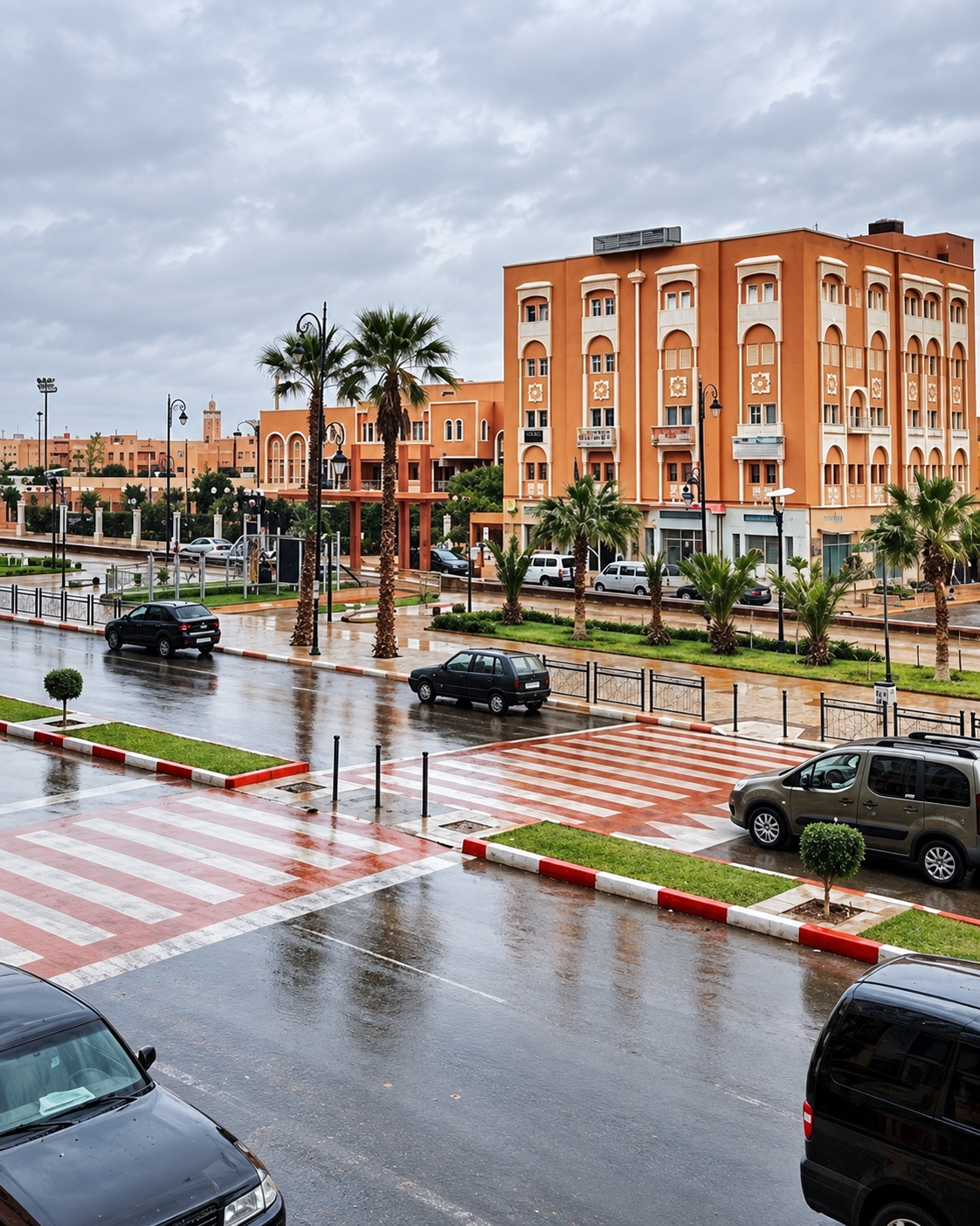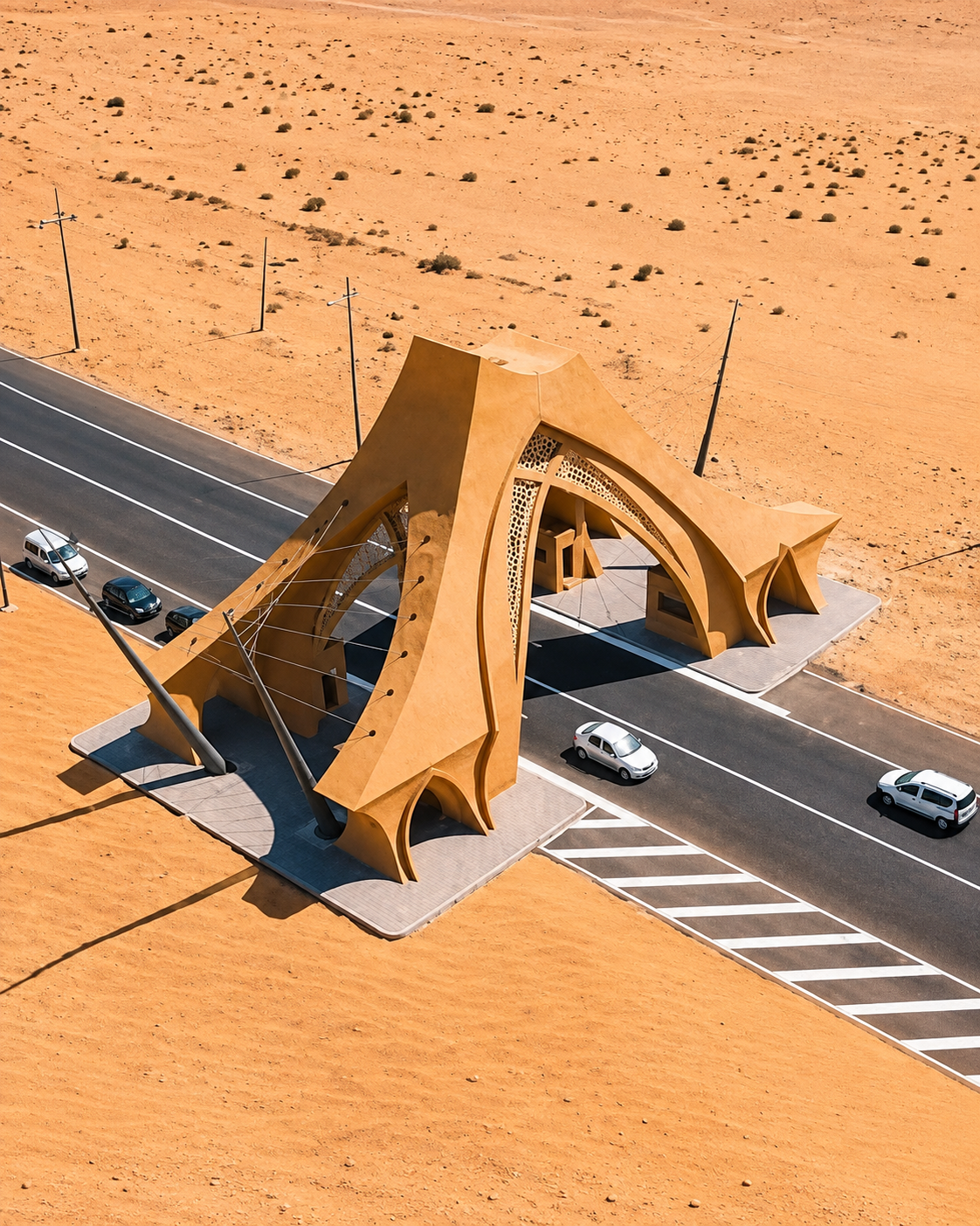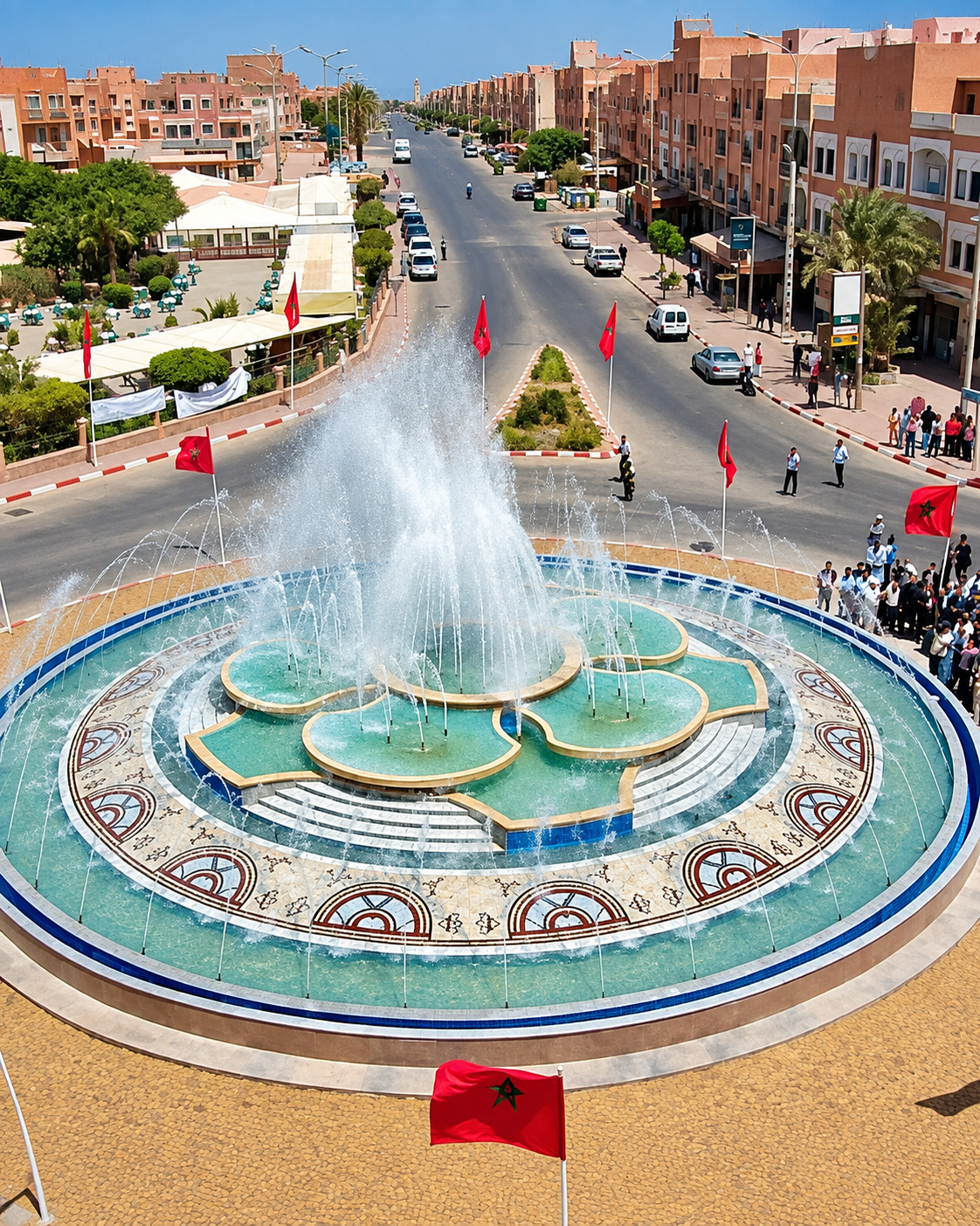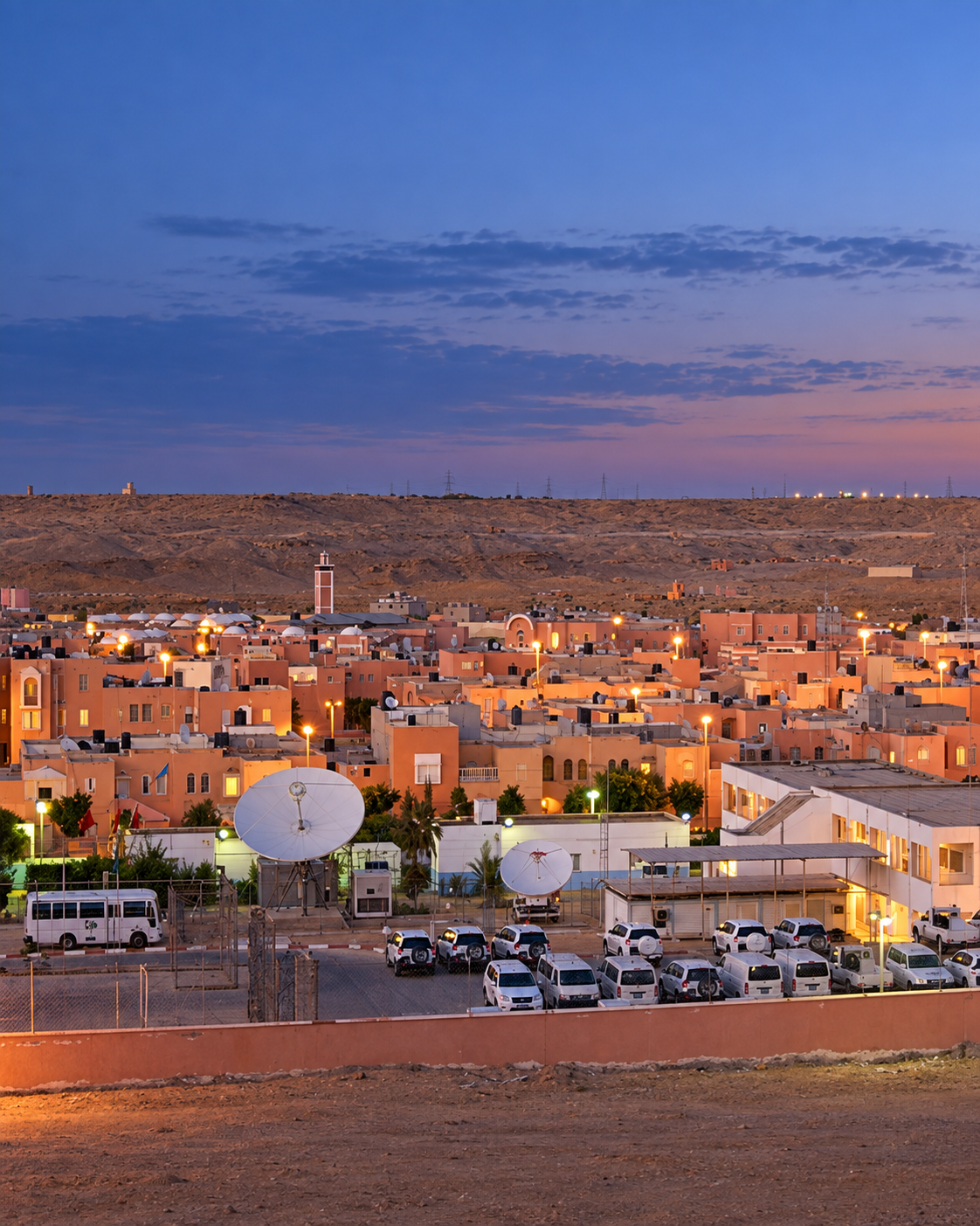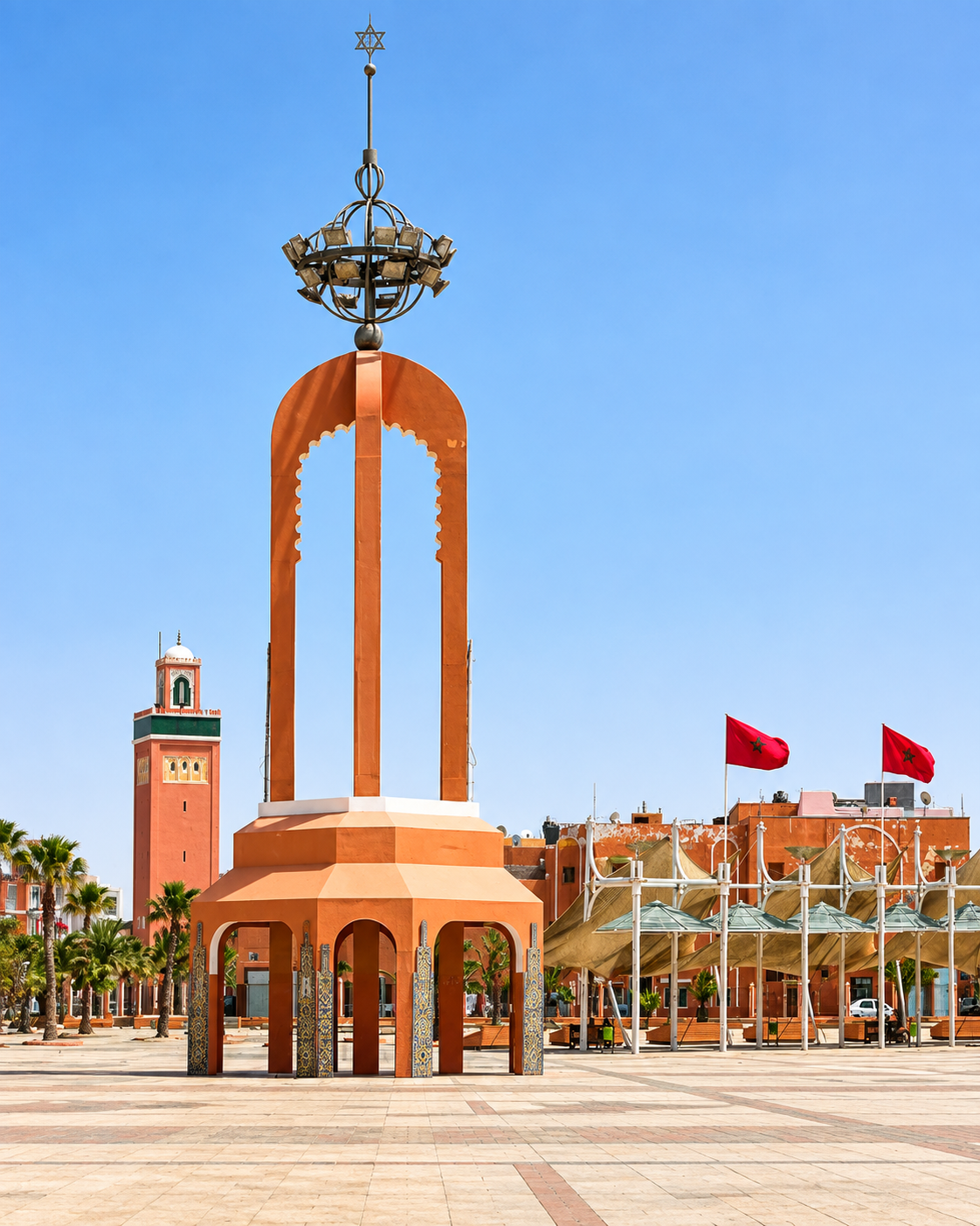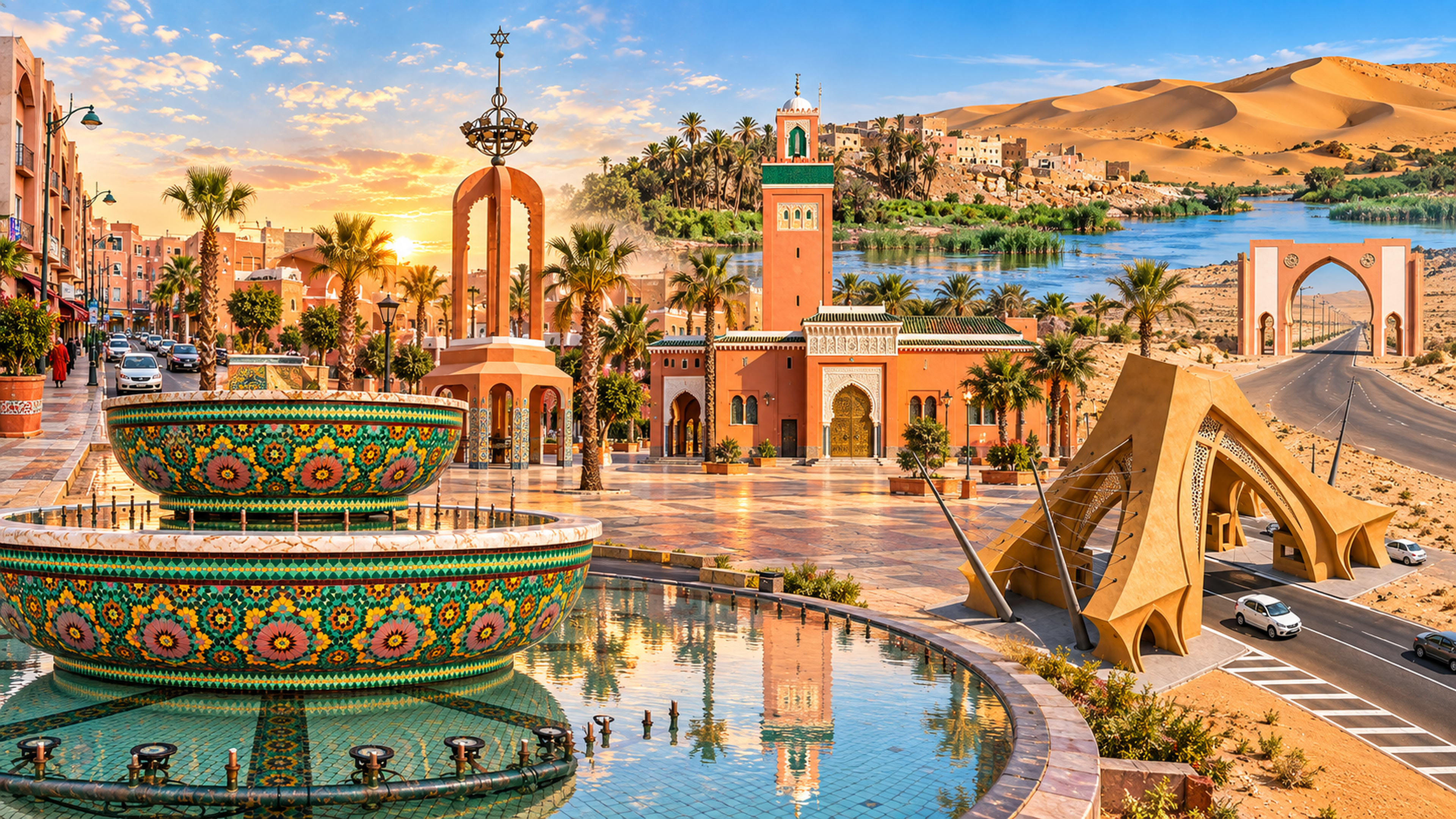
User-selected montage of Laâyoune avenues, civic monuments, a mosque, fountains and Saharan scenery

Southern Sahara City

Laâyoune Saguia el-Hamra horizons, Saharan rhythm and Atlantic routes

Laâyoune is not an old-medina postcard. It is a modern Saharan city of broad avenues, palm-lined civic spaces, desert light, regional administration and routes that connect the Saguia el-Hamra landscape with the Atlantic edge.

Why Laâyoune matters

A city of Sahara scale

Laâyoune matters because it changes the visitor's idea of Morocco's south. Instead of a preserved old quarter, the city presents a newer Saharan urbanism: wide roads, public squares, administrative buildings, palms, sand-coloured neighbourhoods and the vast presence of the wadi and desert around it.

Its importance is regional as much as visual. Laâyoune is the main urban centre of Laâyoune-Sakia El Hamra, a practical base for understanding Saguia el-Hamra, Foum El Oued, Atlantic road travel and the routes toward Smara, Tarfaya, Boujdour and the deeper south.
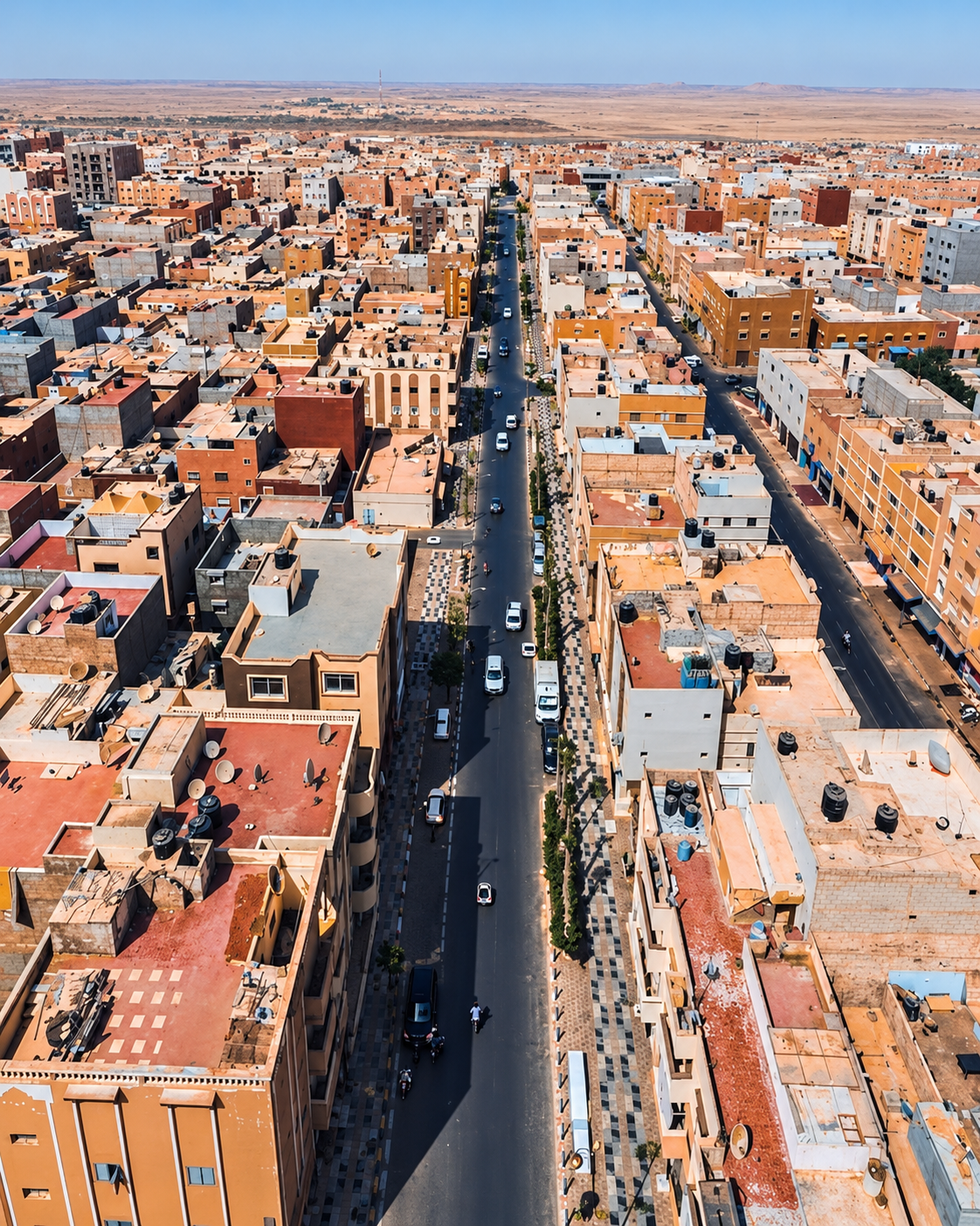
Straight avenue through the low-rise urban fabric of Laâyoune

Urban Sahara, clearly read

The city is best approached through scale, light and orientation: a boulevard, a square, a palm line, a dry river landscape, a market texture and the road beyond town.

EXPLORE

Laâyoune

Historical orientation

From Saharan watercourse to regional capital

Laâyoune's modern story belongs to the twentieth century, but the landscape is older than the city. The Saguia el-Hamra wadi shaped movement, grazing, routes and settlement logic before the modern urban centre grew. A Spanish-period outpost developed into an administrative city, and today's Laâyoune is read through both memory and rapid urban change.

01Before the modern city

Saguia el-Hamra landscape

The intermittent wadi gave the region one of its key names and helped organise movement across a difficult Saharan environment.

021938

Spanish outpost

The modern city developed from an outpost established during the Spanish period, chosen for water, position and route control.

031950s-1970s

Administrative centre

Laâyoune grew as an administrative centre during the Spanish Sahara period, leaving visible traces in parts of the twentieth-century city.

04Today

Regional hub

Under Moroccan administration, Laâyoune functions as the main city of Laâyoune-Sakia El Hamra, with airport access, public institutions, commerce and road links across the south.

A visual bridge

Three glimpses between city and horizon

Laâyoune is understood through transitions: dry river landscape, palm-lined public life and long roads leading toward the Atlantic and the interior.

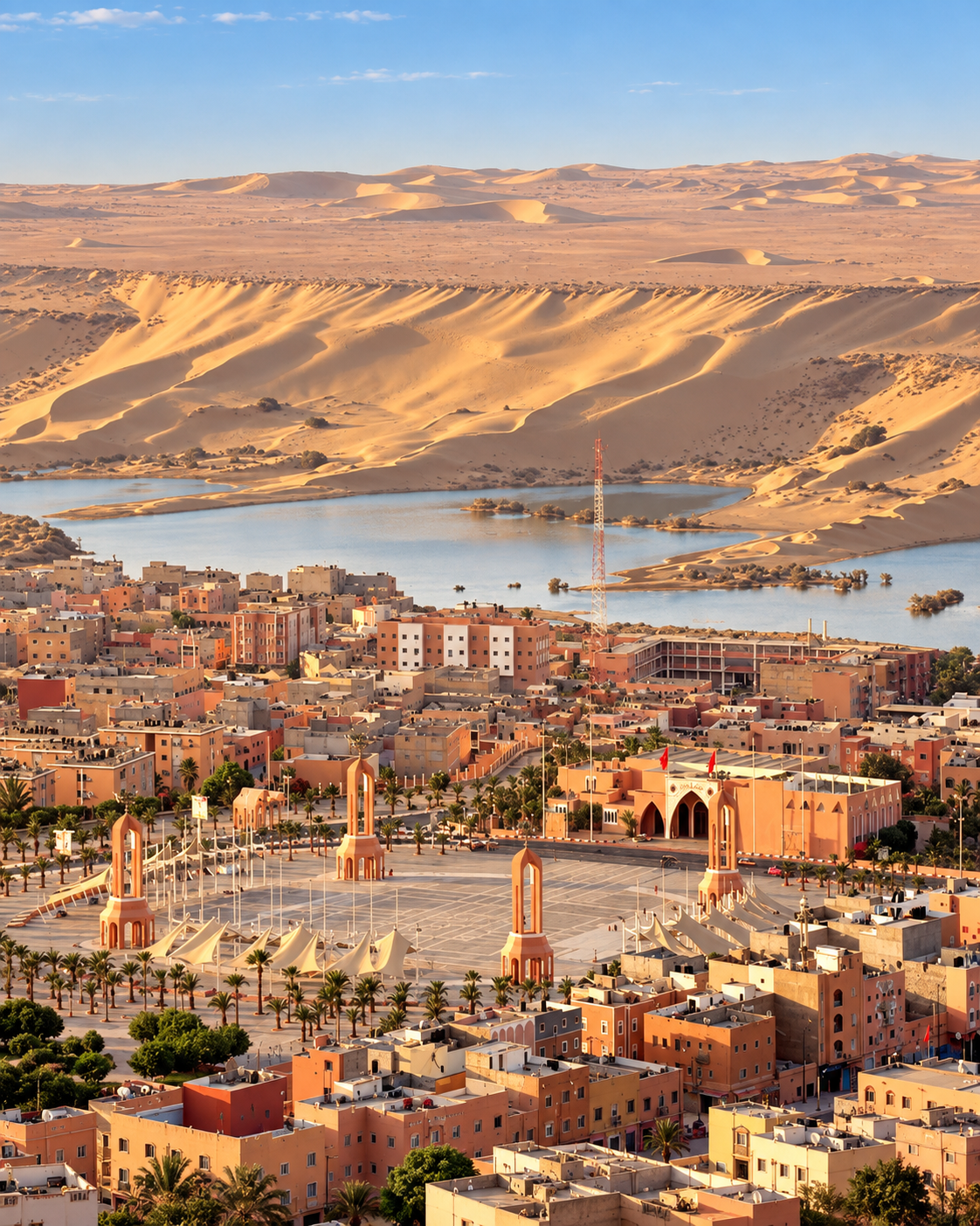
Laâyoune cityscape beside water and sand dunes in the Saguia el-Hamra landscape

Saguia el-Hamra

The wadi gives the city its wider geographic language and keeps the desert landscape present.

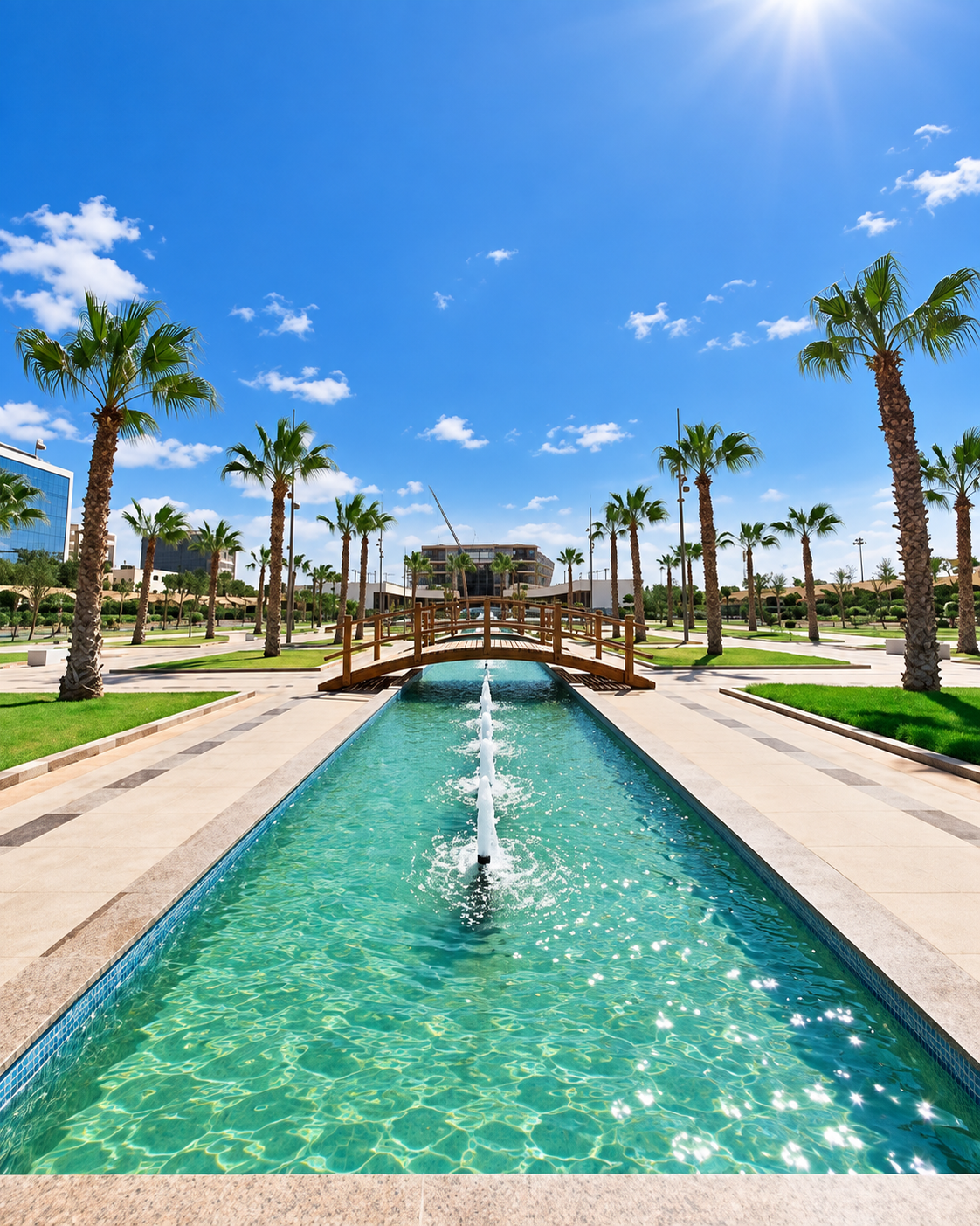
Palm-lined park with a canal, fountains and a small footbridge

Civic palm lines

Squares, promenades and palms give the modern city a measured public rhythm.

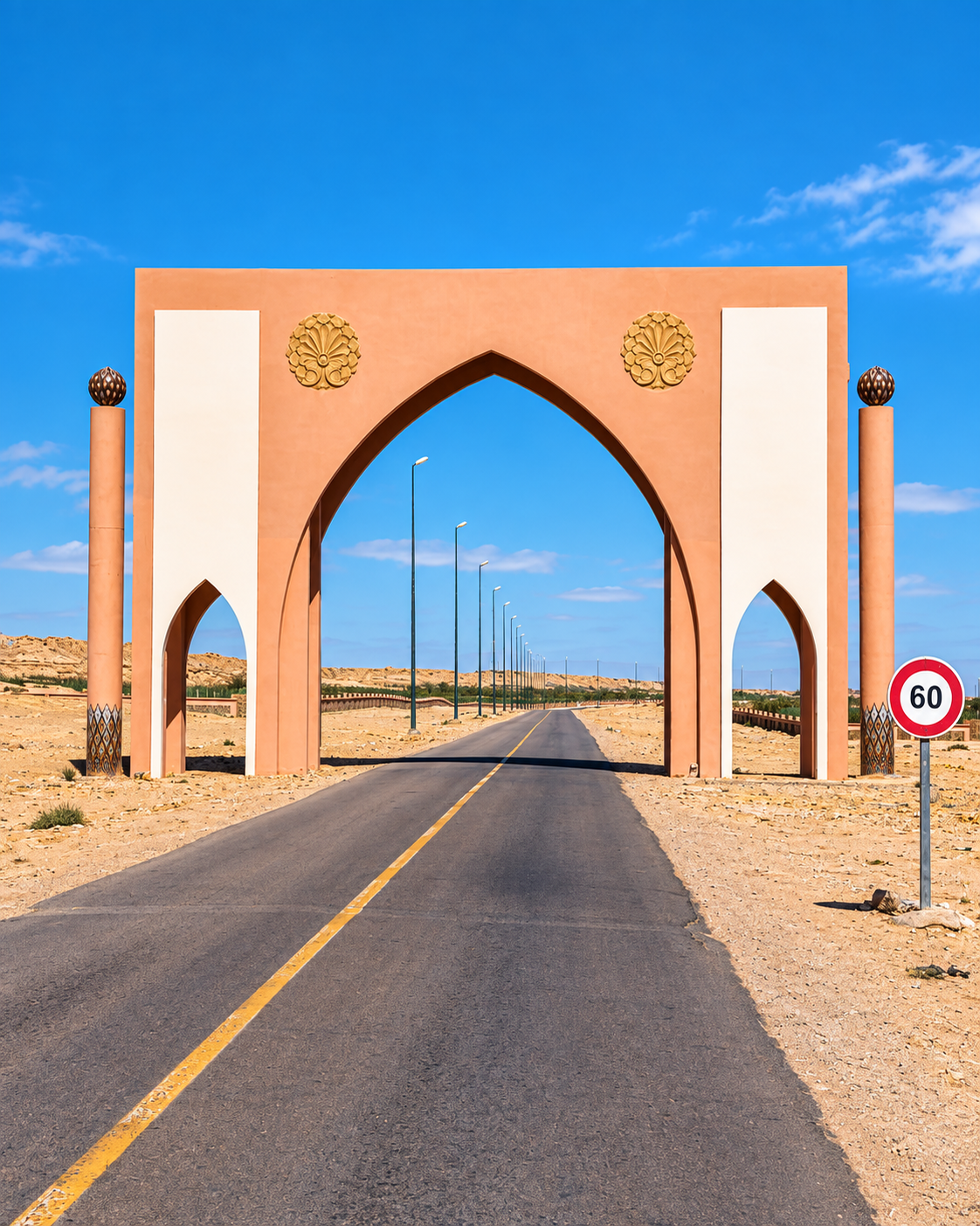
Monumental arch spanning a straight road at the desert edge of Laâyoune

Road horizons

Laâyoune is also a route city, where the Atlantic edge and interior roads shape how visitors move.

Laâyoune at a glance

Main city of the region

Laâyoune is the principal urban centre of Laâyoune-Sakia El Hamra, important for administration, services, travel logistics and regional identity.

Saguia el-Hamra setting

The city is closely associated with the intermittent Saguia el-Hamra watercourse, whose landscape gives the region a strong geographic name and visual character.

Modern urban fabric

Visitors should not expect a classical medina city. Laâyoune is better read through boulevards, civic squares, low-rise neighbourhoods, public buildings and evening street life.

Atlantic and interior routes

Foum El Oued, Tarfaya, Smara and Boujdour help frame the city as a southern route base rather than a single-isolated stop.

A clearer reading of the city

A city shaped by administration, movement and Saharan culture

To understand Laâyoune, read the modern city and the surrounding landscape together. The avenues, squares, markets, textiles, airport, coast road and wadi are not separate details; they explain how the city works.

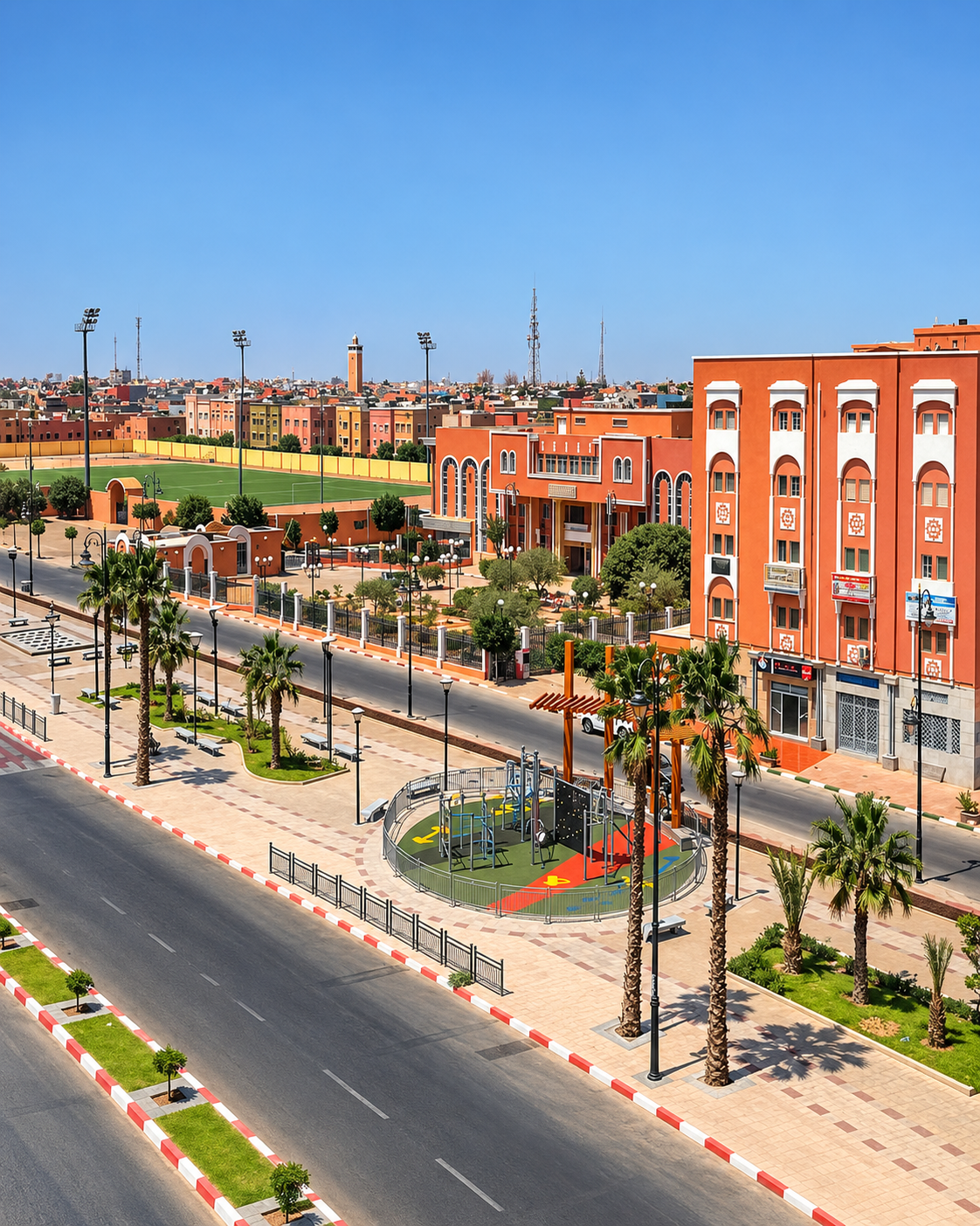
Palm-lined avenue beside warm-coloured civic buildings in Laâyoune
Layer 1

Civic scale

Broad avenues, public squares and administrative buildings give Laâyoune a clear modern structure. The city is open, low, sunlit and planned for movement.

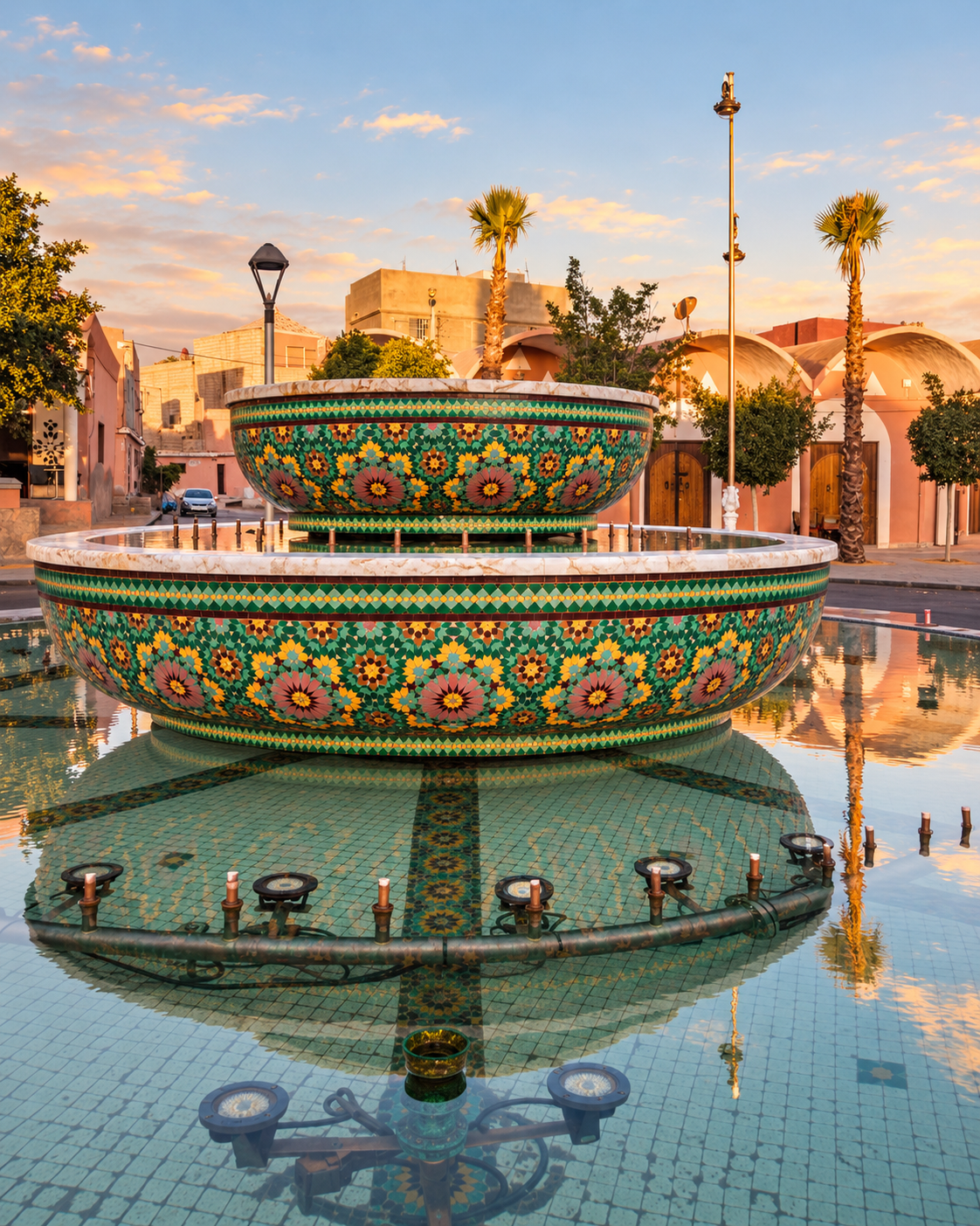
Patterned zellige fountain in a public space in Laâyoune
Layer 2

Surface and public craft

Zellige fountains and patterned public surfaces bring colour and craft into the modern city. Notice the mosaic work, water and shade within its open civic spaces.

Shops, cars and pedestrians on a street in Laâyoune
Layer 3

Markets and services

Commerce, transport, shops and practical services matter here. Laâyoune is a working regional city as much as a travel stop.

Landmarks & orientation

Read Laâyoune through six orientation points

Laâyoune is not explained by one monument. These orientation points help visitors understand the city through public space, Spanish-period traces, landscape, transport and the Atlantic edge.

1
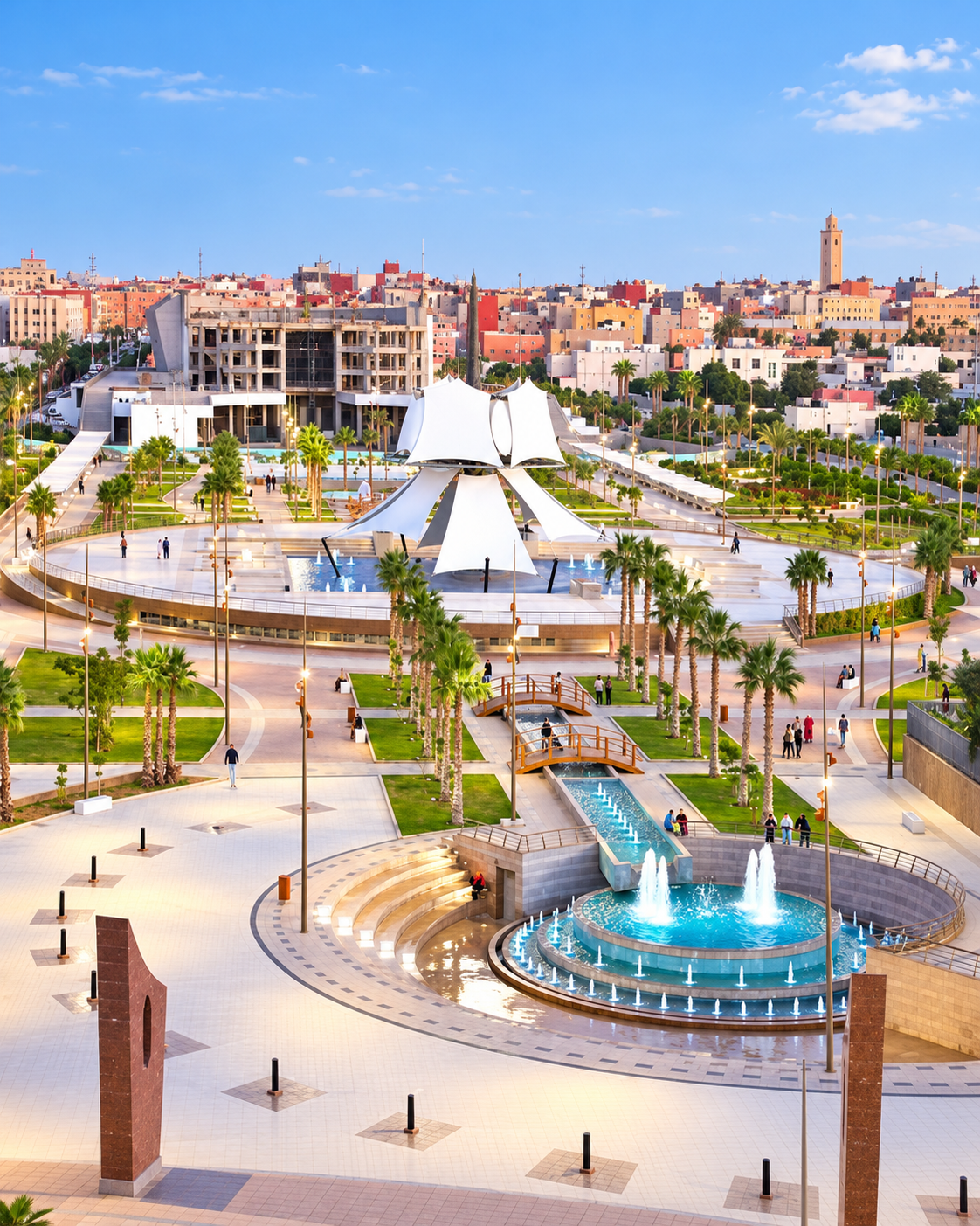
Place du Méchouar

A central public square and civic reference point, especially useful for reading the formal face of the modern city.

2
Saguia el-Hamra

The intermittent wadi landscape anchors the region's name and gives Laâyoune its wider Saharan geography.

3
St Francis of Assisi Cathedral

A Spanish-period Catholic church that preserves one of the city's clearest twentieth-century architectural traces.

4
Hassan I Airport

The practical arrival point for many visitors and a reminder that Laâyoune functions as a regional hub.

5
Foum El Oued

The nearby Atlantic beach area places the city in direct contact with the Sahara coast.

6
Local souks and textile culture

Markets, fabrics, household objects and Saharan dress reveal daily life more honestly than a checklist of monuments.

Place du Méchouar with civic monuments, palms and a white canopy in Laâyoune
Warm-coloured mosque façade with a minaret, green roof tiles and an ornate entrance

Saharan identity

Colour, light and civic rhythm

Laâyoune's urban identity comes through warm-coloured façades, green-tiled rooflines, palms and open public space. The mosque exterior shown here brings those elements together. Beyond its architecture, Saharan textiles, local dress and market life remain an important part of the city's everyday culture.

  • Notice the contrast between warm plaster, green tile, carved entrance details and the blue sky.
  • Read public space in the evening, when squares and promenades become more social and legible.
  • View mosque architecture respectfully from public space and follow local access rules.

Urban reading

Three urban languages to notice

Avenues and civic scale

Laâyoune speaks first through width: roads, roundabouts, formal squares, public buildings and palm alignments. It is a city of movement and visibility, not a maze of old lanes.

Dry landscape and horizon

The wadi, sand, wind and open light make the surrounding geography impossible to ignore. Even inside the city, the horizon remains part of the experience.

Surface and everyday culture

Textiles, shopfronts, market objects, domestic materials and evening gathering places carry the city's intimate identity. The detail is social rather than monumental.

Visual atmosphere

Light, avenues and urban texture

Nearby highlights

Coast, interior and Sahara-Atlantic routes

Laâyoune works best when treated as a base for wider southern orientation. Foum El Oued brings the Atlantic close; Smara adds interior and spiritual-historical context; Tarfaya and Boujdour place the city on a longer Sahara-coast line.

Foum El Oued

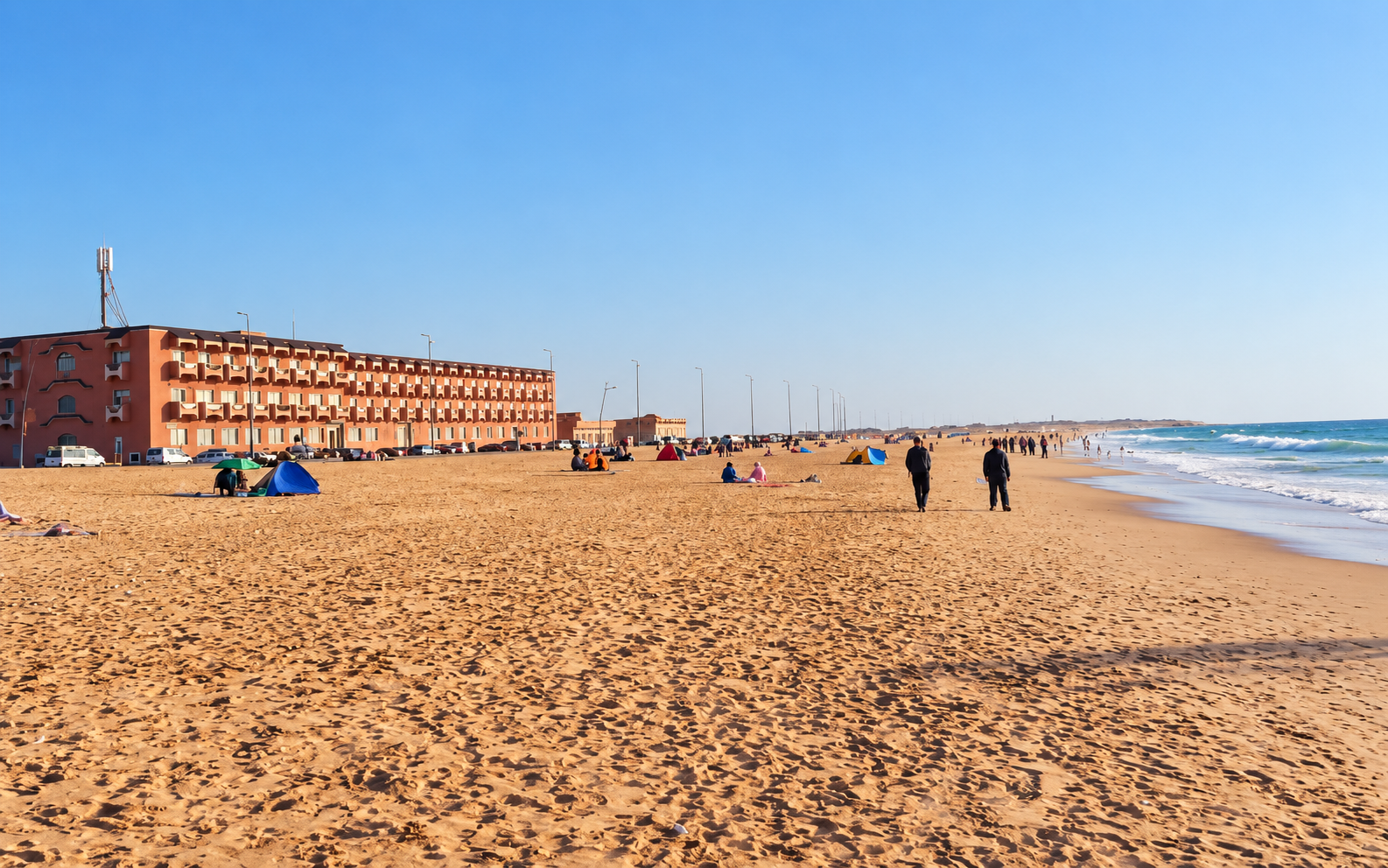
The nearby beach and Atlantic edge give Laâyoune a coastal counterpoint to the inland city. Expect wind, openness and a raw meeting of desert and ocean rather than a polished resort mood.

Foum El Oued beach with the Atlantic shoreline and beachfront hotel

Smara

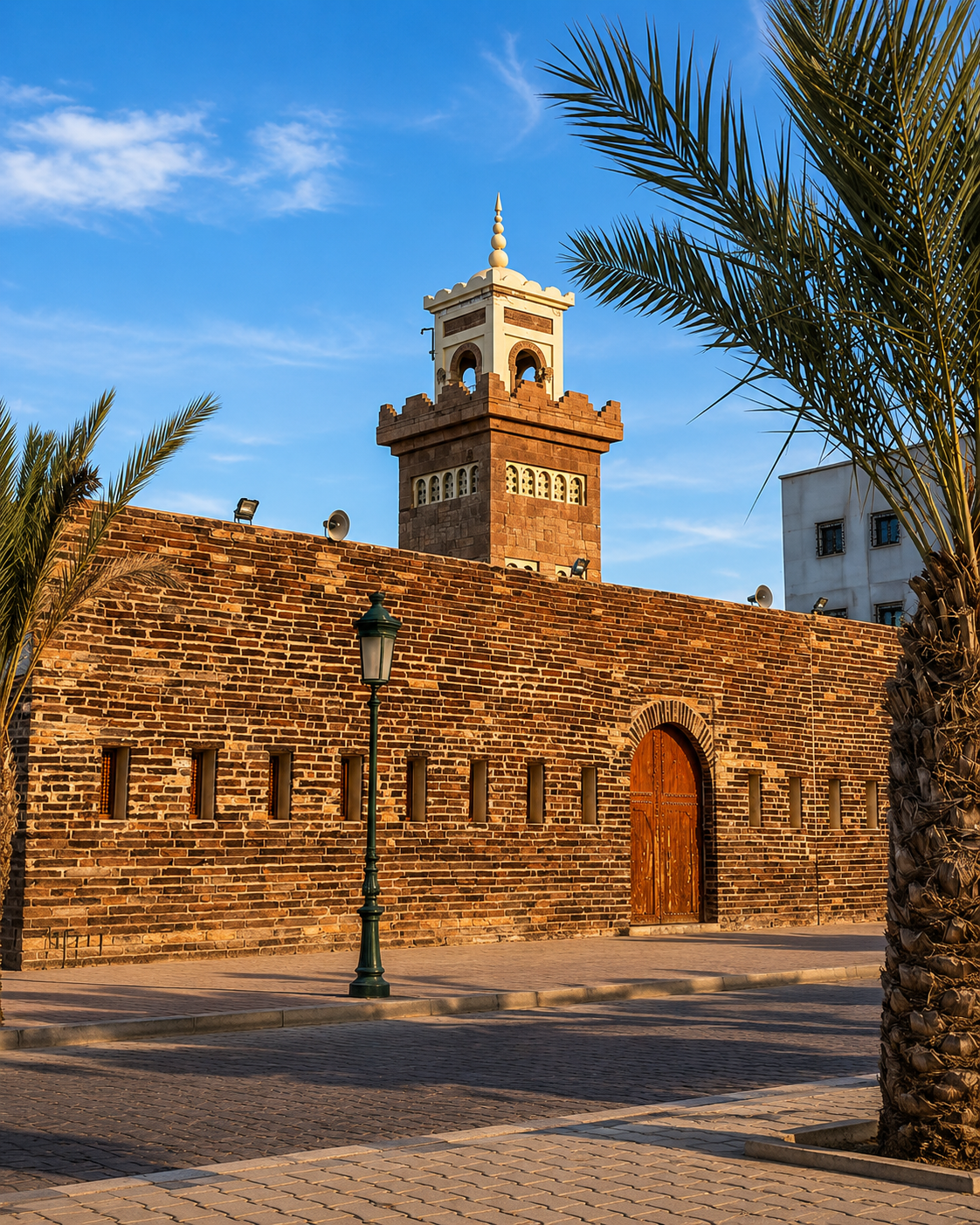
Smara extends the journey inland toward a different Saharan register, associated with religious history, interior routes and a quieter urban rhythm.

Historic stone mosque and minaret in Smara

Tarfaya and Boujdour

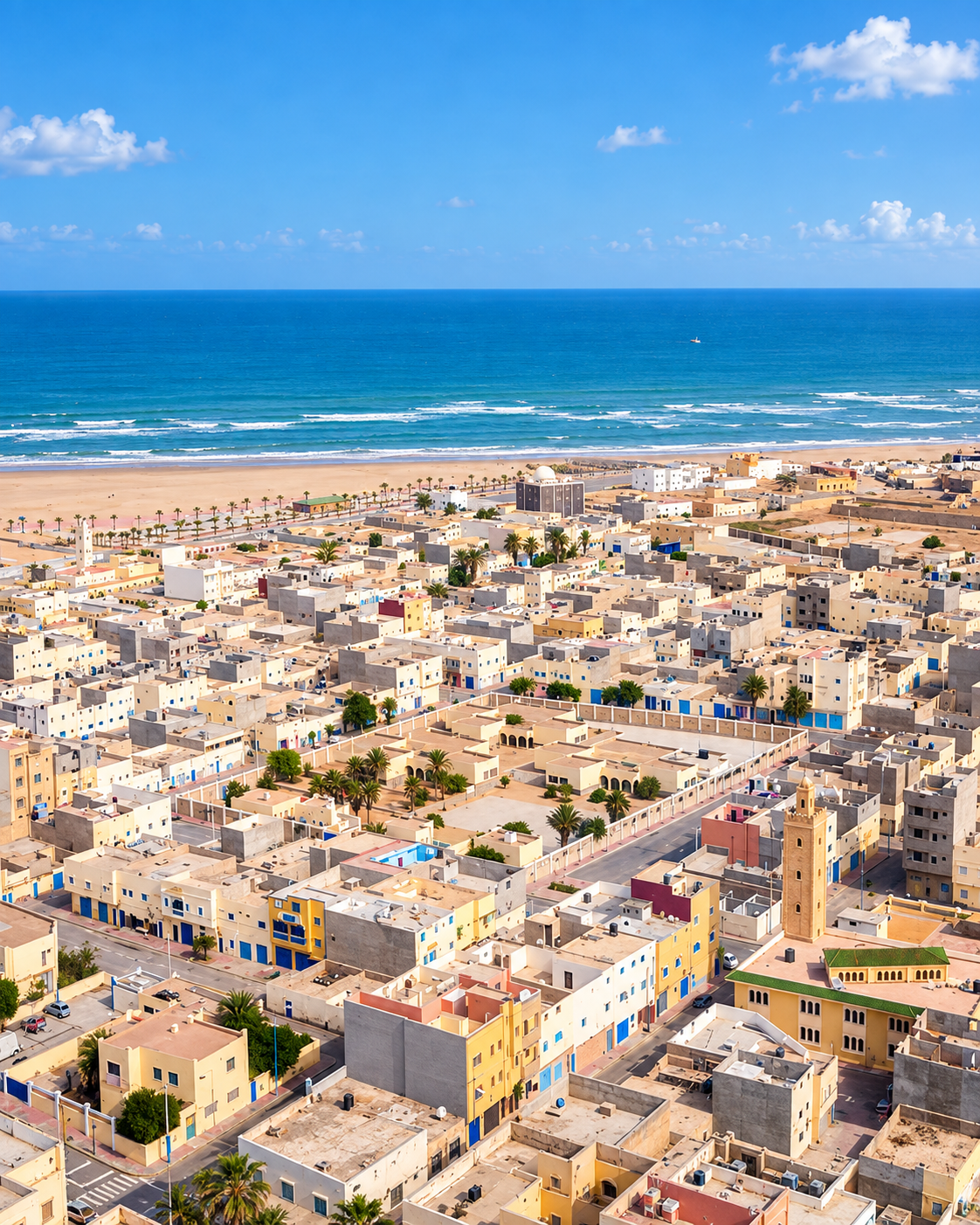
Tarfaya lies north along the Atlantic road, where low-rise streets meet the coast. Boujdour extends the journey south. Together, these towns frame a wider Sahara-coast route beyond Laâyoune.

Tarfaya streets, low-rise buildings and the Atlantic coast seen from above
Travel note: distances, road conditions, coastal wind, transport schedules and local visitor arrangements can change. Check current information before travelling. Foum El Oued photo: Carnegie6, CC BY-SA 4.0; clarity and lighting enhanced with AI.

Practical orientation

How to experience Laâyoune well

  • Begin with the city centre and civic squares before trying to understand the wider region.
  • Read Laâyoune as a modern Saharan city, not as an imperial or old-medina destination.
  • Leave time for Saguia el-Hamra, Foum El Oued and evening public spaces if your schedule allows.
  • Treat Smara, Tarfaya and Boujdour as wider route extensions, not quick inner-city detours.
  • Plan transport carefully; distances in the south feel different from northern city travel.

A strong first visit

Civic park, palm alignments and blue fountain basins in Laâyoune

Start with the civic centre and Place du Méchouar, continue toward the Saguia el-Hamra landscape, then use Foum El Oued for the Atlantic edge. Keep one part of the visit unplanned, because Laâyoune is often clearest in ordinary evening movement.

Orange civic monument with a metal finial at Place du Méchouar in Laâyoune

Go deeper with Exotic Morocco

Laâyoune - Premium Visual City Guide

Continue with a visual city guide approach that connects Laâyoune's modern Saharan urbanism, Saguia el-Hamra setting, local culture, Atlantic route context, nearby highlights and practical travel orientation into one coherent reading.

✓ Historical context✓ City orientation ✓ Sahara landscape✓ Culture & local life ✓ Practical travel guidance✓ Nearby highlights

Continue the journey

Continue the journey through Laâyoune

Look beyond a quick stop and encounter a city of Saharan scale, civic life, regional movement, wadi memory, Atlantic air and southern Moroccan route logic.