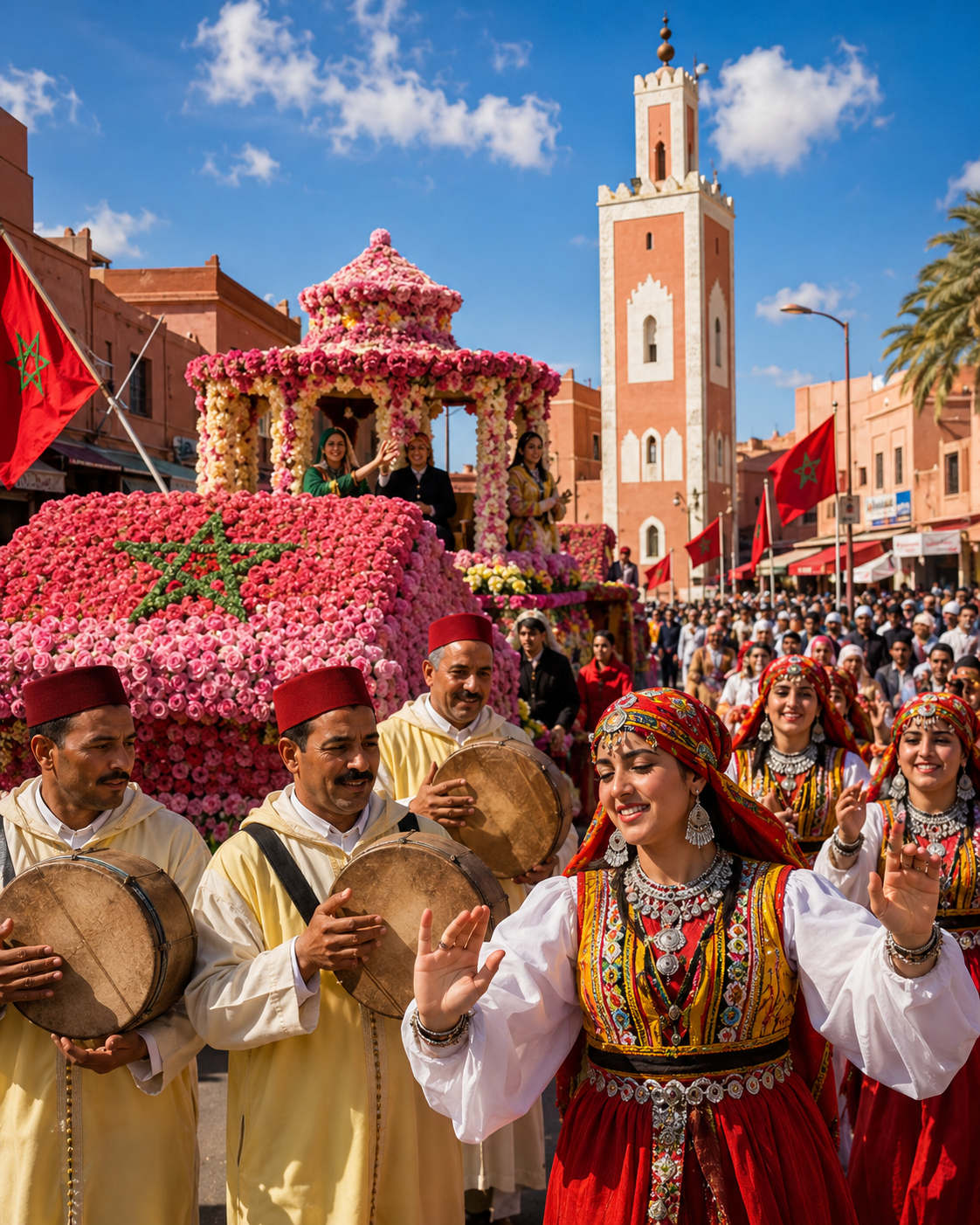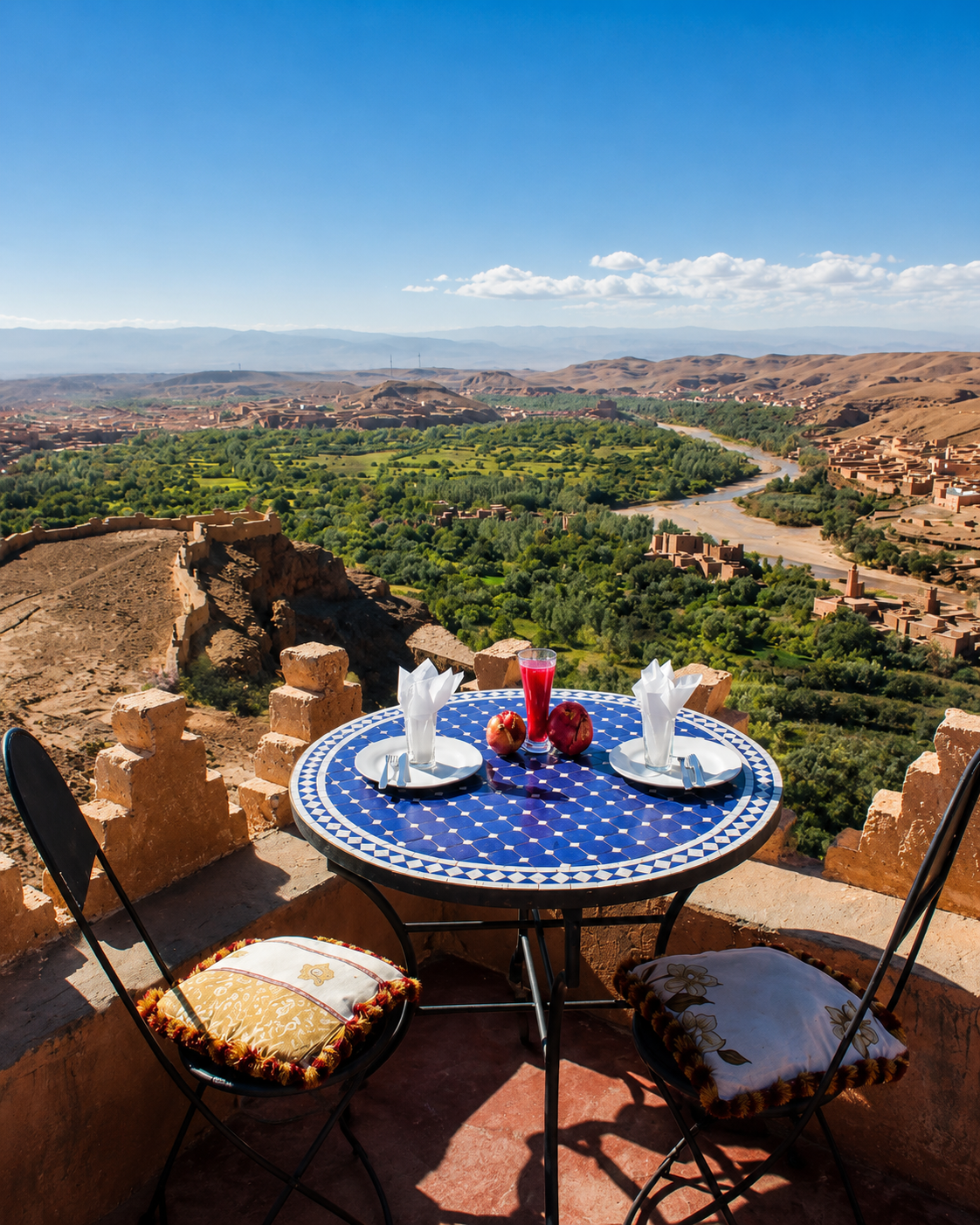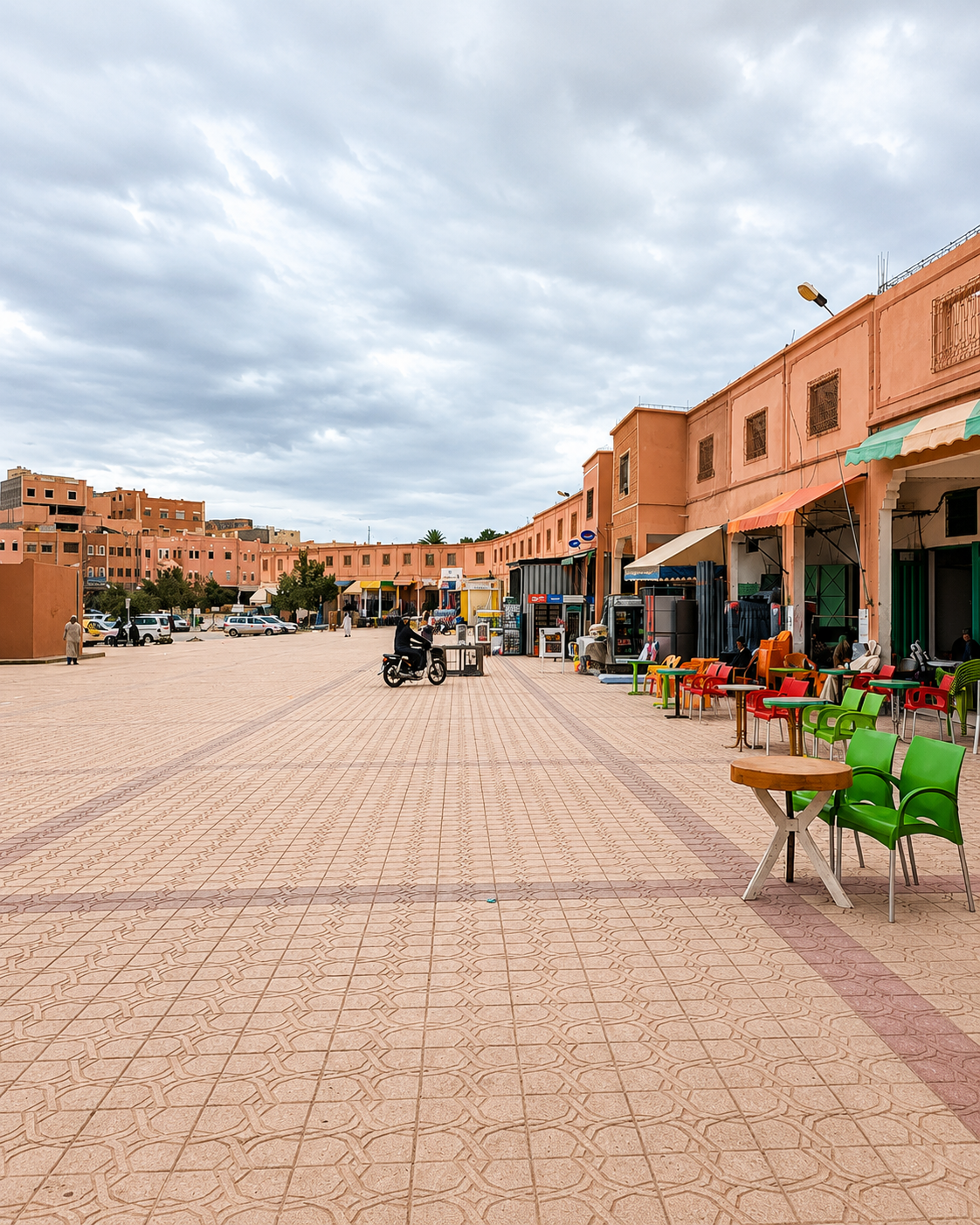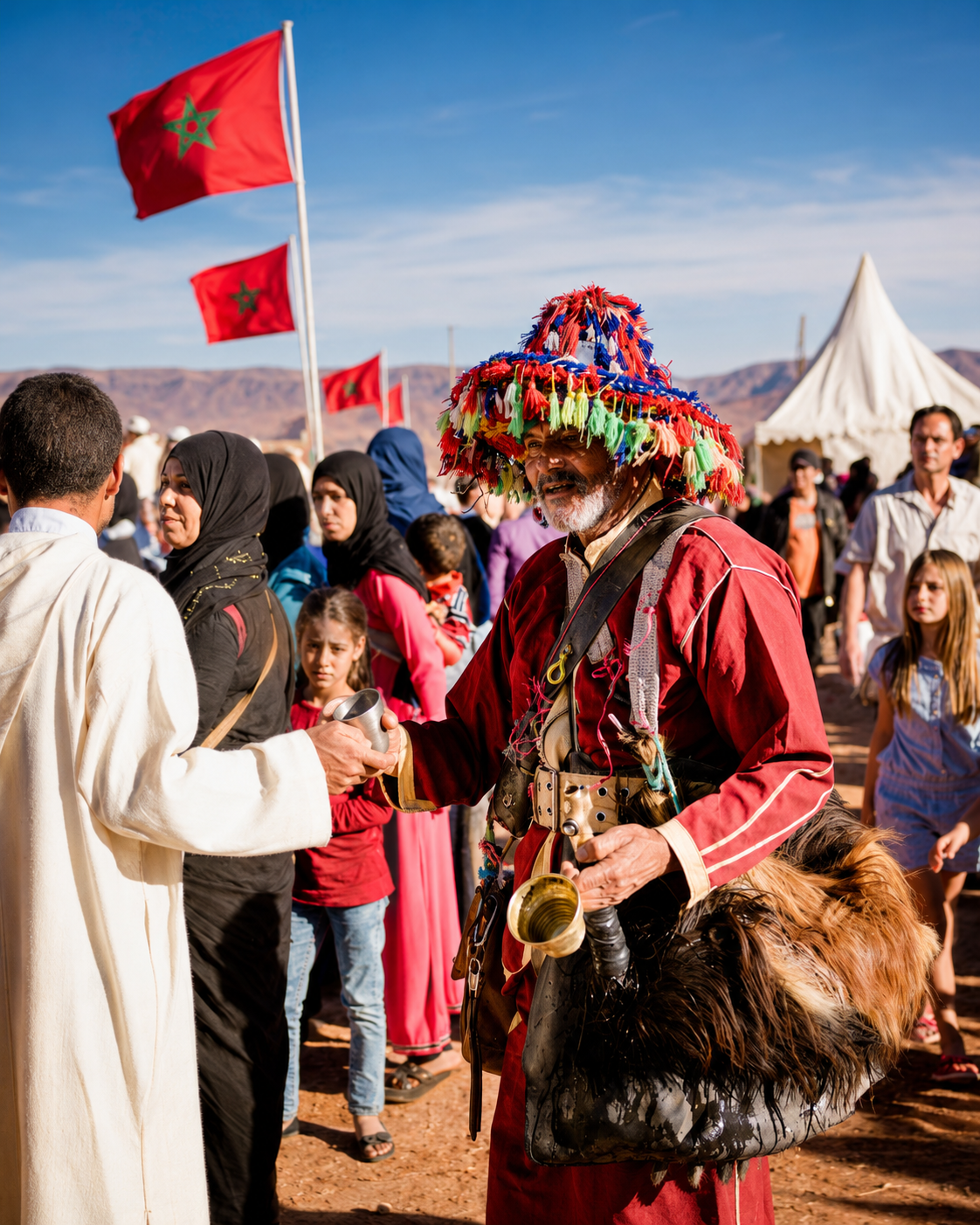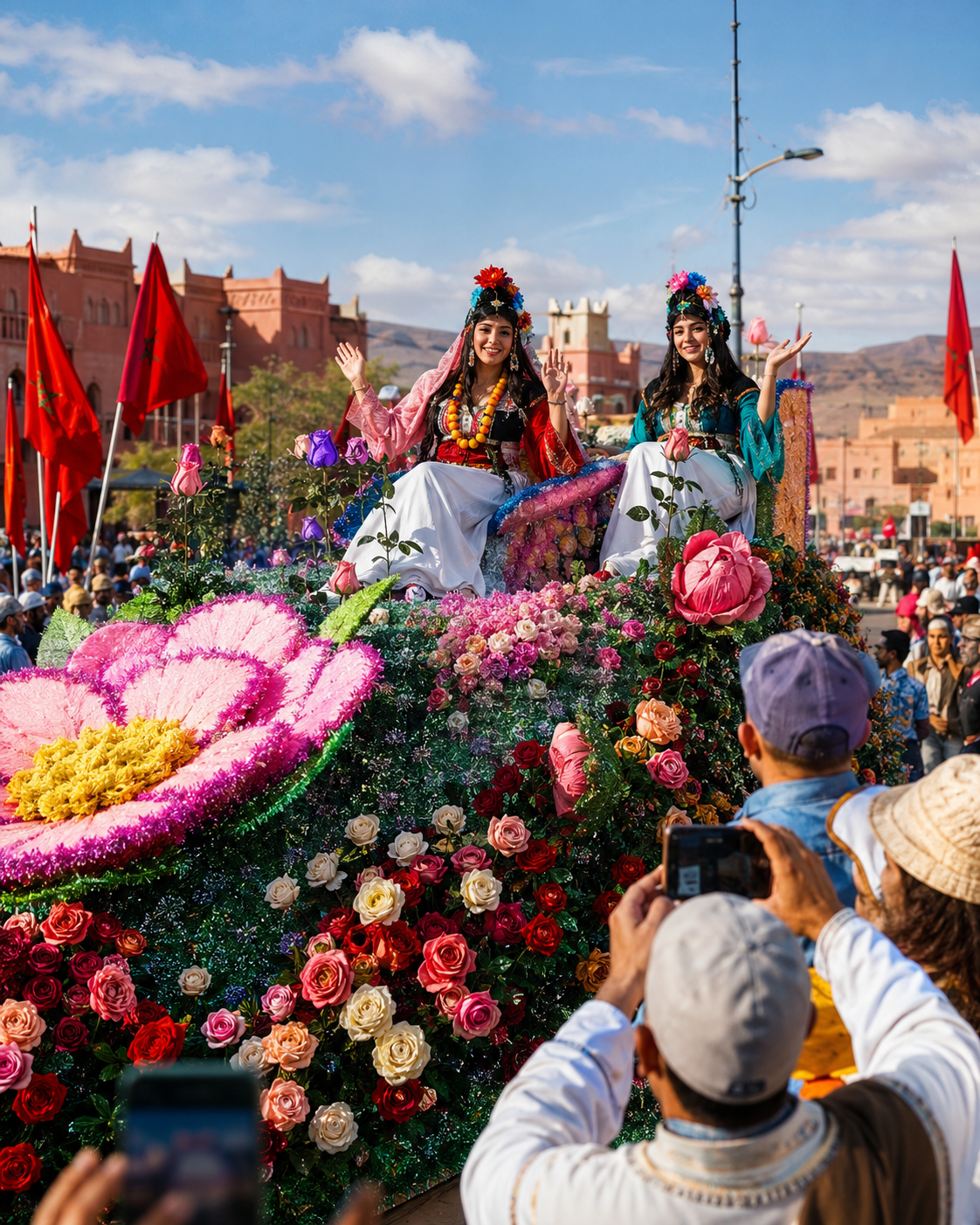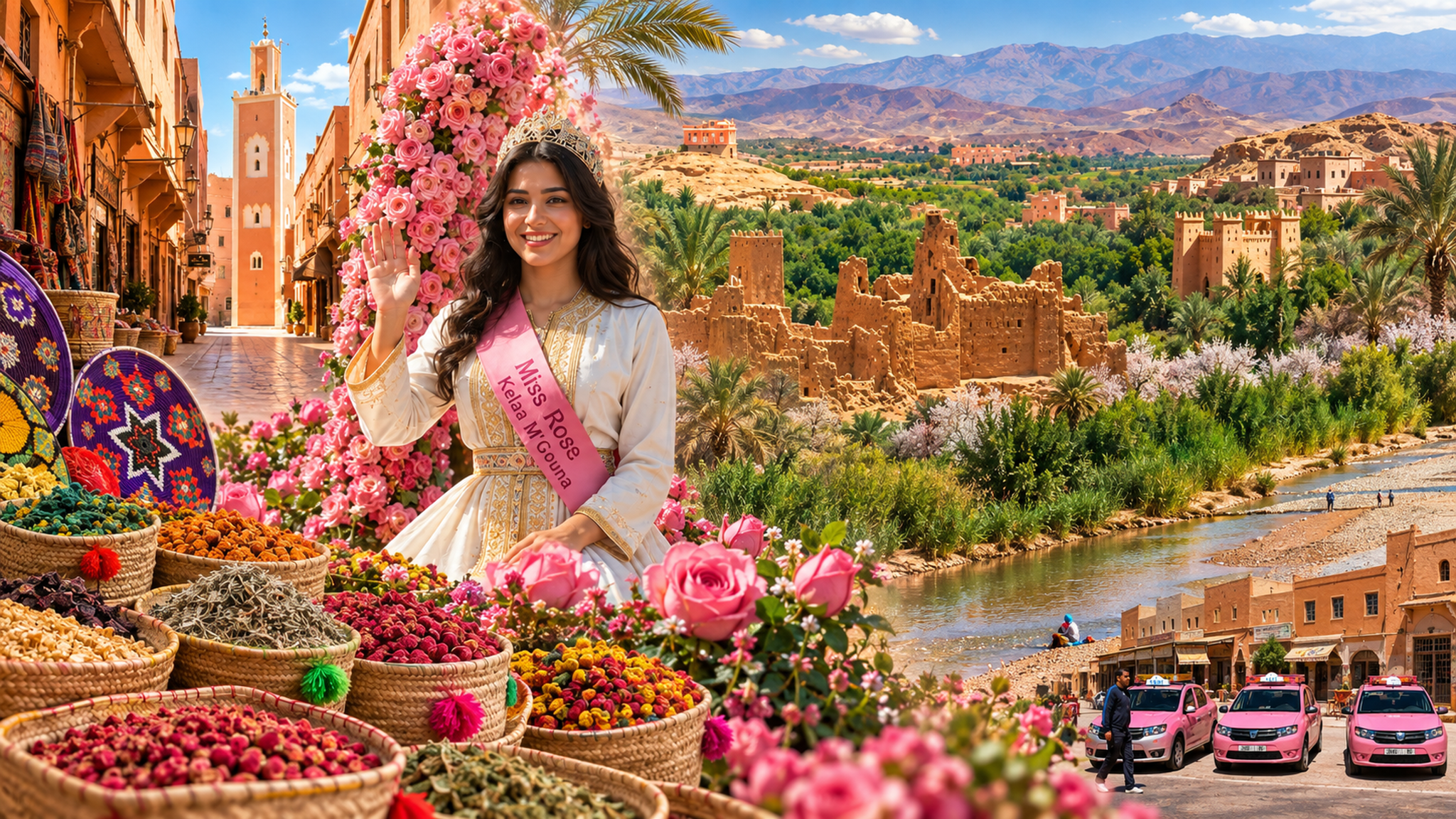
Kalaat M’Gouna collage of rose celebrations, town streets and valley architecture

Rose Valley of Morocco

Kelaat M’Gouna Rose-valley rhythm, Amazigh craft and southern Atlas landscapes

Rose gardens, earthen villages, seasonal markets and Amazigh traditions shape Kelaat M’Gouna, between the Dadès Valley and the M’Goun foothills.

Why Kelaat M’Gouna matters

Beyond the rose season

Kelaat M’Gouna is famous for roses, yet the town matters because the flower is tied to a wider valley system: irrigated gardens, women’s harvest work, small distillation units, Amazigh craft traditions, local trade and the southern route between Ouarzazate, Boumalne Dadès and the gorges beyond.

The best reading is not only floral. Look at the contrast between green plots and ochre slopes, between modest town streets and earthen valley architecture, between everyday commerce and the spring festival that briefly turns the town into Morocco’s rose capital.
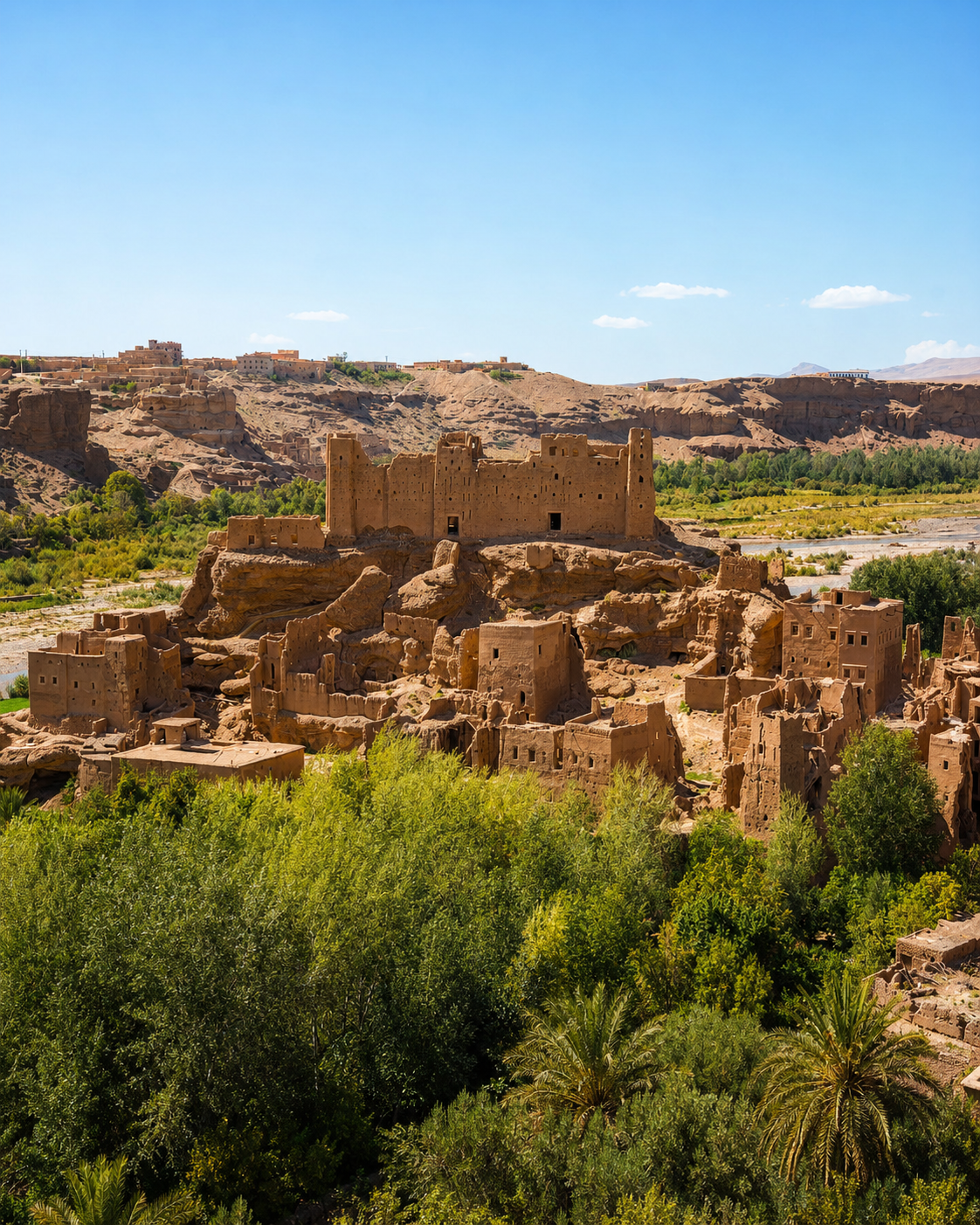
Earthen kasbah ruins among green valley gardens

A town held by valley and mountain

Kelaat M’Gouna sits where rose gardens, kasbah-like earthen forms, dry hills and M’Goun landscapes meet.

EXPLORE

Kelaat M’Gouna

Historical orientation

From valley settlement to rose capital

Kelaat M’Gouna should be understood through landscape and livelihood rather than a single founding monument. The town grew as a local centre for surrounding Amazigh communities, irrigated gardens, valley trade and later the rose economy that made its name travel far beyond the Dadès and M’Goun valleys. Its present identity combines agriculture, craft, seasonal celebration and practical route geography.

01Valley setting

Oasis and mountain context

The settlement belongs to a southern Moroccan landscape where irrigated plots, earthen building traditions and mountain routes shape daily life.

02Regional craft

Amazigh material culture

Textiles, local markets, agricultural work and communal celebration give the town a cultural identity that is broader than the rose harvest alone.

03Rose economy

Damask rose production

The surrounding valley is known for Damask roses processed into rose water, oils and cosmetic products, linking agriculture to small industry and visitor interest.

04Every spring

Festival rhythm

The rose festival is linked to the harvest season, usually around late spring, with exact dates depending on local timing and official programming.

A visual bridge

Three glimpses between harvest and landscape

These images connect the town’s rose identity to the life around it: harvest baskets, earthen valley paths and Amazigh dress and celebration.

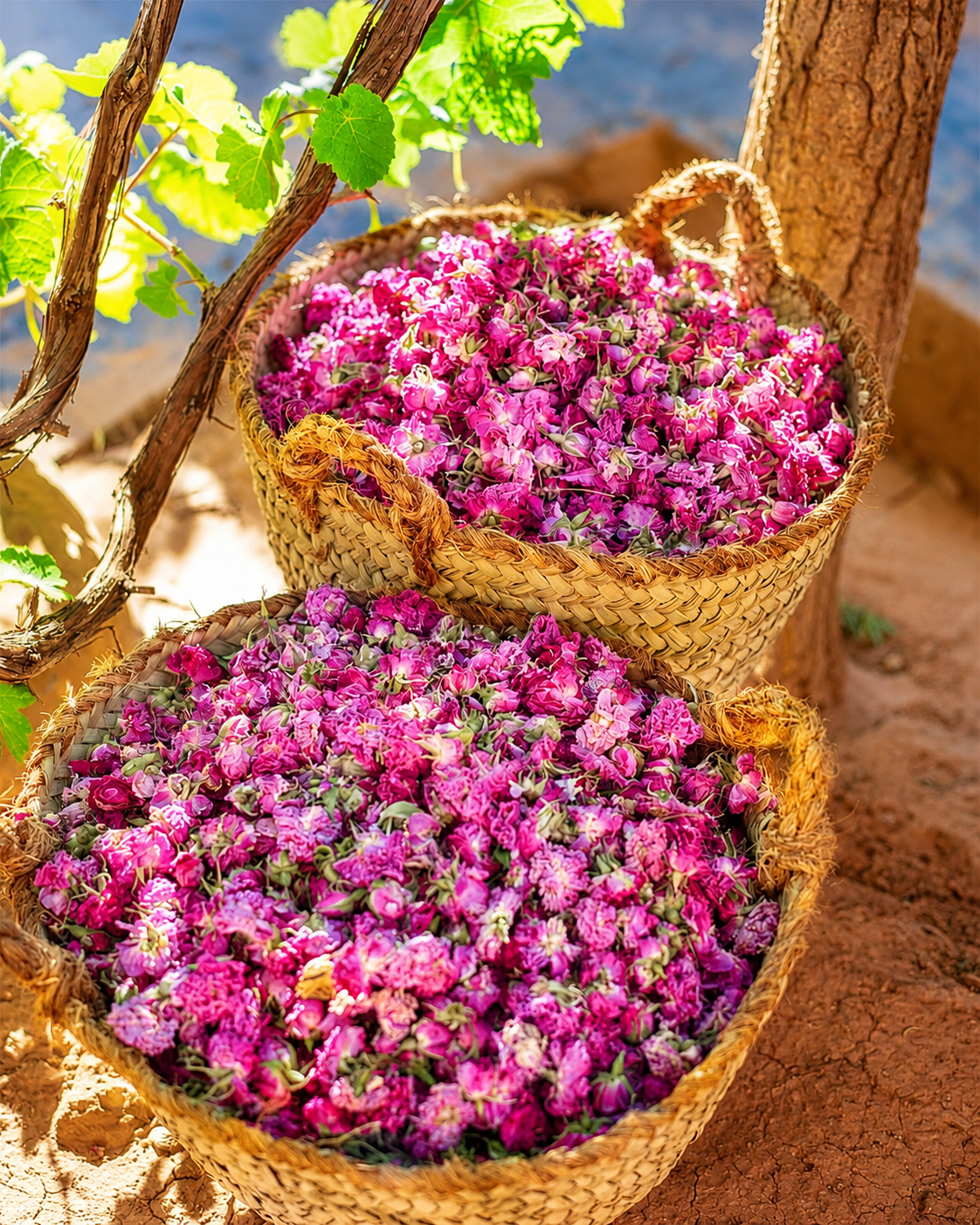
Two woven baskets filled with freshly gathered pink roses

Rose harvest

In season, the valley’s pink blooms become agricultural work, scent, trade and celebration.

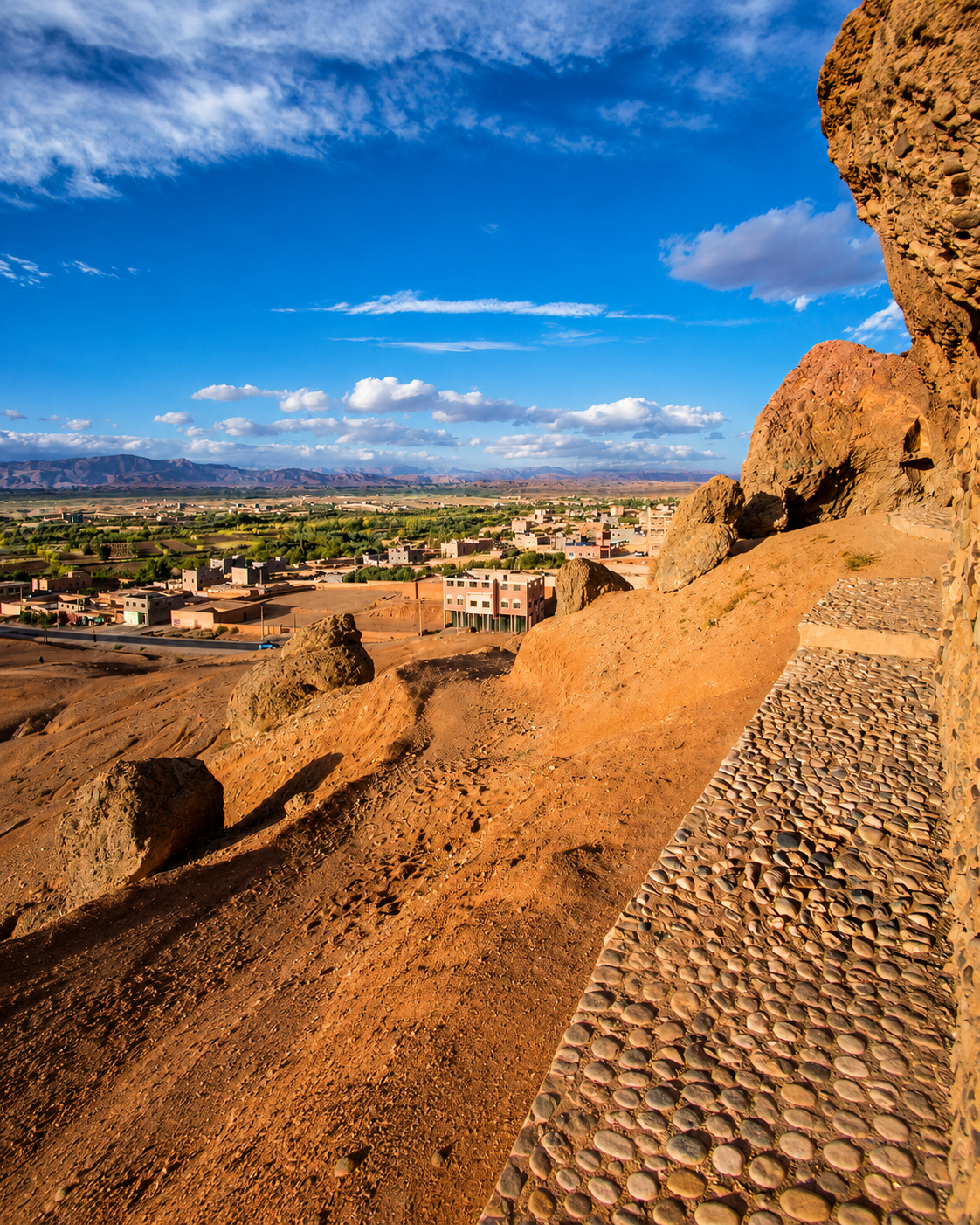
Earthen path and stone paving above green valley gardens

Earthen valley

Earthen paths and irrigated greenery explain the town’s southern Atlas setting.

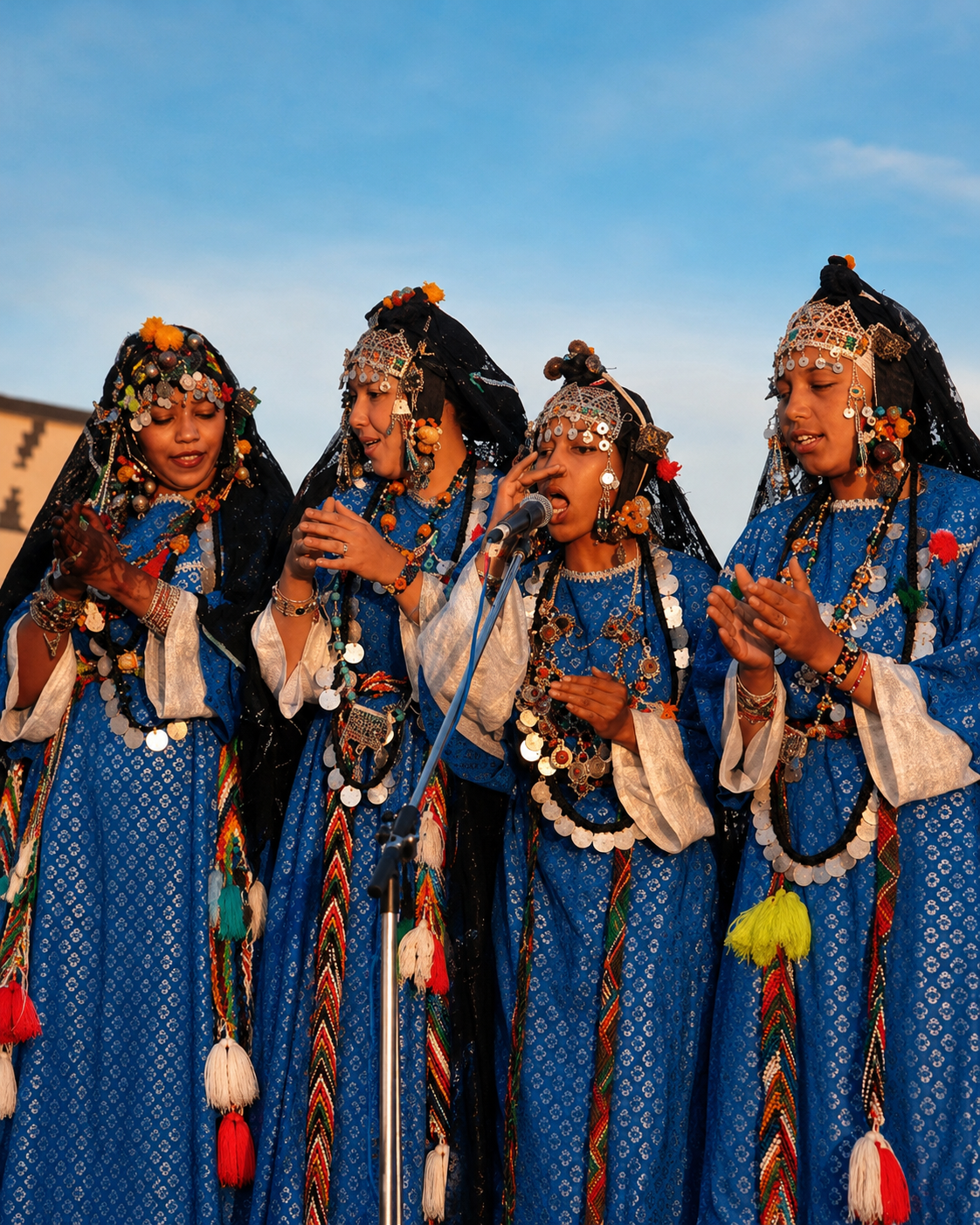
Women in blue Amazigh dress and jewellery during a celebration

Amazigh celebration

Dress, jewellery and communal celebration give the valley a cultural identity beyond its flowers.

Kelaat M’Gouna at a glance

Rose valley town

The town is closely associated with the Valley of Roses, where Damask roses are harvested and processed into rose water, oils and related products.

Southern Atlas setting

Kelaat M’Gouna sits in the inland route network of Tinghir Province, within the wider Drâa-Tafilalet region, between oasis greenery and dry mountain landscapes.

Seasonal identity

Spring brings the strongest visual and cultural rhythm, but the town can also be read through markets, workshops, nearby valleys and earthen architecture outside festival days.

Gateway to Dadès

The town works naturally with Boumalne Dadès, the Dadès Valley, M’Goun landscapes and wider southern routes towards Ouarzazate or Tinghir.

A clearer reading of the city

A town shaped by roses, routes and earthen landscapes

To understand Kelaat M’Gouna, read agriculture, craft and route geography together. The rose is the most visible symbol, but the town’s meaning also comes from the valley villages, weekly commerce, cooperative work and the movement of travellers through the Dadès corridor.

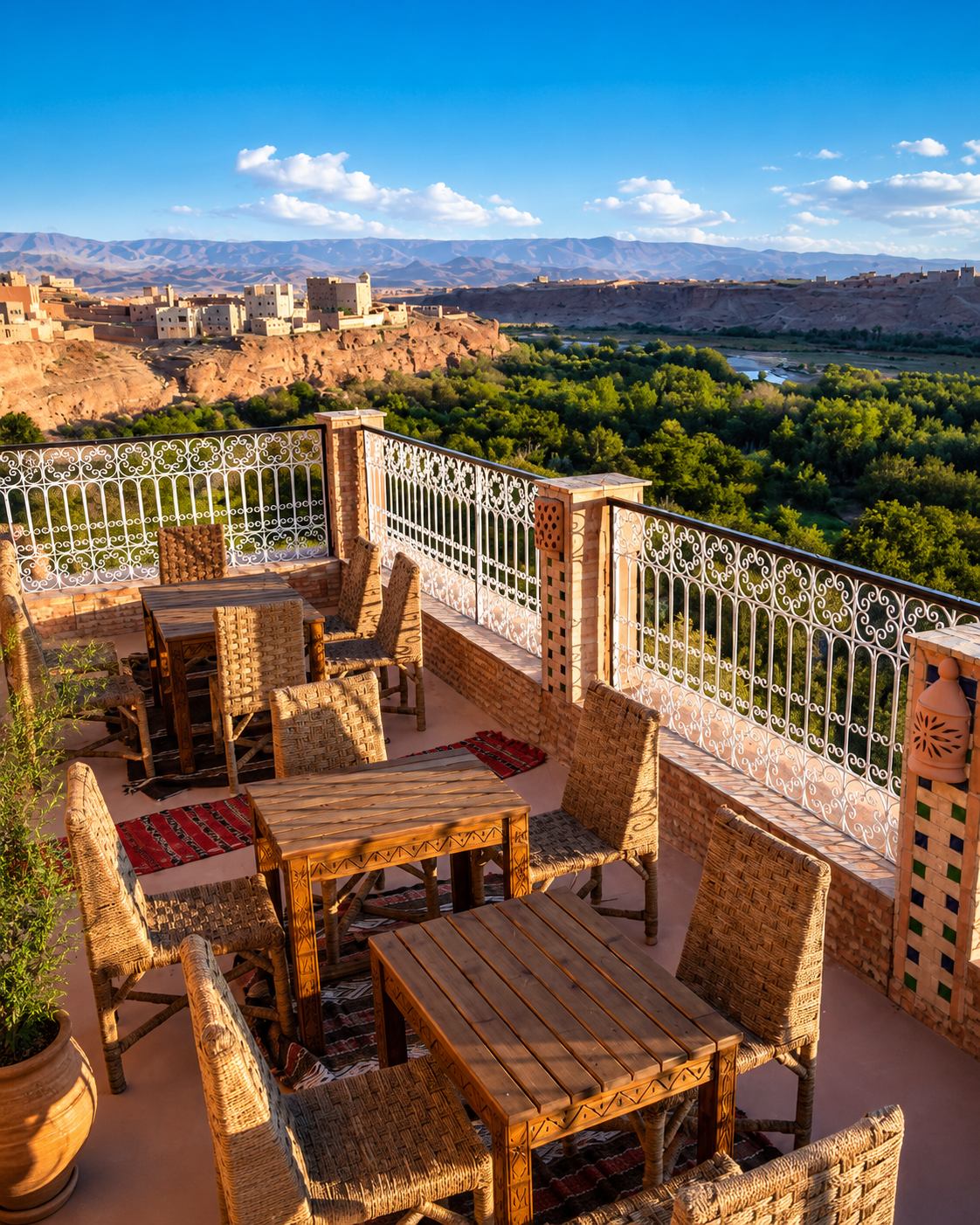
Wooden terrace chairs overlooking the green valley and earthen buildings
Layer 1

Gardens and livelihoods

From a valley terrace, irrigated greenery and dry slopes can be read together. Gardens, farming and hospitality connect the landscape to everyday livelihoods.

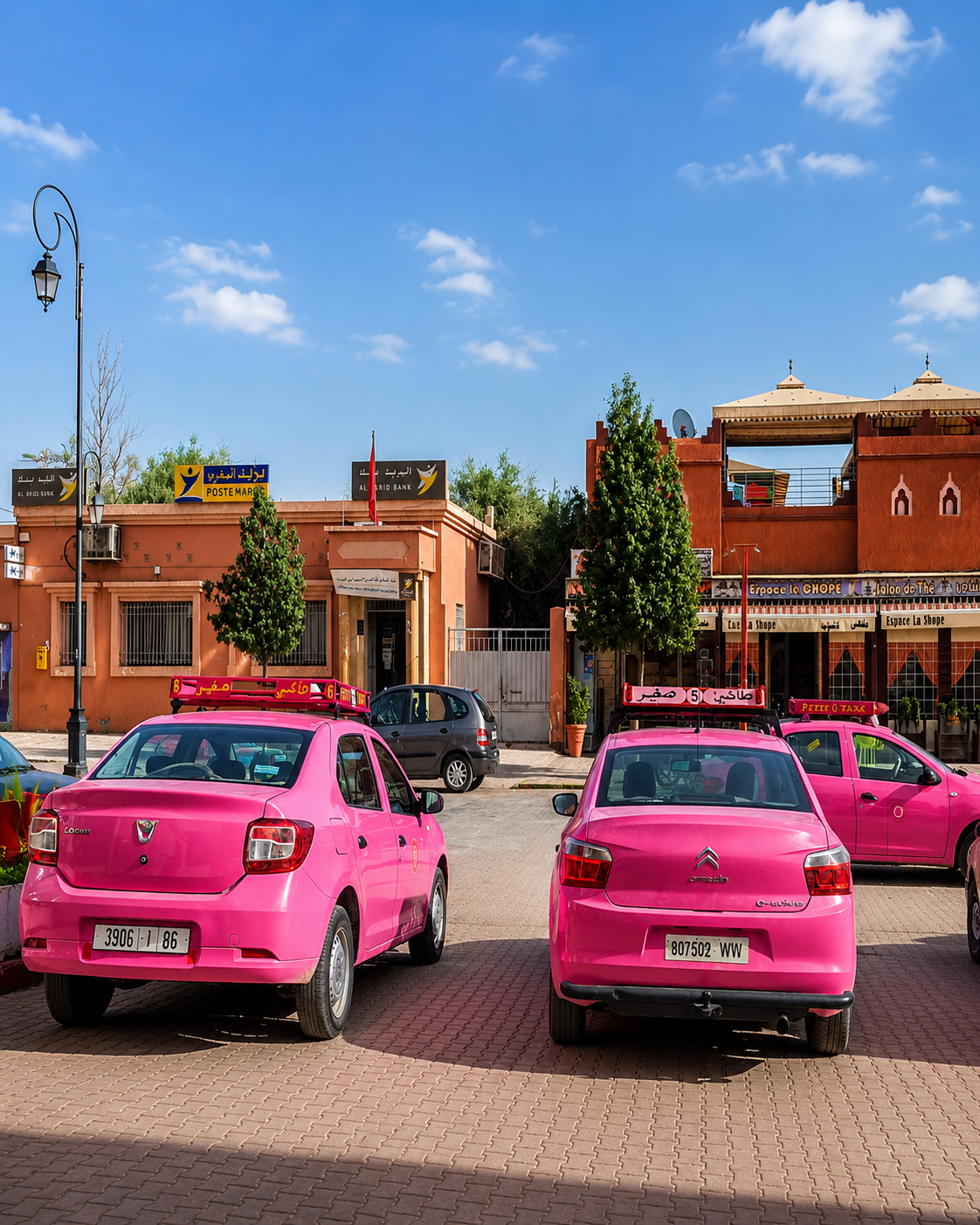
Pink taxis on a Kalaat M’Gouna street lined with ochre buildings
Layer 2

Town and local routes

Pink taxis, shops and ordinary street movement reveal Kelaat M’Gouna as a working town. Local routes connect its centre with the surrounding valley communities.

Musicians and a flower-covered float passing the town minaret
Layer 3

Festival and market

During the rose season, public space gathers petals, music, craft, local products and visitors. Outside that moment, the same town returns to a quieter commercial rhythm.

Landmarks & orientation

Read Kelaat M’Gouna through six defining places

No single monument explains Kelaat M’Gouna. These places help visitors understand the town as a rose-valley centre, a local market town and a gateway to nearby southern Atlas landscapes.

1
Rose Valley fields

The gardens around town are the source of the Damask rose identity that gives Kelaat M’Gouna its strongest public image.

2
Rose monument and town centre

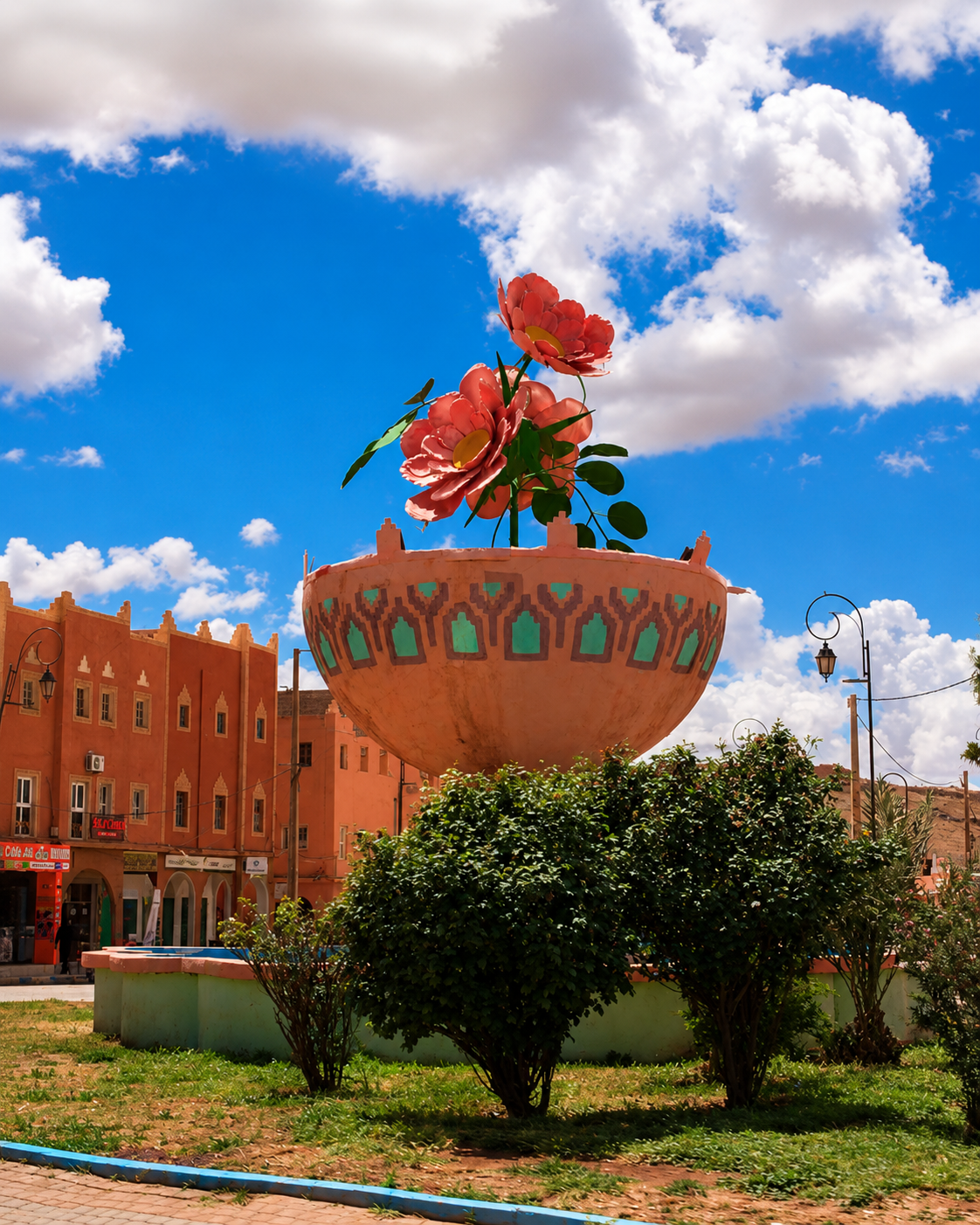
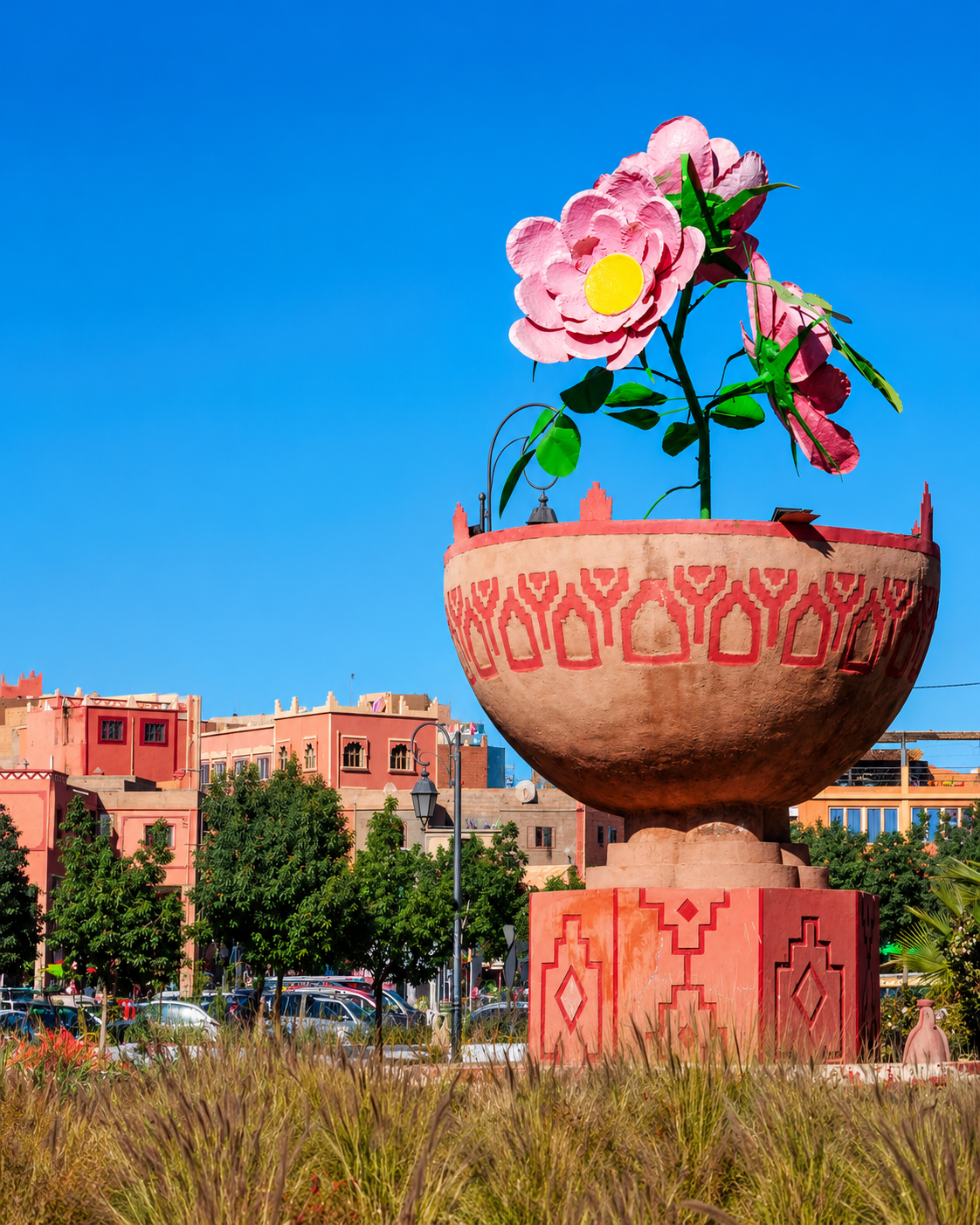
The oversized rose sculpture is a clear town-centre landmark, expressing the flower’s place in local identity.

3
Rose cooperatives

Distillation workshops and cooperatives explain how petals become rose water, oils and cosmetic products rather than only souvenirs.

4
Town markets

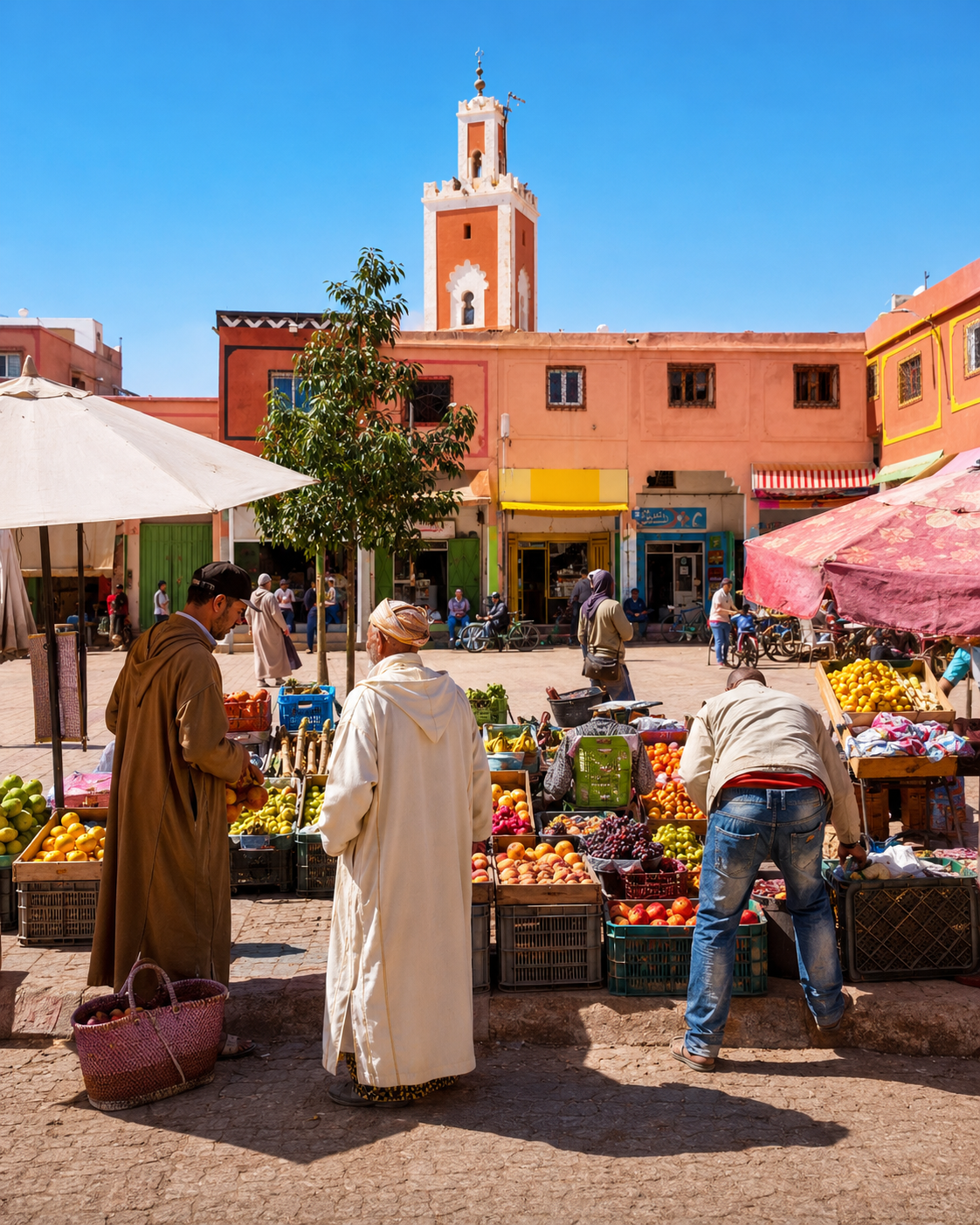
Shops and market stalls reveal the town’s everyday commerce alongside the seasonal trade in roses and local products.

5
Earthen valley villages

Nearby ksour, kasbah-like forms and mudbrick architecture place the town inside the wider Dadès and M’Goun building tradition.

6
Dadès road outlooks

The road towards Boumalne Dadès opens the journey from rose gardens into red-rock gorges, palms and mountain scenery.

Large rose sculpture in its decorated bowl in Kalaat M’Gouna
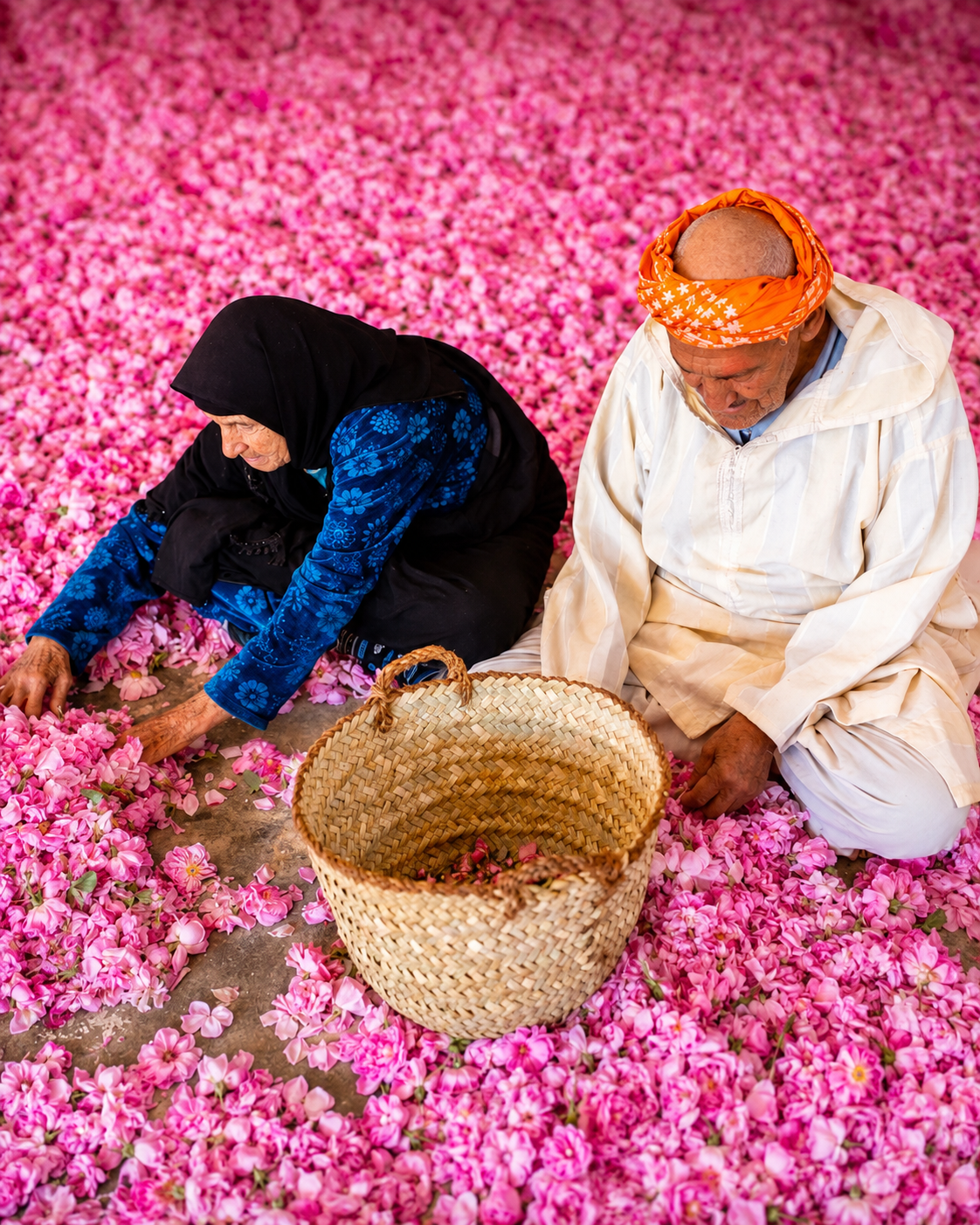
Two people sorting pink rose petals beside a woven basket

The work behind the roses

From gathered petals to rose water

Sorting petals is one of the practical stages behind the valley’s rose economy. The photograph shows hands, baskets and harvested flowers: the work that connects a brief flowering season with products sold throughout the year. Rose water and oils belong to the wider processing story, alongside cooperative labour, careful handling and local knowledge.

  • Visit cooperatives with respect for workers, production spaces and local guidance.
  • Read rose products through process, not only perfume: harvest, sorting, distillation, storage and sale.
  • Remember that the strongest rose imagery belongs to a brief season; outside spring, the valley has a quieter beauty.

Architectural reading

Three visual languages to notice

Earth and enclosure

The wider valley speaks through mudbrick, pisé surfaces, compact village forms and kasbah-like silhouettes. The beauty is not polished; it comes from mass, repair, climate and use.

Irrigation and garden structure

Green rose plots only exist because water, field boundaries and local maintenance hold the valley together. The landscape should be read as work as much as scenery.

Textile, petal and market colour

During active market and festival moments, colour arrives through carpets, rose petals, Amazigh textiles and product stalls. These surfaces bring the town’s seasonal identity into public view.

Visual atmosphere

Petals, earth and valley light

Nearby highlights

Nearby valleys and southern routes

Kelaat M’Gouna works best as part of a wider southern itinerary. The nearby journey can move from rose gardens into the Dadès Valley, towards M’Goun foothill landscapes, or westward to Ouarzazate and the kasbah routes beyond.

Dadès Valley

Continue towards Boumalne Dadès for red-rock landscapes, palm pockets, earthen villages and the dramatic road that leads deeper into the gorges.

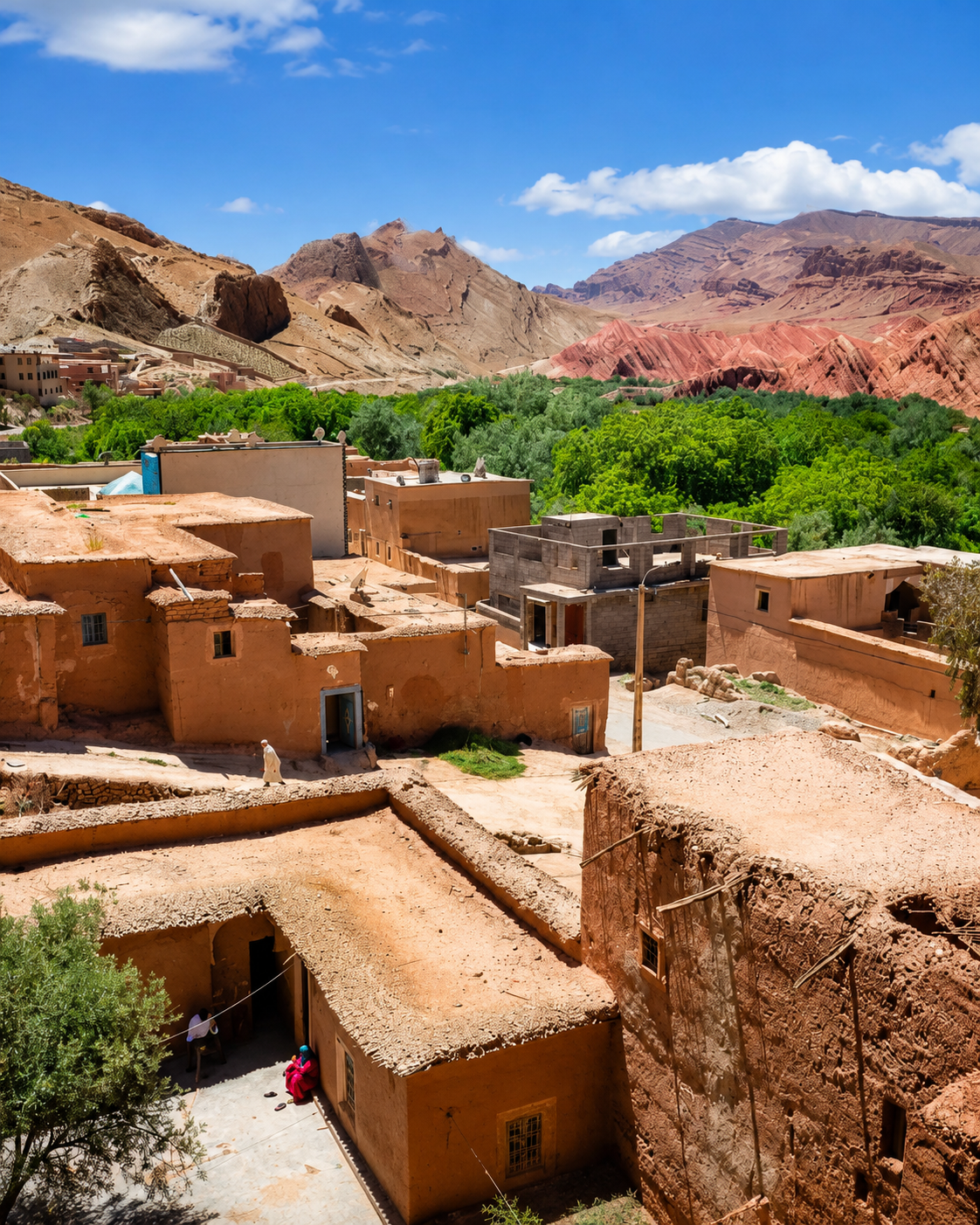
Earthen village buildings, green trees and folded red hills in the Dadès landscape

M’Goun foothills

The landscapes around the M’Goun side of the valley are quieter: irrigated plots, walking paths, earthen settlements and changing mountain light.

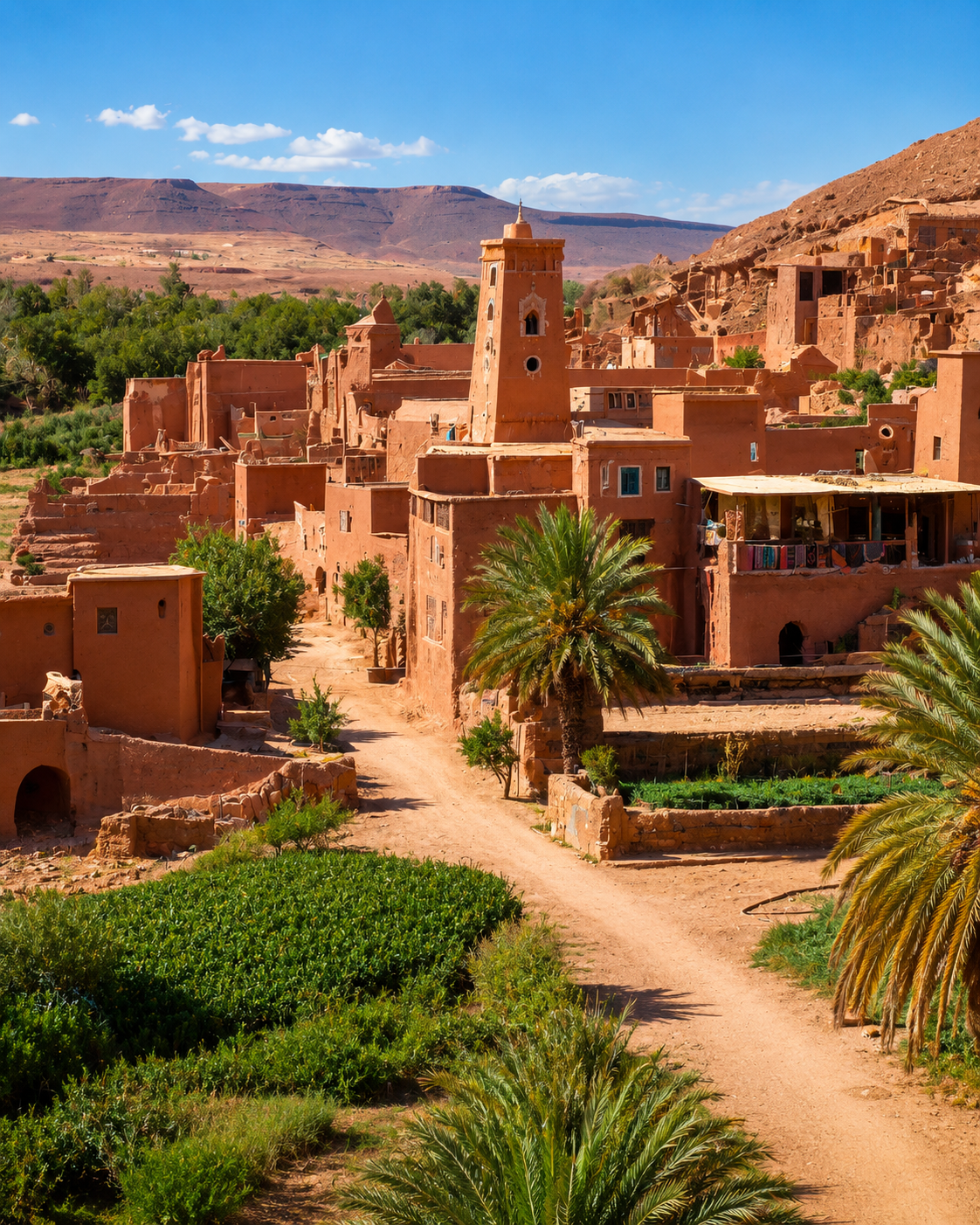
Ochre village buildings and a minaret beside gardens in the M’Goun valley setting

Ouarzazate route

To the west, Ouarzazate and the kasbah landscapes around Skoura or Aït Benhaddou make a natural extension, especially when travelling between the High Atlas and the south.

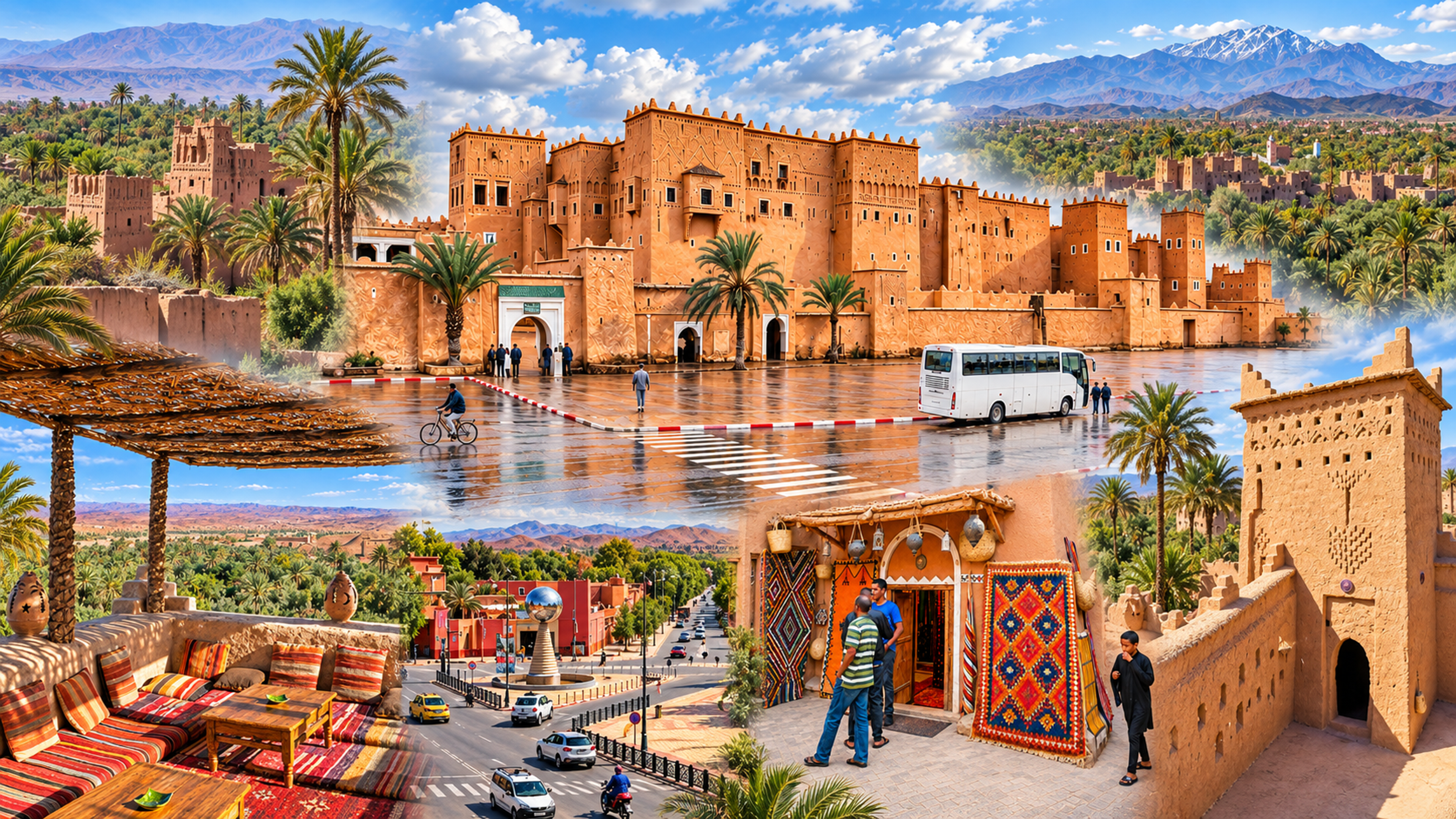
Collage of Ouarzazate’s Taourirt Kasbah, Skoura palm groves and earthen architecture
Travel note: festival dates, cooperative access, road conditions, opening arrangements and local visitor rules can change. Check current official or trusted local information before travelling.

Practical orientation

How to experience Kelaat M’Gouna well

  • Do not reduce the town to a quick rose-product stop; give the valley setting time.
  • Visit during rose season for the strongest floral atmosphere, but confirm dates before planning around the festival.
  • Combine town streets, rose cooperatives, nearby gardens and at least one valley viewpoint.
  • Respect working spaces: farms, cooperatives and markets are part of local livelihood.
  • Use Kelaat M’Gouna as a calm hinge between Ouarzazate, Boumalne Dadès and Tinghir.

A strong first visit

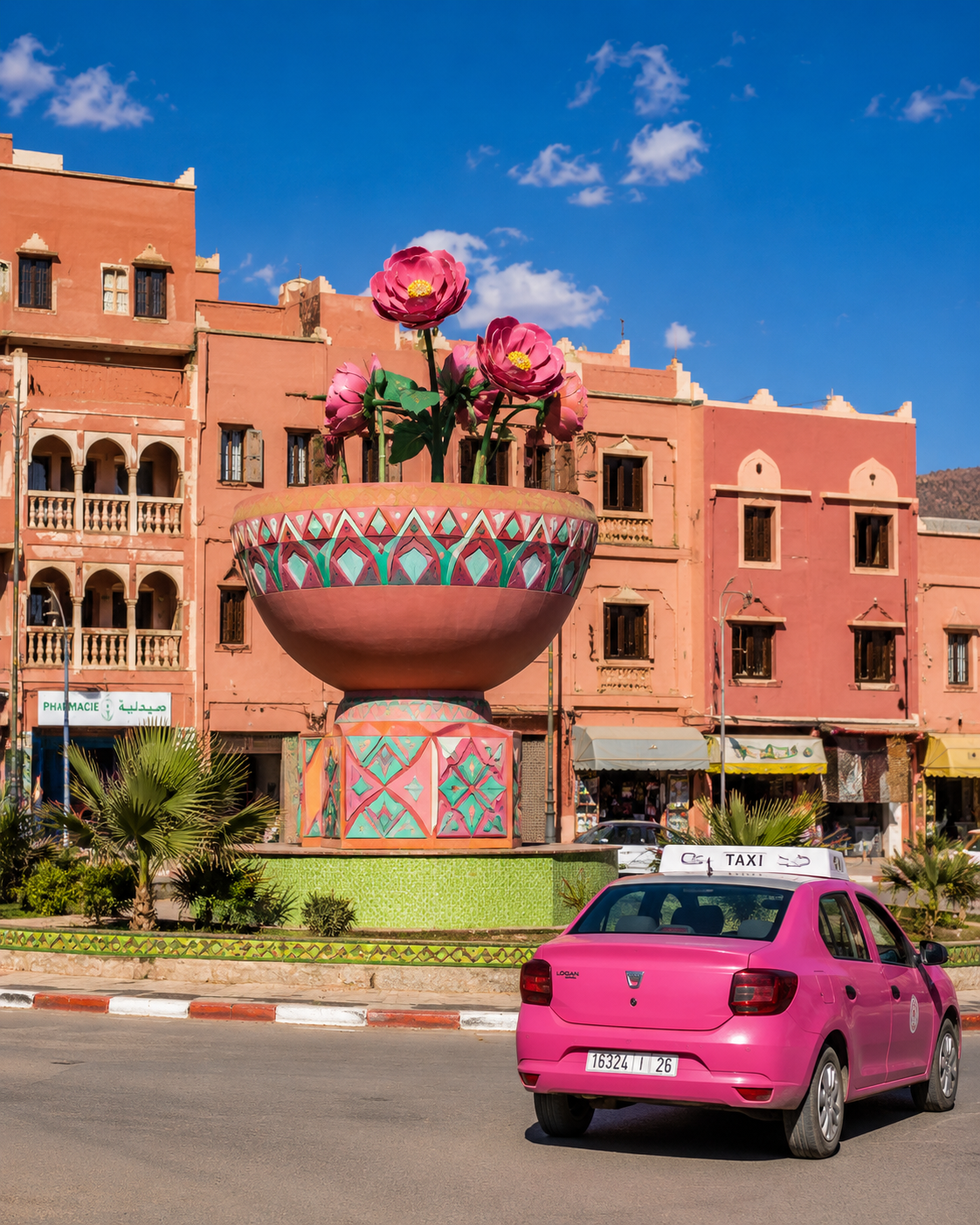
Rose monument, ochre town buildings and a passing pink taxi

Begin with the rose monument and town centre, continue to a rose cooperative, then spend time in the surrounding valley landscape. If you are travelling onward, keep Dadès as a separate extension rather than treating it as a roadside afterthought.

Pink rose sculpture against a clear blue sky in Kalaat M’Gouna

Go deeper with Exotic Morocco

Kelaat M’Gouna — Visual City Guide

Continue with Exotic Morocco’s city-guide approach: landscape context, rose-valley identity, local craft, visual atmosphere, nearby routes and practical orientation arranged as one careful journey.

✓ Rose valley context✓ Essential orientation ✓ Earthen architecture✓ Culture & local life ✓ Practical travel guidance✓ Nearby highlights

Continue the journey

Continue the journey through Kelaat M’Gouna

Look beyond the rose label and encounter a southern Moroccan town of harvest work, valley gardens, Amazigh craft, earthen villages and mountain routes.