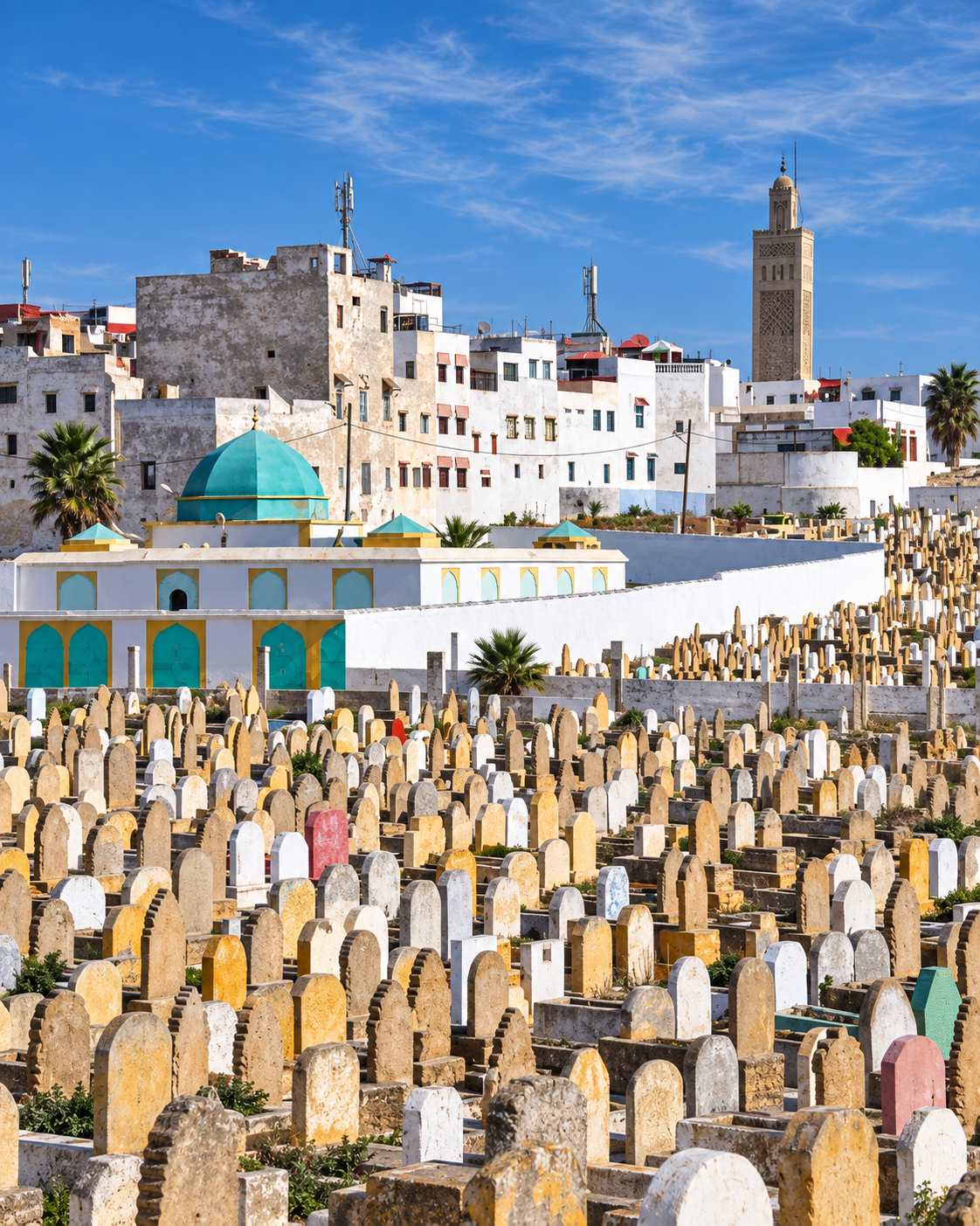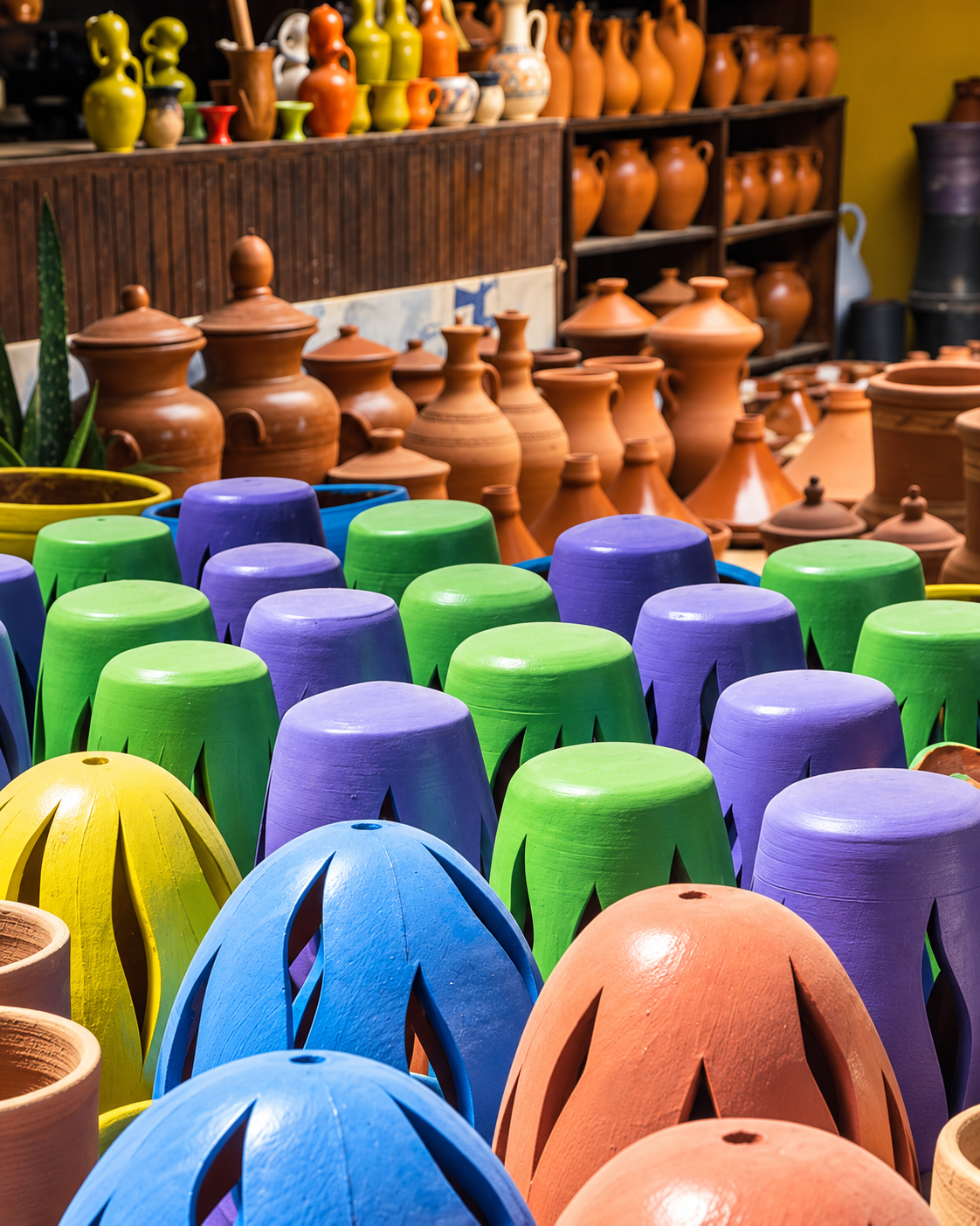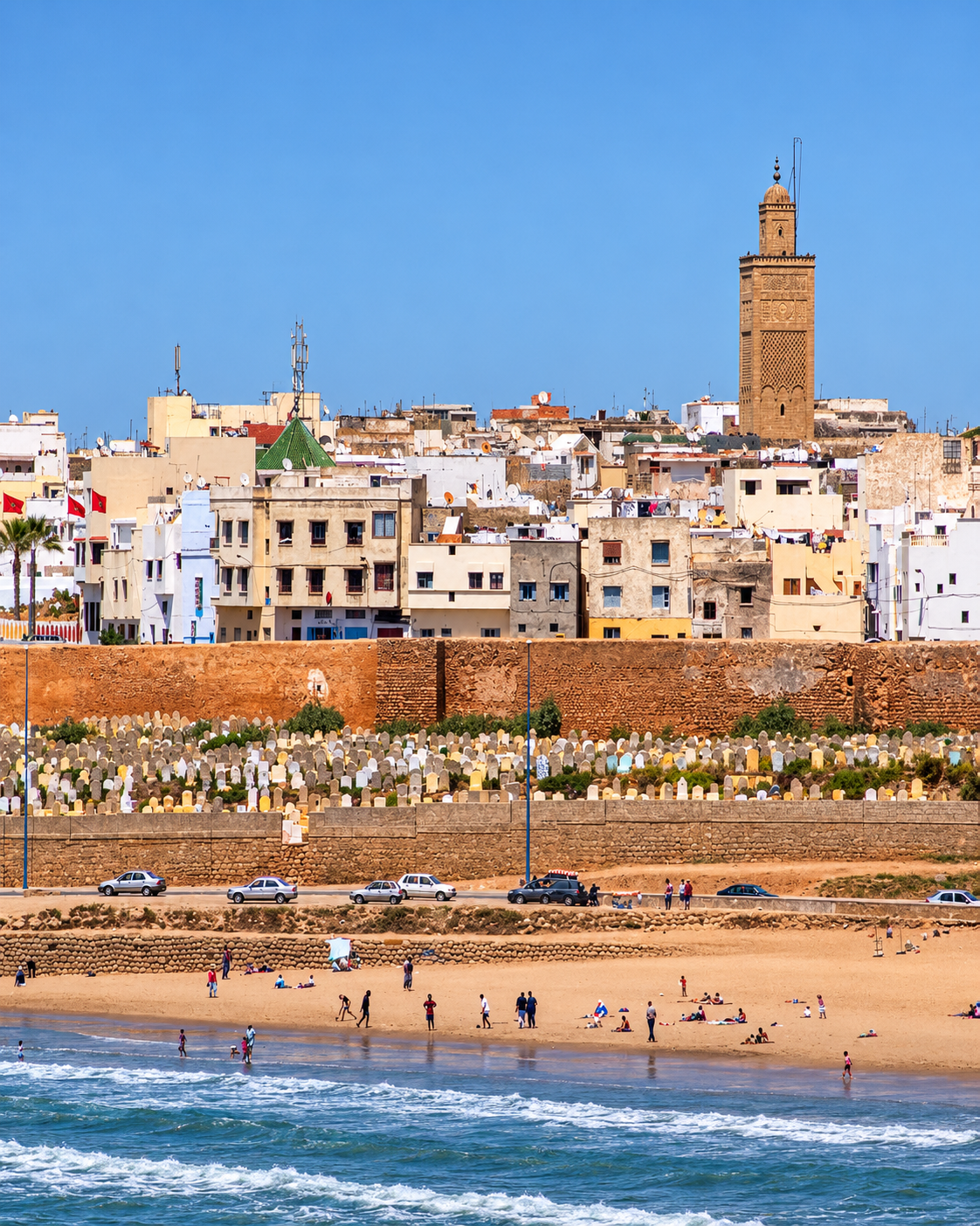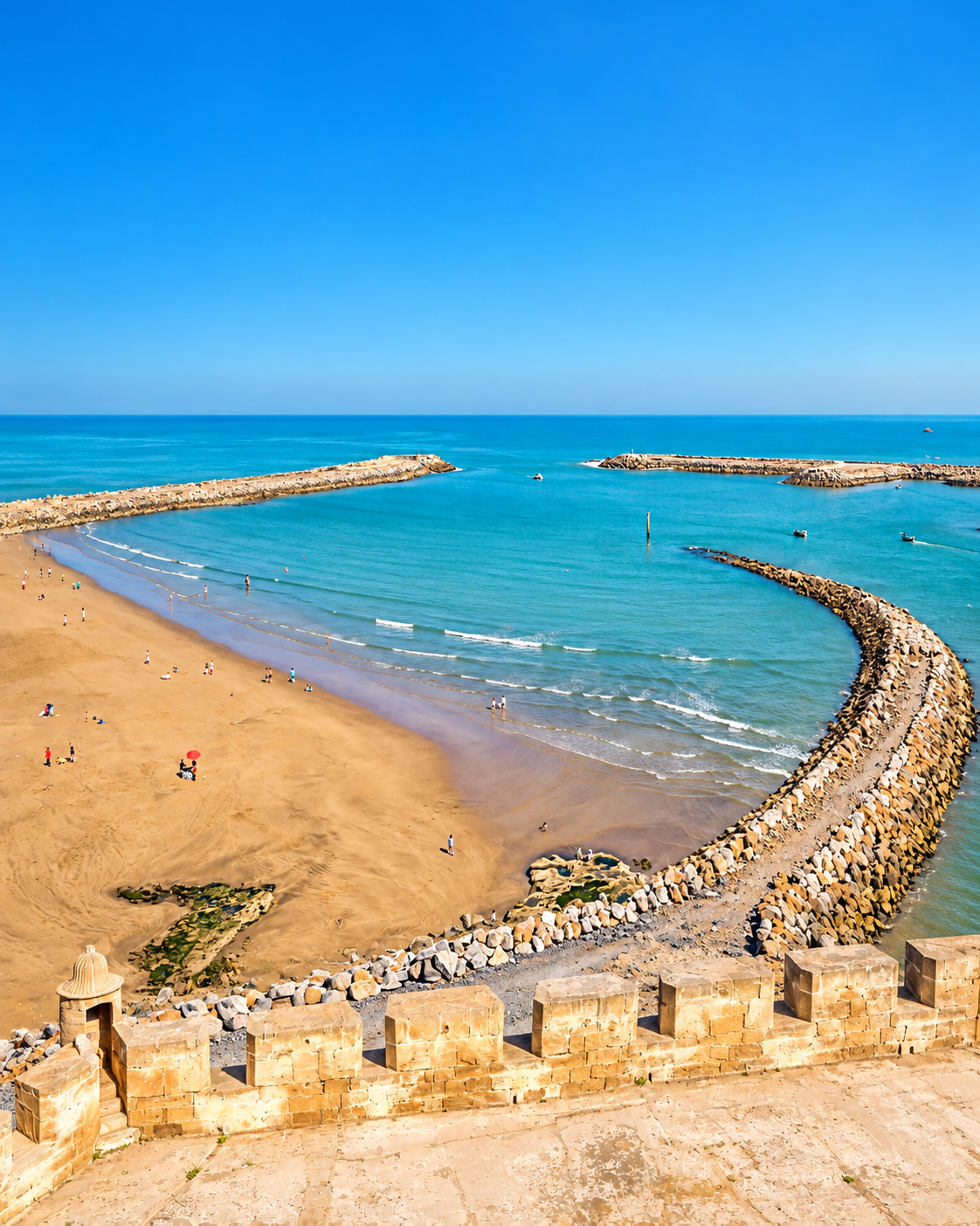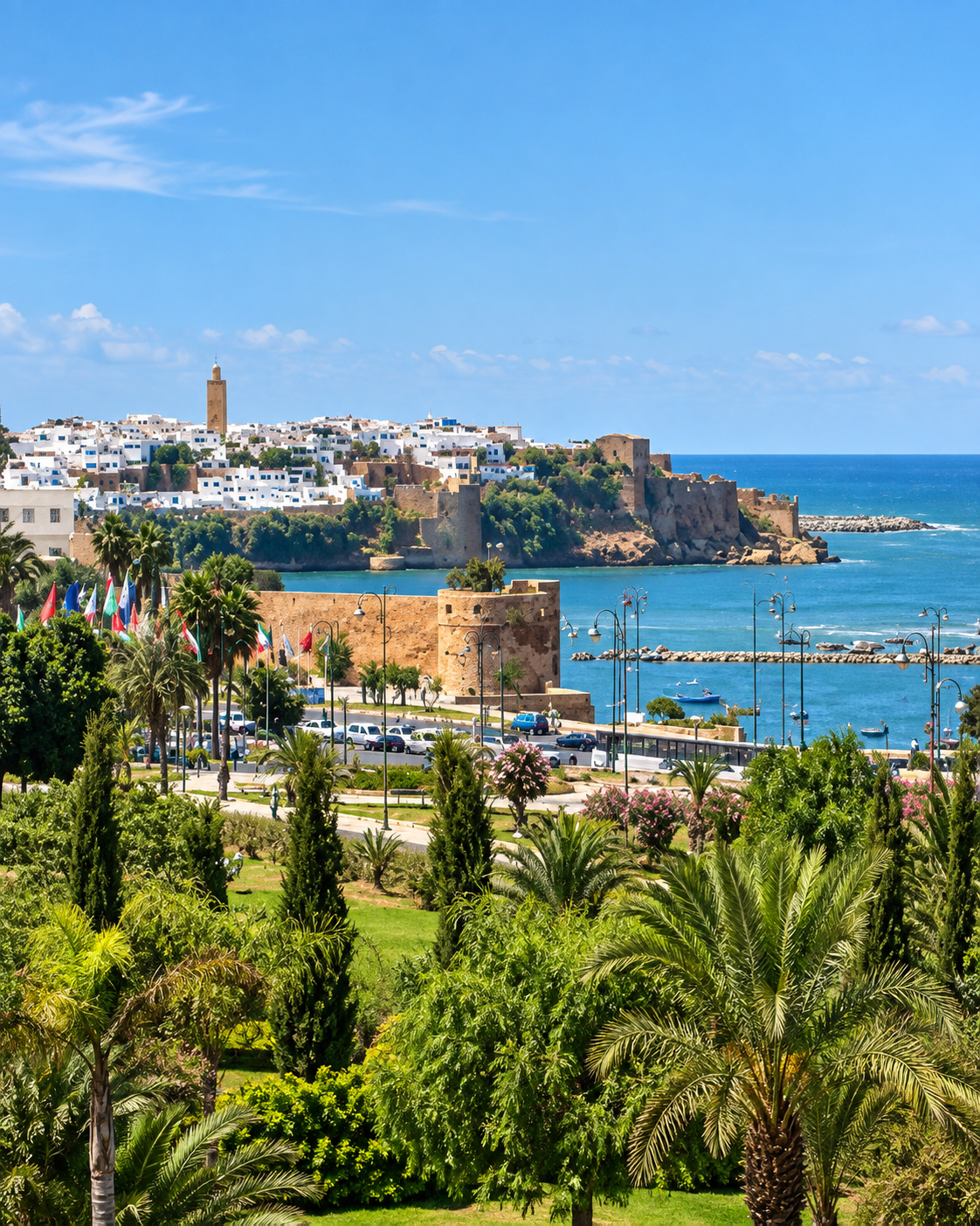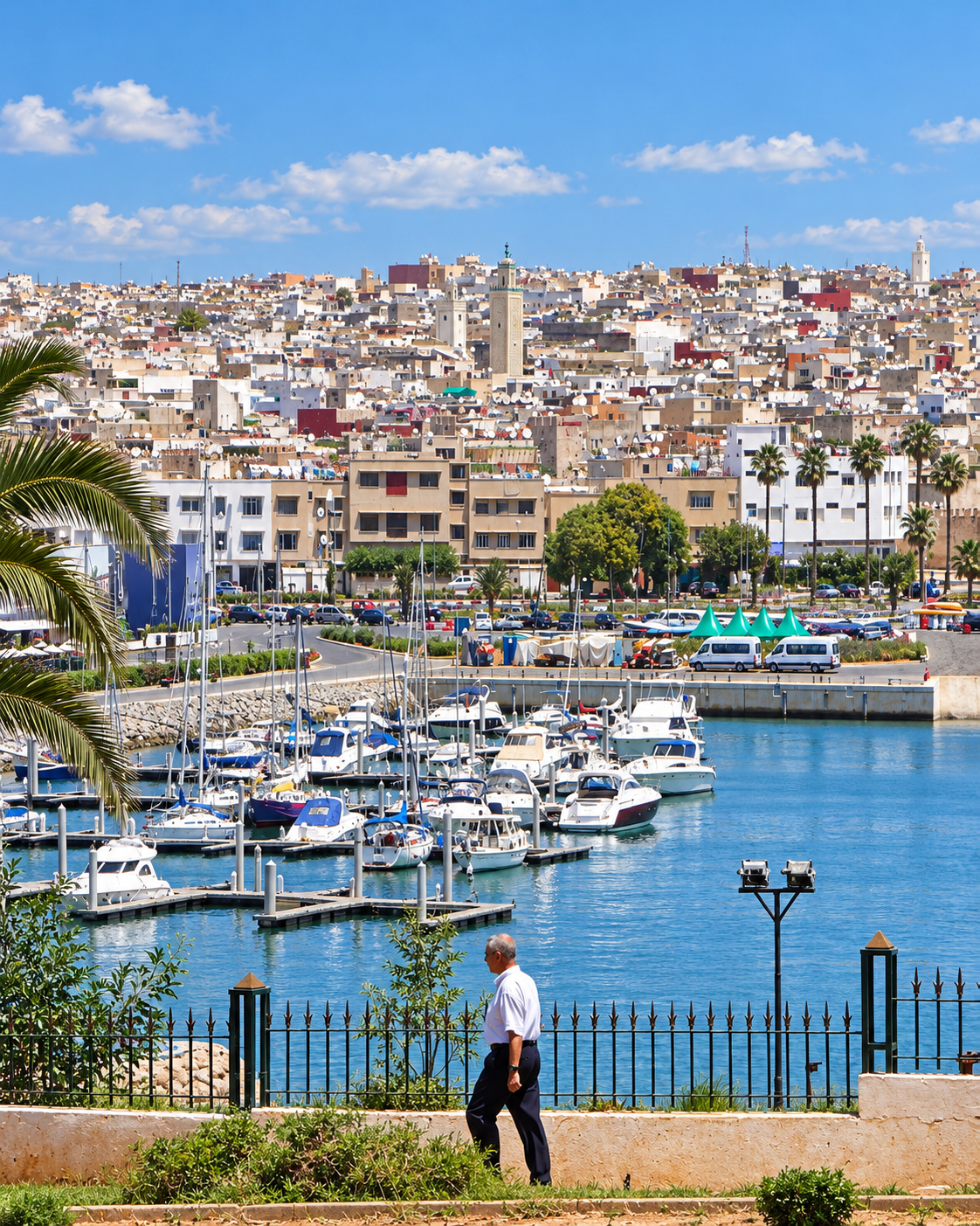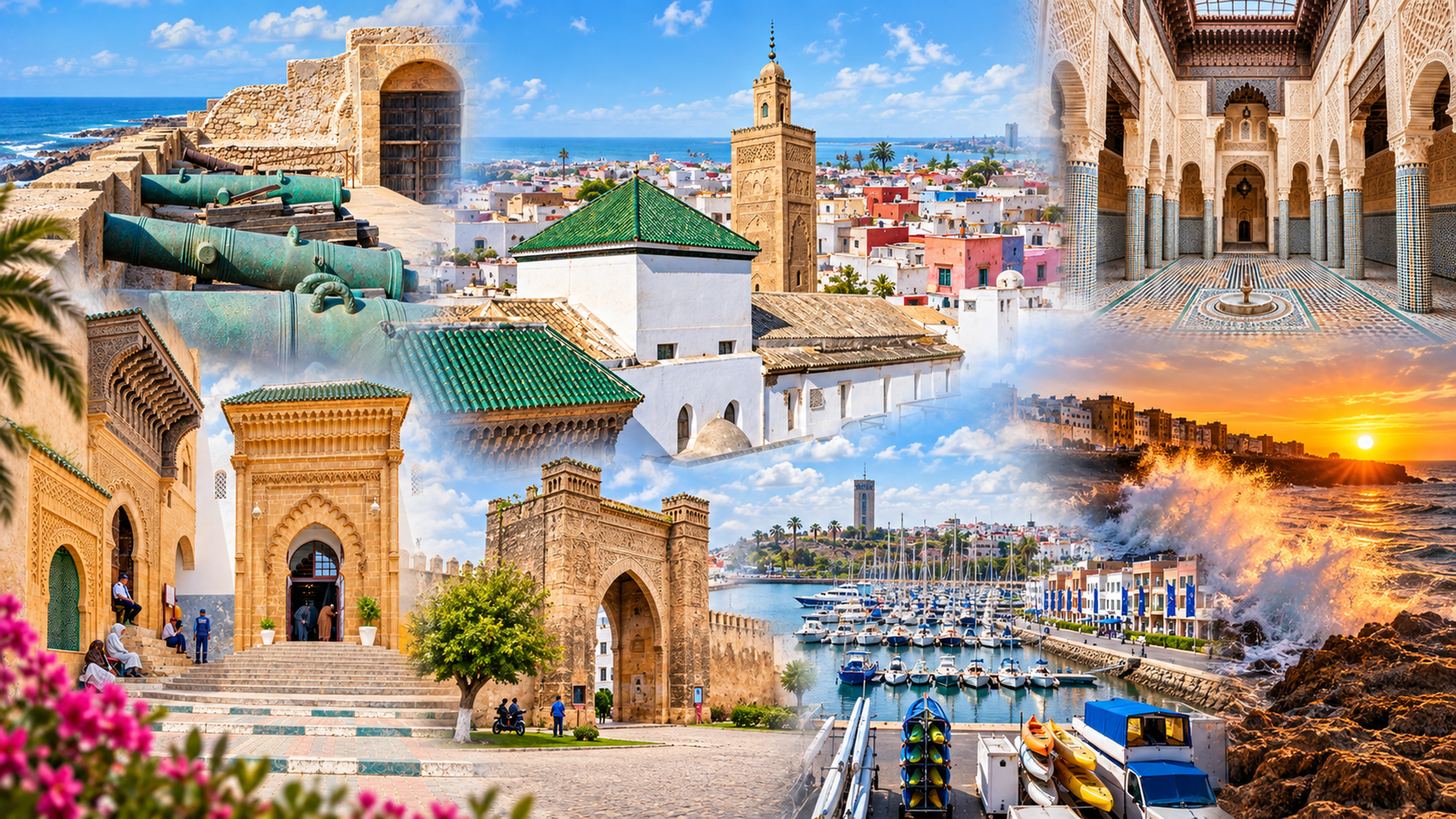
Editorial collage of Salé architecture, medina, coastal defences and the Bouregreg

Historic City of the Bouregreg

Salé Bouregreg memory, Marinid detail and Atlantic medina rhythm

Across the river from Rabat, Salé keeps a different temperature: older, quieter and more inward-looking. Its medina, river gates, mosque-madrasa quarter, candle procession, pottery workshops and corsair memory make it more than a quick crossing from the capital.

Why Salé matters

Across the river, not in Rabat's shadow

Salé is often treated as Rabat's twin, but the city has its own historical weight. It sits on the right bank of the Bouregreg, facing the capital across a river mouth that shaped trade, defence, movement and memory for centuries.

Its medina is quieter than many better-known Moroccan old cities. That quiet is part of the point: Salé asks visitors to notice walls, thresholds, covered lanes, craft markets, religious institutions and the river-facing geography that gave the city its strategic role.
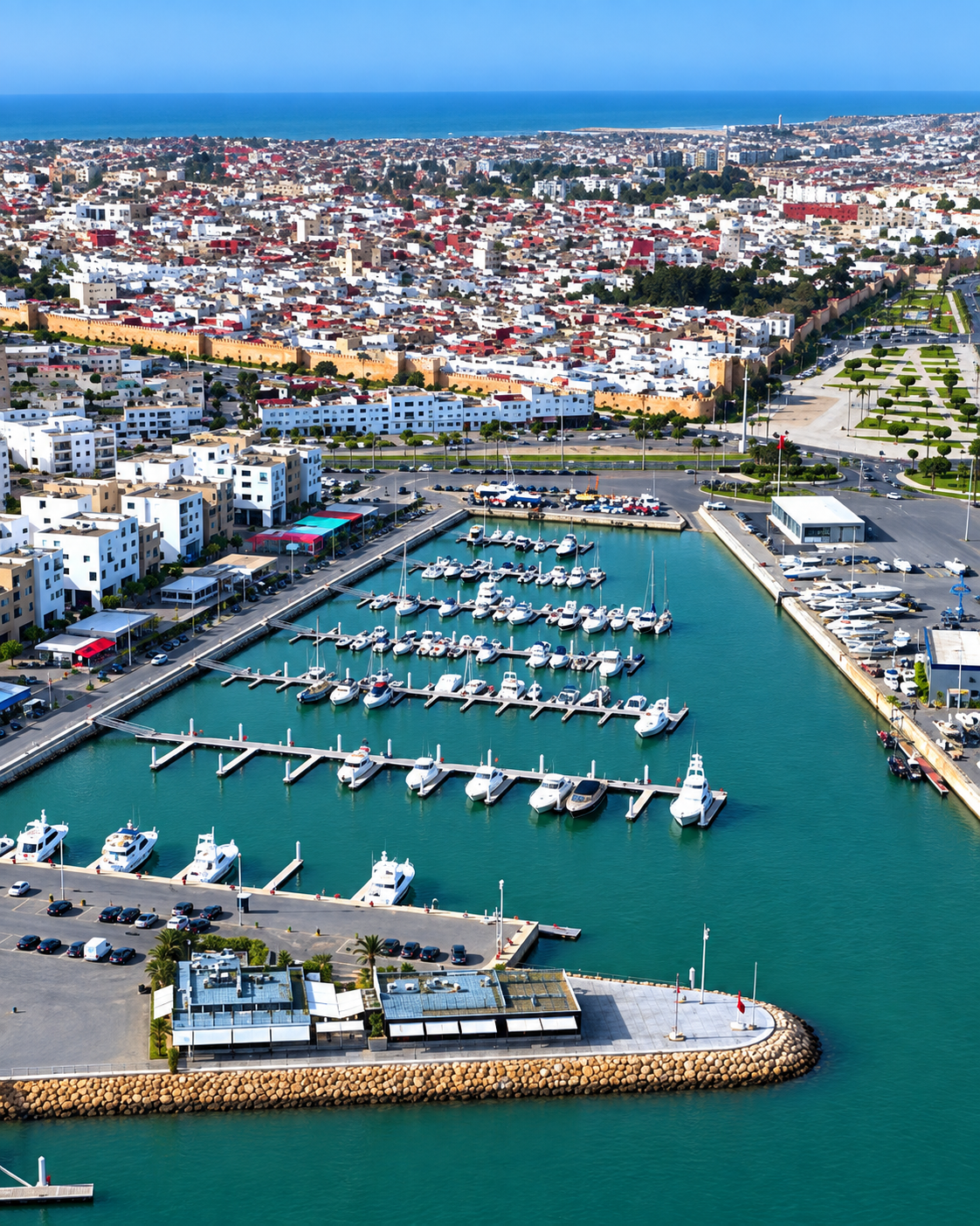
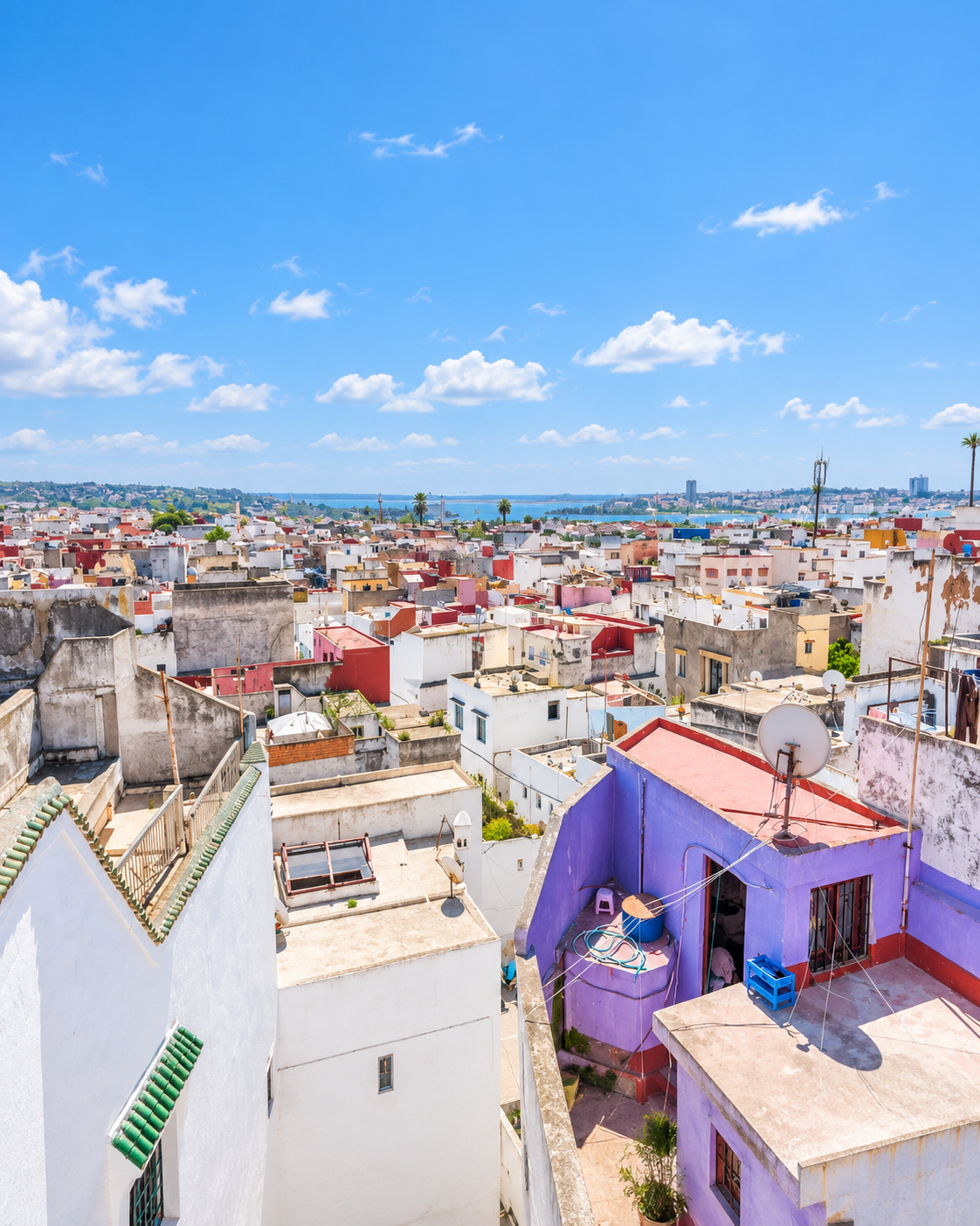
Salé medina and the Bouregreg Marina seen from above

A city with its own gravity

Read Salé through river, ramparts, medina thresholds, religious learning, craft memory and the old Atlantic horizon beyond the Bouregreg.

EXPLORE

Salé

Historical orientation

From medieval river city to Bouregreg memory

Salé is best understood as a layered river-and-medina city. Its religious core reaches back to the medieval period; Almohad and Marinid phases gave the city architectural and scholarly depth; and the early modern Bouregreg world left a strong memory of corsairs, maritime risk and Atlantic trade. The result is a city whose importance is not loud, but deeply legible.

0111th century

Early mosque city

The Great Mosque of Salé is associated with the city's early medieval religious core, later enlarged and monumentalised as the city grew in importance.

021196

Almohad expansion

Under Sultan Yacoub El Mansour, the mosque was renovated and enlarged, strengthening the city's sacred and urban profile near the medina heights.

0314th century

Marinid scholarship

The Medersa Abu al-Hasan, built beside the Great Mosque, preserves a refined Marinid layer of zellige, carved stucco, cedarwood and disciplined courtyard design.

0417th century

Corsair memory

The wider Rabat-Salé river mouth became associated with corsair activity and maritime power, a history still present in the city's walls, bastions and local memory.

A visual bridge

Three glimpses between river, medina and craft

Salé is not a city to reduce to one monument. Its identity comes from the meeting of river geography, medina enclosure and handmade urban detail.

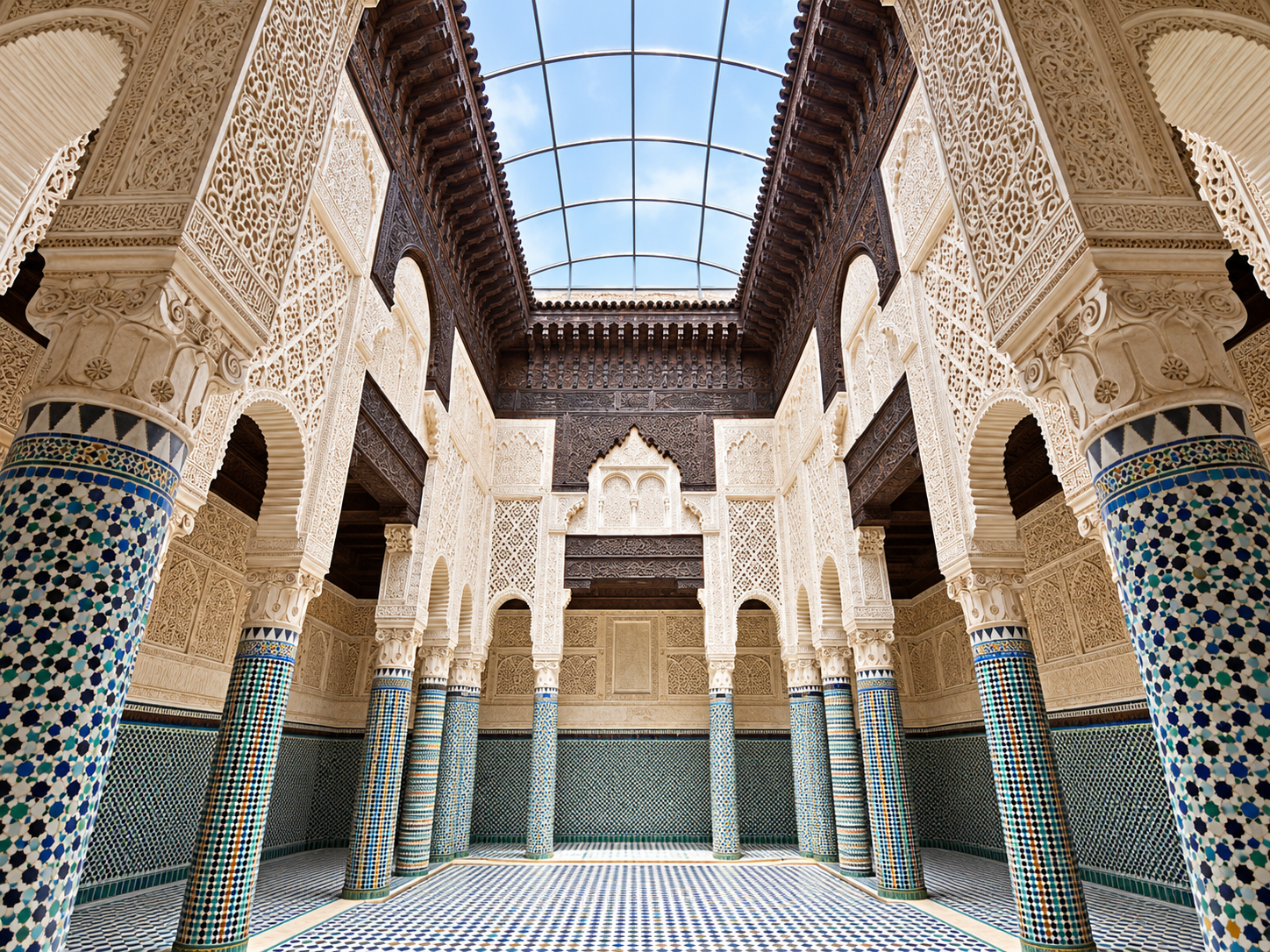
Carved stucco arches and zellige columns beneath the skylight of Salé’s Marinid Madrasa

Scholarly ornament

Zellige, carved surfaces and measured courtyard space point to the city's Marinid intellectual layer.

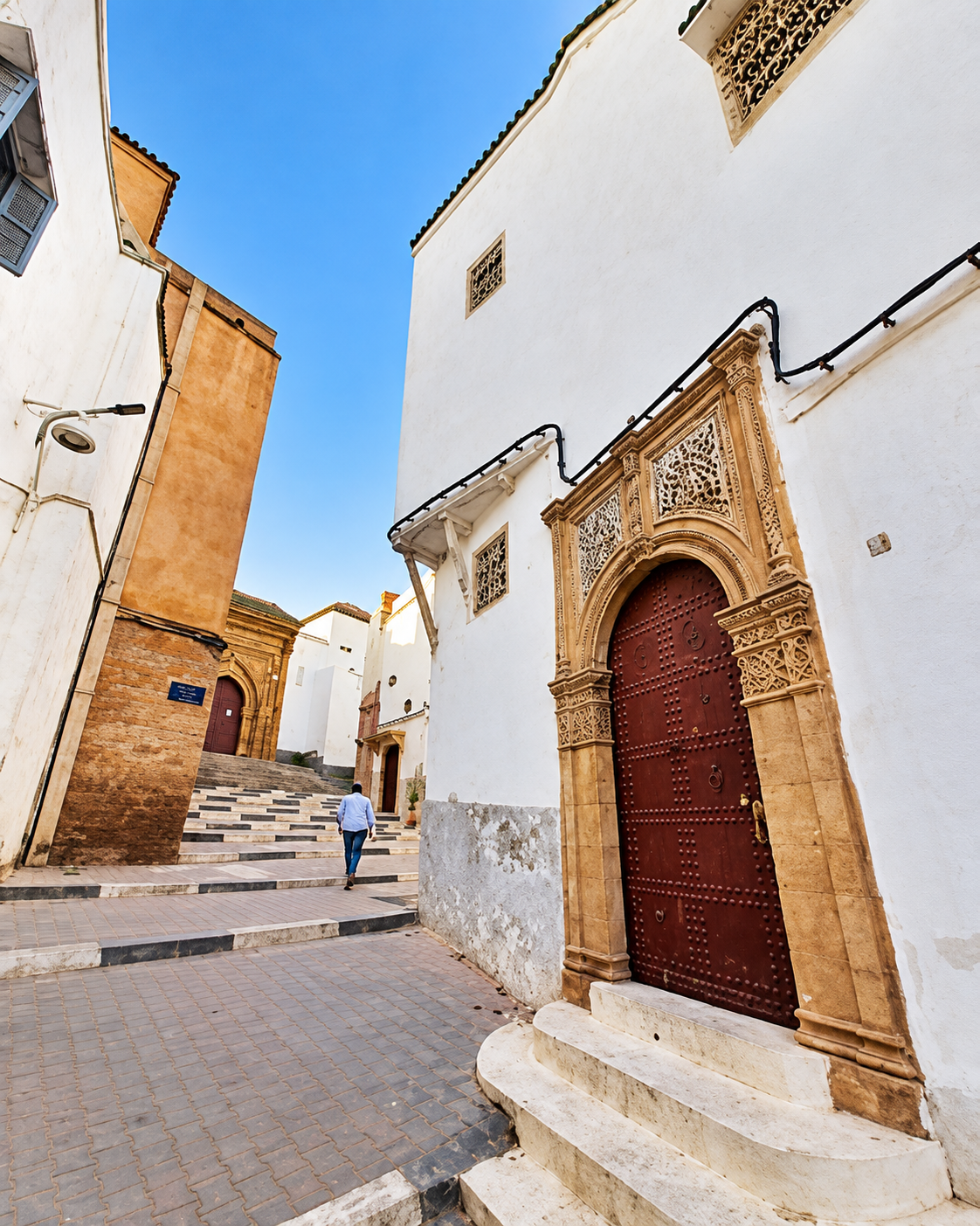
Carved wooden doorway and whitewashed lane in Salé medina

Medina thresholds

Doors, lanes and covered passages make Salé feel inward, domestic and patiently inhabited.

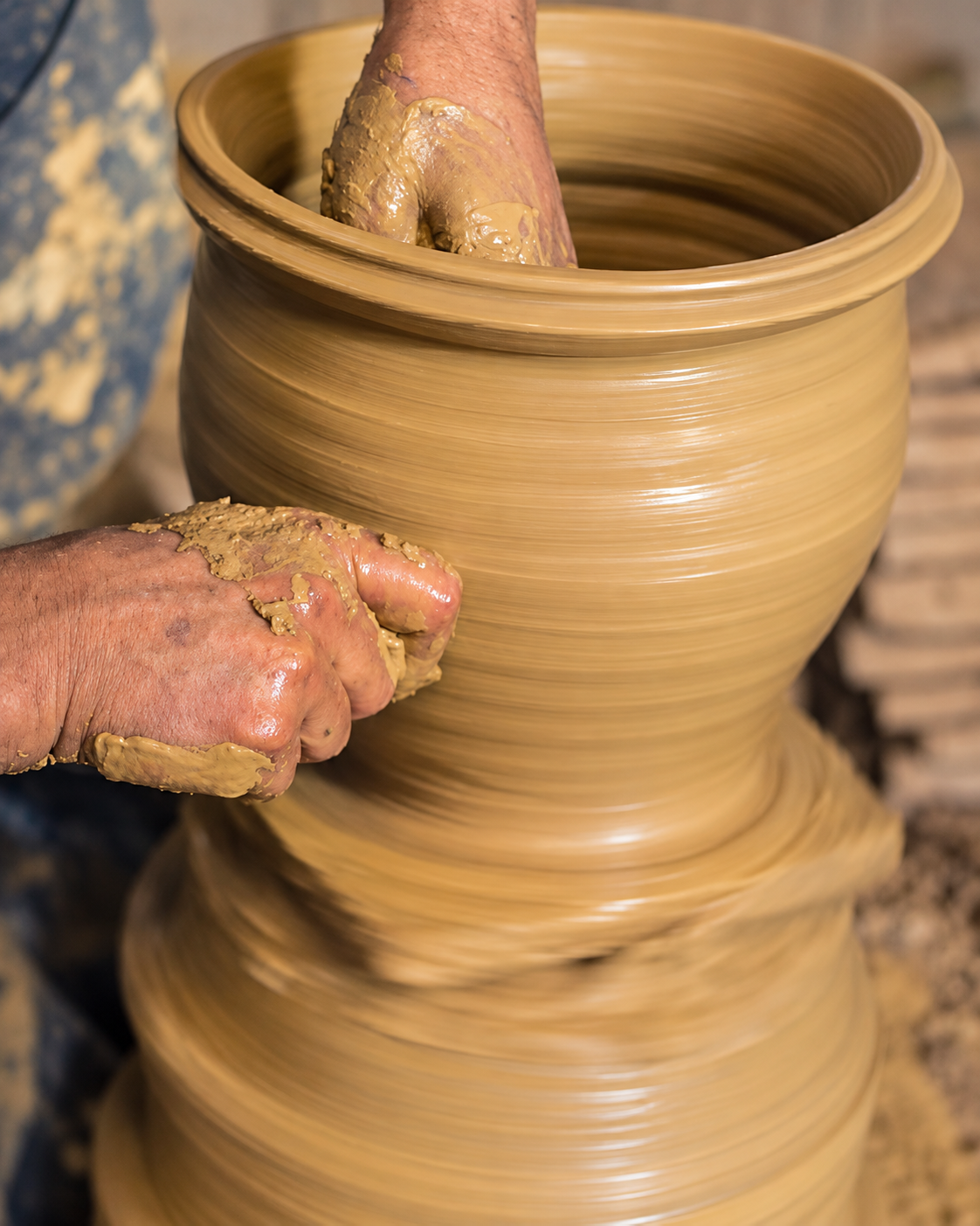
An Oulja artisan shaping a clay vessel by hand on a pottery wheel

Craft memory

Pottery, market objects and workshop culture connect the old city to the Oulja craft tradition.

Salé at a glance

Historic city on the Bouregreg

Salé stands on the right bank of the Bouregreg opposite Rabat. The river is not background scenery: it explains movement, defence, exchange and the city's long relationship with the capital.

Great Mosque and madrasa

The mosque-madrasa quarter gives Salé its strongest architectural focus. The Great Mosque anchors the religious core, while the Medersa Abu al-Hasan preserves a refined Marinid interior.

Corsair and Atlantic memory

The old Rabat-Salé river mouth is tied to early modern maritime activity and corsair history. In Salé, this memory is best read through walls, gates, bastions and the river edge.

Craft, procession and local life

Oulja pottery, medina markets and the candle procession of Mawlid show Salé as a living cultural city, not simply a quieter satellite of Rabat.

A clearer reading of the city

A city shaped by river, faith and craft

To understand Salé, read its landscape and its interiors together. The river explains arrival and defence; the mosque-madrasa quarter explains learning and devotion; craft streets and workshops explain how local identity continues through material life.

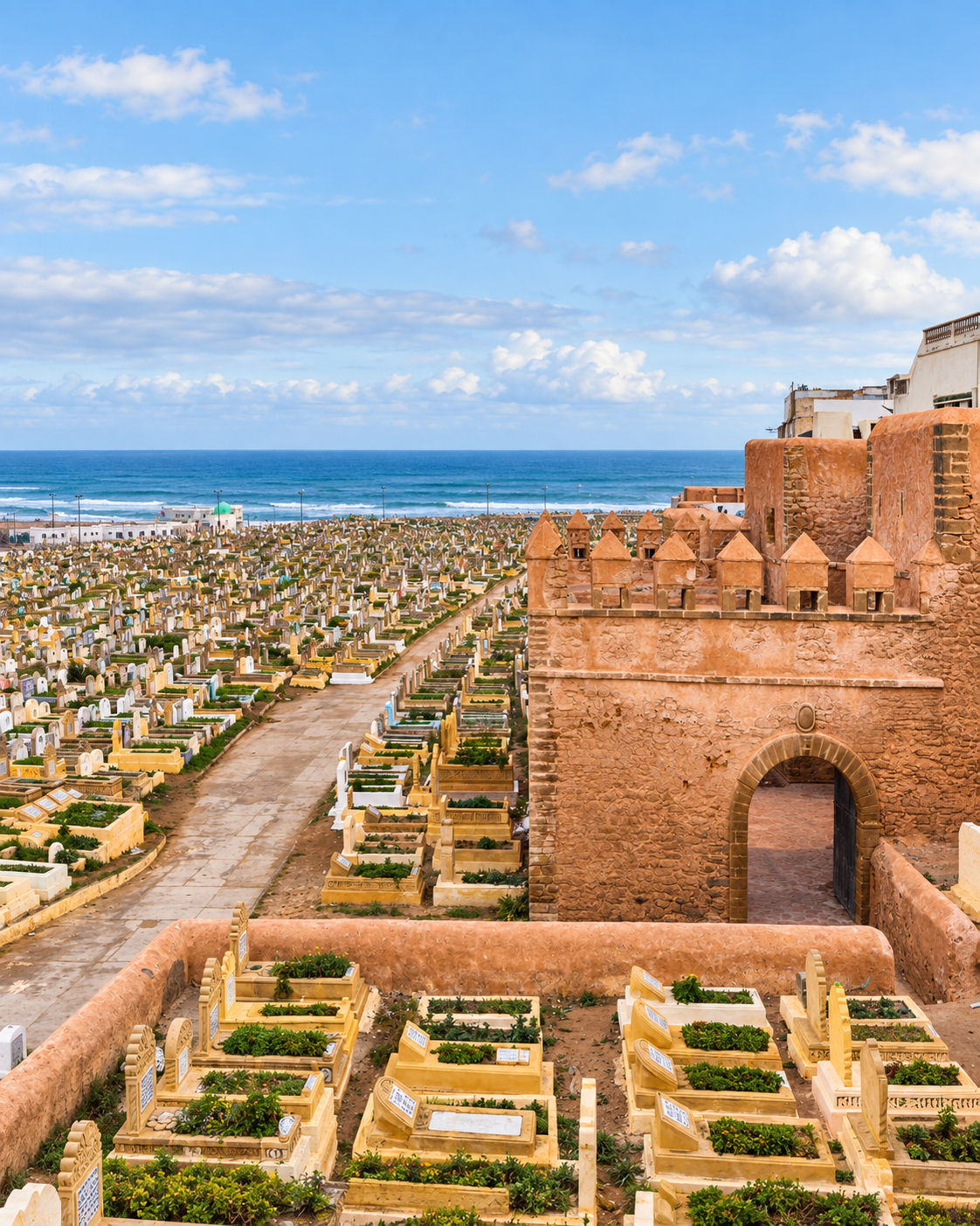
Salé coastal ramparts and cemetery facing the Atlantic
Layer 1

River and walls

Salé's old city makes sense when seen beside the Bouregreg. Gates, ramparts and bastions speak of control, crossing, protection and the Atlantic edge.

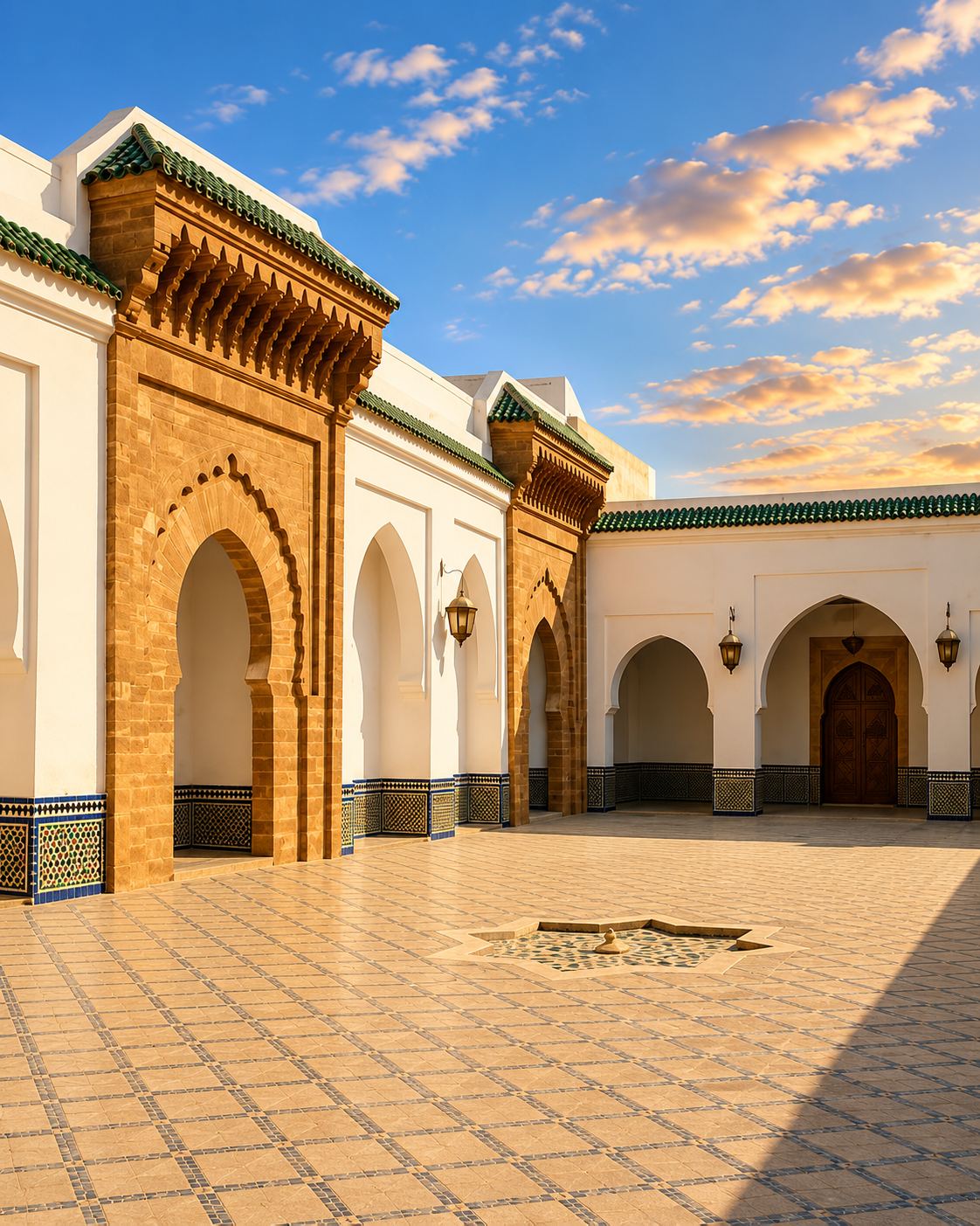
Arcaded courtyard with a carved entrance and geometric paving in Salé
Layer 2

Learning and devotion

The Great Mosque and the Medersa Abu al-Hasan form a religious and scholarly core where architecture becomes proportion, ornament, sound and close looking.

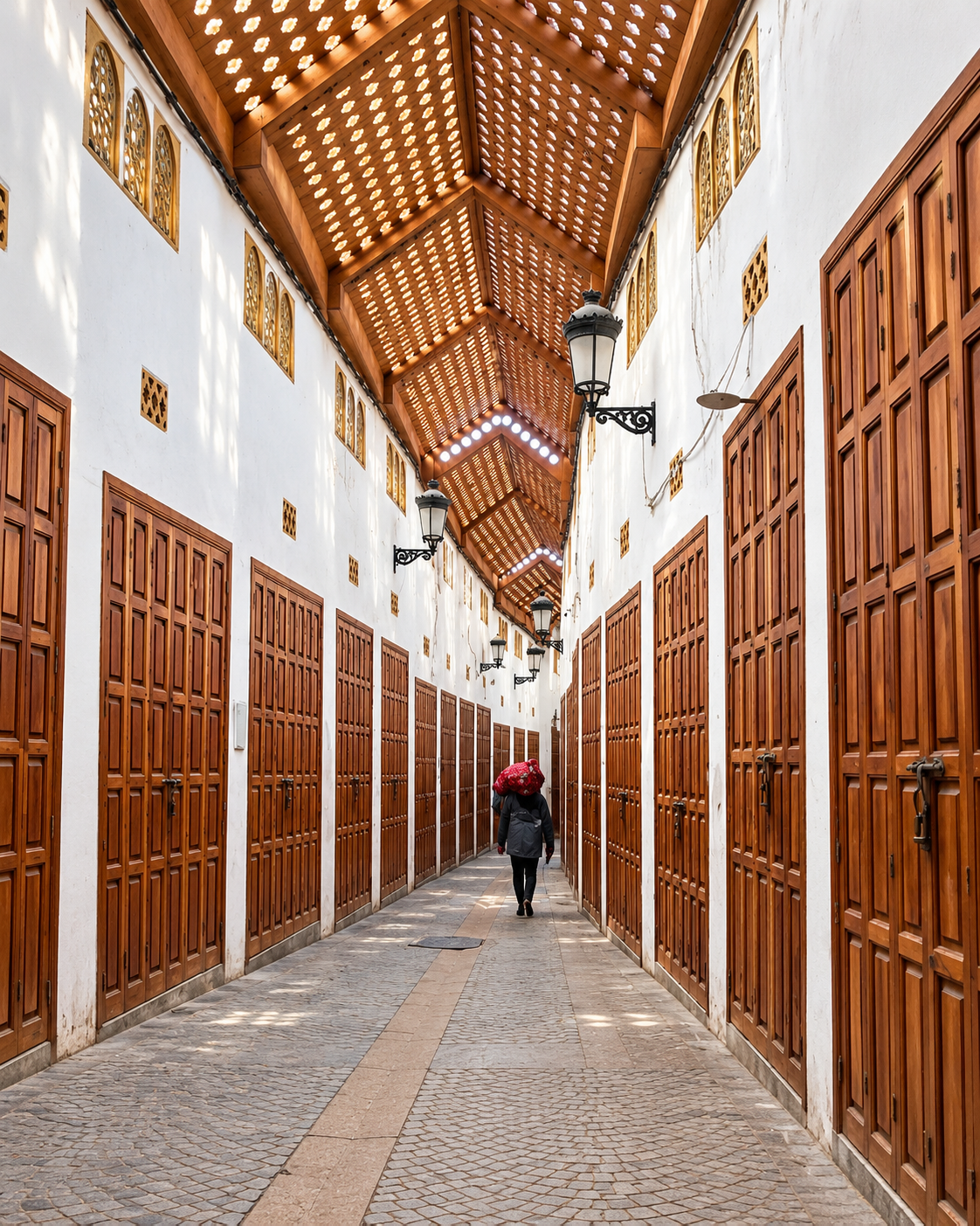
Covered market passage with rows of wooden doors in Salé
Layer 3

Craft and market life

From medina markets to Oulja pottery, Salé's material culture keeps heritage in ordinary circulation: bowls, tiles, doors, vessels, workshop rhythms and everyday exchange.

Landmarks & orientation

Read Salé through six defining places

No single monument explains Salé. These six points help visitors understand the city as a river-facing medina shaped by religious learning, craft, defence and Atlantic memory.

1
Salé Medina and ramparts

The old city's walls and lanes hold the most important first reading: a quieter medina with its own rhythm, thresholds and defensive memory.

2
Great Mosque of Salé

The historic mosque anchors the medina heights and the city's medieval religious identity; visitors should observe access rules respectfully.

3
Medersa Abu al-Hasan

A fourteenth-century Marinid madrasa whose courtyard, zellige, carved stucco and woodwork reveal Salé's scholarly refinement.

4
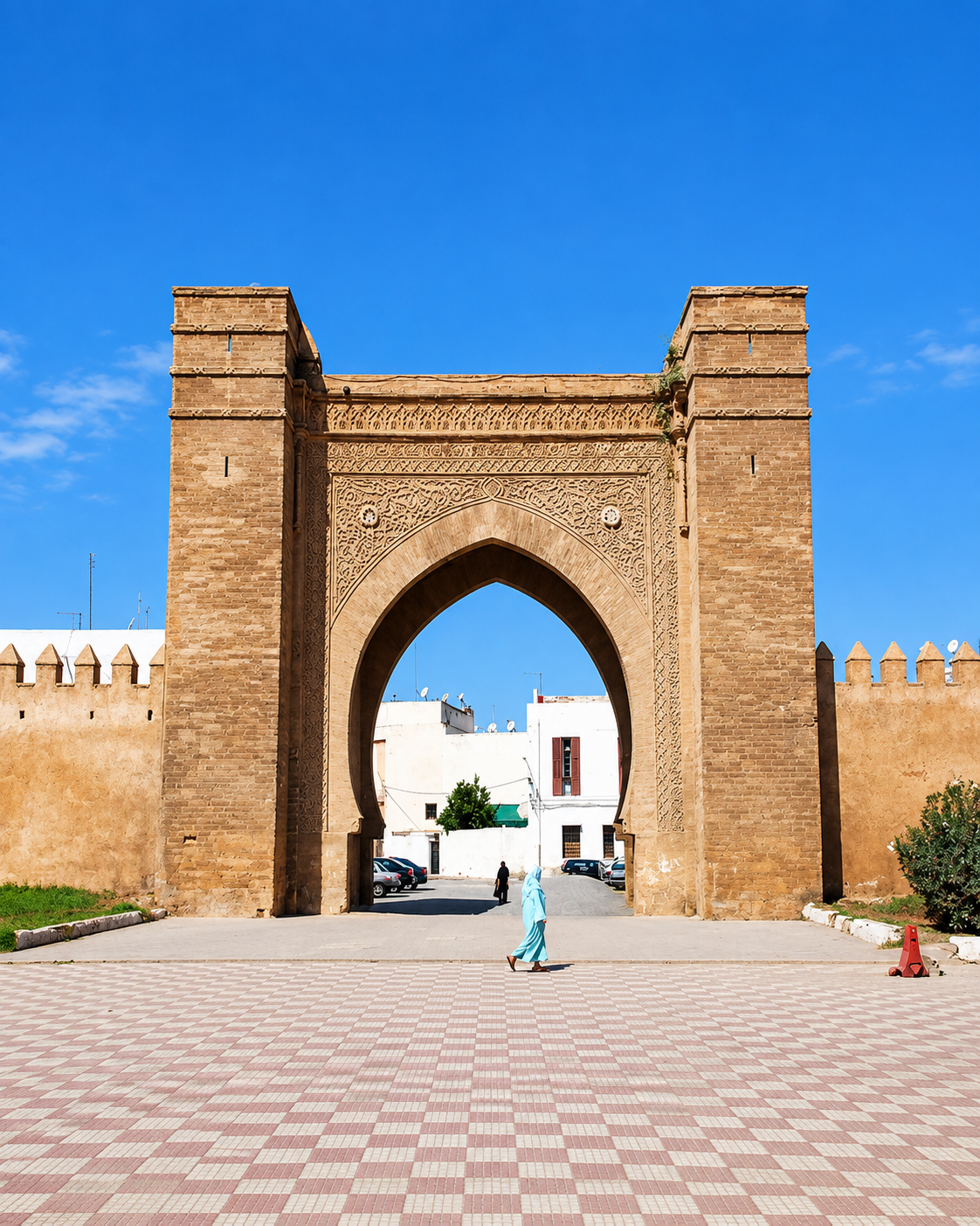
Bab Mrissa

A river-facing gate that helps explain Salé's relationship with movement, water, defence and the old Bouregreg approach.

5
Borj Adoumoue

A fortified bastion connected to the city's maritime and defensive history, giving physical form to Salé's Atlantic memory.

6
Oulja craft complex

A major pottery and craft site where regional making, colour and everyday design remain active beyond the medina lanes.

Bab Mrissa in Salé, with its monumental arch and flanking towers
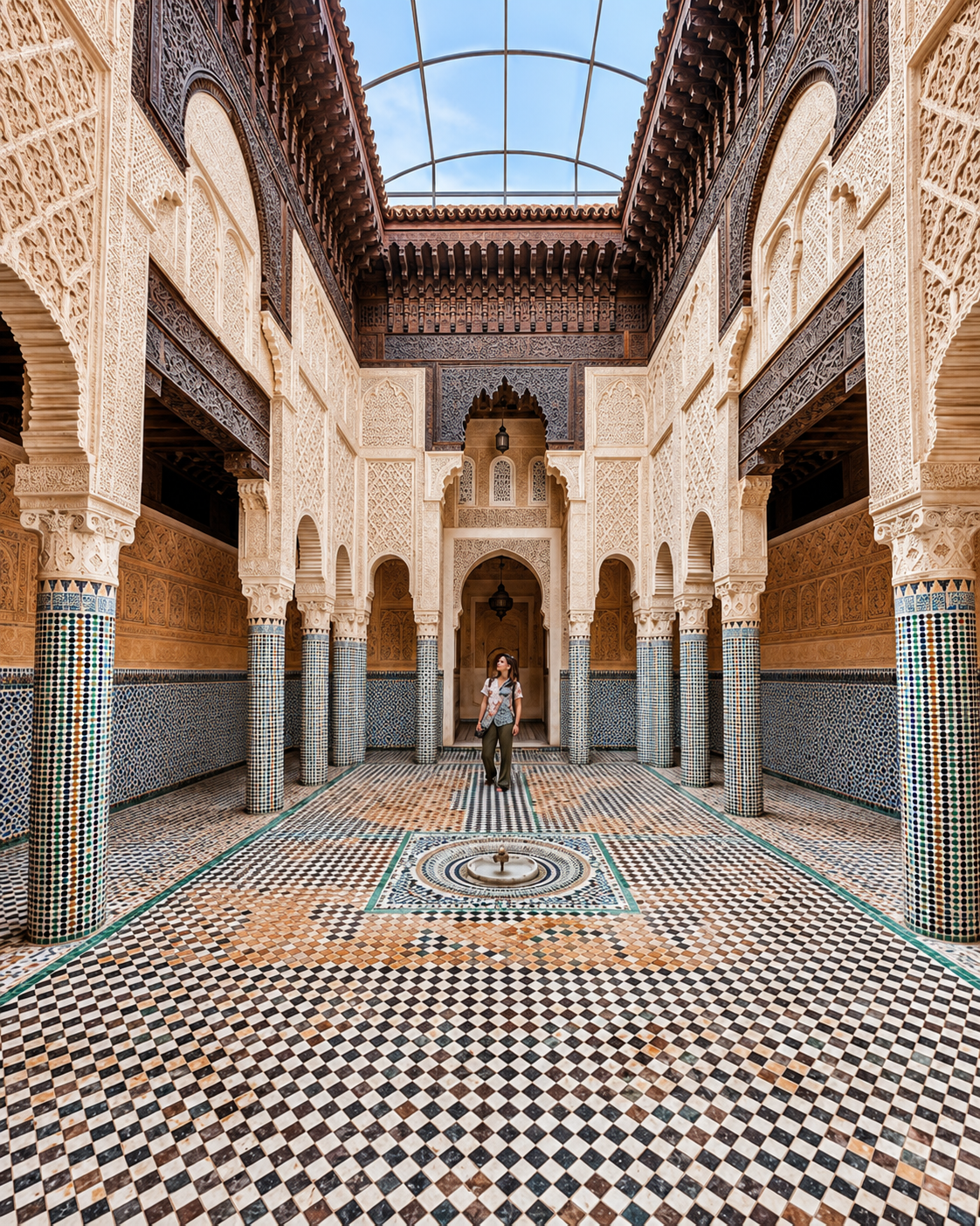
Portrait view of the Marinid Madrasa courtyard in Salé, with a fountain, tiled columns and a visitor

A Marinid interior

Medersa Abu al-Hasan: scholarship shaped in zellige and stucco

Beside the Great Mosque, the Medersa Abu al-Hasan gives Salé one of its clearest architectural moments. Built in the Marinid period, the former Qur'anic school gathers teaching, residence and ornament around a compact courtyard. Its roofline also helps visitors understand the city in relation to the Bouregreg, with Rabat and Hassan Tower visible across the wider landscape.

  • Zellige anchors the lower walls in geometry, colour and measured proportion.
  • Carved stucco, cedarwood and inscriptions articulate the upper surfaces and student rooms.
  • Its intimate scale reveals Salé's scholarly identity without turning the city into a museum piece.

Architectural reading

Three architectural languages to notice

River-facing defence

Walls, gates and bastions show Salé as a city made aware of water, movement and exposure. The Bouregreg shaped arrival and risk, while the Atlantic horizon gave the old city a broader maritime identity.

Marinid refinement

In the madrasa, architecture changes scale. Zellige, carved plaster, woodwork and proportion replace defensive mass with a quieter language of learning, devotion and close observation.

Craft and domestic surfaces

Doors, tilework, pottery, market stalls and small architectural details carry design into ordinary use. Salé's beauty often appears at hand level, not only in monuments.

Visual atmosphere

Stone, zellige, river light and market texture

Nearby highlights

Nearby heritage, river walks and nature

Salé belongs naturally to a wider Rabat-Salé reading. Cross the river for Rabat and the Oudayas, follow the Bouregreg for contemporary waterfront life, or continue toward Bouknadel and Sidi Boughaba for gardens, lake, birds and a quieter coastal landscape.

Rabat and the Oudayas

Across the Bouregreg, Rabat adds UNESCO-listed historic and modern layers: the Oudayas, Hassan Tower, royal and administrative districts, gardens and museums. Together, Rabat and Salé explain the river mouth better than either city alone.

Kasbah of the Oudayas and Rabat’s fortified riverfront across the Bouregreg

Bouregreg waterfront

The river is a practical and atmospheric connector. It frames views between Salé and Rabat, supports modern crossings and gives visitors a clearer sense of how the two banks relate.

Palm-lined promenade and moored boats at the Bouregreg Marina in Salé

Bouknadel gardens and northern nature

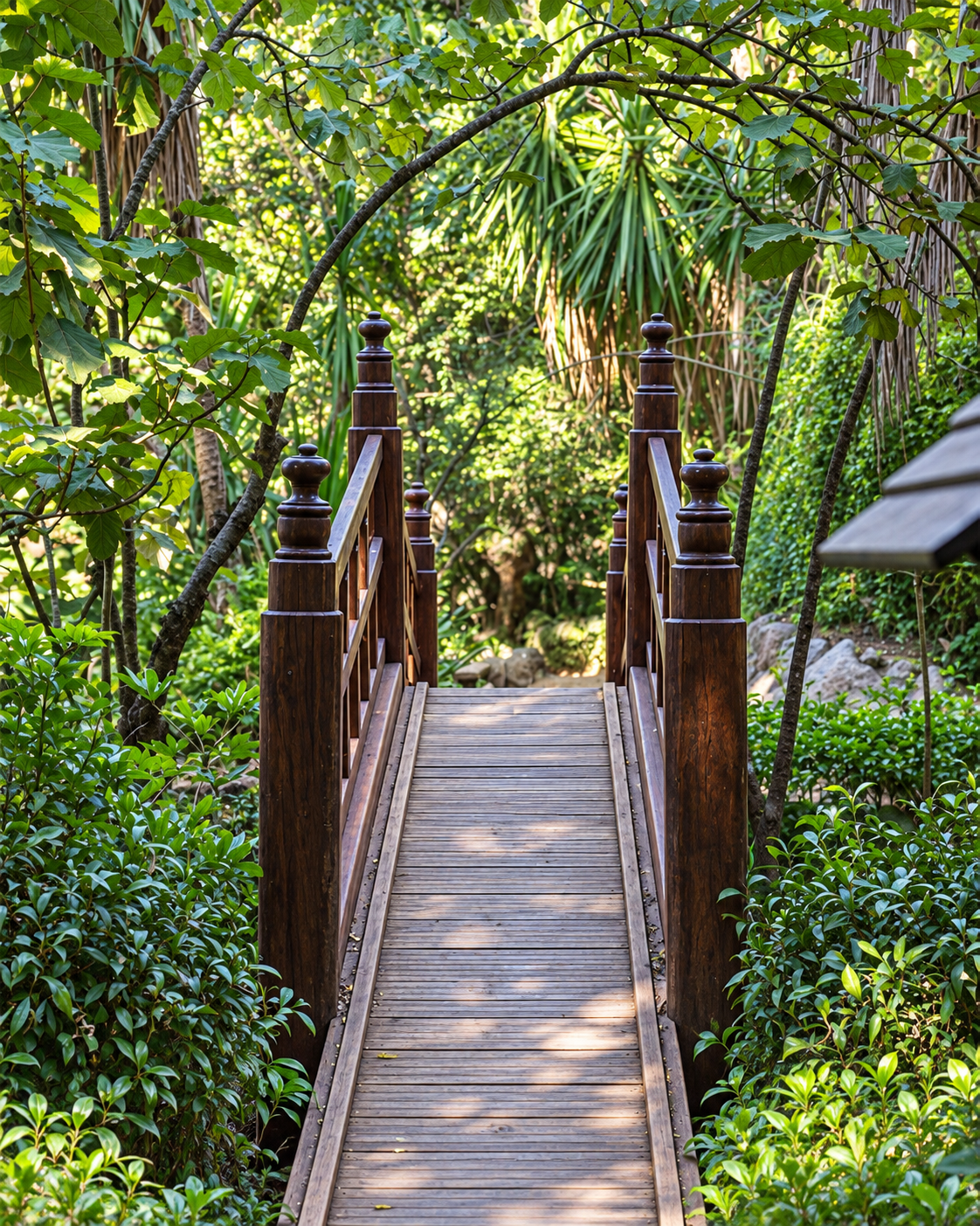
The Exotic Gardens of Bouknadel, pictured here, offer shaded paths, footbridges and planted landscapes north of Salé. Sidi Boughaba is a separate lake and birdlife excursion farther north; allow time for it as an additional stop.

Wooden footbridge among dense vegetation at the Exotic Gardens of Bouknadel
Travel note: opening hours, access rules, restoration work, transport conditions and local visitor arrangements can change. Check current official or trusted local information before travelling.

Practical orientation

How to experience Salé well

  • Give Salé its own time instead of treating it as a quick add-on to Rabat.
  • Start with the medina edges, Bab Mrissa and the mosque-madrasa quarter to understand the city's orientation.
  • Observe access rules around religious buildings, especially the Great Mosque.
  • Use the Rabat-Salé tram or a careful river crossing plan when combining both banks.
  • Add Oulja pottery, the Bouregreg waterfront or a nature extension only when the first medina layer has not been rushed.

A strong first visit

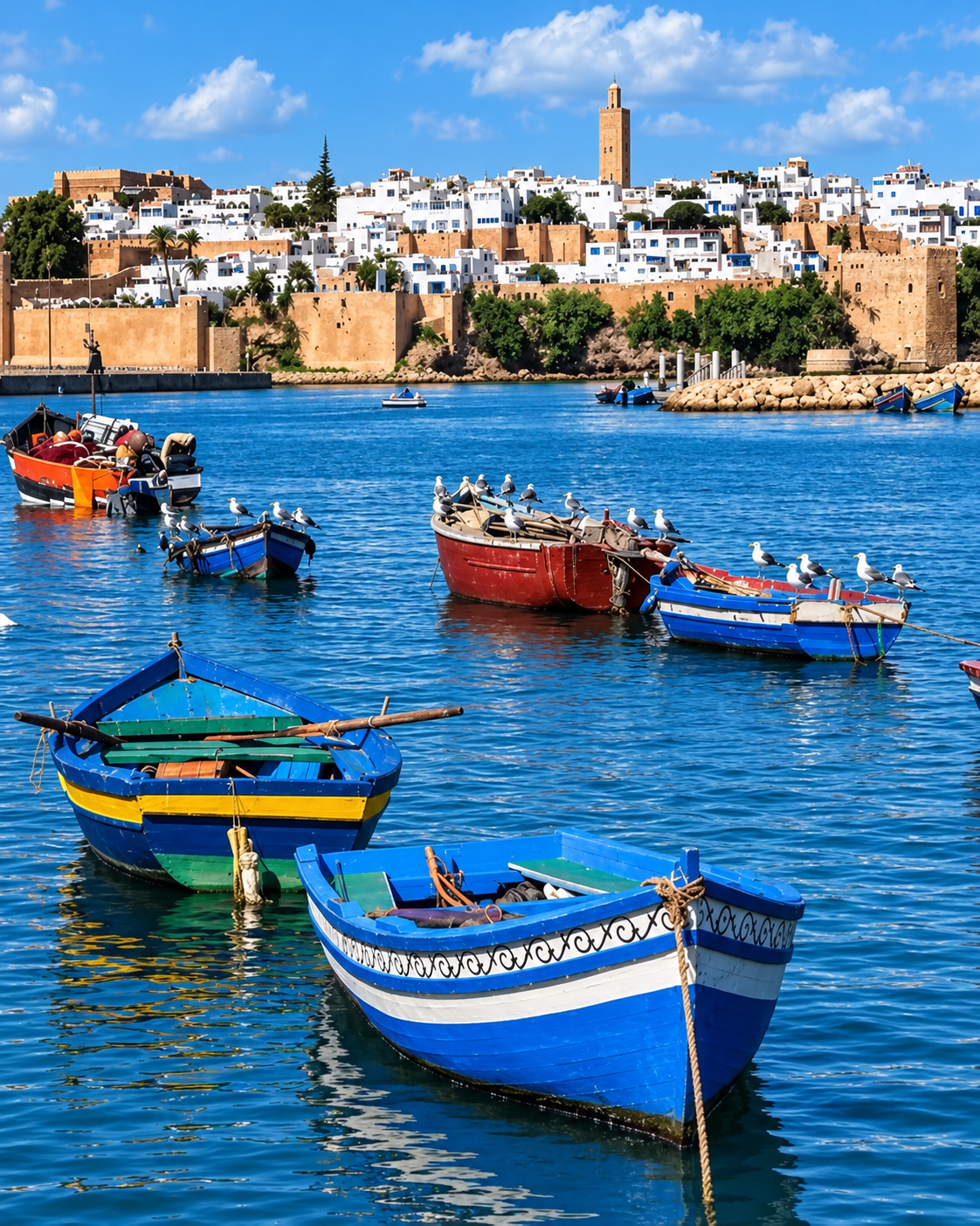
Traditional boats on the Bouregreg with Rabat’s fortified riverfront beyond

Begin near the medina and Bab Mrissa, continue toward the Great Mosque and Medersa Abu al-Hasan, then step back toward the river to understand Salé's relationship with Rabat, the Bouregreg and the Atlantic edge.

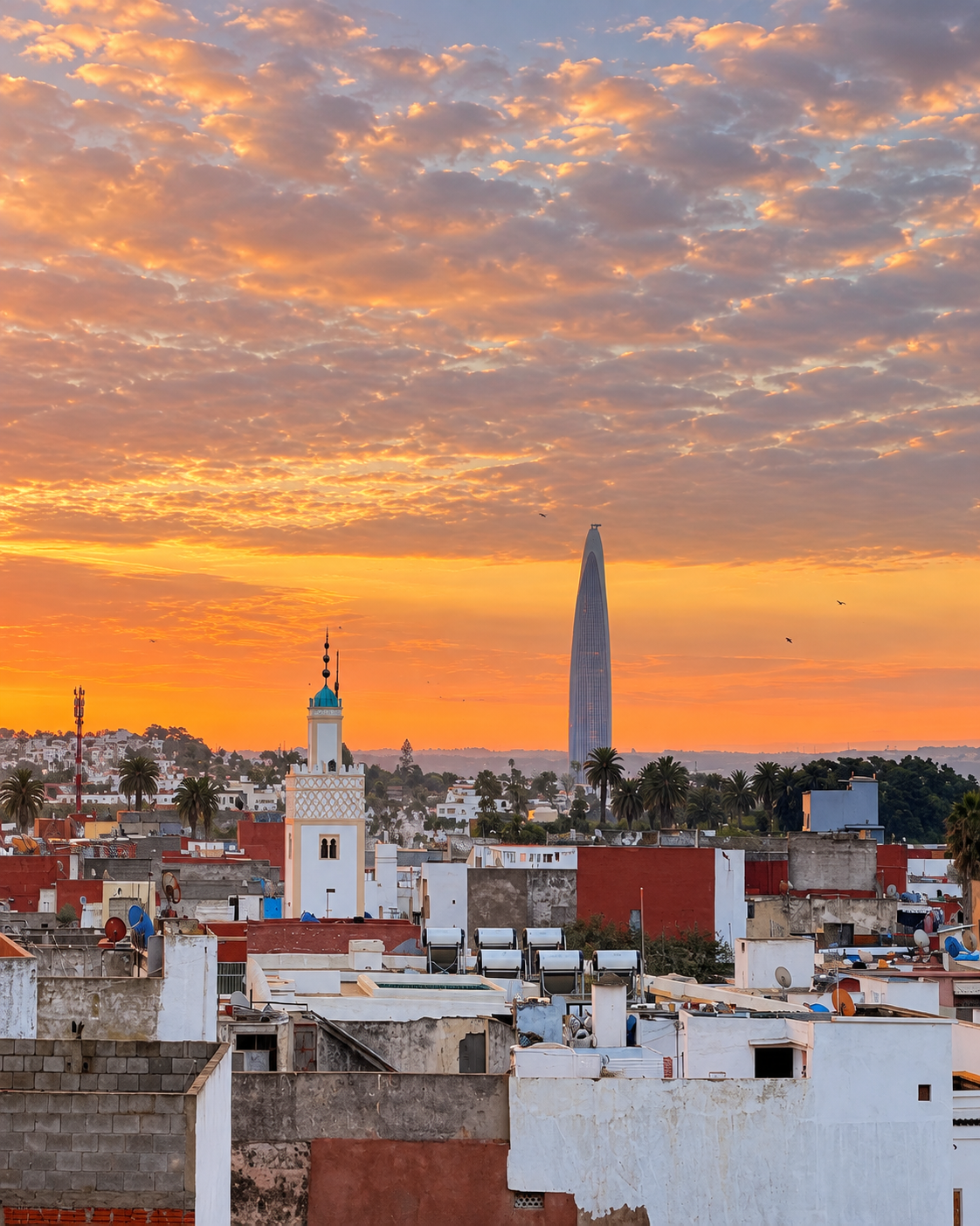
Salé rooftops and minaret at sunset with Mohammed VI Tower in the distance

Go deeper with Exotic Morocco

Salé — Premium Visual City Guide

Continue with Exotic Morocco’s city guide collection to connect Salé’s medina, river setting, architecture, craft traditions, practical orientation and nearby Rabat into a considered journey.

✓ Historic context✓ Essential landmarks ✓ Architecture & design✓ Culture & local life ✓ Practical travel guidance✓ Nearby highlights

Continue the journey

Continue the journey through Salé

Look beyond Rabat's shadow and encounter a river city of medina lanes, Marinid refinement, craft memory, Atlantic history and quiet urban intelligence.