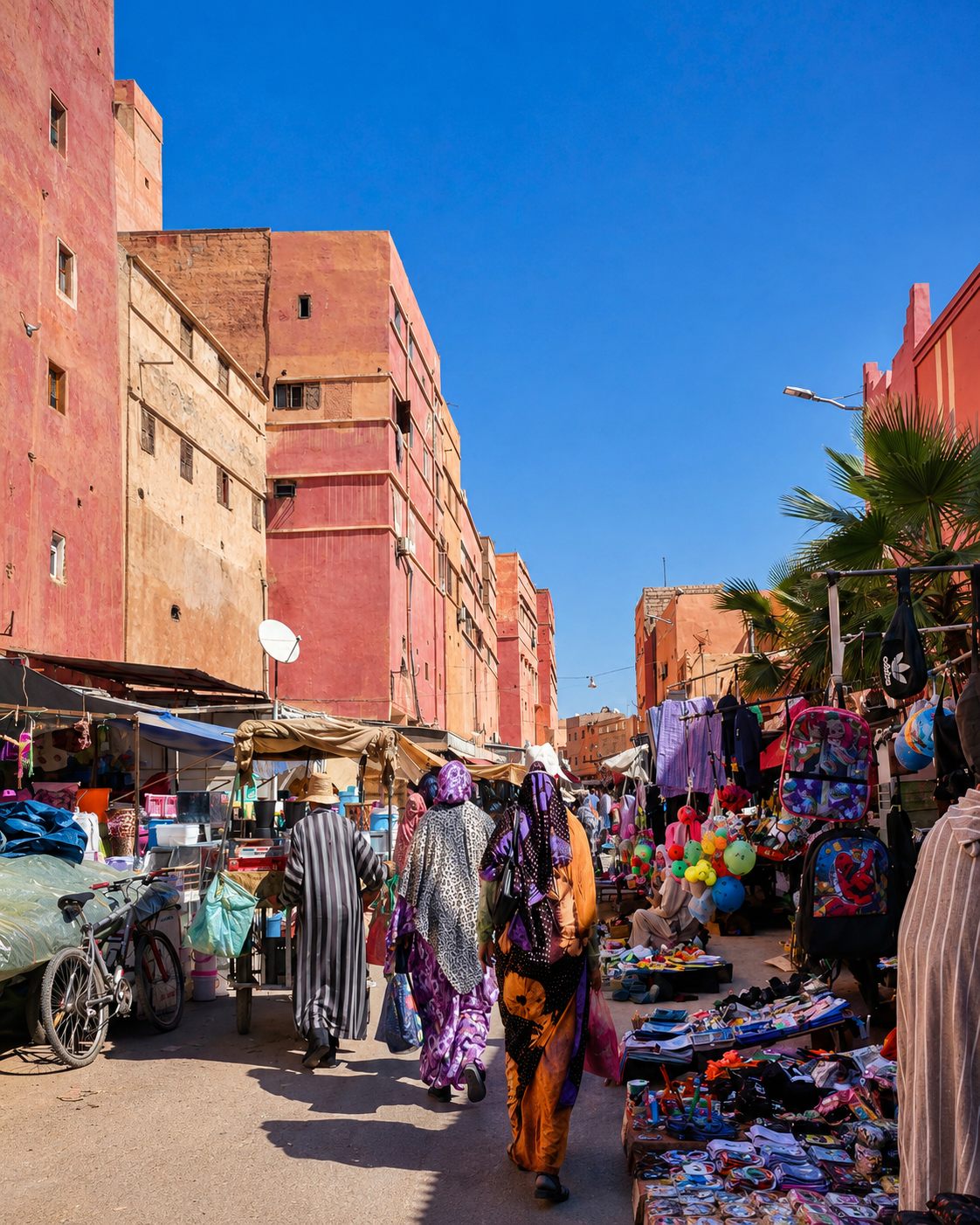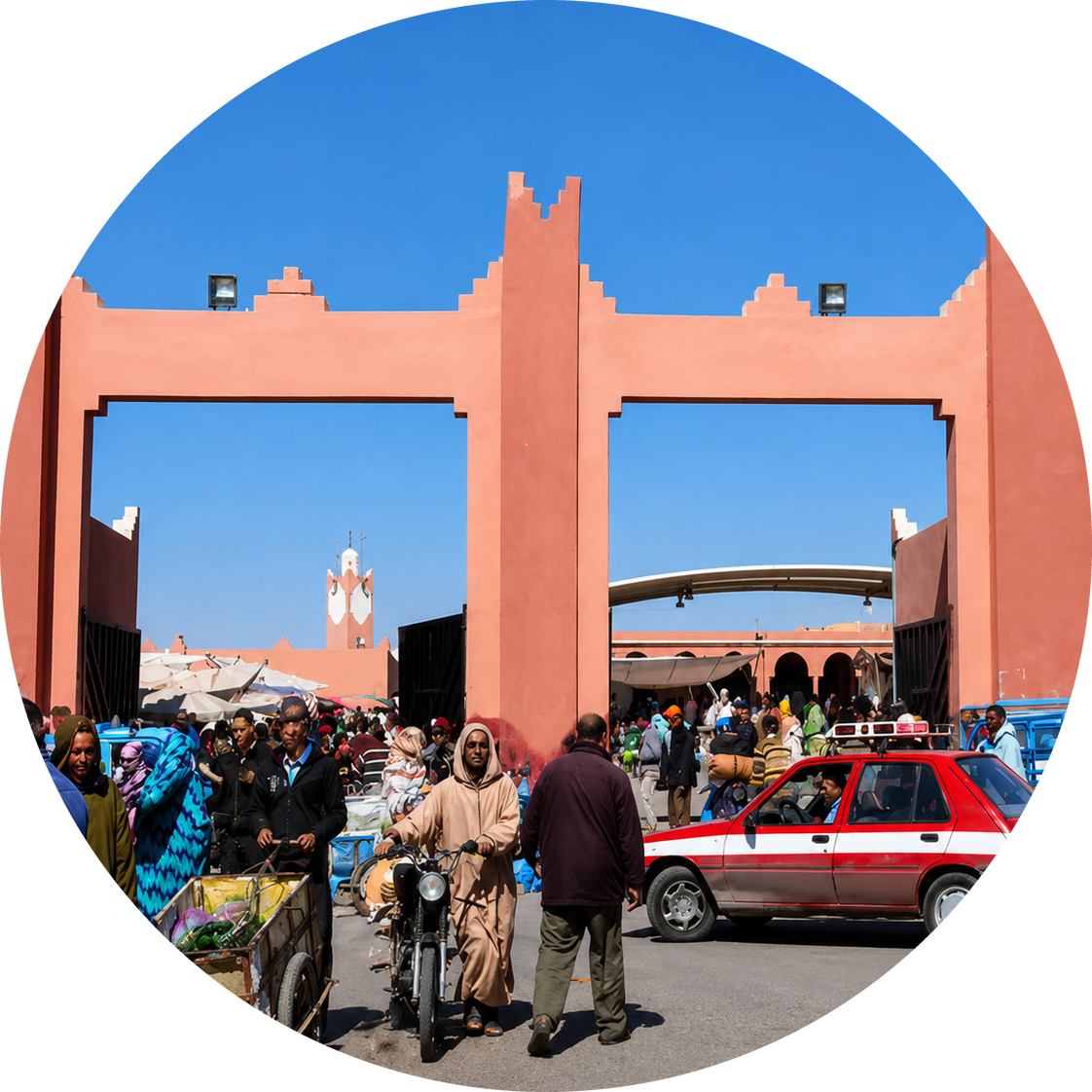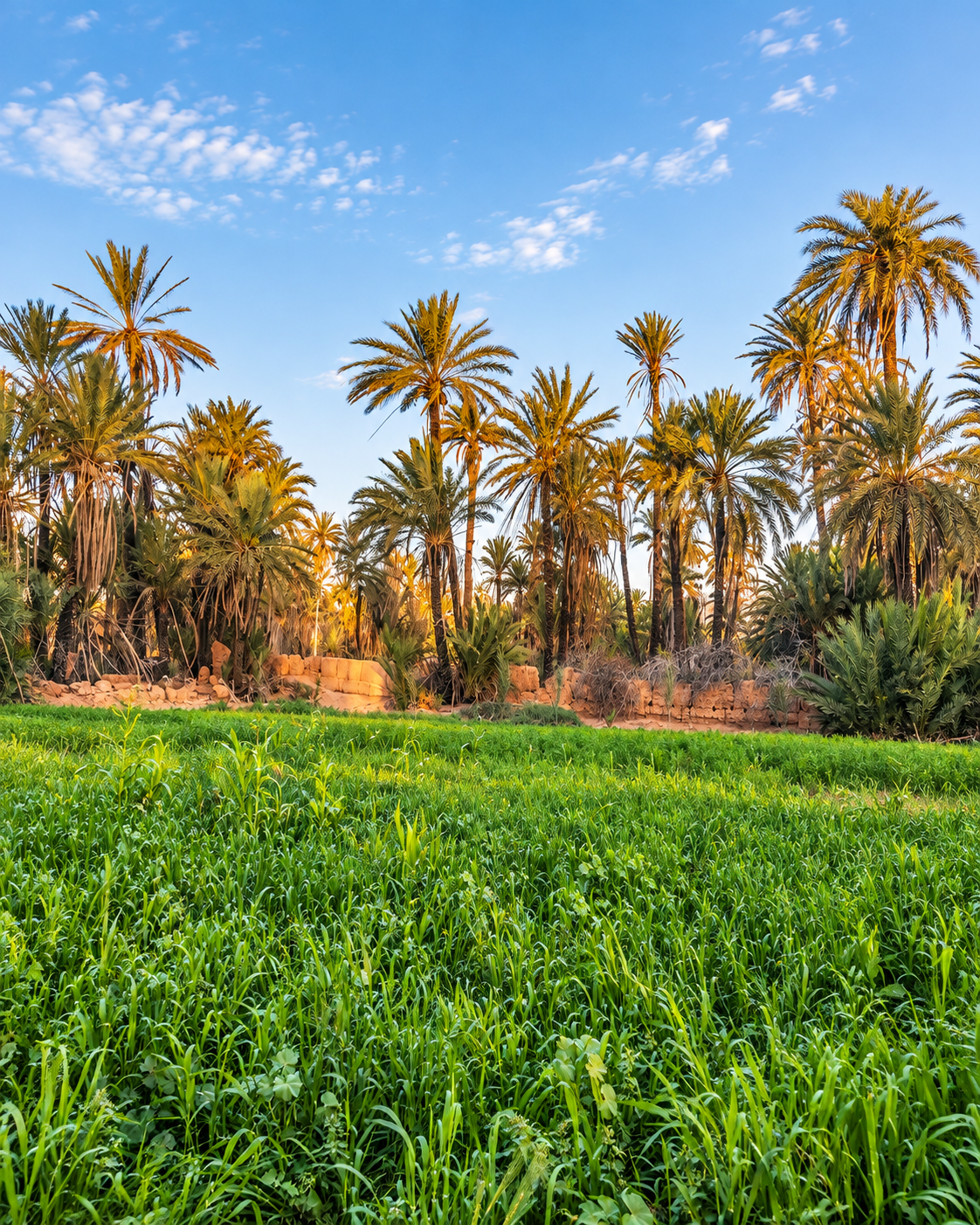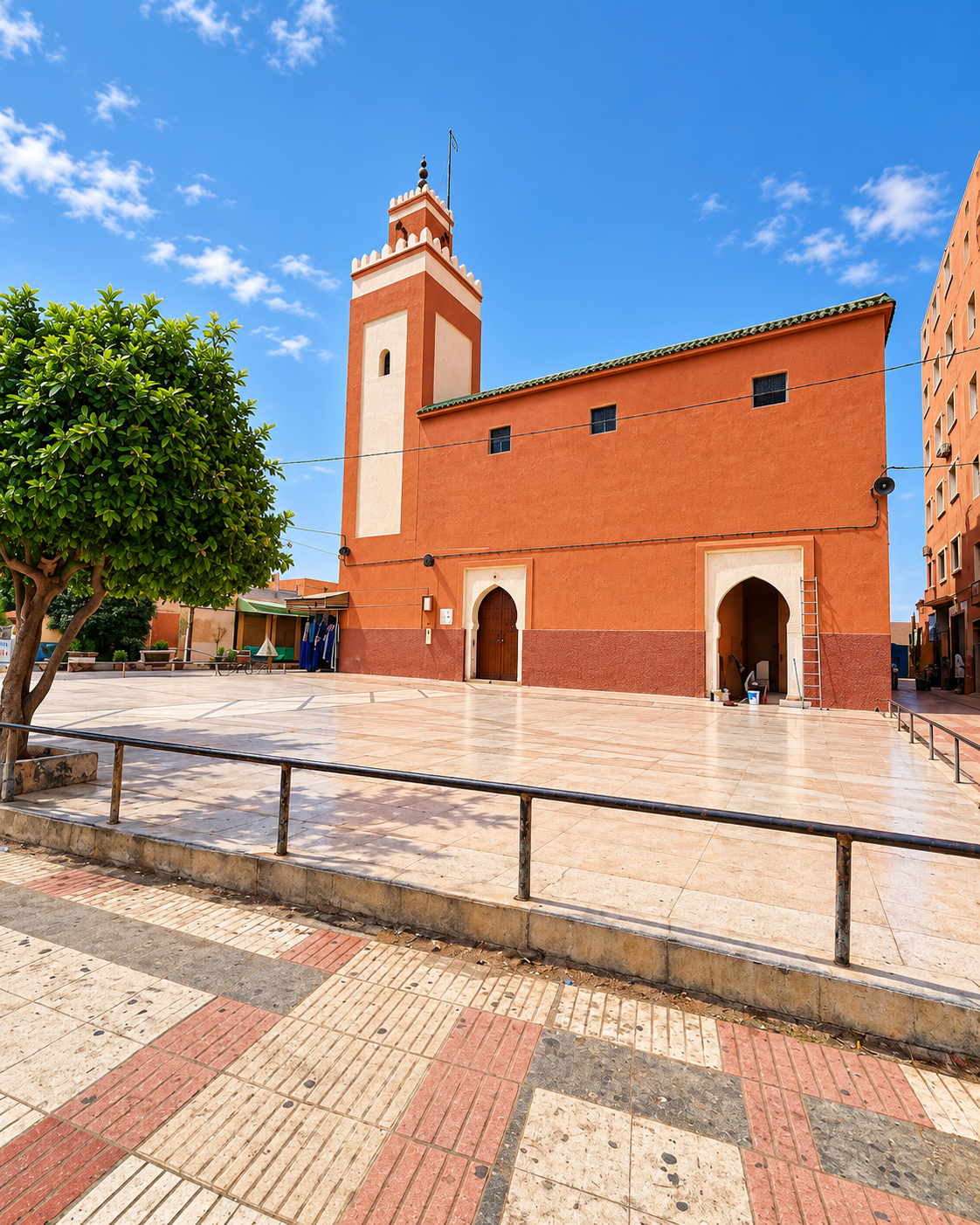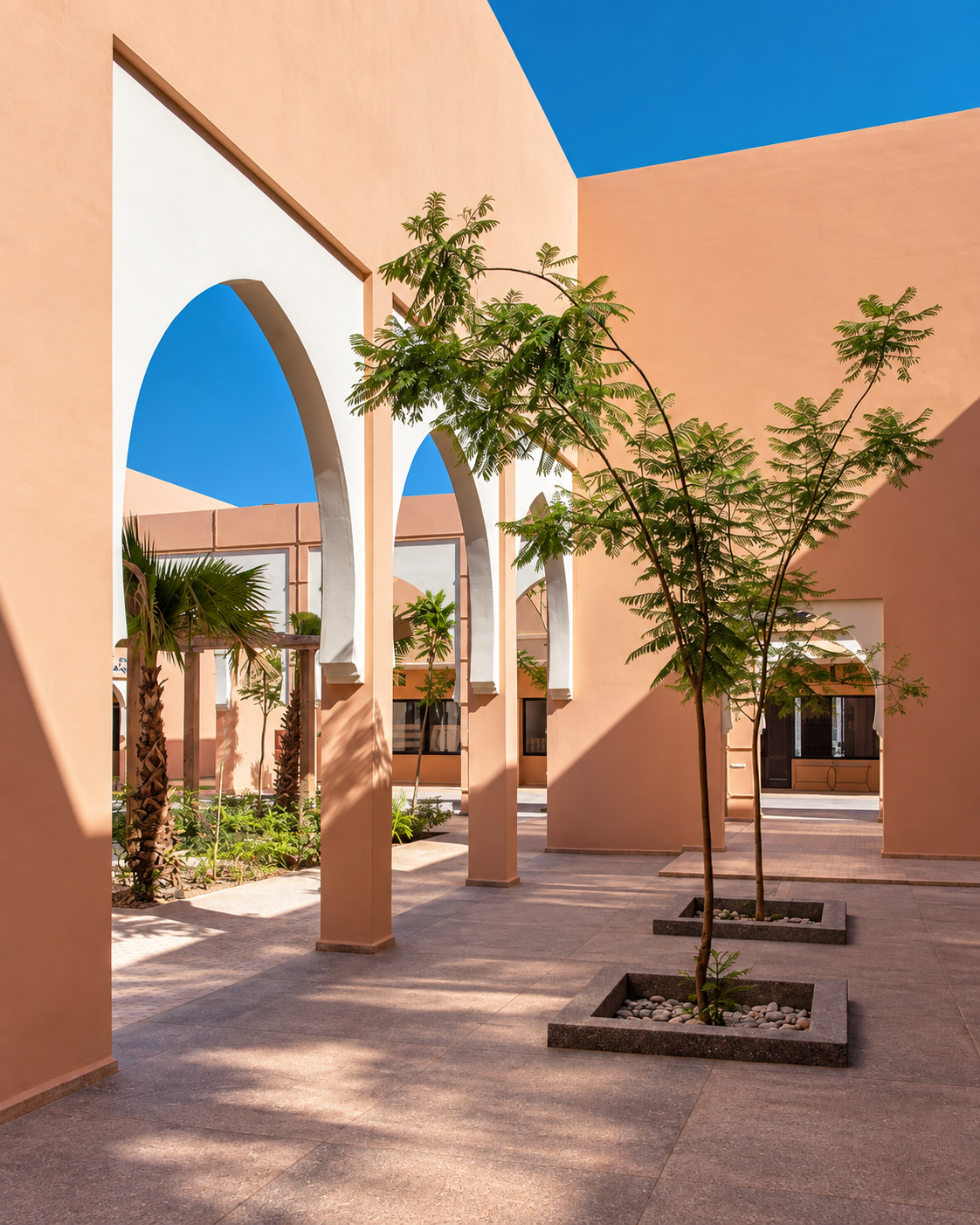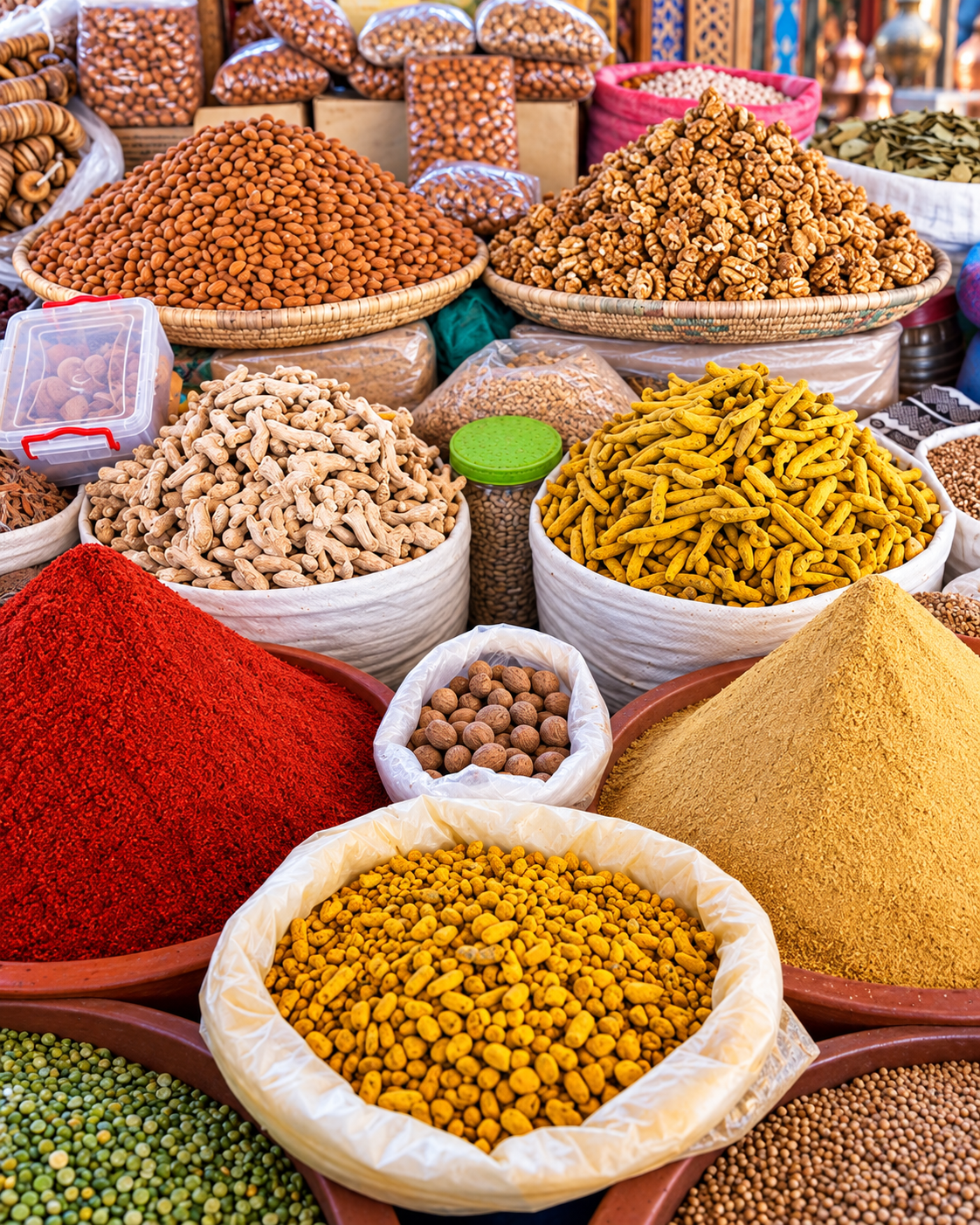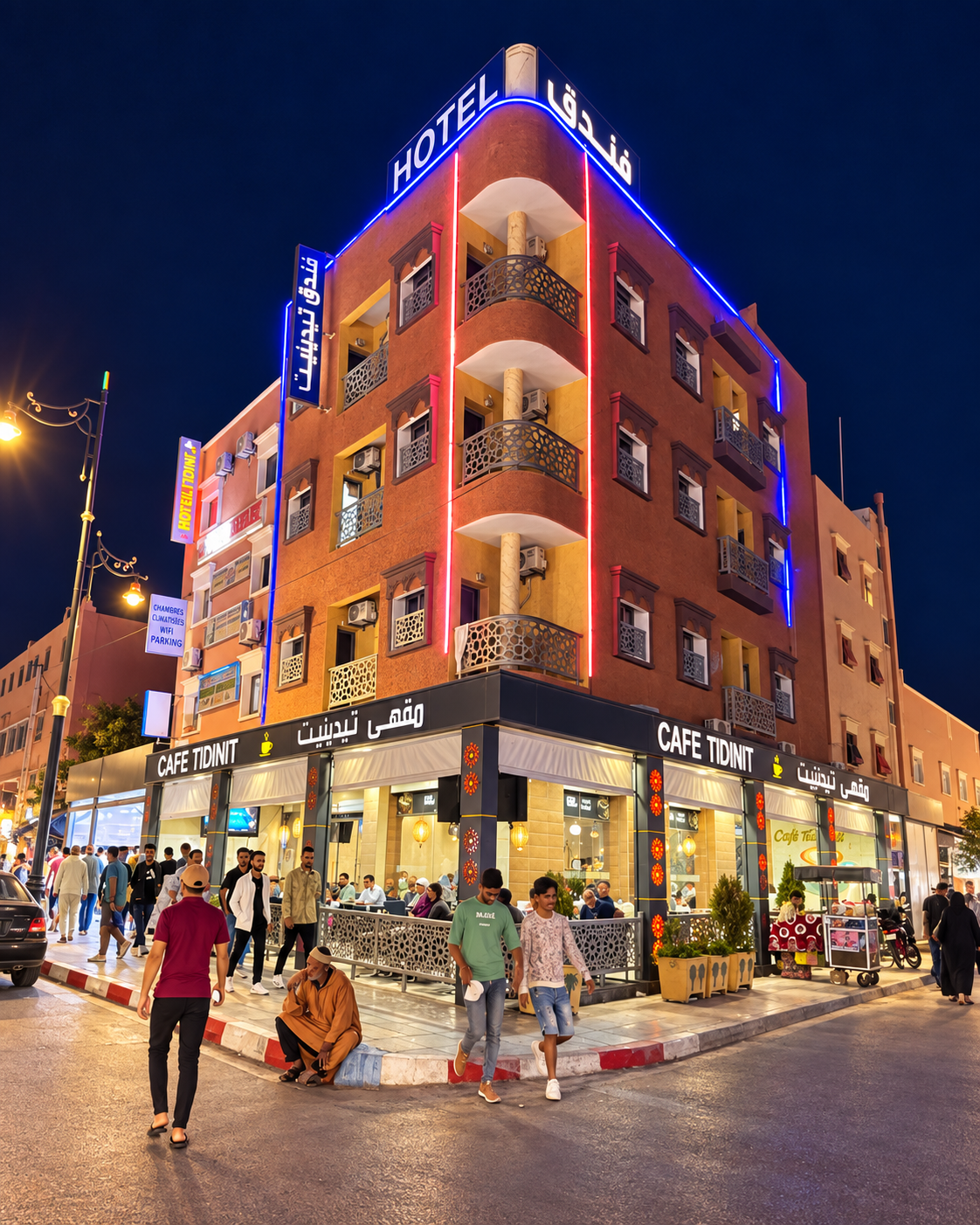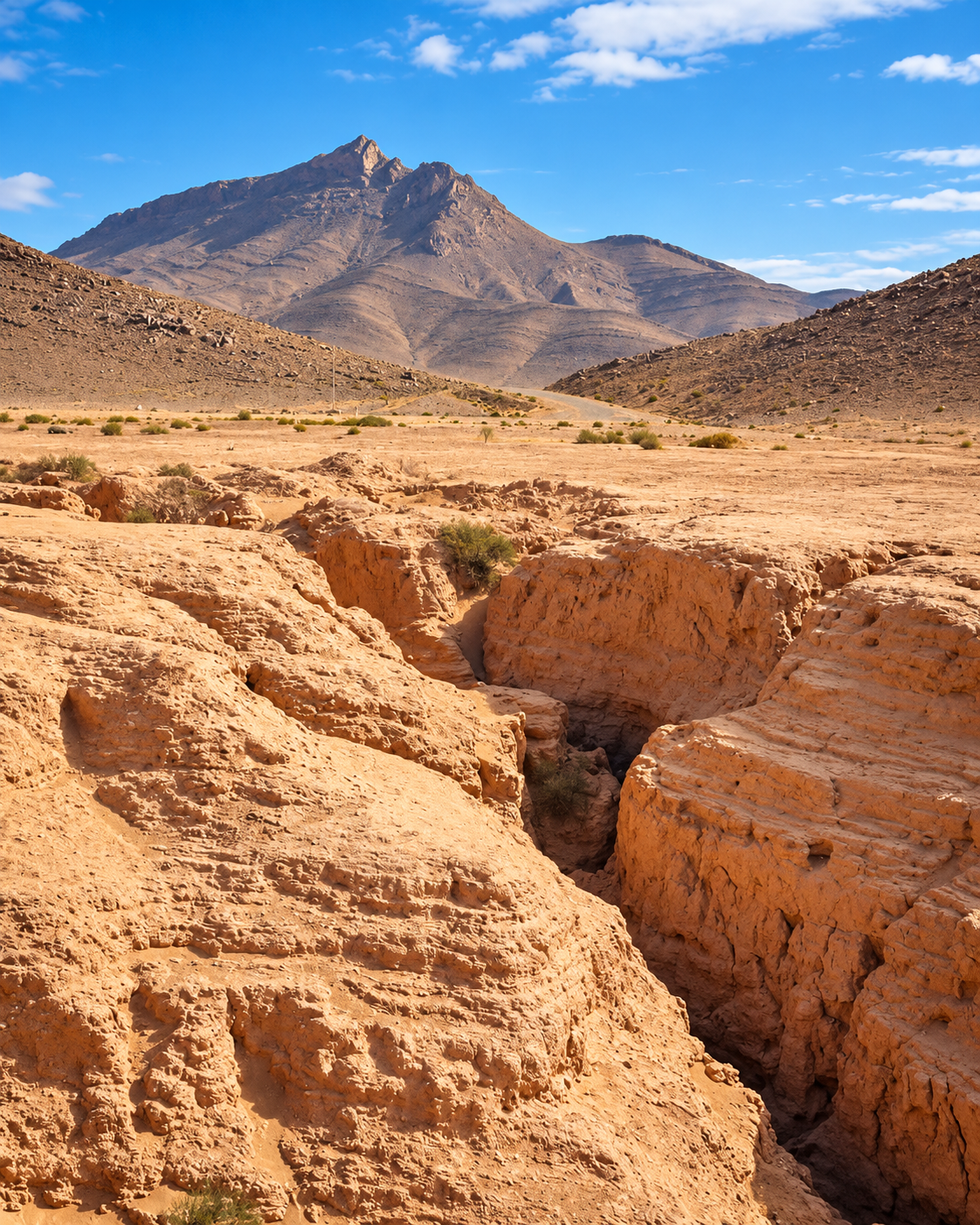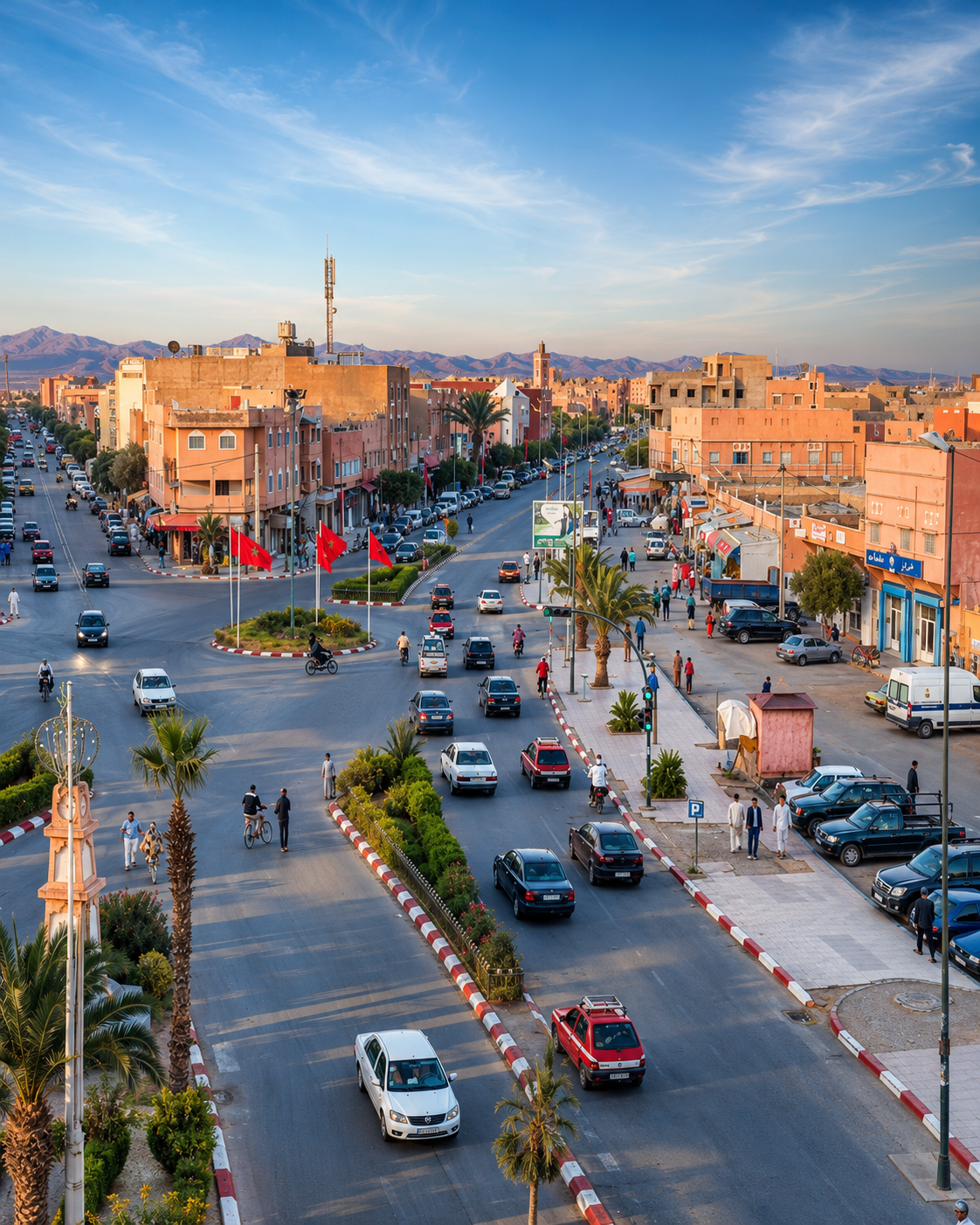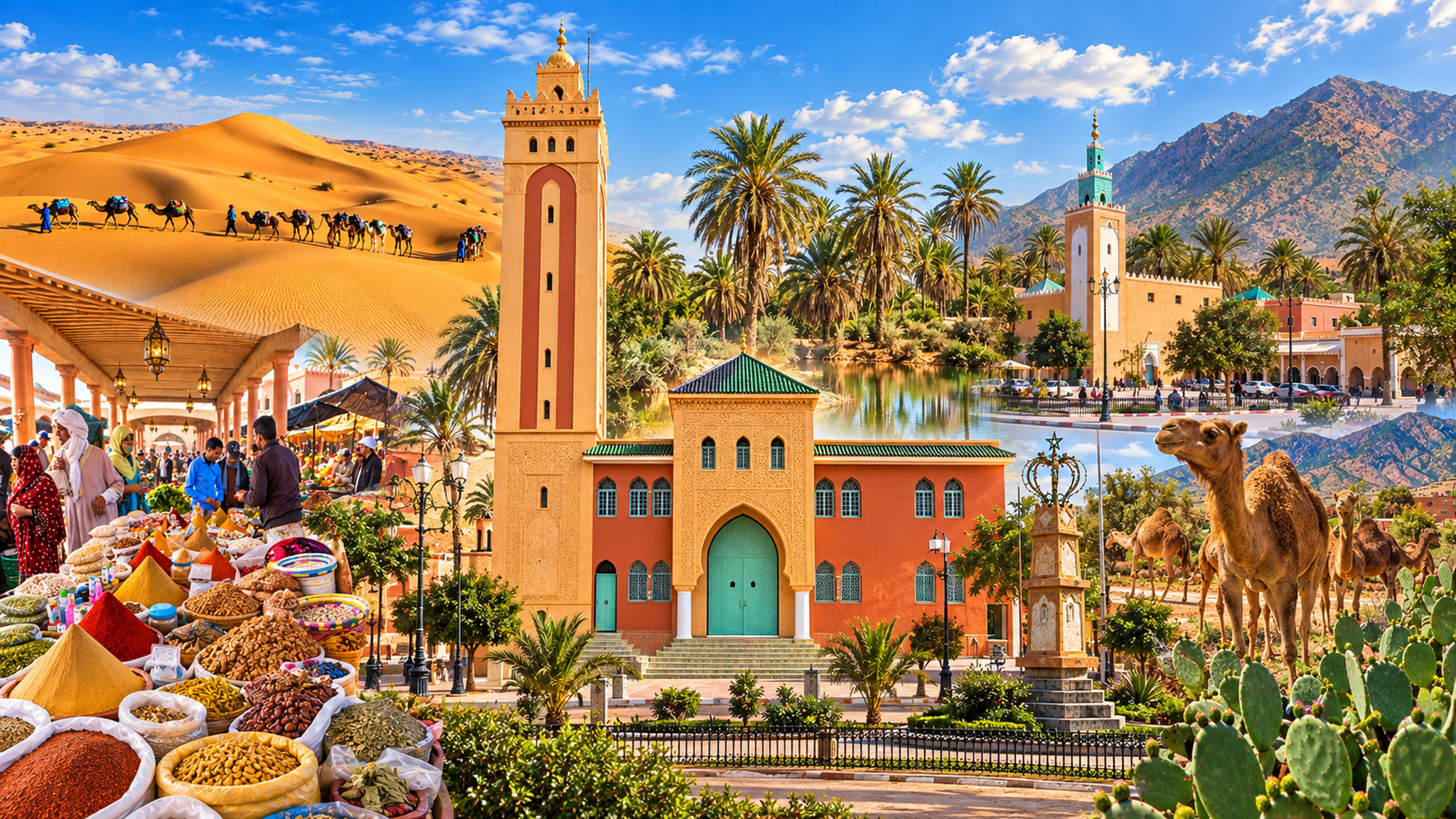
Guelmim editorial collage with mosque architecture, market scenes, palms and southern landscapes

Gateway City of Southern Morocco

Guelmim Oued Noun crossroads, oasis culture and southern routes

Markets, palm groves and Sahrawi culture give Guelmim its character. Explore the city where Atlantic, Anti-Atlas and Sahara-facing journeys meet.

Why Guelmim matters

Where routes begin to change

Guelmim sits at a southern Moroccan threshold. Northward, the road still belongs to the Anti-Atlas and the Souss-Massa world. Westward, it opens toward Sidi Ifni, Plage Blanche and the Atlantic edge. South and east, it begins to feel the pull of desert routes, livestock trade and oasis settlements.

The city is often introduced through its weekly livestock and camel market, but that market is only one expression of a deeper role. Guelmim has long worked as a meeting point for people, animals, goods, languages and routes moving between the coast, the mountains, Wad Noun and the Sahara-facing south.
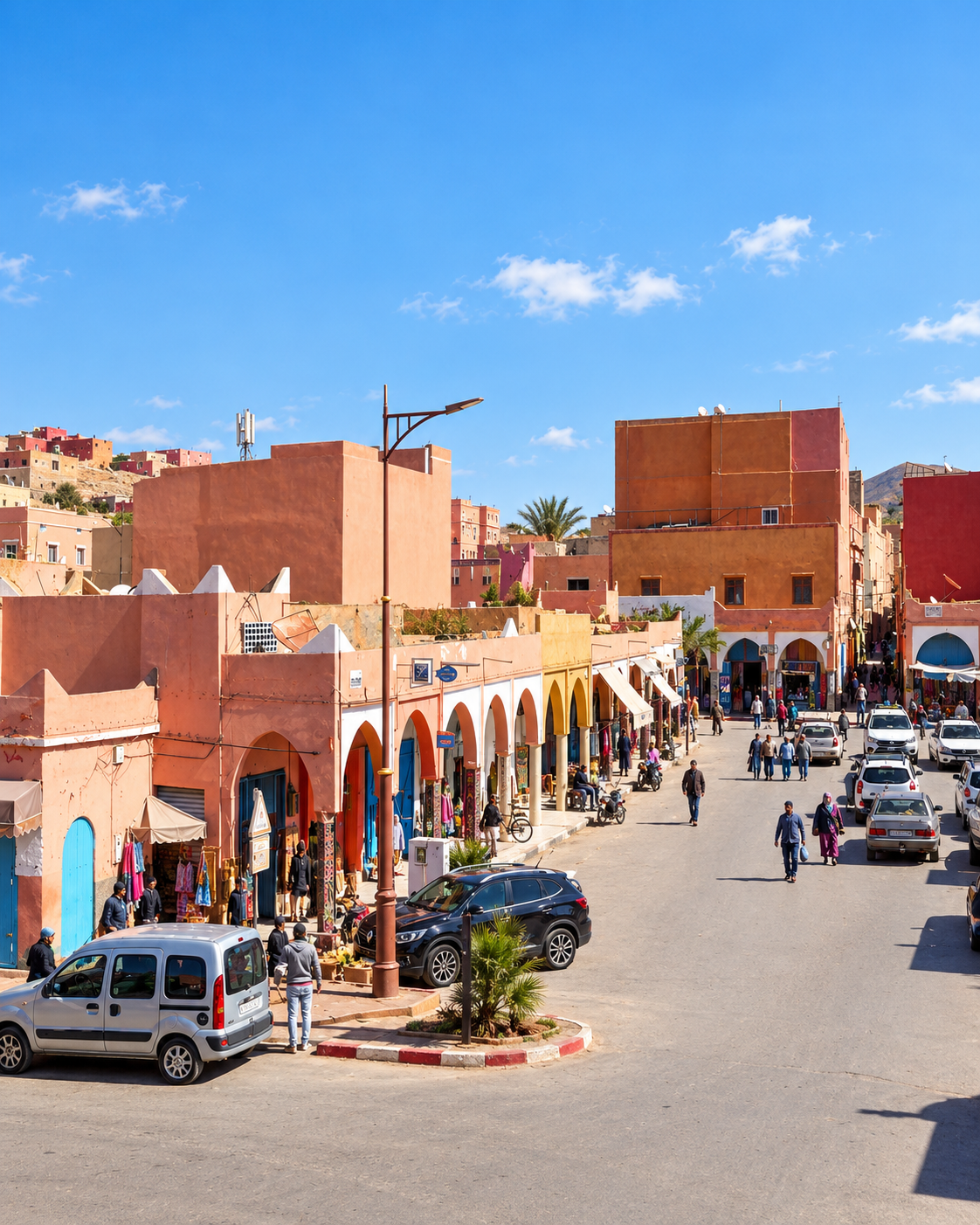
Arcaded market buildings, pedestrians and vehicles in central Guelmim

A gateway with real work behind it

Guelmim is best read through movement: market mornings, oasis lanes, road junctions, tea rituals and the practical geography of southern Morocco.

EXPLORE

Guelmim

Historical orientation

From Wad Noun routes to regional capital

Guelmim should be understood less as an isolated monument city and more as a southern node. Its history is tied to oasis agriculture, caravan memory, livestock exchange, Sahrawi and Hassani cultural life, and the administrative role it now carries as capital of the Guelmim-Oued Noun region.

01Long before tourism

Oasis corridors

The Wad Noun area links palms, dry riverbeds, grazing country and routes between the Anti-Atlas, Atlantic coast and desert fringe.

02Caravan memory

Trade and livestock

Guelmim's identity is strongly connected to exchange: animals, textiles, food, tools, tea culture and the social knowledge of people who moved across the south.

0320th century

Southern link city

Roads, markets and public services strengthened Guelmim's role as a practical hinge between coastal routes, inland valleys and the Sahara-facing provinces.

04Since 2015

Regional capital

Under Morocco's current regional structure, Guelmim is the capital of Guelmim-Oued Noun, giving the city a modern civic role alongside its older route identity.

A visual bridge

Three glimpses between oasis, market and road

Guelmim's atmosphere comes from transition: desert light at the edge of town, palm groves close enough to shape local memory, and market streets where southern materials and everyday needs meet.

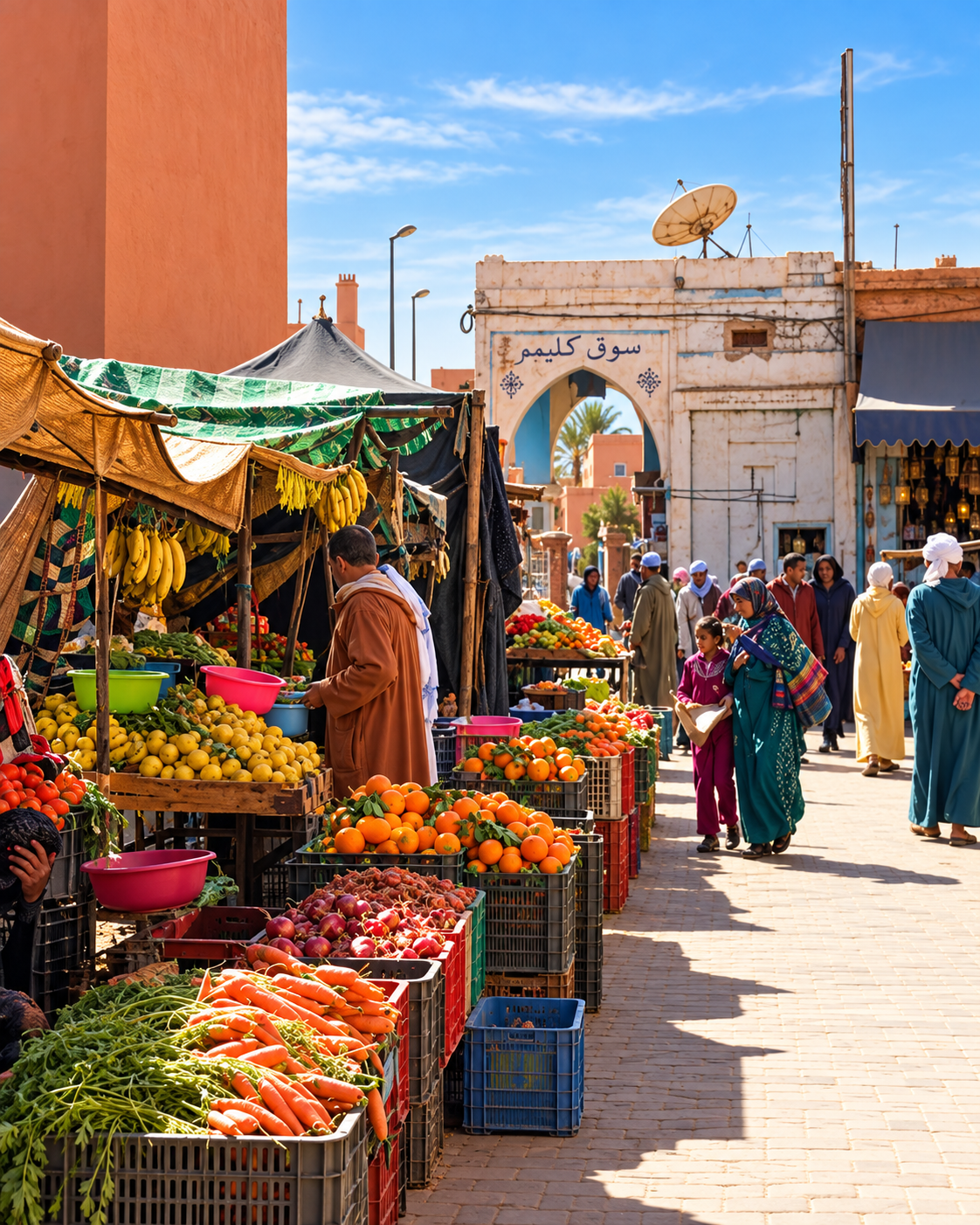
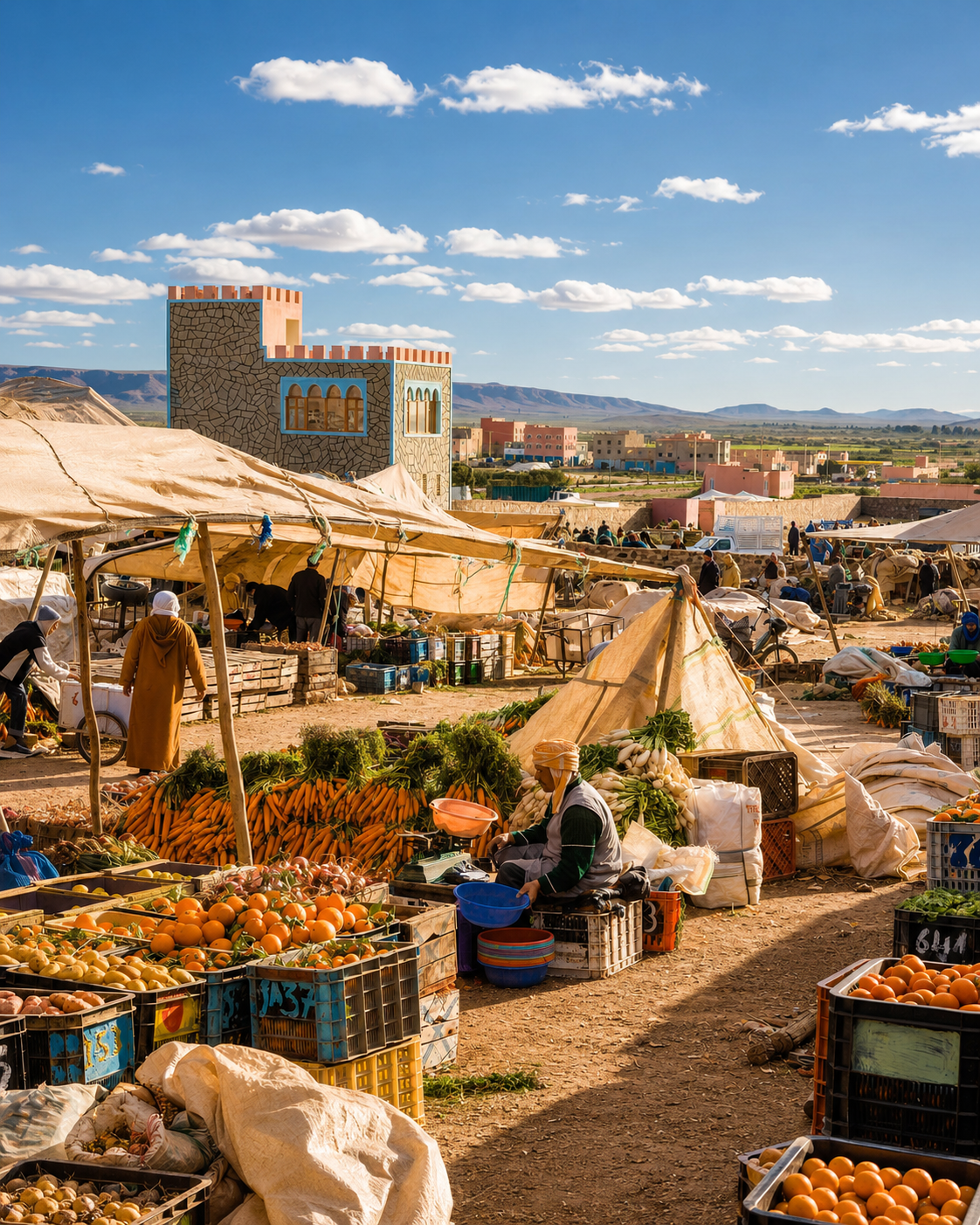
Produce stalls and awnings at an open-air market in Guelmim

Market exchange

Produce, goods and daily encounters keep Guelmim’s trading identity visible in the streets and markets.

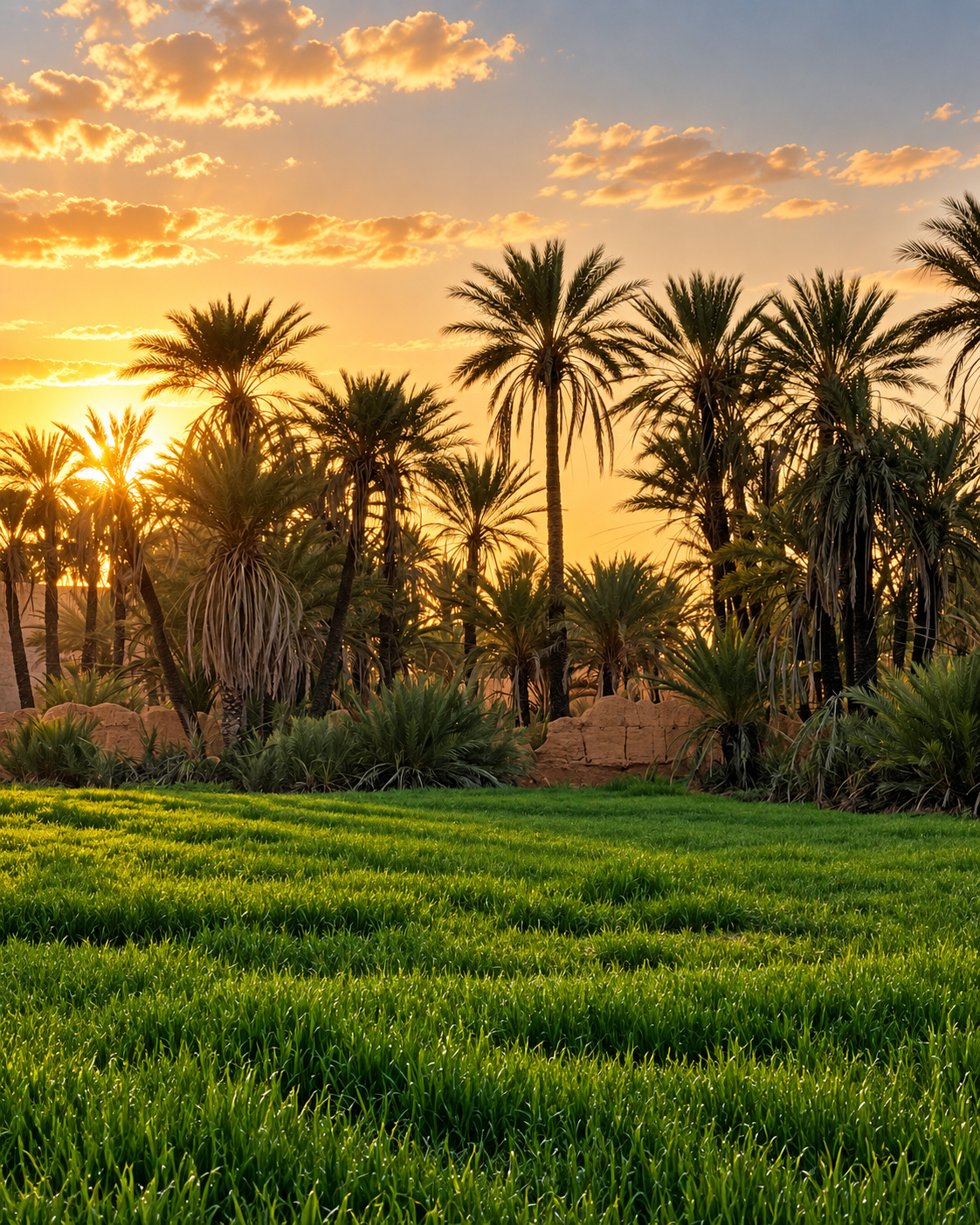
Cultivated oasis plots and date palms in warm evening light

Oasis edge

Tighmert, Asrir and the palm belt explain why Guelmim is more than a dry-road stop.

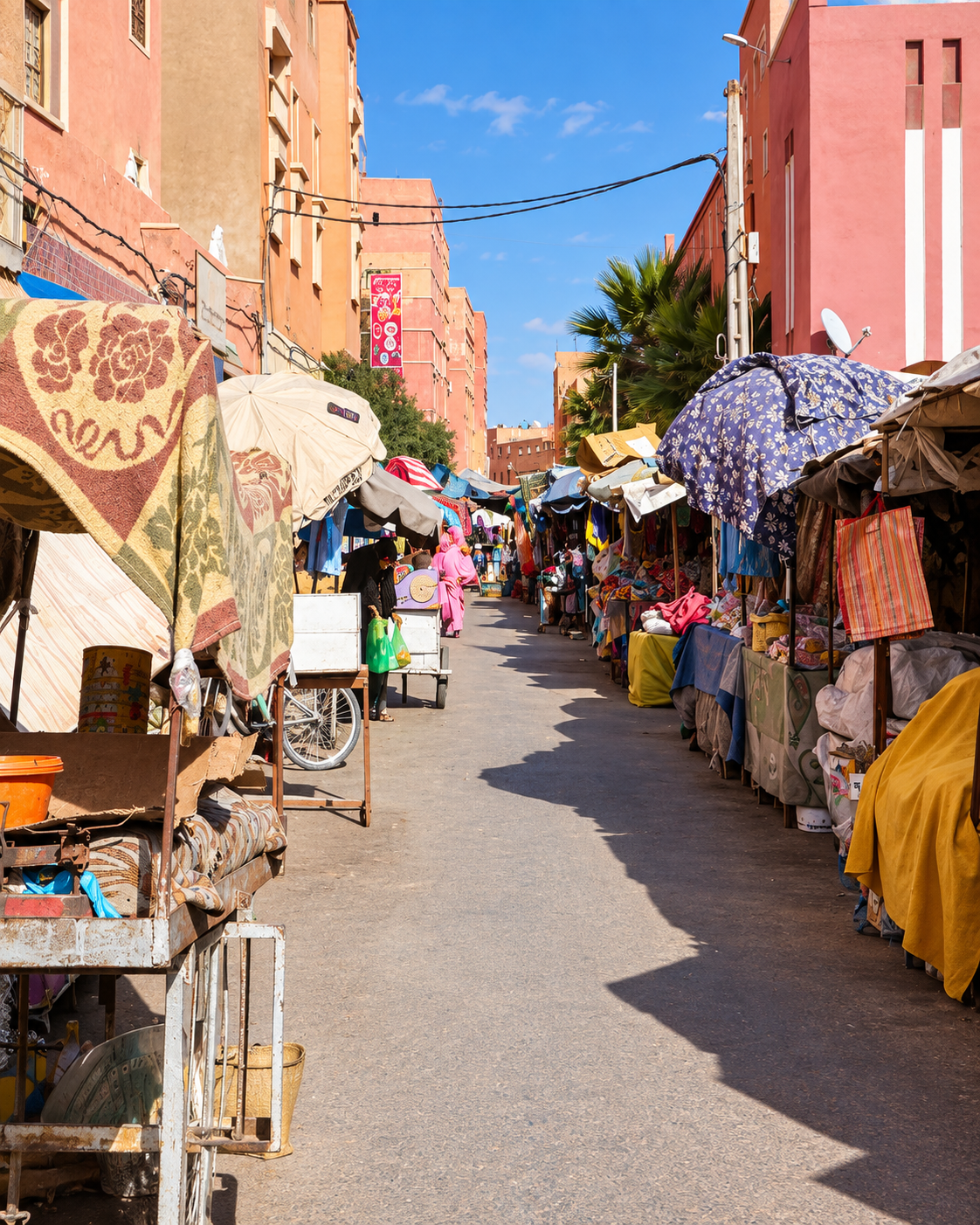
Textile stalls lining a narrow street between salmon-coloured buildings

Street texture

Doors, walls, shade, fabrics and small shops carry a quieter layer of urban identity.

Guelmim at a glance

Regional capital

Guelmim is the capital of Guelmim-Oued Noun, a southern Moroccan region where administrative life, road infrastructure, coast, oases and desert-facing landscapes meet.

Market city

The weekly livestock and camel market remains one of the city's clearest cultural markers. Visit with patience, respect and permission before photographing people or animals.

Oasis context nearby

Tighmert, Asrir and the Wad Noun palm belt add depth to the city. They show agriculture, nomadic memory, kasbah spaces and the domestic material culture of the south.

Routes in several directions

Guelmim works well as a base or pause between Anti-Atlas routes, Sidi Ifni and Plage Blanche, Tan-Tan, Assa and the longer journeys toward Morocco's far south.

A clearer reading of the city

A city shaped by trade, oases and southern hospitality

To understand Guelmim, read the city through systems rather than isolated sights: markets, routes, water, shade, tea, textiles, oral memory and the modern role of a regional capital.

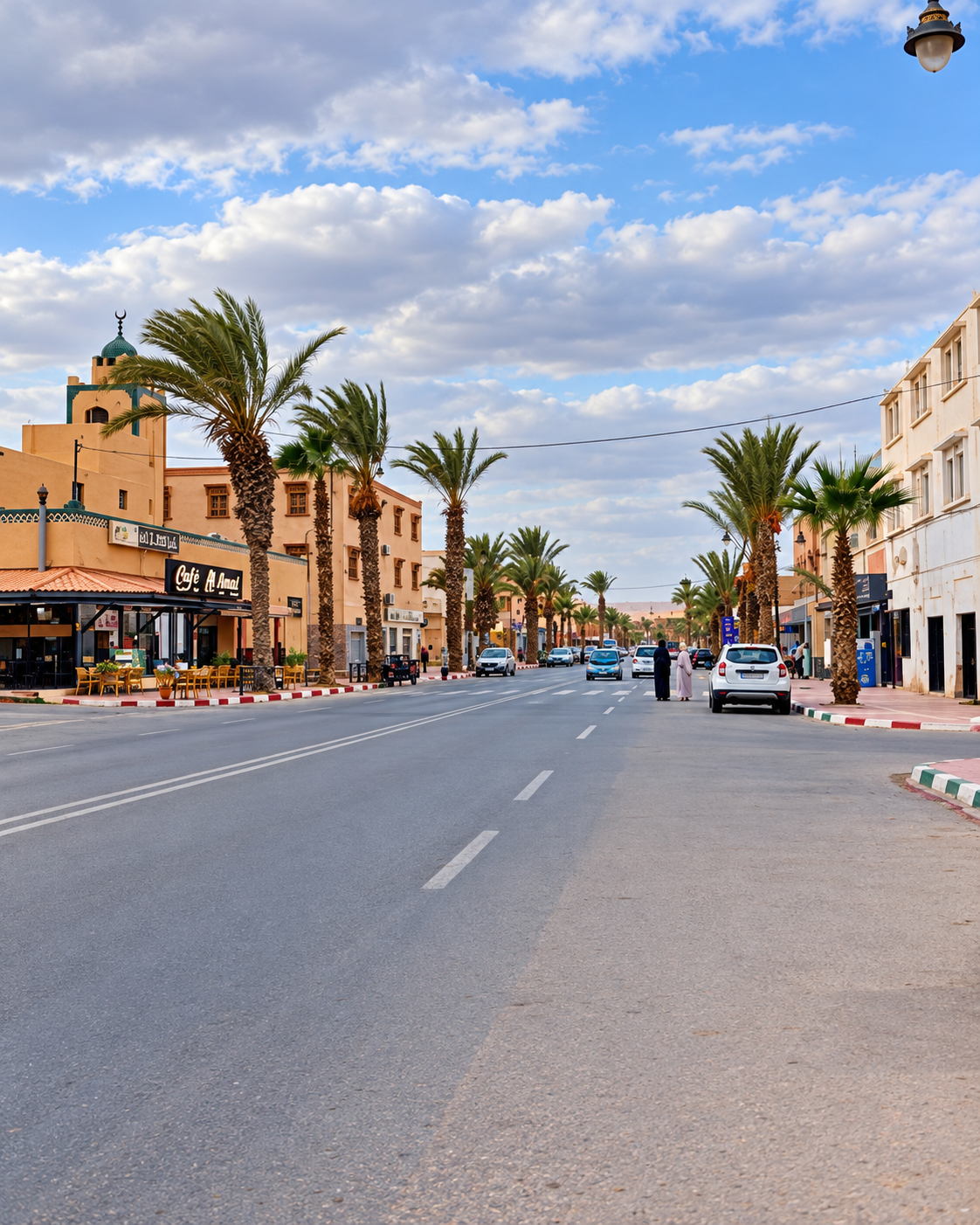
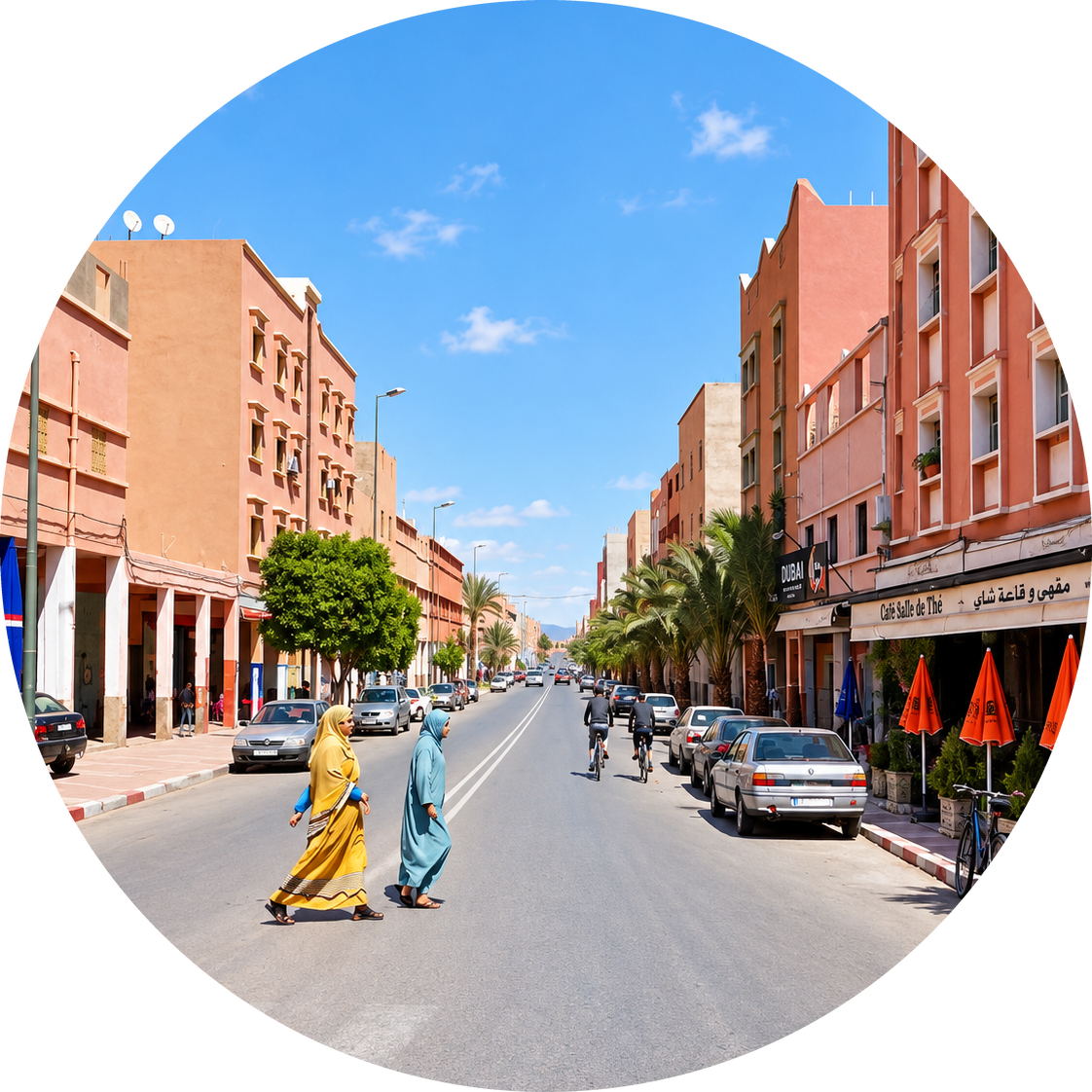
A broad palm-lined boulevard with shops and traffic in Guelmim
Layer 1

Route systems

Guelmim's geography matters. Roads toward the Atlantic, Anti-Atlas, Tan-Tan and Assa explain why the city feels practical, mobile and connected to a much wider south.

Fruit stalls and shoppers beside a market entrance in Guelmim
Layer 2

Living market city

The city's public life is grounded in trade, errands, transport, food, livestock, textiles and service streets. It is everyday movement, not a postcard facade, that gives Guelmim its force.

Colourful fabrics and clothing stalls on a busy Guelmim shopping street
Layer 3

Textiles and everyday culture

Bright fabrics, clothing stalls and practical household goods connect public trade to domestic life. Tea and hospitality give these everyday exchanges their social setting.

Landmarks & orientation

Read Guelmim through six defining places

Guelmim is not explained by one monument. These places and orientation points show how the city functions as a market, oasis and route gateway.

1
Weekly livestock and camel market

The city's best-known market tradition, especially meaningful when understood as trade, livelihood and social exchange rather than spectacle.

2
Central market streets

Shops, fabrics, produce, tea stops and transport activity give the city its lived centre and connect visitors to everyday Guelmim.

3
Tighmert Oasis

A nearby palm-grove landscape that gives the Guelmim story shade, water, kasbah memory and a slower rural counterpoint.

4
Museum of Nomadic Memory

In the Tighmert and Asrir area, this collection helps visitors read tools, utensils and objects connected to nomadic and caravan life.

5
Asrir and Wad Noun oasis belt

The palm belt around the city explains why Guelmim's identity is tied to water, gardens, date palms and seasonal movement.

6
Southern route junctions

Roads toward Sidi Ifni, Plage Blanche, Tan-Tan and Assa make Guelmim a practical hinge for wider southern itineraries.

Salmon-coloured market gateway with shoppers, stalls and a red taxi
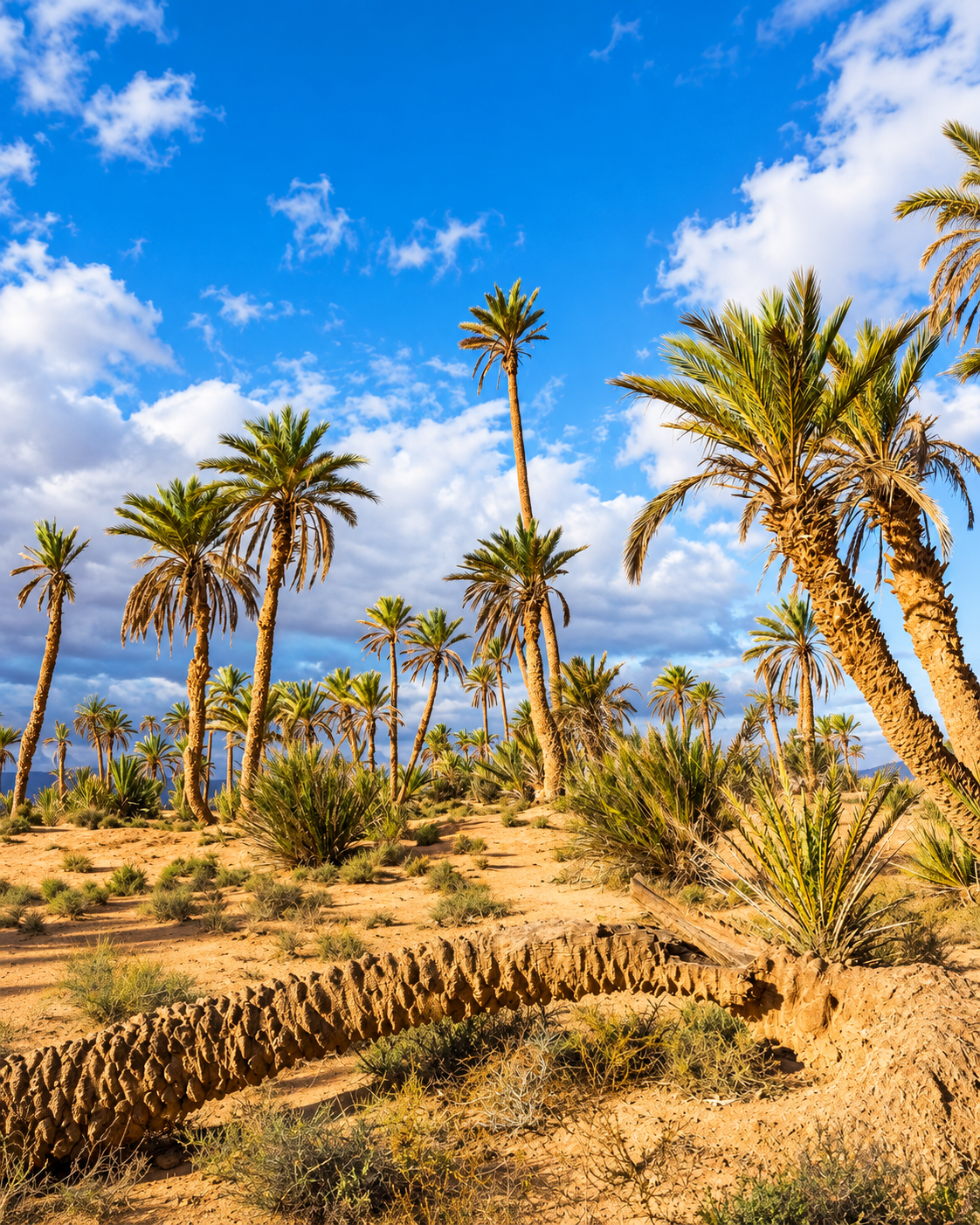
Green cultivated plots beneath date palms in the oasis belt near Guelmim

Oasis memory

Tighmert — palm gardens and nomadic memory

The most revealing extension from Guelmim is often not far away. Around Tighmert and Asrir, palm groves, kasbah spaces and the Museum of Nomadic Memory give material form to the region's route culture. Saddles, utensils, textiles, tools and domestic objects help visitors understand how mobility, hospitality and oasis life shaped the wider Wad Noun world.

  • Use the oasis as context for Guelmim, not as a separate photo stop.
  • Read objects carefully: many explain movement, storage, tea, herding and household life.
  • Confirm current opening conditions locally, especially outside high visitor periods.

Architectural reading

Three southern languages to notice

Earth, shade and enclosure

Look for thick walls, quiet thresholds, shaded interiors and streets that protect daily life from heat and glare. Guelmim's architecture is often practical before it is decorative.

Palm, reed and domestic craft

In the oasis belt, construction and household objects make use of local materials. Palm fibre, wood, woven surfaces, pottery and metalwork connect architecture to everyday maintenance.

Routes as urban form

The city's roads, markets, taxi stands and service edges are part of its design. Movement is not background noise here; it is one of the main ways Guelmim explains itself.

Visual atmosphere

Desert light, market texture and oasis calm

Nearby highlights

Oasis, granary and Atlantic extensions

Guelmim's best nearby extensions each change the reading of the city: Tighmert and Asrir for oasis and nomadic memory, Amtoudi for fortified granary architecture in the Anti-Atlas, and Sidi Ifni or Plage Blanche for the meeting of desert routes and Atlantic space.

Tighmert and Asrir

Palm groves, kasbah spaces and the Museum of Nomadic Memory make this the most natural first extension from Guelmim. Go slowly and treat it as cultural context, not a quick detour.

Date palms and earthen irrigation plots in the oasis belt near Guelmim

Amtoudi

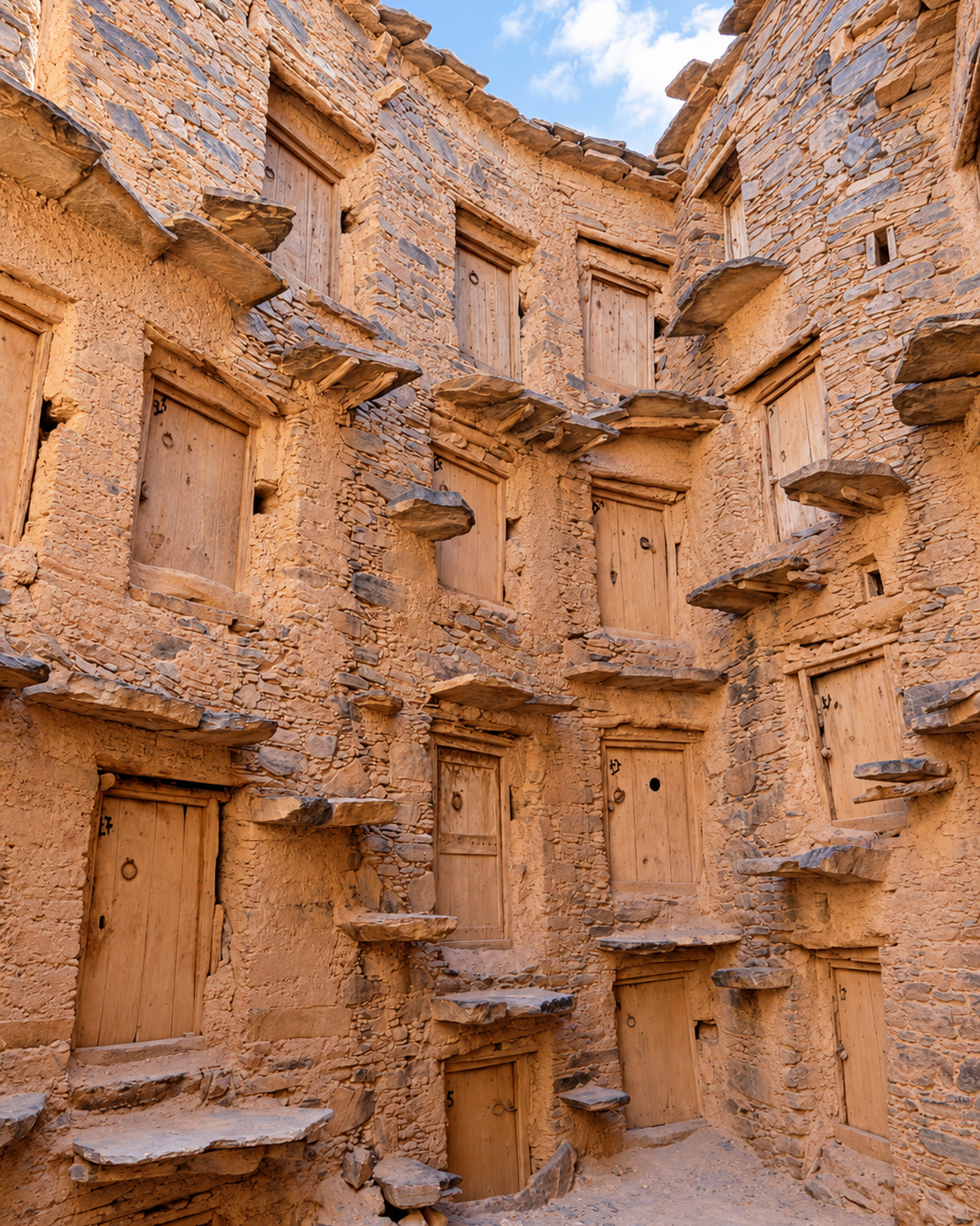
Amtoudi is known for its Anti-Atlas setting and fortified collective granary heritage, especially Agadir Id Aissa. It belongs to a fuller day of mountain and oasis reading.

Stacked wooden storage doors and stone ledges inside an Amtoudi collective granary

Sidi Ifni and the Atlantic

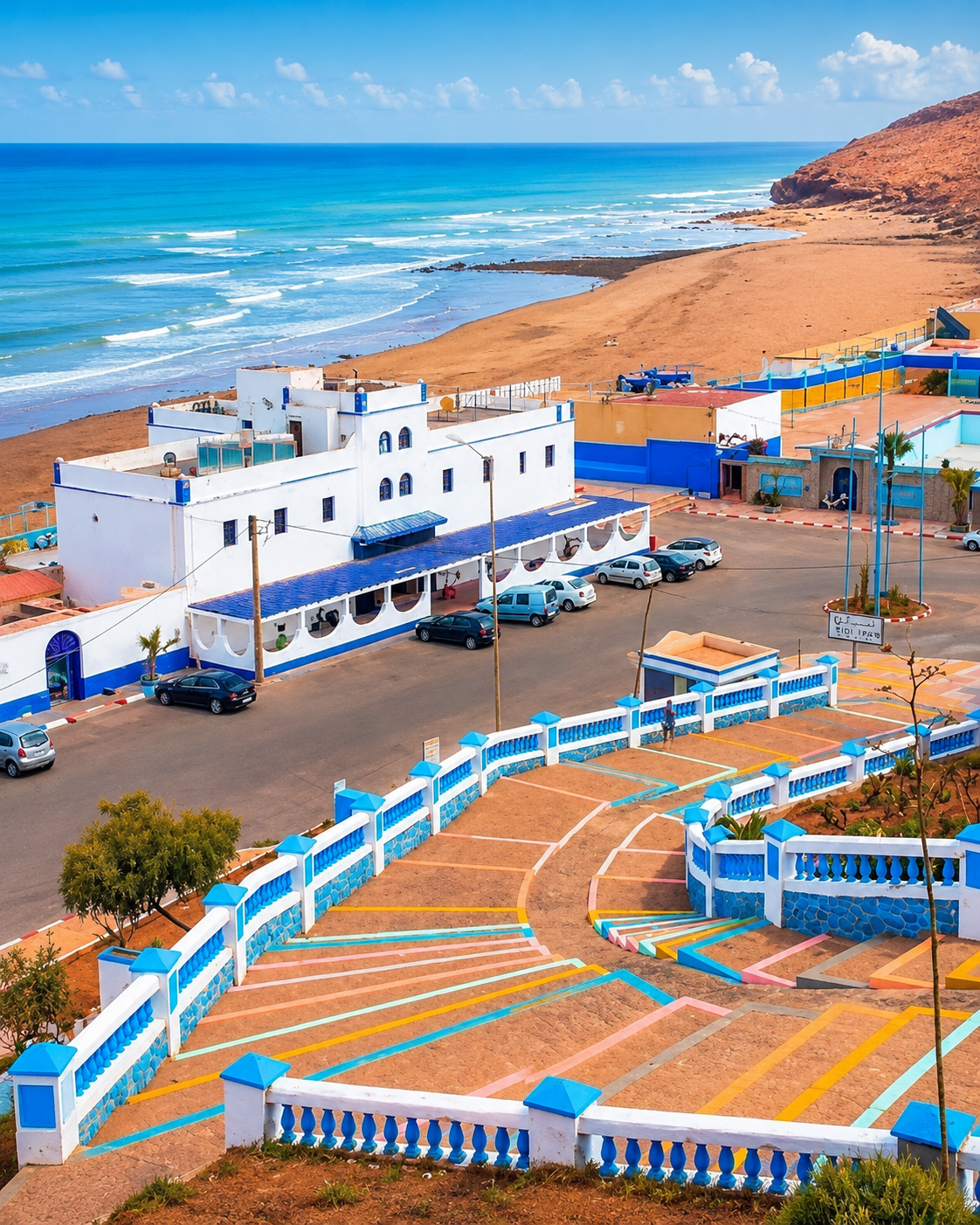
West of Guelmim, Sidi Ifni brings blue-and-white streets, seafront terraces and Atlantic views. Plage Blanche is a separate coastal extension that deserves its own route planning.

Blue and white seafront terraces overlooking Sidi Ifni beach and the Atlantic
Travel note: market timing, access rules, road conditions, opening hours, coastal tracks and local visitor arrangements can change. Check current official or trusted local information before travelling.

Practical orientation

How to experience Guelmim well

  • If the market is a priority, plan around Saturday morning and confirm timing locally.
  • Ask permission before photographing people, traders, families or animals at the market.
  • Pair the city with Tighmert and Asrir to understand oasis and nomadic memory.
  • Treat Amtoudi, Sidi Ifni and Plage Blanche as planned extensions, not casual short stops.
  • Expect practical southern-city rhythm: transport, shops, heat, road distances and changing opening hours matter.

A strong first visit

Pedestrians and parked vehicles on a palm-lined central street in Guelmim

Begin with the central market streets, give a Saturday morning to the livestock and camel market if timing allows, then continue to Tighmert and Asrir for oasis context. Save Amtoudi or the Atlantic route for a separate, properly planned extension.

Elevated view over Guelmim city centre, palm-lined roads and warm-coloured buildings

Go deeper with Exotic Morocco

Guelmim - Premium Visual City Guide

Continue with a visual guide approach designed to connect the city's market identity, oasis context, route geography, Sahrawi hospitality, practical orientation and nearby southern landscapes into one carefully structured journey.

✓ Regional context✓ Market orientation ✓ Oasis culture✓ Tea & local life ✓ Practical travel guidance✓ Nearby highlights

Continue the journey

Continue the journey through Guelmim

Look beyond the phrase Gateway to the Sahara and encounter a city of markets, oases, southern routes, hospitality and patient orientation.