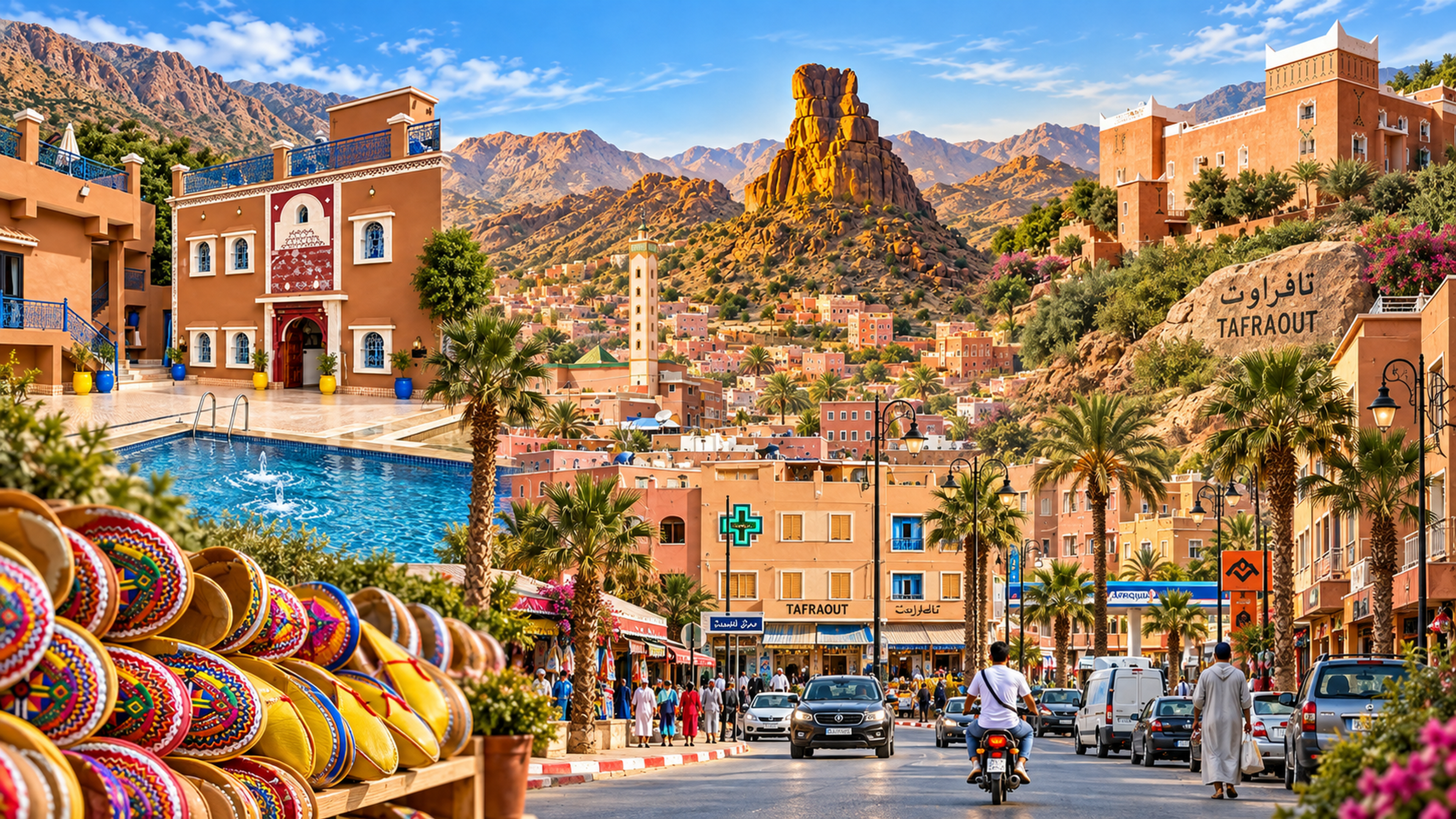
Editorial collage of Tafraout streets, granite scenery, architecture and embroidered slippers

Anti-Atlas mountain town

Tafraout Pink granite, Ammeln villages and almond-blossom valleys

Tafraout brings the Anti-Atlas into focus: rose-coloured granite, Amazigh villages, almond terraces, lively markets and painted boulders. Use the town as a base for Ammeln Valley walks, village visits and mountain roads that reward a slower pace.

Why Tafraout matters

Beyond the postcard of pink rocks

Tafraout matters because it changes the way Morocco is read. Here, the main monument is not a single building but a whole mountain setting: granite boulders, dry-stone fields, palms, almond trees, modest town streets and villages held close to the slopes of the Ammeln Valley.

The town is a natural base for the central Anti-Atlas. Visitors come for walking, cycling, climbing, village routes, almond blossom, Aguerd Oudad, the Painted Rocks and the road toward Ait Mansour. The experience is quieter than Morocco’s famous urban centres, but it is never empty.
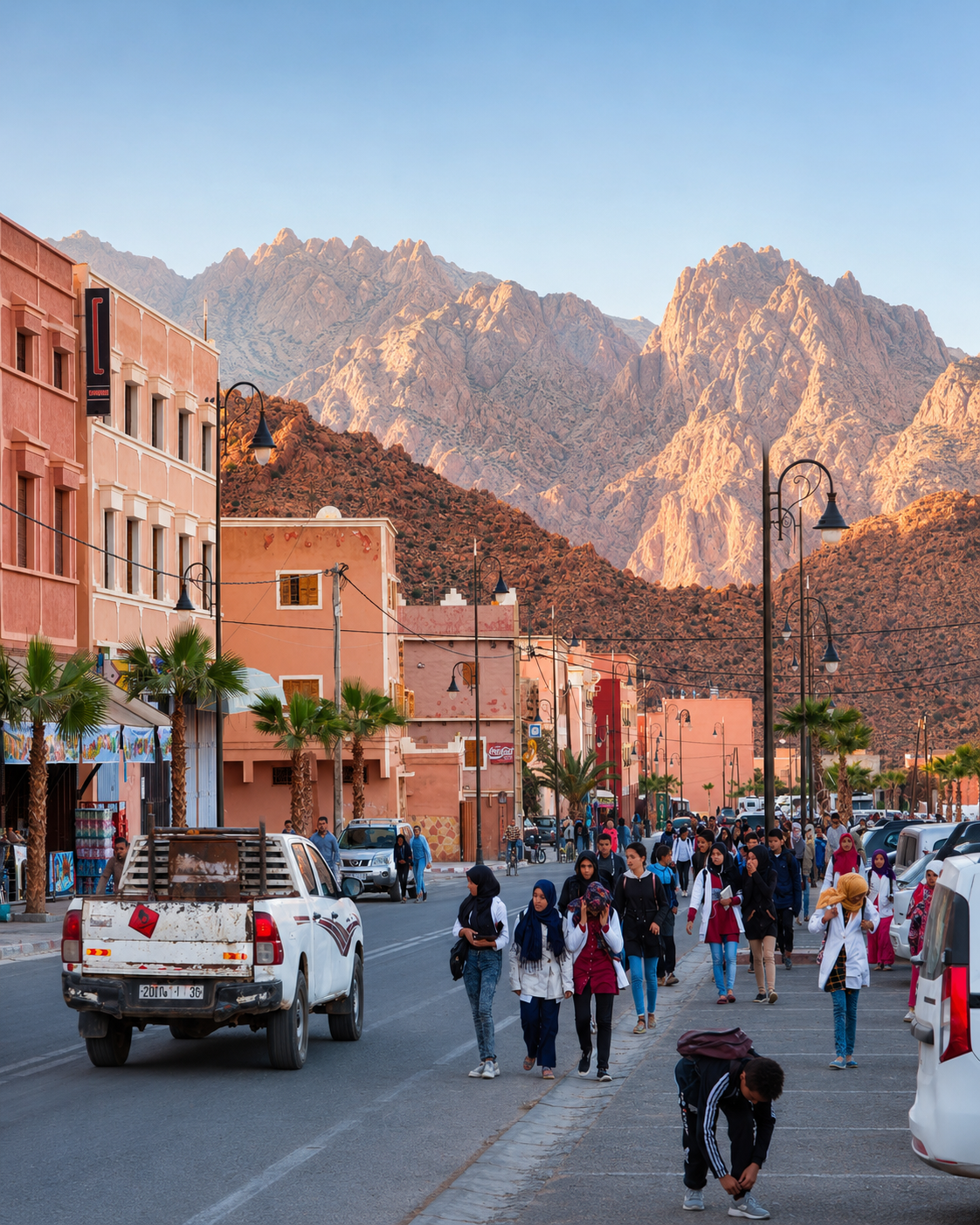
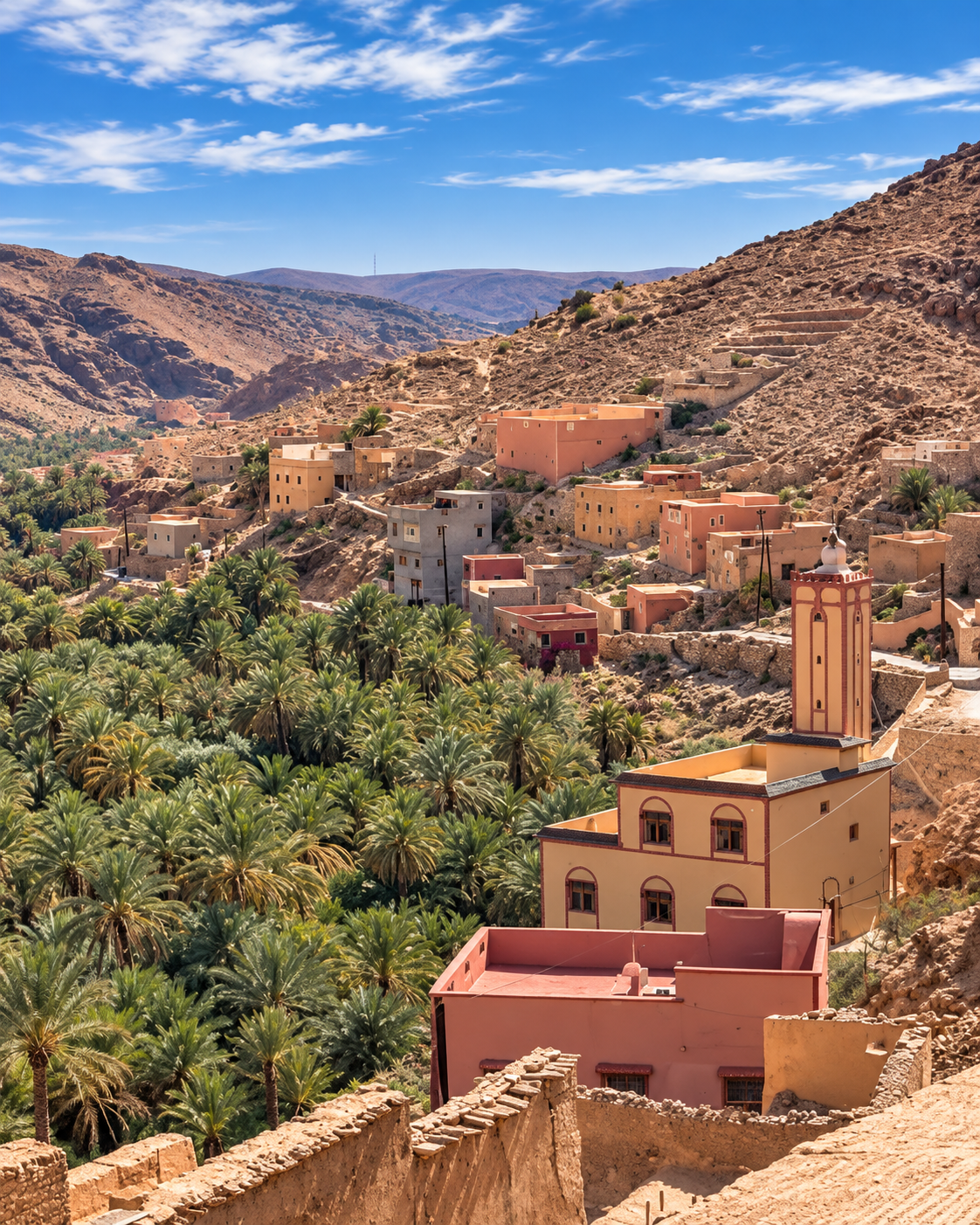
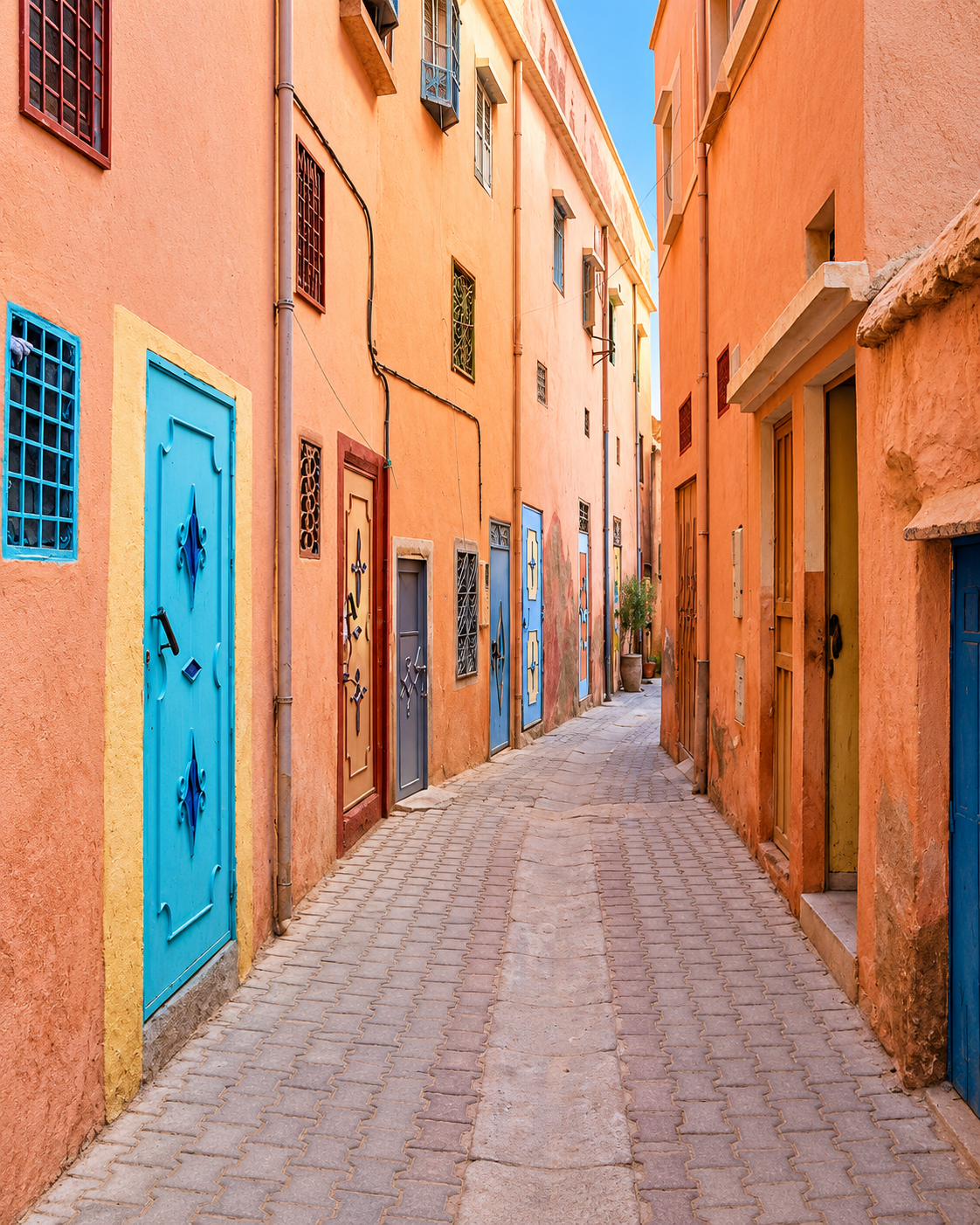
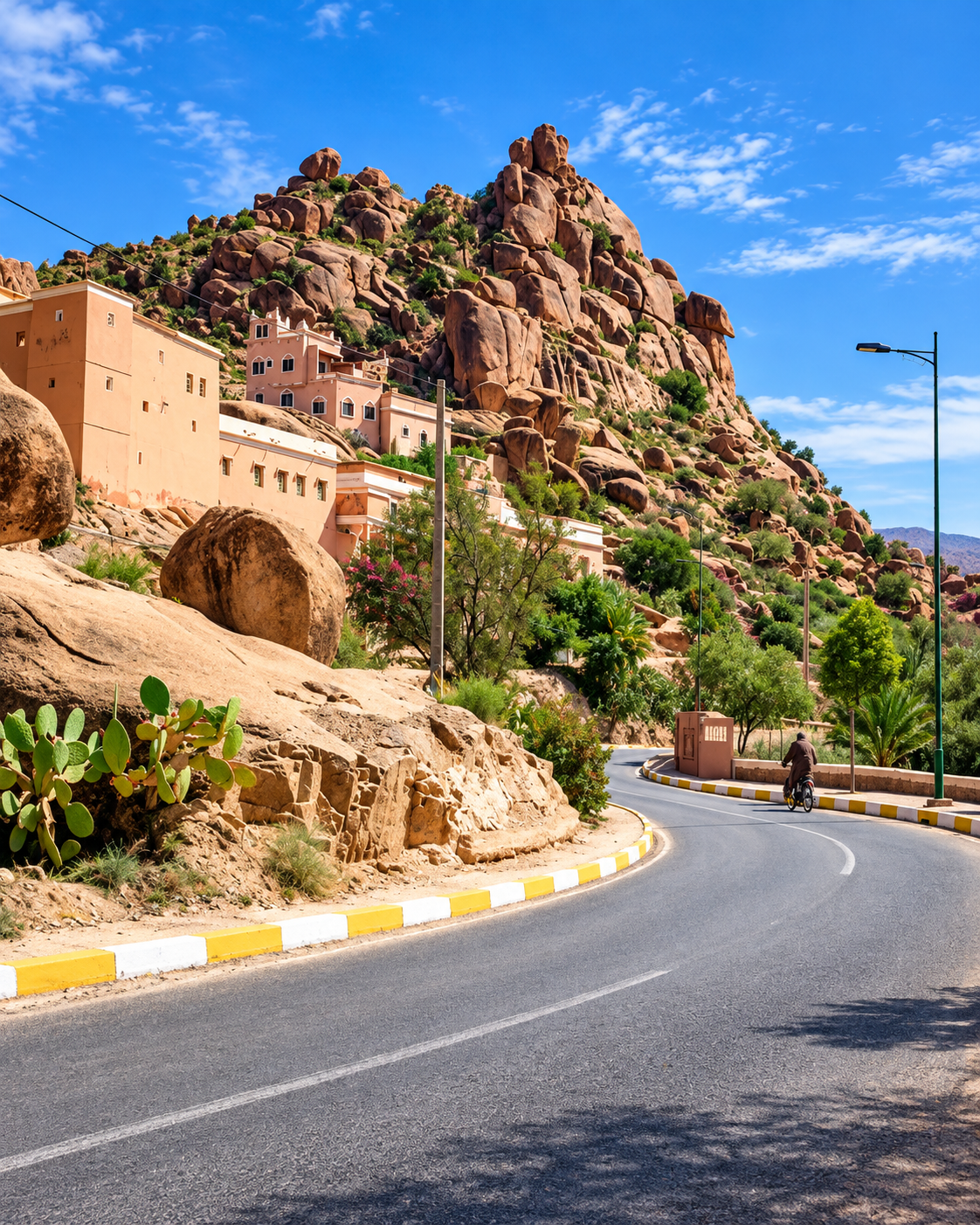
Pedestrians and rose-coloured buildings beneath the mountains in Tafraout

A town shaped by landscape

Tafraout is best understood by scale: small houses, large rocks, valley agriculture, mountain light and routes that move from town streets into open terrain.

EXPLORE

Tafraout

Historical orientation

From mountain settlement to Anti-Atlas base

Tafraout should not be forced into a dynastic-capital story. Its depth is more local and regional: Amazigh settlement, valley agriculture, dry-stone terraces, trade routes, seasonal rhythms and a landscape that has become important for hikers, cyclists, climbers and slow travellers.

01Long before tourism

Amazigh mountain life

Villages around Tafraout and the Ammeln Valley developed with the terrain, using stone, earth, terrace walls, palms, almond trees and careful water knowledge to make life possible in a dry mountain environment.

02Valley culture

Farming, markets and migration

Almonds, argan products, small markets and family links across Morocco give the area a cultural life that reaches beyond the visible size of the town itself.

031984

Painted Rocks

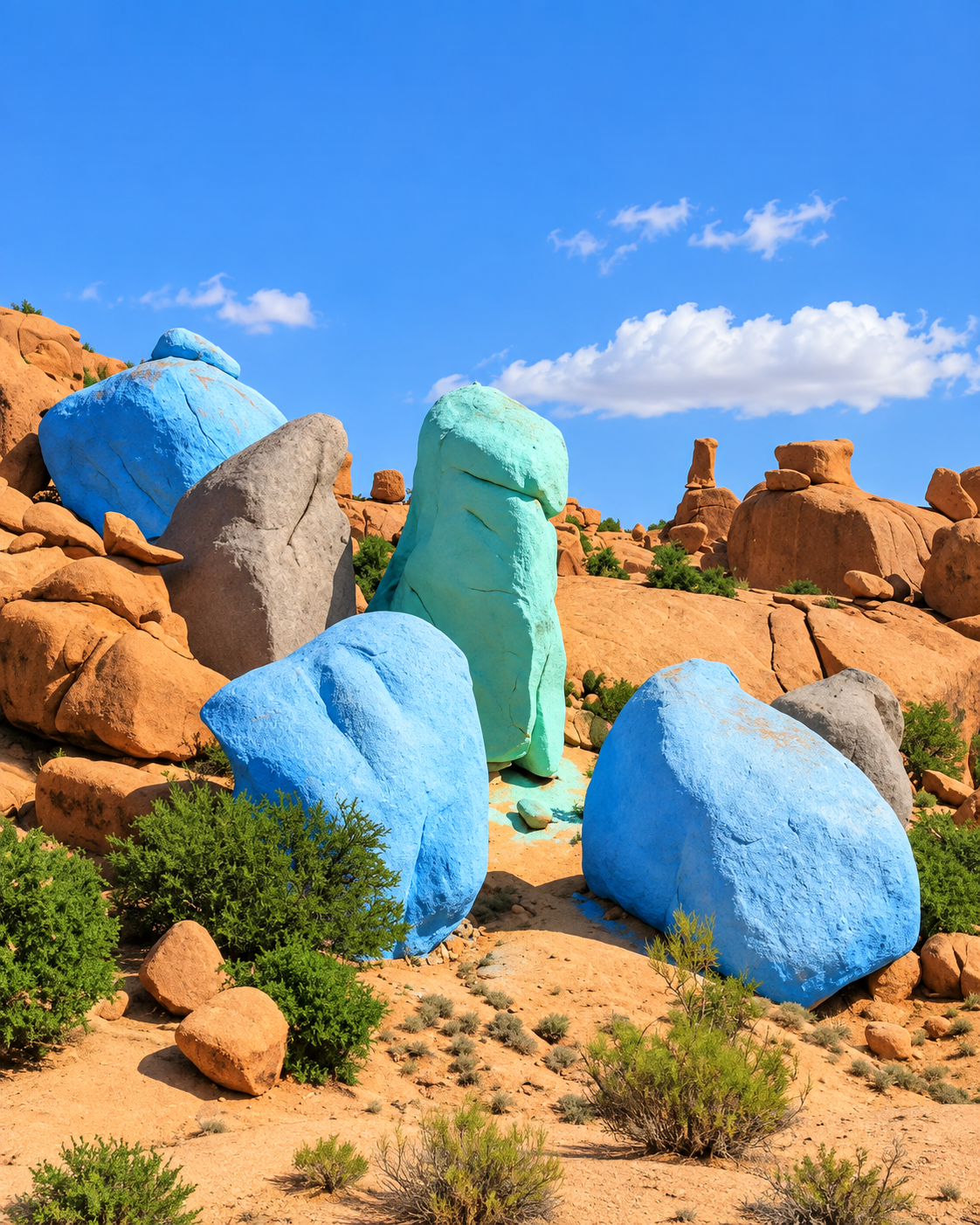
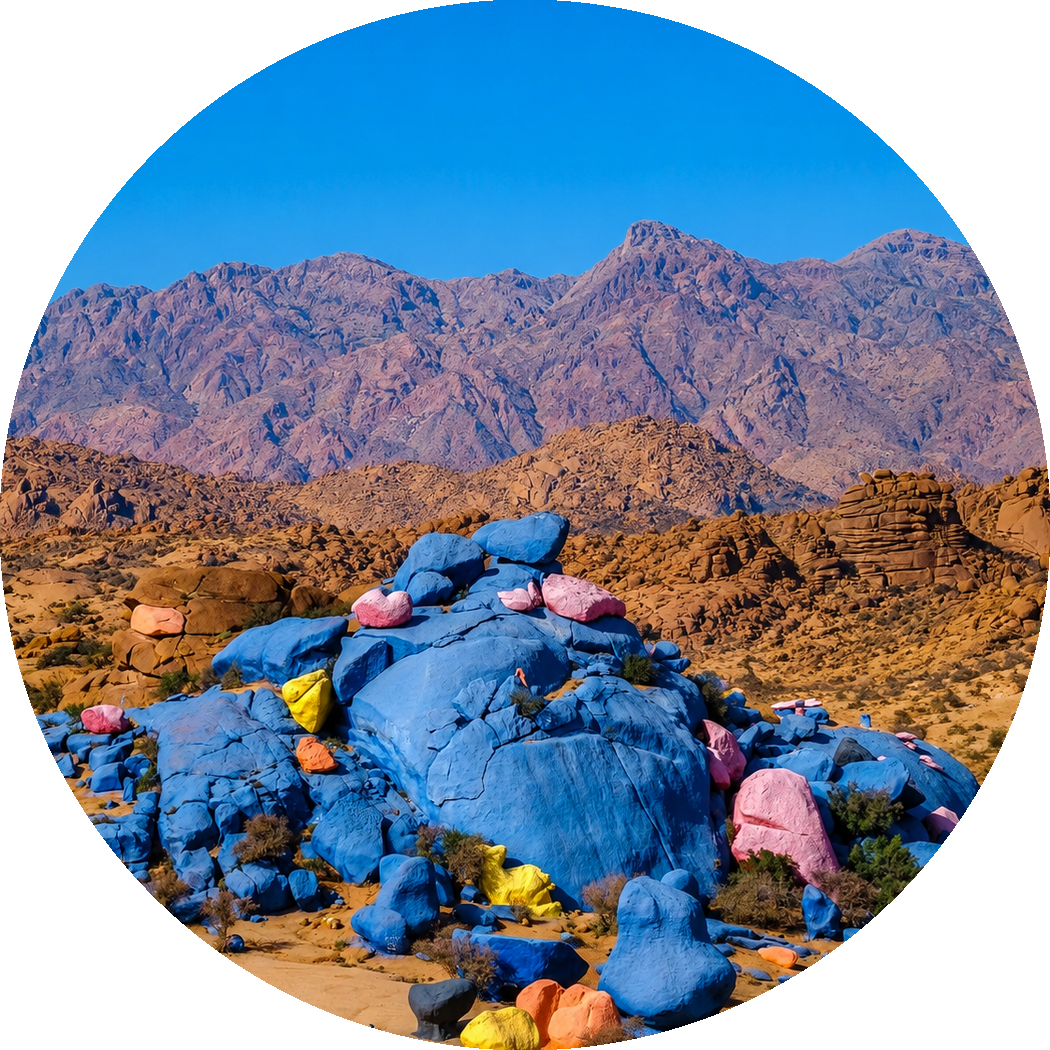
Near Aguerd Oudad, Belgian artist Jean Verame painted rounded granite boulders in strong colours, creating a modern landscape intervention that remains one of Tafraout’s most discussed sights.

04Today

Outdoor gateway

Tafraout now anchors journeys into the Anti-Atlas: Ammeln Valley walks, Jbel Lkest routes, bike loops, Ait Mansour Gorge, Tizourgane and slow roads between the Souss, mountains and coast.

A visual bridge

Three glimpses of village life, granite and colour

These views explain why Tafraout needs a different pace. The town is read through season, geology and settlement rather than through a checklist of monuments.

Village houses and palms below dry mountain slopes near Tafraout

Valley villages

Houses, palms and cultivated ground bring a human scale to the mountain landscape around Tafraout.

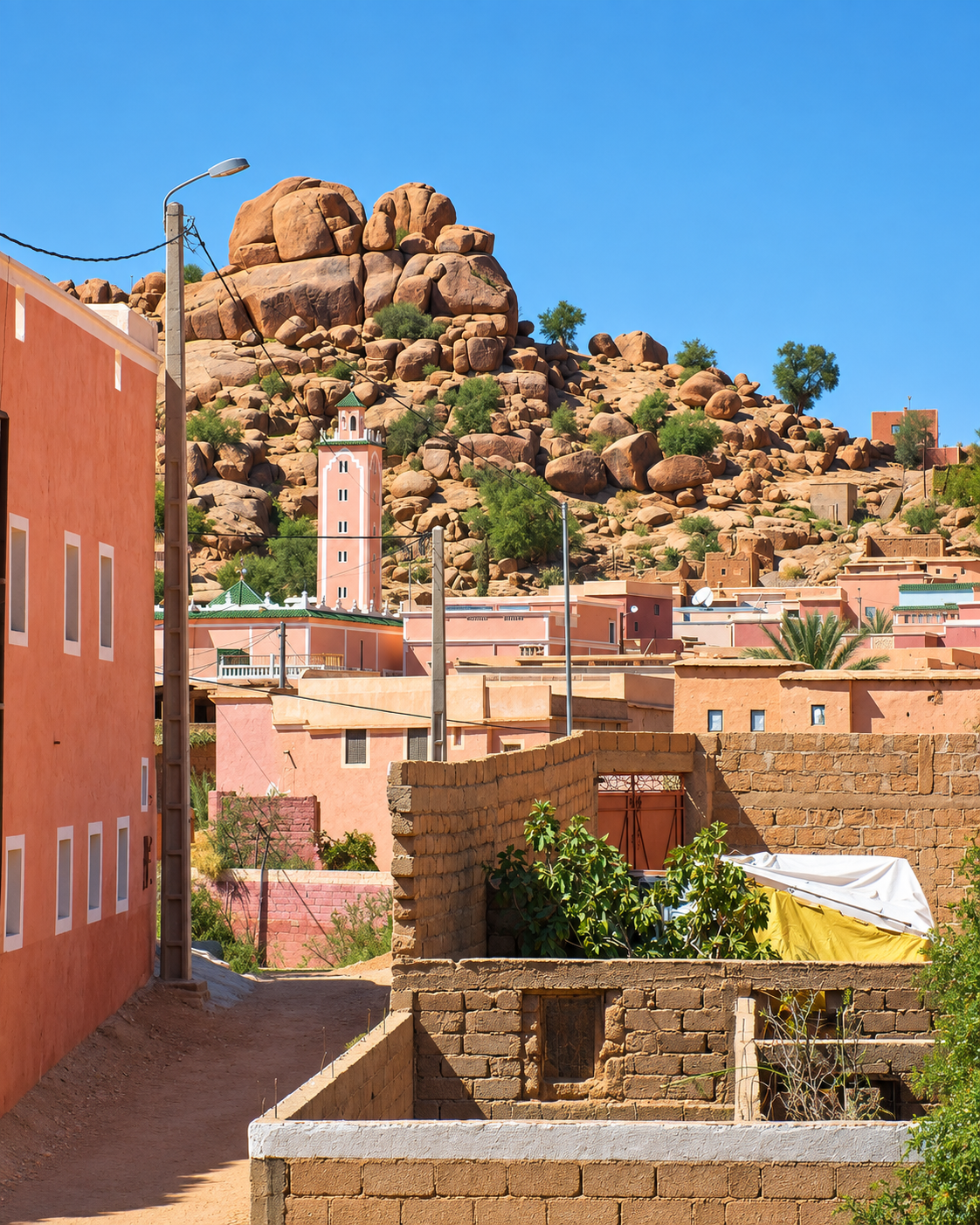
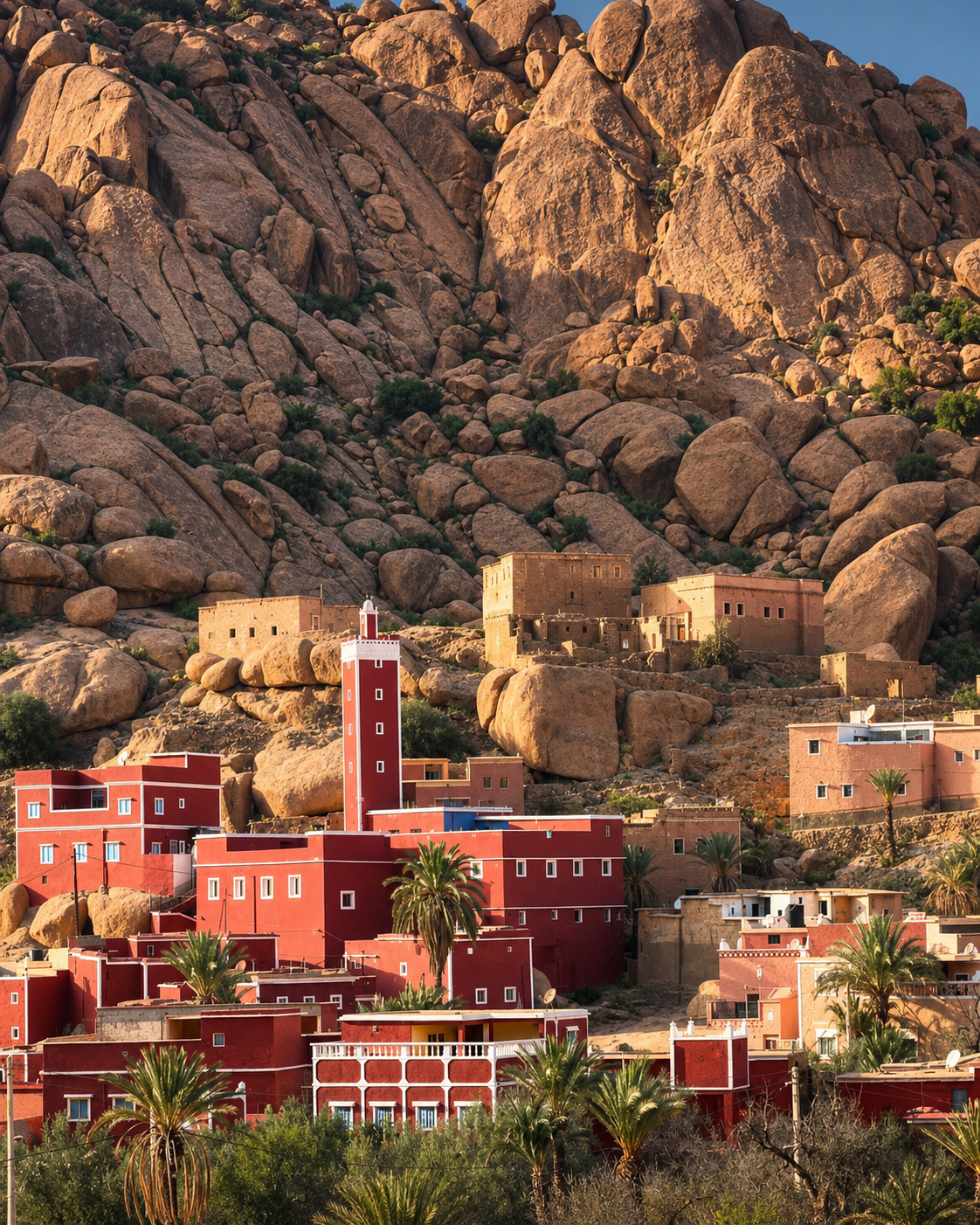
Rose-coloured houses and a minaret beneath rounded granite boulders

Granite silhouettes

Rounded boulders and named rock forms turn the surrounding slopes into a natural orientation map.

Blue, turquoise and pink painted boulders near Tafraout

Modern intervention

The Painted Rocks are not ancient heritage; they are a bold contemporary mark inside an older landscape.

Tafraout at a glance

Anti-Atlas setting

Tafraout sits in a mountain world of rose granite, arid slopes, palms and almond trees. The landscape is not background decoration; it is the main structure of the visit.

Ammeln Valley context

The villages and terraces of the Ammeln Valley give the town its wider human frame. This is where walking, viewpoints, seasonal blossom and village architecture begin to make sense together.

Seasonal identity

February is associated with almond blossom, but exact timing depends on weather and local conditions. The best planning is flexible rather than fixed to one promised date.

Outdoor gateway

Painted Rocks, Aguerd Oudad, Ait Mansour, Jbel Lkest and Anti-Atlas road routes make Tafraout a base for slow exploration rather than a quick stop.

A clearer reading of the city

A town shaped by granite, valley life and route culture

To understand Tafraout well, read three layers together: the physical landscape, the villages and terraces around the town, and the small-scale culture of markets, walking routes and seasonal movement.

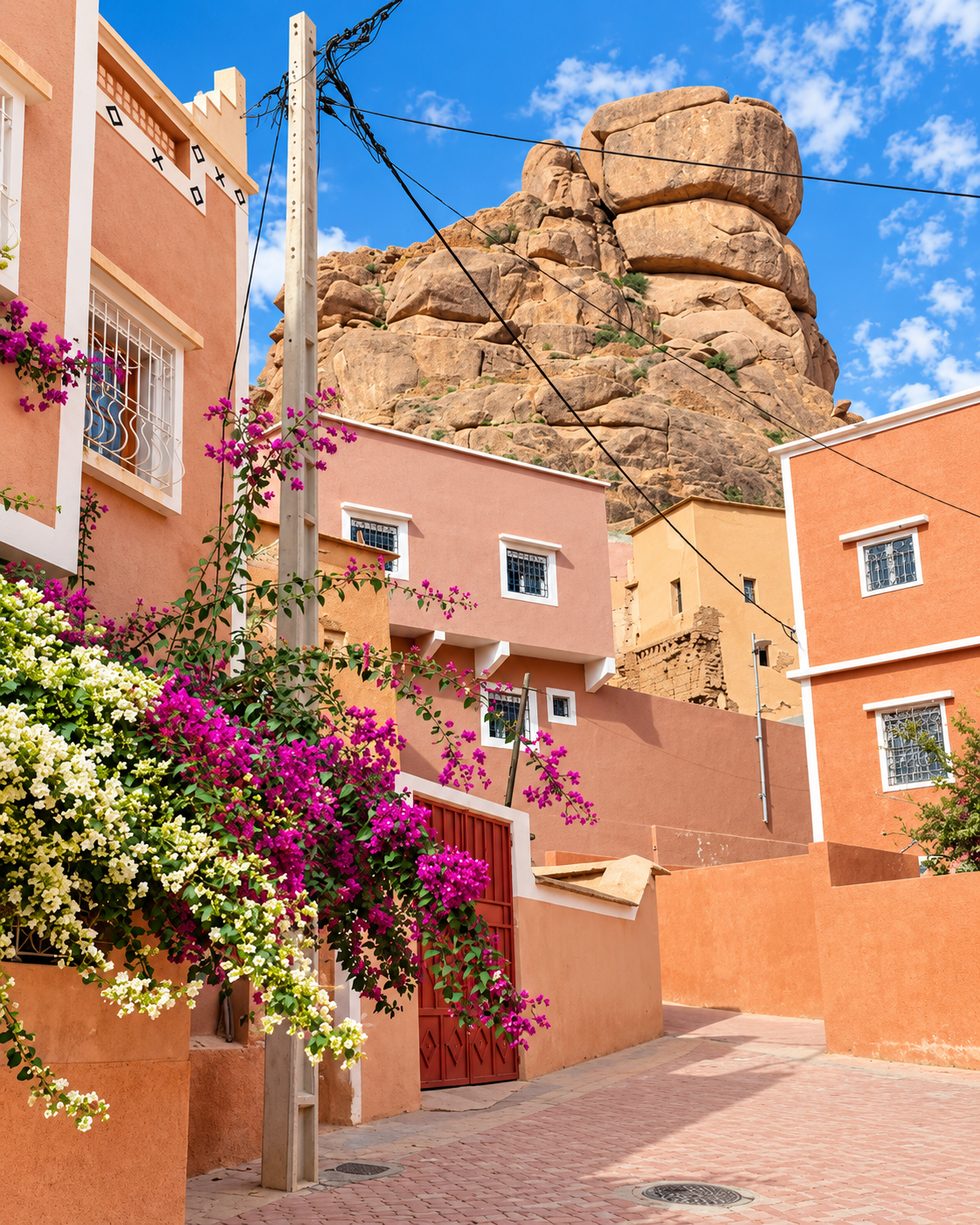
A quiet lane with rose-coloured walls and granite boulders above the houses
Layer 1

Granite settlement

The town and nearby villages do not dominate the rock. They sit among it, borrowing colour, scale and shelter from the rounded boulders and dry slopes of the Anti-Atlas.

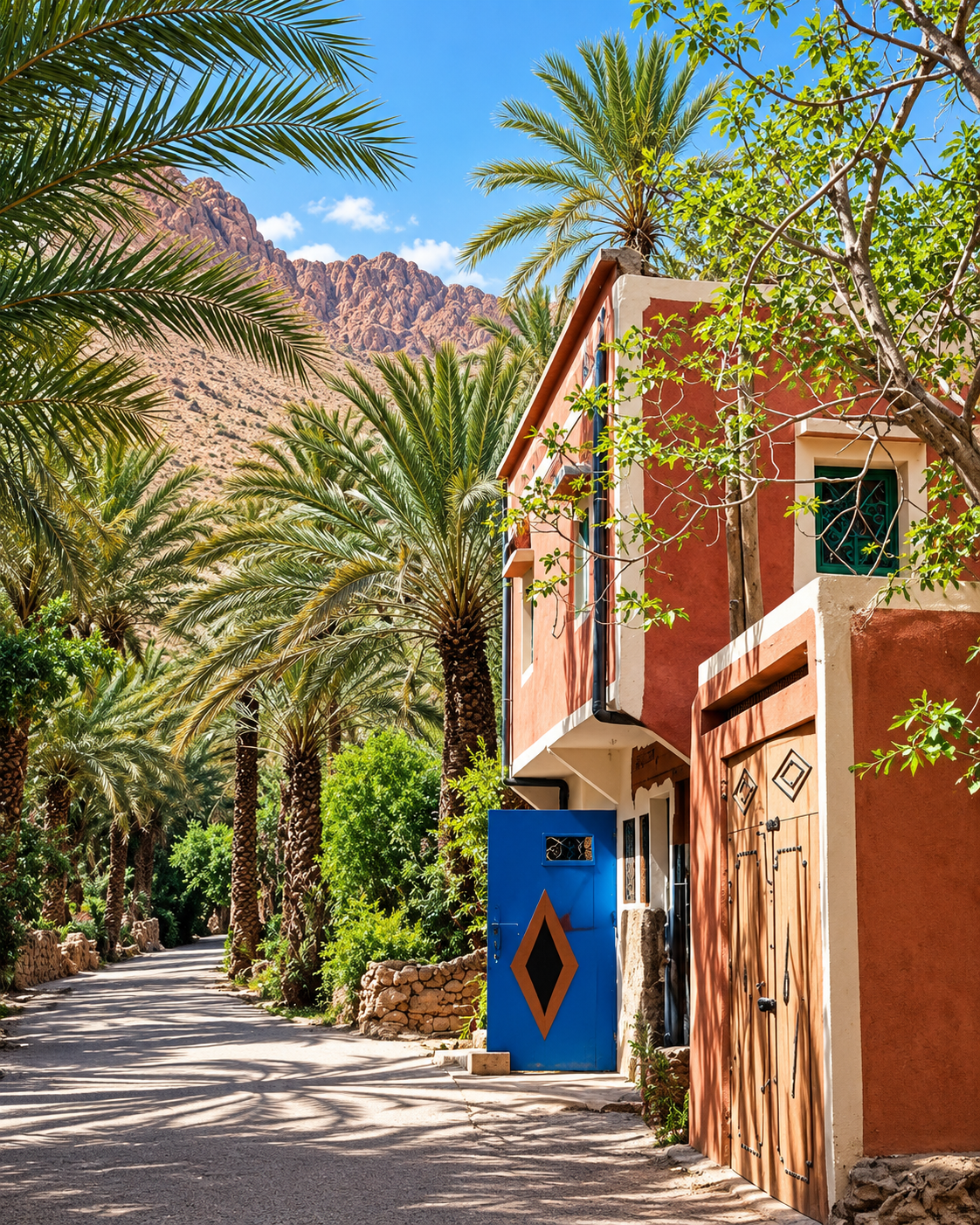
Palms beside a village house and a shaded lane in the Tafraout area
Layer 2

Valley agriculture

Almond trees, palms, dry-stone walls and small cultivated plots show how the valley is organised through patience and adaptation rather than abundance.

Colourful embroidered slippers displayed close up
Layer 3

Craft and market life

Colourful embroidered slippers and everyday market goods connect the town’s streets with craft, trade and domestic life. Look closely at the materials and finishing rather than judging by colour alone.

Landmarks & orientation

Read Tafraout through six defining places

Tafraout’s landmarks are spread between town, valley and rock landscape. Treat them as an orientation system, not isolated photo stops.

1
Tafraout town centre

The practical heart for markets, cafes, accommodation, guides and the first sense of how the town sits inside the granite basin.

2
Ammeln Valley villages

A chain of villages, terraces and viewpoints that reveals the human side of the Anti-Atlas landscape around Tafraout.

3
Aguerd Oudad

A nearby village associated with the Chapeau de Napoleon rock formation and access toward the Painted Rocks.

4
Painted Rocks

A 1984 landscape artwork by Jean Verame on granite boulders near Aguerd Oudad, visually striking and deliberately debated.

5
Ait Mansour Gorge

A palm-filled canyon excursion south of Tafraout, best treated as a separate outing with time for the road and stops.

6
Jbel Lkest

The high mountain wall north of Tafraout and the Ammeln Valley, important for experienced hikers and panoramic orientation.

Painted Rocks near Tafraout, with blue boulders against the mountain backdrop
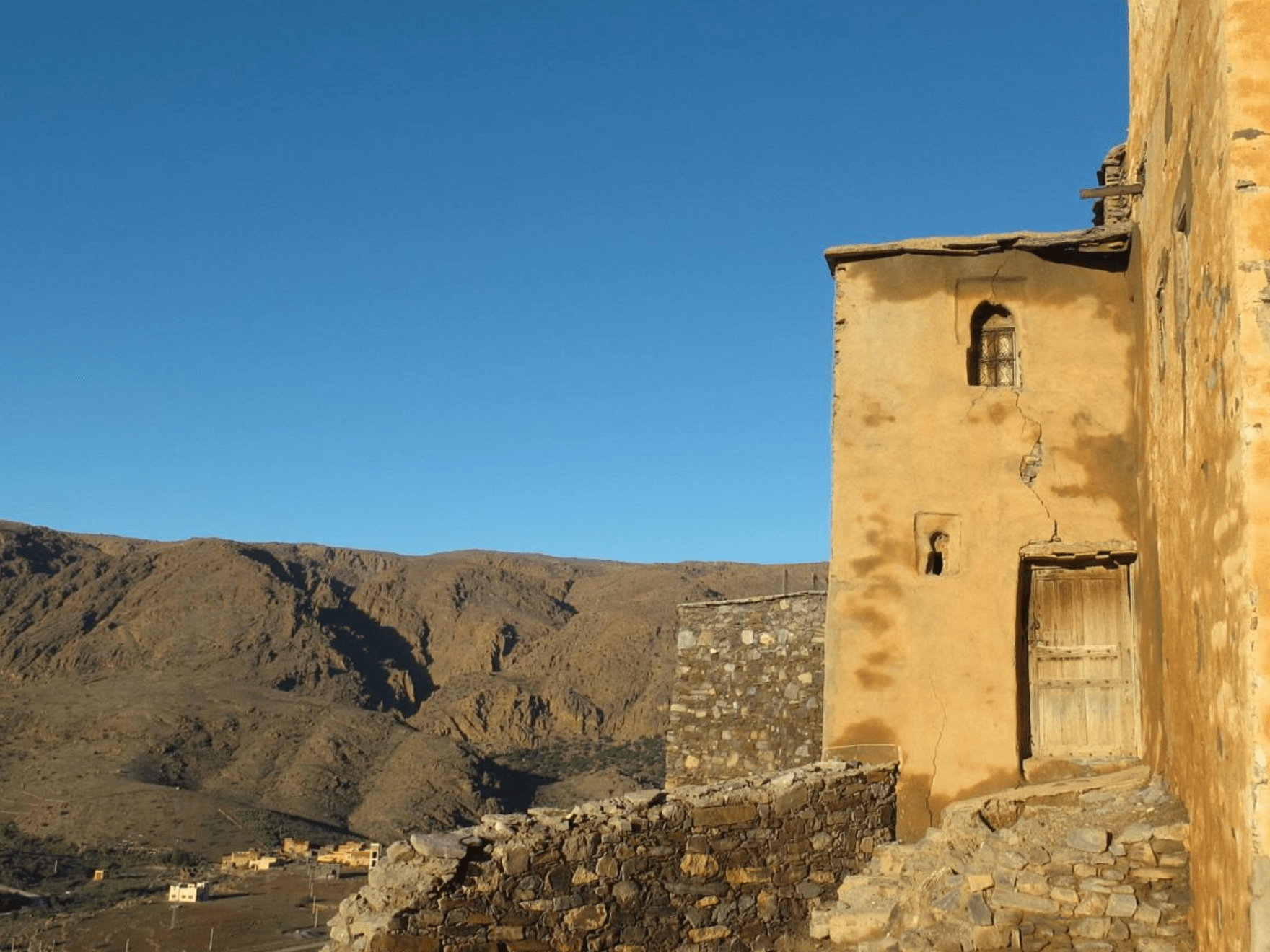
A red mosque and village houses clustered beneath large granite boulders near Tafraout

A village reading

Village architecture — shaped by rock, terrace and light

The villages around Tafraout are not stage sets. They are living places where houses, paths, terrace walls and trees meet the mountain surface directly. Their beauty is quiet, practical and deeply tied to local privacy, agriculture and family life.

  • Read the architecture through material and placement: earth tones, stone edges, low forms and slope logic.
  • Look for terrace walls, palms and almond trees as part of the built landscape, not just scenery.
  • Move respectfully in inhabited villages: avoid intrusive photography and use local guidance where useful.

Architectural reading

Three landscape languages to notice

Granite and enclosure

Tafraout speaks first through rock. Rounded boulders, slopes and mountain walls define approach, shelter and viewpoint before any building becomes the centre of attention.

Terrace and oasis logic

Dry-stone walls, palms, almond trees and small plots show a precise way of living with scarcity. The valley’s beauty is inseparable from practical care for land and water.

Colour and intervention

The Painted Rocks add a modern visual argument to an older terrain. Their colour should be read honestly: striking, unusual, debated and separate from ancient Amazigh heritage.

Visual atmosphere

Village colour, everyday streets and mountain roads

Nearby highlights

Nearby valleys, villages and mountain routes

Tafraout works best as a base for the Anti-Atlas rather than a single-point visit. The surrounding routes connect palm gorges, fortified heritage, village landscapes and mountain walking.

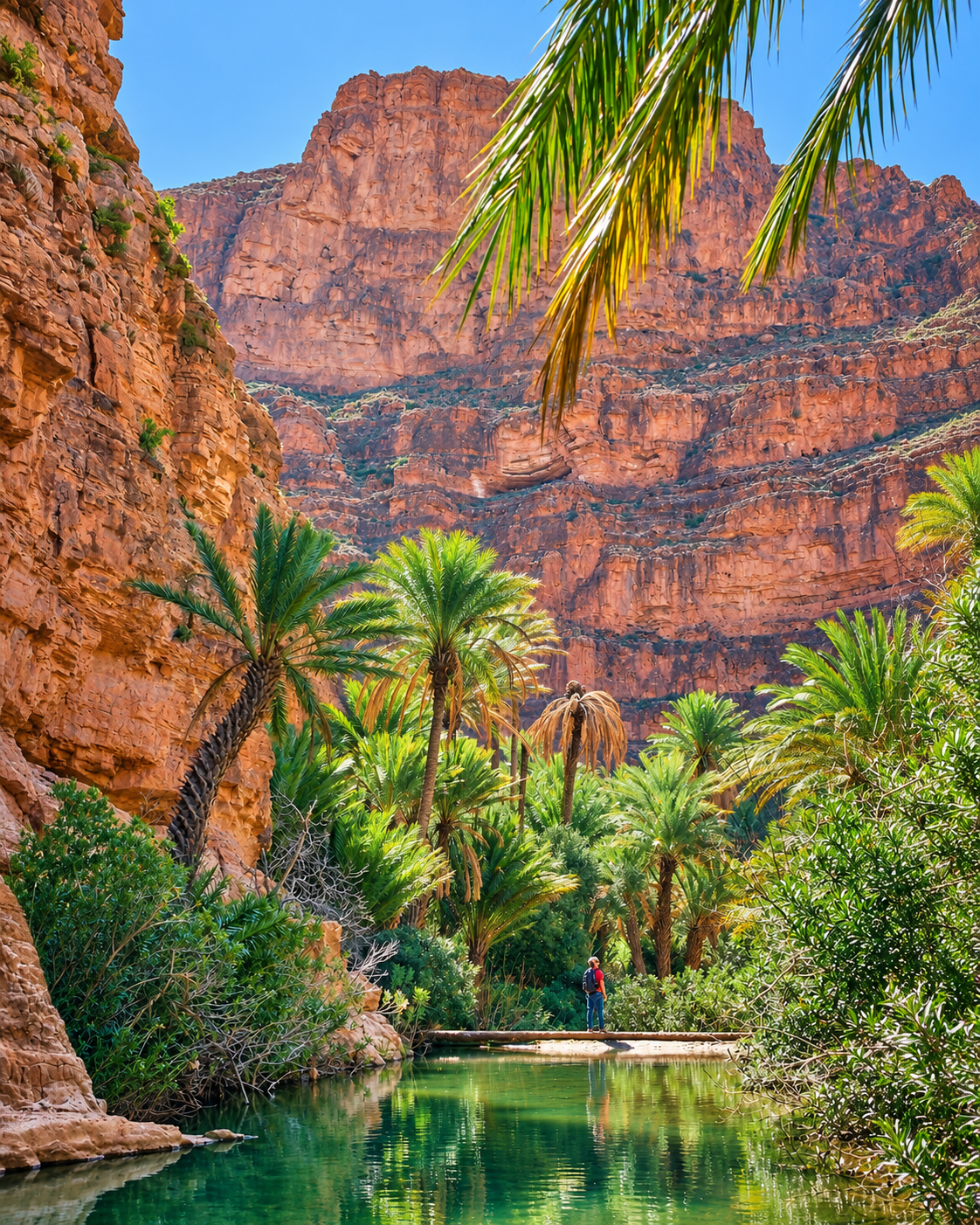
Ait Mansour Gorge

A green palm corridor inside a dry canyon landscape south of Tafraout. Allow time for the drive, changing light and quiet stops rather than treating it as a quick detour.

Palms beneath the steep canyon walls of Ait Mansour near Tafraout

Kasbah Tizourgane

A fortified hilltop village on the road between Tafraout and Ait Baha. Its stone houses, enclosed lanes and elevated setting offer a distinct reading of Anti-Atlas settlement and defence.

Stone houses and a mountain view at Kasbah Tizourgane in the Anti-Atlas

Jbel Lkest and Ammeln heights

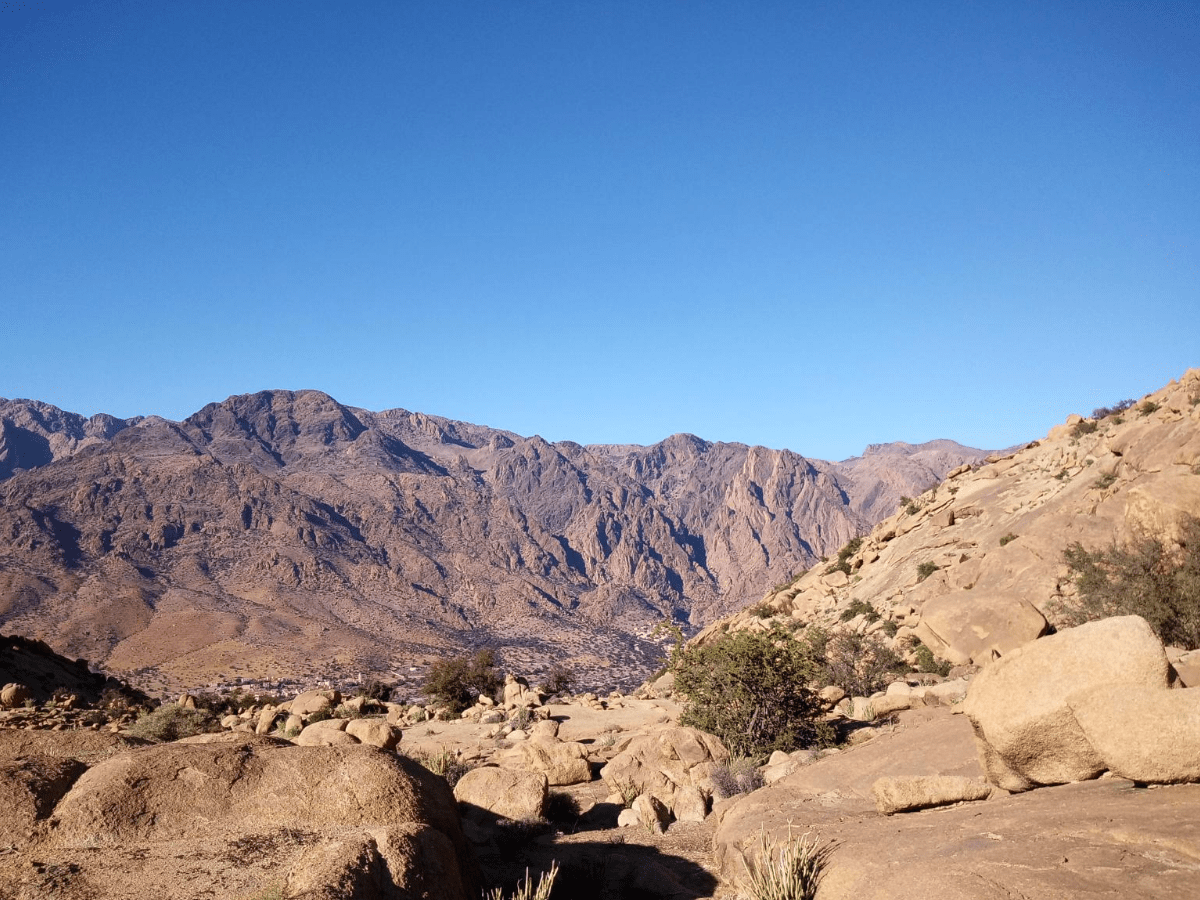
The mountain wall north of Tafraout gives experienced walkers a larger reading of the valley. Conditions, heat and route-finding matter, so local advice is important.

The mountain wall above the Ammeln Valley near Tafraout
Travel note: opening hours, access rules, restoration work, transport conditions, hiking conditions and local visitor arrangements can change. Check current official or trusted local information before travelling.

Practical orientation

How to experience Tafraout well

  • Plan around the landscape: light, heat, distance and road conditions matter more here than monument opening times.
  • September to May is generally stronger for walking and cycling; summer can be hot and exposed.
  • For almond blossom, keep February plans flexible because bloom and festival timing can shift with weather and local organisation.
  • Use Tafraout as a base for separate outings to Ammeln, Aguerd Oudad, Painted Rocks and Ait Mansour.
  • Bring water, sun protection and respect for village privacy, especially on walks through inhabited places and fields.

A strong first visit

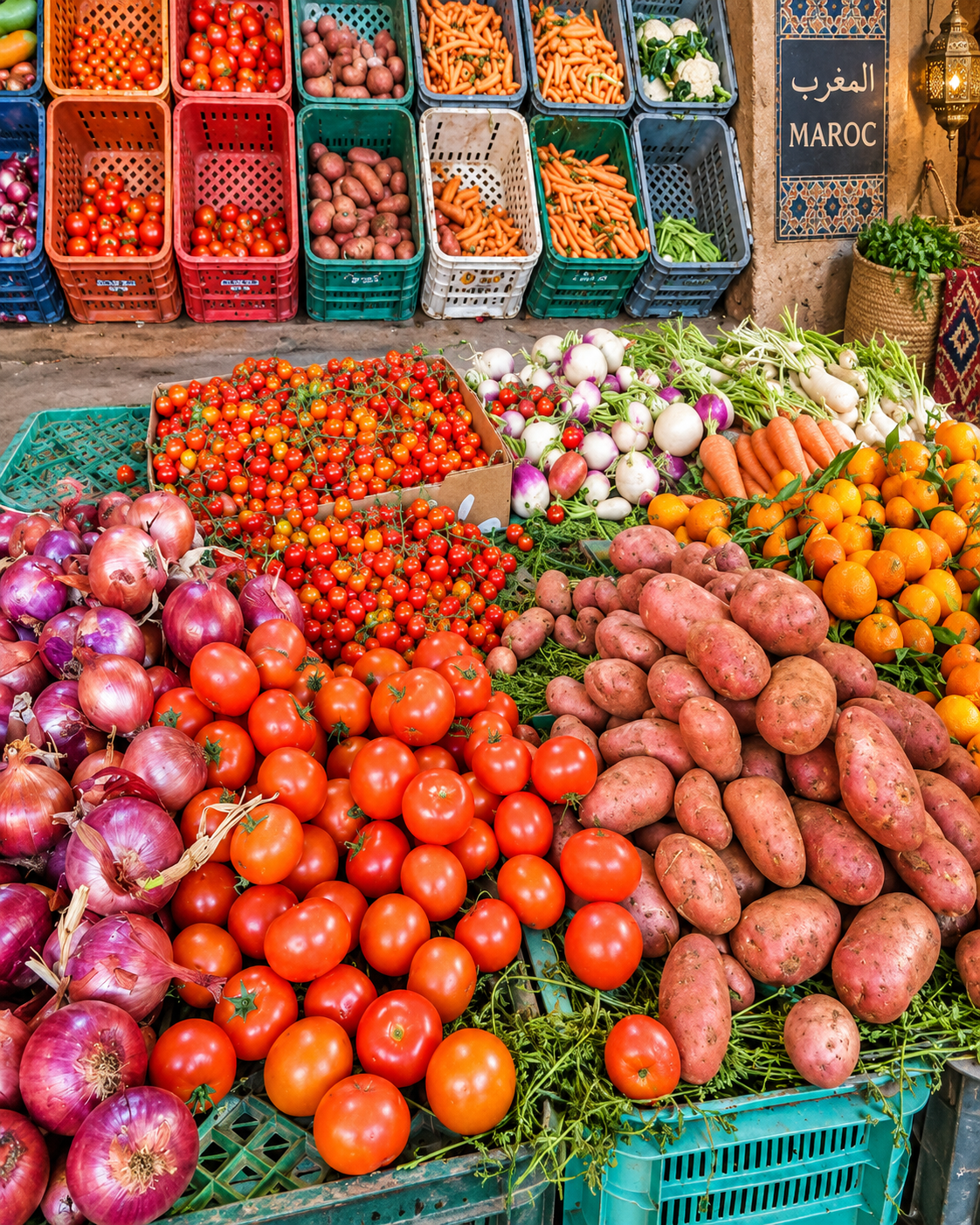
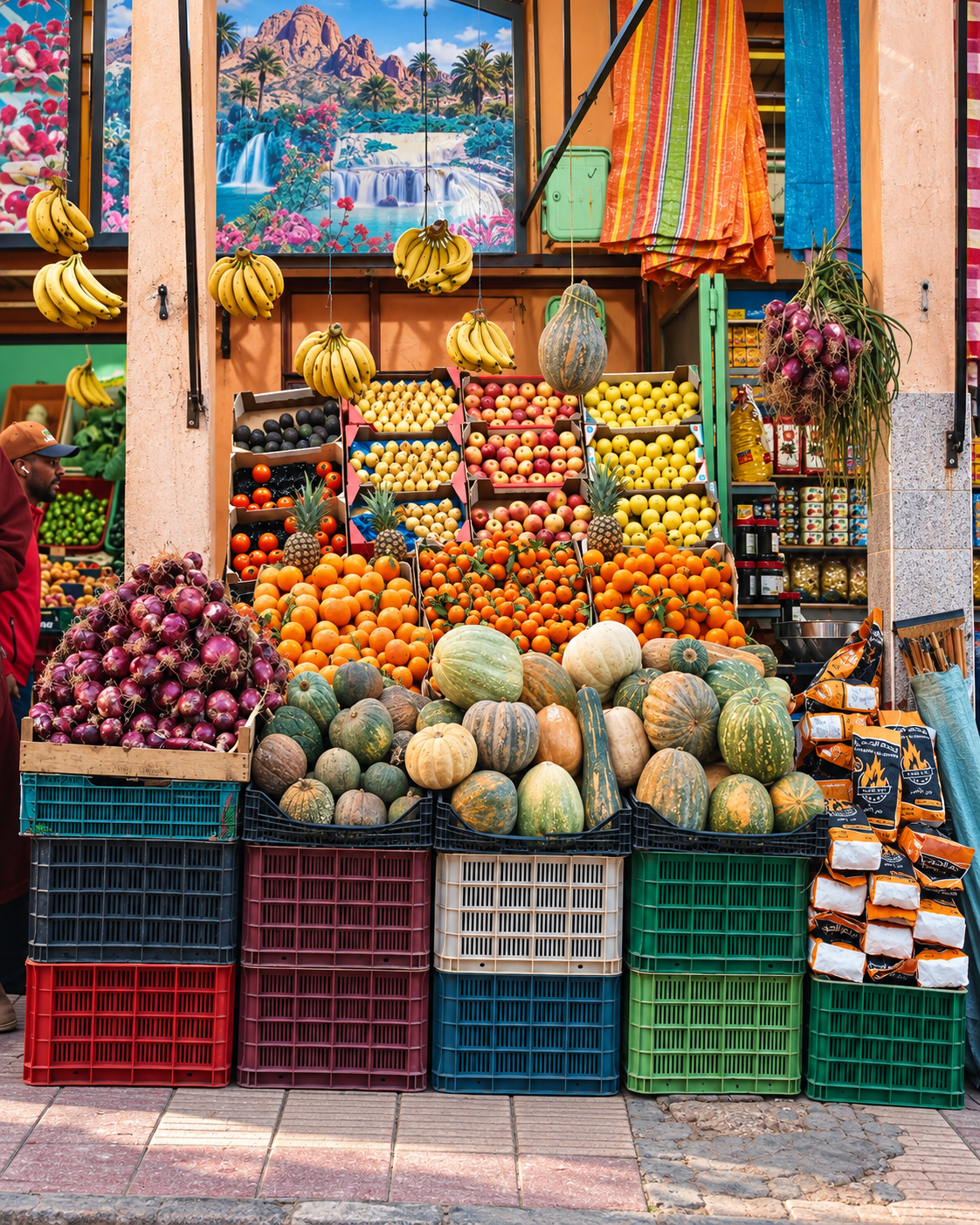
Fresh fruit arranged outside a market shop

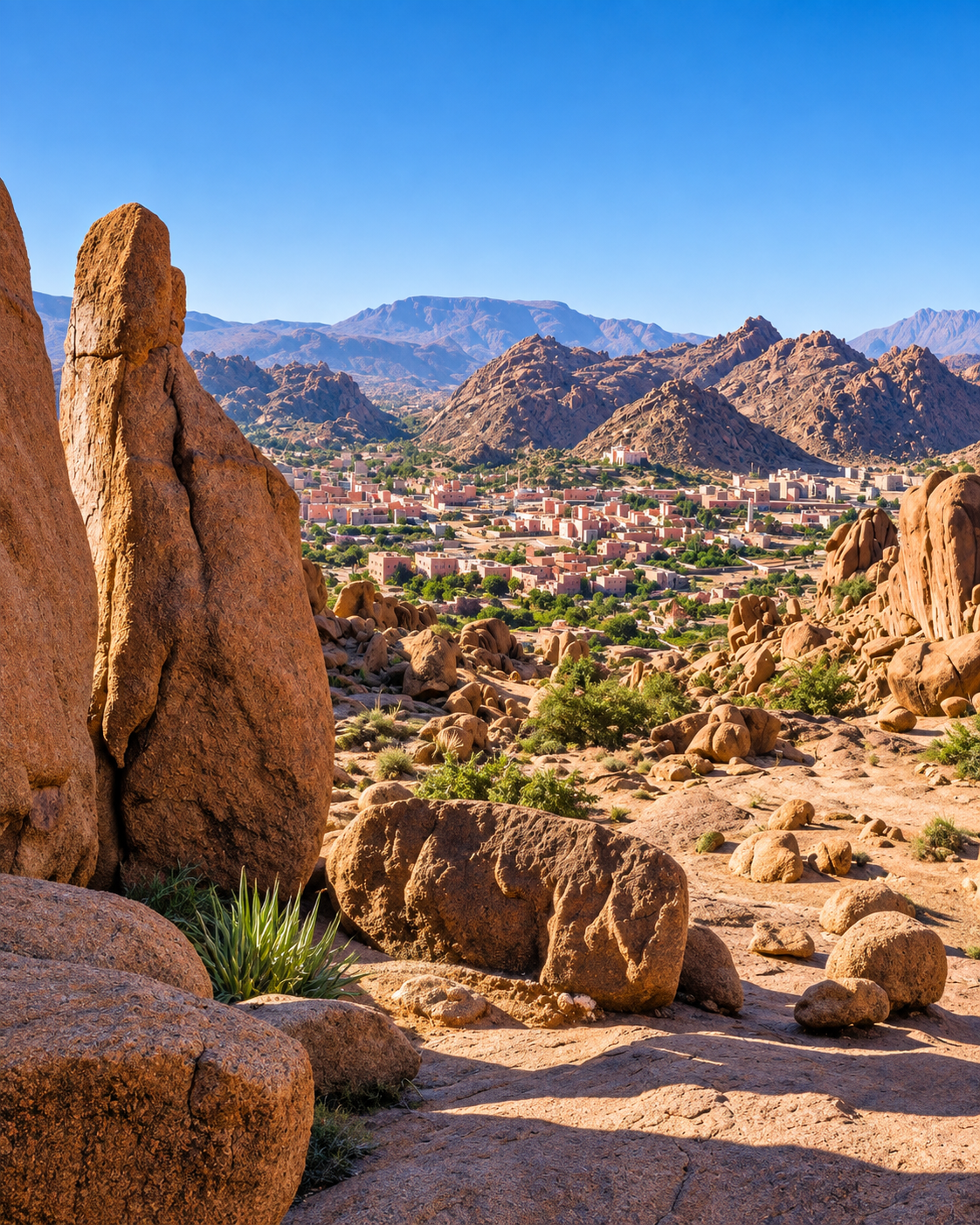
Begin with Tafraout town and its market rhythm, then read the Ammeln Valley slowly. Visit Aguerd Oudad, Chapeau de Napoleon and the Painted Rocks as one orientation loop, and keep Ait Mansour for a separate half-day or full-day extension.

Tafraout town and surrounding mountains seen between granite outcrops

Go deeper with Exotic Morocco

Tafraout — Premium Visual City Guide

Continue with a carefully structured visual approach to Tafraout: Anti-Atlas setting, Ammeln Valley, seasonal blossom, Painted Rocks, village architecture, practical orientation and nearby landscape routes.

✓ Anti-Atlas context✓ Essential places ✓ Valley villages✓ Culture & local life ✓ Practical travel guidance✓ Nearby highlights

Continue the journey

Continue the journey through Tafraout

Look beyond the painted boulders and encounter a mountain town of granite light, Ammeln villages, seasonal blossom, quiet markets and Anti-Atlas routes.