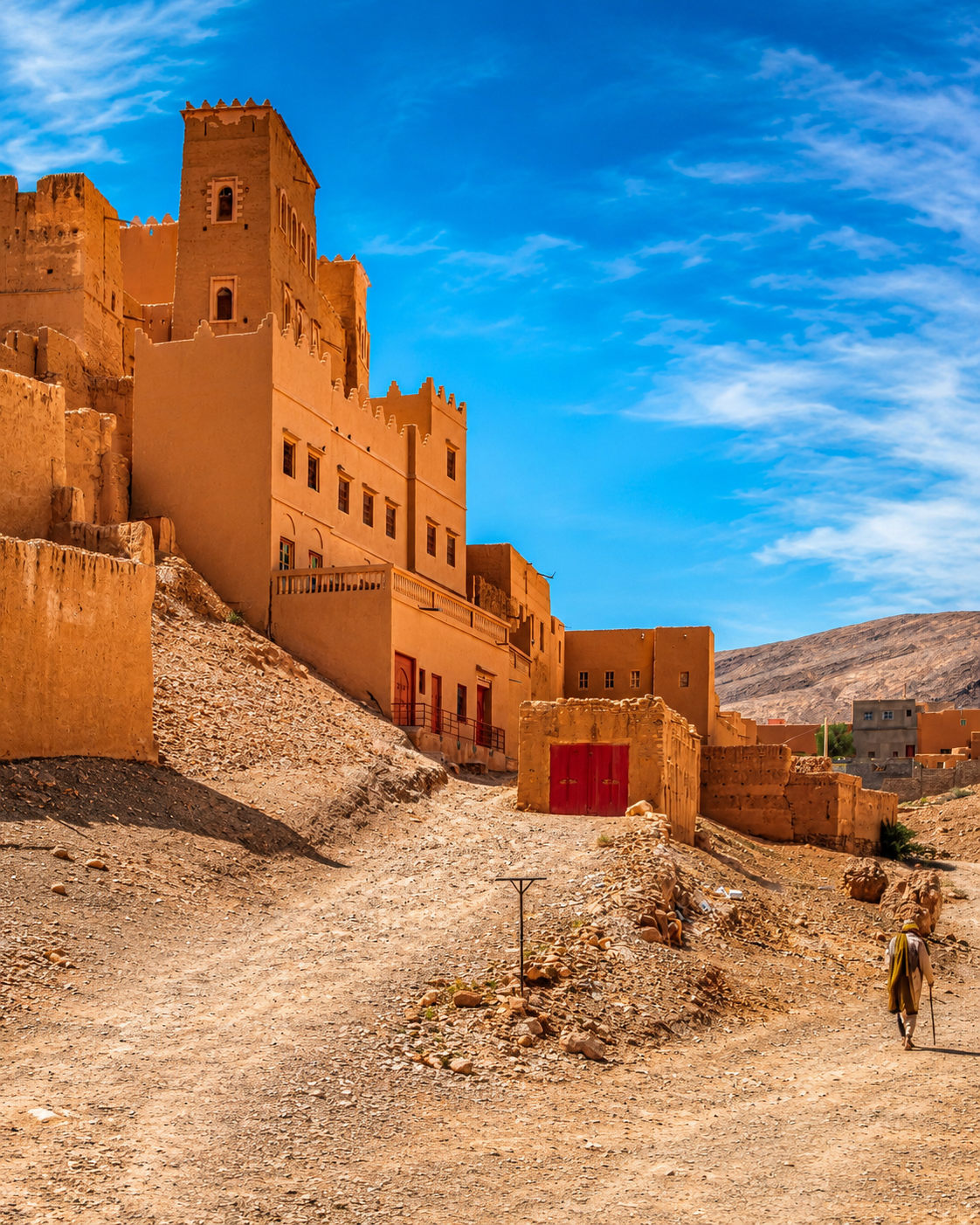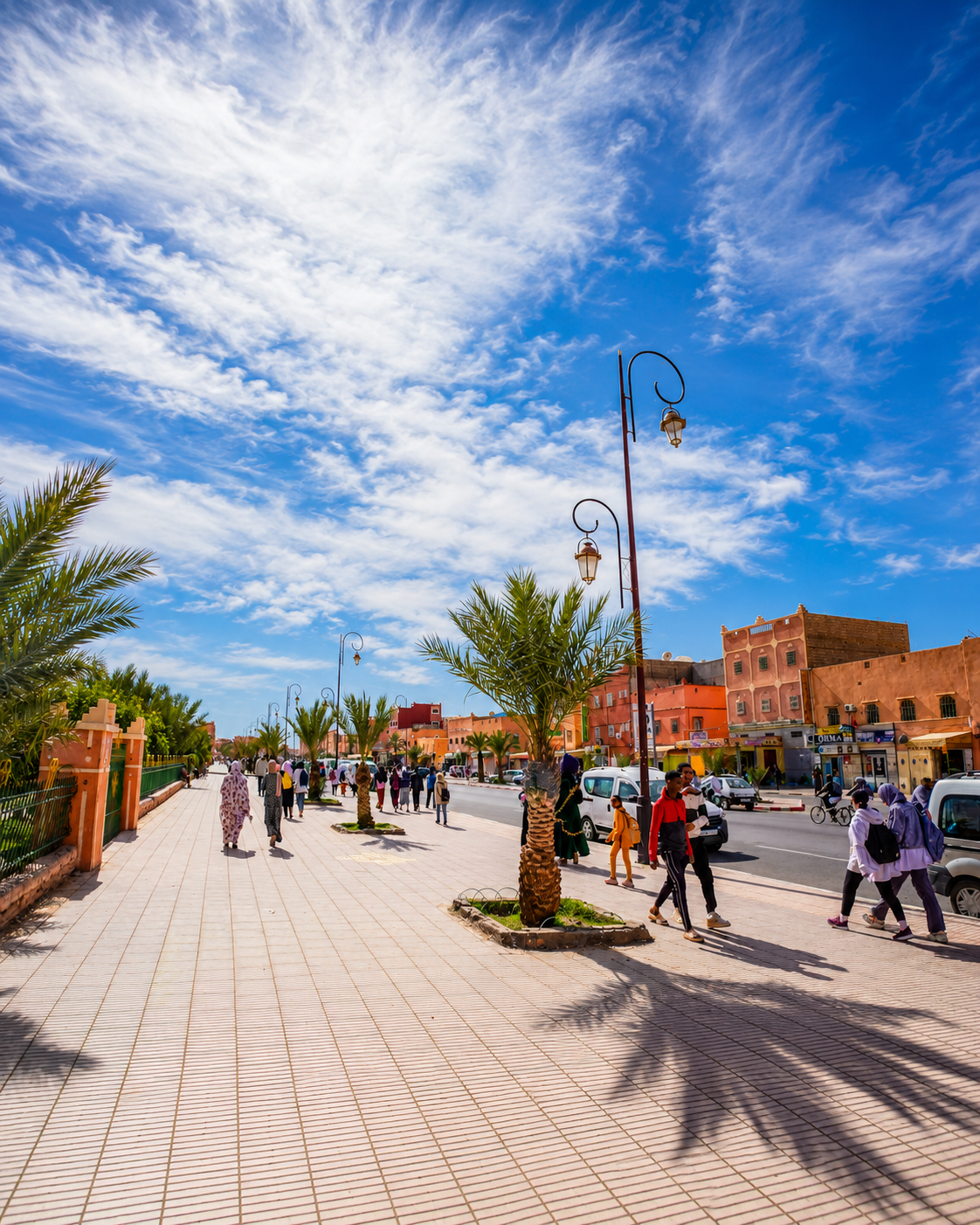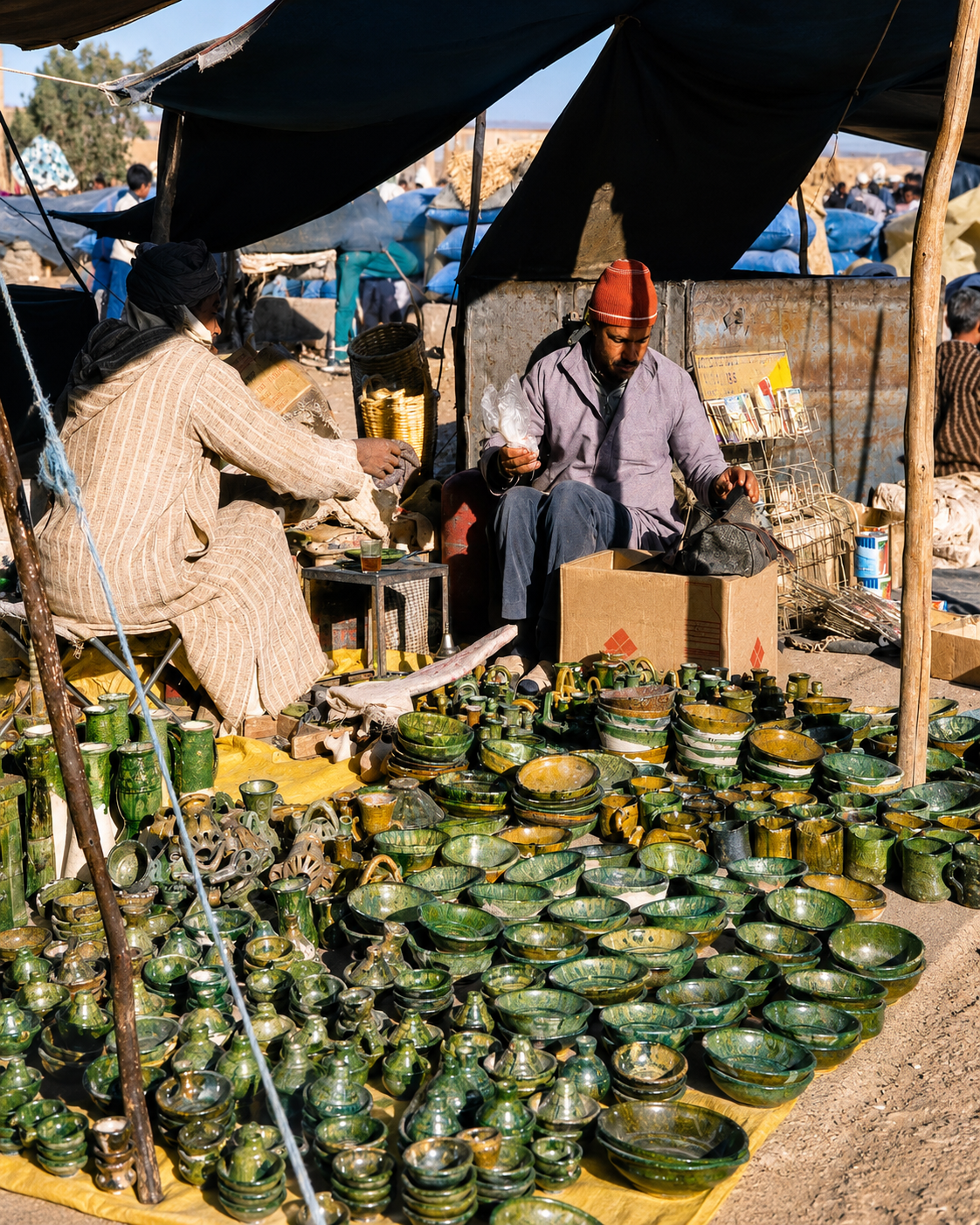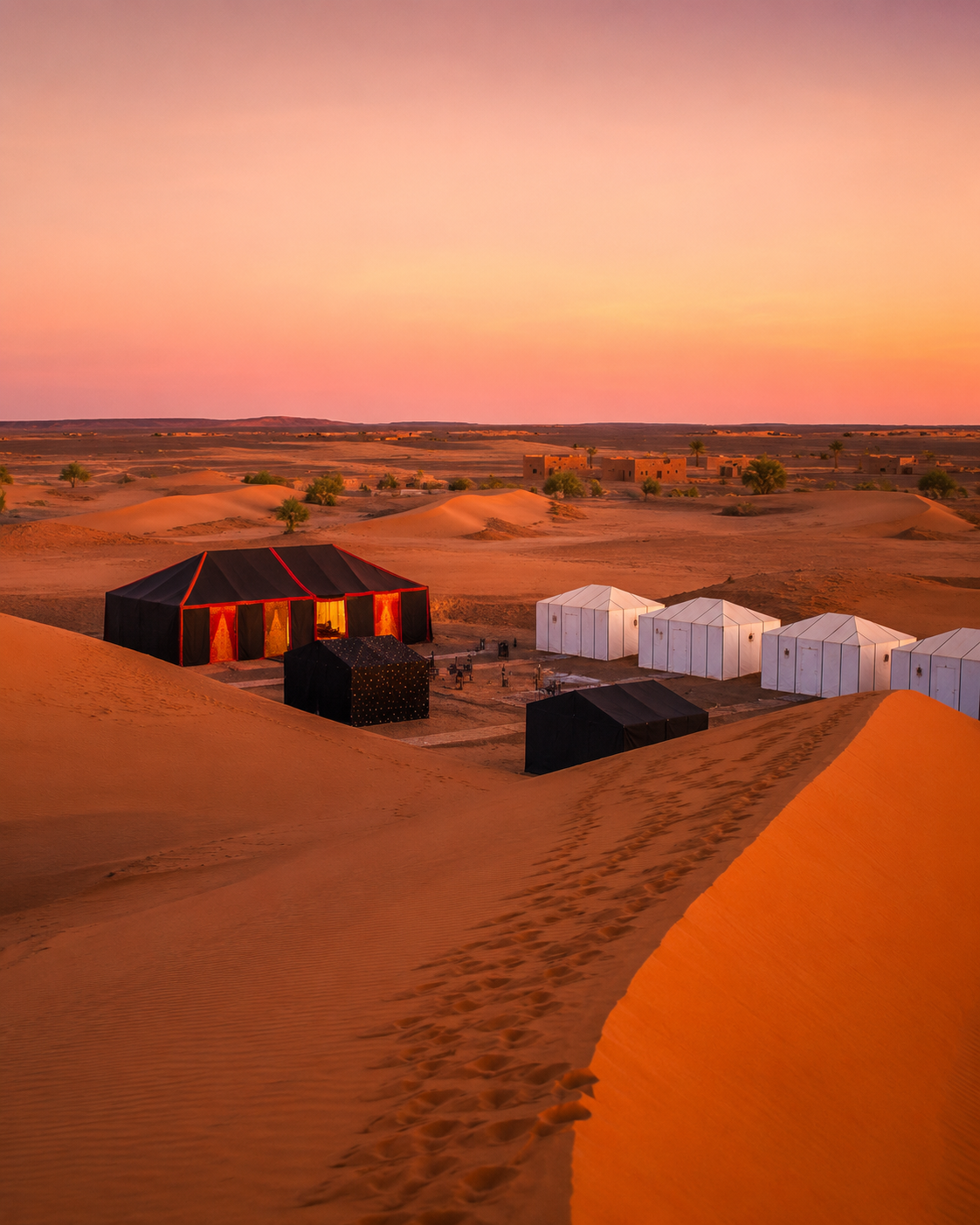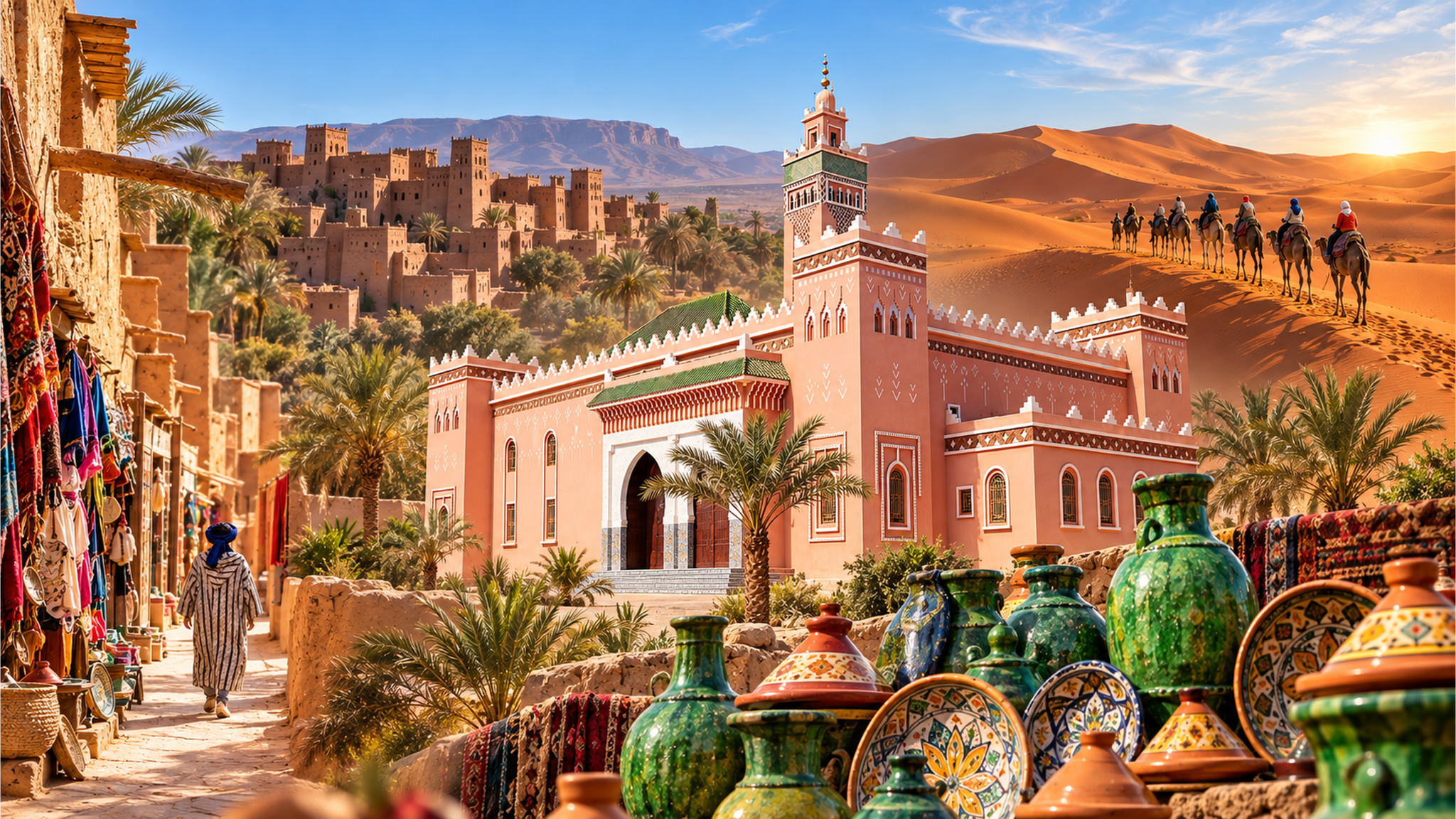
Zagora hero view with Drâa Valley kasbahs, mosque architecture, souk ceramics and desert dunes

Drâa Valley Desert Gateway

Zagora Drâa Valley oasis, caravan memory and desert-edge light

Zagora sits where palm groves, earthen settlements and road-to-Sahara imagination begin to feel close. Read it through the Drâa Valley: a southern town of souk movement, mountain horizons, Tamegroute craft, Tinfou sand and the famous old sign pointing toward Timbuktu.

Why Zagora matters

Beyond the desert sign

Zagora is often reduced to the “Tombouctou 52 days” sign, but the town’s deeper value is its position in the Drâa Valley. Palms, fields, earthen walls, market streets and a mountain horizon show how settled oasis life and Sahara-facing routes meet here.

It is not a dune sea in itself, and that is exactly why it matters. Zagora lets visitors understand the threshold: the last strong town rhythm before the road narrows toward Tamegroute, Tinfou, M’Hamid and the larger desert landscapes beyond.
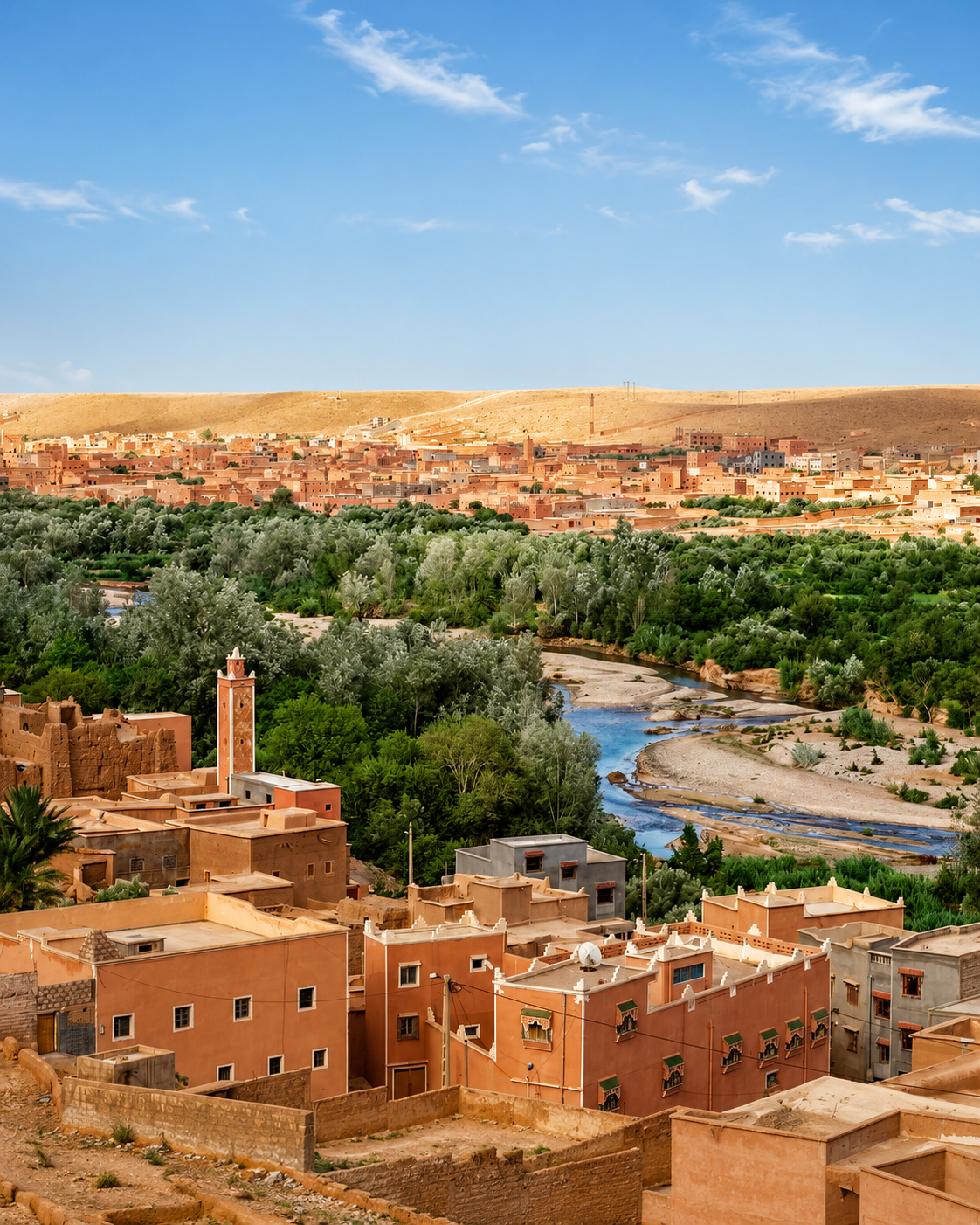
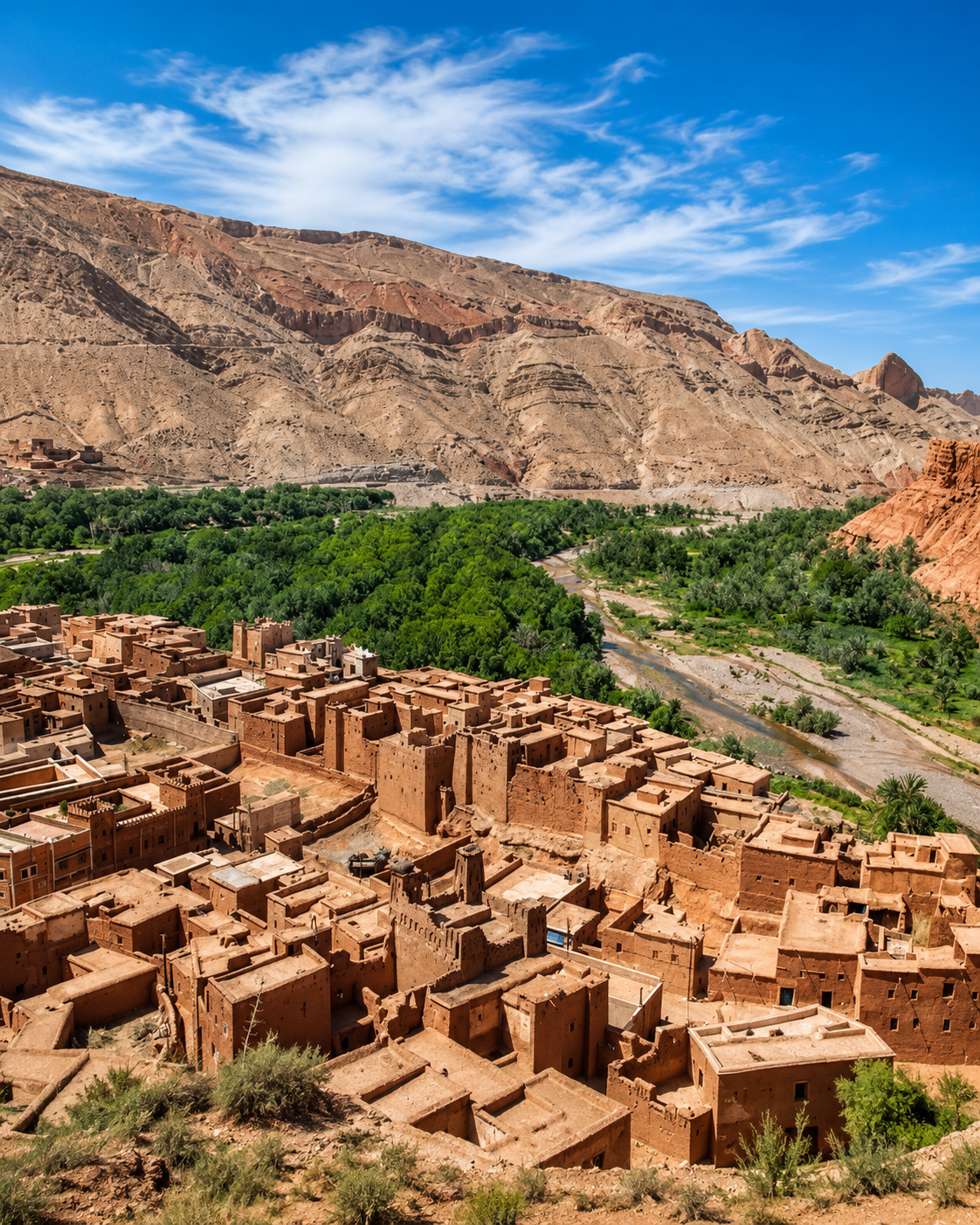
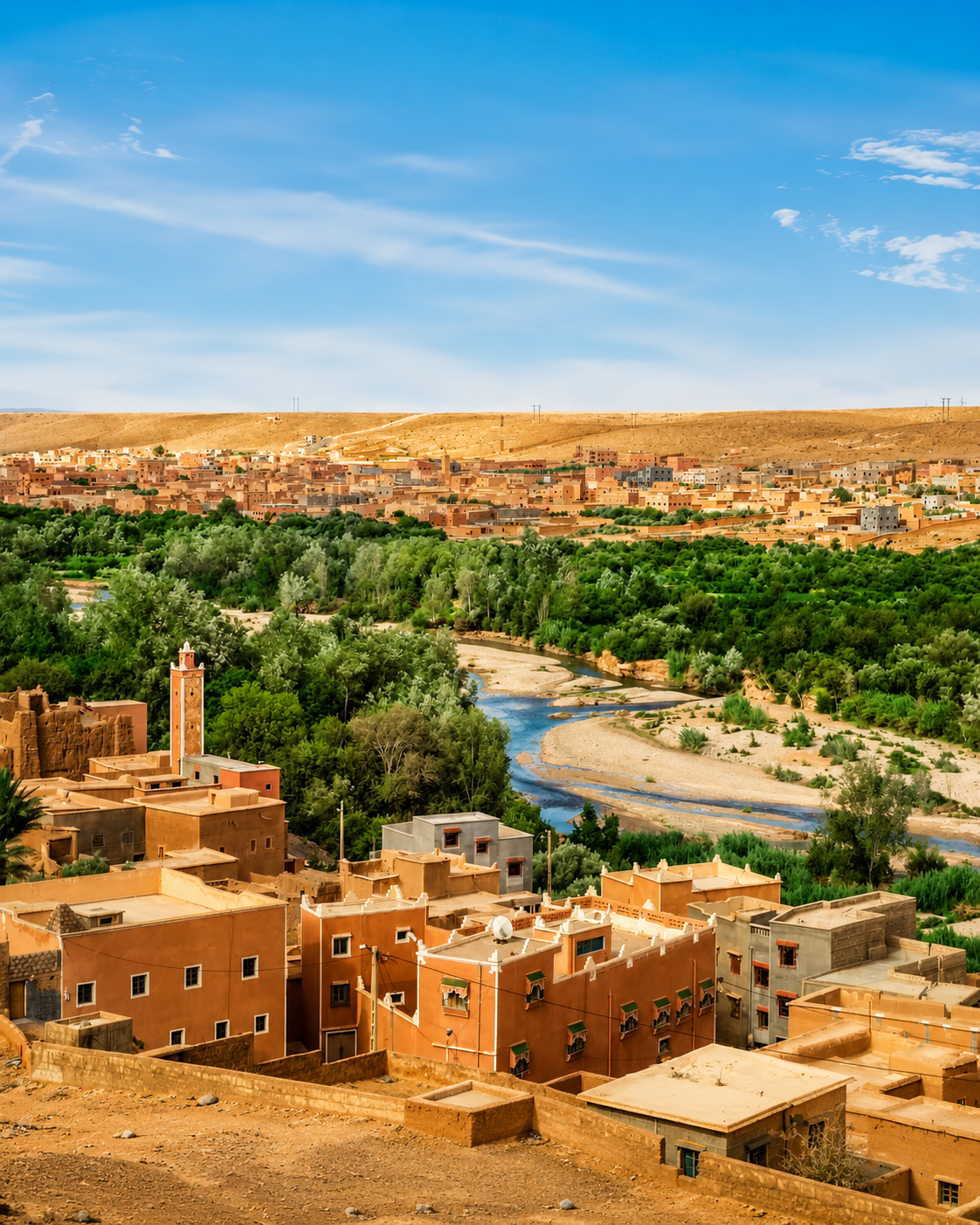
Drâa Valley oasis town and palm groves near Zagora

A town of route memory

Power in Zagora is quieter than a monument: palms, wells, mudbrick edges, market movement, caravan memory and the road that still pulls the imagination south.

EXPLORE

Zagora

Historical orientation

From oasis corridor to desert gateway

Zagora is best understood as part of the Drâa Valley rather than as an isolated stop. Its story moves through oasis agriculture, earthen settlement, trade-route memory and the modern desire to approach the Sahara with context rather than haste.

01Drâa Valley

Oasis corridor

The town belongs to a long valley system where palms, fields and earthen settlements made travel and habitation possible across a dry southern landscape.

02Route memory

Caravan horizons

The famous Timbuktu sign gestures toward older trans-Saharan routes and the way Zagora’s name became linked with departure, distance and southern travel.

03Jbel Zagora

Mountain orientation

The mountain above the town gives Zagora its visual frame. From below, its outline helps visitors read the relationship between settlement, valley floor and desert edge.

04Today

Gateway to the south

Modern Zagora works as a base for Tamegroute, Tinfou and the road toward M’Hamid, while still remaining a lived provincial town with daily market rhythms.

A visual bridge

Three glimpses between oasis and sand

These images bridge the historical story and the town visitors encounter today: palms and fields, route memory, and the desert threshold just beyond the settled valley.

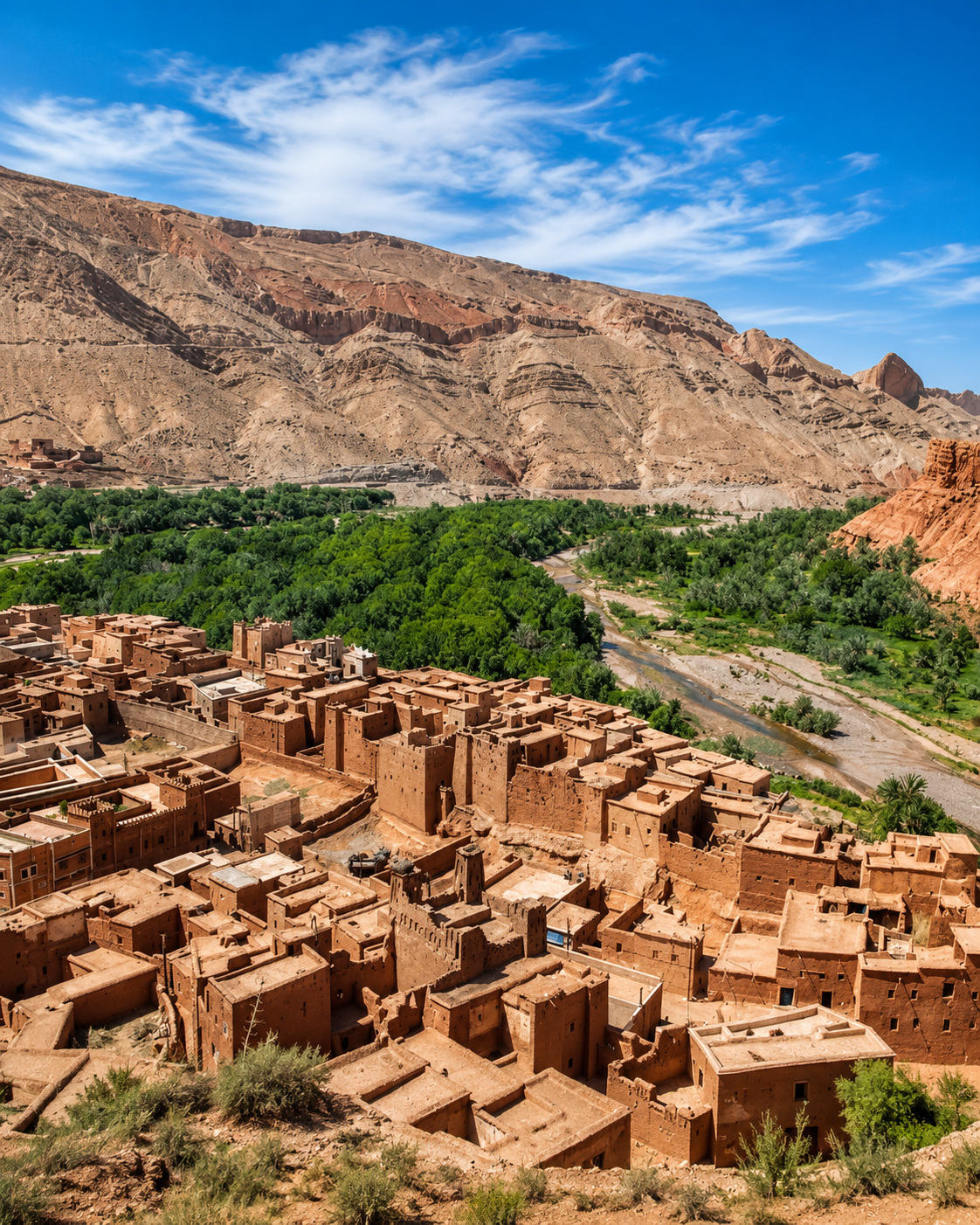
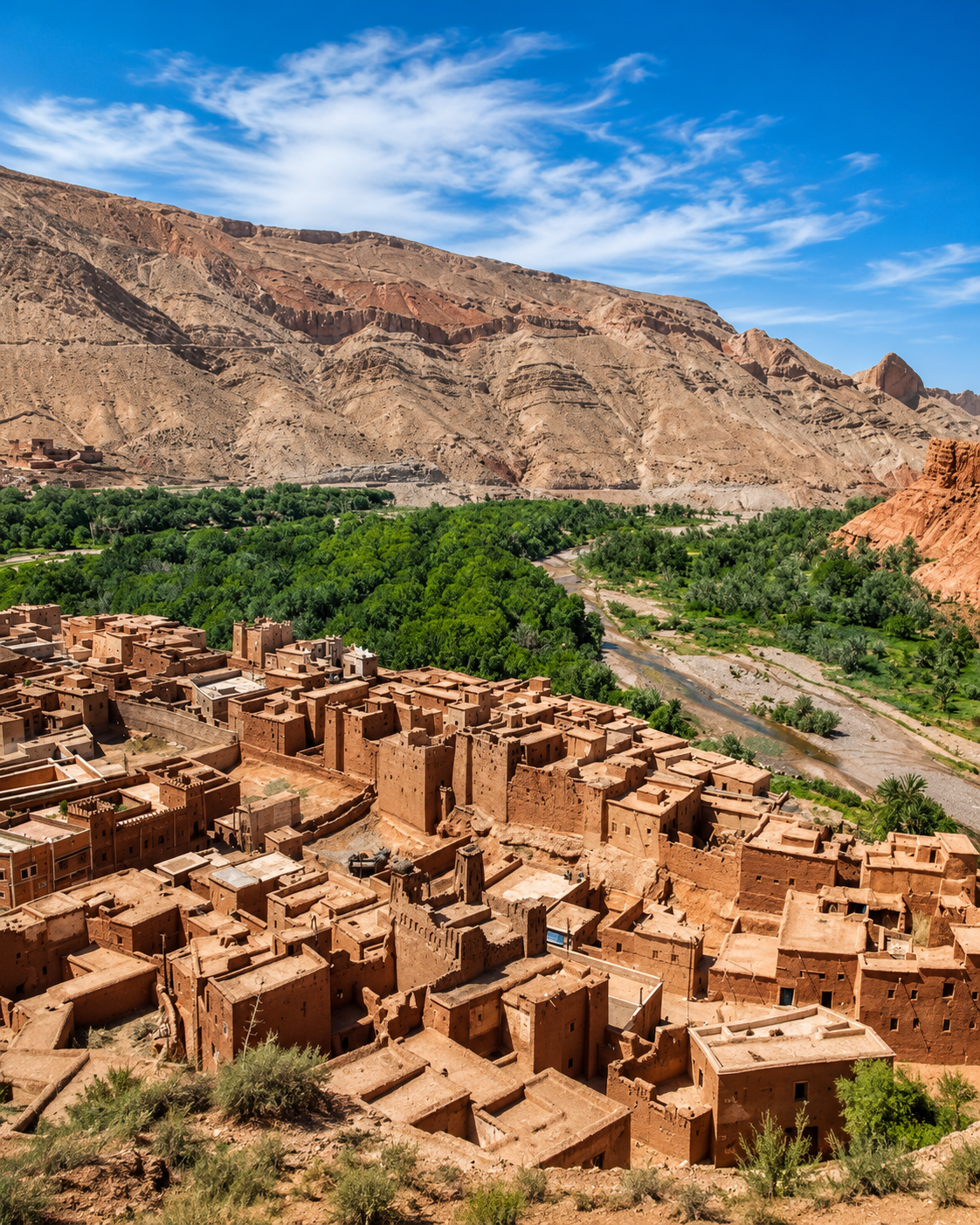
Palm grove and earthen settlement in the Drâa Valley near Zagora

Palm valley

Palms and fields reveal the oasis systems that make the southern route habitable.

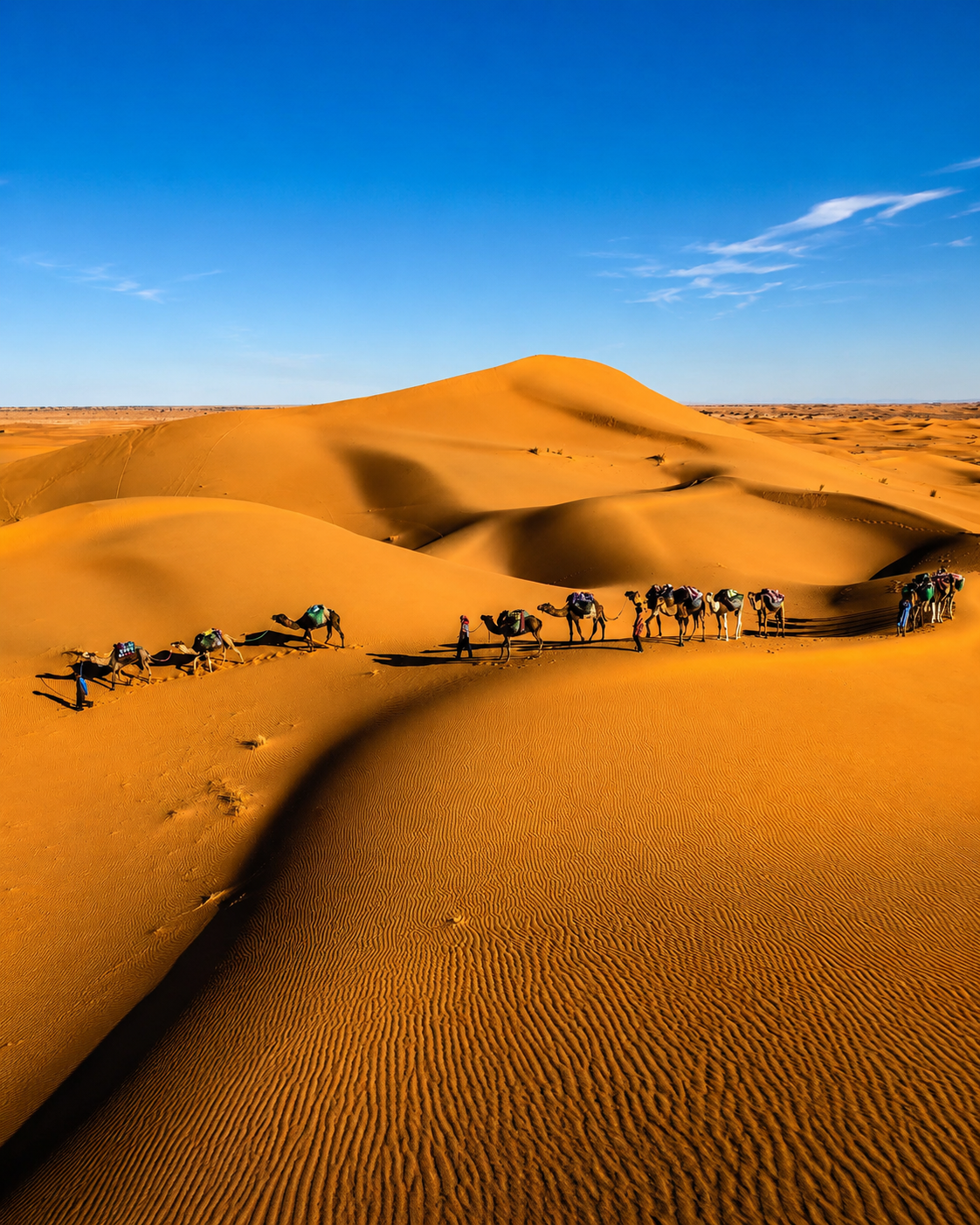
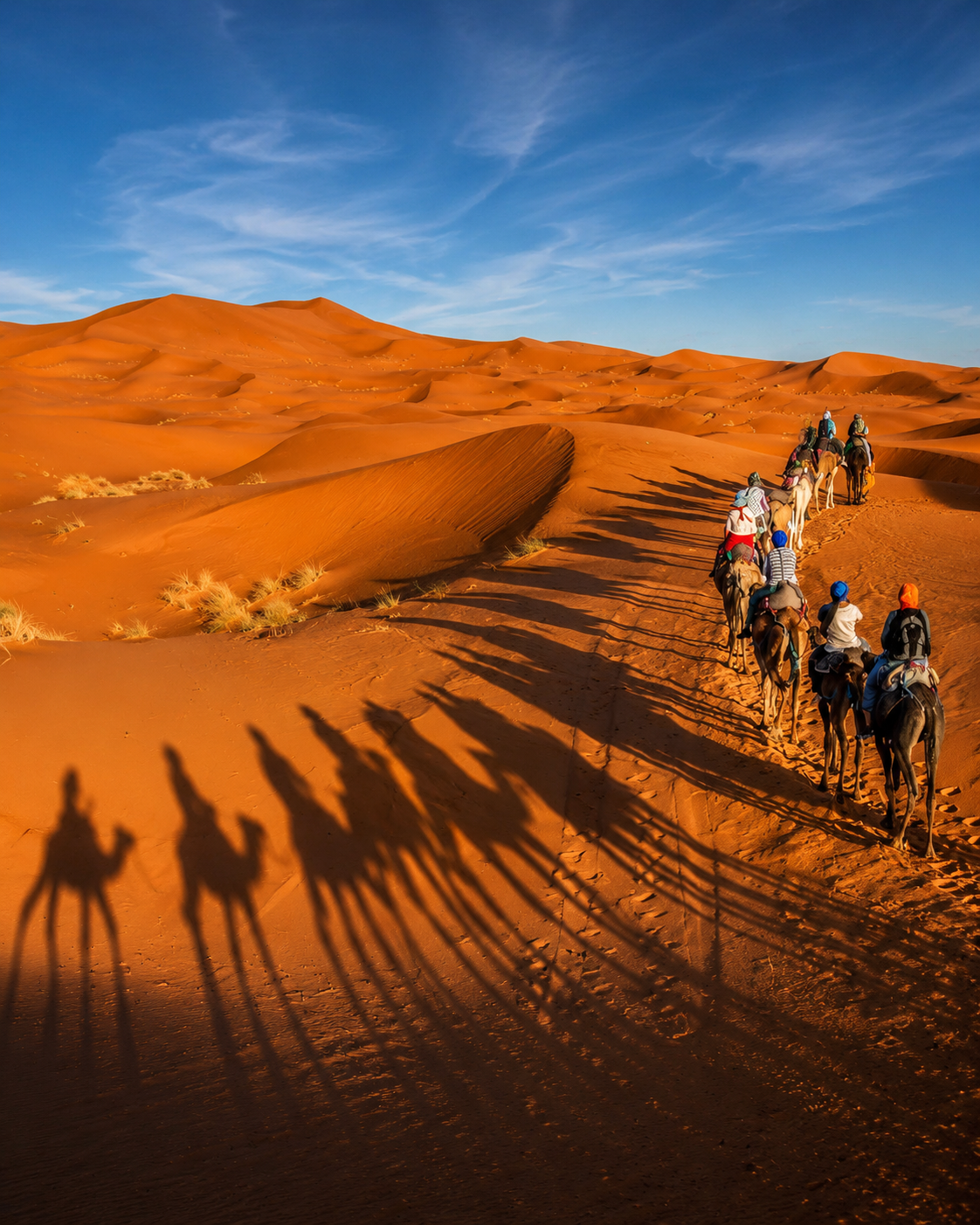
Camel caravan crossing dunes near Zagora

Caravan memory

Camel routes and open ground keep Zagora connected to the imagination of long-distance travel.

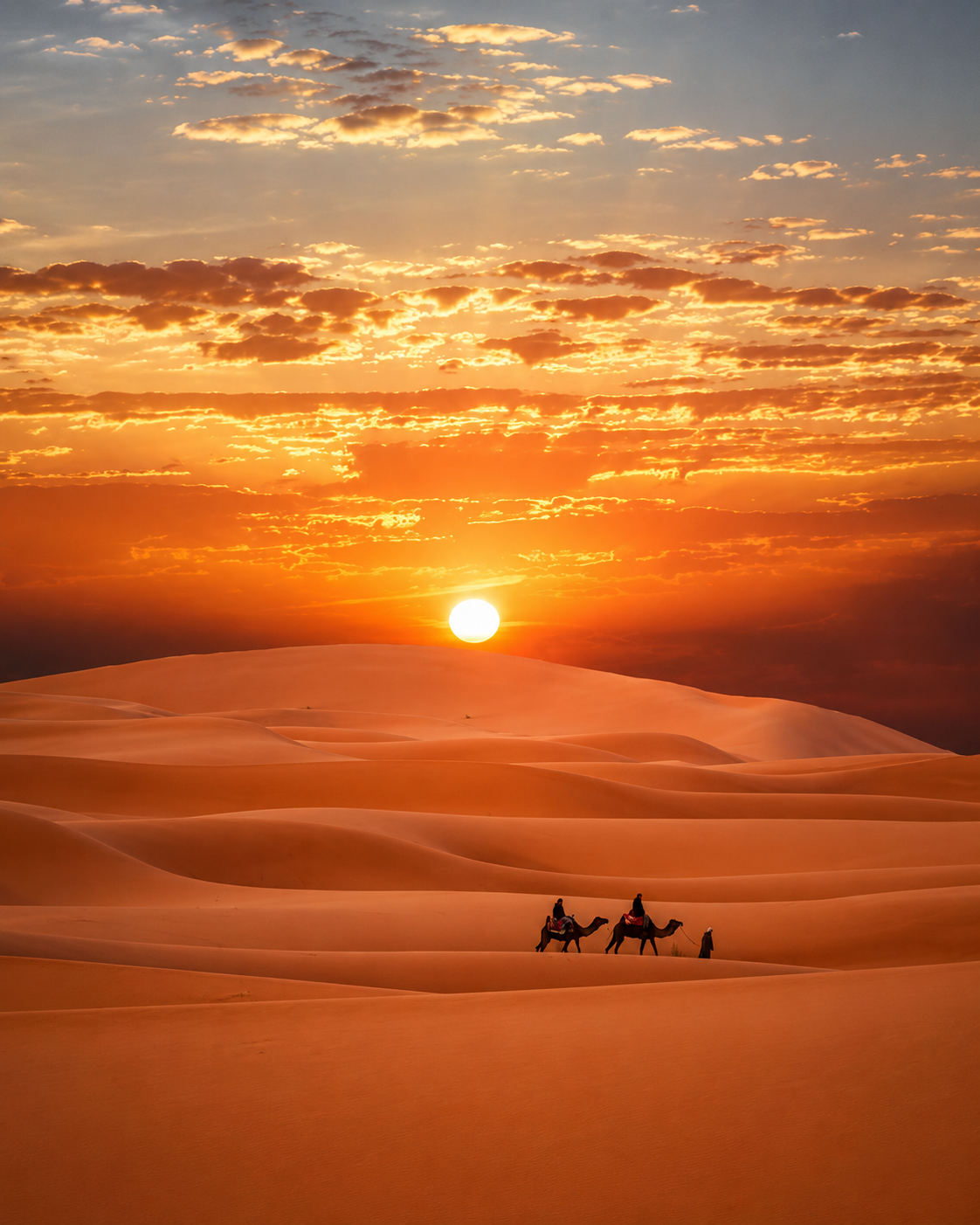
Sunset dunes marking the desert threshold beyond Zagora

Desert threshold

The landscape shifts quickly outside town, from palms and fields toward stone, wind and sand.

Zagora at a glance

Drâa Valley setting

Zagora sits within the great palm-valley corridor that runs south from Ouarzazate toward the Saharan edge. The valley context matters more than any single monument.

Desert gateway

The town is a practical and symbolic gateway toward Tamegroute, Tinfou and the routes south to M’Hamid. Treat it as a threshold, not as a shortcut to the Sahara.

Earthen architecture

Ksar edges, mudbrick walls, small gateways and palm-grove paths give the area its material language: sun-baked, functional and tied to the oasis environment.

Craft and route culture

Tamegroute’s pottery and zaouia memory, the town souk and the Timbuktu sign connect Zagora to both everyday southern life and larger route history.

A clearer reading of the city

A town shaped by valley, route and desert edge

To understand Zagora, read its oasis systems, route symbols and craft life together. The value of the town is not one spectacular monument, but the clarity with which it shows southern Morocco changing register.

Oasis fields, palms and earthen buildings around Zagora
Layer 1

Oasis systems

Fields, palms and water management show that Zagora is not only a departure point. It is a working valley town built around cultivation, shade and careful use of scarce resources.

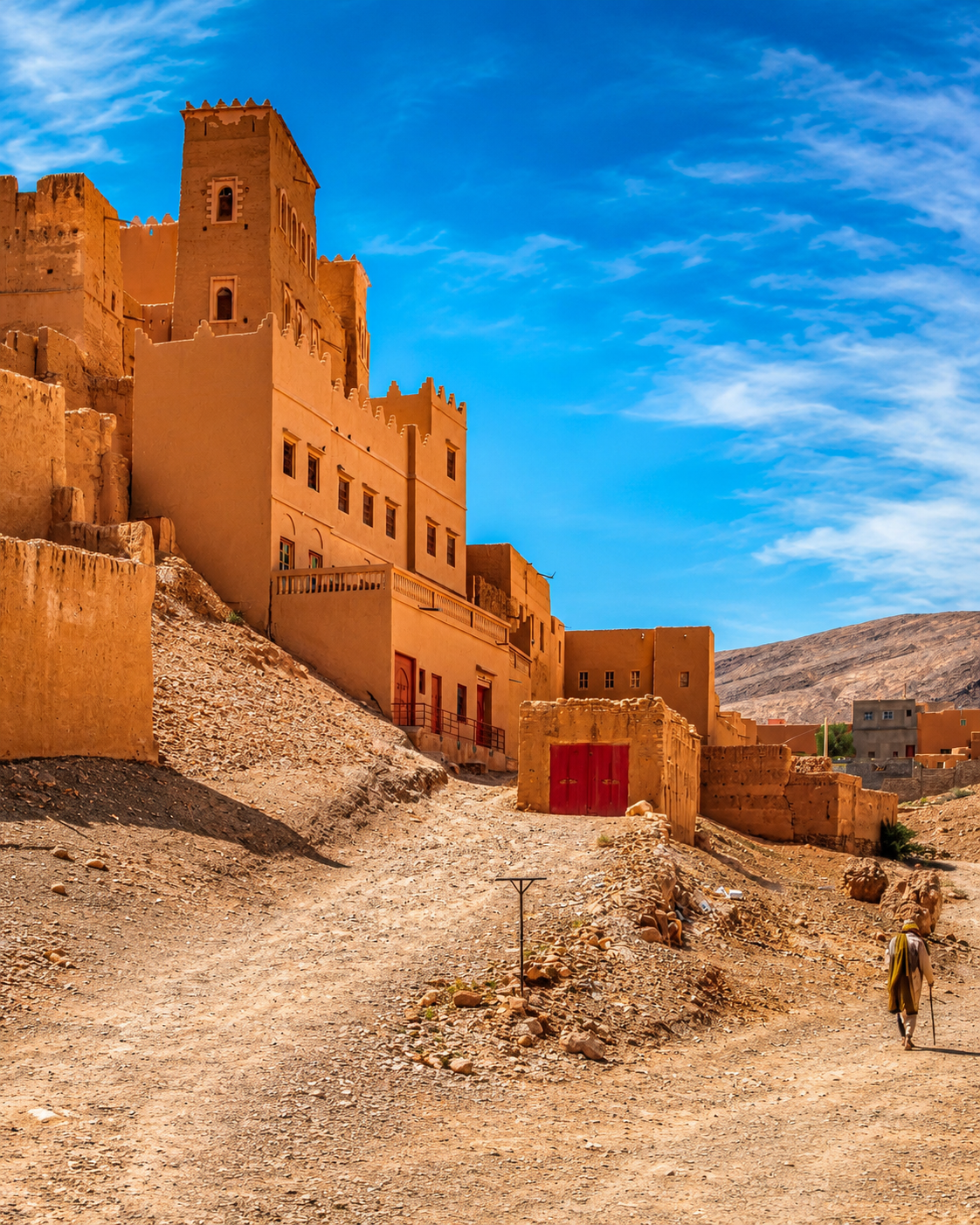
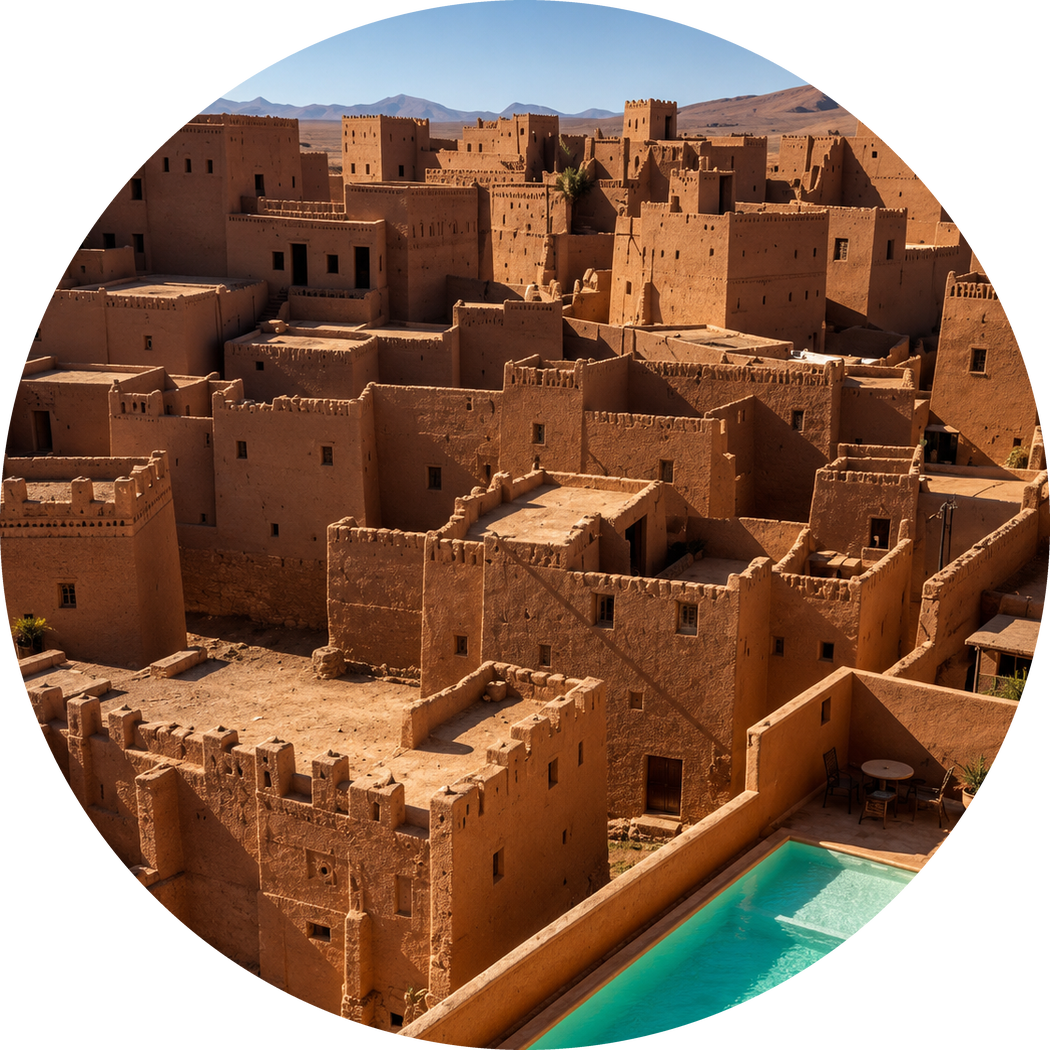
Earthen ksar architecture and palm landscape near Zagora
Layer 2

Earthen settlement

Mudbrick walls, ksour and local enclosures give the area its architectural tone: protective, earth-coloured and inseparable from the heat and light of the valley.

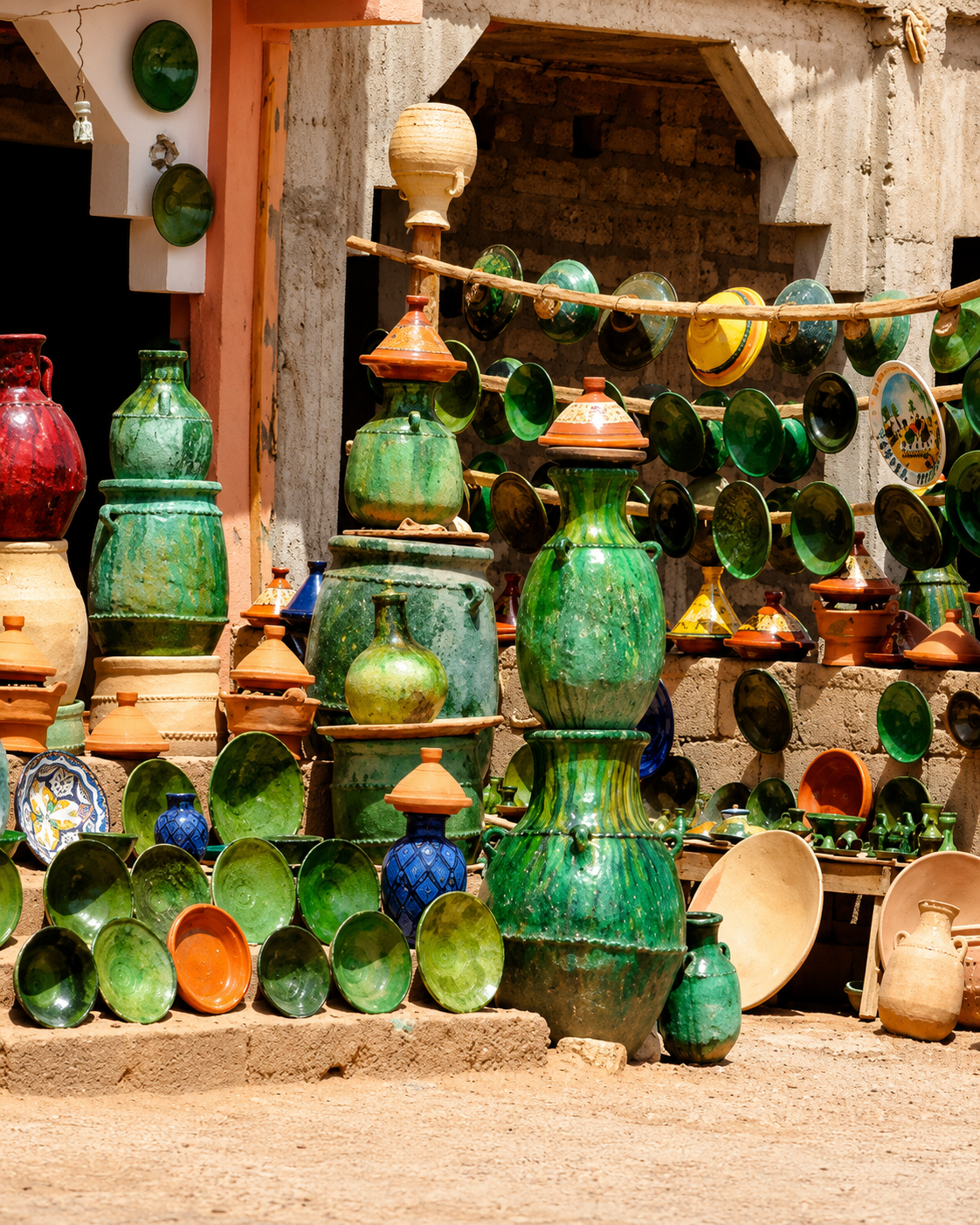
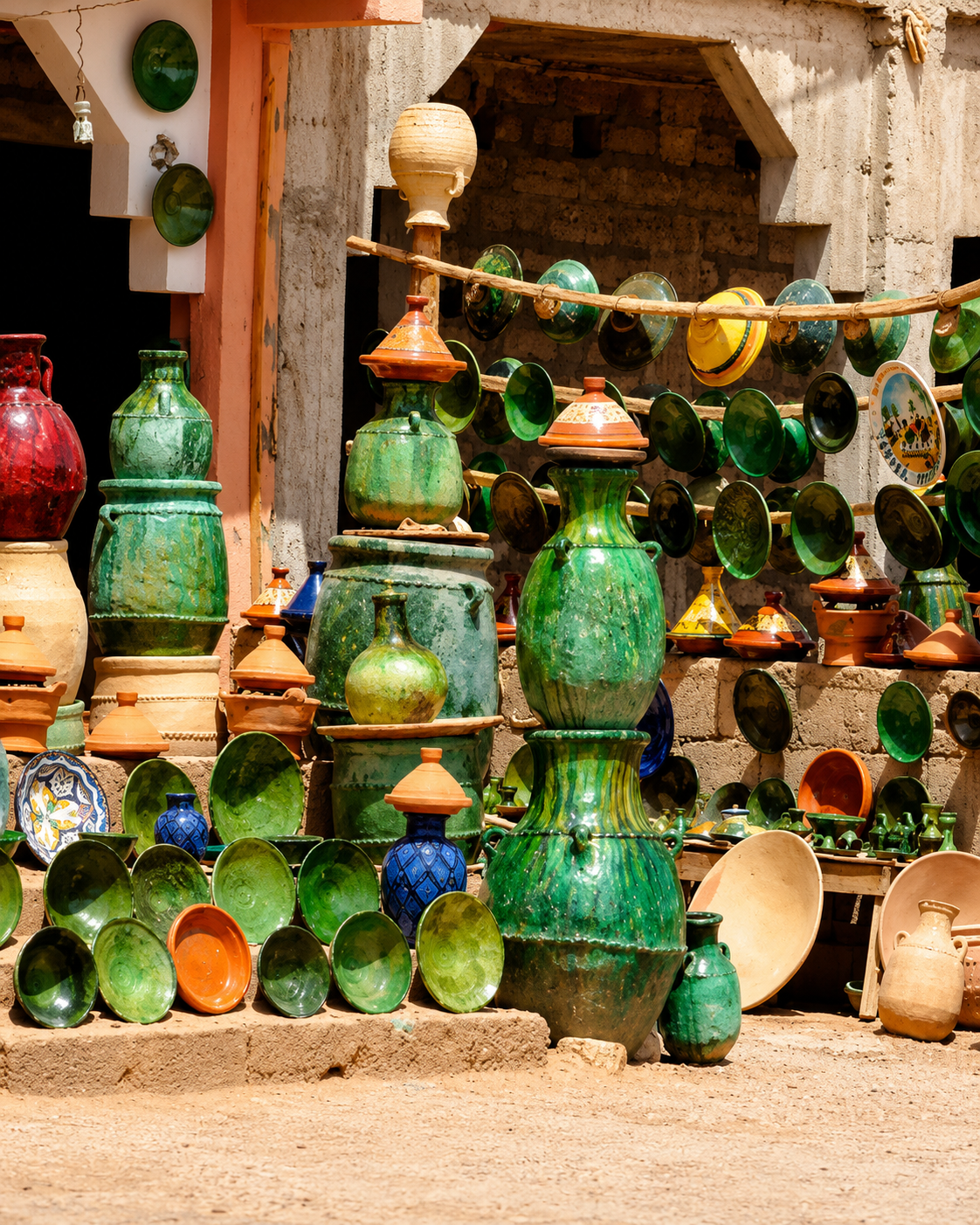
Green-glazed pottery and ceramics displayed in the Zagora region
Layer 3

Craft and daily culture

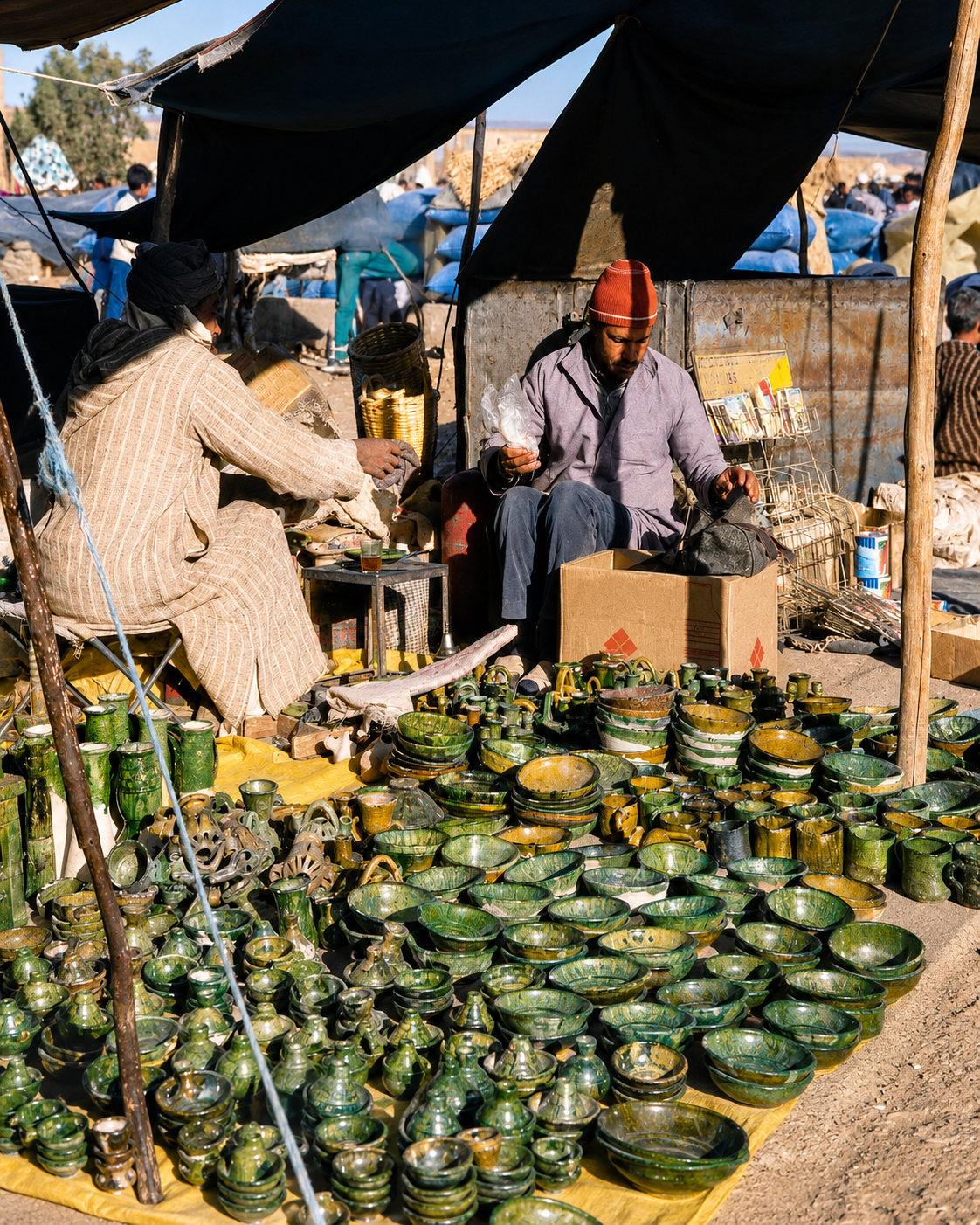
Green-glazed pottery, market goods and workshop rhythms connect the route south with everyday material culture rather than treating the region as scenery alone.

Landmarks & orientation

Read Zagora through six defining places

No single site explains Zagora. These six places reveal the relationship between oasis life, mountain orientation, route memory, craft heritage and the road toward the Saharan south.

1
Tombouctou 52 Days sign

A modern roadside symbol of older caravan imagination, reminding visitors that Zagora has long been read through distance, trade and departure.

2
Jbel Zagora

The mountain above town gives Zagora its horizon and helps orient the valley floor, palm groves and desert-edge light.

3
Zagora souk and town centre

Everyday shops, cafés and market movement show Zagora as a lived southern town rather than only a stop on a desert itinerary.

4
Drâa palm grove

The palms and fields around town make visible the oasis systems that sustain settlement along this dry valley corridor.

5
Ksour and earthen edges

Nearby mudbrick settlement forms, including ksar fabric around the oasis, preserve the material language of protection, shade and local life.

6
Tamegroute

Close to Zagora, Tamegroute adds zaouia memory, manuscript heritage and green pottery workshops to the city’s wider cultural reading.

Earthen ksar architecture and oasis settlement around Zagora
Green-glazed ceramics associated with Tamegroute craft near Zagora

A nearby craft interior

Tamegroute — zaouia memory, manuscripts and green pottery

South of Zagora, Tamegroute gives the valley a more intimate cultural depth. Its Nasiriyya zaouia memory, manuscript-library tradition and green-glazed pottery workshops make the nearby village more than a short excursion: it explains how learning, craft and oasis life meet on the route toward the desert.

  • The zaouia and manuscript tradition connect Tamegroute to scholarship and spiritual history in the Drâa Valley.
  • Green pottery workshops keep local material culture visible through clay, glaze, firing and display.
  • Visit with patience: access, opening arrangements and photography rules can vary, especially around heritage and religious spaces.

Architectural reading

Three architectural languages to notice

Earth and enclosure

Zagora’s built tone is grounded in earth: mudbrick walls, ksar edges, low enclosures and sun-coloured surfaces that answer heat, wind, privacy and repair.

Shade and water

Palms, fields, wells and irrigation details form an architecture of survival as much as beauty. The valley’s most important design language is often landscape infrastructure.

Road signs and thresholds

The famous Timbuktu sign, the town gate, the mountain outline and the road south turn orientation into symbolism. Zagora is a place where direction becomes part of the experience.

Visual atmosphere

Light, palms and desert edges

Nearby highlights

Nearby heritage and landscape

Zagora works best as a base for nearby extensions that clarify the valley and the desert edge: Tamegroute for craft and zaouia memory, Tinfou for a close dune landscape, and the Drâa palm grove with nearby ksour for the oasis setting itself.

Tamegroute

A village south of Zagora known for the Nasiriyya zaouia tradition, manuscript-library heritage and green pottery workshops. Treat it as a cultural visit, not only a craft stop.

Green-glazed pottery display associated with Tamegroute near Zagora

Tinfou dunes

A nearby dune landscape often used as a first contact with Saharan sand. It is modest in scale compared with the deeper dunes, which makes expectations important.

Camel caravan and long shadows across dunes near Zagora

Drâa palm grove and ksour

Around Zagora, palm paths, fields and earthen settlement edges explain the oasis context that makes the road south possible. Move slowly and respectfully through working landscapes.

Drâa Valley oasis settlement and palm grove near Zagora
Travel note: opening hours, access rules, restoration work, transport conditions and local visitor arrangements can change. Check current official or trusted local information before travelling.

Practical orientation

How to experience Zagora well

  • Start with the town centre, the Timbuktu sign and the view toward Jbel Zagora before heading farther south.
  • Read the Drâa palm grove as part of the visit, not as scenery passed from a car window.
  • Add Tamegroute when you want craft, zaouia memory and a deeper cultural layer close to town.
  • Treat Tinfou as a nearby dune introduction; plan M’Hamid or larger desert landscapes as a more deliberate extension.
  • Respect heat, water, working fields, religious spaces and local photography boundaries.

A strong first visit

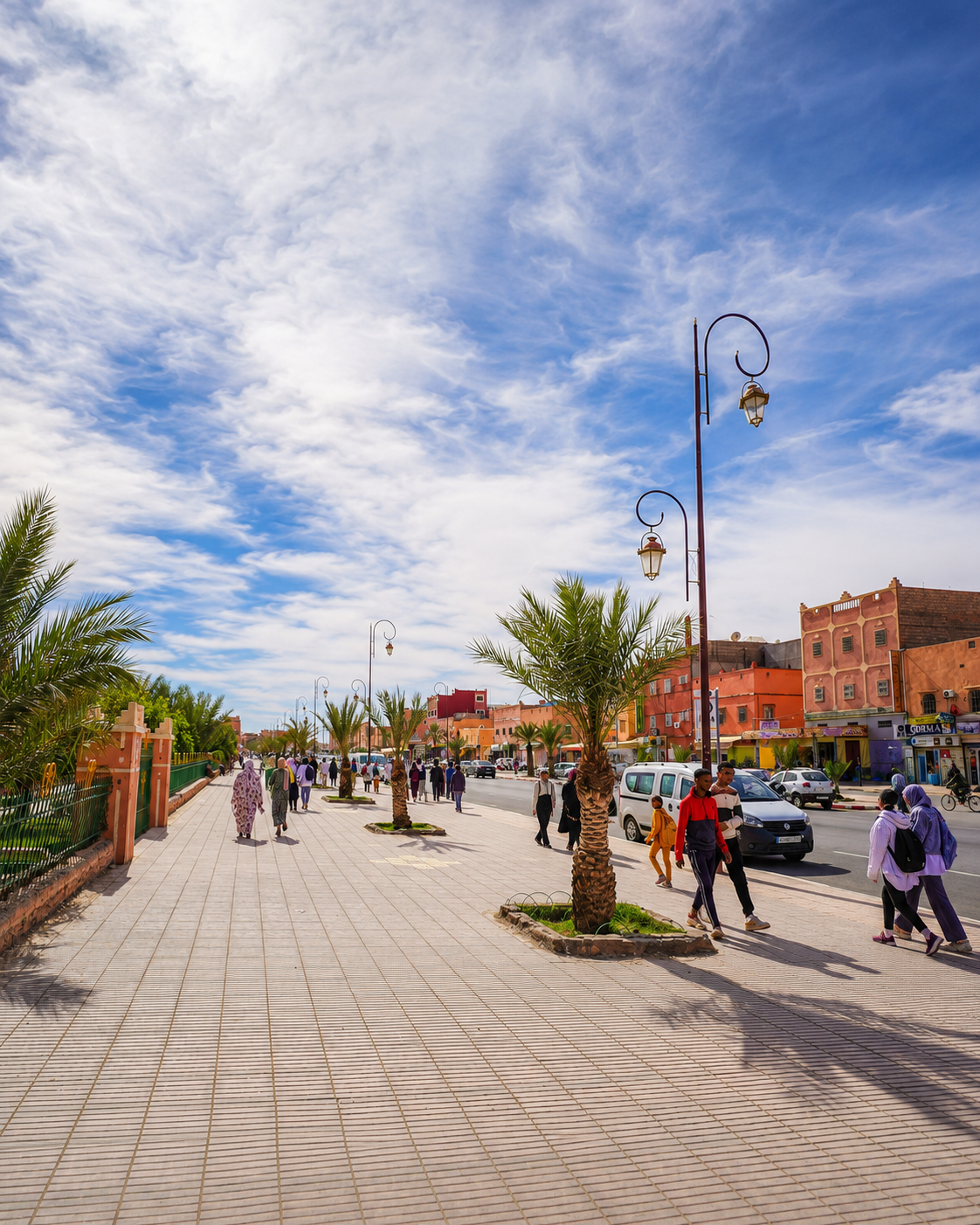
Palm-lined town boulevard in Zagora

Begin with Zagora’s town centre and the Timbuktu sign, then move toward the palm grove and mountain horizon. Give Tamegroute or Tinfou its own half-day rhythm instead of compressing every southern image into one stop.

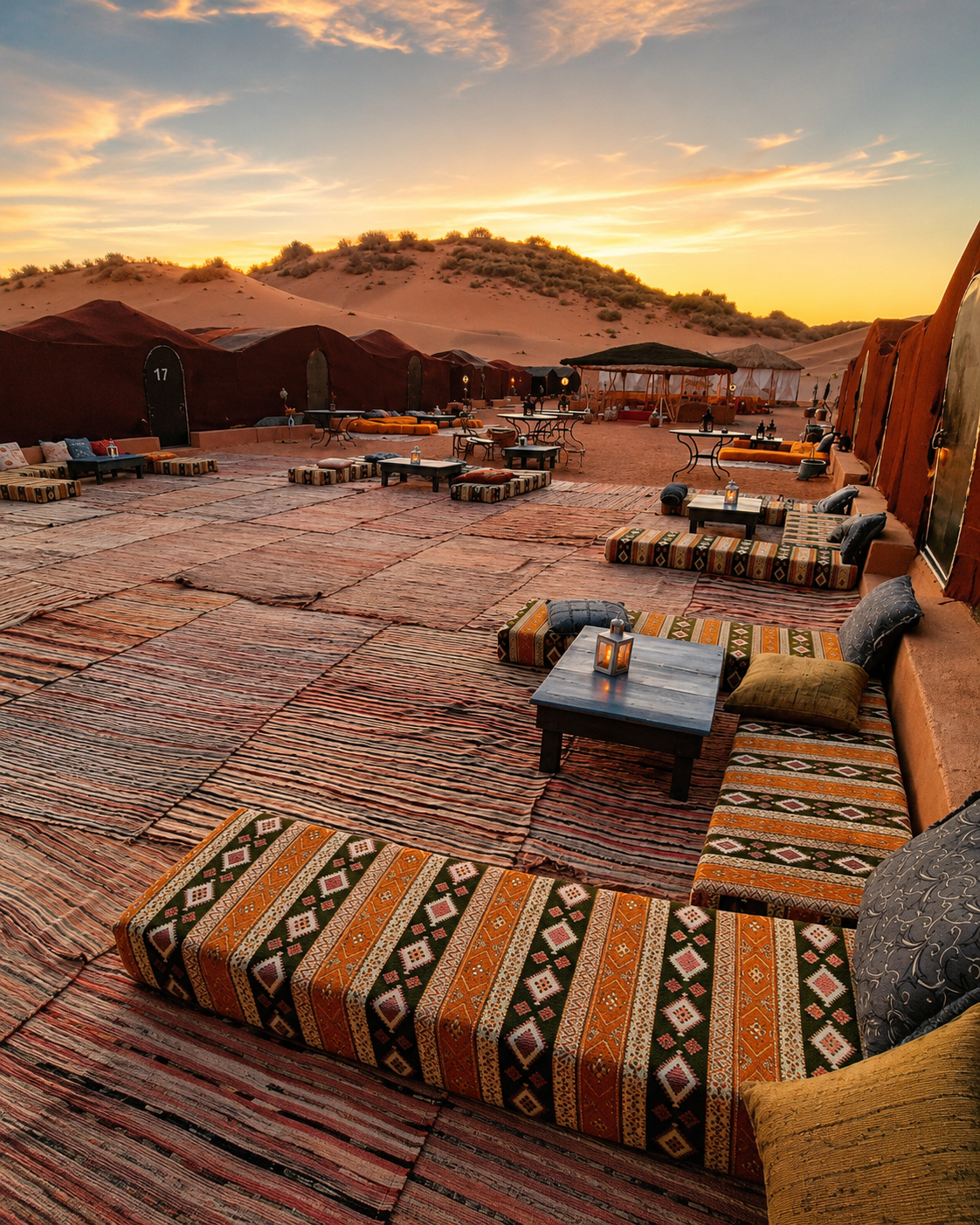
Desert camp lounge at sunset near Zagora for the premium guide

Go deeper with Exotic Morocco

Zagora — Premium Visual City Guide

Continue with a complete visual publication designed to connect Zagora’s Drâa Valley setting, caravan-route memory, Tamegroute heritage, desert-edge landscapes, practical orientation and nearby highlights into one carefully structured journey.

✓ Historic context✓ Essential landmarks ✓ Architecture & design✓ Culture & local life ✓ Practical travel guidance✓ Nearby highlights

Continue the journey

Continue the journey through Zagora

Follow the Drâa south from palm groves and earthen walls toward Tamegroute, Tinfou and the wider Sahara-facing routes. Zagora’s value is in the transition: oasis life, route memory and desert light held together.