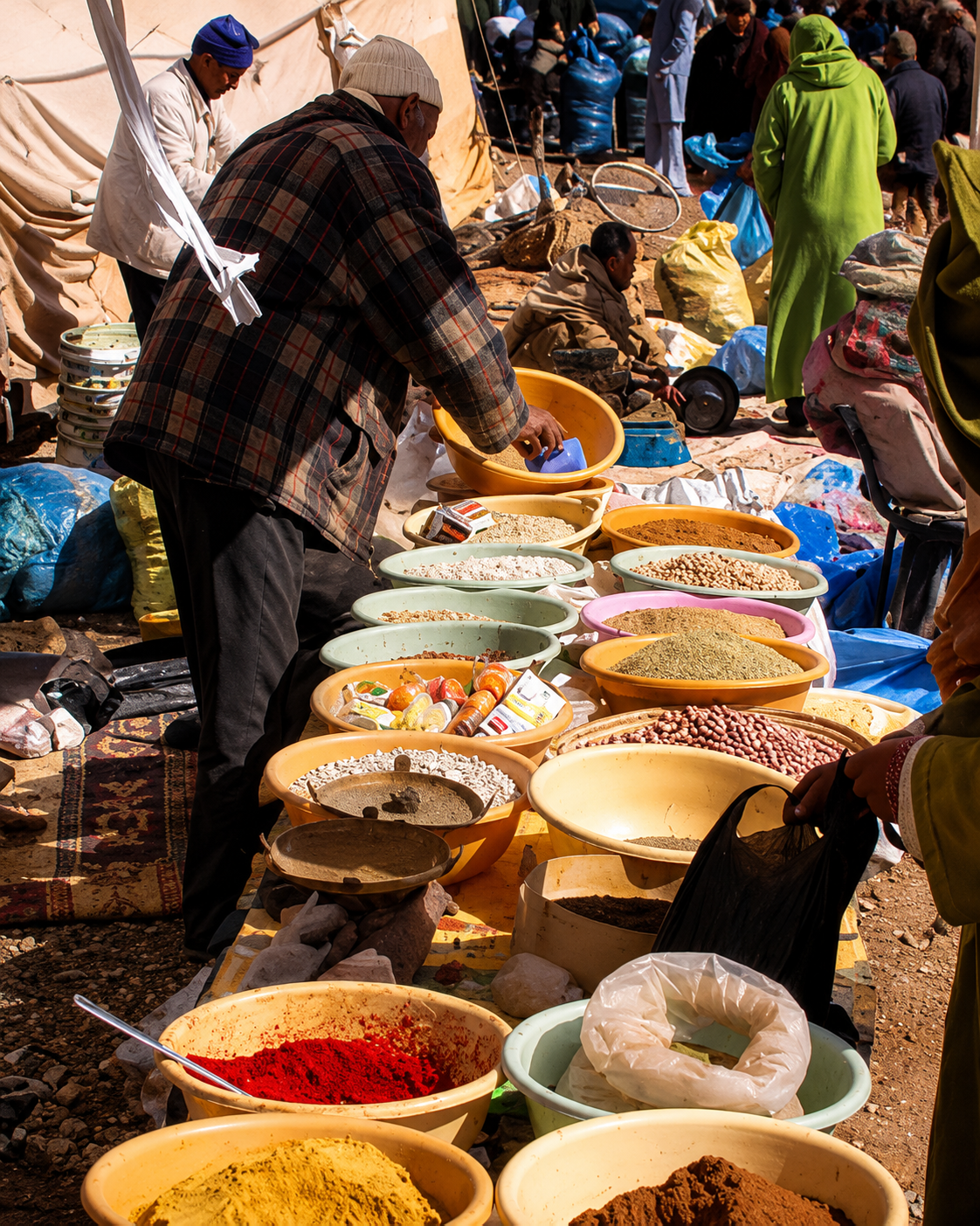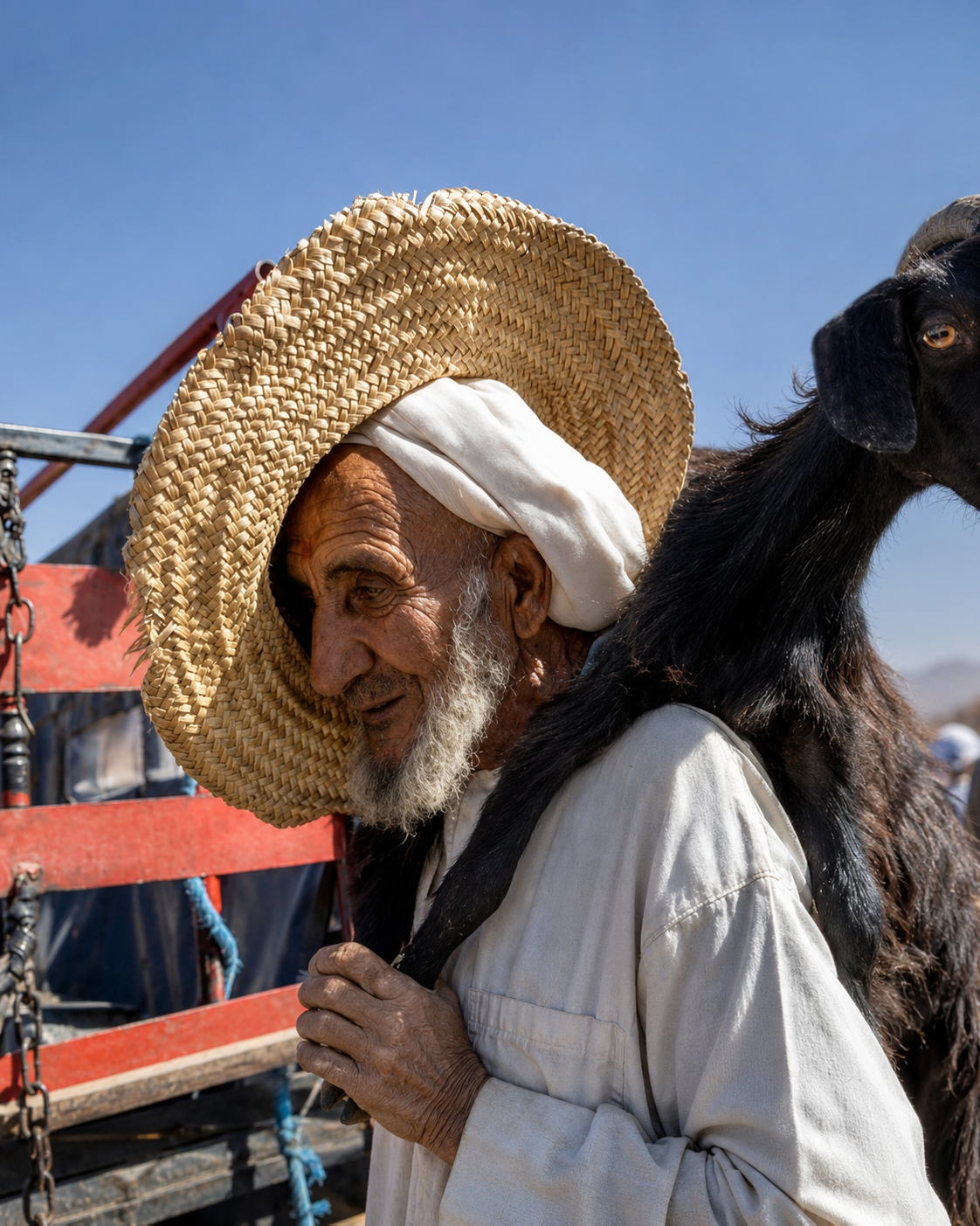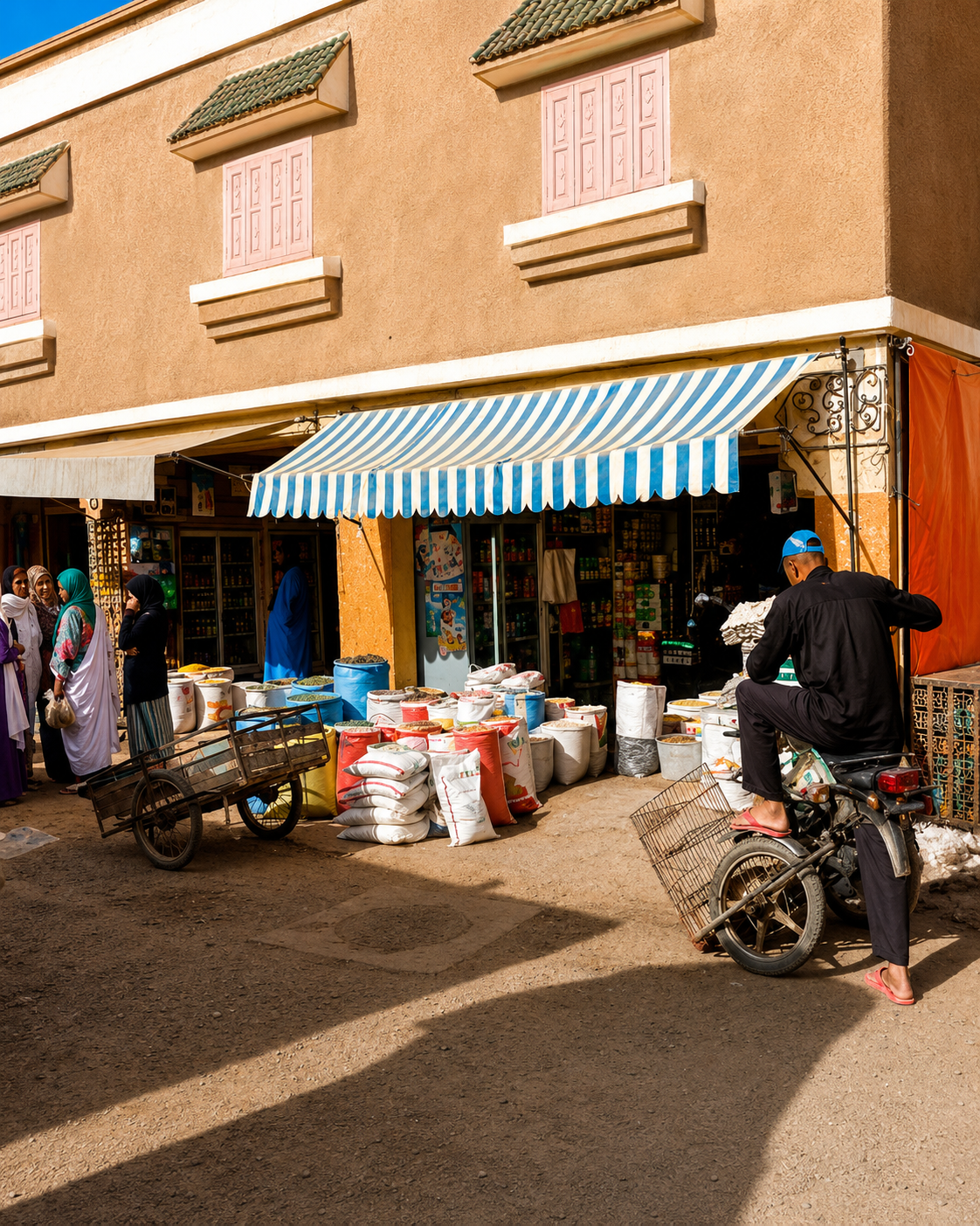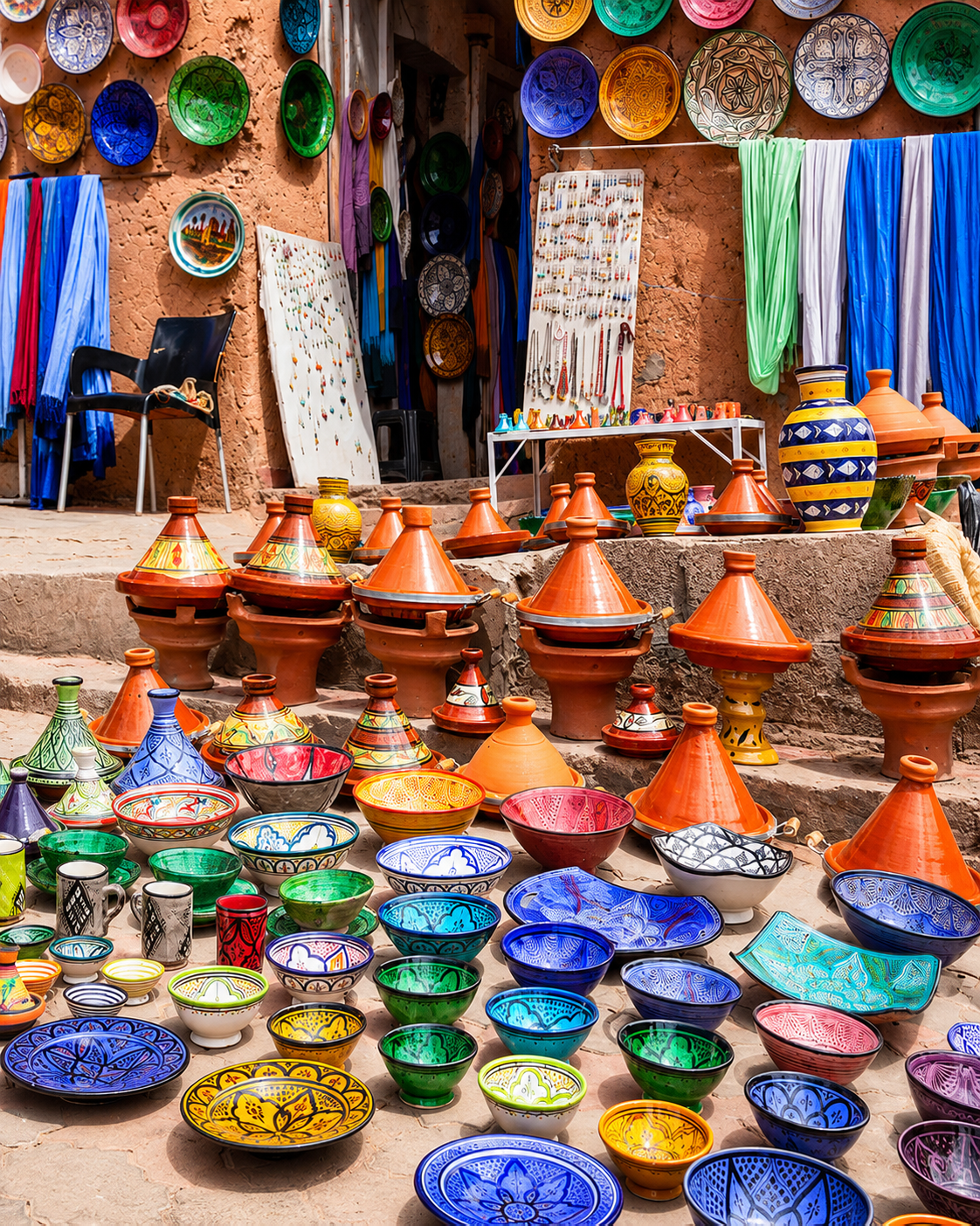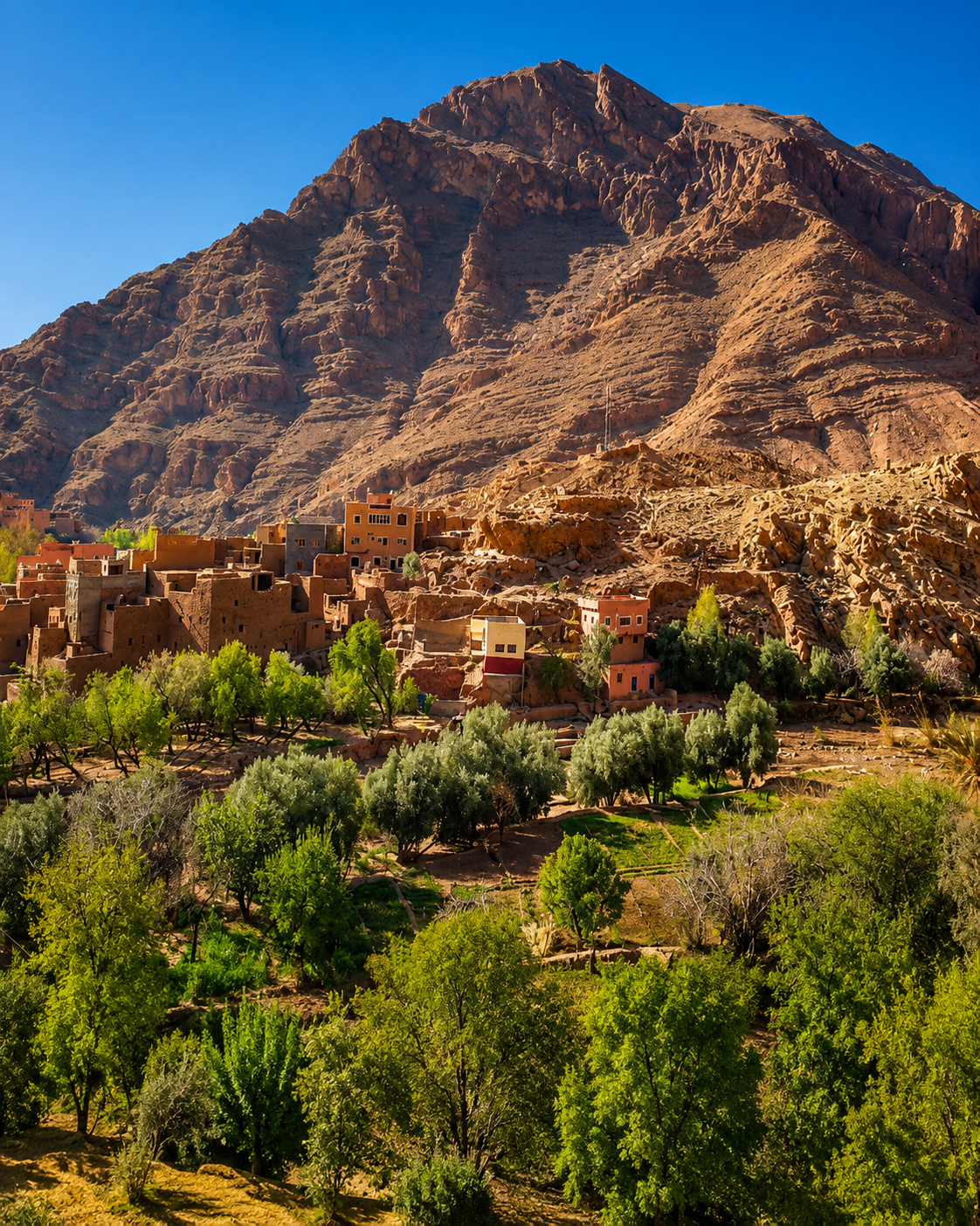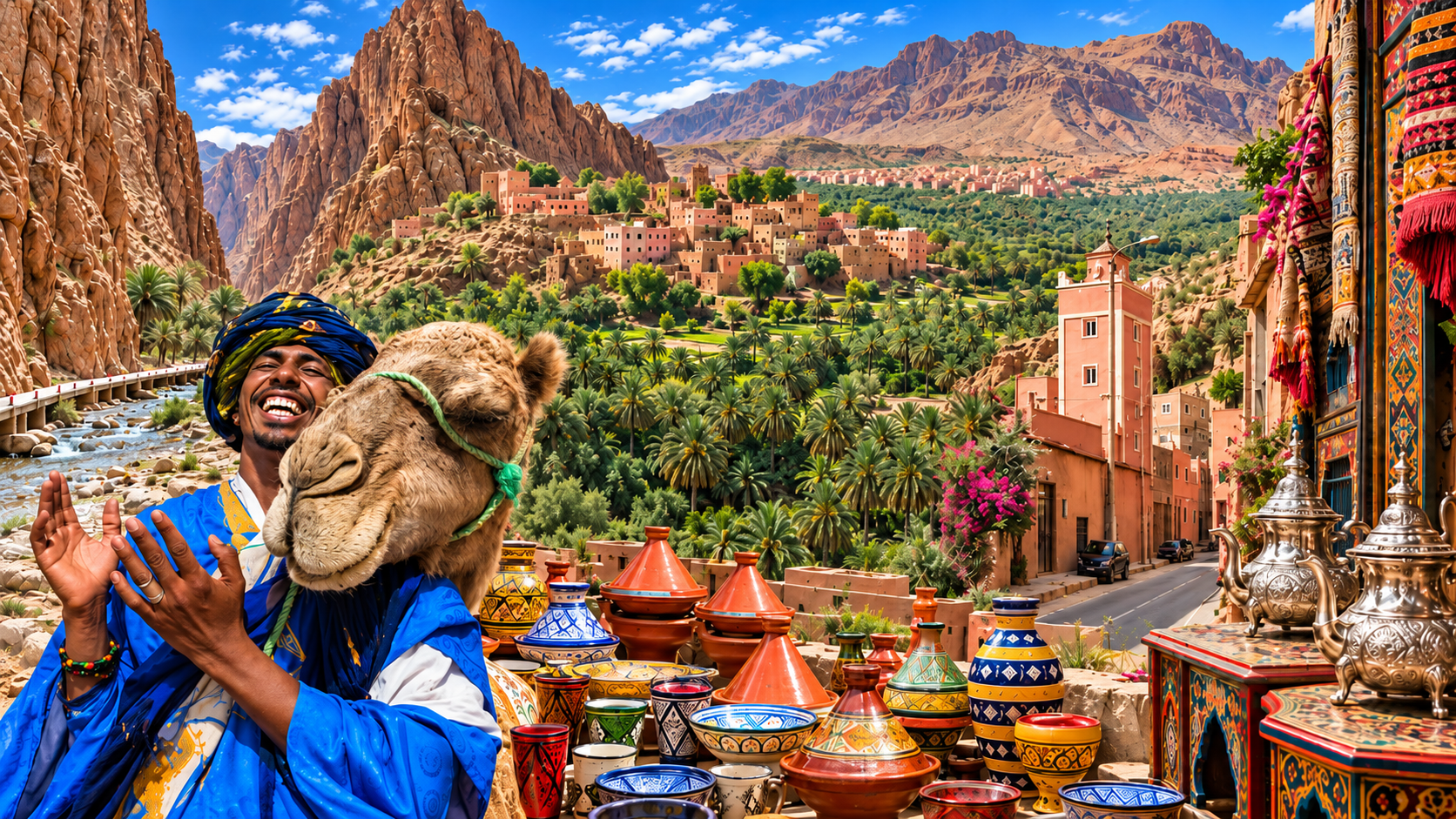
Editorial collage of Tinghir, Todgha Gorge, oasis scenery and Moroccan market culture

Oasis City of Southern Morocco

Tinghir Palm oasis, Todra cliffs and southern Atlas light

Tinghir is best read as an oasis city before it is treated as a stop on the road. Palms, earthen ksour, the Todgha river and the cliffs of Todra Gorge place the city between cultivated shade and southern Atlas stone.

Why Tinghir matters

Where oasis and gorge meet

Tinghir matters because it gathers several southern Moroccan landscapes into one readable place: a working palm oasis, old earthen settlement, market-town life, a route between Ouarzazate and Tafilalet, and the dramatic limestone walls of the Todra Gorge just beyond the city.

Visitors who only photograph the gorge miss the quieter intelligence of the valley. The oasis is not a backdrop; it is the system that gives shade, water, cultivation, movement and human scale to the cliffs around it.
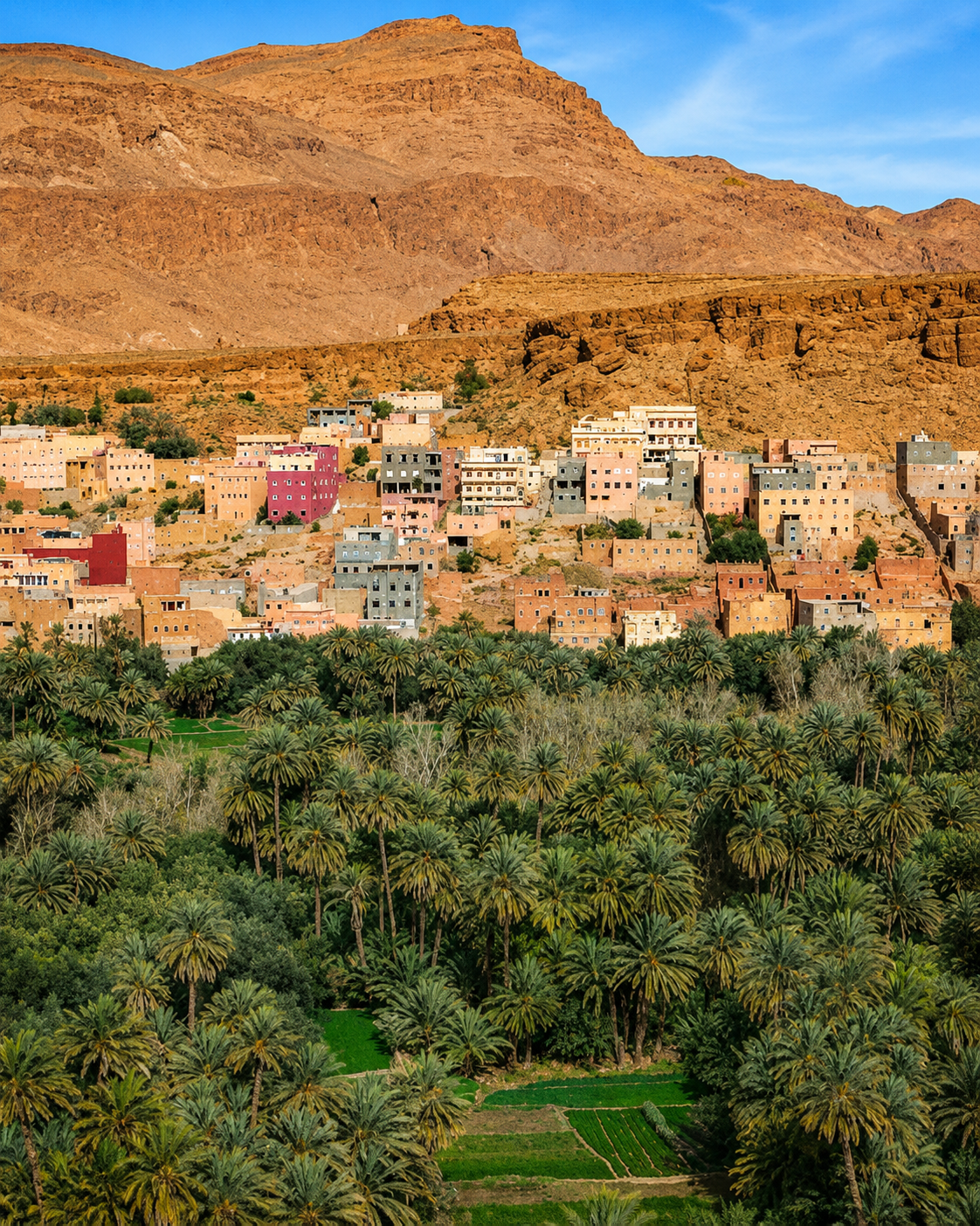
Palm oasis and colourful valley settlement near Tinghir

A city between palms and stone

The strongest first reading is simple: look from the oasis to the rock, then back from the gorge toward the town. Tinghir’s character sits in that exchange.

EXPLORE

Tinghir

Historical orientation

From oasis settlement to southern Atlas gateway

Tinghir is not defined by one imperial monument or a single founding story. Its identity is older and more practical: water moving through the Todgha valley, palms and cultivated plots, earthen ksour, mountain routes, trade, administration and tourism around one of Morocco’s most recognisable gorge landscapes.

01Oasis foundations

Todgha valley life

The Todgha valley supported palm agriculture, settlement and local movement long before the city became known internationally through the nearby gorge.

02Earthen heritage

Ksour and kasbahs

Old fortified quarters and earthen architecture speak of protection, storage, climate, family life and valley organisation rather than monumental display.

03Route corridor

Southern passage

Tinghir sits on the inland route linking Ouarzazate, Dadès, Tafilalet and the Sahara, making it a practical pause between mountain, oasis and desert regions.

04Today

Provincial gateway

As the capital of Tinghir Province in Drâa-Tafilalet, the city now anchors local administration, trade, guesthouses, guiding and access to the Todra/Todgha landscapes.

A visual bridge

Town, hospitality and material culture

Mountain-backed streets, objects associated with hospitality and colourful market textiles bring another layer into view. Tinghir is a lived-in town as well as an oasis gateway.

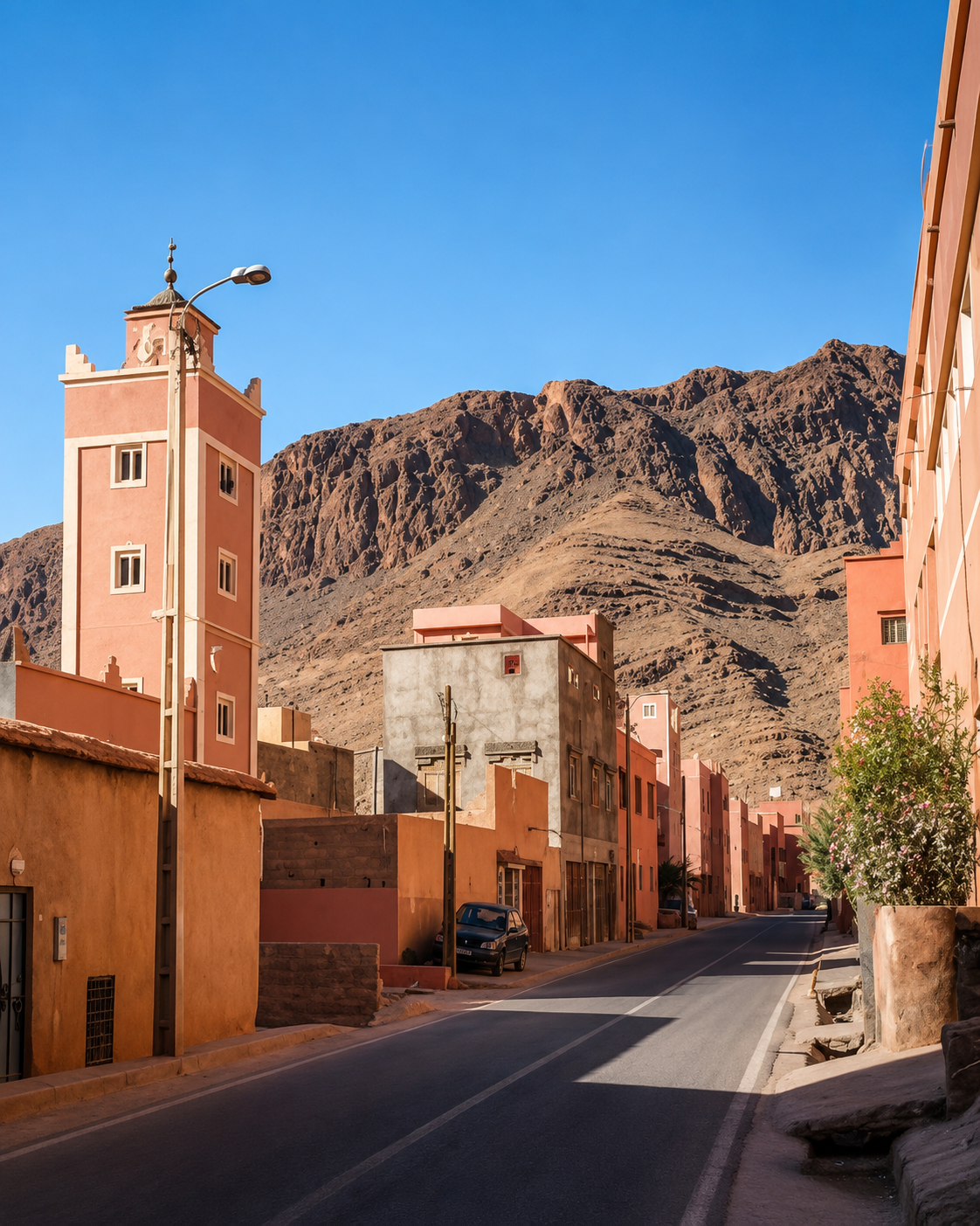
Tinghir street and earth-coloured tower beneath a rocky mountain

Town and mountain

The mountains remain close to the town’s streets, buildings and everyday routes.

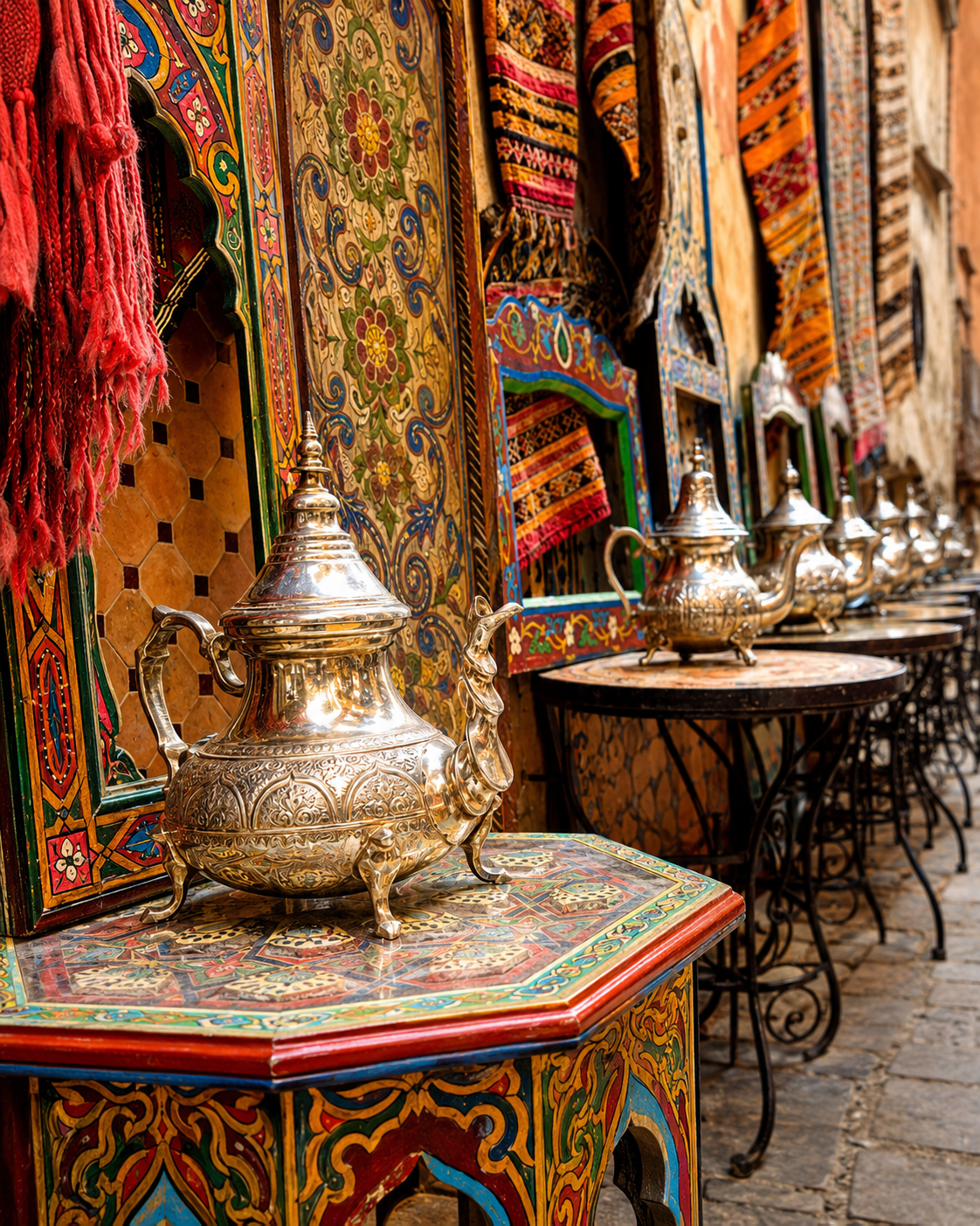
Polished Moroccan teapots displayed beside rugs and textiles

Objects of hospitality

Teapots, trays and textiles connect market displays with the wider Moroccan culture of hospitality.

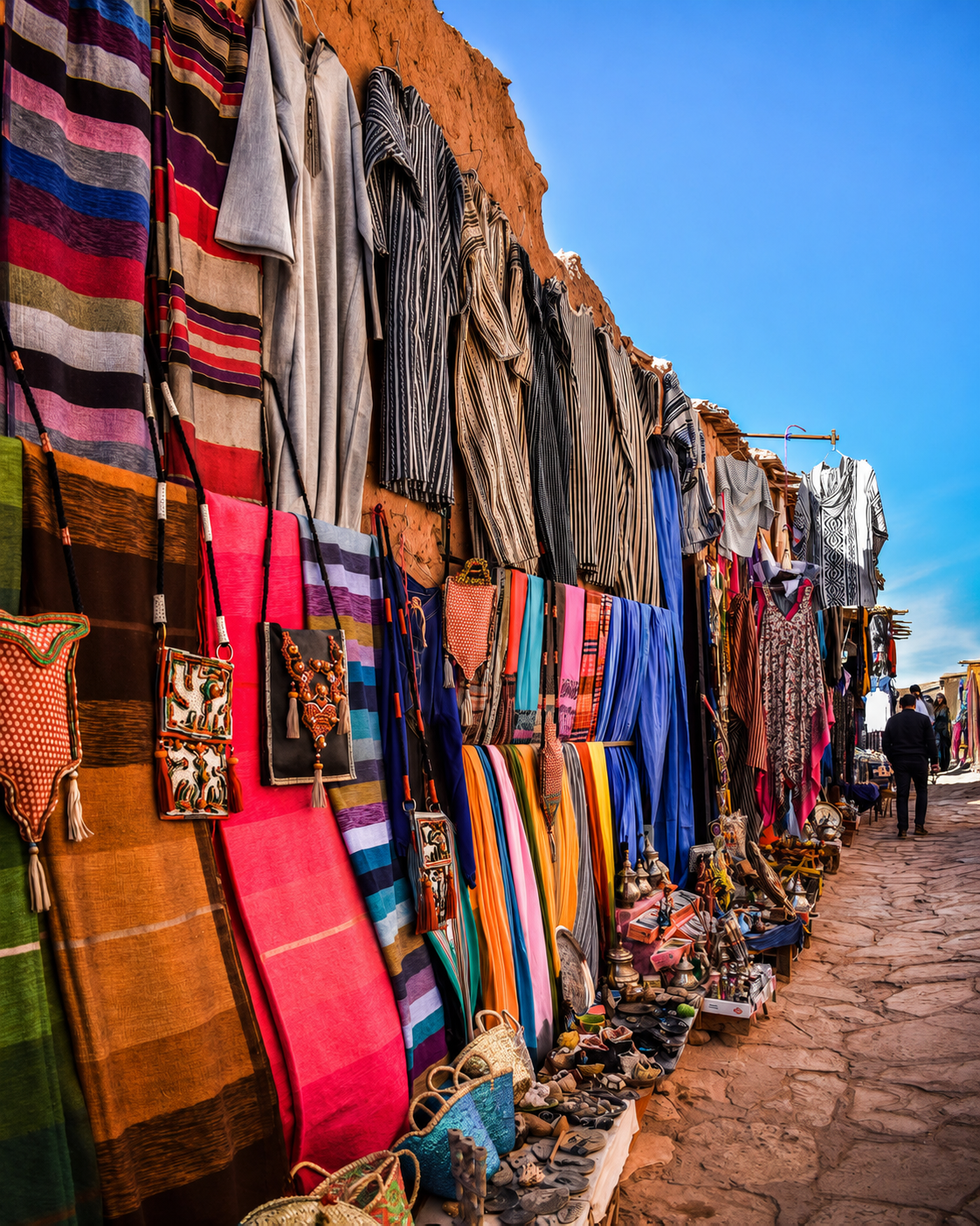
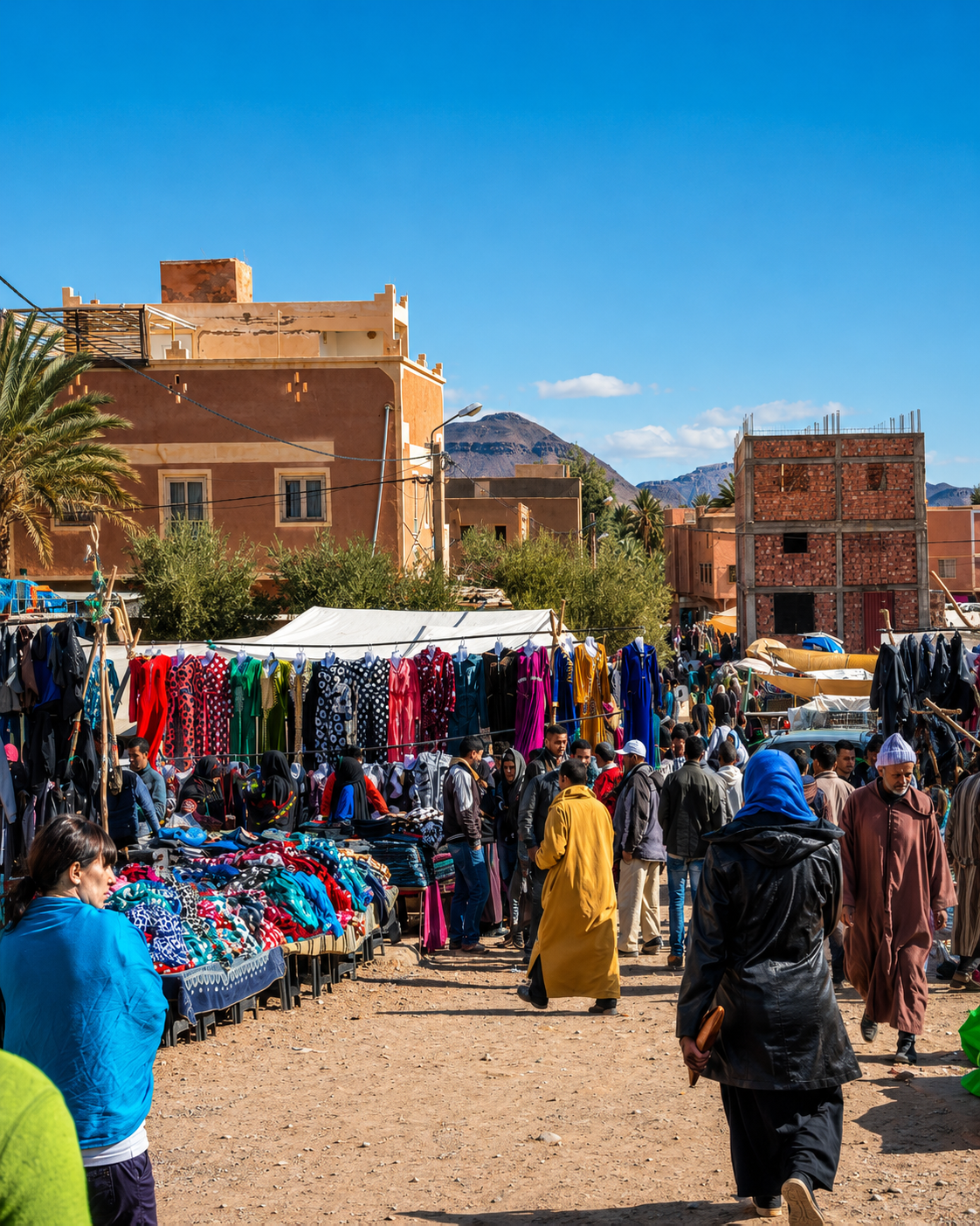
Colourful textiles and garments along a market lane

Colour and trade

Cloth, garments and shopfront displays give the market its own visual rhythm.

Tinghir at a glance

Oasis city

Tinghir is rooted in the Todgha valley palm oasis. The city’s most important visual contrast is between green cultivation and the arid stone of the Atlas edge.

Todra Gorge gateway

The famous gorge lies close to the city and draws walkers, climbers, photographers and road travellers, but it is best understood together with the oasis below it.

Amazigh southern identity

Local culture, language, architecture and valley life connect Tinghir to wider Amazigh southern Morocco without turning the city into a museum piece.

Route base

Tinghir works naturally with Dadès, Kelaat M’Gouna, Skoura, Ouarzazate and Tafilalet when building a slower southern inland route.

A clearer reading of the city

A city shaped by water, stone and movement

To understand Tinghir, read the oasis and gorge together. Water, stone, earthen architecture, market movement and route culture form one landscape, not separate attractions competing for attention.

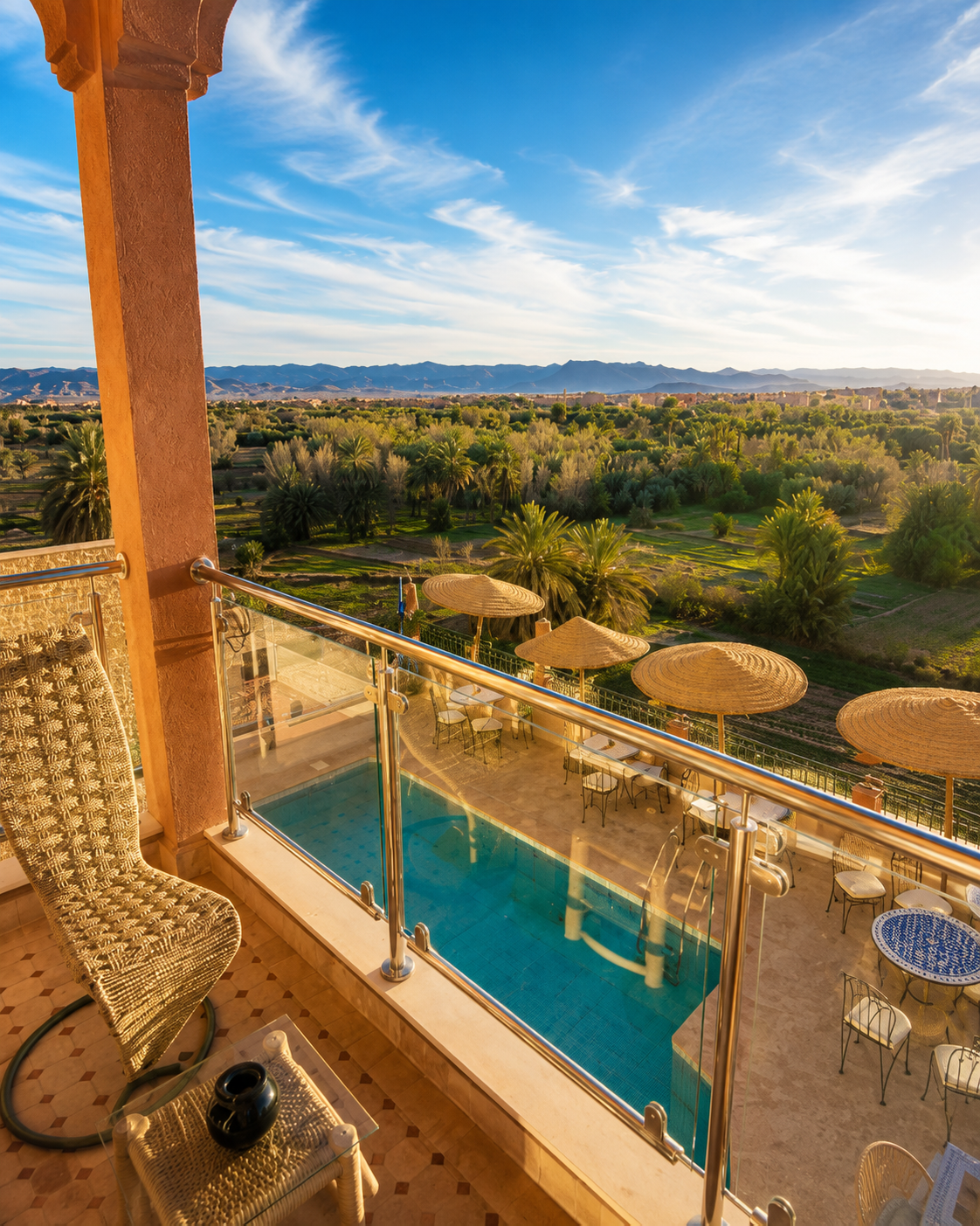
View from a balcony over the palm oasis near Tinghir
Layer 1

Oasis systems

Palm cultivation, channels, paths and field edges show how the Todgha valley is organised around water. The oasis is infrastructure, livelihood and beauty at the same time.

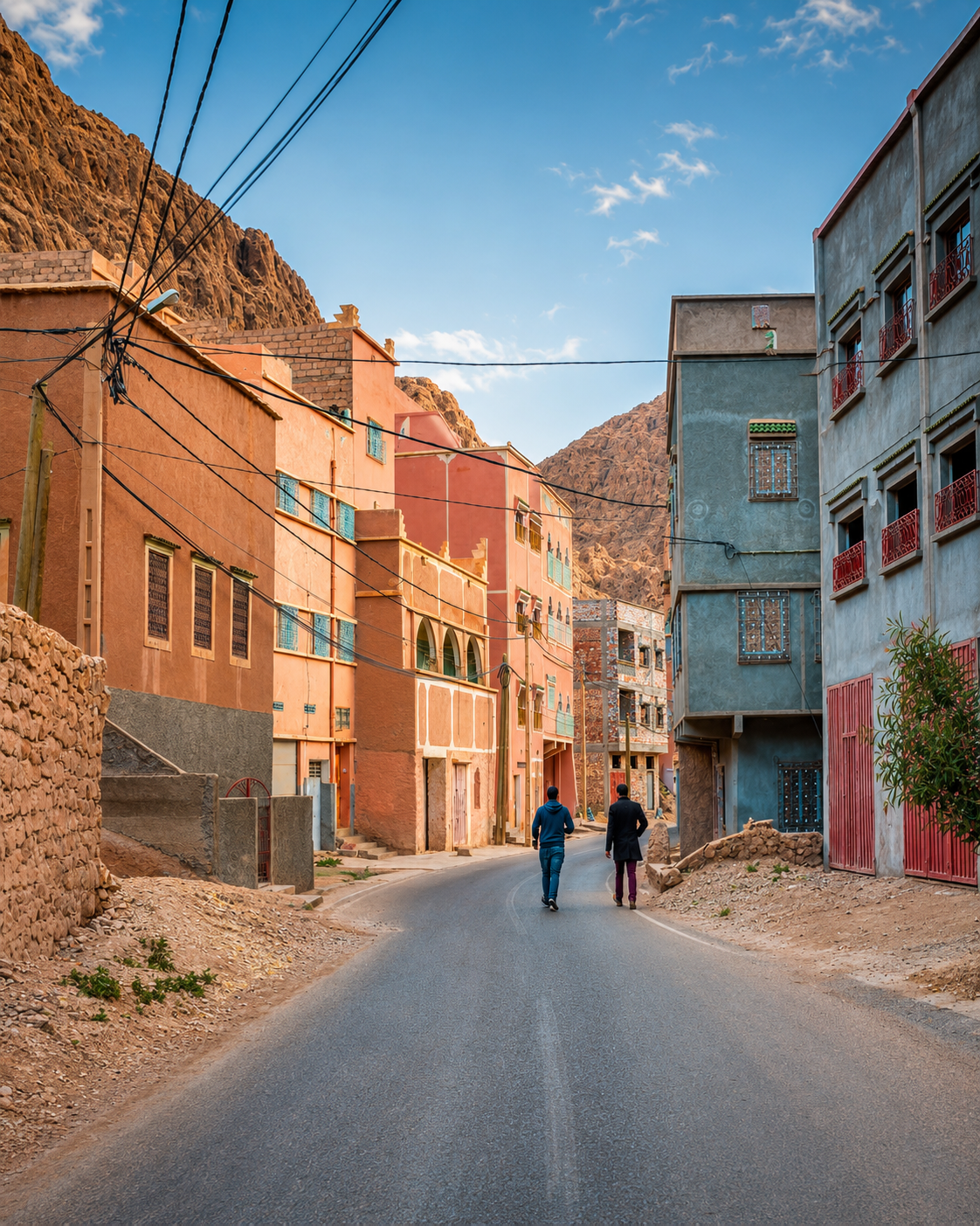
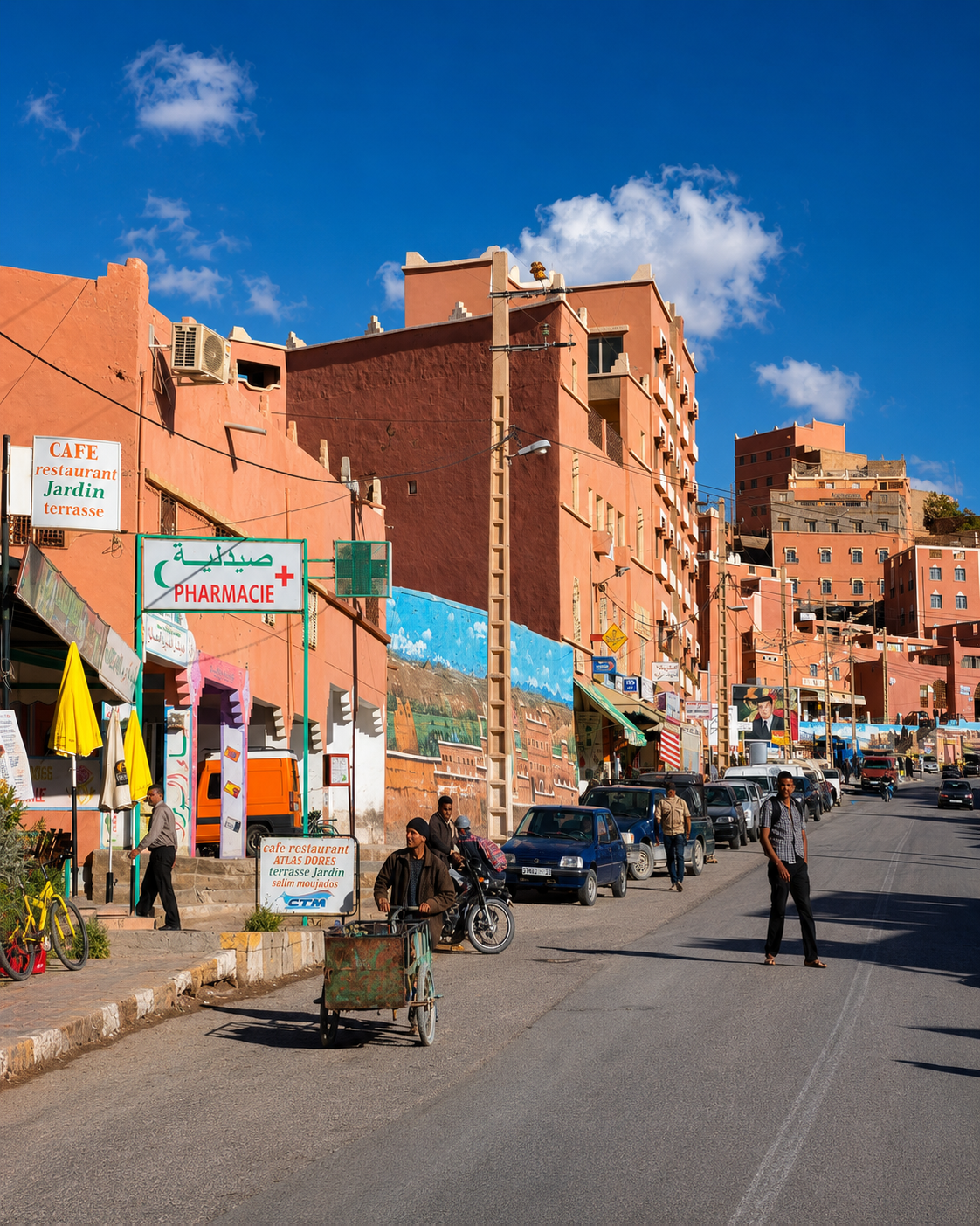
A neighbourhood road and houses beneath mountains in Tinghir
Layer 2

Mountain-edge settlement

Tinghir’s built fabric moves between modern town, older earthen quarters and valley villages. The mountains are never far from the urban view.

Clothing stalls and everyday movement in a Tinghir market
Layer 3

Markets and material culture

Markets, household objects, textiles, ceramics and food culture keep the page grounded in daily life, not only in cliffs and viewpoints.

Landmarks & orientation

Read Tinghir through six defining places

No single monument explains Tinghir. These six places show how the city moves between oasis, gorge, old earthen settlement, market life and the wider southern route.

1
Tinghir Palm Oasis

The green corridor below the town is essential to understanding Tinghir. Walk slowly, respect cultivated land and read the city through shade and water.

2
Todra / Todgha Gorge

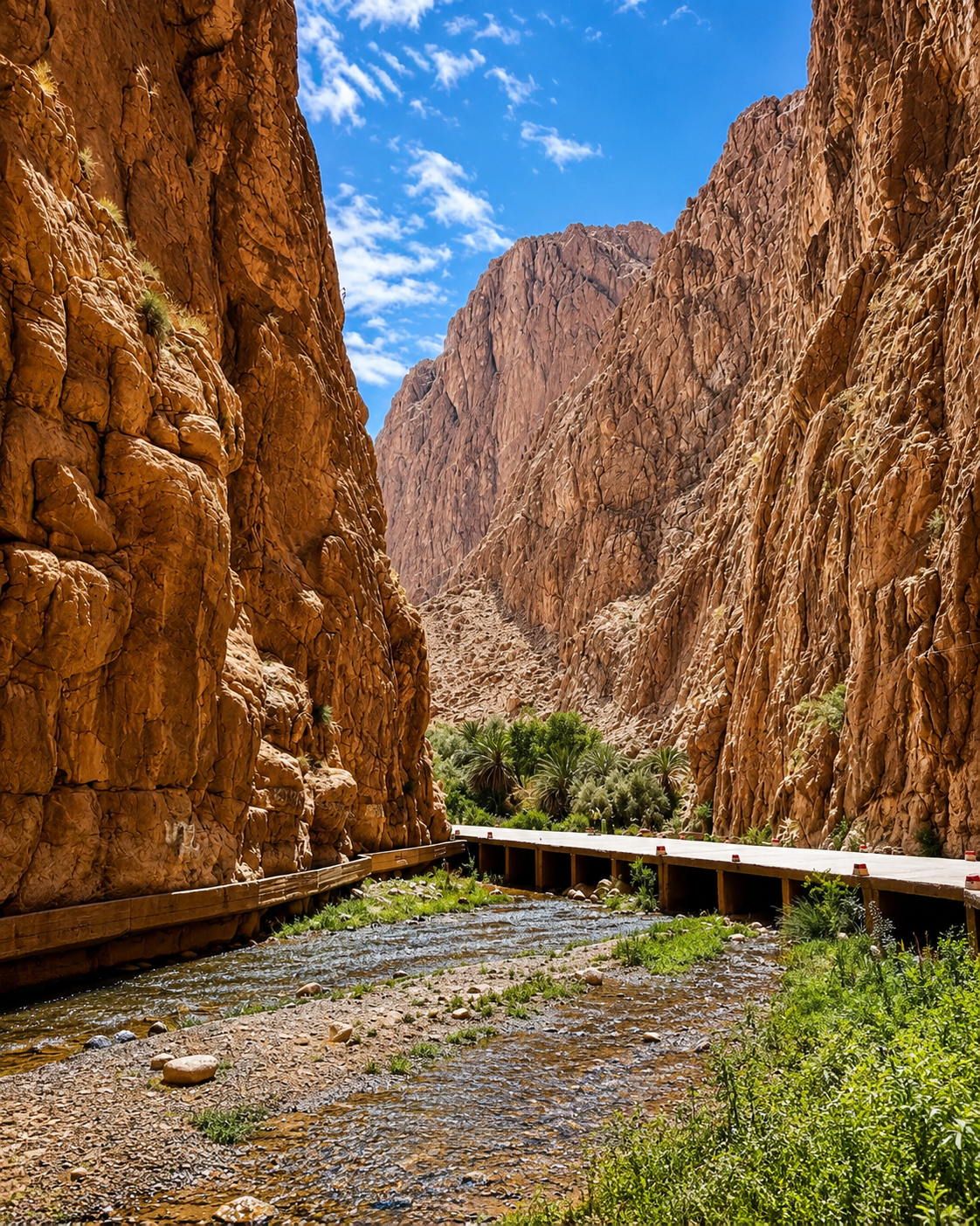
The limestone gorge is the region’s famous natural landmark, with a riverbed, sheer cliffs and a powerful sense of enclosure.

3
Glaoui Kasbah viewpoint

The kasbah-side viewpoint is valued for the panorama across palms, earth-coloured settlement and the road toward the gorge.

4
Old ksour of the valley

Older fortified quarters and earthen village forms help visitors see how architecture responded to climate, storage, privacy and protection.

5
Todgha river and irrigation channels

The river and channels explain the oasis more honestly than a viewpoint alone. They make cultivation, paths and shade possible.

6
Tinghir town centre

The centre gives the practical layer: shops, cafés, taxis, markets, guesthouses and the daily movement that supports travel through the region.

Todgha Gorge cliffs, riverbed and curving roadside barrier near Tinghir
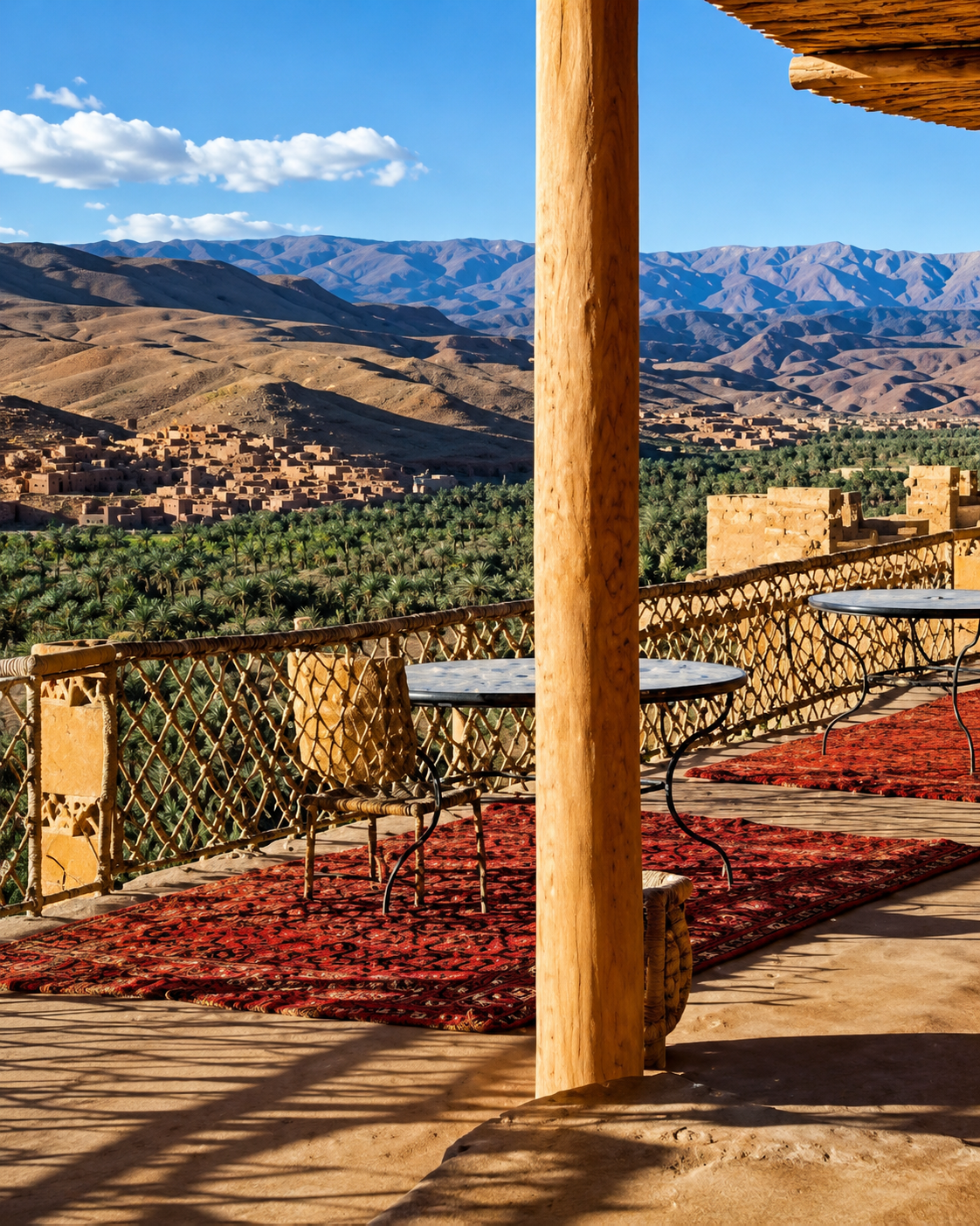
A shaded terrace overlooking palm groves and valley architecture around Tinghir

Oasis architecture

Old kasbahs and oasis architecture — settlement shaped by water, shade and earth

Tinghir’s most meaningful architecture is not always monumental. Earthen walls, old kasbah forms, shaded thresholds, palm-lined paths and valley houses show how settlement adapts to heat, water, family life and the scale of the surrounding mountains.

  • Earthen materials keep buildings visually connected to the slopes and valley floor.
  • Shade, courtyards and narrow passages matter as much as facades.
  • The best reading comes from combining the old quarters with the palm oasis and gorge road.

Architectural reading

Three architectural languages to notice

Stone and enclosure

Todra Gorge speaks through vertical stone: narrowed passage, high walls, shadow, river sound and sudden openings. It gives the region a natural architecture of enclosure.

Water and shade

The oasis speaks through canals, palms, field edges and walking paths. The most important structure is often the one that moves water quietly through cultivated land.

Earth and settlement

Kasbahs, ksour and older houses use earth tones, thick walls and compact forms. Their restraint belongs to climate and valley life rather than decorative spectacle.

Visual atmosphere

Streets, markets and everyday detail

Nearby highlights

Nearby valleys and southern routes

Tinghir sits naturally within a wider southern inland route. Dadès, Kelaat M’Gouna, Skoura and Ouarzazate should be read as connected valley and kasbah landscapes rather than isolated checklist stops.

Dadès Valley

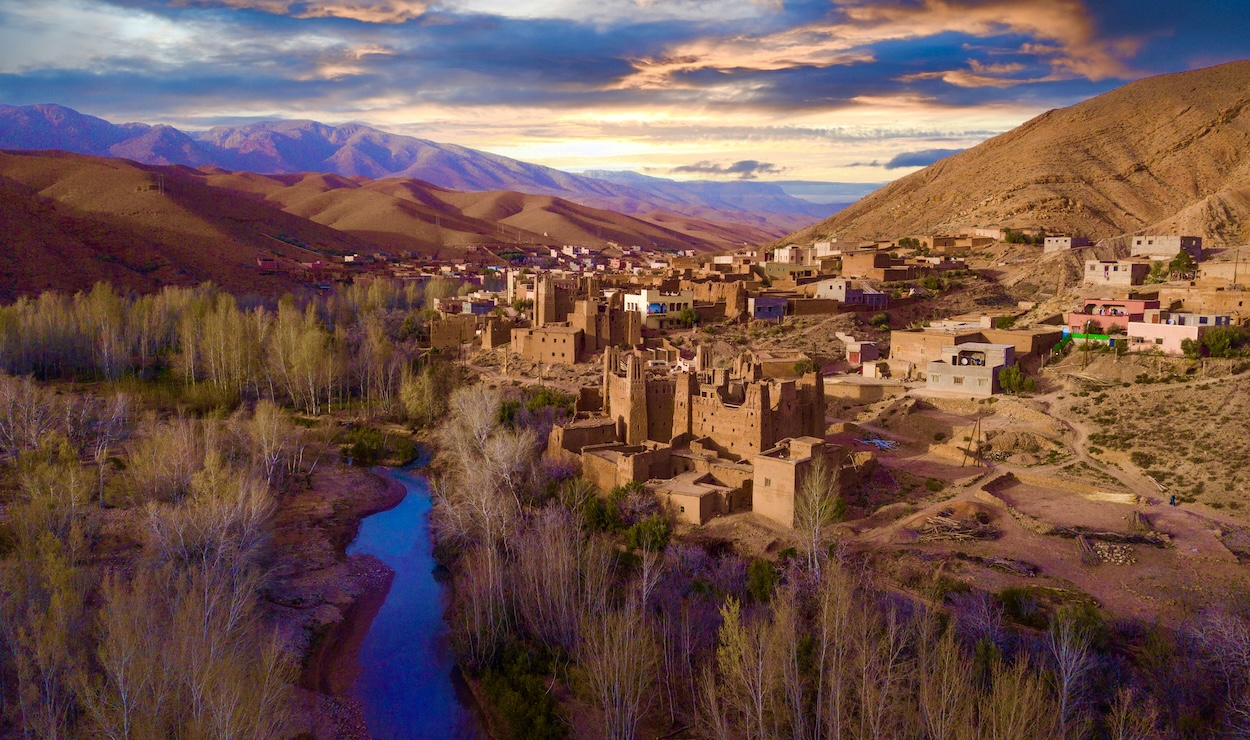
West of Tinghir, the Dadès landscapes bring red rock, bends, valley villages and a different rhythm of gorge-country travel.

Dadès Valley river and earthen settlement

Kelaat M’Gouna and Rose Valley

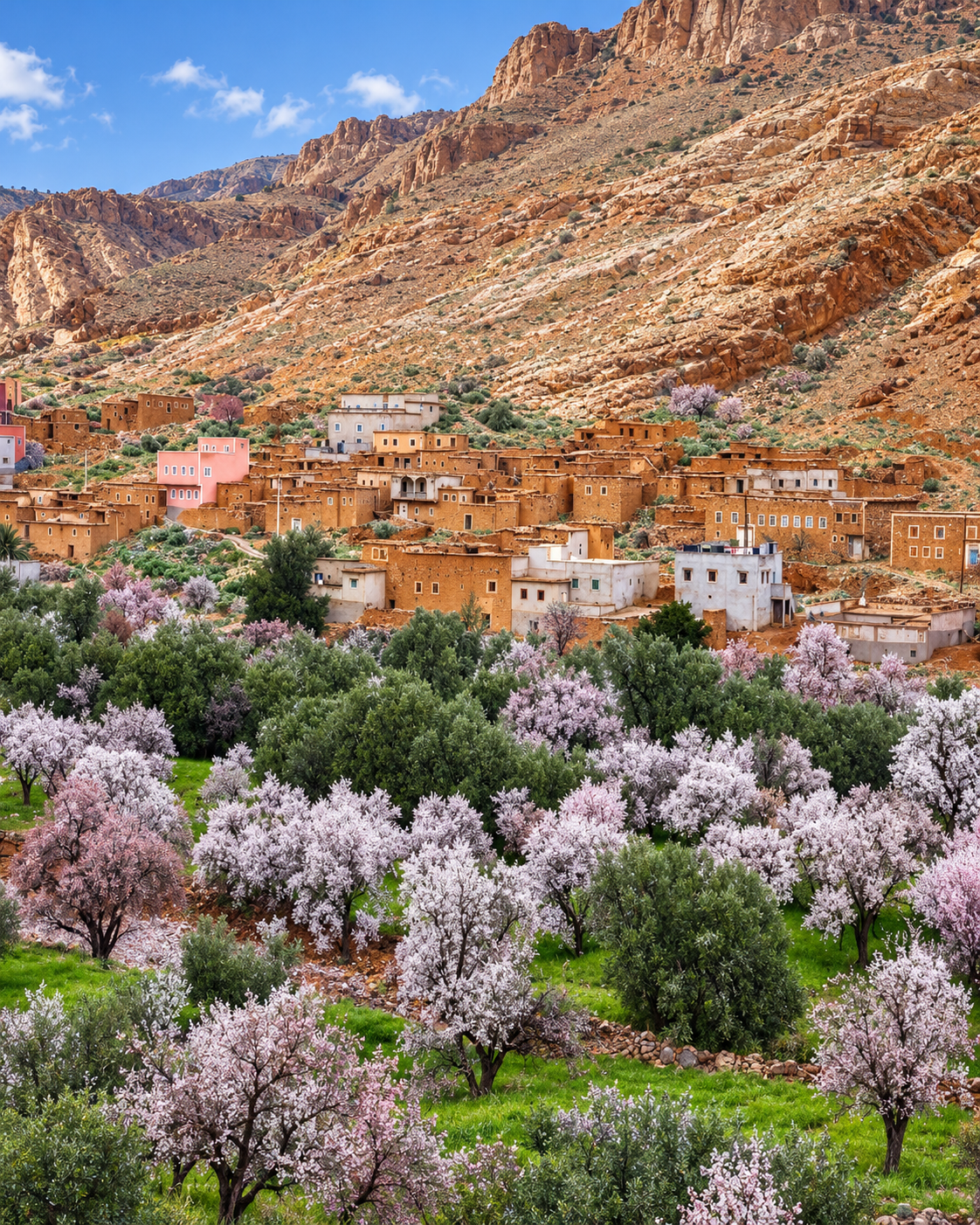
Rose Valley adds agricultural and seasonal culture to the southern route, with villages, fields and spring festival memory around Kelaat M’Gouna.

Flowering valley landscape and village in Rose Valley

Skoura and Ouarzazate route

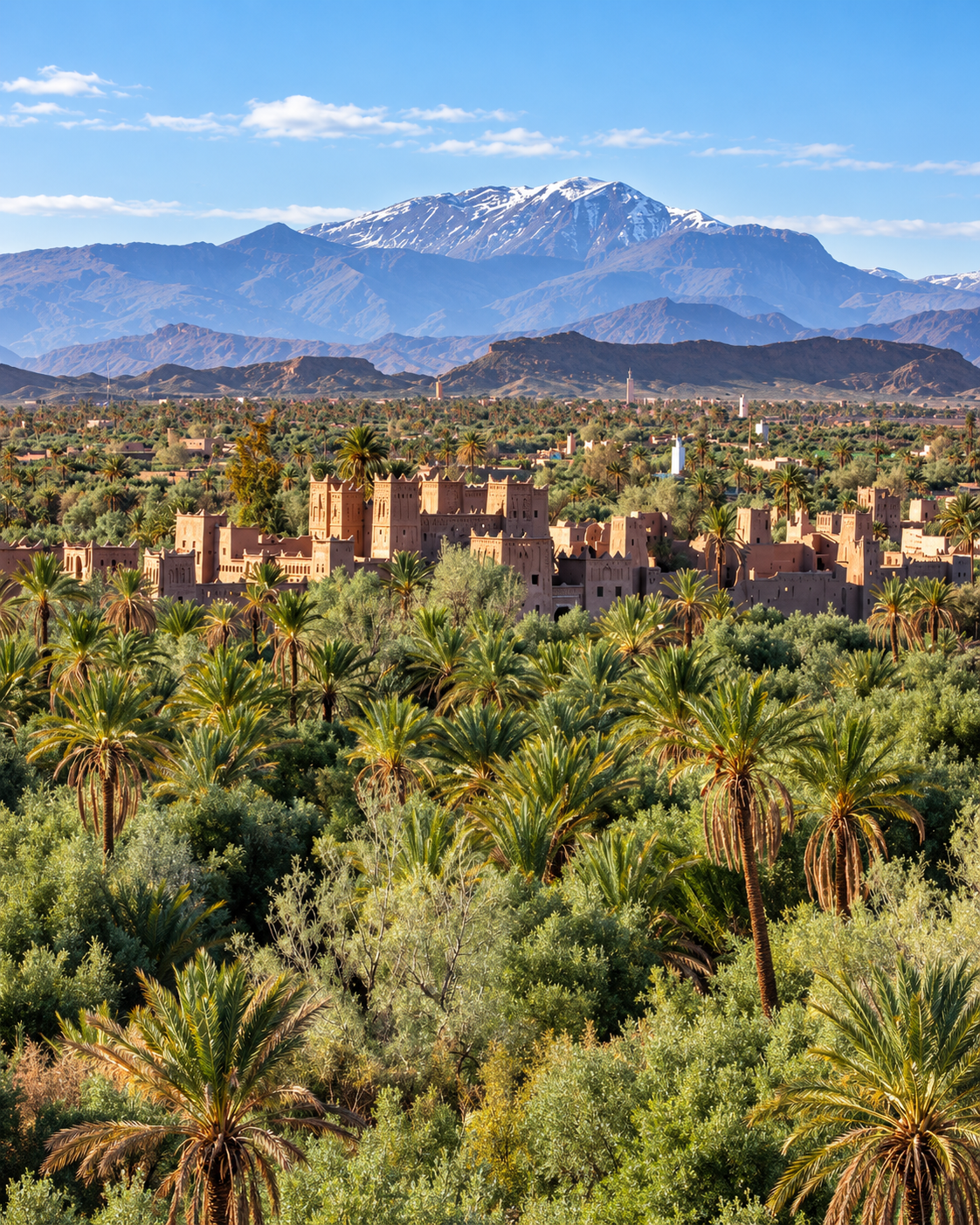
Continue toward Skoura and Ouarzazate for palm groves, kasbah architecture and the broader Road of the Kasbahs context.

Skoura palm grove, kasbah towers and distant snowy mountains
Travel note: opening hours, access rules, restoration work, transport conditions and local visitor arrangements can change. Check current official or trusted local information before travelling.

Practical orientation

How to experience Tinghir well

  • Do not reduce Tinghir to a quick gorge stop; give time to the oasis and town.
  • Visit Todra Gorge early or late when light and temperature are kinder.
  • Combine the gorge with an oasis walk if conditions, time and local advice allow.
  • Respect cultivated plots, irrigation channels and private paths inside the palm grove.
  • Use Tinghir as a route base for Dadès, Kelaat M’Gouna, Skoura, Ouarzazate or Tafilalet depending on your wider journey.

A strong first visit

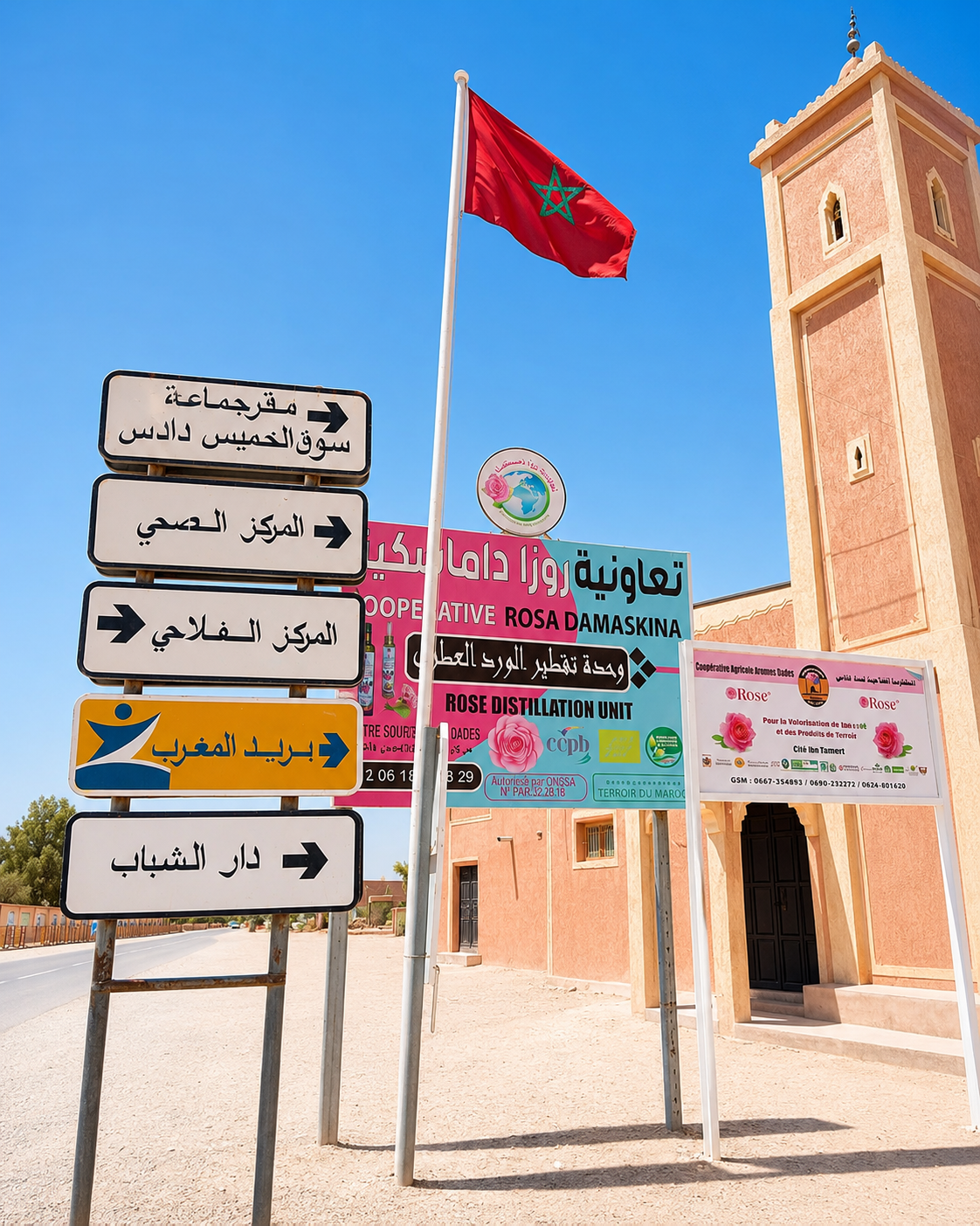
Directional signs and a tower in Tinghir town

Begin with the town and palm oasis to understand the valley, then continue to Todra Gorge for the dramatic stone layer. If you have more time, add Dadès or Rose Valley as a separate extension instead of rushing every stop into one day.

Earthen valley settlement and palm groves beneath the mountains around Tinghir

Go deeper with Exotic Morocco

Tinghir — Premium Visual City Guide

Continue with carefully structured Exotic Morocco guides designed to connect southern routes, oasis cities, architecture, culture, landscapes and practical orientation without reducing places to quick photo stops.

✓ Oasis context✓ Todra orientation ✓ Architecture & valleys✓ Culture & local life ✓ Practical travel guidance✓ Nearby route ideas

Continue the journey

Continue the journey through Tinghir

Look beyond the famous gorge and encounter a city of palms, water, earthen architecture, market life, southern Atlas stone and nearby valley routes.