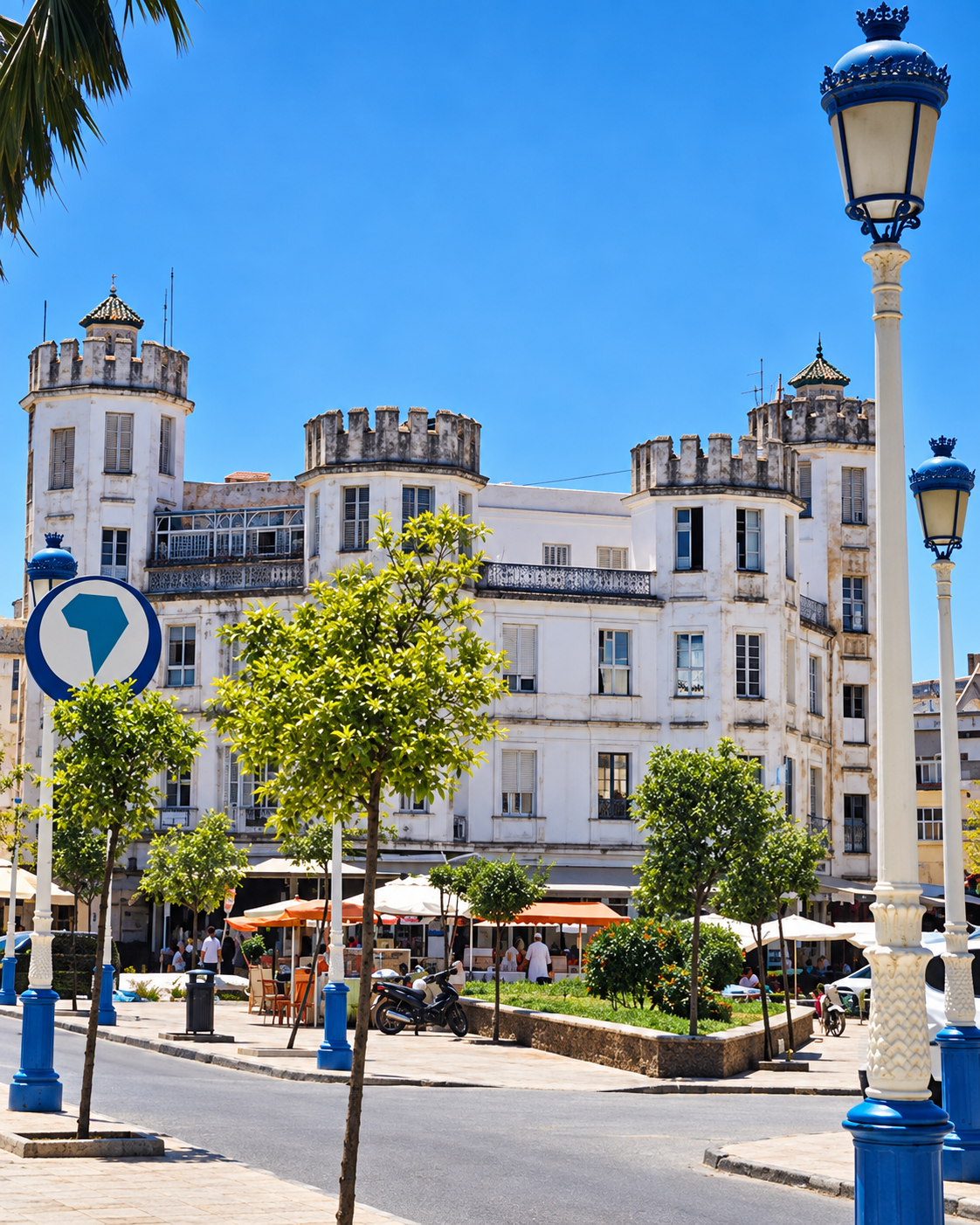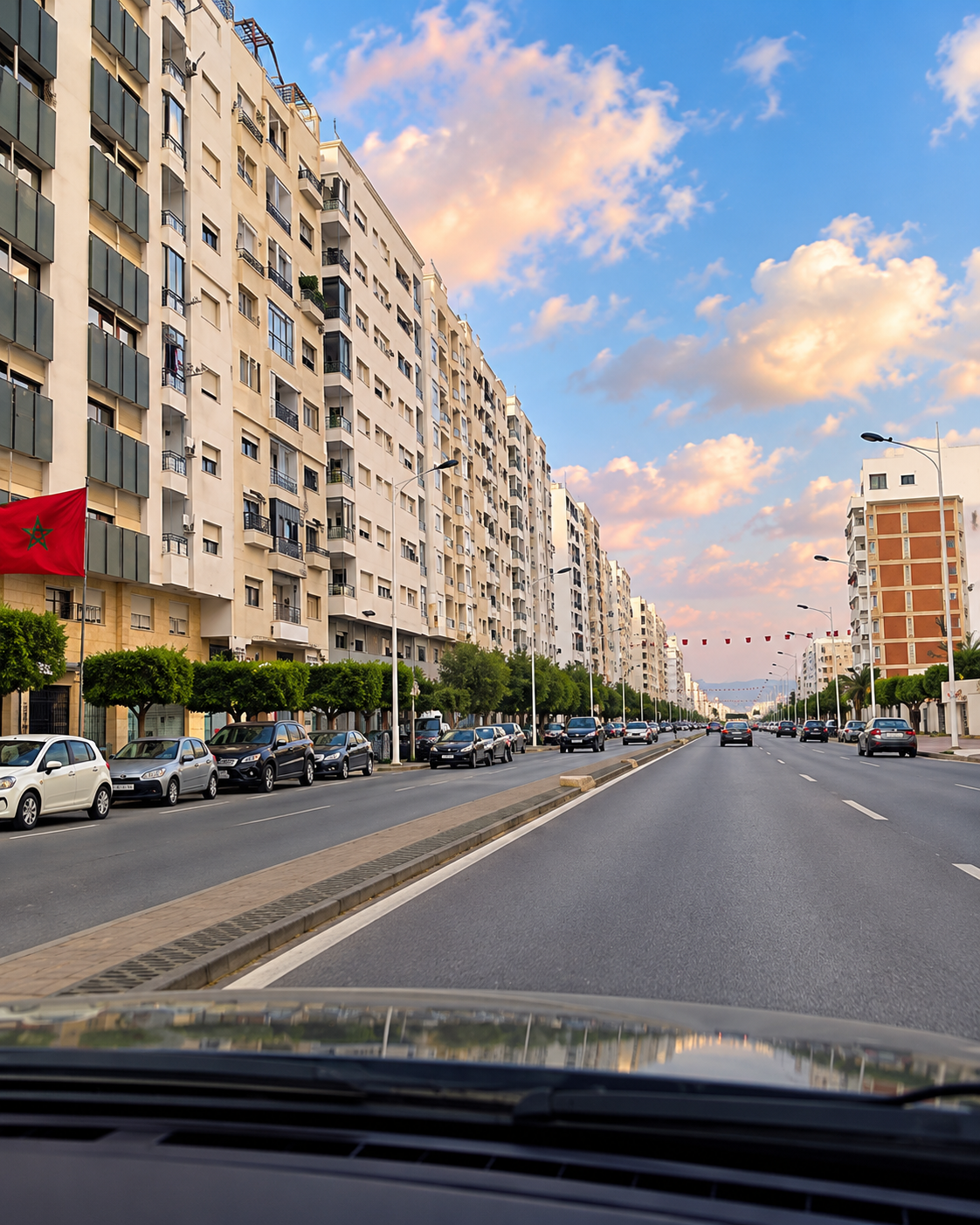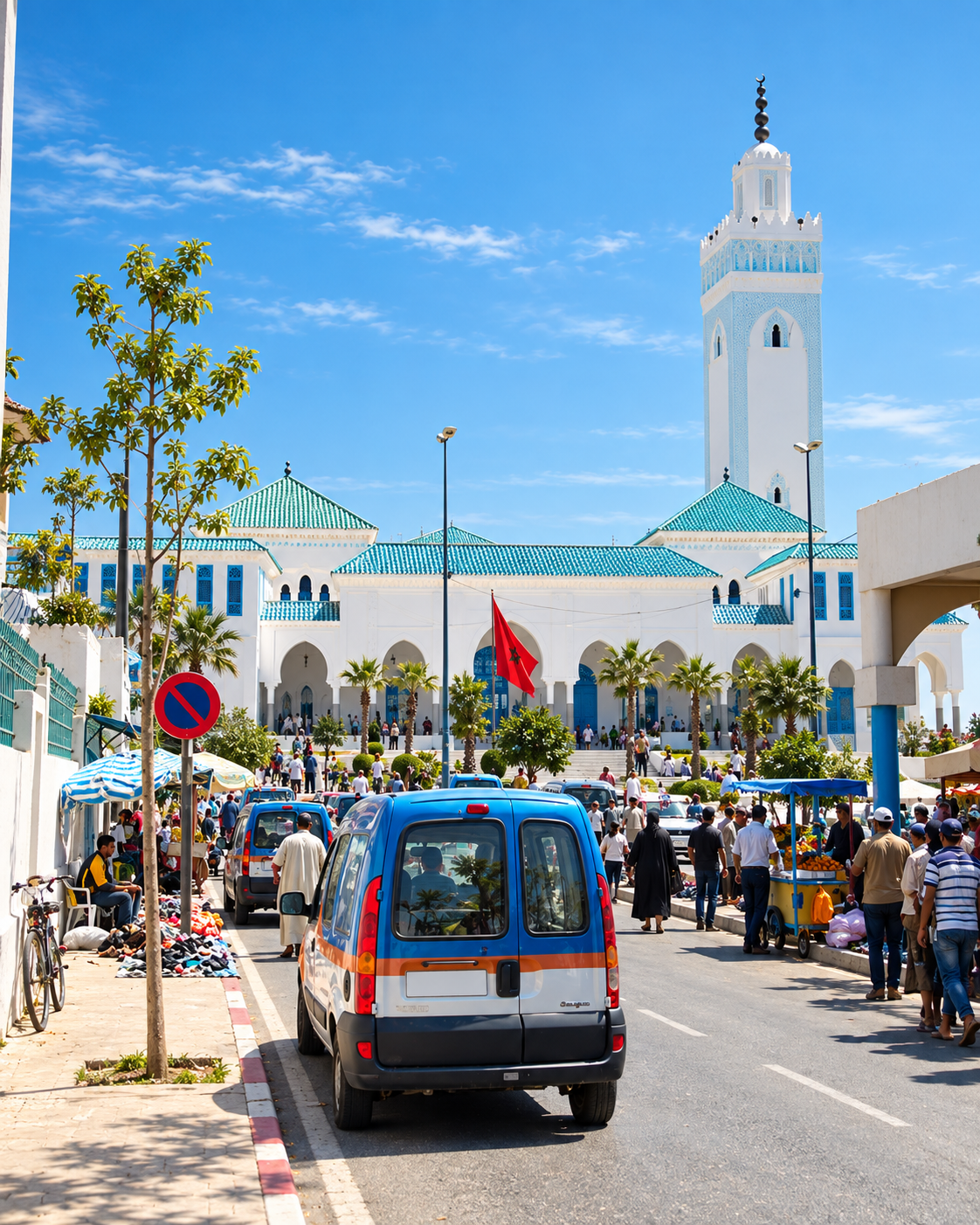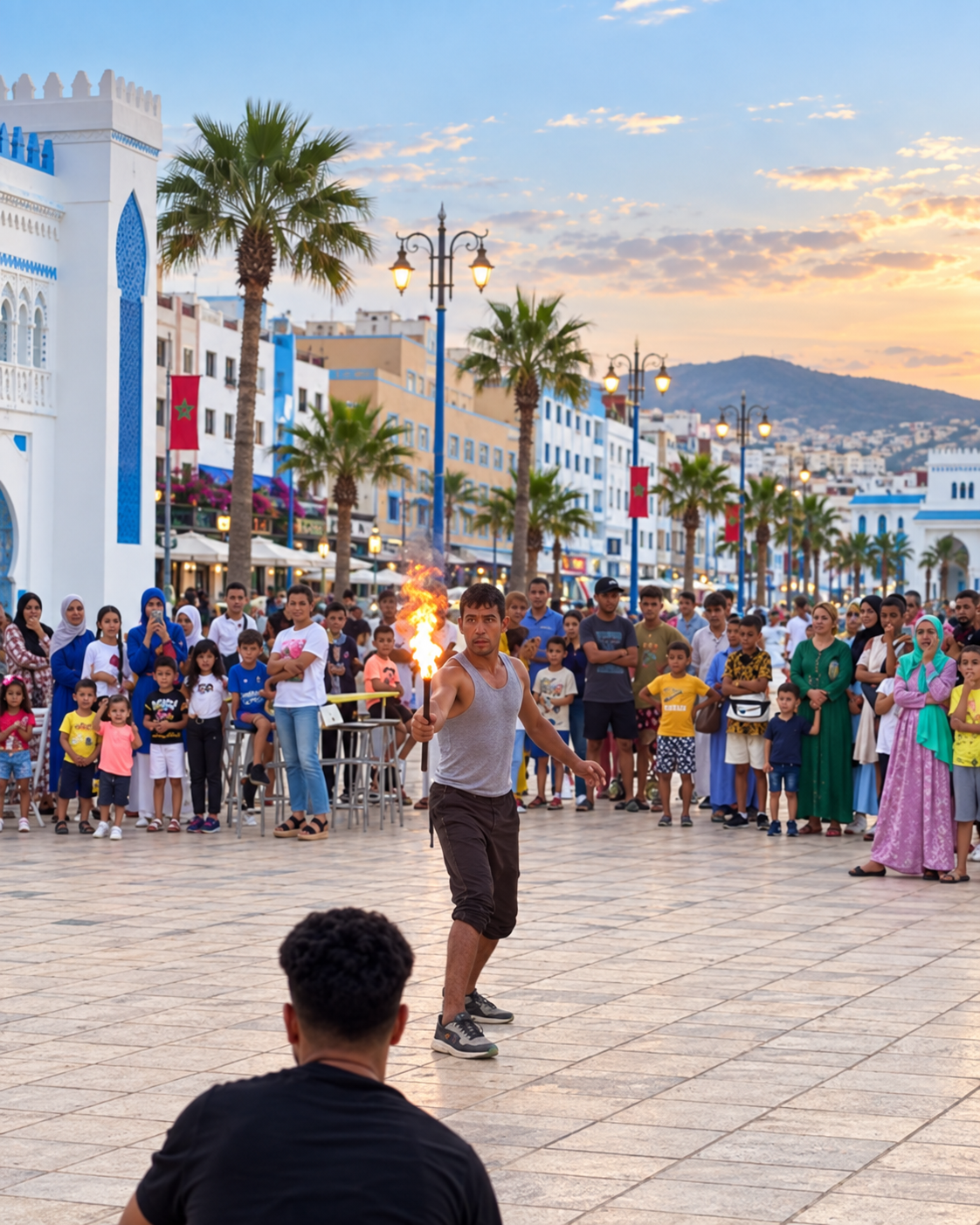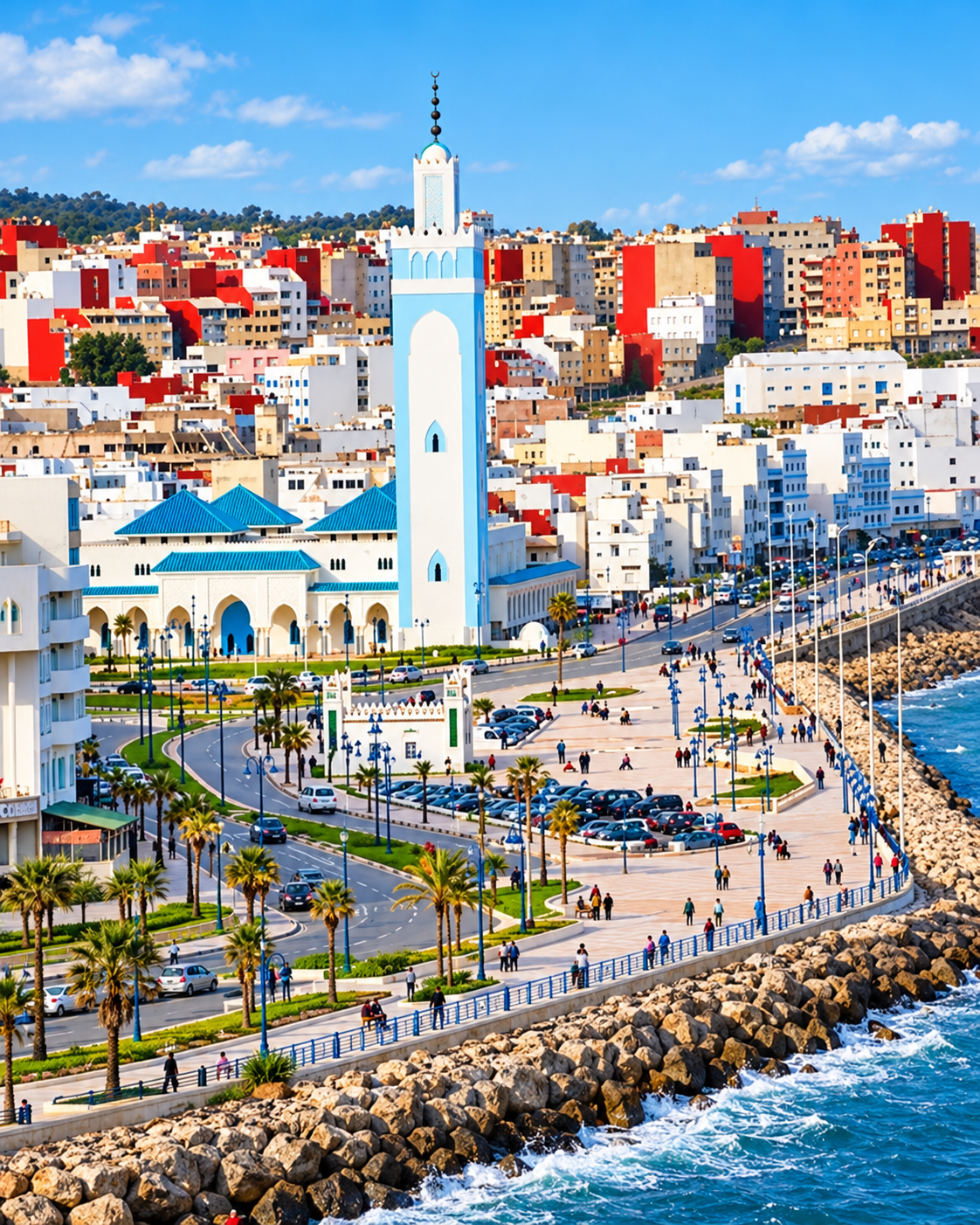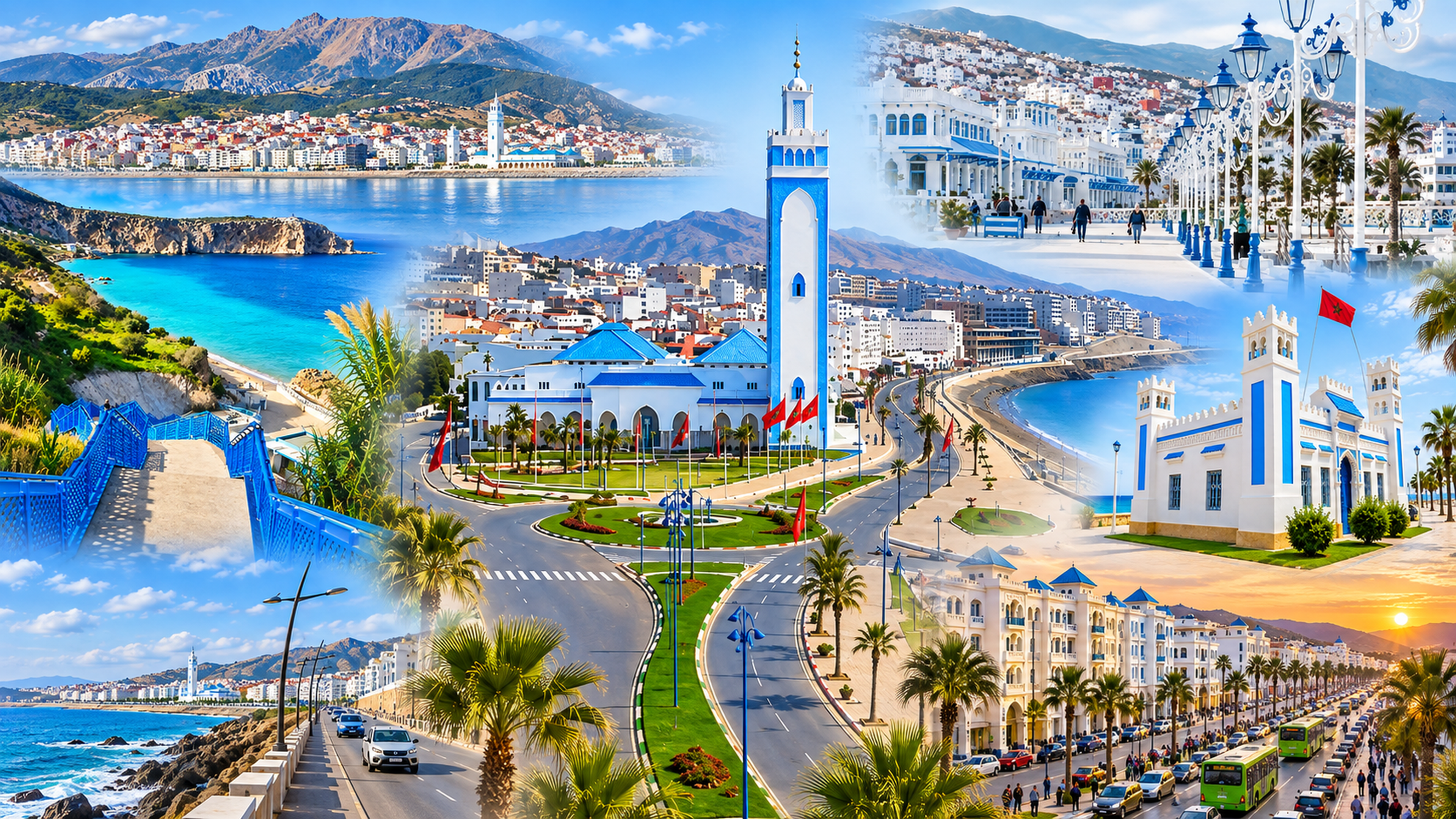
Fnideq photo montage with the seafront mosque, corniche and surrounding northern coast

Mediterranean Gateway of Northern Morocco

Fnideq Sea light, Castillejos memory and the road to the Rif coast

Fnideq sits where Morocco's northern coast narrows toward Ceuta and the Strait. Its character is practical, coastal and alert: a seafront town of markets, corniche walks, border rhythm, beach light and quick routes into the Tetouan, M'diq and Jbel Moussa landscapes.

Why Fnideq matters

Beyond the border-town shortcut

Fnideq is often reduced to its position near the Ceuta/Sebta frontier, but that is only the first reading. The town belongs to a wider Mediterranean corridor where Tetouan's urban culture, M'diq's marina coast, Tamuda Bay's resort language and the mountain edge of Belyounech all sit within easy reach.

Its importance is not imperial monumentality. It is threshold: between beach and road, Morocco and the Strait, daily commerce and summer movement, local routines and wider northern routes. Read that carefully and Fnideq becomes a useful key to Morocco's far north.
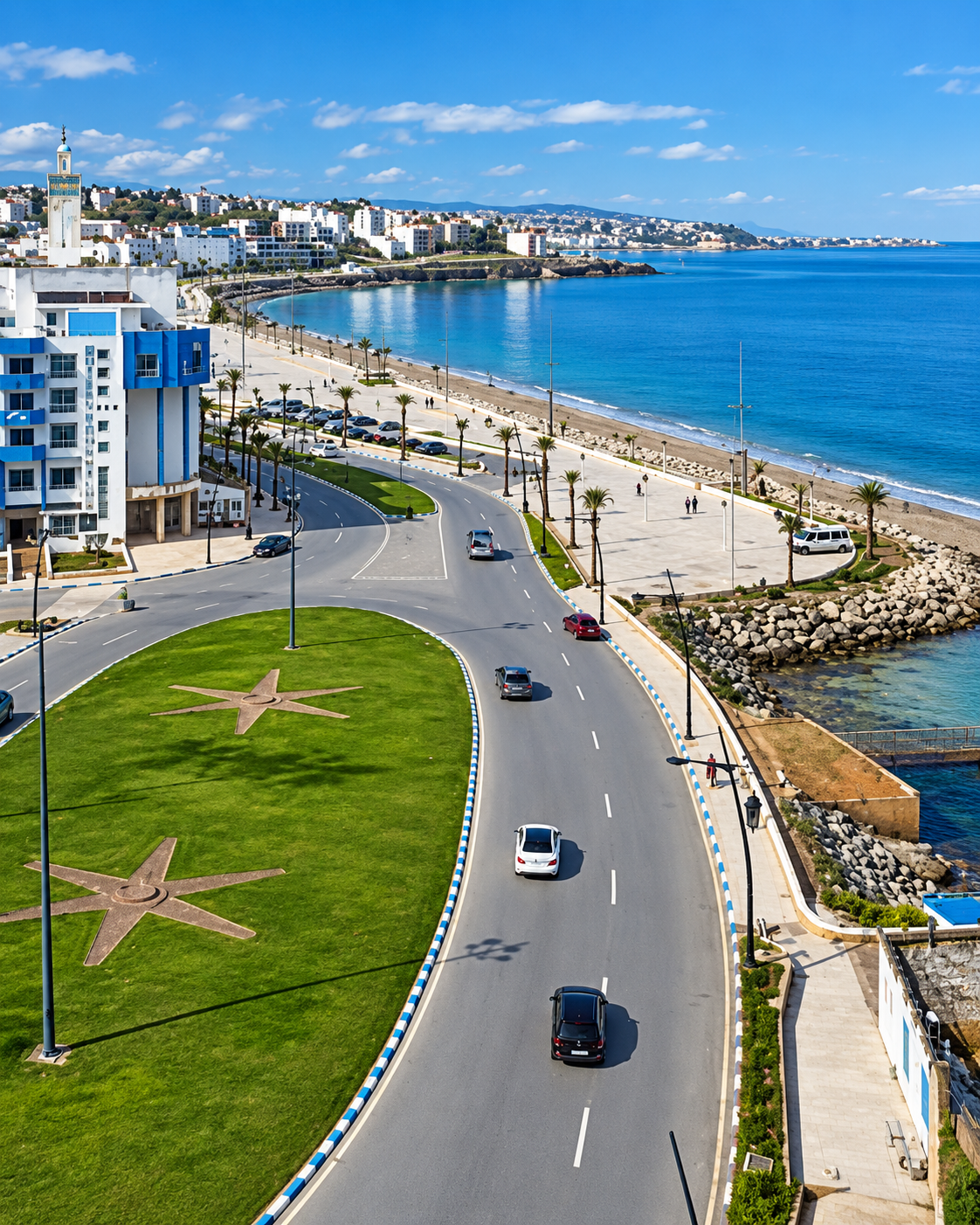
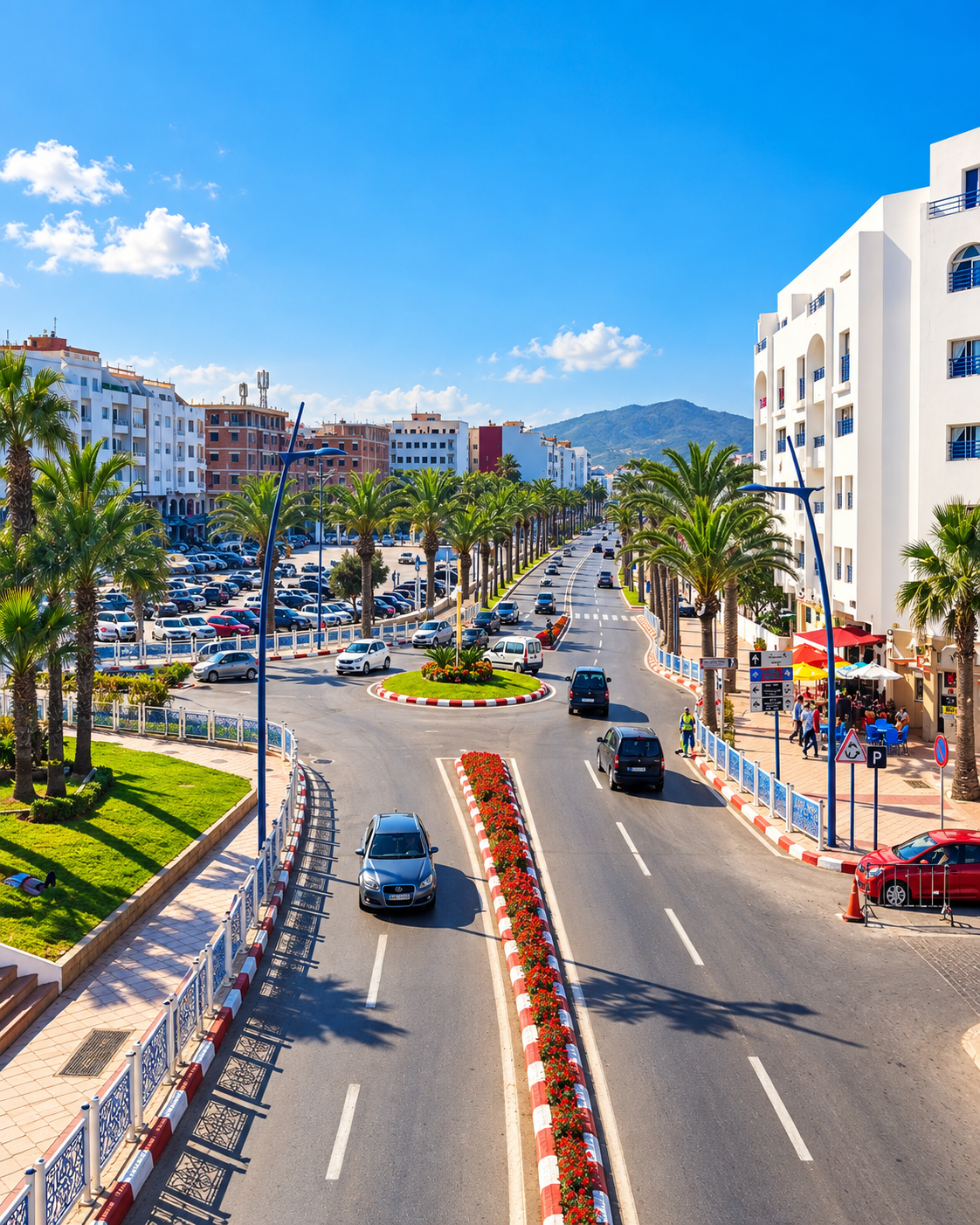
Curving Fnideq corniche, waterfront buildings and Mediterranean bay

A city of edges and movement

Fnideq's story is written in the seafront, the commercial streets, the northern road, the Spanish name Castillejos and the nearby mountain coast.

EXPLORE

Fnideq

Historical orientation

From Castillejos memory to a modern coastal town

Fnideq is best approached as a northern threshold rather than a museum city. Its older Spanish name, Castillejos, recalls the frontier geography and nineteenth-century conflict around the Tetouan-Ceuta corridor. In the contemporary period, the town has grown within the M'diq-Fnideq prefecture, where coast, commerce, seasonal tourism and regional roads shape everyday life.

01Coastal corridor

Roads before monuments

The town's location has long mattered because of movement: the route between Tetouan, the Mediterranean shore, the hills above the Strait and the frontier zone near Ceuta/Sebta.

021 January 1860

Castillejos memory

Fnideq is also known by the Spanish name Castillejos. The battle fought here on 1 January 1860 formed part of the Hispano-Moroccan War of 1859–1860, a reminder of the coast's contested modern history.

0320th century

Border commerce

In recent memory, Fnideq has been shaped by trade, commuting, seasonal flows and the practical economy of a town positioned beside a major international frontier.

04Today

Mediterranean orientation

The town now sits inside the M'diq-Fnideq prefecture of Tanger-Tetouan-Al Hoceima, connected to beaches, Tamuda Bay, Tetouan and the protected coastal landscapes around Jbel Moussa.

A visual bridge

Three glimpses between sea, road and mountain

Beach, boulevard and hillside frontage reveal three connected scales of Fnideq: open water, everyday urban movement and the dense town rising behind its seafront.

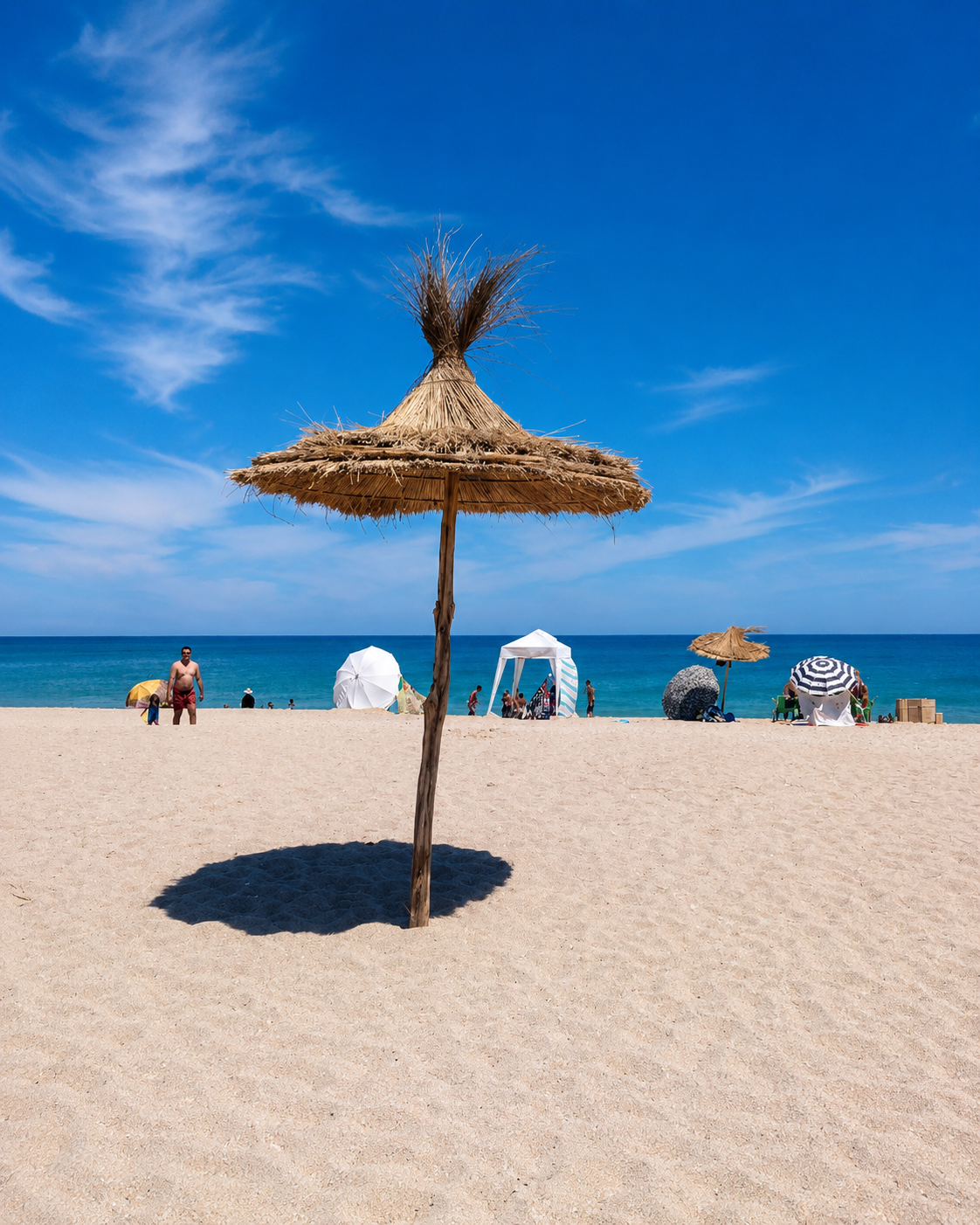
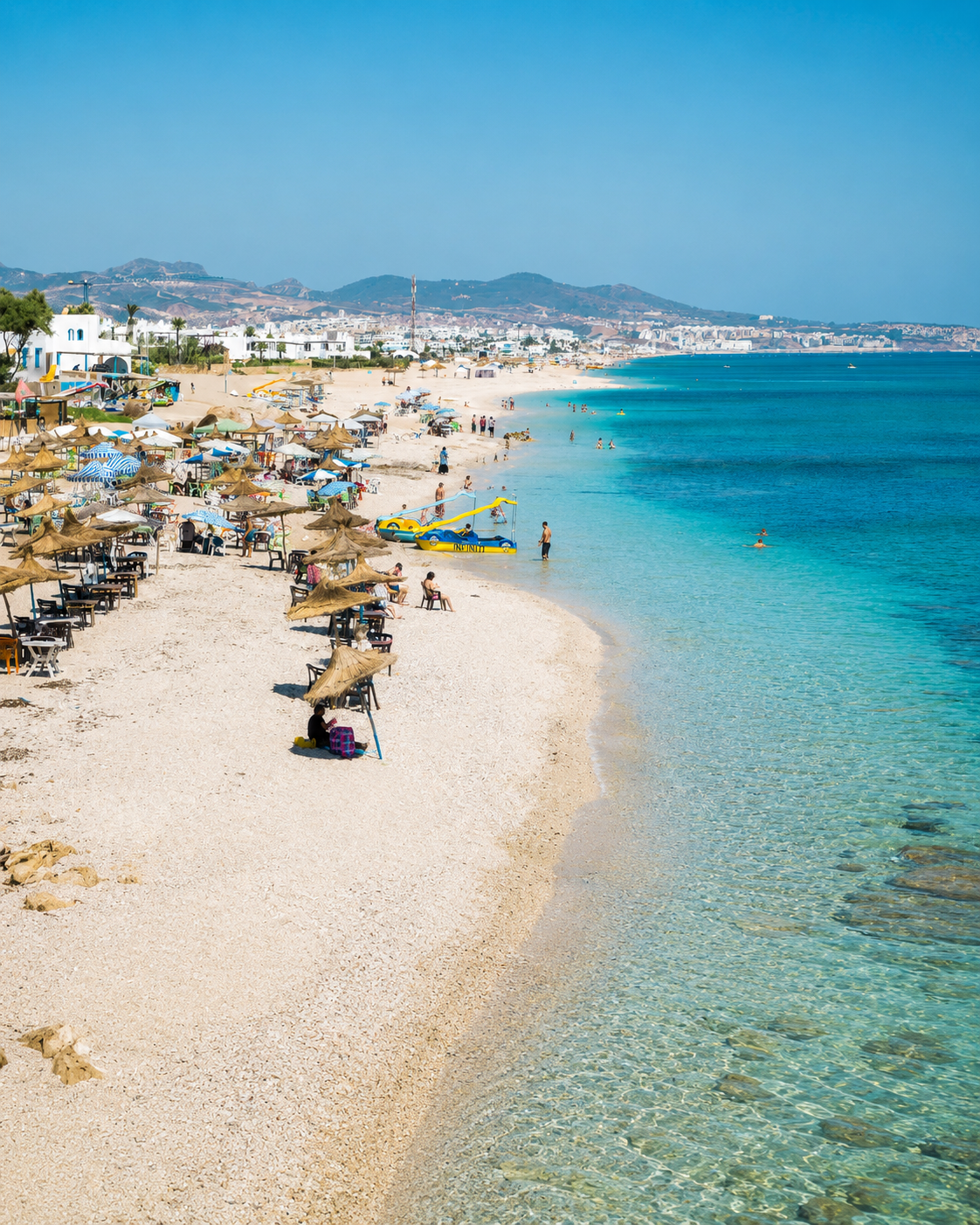
Beach umbrellas and clear shallow water on the Fnideq coast

Beach and bay

The Mediterranean shore brings open space, swimming and a slower coastal rhythm.

Palm-lined boulevard and apartment buildings in Fnideq

Urban movement

Promenade, traffic, shops and housing give Fnideq its practical daily rhythm.

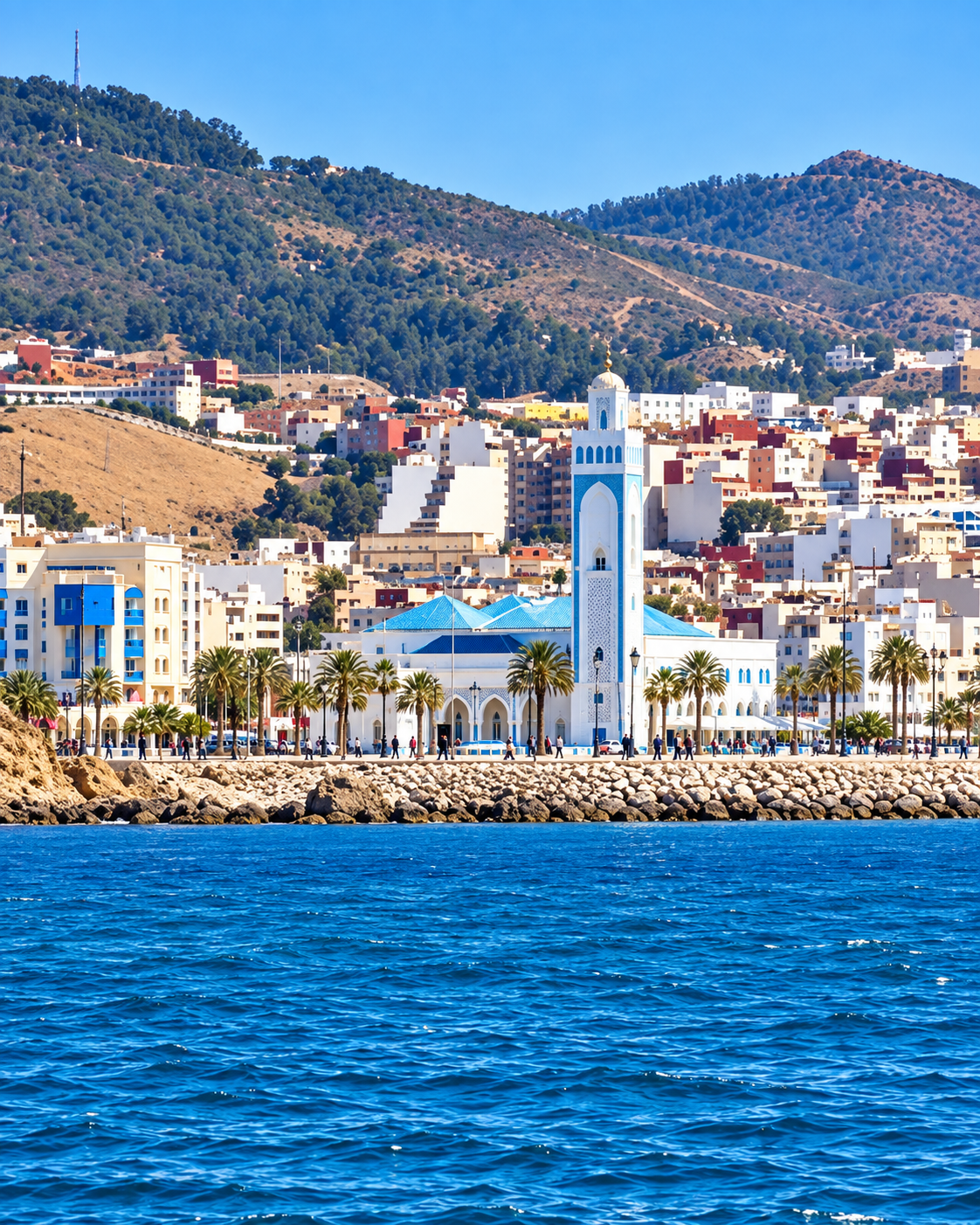
Fnideq seafront mosque and hillside neighbourhoods seen across the water

Town and hillside

The seafront mosque and rising neighbourhoods connect the water to the hills behind town.

Fnideq at a glance

Closest urban gateway

Fnideq is the closest Moroccan urban commune to Ceuta/Sebta. That position shapes its movement, visitor expectations and practical identity more than any single monument.

Castillejos memory

The Spanish name Castillejos remains part of the town's historical vocabulary, especially in relation to the nineteenth-century conflict around the Tetouan-Ceuta corridor.

Mediterranean coast

The seafront, beaches and corniche are central to the visit. Fnideq works best when read as part of the wider Tamuda Bay and Rif-coast sequence.

Route city

Tetouan, M'diq, Cabo Negro, Belyounech and Jbel Moussa all help explain Fnideq. The town is a hinge between places rather than an isolated destination.

A clearer reading of the city

A city shaped by coast, commerce and thresholds

To understand Fnideq, read its seafront, commercial streets and regional position together. The town's value for visitors lies in orientation: knowing what it is, what it is not, and how it connects the far north of Morocco.

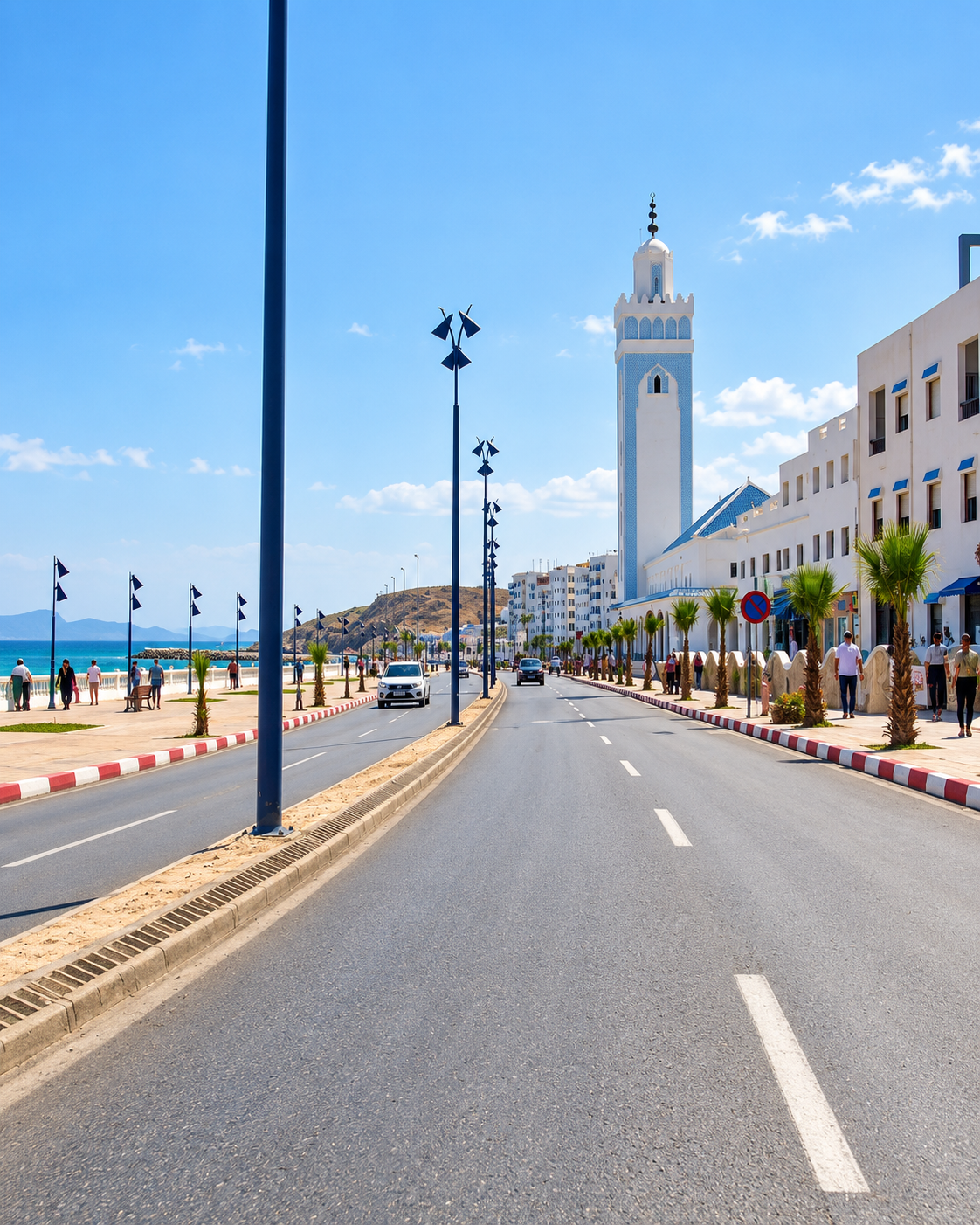
Waterfront road with blue street lamps and the Fnideq seafront mosque
Layer 1

Seafront identity

The corniche and beach light give Fnideq its immediate visual language: open water, bright facades, summer movement and a coastal pace that contrasts with the busier road behind it.

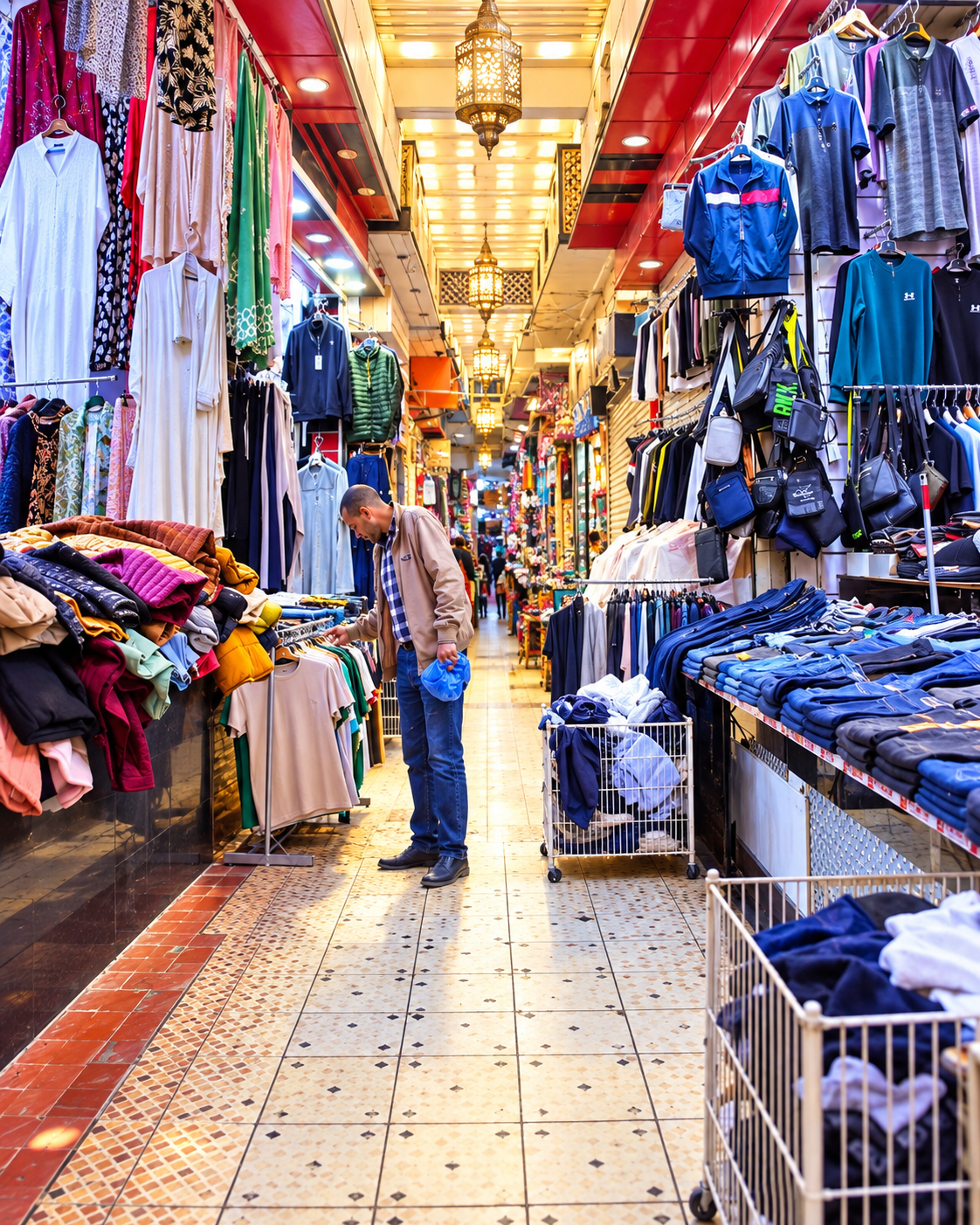
A covered market passage lined with clothing stalls in Fnideq
Layer 2

Everyday commerce

Markets, small shops, transport stands and ordinary errands matter here. Fnideq is not a postcard-only place; it is a lived border-region town with practical urban energy.

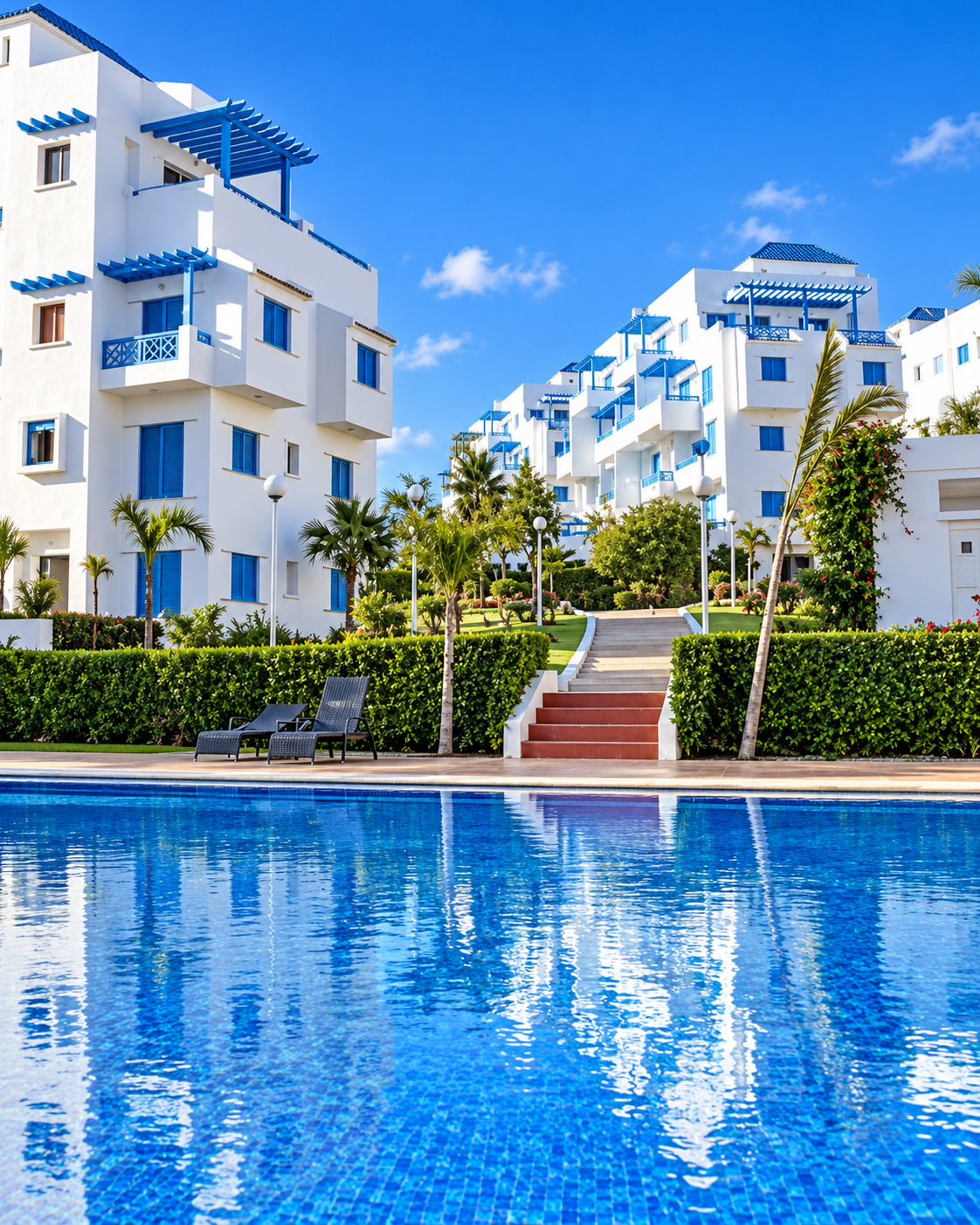
White and blue coastal residences around a swimming pool near Fnideq
Layer 3

Regional coast

The town opens quickly to nearby beaches, M'diq, Cabo Negro and Belyounech. Its strongest travel logic is not one isolated sight, but the coastal sequence around it.

Landmarks & orientation

Read Fnideq through six defining orientations

Fnideq's landmarks are best understood as urban anchors and route logic. They help a visitor place the town honestly: seafront first, commerce second, wider northern Morocco always nearby.

1
Fnideq corniche

The clearest first orientation: sea, promenade, traffic, cafes and the town's public face along the Mediterranean.

2
Central commercial streets

Useful for understanding daily life, shopping movement and the practical urban rhythm behind the waterfront.

3
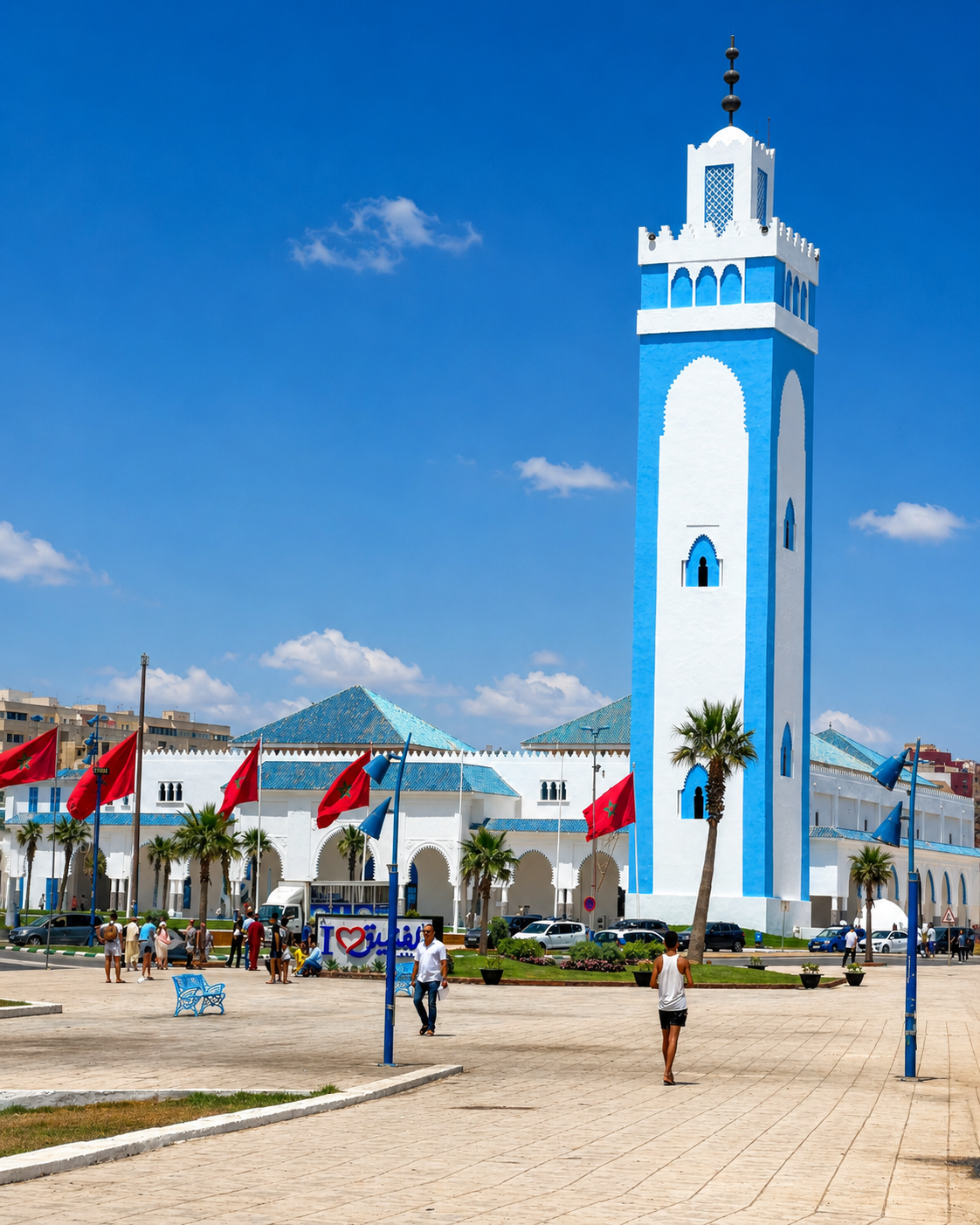
Seafront mosque

The blue-and-white minaret is an easy visual reference along the waterfront. Appreciate its exterior while respecting worshippers and local access rules.

4
Ceuta/Sebta approach

The northern approach explains much of Fnideq's identity. Treat it as orientation, and check current conditions before relying on any crossing plan.

5
Beaches and bay views

The nearby coast gives the town its softer visitor rhythm, especially when combined with M'diq, Cabo Negro or Tamuda Bay.

6
Belyounech and Jbel Moussa

North-west of the urban coast, mountain and marine landscapes give the wider area a more dramatic natural scale.

Blue-and-white minaret and open square beside the Fnideq seafront mosque
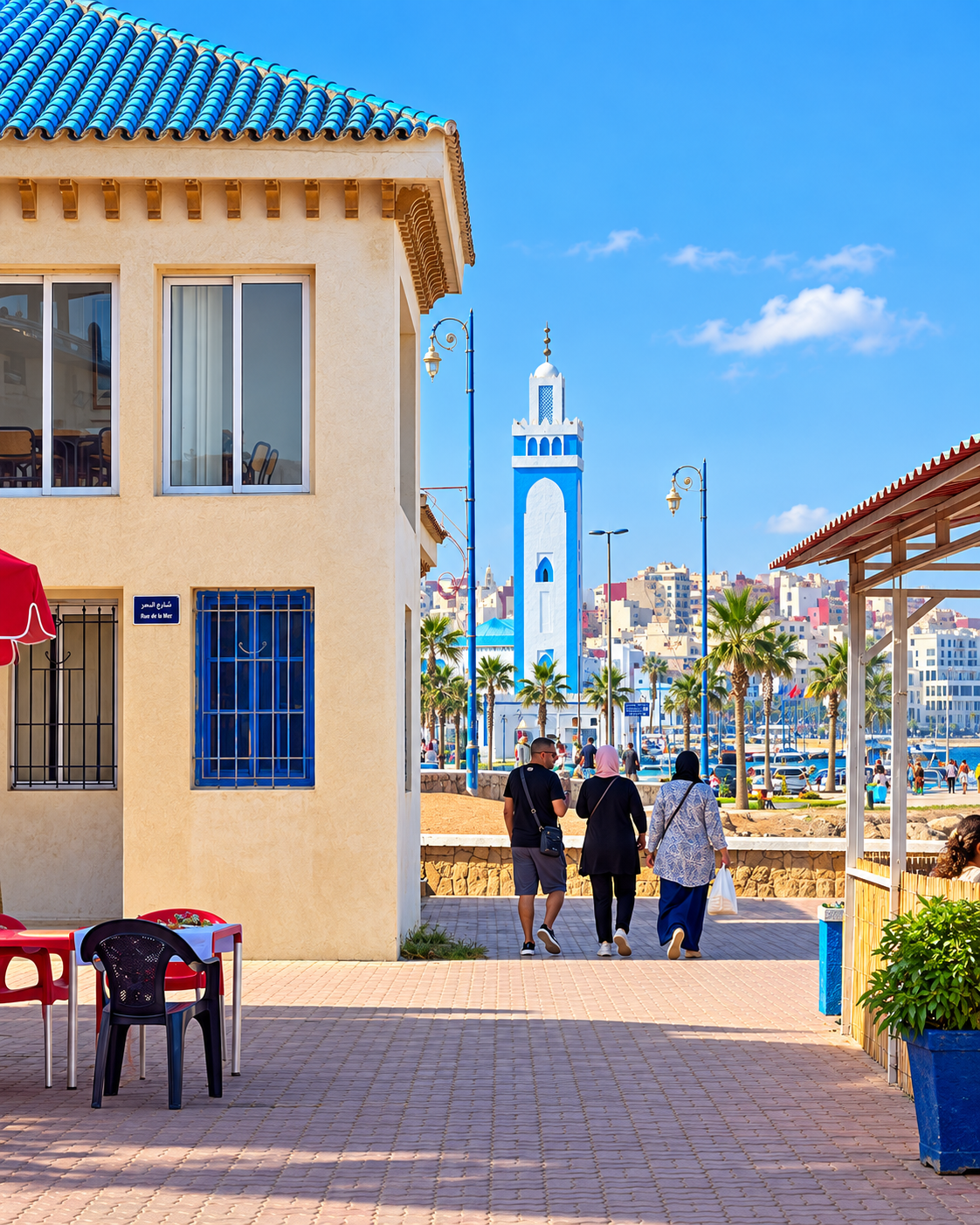
Pedestrians and café seating on the Fnideq promenade with the mosque beyond

A coastal threshold

The corniche — where daily life meets the Mediterranean

Fnideq's most legible public space is not a palace courtyard or a monumental gate. It is the edge between town and sea. The corniche gathers walking, traffic, beach access, evening light and the practical life of a place used by residents as much as visitors. Seen slowly, it explains the city better than any forced list of attractions.

  • Read the waterfront as a working town edge, not only as a resort scene.
  • Use the commercial streets behind the coast to understand the local rhythm.
  • Let nearby Tetouan, M'diq and Belyounech complete the wider northern story.

Architectural reading

Three urban languages to notice

Seafront geometry

Fnideq speaks first through its corniche, road curve, beach edge and open views. The urban form is direct: movement along the water, then denser streets behind it.

Practical town fabric

Apartment blocks, shops, cafes, transport stops and market streets give the city its everyday scale. The architecture is less ornamental than functional, shaped by commerce and circulation.

Northern coastal vocabulary

White facades, blue sea, palm-lined promenades and nearby resort zones place Fnideq within a broader Mediterranean Moroccan language shared with M'diq, Cabo Negro and Tamuda Bay.

Visual atmosphere

Sea light, road rhythm and nearby horizons

Nearby highlights

Nearby cities, beaches and mountain coast

Fnideq works especially well as part of a northern coastal route. Tetouan provides the deeper urban and craft context; M'diq and Tamuda Bay extend the resort coast; Belyounech and Jbel Moussa bring cliffs, coves and Strait-facing landscape.

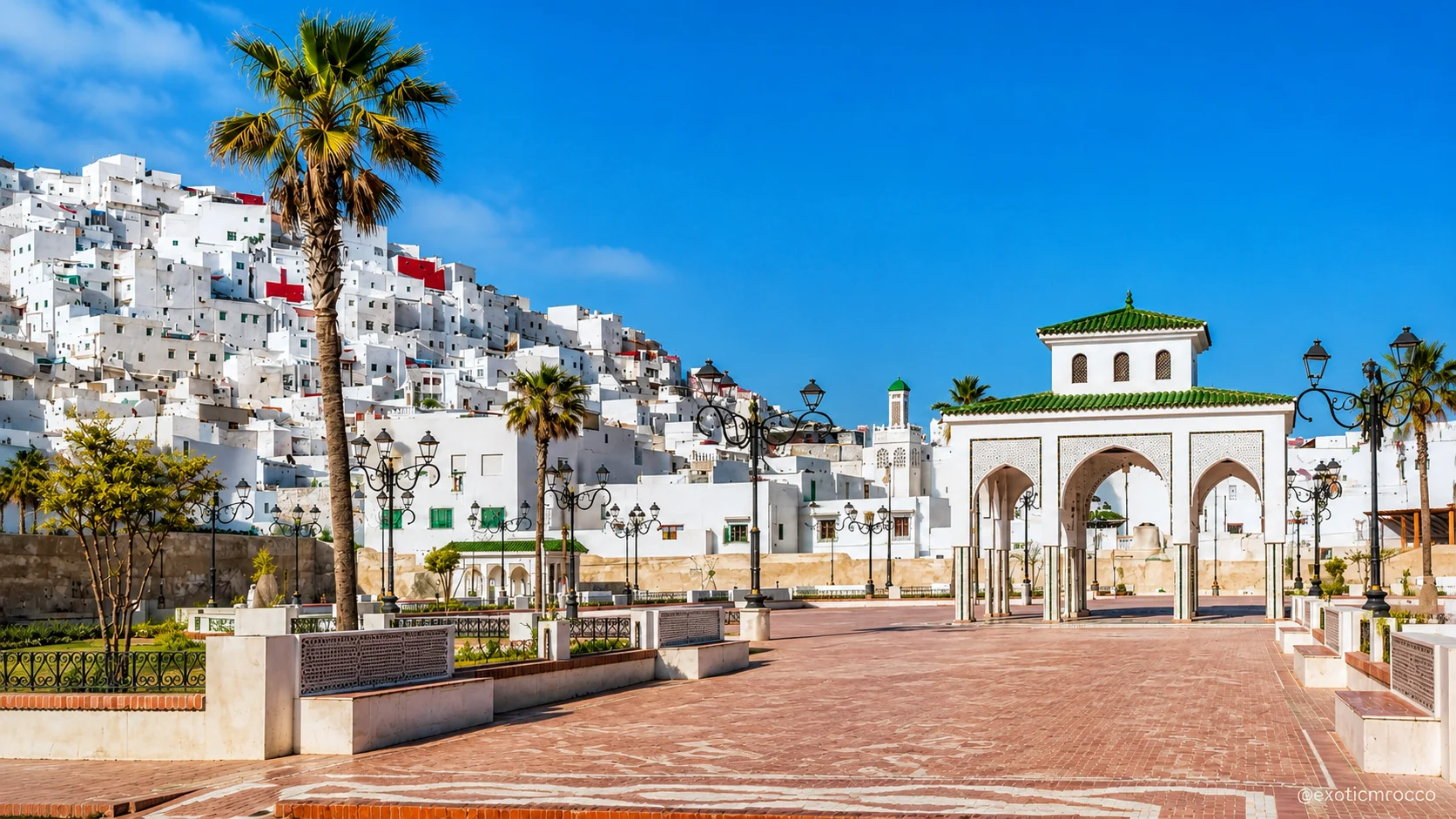
Tetouan

A major northern city with a historic medina, Andalusi-Moroccan urban memory, craft traditions and museums. It gives Fnideq the cultural depth that the coast alone cannot provide.

White hillside cityscape, gardens and ceremonial arches in Tétouan

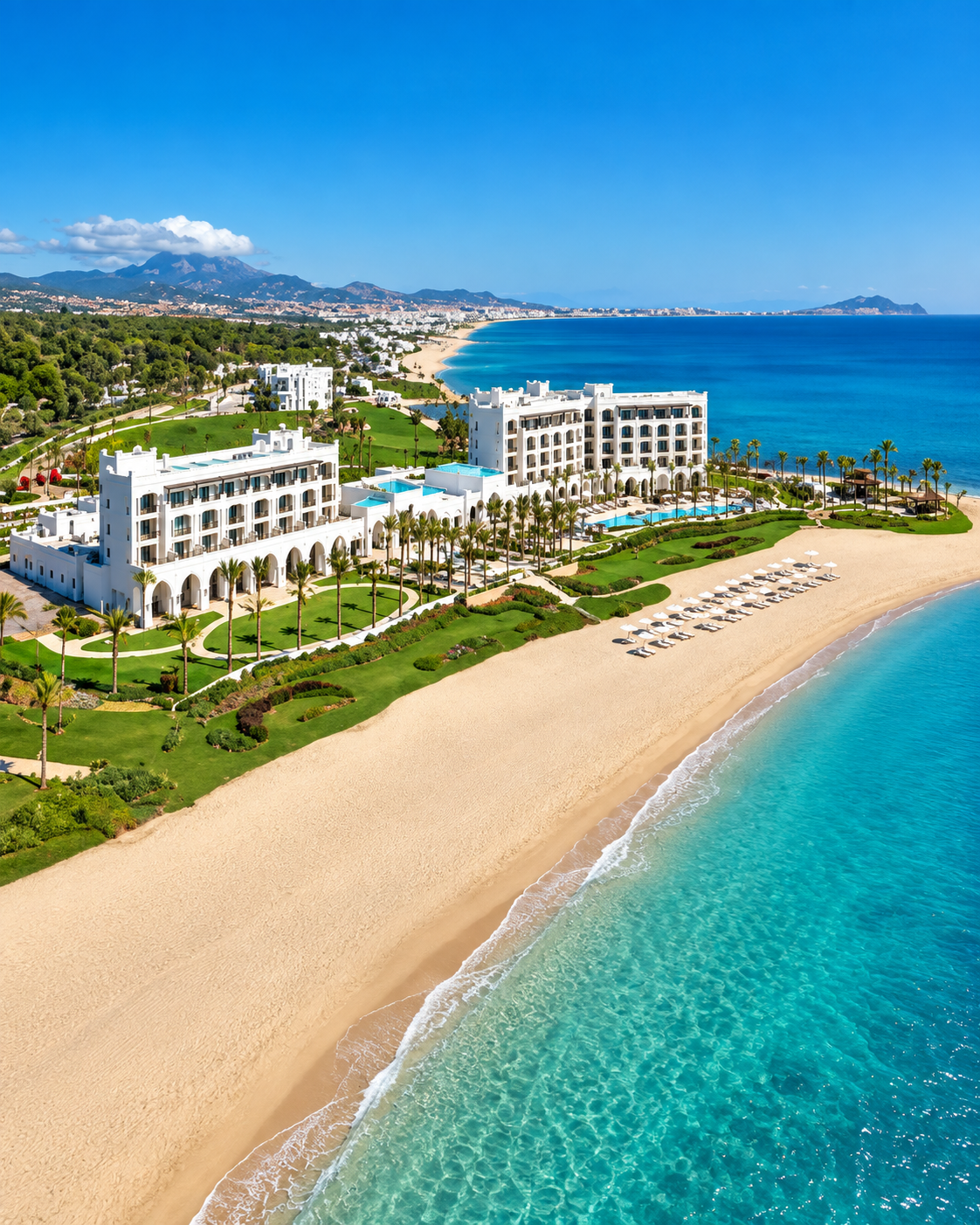
M'diq and Tamuda Bay

South along the coast, M'diq, marina life and Tamuda Bay create a more leisure-oriented extension: beaches, promenades, hotels, restaurants and evening seaside movement.

Beachfront hotel, gardens and turquoise sea along Tamuda Bay

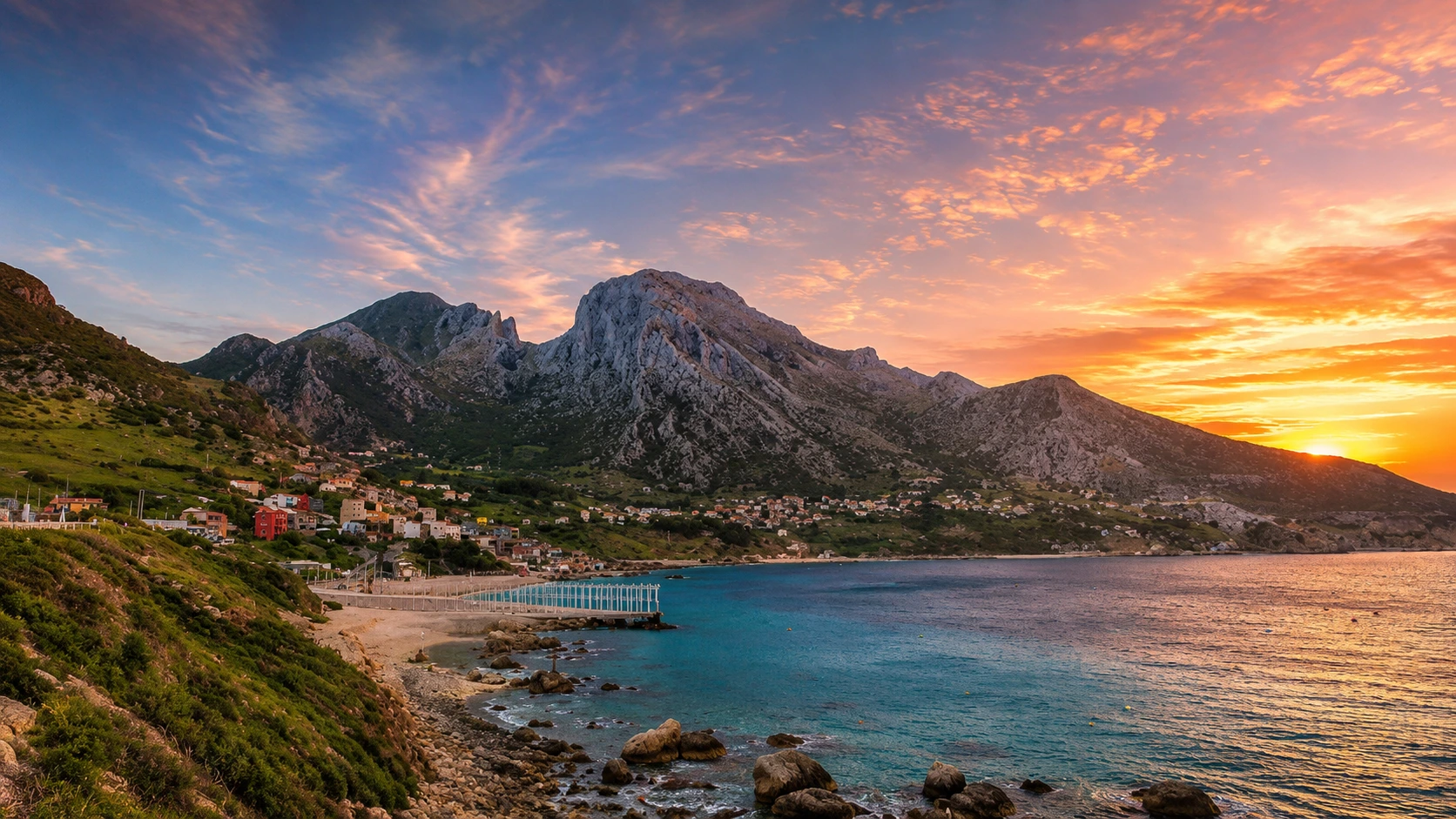
Belyounech and Jbel Moussa

For a more dramatic coastal reading, continue toward Belyounech and the Jbel Moussa area, where mountain slopes and coves shift the journey from urban coast to landscape.

Belyounech bay and the Jbel Musa mountain silhouette at sunset
Travel note: border access, transport, beach conditions, parking and local visitor arrangements can change. Check current official or trusted local information before travelling, especially if your route depends on the Ceuta/Sebta crossing.

Practical orientation

How to experience Fnideq well

  • Do not visit expecting an imperial monument city; read Fnideq as a northern coastal threshold.
  • Start with the corniche and beach edge, then move into the commercial streets behind it.
  • Use Tetouan for deeper medina, craft and museum context.
  • Pair Fnideq with M'diq, Cabo Negro or Tamuda Bay for a stronger seaside day.
  • Check current transport and border information before making fixed plans around Ceuta/Sebta.

A strong first visit

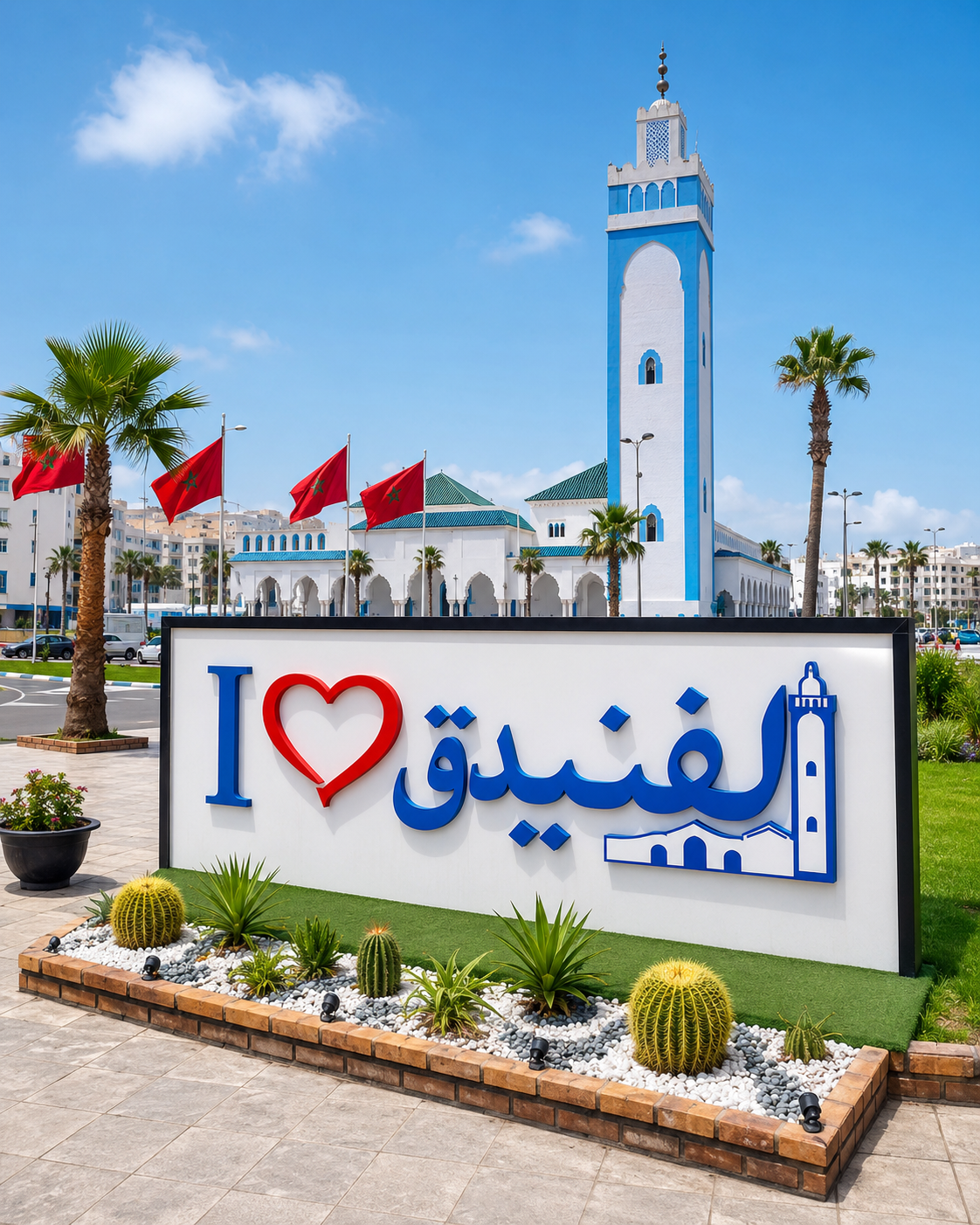
Fnideq welcome sign with blue lettering and the seafront mosque behind it

Begin at the seafront, walk part of the corniche, read the commercial streets behind it, then decide whether your day belongs to Tetouan's historic city, M'diq's marina coast or the mountain-backed shoreline near Belyounech.

Elevated view of the Fnideq mosque, waterfront and colourful hillside buildings

Go deeper with Exotic Morocco

Fnideq — Premium Visual City Guide

Use Fnideq as a precise northern orientation point: a place where seafront movement, border geography, Castillejos memory, nearby beaches and the Tetouan-M'diq corridor meet in one compact coastal town.

✓ Coastal context✓ Castillejos memory ✓ Route orientation✓ Local rhythm ✓ Practical travel notes✓ Nearby highlights

Continue the journey

Continue the journey through Fnideq

Look beyond the shortcut image of a border town and you find a clear Mediterranean orientation point: sea, road, commerce, nearby mountains and the cultural depth of northern Morocco.