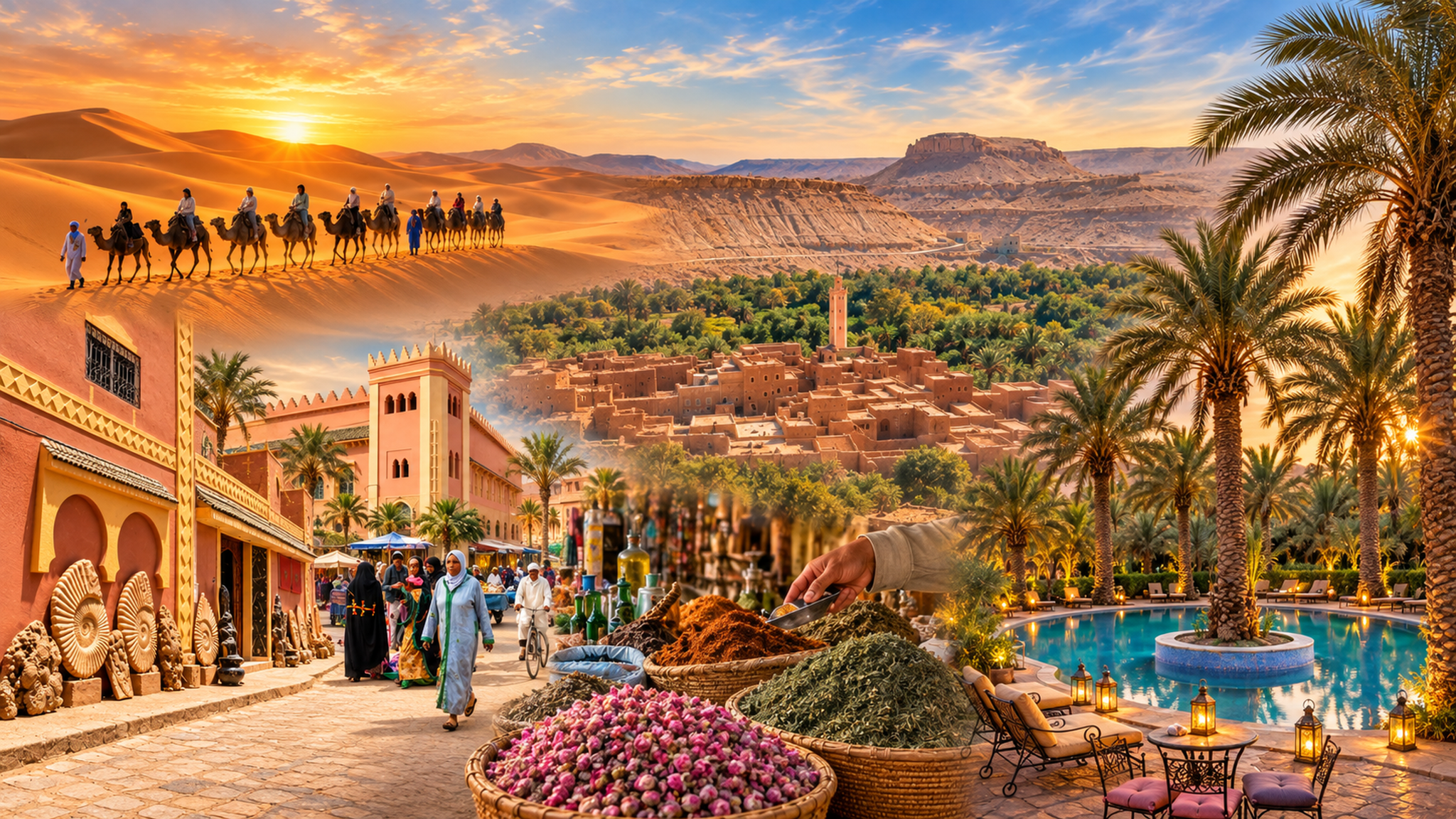
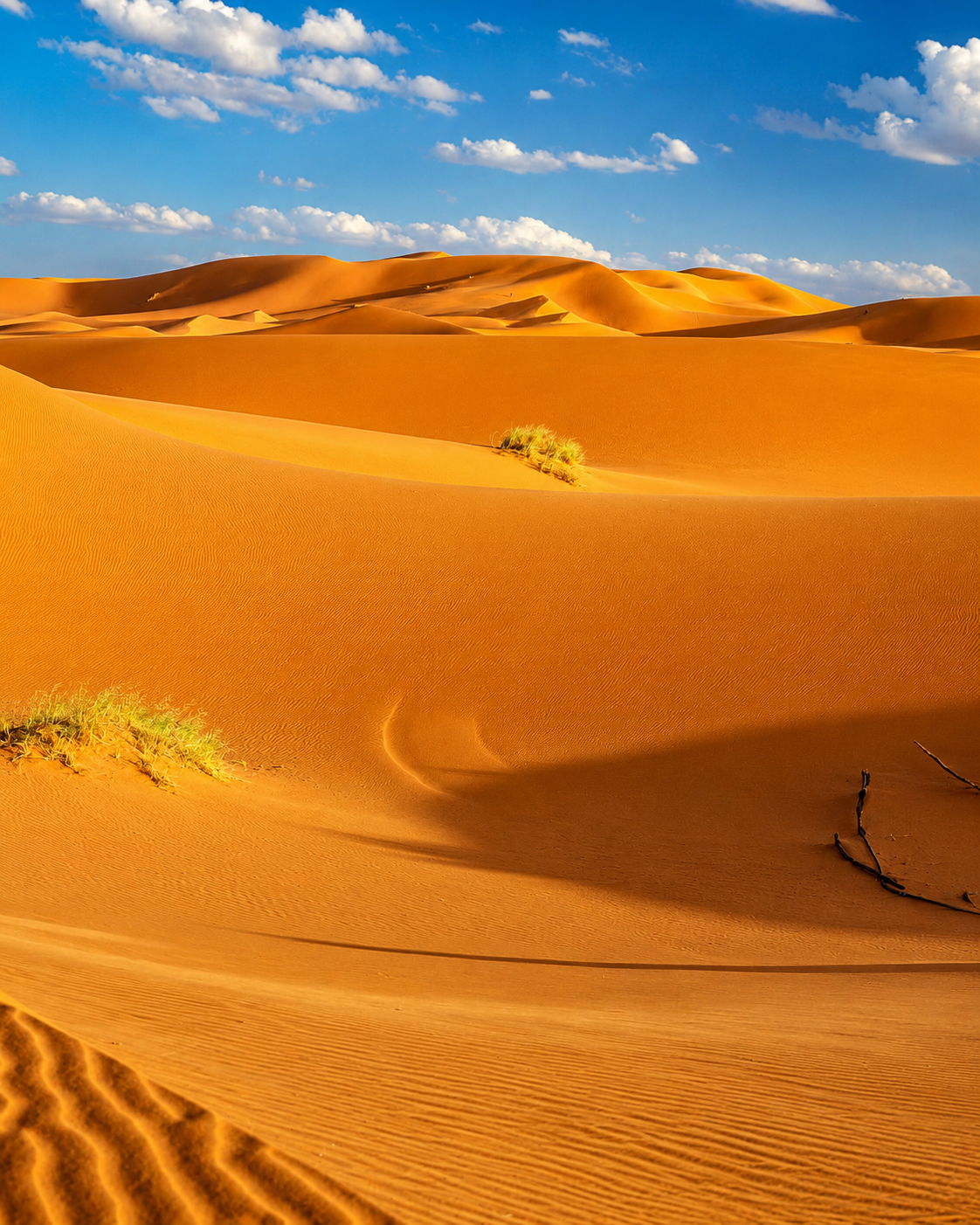
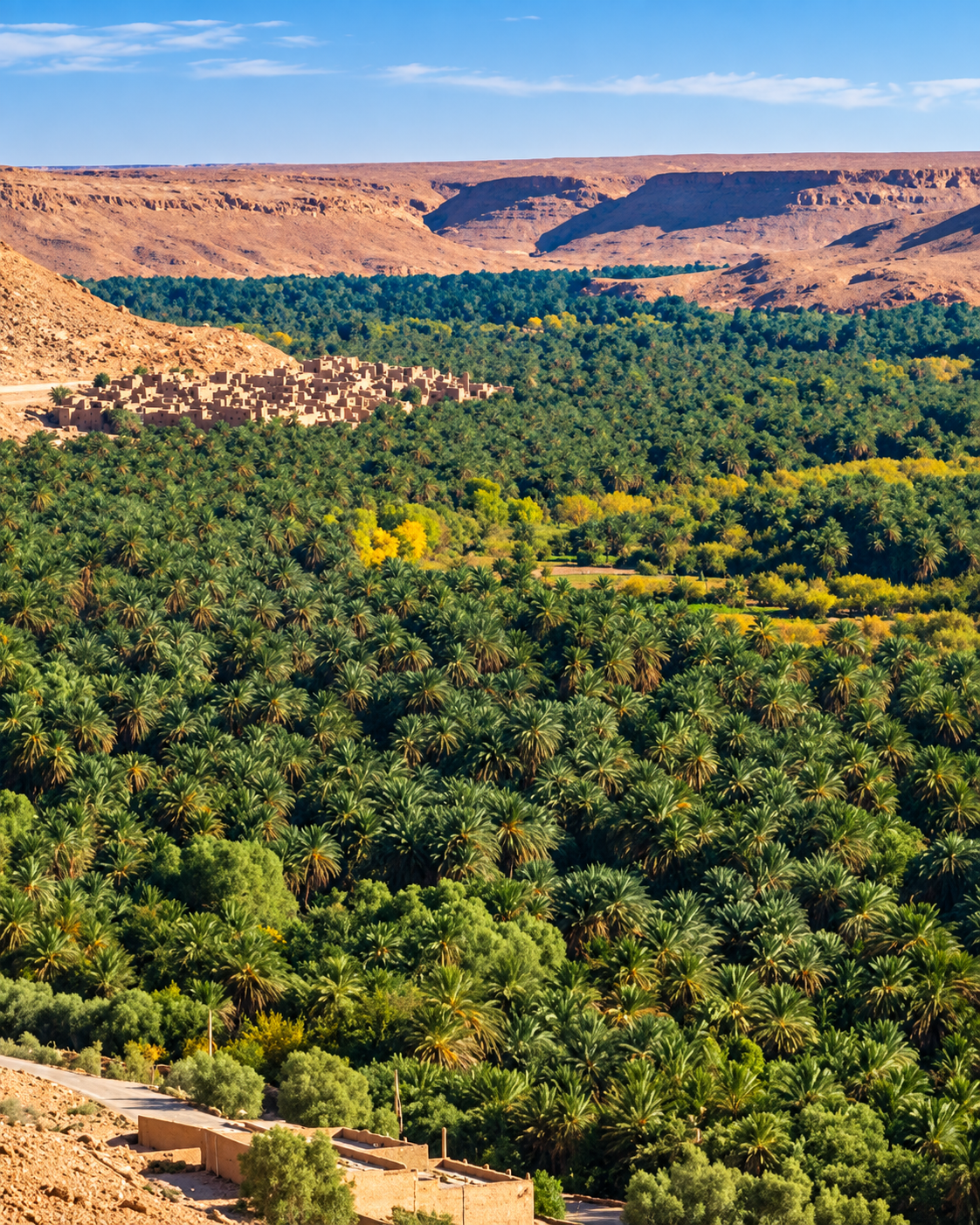
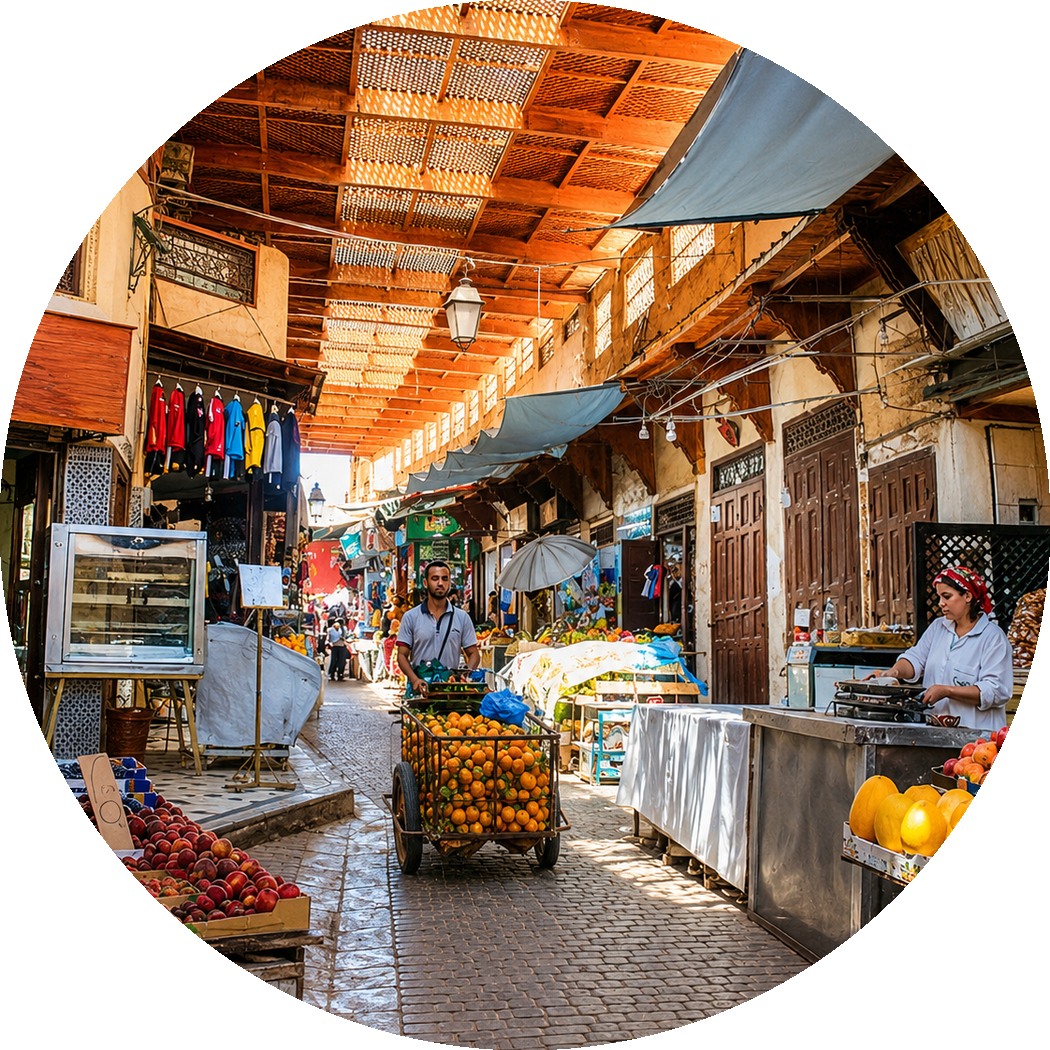
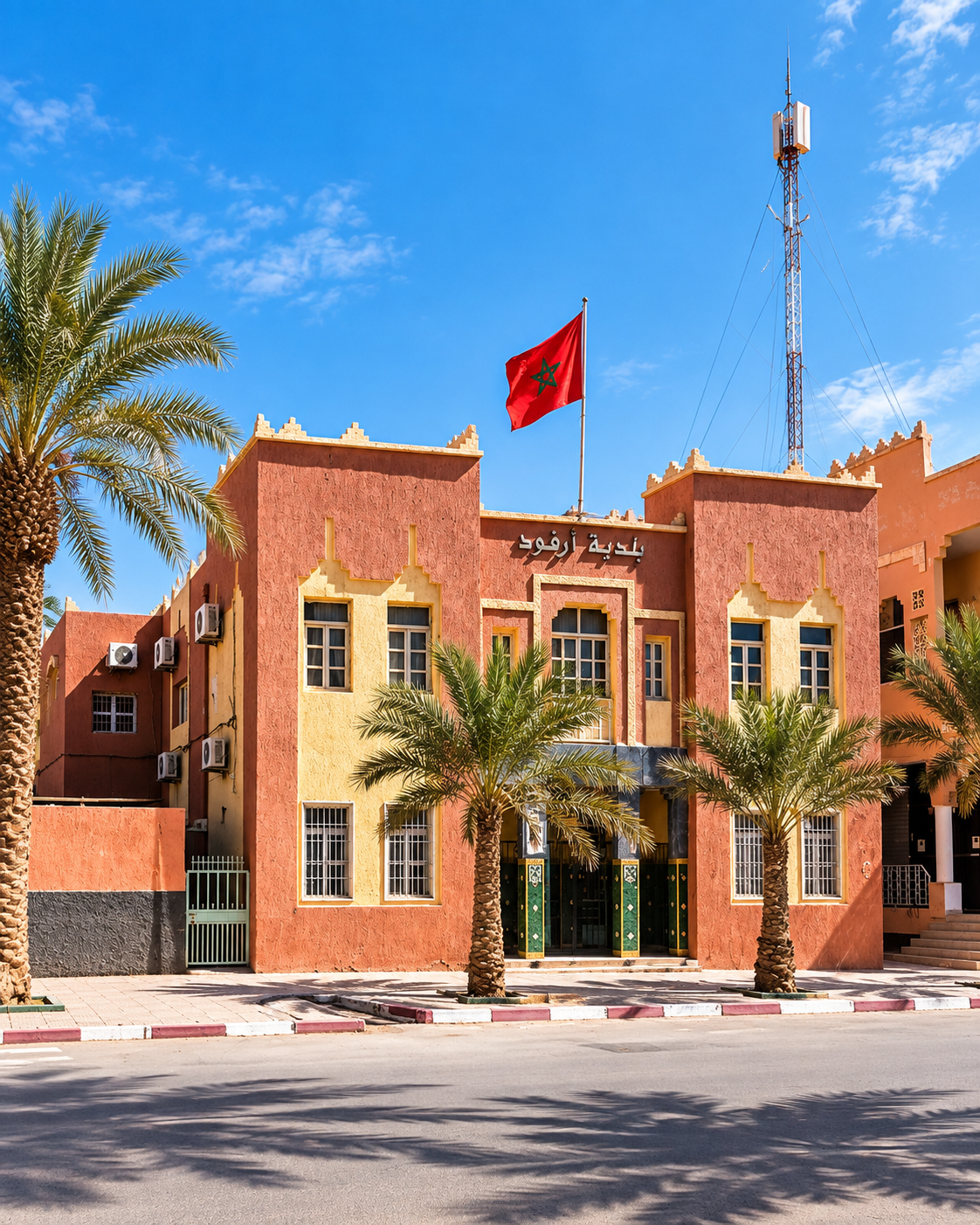
Erfoud is best understood through the wider Tafilalet. The older regional story belongs to palm valleys, fortified settlements, caravan memory and Rissani's Sijilmassa landscape. The modern town developed later, then grew into a practical centre for dates, fossils and journeys toward the dunes.
01Older oasis landscapeTafilalet foundations
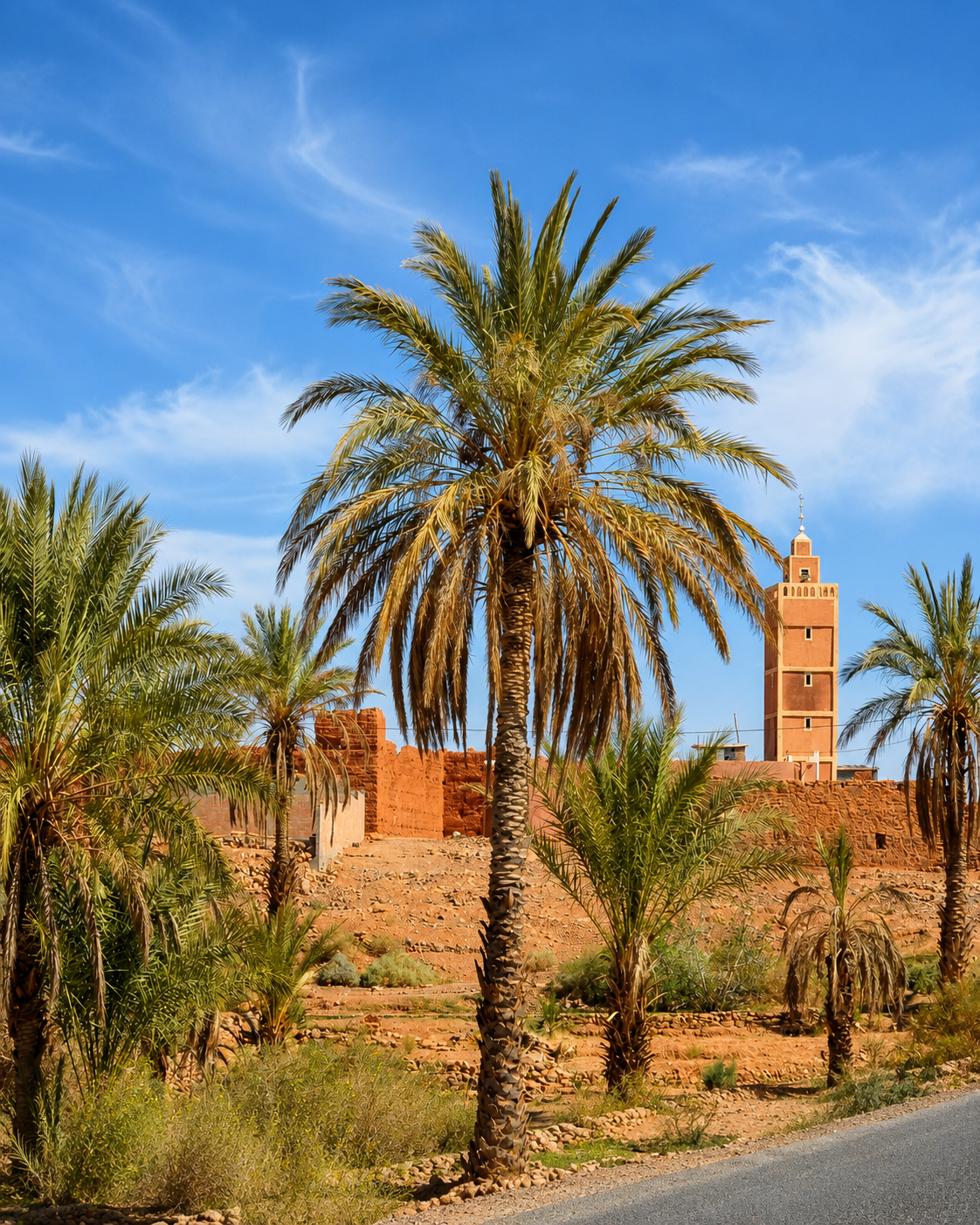
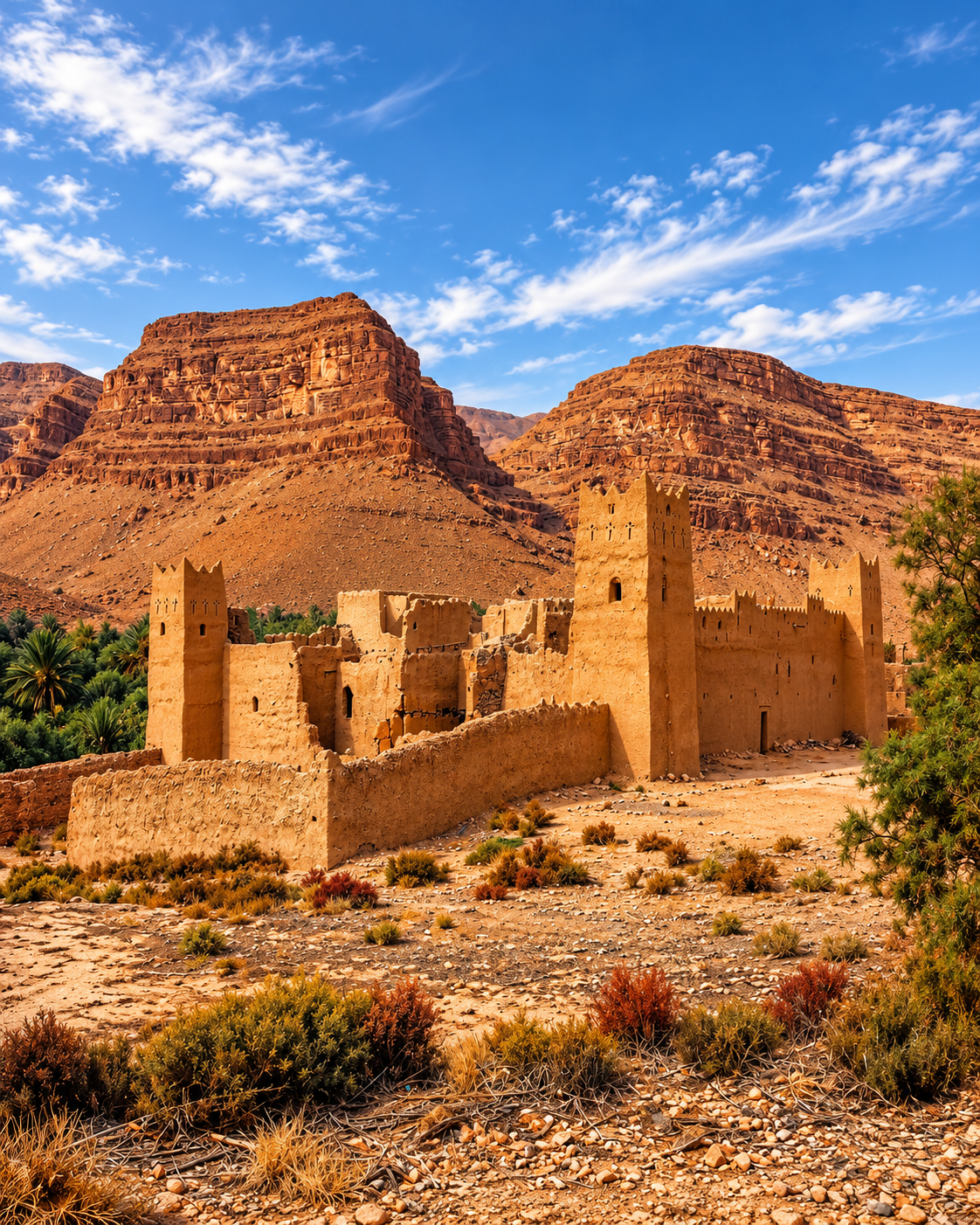
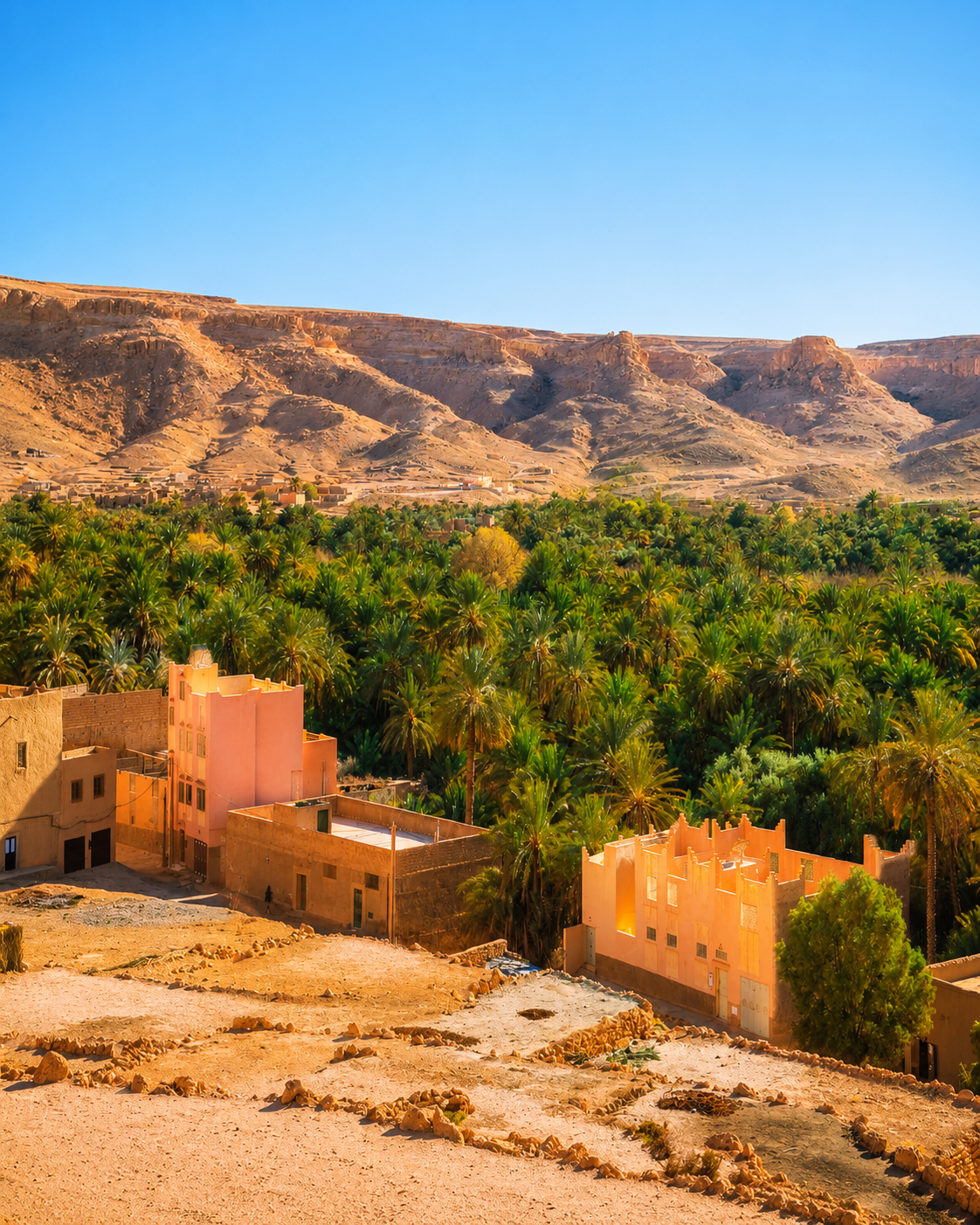
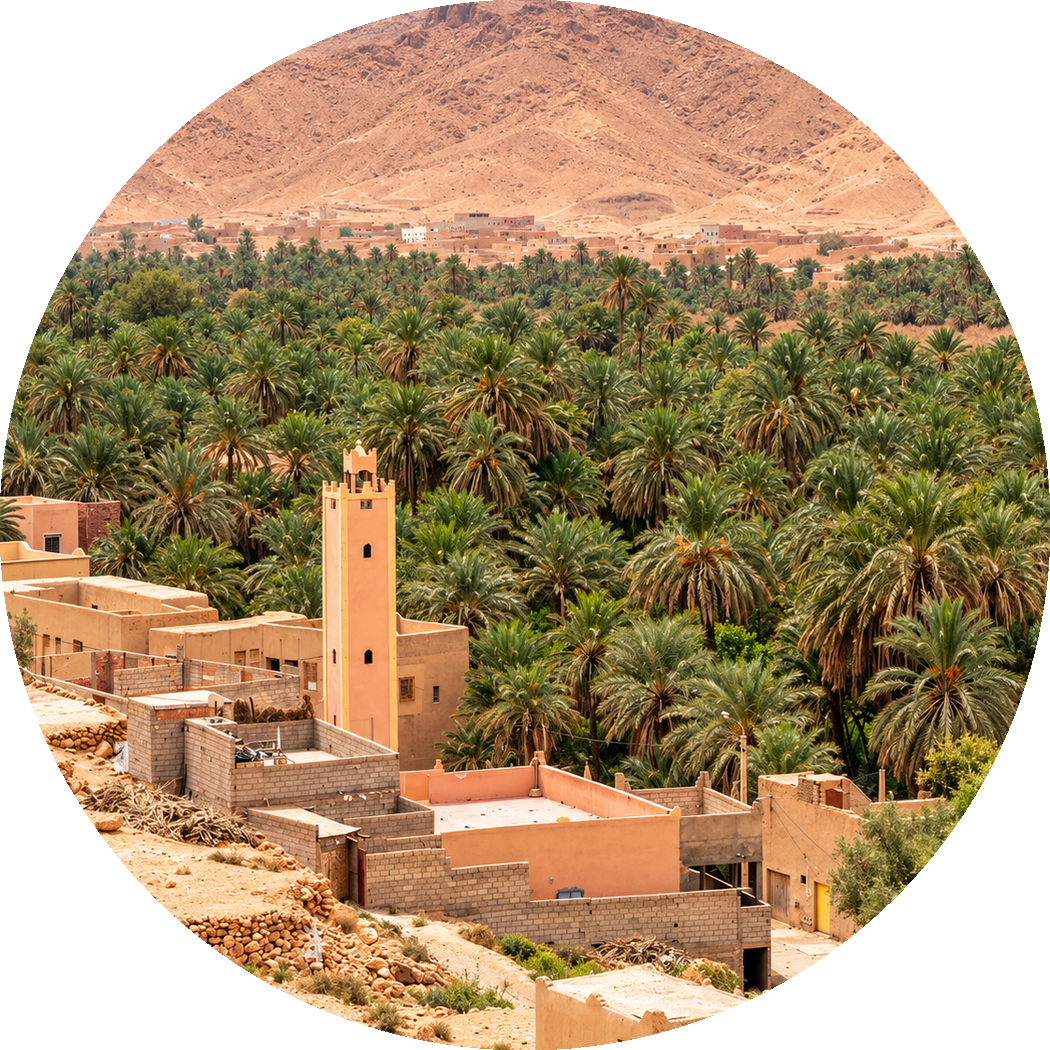
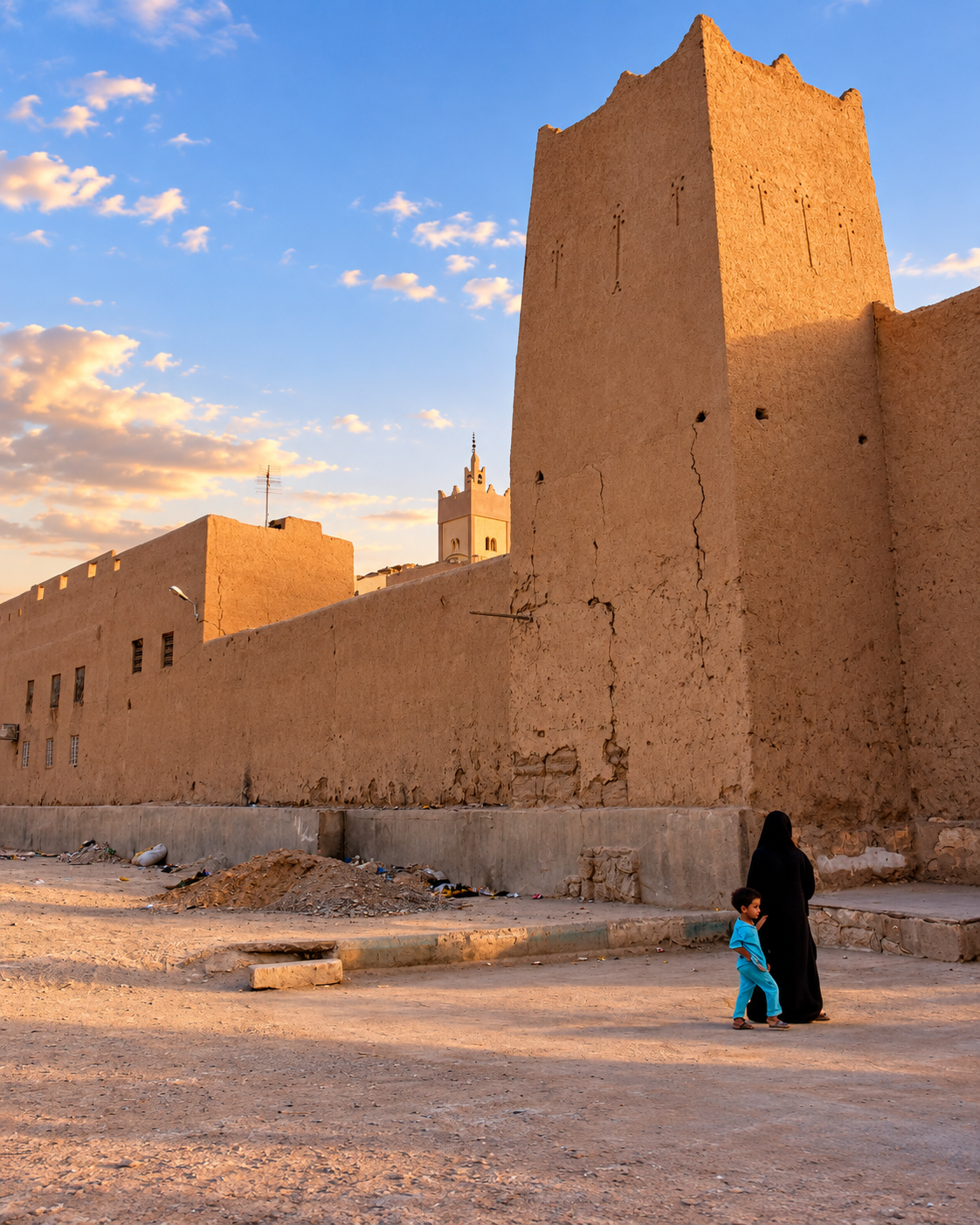
Long before the modern town mattered to travellers, the Tafilalet oases were shaped by water, palms, fortified villages and routes linking the desert edge to the rest of Morocco.
02Regional caravan memorySijilmassa and Rissani
Nearby Rissani and the archaeological memory of Sijilmassa give the Erfoud area its deeper historical scale, connecting palm-grove life with older trade and settlement patterns.
03Early 20th centuryModern Erfoud takes shape
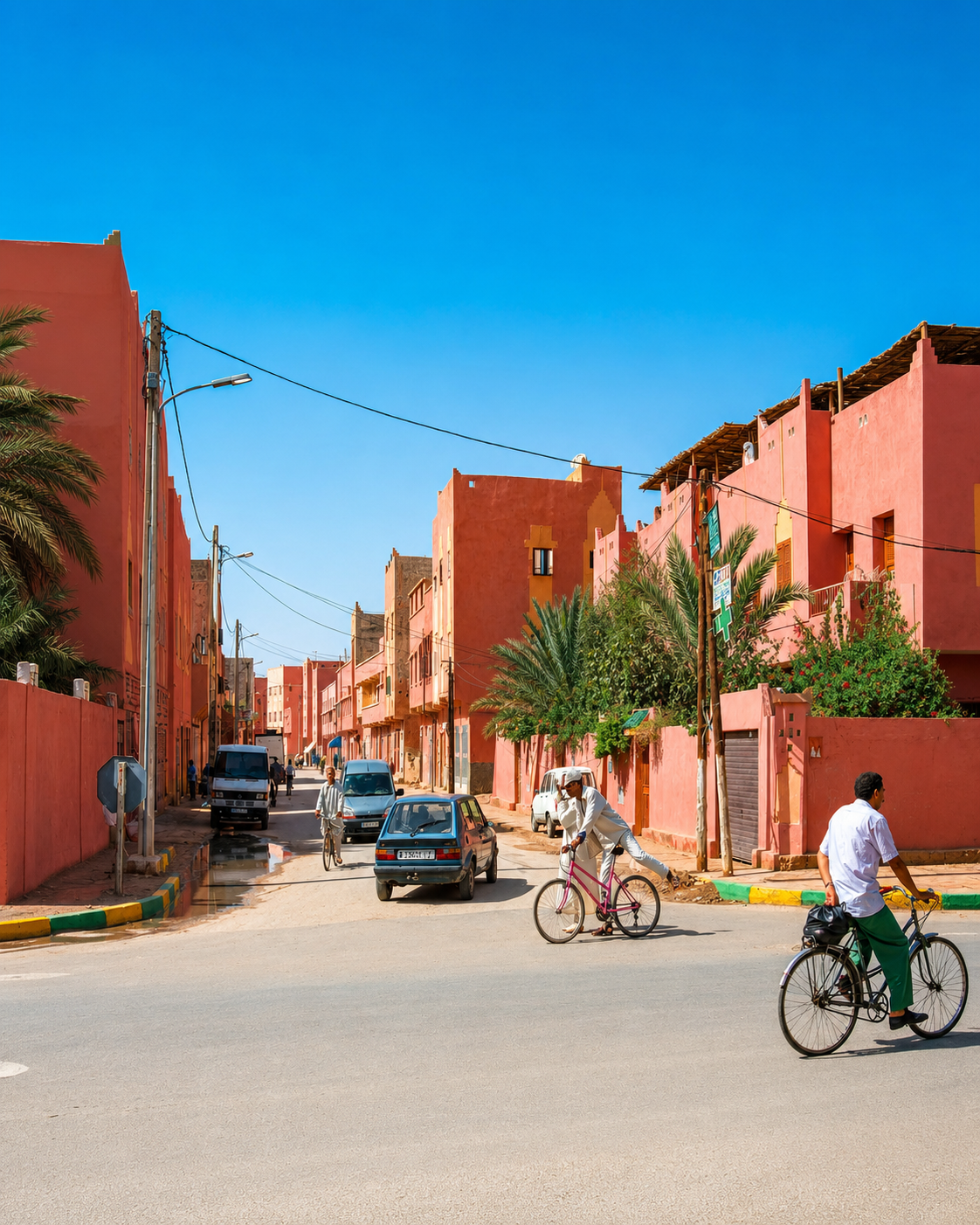
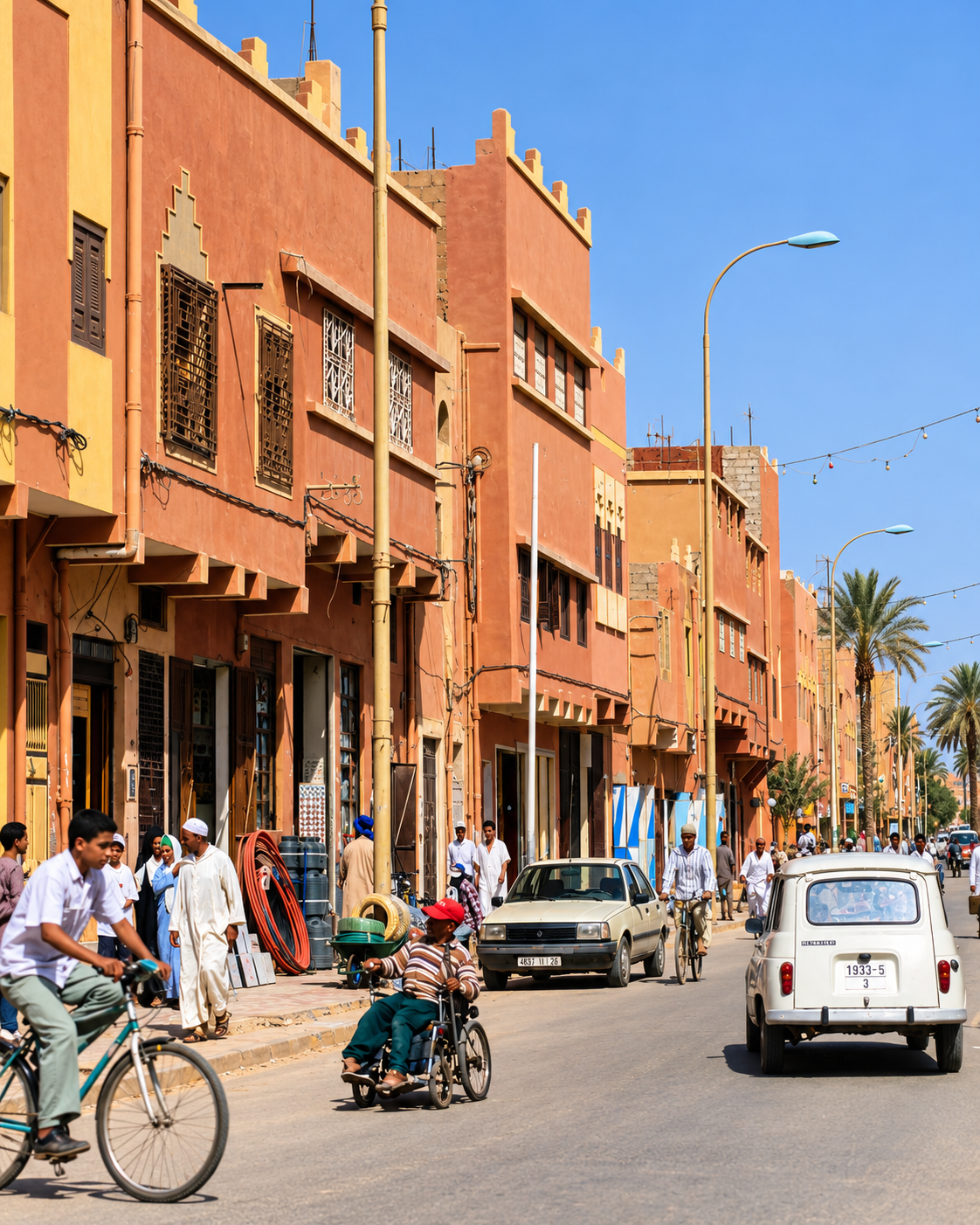
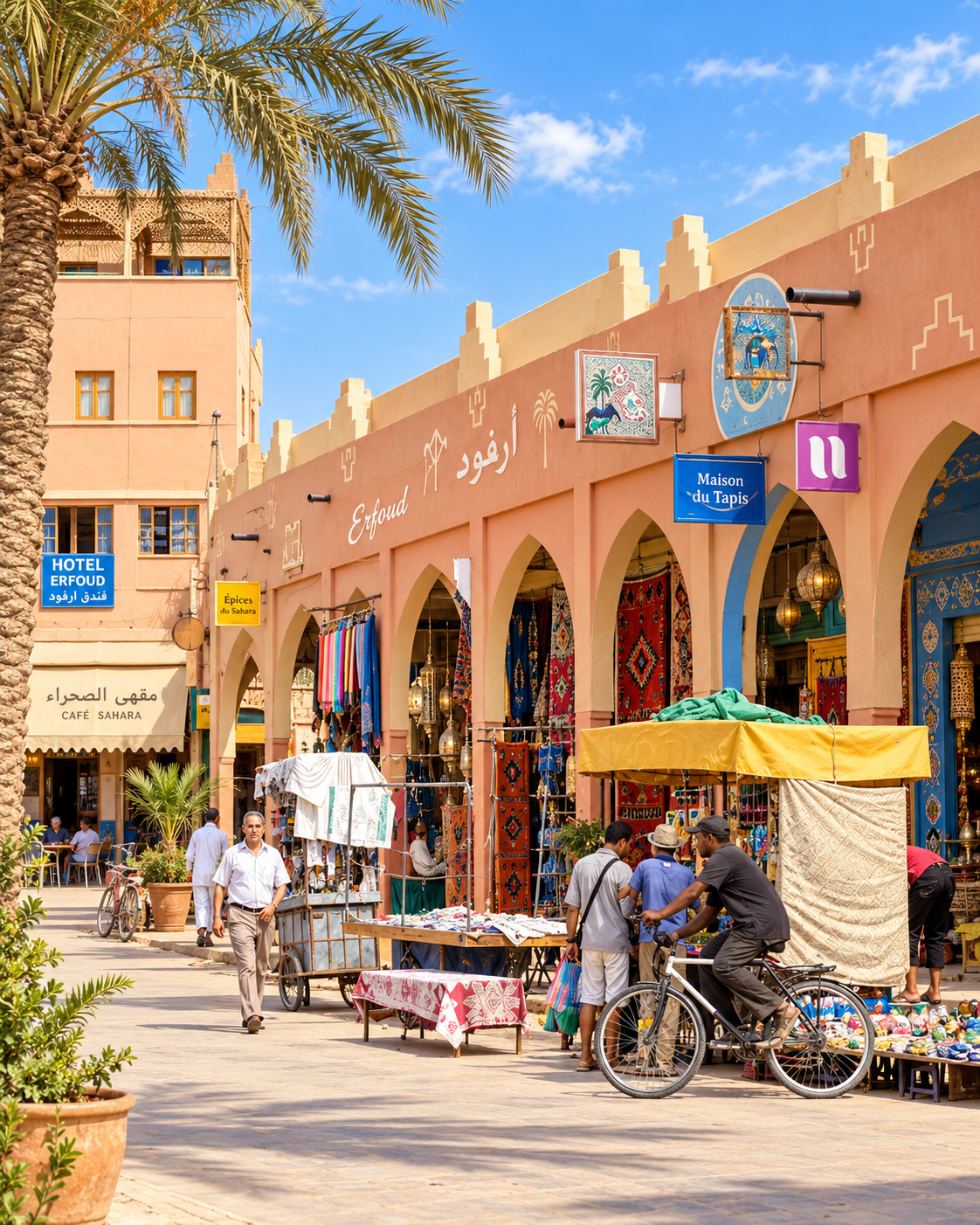
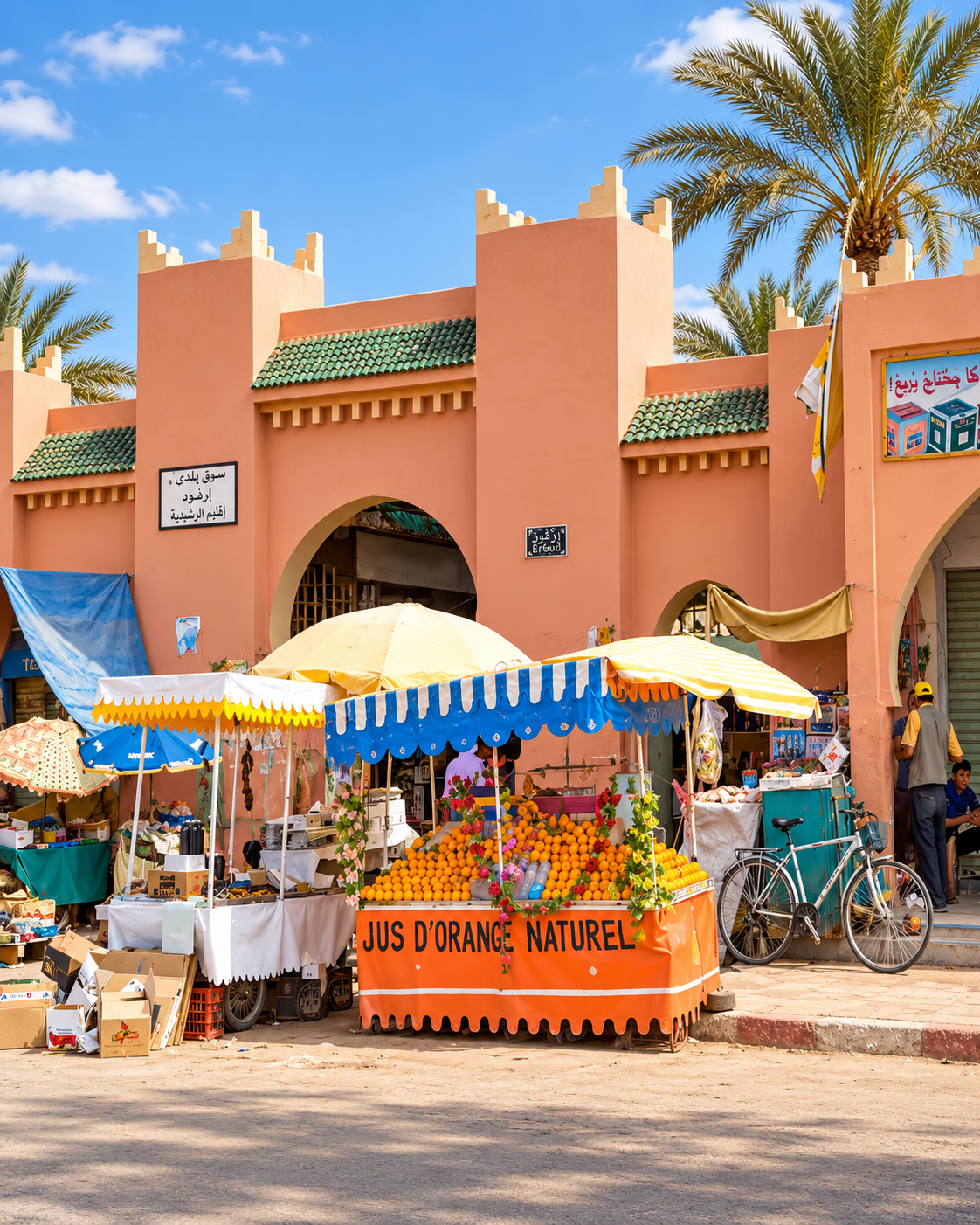
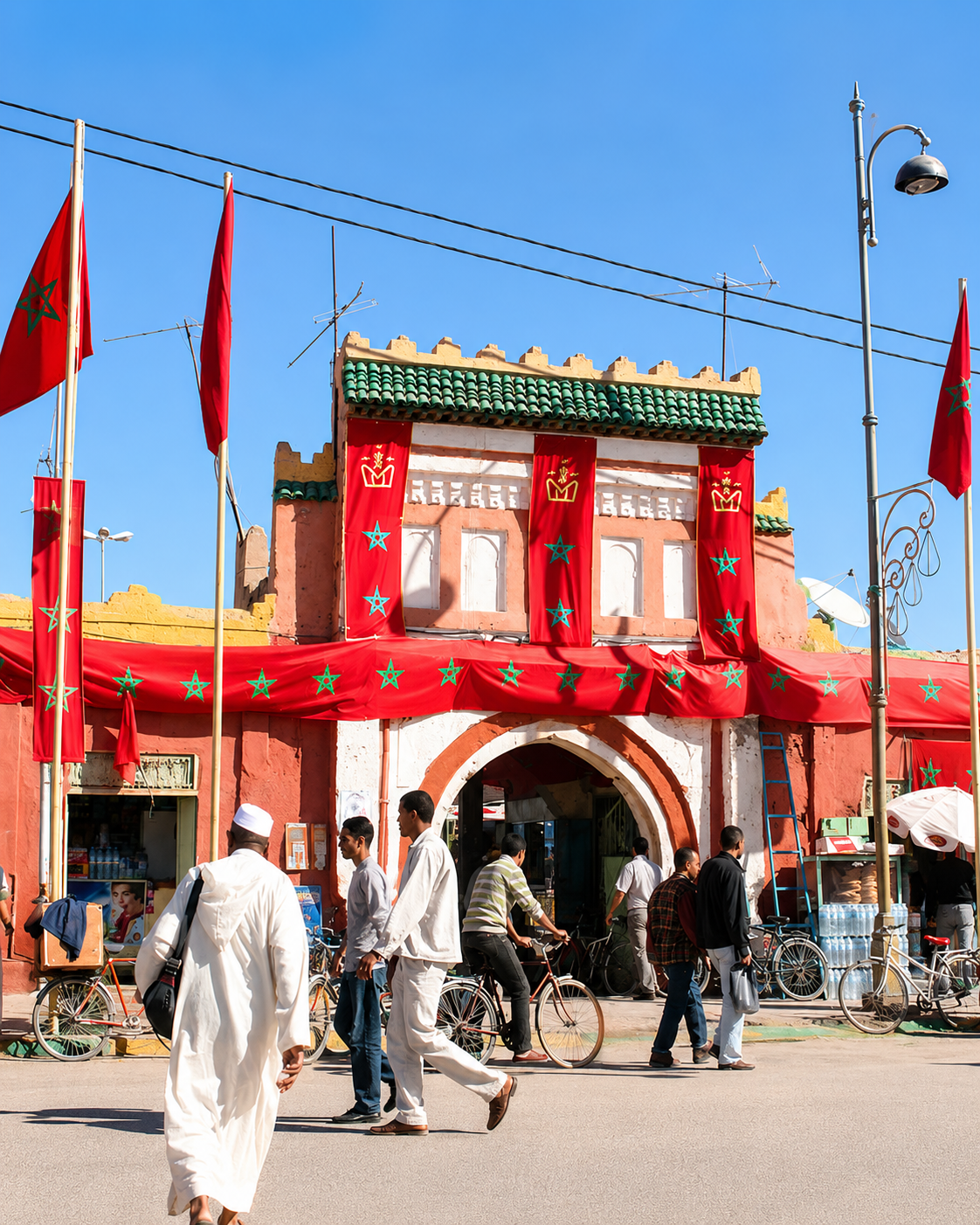
Erfoud developed as a modern town in the protectorate period, positioned between oasis settlements and the roads that lead south toward Rissani, Merzouga and the dune country.
04TodayDates, fossils and routes
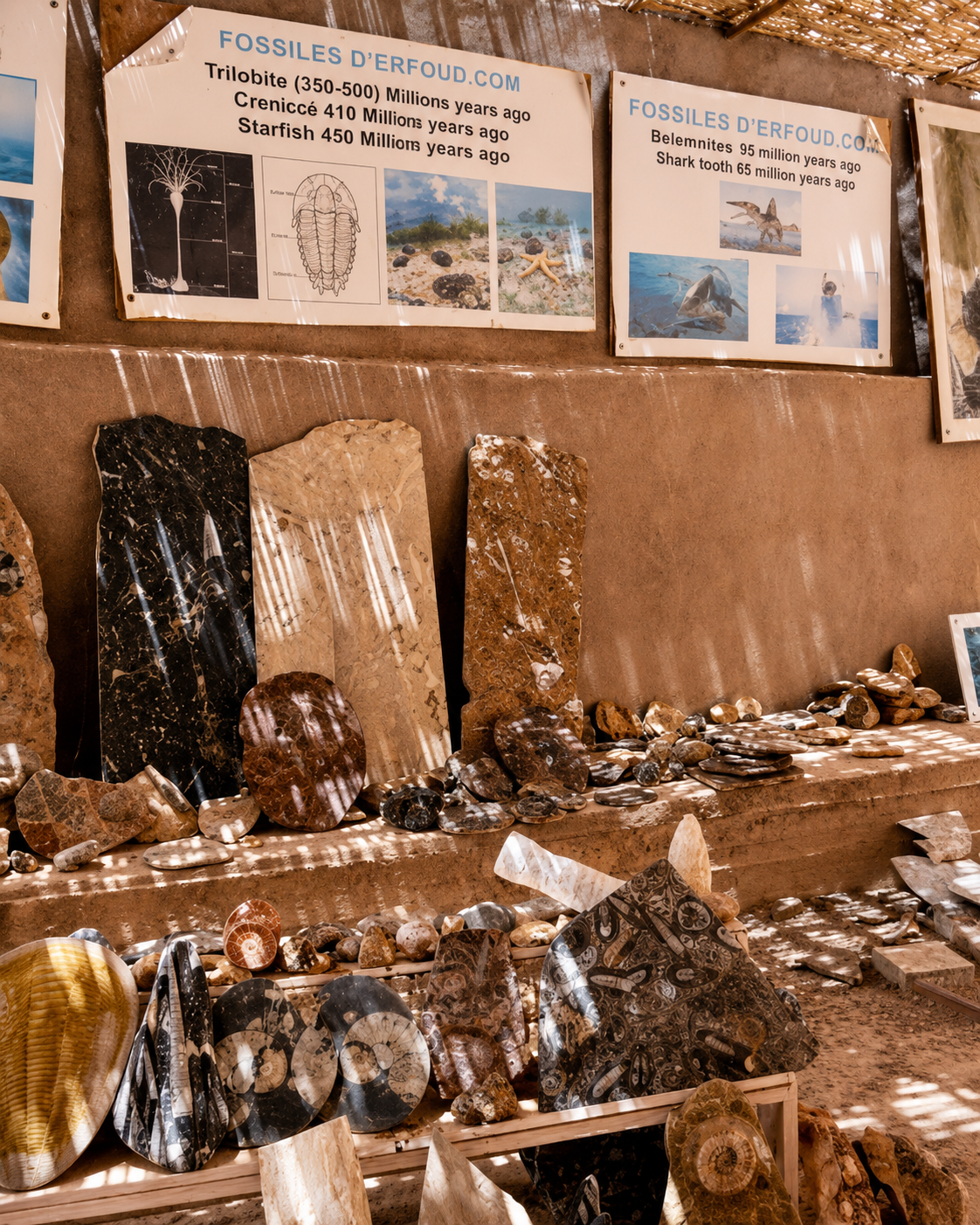
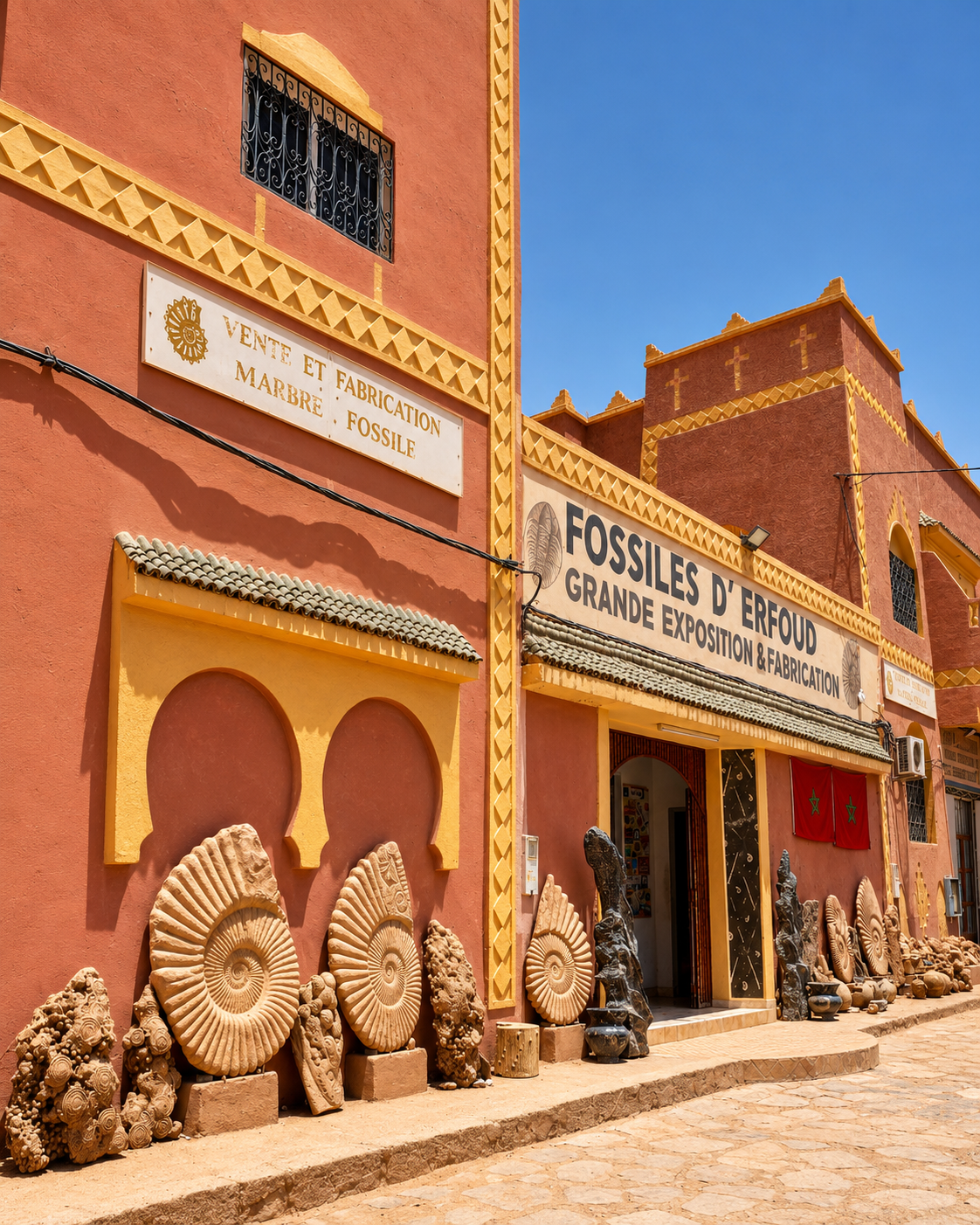
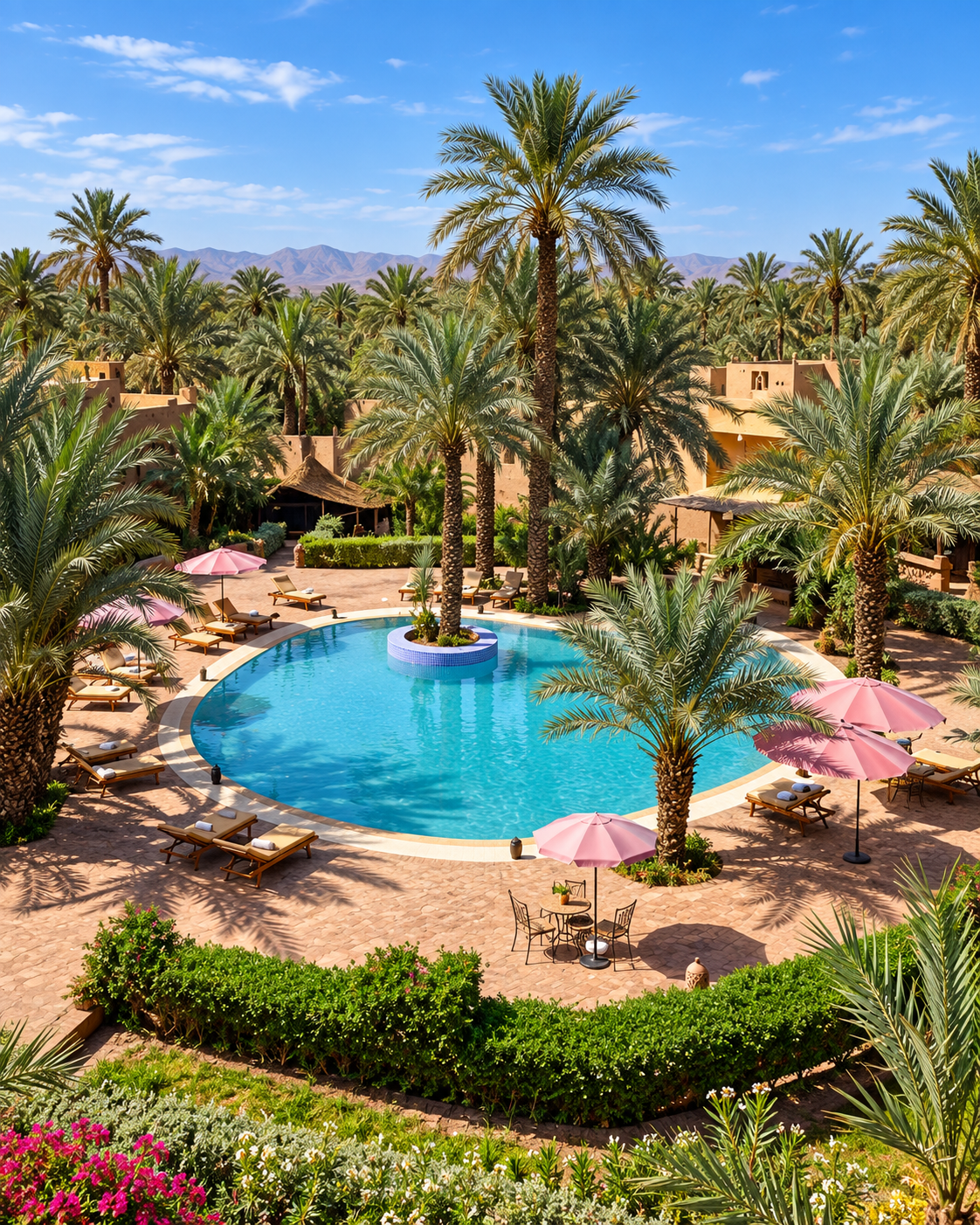
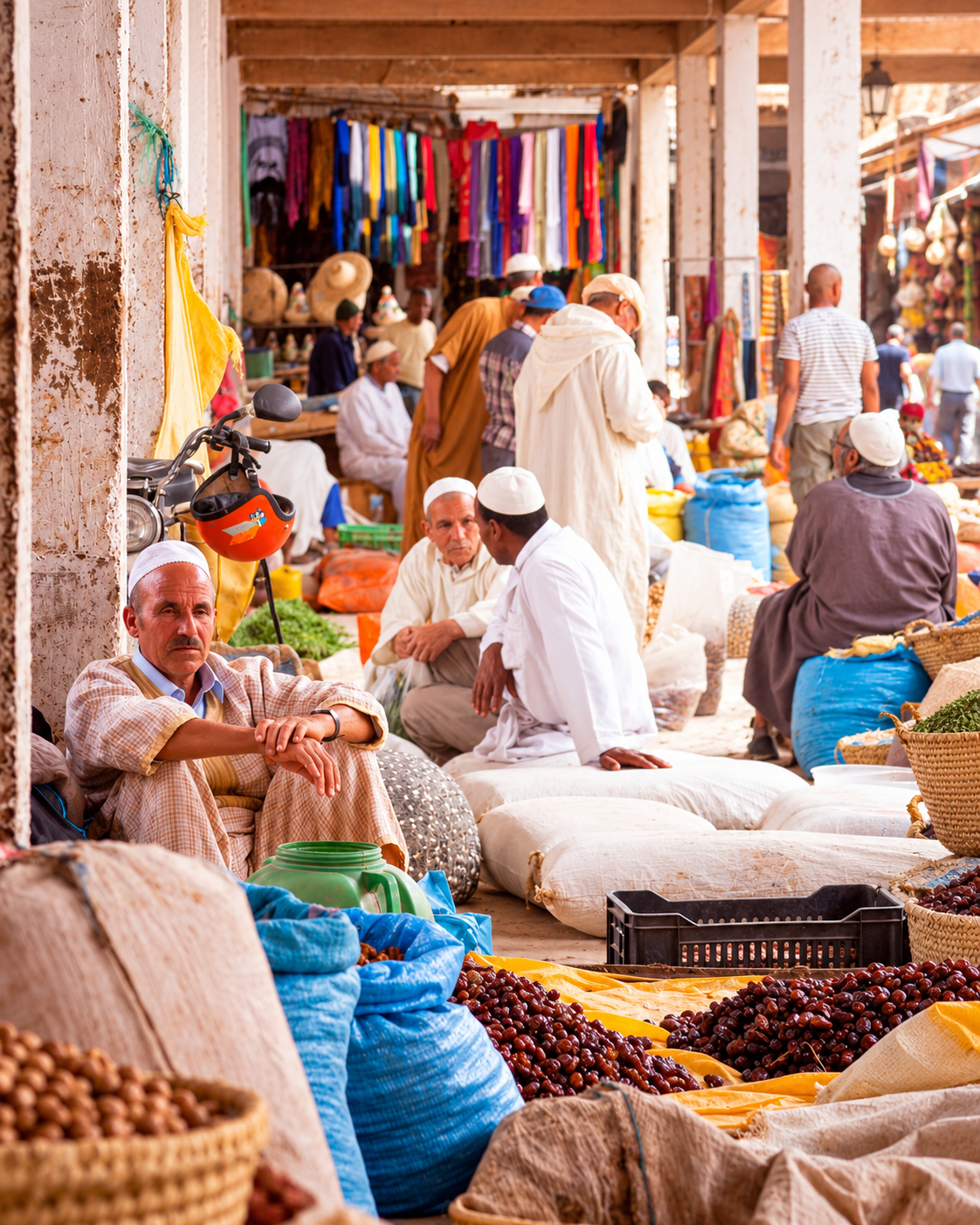
Today the city is known for date culture, fossil and stone workshops, desert-edge accommodation and the practical services that support journeys across southeastern Morocco.