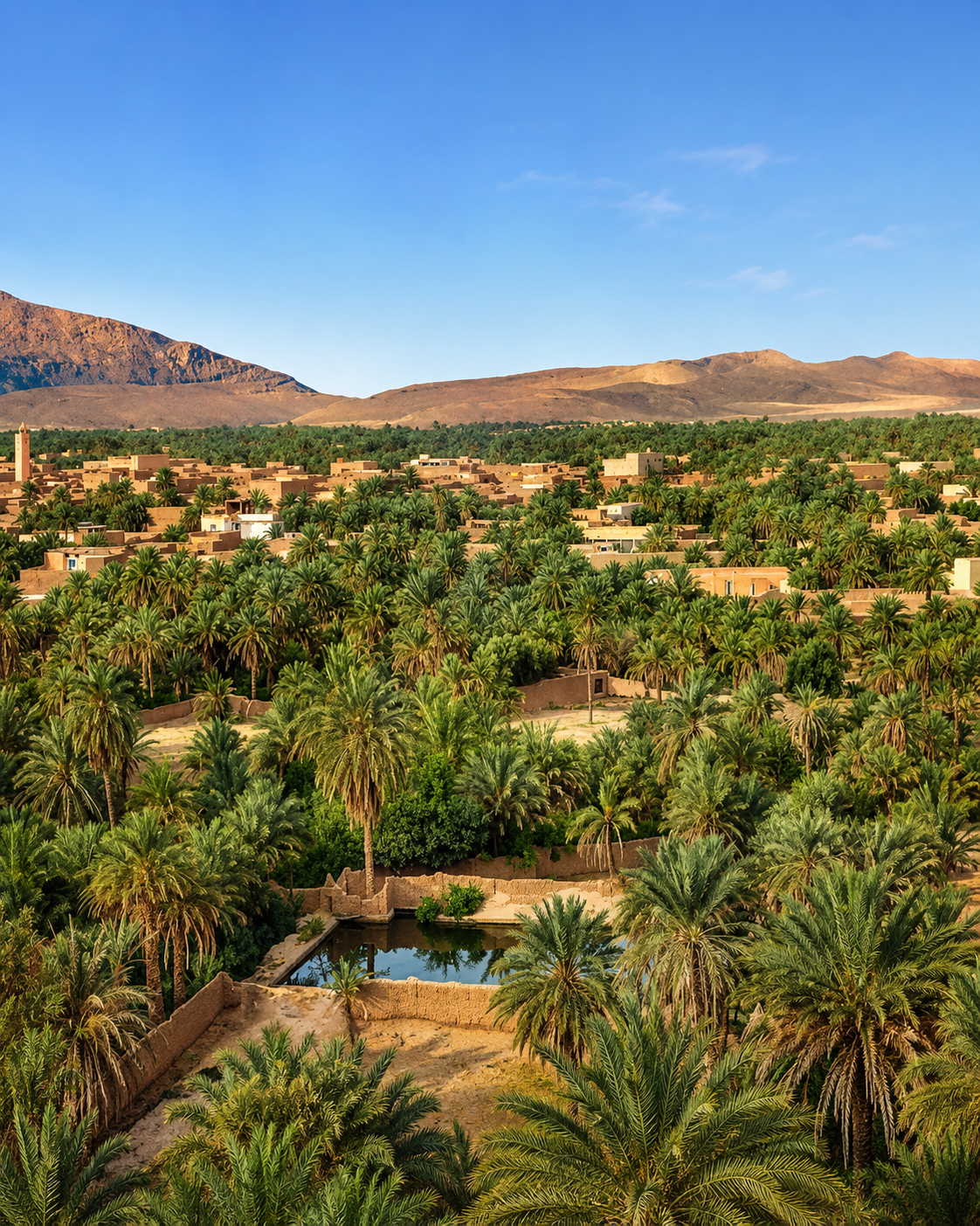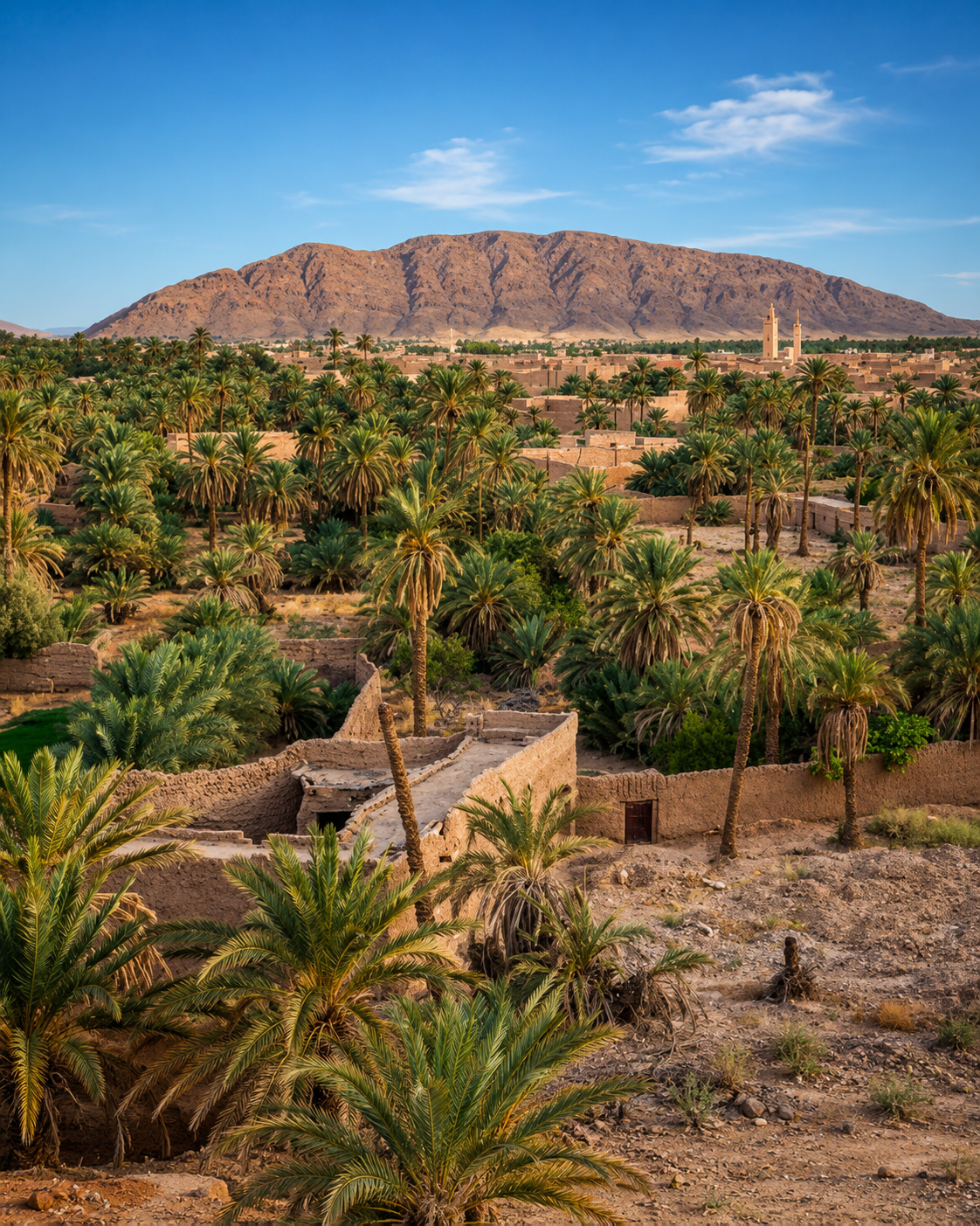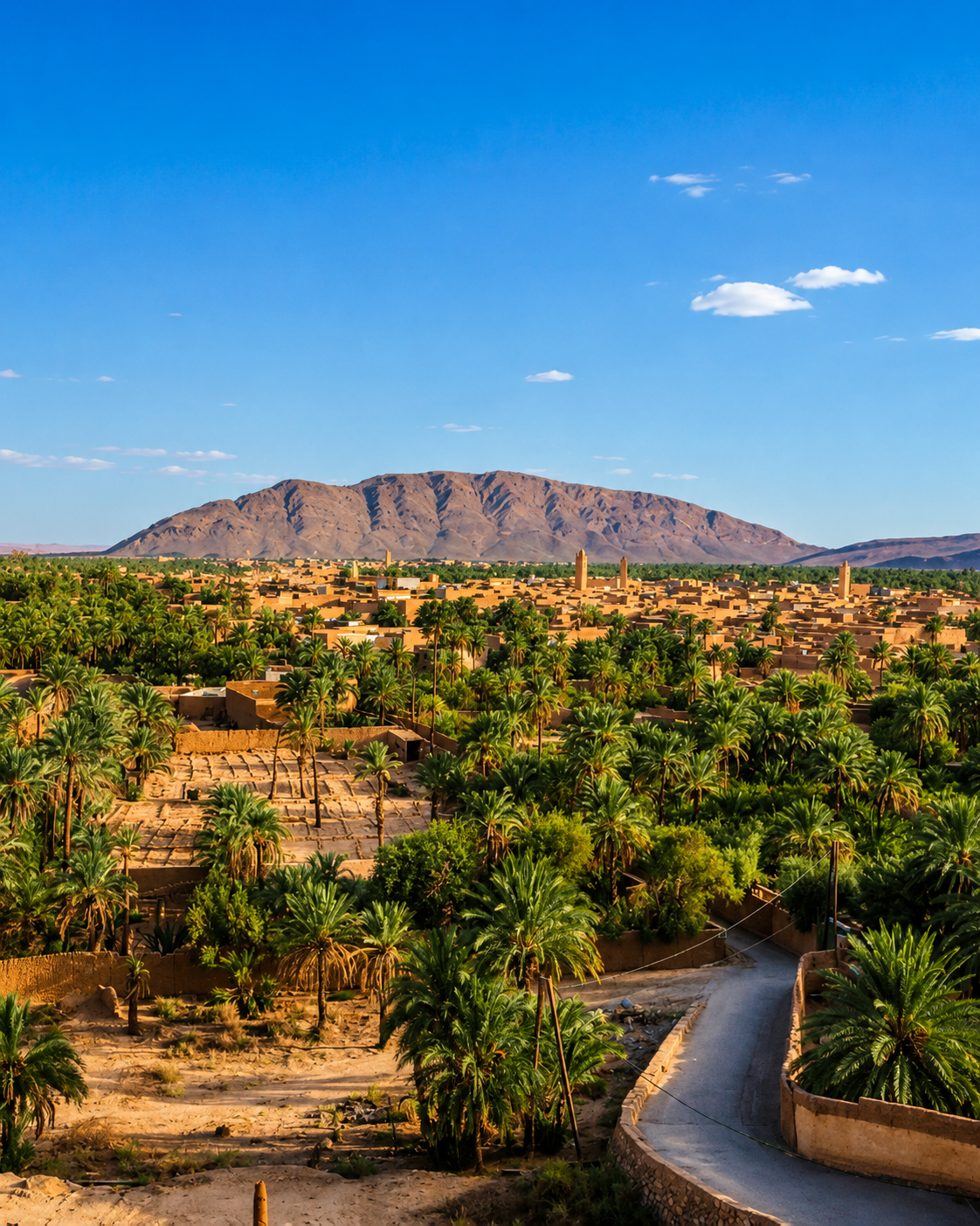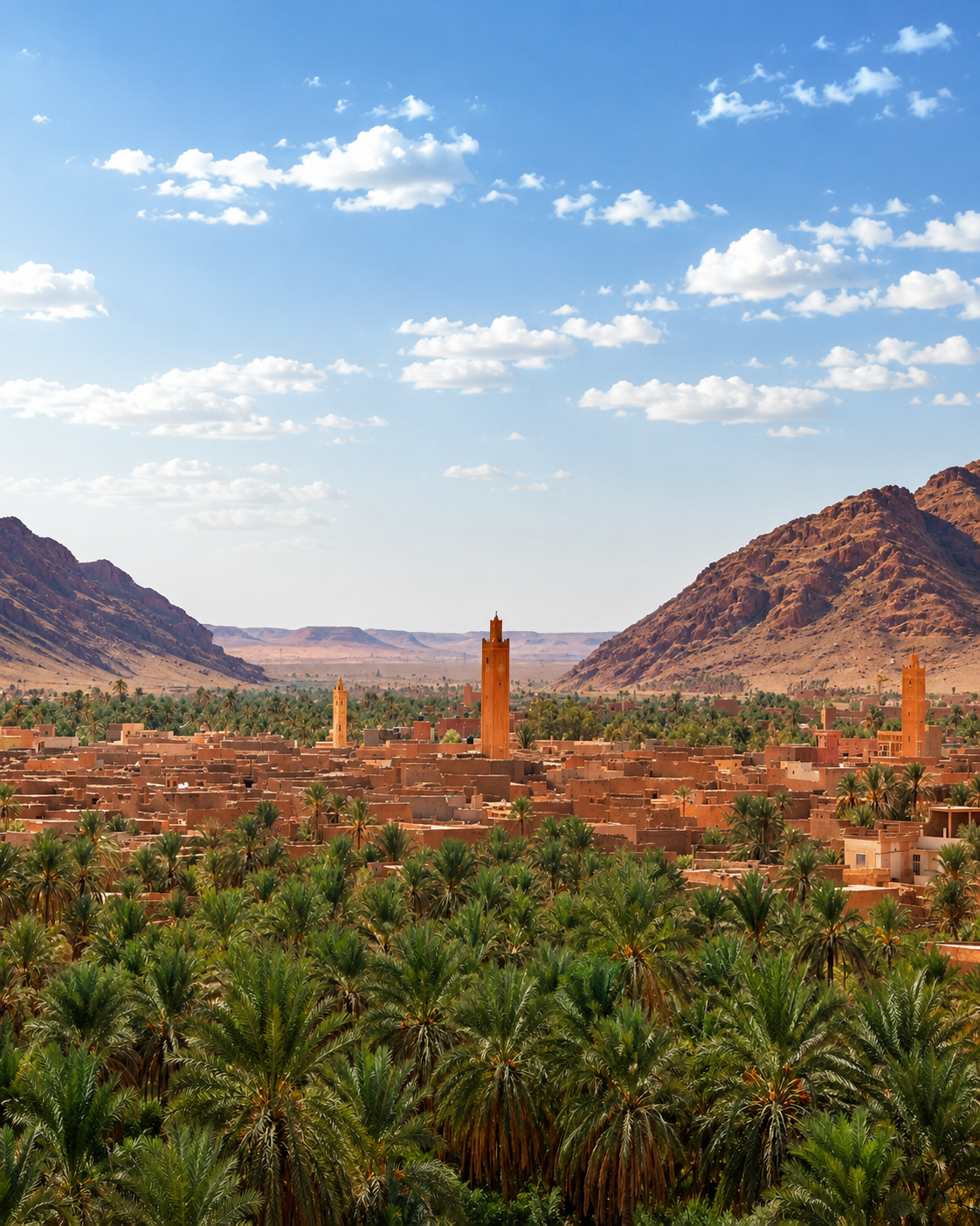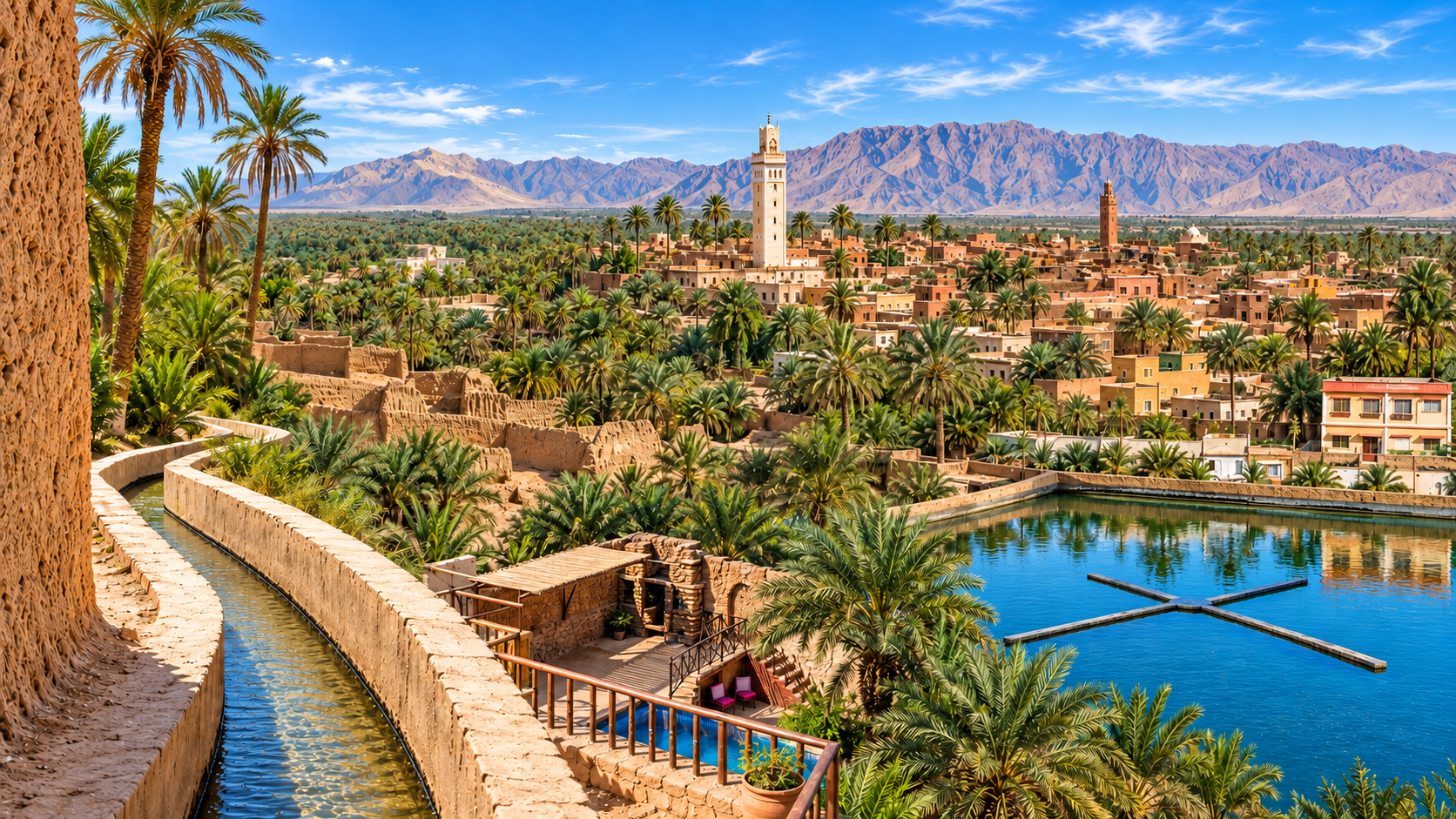
Panoramic view across Figuig oasis, palm groves, earthen settlement and mountain rim

Eastern Morocco oasis

Figuig Seven ksour, palm-grove memory and eastern oasis rhythm

On Morocco’s far eastern edge, Figuig gathers walled ksour, date palms, shared water systems and desert-border light into one of the country’s most delicate oasis landscapes.

Why Figuig matters

Beyond the oasis postcard

Figuig is often introduced as a distant oasis, but its deeper beauty begins in the relationship between ksour, palm gardens and water. Earthen walls, shaded lanes, irrigation basins and cultivated plots reveal a settlement system shaped by patience rather than spectacle.

Unlike Morocco’s larger imperial and coastal cities, Figuig rewards slow orientation. Its rhythm moves from adobe thresholds to palm shade, from shared water to garden paths, from borderland remoteness to a quietly resilient urban memory.
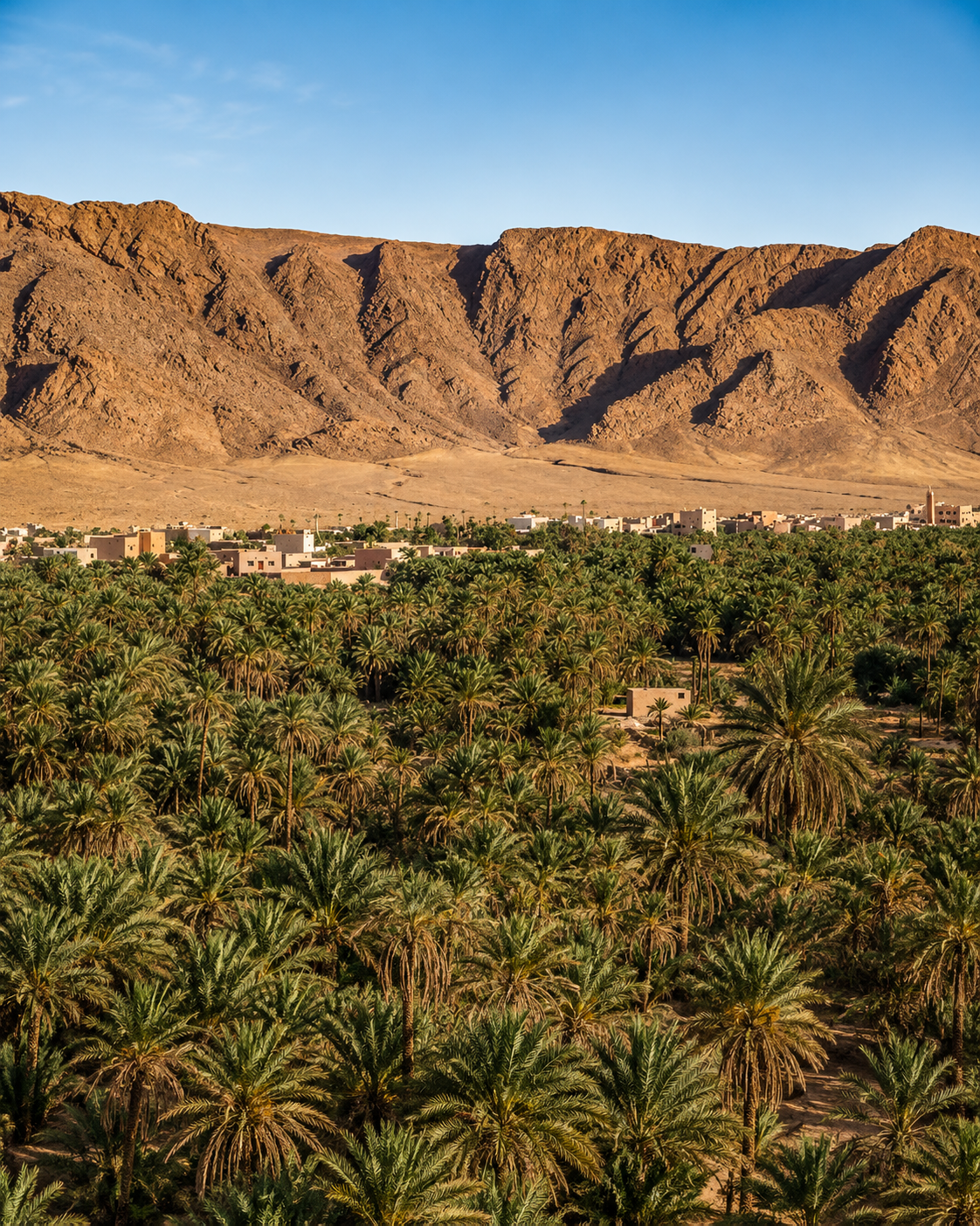
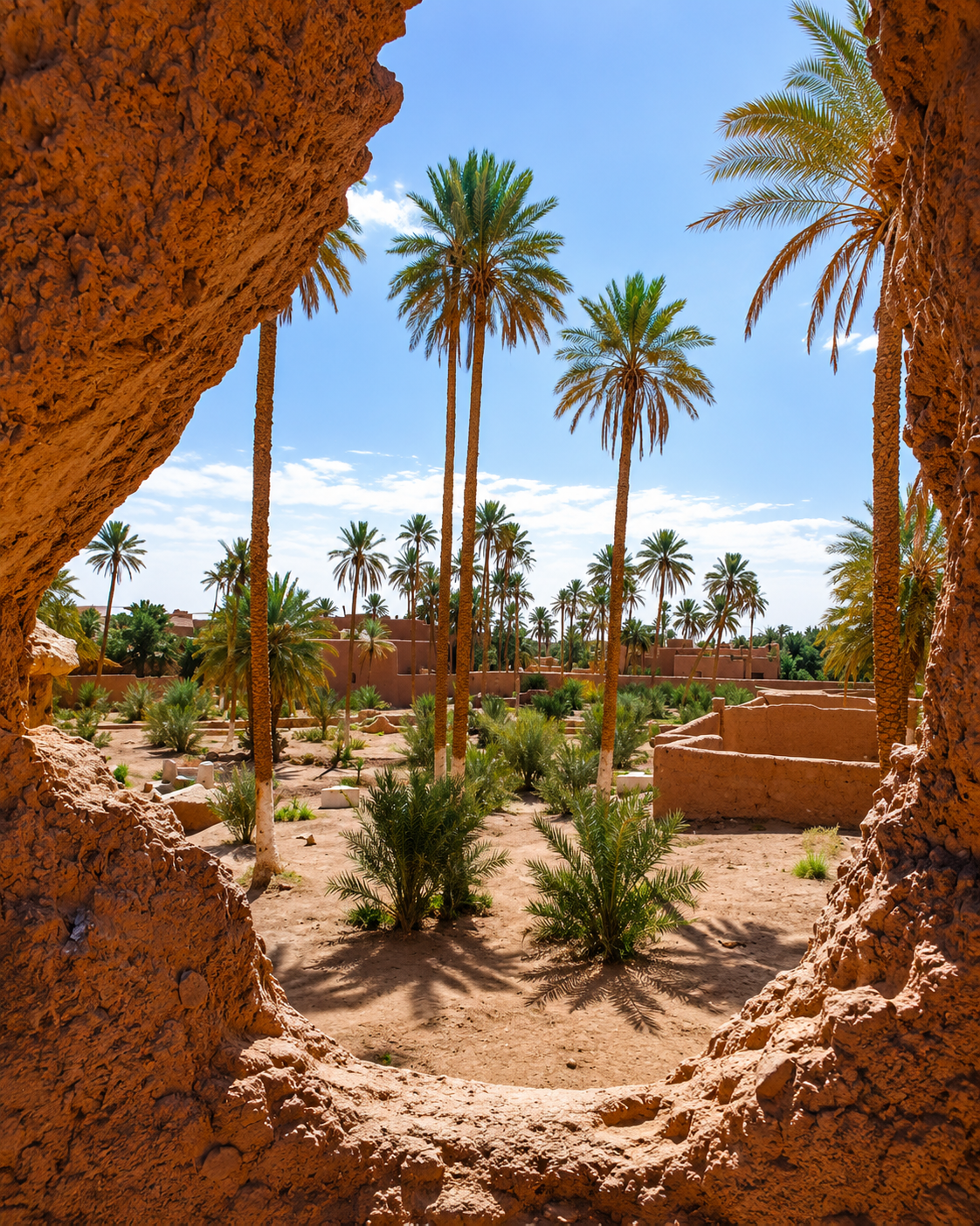
Figuig palm grove and earthen settlement beneath the surrounding mountain rim

A city of water, earth and shade

Power in Figuig is not monumental; it is measured in wells, channels, walls, palms, gardens and the collective discipline that keeps an oasis alive.

EXPLORE

Figuig

Historical orientation

From oasis settlement to living cultural landscape

Figuig is best understood as a constellation rather than a single monument. The town grew around ksour, date-palm gardens and shared irrigation systems, creating a cultural landscape where architecture, agriculture and water rights remain closely connected.

01Oasis foundations

Water before walls

Settlement in Figuig formed around water, cultivation and protection, with palm groves and earthen architecture working as one system.

02Seven ksour

Ksar constellation

Zenaga, Loudaghir, Laâbidate, Lamiz, Hammam Foukani, Hammam Tahtani and Ouled Slimane preserve the plural memory of the oasis.

03Shared water

Irrigation culture

Channels, basins and garden plots show how Figuig’s urban life depends on collective water management and careful maintenance.

04Living heritage

Tentative heritage recognition

The Oasis of Figuig is listed on Morocco’s UNESCO tentative list, reflecting the value of its ksour, palm grove and traditional water landscape.

A visual bridge

Three glimpses between earth and water

These images connect the historical story to the city you encounter today: earthen thresholds, carefully managed water, palm shade and the skyline of the ksour.

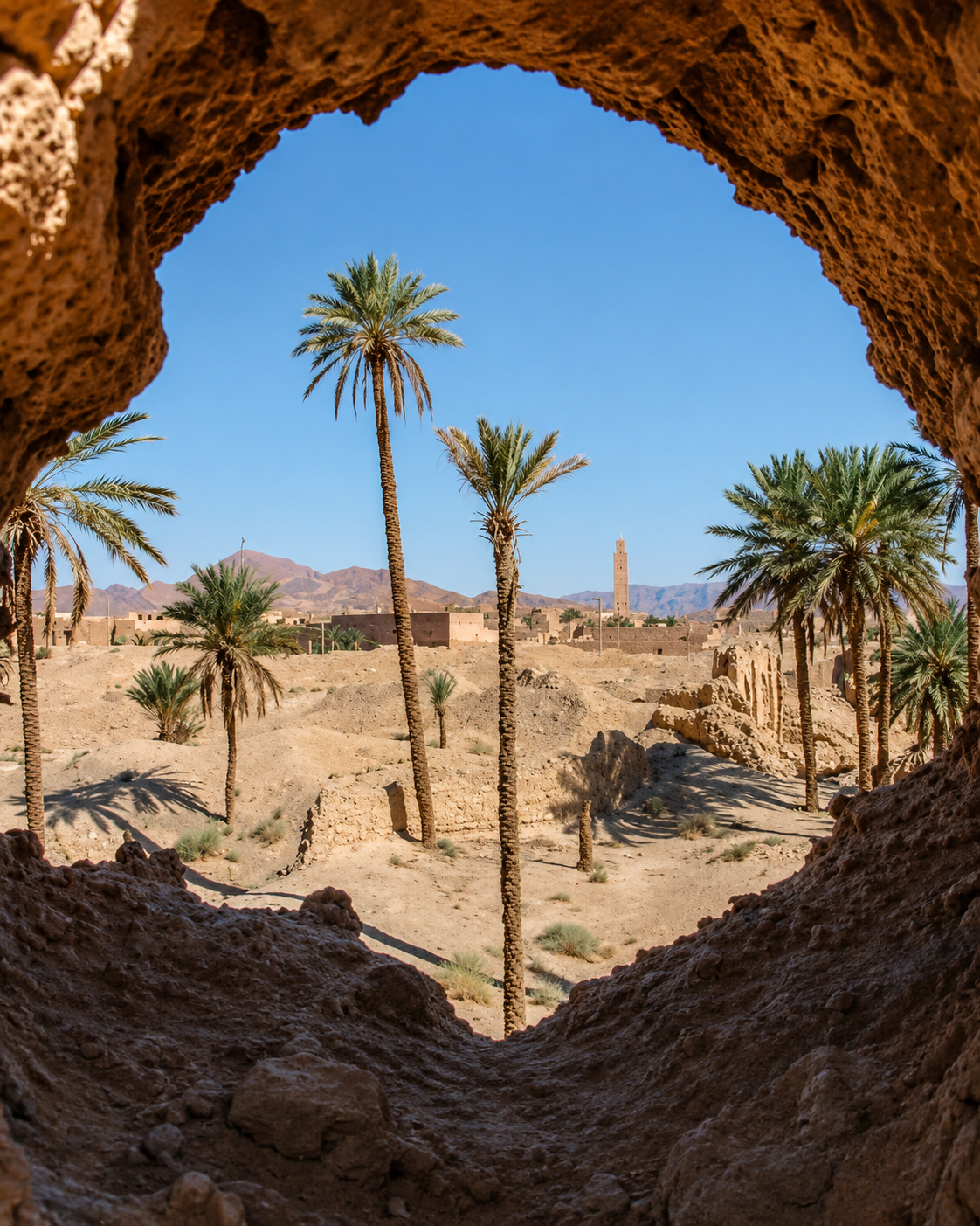
Earthen opening framing palms and garden space in Figuig oasis

Earthen thresholds

Openings, walls and shaded edges reveal how built fabric mediates between ksar life and the palm gardens.

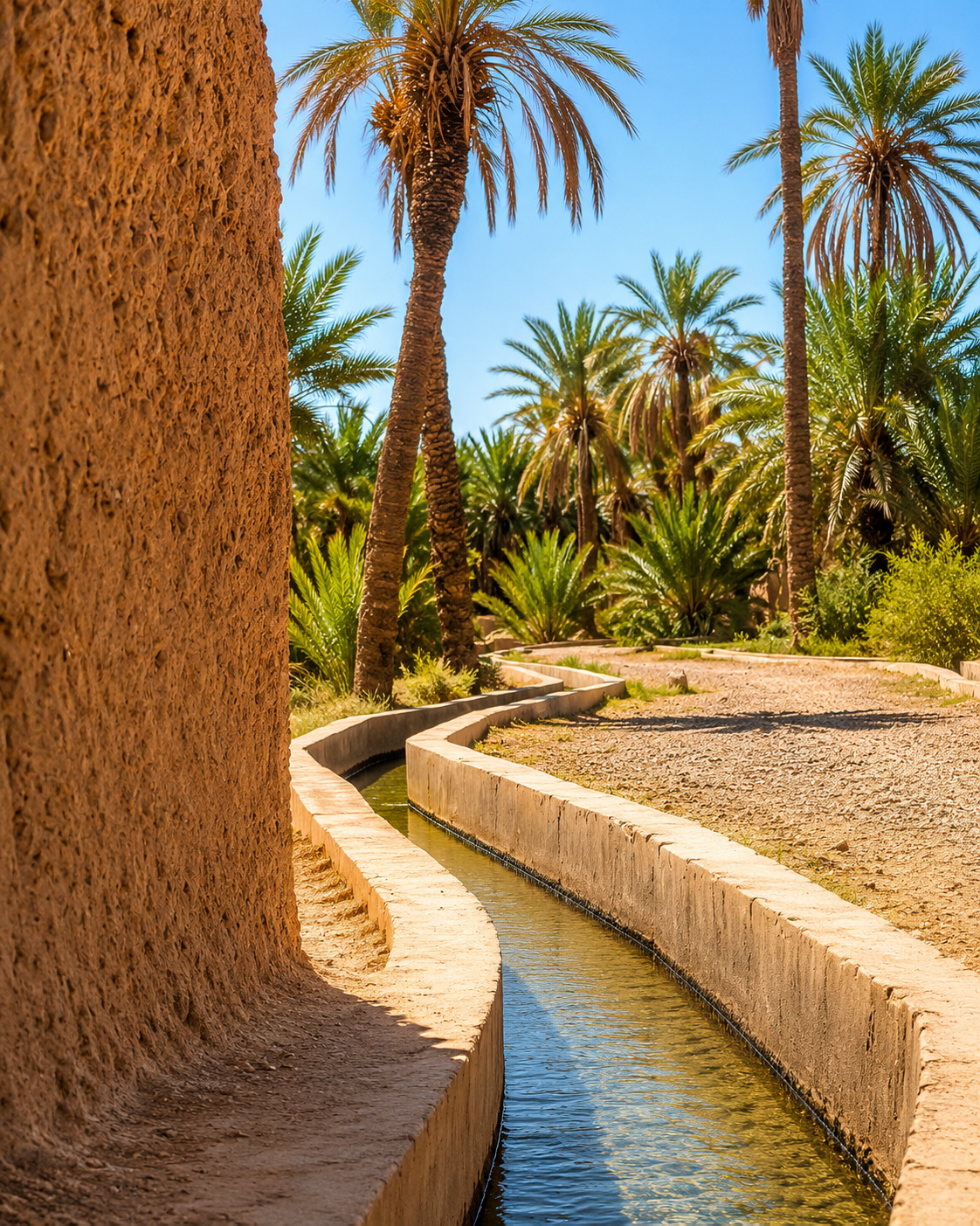
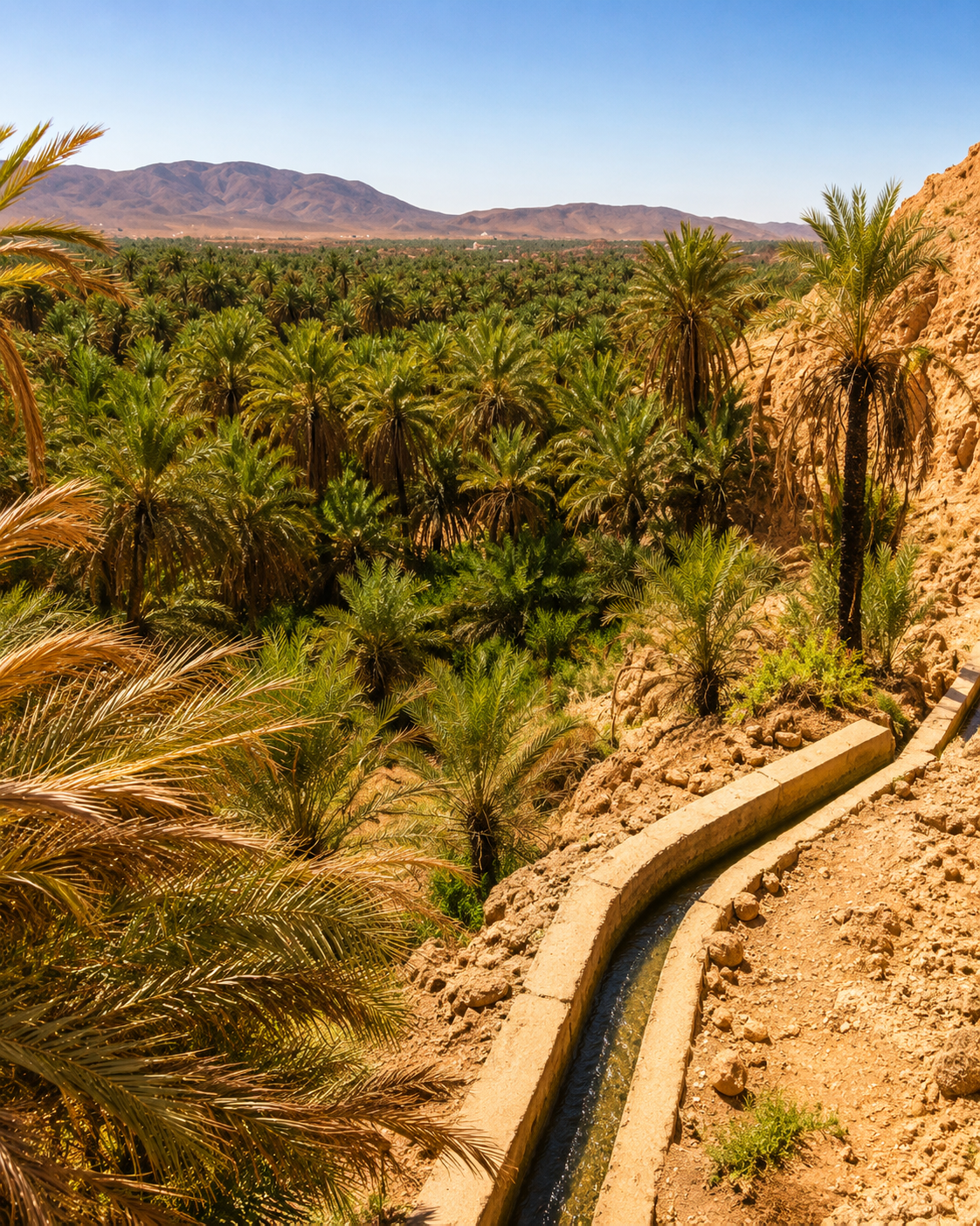
Irrigation canal running through date palms in Figuig oasis

Water as structure

Channels are not decorative details: they are part of the infrastructure that makes cultivated oasis life possible.

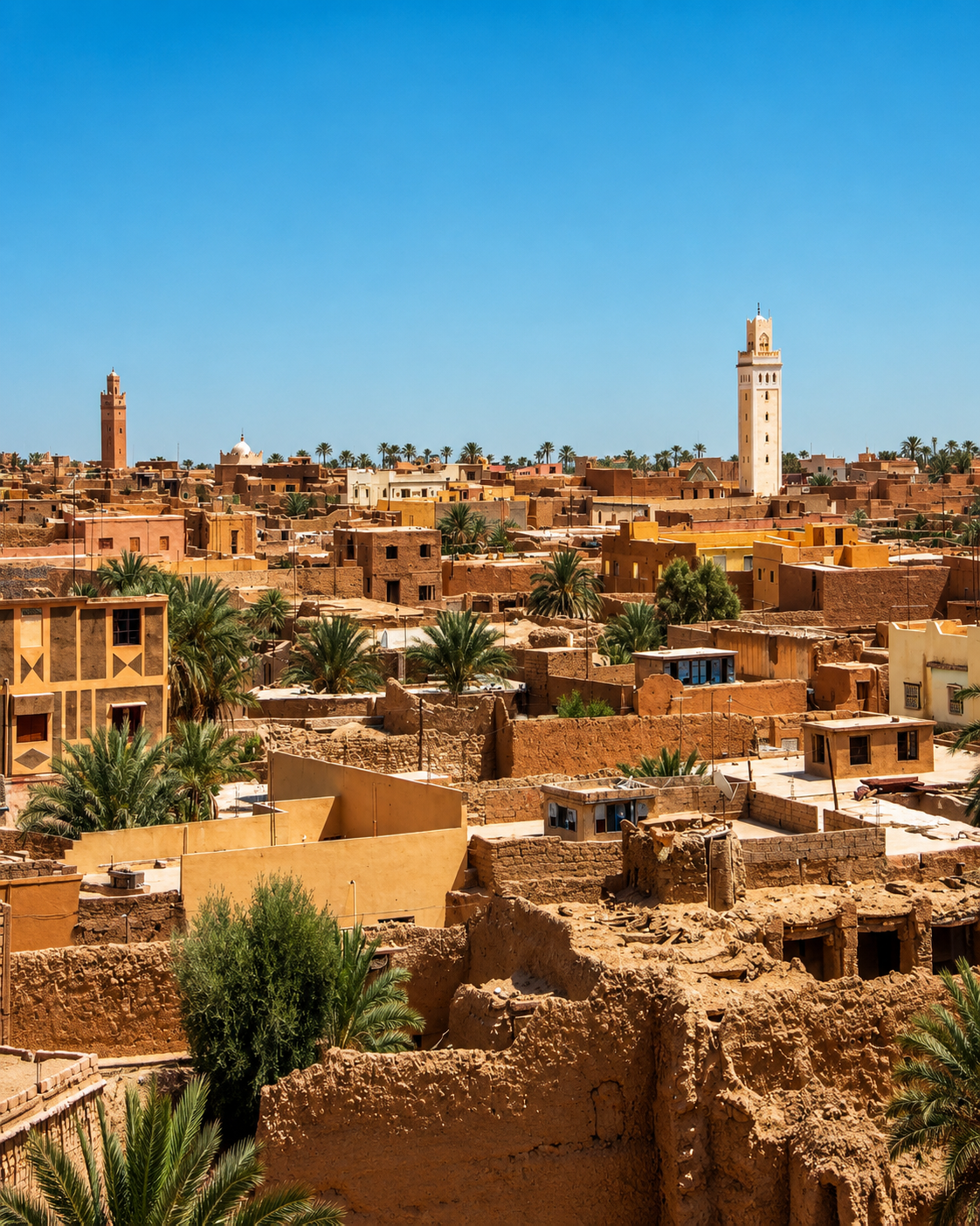
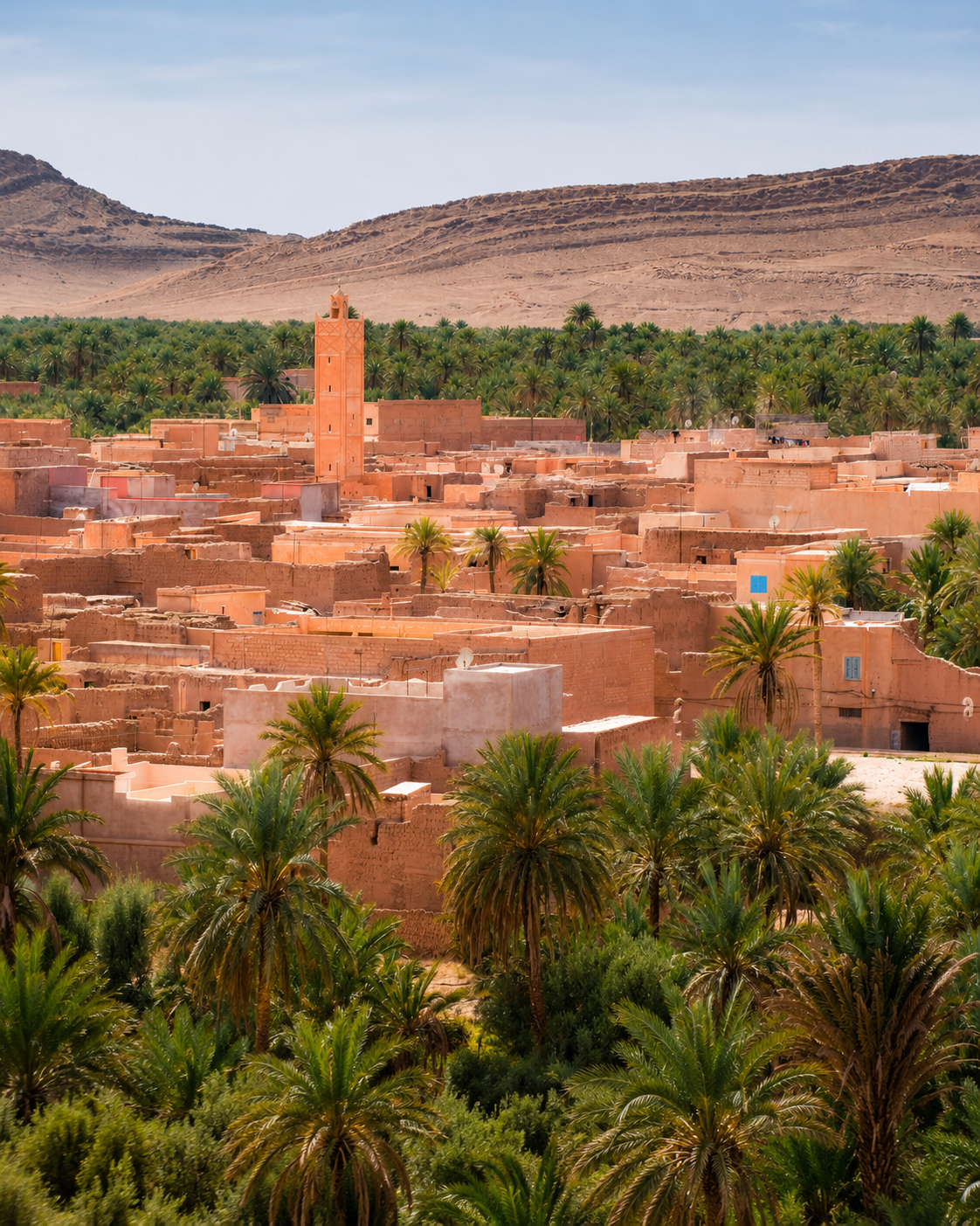
Figuig earthen settlement, palm groves and minarets

Ksour and skyline

Earthen settlement, palms and minarets show the close relationship between neighbourhood identity and the wider oasis.

Figuig at a glance

Seven ksour and an oasis system

Figuig’s historic identity is not held by one monument. It sits in the relationship between ksour, palm groves, irrigation basins, garden plots and the routes that connect them.

Morocco’s far eastern oasis

The town stands near the eastern borderland, where oasis culture, mountain edges and desert approach routes meet. That position gives Figuig a slower, more remote rhythm than Morocco’s main visitor circuits.

Compact, but layered

The principal ksour and palm-grove edges are close enough to read together, yet each has its own social memory, street texture and relationship to water.

A borderland cultural landscape

Figuig lies in Morocco’s far east, where the seven ksour, stepped palm gardens and shared water systems form a coherent oasis landscape shaped by relative geographic isolation.

A clearer reading of the city

A city shaped by ksour, palms and shared water

To understand Figuig, read its settlement pattern, living gardens and water culture together. The oasis is not a backdrop to the city; it is the structure that made the city possible.

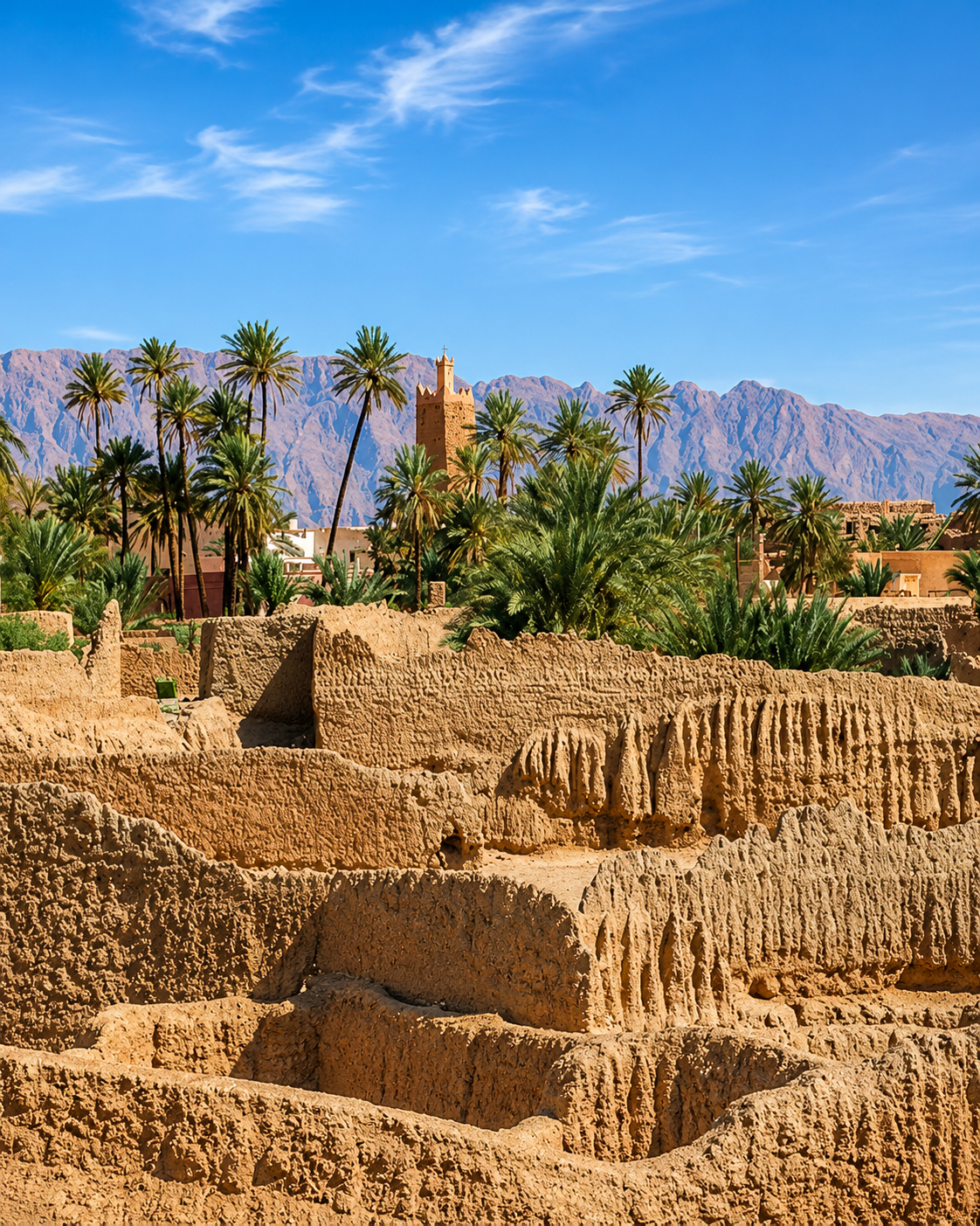
Earthen walls and old settlement fabric against the mountains of Figuig
Layer 1

Earthen settlement

Adobe walls, covered passages and compact ksar lanes give Figuig its protective urban language, designed around heat, privacy, shade and proximity.

Water channel beside earthen walls and palms in Figuig
Layer 2

Living oasis fabric

Palm groves, small plots, basins and channels remain essential to how the city is perceived, cultivated and remembered.

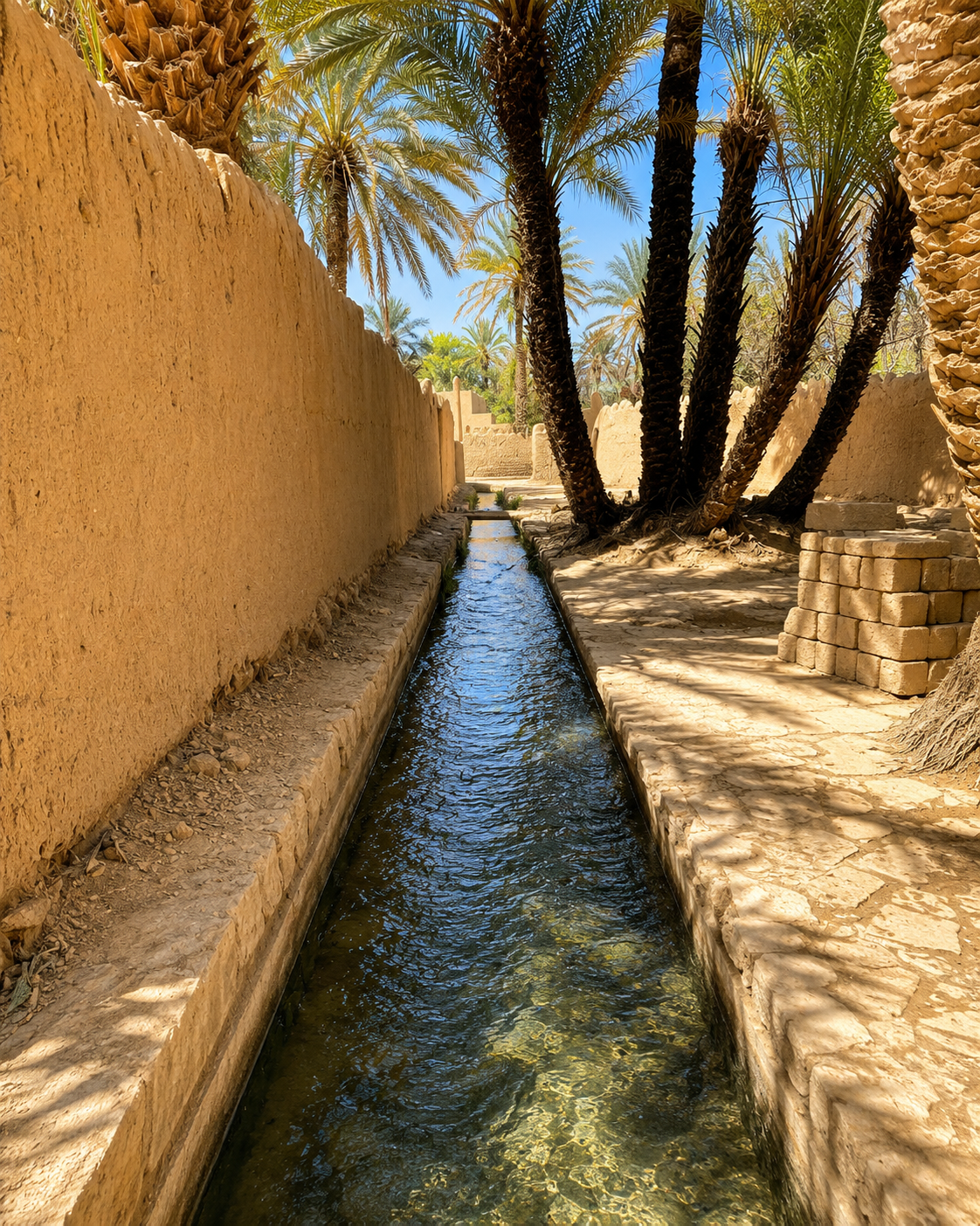
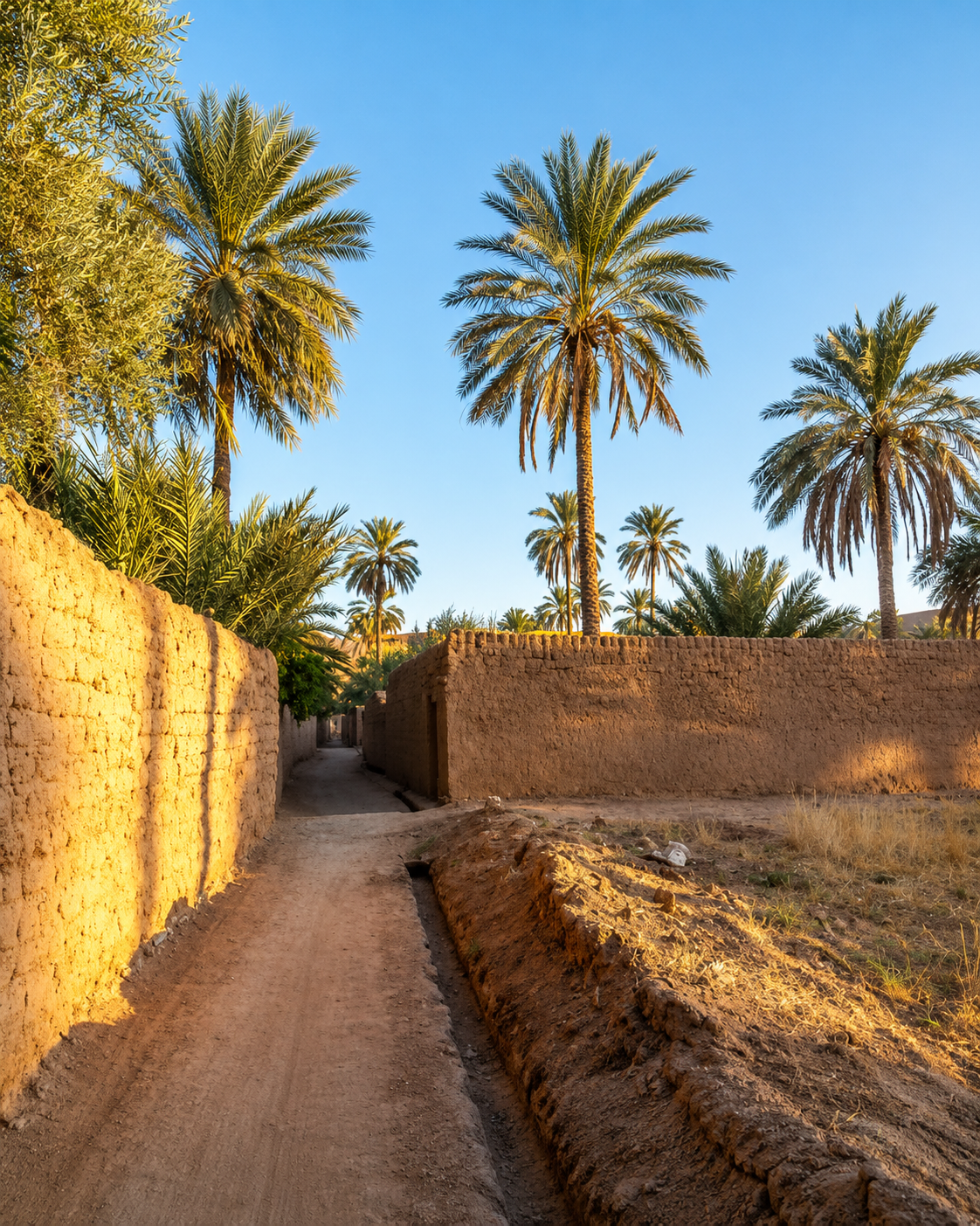
Narrow palm-garden lane bordered by earthen walls in Figuig
Layer 3

Palm-garden thresholds

Narrow lanes, earthen garden walls and date palms mark the transition between the compact ksour and the cultivated oasis beyond.

Landmarks & orientation

Read Figuig through six defining places

No single monument explains Figuig. These six orientations reveal how distinct ksour, earthen architecture, shared water and the palmeraie form one cultural landscape.

1
Ksar Zenaga

The largest and most visible ksar, often used as a first orientation point for Figuig’s earthen architecture and palm-grove edge.

2
Loudaghir

A northern ksar whose lanes and garden relationships help explain how settlement and irrigation meet in the oasis.

3
Laâbidate

Part of the historic ksour constellation, read through compact streets, family memory and the discipline of shade.

4
Lamiz

A ksar landscape of adobe walls, palm plots and local continuity rather than monumental display.

5
Hammam Foukani & Hammam Tahtani

Neighbouring ksour that show how Figuig’s urban identity is plural, layered and water-dependent.

6
Ouled Slimane

A historic ksar of the oasis ensemble, best understood as one voice within Figuig’s wider system.

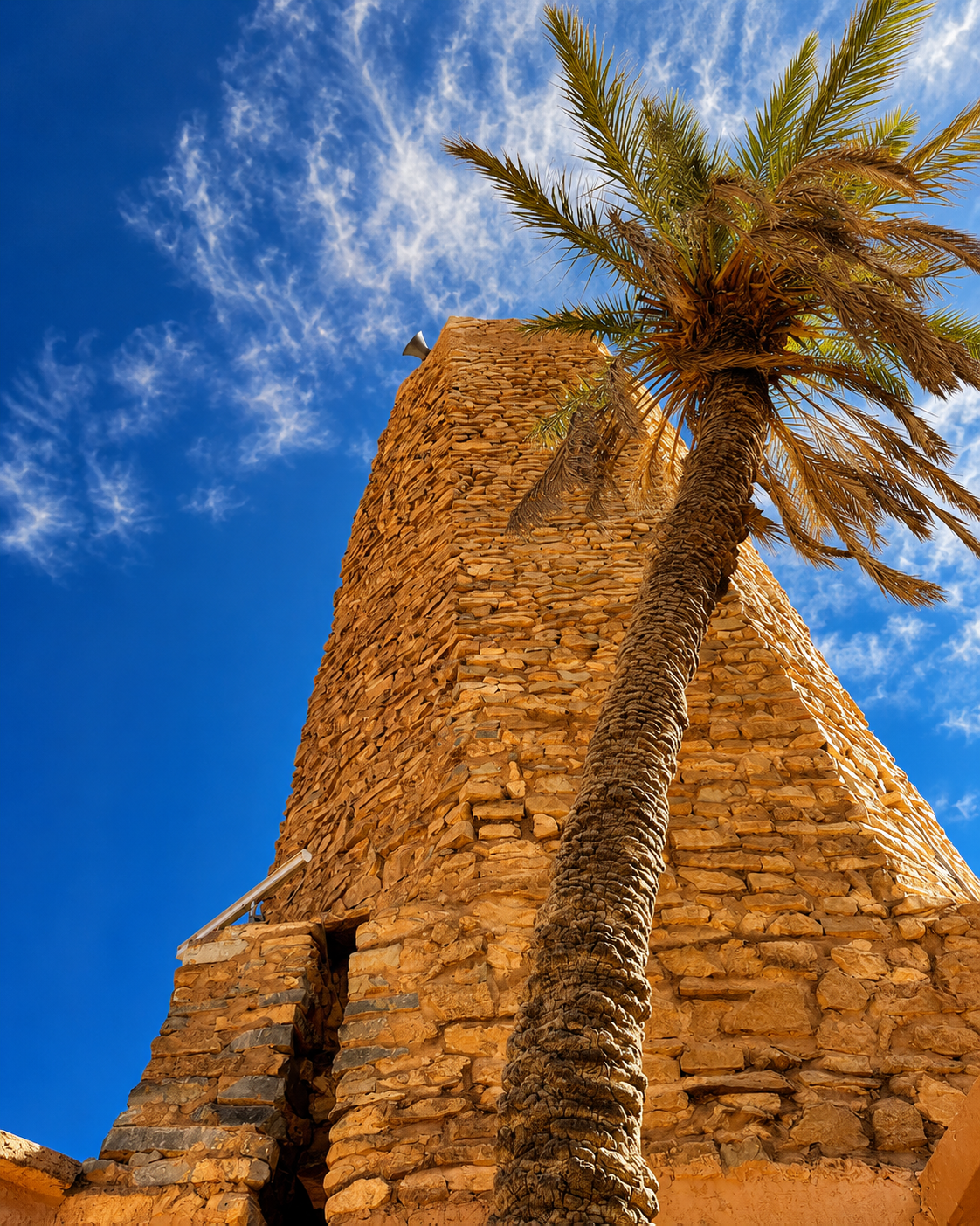
Earthen tower and date palm in the historic oasis landscape of Figuig
Earthen opening looking toward palms and oasis settlement in Figuig

An oasis threshold

Between earthen walls and the palm grove

Figuig is often read through thresholds: shaded openings in earthen walls, narrow passages, garden edges and sudden views toward palms. These transitions show how the built ksour and cultivated oasis remain physically and visually connected.

  • Earthen walls temper glare and frame movement from enclosed lanes toward open garden space.
  • Palm groves and irrigated plots begin immediately beyond many built edges, making cultivation part of the urban experience.
  • Openings and passages reveal the contrast between deep shade, sunlit earth and oasis greenery.

Architectural reading

Three architectural languages to notice

Adobe mass

Figuig speaks first through earth: compact walls, shaded corridors and enclosed thresholds create protection from heat while giving each ksar a strong sense of enclosure.

Water infrastructure

Basins, channels and irrigation paths show the practical intelligence of the oasis. Architecture here is inseparable from water movement, garden distribution and shared responsibility.

Palm-garden threshold

At the edge of the ksour, the city changes language. Dense walls open toward palms, plots and reflected water, turning the oasis into a sequence of shade, cultivation and light.

Visual atmosphere

Light, shade and patient distances

Nearby highlights

Around the oasis: palms, mountains and water

The most coherent extensions of a Figuig visit remain close to the oasis itself: the mountain rim, cultivated palm-grove edges and water-fed garden landscapes. Read them as parts of the same cultural landscape rather than as unrelated photo stops.

Mountain rim and palmeraie

Step toward the outer palm groves to understand how Figuig sits between cultivated shade and an austere mountain horizon. The contrast is central to the city’s sense of place.

Palm-grove edge and mountain landscape around Figuig

Oasis-edge routes

Short roads and paths around the cultivated edge reveal the transition from dense gardens and settlement to the more open eastern landscape.

Road through the cultivated oasis edge of Figuig beneath the mountains

Water-fed garden landscapes

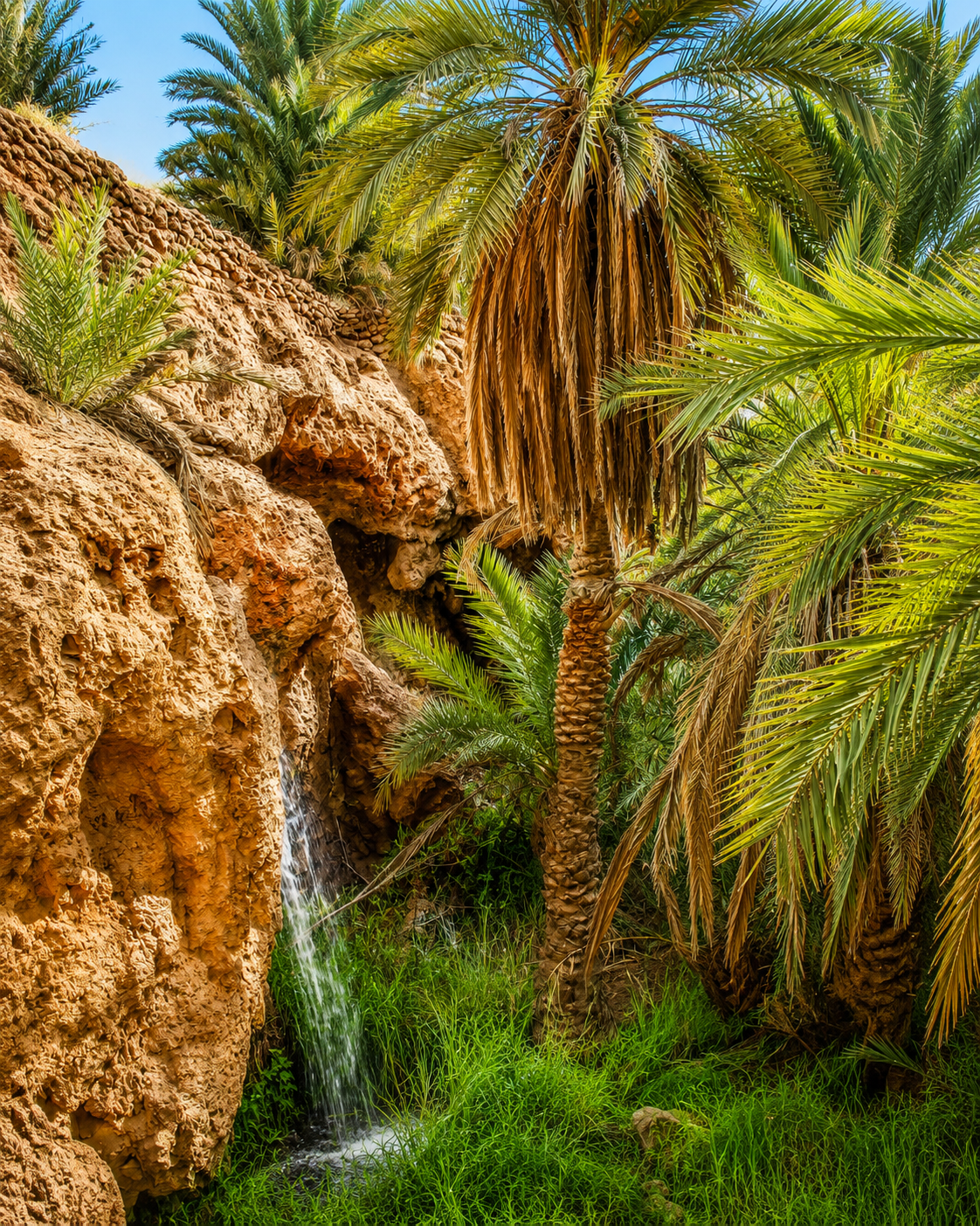
Where spring water, channels and palms meet, the oasis reads as a working environmental system. Observe these places without treating irrigation infrastructure as a decorative backdrop.

Spring-fed water and dense palms in the oasis landscape around Figuig
Travel note: access conditions, local guidance, water infrastructure and routes around the oasis can change. Respect private gardens and check locally before entering cultivated or residential areas.

Practical orientation

How to experience Figuig well

  • Begin with the ksour rather than trying to “do” Figuig quickly.
  • Move slowly between built lanes, palm-grove edges and water places.
  • Notice shade, adobe, channels and garden thresholds as part of one system.
  • Avoid treating the oasis as a single viewpoint; its meaning is cumulative.
  • Leave enough time for the palm-grove edges and water landscapes instead of treating Figuig as a quick stop between long drives.

A strong first visit

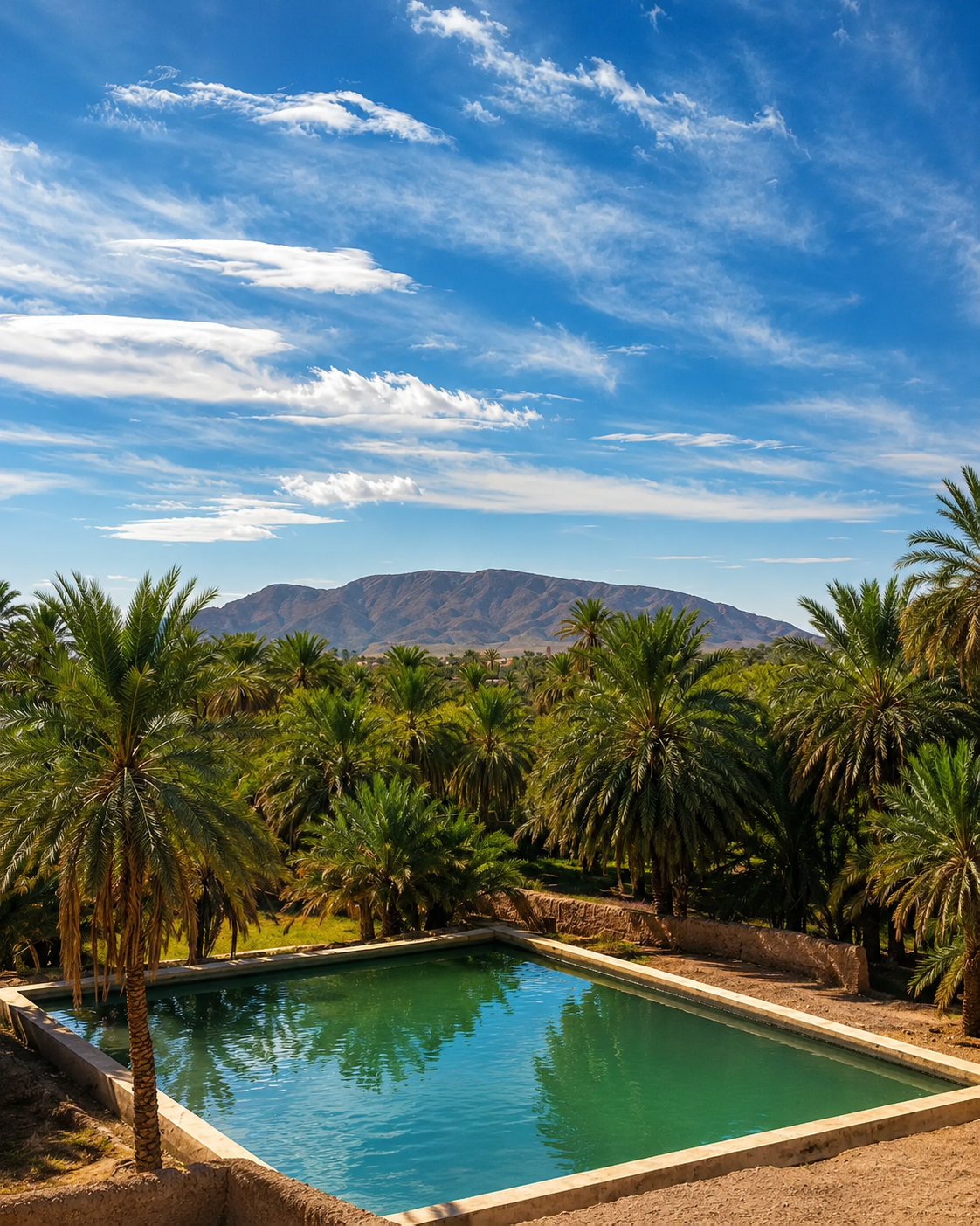
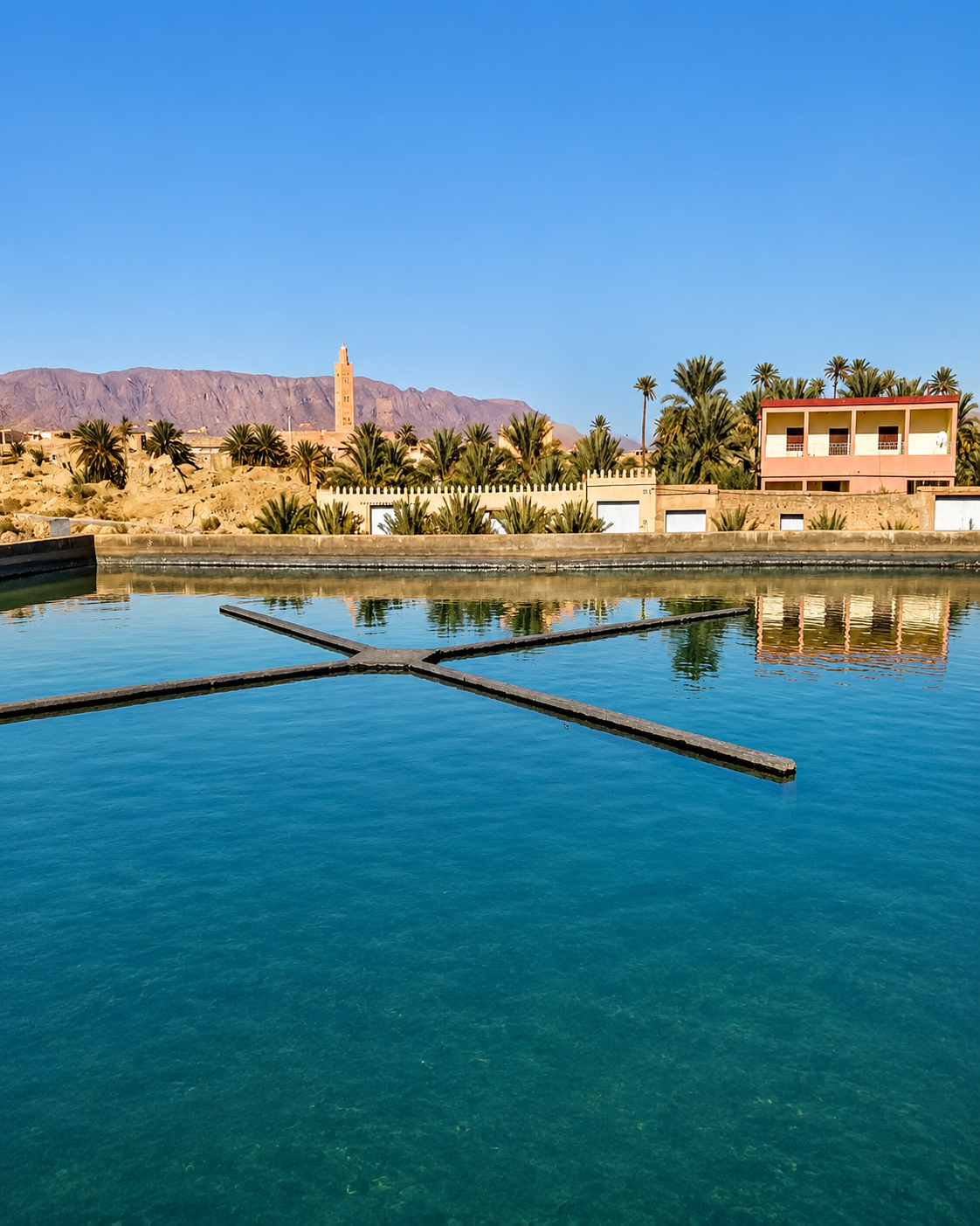
Water reservoir, palms and village edge in Figuig

Begin with Ksar Zenaga and nearby oasis edges, then move slowly through ksar lanes, garden thresholds and irrigation places. Figuig works best when treated as a cultural landscape, not as a quick stop between long drives.

Figuig oasis town framed by palms, minarets and the eastern mountain landscape

Go deeper with Exotic Morocco

Figuig — Premium Visual City Guide

Continue with a visual guide designed to connect Figuig’s seven ksour, earthen architecture, palm-grove landscape, water culture, practical orientation and careful ways of reading the oasis.

✓ Historic context✓ Essential landmarks ✓ Architecture & design✓ Culture & local life ✓ Practical travel guidance✓ Nearby routes

Continue the journey

Continue the journey through Figuig

Look beyond the postcard and encounter an eastern oasis of ksour, palms, water memory, earthen architecture and patient travel.