Why Taghazout matters
A coastal village before it is a surf image.
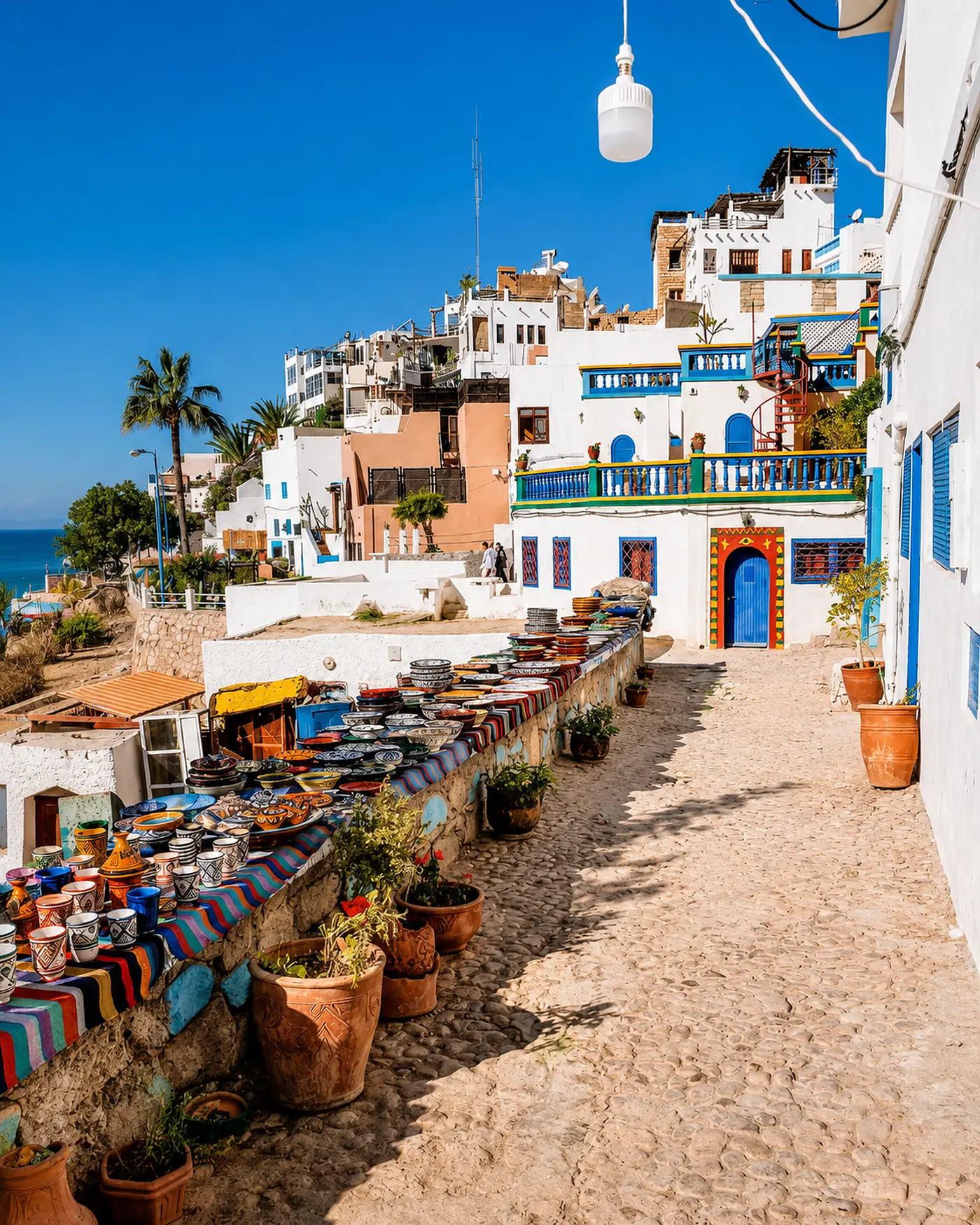
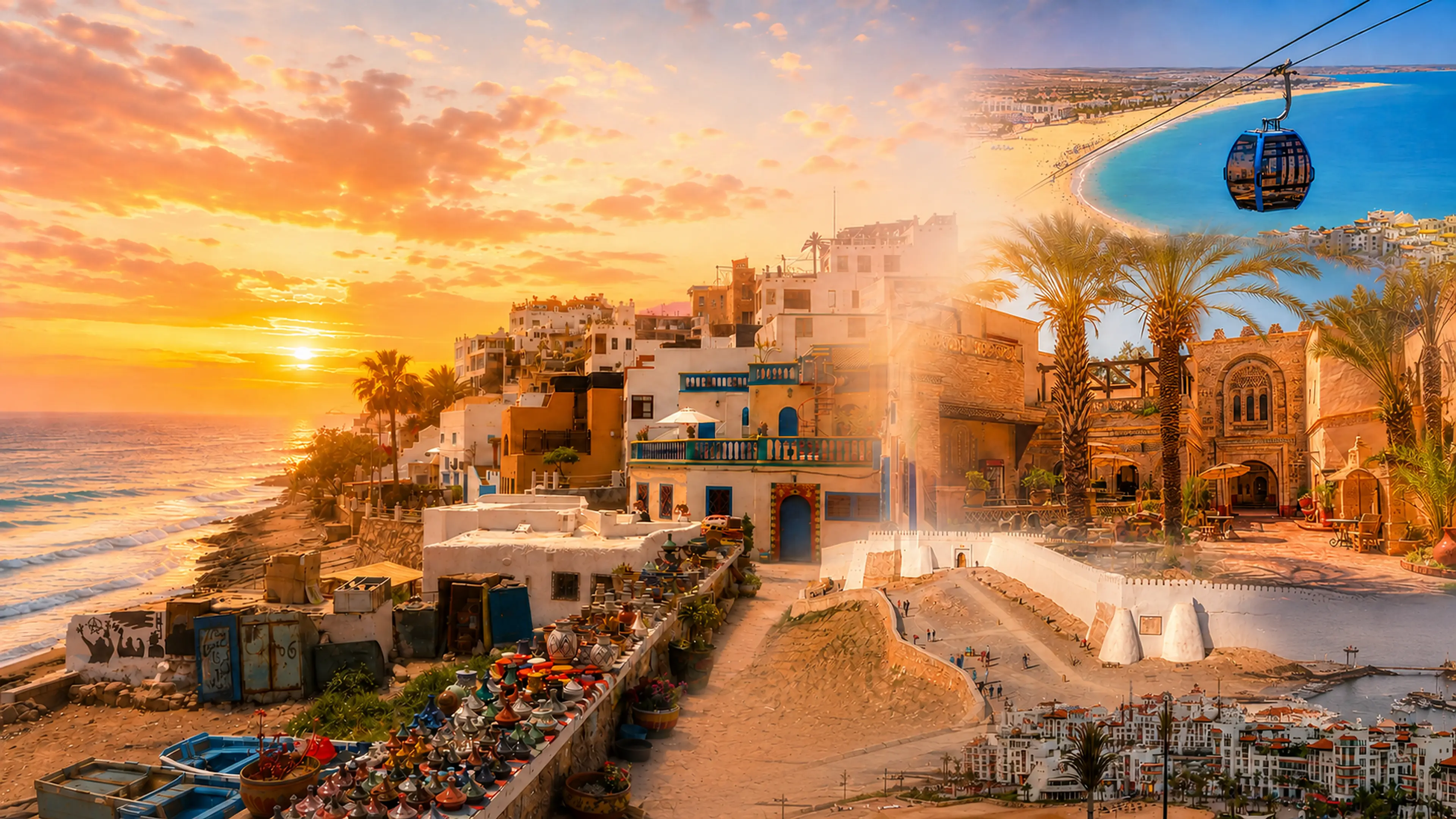
Taghazout matters because it shows a different side of Morocco's Atlantic coast: small-scale village life pressed close to the water, fishing boats pulled onto the shore, white and earth-toned buildings stepping into the hillside, and an ocean culture that has made the place known well beyond Agadir.
The village is often introduced through surfing, and that is part of its identity. But the fuller reading is wider. Taghazout is also about working shorelines, family businesses, roof terraces, narrow streets, sea air, painted doors, small cafes and the daily negotiation between local rhythm and visitor attention.
Its setting gives the place much of its force. The Atlantic is not a background; it shapes the light, the sound, the pace of walking and the way the village is photographed. Boats, waves and buildings share the same frame, so the best visit pays attention to how coast and settlement hold each other.
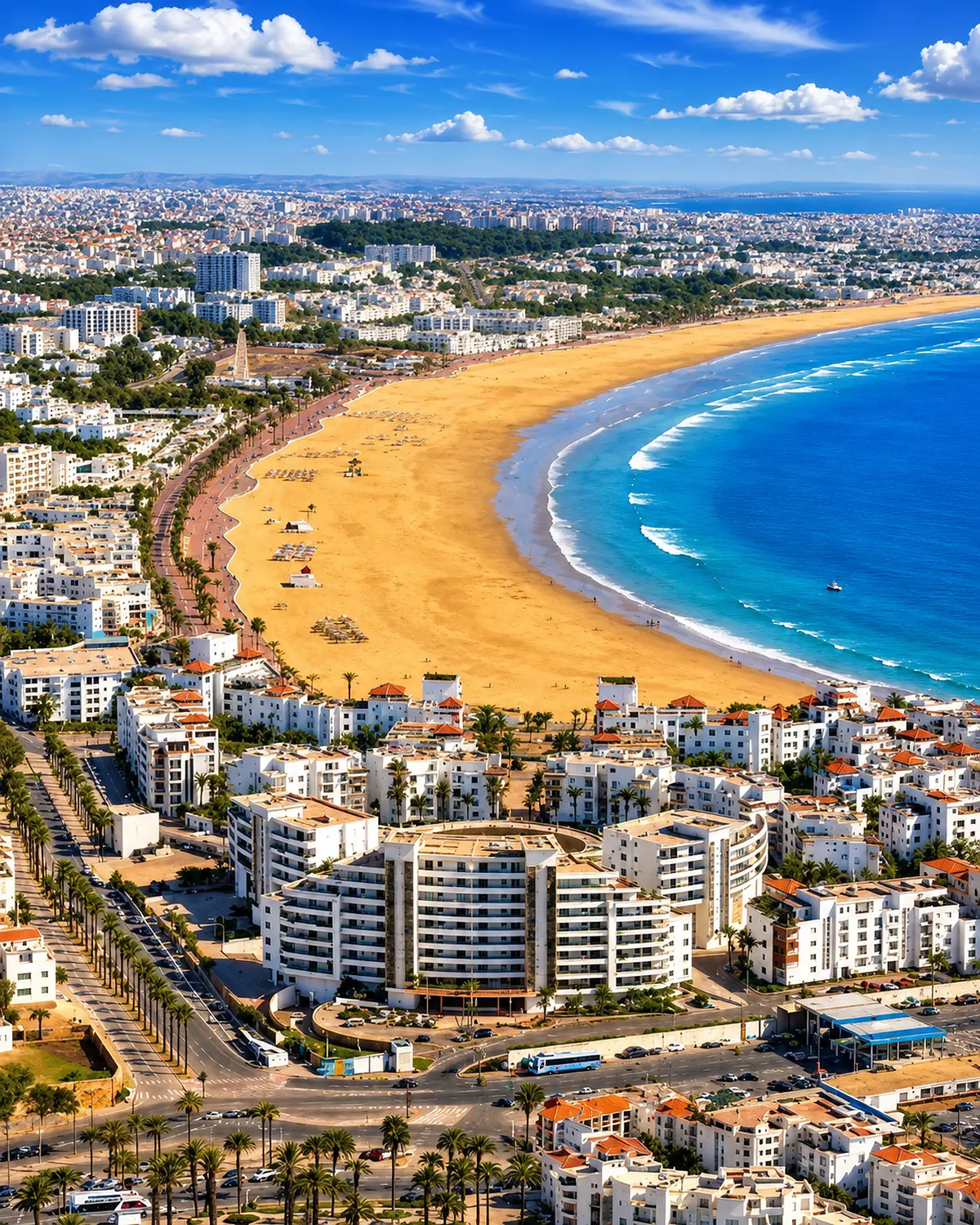
Taghazout also works as an Agadir coastal context rather than an isolated beach stop. It belongs to the wider Agadir-Taghazout travel area promoted by Morocco's national tourism office, where beach, sport, leisure and Atlantic landscape sit close together.
For visitors, the richer experience comes from slowing down. Look at the shoreline before the cafe view, the working boats before the sunset photo, the lanes before the panorama, and the local scale before the destination label.
Core destination framing is grounded in the Moroccan National Tourist Office Agadir-Taghazout page. Conditions for surf, access, services and local arrangements should be checked close to travel.