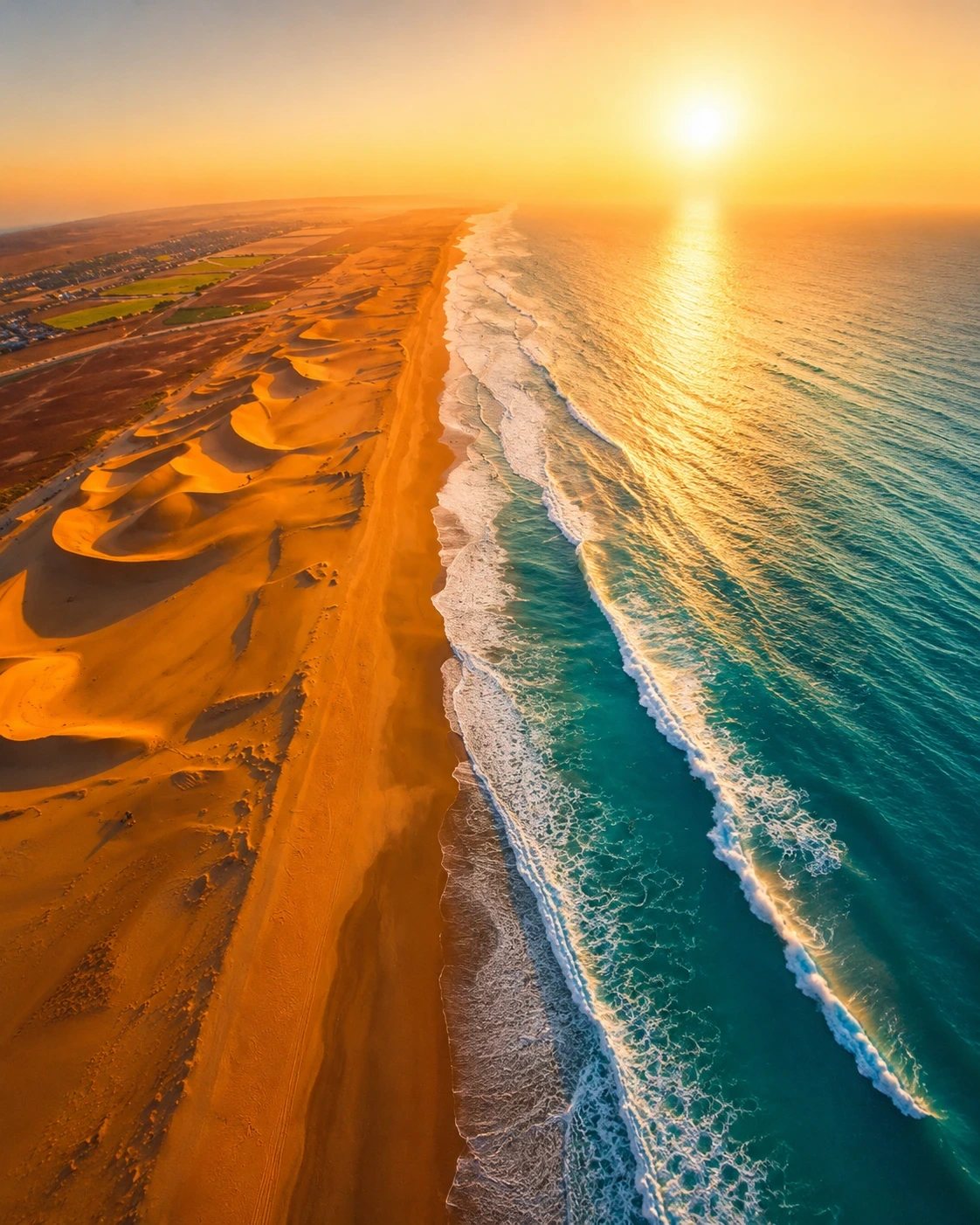
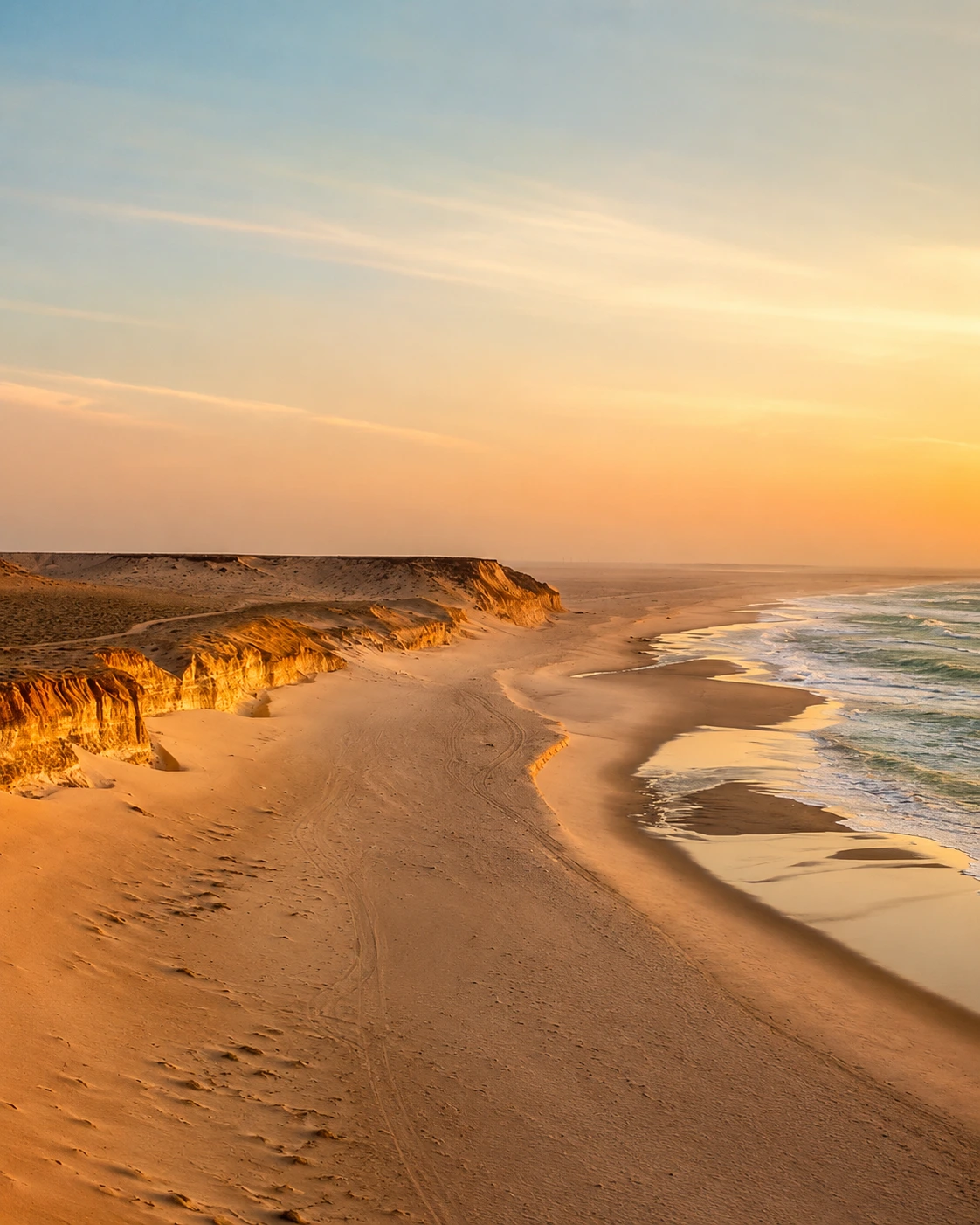
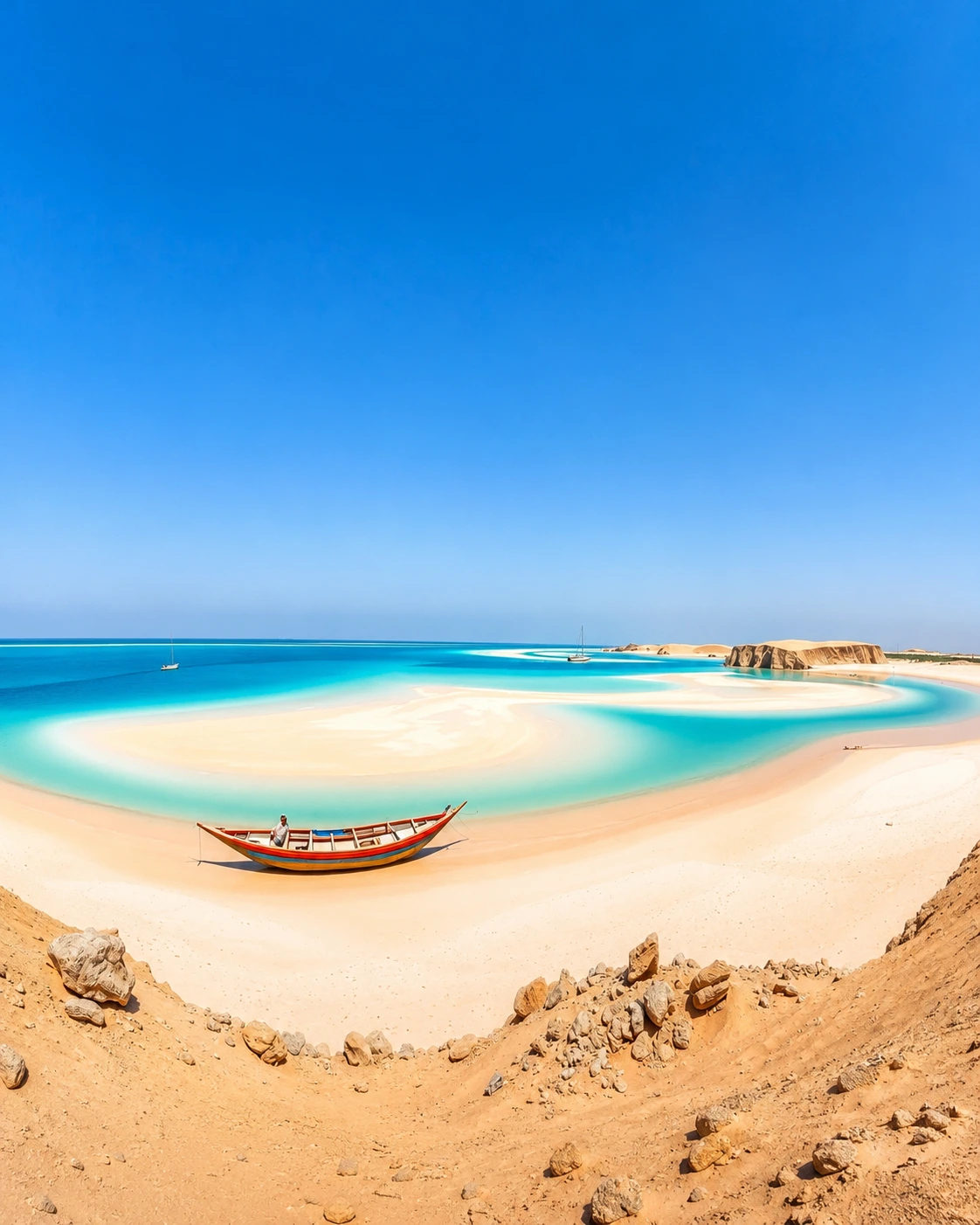
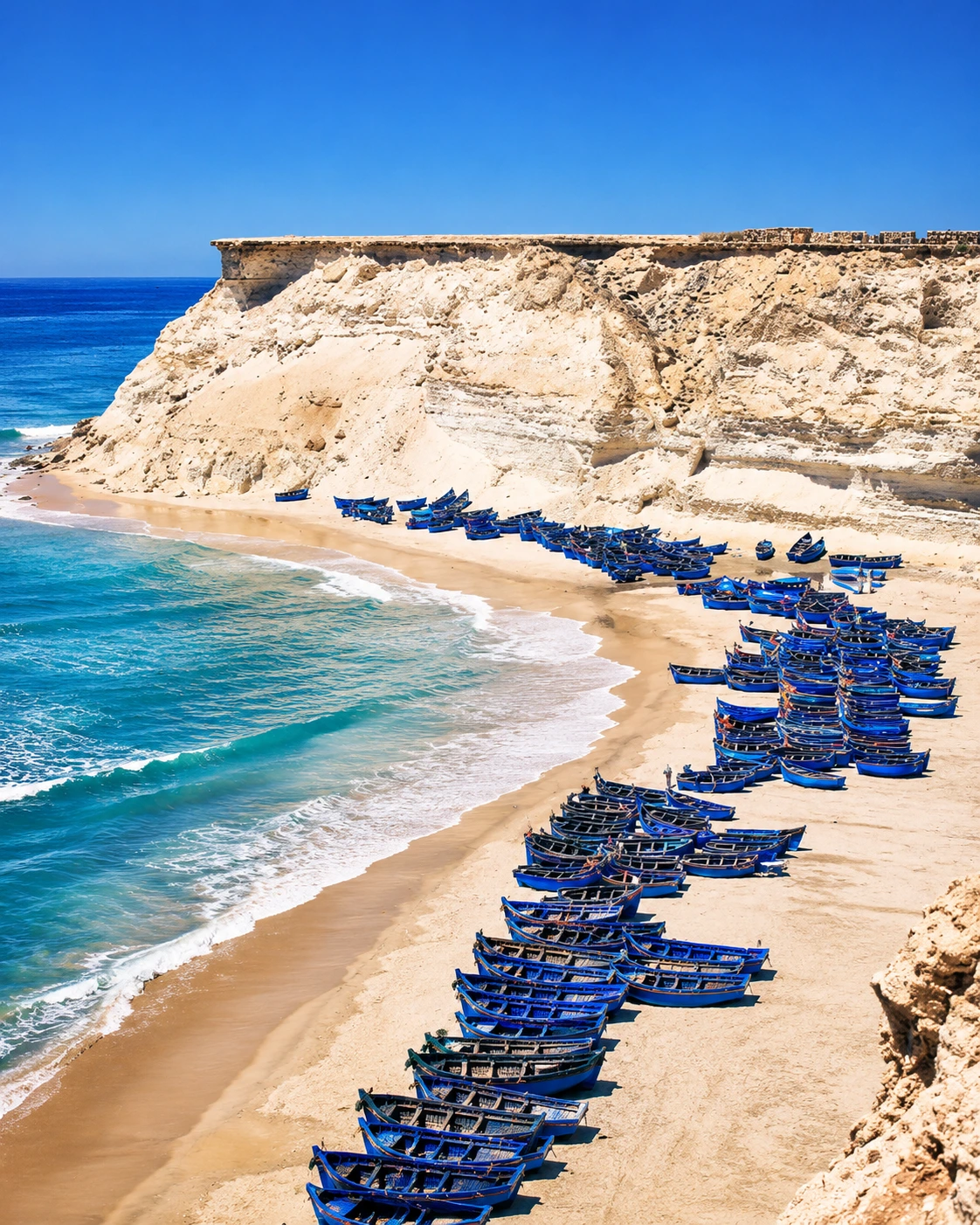
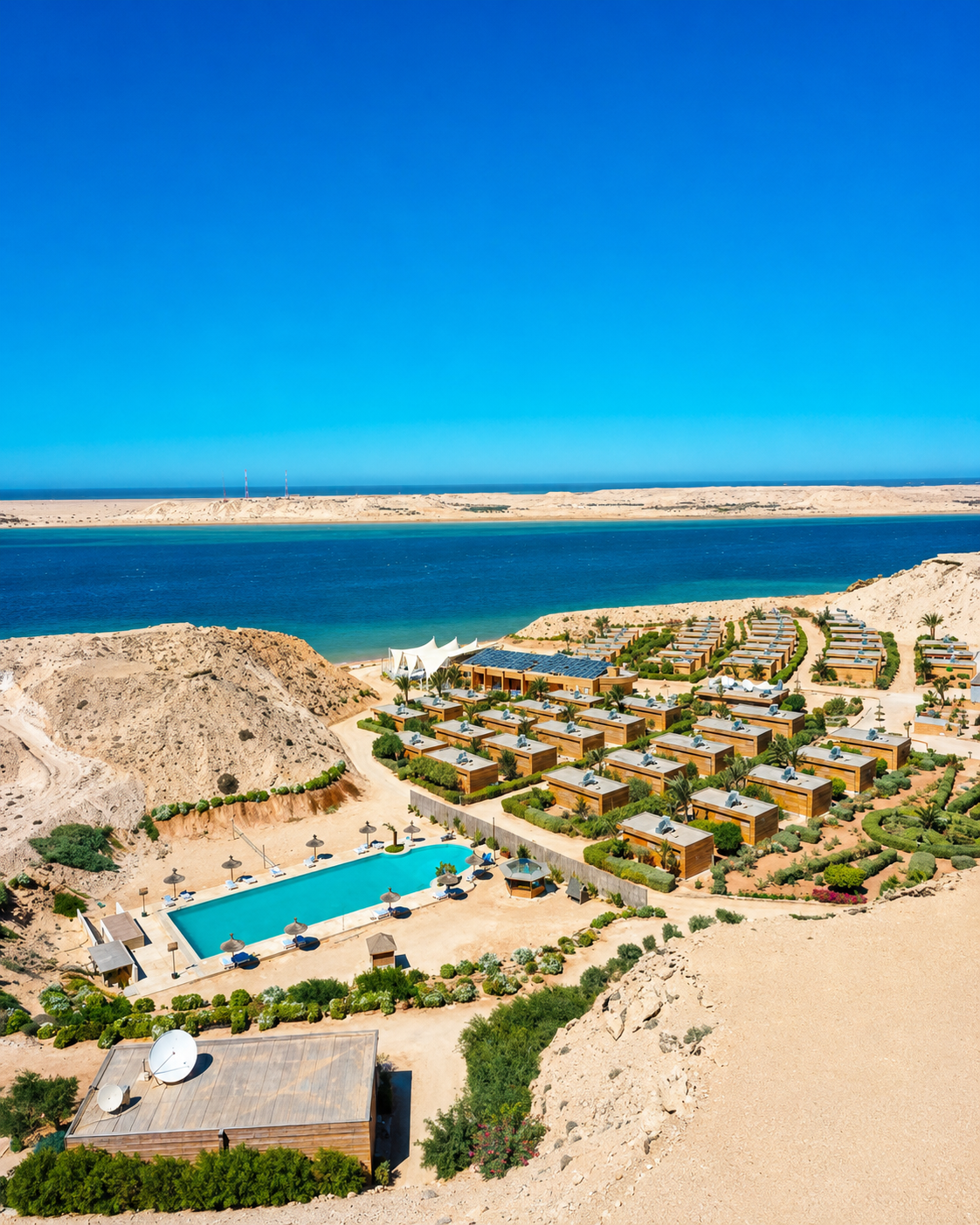
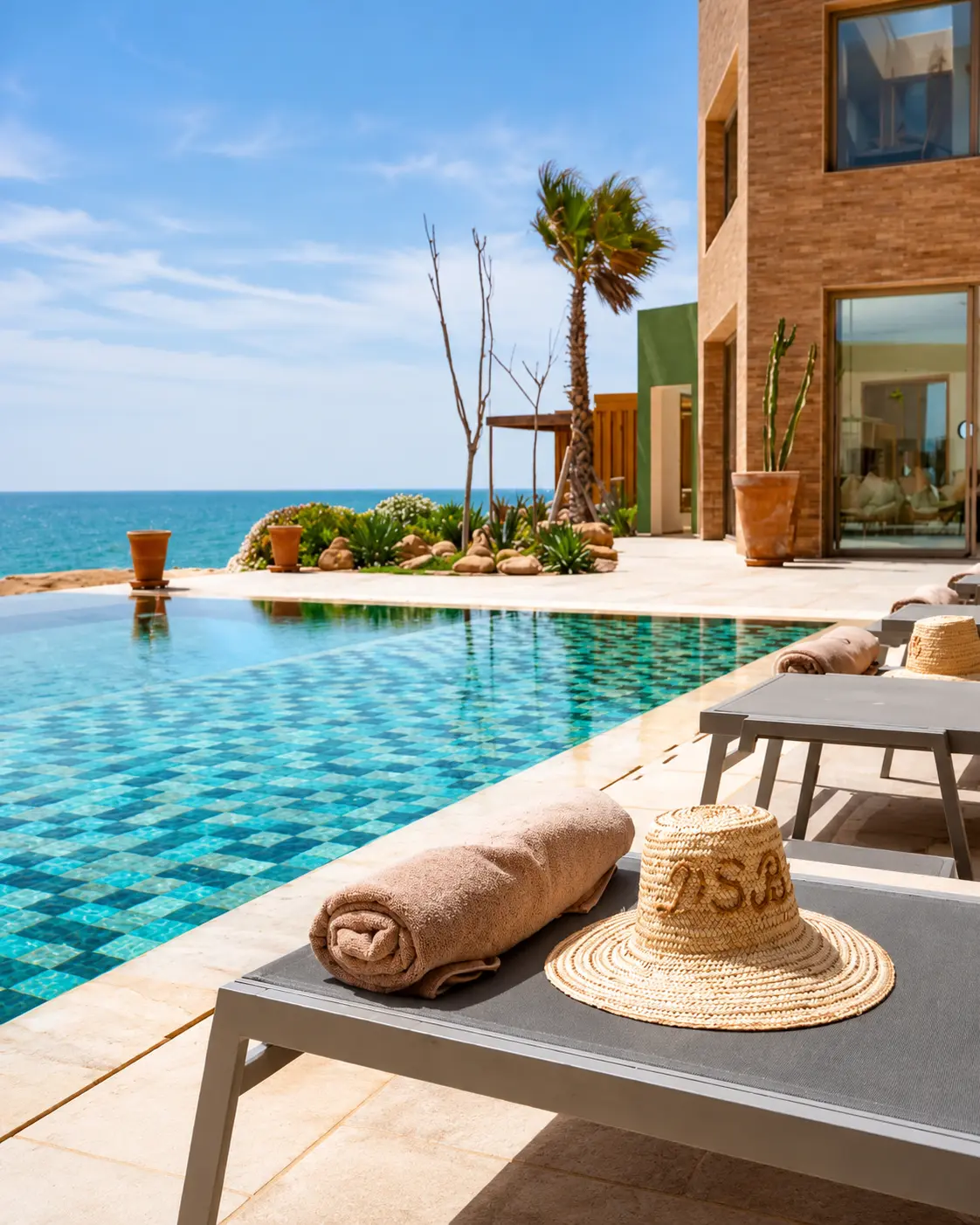
Illustrative Dakhla lagoon, desert sand and Atlantic horizon

Saharan Atlantic City

DakhlaLagoon light, desert wind and Atlantic horizon

Dakhla sits on a narrow southern peninsula where the Sahara meets a vast turquoise lagoon and the Atlantic. The city is known for wind sports, fishing culture, oyster farms, birdlife and wide desert-sea landscapes that change with tide, wind and light.

Why Dakhla matters

Where desert, lagoon and ocean meet

Dakhla is not read through an imperial gate or a medieval medina. Its identity begins with geography: a long peninsula, calm lagoon water, Atlantic surf and desert horizons in the Dakhla-Oued Ed-Dahab region.

The city has grown from a working southern port into one of Morocco’s signature water-sport and nature destinations. Fishing, aquaculture, wind, migratory birds and Saharan light give it a rhythm unlike the northern historic cities.

Illustrative Dakhla peninsula between lagoon and Atlantic water

A city shaped by wind and water

Dakhla’s beauty is measured in tide lines, sandbars, oyster parks, surf breaks, fishing boats and low roads moving between lagoon and ocean.

EXPLORE

Dakhla

Historical orientation

From Atlantic outpost to lagoon gateway

Dakhla’s modern story is tied to maritime routes, fishing, southern administration and its setting on the Río de Oro peninsula. Rather than a monumental old city, it is a place where coastal work, Saharan movement and contemporary adventure tourism overlap.

01Atlantic setting

Peninsula and bay

The town developed on a narrow peninsula facing a sheltered lagoon and the Atlantic, giving it a natural orientation toward fishing, travel and maritime life.

02Spanish period

Villa Cisneros memory

The city’s modern urban memory includes the period when it was known as Villa Cisneros, a name still encountered in historical references to the southern Atlantic coast.

03Working coast

Fishing and aquaculture

Fishing, seafood and oyster farming remain part of the city’s practical identity, connecting local tables with the waters of the lagoon and Atlantic.

04Today

Wind-sport destination

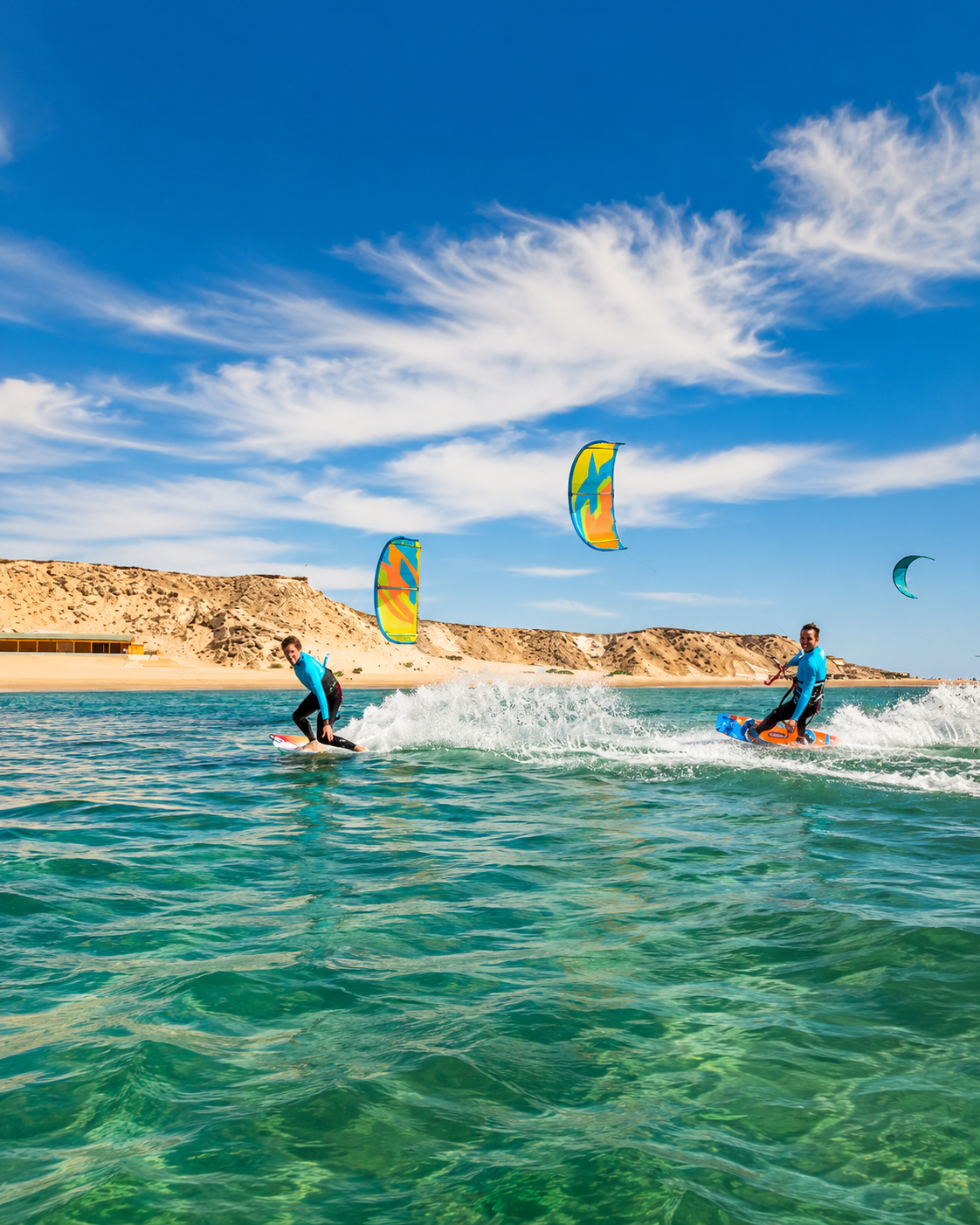
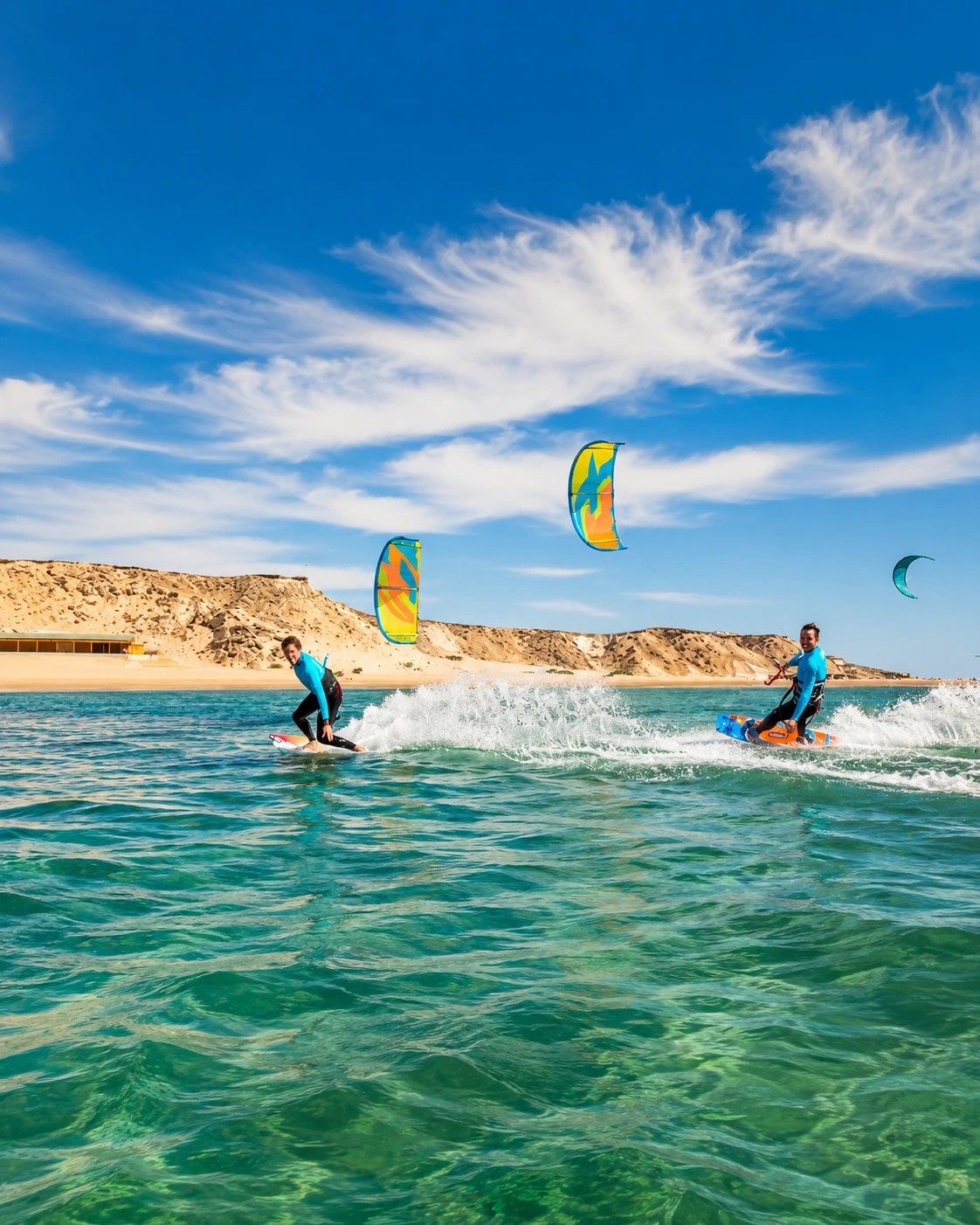
Steady wind, open water and wide beaches have made Dakhla internationally associated with kitesurfing, windsurfing and surf culture.

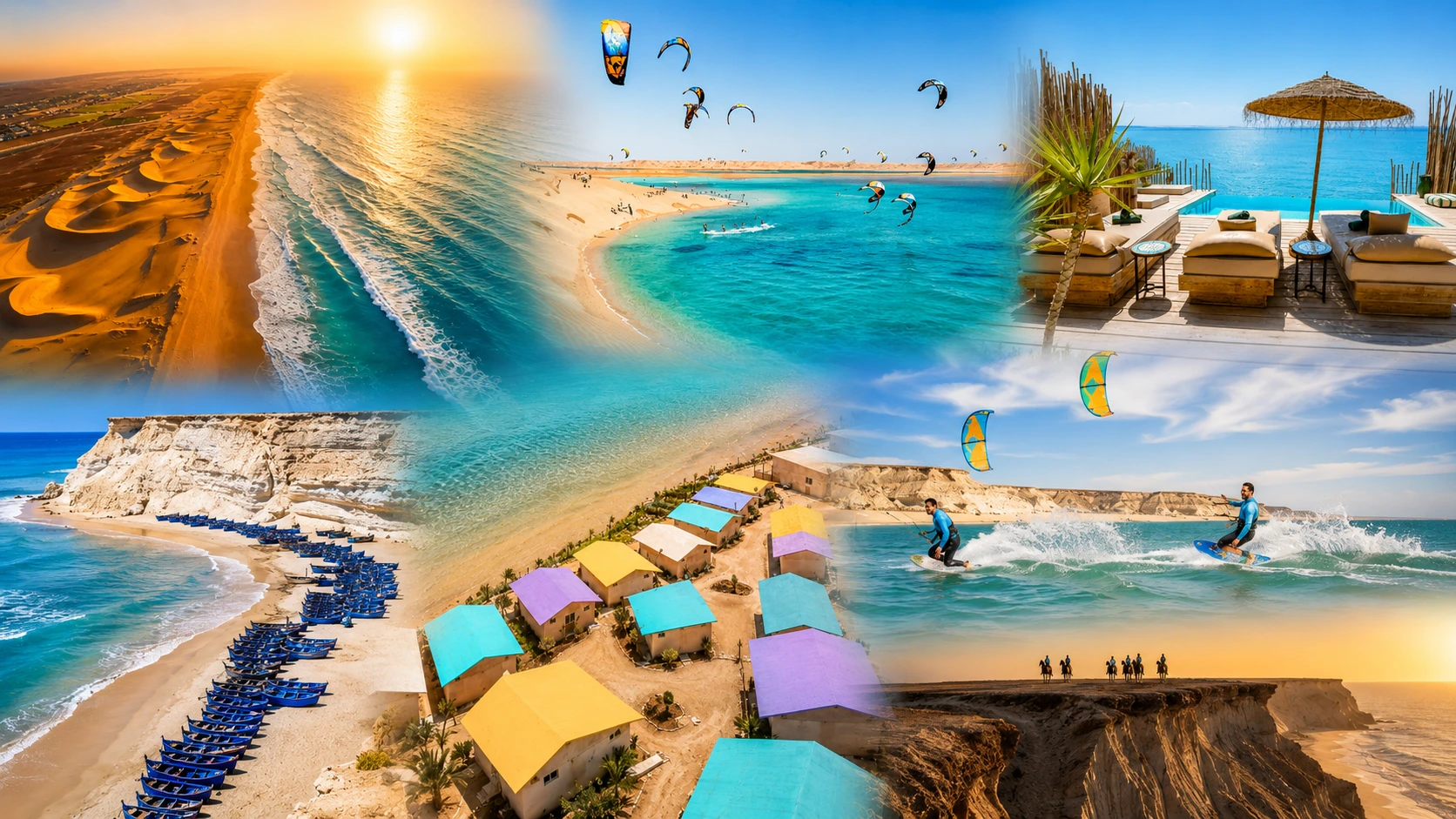
A visual bridge

Three glimpses between Sahara and sea

These views frame Dakhla’s character: lagoon calm, dune-bright contrasts and the working ocean edge that keeps the city connected to wind, water and movement.

Illustrative Dakhla waterfront and southern Atlantic outpost atmosphere

Lagoon calm

Still water, pale sand and low horizons define the first reading of Dakhla.

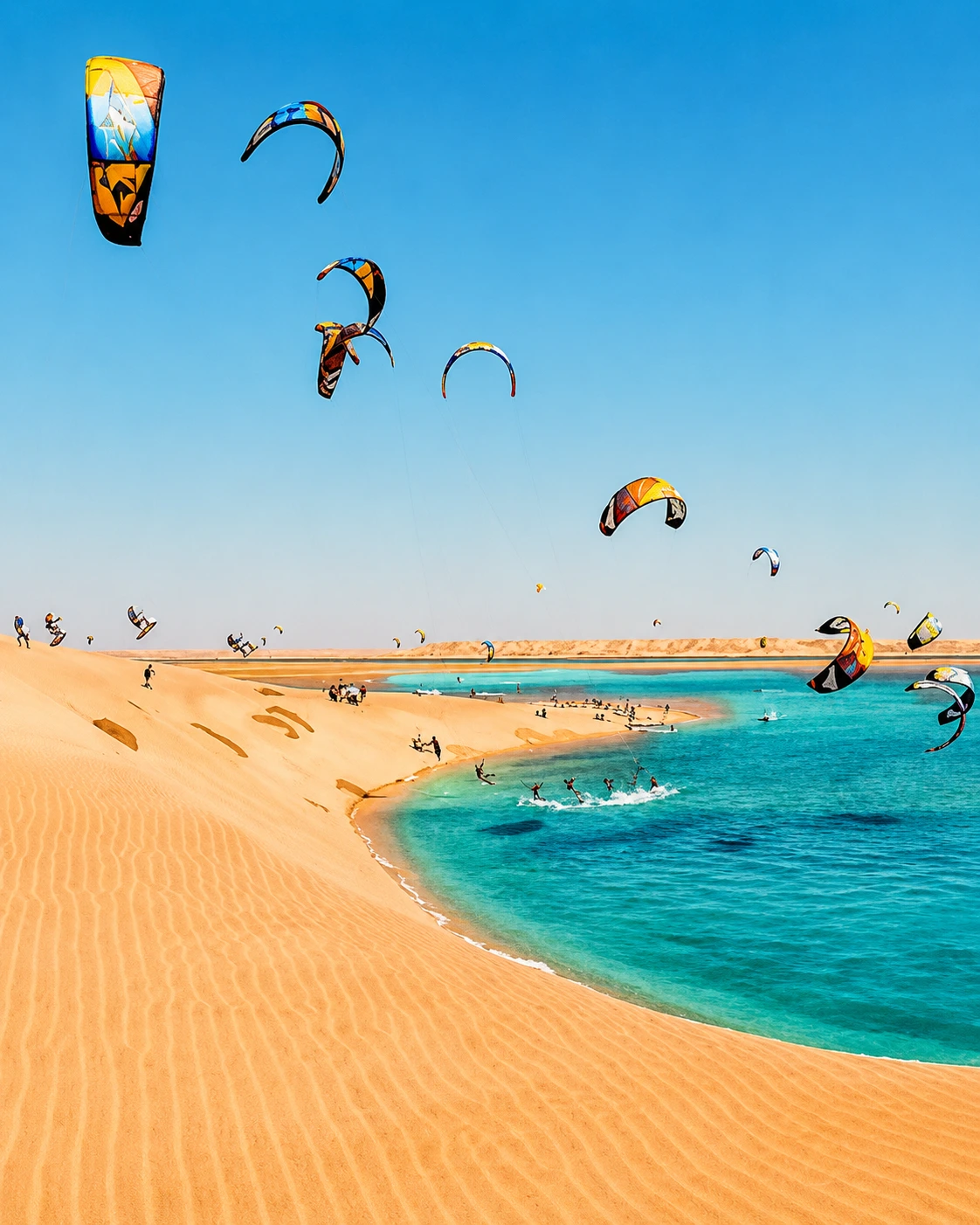
Illustrative kites over Dakhla lagoon

Dune and tide

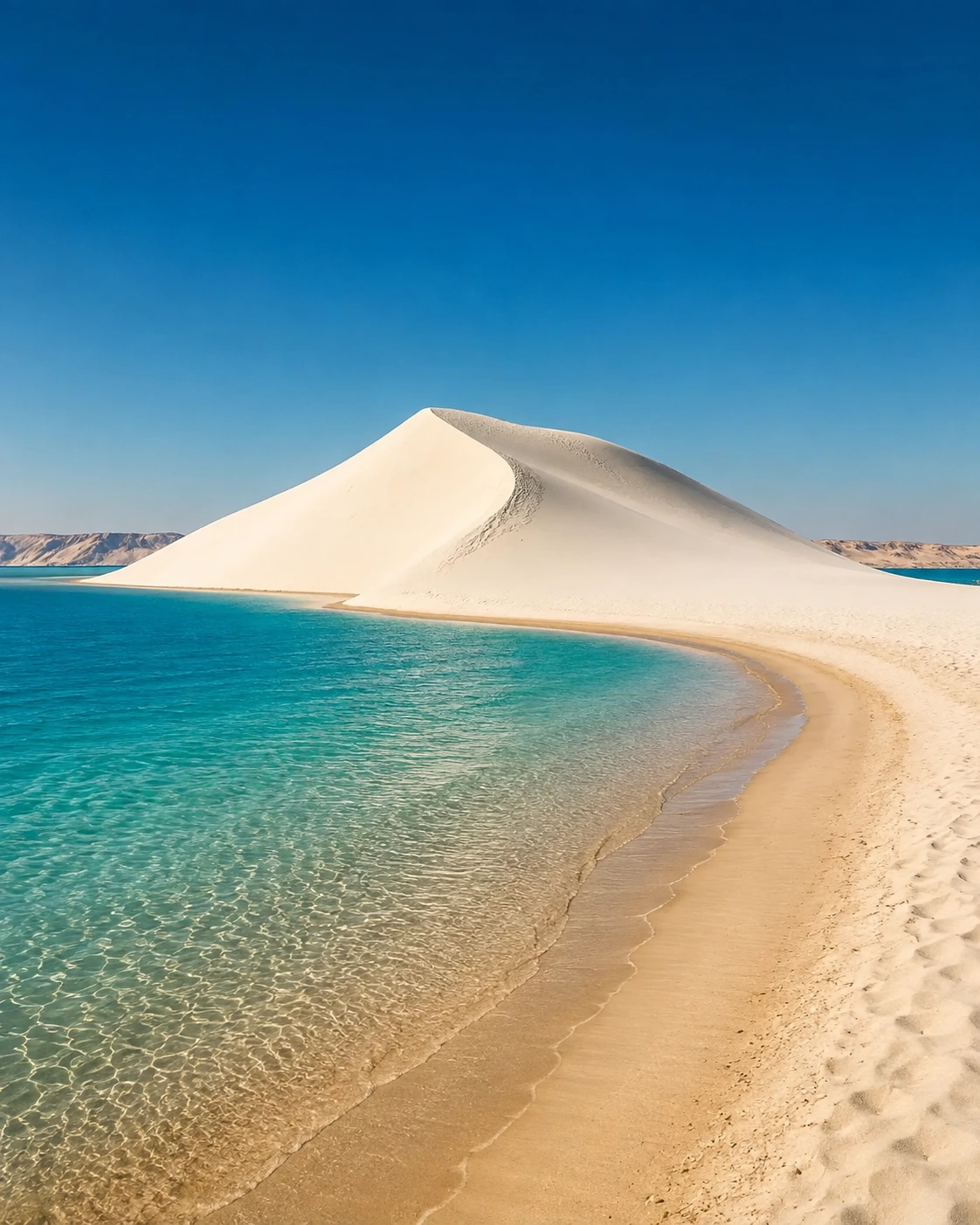
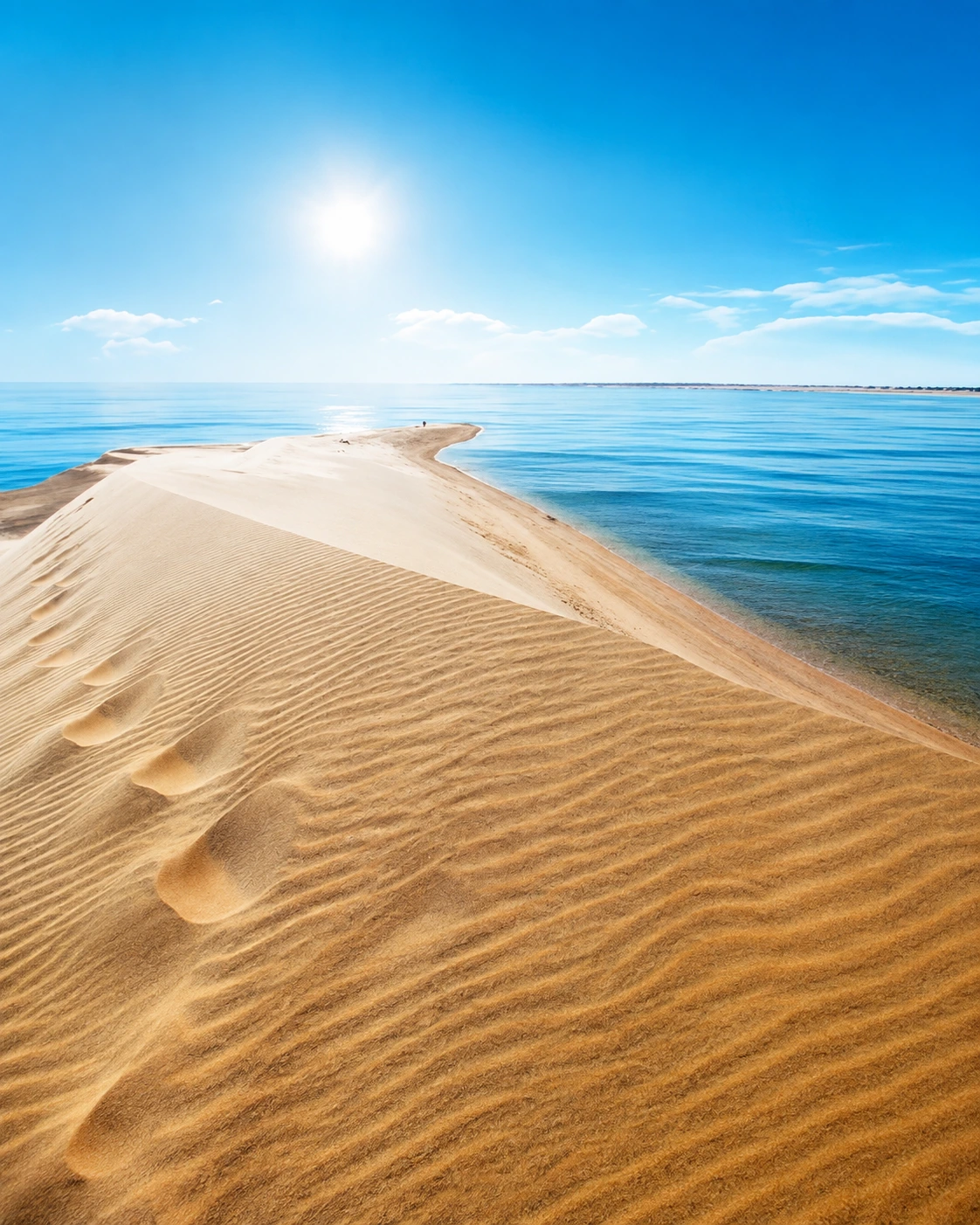
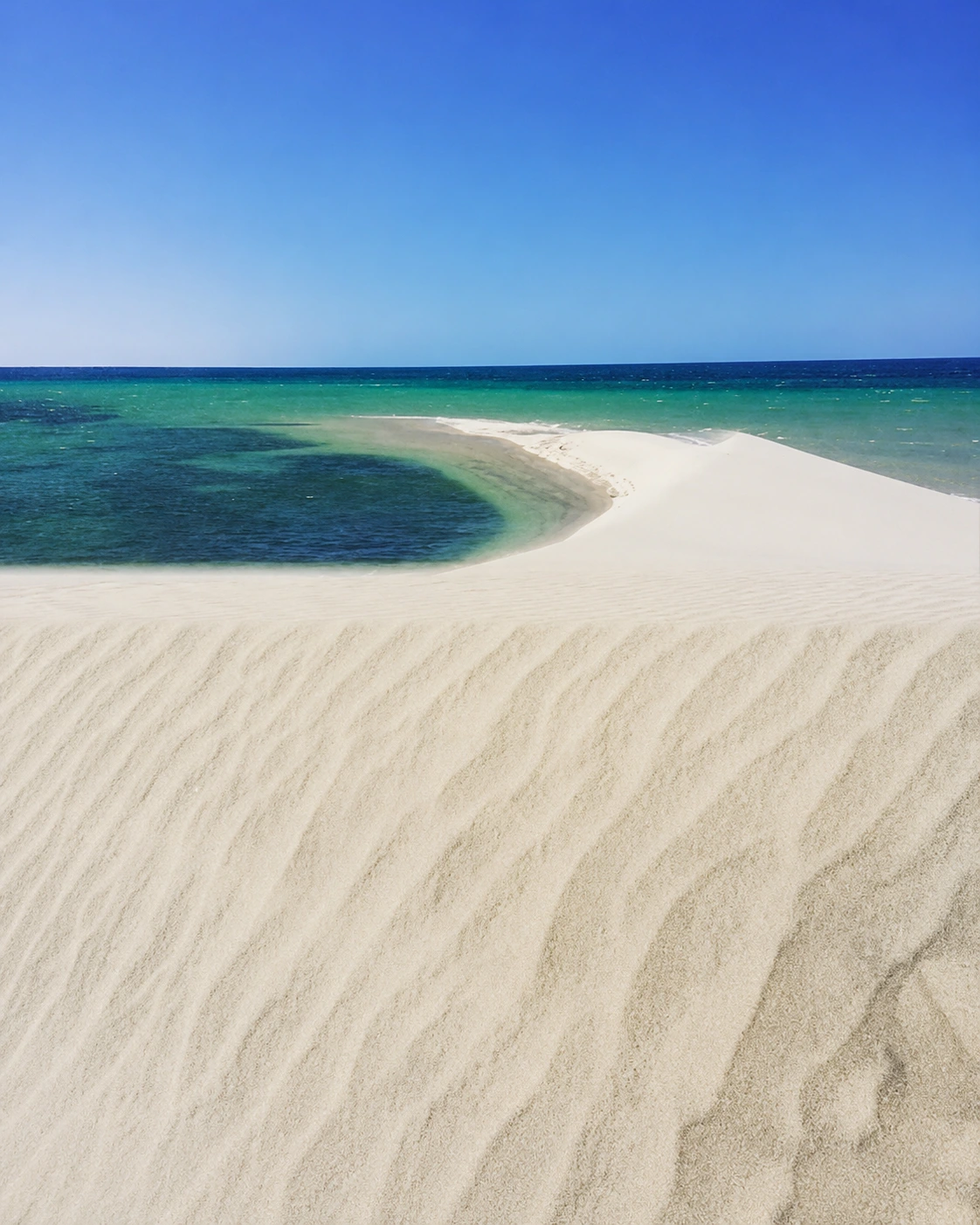
White Dune and the lagoon show how sand can become a landmark when the water rises around it.

Illustrative Atlantic surf at Foum El Bouir near Dakhla

Ocean edge

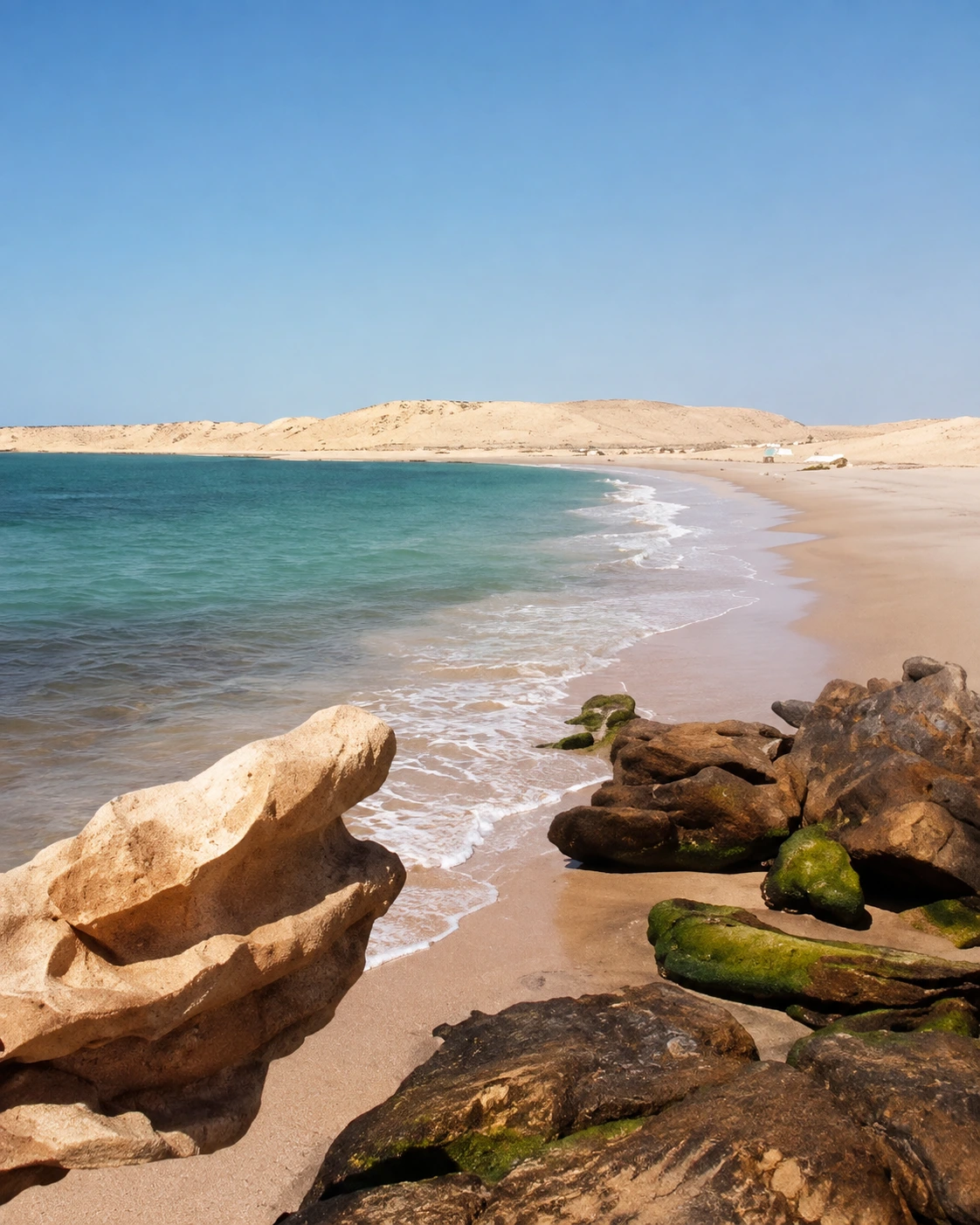
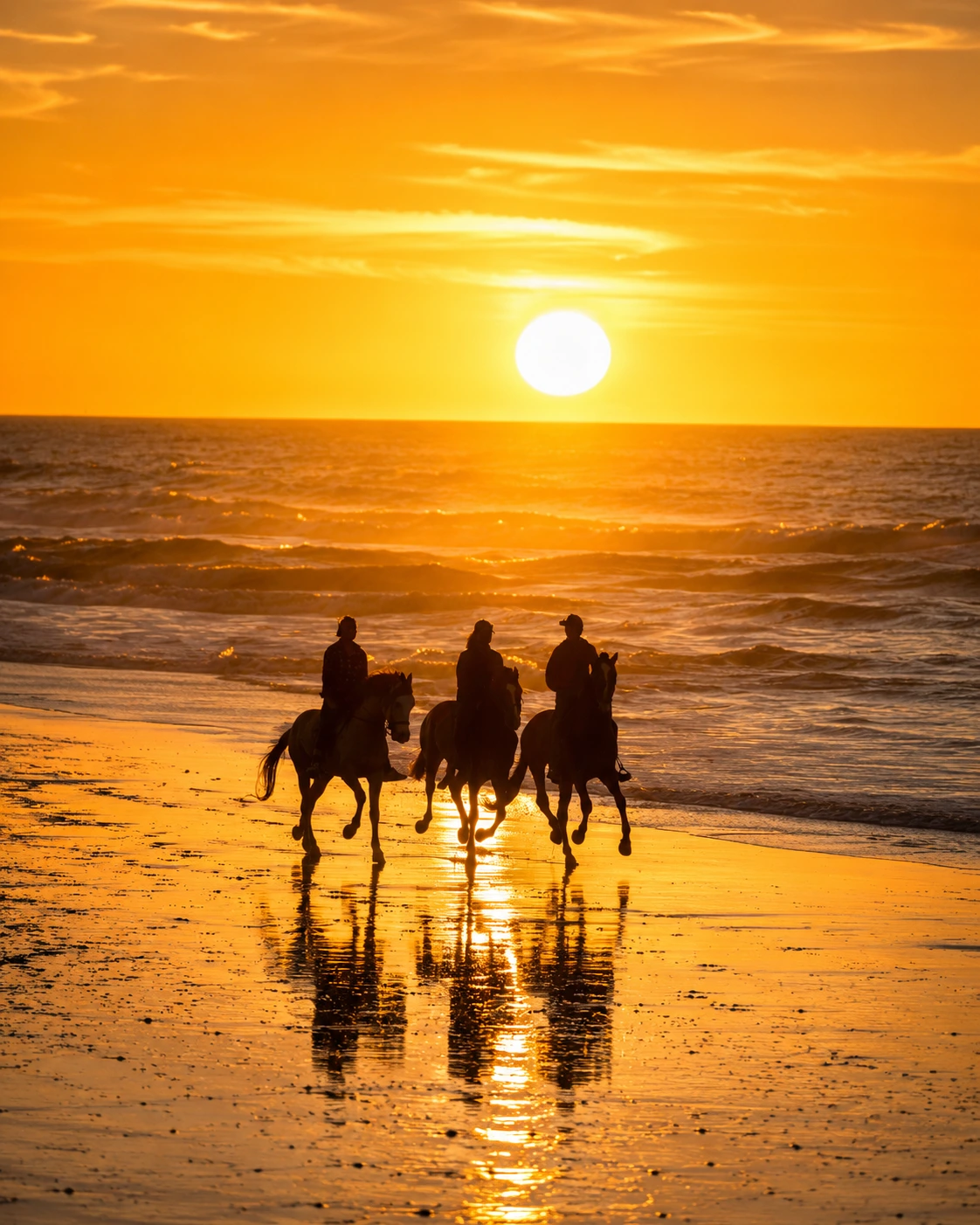
Foum El Bouir and the Atlantic side bring surf, wind and a stronger maritime rhythm.

Dakhla at a glance

A peninsula city

Dakhla sits between lagoon and ocean, so orientation is simple in shape but rich in atmosphere: one side is calmer and lagoon-facing, the other opens to Atlantic wind and surf.

Lagoon & wind sports

PK25, Foum El Bouir and the wider lagoon area help define the destination for kitesurfing, windsurfing, surf and water-based travel.

Fishing and oysters

The city’s visitor identity should not be separated from its working coast: seafood, oyster farms and fishing culture give Dakhla a daily rhythm beyond leisure.

Saharan Atlantic nature

Birdlife, sandbars, desert tracks and protected coastal habitats extend the city outward into a wider Dakhla-Oued Ed-Dahab landscape.

A clearer reading of the city

A city shaped by wind, work and open horizons

To understand Dakhla, read lagoon, town and desert together. The beauty is not concentrated in one monument; it comes from the relationship between a working waterfront, natural places and the feeling of space.

Illustrative Dakhla lagoon geography with sandbar and birds
Layer 1

Lagoon geography

The lagoon gives Dakhla its calm light, shallow horizons, birdlife and most recognisable natural frame.

Illustrative Dakhla waterfront with fishing boats
Layer 2

Working Atlantic culture

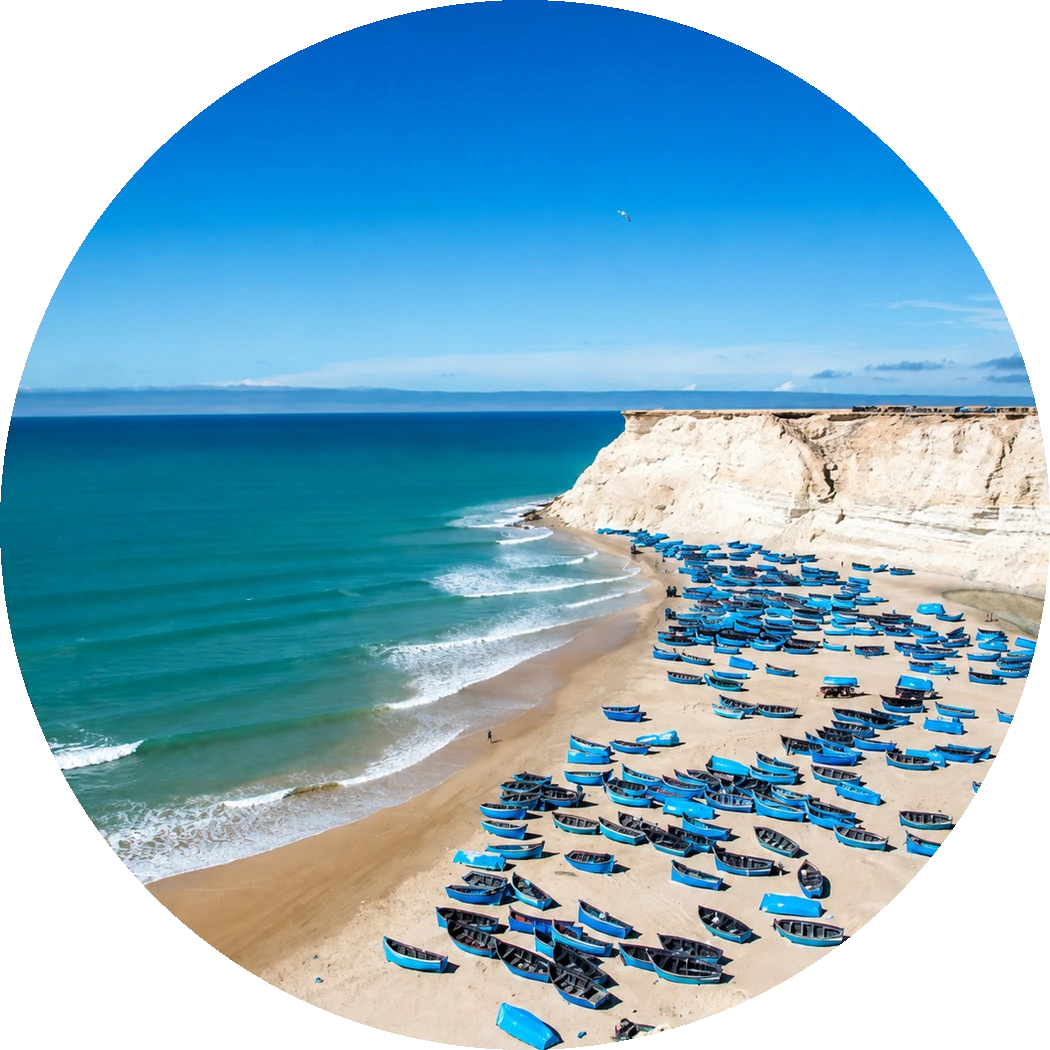
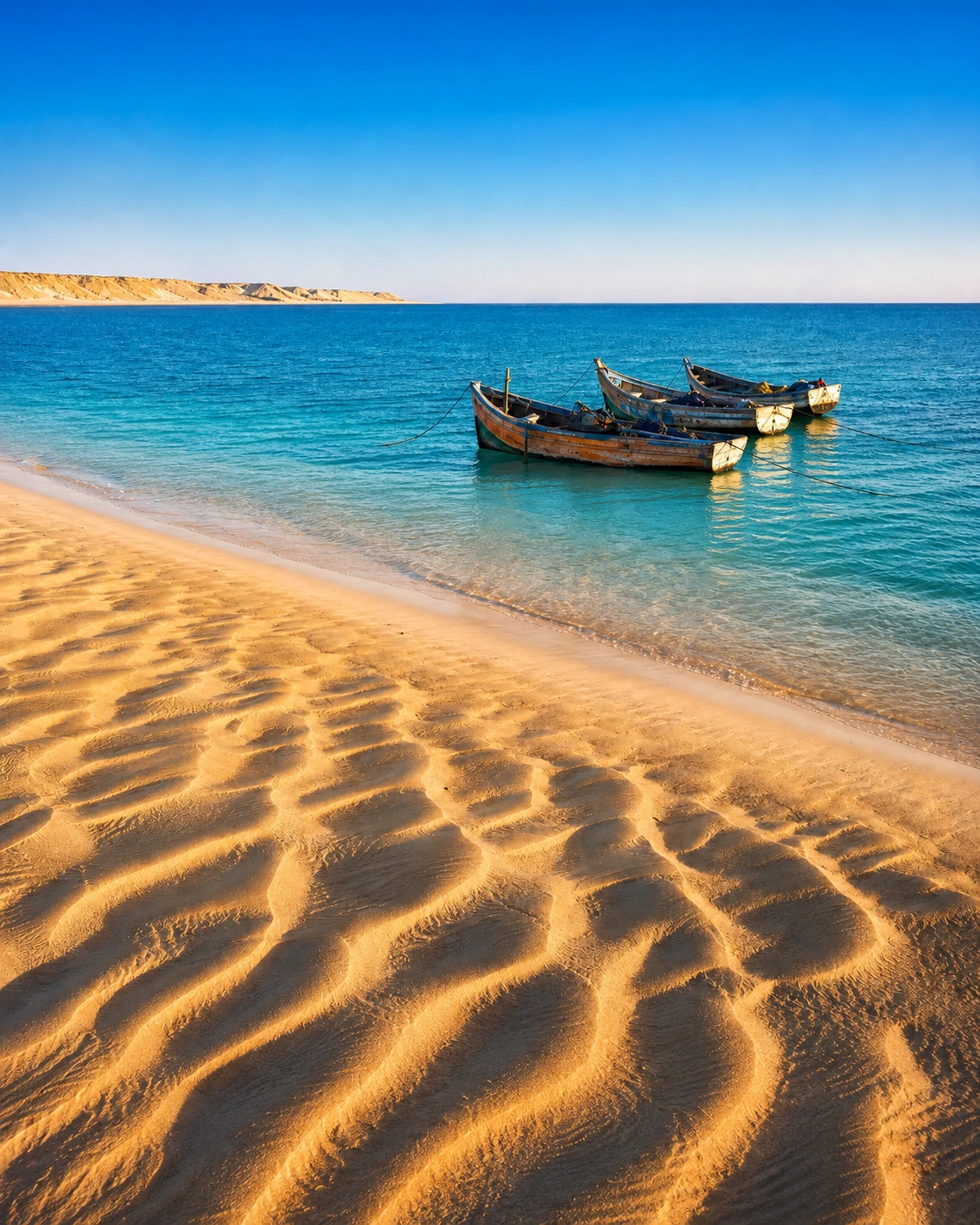
Fishing boats, seafood markets, oyster farming and port functions keep the city connected to everyday coastal work.

Illustrative oyster park and seafood culture in Dakhla
Layer 3

Adventure and stillness

Wind sports bring movement, while dunes, sandbars and long roads create a quieter sense of distance.

Landmarks & orientation

Read Dakhla through six defining places

Dakhla is best understood through natural landmarks and coastal zones rather than old monuments. These six places show the relationship between lagoon, Atlantic, dune, wildlife and daily life.

1
Dakhla Lagoon

The city’s defining landscape: broad, sheltered water between desert sand and the long peninsula.

2
PK25

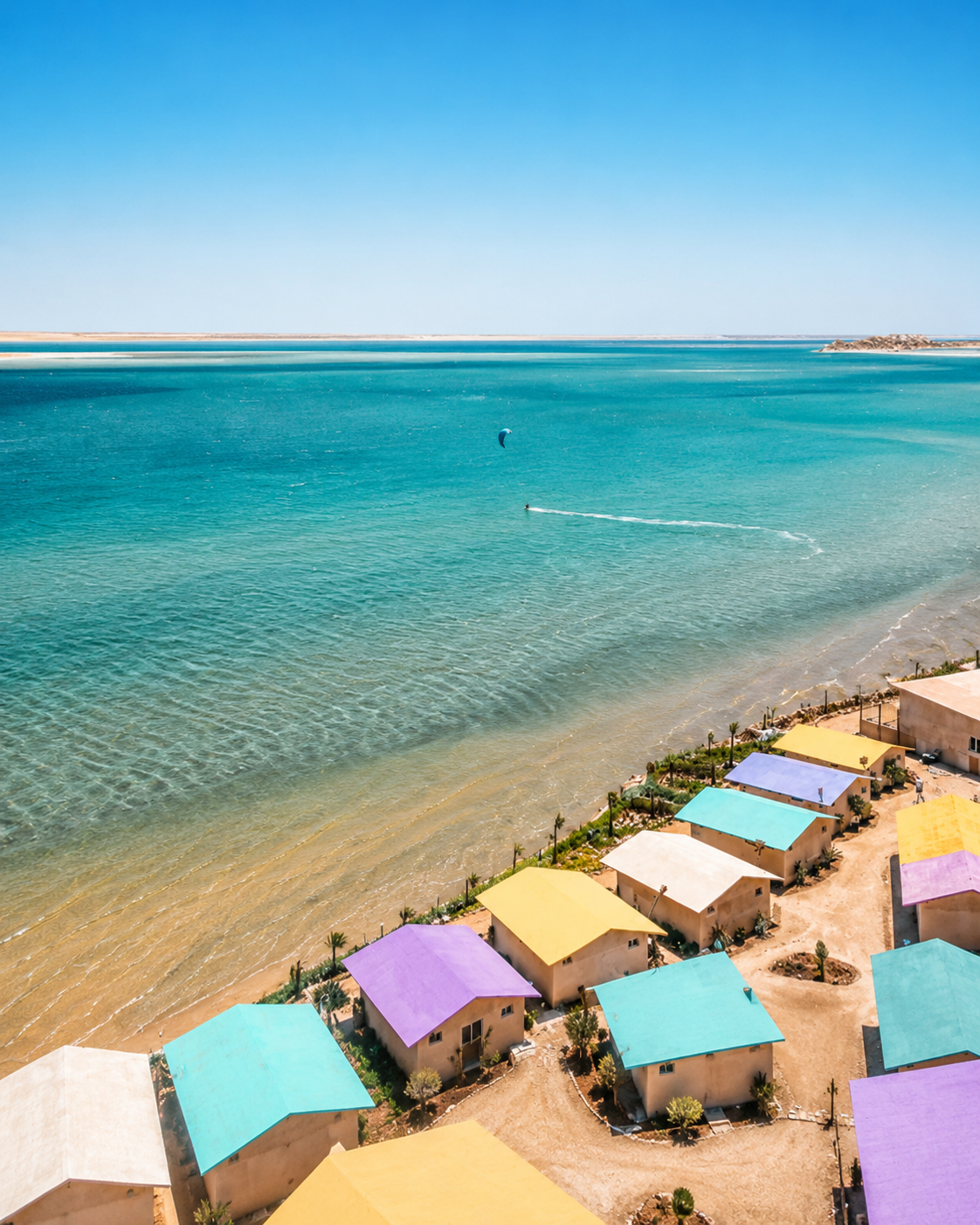
A lagoon-side zone known for wind-sport camps, steady wind and wide shallow water.

3
White Dune

A pale sand landmark near the lagoon, admired for the contrast between white sand, turquoise water and desert light.

4
Dragon Island / Herné Island

The island silhouette that gives one of the lagoon’s most recognisable horizon lines.

5
Foum El Bouir

The Atlantic-side beach associated with surf, wind and a more energetic ocean edge.

6
Oyster Park

A coastal food-and-landscape stop where Dakhla’s aquaculture and seafood identity becomes visible to visitors.

Illustrative Dragon Island silhouette in Dakhla lagoon
Illustrative White Dune and turquoise lagoon near Dakhla

A lagoon landscape

Dakhla Lagoon — the city’s open-air interior

In Dakhla, the lagoon plays the role that a grand square or medina spine plays elsewhere. It organises orientation, economy, sport, food and atmosphere. Camps face it, birds use it, oyster farms belong to it, and travellers repeatedly return to its changing colour.

  • At low light, the lagoon softens the city with pale blues, sand tones and long shadows.
  • Wind-sport culture depends on the open water, steady exposure and accessible shore zones.
  • Its food identity is equally present through oysters, seafood and working coastal rhythms.

Landscape reading

Three landscape languages to notice

Peninsula geometry

Dakhla speaks first through its shape: a narrow urban line stretched between sheltered lagoon and exposed Atlantic.

Low coastal architecture

The built environment is modest and practical: waterfront structures, road edges, camps and service zones respond to wind, salt and distance.

Desert-sea contrast

The strongest visual language is not ornament but contrast: pale sand, turquoise water, white dunes, blue sky and Atlantic motion.

Visual atmosphere

Lagoon light, sand texture and Atlantic movement

Nearby highlights

Nearby lagoon and desert-sea highlights

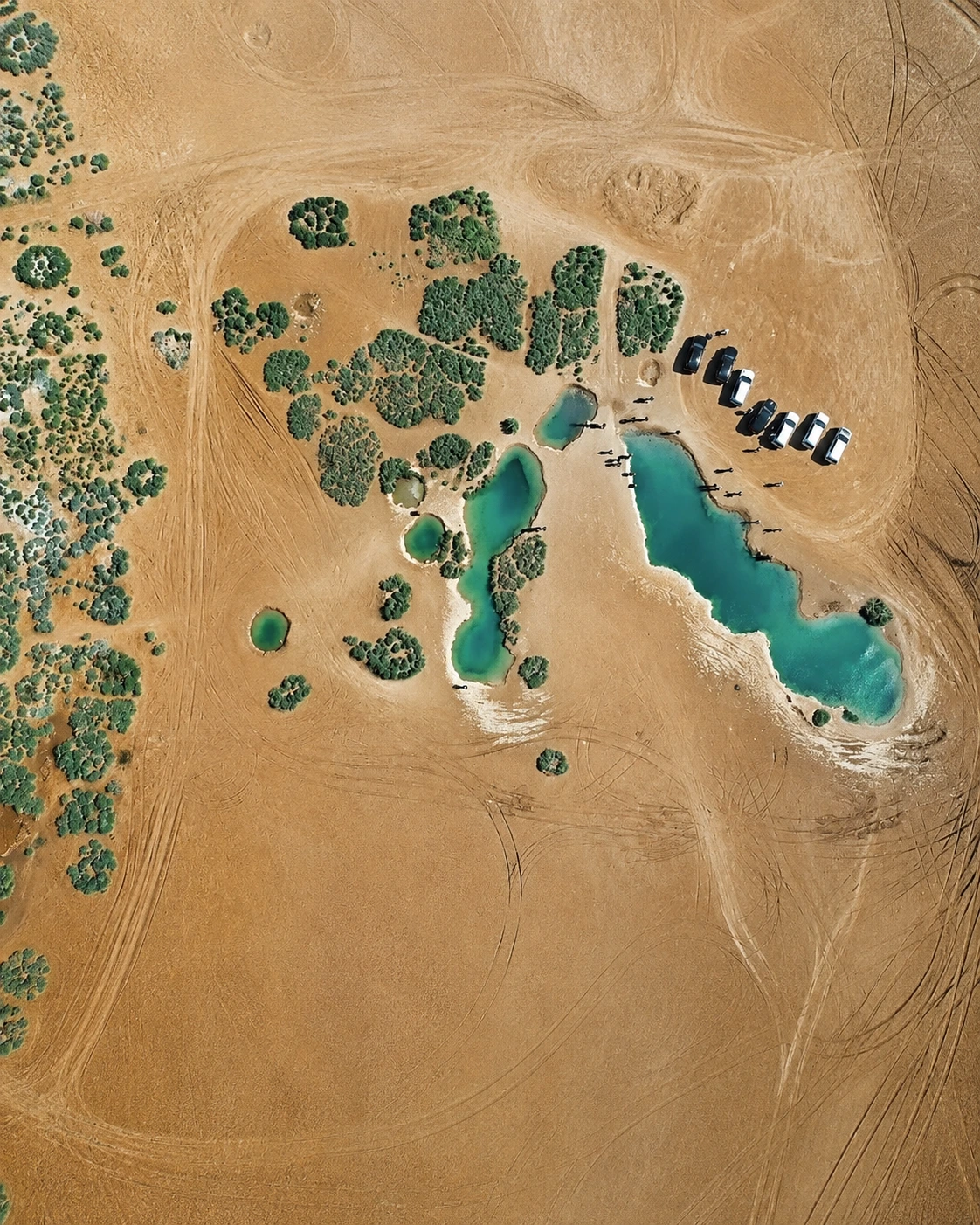
Dakhla is a base for natural extensions rather than monument-hopping: Imlili’s desert pools, Puerto Rico’s southern beach atmosphere and the wild Atlantic route north toward Plage Blanche all expand the city’s desert-sea reading.

Sebkha d’Imlili

A desert wetland landscape known for scattered water pockets and quiet Saharan atmosphere. Visit with local guidance and treat the fragile setting with care.

Illustrative Sebkha d’Imlili desert pools near Dakhla

Puerto Rico Beach

A southern beach extension associated with clear water, open sand and a more remote Atlantic feeling beyond the city centre.

Illustrative Puerto Rico Beach in the Dakhla region

Plage Blanche route

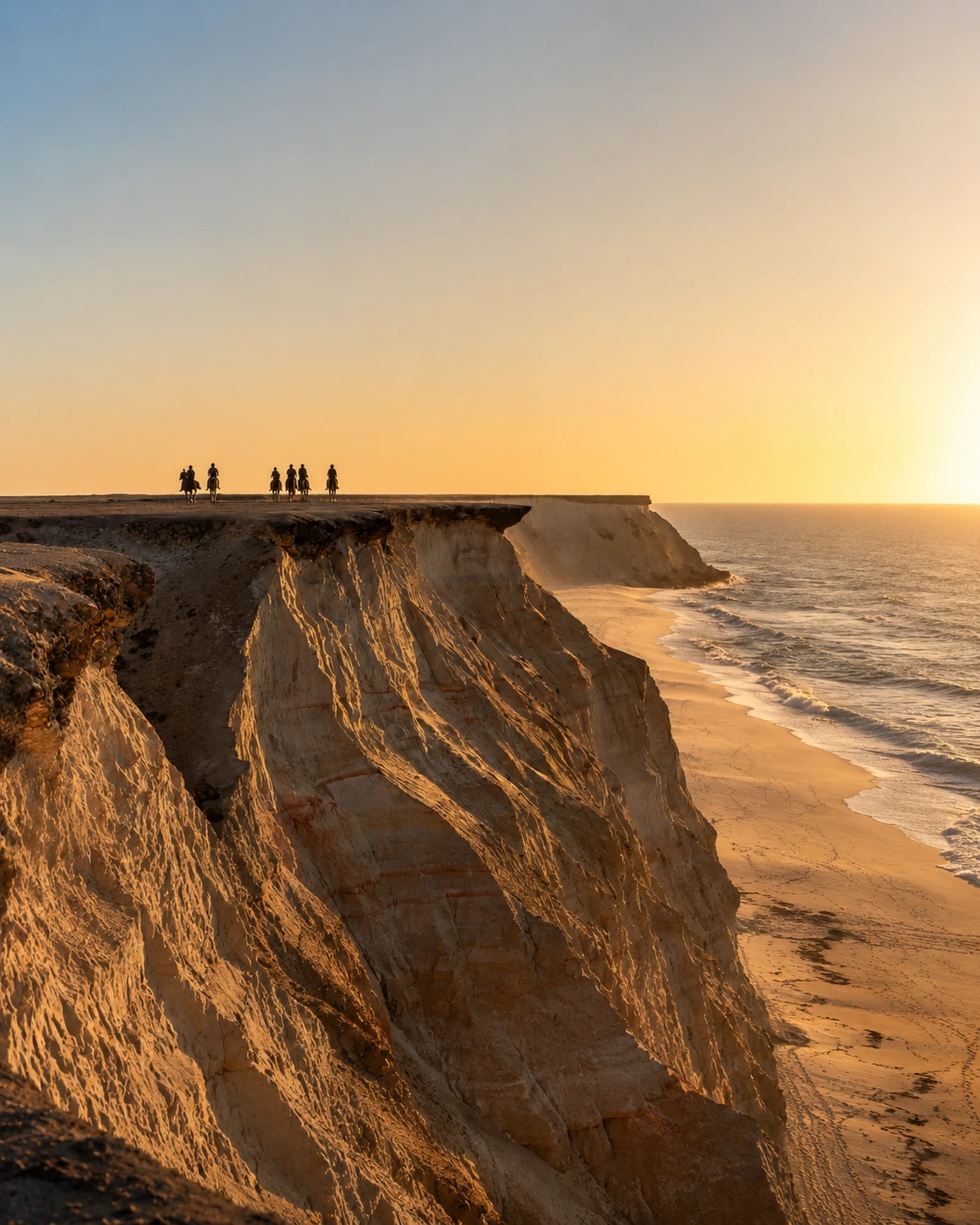
For a broader southern Atlantic extension, the wild coast north of Dakhla suggests long beaches, dunes and remote horizons rather than a quick urban stop.

Illustrative wild Atlantic desert road toward Plage Blanche
Travel note: opening hours, access rules, restoration work, transport conditions and local visitor arrangements can change. Check current official or trusted local information before travelling.

Practical orientation

How to experience Dakhla well

  • Plan the city around lagoon, ocean and desert routes rather than a dense monument circuit.
  • Use reliable local operators for boat trips, 4x4 excursions, wind sports and remote natural sites.
  • Expect wind and strong light; timing, sun protection and clothing layers matter more than in many northern city breaks.
  • Keep seafood, oyster farms and the working waterfront in the story, not only the sport camps.
  • Give Dakhla enough time: the best experience is slow, tidal and landscape-led.

A strong first visit

Illustrative Dakhla lagoon orientation for a first visit

Begin with the lagoon side to understand Dakhla’s calm geometry, then read the Atlantic edge through Foum El Bouir or a coastal route. Add White Dune, Dragon Island or the oyster area with current local guidance rather than treating them as simple checklist stops.

Cover of the Dakhla Premium Visual City Guide

Go deeper with Exotic Morocco

Dakhla — Premium Visual City Guide

Continue with a complete visual publication designed to connect Dakhla’s lagoon, Atlantic beaches, desert routes, food culture, wind-sport identity, practical orientation and nearby natural highlights into one carefully structured journey.

✓ Lagoon orientation✓ Essential natural landmarks ✓ Beaches & wind-sport zones✓ Food & coastal culture ✓ Practical travel guidance✓ Nearby highlights

Continue the journey

Continue the journey through Dakhla

Look beyond the gateway and encounter a city of imperial scale, lived heritage, quiet streets, refined interiors and nearby landscapes.