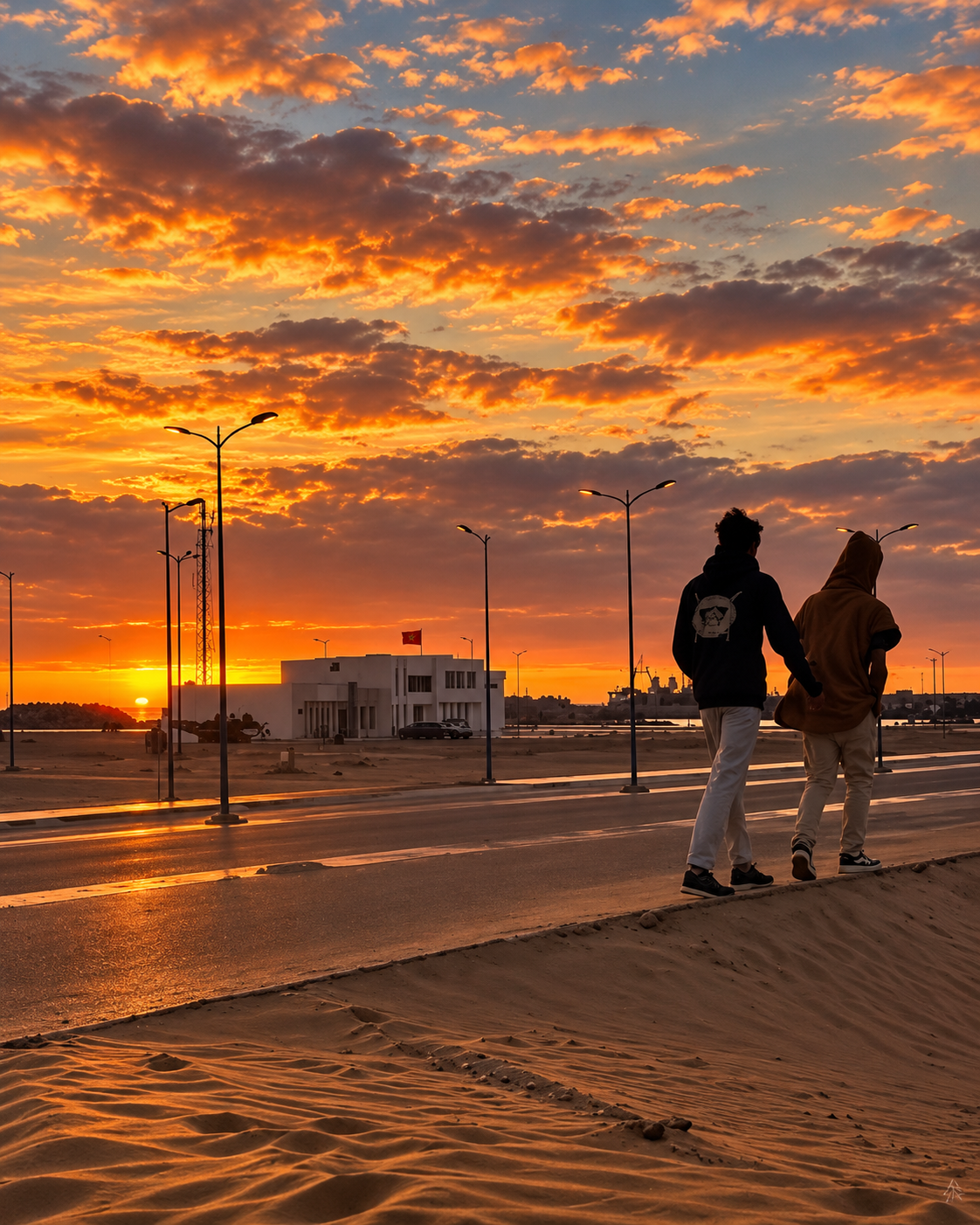
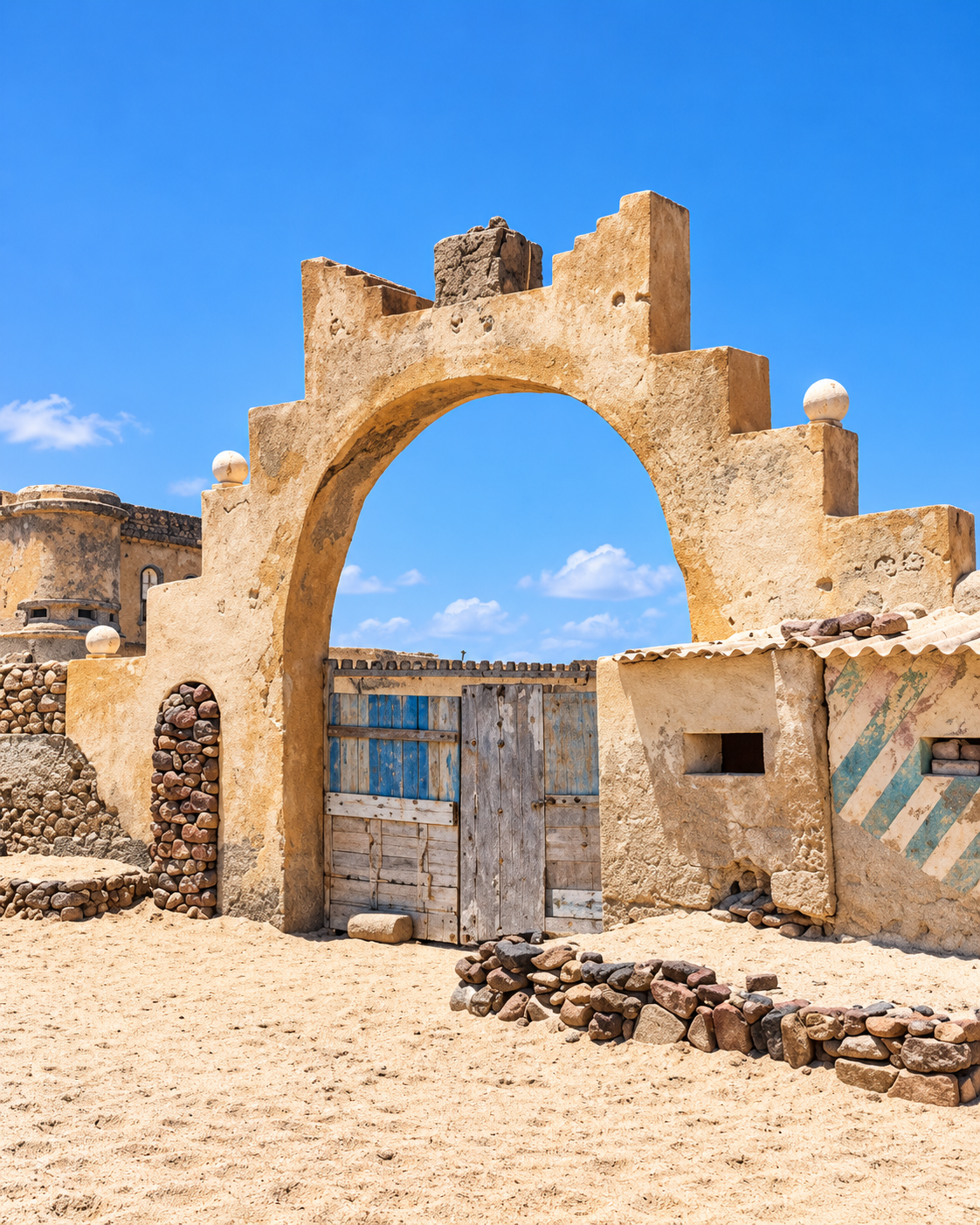
User-selected montage of southern Atlantic coastal heritage, streets, dunes and lagoon scenery

Atlantic Sahara City

Tarfaya Cape Juby memory, Atlantic silence and Saharan routes

Tarfaya sits on Morocco's southern Atlantic edge, where Cape Juby, early airmail history, the weathered Casa del Mar and the open desert horizon give the town a rare sense of distance, memory and movement.

Why Tarfaya matters

Beyond Cape Juby

Tarfaya is not a city of loud monuments or crowded sightseeing. Its importance comes from position: a small Atlantic town at the desert's edge, facing the Canary Islands, holding memories of coastal trade, aviation, literature and southern Moroccan routes.

The town asks visitors to look carefully. A ruined trading post offshore, a modest aviation museum, a long seafront and the road toward Khnifiss turn Tarfaya into a place of orientation rather than spectacle: ocean on one side, Sahara on the other, history carried by wind and distance.

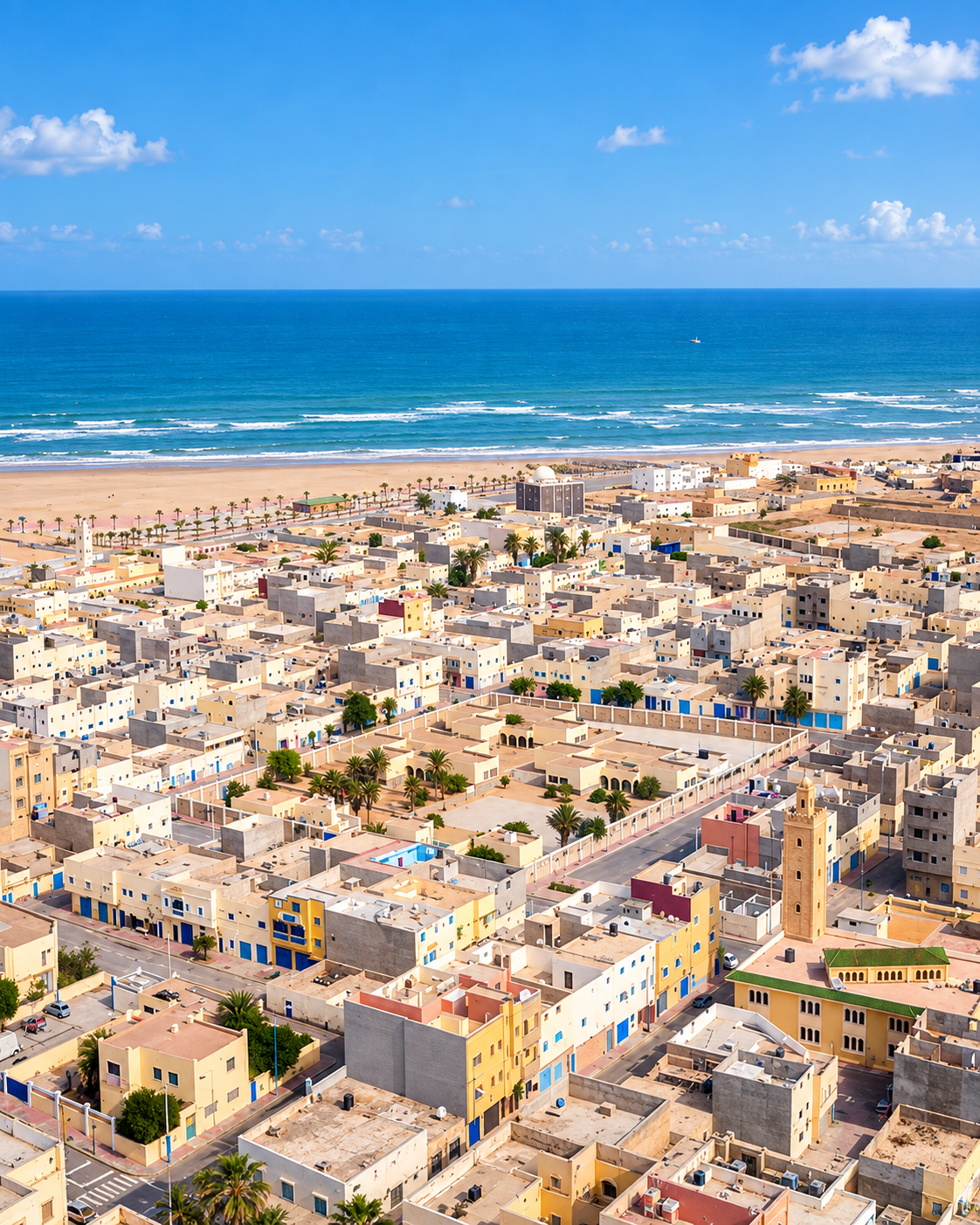
Low-rise Tarfaya streets and the Atlantic coast seen from above

A town of horizon and memory

Tarfaya is read through low scale, open light, aviation memory, Atlantic weather and the feeling of a route continuing beyond the town.

EXPLORE

Tarfaya

Historical orientation

From coastal trading post to airmail landmark

Tarfaya's story is best approached through Cape Juby. The coast attracted outside trading ambitions in the nineteenth century, later became tied to Spanish-era Cape Juby history, and then entered world aviation memory through the Aéropostale route and Antoine de Saint-Exupéry's time as a station manager in the region. Today, that layered past gives the town a quiet symbolic weight within southern Morocco.

011882

Port Victoria and Casa del Mar

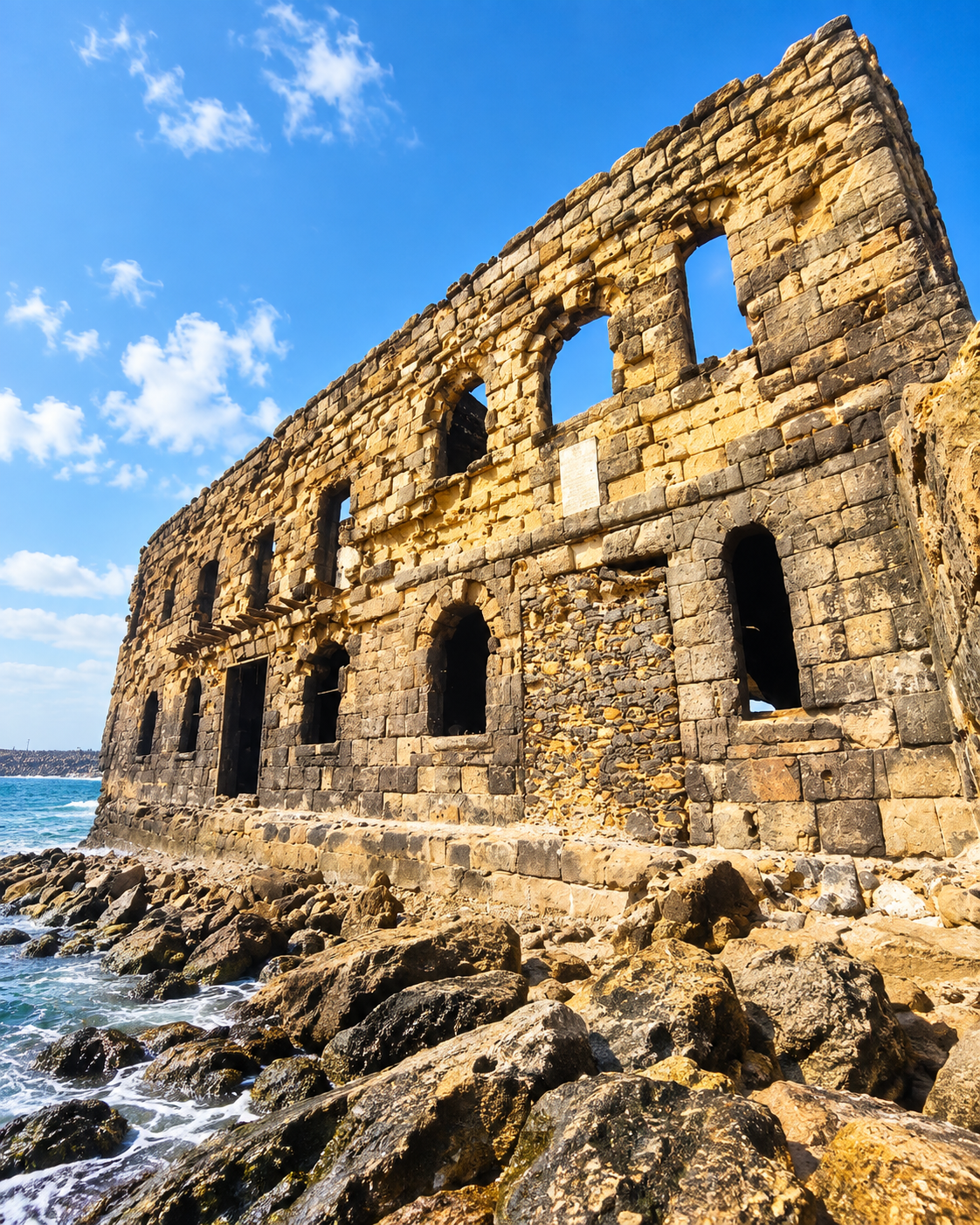
Scottish trader Donald Mackenzie established a coastal trading post near Cape Juby, remembered through Casa del Mar, the weathered offshore structure that still shapes Tarfaya's seafront imagination.

021895

Cape Juby agreement

The British trading venture withdrew after the Cape Juby settlement with Moroccan authority, leaving the coast's nineteenth-century commercial ambitions visible mainly through ruins and historical memory.

031927-1929

Aéropostale stopover

Antoine de Saint-Exupéry served in the Cape Juby/Tarfaya area during the early airmail period, linking the town to aviation, long-distance routes and the literary imagination of flight.

04Today

Atlantic-Sahara orientation

Tarfaya remains a small southern coastal town and provincial centre, positioned between Tan-Tan, Akhfenir, Khnifiss Lagoon, Laâyoune and the wider Atlantic desert route.

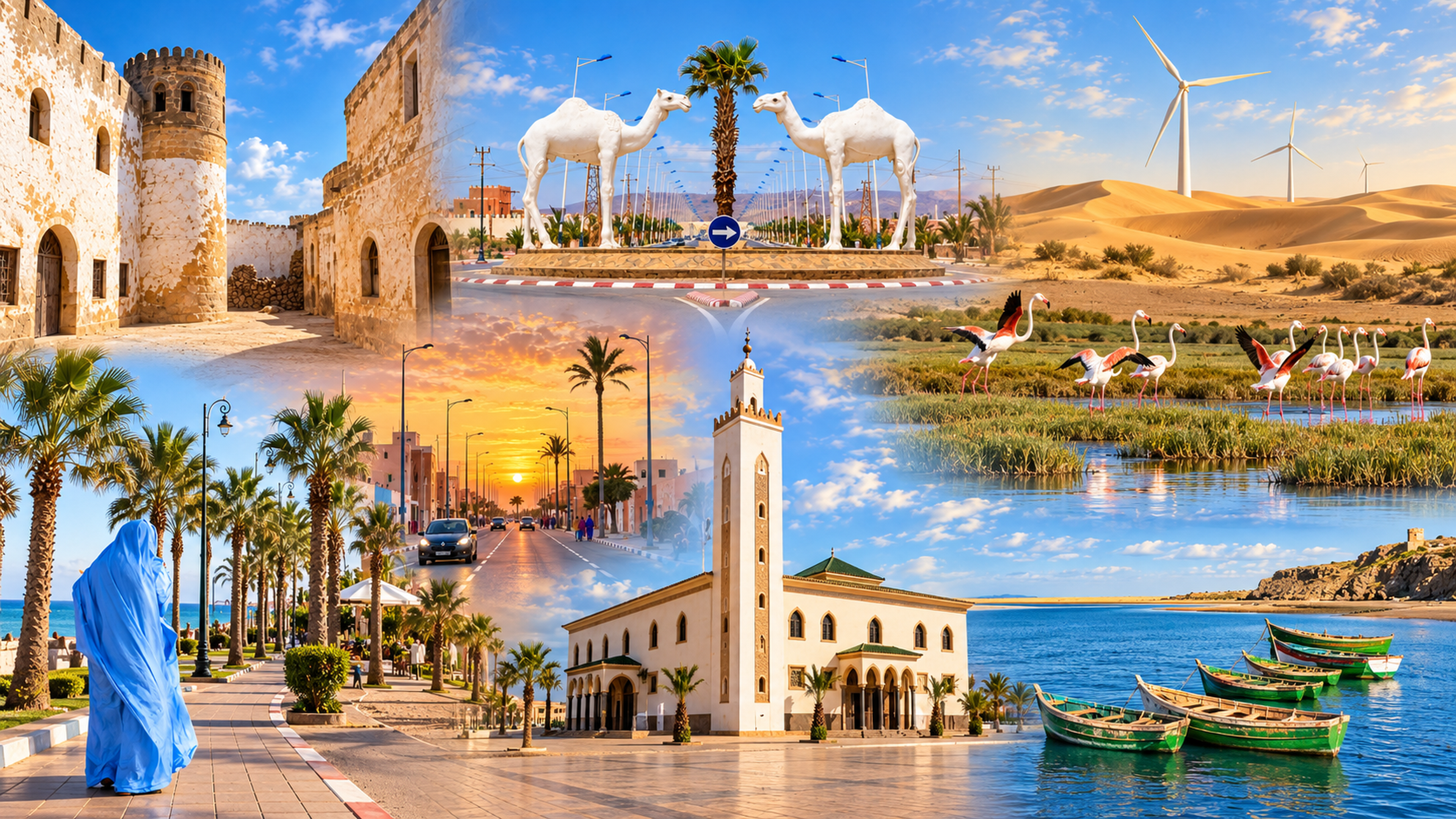
A visual bridge

Three glimpses between ocean and desert

These glimpses frame Tarfaya as a place of threshold: Cape Juby memory, Atlantic movement and the lagoon landscapes that begin to define the wider region.

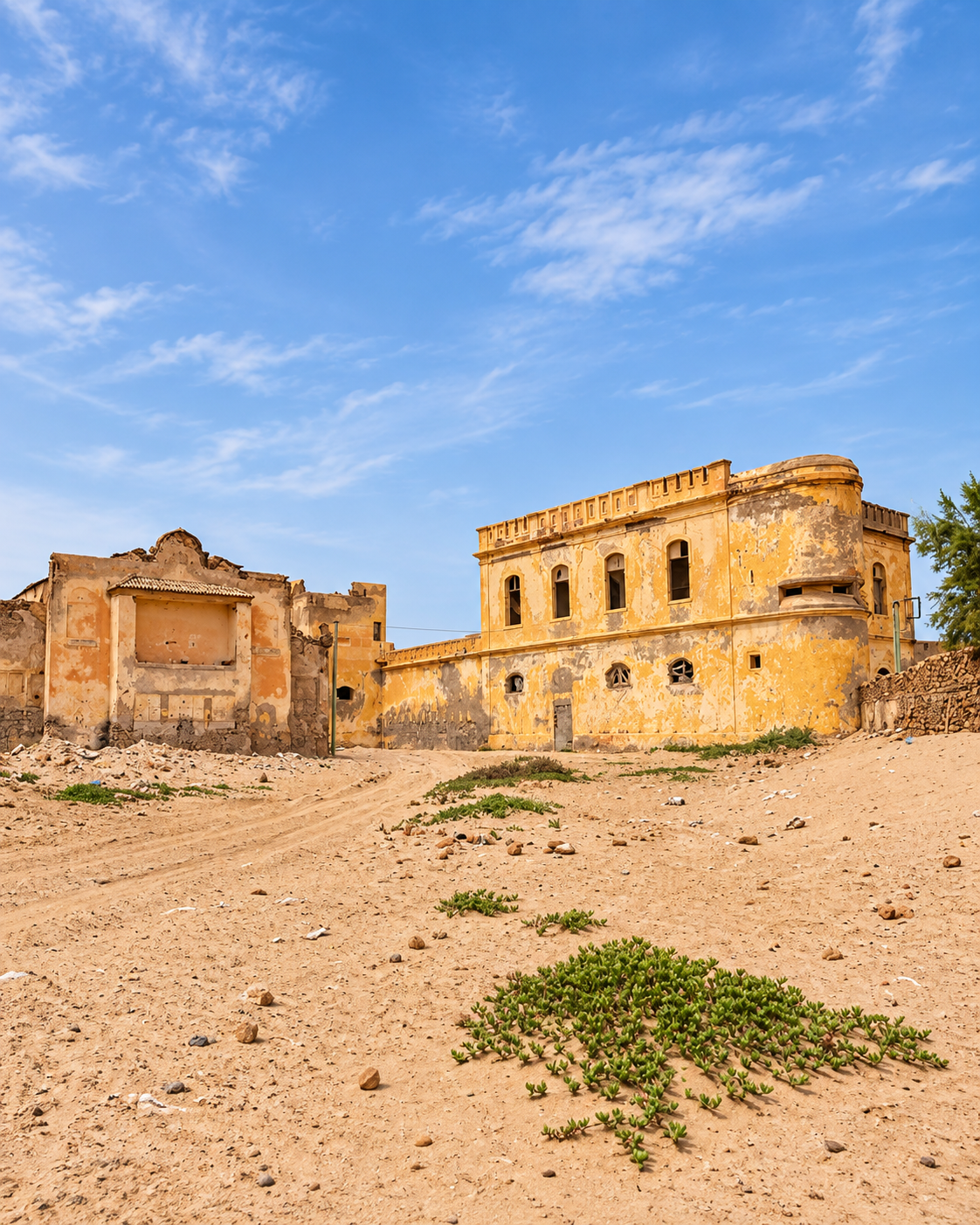
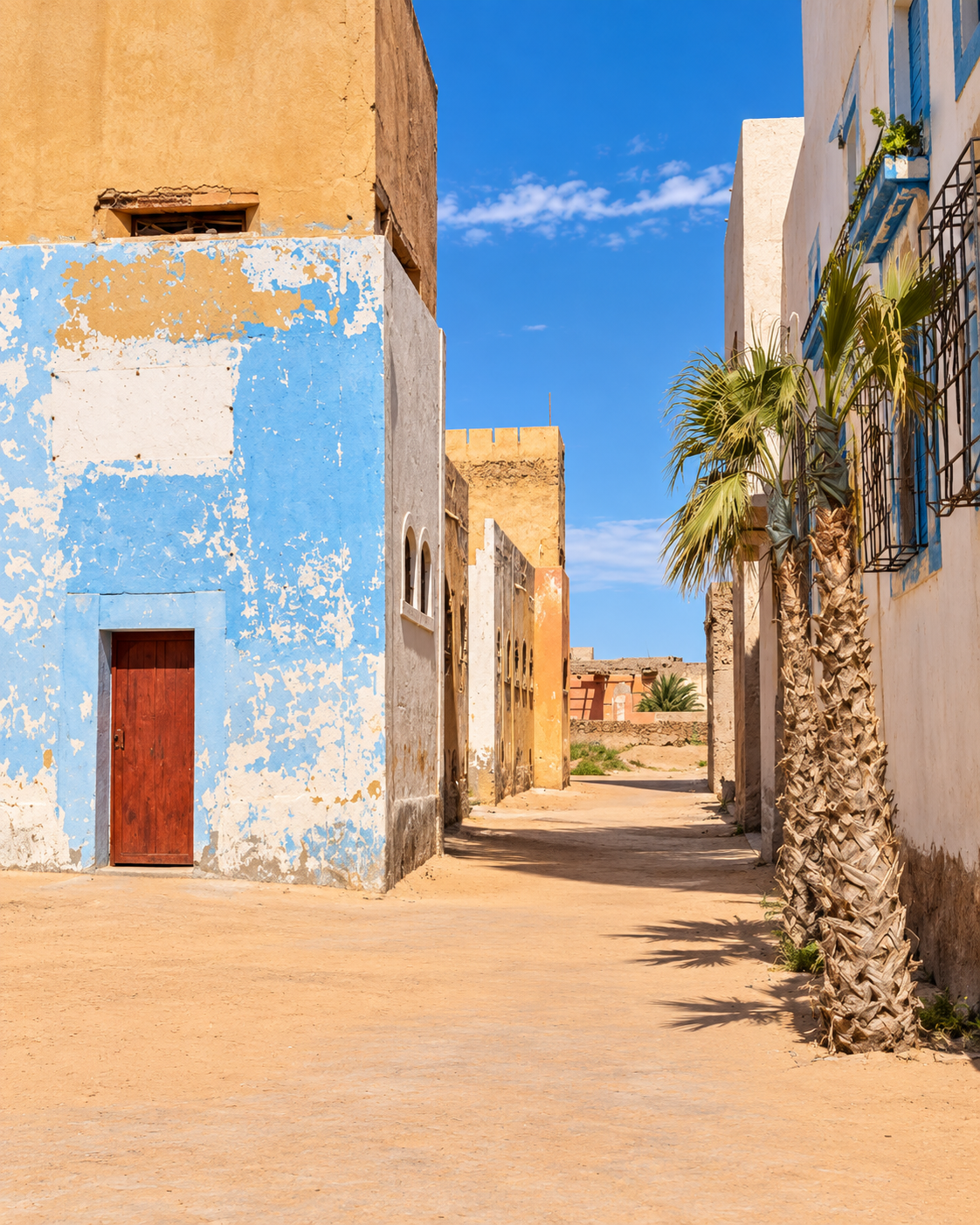
Weathered historic buildings on the sandy edge of Tarfaya

Cape Juby memory

The town's strongest identity begins with its cape: an edge of sea, wind, aviation and southern routes.

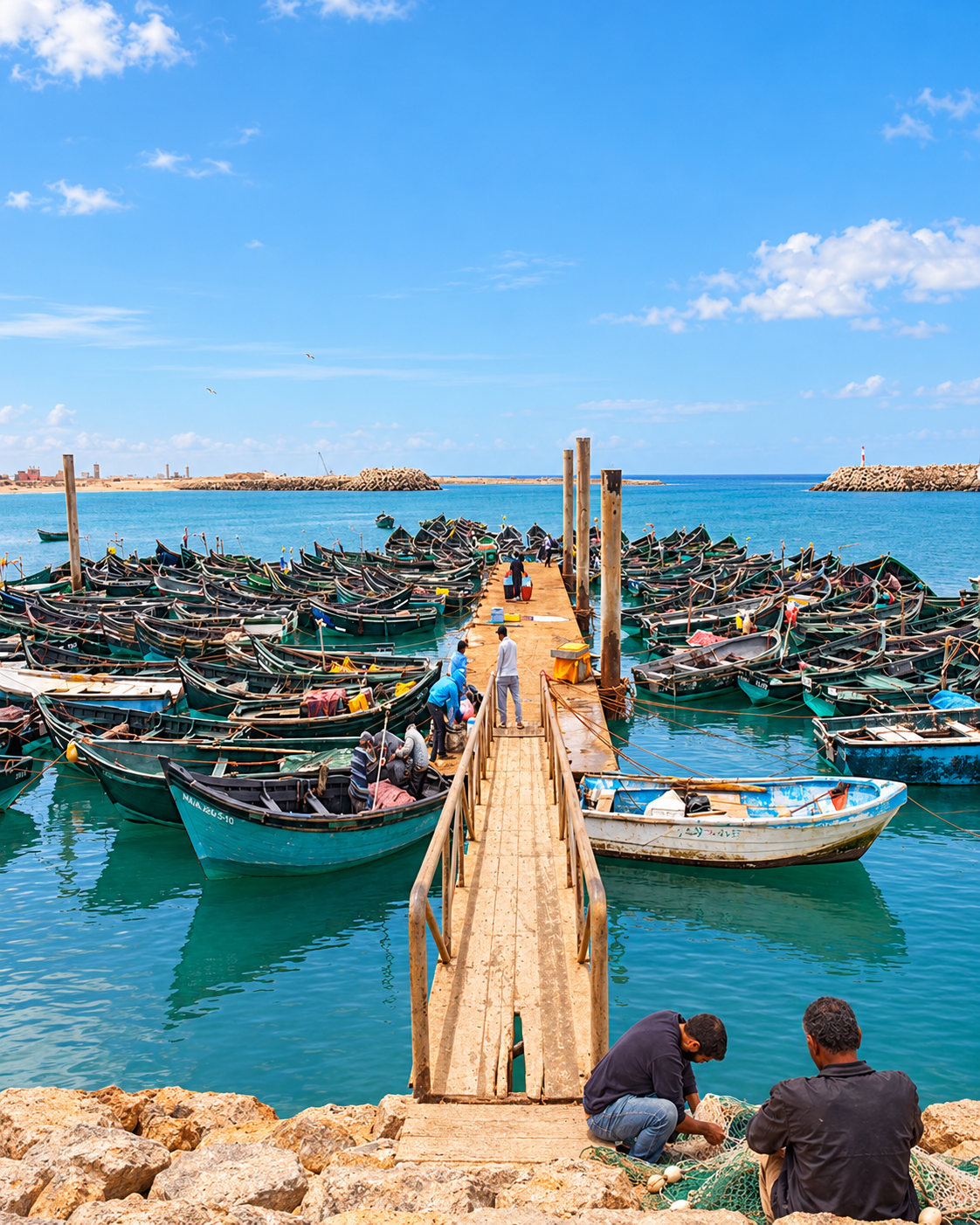
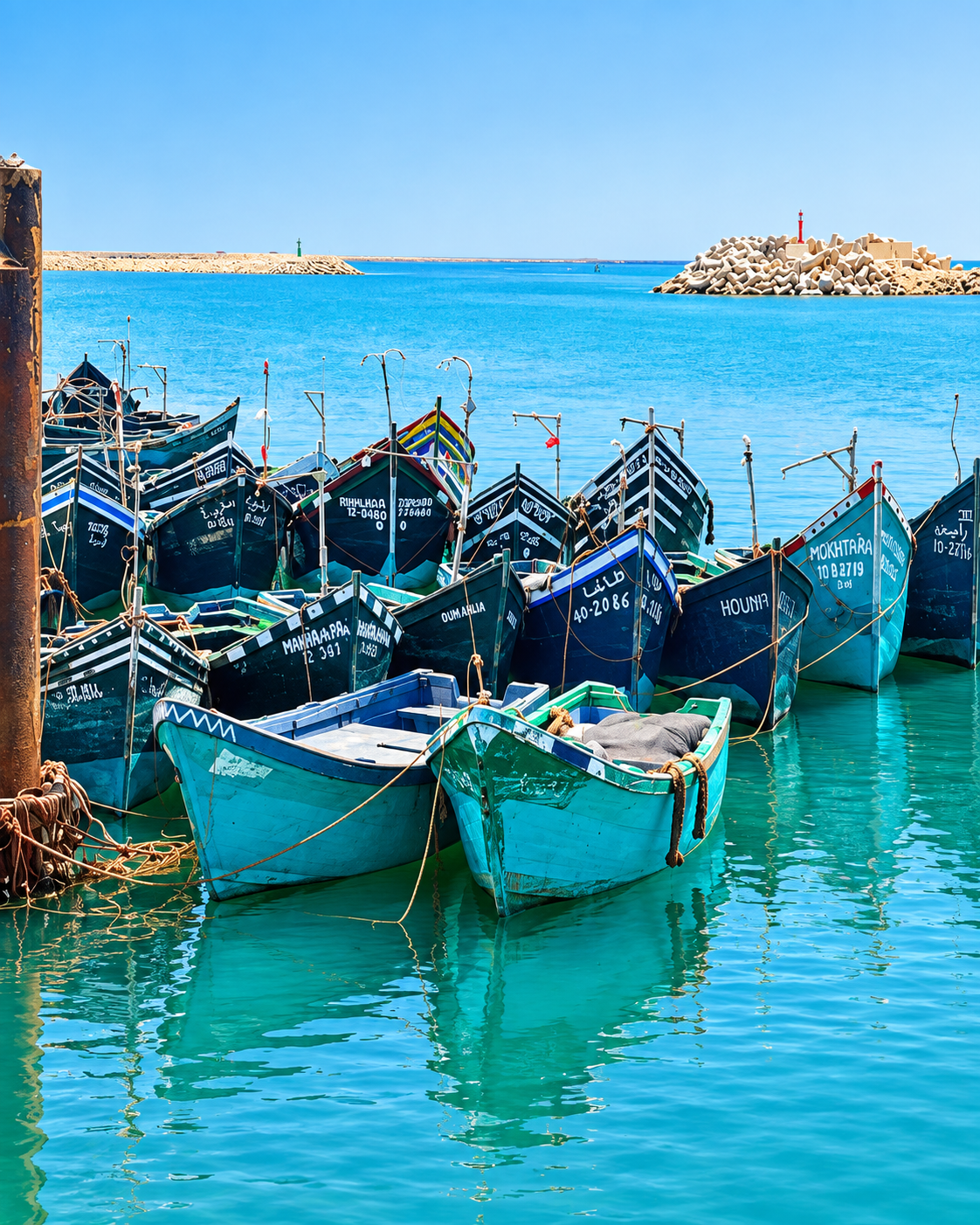
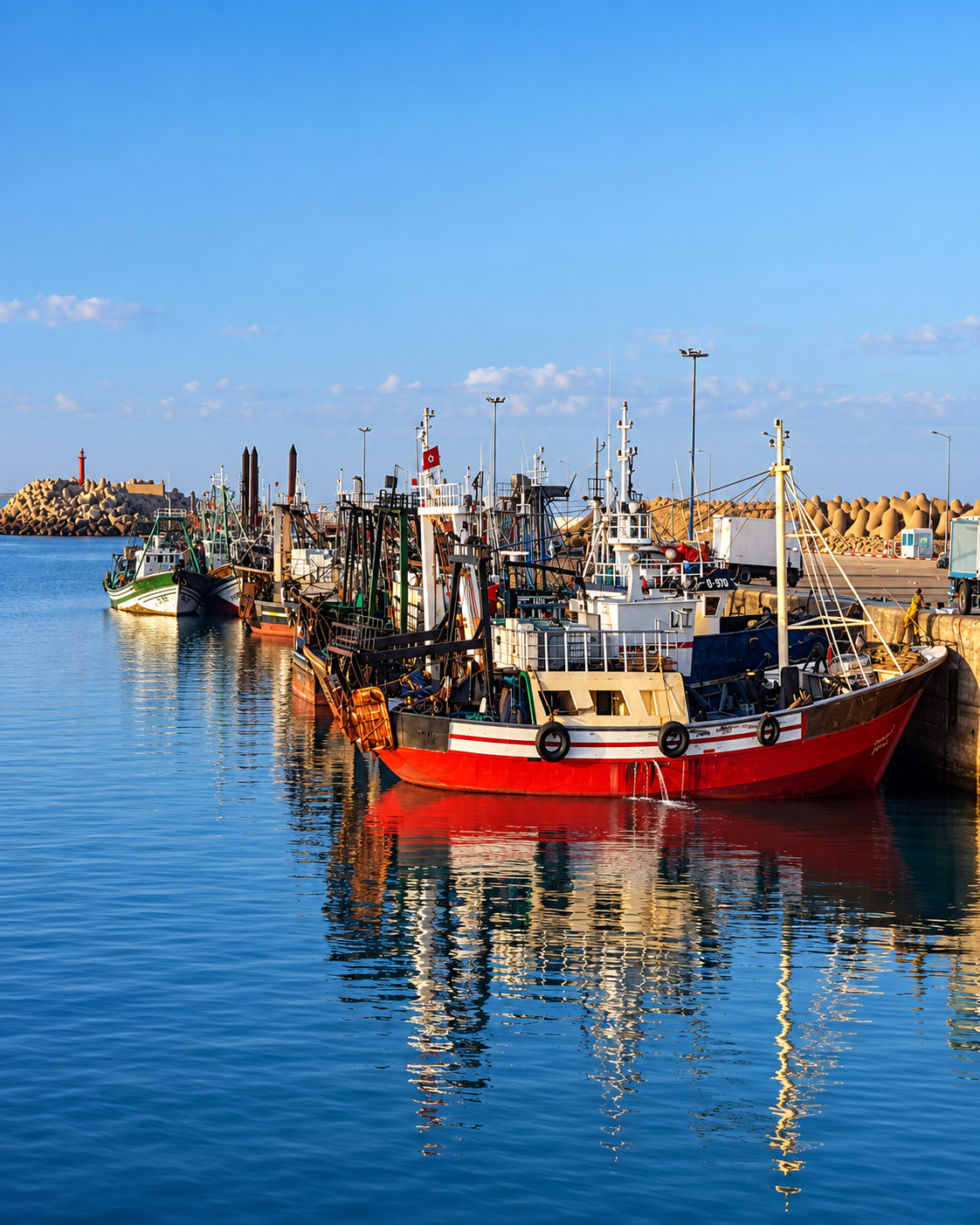
Wooden jetty between traditional fishing boats in Tarfaya harbour

Routes and movement

Tarfaya is a place people pass through, return to and remember, not a city that reveals itself all at once.

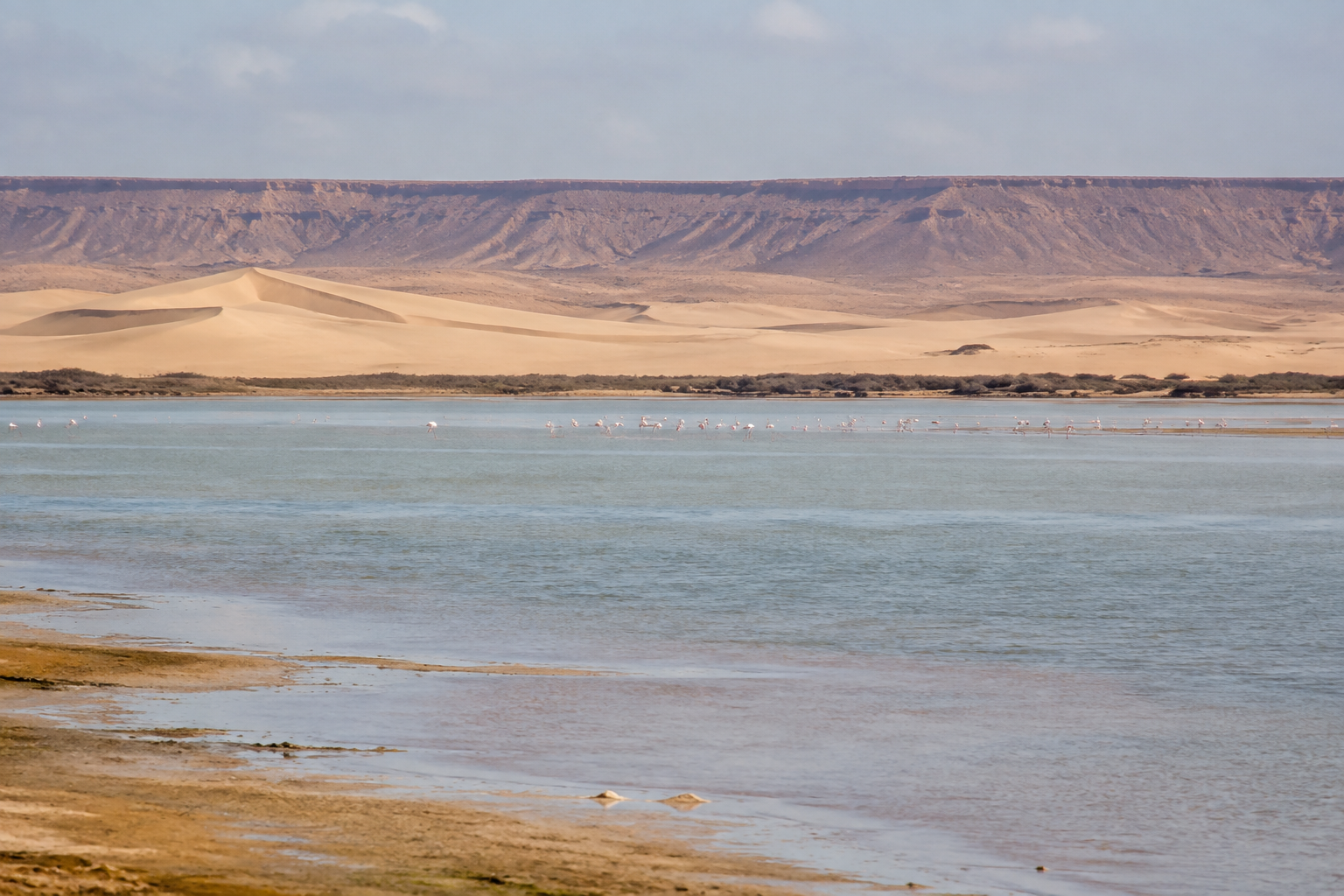
Naïla Lagoon with dunes and distant waterbirds in Khnifiss National Park

Lagoon light

North of town, Khnifiss adds wetlands, birds, dunes and Atlantic ecology to the regional story.

Tarfaya at a glance

Atlantic desert town

Tarfaya is defined by the meeting of coast and desert. Its scale is modest, but its setting makes it a strong stop for visitors reading southern Morocco as a route, not just a set of isolated sights.

Cape Juby and airmail memory

The town is closely associated with Cape Juby and the early airmail route. Saint-Exupéry's presence gives Tarfaya a rare literary and aviation identity within Moroccan travel.

Casa del Mar

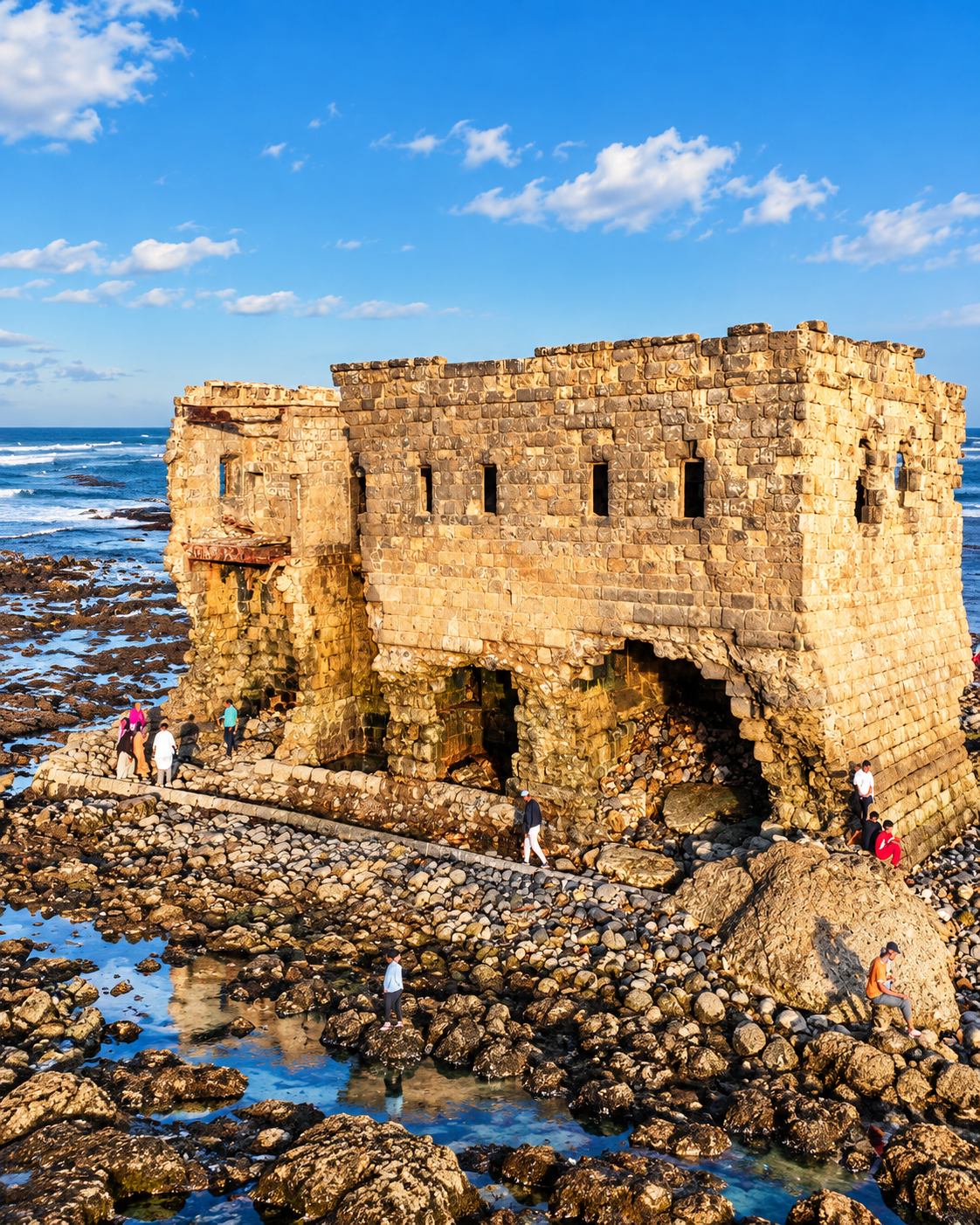
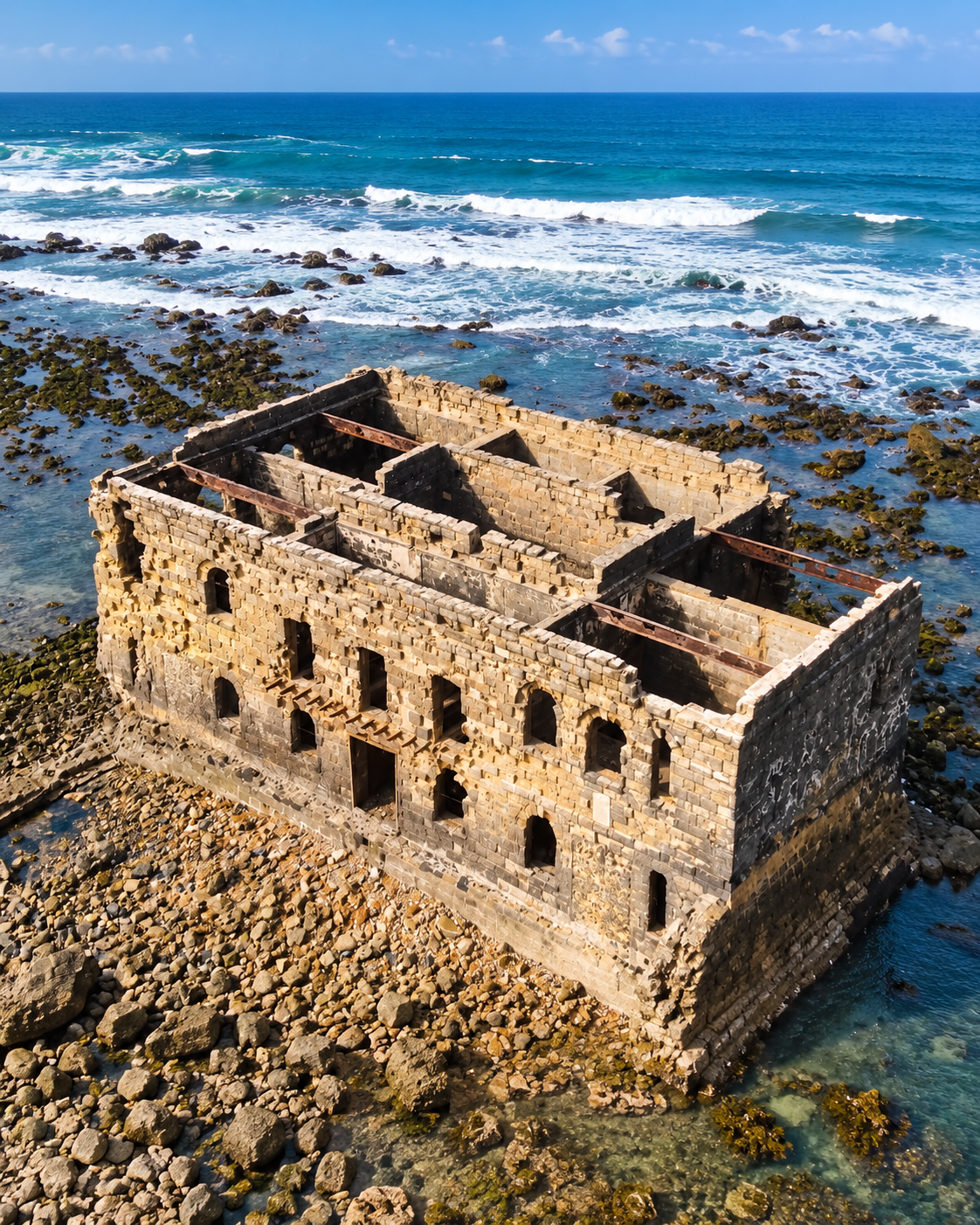
The ruined offshore trading post is fragile and weathered, but visually powerful. It should be treated as historical evidence, not as a polished monument.

Gateway to Khnifiss

Khnifiss Lagoon and its national park landscape extend the visit toward wetlands, dunes, birds and Atlantic ecology, best approached with time and respect for local conditions.

A clearer reading of the city

A town shaped by ocean, desert and memory

To understand Tarfaya, read its low urban scale, its airmail history and its Atlantic-Sahara setting together. The town is quiet, but it sits inside a large historical and geographic frame.

Weathered stone walls and empty windows of Casa del Mar
Layer 1

Coastal memory

Casa del Mar, Cape Juby and the seafront show how Tarfaya's history was shaped by ocean access, foreign trading attempts, exposure and withdrawal.

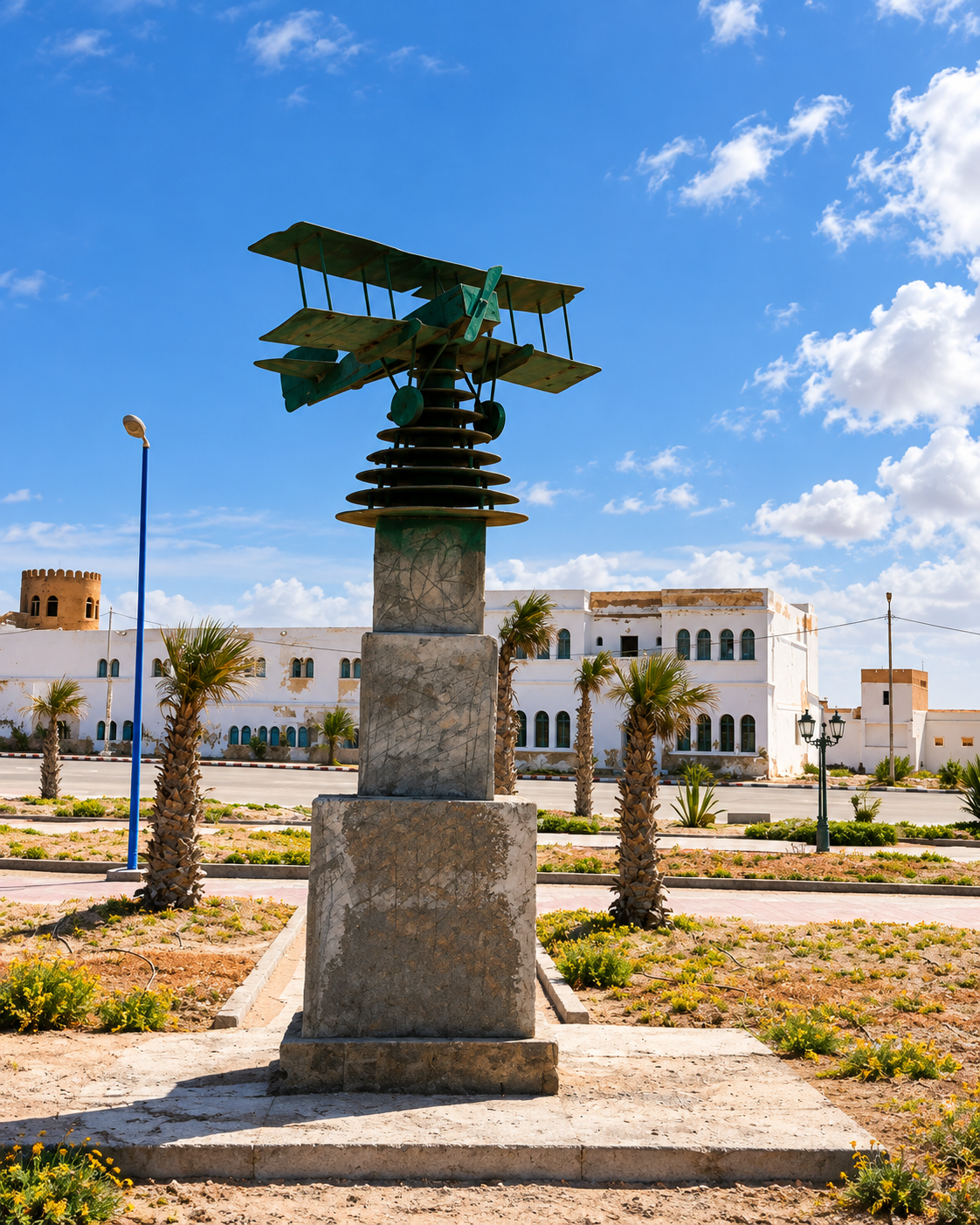
Aircraft memorial recalling the Aéropostale connection in Tarfaya
Layer 2

Airmail and distance

The Aéropostale story gives the town a human scale: pilots, stopovers, weather, isolation and the courage required to connect Europe, Morocco and West Africa by air.

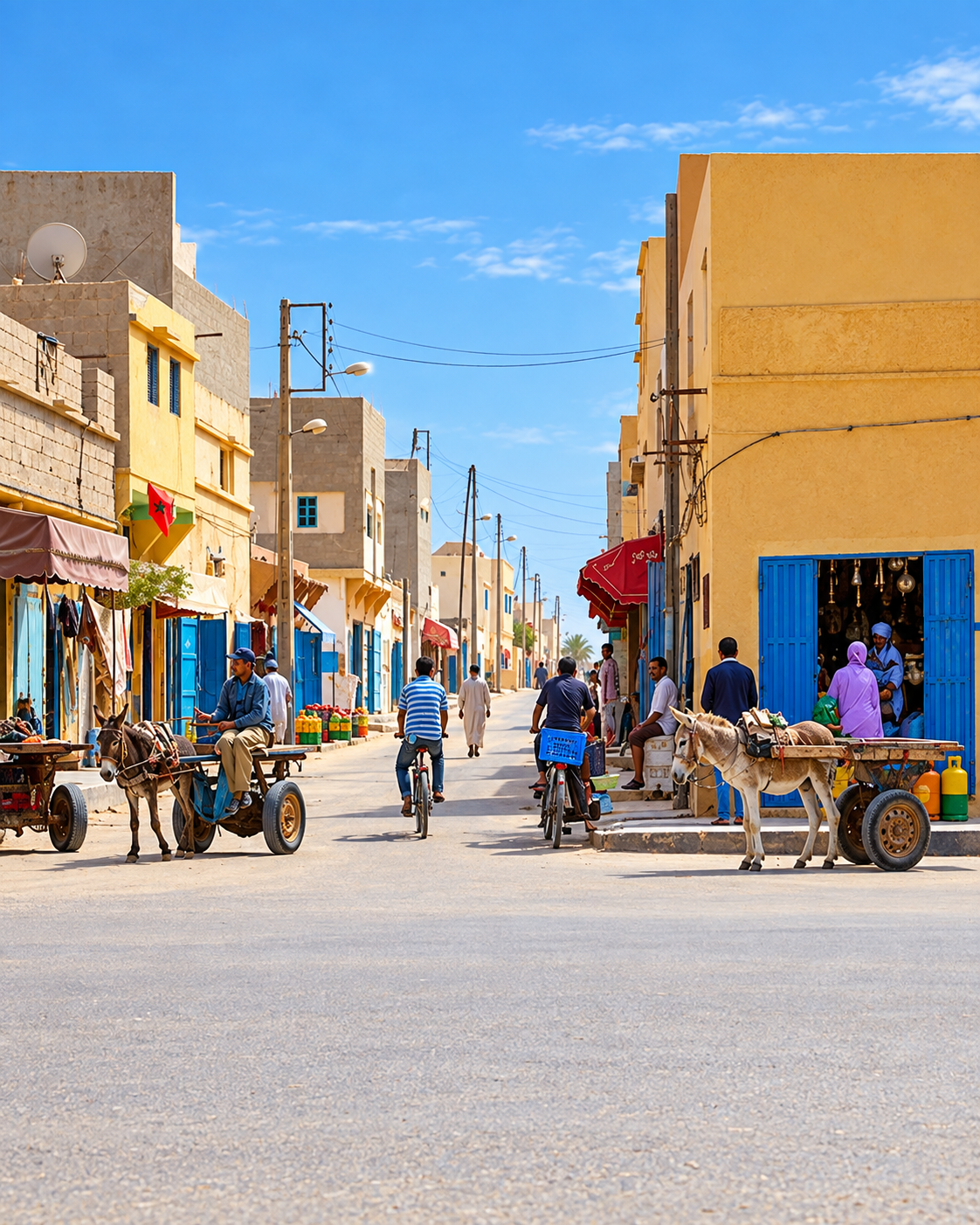
Pedestrians and carts along a street of low-rise buildings in Tarfaya
Layer 3

Everyday coastal life

Between the museum, small streets, harbour edges and long roads, Tarfaya keeps its identity practical: wind, fishing, local services, passing traffic and southern hospitality.

Landmarks & orientation

Read Tarfaya through six defining places

Tarfaya is not read through grand urban monuments. Its defining places are smaller, more exposed and more atmospheric: the cape, the seafront, the museum, the ruined trading post and the road into the wider Atlantic-Sahara region.

1
Cape Juby

The coastal point that anchors Tarfaya's identity and connects the town to Atlantic navigation, aviation memory and southern Morocco's open horizon.

2
Casa del Mar

The offshore remains of the nineteenth-century trading post known as Port Victoria, best understood from the shore as fragile historical memory.

3
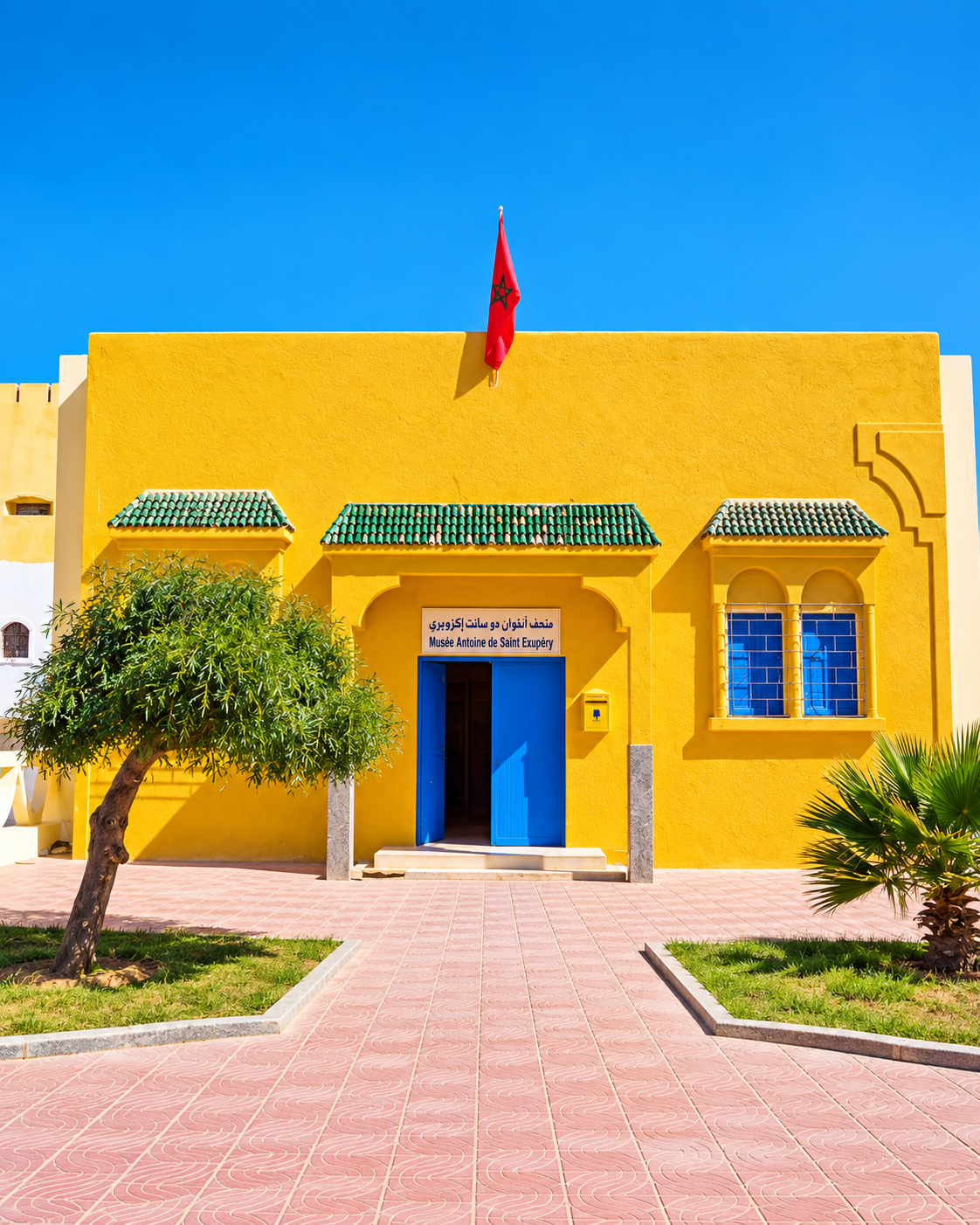
Musée Antoine de Saint-Exupéry

A modest but meaningful museum devoted to the writer-pilot, Aéropostale history and the town's place in the story of early aviation.

4
Aéropostale memory

The former stopover context gives Tarfaya a rare link between travel, literature, weather, distance and the first age of long-haul airmail.

5
Seafront and harbour edge

The shore is where the town's scale becomes clear: Atlantic wind, boats, open views and the visible distance between settlement and desert.

6
Khnifiss route

The road north toward Akhfenir and Khnifiss Lagoon extends Tarfaya into a landscape of wetlands, dunes, birds and protected coastal ecology.

Casa del Mar at low tide, with its stone walls above the rocky shore
Yellow façade and blue entrance of the Antoine de Saint-Exupéry Museum in Tarfaya

Airmail memory

Saint-Exupéry at Cape Juby — aviation, solitude and literature

Tarfaya's most unusual cultural layer is not architectural grandeur but aviation memory. During the Aéropostale period, Cape Juby formed part of a route that depended on exposed coastal stations, careful navigation and difficult weather. Saint-Exupéry's time in the region gives the town a human story of flight, isolation and observation.

  • The museum offers the clearest visitor entry into Tarfaya's Aéropostale and Saint-Exupéry connection.
  • The story should be read with the landscape: horizon, wind, distance and the practical risks of early flight.
  • Casa del Mar and Cape Juby add older coastal history to the aviation narrative.

Architectural reading

Three urban languages to notice

Low coastal scale

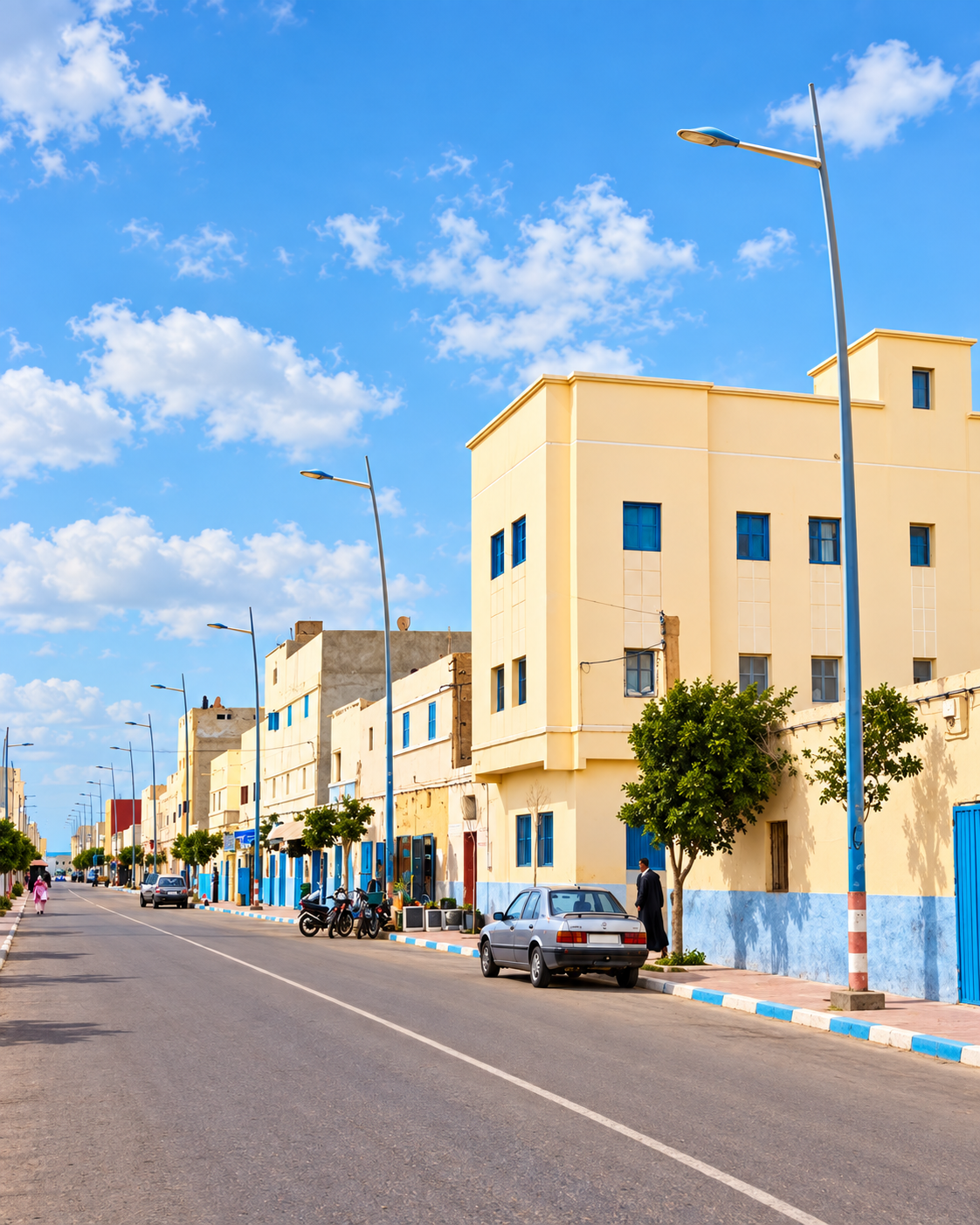
Tarfaya speaks through restraint: low buildings, open streets, seafront edges and the absence of heavy ornament. The town's architecture is shaped by climate, exposure and practical life more than by display.

Weathered ruins

Casa del Mar is not a restored showpiece. Its power comes from weathering, distance and partial survival, reminding visitors that coastal history can be fragile and unresolved.

Route infrastructure

Roads, harbour edges, former aviation memory and regional service points matter here. Tarfaya's built environment belongs to movement across long distances as much as to settled urban form.

Visual atmosphere

Atlantic light, distance and quiet texture

Nearby highlights

Nearby nature, towns and route extensions

Tarfaya works best as part of a southern Atlantic journey. The strongest extensions are natural and regional rather than monument-heavy: Khnifiss Lagoon, Laâyoune and the long coastal route through Akhfenir and Tan-Tan.

Khnifiss Lagoon

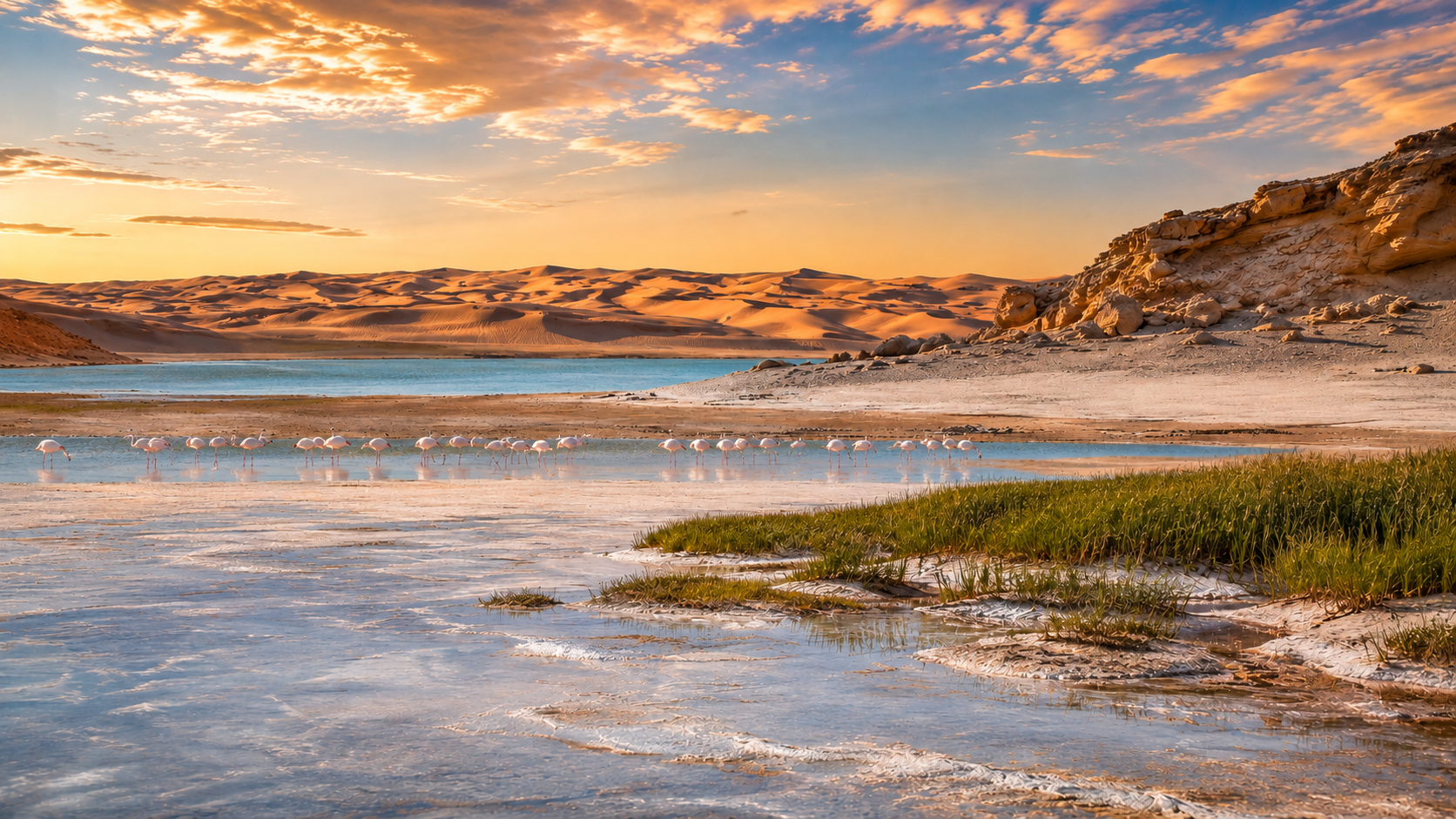
A protected coastal and wetland landscape near Akhfenir, known for lagoon scenery, dunes and birdlife. Treat it as a nature-focused extension that needs time, care and current local guidance.

Flamingos and salt-marsh vegetation in Khnifiss Lagoon at sunset

Laâyoune

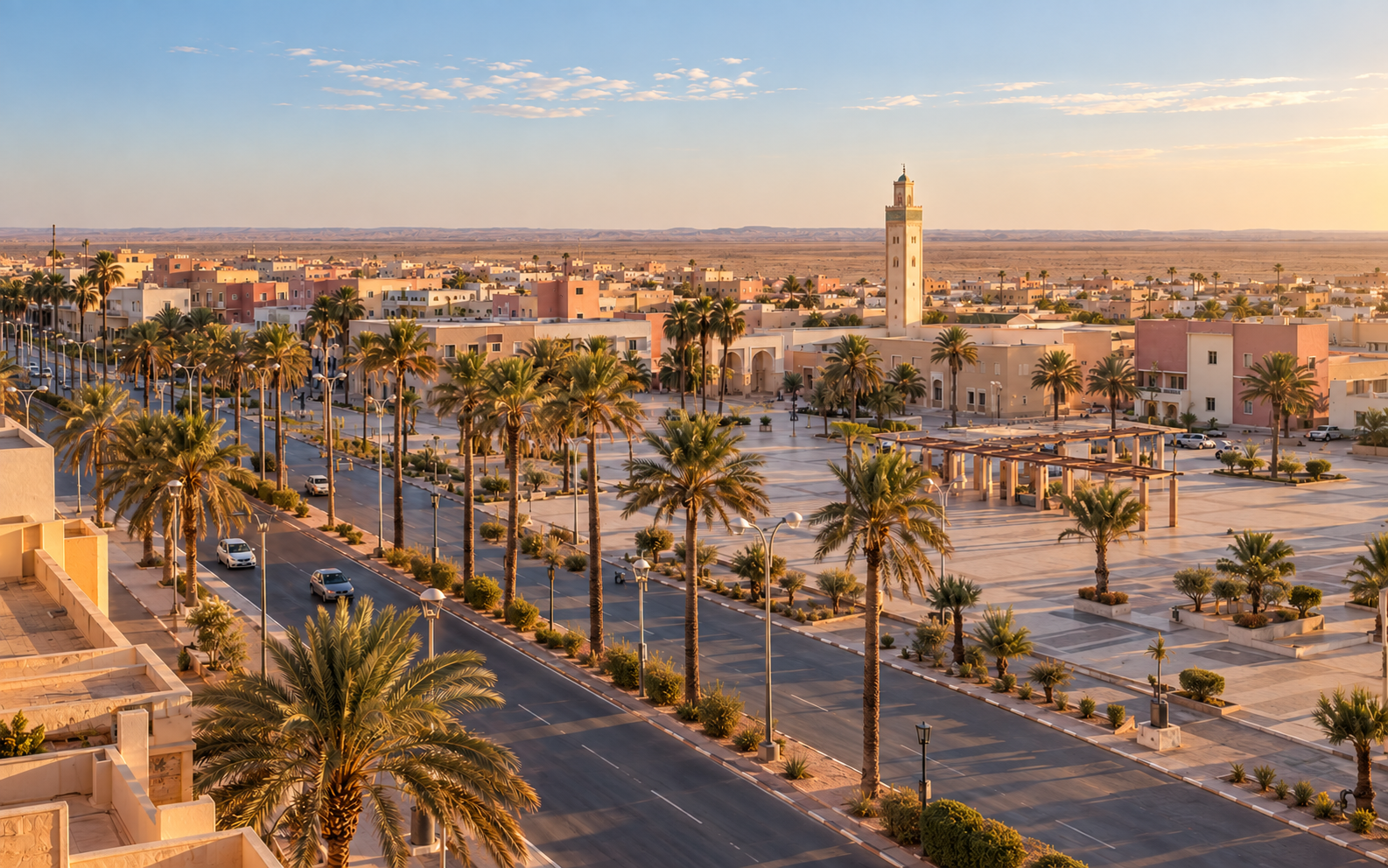
The regional capital to the south offers a larger urban base, services and a different reading of contemporary southern Morocco. It pairs naturally with Tarfaya on a longer route.

Palm-lined boulevard, open square and mosque in Laâyoune

Akhfenir and Tan-Tan coast

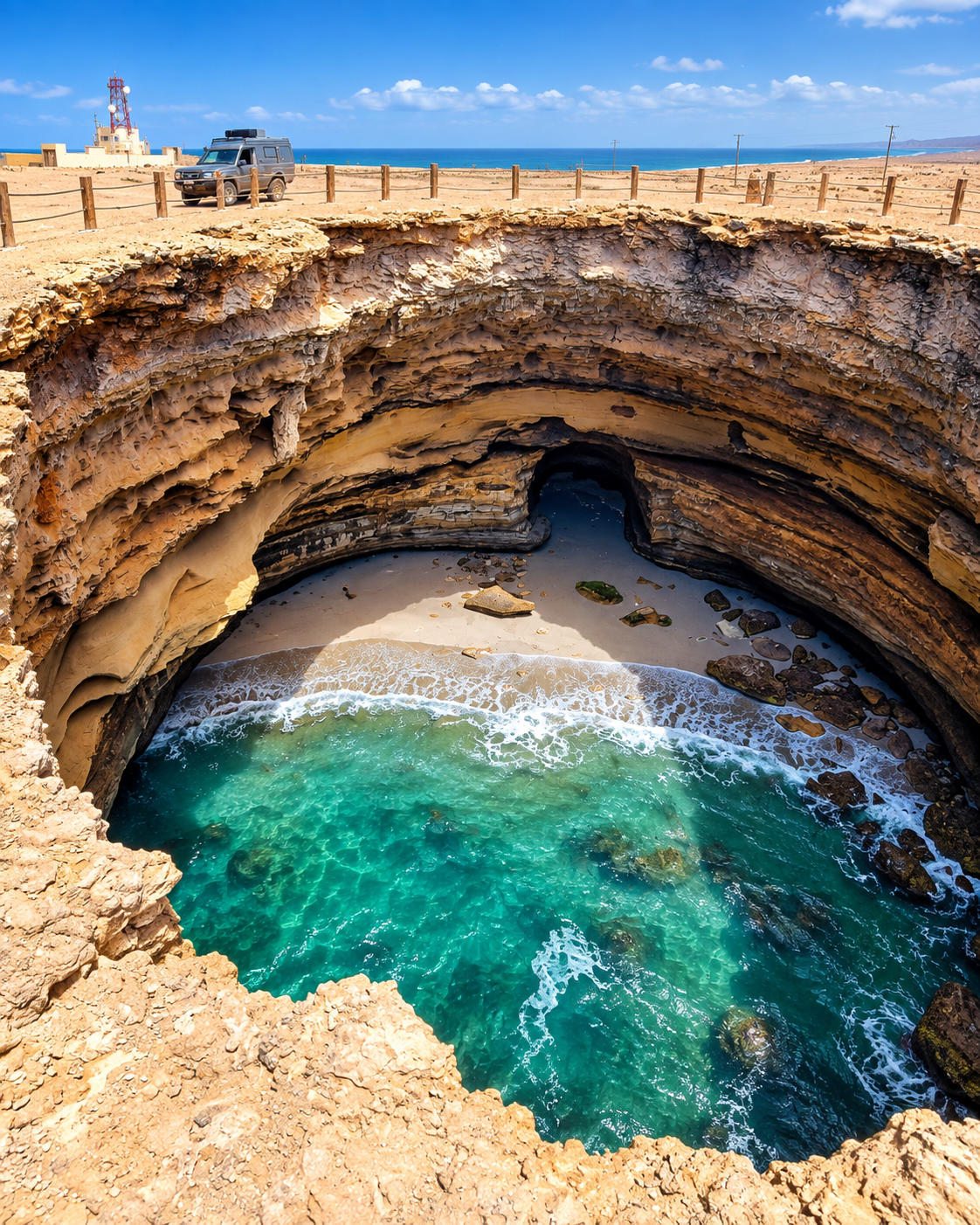
The route north connects Atlantic cliffs, desert stretches, fishing settlements and wider Saharan travel context. Build in daylight, fuel, water and flexible timing rather than treating the road as empty space.

Natural opening in the rocky Atlantic coast at Akhfennir
Travel note: museum access, road conditions, coastal weather, park guidance and local visitor arrangements can change. Check current official or trusted local information before travelling.

Practical orientation

How to experience Tarfaya well

  • Arrive with the right expectation: Tarfaya is a quiet Atlantic-Sahara town, not a polished resort city.
  • Begin with the seafront, Cape Juby orientation and the view toward Casa del Mar.
  • Visit the Saint-Exupéry museum when open, then connect the story to the wider Aéropostale route.
  • Respect weather, wind and distance; long southern routes need current local checks and practical preparation.
  • Give Khnifiss Lagoon a separate nature-focused extension instead of squeezing it into a rushed stop.

A strong first visit

Tarfaya street with yellow façades, blue doors and local traffic

Start at the seafront, read Cape Juby and Casa del Mar from the shore, continue to the Saint-Exupéry museum if open, then use the rest of the day for slow town orientation or a carefully planned route toward Khnifiss.

Elevated view into Casa del Mar above the Atlantic rocky shore in Tarfaya

Go deeper with Exotic Morocco

Tarfaya — Premium Visual City Guide

Continue through Exotic Morocco's guide collection for richer southern Morocco context, visual city orientation, regional routes, culture, nature and practical planning around the Atlantic-Sahara corridor.

✓ Cape Juby context✓ Essential orientation ✓ Aviation memory✓ Atlantic-Sahara landscape ✓ Practical travel guidance✓ Nearby highlights

Continue the journey

Continue the journey through Tarfaya

Look beyond the small scale and encounter a southern coastal town of aviation memory, Atlantic light, desert distance, fragile ruins and regional nature routes.