CITY / DESTINATION · Tétouan coast · Mediterranean Morocco
Cabo Negro
Cabo Negro is a coastal place on Morocco's Tétouan side of the Mediterranean, read through beach light, low hills, resort edges, golf landscape and the easy movement between Martil, M'diq and Tétouan.
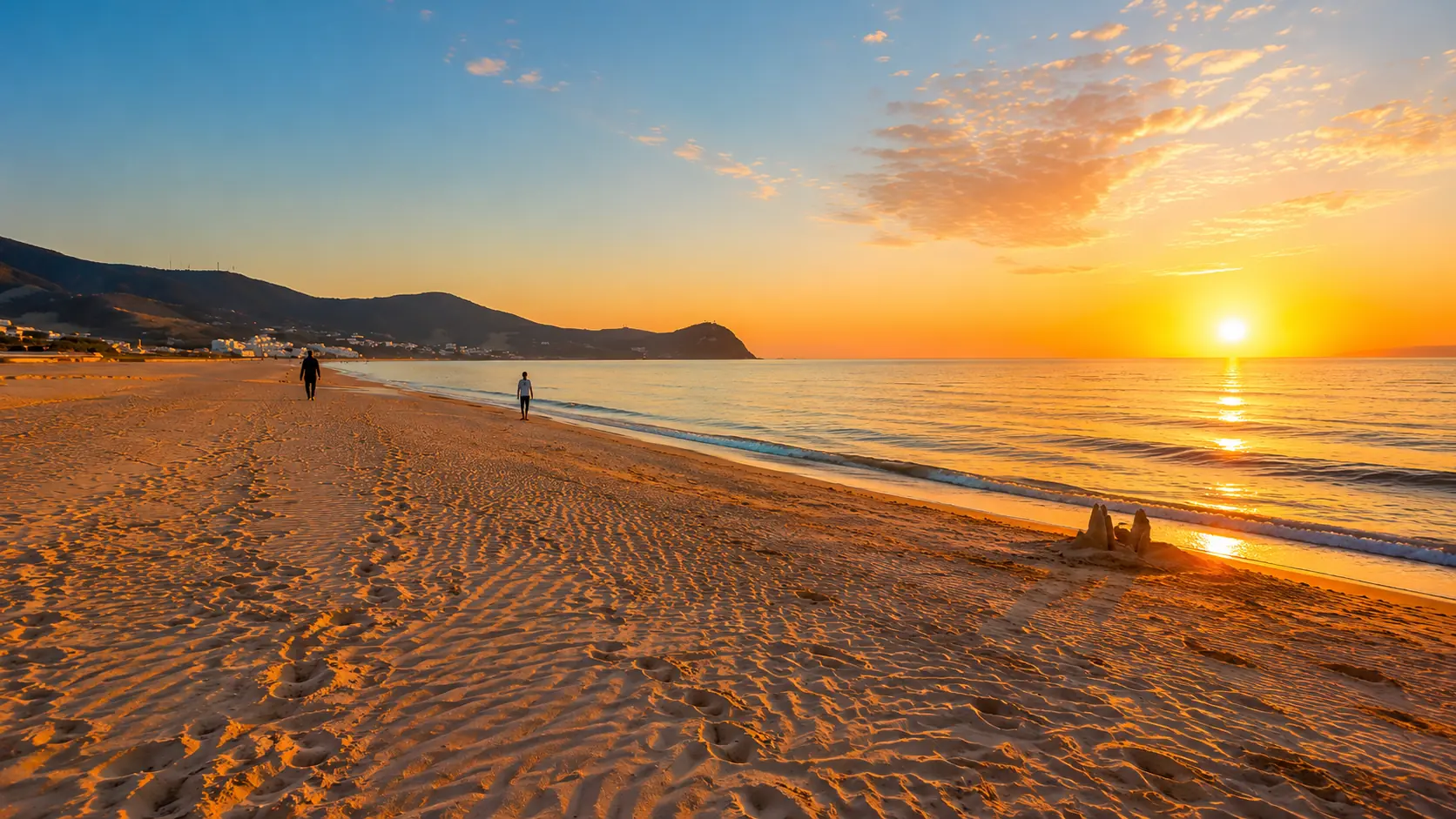
Start with the wide shoreline. Cabo Negro is strongest when the coast is allowed to breathe: sand under low sun, a calm line of water, white buildings at the foot of the hills and the Mediterranean horizon holding the whole scene together.
Cabo Negro matters because it shows a quieter, more spatial side of the Tétouan coast. It is not a dense medina, a monument or a protected old quarter. Its value is coastal: open sand, Mediterranean water, hills behind the beach, seasonal movement and the way northern Moroccan city life loosens as it reaches the sea.
The place sits in the wider Tamuda Bay and Tétouan coastal context, where modern leisure infrastructure, beach days and water-based activities meet the Rif-side landscape. That context is important: Cabo Negro should be read neither as an isolated beach nor as a generic resort name, but as part of a chain of coast, road, town and sea-facing habits.
Its visual intelligence comes from contrast. The shore is broad and horizontal; the hills behind it are darker and slower; the built edges are white, compact and seasonal; the water changes tone with wind and light. A good visit notices all of that before choosing where to walk, swim, eat or photograph.
Cabo Negro is also one of the Tétouan area's clearest links between beach culture and golf landscape. Official Moroccan tourism material places Cabo Negro Golf Beach on the Tétouanaise coast and describes a course shaped by dunes, shrubs, water, hills and Mediterranean wind. Even for visitors who never play, that landscape vocabulary helps explain the place.
For Exotic Morocco, Cabo Negro belongs in Visit because it is a place of atmosphere and orientation: a coastal pause between Tétouan's cultural depth, Martil's accessible beach rhythm, M'diq's harbour energy and the broader northern Mediterranean route.
Use the map to place Cabo Negro on the northern Mediterranean coast, close to Martil, M'diq and the city context of Tétouan.
Editorial reading
Its beauty is horizontal, bright and weather-shaped.
Cabo Negro is not a place to overload with drama. Its beauty works through restraint: a long beach line, shallow colour changes in the water, sand marked by footprints, white walls catching evening light and hills that keep the coast from feeling flat.
The best reading begins with the horizon. It gives proportion to everything else: the curve of the beach, the scale of the hills, the compact resort edges and the movement of people along the water. From there, the place becomes less about a single viewpoint and more about a coastal rhythm.
Light matters here, but it should stay believable. Late sun gives the sand texture and warmth; clear morning or afternoon light makes the Mediterranean sharper and cooler.
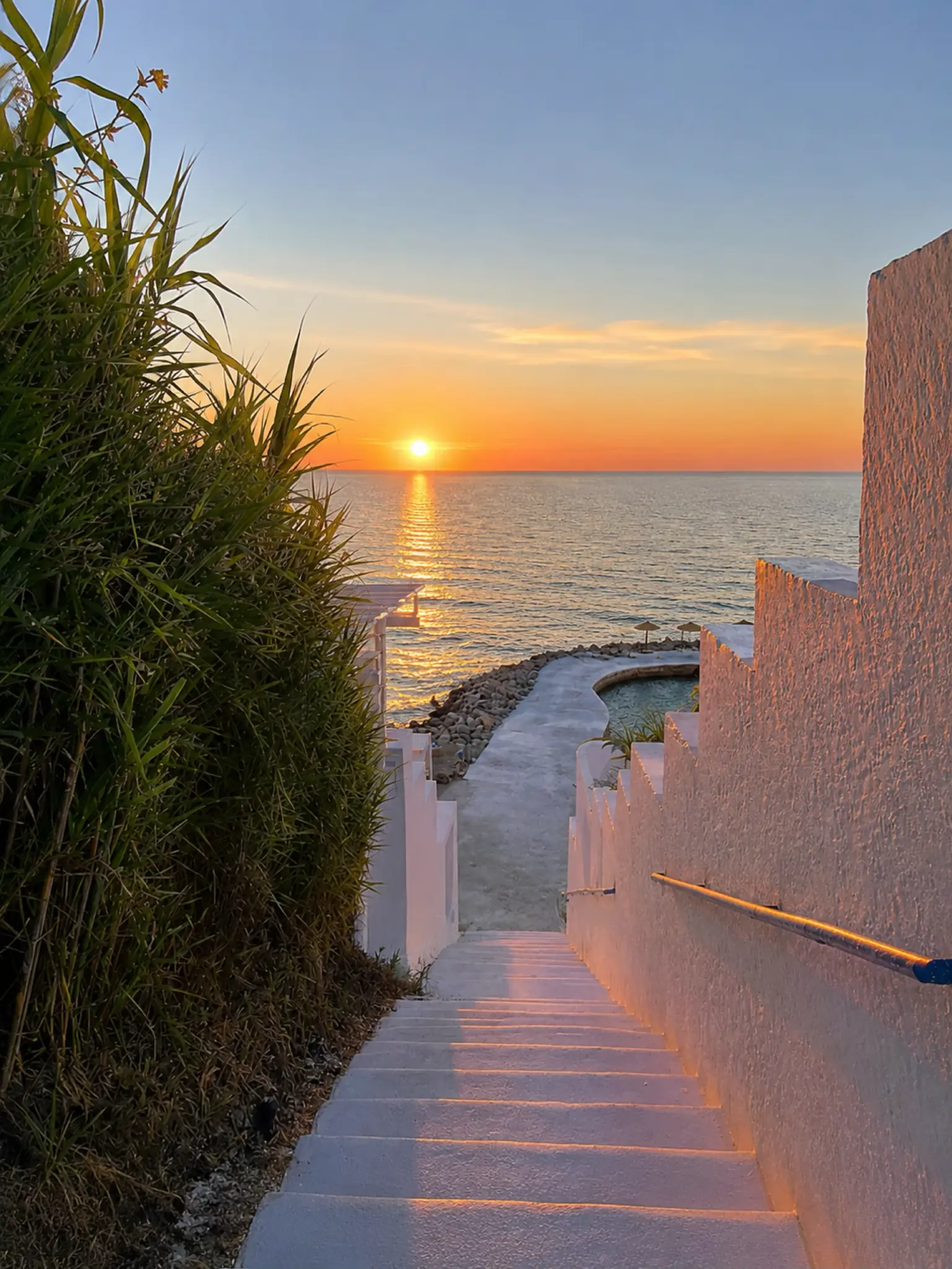
Look also at how built spaces approach the sea. Stairways, terraces, low walls, planted edges and beach access points shape the visitor's movement before the water appears. They are ordinary details, but in Cabo Negro they create the transition from resort fabric to open coast.
The richer experience comes from keeping Tétouan in the background mentally. The city gives cultural depth to the journey; Cabo Negro gives release, air and sea light. Together they make the northern route more complete.
A respectful visitor lets the beach remain shared space. That means reading private edges carefully, avoiding pressure on planted or dune-like areas, keeping noise and litter down, and remembering that seasonal pleasure still needs local courtesy.
When the sun drops, Cabo Negro becomes especially legible. Sand, water, hillside and white architecture separate into layers. That quiet layering is the place's real luxury.
EXPLORE
Cabo Negro
Coastal and regional orientation
Read the place through sea, season and Tétouan context.
Cabo Negro is best understood as a Mediterranean coastal place rather than a historic monument. Its identity comes from the relationship between beach, hillside, resort fabric, golf landscape and nearby urban anchors. That makes factual restraint important: describe what the coast offers, avoid invented heritage claims, and let the place speak through geography and visitor rhythm.
01Place type
Beach and resort coast
Cabo Negro is a beach-oriented resort area in northern Morocco. Its visitor appeal comes from the Mediterranean shore, surrounding relief, accommodation edges and seasonal leisure rather than from one single monument.
02Coastal setting
Between city and sea
The place belongs to the Tétouan coast, with Martil and M'diq close in the same coastal corridor. This makes it useful for travellers who want a sea pause without losing the cultural context of northern Morocco.
03Golf landscape
Dunes, shrubs and wind
Official tourism material describes Cabo Negro Golf Beach as an 18-hole course on the Tétouanaise coast, shaped by dunes, bushes, water, hills and Mediterranean wind. That landscape helps define the area's visual character.
04Visitor care
Seasonal pressure
Like many attractive beaches, Cabo Negro can feel different depending on season, weather and local access. Visitors should verify practical conditions near travel and keep shared coastal space clean, calm and respectful.
A visual bridge
Three readings between sand, water and hillside
Before Cabo Negro becomes a beach photograph, it is a set of coastal relationships. These readings help visitors slow down and see why the place feels calm from a distance, then more textured at ground level.
01
Shore
Sand as surface and memory
The beach is not empty space. It records wind, footprints, wet edges, dry ripples and the angle of light. At Cabo Negro, sand gives the coast its first texture before the eye moves to water or buildings.
Read wet and dry sand as two different tones.
Notice how footprints change the scale of the beach.
Use low light to see texture without forcing colour.
02
Water
Mediterranean colour without exaggeration
The water can look pale, silver, blue or gold depending on wind and sun. The strongest photographs keep that change believable, allowing the horizon, small waves and reflections to carry the mood.
Look for colour shifts near the shoreline.
Let the horizon set the calm of the frame.
Respect swimming conditions and local guidance.
03
Hillside
The coast held by darker relief
Cabo Negro gains depth from the hills behind the shore. They give weight to the horizon, frame the built edges and prevent the beach from reading as a flat strip of sand.
Step back to include beach, water and relief together.
Read white architecture against darker slopes.
Connect the coast to the Rif-side landscape.
Quick orientation
Type of place
A Mediterranean beach and resort area on Morocco's northern coast, best read through sea light, sand, hills, seasonal leisure and the coastal route near Tétouan.
Coastal context
Cabo Negro sits in the Tétouan coastal corridor, close to Martil and M'diq, with Tamuda Bay forming the wider modern seaside context for many visitors.
Best for
Sunset walks, beach photography, clear-water views, slow coastal pauses, golf-side landscape reading and combining Tétouan culture with Mediterranean air.
Closest city context
Tétouan is the strongest cultural and practical city context, especially for travellers who want to connect the beach with northern Morocco's urban heritage and coastal routes.
What visitors experience here
A coastline that changes with light and season.
Cabo Negro works in gentle stages. First comes the wide beach and the Mediterranean line. Then the hills begin to shape the background. Finally, smaller details appear: stairways to the water, white walls catching sun, planted edges, beach activity and the quiet shift between resort space and open shore.
Arrival
The beach opens slowly
The first impression should be spatial: broad sand, a clear horizon and hills beyond the built edge. Cabo Negro feels most convincing when approached as a coast, not as a checklist attraction.
Light
Evening warmth on sand
Late light gives the beach its richest texture. Ripples, footprints and shallow wave lines become visible without needing heavy contrast or artificial colour. The strongest mood is warm but still natural.
Water
Small waves and clear edges
The Mediterranean here is part of the place's calm. Look for the narrow band where water, foam and wet sand meet; it often says more about the coast than a wide view alone.
Movement
Walking before stopping
The beach rewards a slow walk before choosing a spot. Movement helps the visitor understand the curve of the shore, the angle of the hills and the way resort access points meet public coastal space.
Landscape
Golf-side dunes and shrubs
Official tourism material links Cabo Negro Golf Beach with dunes, shrubs, water, hills and wind from the Mediterranean. Those elements make the broader area feel greener and more textured than a beach line alone.
Season
Quiet and busy versions
Cabo Negro can feel intimate or lively depending on season and time of day.
Place details and orientation
Read Cabo Negro through six defining elements
No single detail explains the place. Its character comes from the meeting of beach, Mediterranean water, hillside, resort edges, golf landscape and the nearby Tétouan coastal network.
1
Sandy shoreline
The beach gives Cabo Negro its main rhythm: open walking space, changing footprints, wet edges and a horizon that keeps the scene calm.
2
Mediterranean water
The water is central to the visitor experience, especially where small waves, reflected light and clear shallow edges meet the sand.
3
Low coastal hills
The hills behind the shore add depth and help connect Cabo Negro to the broader Rif-side landscape rather than only to the beach.
4
White built edges
Walls, stairways, terraces and resort buildings shape how visitors descend toward the sea and how the coast is framed in photographs.
5
Golf Beach context
The golf landscape adds dunes, planted texture, wind exposure and a leisure identity that belongs to Cabo Negro's modern coastal character.
6
Tétouan corridor
The place makes most sense in relation to Tétouan, Martil and M'diq, where city culture, harbour life and beach rhythm sit close together.
Coast, not backdrop
The place asks for a careful eye.
Stand where the beach, water and hillside can be seen together. This first view gives Cabo Negro its structure: the horizontal shore, the brighter sea, the darker relief and the built edges that mark access without owning the whole scene.
Then move closer to the ordinary details. Sand texture, low walls, stair shadows, planted edges, wave marks and footprints reveal the human scale of the coast. These details make the place feel real instead of generic.
Finally, reconnect the beach to Tétouan. The city gives the visit depth, while Cabo Negro gives the journey air, light and a slower Mediterranean pause.
Landscape and material intelligence
Coastal beauty is built from small conditions.
Cabo Negro's beauty is not only the beach itself. It comes from conditions that change by hour: the angle of sun on sand, wind on the water, hillside shadow, white plaster catching warmth and the way paths and stairways narrow the approach before the shoreline opens.
The official tourism description of the Cabo Negro golf landscape is useful because it names the physical ingredients around the place: dunes, shrubs, water, hills and Mediterranean wind. Those elements help visitors read the coast as a living landscape, not only as a leisure surface.
What to notice slowly
Look at the whole beach line before focusing on one viewpoint or photo angle.
Notice how sand changes between dry ripples, wet shine and footprint texture.
Read the hills as part of the coast's depth, not just a distant background.
Watch how white walls, stairways and planted edges frame the descent toward the sea.
Keep weather and swimming conditions in mind; the Mediterranean changes with wind.
Respect private resort edges, planted areas and shared beach space while moving around.
Visual reading
Three coastal languages to notice
Shoreline and scale
Cabo Negro speaks first through proportion: a long horizontal beach, small human figures, low waves and hills that make the coast feel held rather than empty.
Resort edge and restraint
The built edge is part of the experience, but it should not dominate the reading. The best visitor notices access, terraces and white walls while keeping the sea and public beach rhythm central.
Dunes, shrubs and wind
The golf-side landscape introduces a second texture beyond the sand: planted edges, exposed wind, low relief and a greener coastal character that softens the resort setting.
Visual atmosphere
Water, sand and quiet transitions
From beach to hillside
Start with the open shore, then let the eye climb toward the built edge and darker relief. This shift gives the place depth: Cabo Negro is not only a line of sand, but a beach held by terrain.
From gold to blue
The strongest colour story is the honest meeting of warm sand and cooler Mediterranean water. Sunset can be beautiful here, but it should remain grounded in real light, not pushed into artificial intensity.
From photo to rhythm
The image is powerful, but the deeper memory comes from walking slowly enough to notice wave sound, stair shadows, air movement, sand texture and the gradual evening change along the shore.
Nearby places and onward links
Connect Cabo Negro to the northern Mediterranean map
Cabo Negro belongs to the Tétouan coast rather than to a single isolated beach day. Use it as a calm seaside layer within a wider northern route of cities, beaches, hills and Mediterranean light.
Tétouan
The strongest city context for Cabo Negro. Use Tétouan to add architecture, craft, food, medina life and northern cultural depth to a coastal visit.
A nearby beach city with a more accessible everyday seaside rhythm. It helps visitors understand how the coast shifts between city beach, resort edge and open water.
Cabo Negro is a shared coastal place. Respect begins with ordinary care: keep the beach clean, avoid loud disruption, follow local swimming guidance, give people space and read private resort edges without assuming every terrace, path or doorway is public.
Respect also means treating the landscape as more than scenery. Dunes, shrubs, planted areas and shore edges can be easily damaged by shortcuts, careless parking, litter or pressure from busy-season crowds. A slower visitor sees more and leaves less trace.
Check local swimming, wind and beach conditions close to the day of travel.
Ask before photographing identifiable people, workers, families or private spaces.
Use established access points and avoid trampling planted or dune-like areas.
Keep litter, plastic, noise and intrusive behaviour away from the shoreline.
Support local services with patience, especially during busy seasonal periods.
A strong first visit
Begin with a walk rather than a fixed seat. Move along the beach until the full relationship becomes clear: sand, water, hillside, white buildings and the northern Mediterranean horizon. This gives the visit a structure before the camera takes over.
Pause where the light is honest. Morning can make the water sharper; late afternoon and sunset can make the sand more textured. Avoid forcing the scene into heavy colour. Cabo Negro is already strong when its tones stay natural.
If you are combining the coast with Tétouan, let the contrast work. Spend time with the city's built and cultural fabric, then use Cabo Negro as the sea-facing release: air, light, walking space and a slower pace after the density of the city.
For families, swimmers or anyone planning activities, verify current conditions locally. Beaches change with season, weather, maintenance and crowd levels, and practical details are best checked near the actual visit.
Start with the broad view before choosing a close-up place to stop.
Walk enough to read the curve of the coast and the hills behind it.
Keep photography respectful around families, workers and private terraces.
Leave planted edges, beach access points and shared paths cleaner than you found them.
Finish by connecting the coast back to Tétouan, Martil and the northern route.
Careful planning note: access, prices, beach services and exact transport details can change. Verify practical arrangements locally before travelling.
Go deeper through the nearest city context
Tétouan — the city gateway to Cabo Negro
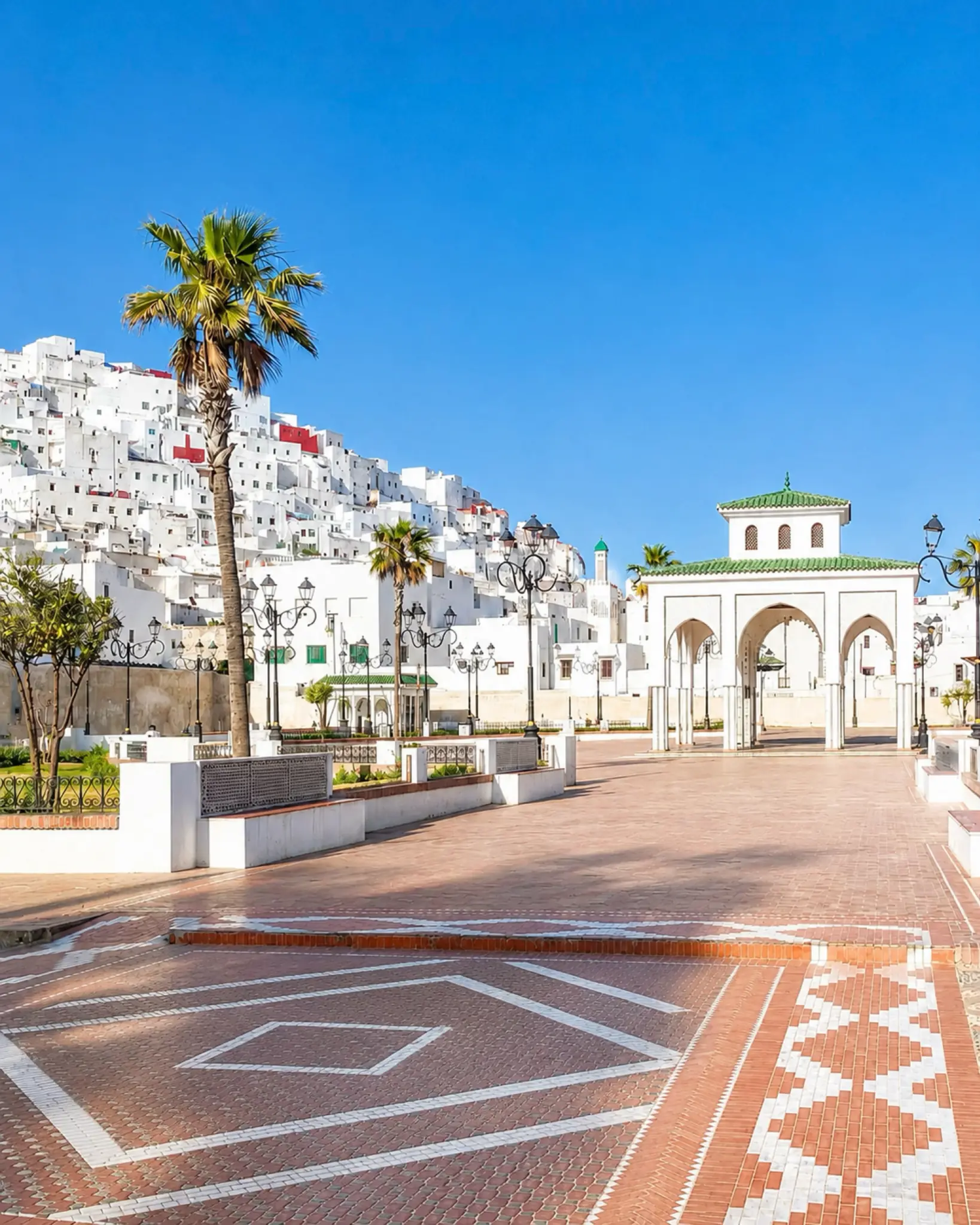
Cabo Negro becomes richer when it is connected to Tétouan. The city gives the coast a deeper frame: white architecture, medina rhythm, craft memory, food culture, mountain proximity and the northern Moroccan sense of moving between city and sea.
Use Tétouan to widen the day before or after the beach. Cabo Negro offers air, water and sunset calm; Tétouan restores density, detail and cultural grounding. Together they make the coast feel less like escape and more like a complete northern journey.
City and coast orientationTétouan cultural contextMartil and M'diq corridorMediterranean beach rhythmArchitecture and craft depthNorthern Morocco route planning