Skip to learning
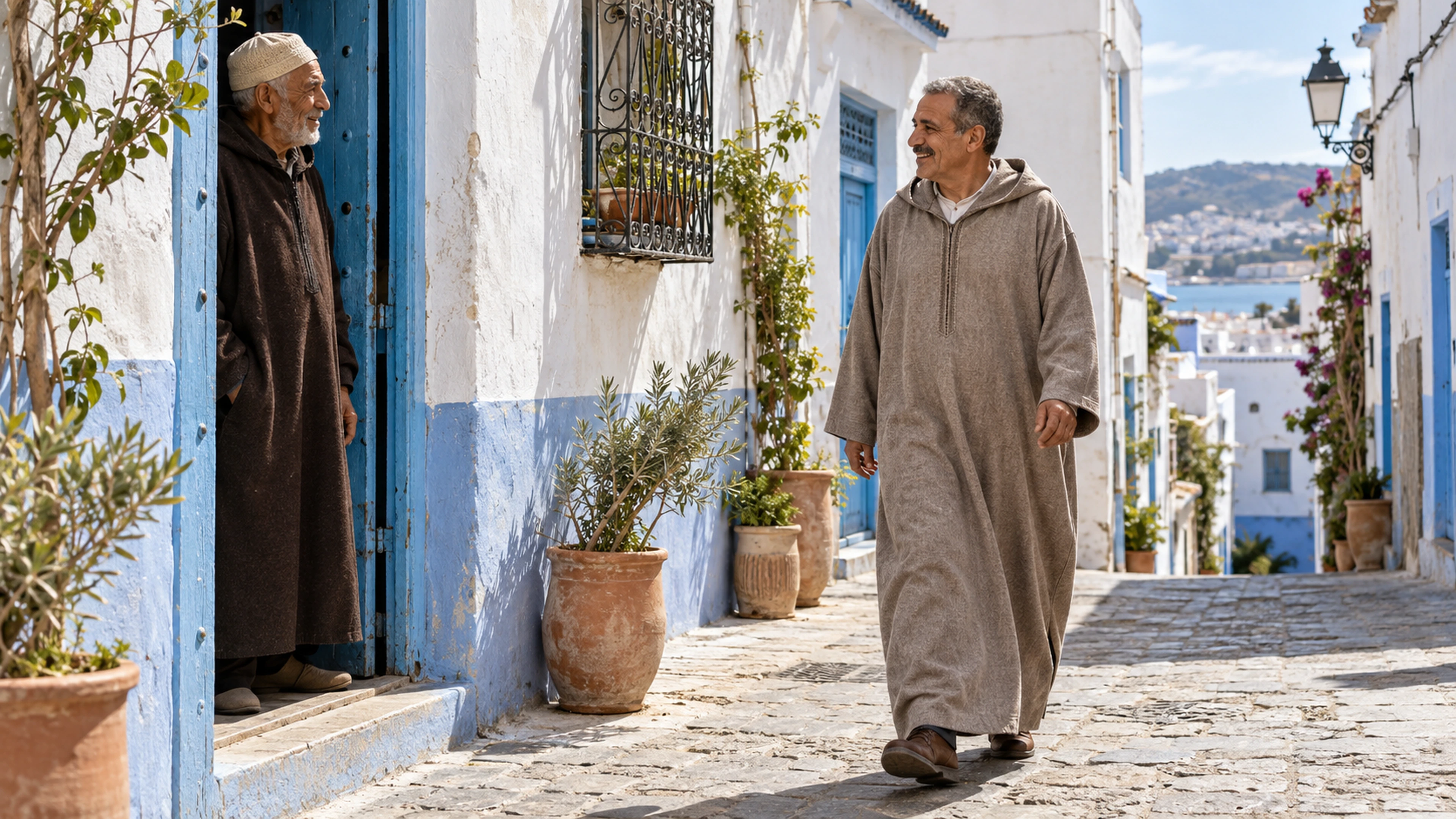
Cloth, movement and an everyday exchange between neighbours. Editorial illustration.
A familiar form, many lives

Djellaba & Everyday Identity

A hooded garment, a familiar silhouette and many individual choices. Look at the djellaba through cloth, construction and everyday context.

Exotic Morocco · 10 minute read
01 / A way into the story

One form, many ways of wearing it.

The djellaba is a long, loose garment commonly recognised by its hood. It is worn in varied materials and styles, by different people and in different settings. The silhouette is a starting point for description, not a shortcut to the wearer’s identity.

A British Museum jellaba from Msemrir, acquired in 1969, provides one documented example in woven wool. Its record is valuable because it is specific. It should not become a claim that every djellaba has the same material, origin or use.

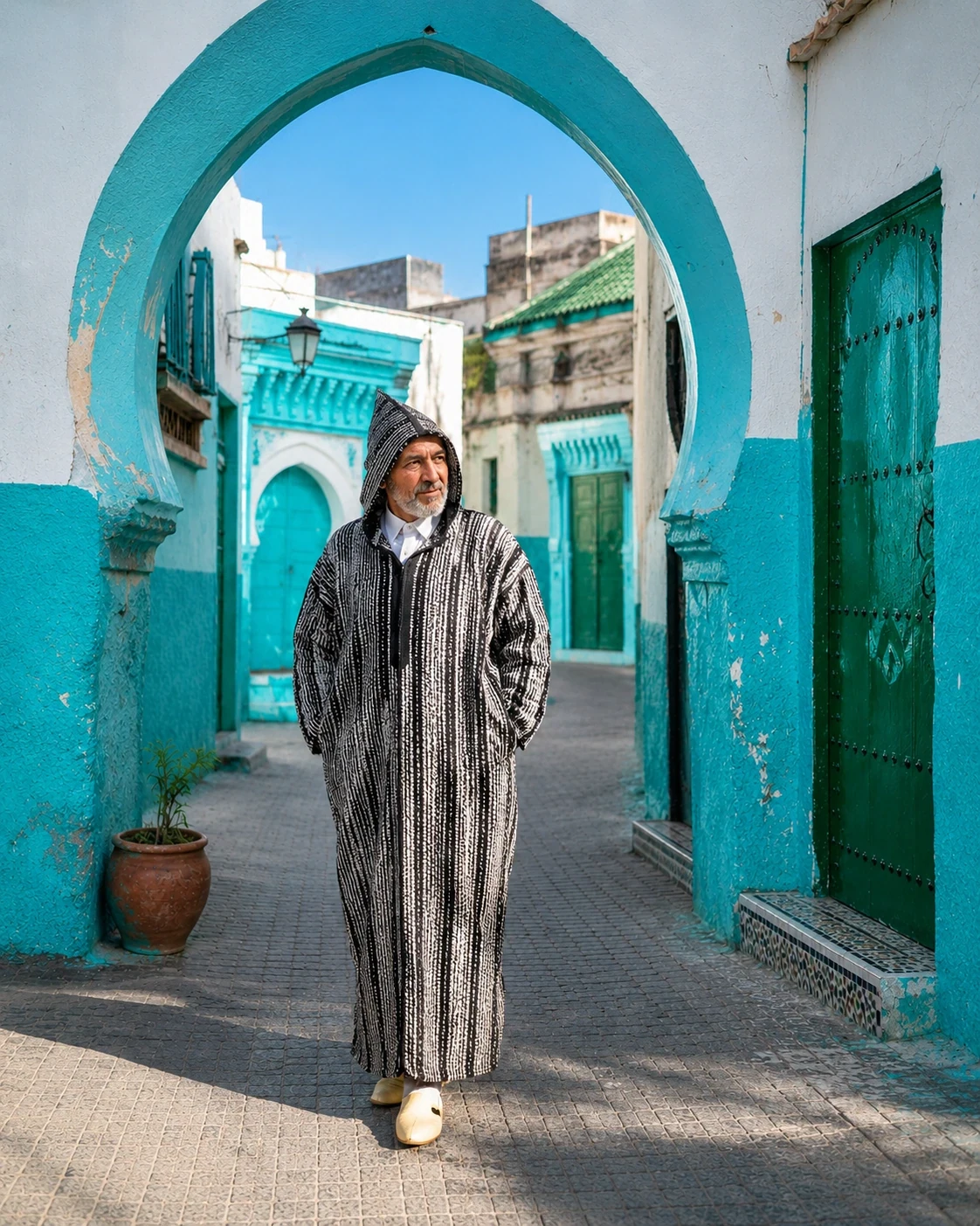
A striped djellaba in a medina street.
THE SUBJECTA familiar form, many lives
THE APPROACHPlace. Practice. People.
THE CONNECTIONFind it in Morocco ↗
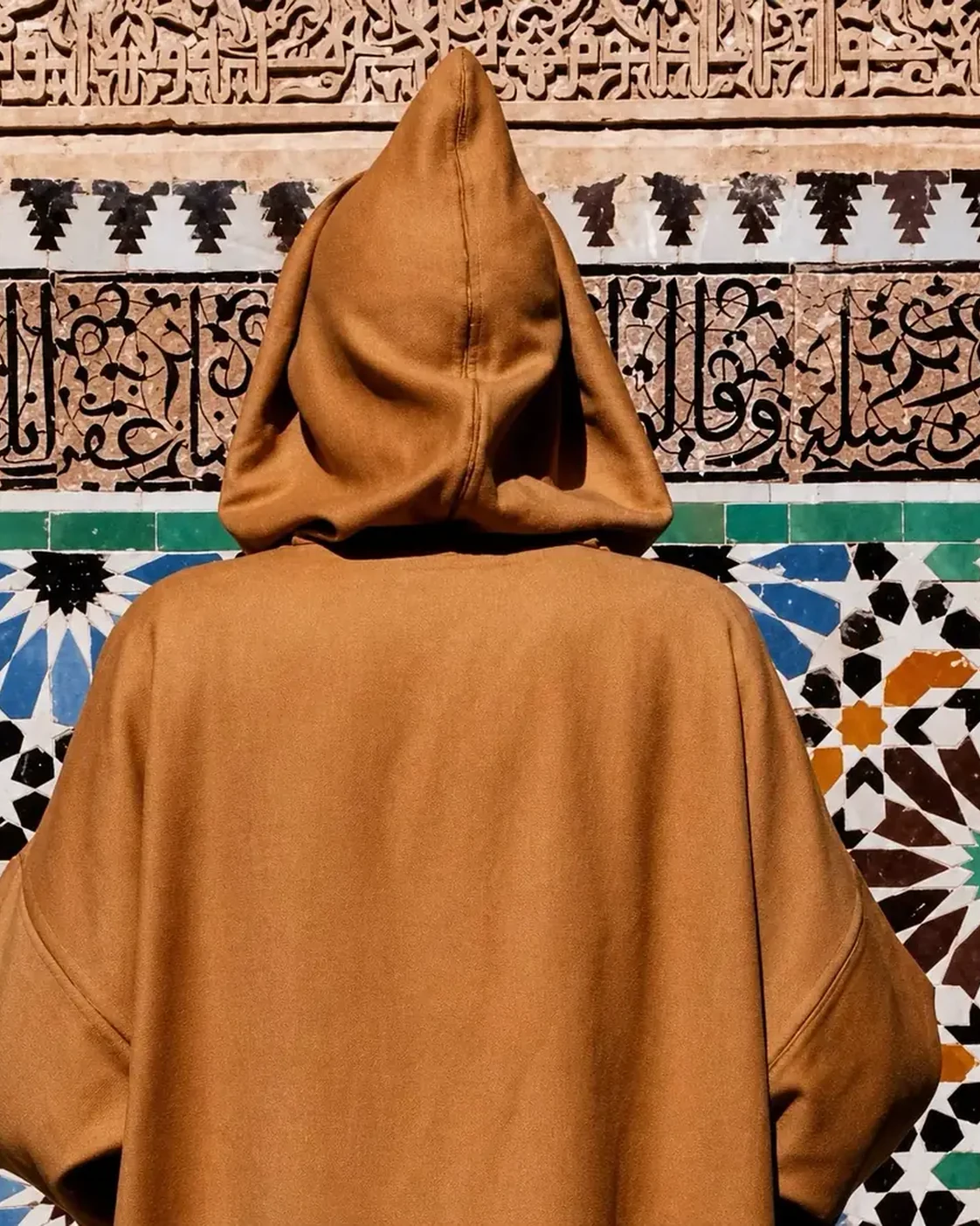
The hood and shoulder line of a djellaba.
02 / The deeper context

An everyday garment.
Many individual choices.

The djellaba is a long, usually hooded outer garment worn in varied forms. Its recognisable outline can make it seem immediately familiar, but the details reward attention: fabric weight, sleeve shape, fastening, trim and the relationship between the hood and the body. These choices affect how it moves and how it is used.

A wool example documented in a museum and a light contemporary garment on a city street need not answer the same purpose. Season, occasion, region and personal taste all matter. Men and women wear djellabas, and there is no single version that can stand for all contemporary practice. A garment can be ordinary daily clothing without carrying the theatrical meaning that a visitor’s camera gives it.

Identity is therefore best approached through context. A djellaba may connect a person to a familiar form while also expressing a very particular preference. It should not be used to infer someone’s profession, beliefs, social status or life story. The wearer is more than the garment, even when the garment opens a useful conversation.

03 / From an idea to everyday life

Notice the details that shape use.

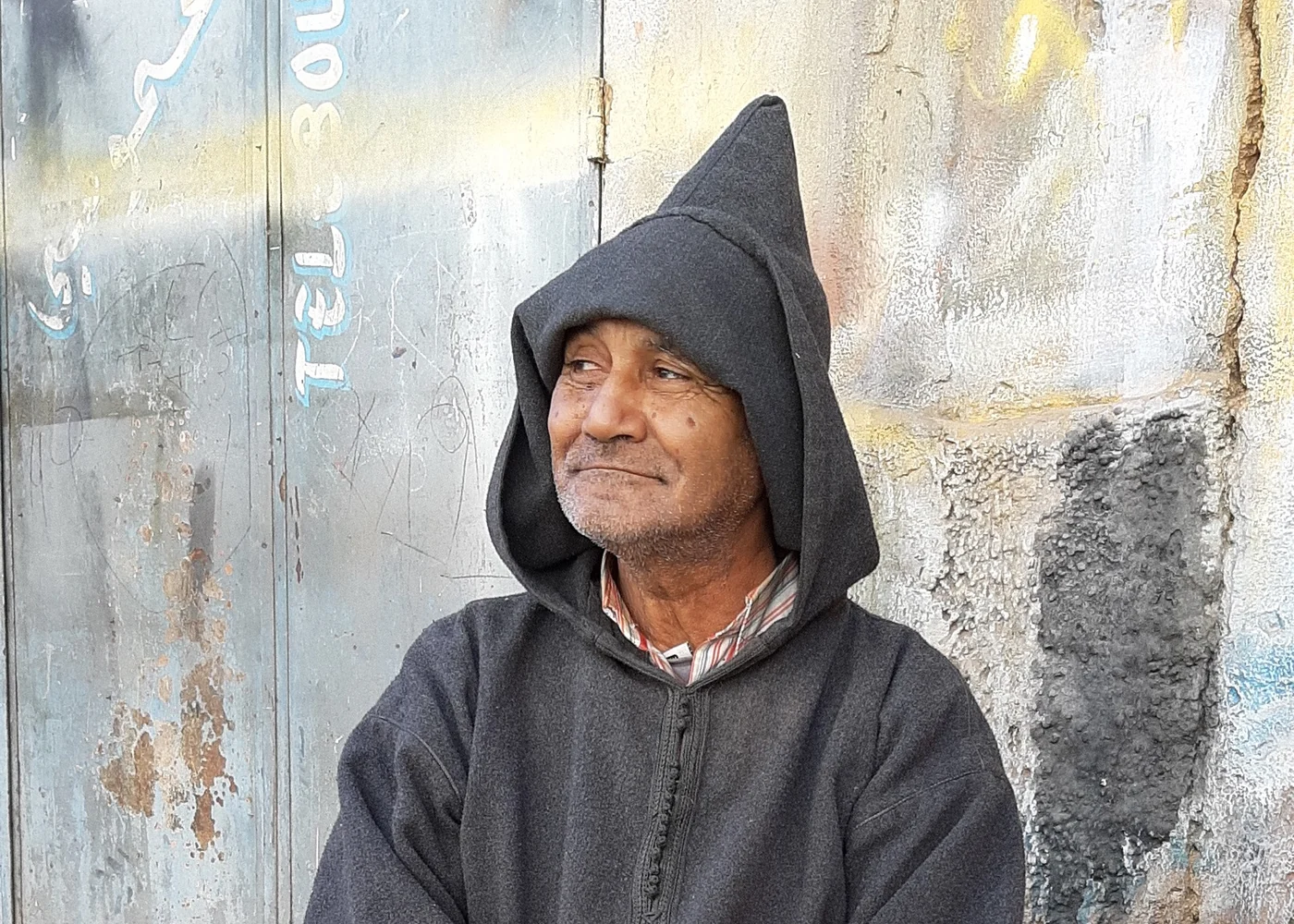
A seated wearer shows how a loose garment folds and moves differently from one on a display form. Describe the visible construction and drape without turning posture or clothing into a story about a person’s beliefs or occupation.

A man wearing a djellaba, photographed in Morocco.
01

Fabric and season

Compare a substantial woven wool example with a lighter fabric. Their visual weight and drape differ, but a photograph cannot establish the fibre by itself. A maker, label or collection record can provide the material information needed for a reliable comparison.

02

The hood and the opening

The hood is a defining feature of many djellabas, but its shape and use vary. Look at how it joins the shoulders and how the front opening is finished. Those details belong to the construction of the garment, not merely to its silhouette in a distant street scene.

03

Length, volume and movement

Notice how the garment sits when a person walks, works or rests. Practical use can reveal more than a posed image. Observe without intruding, and ask permission if you want to make the person the subject of a photograph or conversation.

A closer understanding

A familiar form.
Many everyday choices.

The hood makes a djellaba recognisable. Fabric, construction and the wearer’s purpose make a particular one meaningful.

The material

Weight changes the garment’s role.

A densely woven wool garment and a lighter fabric version can share a broad form while feeling very different in use. Drape, warmth, texture and movement depend on material and construction. Colour is only one part of the choice.

The British Museum records a woven wool jellaba from the 1960s, acquired at Msemrir in the High Atlas. Its documented place and material make it a useful specific example. It should not be expanded into a claim that every djellaba in Morocco has the same fabric or regional history.

The cut

The hood belongs to the whole shape.

Look at how the hood joins the neckline, how the sleeves sit and how much room the garment allows for movement. These relationships explain more than a detached close-up of decoration. The body’s movement gives the cloth its changing silhouette.

A museum display can make construction easier to study, while a street photograph reveals use. Neither view is complete on its own. Together they show why clothing should be read as something made for a person, not only as an object laid flat.

The wearer

Familiar clothing is not a fixed identity code.

A djellaba can be part of ordinary dress or selected for a particular occasion. People combine it with other clothing and footwear according to preference and circumstance. Its visibility does not give an observer permission to assign the wearer a complete social identity.

The most informative explanation may be simple: comfort, habit, weather, an event or a valued piece of tailoring. Everyday reasons belong in cultural interpretation. They prevent a living garment from being reduced to a costume in a visitor’s photograph.

Carry this with you

Compare material, movement and use. A recognisable silhouette becomes a much richer story when all three are present.

04 / The visual chapter

Look at the cloth in use

Move between the close detail and the wider setting. Each view adds another part of the story.

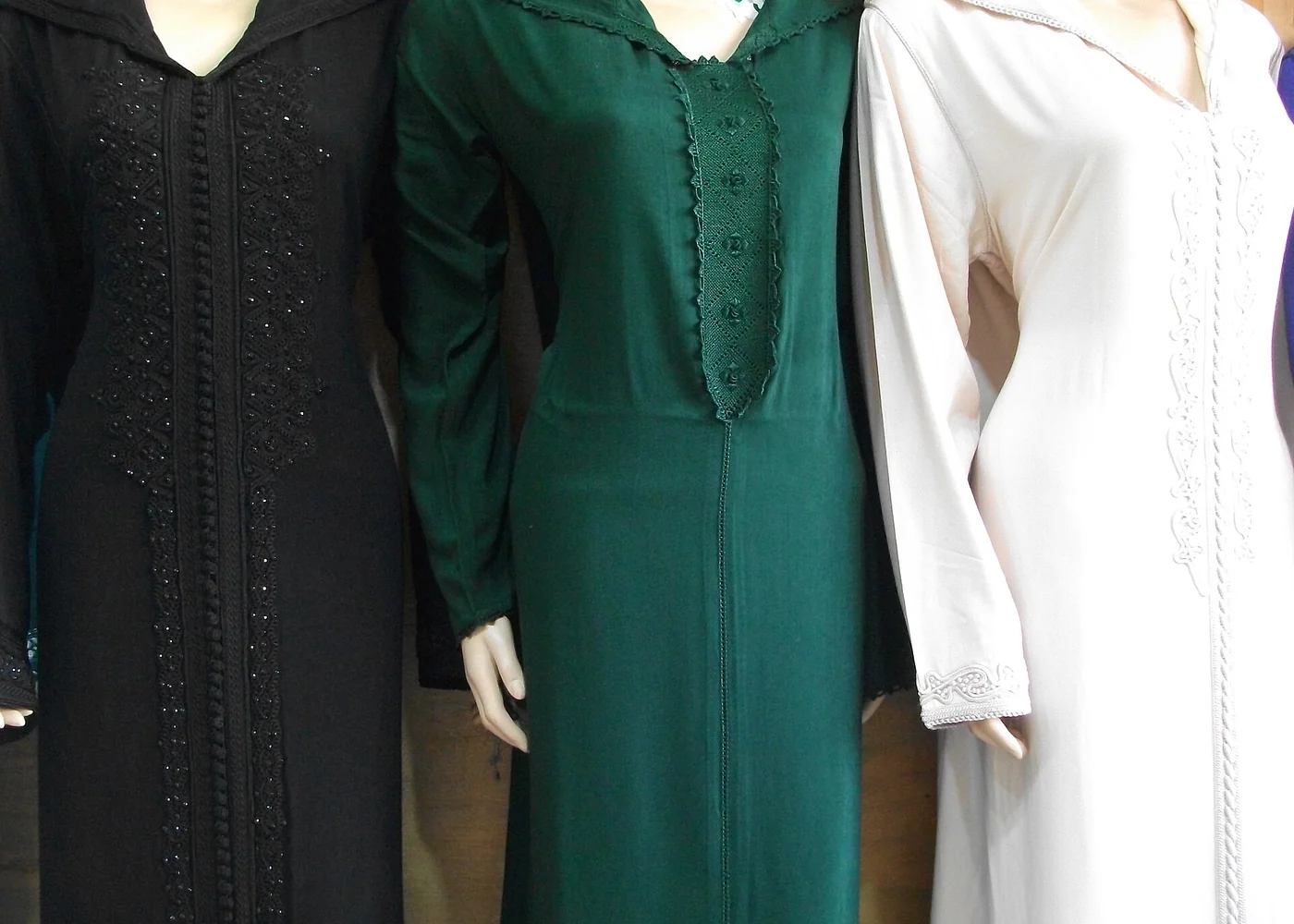
Djellabas displayed on forms in a shop.
01 / A closer look

Variation within a form

A shop display makes differences in colour, edging and fabric visible. Ask about material and construction rather than assuming that a plainer surface means less skill. Decoration and everyday practicality answer different needs.

Djellabas displayed on forms in a shop.
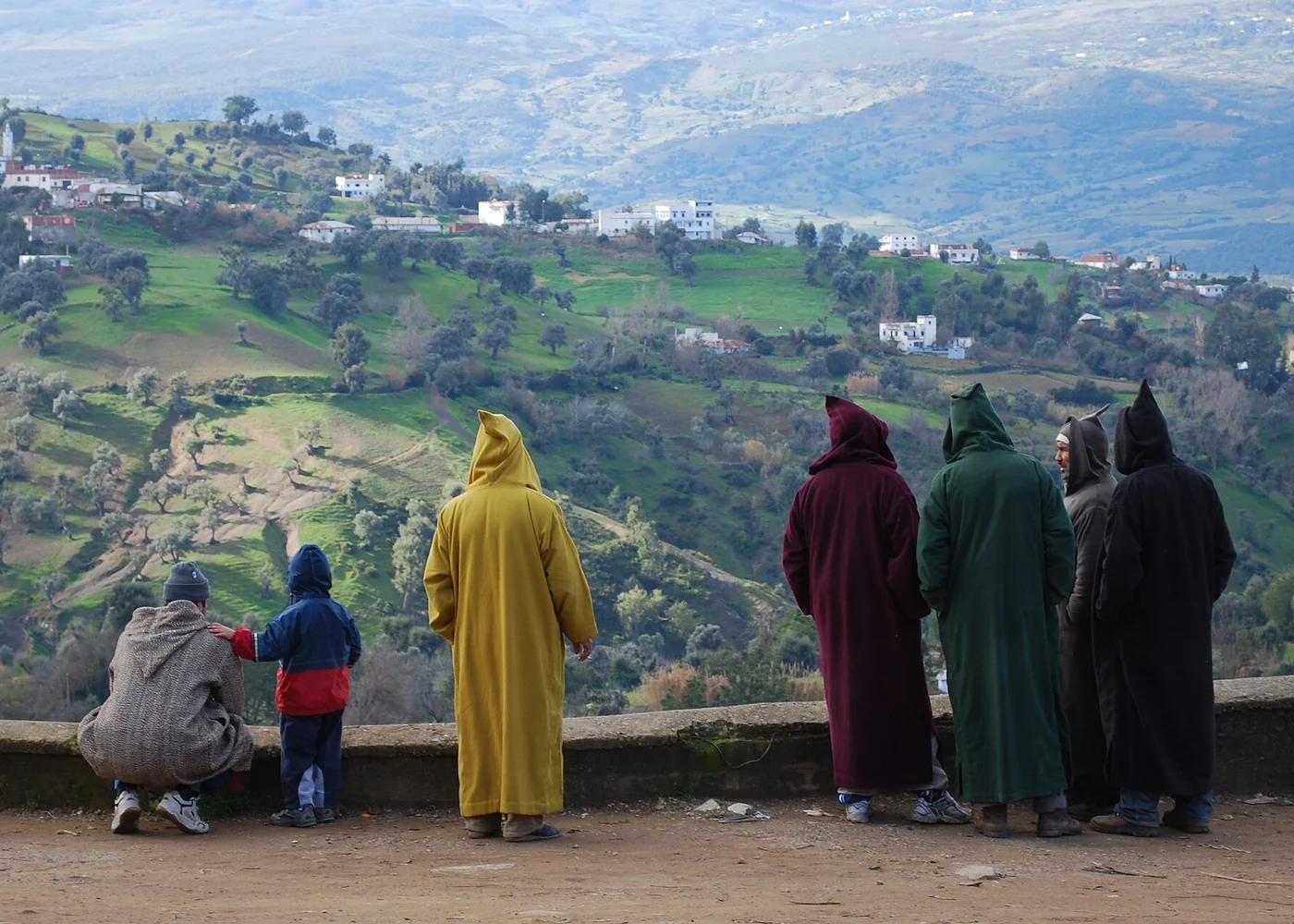
Men wearing djellabas at a market in Chefchaouen.
02 / A closer look

A particular place and moment

A group at a Chefchaouen market places garments within a setting of trade and conversation. The photograph is evidence of those people at that moment. It cannot tell us what every resident wears, or what the same people wear elsewhere.

Men wearing djellabas at a market in Chefchaouen.
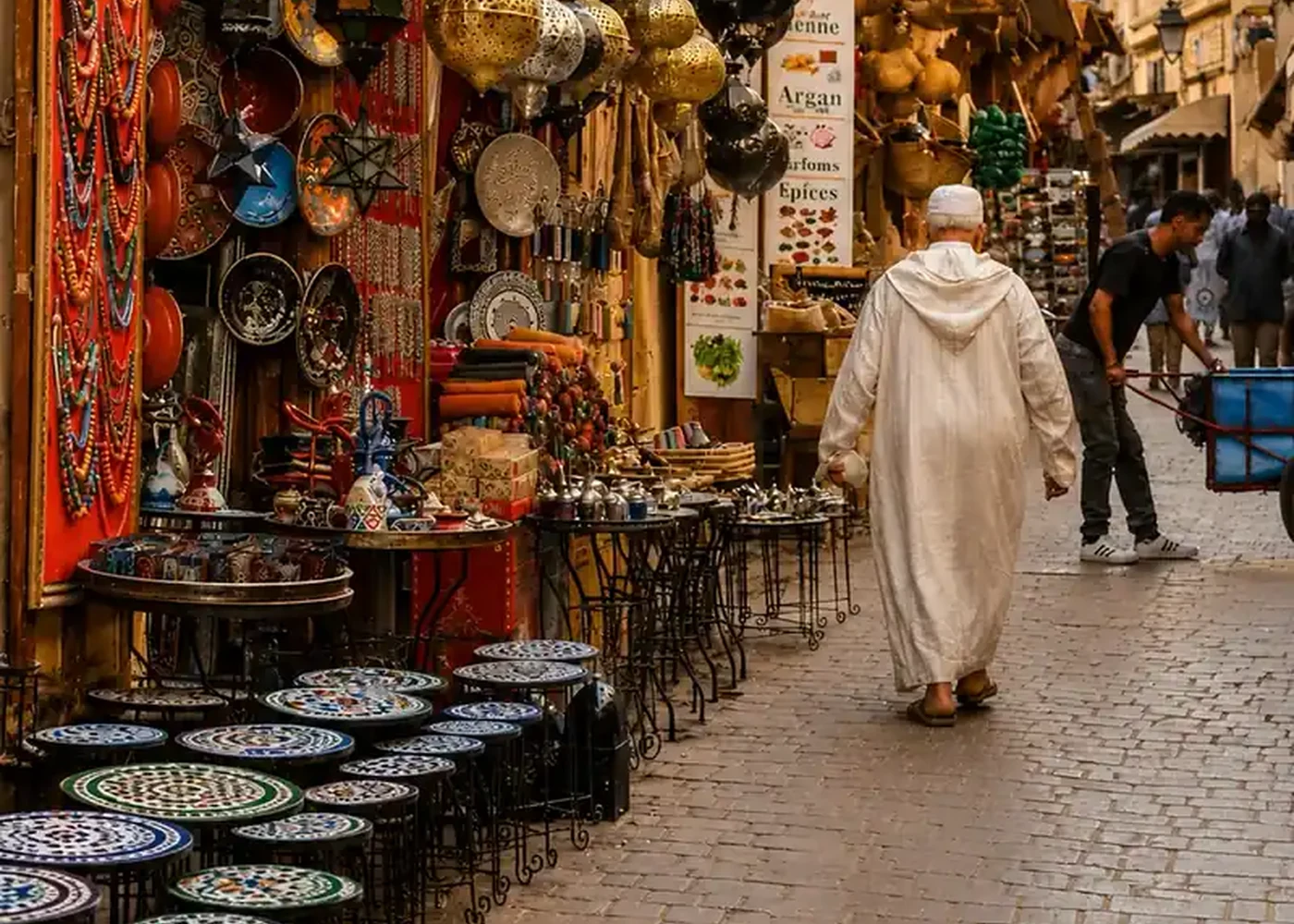
A djellaba within the movement of a commercial lane in Fez.
03 / A closer look

Continuity through choice

Living dress traditions change as people choose new fabrics, combinations and contexts. Wearing a djellaba beside contemporary shoes or accessories is part of that present-tense life. It does not need to be judged against an imagined frozen past.

A djellaba within the movement of a commercial lane in Fez.
05 / More than one perspective

Look beyond
the first impression.

Perspective 01

Everyday and occasion

A familiar clothing form can be adapted through fabric, colour and finishing. A more elaborate example does not make a simple one culturally incomplete. Their uses may simply be different.

Perspective 02

A documented historical example

Museum garments preserve evidence about construction and materials at a particular time and place. Their labels need to be read carefully: an acquisition date is not necessarily a production date, and one object cannot represent every region.

06 / Make the connections

Four details to read

Use these ideas to connect what you notice with the materials, people and histories behind it.

01

The hood

The hood is a useful identifying feature. Notice how it is cut and attached, and how it falls when not worn. Do not assume that its presence gives one universal explanation of use or meaning.

02

The cloth

Weight, texture and weave affect drape. Wool is documented in particular examples, but other materials also occur. Ask what the garment is made from rather than identifying fibre by colour alone.

03

The finishing

Edging, seams, closures and stitching shape how a garment works. Look closely at practical points such as cuffs and openings. Small decisions can be important even where decoration is restrained.

04

The setting

A market, workplace, family event and formal occasion give different contexts for reading dress. Let the person and occasion remain part of the account, instead of presenting a garment as a timeless uniform.

07 / A more useful conversation

Let the wearer remain a person

Clear answers for the questions that often come next.

Is a djellaba worn only by men?

No. Djellabas are worn by women and men, with a wide range of cuts, colours and finishes. A particular museum example or photograph does not represent every wearer.

Is every djellaba heavy wool?

No. The documented wool example is one material choice. Fabric and weight vary with intended use and preference; ask about the individual garment.

Does wearing one make someone more authentically Moroccan?

Clothing is not a test of belonging. People can choose inherited forms, contemporary fashion or combinations of both. A garment deserves attention without becoming a verdict on identity.

A thought to take with you

Keep looking. Keep learning.

Look for the individual decisions inside a familiar outline. A fabric, a fastening or the way a garment is worn can reveal more than a broad label, while leaving the wearer room to explain their own relationship to it.

The Exotic Morocco library

Continue at your own pace.

This Learn story is free to explore. Find this subject in the guide library, with each title’s current availability clearly shown.

Explore the guide library ↗
Sources & further reading

Read the evidence

  1. British Museum · A woven wool jellaba from Msemrir
  2. UNESCO · Moroccan caftan: art, traditions and skills
  3. Moroccan National Tourism Office · Traditional craftsmanship revisited

Source review: September 2026. Looking exercises and learning prompts are original Exotic Morocco editorial suggestions. Regional practice and personal experience vary.

Image acknowledgements

  1. Hero: Commissioned AI-generated editorial illustration by Exotic Morocco with OpenAI ImageGen. Imagined scene, not documentary evidence of named people or a specific event.
  2. Related preview: PlateMakerMarrakech.jpg — Elgaard. CC BY-SA 4.0. Cropped/resized; original licence retained.
  3. Related preview: Smith's Quarter at Medina of Fés, Morocco.jpg — Bikerhiker75. CC BY-SA 4.0. Cropped/resized; original licence retained.
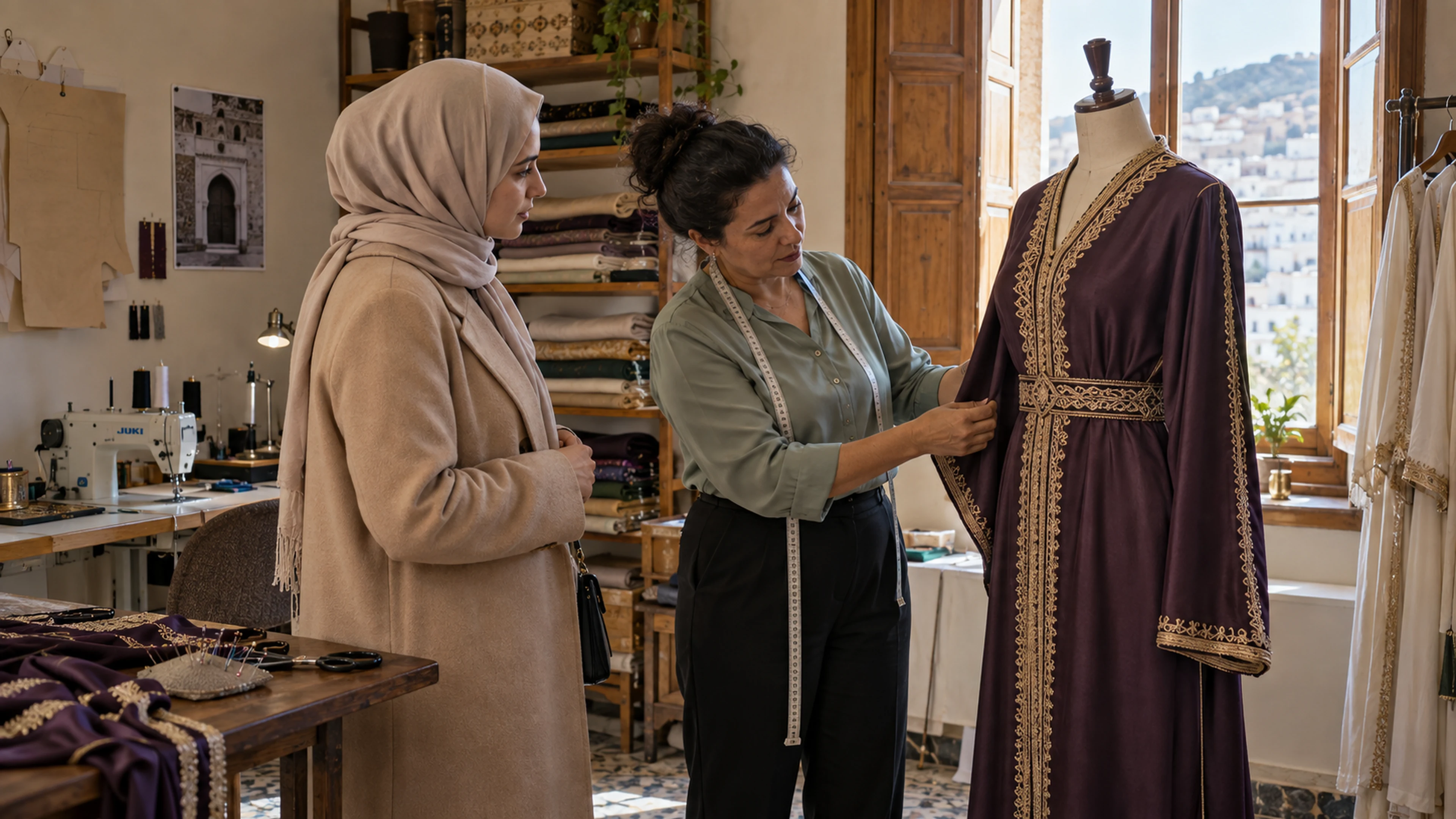
  4. Related preview: AI-generated editorial illustration by Exotic Morocco, made with OpenAI ImageGen. It represents a scene; it is not documentation of identifiable people or a recorded event.
  5. Portrait: A striped djellaba in a medina street. — Exotic Morocco’s existing image collection.
  6. Story-1: Moroccan djellaba.jpg — Amine Charnoubi. CC BY-SA 4.0. Cropped/resized; original licence retained.
  7. Story-2: Djellabas ohne Stickereien.jpg — ArnoldBetten. CC BY-SA 4.0. Cropped/resized; original licence retained.
  8. Story-3: Men in Djellabas, Chefchaouen souk, Morocco.jpg — Honza Chovanecek. Public domain. Cropped/resized; original licence retained.
  9. Chapter: The hood and shoulder line of a djellaba. — Exotic Morocco’s existing image collection.
  10. Gallery: A djellaba within the movement of a commercial lane in Fez. — Exotic Morocco’s existing image collection.
  11. Hero: A djellaba within an everyday roadside landscape in Morocco. — Exotic Morocco’s existing image collection.

Destination and related-story thumbnails intentionally identify their linked pages. Principal story images are selected individually for this Learn page.