The drape
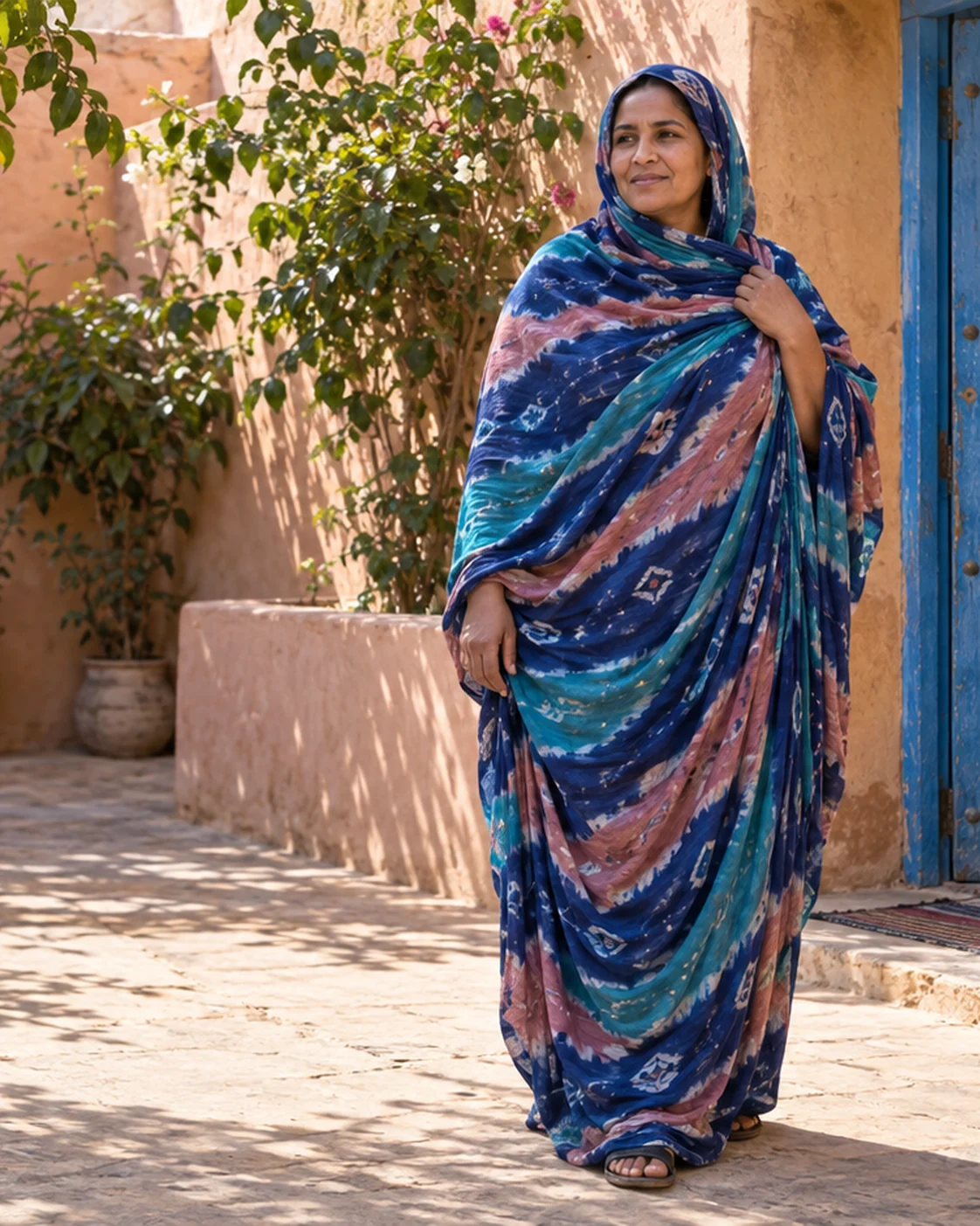
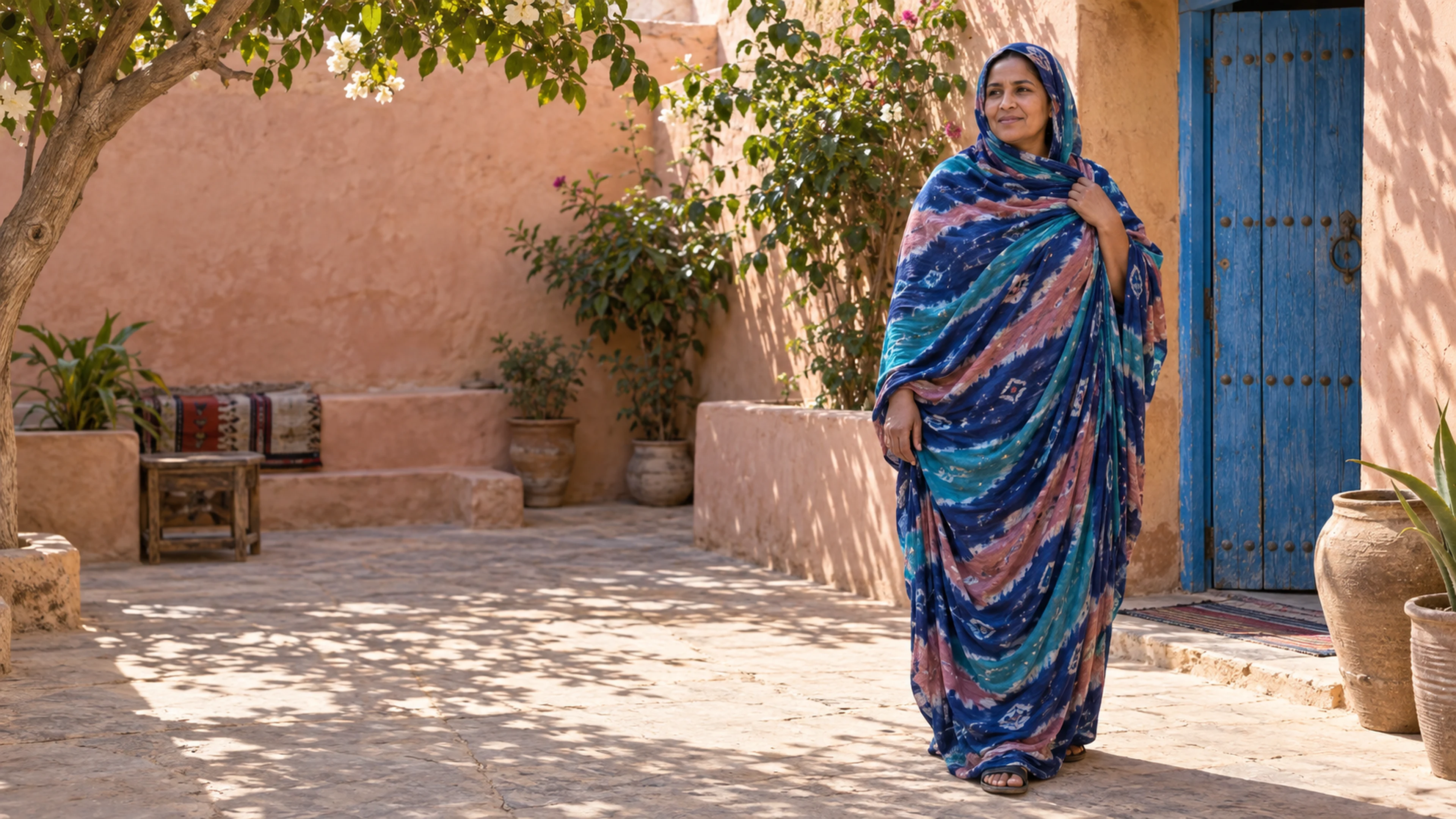
Notice how the cloth travels over the head and around the shoulders. Folds can be adjusted as a person moves. The silhouette differs from a sewn sleeve and from a separate scarf worn over a tailored robe.

The melhfa · Cloth, drape & everyday choice
A continuous length of cloth becomes a garment through wrapping. Explore the melhfa through movement, material and its Sahrawi cultural context.
Look a little closer ↓01 / The starting point
The melhfa is a broad piece of cloth wrapped around the body and over the head. Its form comes from the way the cloth is arranged, held and allowed to fall, rather than from the cut of a fitted robe.
It is associated with Sahrawi women and a wider Saharan cultural world that extends across modern borders. Keep that context in view without treating a wrap as proof of someone’s nationality, beliefs or personal history.
Print, fibre, weight and the way a person wears the cloth create considerable variety. A bright patterned melhfa and a quieter one can both belong to daily life. Ask about the actual fabric and its use rather than assuming that a colour identifies a fixed occasion.
02 / Read the details
Watch the relationship between fabric and movement before searching for a label.
Notice how the cloth travels over the head and around the shoulders. Folds can be adjusted as a person moves. The silhouette differs from a sewn sleeve and from a separate scarf worn over a tailored robe.
Patterns may be printed or otherwise applied; a photograph alone cannot identify the process or fibre. Ask how the cloth was produced, what it contains and how it feels in the setting where it will be worn.
Clothing choices belong to individuals. Age, taste, comfort and occasion can influence a selection, but an observer should not turn those possibilities into a confident biography of the wearer.
03 / A closer look
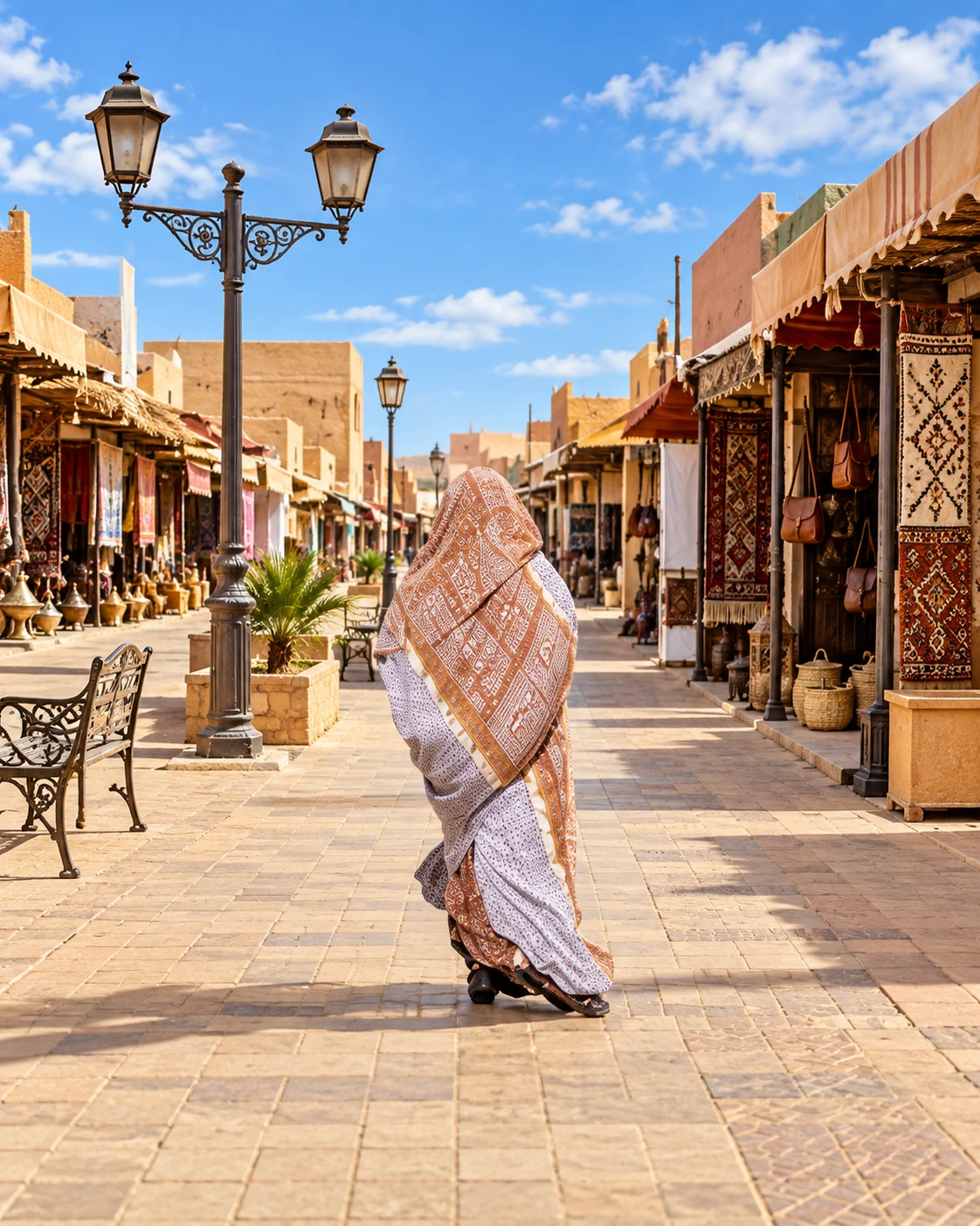
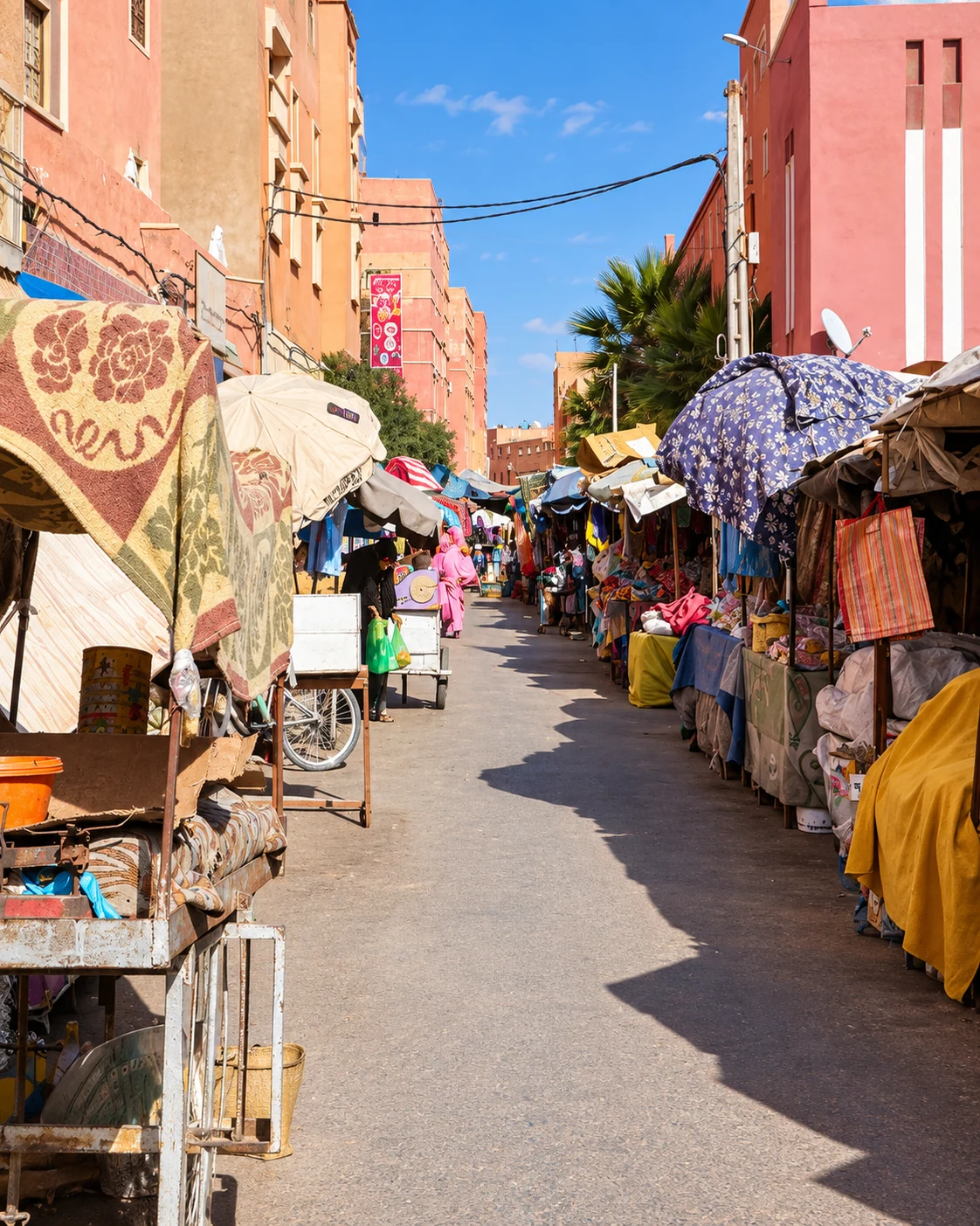
A market offers a different perspective from a desert postcard. Here cloth is handled, compared, sold and chosen. Colour exists beside shop shutters, ordinary shoes, bags and the other practical details of a day.
Guelmim is a useful place to connect this chapter with a city visit. Build in time to walk and look, but treat textile shops as working businesses. Ask before touching folded cloth or photographing customers.
If you want to understand a particular wrap, a conversation with its wearer or a knowledgeable seller is more useful than guessing from distance. Accept that a person may prefer simply to get on with their day.
04 / Culture in context
The melhfa should not be reduced to dunes, camels or a timeless nomadic image. Contemporary wearers live in varied settings and make their own choices about clothing.
Likewise, not every draped North African garment is a melhfa. Other named wraps have their own histories. Keep the name, place and account of a particular example together instead of placing unlike garments under one romantic label.
The same cloth can look different when spread out, gathered or worn. Begin with its dimensions, weight and the way light passes through it, then consider the drape. A flat sample explains colour and pattern; a worn view explains how those elements move in relation to the body.
Let a wearer decide whether and how to demonstrate the arrangement. Do not handle or adjust someone’s clothing for a photograph. In a shop, ask about the particular cloth, its care and the choices available. Those practical details keep the conversation grounded in an individual garment rather than turning a broad regional setting into an explanation for everything.
05 / Take the conversation further
Ask about fibre content, weight and the way it is made. Retail terms and qualities can vary. Request care advice for the actual cloth, especially when colours or surface finishes might react differently to washing.
Ask the person, not only a guide or seller. A colourful garment does not remove anyone’s privacy. A refusal should end the request without bargaining.
For an invitation or a specific social setting, ask your host. Buying a textile does not make its cultural meanings self-explanatory; learning how it is worn should be an offered exchange.
06 / Take the story into a place
The Exotic Morocco guide collection
The companion Melhfa guide is in preparation. Explore the collection for its current status and connected reading.
Find this guide in Shop07 / One wardrobe, many stories
Regional dress · Place without a single uniform
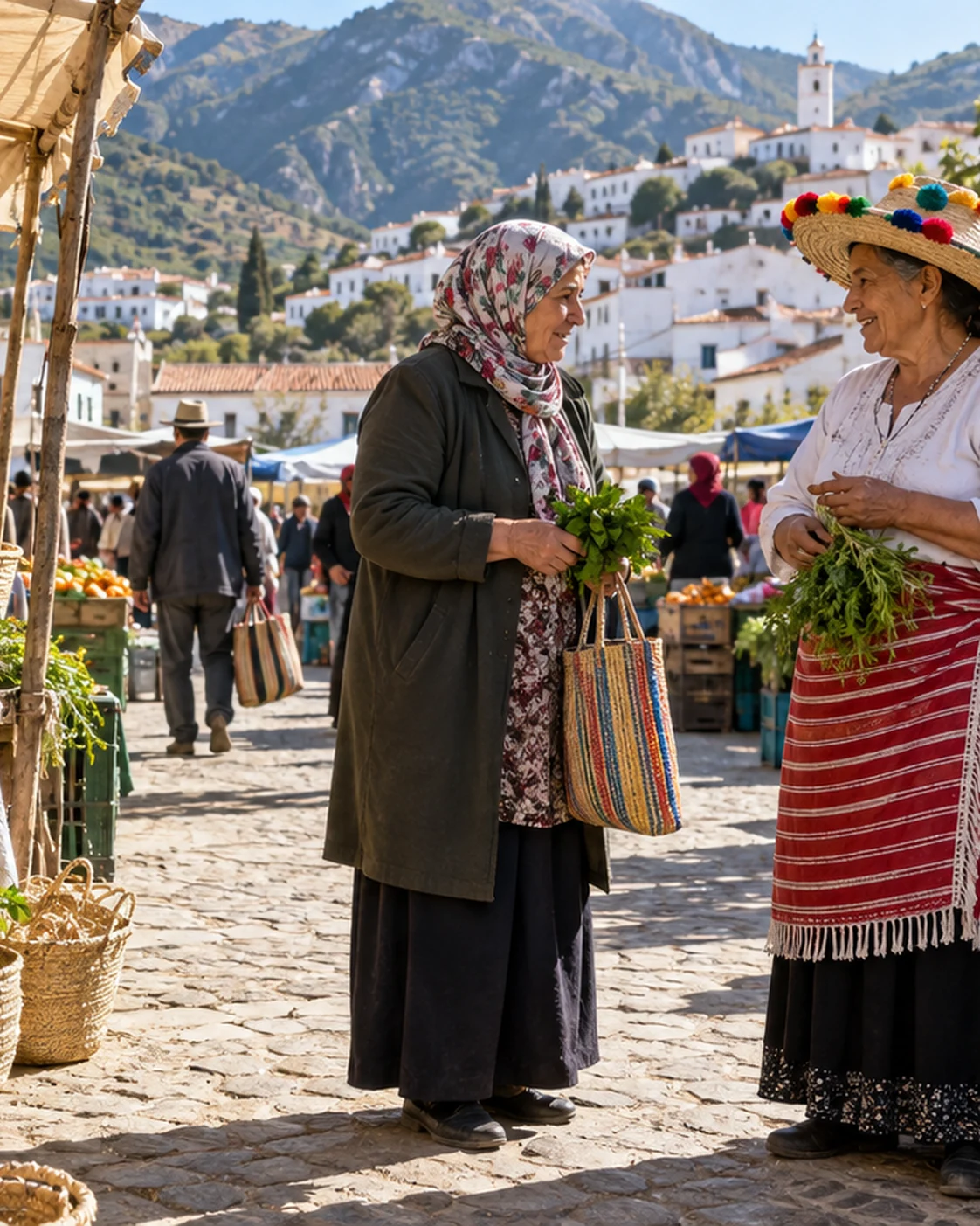
From northern woven wraps to Atlas textiles and city wardrobes, explore regional dress through specific examples and individual lives.
Explore the chapter ↗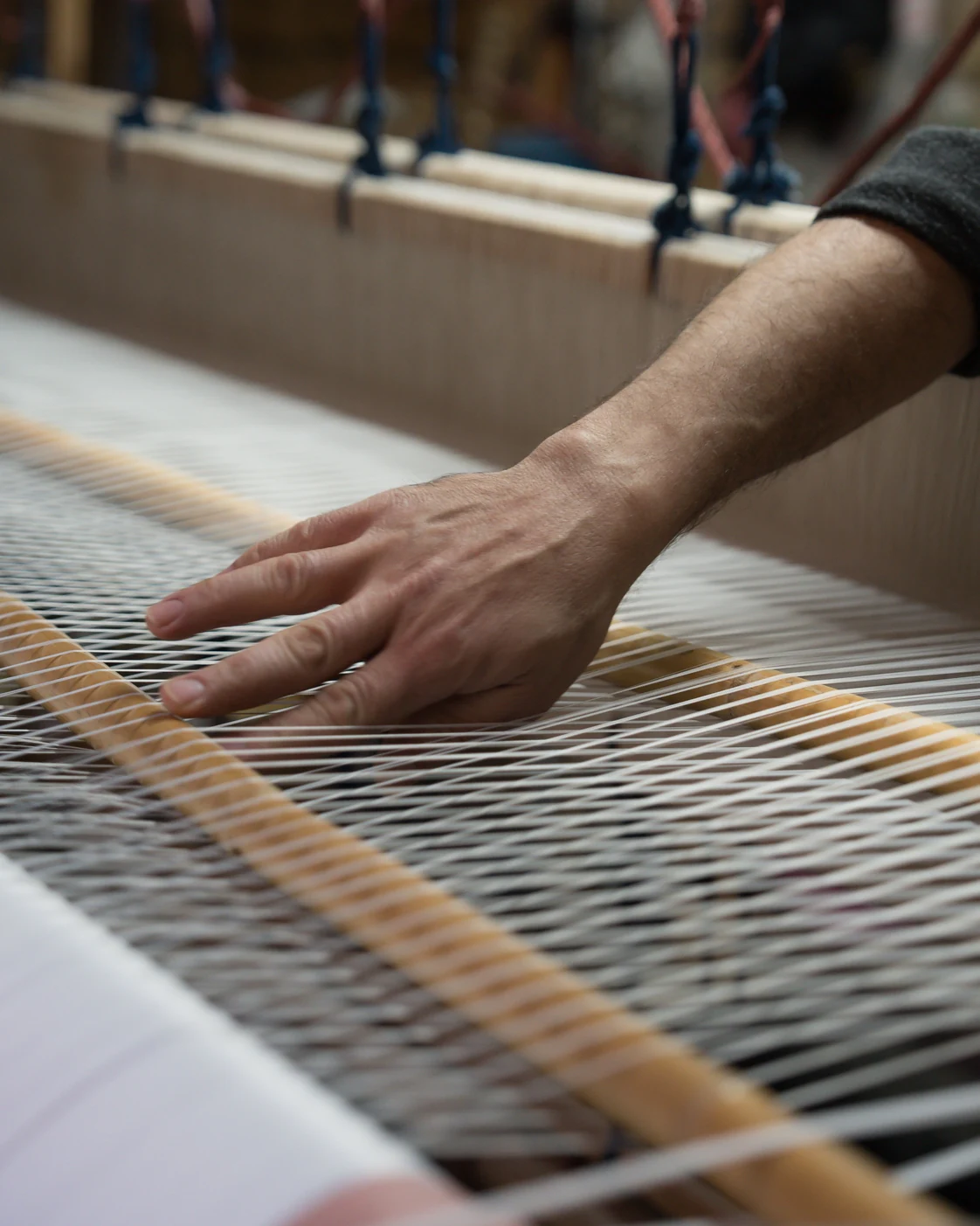
Textiles & weaving · Before cloth becomes clothing
Start at the loom. Explore the structure, weight and movement of cloth before following it into a garment or a home.
Explore the chapter ↗
Learn · Cultural context
A wider cultural vocabulary for looking at clothing.
Explore the chapter ↗
Ceremony & identity · The social life of clothes
An outfit can carry a family memory, mark an occasion and acquire new meanings as it passes from one life to another.
Explore the chapter ↗