The inner layer
It supplies the visible field beneath the opening. Check its own neckline, sleeves and hem, and how much of it is intended to show. It needs to sit comfortably on its own before another layer is added.

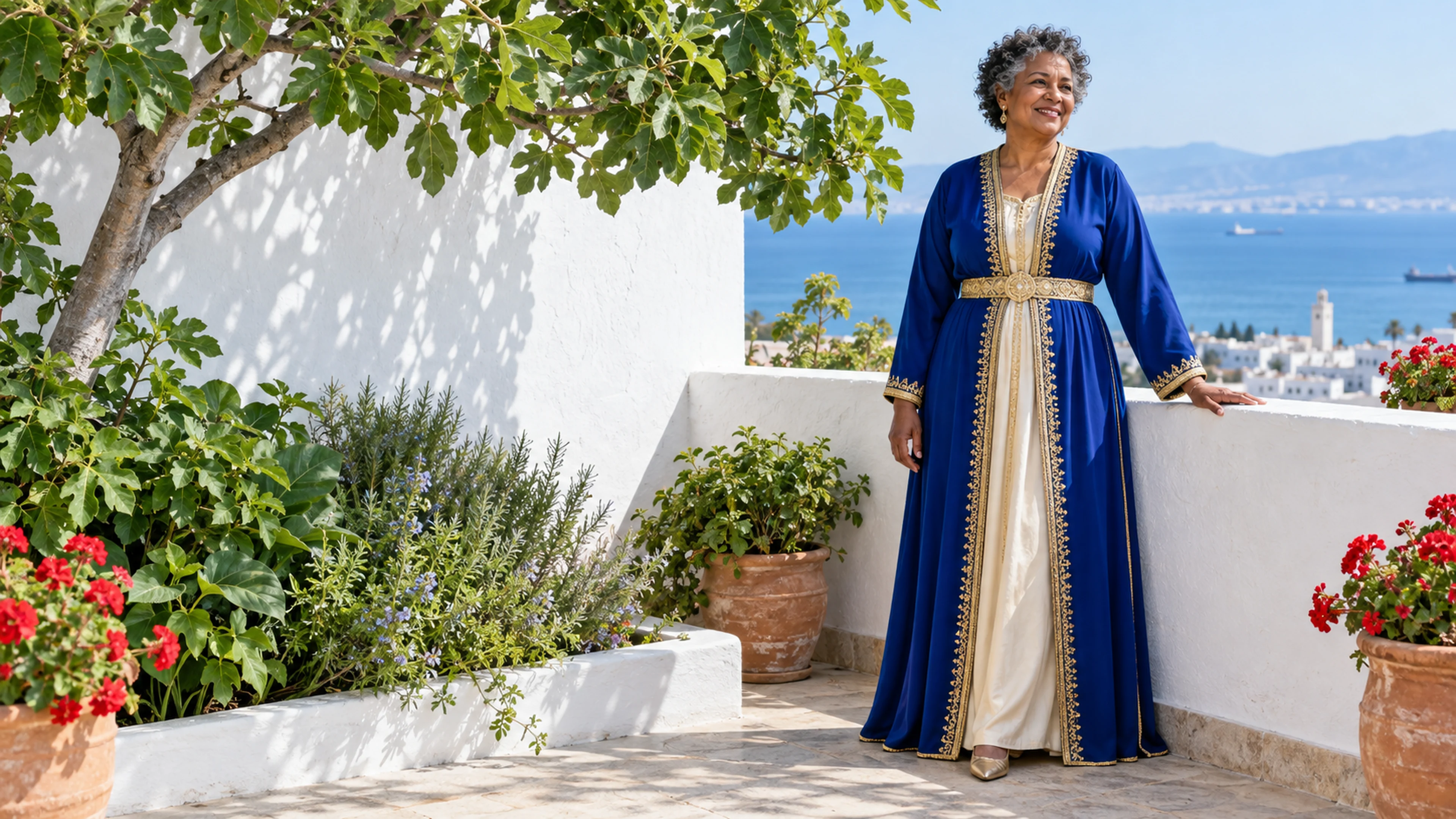
The takchita · An art of layers
An inner dress, an open outer layer and a belt: discover how separate elements become a composed Moroccan ensemble.
Look a little closer ↓01 / The starting point
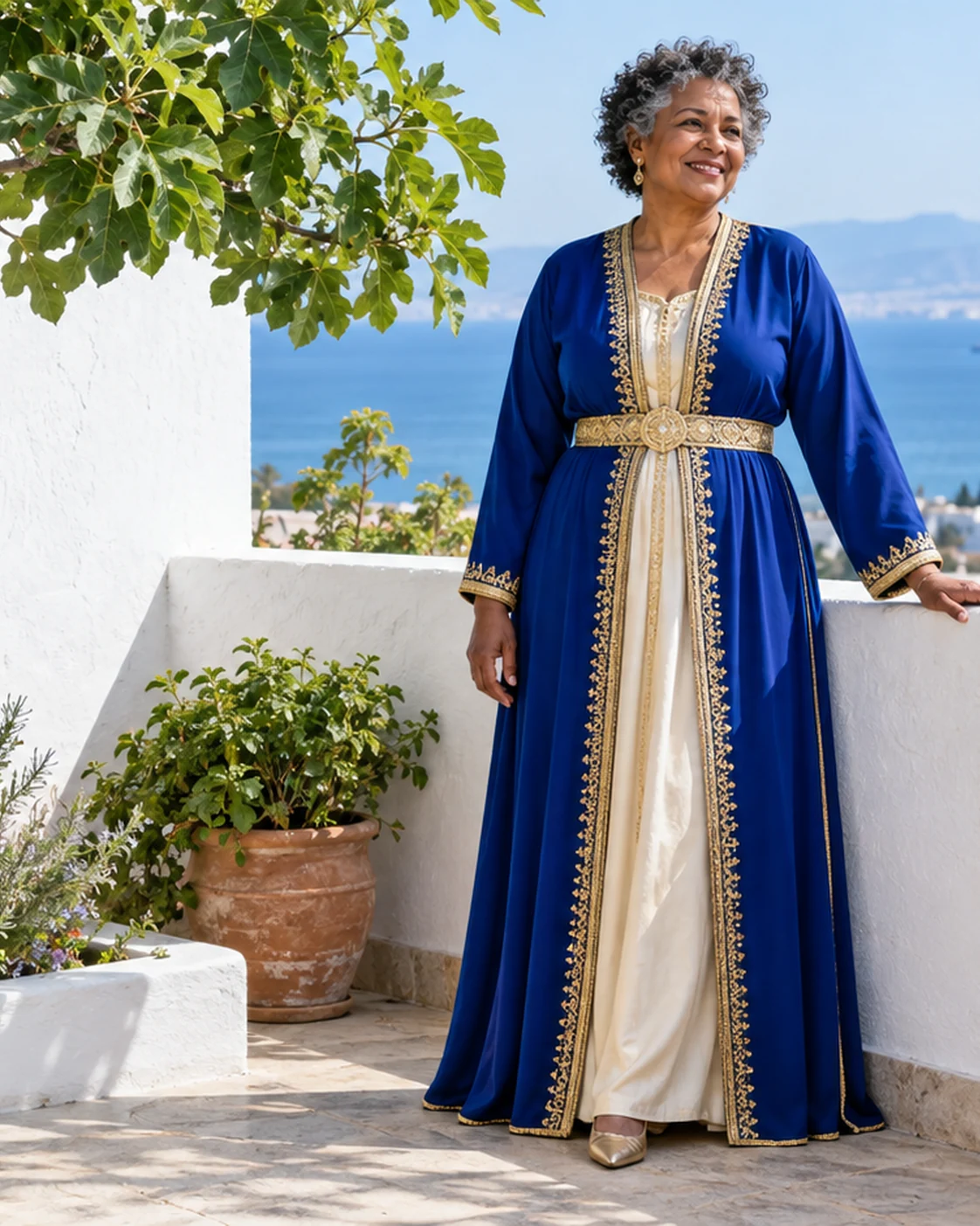
A takchita is easiest to understand in movement. The outer layer opens to reveal another colour or texture beneath; the belt gathers the ensemble without erasing the distinction between the pieces.
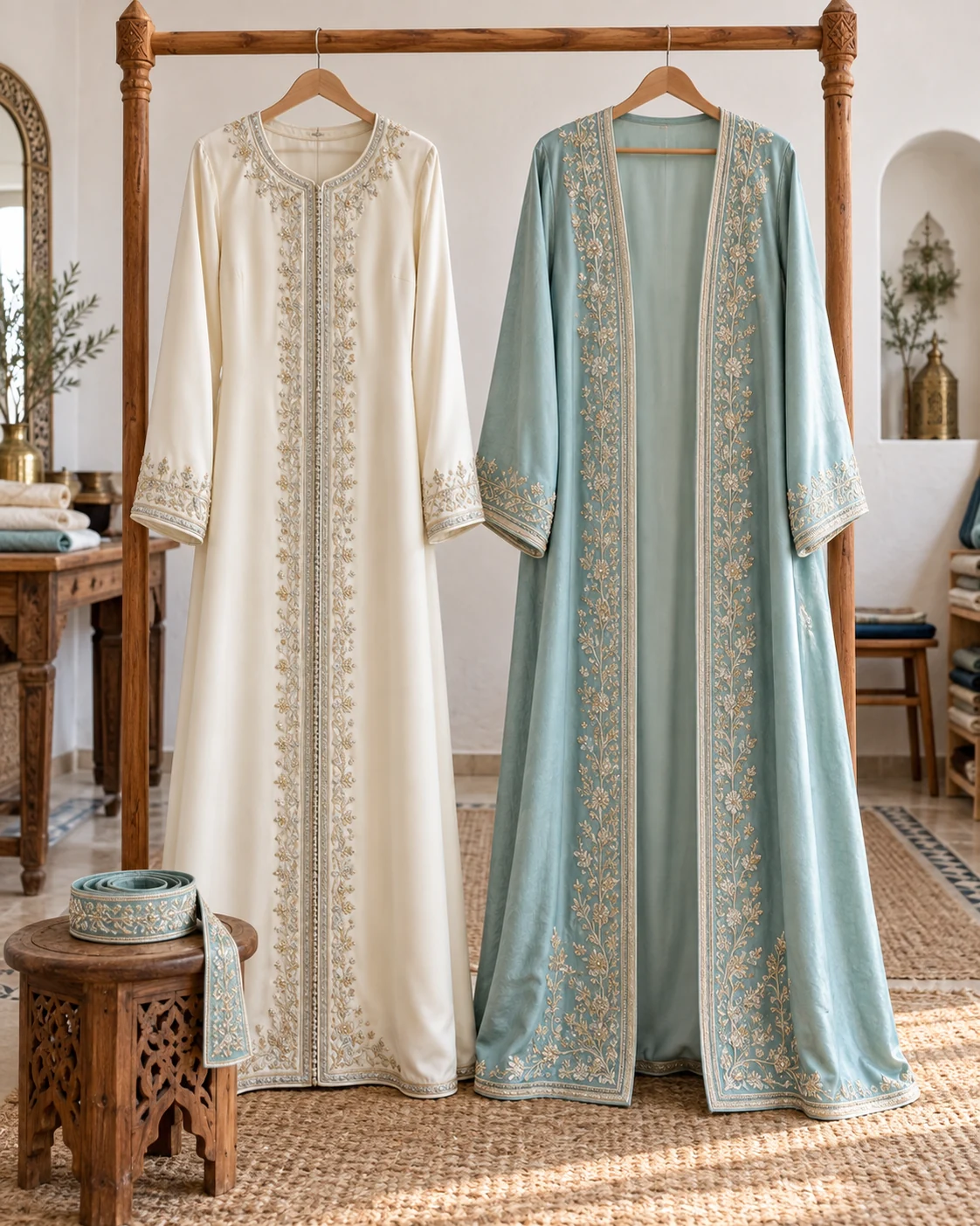
In a common contemporary form, an inner dress sits below an open overdress, with a belt at the waist. You may hear the inner layer called tahtia, the outer dfina or fouqia, and the belt mdamma. Usage and spelling vary, so let a maker’s explanation stay attached to the actual outfit.
The effect depends on proportion rather than an automatic rule of “more is better”. Two subtly different surfaces can create depth. A clear contrast can make the opening legible. The line of the belt changes how the fabric falls below it.
02 / Read the details
Treat each piece as useful clothing, then look at what happens when they meet.
It supplies the visible field beneath the opening. Check its own neckline, sleeves and hem, and how much of it is intended to show. It needs to sit comfortably on its own before another layer is added.
The opening frames the cloth below. Edging adds weight, so observe how the panels fall when the wearer walks or turns. An overdress should not need constant pulling to keep its shape.
The belt relates the two layers to the body. Ask whether it is included, adjustable and made for the specific ensemble. Comfort while sitting matters as much as the front view in a mirror.
03 / A closer look
Choosing two fabrics is a small composition exercise. Compare them in daylight if possible, then hold them together in folds rather than flat. The colour that looks quiet on a table may become the strongest element once it catches the light.
Ask the maker to explain weight, lining and transparency. A photograph cannot tell you whether one fabric catches on another, whether the belt is comfortable or whether the layers allow the movement you want.
Bring the occasion into the discussion without treating it as a rigid dress code. The wearer’s preferences, the setting and the host’s expectations are all more useful than a claim that every celebration requires the same look.
04 / Culture in context
Takchitas can form part of Moroccan celebration wardrobes, including weddings. That does not make every takchita a bridal garment or every wearer a bride. A guest, family member and bride may make very different choices.
Colour is particularly easy to over-interpret from a picture. Do not infer a universal meaning from blue, white or gold alone. The same palette can belong to different tastes and situations; the person wearing it is the best starting point for its story.
Look at the layers separately and together. A contrast that appears strong on the table may become subtle when one fabric moves over another. Follow the neckline, sleeve and opening through the full ensemble, then consider the belt and the way it changes the silhouette.
Before choosing a set, confirm what is included and how each piece will be adjusted. Try the intended combination rather than testing one layer in isolation. Comfort while sitting and moving matters as much as the first standing view. Ask for care advice for the actual fabrics and finishes, since the ensemble should be understood as several connected pieces.
05 / Take the conversation further
Confirm the inner dress, outer layer, belt, lining and any separate accessories. Ask to see the pieces apart. A product photograph can make an ensemble look complete even when an element is sold separately.
Try the full ensemble together. Walk, sit and check the sleeves and hem with the intended shoes. Discuss adjustments before the final fitting, especially when the two layers have different weights.
Record the material and care advice for every component. Matching colours do not imply matching fibres. Ask how the belt should be stored so that its structure and any projecting decoration are supported.
06 / Take the story into a place
The Exotic Morocco guide collection
The companion Takchita guide is in preparation. Explore the collection for its current status and connected reading.
Find this guide in Shop07 / One wardrobe, many stories
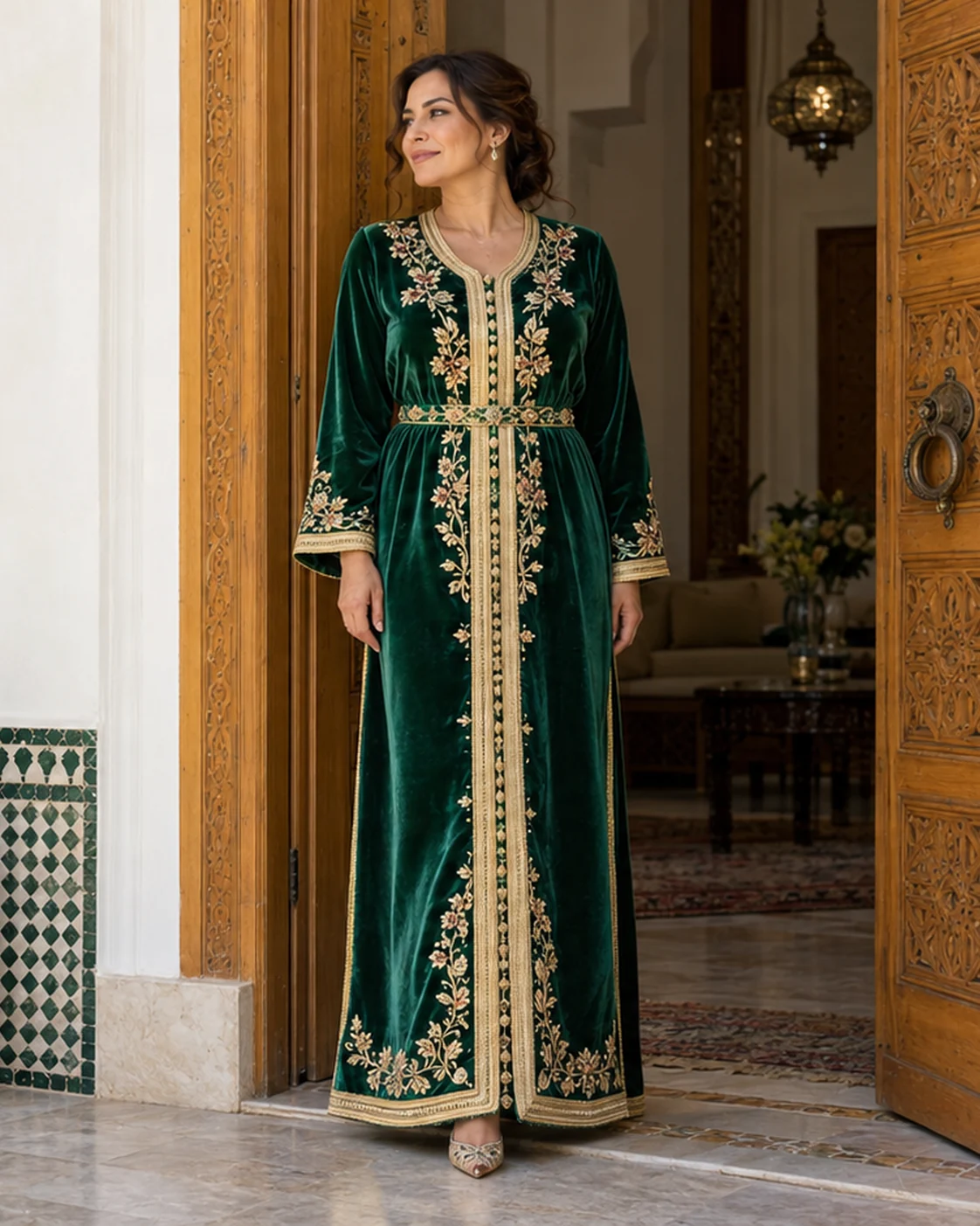
The caftan · Line, cloth & skilled hands
A long line of cloth, a precise edge, a distinctive presence. Look beyond the splendour of the Moroccan caftan to the skills that shape it.
Explore the chapter ↗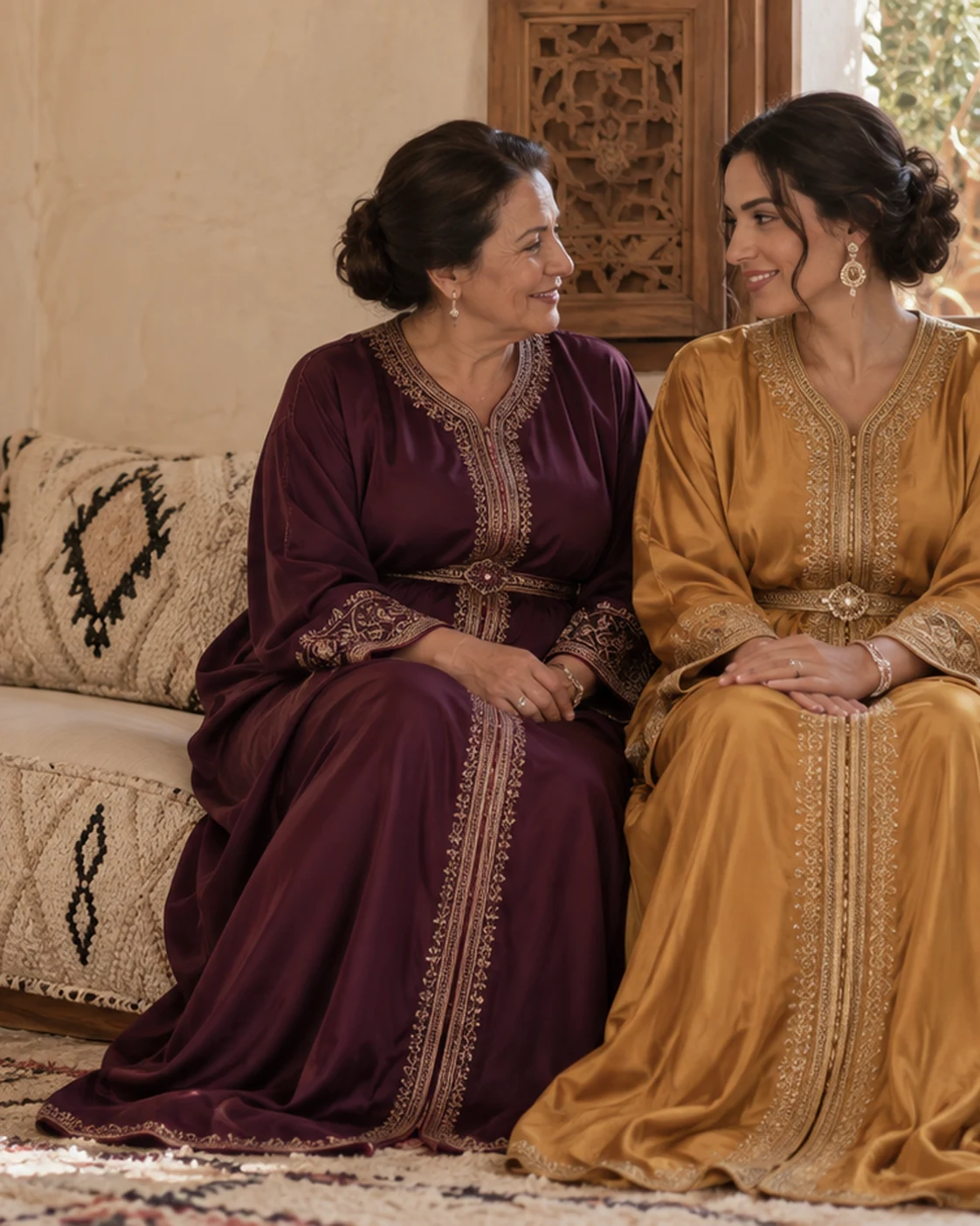
Ceremony & identity · The social life of clothes
An outfit can carry a family memory, mark an occasion and acquire new meanings as it passes from one life to another.
Explore the chapter ↗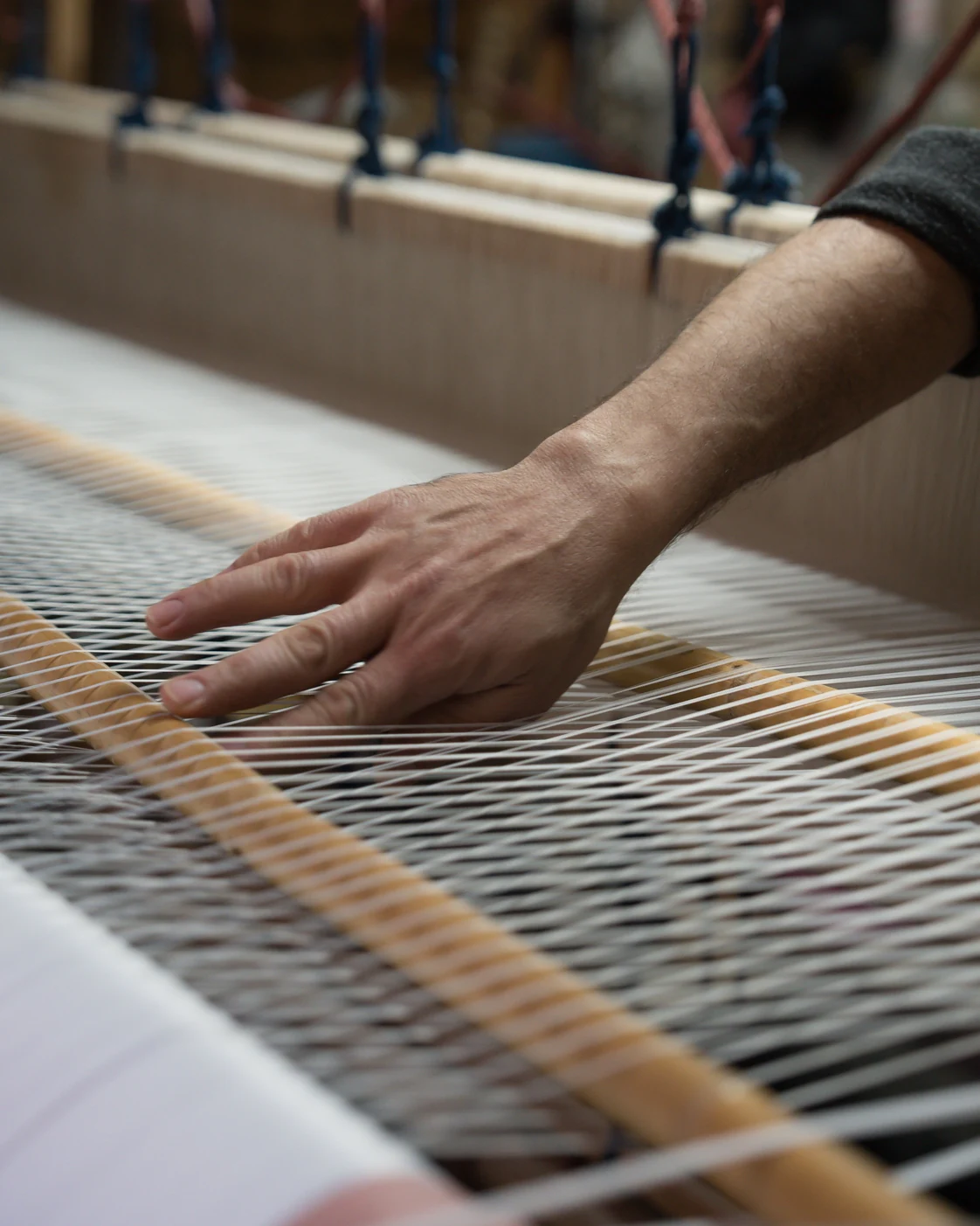
Textiles & weaving · Before cloth becomes clothing
Start at the loom. Explore the structure, weight and movement of cloth before following it into a garment or a home.
Explore the chapter ↗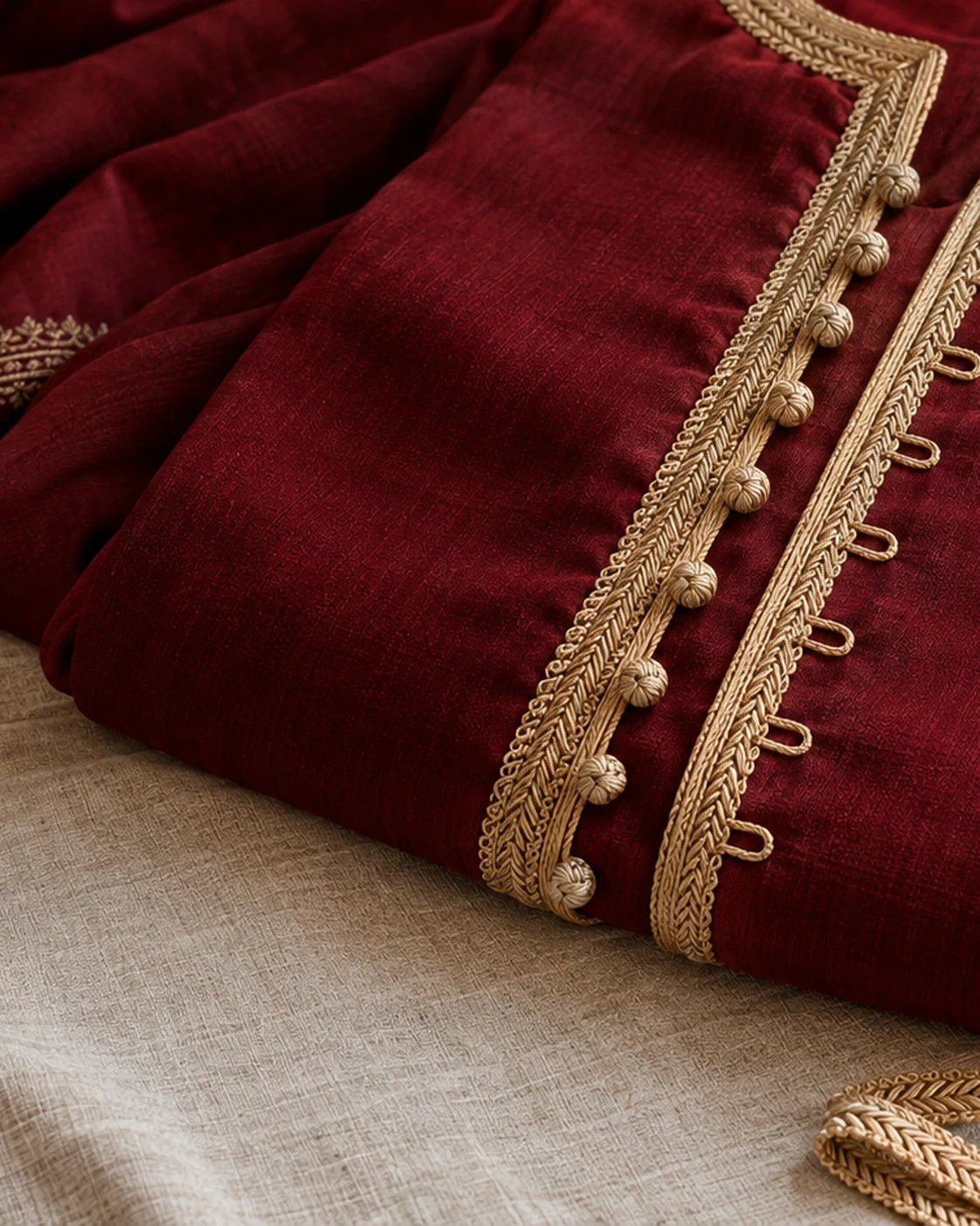
Embroidery & sfifa · The language of an edge
Braid, buttons and stitched ornament meet along a garment’s opening. Learn to see what each one does.
Explore the chapter ↗