Fès
Choose one courtyard, then follow its relationships outside.

Four cities, many ways to read power
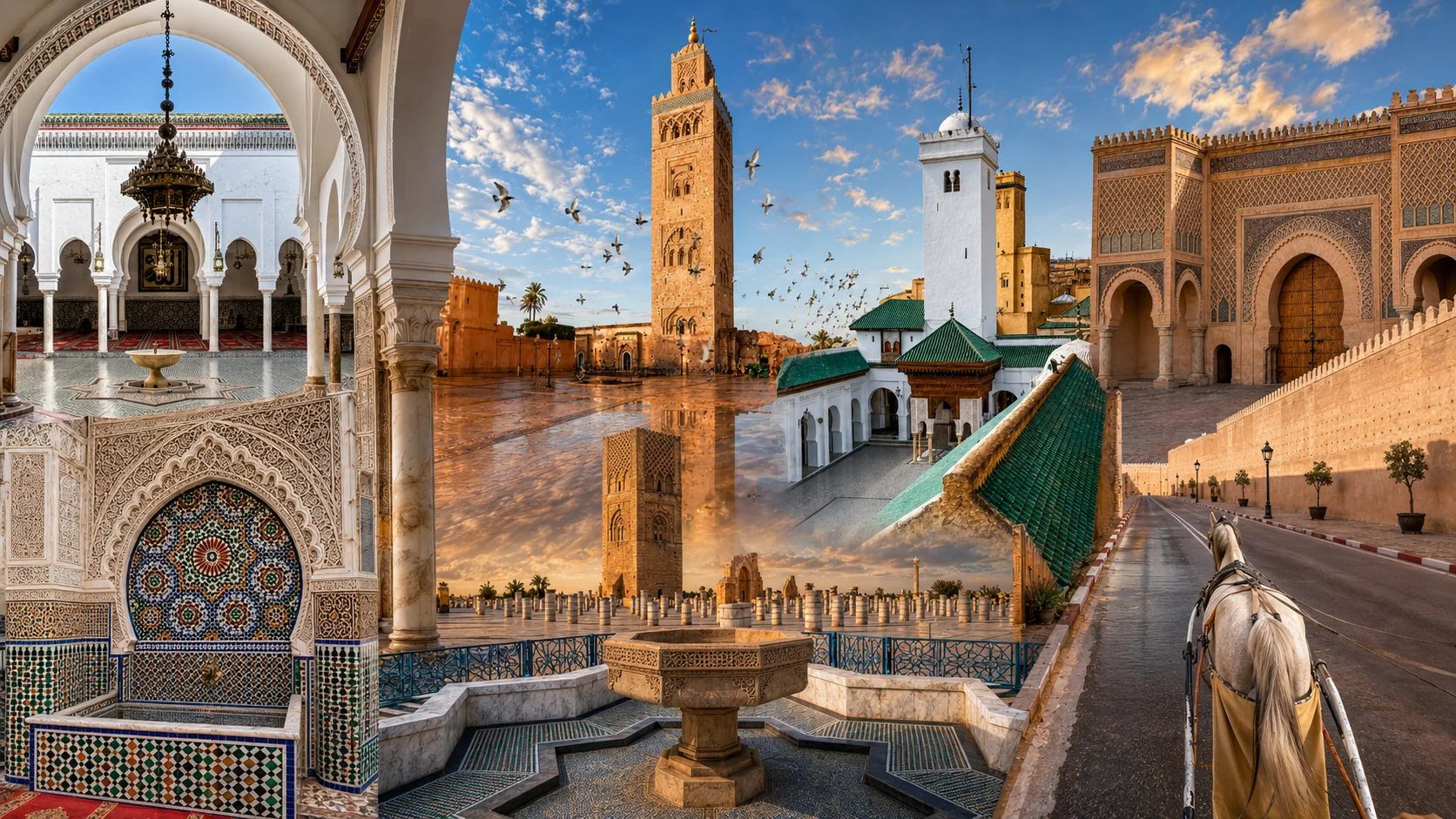
Follow architecture, scholarship, gardens and ceremonial space through Fès, Marrakech, Meknès and Rabat, with time to understand what makes each city different.
An imperial journey becomes rewarding when a monument is more than a stop. A gate controls an approach; a courtyard gives a building an inward centre; a garden connects cultivated ground with an architectural ambition. Looking at those relationships makes the four imperial cities easier to compare without reducing them to a contest of grandeur.
Choose this mood if you enjoy entering a place through its buildings and then following the story into the surrounding streets. Fès, Marrakech, Meknès and Rabat offer different balances of scholarship, royal patronage, public life and capital planning. They also contain ordinary homes, businesses and contemporary institutions. Give those present-day cities room alongside the heritage that first brought you here.
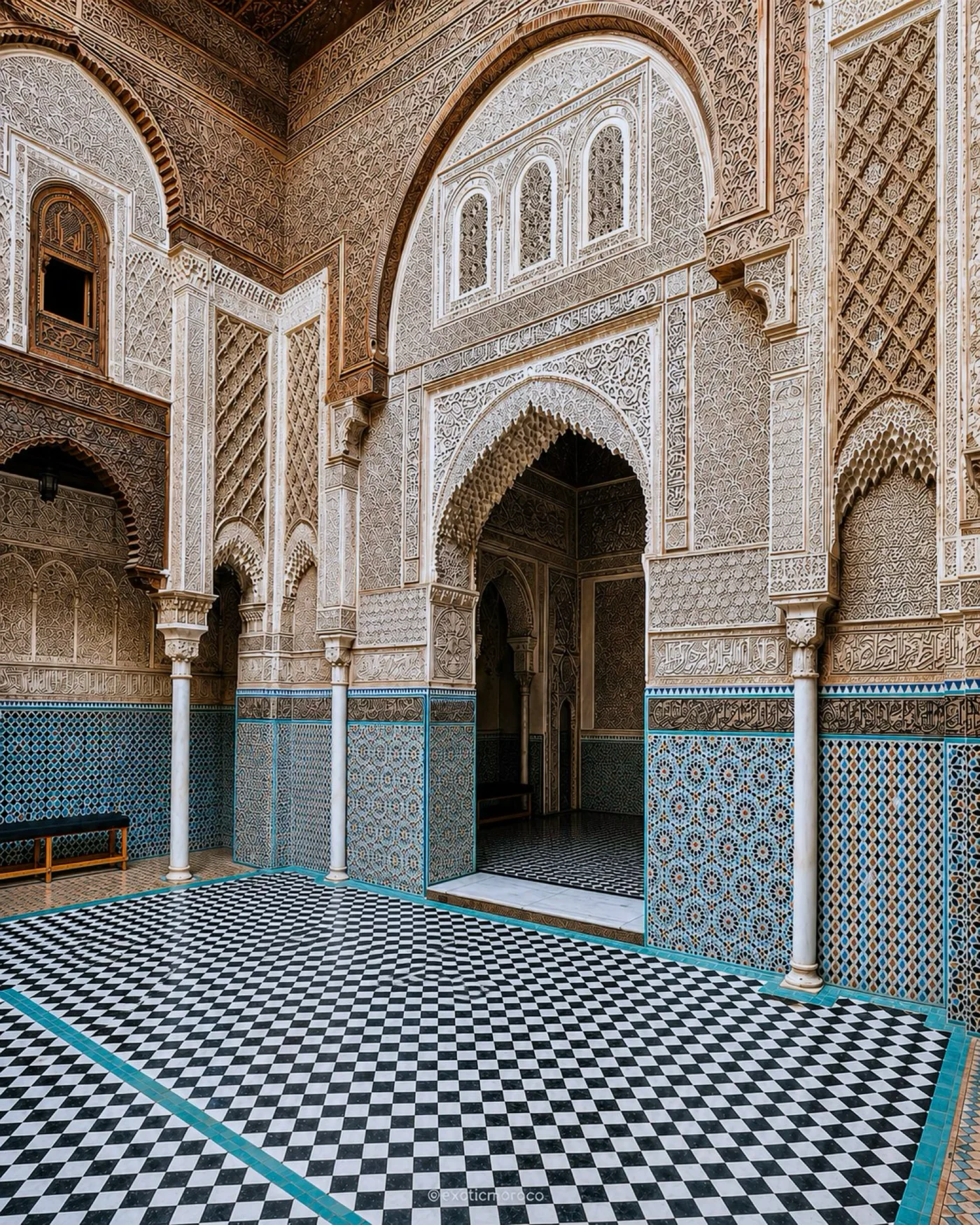
Choose one courtyard, then follow its relationships outside.
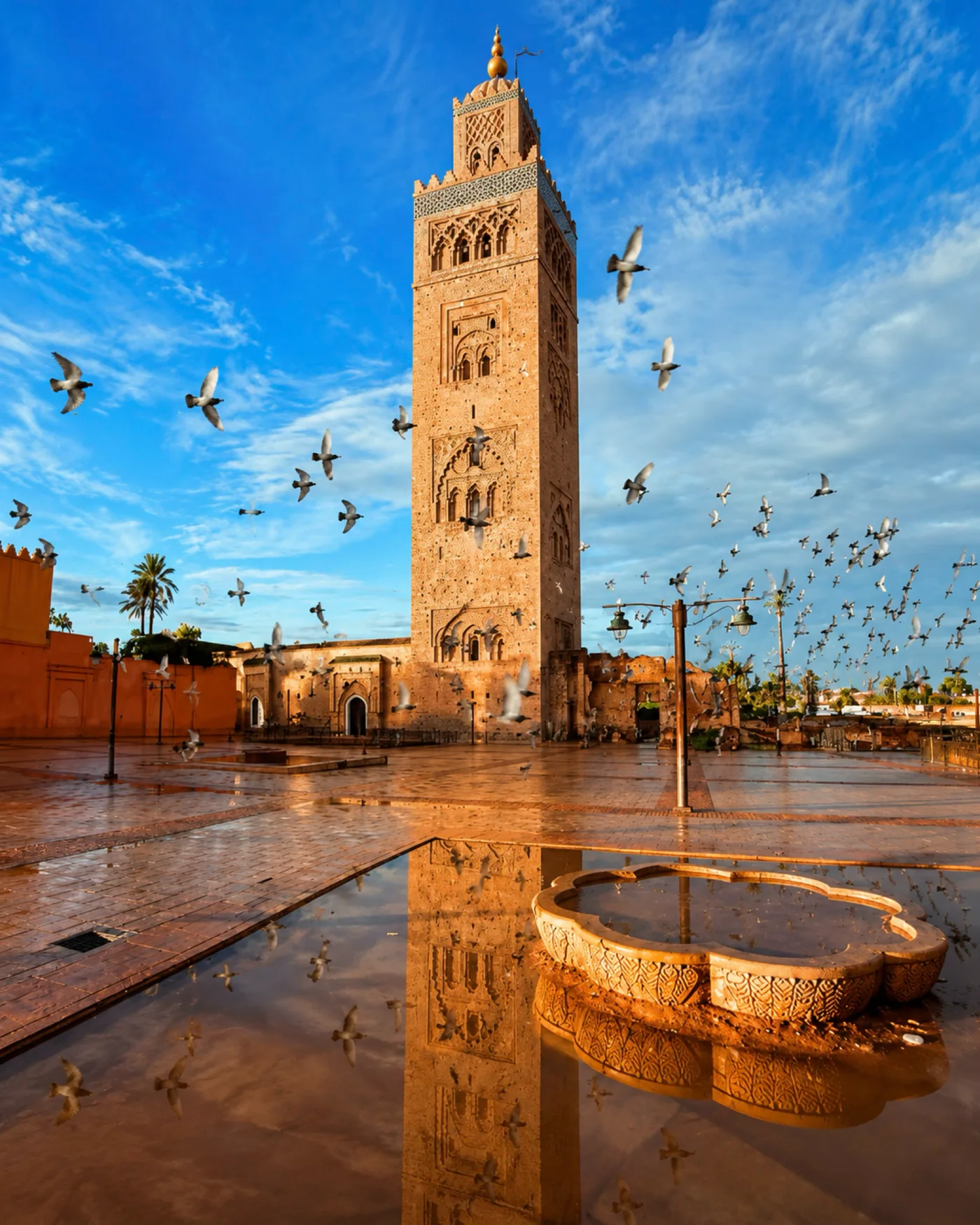
Let a garden or courtyard interrupt the intensity of the city.
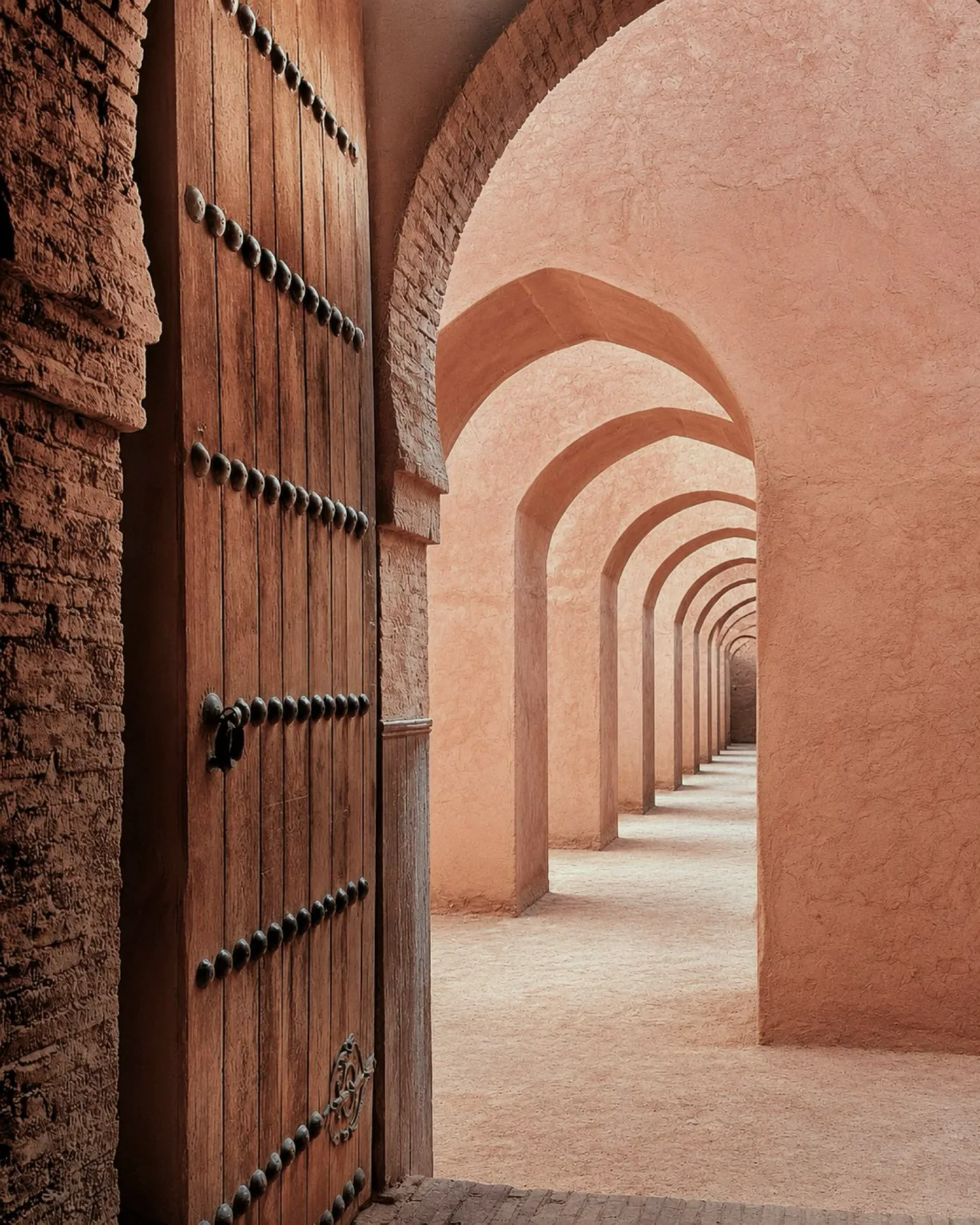
Walls and approaches make distance part of the story.
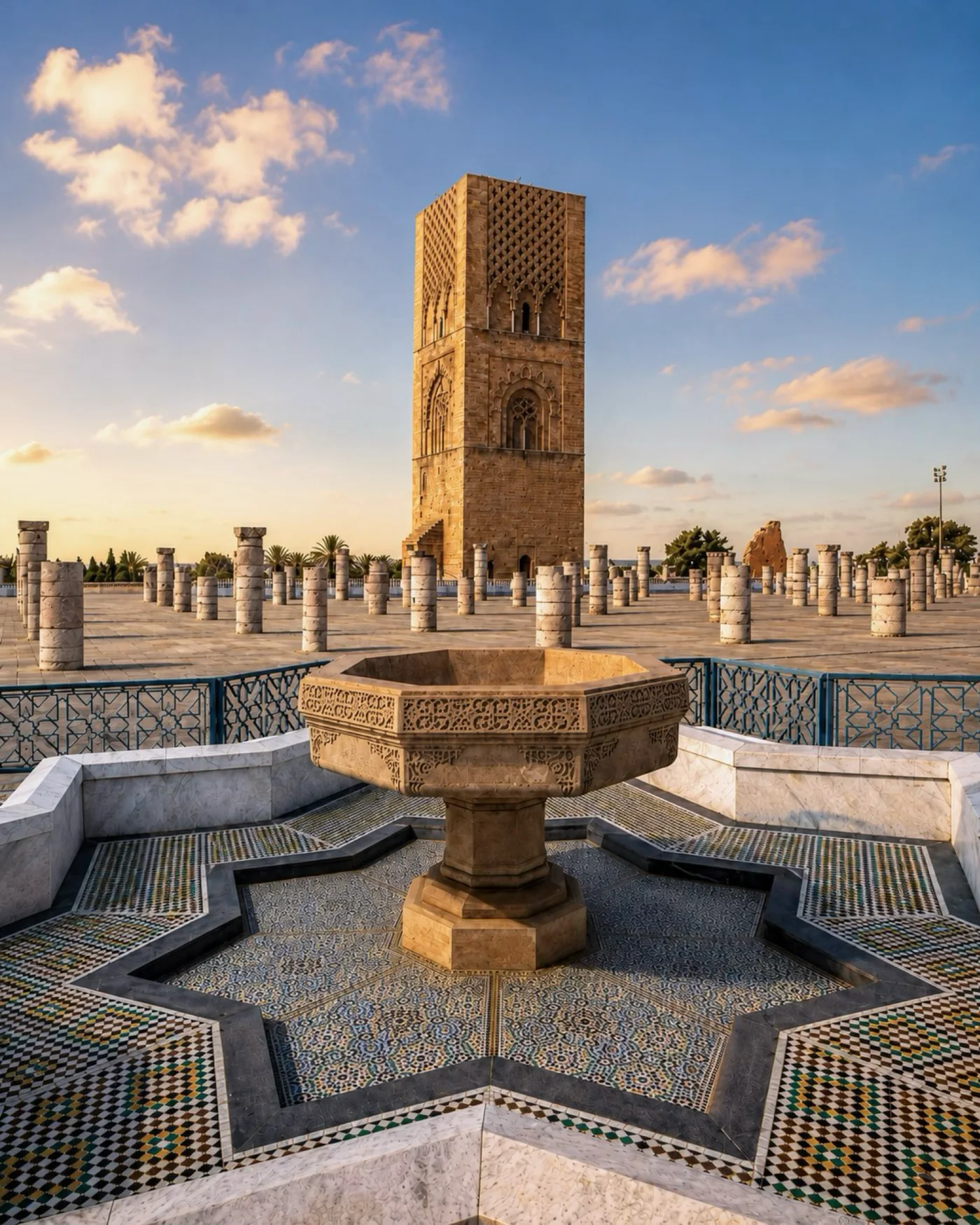
Read the river connection and the differences on either bank.
Begin with the city that best matches your interest. Fès suits a close reading of medina institutions and making; Meknès makes boundaries and royal scale visible; Rabat connects old fabric with a modern capital; Marrakech opens the comparison towards gardens, palaces and animated public space. Rabat, Meknès and Fès can form one northern sequence. Marrakech involves a longer connection and deserves its own stay. The four portraits below are choices to develop, not four sightseeing days to compress.
Fès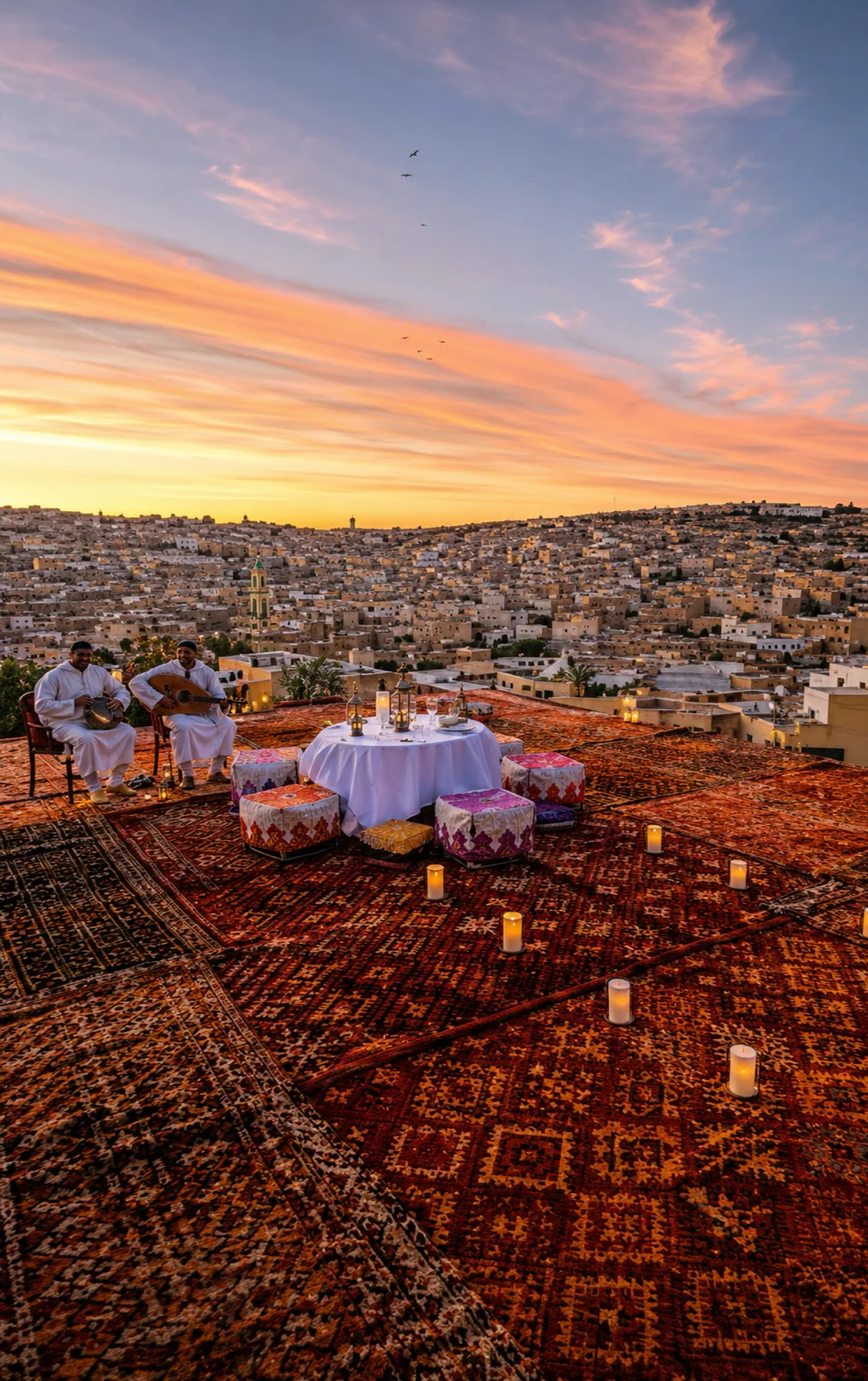 Fès
Fès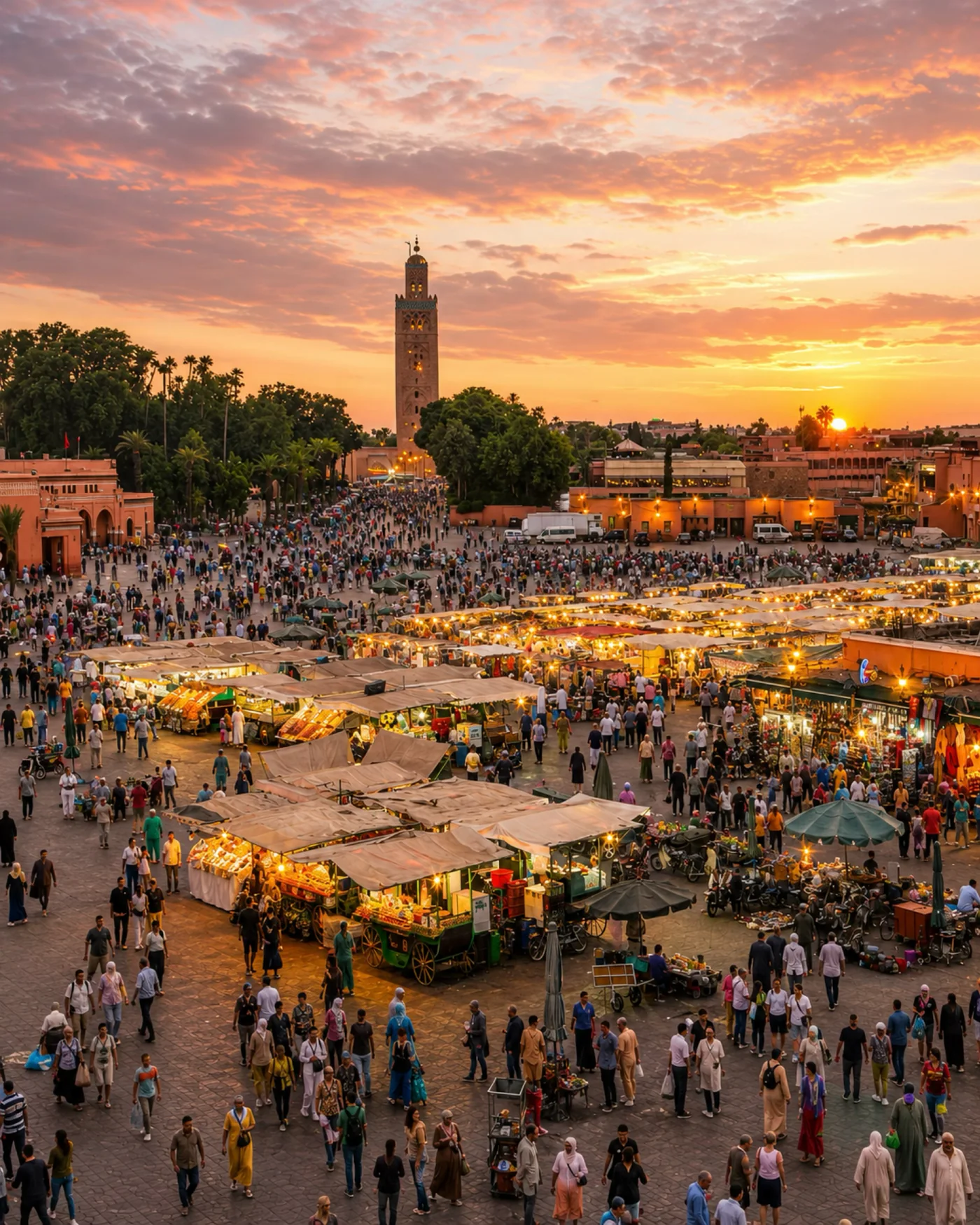 Marrakech
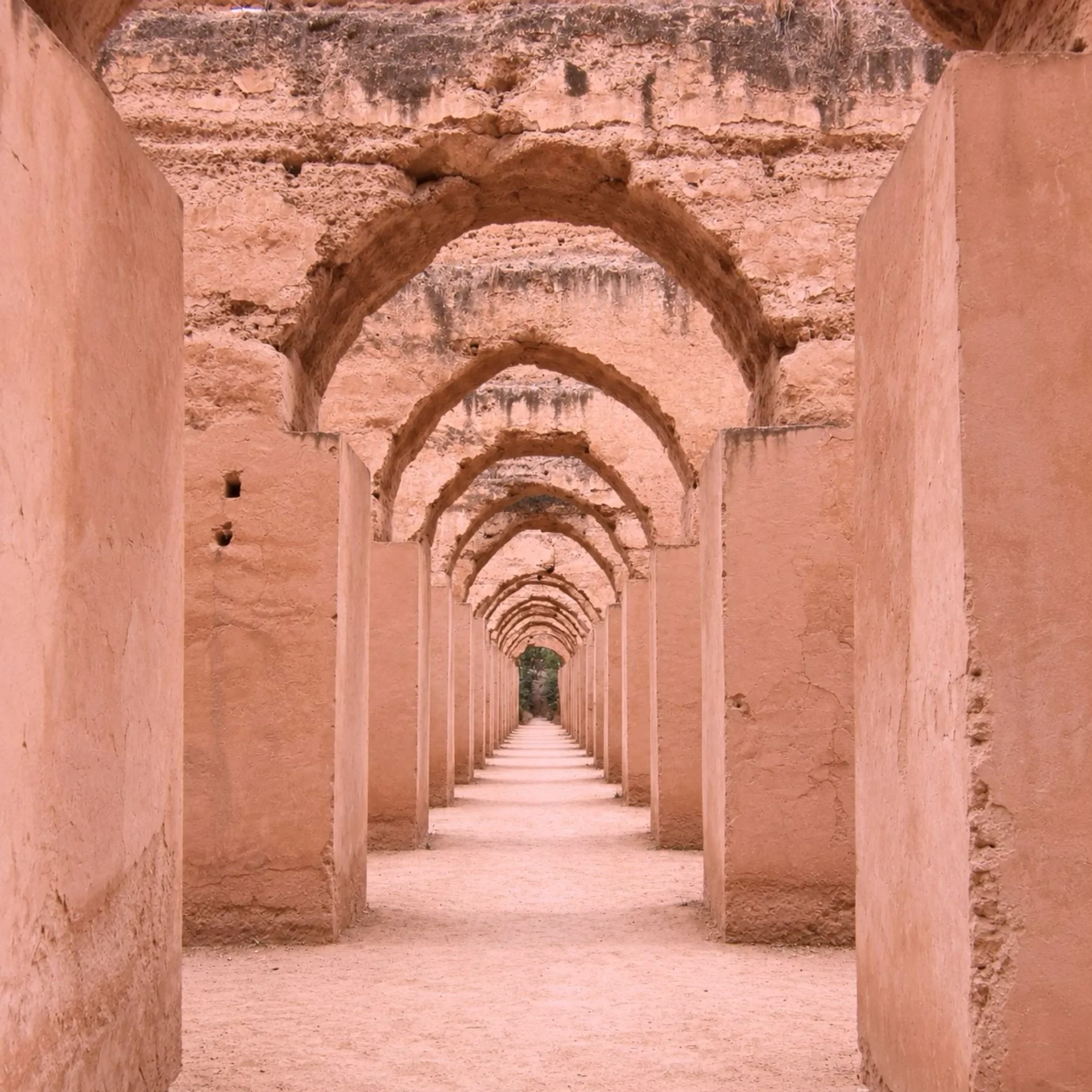 Meknès
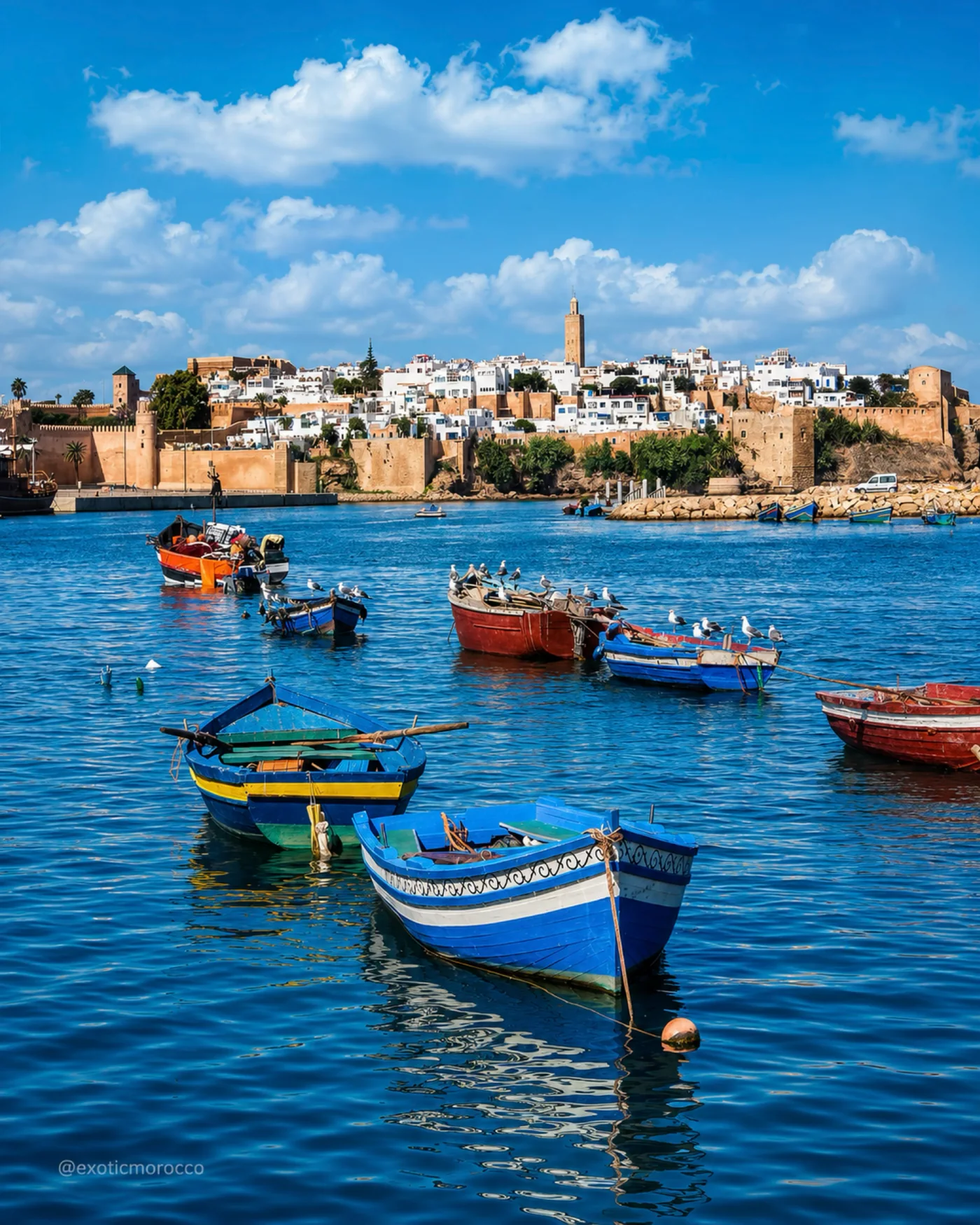 Rabat & Salé
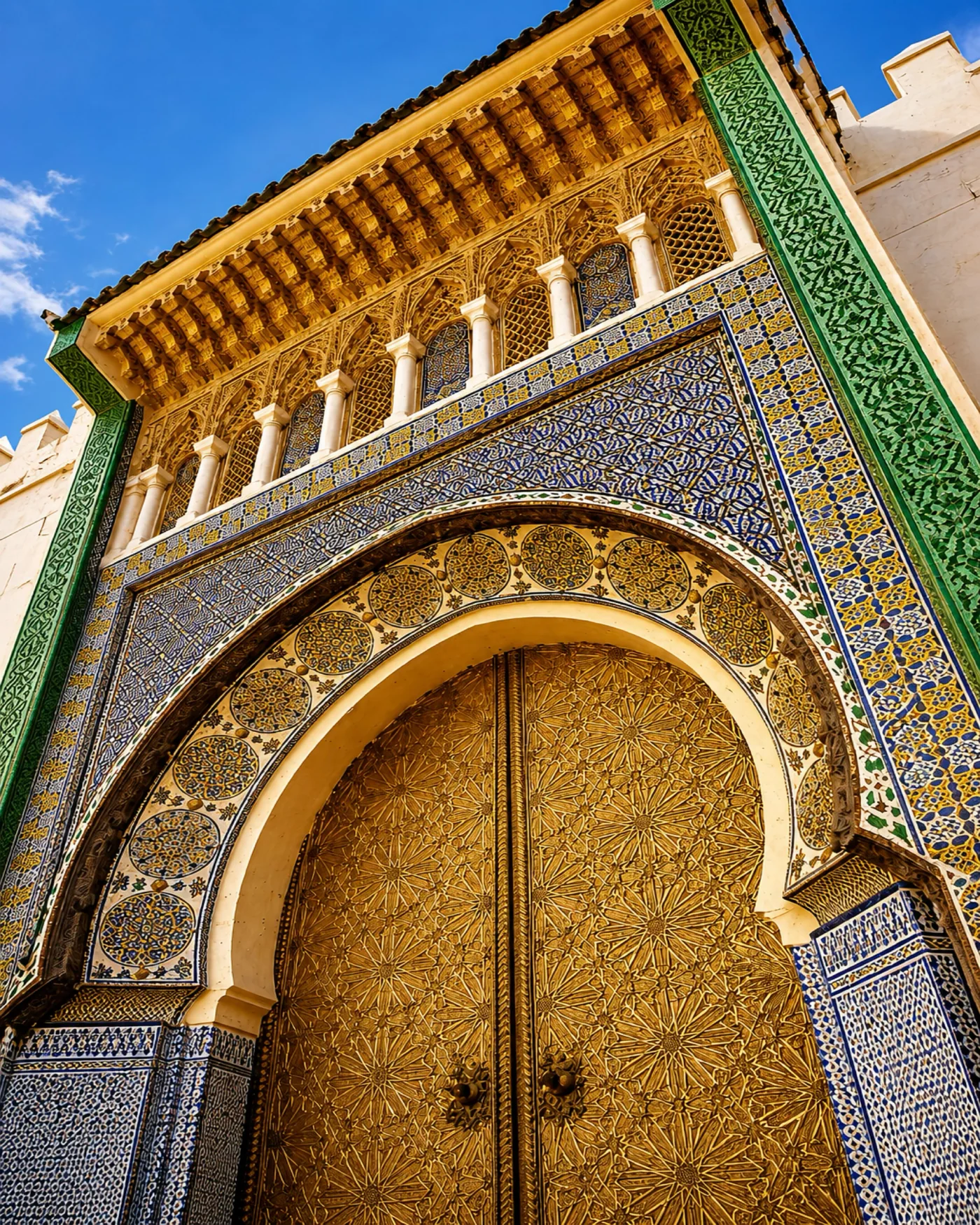 Fès
Fès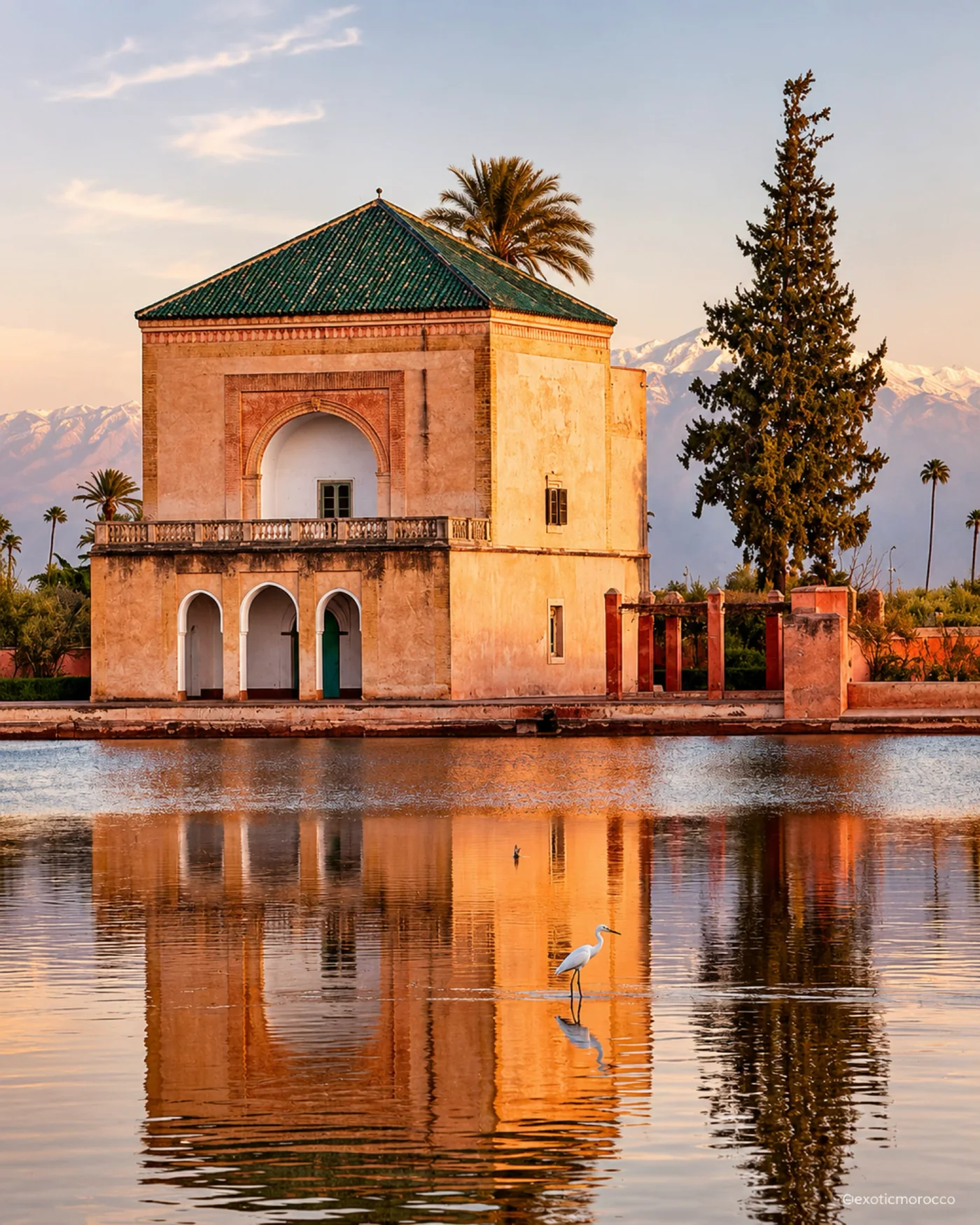 Marrakech
Look for the relationships that make each place distinct.
Look beyond the famous entrance. The route to a monument, nearby commerce and the scale of the streets help explain how an institution belongs to a city. A courtyard gains meaning when you remember the passage that brought you there.
Follow a surface from its lower tilework to plaster and timber above. Notice where a material changes and how that change relates to a doorway, column or ceiling. The composition is more interesting than an isolated pattern photographed without context.
The cities carry several historical periods, and later restoration can add another layer. Keep a small note of the monument, period and source rather than assigning every gate or decorated room to a single imperial age.
Visit a public square at two different times, or retrace a short street after seeing a nearby interior. The changing balance of work, conversation, commerce and movement makes the city more legible than an uninterrupted monument circuit.
Follow architecture, scholarship, gardens and ceremonial space through Fès, Marrakech, Meknès and Rabat, with time to understand what makes each city different.
Read the institution through the medina
Balance enclosure with public life
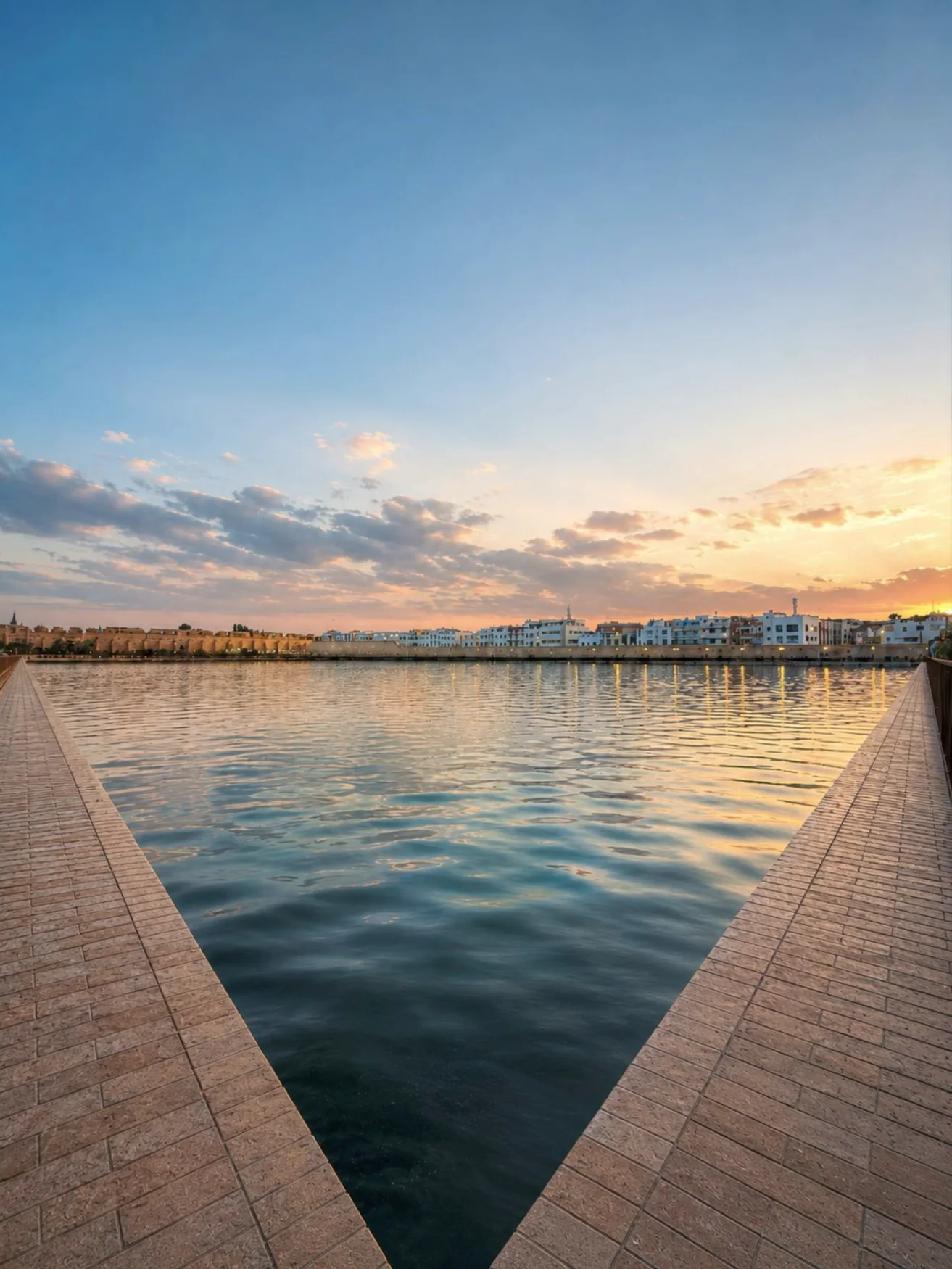
Understand the scale of a royal project
Extend heritage into the modern capital
A focused thread gives each visit a question. Choose one or two and let the others remain possibilities for another journey.
Compare an urban gate with a small domestic entrance. Both organise passage, but their audiences and purposes differ. Notice the turn, pause or change of scale before you step through; that sequence is part of the architecture.
A madrasa offers a way to think about space devoted to study and religious learning. Distinguish the institution's documented history from what a visitor can enter today. A beautiful room does not explain its former daily life by itself.
Gardens introduce another measure of power: the arrangement of water, shade and growing things. Look at paths and enclosure as well as planting. A garden visit can also change the tempo of a day spent among dense urban streets.
Squares and approaches put monuments into social view. Find a place to pause without blocking movement and watch how people actually cross or occupy the space. This adds a contemporary account to the historical one.
Carved timber, tile, plaster and metal connect architecture with skilled work. A craft visit or museum can help you recognise processes that are difficult to infer from a finished wall. Ask who made, repaired or commissioned a feature when that information is available.
Rabat extends the story beyond royal monuments into streets, institutions and public planning. Compare a boulevard with a medina lane without assuming one is more authentically Moroccan. They answer different urban needs and belong to the same living country.
Choose one courtyard, then follow its relationships outside.
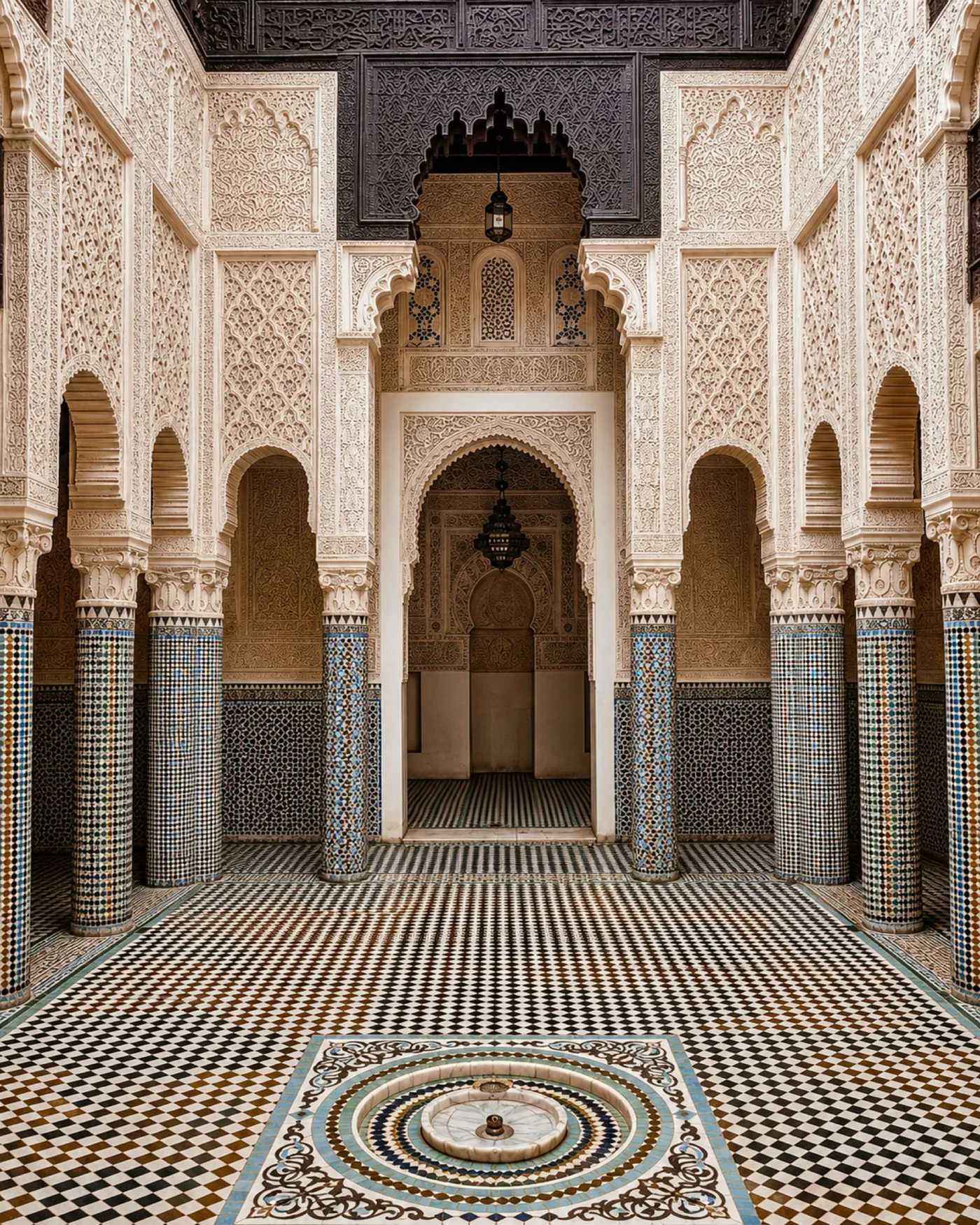
Fès rewards a deliberately small field of attention. Rather than trying to identify every lane, choose an accessible madrasa or museum and give it time. Look first at the arrangement of the court and rooms, then at the materials marking a threshold or change of level. The surrounding commercial streets help place that interior within a larger urban setting. A knowledgeable guide can connect a visible feature with a named institution and a reliable historical account.
On a second walk, follow a material you noticed inside. Timber may lead towards a museum or workshop; leather towards a different area of production and sale. Keep the distinction between looking, entering and purchasing clear. Religious institutions and residential passages have boundaries even when they appear on a visitor's route. The most useful souvenir of this day may be a precise observation: how a carved screen filters light, or how a narrow approach changes the experience of an open court.
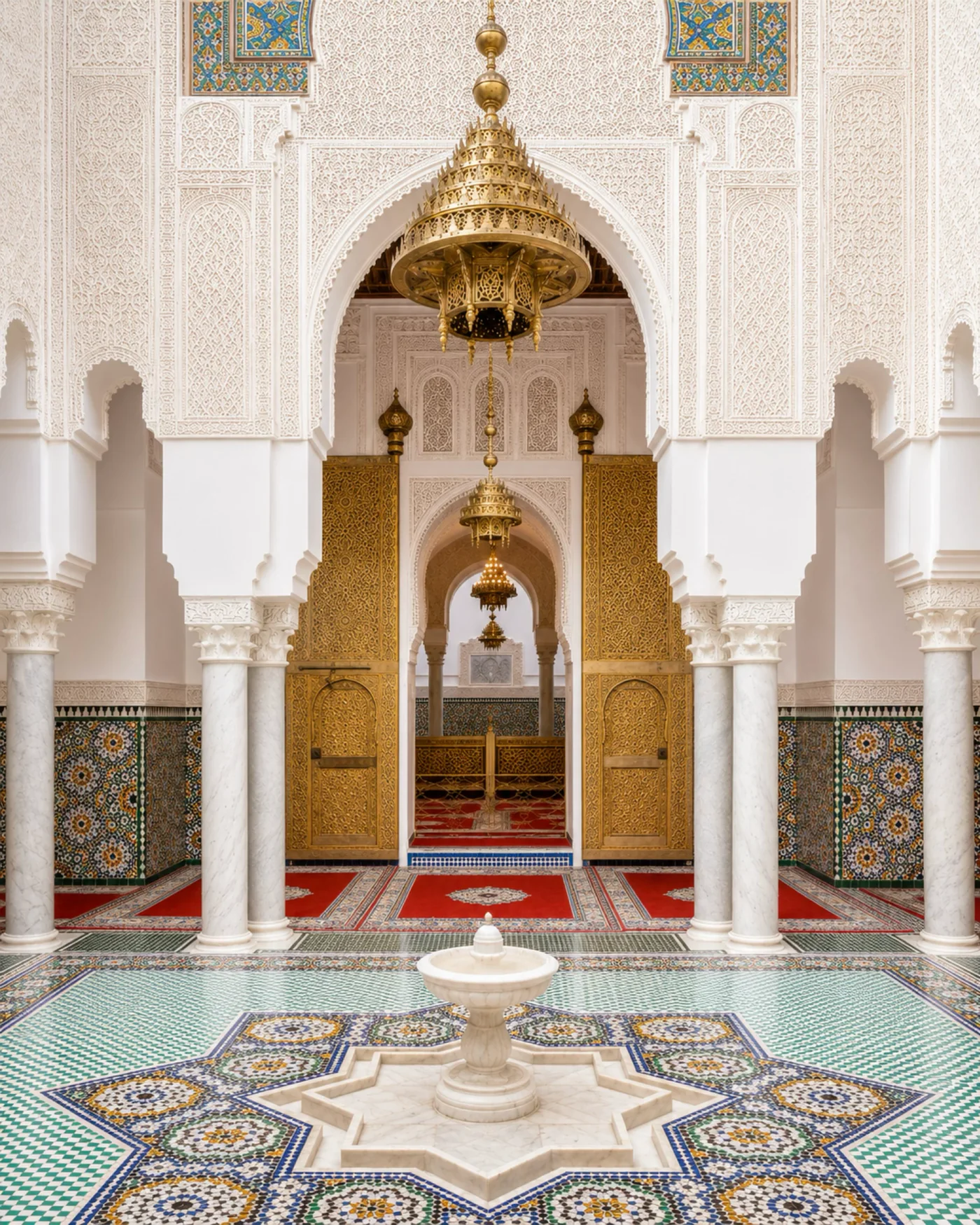
Madrasa courtyardMedina viewRoyal doors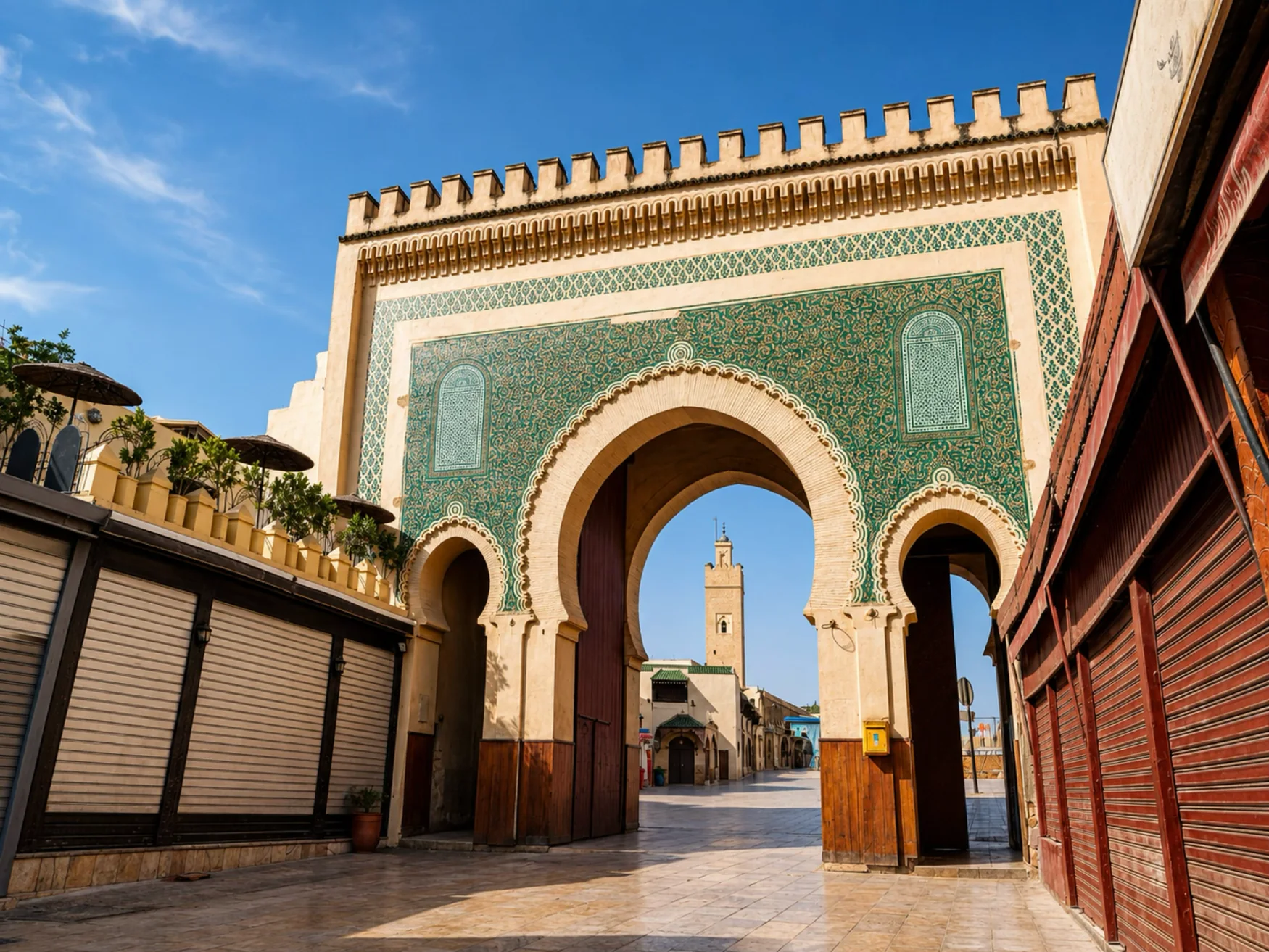 Bab Boujloud
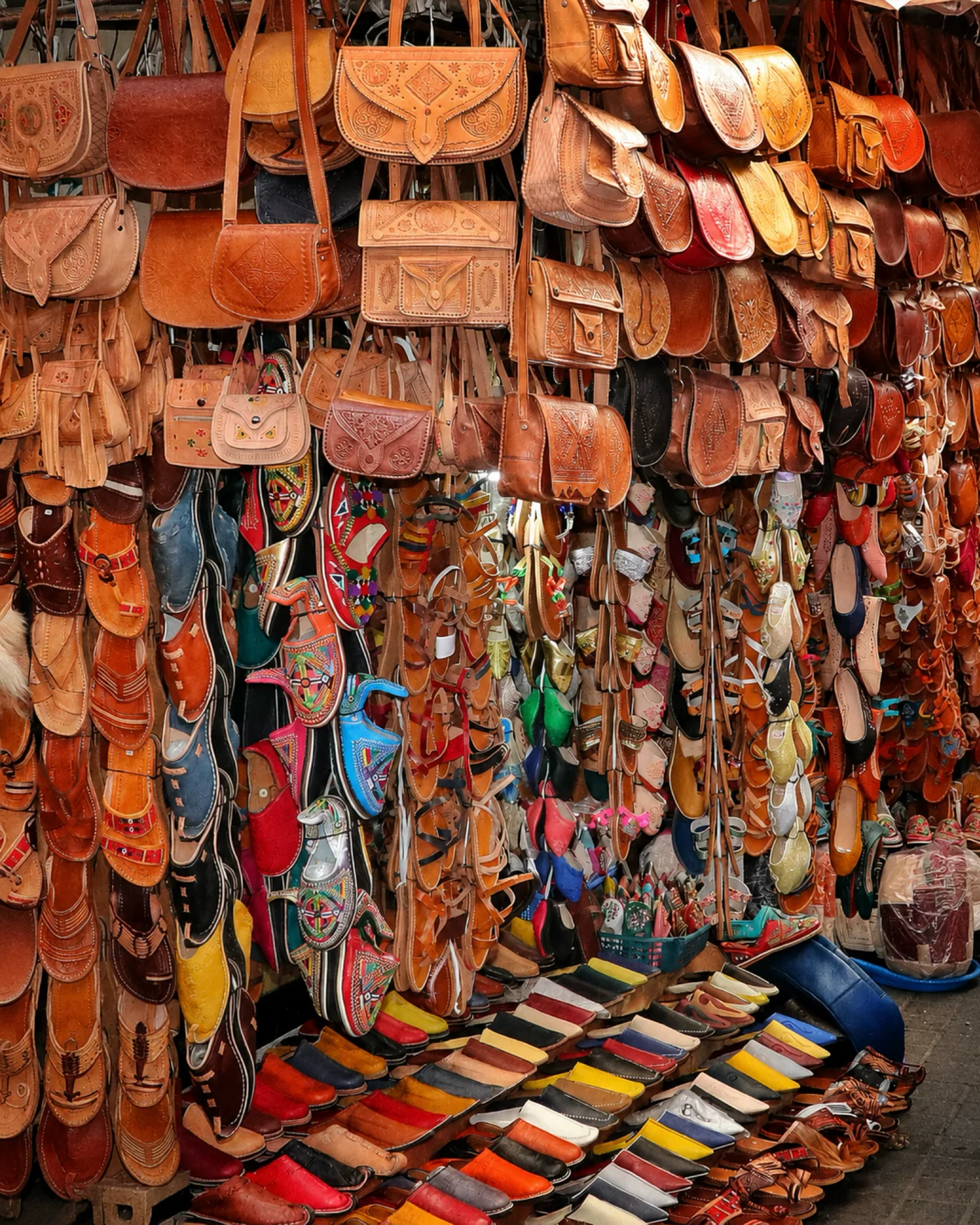 Craft detail
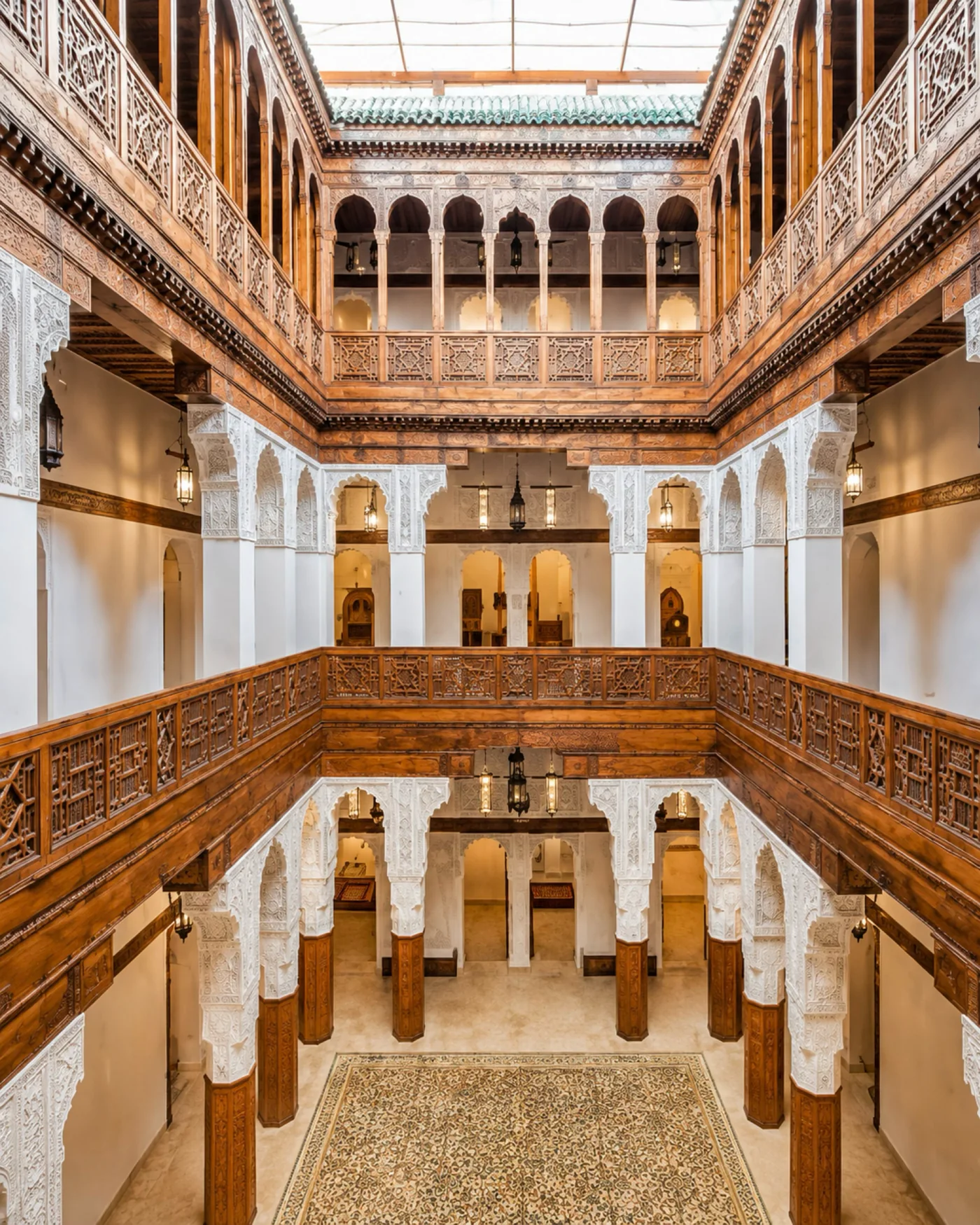 Nejjarine
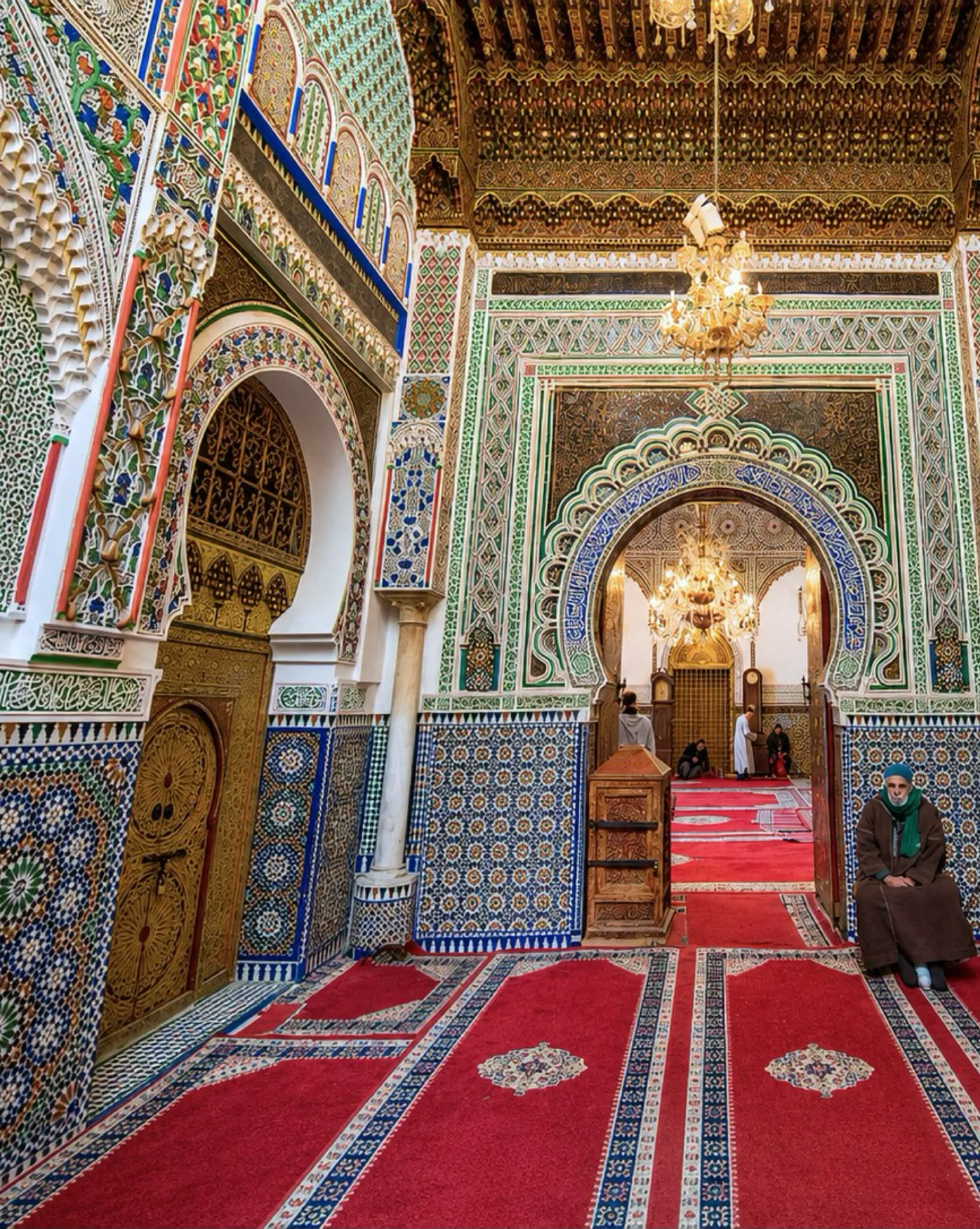 Moulay Idriss II MausoleumKoutoubiaJemaa el-FnaMenara
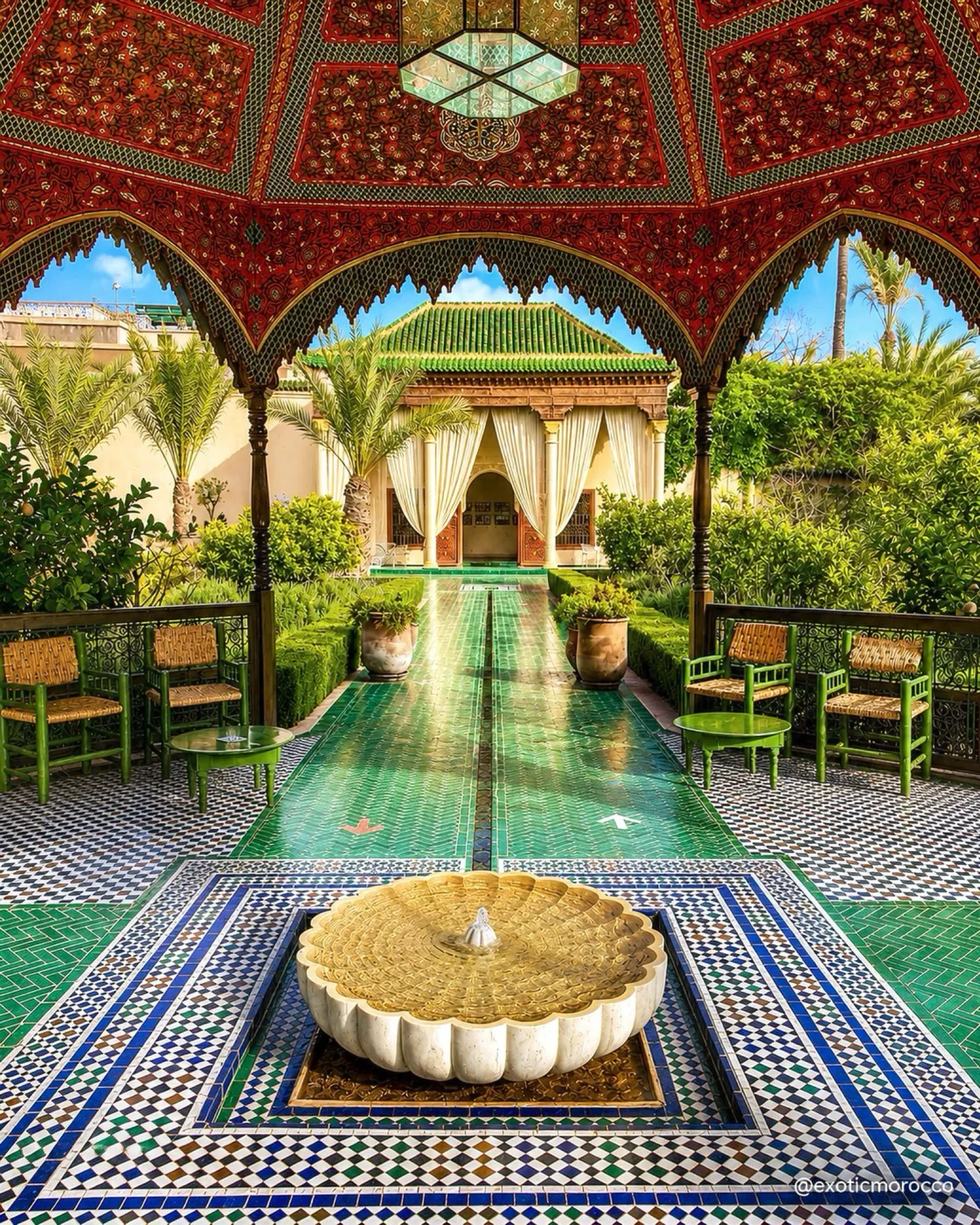 Secret Garden
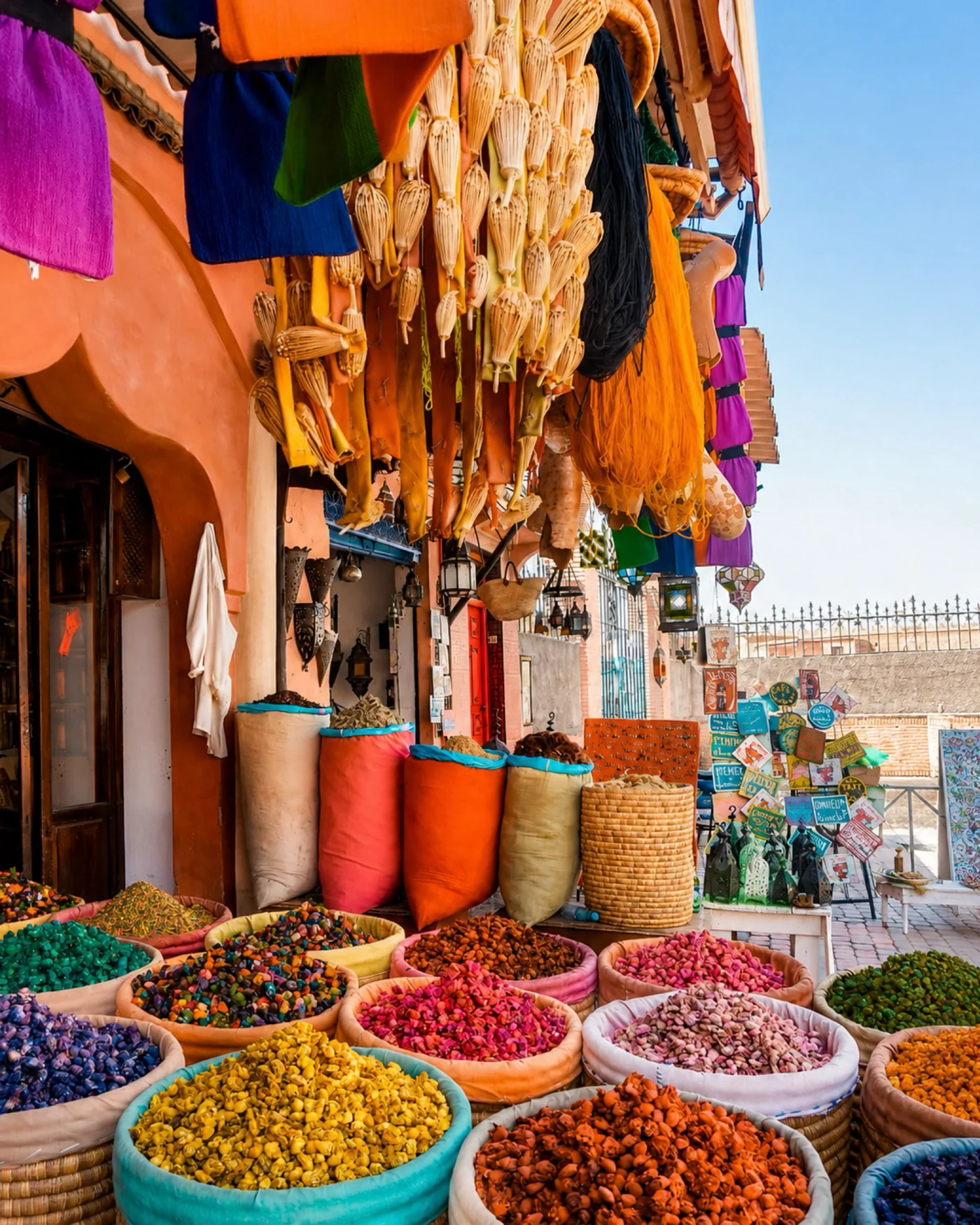 Spice colours
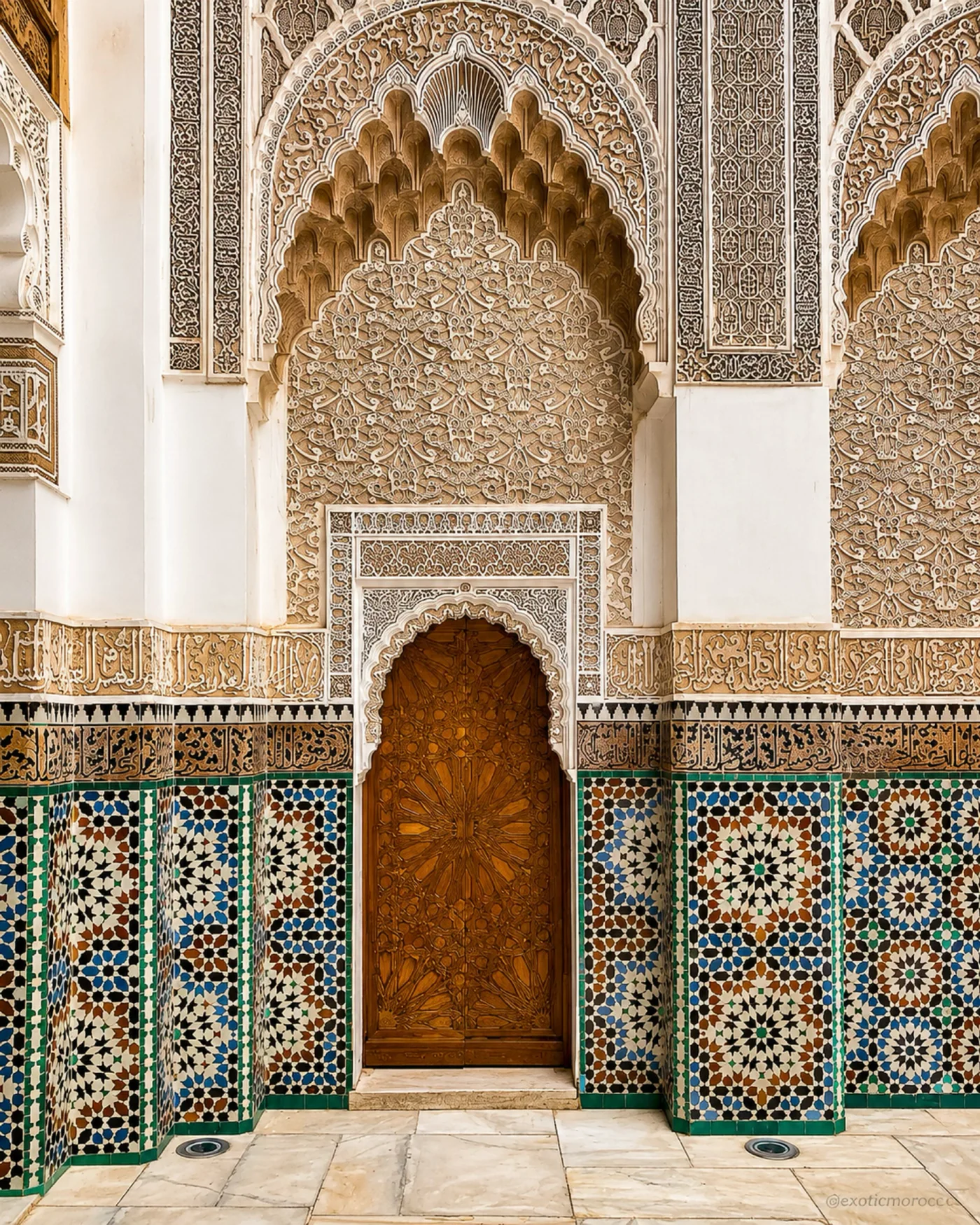 Ben Youssef Madrasa
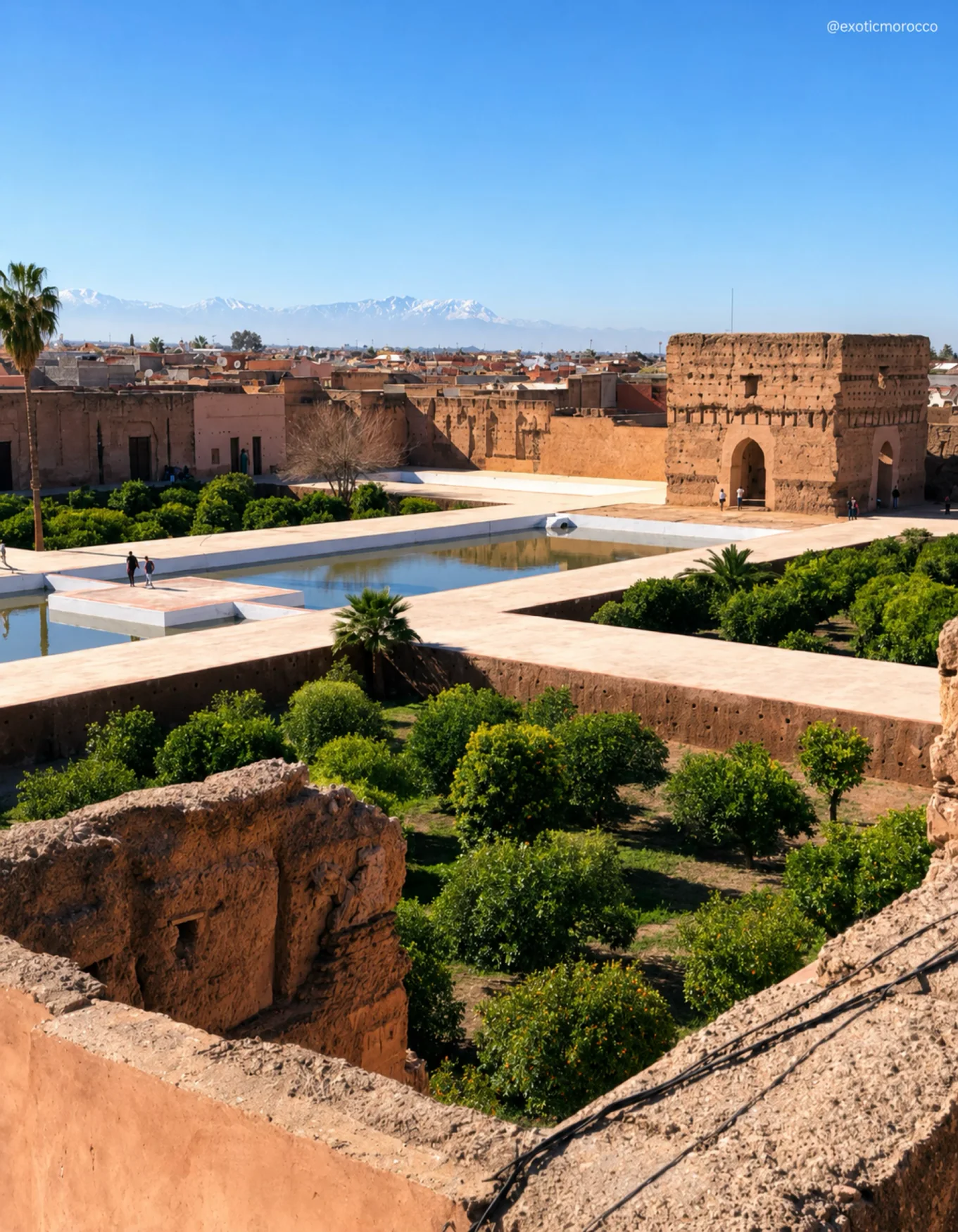 Badi Palace
Let a garden or courtyard interrupt the intensity of the city.
Marrakech gives the imperial mood a strong contrast between contained space and outward activity. A palace or madrasa can be read through courts, rooms and controlled views; a public square asks you to follow changing movement instead. Keep the histories of those places separate. Their coexistence is what makes the city rich, rather than evidence that they were all conceived as one royal composition.
Build a day around two kinds of encounter. Give an interior an unhurried visit, then allow time in a public place with no checklist. Later, a garden can shift attention towards planting, shade and the arrangement of water. Heat and exposure make timing consequential, so match the sequence to the season and the actual opening arrangements. Returning to a familiar stretch of street can reveal more than adding another distant stop: colours change, shops settle into a different rhythm and a route begins to feel understandable.
Walls and approaches make distance part of the story.
Meknès invites you to read architecture from farther away. A gate announces itself through its frontage, but also through the space before it and the wall continuing beyond it. The city's major royal associations with Moulay Ismail provide historical context for this monumental scale. Look at how a visitor approaches and where an enclosure redirects movement; those relationships can be understood even when a particular interior is unavailable.
Choose a compact set of monuments and establish current access before arranging the walk. A long wall or water basin can make a seemingly short sightseeing plan physically demanding, especially in exposed conditions. Then change scale by returning to the inhabited medina. Shops, smaller entrances and ordinary streets create a useful comparison with the ceremonial landscape. Meknès does not need to compete with the intensity of Marrakech or the density of Fès: its particular contribution is the relationship between a city and the spatial ambitions of a royal establishment.
Royal StableHeri es-SouaniSahrij Swani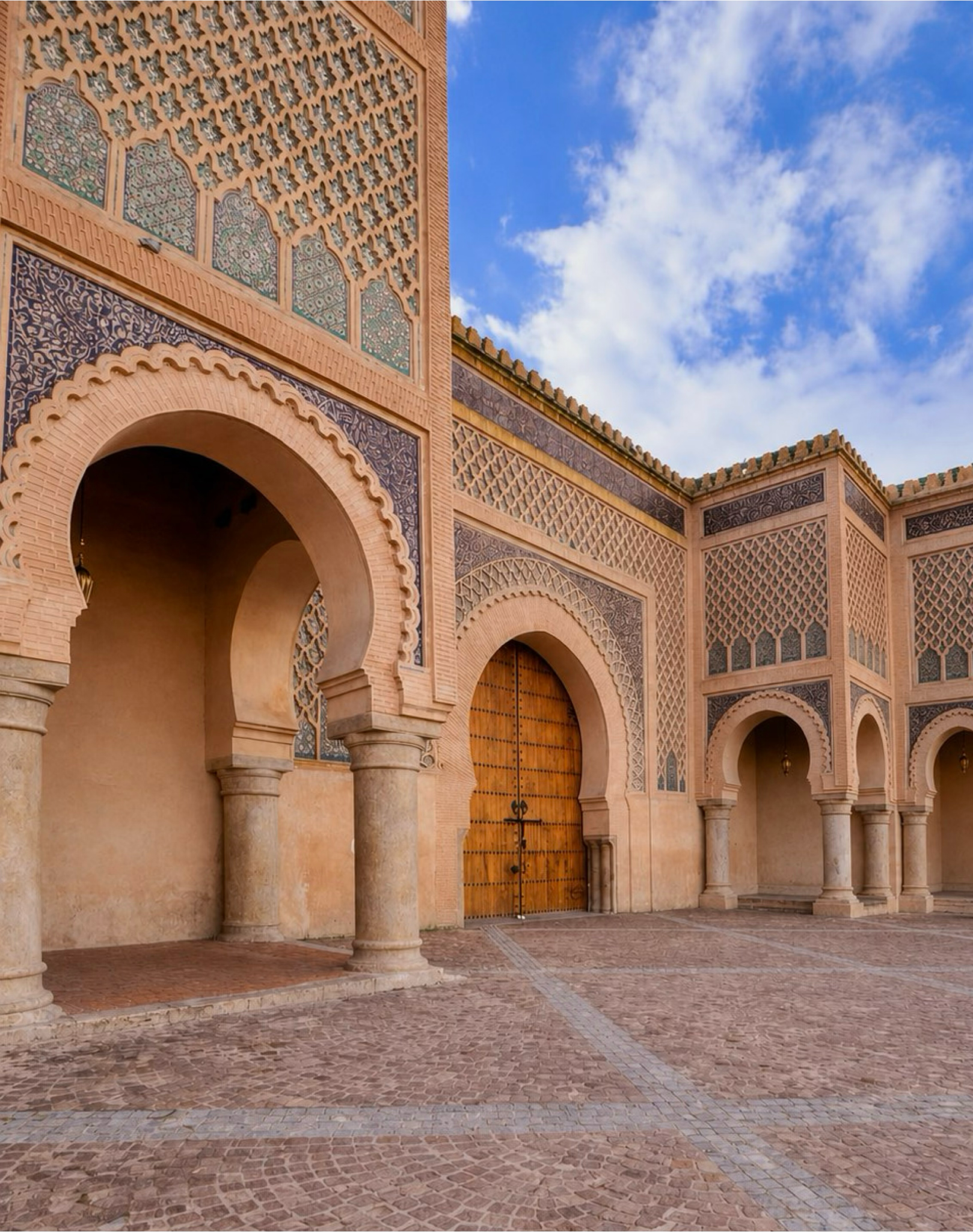 Bab Mansour
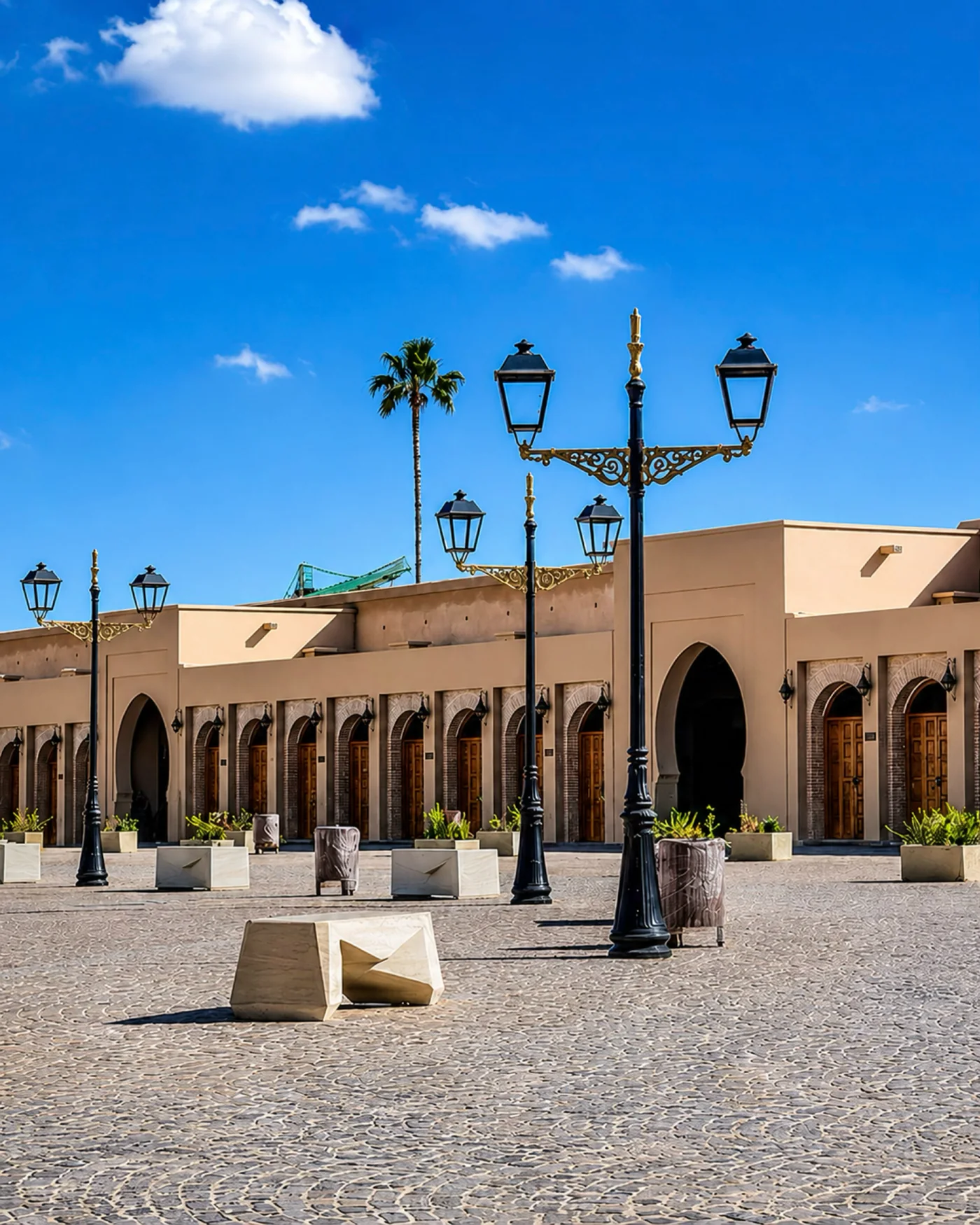 Place El Hedim
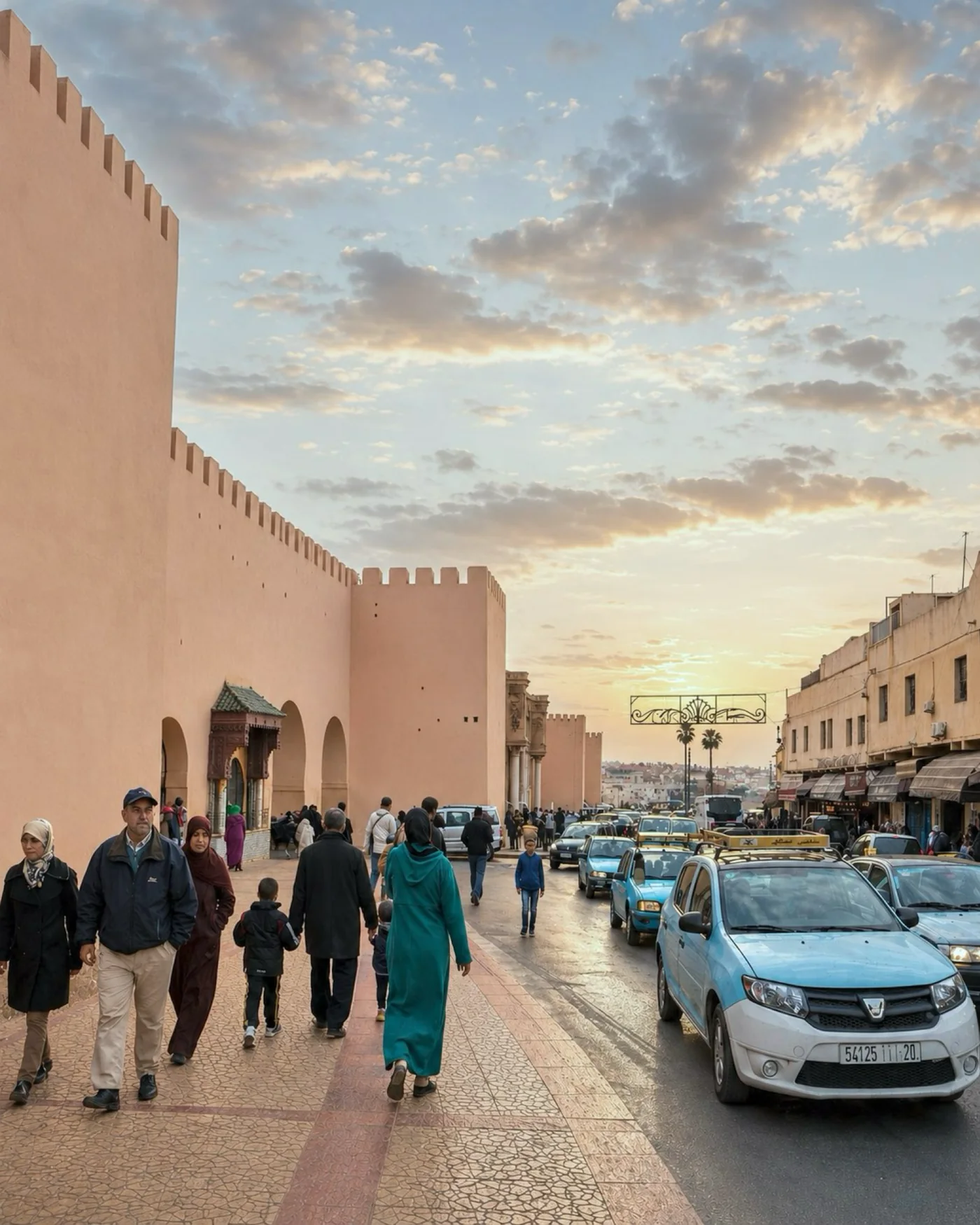 Ramparts
 Moulay IsmailHassan TowerBouregregMarinid Madrasa
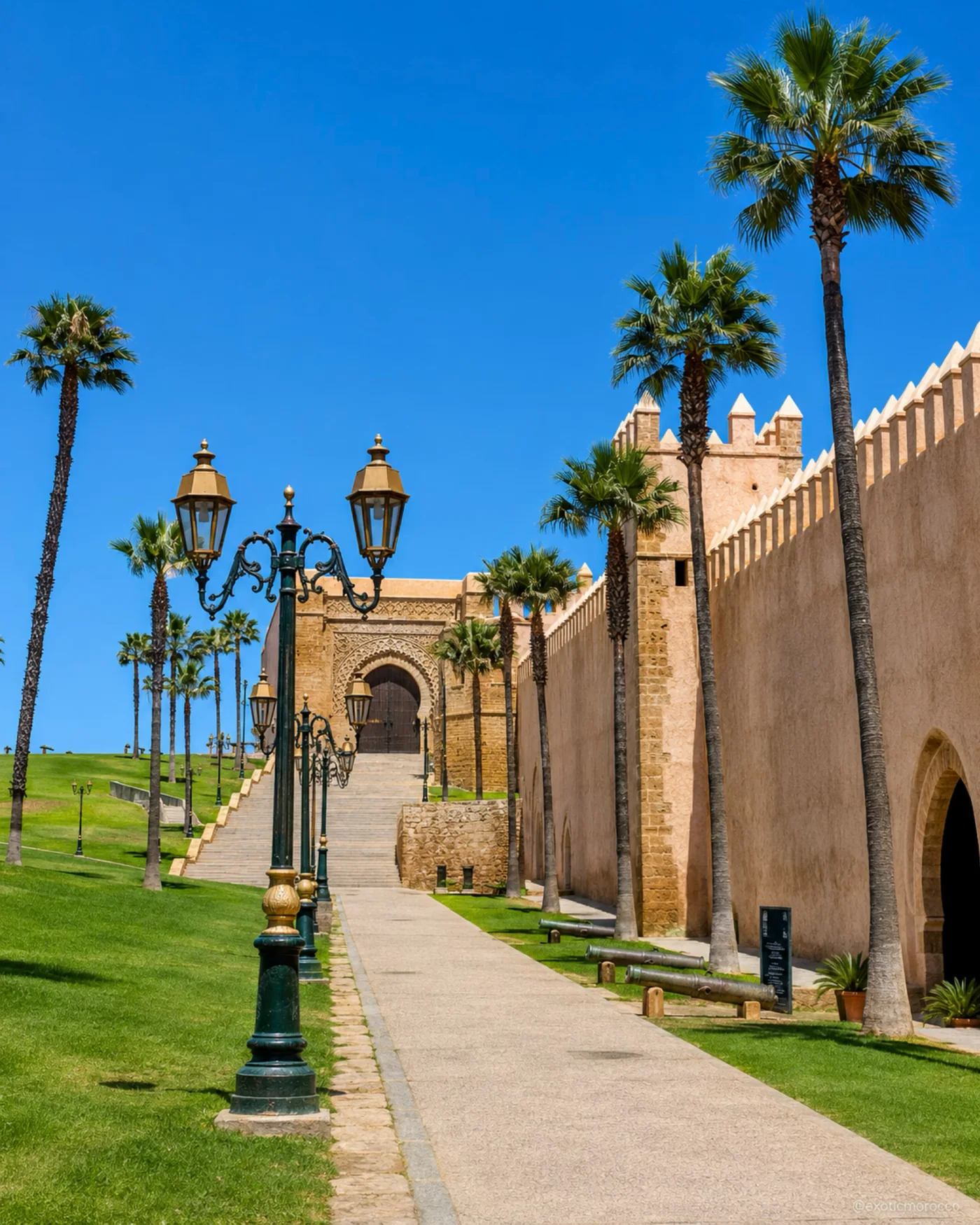 Oudayas
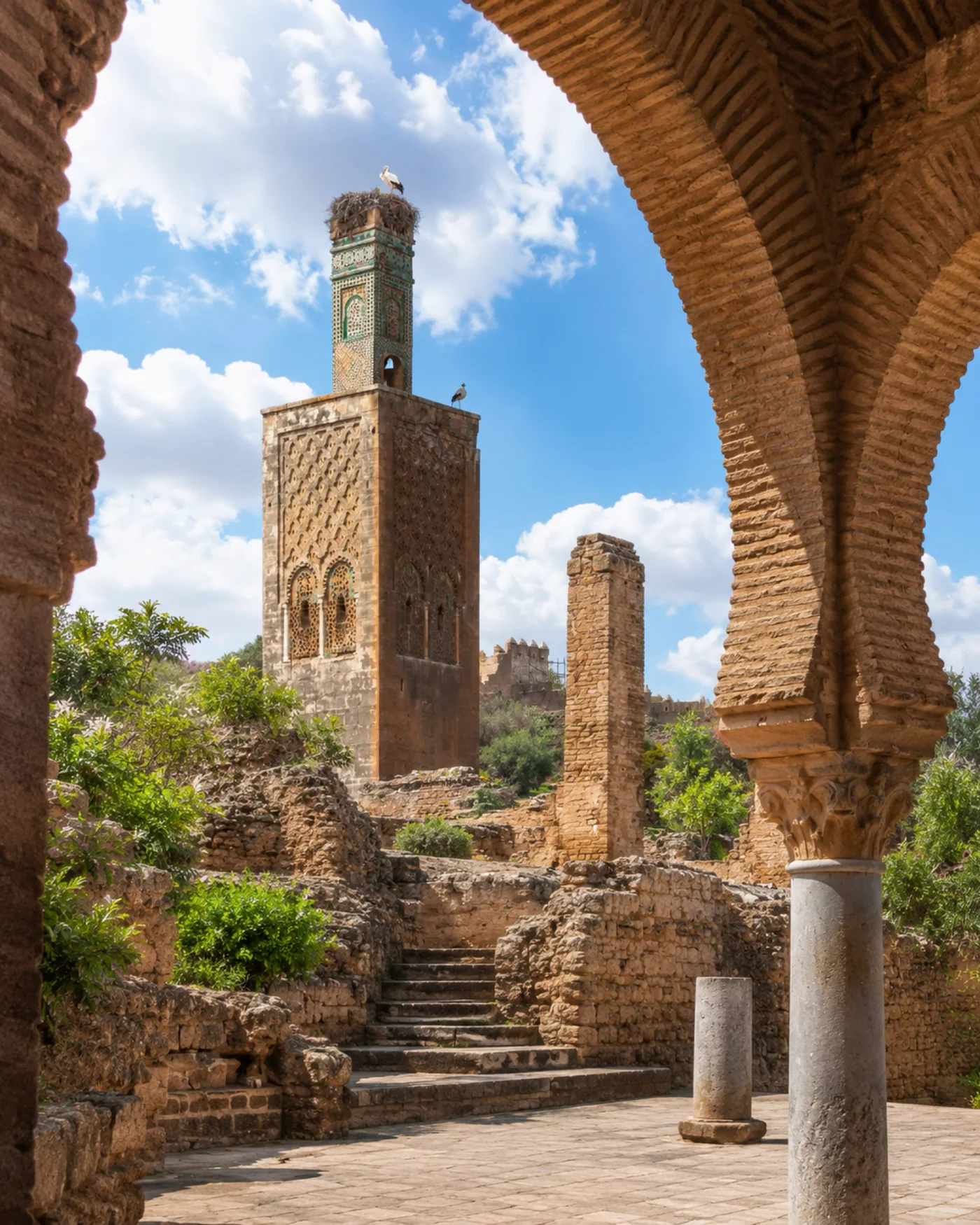 Chellah
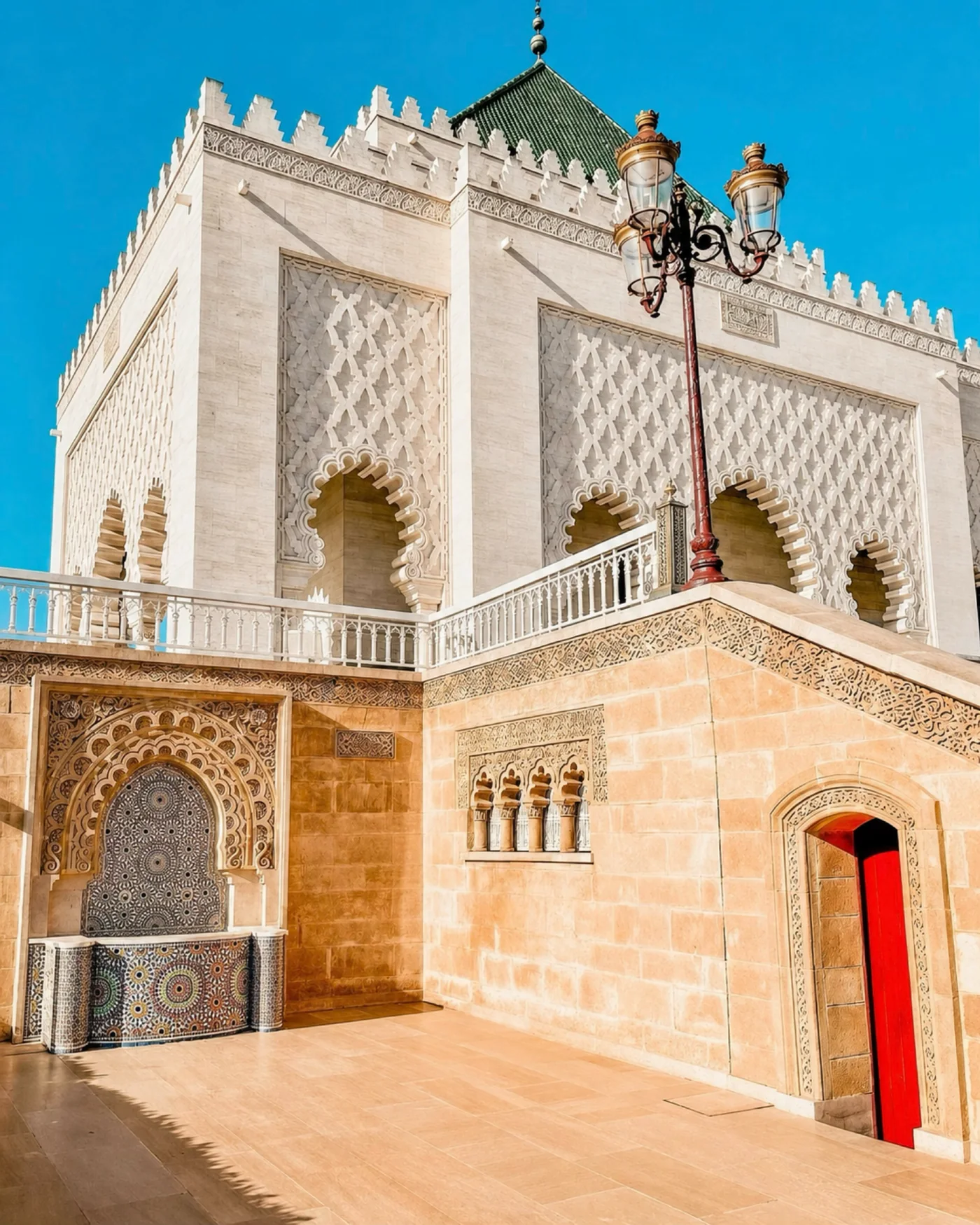 Mausoleum
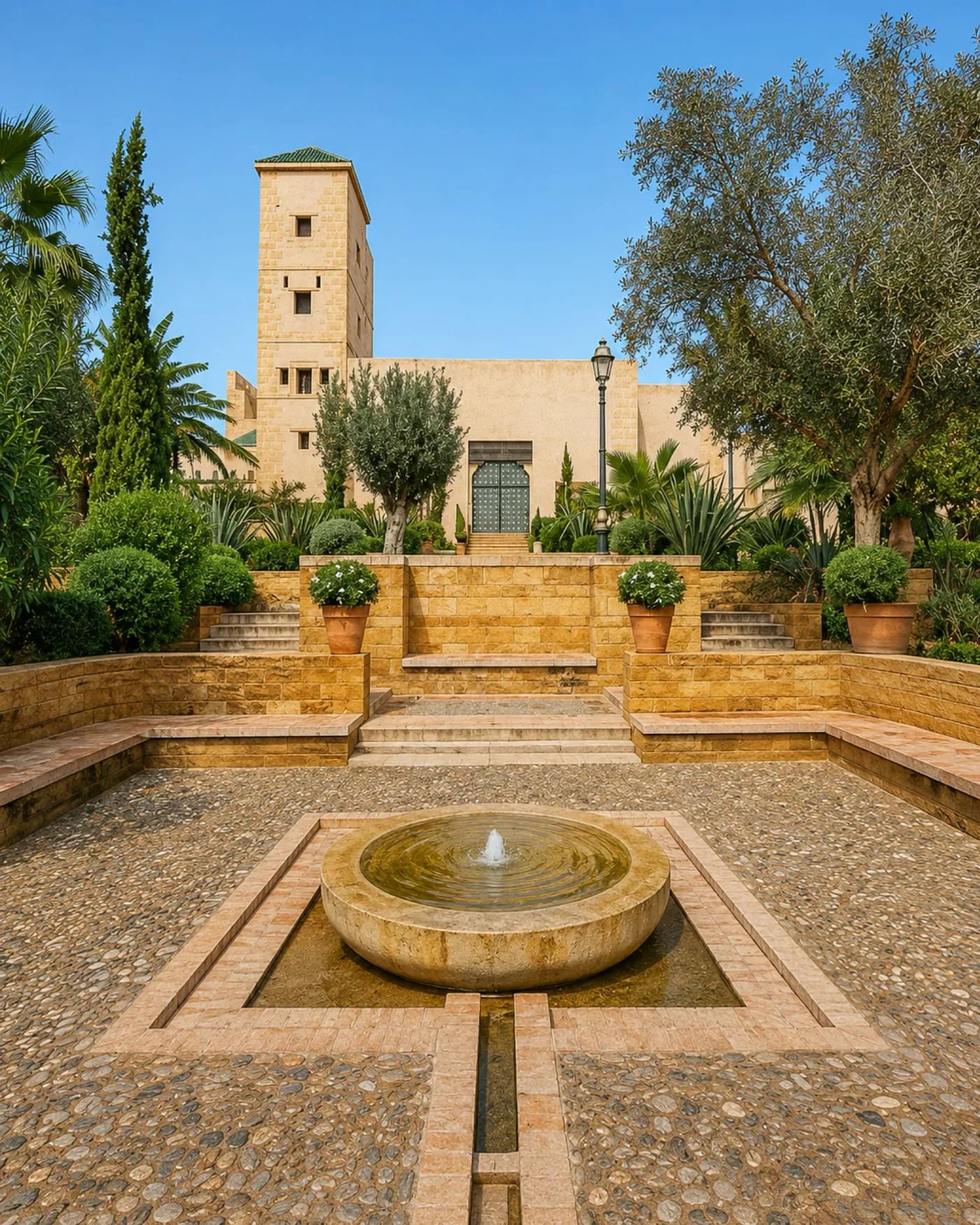 Andalusian garden
Read the river connection and the differences on either bank.
Rabat makes a productive ending or beginning because its heritage includes the relationship between historic fabric and modern capital planning. A route through older streets and a later boulevard can belong to the same cultural day. Notice the different dimensions of public space, the placement of institutions and the way the Atlantic setting opens a view. The city expands the imperial theme beyond a collection of enclosed monuments.
The Bouregreg also invites a change of viewpoint towards Salé, which has its own history and institutions. Treat crossing the river as a connection between two places, not as a reason to flatten them into one. A waterfront pause, a visit to an accessible heritage site and a walk in an older neighbourhood make a manageable set of contrasts. Use the dedicated city guides to choose the specific stops; leave the larger narrative open enough to include the contemporary capital you encounter along the way.
Fès · Bab BoujloudMarrakech · Secret GardenMeknès · Bab MansourRabat & Salé · OudayasFès · Craft detailMarrakech · Spice coloursMeknès · Place El HedimRabat & Salé · ChellahFès · NejjarineMarrakech · Ben Youssef MadrasaMeknès · RampartsRabat & Salé · MausoleumThe same material can serve several purposes: tile protects and ornaments, timber spans and screens, a wall contains and announces. Start with what a feature does in its setting, then ask about technique and historical context. This gives you a vocabulary that travels between cities without making their architecture interchangeable. The Moroccan Architecture and Zellige pages develop those questions through closer material and spatial readings.
Timber, tile, institutions
Gardens, palaces, streets
Gates, walls, water
River, institutions, public space
Use this schematic as a set of connections, not a scale map. Choose a northern city sequence or give Marrakech a separate block of time, then verify transport and accommodation around those choices. An arrival afternoon and an unhurried return walk deserve space in the plan. The best sequence is one in which the cities remain memorable for different reasons.
FèsCourtyard and streetMarrakechCourt and squareMeknèsBoundary and approachRabat & SaléHistoric and modern fabricA few considered choices make the connections between these places more useful.
For each city, record one building, one material and one public-space observation. Add the source of any historical explanation. Comparing those notes later is more useful than carrying a long list of monuments whose details have blurred together. A sketch of a courtyard or an approach can preserve a spatial relationship that a close photograph misses.
Monuments, active religious places and private buildings have different arrangements. Choose actual visits using current local information; a heritage designation is not an opening schedule. If one interior is unavailable, change the question rather than forcing the itinerary: an exterior, museum or nearby public space may still support a meaningful architectural comparison.
After seeing an elaborate surface, spend time learning how something comparable is made. An explained process can transform your next encounter with an architectural detail. Continue into the craft and interior readings, or use Dynastic Memory to place the cities within a more explicitly historical comparison. Each is a different way to deepen the journey.
Historical and geographical references reviewed in September 2026. Route pairings and looking suggestions are Exotic Morocco editorial guidance. Check current access and transport arrangements before travelling. Existing regional library imagery is retained; photographs and illustrations do not establish present-day access or conditions.
Open the individual place guides for local context and a more detailed visit. Return to Regions to compare other landscapes and cultural connections.
Choose one courtyard, then follow its relationships outside.
Let a garden or courtyard interrupt the intensity of the city.
Walls and approaches make distance part of the story.
Read the river connection and the differences on either bank.