06 / Embroidery, Weaving & Dress
A thread connects the room and the wardrobe.
A textile can furnish a room, cover a table, become clothing or be kept for a particular occasion. The connection is not that every cloth serves all these purposes. It is that fibre, structure, making and care shape the way a textile enters everyday life.
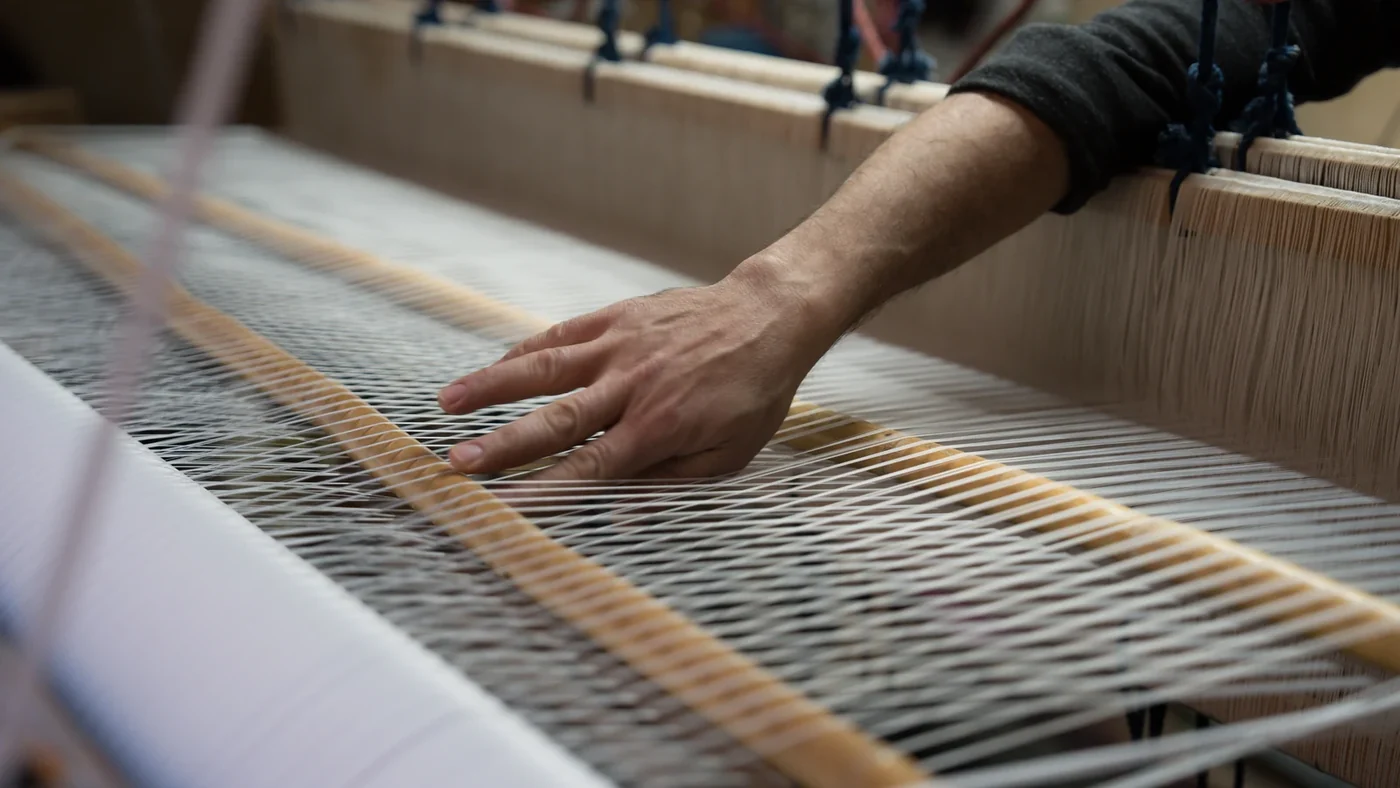
Weaving constructs fabric by interlacing threads. Embroidery adds stitches to an existing ground. Both can make pattern, but they ask different things of the hand and produce different structures. Look at the edge and, where handling is permitted, the reverse. A photograph of the decorated face alone may hide the most useful evidence.
A garment can carry skilled work without acting as a fixed label for the person wearing it. Region, generation, family, occasion and individual choice all matter. Keep that openness when a textile appears in an interior too: an inherited object, a purchased contemporary piece and a display made for guests have different biographies.
The completed Dress collection follows caftans, takchitas, jabadors, melhfas and the work of weaving and embroidery in more detail. Use it to move from the close-up to the whole garment, and from the object to the choices around wearing it. An interior detail is a beginning for that conversation, not a substitute for it.
Enter the Dress collection →