Why Chouara Tannery matters
A working tannery before it is a viewpoint.
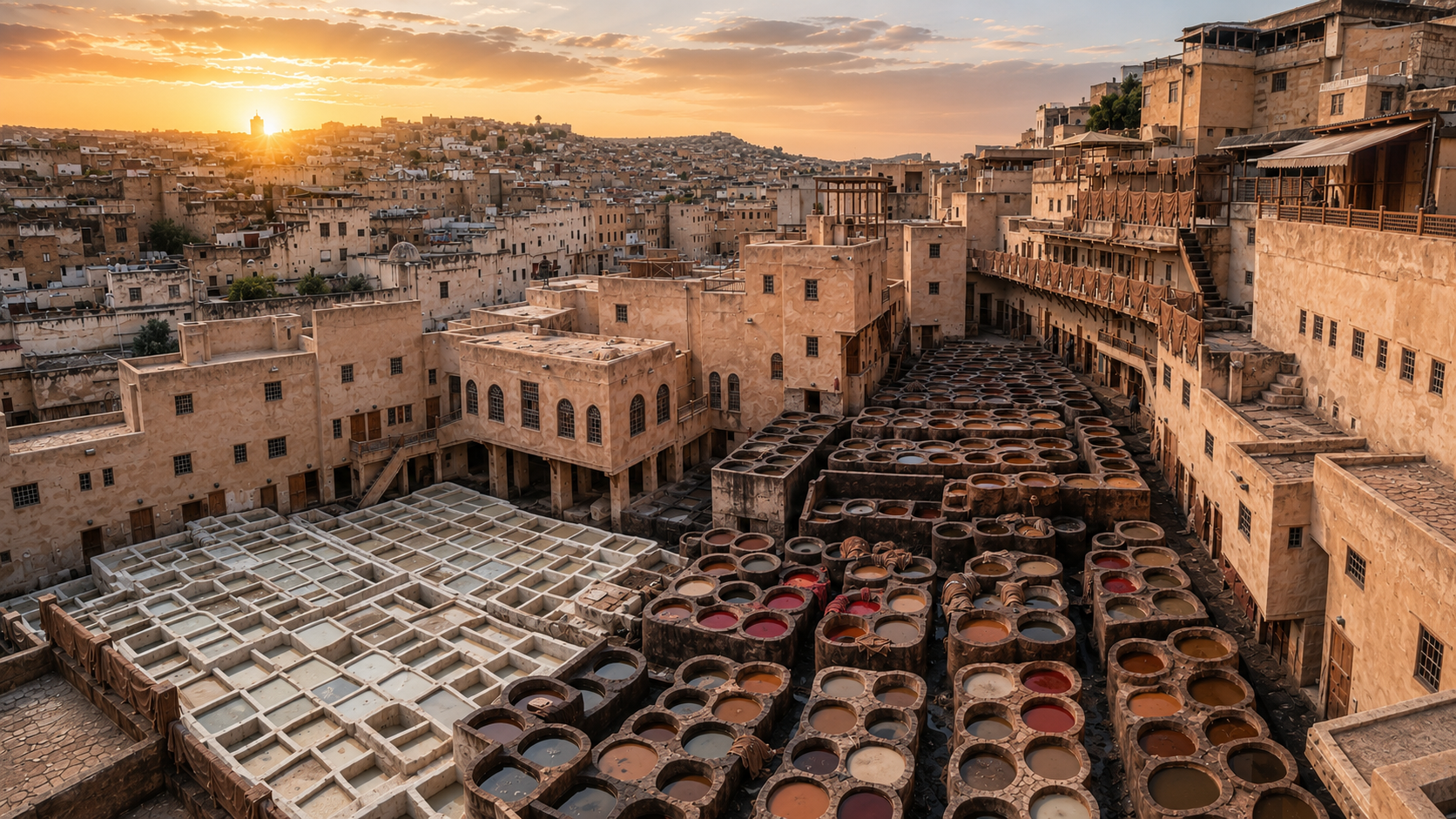
Chouara Tannery matters because it keeps Fez's craft identity visible in one concentrated place. The famous view from surrounding terraces is not a staged scene; it is a working courtyard where hides, dye, water, stone vessels, drying terraces, shops and medina routes still belong to the same urban system.
The tannery sits inside Fes el Bali, the older medina quarter at the heart of the UNESCO-listed Medina of Fez. UNESCO describes the medina as an exceptionally conserved historic urban fabric where monuments, dwellings, markets and traditional skills remain connected. That context is essential: Chouara should be read as part of the living city, not as a detached attraction.
Tannery-specific sources commonly describe Chouara as the largest and among the oldest tanneries in Fez. Exact dating is treated cautiously because sources vary, but the important visitor fact is clear: leather work has deep continuity in Fez, and Chouara remains one of the clearest places to see that craft landscape from above.
The place also matters because it teaches the visitor to look beyond colour. White preparation vats, darker dye vessels, wet hides, rooflines, timber screens, shop terraces and narrow approach lanes all explain how work is arranged inside a dense city. Beauty here comes from an operating structure, not from decoration alone.
For visitors, the best reading balances admiration with respect. The tannery can be visually spectacular, but it is also a demanding workplace. A careful visit gives space to workers, accepts the sensory reality of the craft, avoids intrusive photography and lets Fez remain a city of skill rather than a simple backdrop.
Core medina context is grounded in the UNESCO World Heritage Centre listing for the Medina of Fez. Tannery-specific orientation was cross-checked against Archnet's Chouara Tannery entry and established Fez visitor references. Practical details should be checked close to travel.