Why Skala de la Ville matters
A rampart before it is a viewpoint.
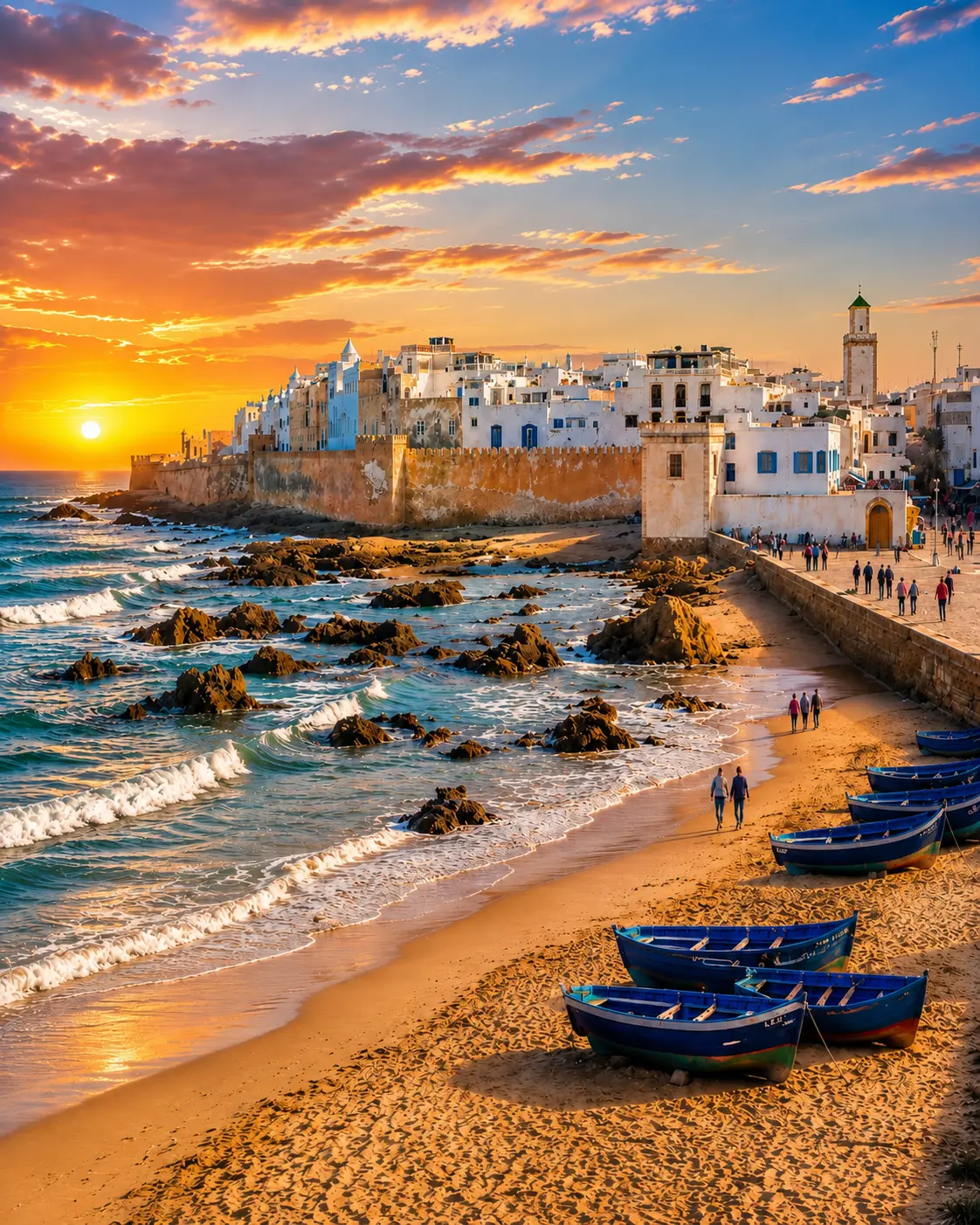
Skala de la Ville matters because it makes Essaouira's identity visible in one concentrated place. It is not only a terrace for ocean photographs. It is part of the fortified edge of a port city planned for trade, defence, movement and controlled contact with the wider Atlantic world.
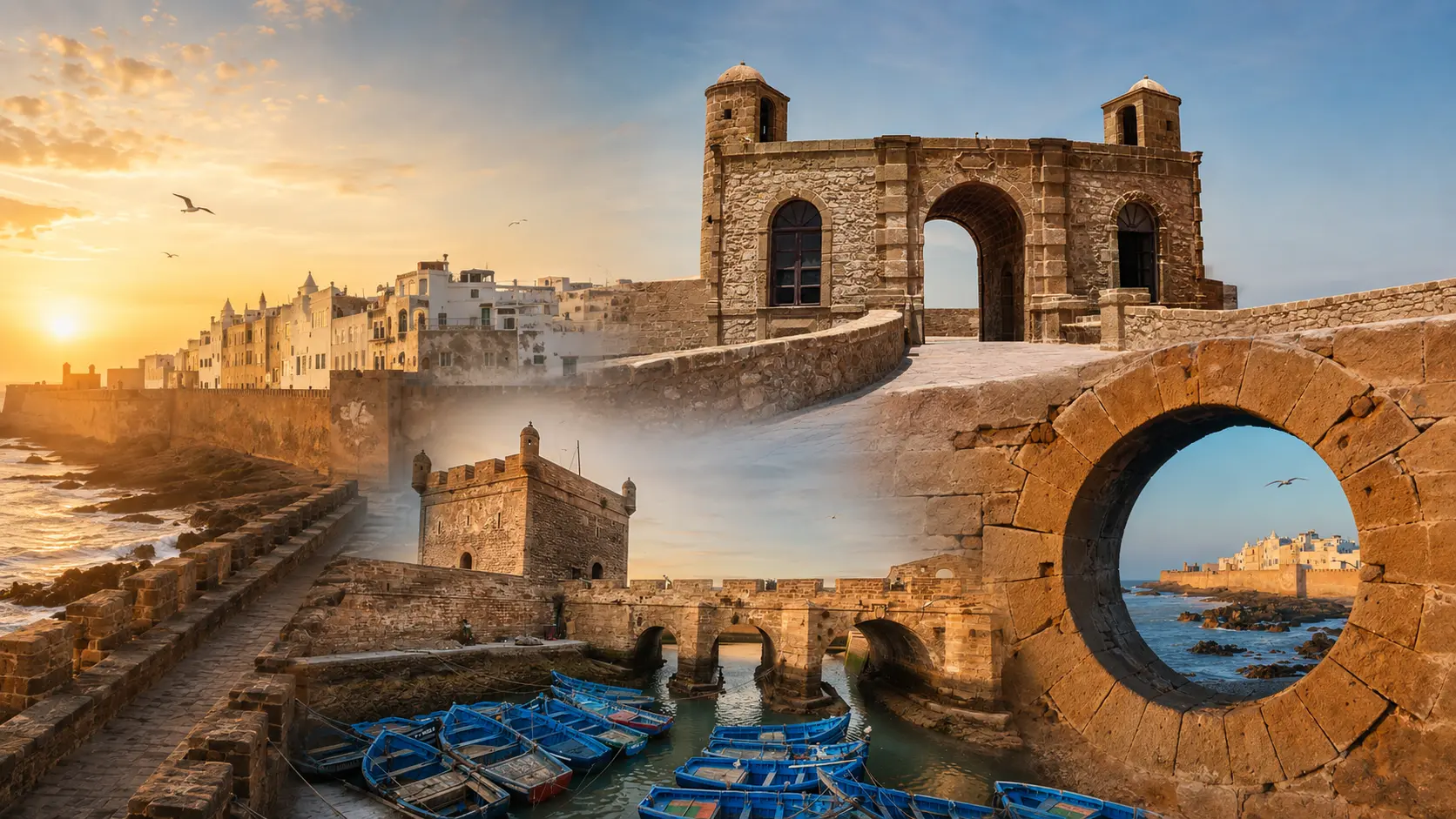
UNESCO describes the Medina of Essaouira, formerly Mogador, as an exceptional example of a late-18th-century fortified town shaped by European military architecture in a North African context. The Skala should be read within that larger medina story: wall, sea, port, streets, gates and trade memory belong together.
The place also matters as a lesson in proportion. The wall is heavy, but the horizon is open. The cannons give the rampart a military grammar, while the white medina behind it turns the defence line back into an urban experience. The result is not a closed fortress mood, but a civic edge where city life and sea weather meet.
For visitors, the strongest reading begins with the full coastal line. Look at how the stone wall holds the medina above waves, how the parapet creates rhythm, and how the Atlantic changes the colour of every surface. The Skala is beautiful because it is functional, exposed and perfectly placed.
It also asks for restraint. These are historic ramparts within a living city, not loose stage scenery. The best visit keeps space for local movement, avoids treating cannons and walls as props, and lets the place remain part of Essaouira rather than a backdrop removed from its context.
Core heritage facts are grounded in the UNESCO World Heritage Centre listing for the Medina of Essaouira and official Visit Morocco Essaouira medina guidance. Practical details such as access, prices and temporary restrictions should be checked close to travel.