Friouato Cave Morocco's deep limestone underworld near Taza
Friouato Cave is a dramatic karst cave south of Taza, where a wide sinkhole, deep chambers and mineral formations reveal the hidden geology of the Tazekka mountain landscape.
Read it as a descent, not a spectacle: surface rock, cooler air, changing light, limestone texture, then the slow mineral forms that make the cave feel older than any itinerary.
Friouato Cave, also known as Gouffre de Friouato, matters because it makes the Taza landscape vertical. Above ground, the wider Tazekka area is read through mountains, gorges, forest edges and limestone slopes. Inside the cave, that same landscape continues downward through darkness, moisture, mineral growth and depth.
Published cave references place Friouato among the major known cave systems of Morocco and North Africa, with an explored depth of roughly 270 metres. The careful word is explored: cave systems are measured through surveys, passages and known limits, not through travel slogans. That caution gives the place more authority, not less.
The cave is a karst lesson in slow time. Limestone dissolves, fractures and opens under the work of water; chambers widen, passages narrow, and mineral-rich drops build stalactites and stalagmites over long periods. What looks theatrical in photographs is actually patient geology.
Friouato also matters because it asks visitors to take caves seriously. A deep cave is not an ordinary viewpoint: low light, humidity, steps, loose stone and slippery surfaces can change the visit quickly. The strongest guide to the place should create attention, not bravado.
For the Exotic Morocco map, Friouato connects Taza with the Tazekka mountain landscape and the water-cut drama of nearby gorge country. The cave, Bizi Gorges and Taza together show a side of Morocco where rock, water, altitude and city context belong in one reading.
Use the map to place the cave south of Taza, in the mountain country around Bab Boudir and the wider Tazekka landscape.
Editorial reading
Its beauty is geological, not staged.
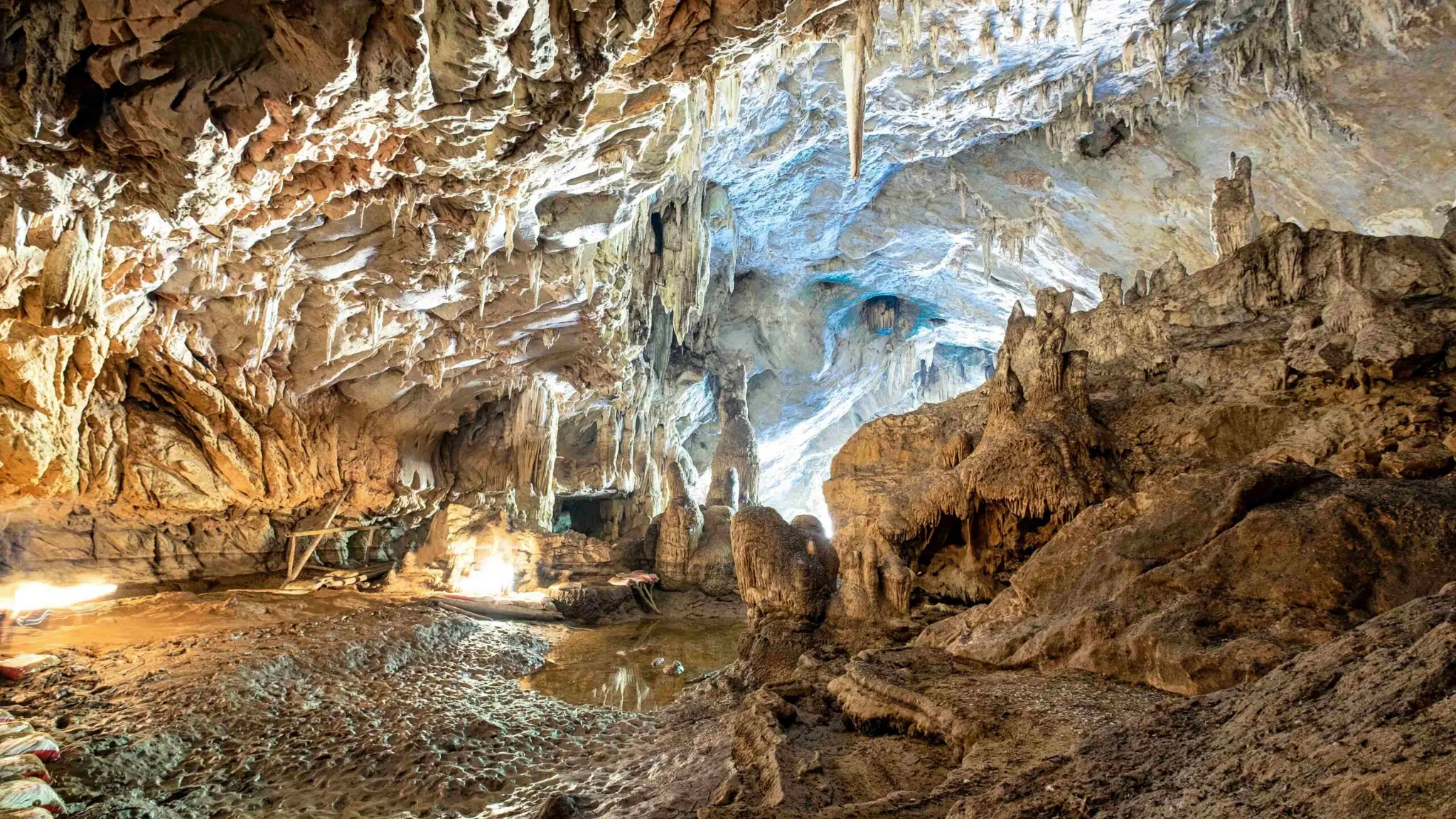
Friouato's strongest visual quality is the way rough limestone, suspended forms and artificial cave light make depth readable. The eye does not meet a polished monument. It meets an interior landscape built by water, pressure, collapse, mineral deposit and time.
Look first at the ceiling and walls rather than at single formations. The cave's force comes from relationship: dark recesses against pale limestone, heavy rock against thin mineral curtains, vertical descent against the stillness of the chamber floor.
Stalactites and stalagmites should be read as evidence, not decoration. Their shapes record dripping water and mineral accumulation over time. Touching them, leaning on them or treating them as props damages the very thing visitors came to see.
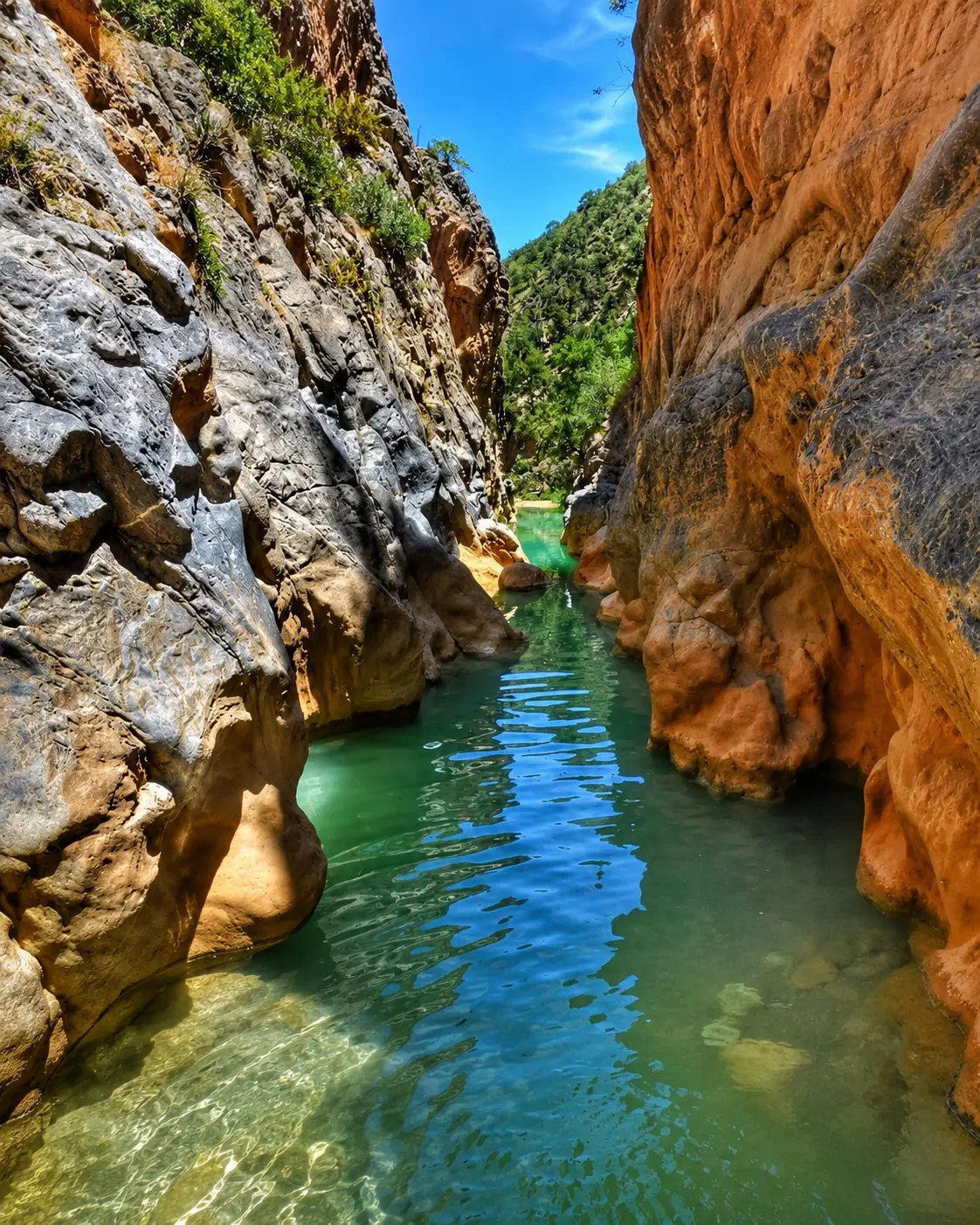
The Bizi Gorges image belongs here because it explains the surface counterpart of the cave: water cutting rock, light entering narrow space, and limestone becoming a visual language above and below ground.
The better visit keeps excitement and restraint together. Friouato can feel adventurous, but the cave rewards calm looking: notice humidity, footing, echo, darkness, temperature and the way each turn changes scale.
Good photographs come after orientation. Begin with the whole chamber, then frame smaller forms only when their context remains clear. A cave becomes less convincing when detail is separated from depth.
The final memory should not be only the descent. It should be the connection between Taza, Tazekka, gorges, limestone and underground space: a mountain landscape that continues below the surface.
Historical and natural orientation
Read the site through karst, exploration and caution.
Friouato Cave is not a palace-like monument with one fixed story. It is a natural cave system whose meaning comes from geology, surveyed exploration, changing visitor access and the mountain setting around Taza. The strongest reading stays precise: limestone, depth, water and safe movement all matter.
01Place type
A karst cave and sinkhole
Friouato is best understood as a gouffre: a deep cave entrance and karst system shaped through limestone, water and vertical space rather than a surface-only attraction.
02Landscape
Tazekka limestone country
The cave belongs to the mountain and limestone context south of Taza, where gorges, forested slopes, springs and rock formations create a wider natural reading.
03Exploration
Depth measured carefully
Published cave sources commonly describe the explored depth at around 270 metres. Figures for length and access can vary, so the page avoids inflated claims and keeps the language cautious.
04Visitor care
Access is conditional
Caves require current local guidance. Safety works, route limits, lighting and staffing can change, so visitors should confirm conditions before treating the site as automatically open or simple.
A visual bridge
Three readings between limestone, water and depth
Before Friouato becomes a cave photograph, it is a relationship between surface landscape and underground space. These three readings help visitors understand why the place feels powerful without turning it into spectacle.
01
Material
Limestone shaped by water
The cave's forms come from limestone responding to water over time: dissolving, dripping, depositing and sometimes breaking into chambers and narrow passages.
Read rock surface before isolated shapes.
Notice wet, dry, rough and pale limestone tones.
Understand beauty as process, not ornament.
02
Descent
Surface to chamber
The visit changes vertically: open air gives way to cooler darkness, then the cave begins to organise itself through ceiling, wall, floor, depth and echo.
Begin with the entrance and surrounding rock.
Let the eye adjust before judging the chamber.
Use scale to read the descent carefully.
03
Context
Taza, gorges and mountain water
Bizi Gorges and the wider Taza landscape help explain Friouato above ground: water, rock and narrow space are part of the same regional grammar.
Connect the cave to nearby gorge landscapes.
Use Taza as the clearest city context.
See the cave as part of a mountain system.
Quick orientation
Type of place
A deep karst cave and sinkhole system near Taza, best understood through limestone geology, vertical space and careful cave movement.
Landscape context
The cave belongs to the Tazekka mountain landscape, where rock, forest edges, gorges and water-shaped terrain frame the visitor experience.
Best for
Geology, cave atmosphere, limestone formations, careful photography, Taza-based nature routes and visitors who prefer slow observation over fast spectacle.
Closest city context
Taza is the strongest city base for understanding Friouato Cave, nearby mountain routes, Bizi Gorges and the wider natural landscape of the province.
What visitors experience here
A place that changes as you descend.
Friouato Cave works through transition. The visit begins above ground, where Tazekka's rock and mountain air set the context. Then the cave pulls attention inward: light drops, sound tightens, the floor changes underfoot and limestone begins to read like an interior landscape.
Arrival
The cave mouth and first scale
The opening matters because it gives the visit its first proportion. Before looking for details, pause at the threshold and read the relationship between surface rock, entrance depth and the surrounding mountain landscape.
Light
Brightness giving way to chamber light
Cave light should feel different from daylight. Inside, illumination catches edges, wet surfaces and hanging forms, while darker recesses remind visitors that the chamber continues beyond the easiest view.
Forms
Stalactites and stalagmites
The mineral formations are the cave's slow handwriting. Read them with distance and restraint: their shape depends on water and time, and their fragility is part of their meaning.
Movement
Steps, footing and vertical attention
The visit is not a flat walk. Descent, uneven surfaces, moisture and changing visibility make movement part of the experience. Slow pacing is not only respectful; it is practical.
Sound
Echo, quiet and dripping water
Caves hold sound differently. Voices, footsteps and occasional water drops can make the space feel larger than it looks. Keeping noise low protects both the atmosphere and other visitors' concentration.
Context
Bizi Gorges above ground
After the cave, the gorge landscape gives the eye a surface answer: water between rock walls, colour in the open air, and a reminder that the Taza region is shaped by both depth and flow.
Place details and orientation
Read Friouato Cave through six defining elements
No single formation explains Friouato. Its meaning comes from the relationship between entrance, depth, limestone, water, chamber scale and the mountain surface above it.
1
Sinkhole entrance
The entrance gives Friouato its first drama: a vertical invitation from surface landscape into underground space.
2
Limestone chambers
The cave's chambers reveal scale through ceiling, wall, recess and shadow, not through decoration added by people.
3
Mineral formations
Stalactites, stalagmites and curtain-like forms show the slow work of water carrying minerals through the cave.
4
Narrow passages
Passages and tighter sections make visitors aware that cave space is irregular, layered and sometimes demanding.
5
Humidity and water traces
Moisture, condensation and wet surfaces help explain how the cave continues to change below the mountain.
6
Tazekka setting
The cave is inseparable from the mountain landscape around Taza, including gorges, forest edges and limestone slopes.
Cave, not scenery
The place asks for a careful eye.
Stand above the entrance before thinking about the descent. The first lesson is spatial: Friouato is part of a mountain system, not an isolated room underground. The surface landscape is the beginning of the cave's story.
Inside, move slowly enough to connect footing, light, ceiling and wall. A cave becomes legible when the visitor stops treating every formation as a separate photo and starts reading the whole chamber as a geological space.
Return mentally to the surface afterward. Bizi Gorges, Taza and the Tazekka landscape help the cave remain connected to water and rock above ground, which is where the underground reading began.
Landscape and geological intelligence
Karst is slow architecture made by water.
Friouato Cave is not a style effect beneath the mountain. It is the result of limestone, fractures, water movement, mineral deposit and time. That makes it visually rich, but it also makes it vulnerable to careless contact and careless access.
The most intelligent reading keeps geology and visitor behaviour together. Limestone forms are not props, wet surfaces are not decoration, and darkness is not an inconvenience to defeat. They are part of the cave's identity.
What to notice slowly
Look at the full chamber before focusing on single formations.
Notice where limestone is dry, wet, pale, rough, polished or shadowed.
Read the descent as part of the place, not simply a route to the bottom.
Keep distance from fragile formations and avoid touching mineral surfaces.
Connect underground forms with surface gorges, water and Tazekka limestone.
Check current access and local guidance before planning a visit around the cave.
Geological reading
Three natural languages to notice
Limestone and dissolution
The cave begins with limestone's response to water. Cracks widen, spaces open and the rock becomes a record of slow chemical and physical change.
Water as the hidden tool
Even when water is not visually dominant, the cave's forms point back to it: dripping, flowing, carrying minerals and shaping the underground route over time.
Scale and restraint
Friouato's scale can create excitement, but the better response is restraint. Cave space asks visitors to protect silence, formations, footing and fragile edges.
Visual atmosphere
Depth, texture and quiet transitions
From surface to depth
Begin with open air and mountain rock, then let the descent narrow the world. The strongest memory comes from the change itself: brightness to shadow, openness to chamber, surface to depth.
From stone to mineral light
Limestone does not read as one colour. In the cave it shifts through amber, grey, white and damp brown, depending on light, moisture and the angle of the wall or ceiling.
From photo to memory
The image is powerful, but the deeper memory is physical: coolness, echo, slow footing, the scale of the ceiling and the feeling that the mountain continues below you.
Nearby places and onward links
Connect Friouato Cave to the wider Taza landscape
Friouato is strongest when it is not treated as a single isolated stop. Taza gives the city context, while Bizi Gorges and the Tazekka landscape extend the same story of limestone, water, altitude and movement.
Taza
The clearest city context for Friouato Cave. Use Taza to frame the mountain routes, cave access questions and the wider cultural geography of the province.
Friouato Cave should be approached with current local advice, not assumptions. Caves can change through safety work, seasonal conditions, lighting arrangements, staffing and route limits. Confirm access before travelling specifically for the descent.
Respect in a cave is practical. Keep to permitted routes, move slowly, avoid touching formations, do not disturb loose stone, keep voices low and leave no litter above or below ground. The less pressure visitors put on the cave, the more convincing the experience remains.
Check current opening, guide arrangements and route limits close to travel.
Use suitable footwear and follow local safety guidance around steps and wet surfaces.
Do not touch stalactites, stalagmites or damp mineral formations.
Keep photography careful, especially around guides, groups and narrow passages.
Carry water and a layer for changing temperature, without turning the visit into a rush.
A strong first visit
Begin above ground. Read the entrance, the rock, the road into the mountain landscape and the feeling of Taza province before descending. This gives the cave a context beyond darkness and formations.
Inside, let your eyes adjust. Move with the rhythm of the route rather than against it: pause before steps, watch the surface underfoot, give other visitors space and use light to understand the chamber rather than flattening it into a quick photograph.
Use the language of the place carefully: cave, gouffre, karst, limestone, chamber, passage, mineral formation, water trace. Those words help organise what the eye is seeing and keep the visit grounded in the actual site.
Afterward, connect the cave back to Taza, Bizi Gorges and the Tazekka landscape. That wider reading turns Friouato from a hidden attraction into part of a larger geography of rock, water and mountain movement.
Start at the surface so the cave remains connected to its landscape.
Descend only where access is clearly permitted and locally guided.
Watch footing, moisture and light before focusing on photos.
Leave fragile formations untouched and give narrow spaces breathing room.
Finish by linking the cave with Taza and nearby gorge landscapes.
Careful planning note: opening status, access rules, guide availability and exact routes can change. Verify practical arrangements locally before travelling.
Go deeper through the nearest city context
Taza - the city gateway to Friouato Cave
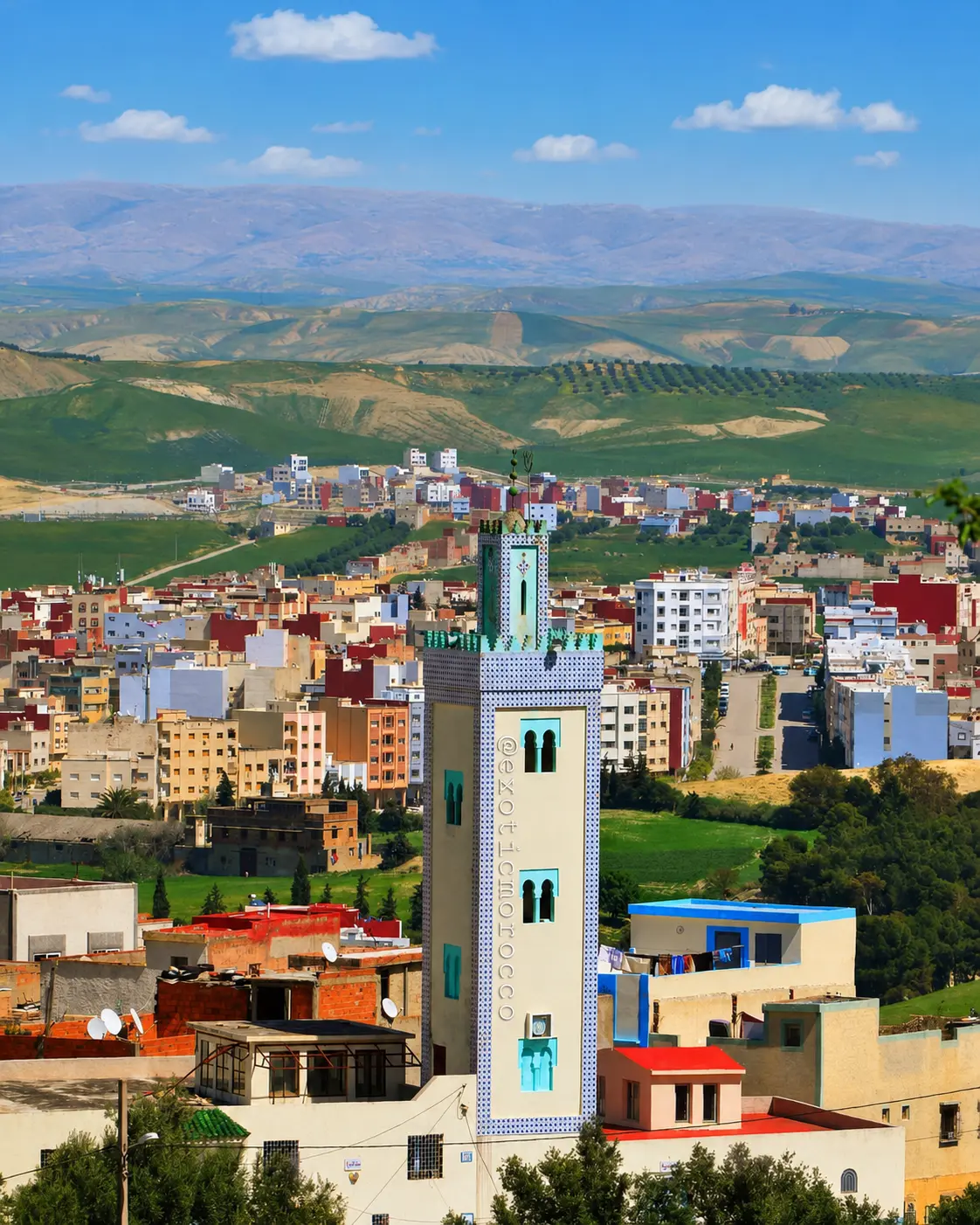
Friouato Cave belongs naturally inside a wider Taza journey. The city gives visitors a stronger base for reading the province: mountain roads, old urban fabric, Tazekka landscapes, gorges, cave access and the meeting of northern interior Morocco with Middle Atlas terrain.
Use Taza to widen the context after the cave itself. The descent makes more sense when it is connected to surface landscapes, local routes and the rhythm of a city that sits close to both historic passage and mountain nature.